Free Printable Invertebrate Animals Worksheets for Class 1
Discover free Class 1 invertebrate animals worksheets and printables from Wayground that help young students learn about creatures without backbones through engaging practice problems and comprehensive answer keys.
Explore printable Invertebrate Animals worksheets for Class 1
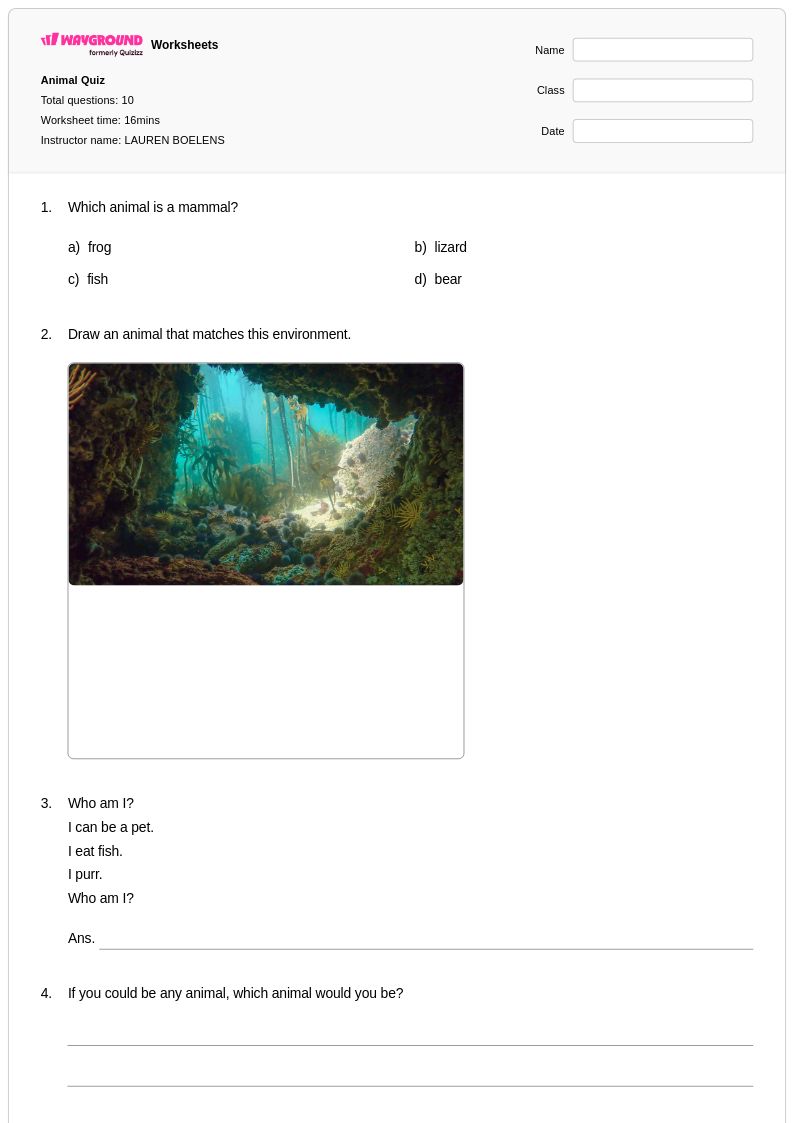
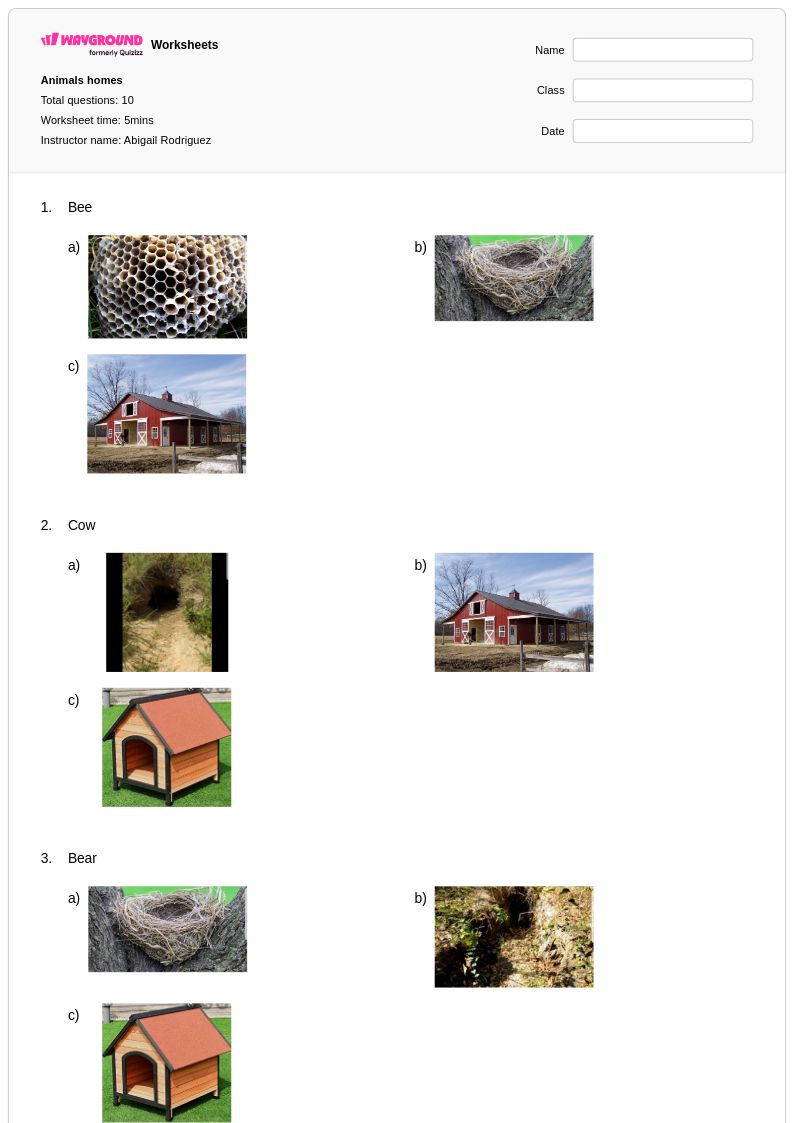
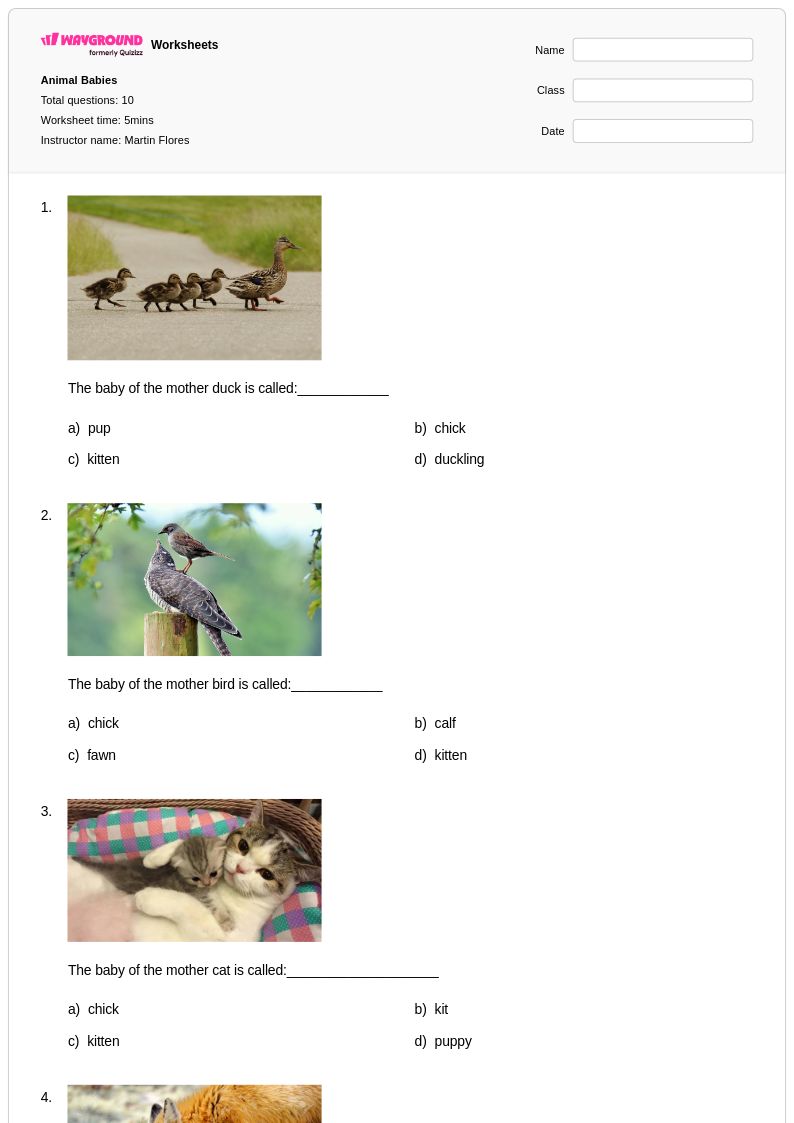
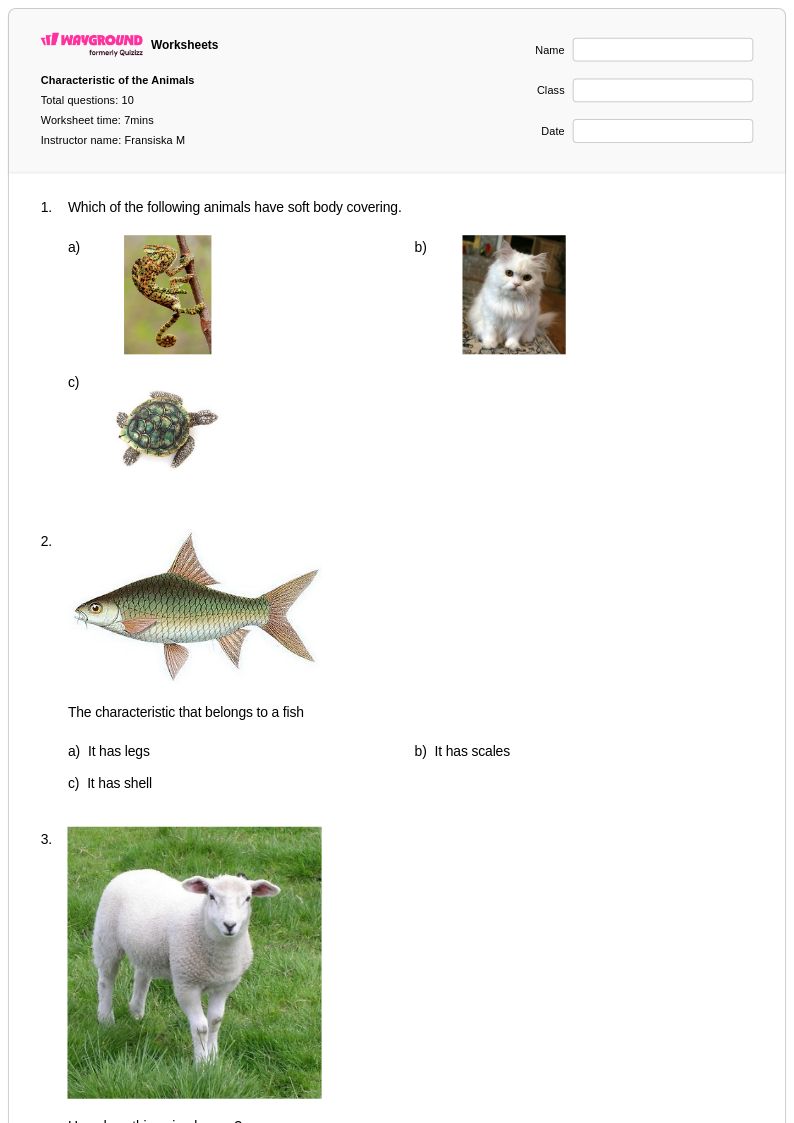
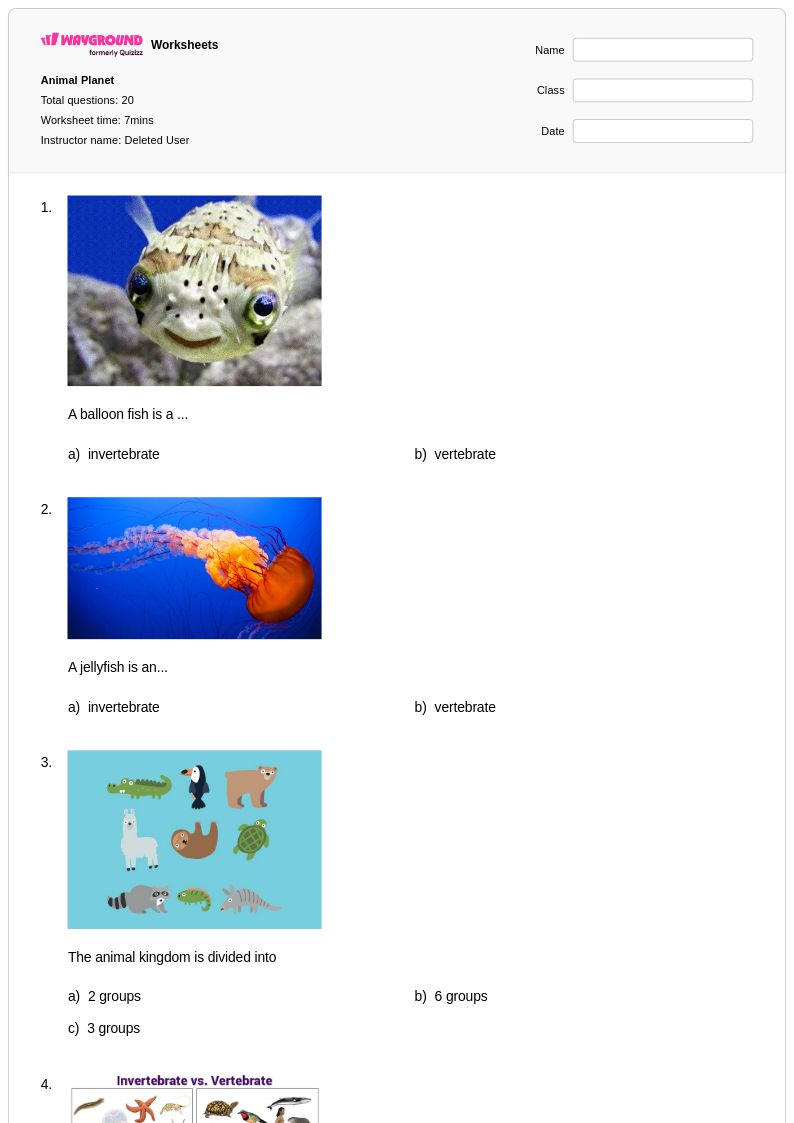
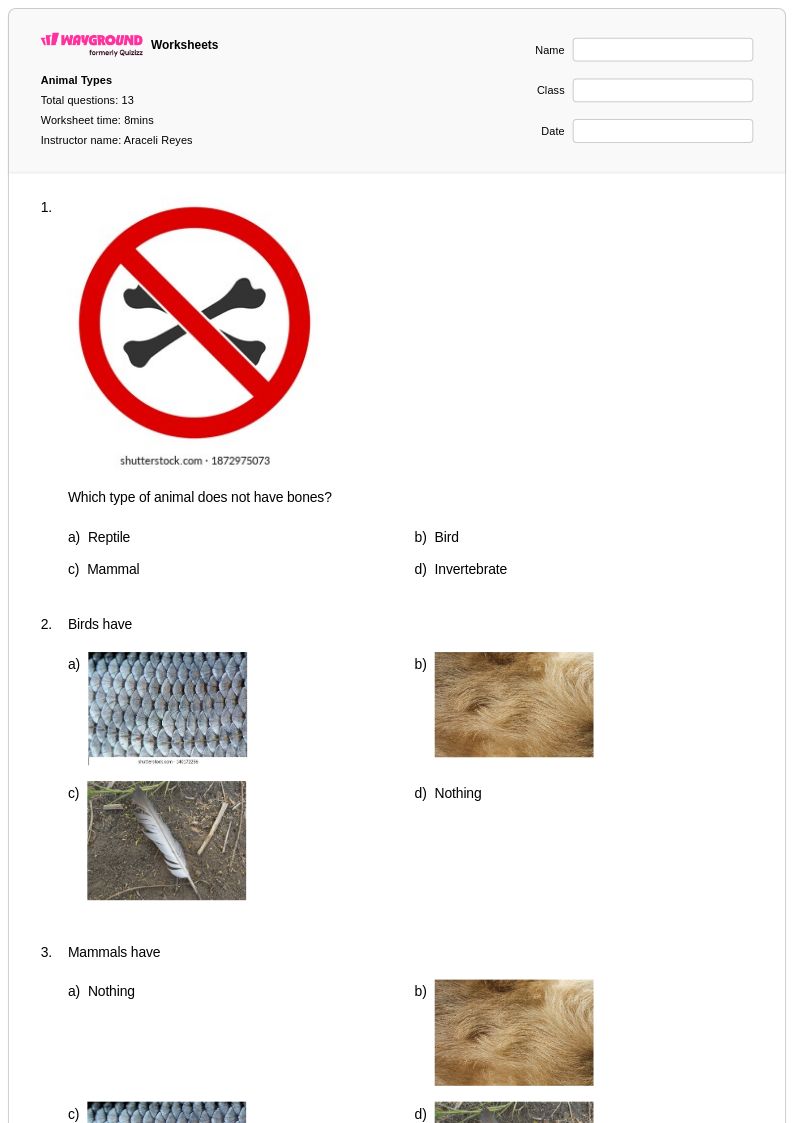
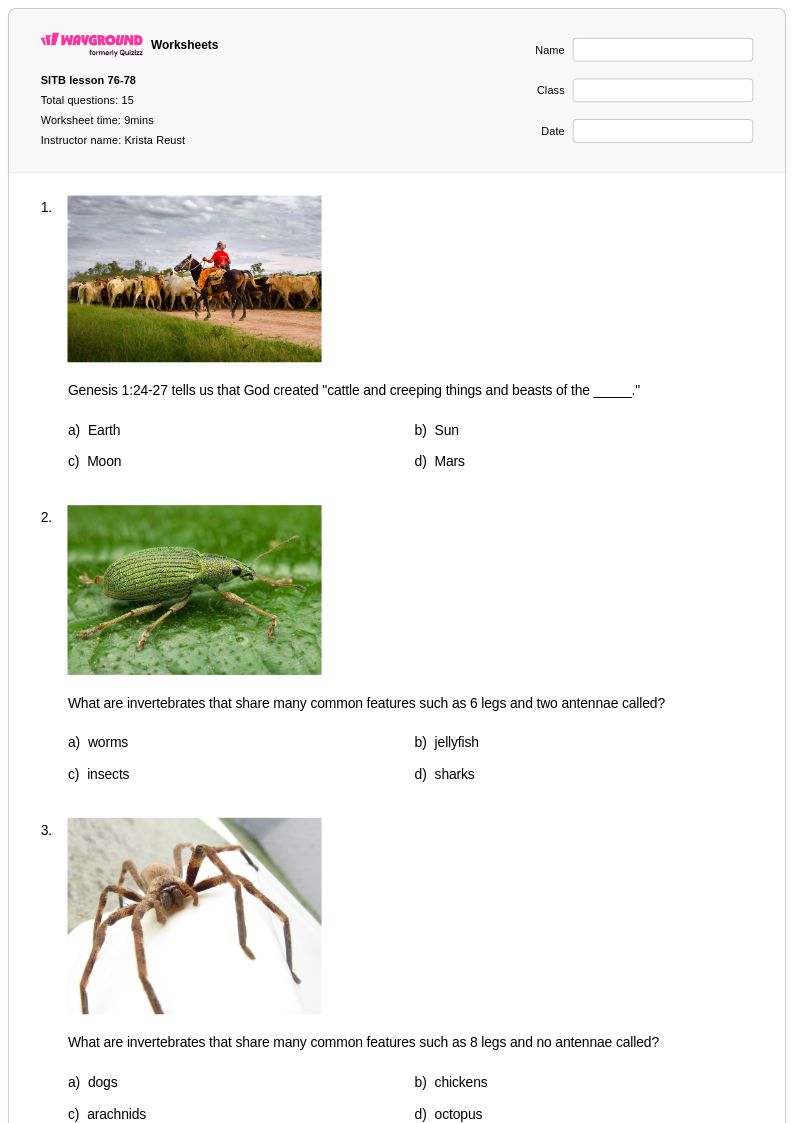
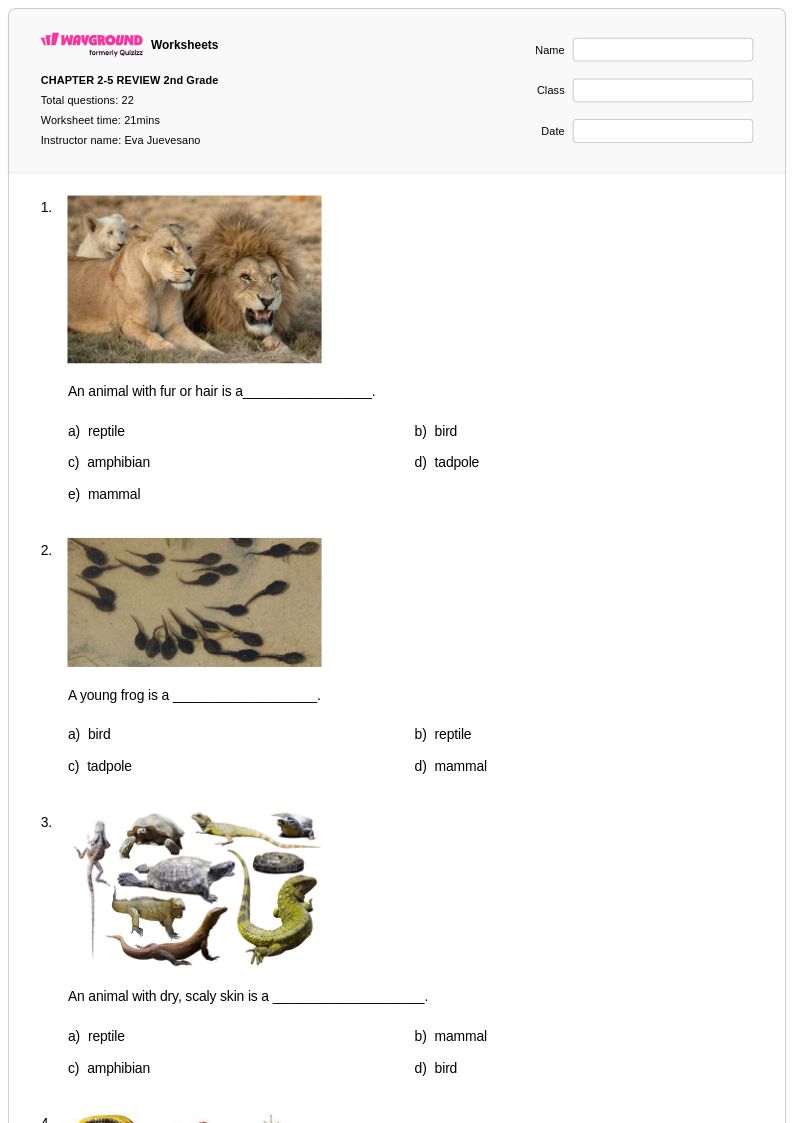
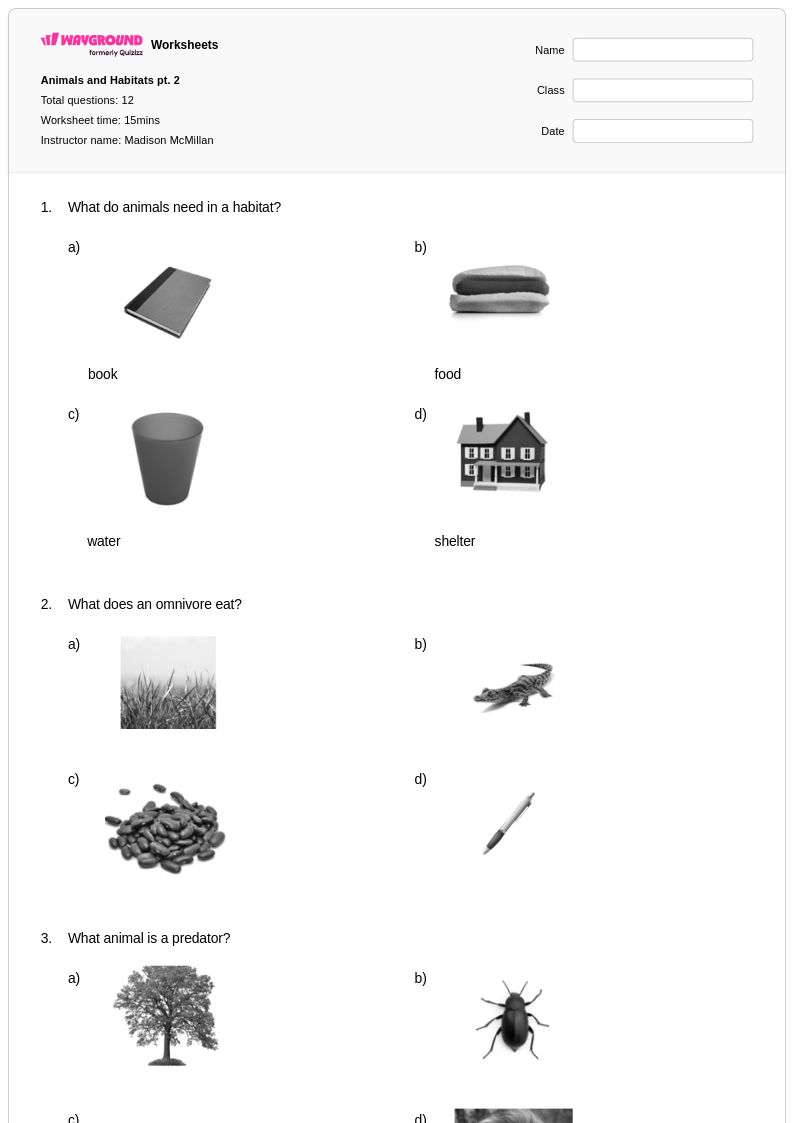
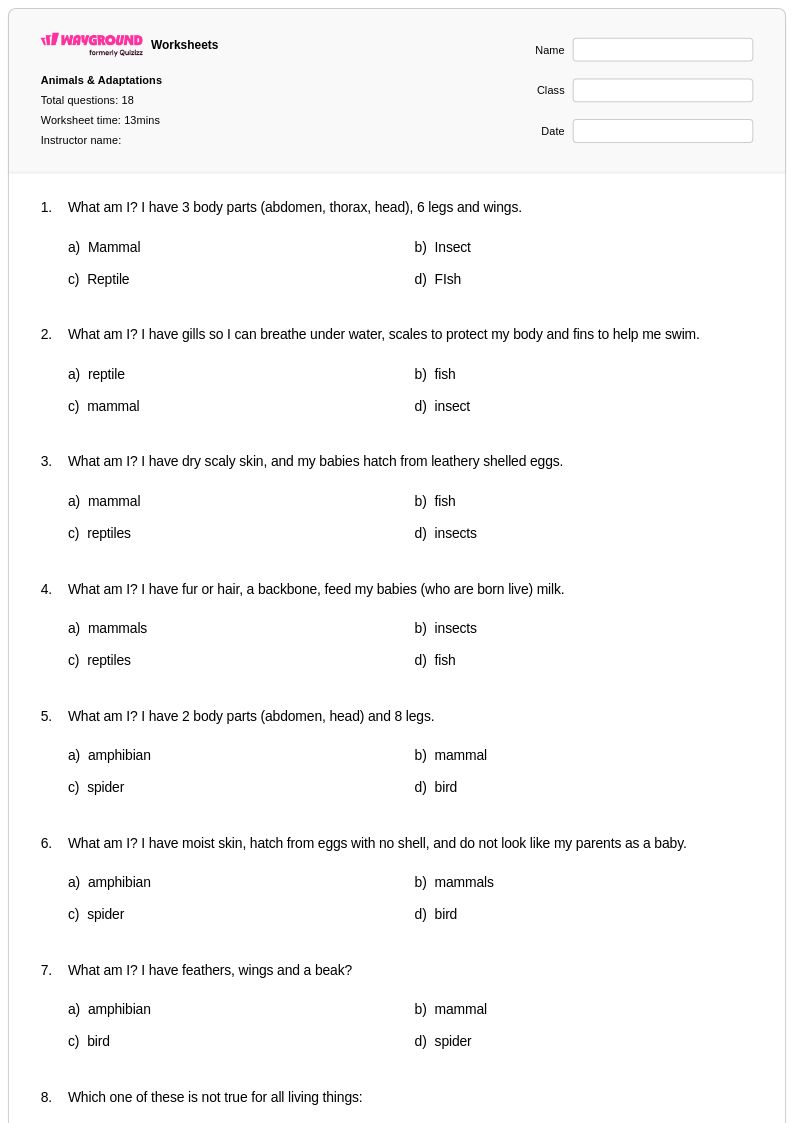
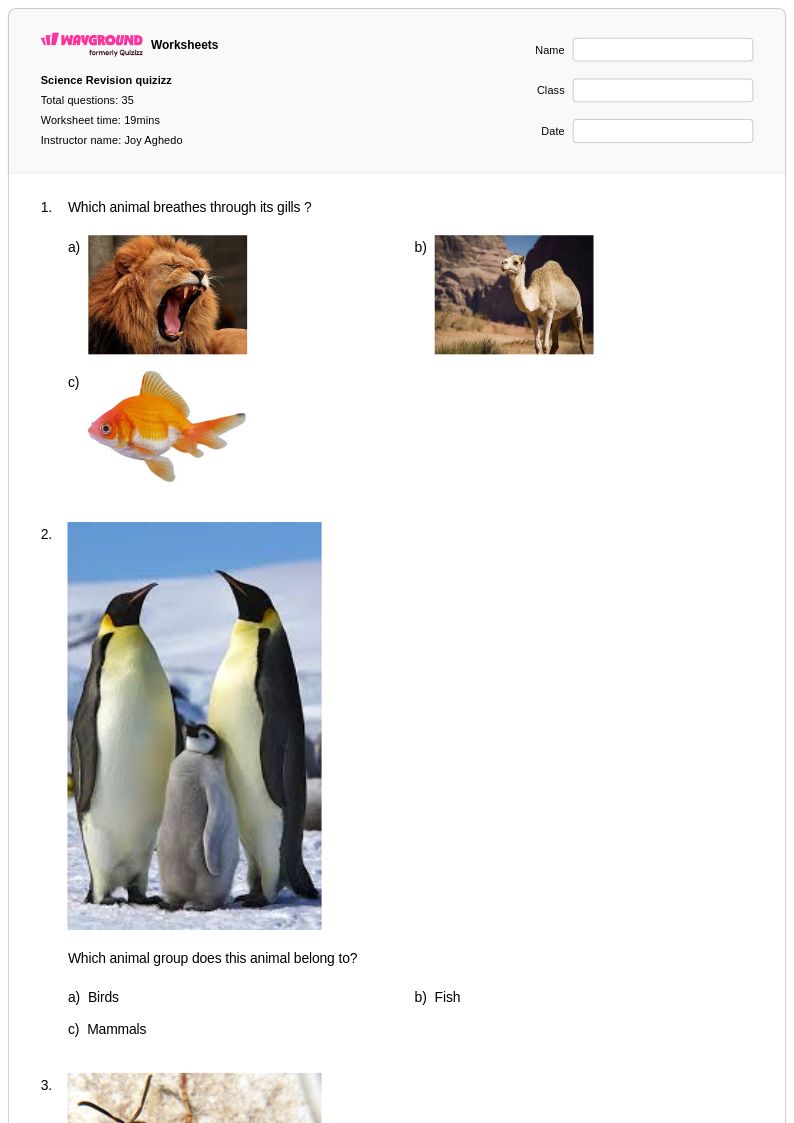
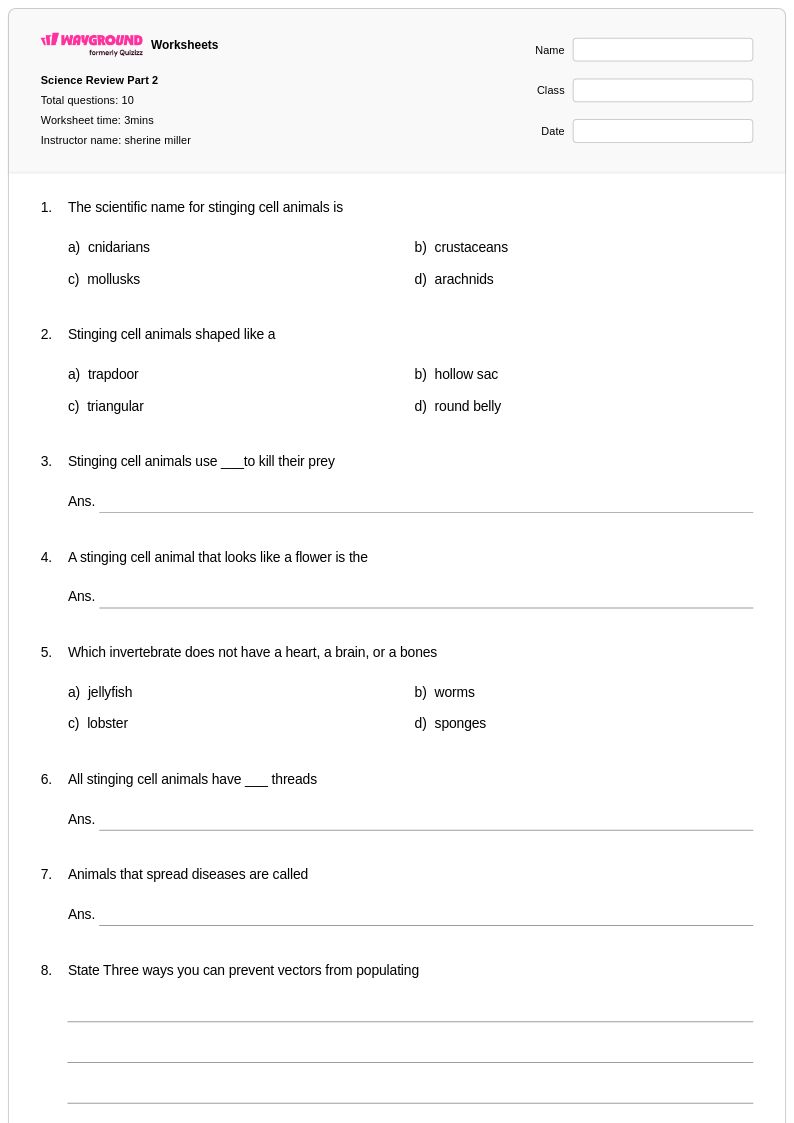
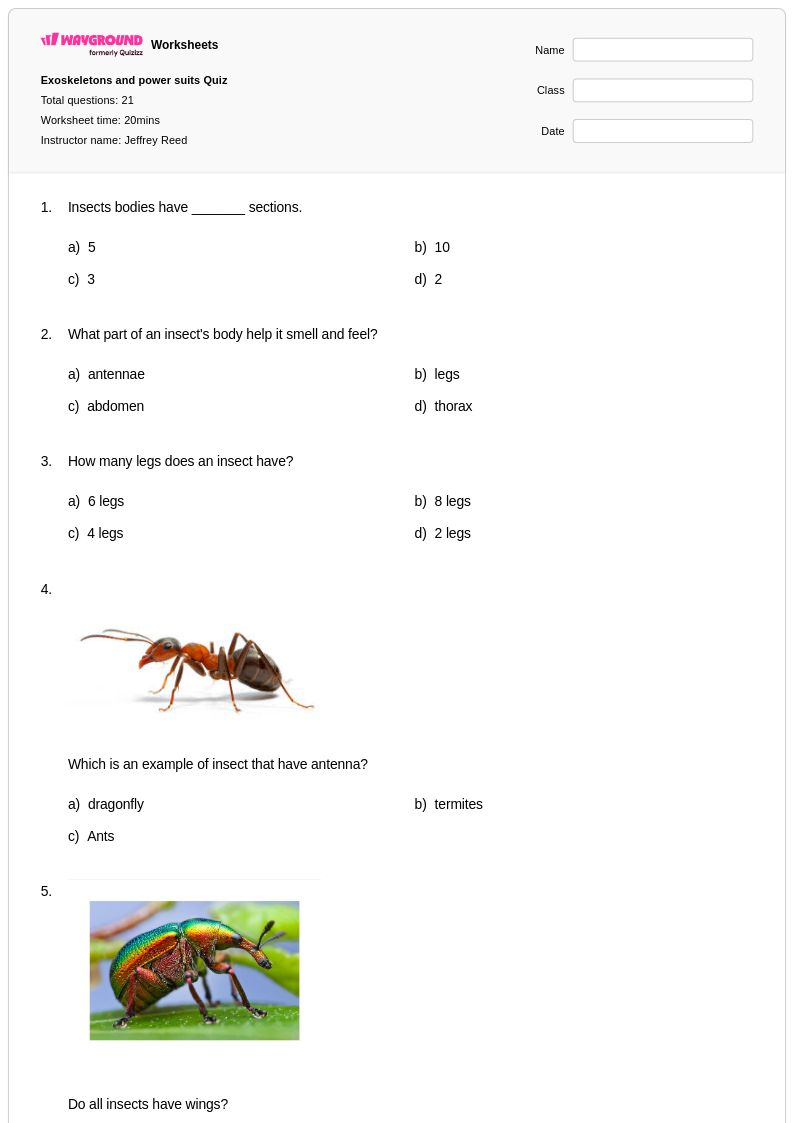
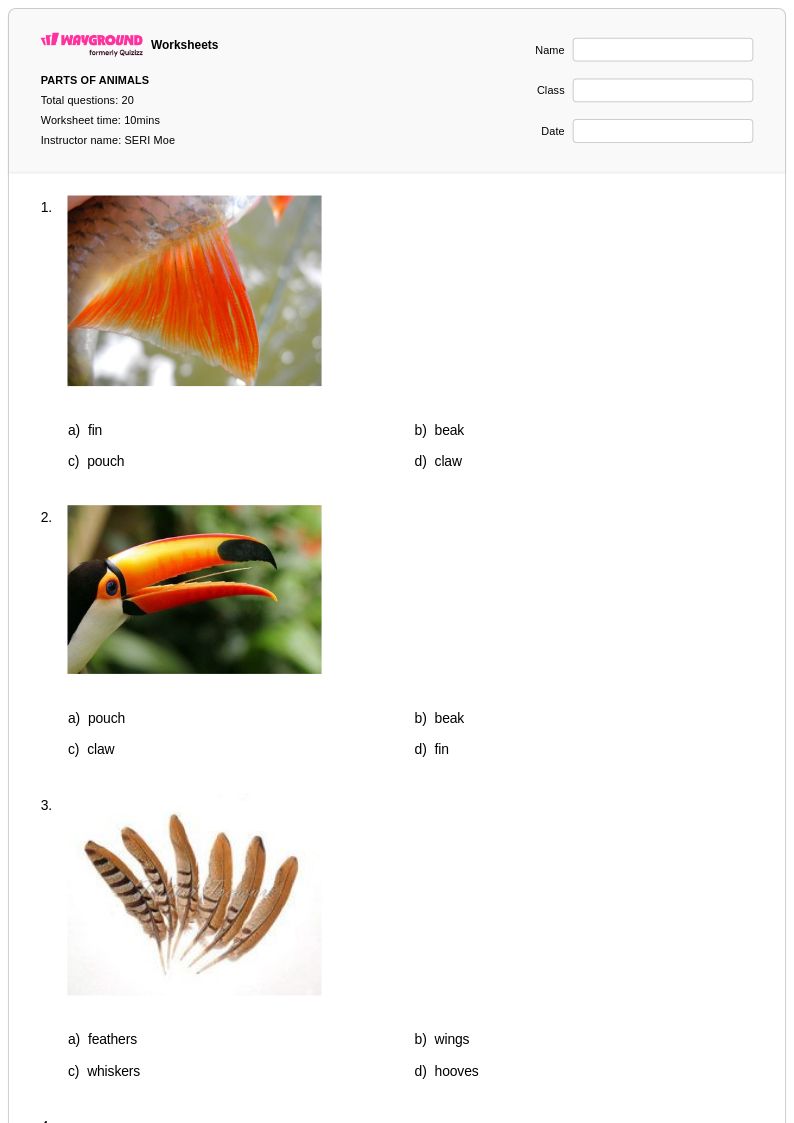
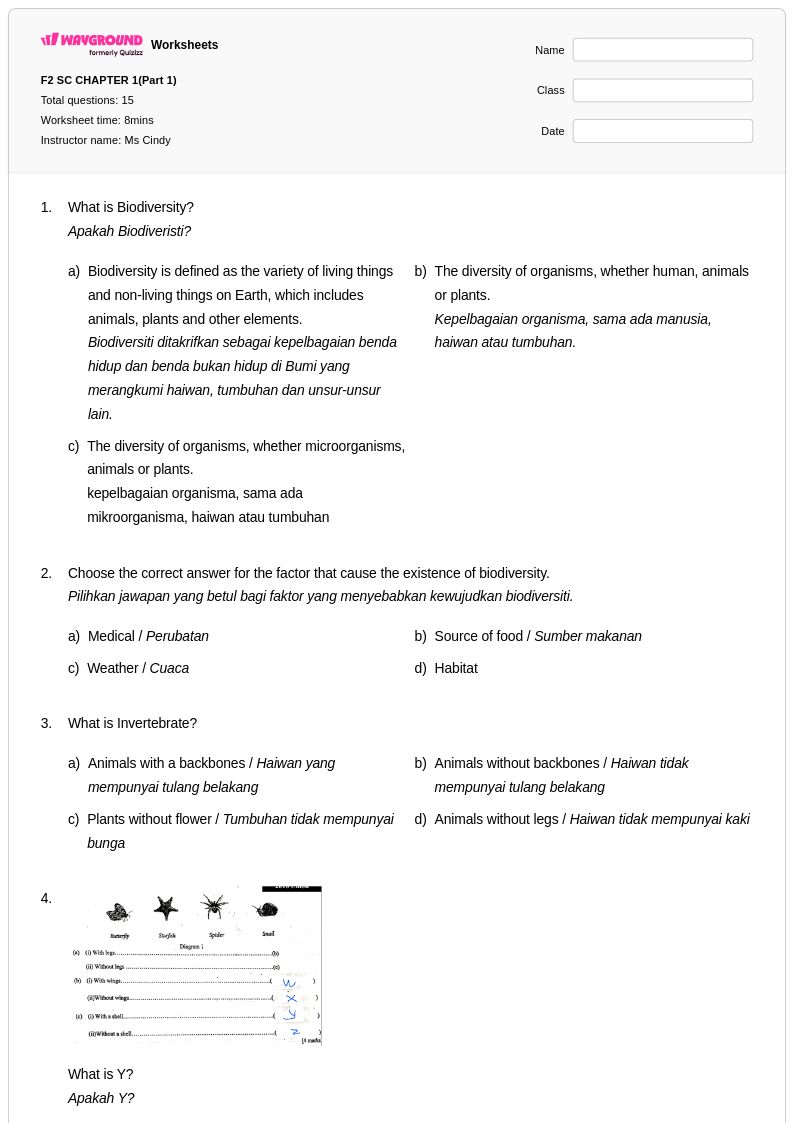
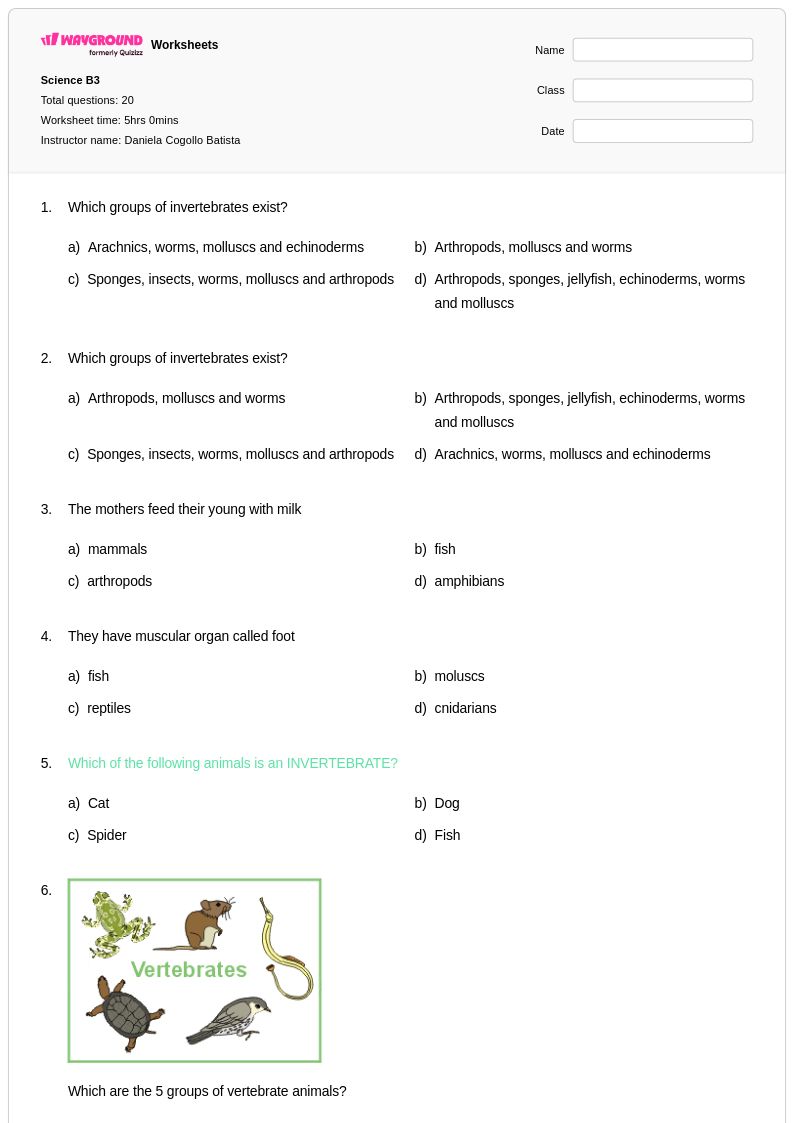
Invertebrate animals worksheets for Class 1 through Wayground (formerly Quizizz) introduce young learners to the fascinating world of creatures without backbones through age-appropriate activities and visual exercises. These carefully designed worksheets help first-grade students develop foundational biology skills by identifying common invertebrates like insects, spiders, worms, and snails while building essential observation and classification abilities. Students engage with colorful practice problems that encourage them to sort animals by characteristics, match invertebrates to their habitats, and recognize the differences between animals with and without backbones. Each worksheet collection includes comprehensive answer keys and is available as free printables in convenient pdf format, making it easy for educators to incorporate hands-on learning experiences that support early scientific thinking and vocabulary development.
Wayground (formerly Quizizz) empowers teachers with millions of educator-created invertebrate animal resources specifically tailored for Class 1 science instruction, featuring robust search and filtering capabilities that align with state and national science standards. The platform's differentiation tools allow teachers to customize worksheets based on individual student needs, whether providing additional support for struggling learners or offering enrichment activities for advanced students ready to explore more complex invertebrate concepts. Teachers can seamlessly switch between printable pdf versions for traditional classroom use and interactive digital formats that engage students through multimedia elements, making lesson planning more efficient and effective. These comprehensive worksheet collections support targeted skill practice, remediation sessions, and enrichment opportunities while helping educators track student progress in understanding basic invertebrate animal characteristics and classifications.
FAQs
How do I teach invertebrate animal classification to my students?
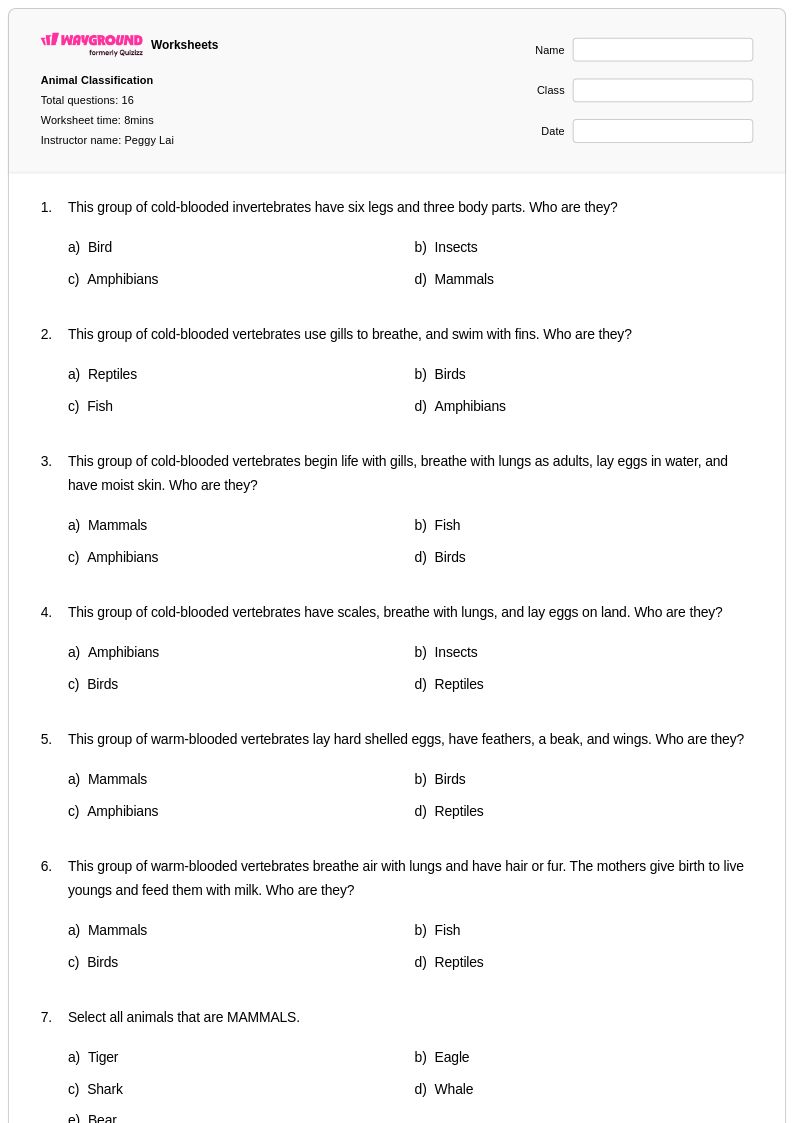
Start by anchoring students to the defining trait all invertebrates share: the absence of a vertebral column. From there, build outward using the major phyla — Porifera, Cnidaria, Platyhelminthes, Nematoda, Annelida, Mollusca, Arthropoda, and Echinodermata — grouping each by key structural features like body symmetry, segmentation, and presence of a coelom. Visual comparisons and sorting activities help students recognize that invertebrate classification is rooted in body plan differences, not surface-level appearance.
What are good exercises for helping students practice invertebrate animal identification?
Practice exercises that ask students to match organisms to their phylum based on structural characteristics are highly effective, as they require applying classification logic rather than rote memorization. Labeling diagrams of representative invertebrates — such as earthworms, jellyfish, or crabs — reinforces anatomical vocabulary while connecting form to function. Compare-and-contrast tasks across two or more phyla push students to articulate the evolutionary significance of differences in body plans and adaptations.
What mistakes do students commonly make when learning about invertebrates?
One of the most frequent errors is treating invertebrates as a unified group rather than understanding that the term describes an absence of a shared trait, not the presence of one — invertebrates are an artificial grouping, not a true clade. Students also commonly conflate body symmetry types, misassigning radial symmetry to bilaterally symmetrical organisms like flatworms. Another persistent misconception is assuming that simpler body plans indicate less evolutionary success, when in fact many invertebrate phyla are extraordinarily diverse and ecologically dominant.
How can I use invertebrate animals worksheets to support students at different skill levels?
Invertebrate animals worksheets can be differentiated by adjusting the cognitive demand of tasks — basic identification and labeling for foundational learners, comparative anatomy analysis and adaptation reasoning for advanced students. On Wayground, teachers can apply student-level accommodations such as read aloud support, reduced answer choices, and extended time, which are especially useful when students are navigating dense taxonomic vocabulary for the first time. These settings can be configured individually per student and reused across sessions without disrupting the rest of the class.
How do I use invertebrate animals worksheets from Wayground in my classroom?
Wayground's invertebrate animals worksheets are available as printable PDFs, making them easy to distribute for in-class work or homework assignments, and in digital formats for technology-integrated instruction. Teachers can also host worksheets as a quiz directly on Wayground, which allows for streamlined student submission and review. Each worksheet includes a complete answer key, so teachers can use them for independent practice, guided review sessions, or student self-assessment without additional preparation.
How do I help students understand the ecological roles of invertebrates?
Ground ecological role instruction in concrete examples tied to specific phyla: annelids as decomposers and soil aerators, arthropods as pollinators and decomposers, mollusks as filter feeders in aquatic ecosystems. Having students map invertebrate groups onto food web diagrams makes abstract ecological concepts tangible and shows how removing any one group creates cascading effects. Emphasizing that invertebrates make up the vast majority of animal species on Earth helps students appreciate why understanding this group is foundational to biological literacy.