Free Printable Ionic and Covalent Compound Naming Worksheets for Class 8
Explore Wayground's free Class 8 ionic and covalent compound naming worksheets and printables with answer keys to help students master chemical bond nomenclature through engaging practice problems and PDF resources.
Explore printable Ionic and Covalent Compound Naming worksheets for Class 8
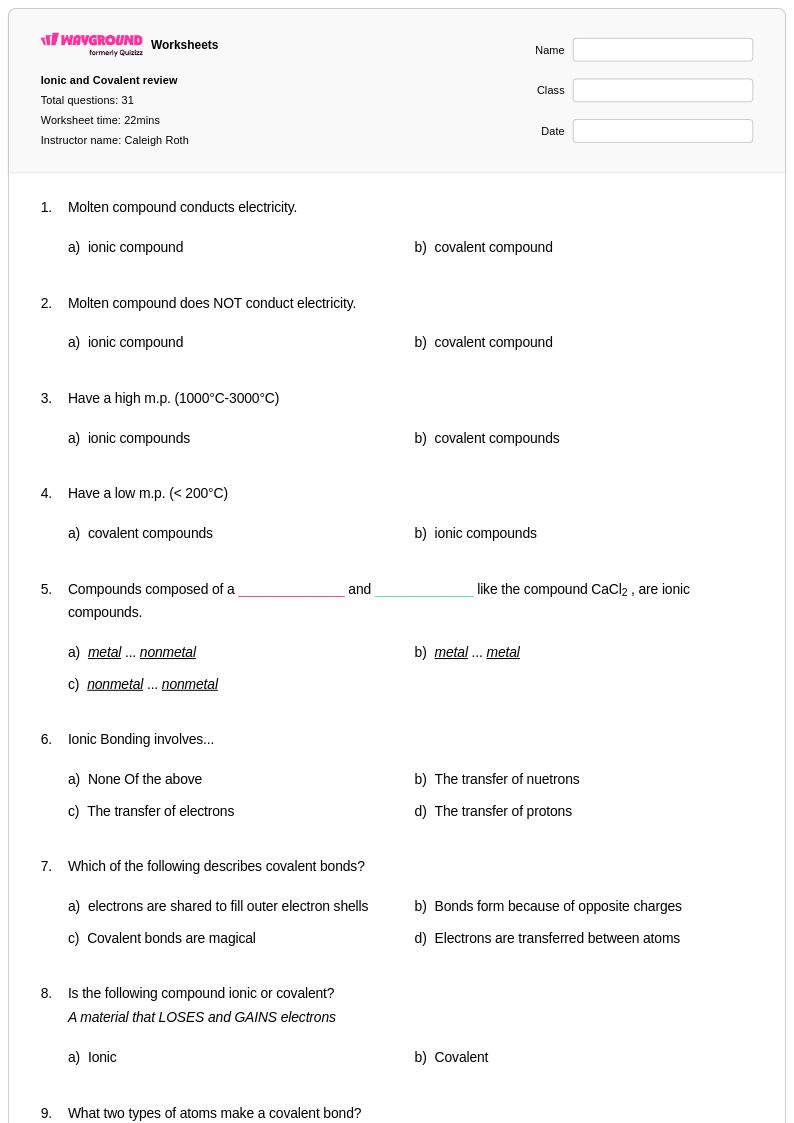
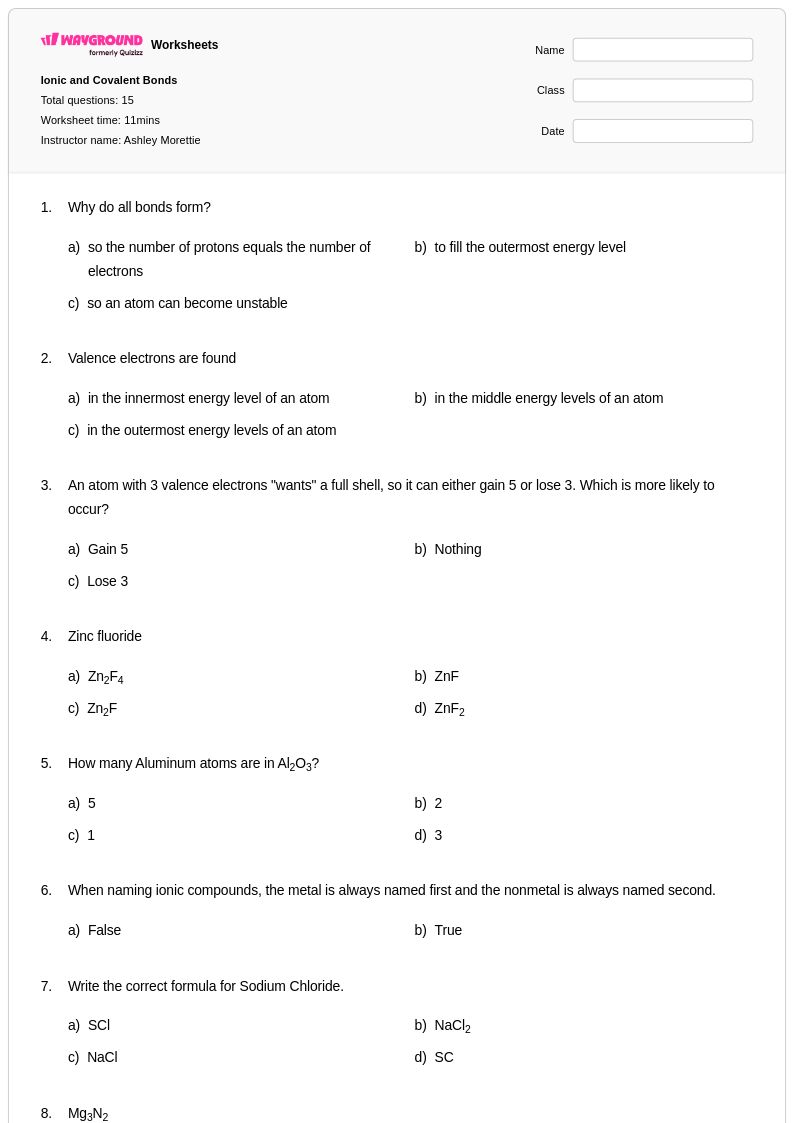
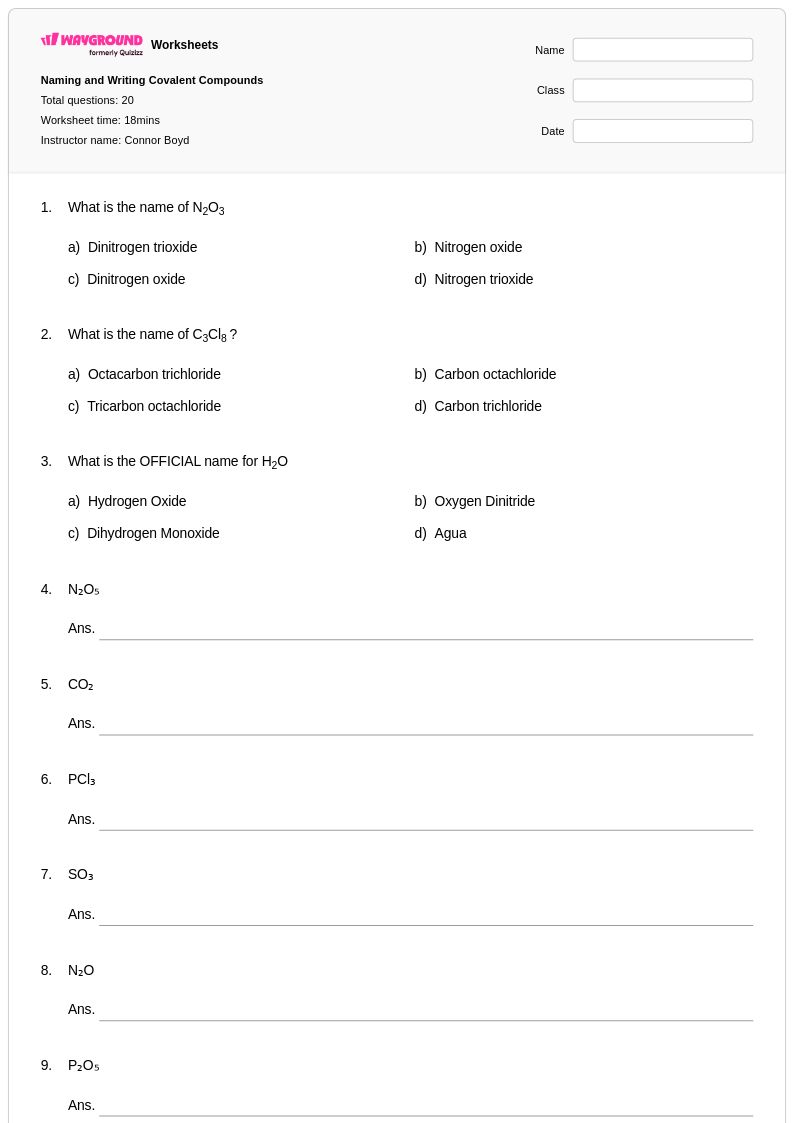
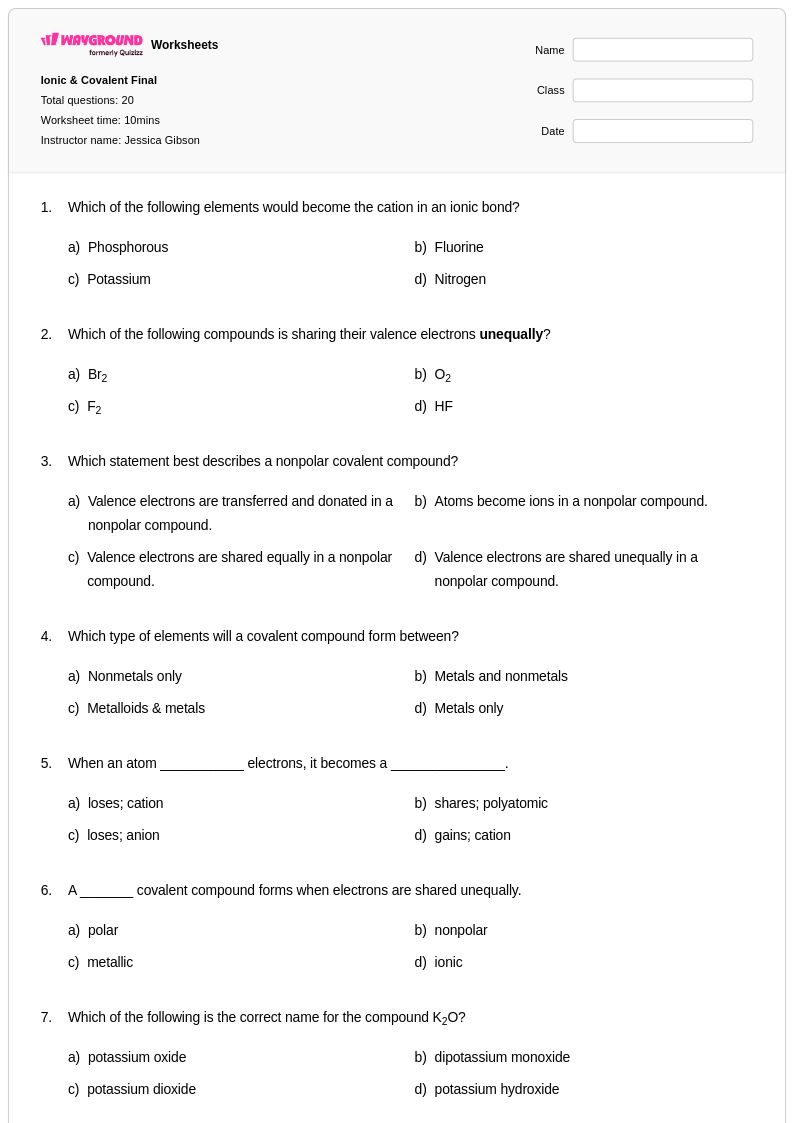
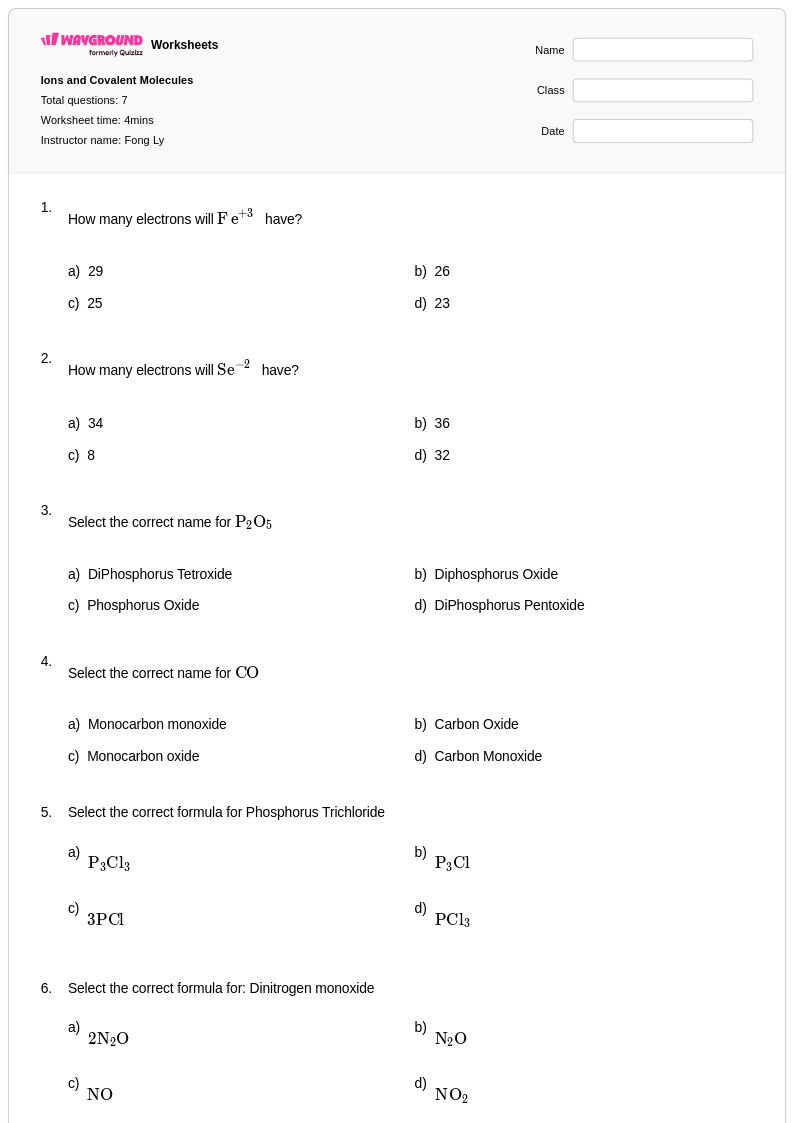
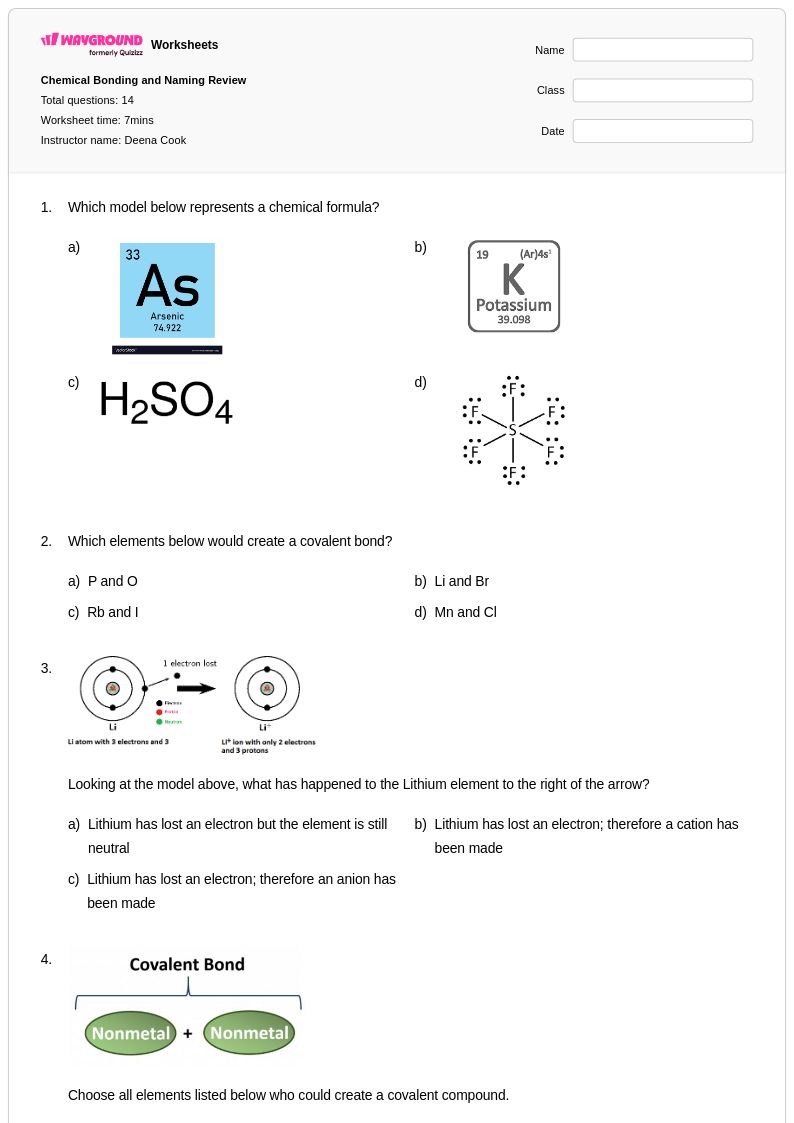
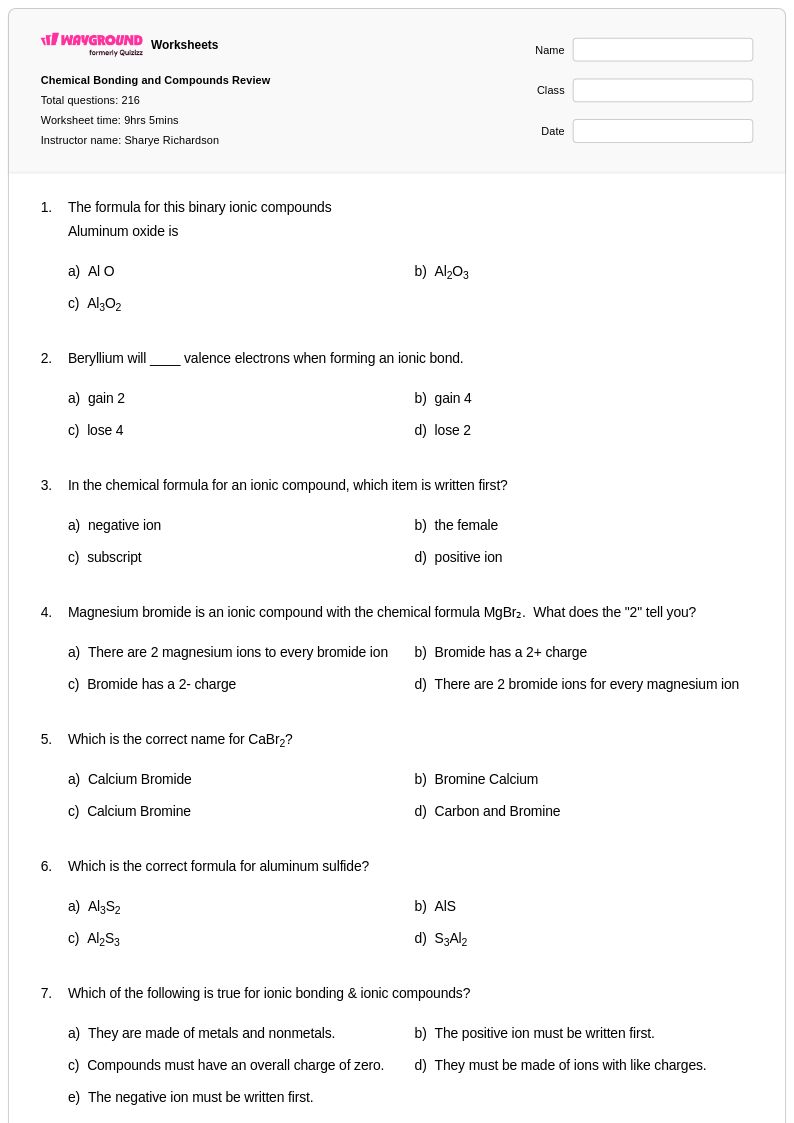
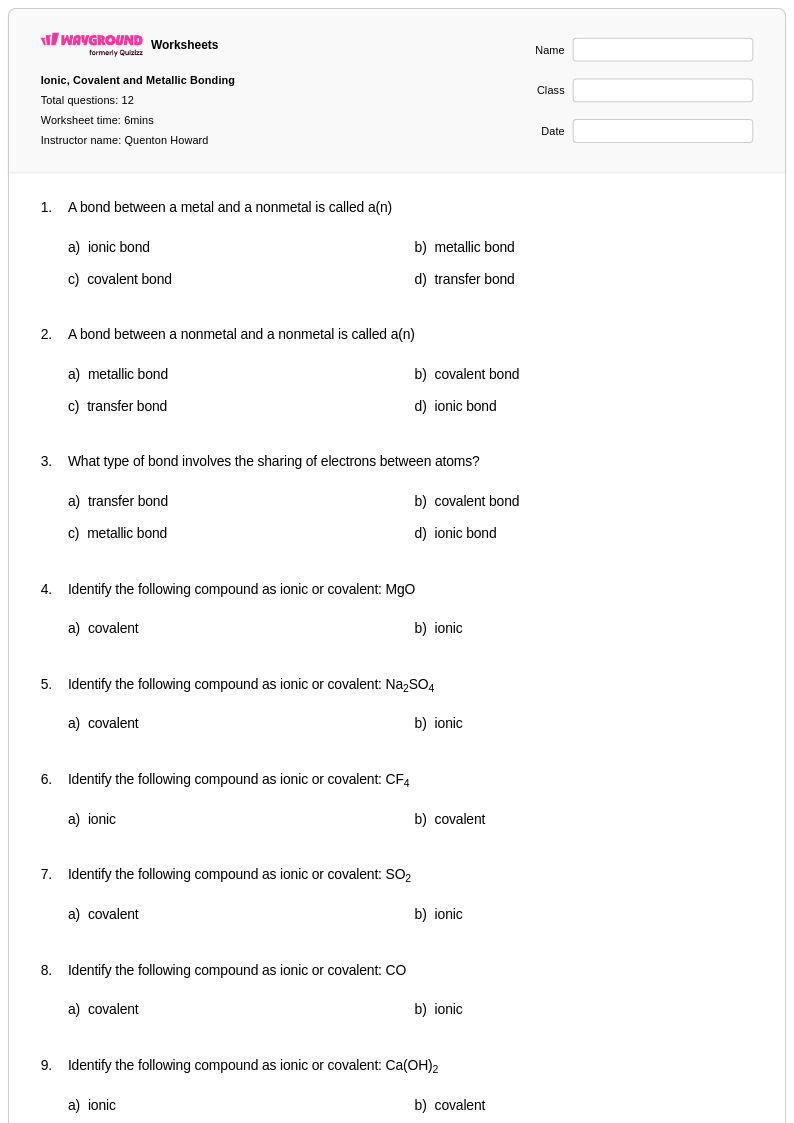
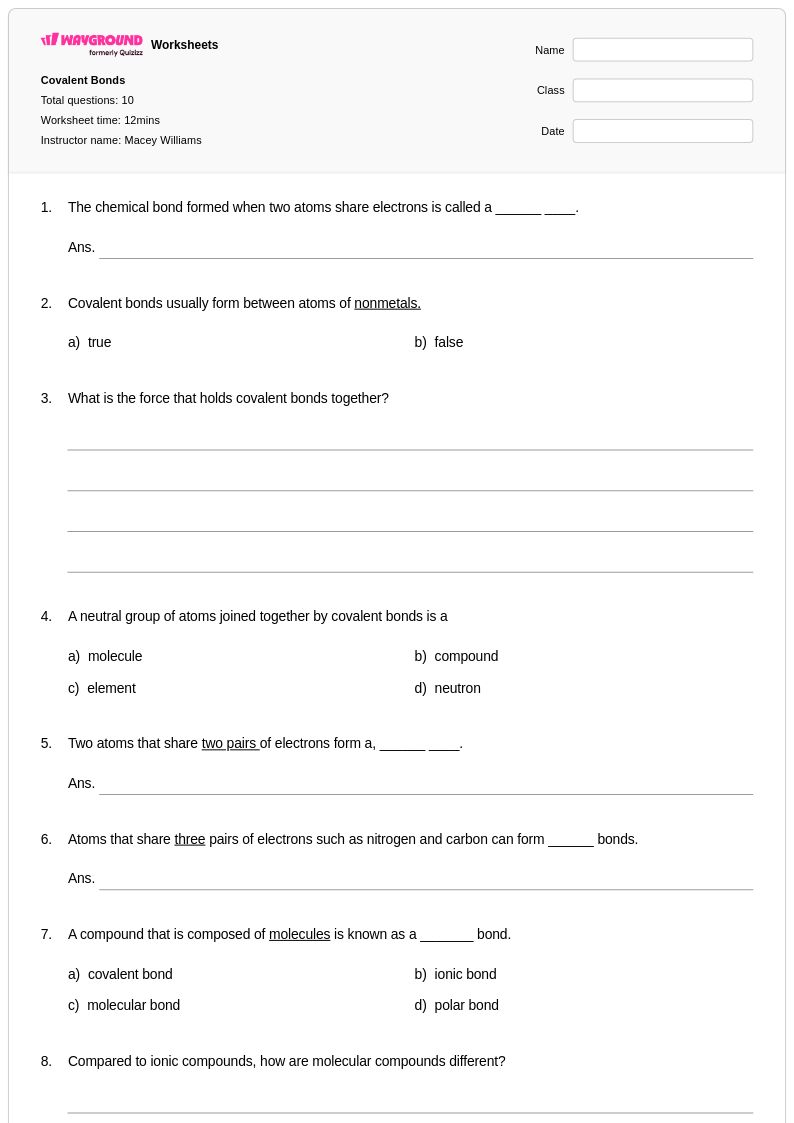
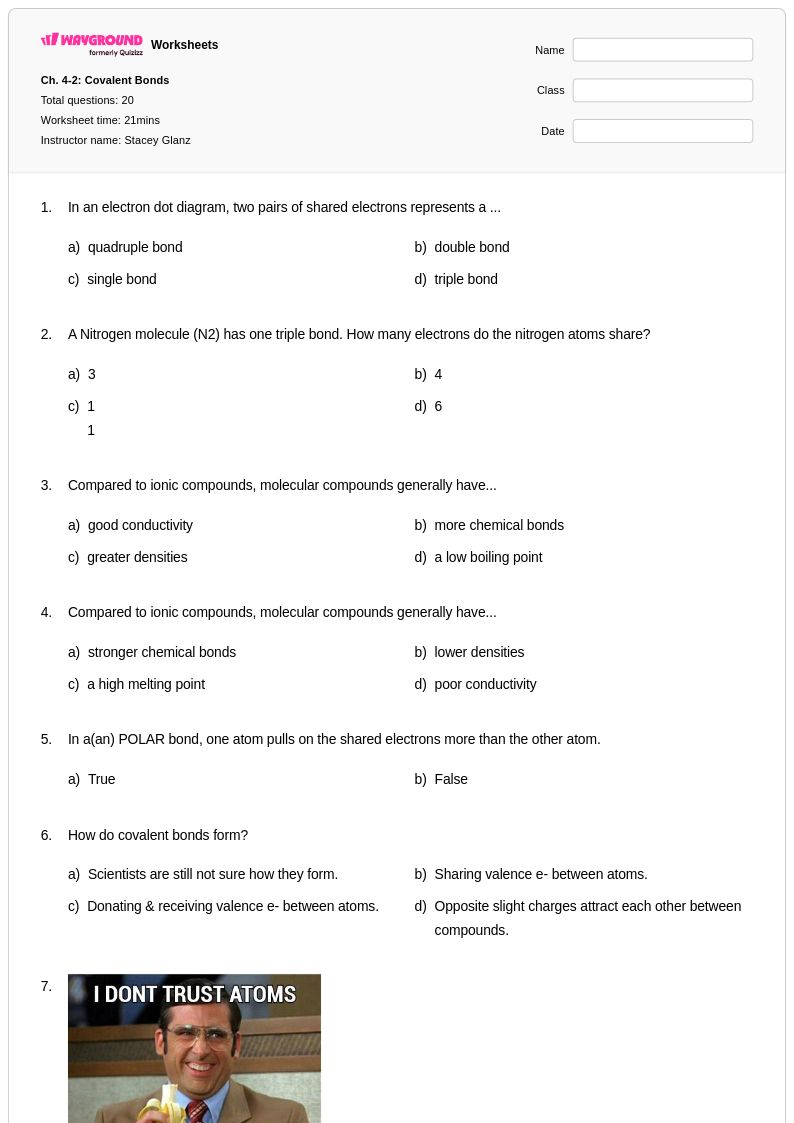
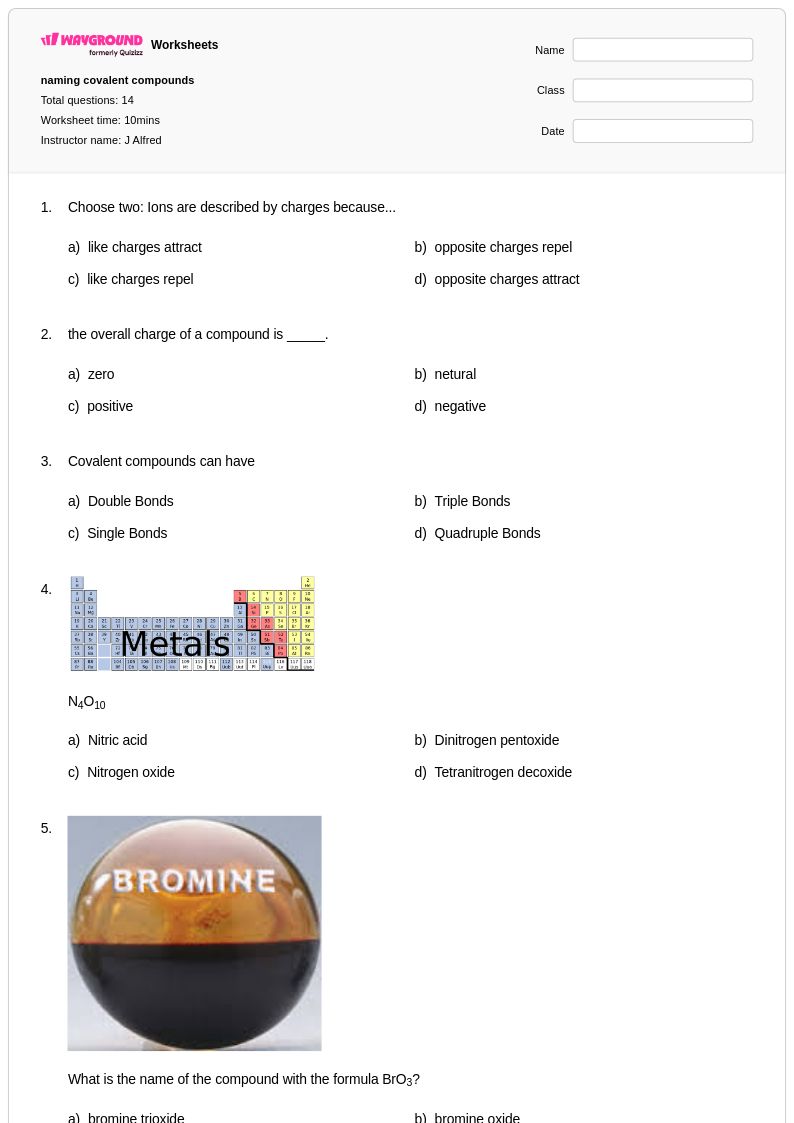
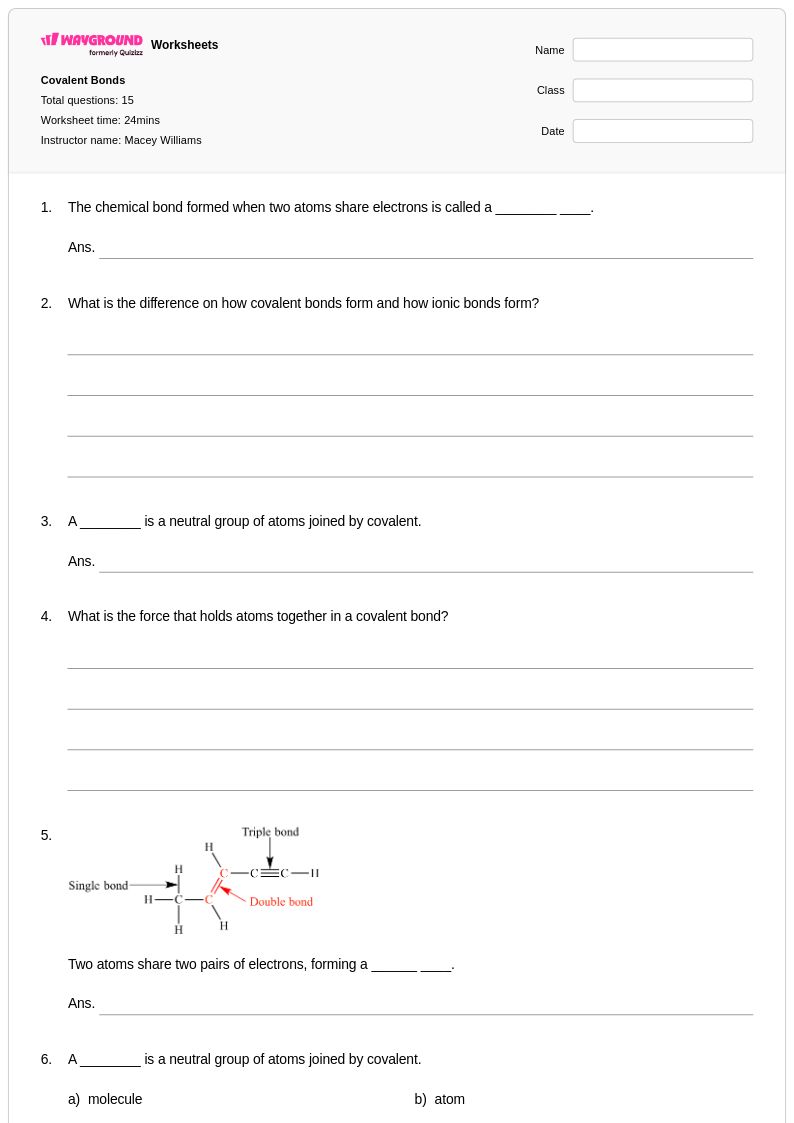
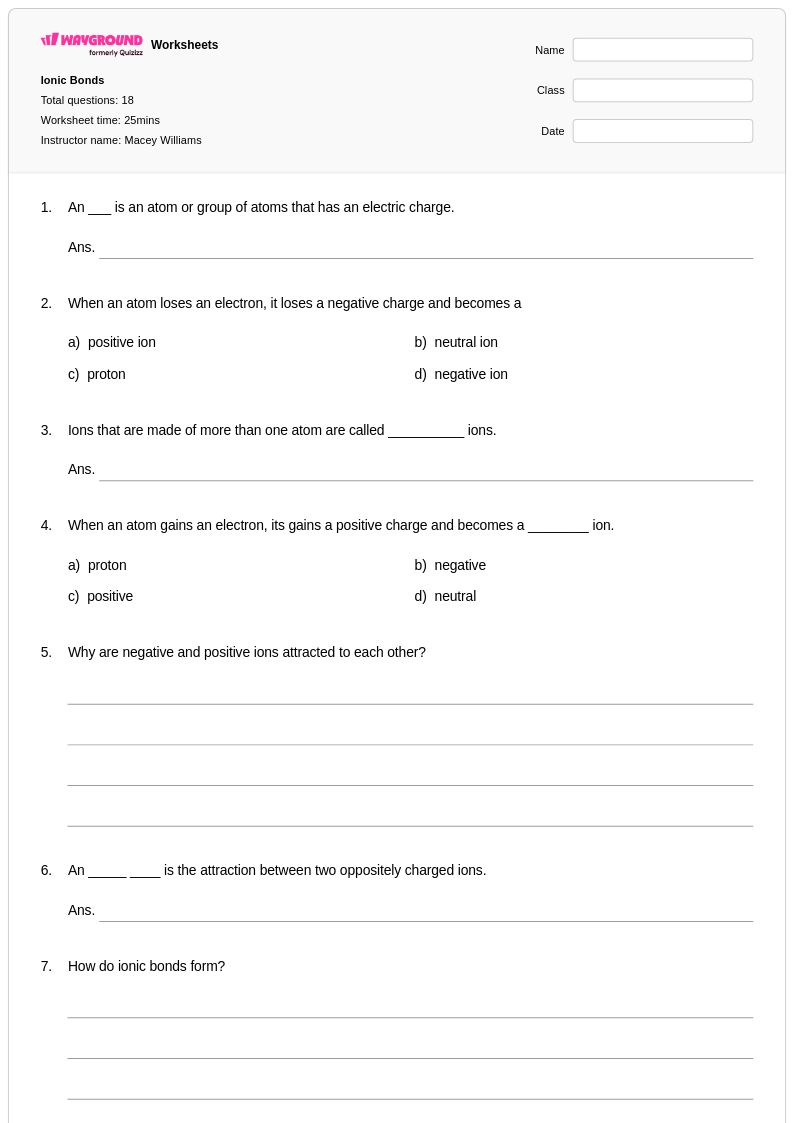
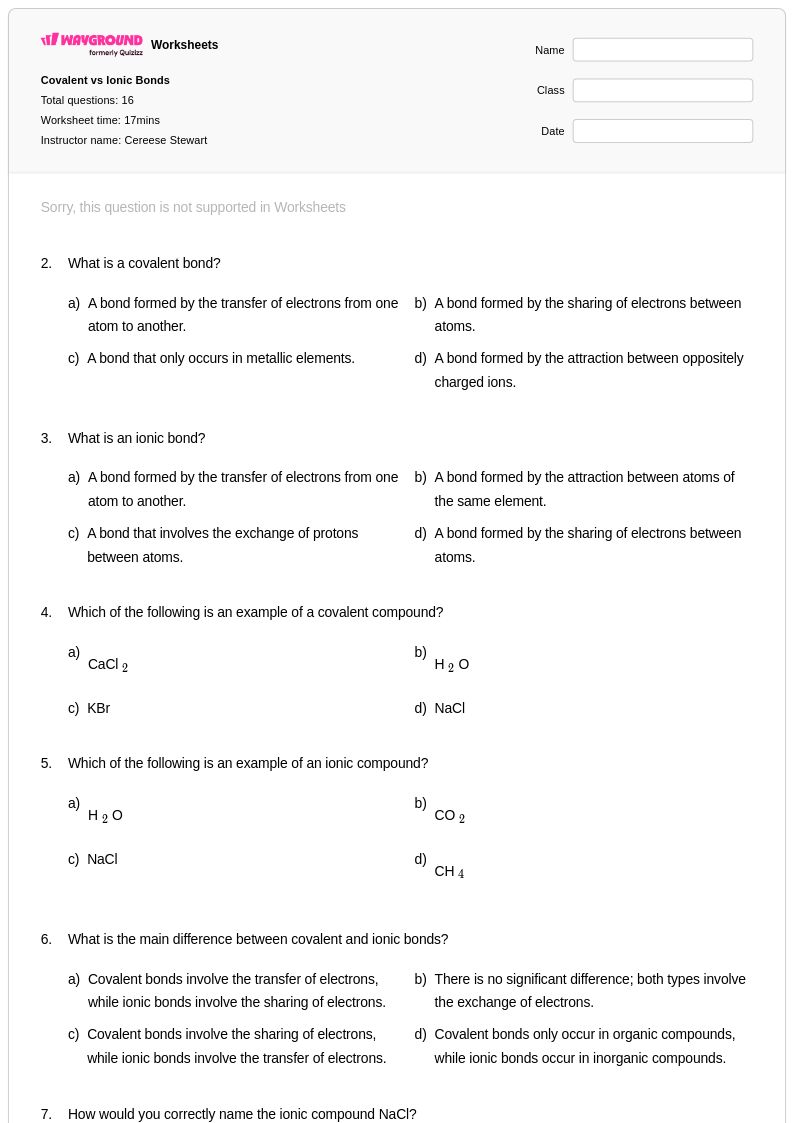
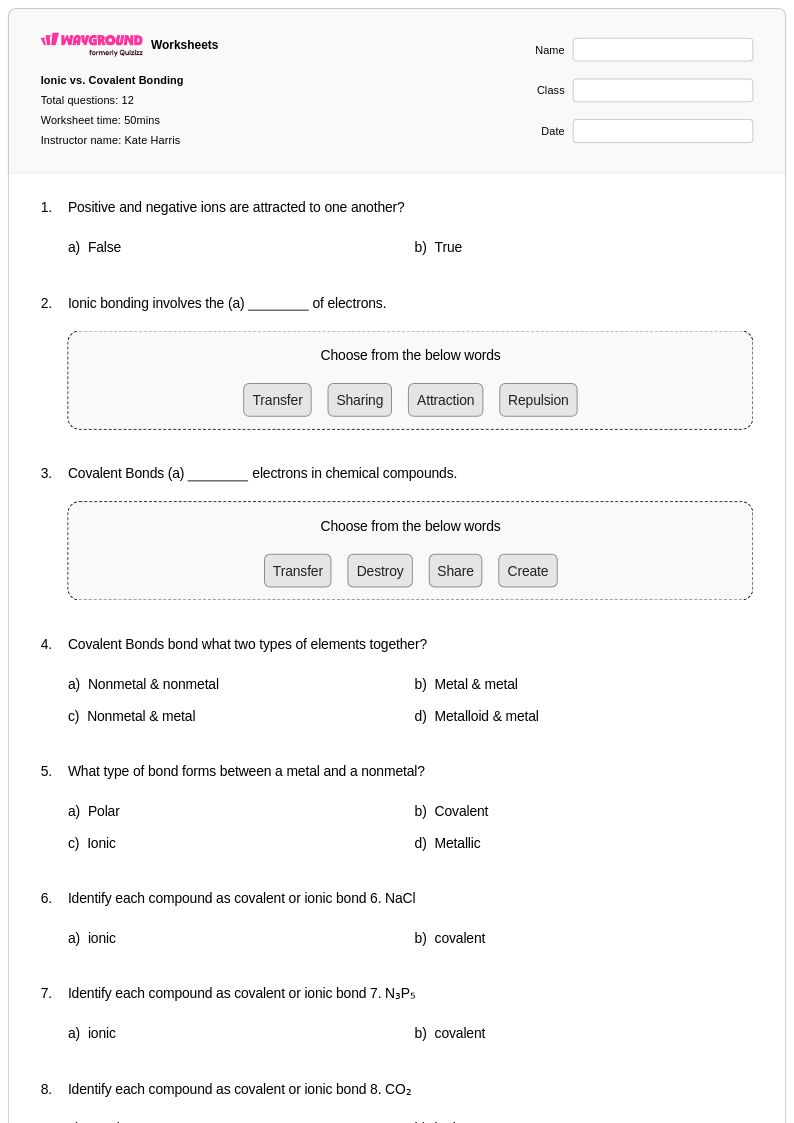
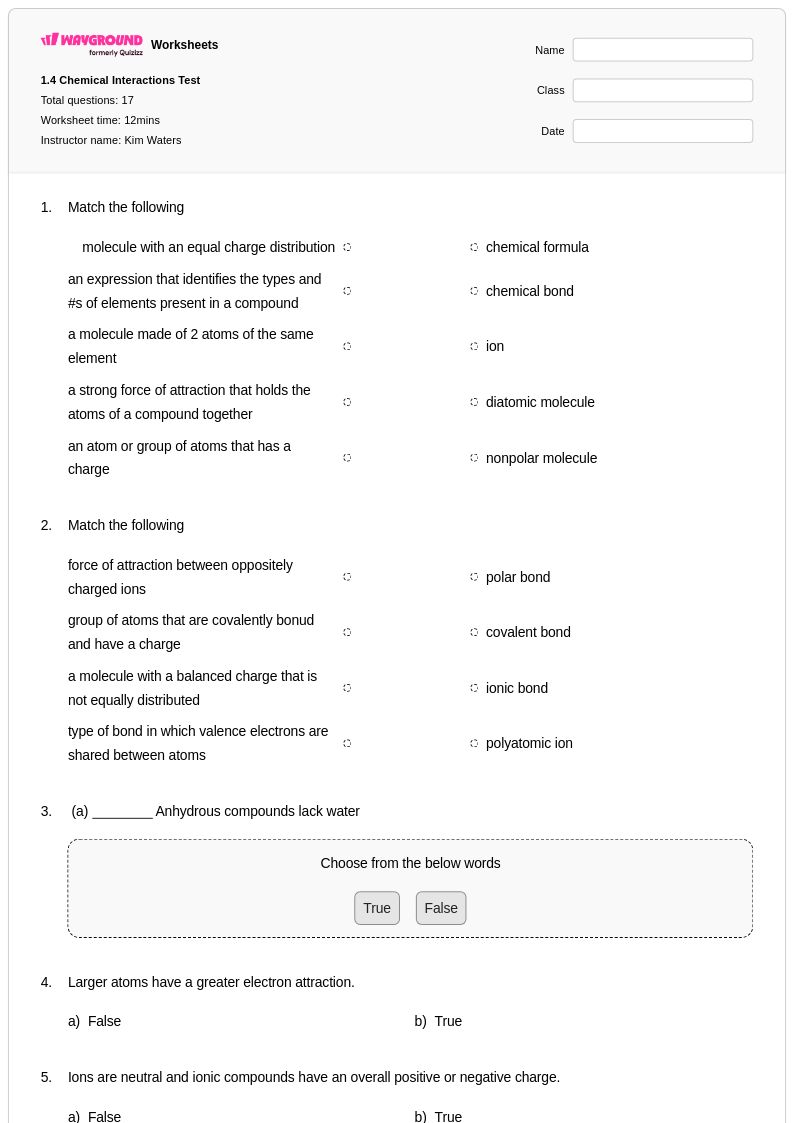
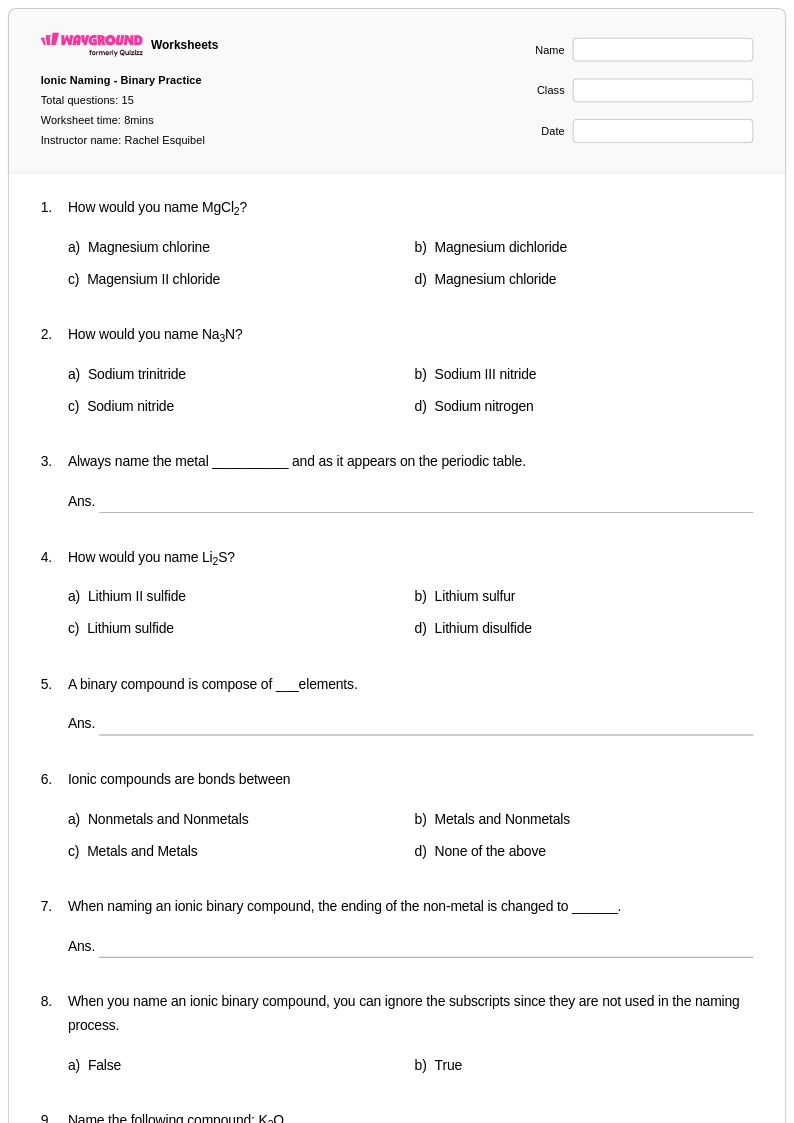
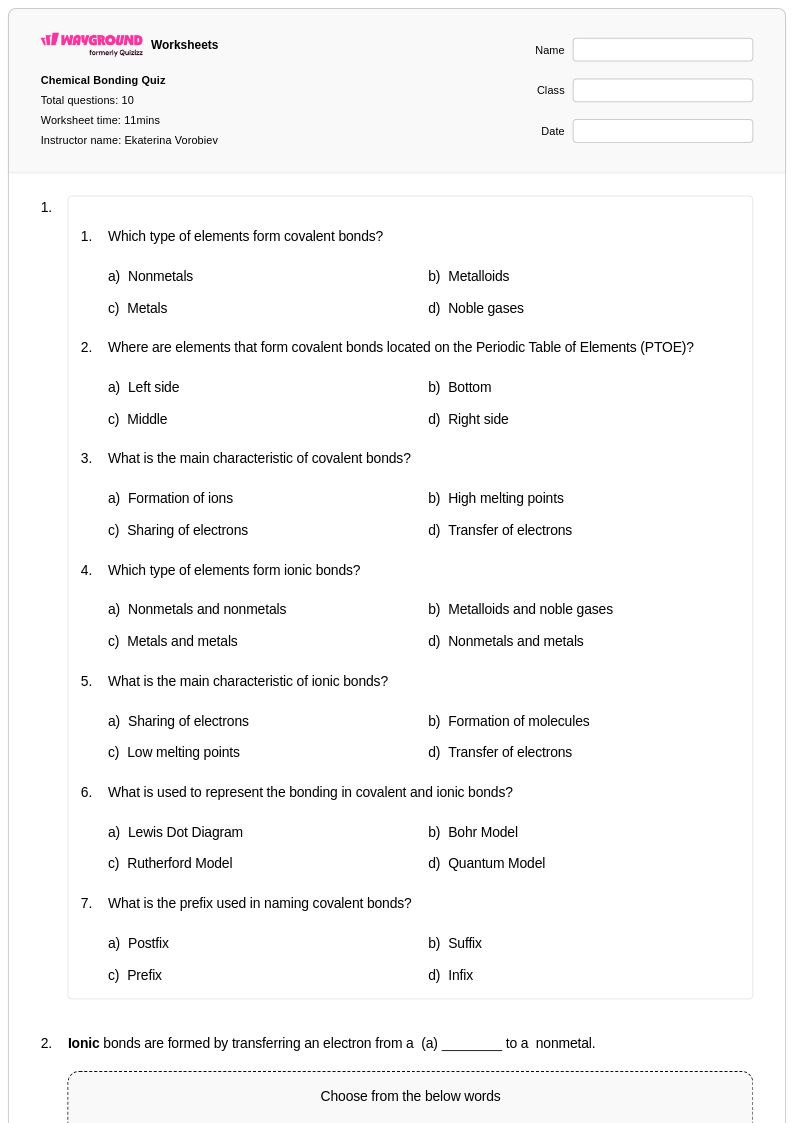
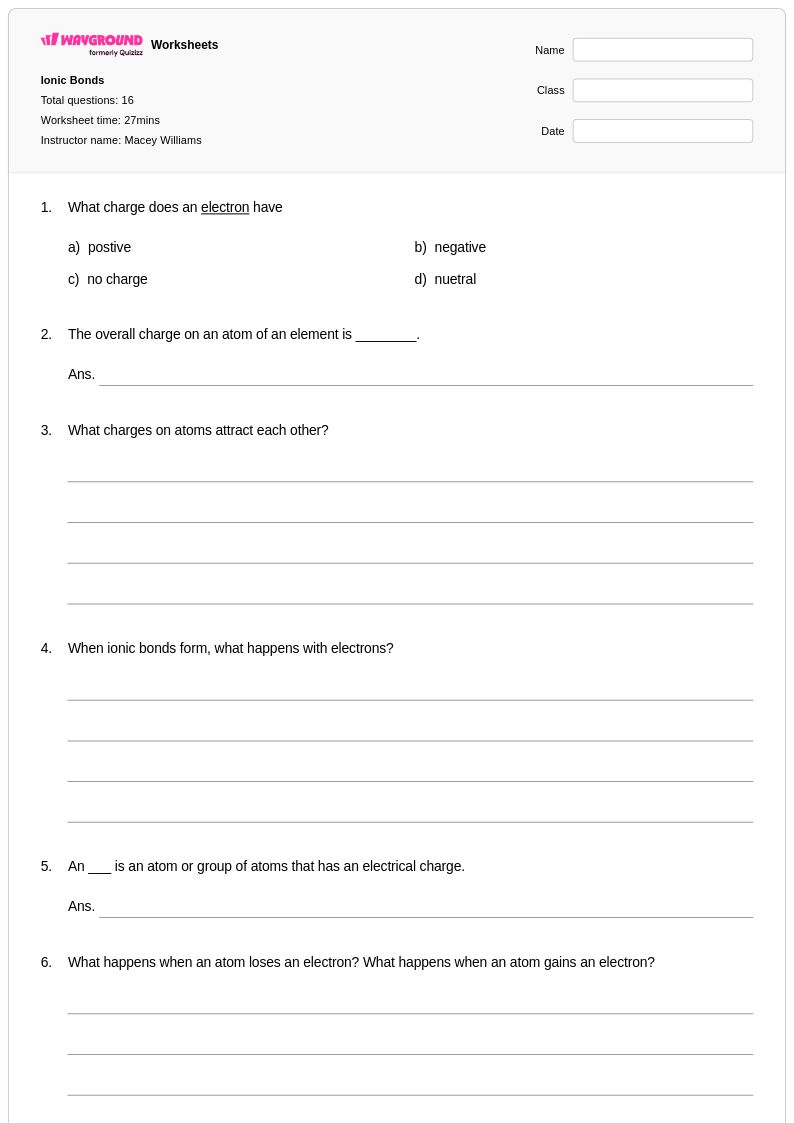
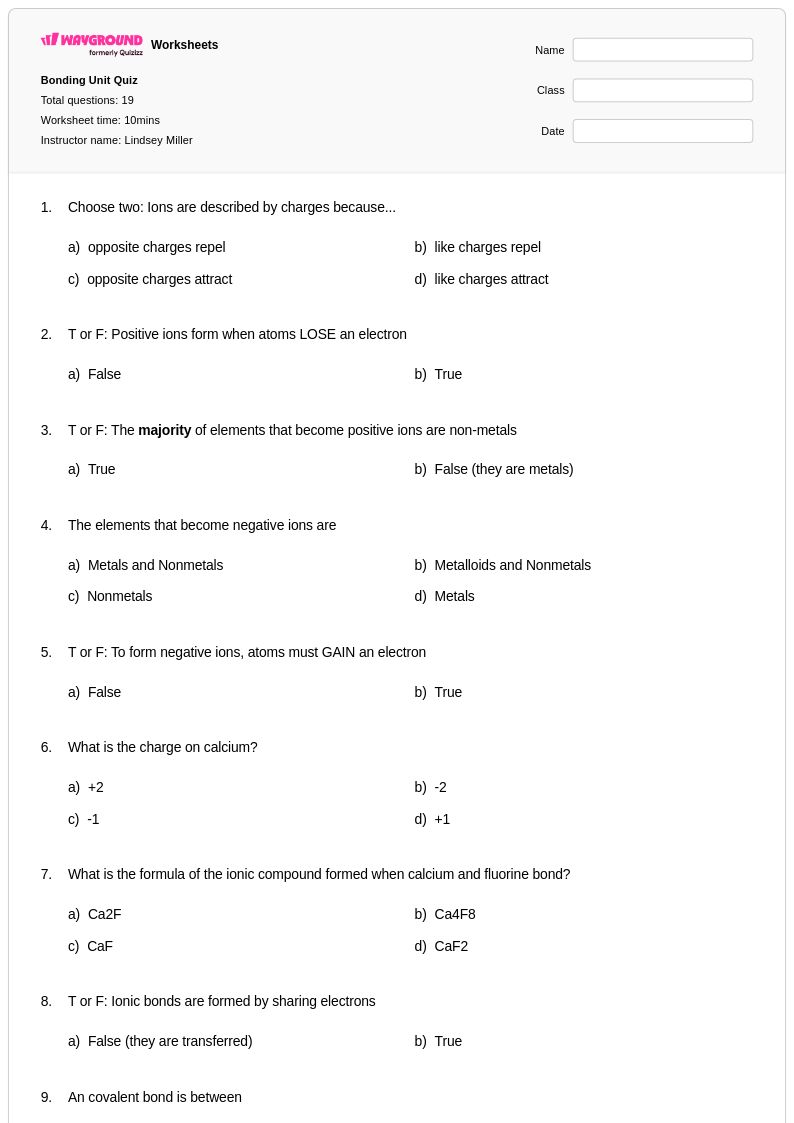
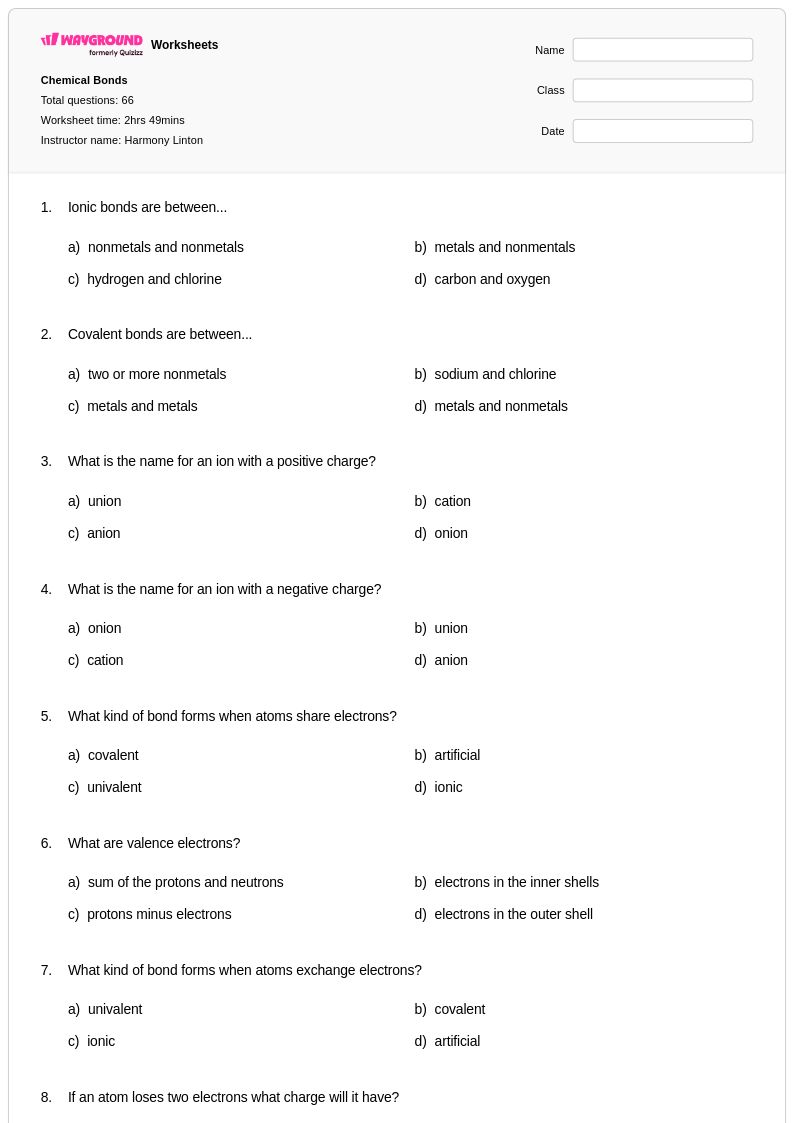
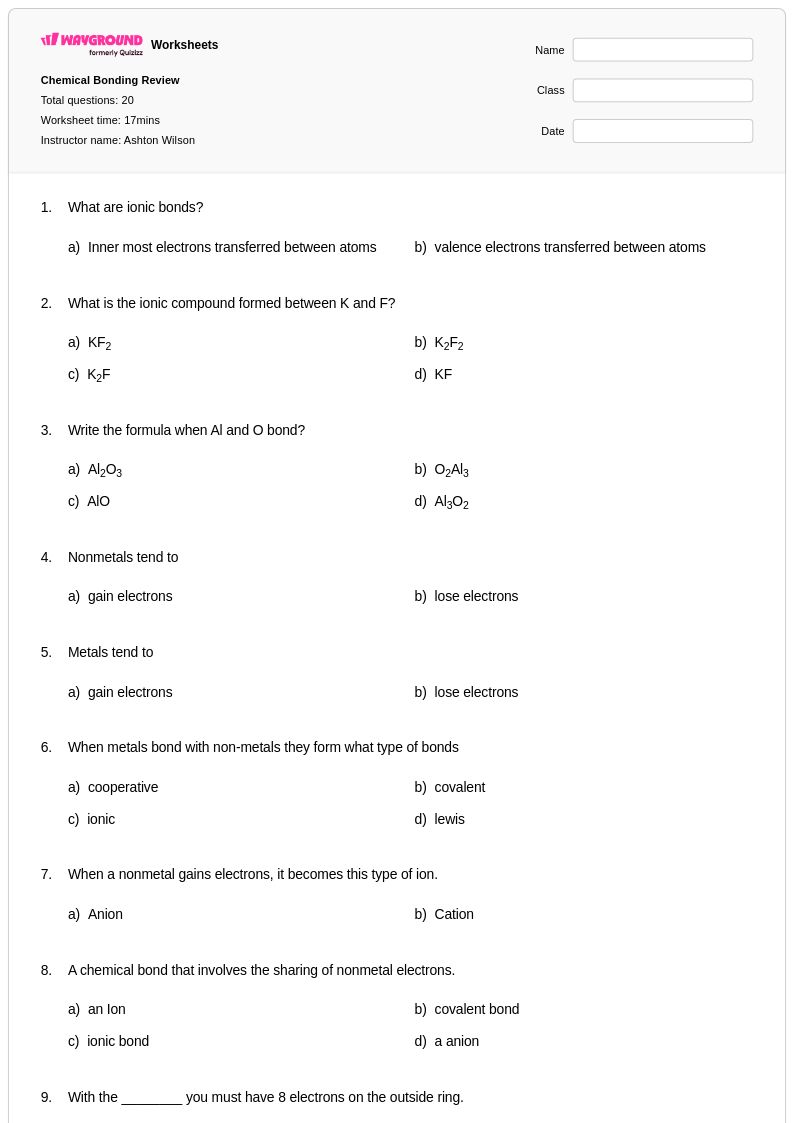
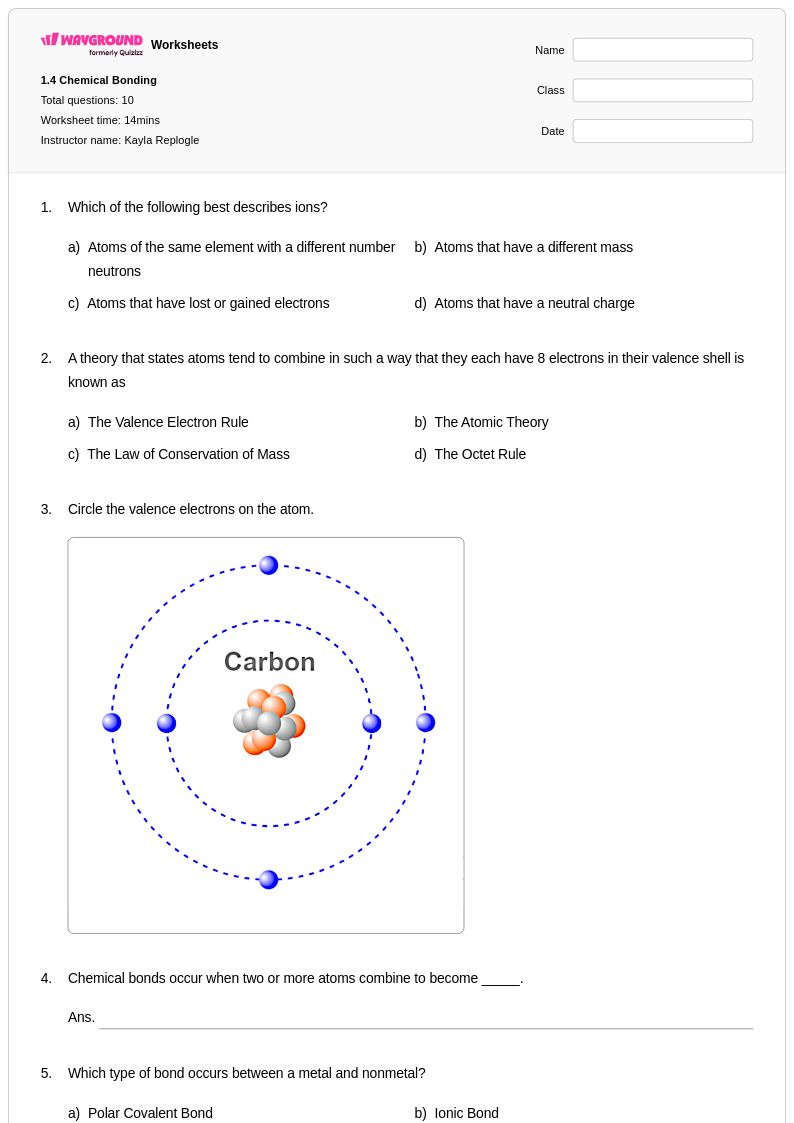
Ionic and covalent compound naming worksheets for Class 8 students available through Wayground (formerly Quizizz) provide comprehensive practice in mastering the systematic nomenclature rules that govern chemical compounds. These carefully designed worksheets strengthen essential skills including identifying ionic versus covalent bonding patterns, applying proper naming conventions for binary and polyatomic compounds, and recognizing the relationship between chemical formulas and compound names. Students work through practice problems that progress from simple binary ionic compounds like sodium chloride to more complex polyatomic ions and molecular compounds, with each printable worksheet including detailed answer keys that allow for immediate feedback and self-assessment. The free pdf resources cover critical concepts such as oxidation states, prefixes for molecular compounds, and the systematic approach to writing chemical formulas from compound names.
Wayground (formerly Quizizz) supports science educators with millions of teacher-created worksheet resources specifically focused on ionic and covalent compound naming, featuring robust search and filtering capabilities that allow teachers to locate materials aligned with specific learning standards and student needs. The platform's differentiation tools enable teachers to customize worksheets for various skill levels, from introductory practice with common ionic compounds to advanced exercises involving transition metals and complex molecular structures. These resources are available in both printable and digital pdf formats, making them versatile for classroom instruction, homework assignments, remediation sessions, and enrichment activities. Teachers can efficiently plan lessons around systematic compound naming practice, provide targeted skill reinforcement for students struggling with nomenclature rules, and offer challenging extensions for advanced learners ready to tackle more sophisticated chemical naming conventions.
FAQs
How do I teach ionic and covalent compound naming to chemistry students?
Start by establishing the distinction between ionic and covalent bonding before introducing naming rules, since students need to correctly classify a compound before they can name it. For ionic compounds, teach the metal-nonmetal pattern first, then introduce polyatomic ions as a separate memorization task. For covalent compounds, introduce Greek prefixes (mono-, di-, tri-) systematically so students can decode and construct names independently. Building this sequence explicitly reduces confusion between the two naming systems.
What exercises help students practice naming ionic and covalent compounds?
Effective practice exercises include two-directional drills where students both name a given formula and write the formula for a given name, reinforcing the rules in both directions. Sorting activities that require students to first classify a compound as ionic or covalent before naming it are especially valuable because they build the classification habit that precedes correct naming. Progressive practice sets that begin with binary ionic compounds, advance to polyatomic ions like ammonium phosphate, and then move to covalent molecules like dinitrogen tetroxide mirror the conceptual difficulty curve students need to climb.
What mistakes do students commonly make when naming ionic and covalent compounds?
The most frequent error is applying the wrong naming system, such as using Greek prefixes on ionic compounds or omitting them from covalent molecules. Students also consistently struggle with transition metal ions, forgetting to include Roman numerals to indicate charge when the metal has variable valency. Polyatomic ions like sulfate, phosphate, and nitrate are frequently confused or misspelled because they require memorization rather than rule application. Addressing these error patterns explicitly during instruction, rather than waiting for assessment, significantly improves student accuracy.
How do I differentiate ionic and covalent compound naming practice for students at different ability levels?
For beginning students, limit initial practice to binary ionic compounds with fixed-charge metals before introducing polyatomic ions or variable-charge metals. Advanced students can be challenged with transition metal compounds, complex polyatomic formulas, and introductory organic naming conventions. On Wayground, teachers can assign accommodations such as reduced answer choices to support students who find nomenclature options overwhelming, or enable Read Aloud for students who benefit from hearing questions read to them, without affecting the experience of other students in the class.
How can I use Wayground's ionic and covalent compound naming worksheets in my classroom?
Wayground's ionic and covalent compound naming worksheets are available as printable PDFs for traditional classroom use and in digital formats for technology-integrated or remote learning environments. Teachers can also host the worksheets as a live or assigned quiz directly on Wayground, making it easy to gather student performance data in real time. Each worksheet includes a complete answer key, so students can self-check their work during guided practice or independent study sessions.
How do I help students remember polyatomic ion names for compound naming?
Polyatomic ions require memorization, so repeated low-stakes retrieval practice is more effective than passive review. Flashcard drills, fill-in-the-blank formula sheets, and naming exercises that deliberately recycle ions like sulfate, phosphate, ammonium, and nitrate across multiple practice sets help lock these into long-term memory. Connecting ion names to real-world compounds, such as ammonium nitrate in fertilizers or sodium phosphate in food labels, gives students meaningful anchors that aid recall.