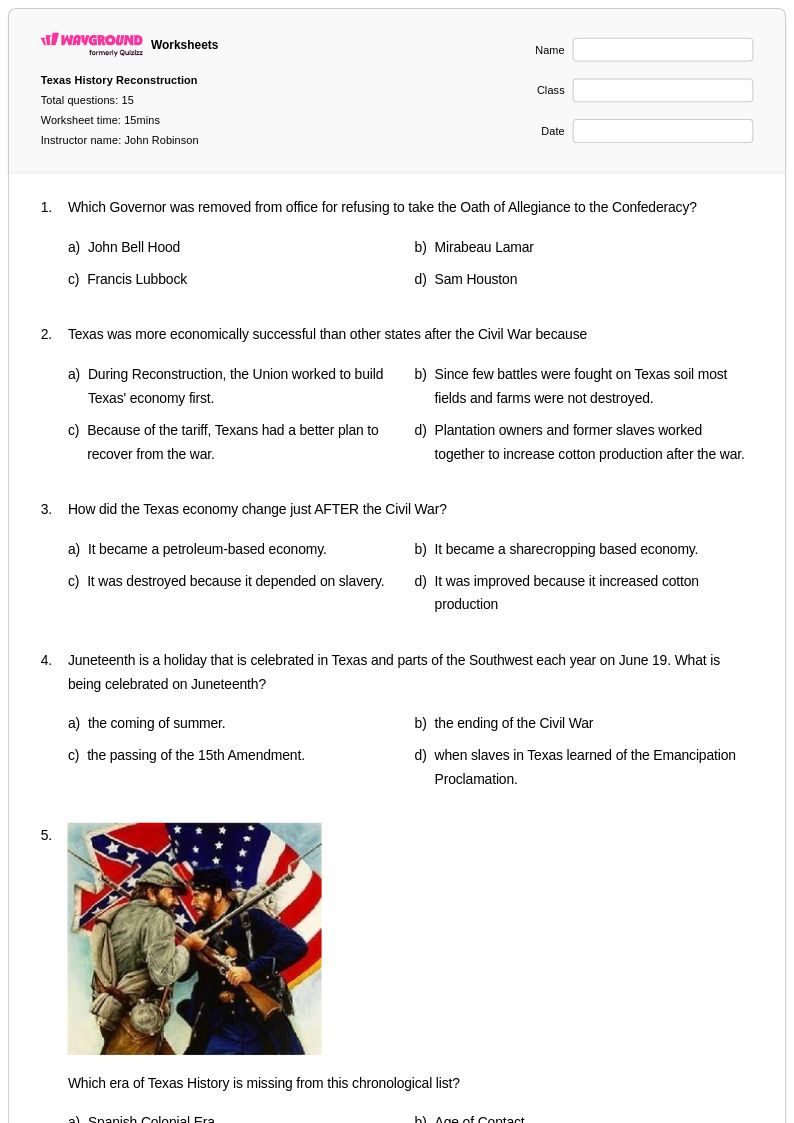
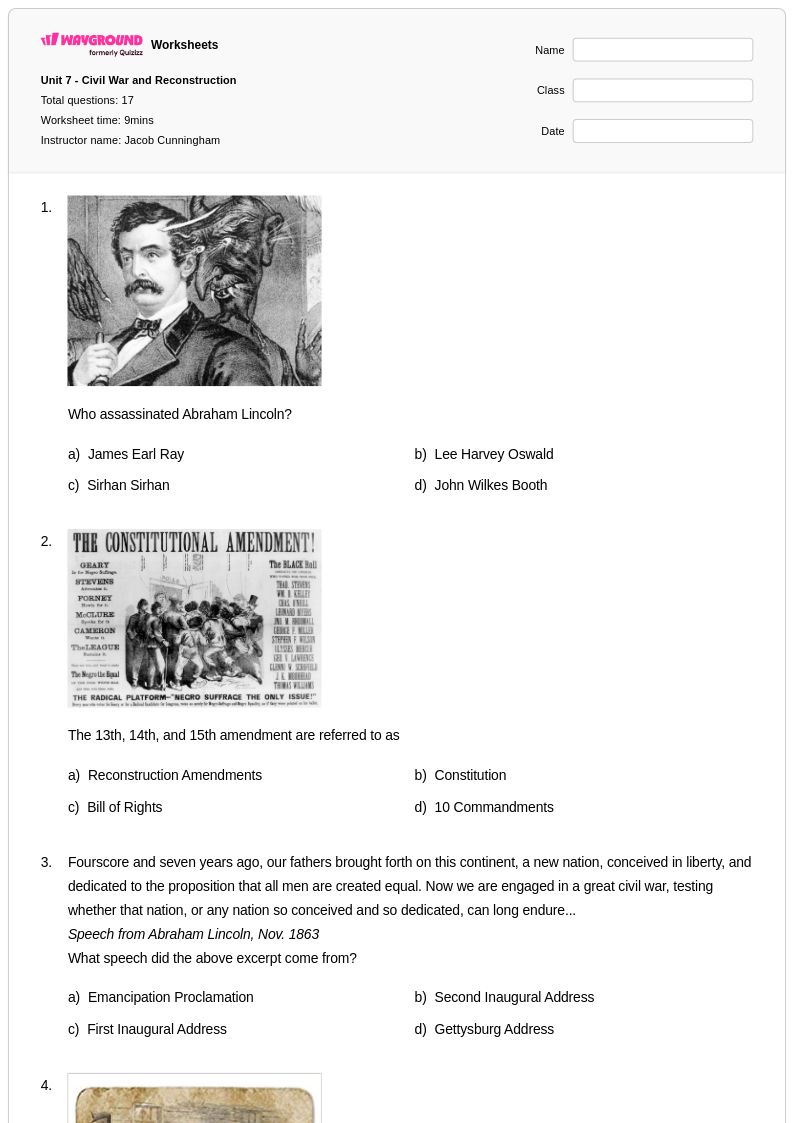
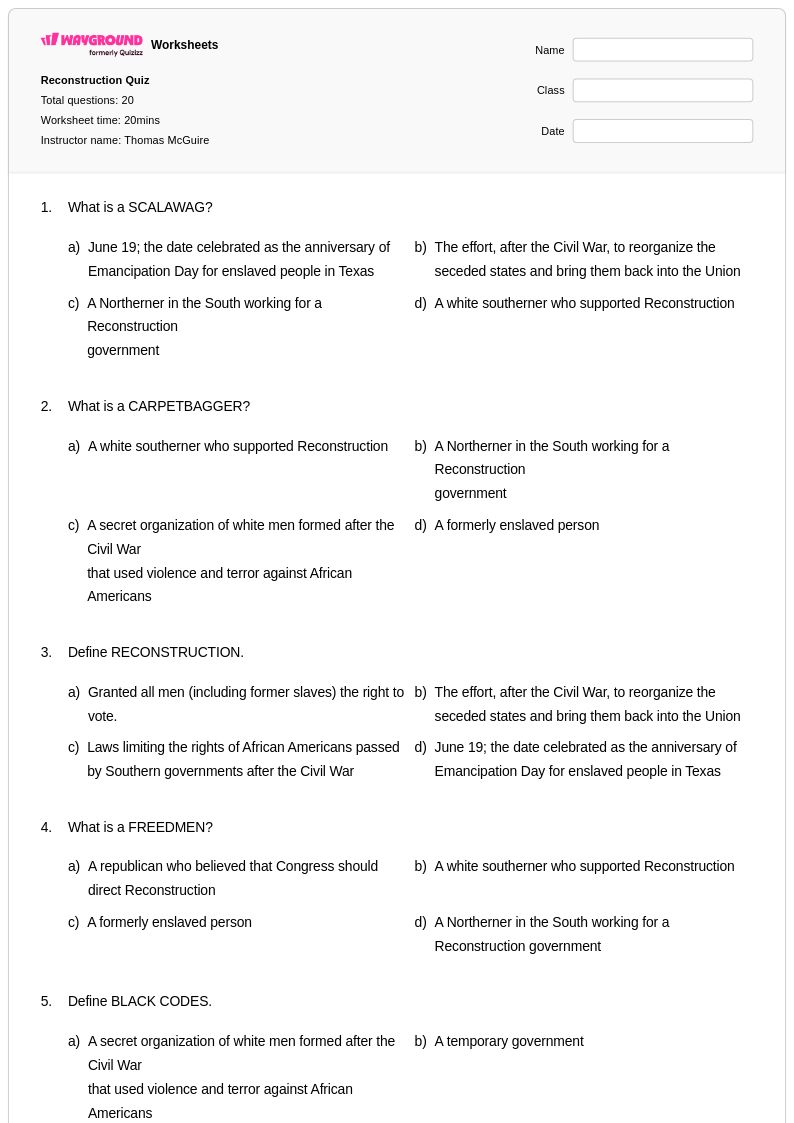
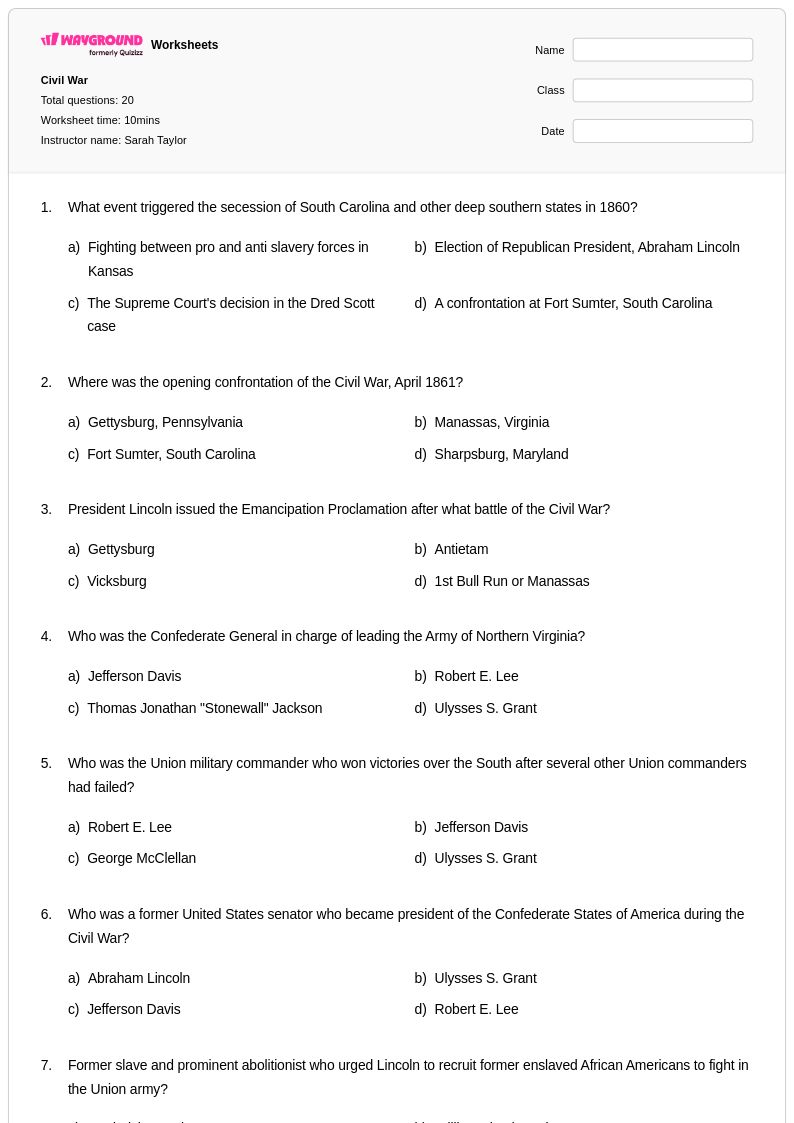
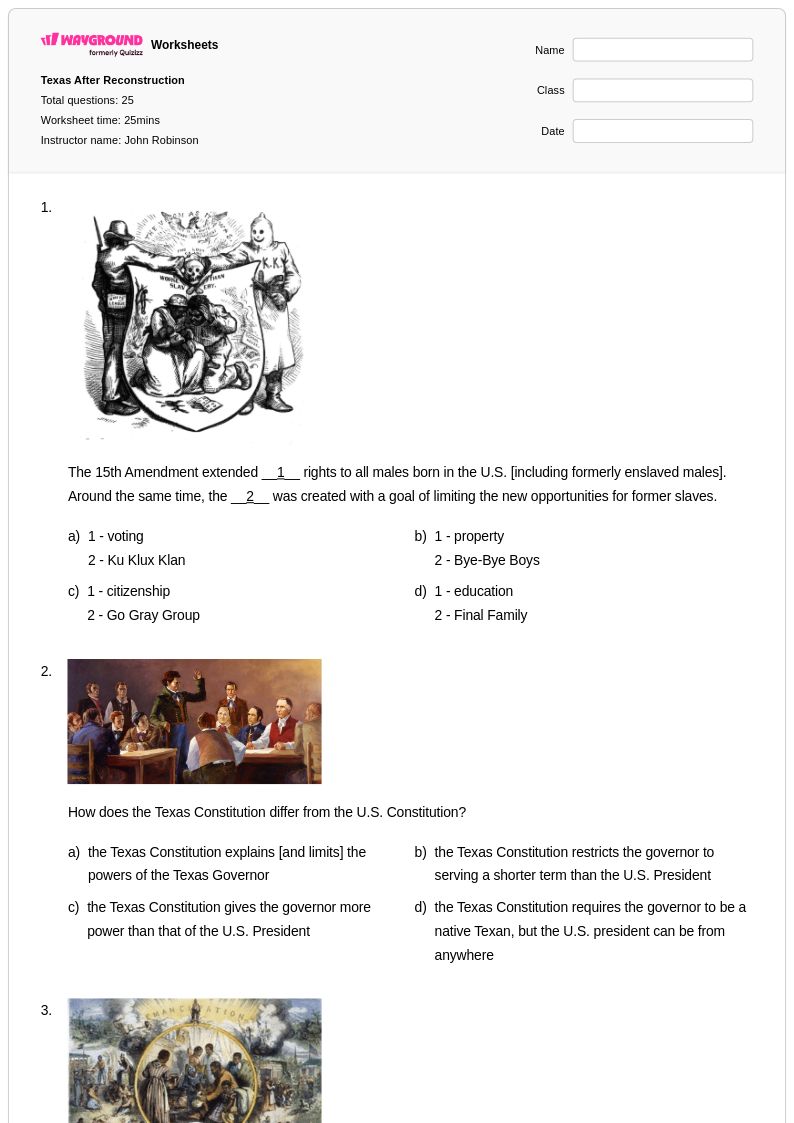
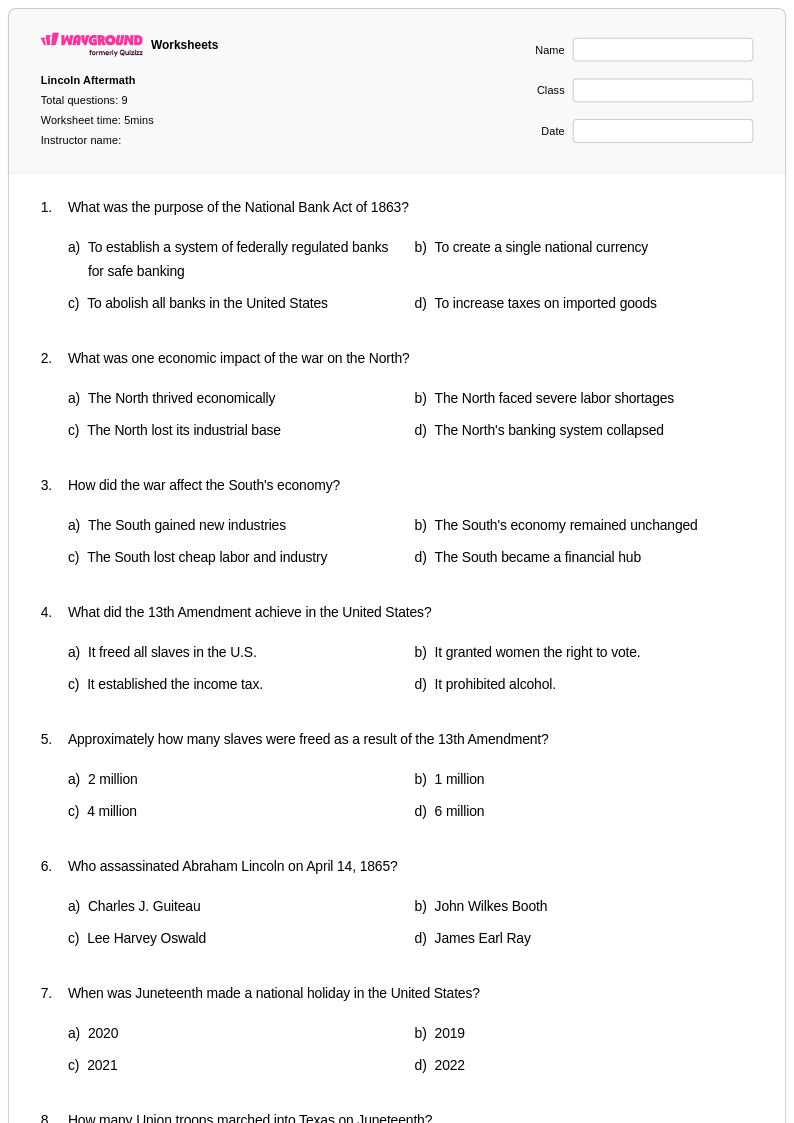
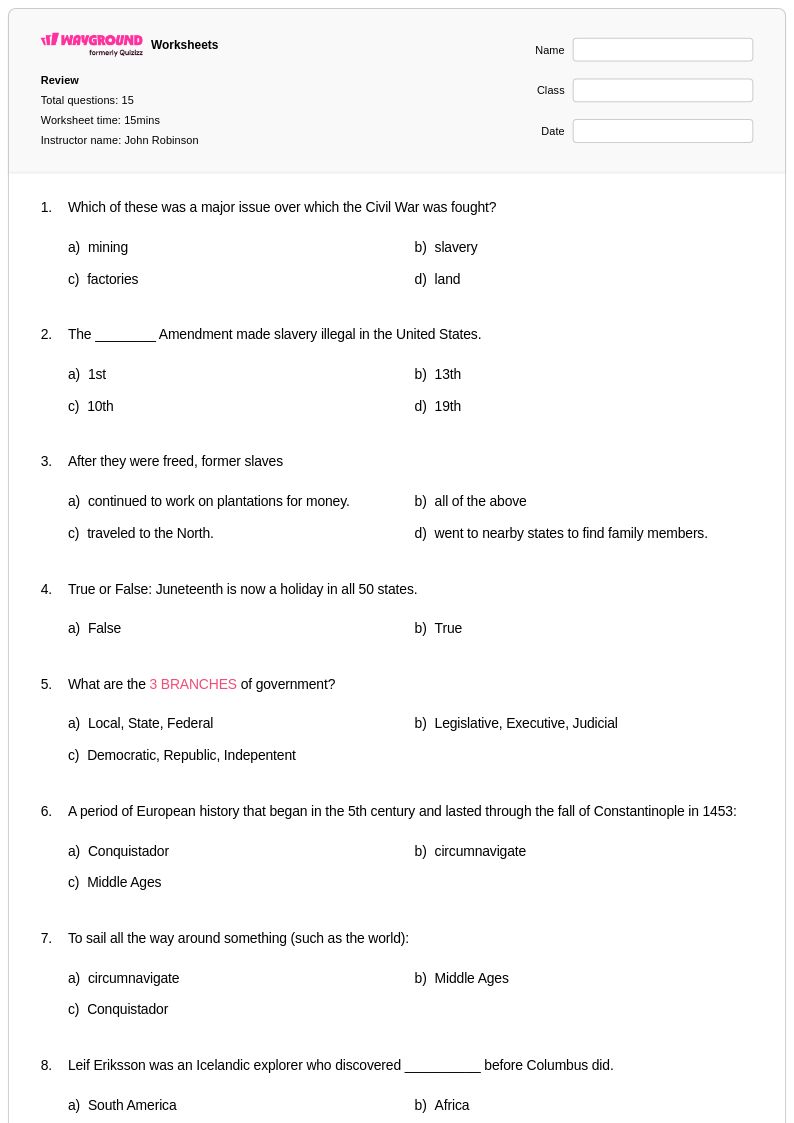
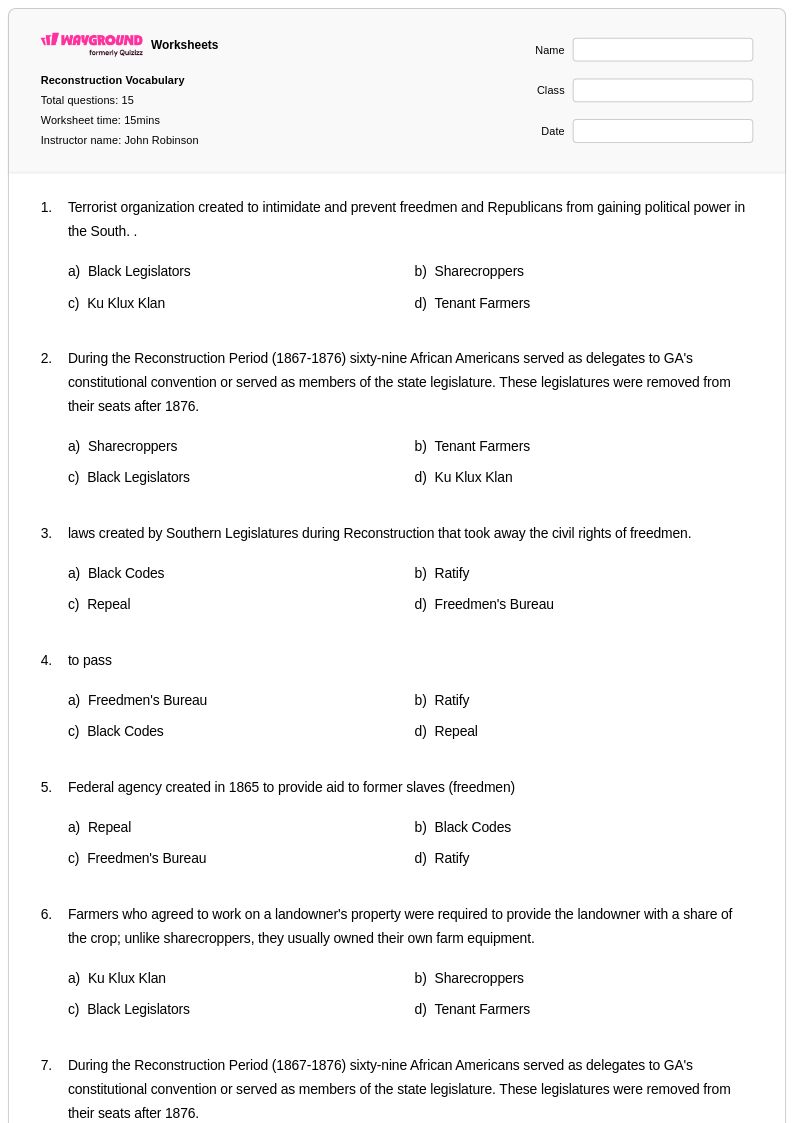
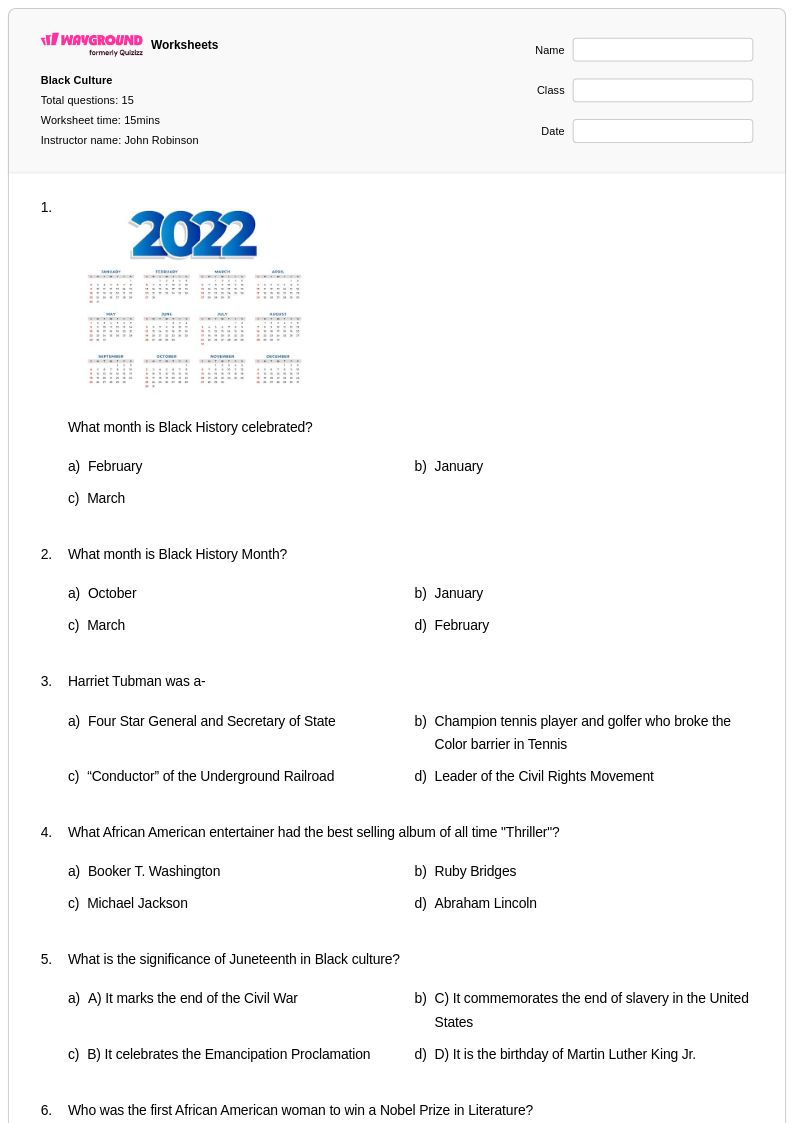
Discover free Class 10 Juneteenth worksheets and printables through Wayground that help students explore this pivotal moment in U.S. History with engaging practice problems, PDFs, and comprehensive answer keys.
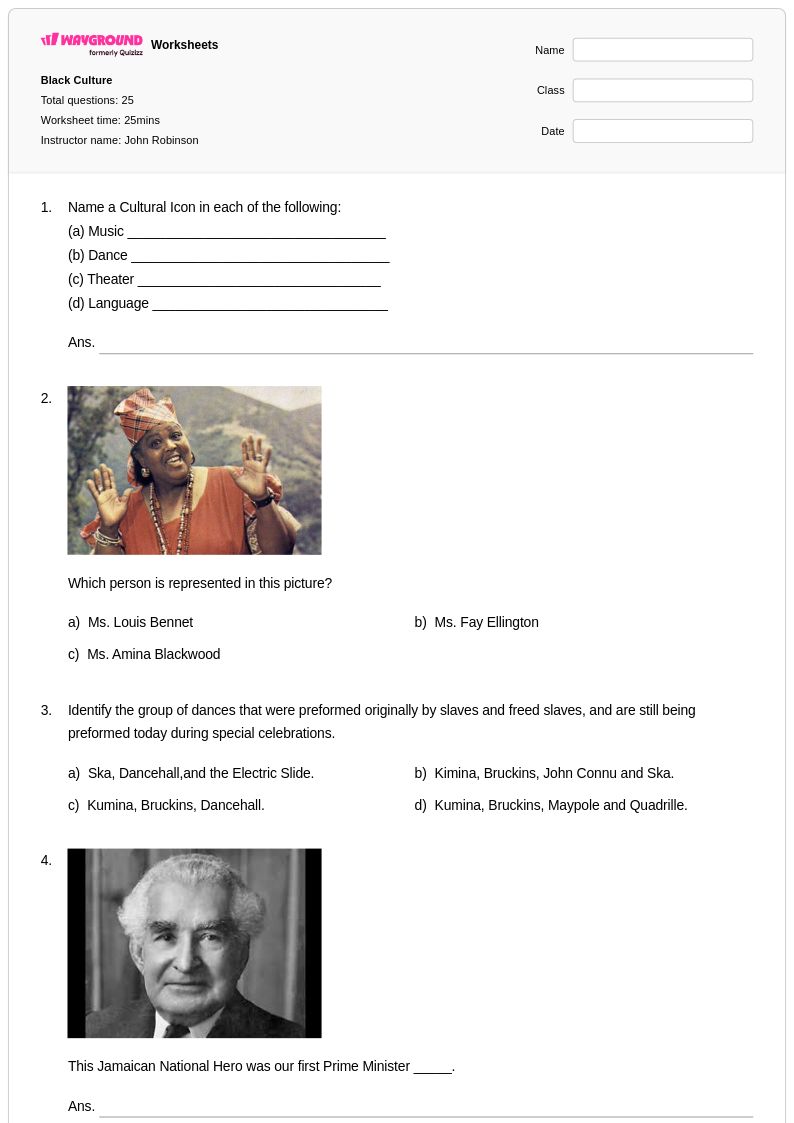
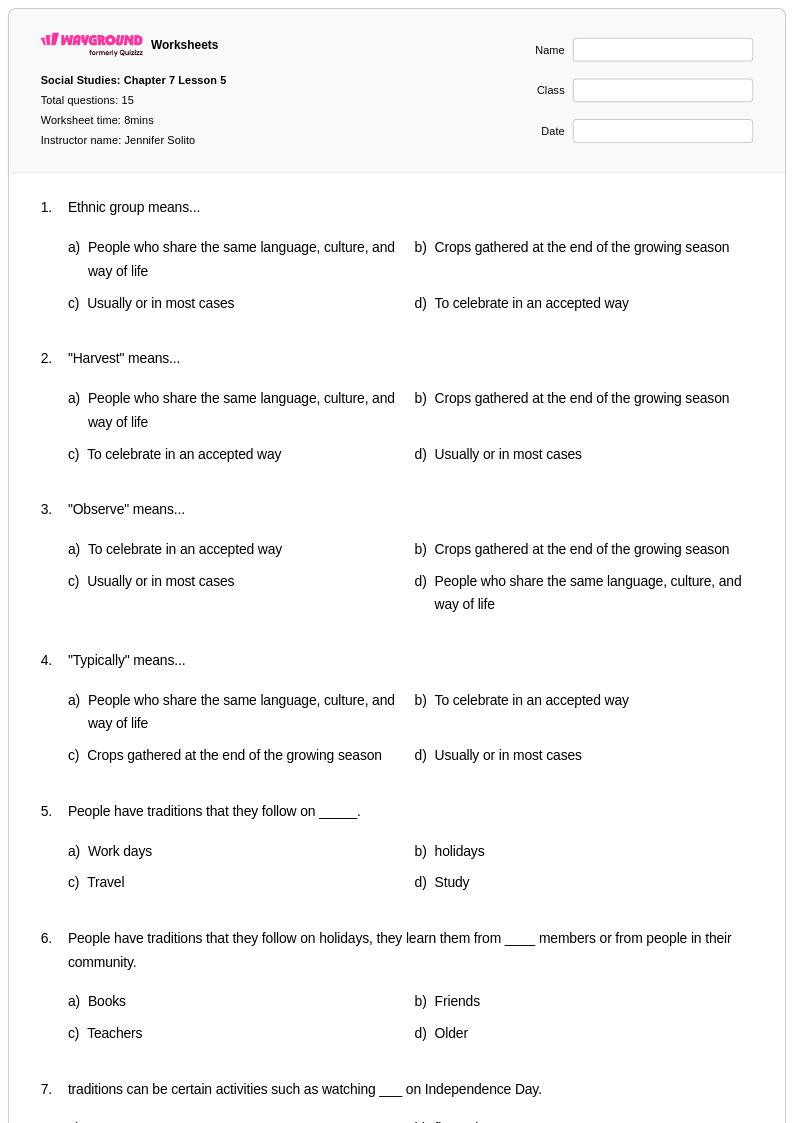
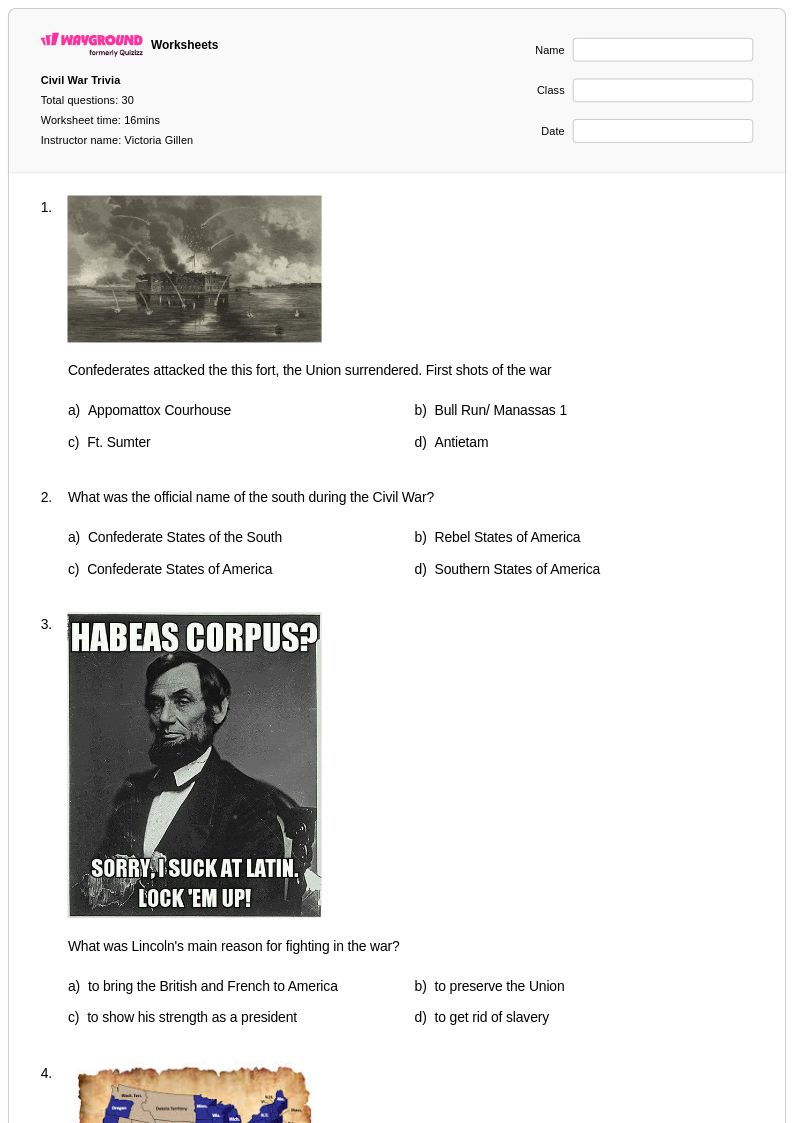
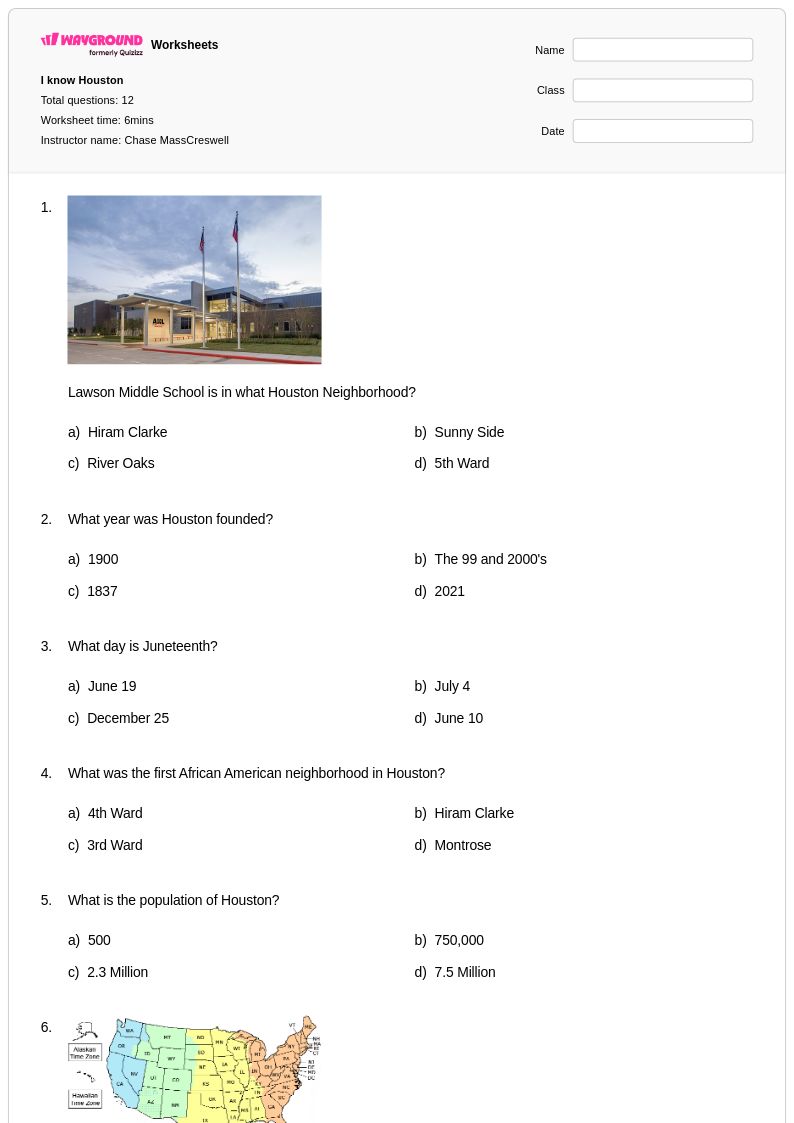
Explore printable Juneteenth worksheets for Class 10
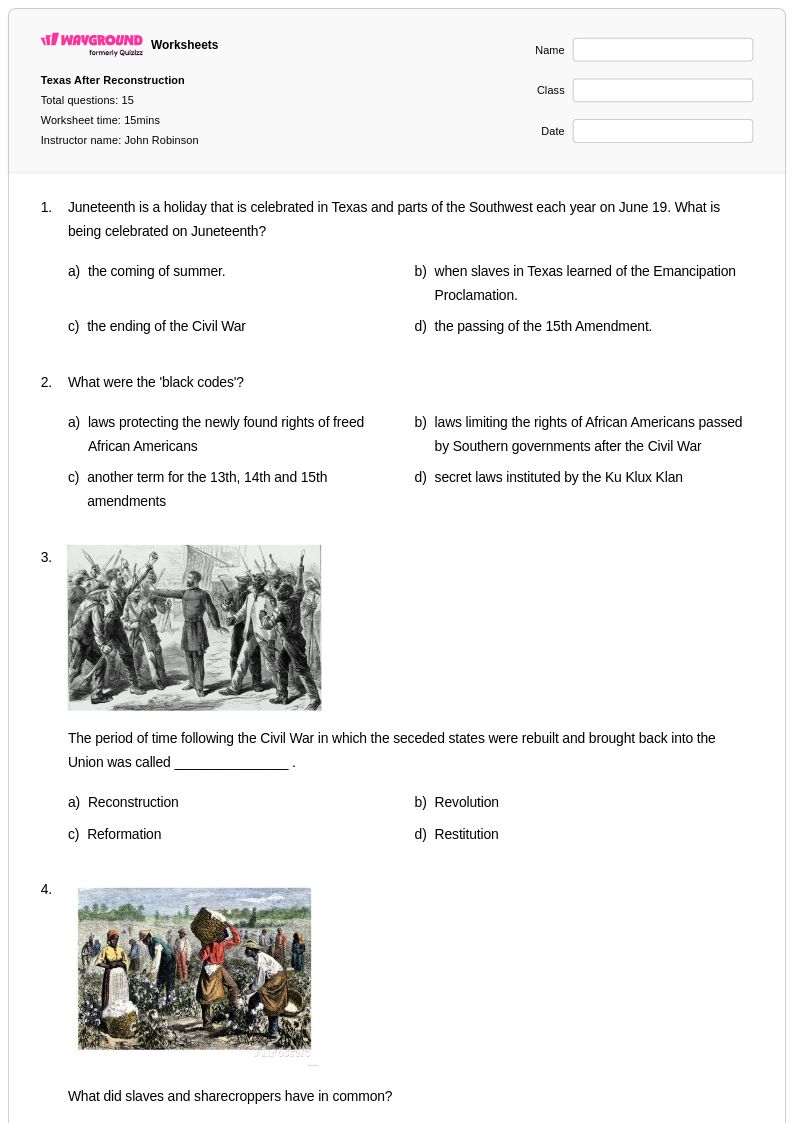
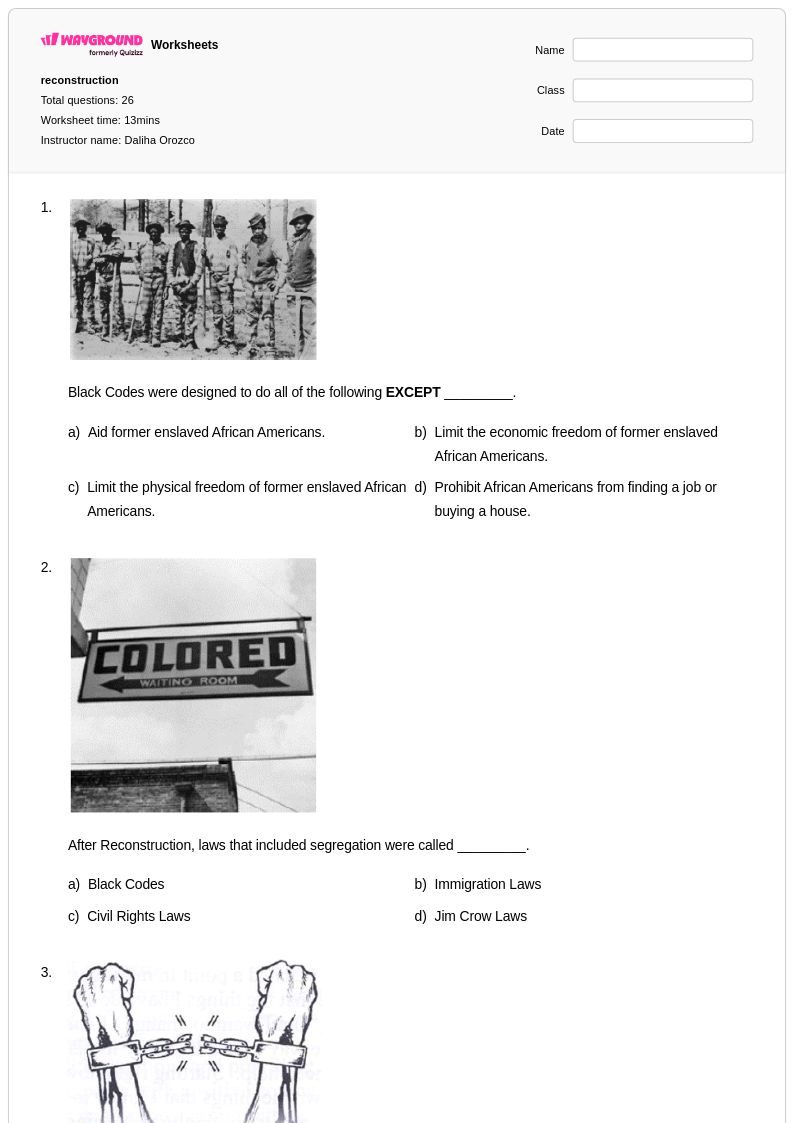
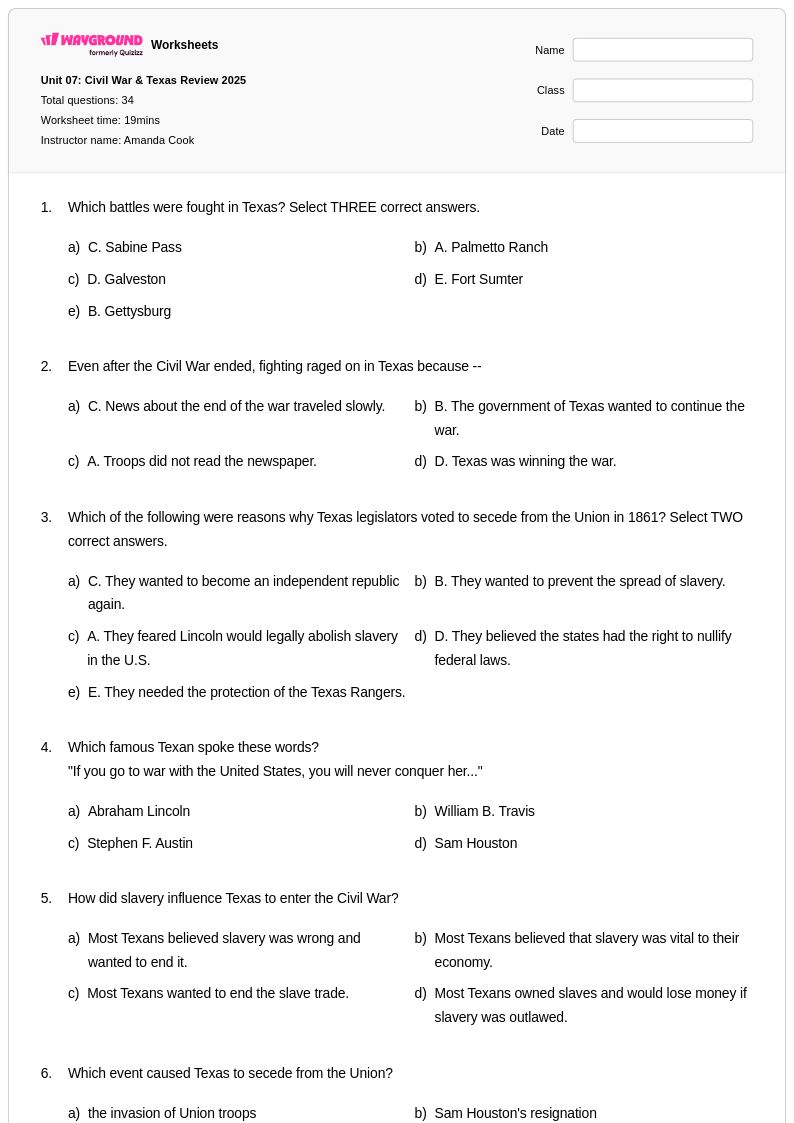
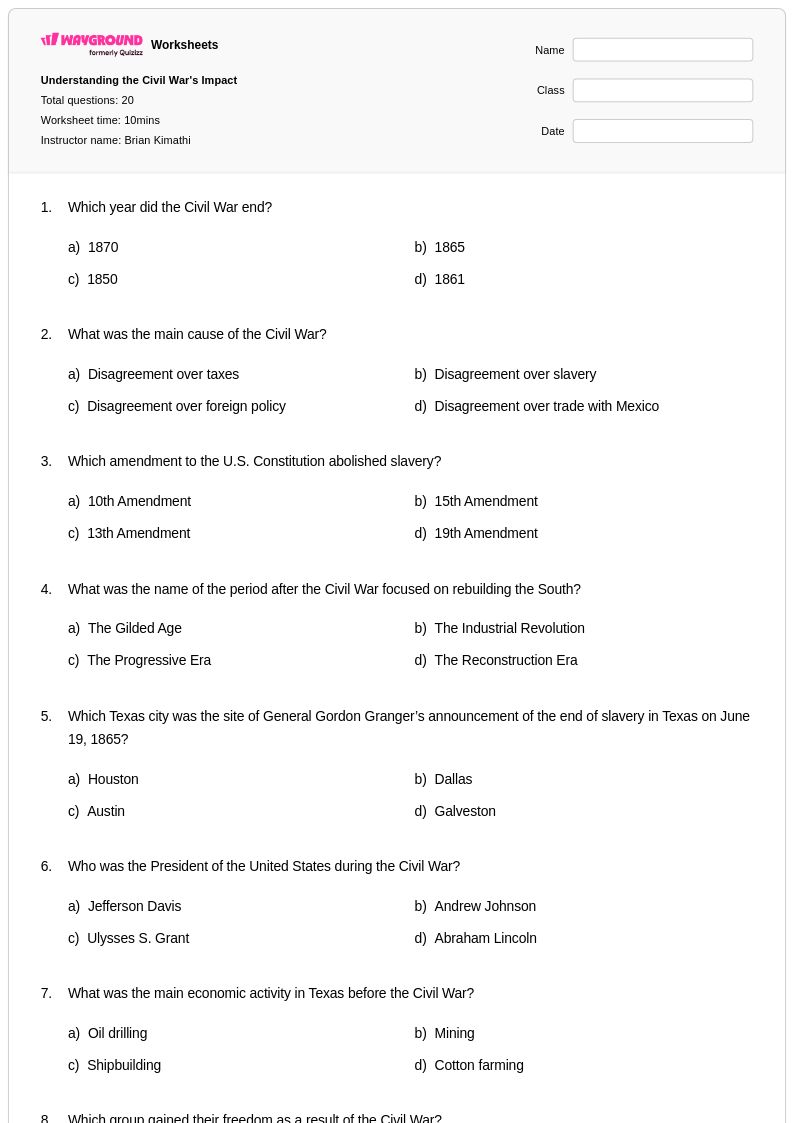
Juneteenth worksheets for Class 10 students provide comprehensive exploration of this pivotal moment in American history when enslaved African Americans in Texas learned of their freedom on June 19, 1865. These educational resources strengthen critical thinking skills as students analyze primary sources, examine the delayed implementation of the Emancipation Proclamation, and evaluate the broader significance of this celebration of freedom. Through carefully designed practice problems and document-based questions, students develop historical analysis abilities while exploring the cultural, political, and social dimensions of Juneteenth's emergence as a national holiday. Each worksheet includes detailed answer keys to support both independent study and classroom instruction, with free printable options available in convenient PDF format for seamless distribution and completion.
Wayground, formerly Quizizz, empowers educators with an extensive collection of teacher-created Juneteenth resources that align with state and national social studies standards for Class 10 instruction. The platform's robust search and filtering capabilities allow teachers to quickly locate materials that match their specific curriculum requirements and student needs, while differentiation tools enable customization for varying skill levels within the classroom. These versatile worksheets are available in both printable and digital formats, providing flexibility for traditional classroom settings, remote learning environments, or hybrid instruction models. Teachers can efficiently plan comprehensive lessons, design targeted remediation activities for struggling learners, create enrichment opportunities for advanced students, and implement focused skill practice sessions that deepen understanding of this important chapter in American civil rights history.
FAQs
How do I teach Juneteenth in the classroom?
Teaching Juneteenth effectively means grounding students in the specific historical sequence: the Emancipation Proclamation was issued in 1863, but enslaved people in Texas did not learn of their freedom until June 19, 1865, more than two years later. Start with that gap and ask students why it existed — this opens discussion about enforcement, communication, and resistance. From there, connect Juneteenth's historical origins to its ongoing significance as a celebration of African American liberation and culture, and as a federal holiday since 2021.
What are common misconceptions students have about Juneteenth?
The most common misconception is that the Emancipation Proclamation immediately freed all enslaved people across the United States. Students often don't understand that the proclamation applied only to Confederate states and that enforcement required Union military presence. Another frequent error is conflating Juneteenth with the formal end of slavery nationwide, which came with the 13th Amendment in December 1865. Addressing these distinctions directly — and asking students to trace the timeline — helps correct both misconceptions.
What primary sources work well for a Juneteenth lesson?
General Order No. 3, issued by Union General Gordon Granger in Galveston, Texas on June 19, 1865, is the foundational primary source for any Juneteenth lesson — it is the announcement that informed enslaved Texans of their freedom. Pairing it with excerpts from the Emancipation Proclamation and first-person accounts of the day allows students to analyze tone, authority, and historical impact across different document types. Timeline activities that sequence these documents alongside the 13th Amendment help students understand Juneteenth within the full arc of emancipation.
What exercises help students practice and deepen their understanding of Juneteenth?
Effective practice exercises for Juneteenth include timeline sequencing activities that ask students to order key events from the Emancipation Proclamation through the passage of the 13th Amendment, document analysis tasks using General Order No. 3, and short-answer questions that require students to explain the significance of the delay in communicating freedom to enslaved Texans. Analytical questions that ask students to connect Juneteenth's historical origins to its modern celebration as a federal holiday build higher-order thinking alongside content knowledge.
How do I use Juneteenth worksheets from Wayground in my classroom?
Wayground's Juneteenth worksheets are available as free printable PDFs for traditional classroom use and in digital formats for technology-integrated or remote learning environments, and teachers can also host them as an interactive quiz directly on the Wayground platform. Each worksheet includes a detailed answer key, making them practical for independent practice, guided instruction, or homework. For students who need additional support, Wayground's built-in accommodation tools — including read aloud, extended time, and reduced answer choices — can be applied to individual students without disrupting the rest of the class.
How do I differentiate Juneteenth instruction for diverse learners?
For students who need scaffolding, provide sentence starters or partially completed timelines to reduce cognitive load while still engaging them with the historical content. For advanced students, push beyond recall by asking them to evaluate the long-term consequences of the delayed communication of freedom or to compare Juneteenth observances across different decades. On Wayground, teachers can assign individual accommodations such as read aloud, extended time, or reduced answer choices to specific students, allowing the same worksheet to serve the full range of learners in one classroom.