Free Printable Letters and Words Worksheets for Class 2
Class 2 letters and words printables from Wayground help students master essential letter recognition, word formation, and basic reading skills through engaging free worksheets with comprehensive answer keys and practice problems in convenient PDF format.
Explore printable Letters and Words worksheets for Class 2
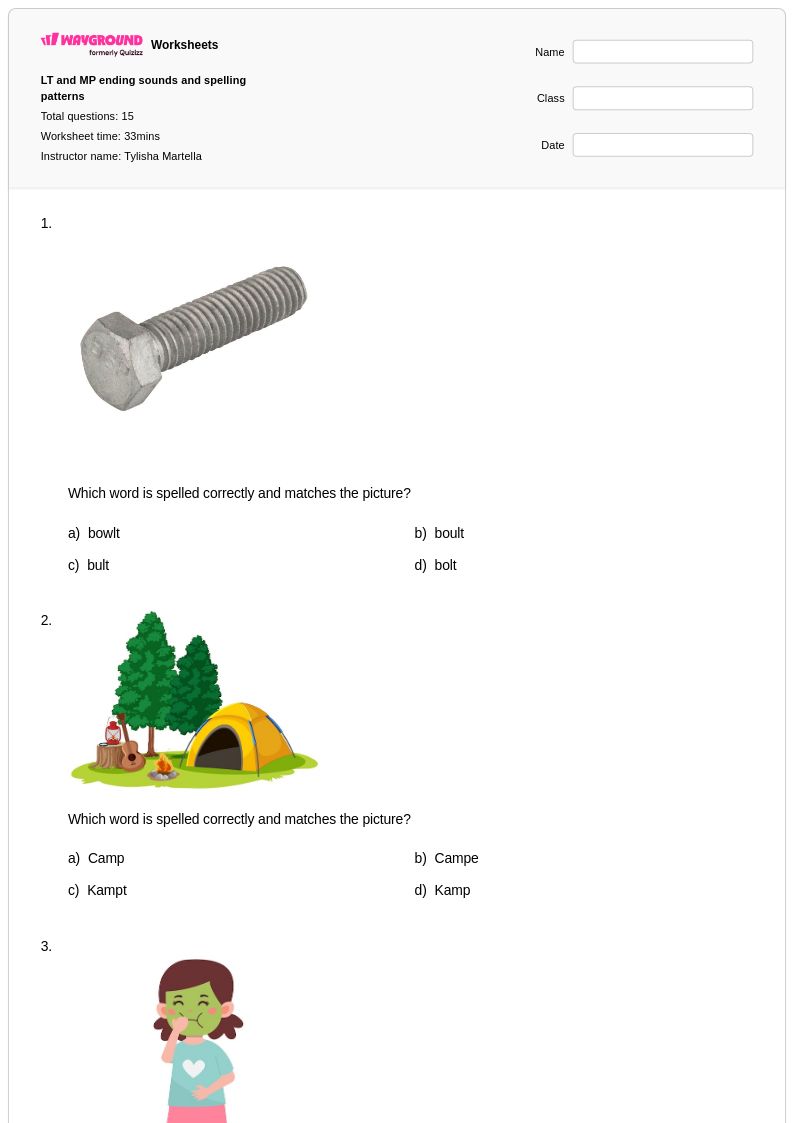
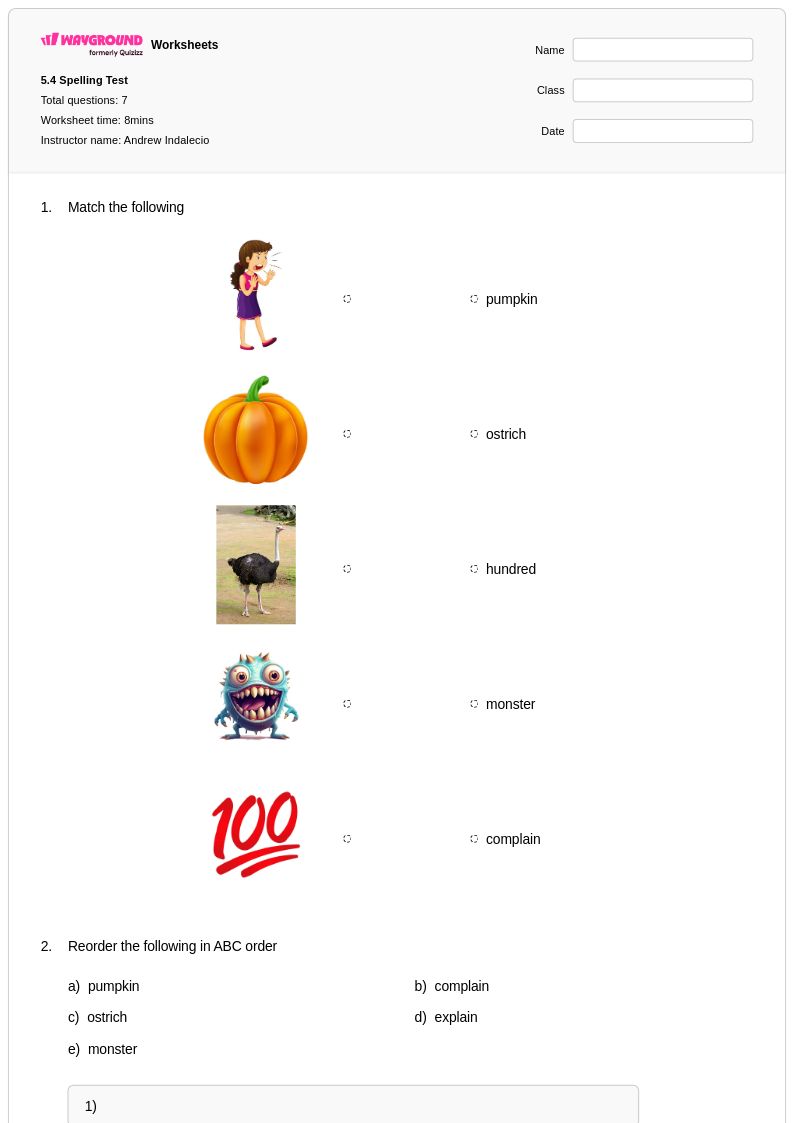
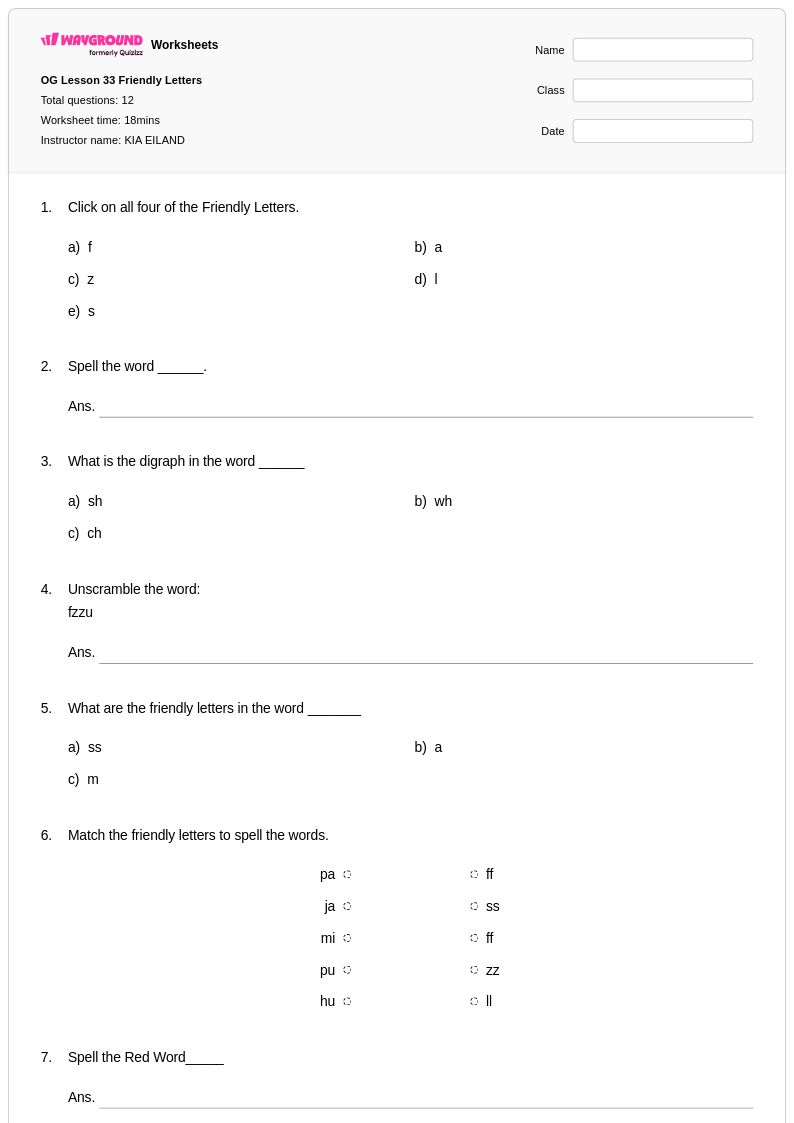
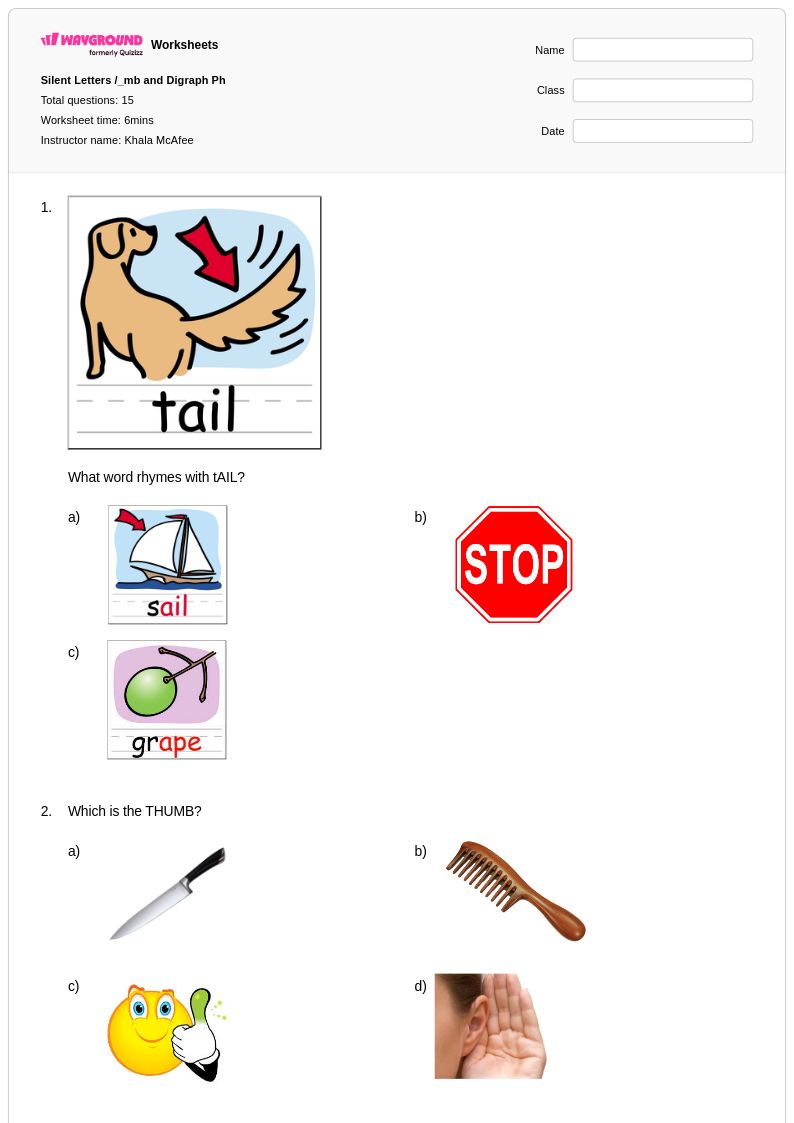
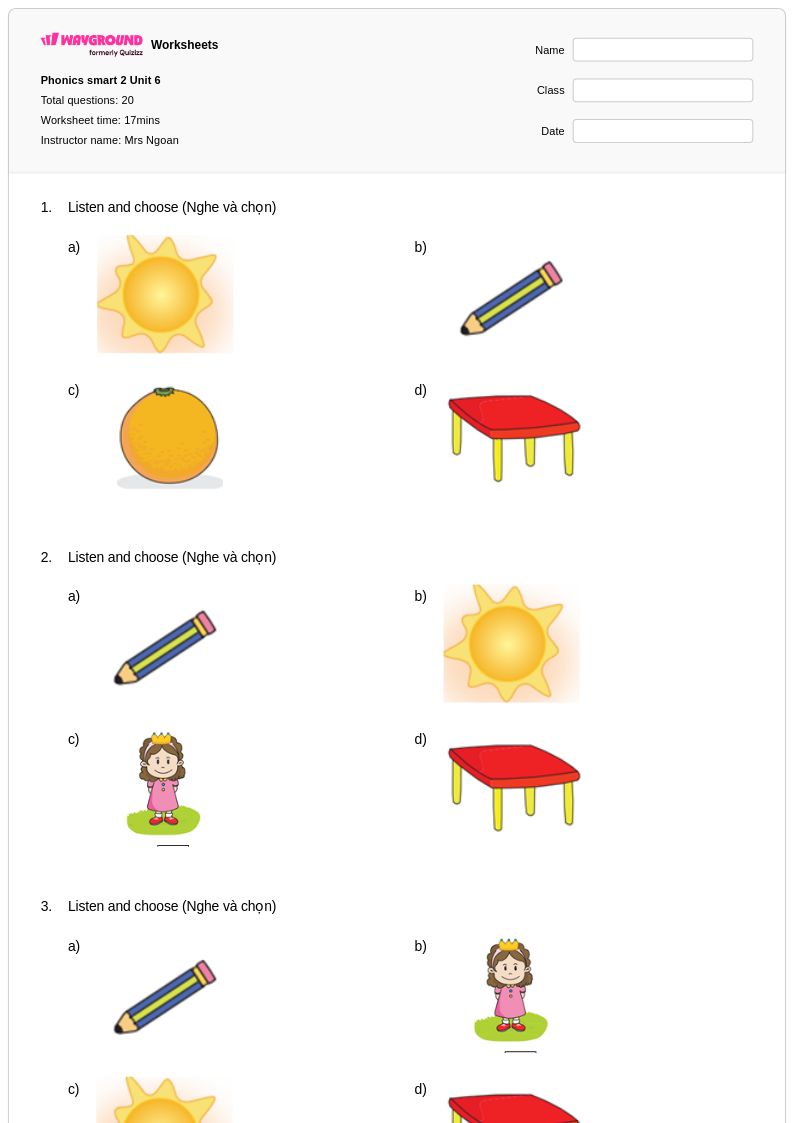
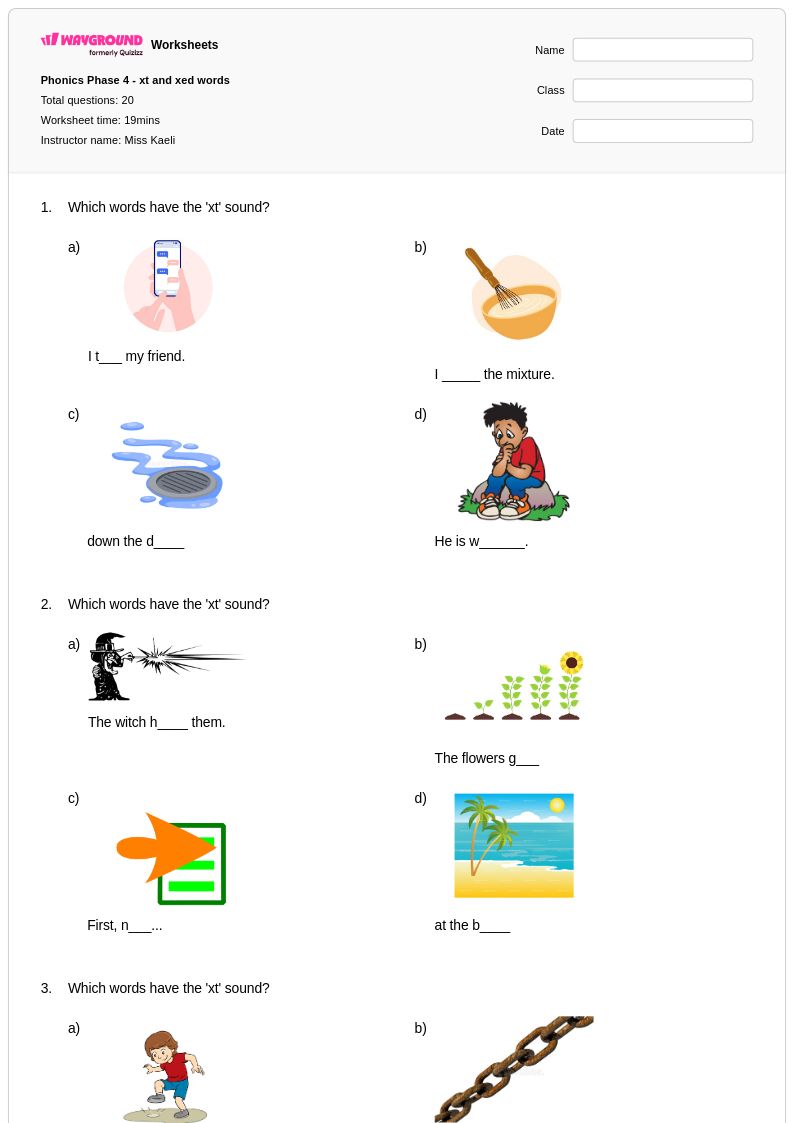
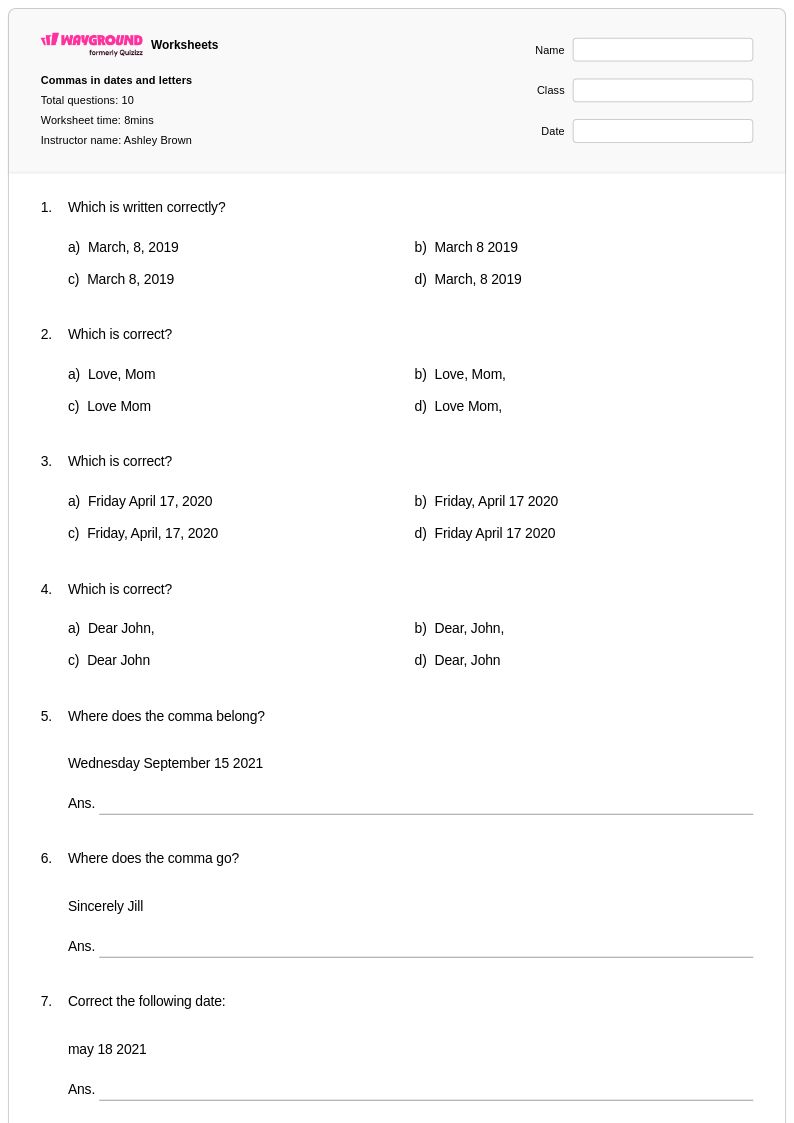
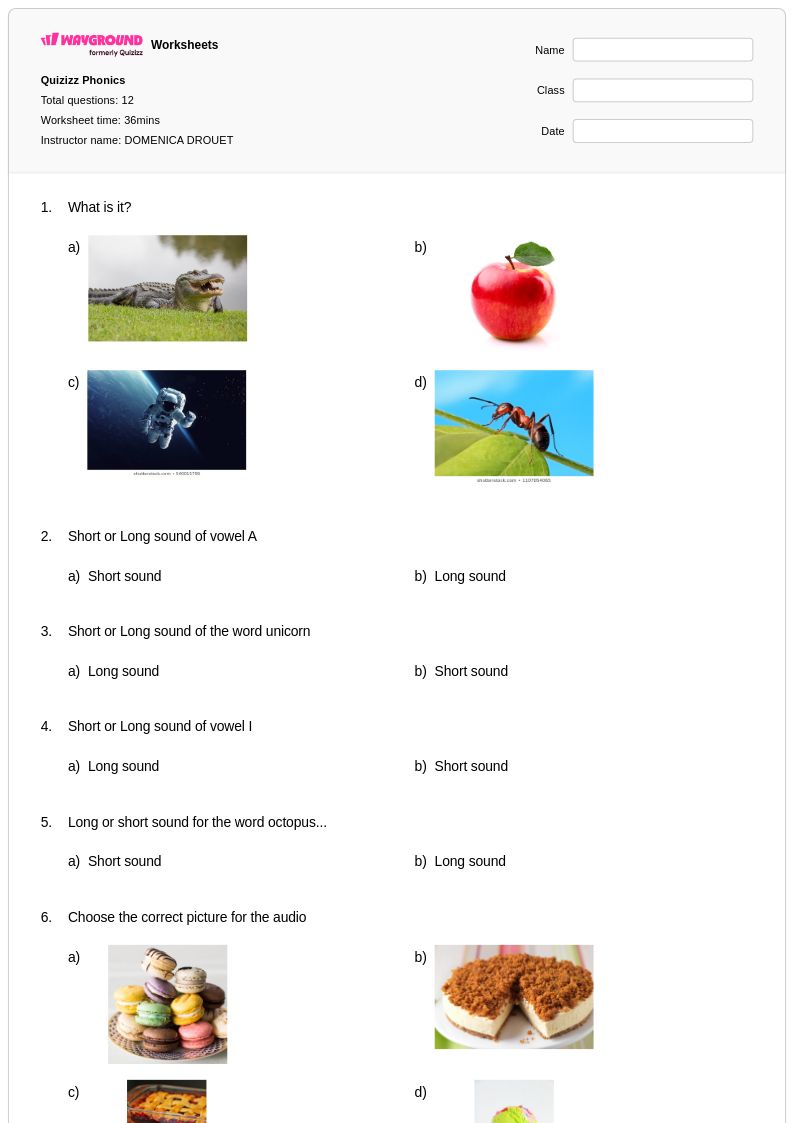
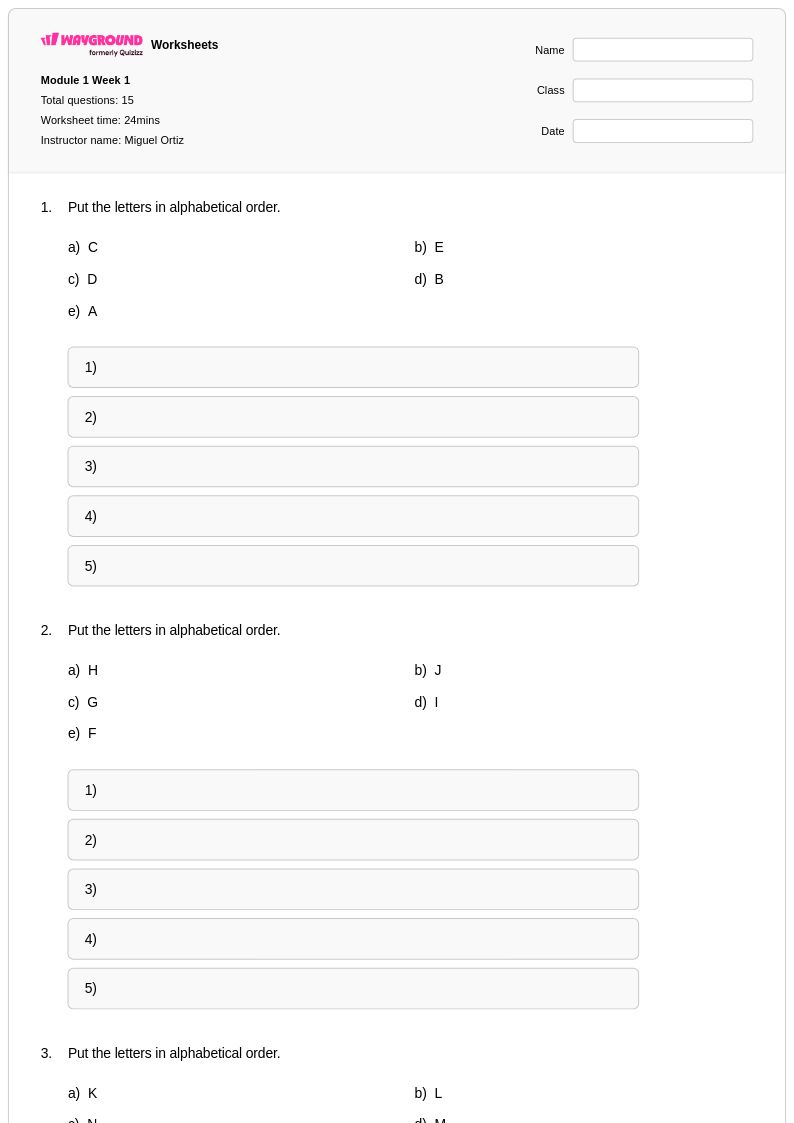
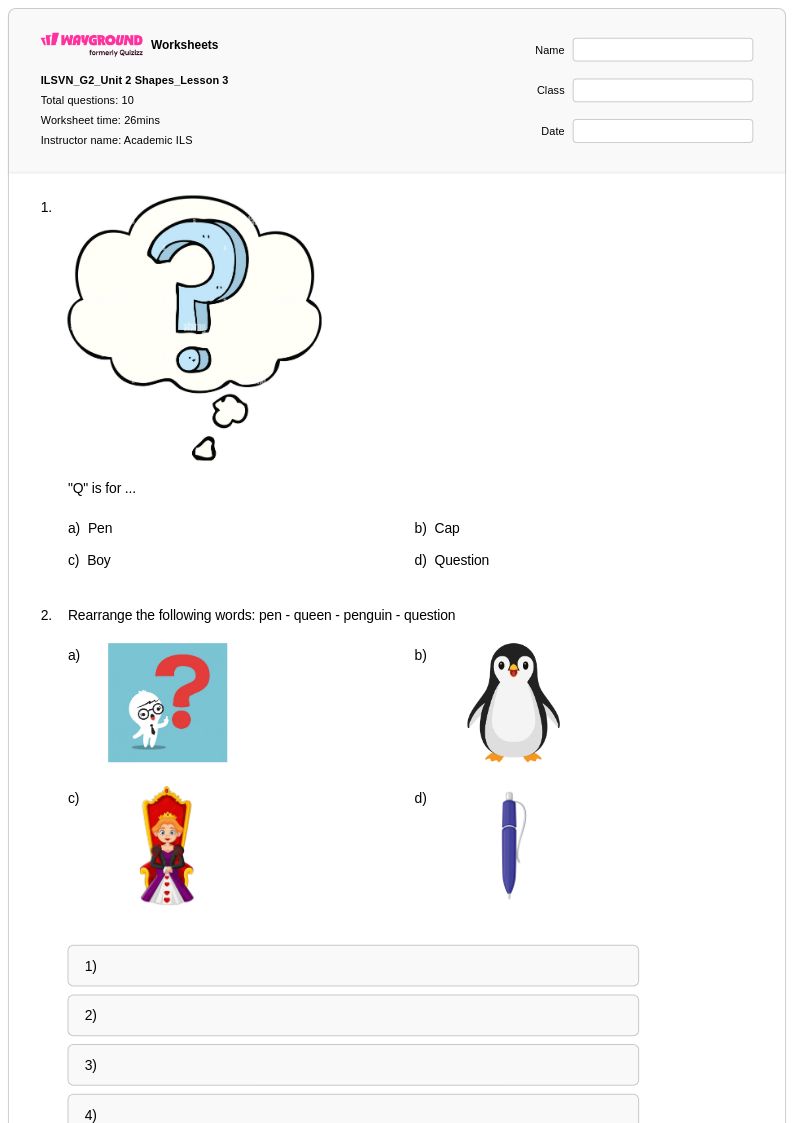
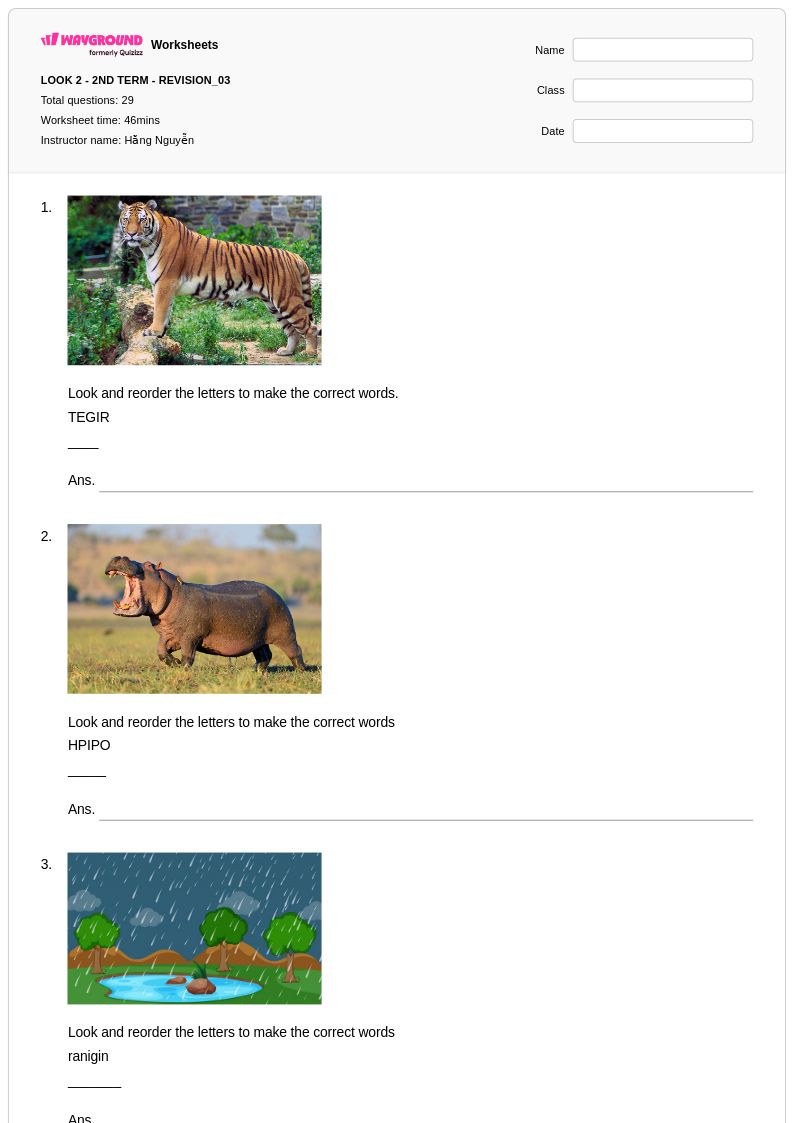
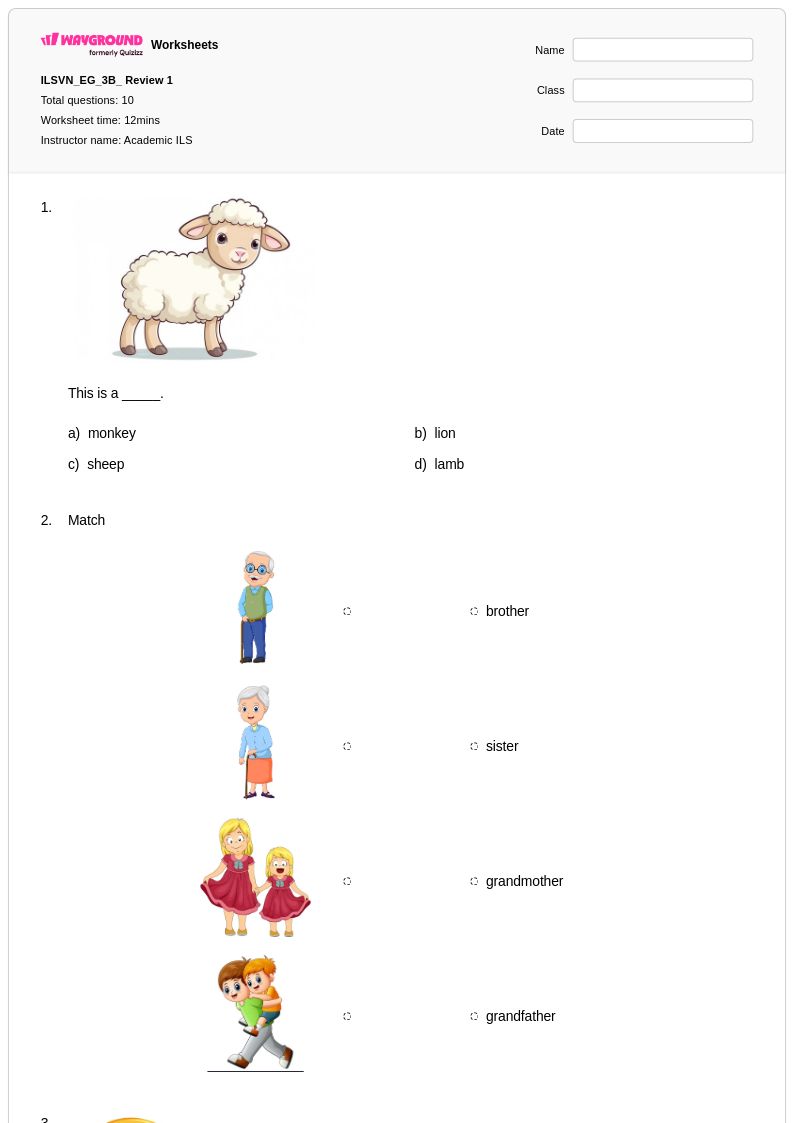
Letters and words worksheets for Class 2 students available through Wayground (formerly Quizizz) provide essential foundation-building practice in concepts of print that second graders need to master for reading success. These comprehensive printables focus on helping students distinguish between individual letters and complete words, understand spacing conventions, recognize word boundaries, and develop visual tracking skills across text. The worksheet collection strengthens critical pre-reading and early reading abilities through engaging practice problems that teach students to identify where words begin and end, count letters within words, and understand the relationship between spoken and written language. Each free pdf resource includes detailed answer keys to support accurate assessment and provides systematic practice in recognizing print concepts that form the building blocks of literacy development.
Wayground (formerly Quizizz) empowers teachers with millions of educator-created resources specifically designed for letters and words instruction, offering robust search and filtering capabilities that help educators quickly locate materials aligned to their specific Class 2 curriculum standards and student needs. The platform's differentiation tools allow teachers to customize worksheets for varying ability levels within their classrooms, while flexible formatting options provide both printable pdf versions for traditional paper-based learning and digital formats for technology-integrated instruction. These comprehensive features streamline lesson planning by giving teachers immediate access to high-quality practice materials for remediation with struggling readers, enrichment opportunities for advanced students, and consistent skill reinforcement that supports systematic concepts of print instruction throughout the school year.
FAQs
How do I teach students the difference between letters and words?
Start by building concrete understanding: show students that letters are individual symbols, while words are groups of letters that carry meaning. Use physical examples like letter tiles or magnetic letters so students can manipulate components and build words themselves. Pointing exercises during shared reading, where students track word boundaries and identify single letters within a word, reinforce the concept that words have clear start and end points. Consistent repetition across reading and writing activities helps students internalize this distinction as an automatic concept of print.
What exercises help students practice recognizing letters within words?
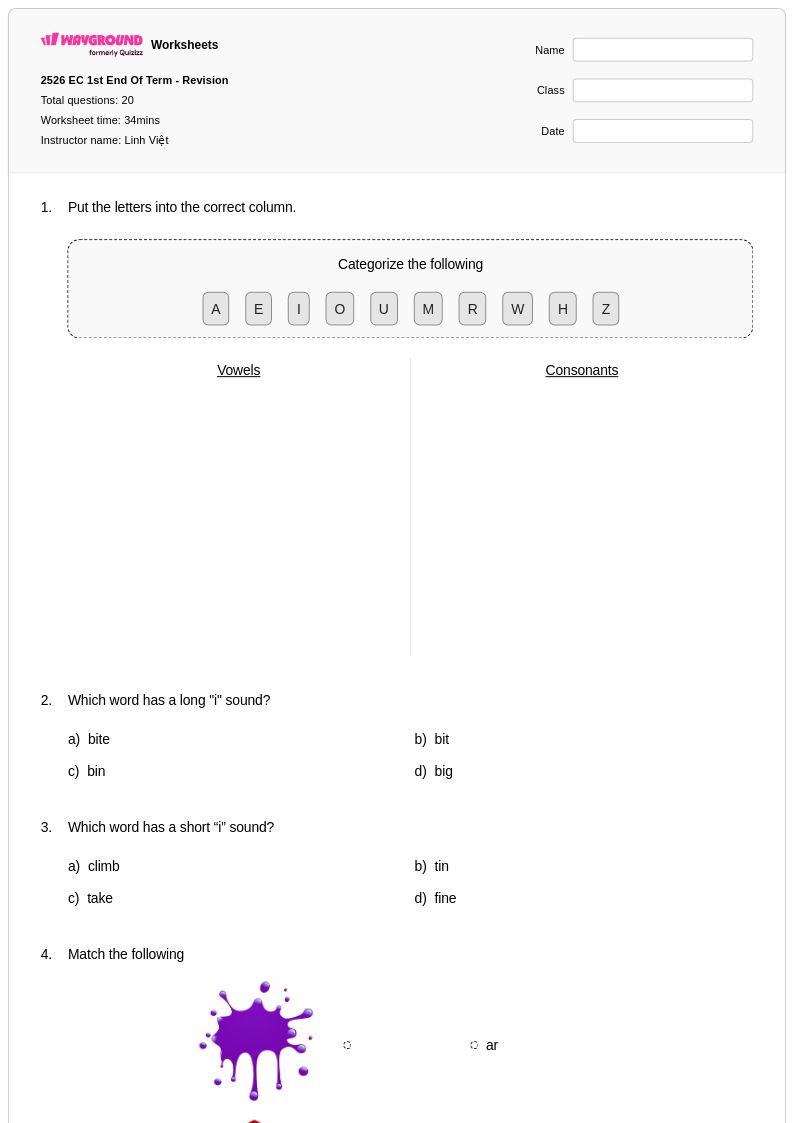
Effective practice exercises include word-to-letter identification tasks where students circle or isolate a named letter inside a written word, and letter-count activities where students determine how many letters make up a given word. Matching tasks that pair a single letter to words containing that letter build letter-word relationship awareness. These structured practice formats work well as independent seat work or guided small-group activities because they provide focused, repeatable practice on a single concept of print without requiring full decoding skills.
What mistakes do young students commonly make when learning about letters and words?
A common misconception is that a single letter and a short word are the same thing, particularly with single-letter words like 'a' or 'I,' which can blur the letter-word boundary for early learners. Students also frequently confuse word count with letter count when asked to count words in a sentence, pointing to each syllable or each letter instead of each whole word. Another frequent error is failing to recognize word boundaries in print, reading a full sentence as one continuous unit rather than a sequence of distinct words separated by spaces.
How can I use Letters and Words worksheets from Wayground in my classroom?
Wayground's Letters and Words worksheets are available as printable PDFs, making them easy to distribute for in-class practice, literacy centers, or homework, and in digital formats for use in technology-integrated or remote learning environments. Teachers can also host the worksheets as a quiz directly on Wayground, enabling real-time student response tracking. Wayground's accommodation settings allow individual students to receive extended time, read-aloud support, or reduced answer choices without other students being notified, which is particularly useful when differentiating for early learners with varying readiness levels.
How do I differentiate Letters and Words practice for students at different readiness levels?
For students who are still learning to recognize individual letters, begin with single-letter identification tasks using highly familiar letters before introducing word-level work. Students who are ready for greater challenge can move to tasks that ask them to identify how many words are in a sentence or sort letters versus words from a mixed list. On Wayground, teachers can assign accommodations such as read-aloud support or reduced answer choices to individual students, ensuring struggling learners receive appropriate scaffolding while the rest of the class works through standard practice without disruption.
At what age or grade level should students understand the difference between letters and words?
Distinguishing between letters and words is a foundational concept of print typically introduced in pre-kindergarten and solidified through kindergarten instruction. Most literacy frameworks expect students to demonstrate this understanding by the end of kindergarten as part of broader print awareness benchmarks. Students who have not yet mastered letter-word distinction by early first grade may need targeted remediation before phonics instruction can fully take hold, since confusion between letters and words can interfere with decoding and phonemic awareness development.