
Recommended Topics for you
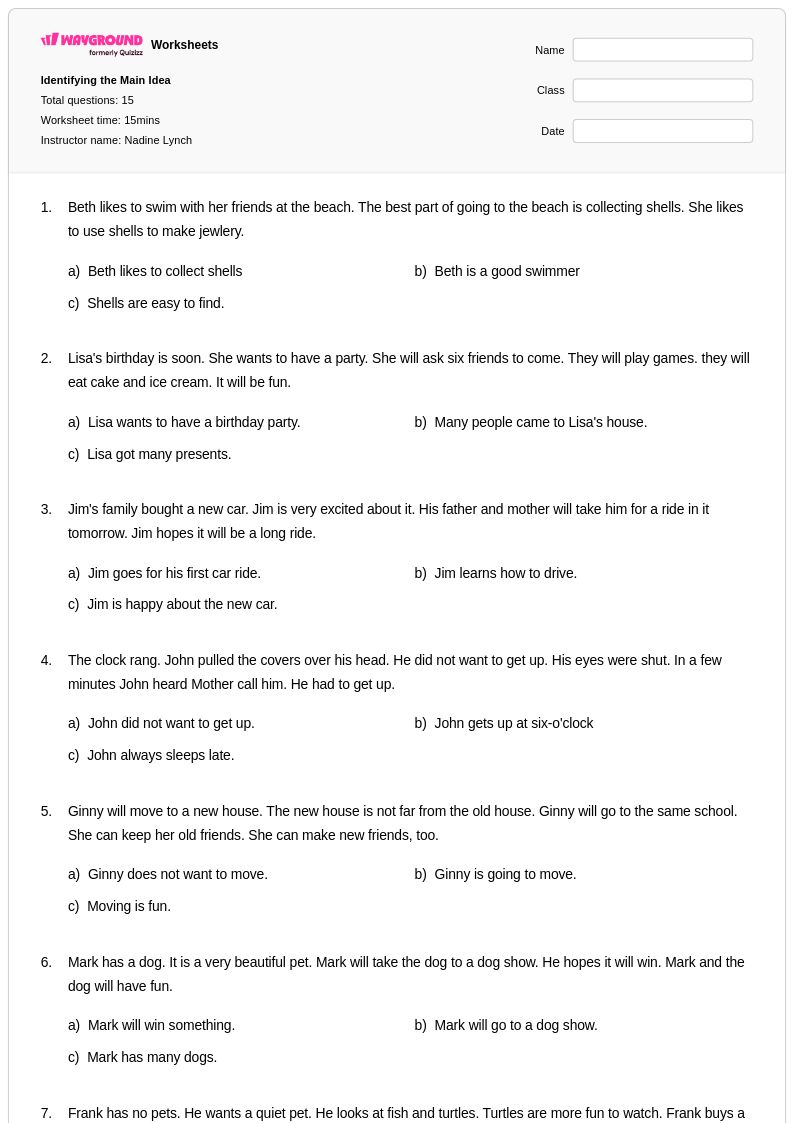
15 Q
2nd - 4th
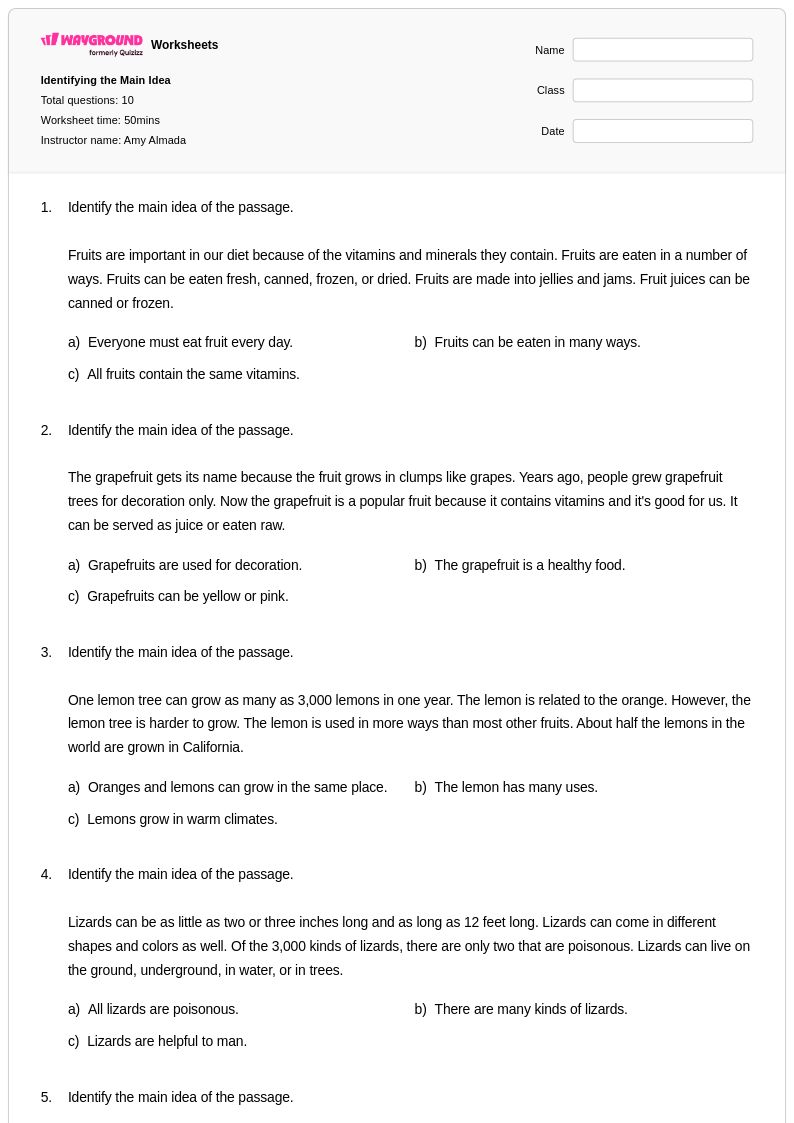
10 Q
3rd - 5th
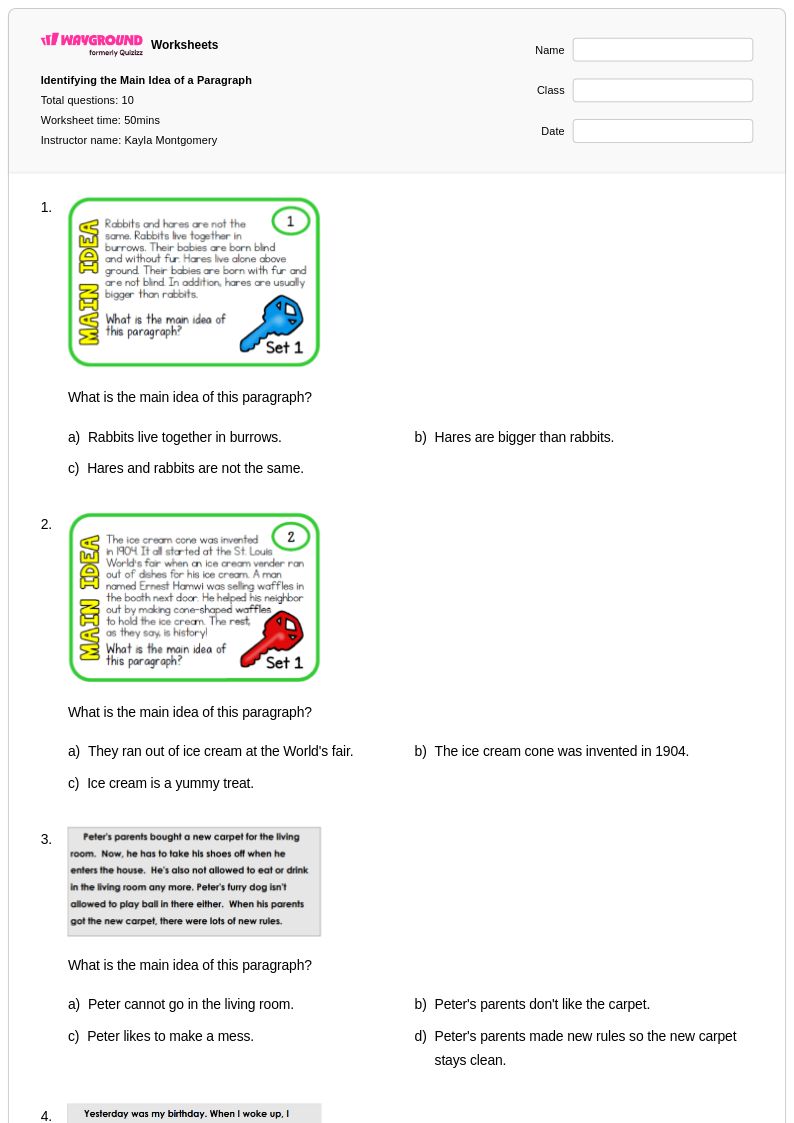
10 Q
2nd - 5th
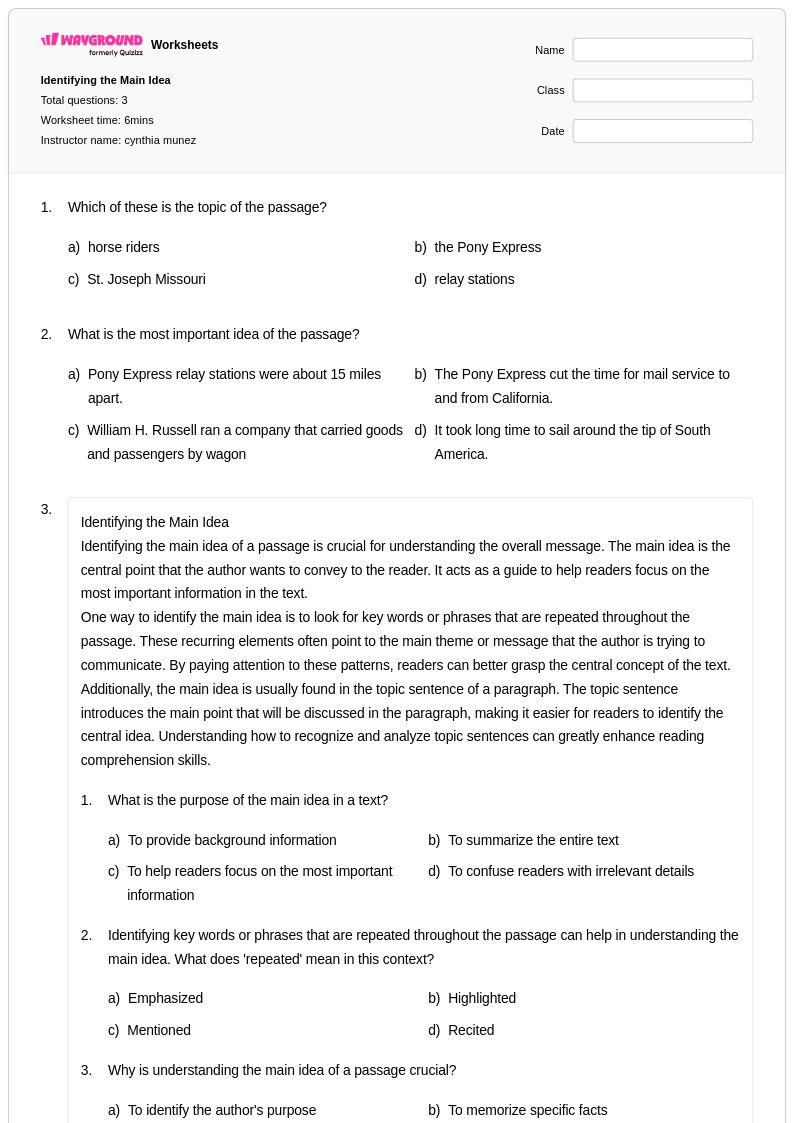
7 Q
3rd
15 Q
1st - 5th
10 Q
2nd - 5th
9 Q
3rd
15 Q
2nd - 7th
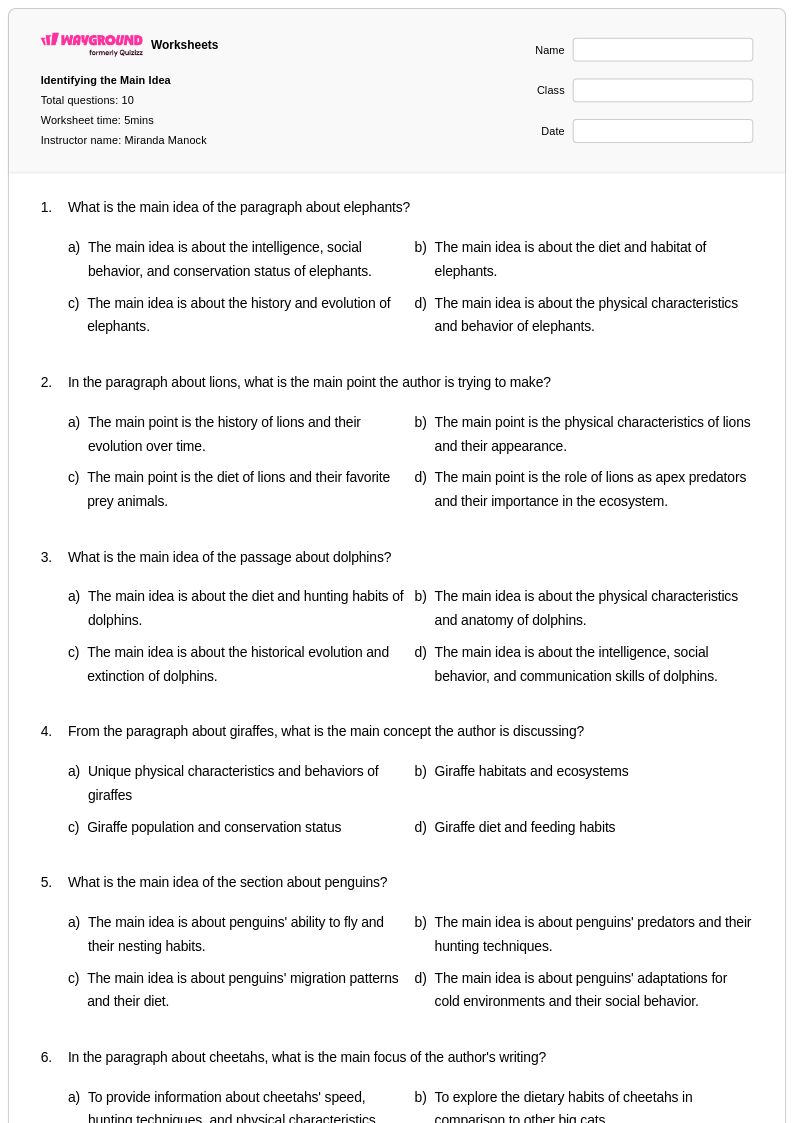
10 Q
3rd
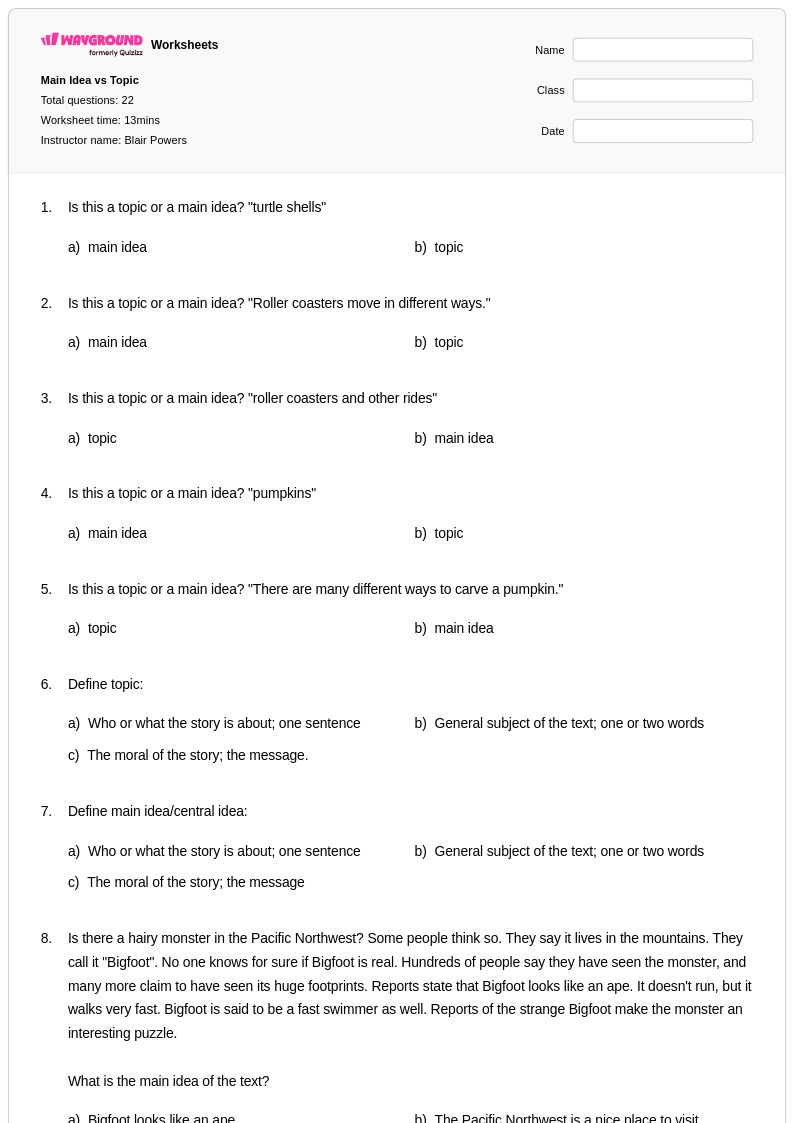
22 Q
3rd - 5th
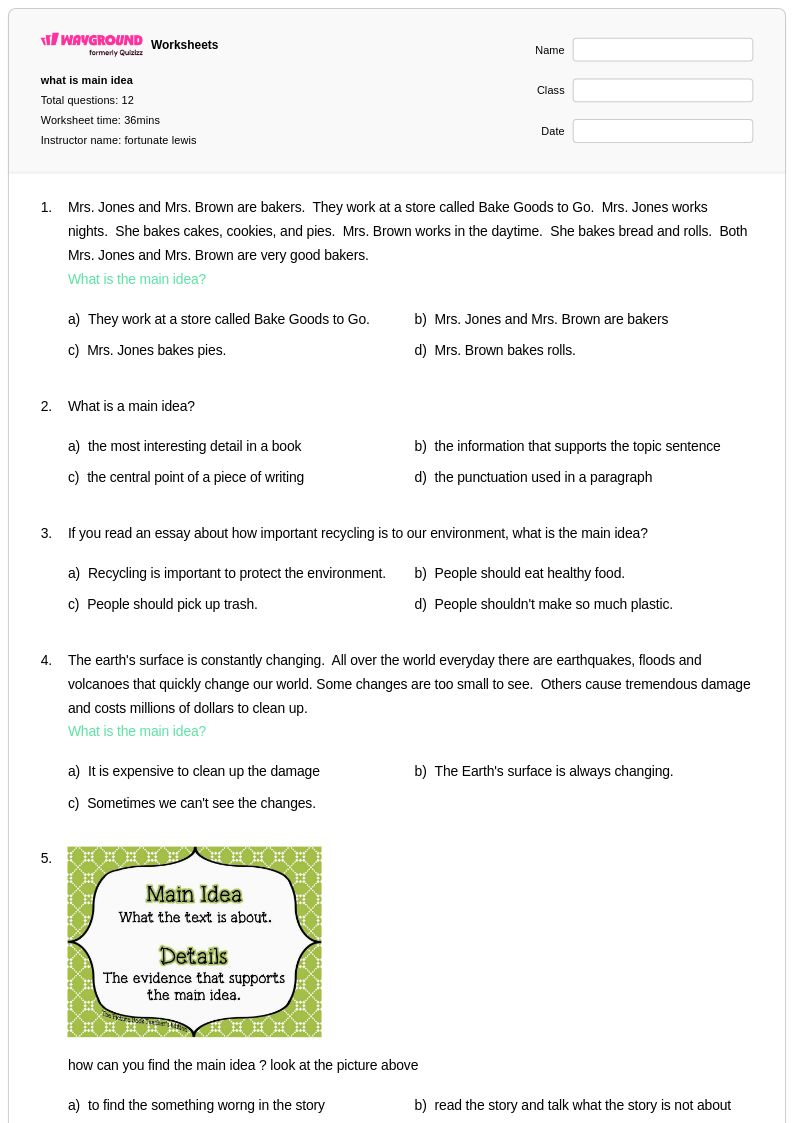
12 Q
2nd - 6th
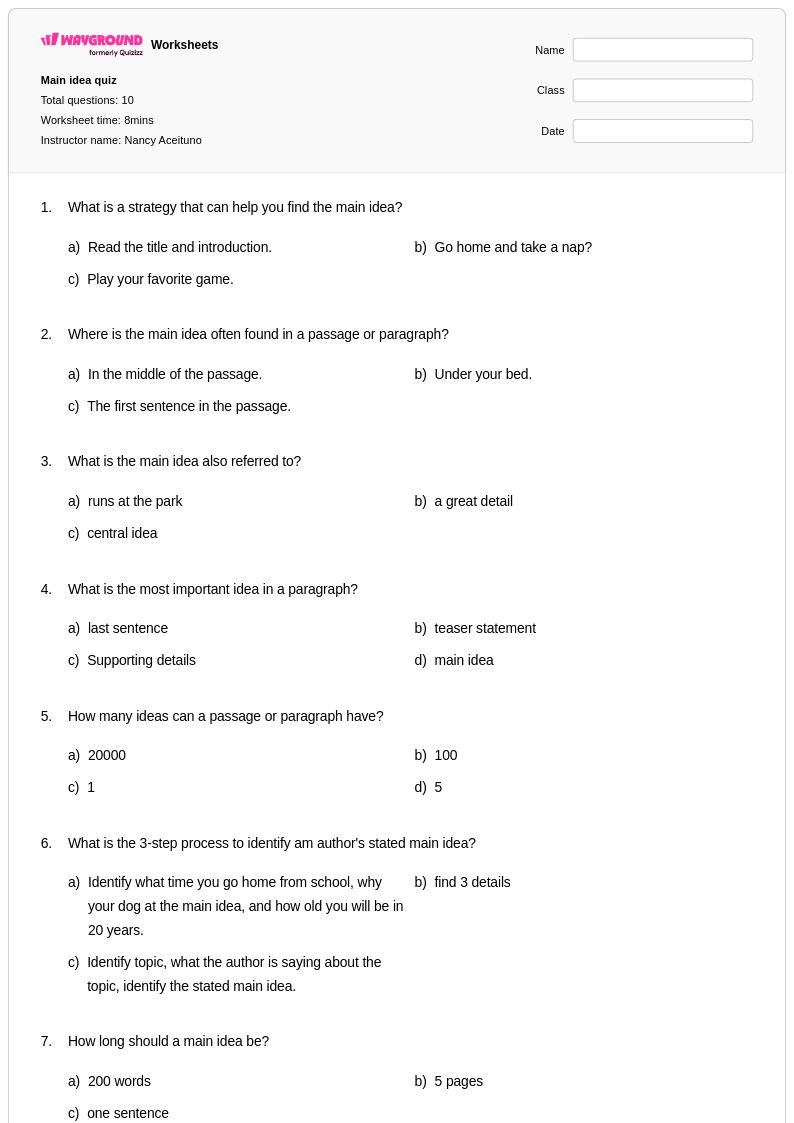
10 Q
1st - 5th
12 Q
3rd
11 Q
3rd
20 Q
3rd - 4th
12 Q
1st - 5th
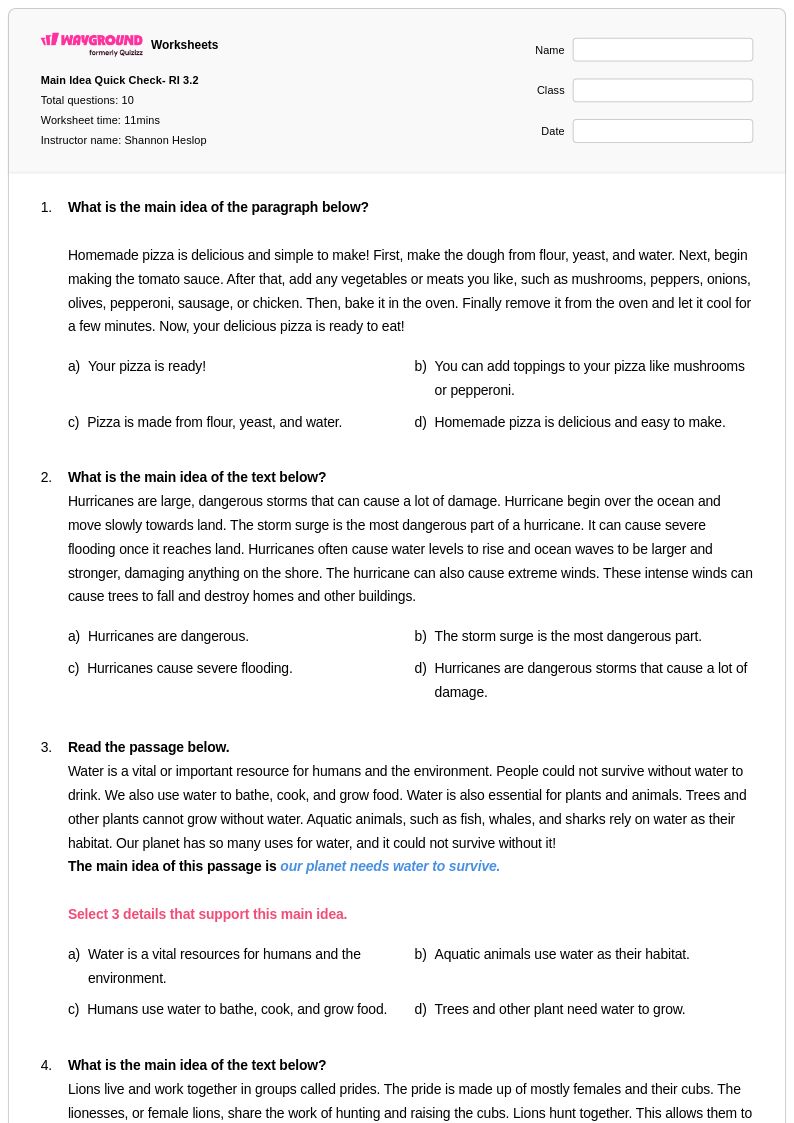
10 Q
2nd - 4th
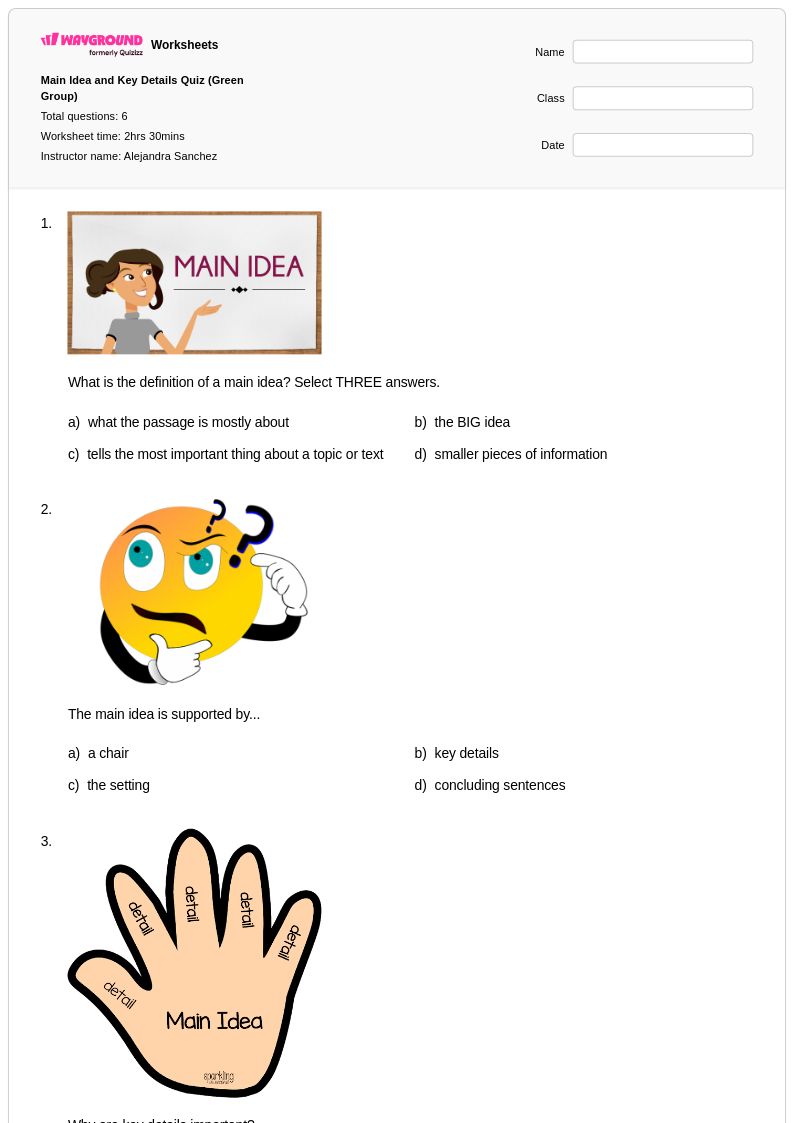
6 Q
3rd
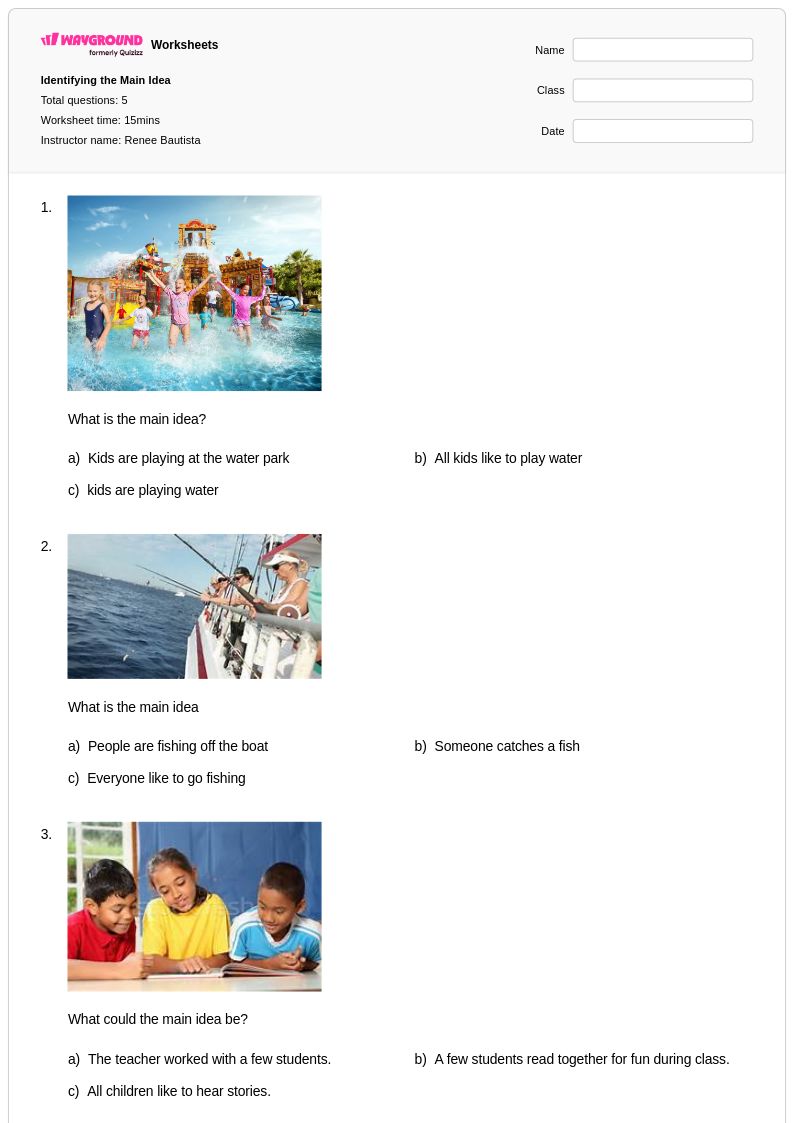
5 Q
3rd - 6th
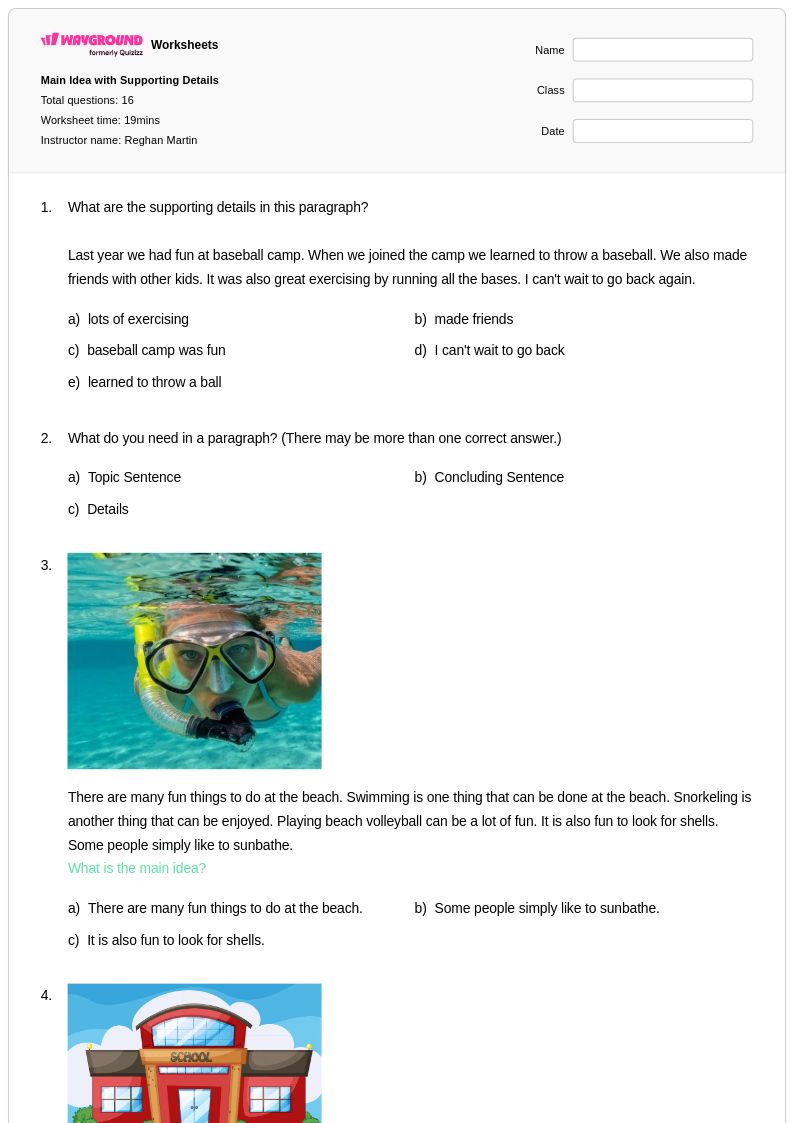
16 Q
3rd
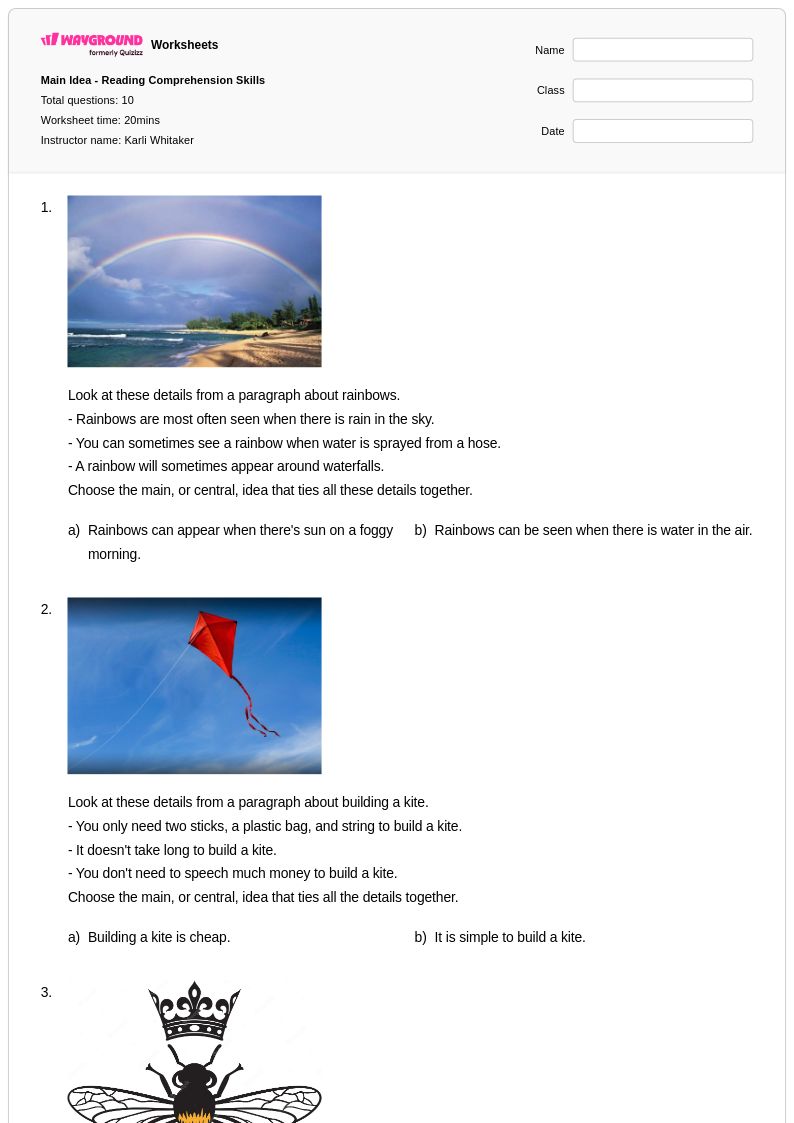
10 Q
3rd
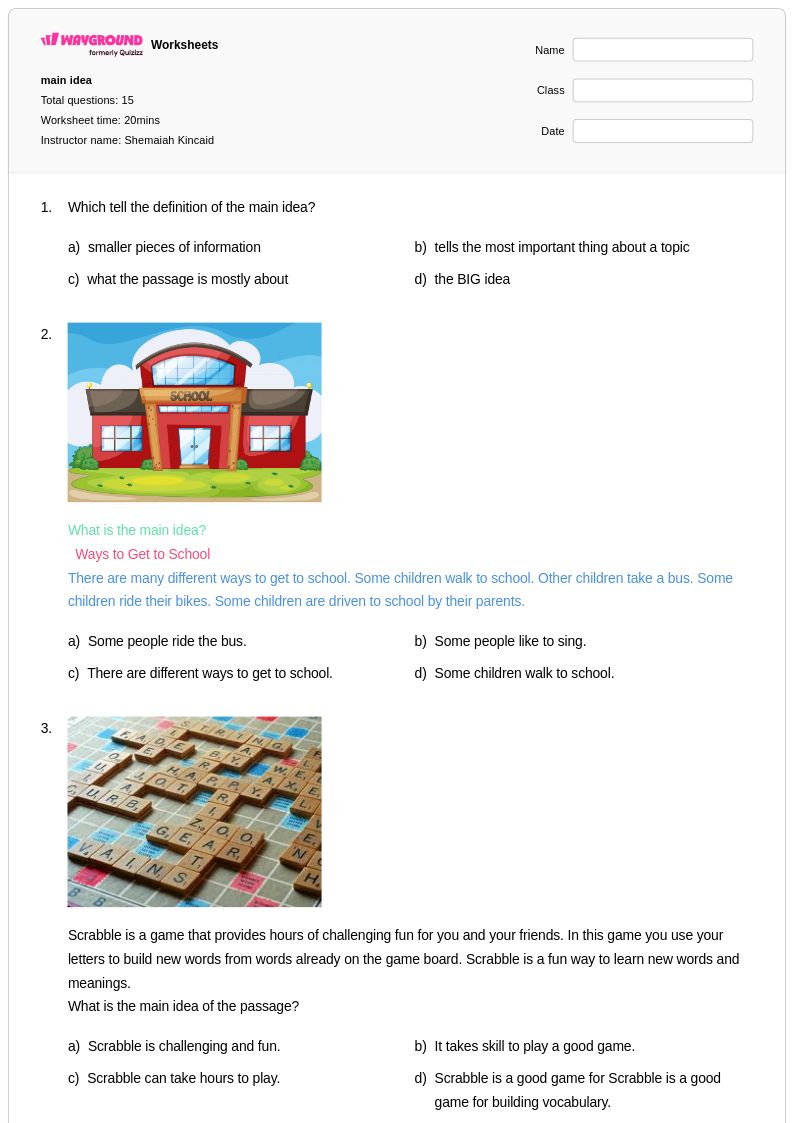
15 Q
3rd
Explore Identifying the Main Idea Worksheets by Grades
Explore Identifying the Main Idea Worksheets for class 3 by Topic
Explore Other Subject Worksheets for class 3
Explore printable Identifying the Main Idea worksheets for Class 3
Identifying the main idea in Class 3 reading passages forms the cornerstone of strong comprehension skills, and Wayground's extensive worksheet collection provides targeted practice for this essential literacy milestone. These carefully crafted worksheets guide young readers through systematic approaches to distinguish between supporting details and central themes across diverse text types, from narrative stories to informational passages. Each worksheet includes structured practice problems that build students' ability to synthesize information, recognize topic sentences, and articulate main ideas in their own words, while comprehensive answer keys enable immediate feedback and self-assessment. The free printables offer varied difficulty levels and engaging content that maintains student interest while strengthening critical thinking skills necessary for academic success across all subject areas.
Wayground, formerly Quizizz, empowers educators with millions of teacher-created resources specifically designed to support main idea instruction for Class 3 students. The platform's robust search and filtering capabilities allow teachers to quickly locate worksheets aligned with specific reading standards and learning objectives, while differentiation tools enable seamless customization to meet diverse student needs within the same classroom. These versatile resources are available in both printable PDF format for traditional paper-based instruction and digital formats for interactive learning experiences, providing flexibility for various teaching environments and student preferences. Teachers can efficiently plan targeted remediation sessions for struggling readers, create enrichment opportunities for advanced learners, and implement consistent skill practice that reinforces main idea identification strategies throughout their literacy curriculum.