Free Printable Major Muscles Worksheets for Class 8
Explore Wayground's comprehensive collection of Class 8 major muscles worksheets featuring printable PDFs, free practice problems, and detailed answer keys to help students master human muscular system anatomy and functions.
Explore printable Major Muscles worksheets for Class 8
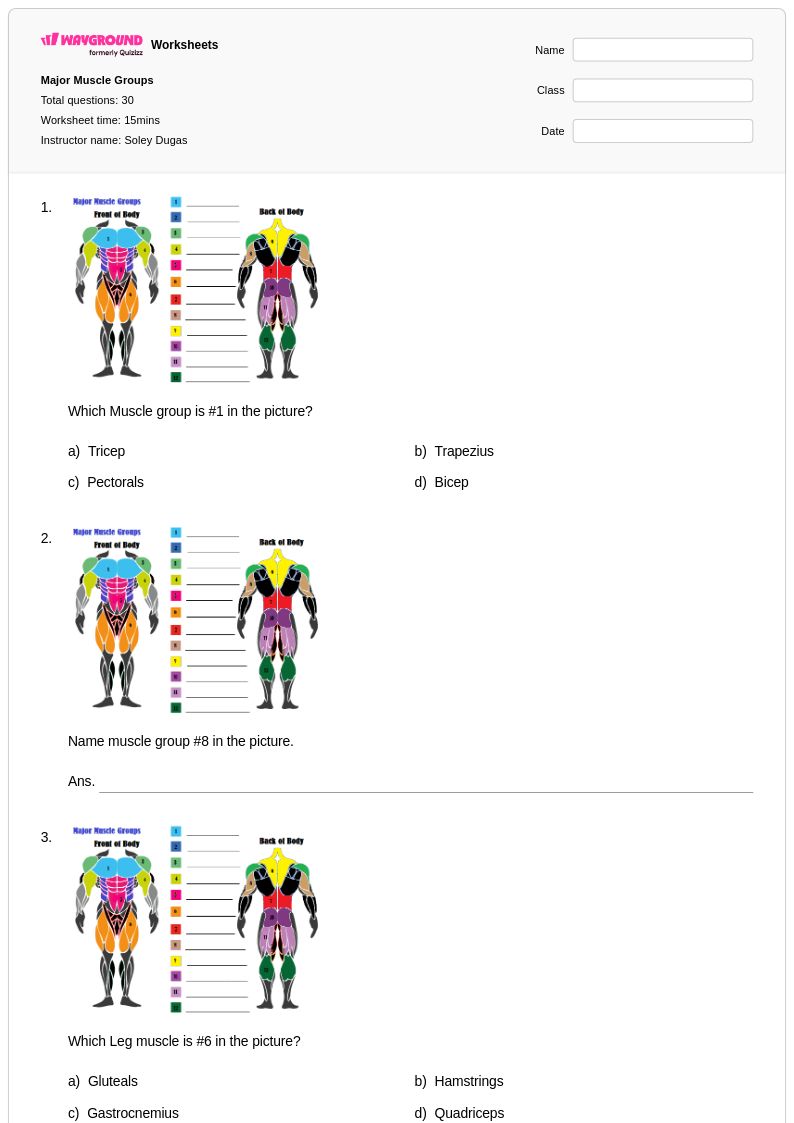
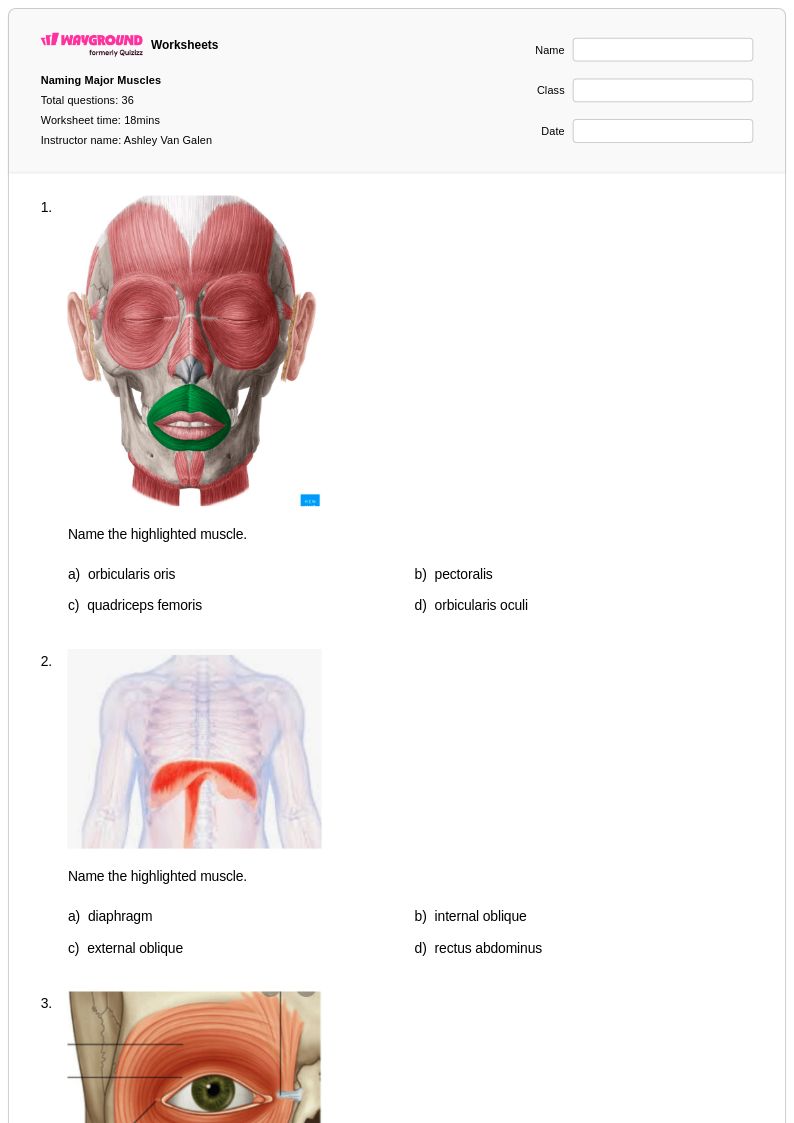
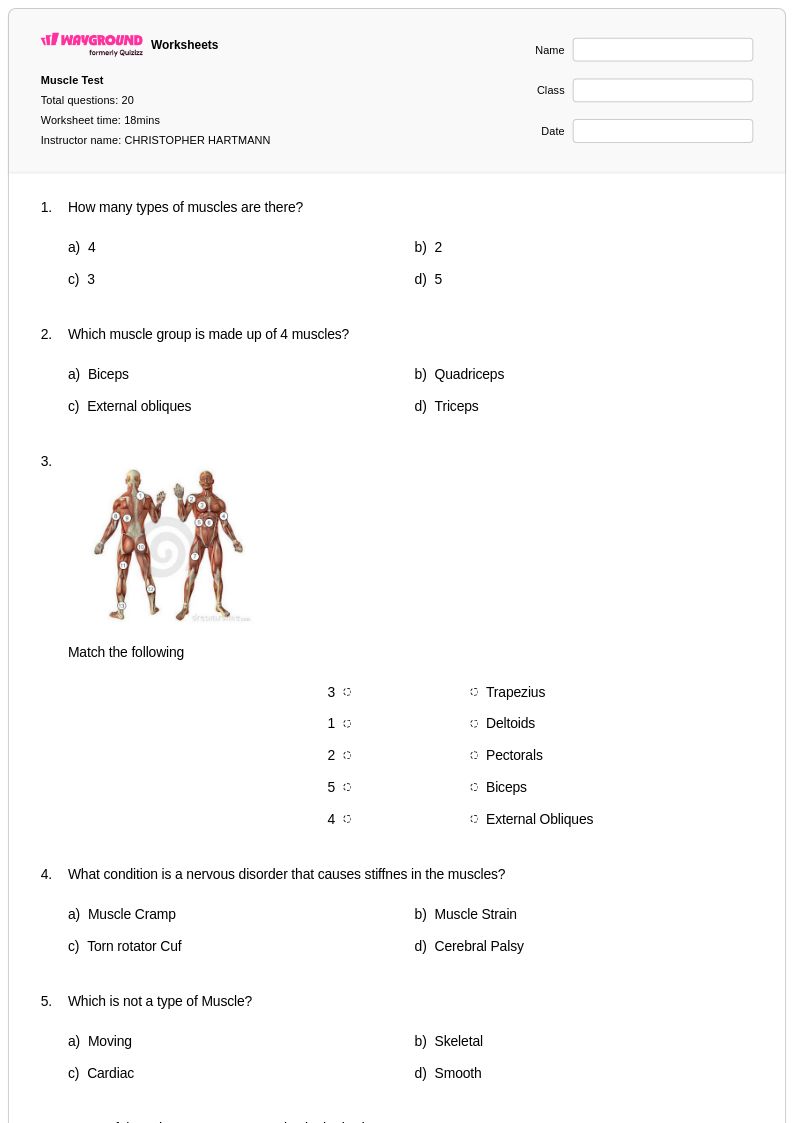
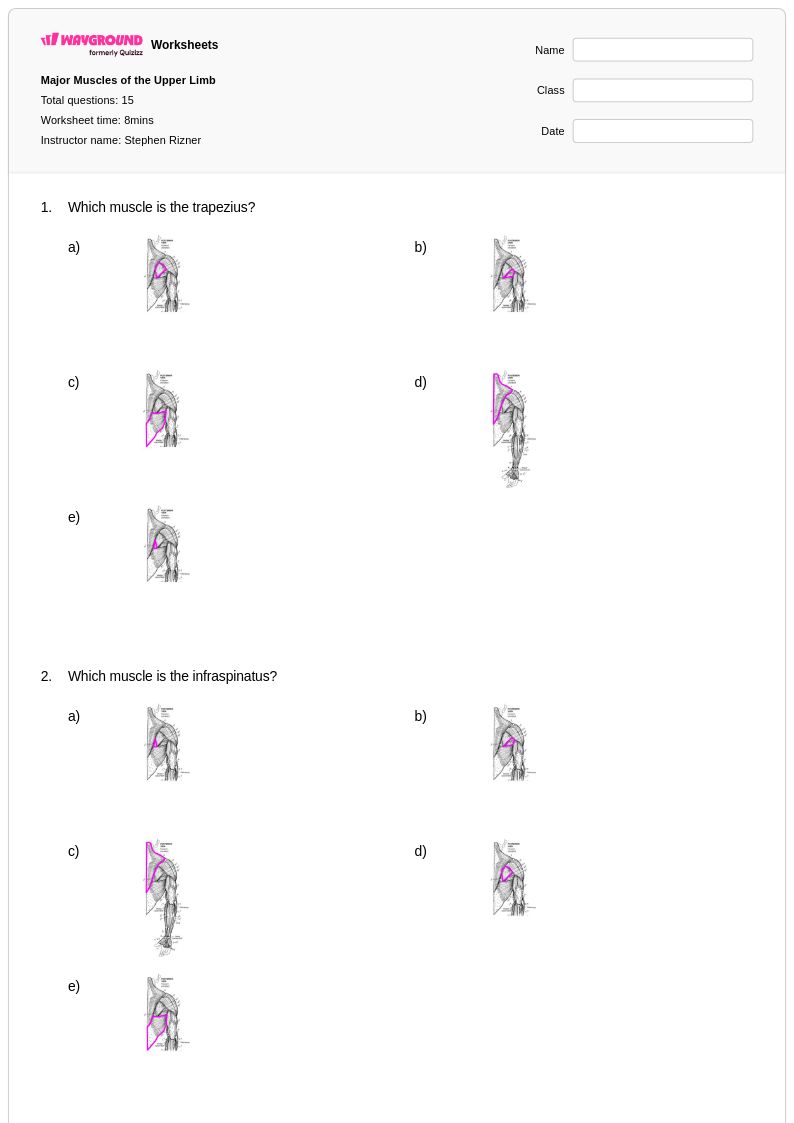
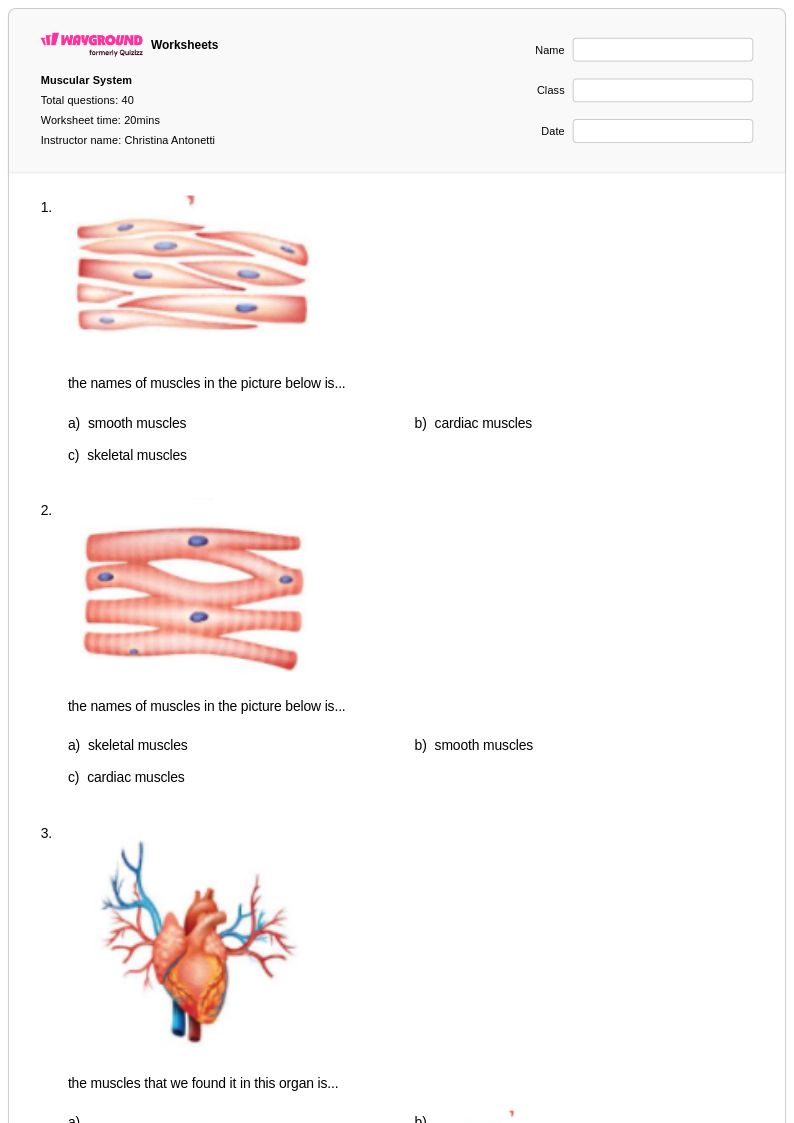
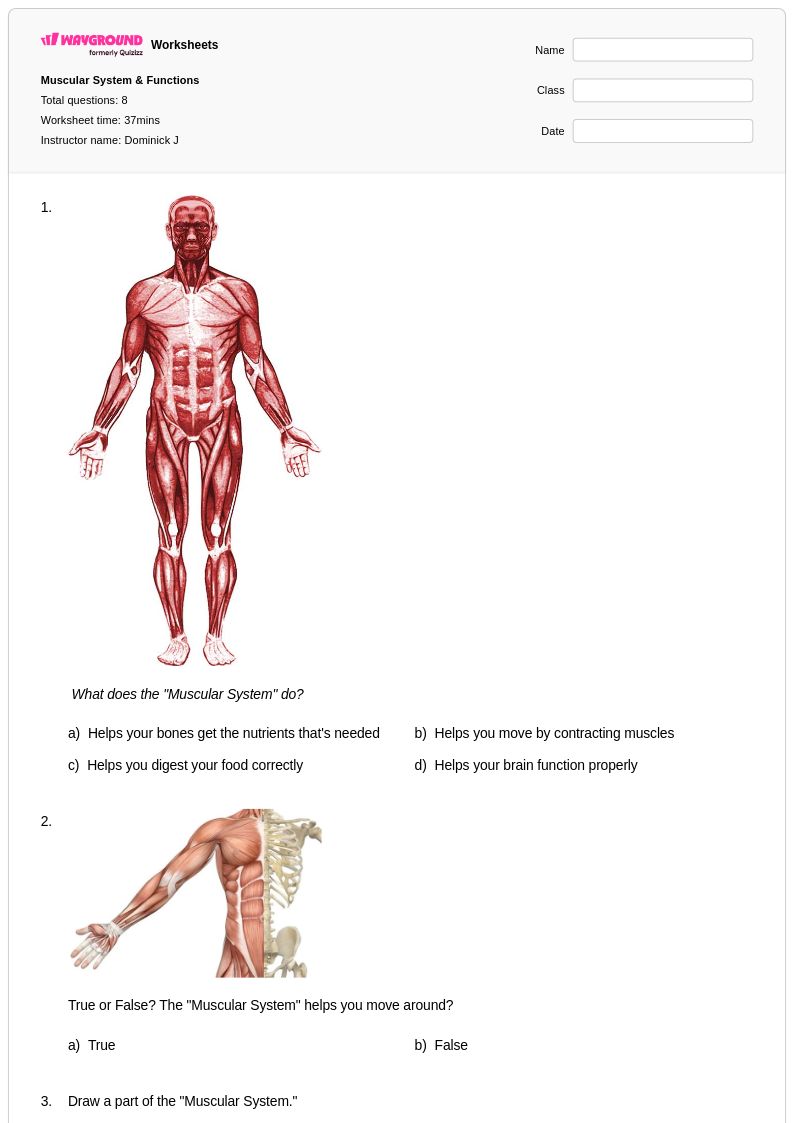
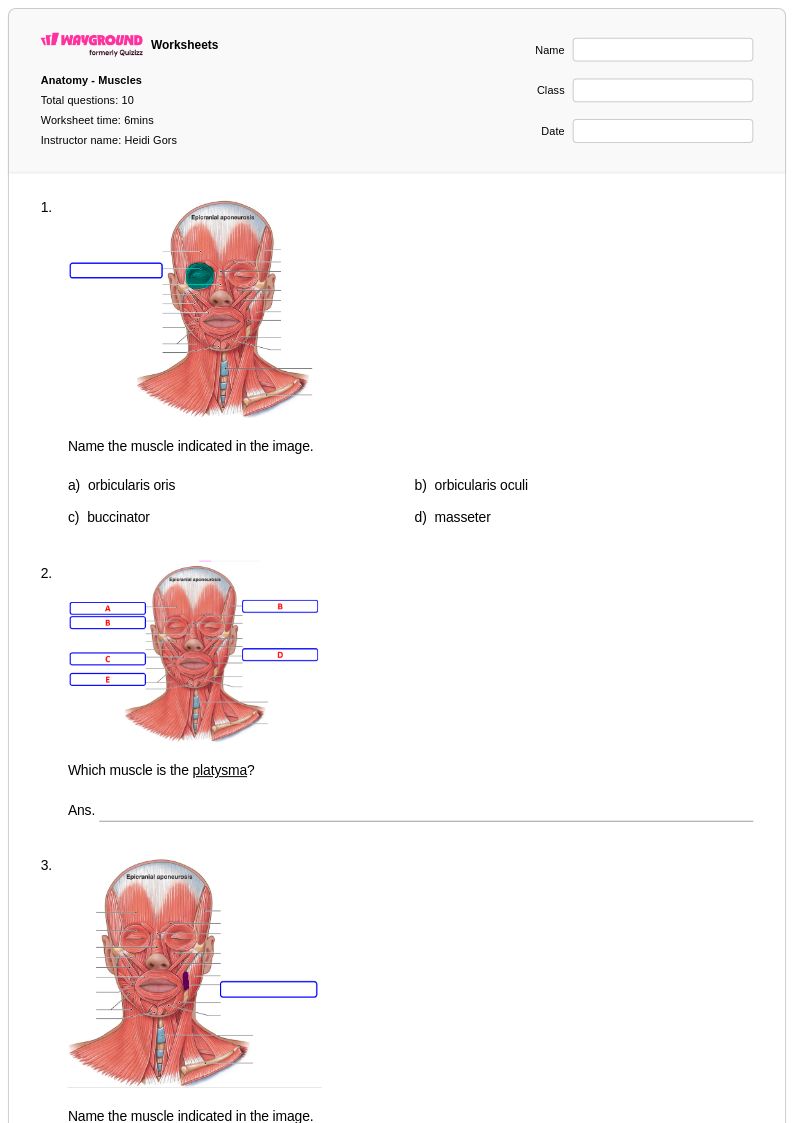
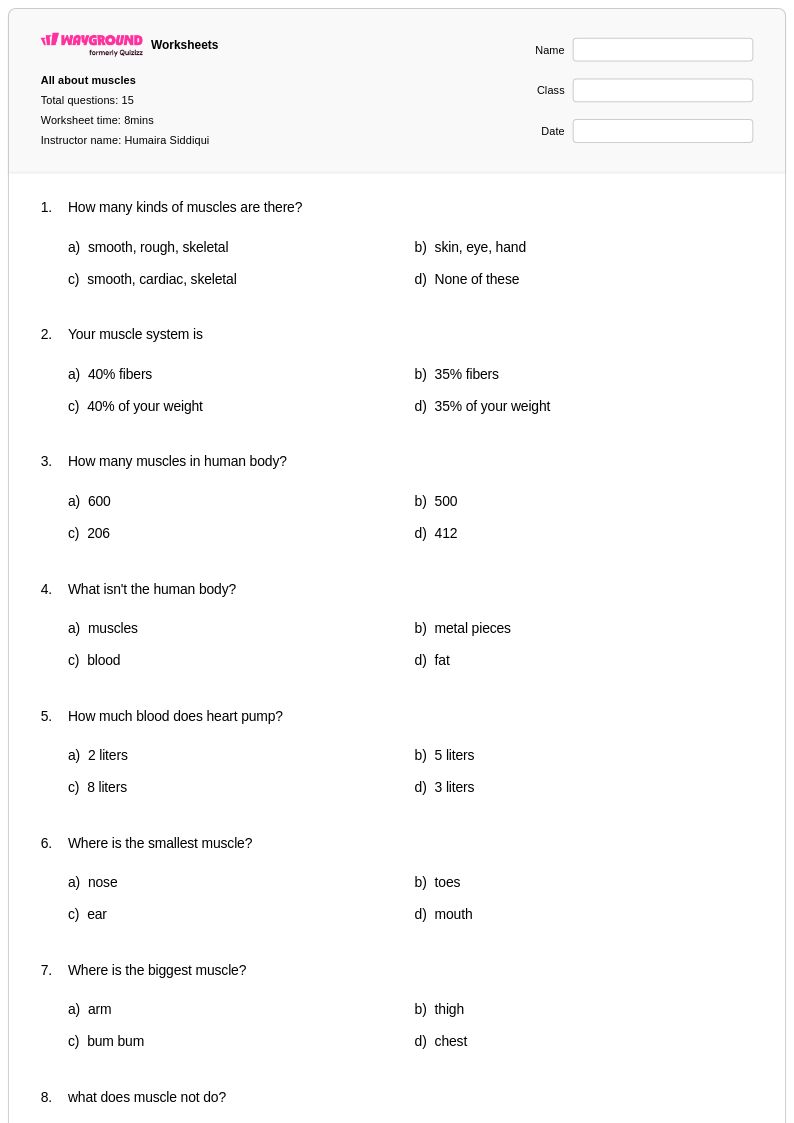
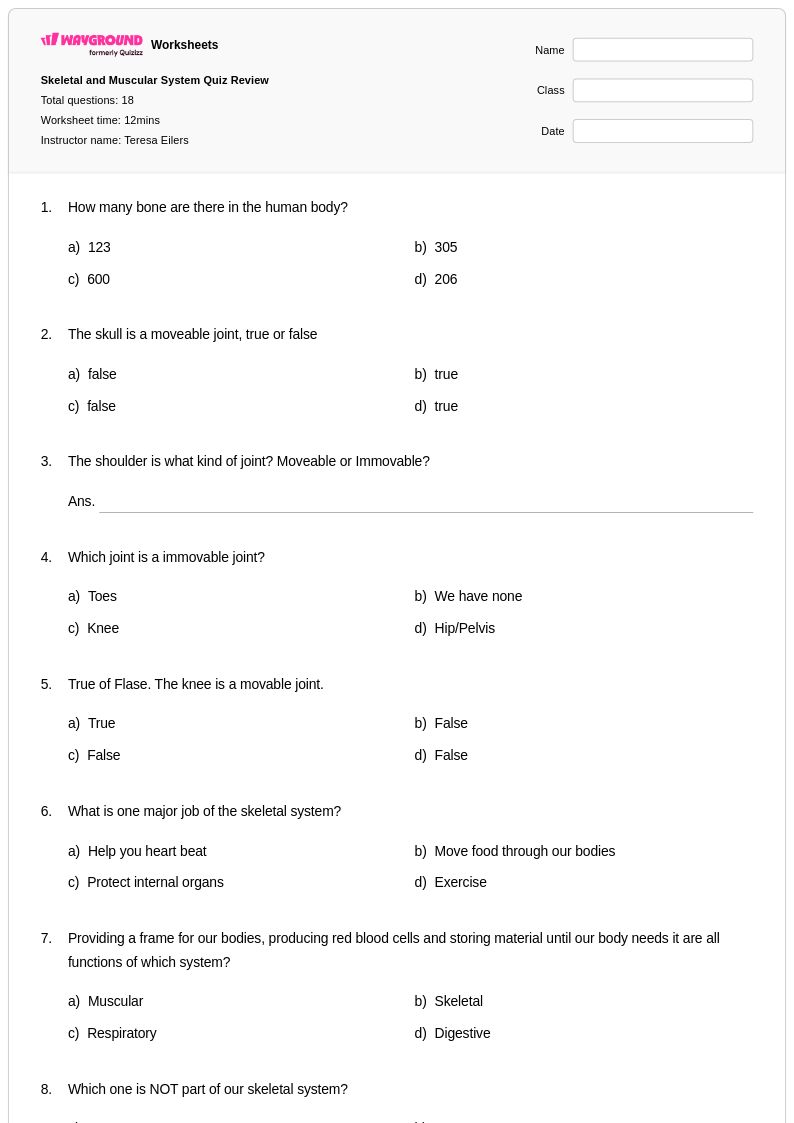
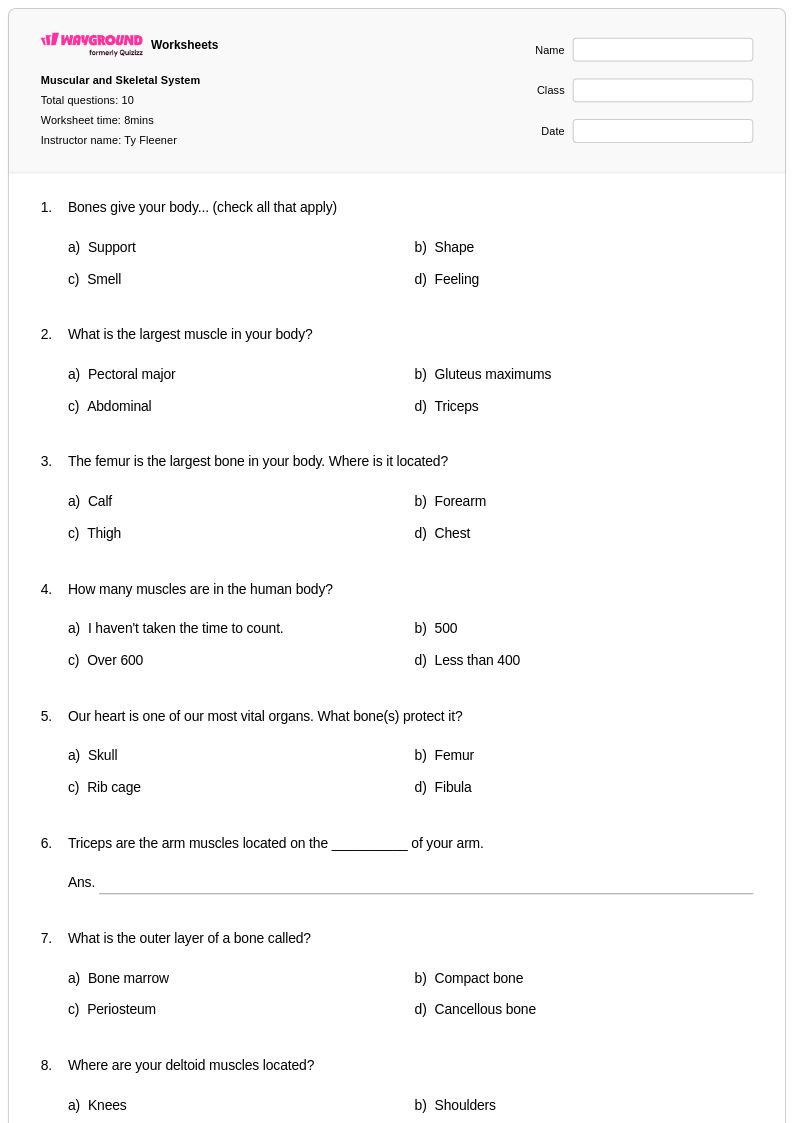
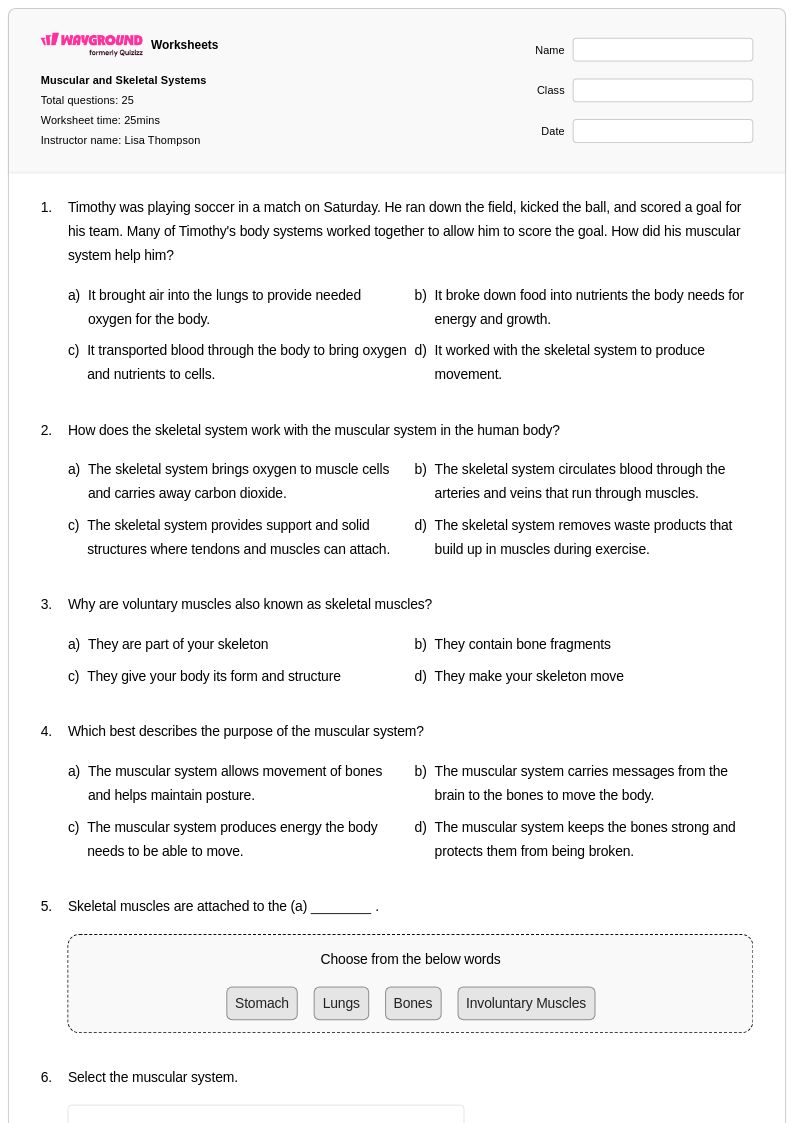
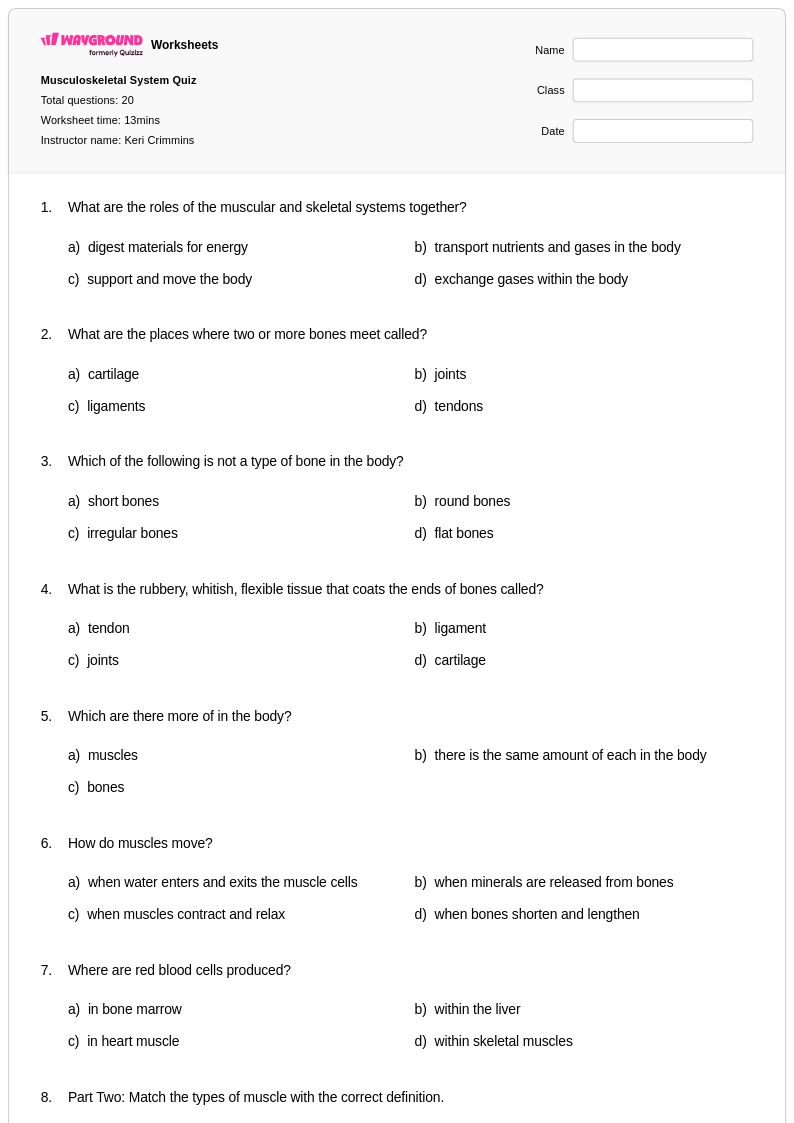
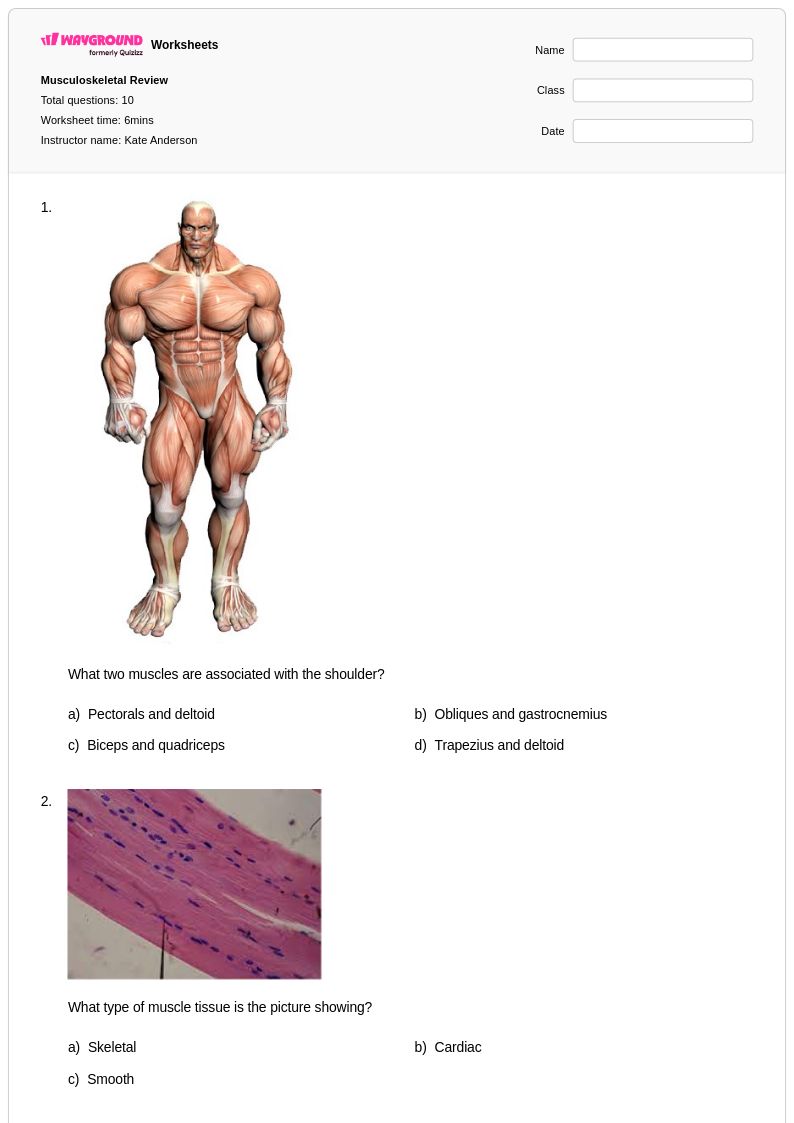
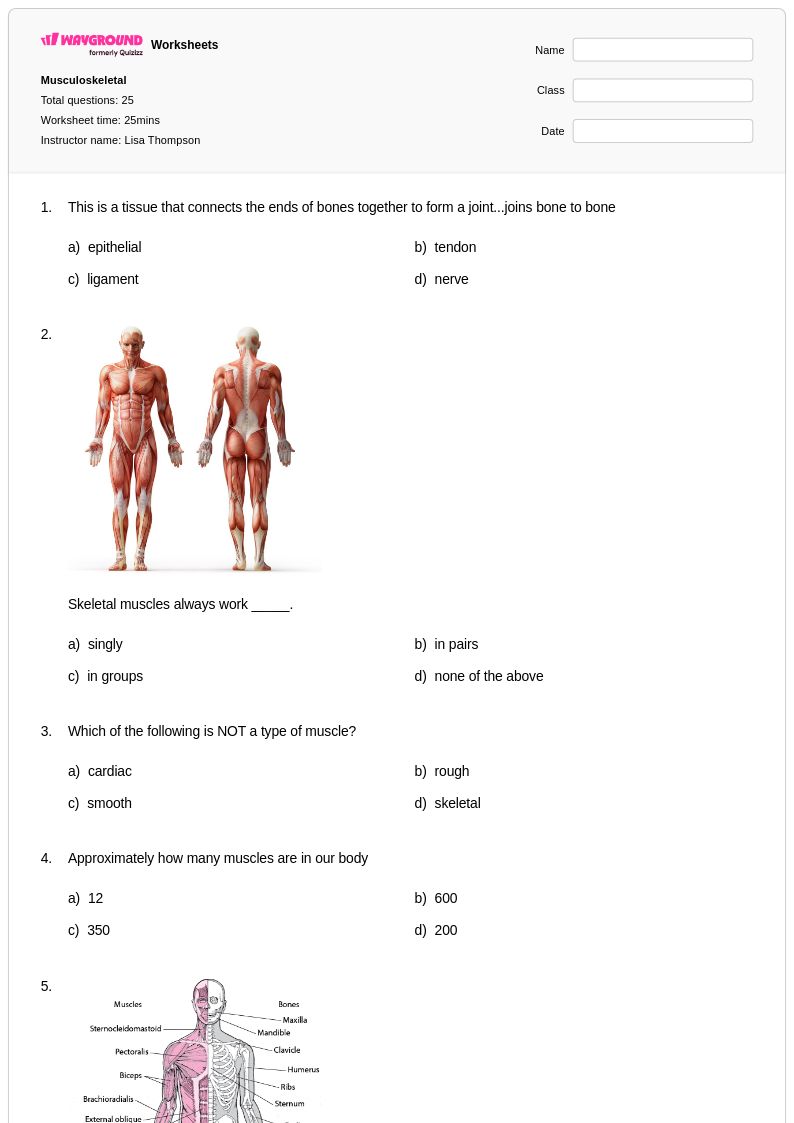
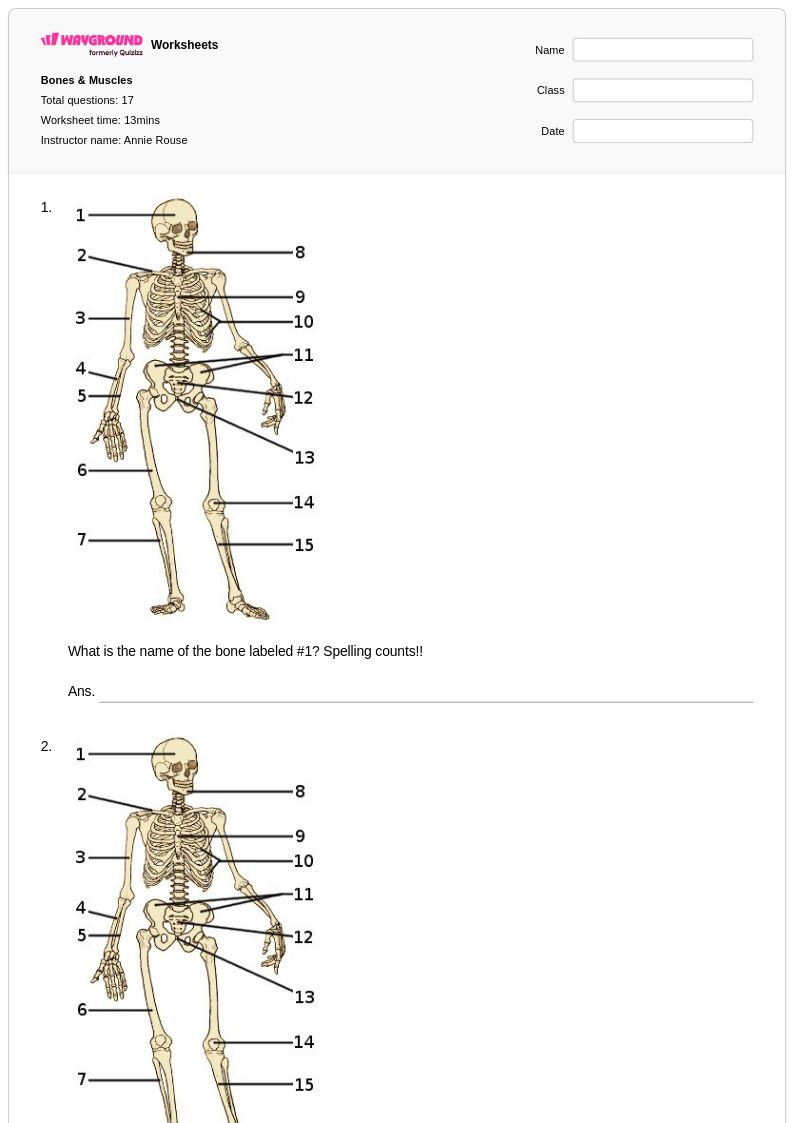
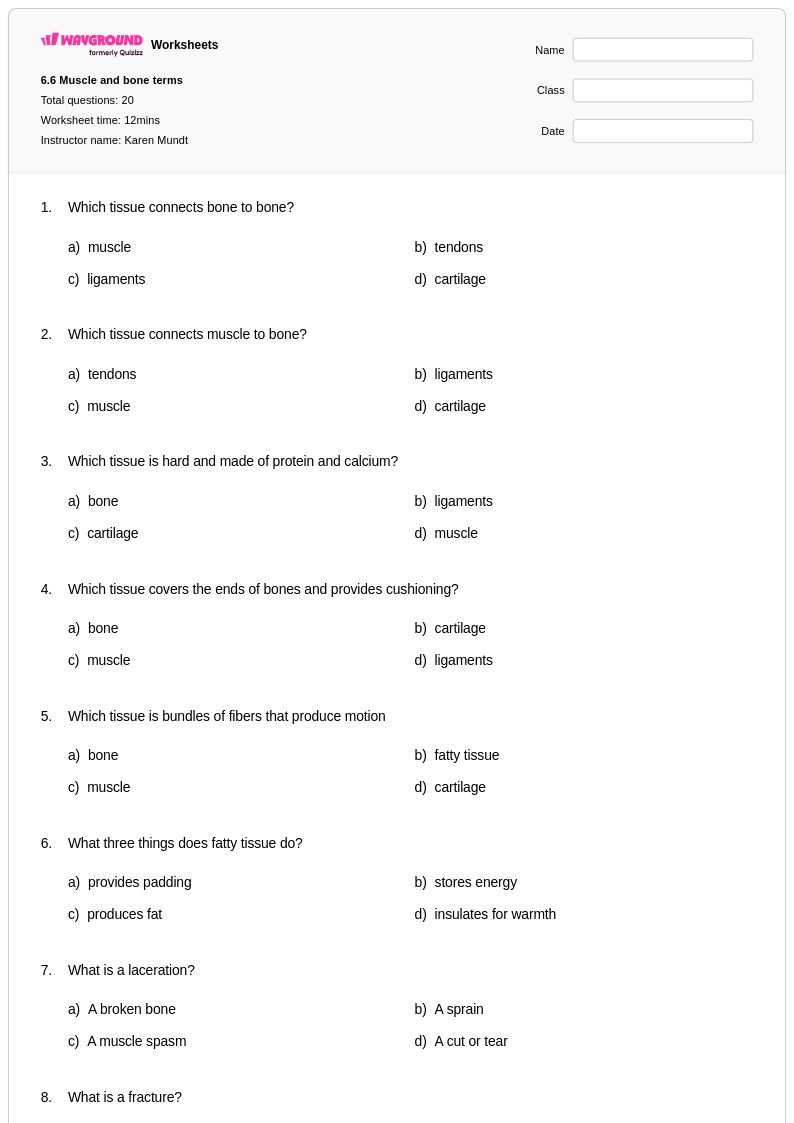
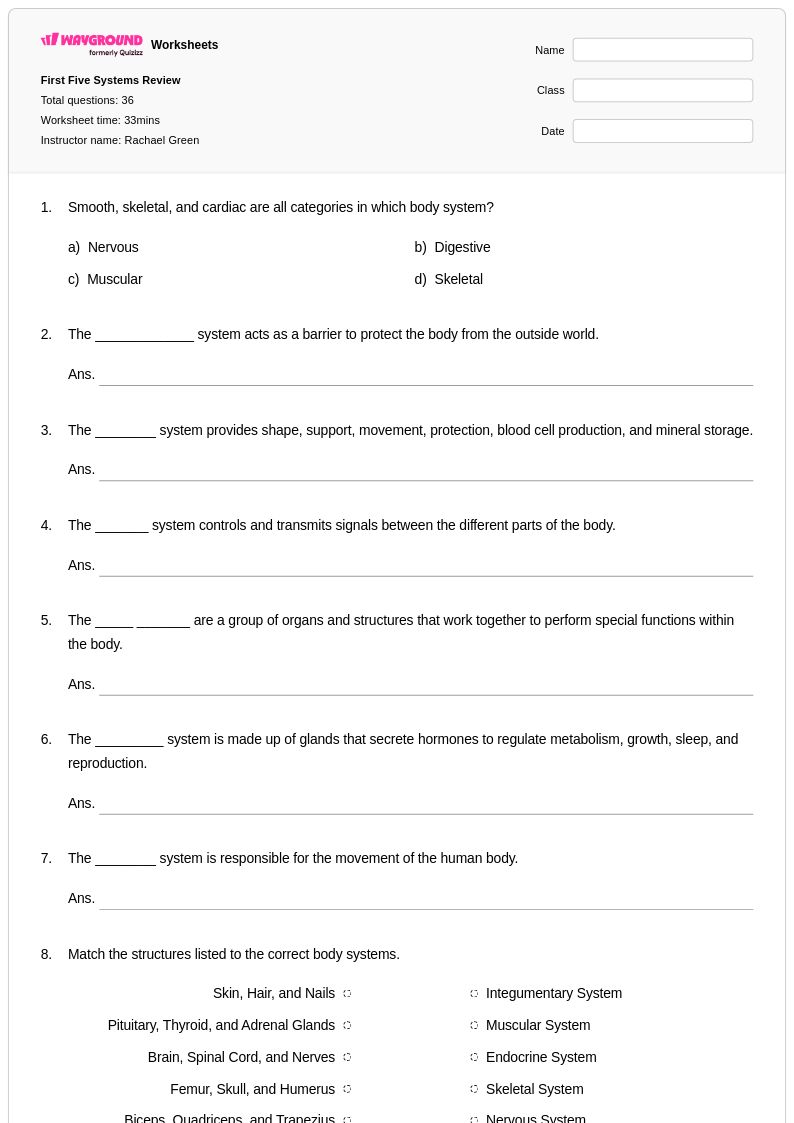
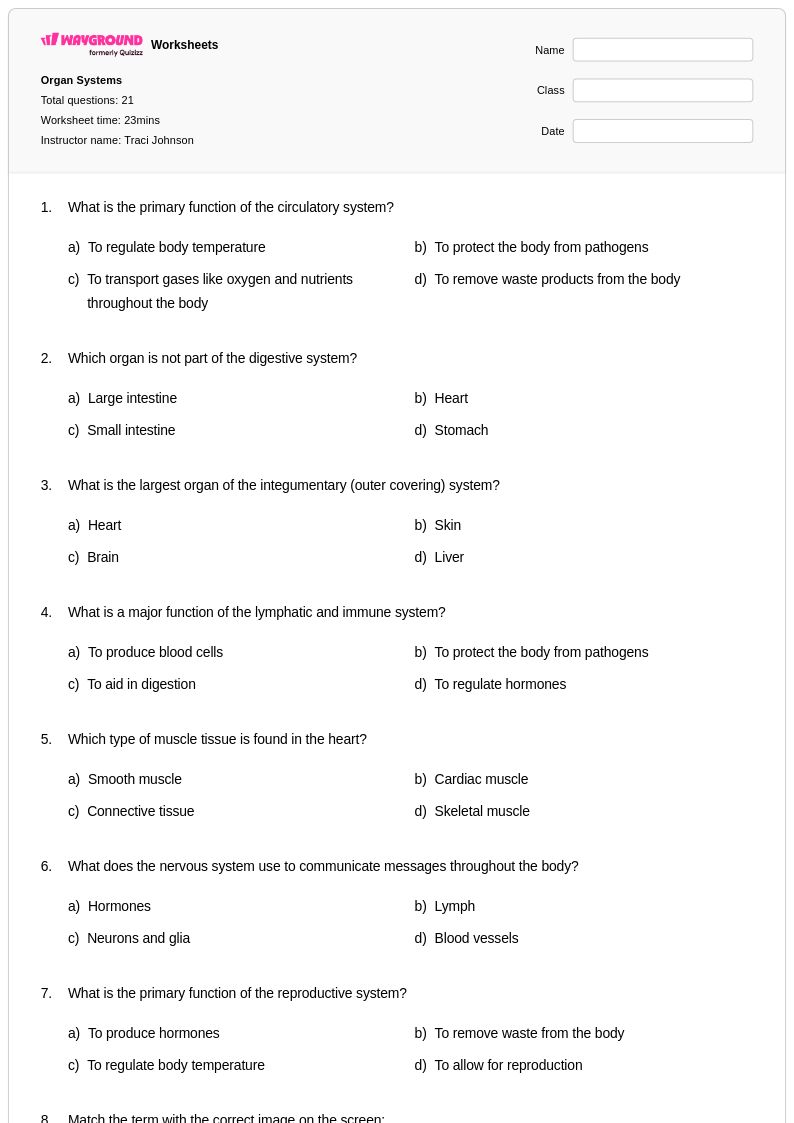
Major muscles worksheets for Class 8 biology students available through Wayground (formerly Quizizz) provide comprehensive coverage of the human muscular system, focusing on the identification, location, and functions of key muscle groups throughout the body. These educational resources strengthen students' understanding of skeletal muscles such as the biceps, triceps, quadriceps, hamstrings, deltoids, and pectorals, while developing critical anatomical vocabulary and spatial reasoning skills. The collection includes detailed practice problems that challenge students to label muscle diagrams, match muscles with their primary functions, and analyze how different muscle groups work together during movement. Each worksheet comes with a complete answer key, making them valuable free printables for both classroom instruction and independent study, while supporting students' ability to connect muscle structure with physiological function.
Wayground (formerly Quizizz) empowers educators with millions of teacher-created resources specifically designed for Class 8 major muscles instruction, featuring robust search and filtering capabilities that allow teachers to quickly locate materials aligned with state and national science standards. The platform's differentiation tools enable instructors to customize worksheets based on individual student needs, offering both printable pdf formats for traditional classroom use and digital versions for interactive learning environments. These flexible resources support comprehensive lesson planning by providing options for initial skill introduction, targeted remediation for struggling learners, and enrichment activities for advanced students. Teachers can seamlessly integrate these materials into their muscular system units, using the varied question formats and difficulty levels to assess student progress while reinforcing essential concepts about how major muscles contribute to human movement and physical performance.
FAQs
How do I teach major muscles to biology students?
Teaching major muscles effectively starts with anchoring students to functional categories: skeletal, cardiac, and smooth muscle. From there, move into specific muscle groups by location, such as the upper limb, lower limb, core, and back, connecting each muscle to its role in movement. Using labeled diagrams alongside origin and insertion charts helps students build both visual memory and conceptual understanding of how muscles work together.
What exercises help students practice identifying major muscle groups?
Labeling diagrams of the human body is one of the most effective practice formats for muscle identification, as it requires students to recall both name and location simultaneously. Exercises that ask students to match muscles to their functions, identify antagonistic pairs, or trace the origin and insertion points of specific muscles reinforce deeper anatomical understanding. Repeated low-stakes practice with these formats builds the fluency students need for assessments and lab work.
What mistakes do students commonly make when learning major muscles anatomy?
A frequent misconception is confusing the origin and insertion of a muscle, particularly when the relationship to a fixed versus a moving bone is not clearly taught. Students also commonly conflate muscle groups with individual muscles, for example treating the quadriceps as a single muscle rather than four distinct muscles. Another common error is misidentifying deep muscles versus superficial muscles on diagrams when only one anatomical view is provided.
How do I differentiate major muscles instruction for students with different skill levels?
For struggling learners, reduce the scope of practice to major superficial muscles before introducing deeper or smaller muscle groups, and provide partially labeled diagrams as scaffolding. Advanced students benefit from exercises that require them to analyze antagonistic muscle pairs, predict injuries based on muscle function, or connect muscular anatomy to physiological concepts like force production. On Wayground, teachers can apply accommodations such as reduced answer choices or read aloud settings to individual students without disrupting the rest of the class.
How can I use major muscles worksheets in my classroom?
Major muscles worksheets on Wayground are available as printable PDFs for traditional classroom use and in digital formats for technology-integrated environments, giving teachers flexibility regardless of their setup. Teachers can assign them as independent practice, guided notes during direct instruction, or review materials ahead of assessments. Digital versions can also be hosted as a quiz on Wayground, allowing teachers to track student performance and identify gaps in muscle anatomy knowledge in real time.
How do I help students understand the difference between skeletal, cardiac, and smooth muscle?
The key distinction to emphasize is voluntary versus involuntary control: skeletal muscle is under conscious control and attached to bones, cardiac muscle is involuntary and found exclusively in the heart, and smooth muscle is involuntary and lines internal organs and blood vessels. Using real-world examples, such as flexing an arm for skeletal muscle or digestion for smooth muscle, makes these abstractions concrete. Structured comparison charts where students fill in characteristics for each muscle type are an effective reinforcement tool.