
25 Q
8th
15 Q
3rd - Uni
15 Q
3rd - Uni
25 Q
3rd - Uni
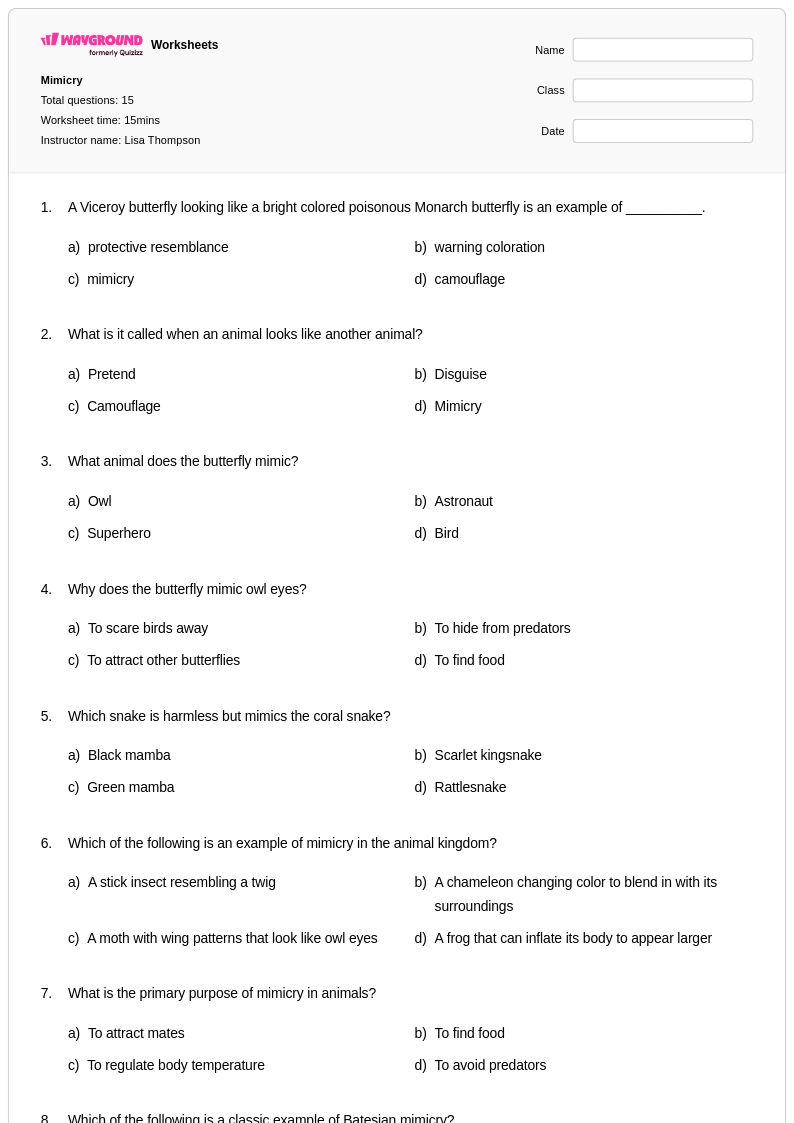
15 Q
3rd - Uni
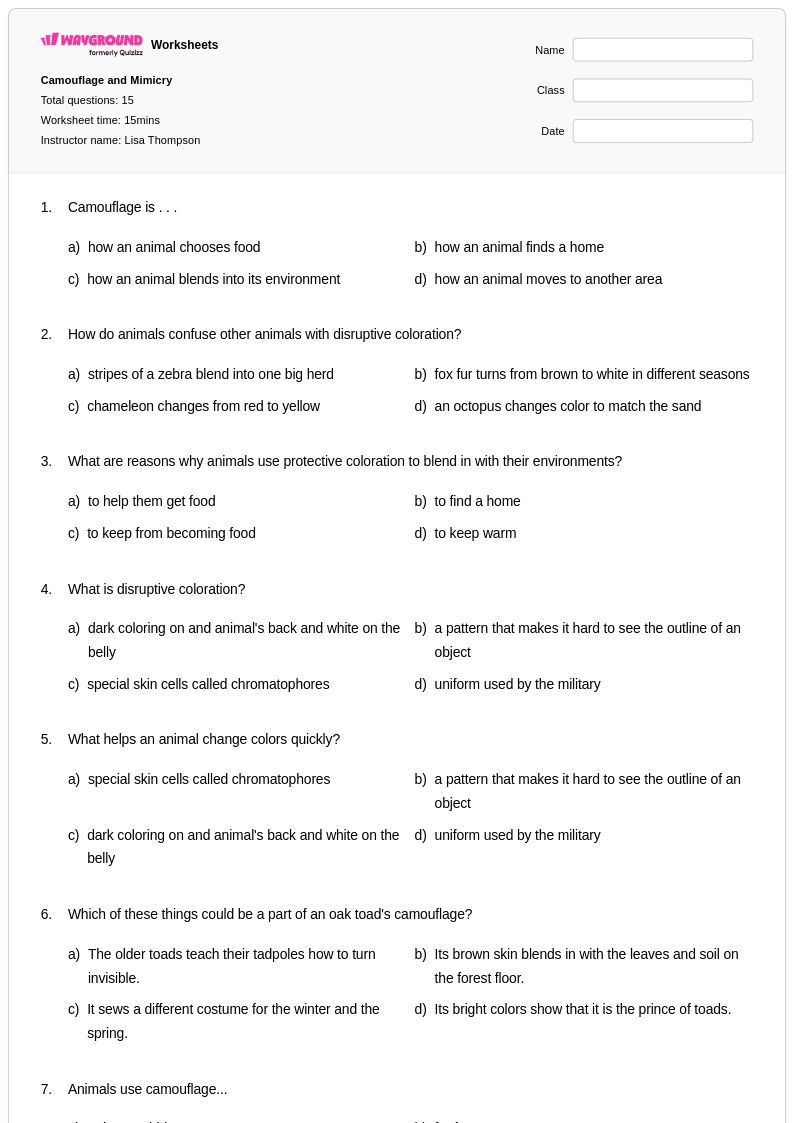
15 Q
3rd - Uni
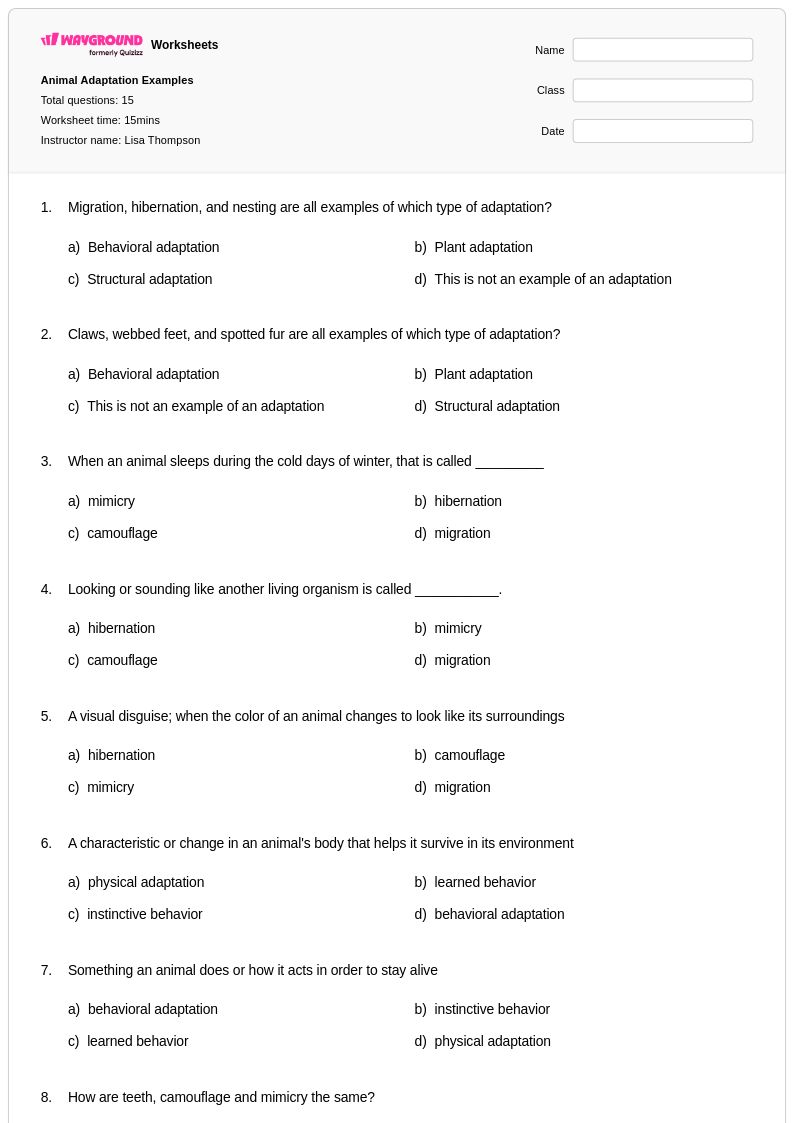
15 Q
3rd - Uni
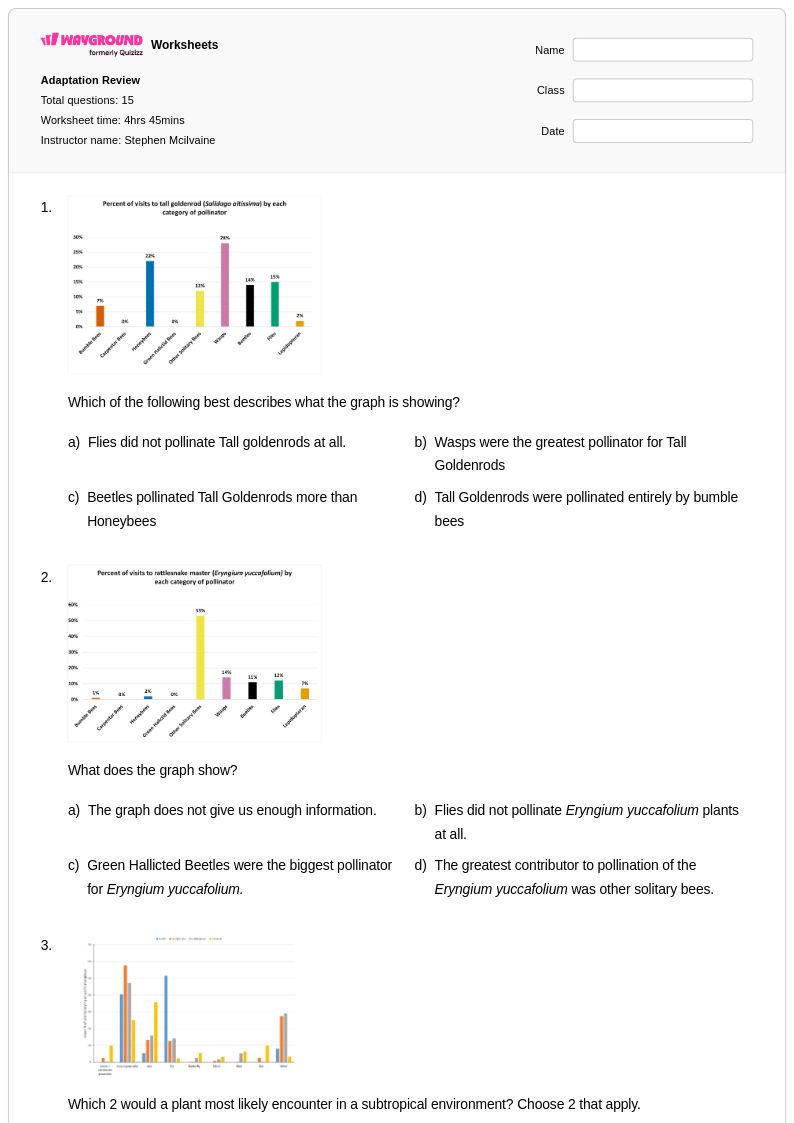
15 Q
8th
14 Q
6th - 8th
13 Q
6th - 8th
10 Q
8th
21 Q
7th - 8th
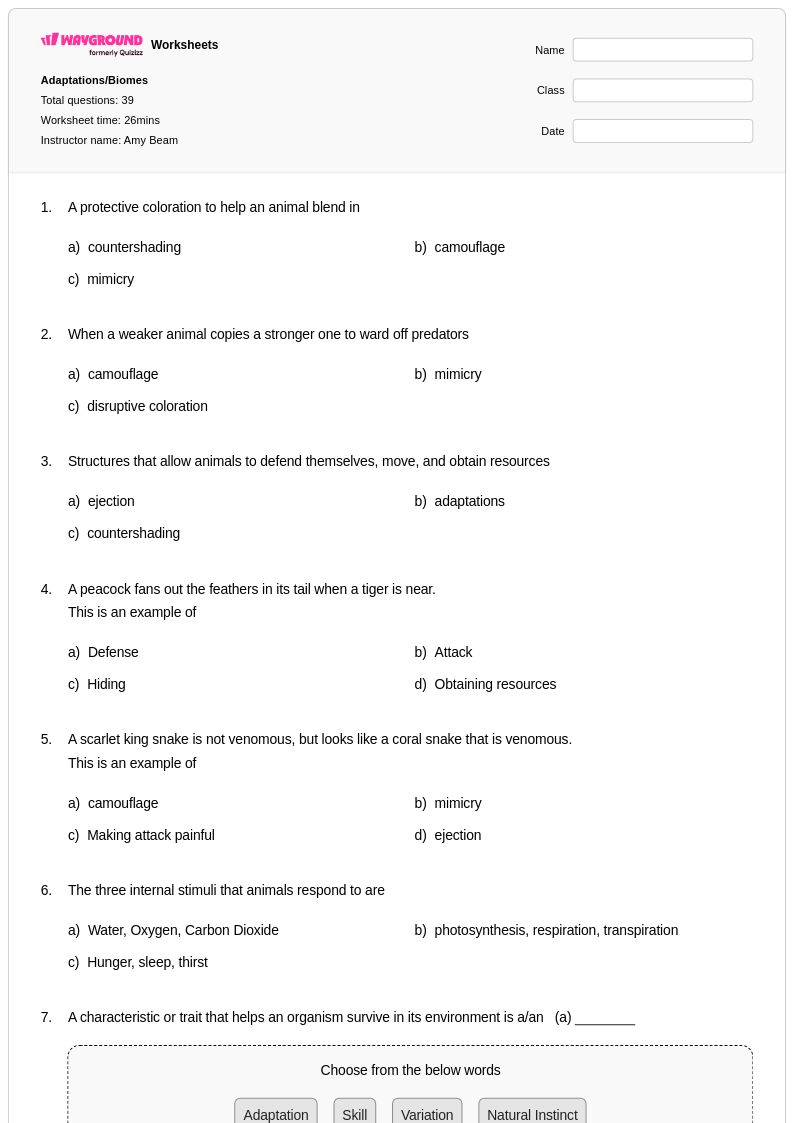
39 Q
8th
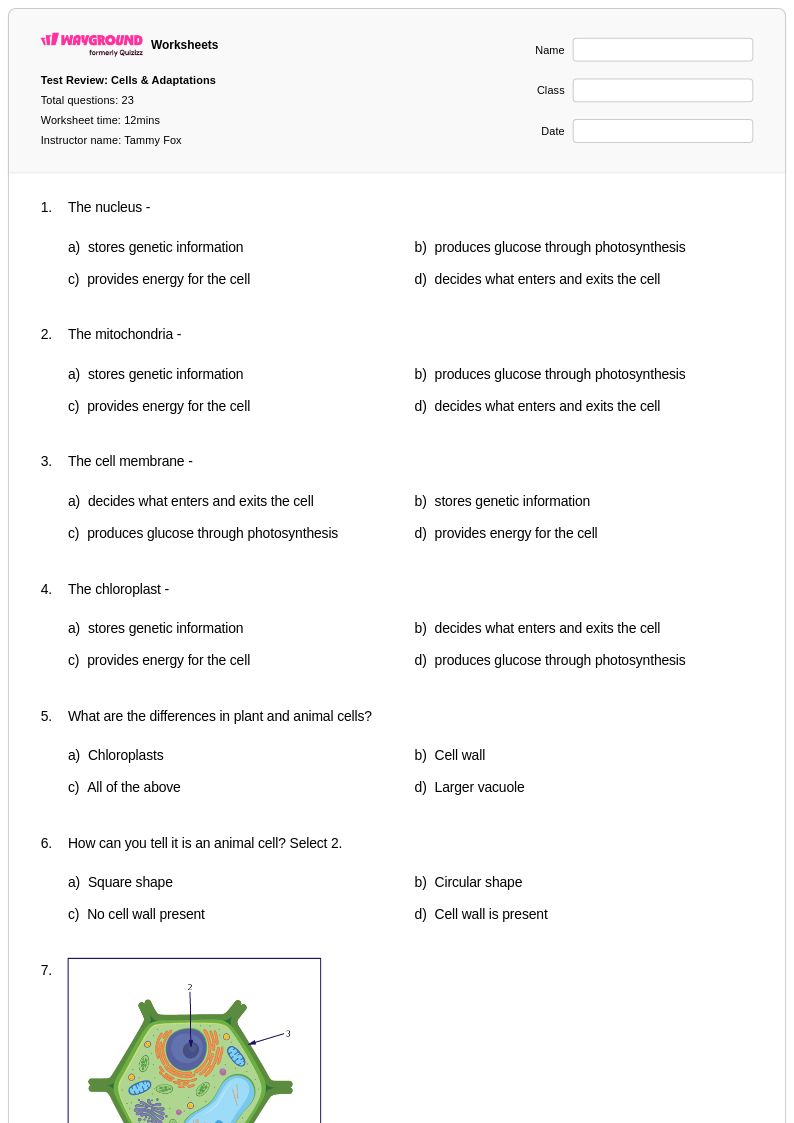
23 Q
8th
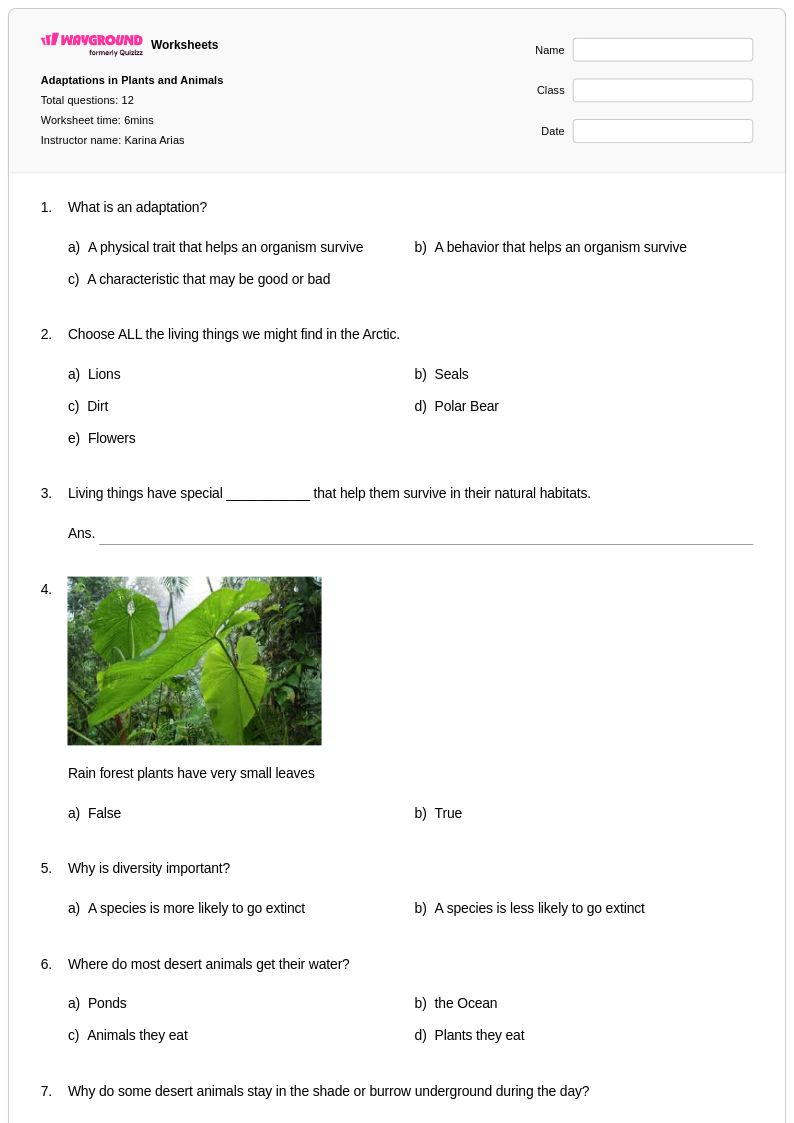
12 Q
6th - 8th
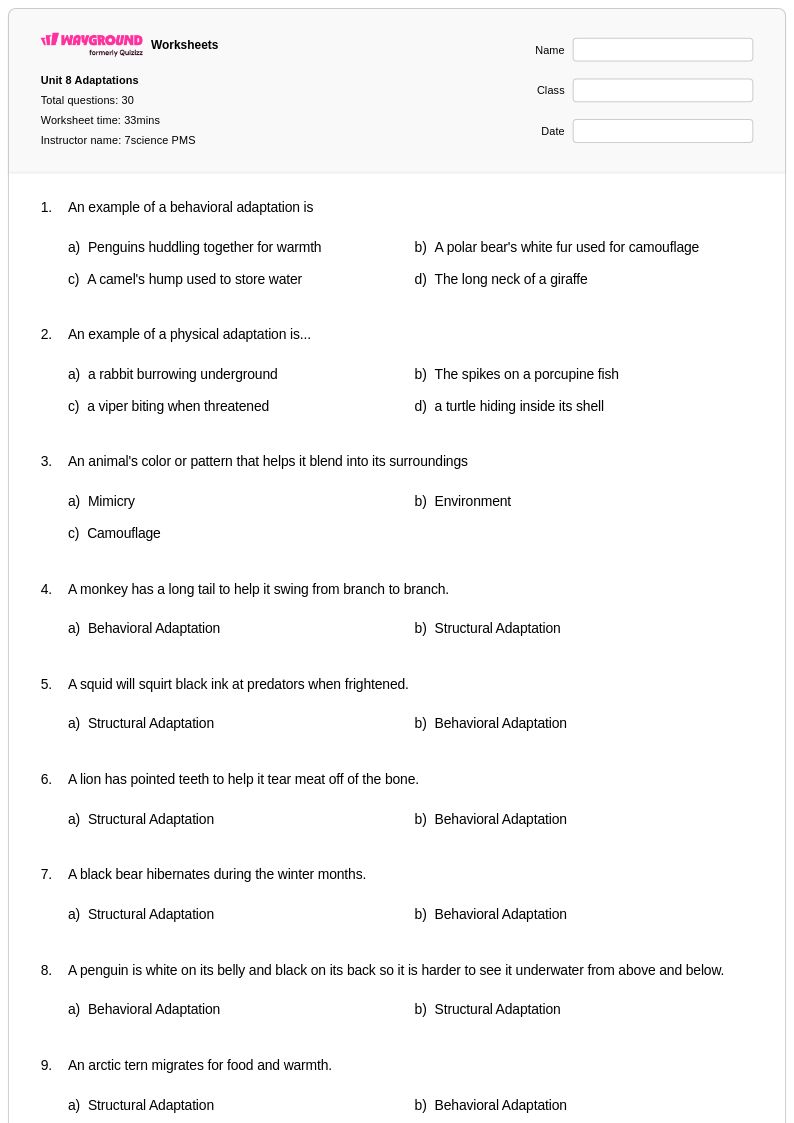
30 Q
6th - 8th
15 Q
6th - 8th
15 Q
1st - Uni
25 Q
1st - Uni
15 Q
6th - 8th
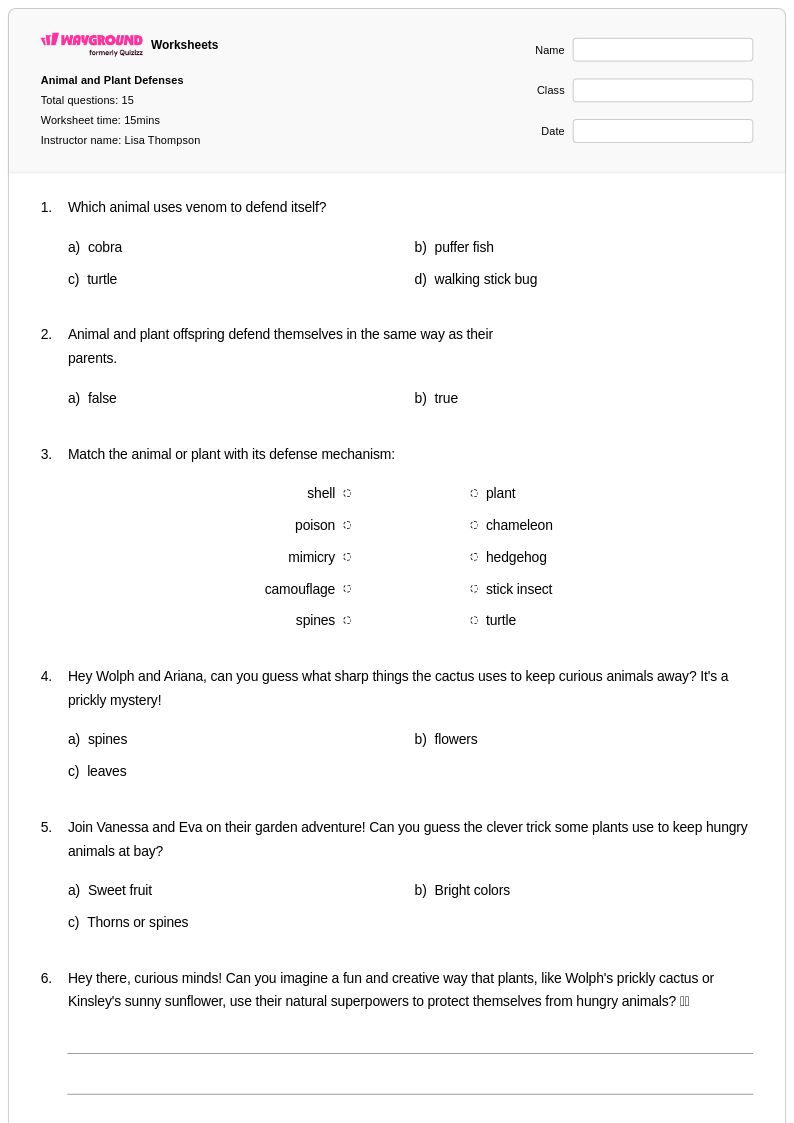
15 Q
1st - Uni
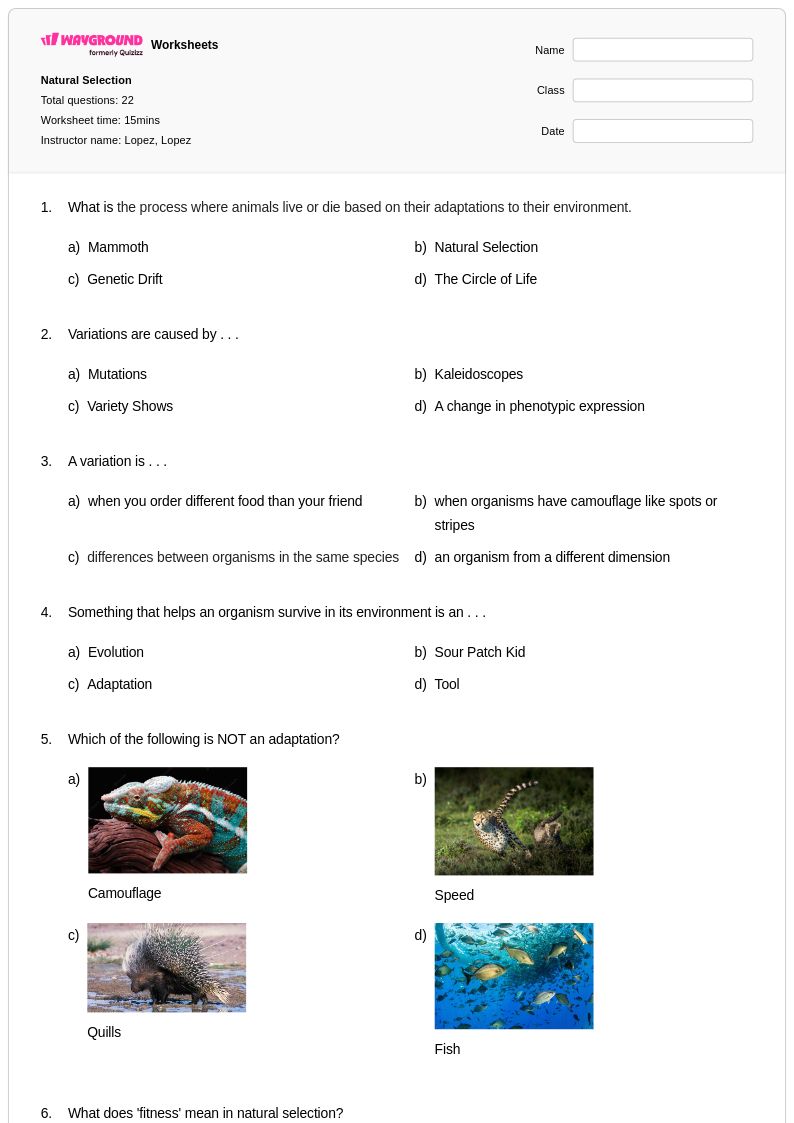
22 Q
8th
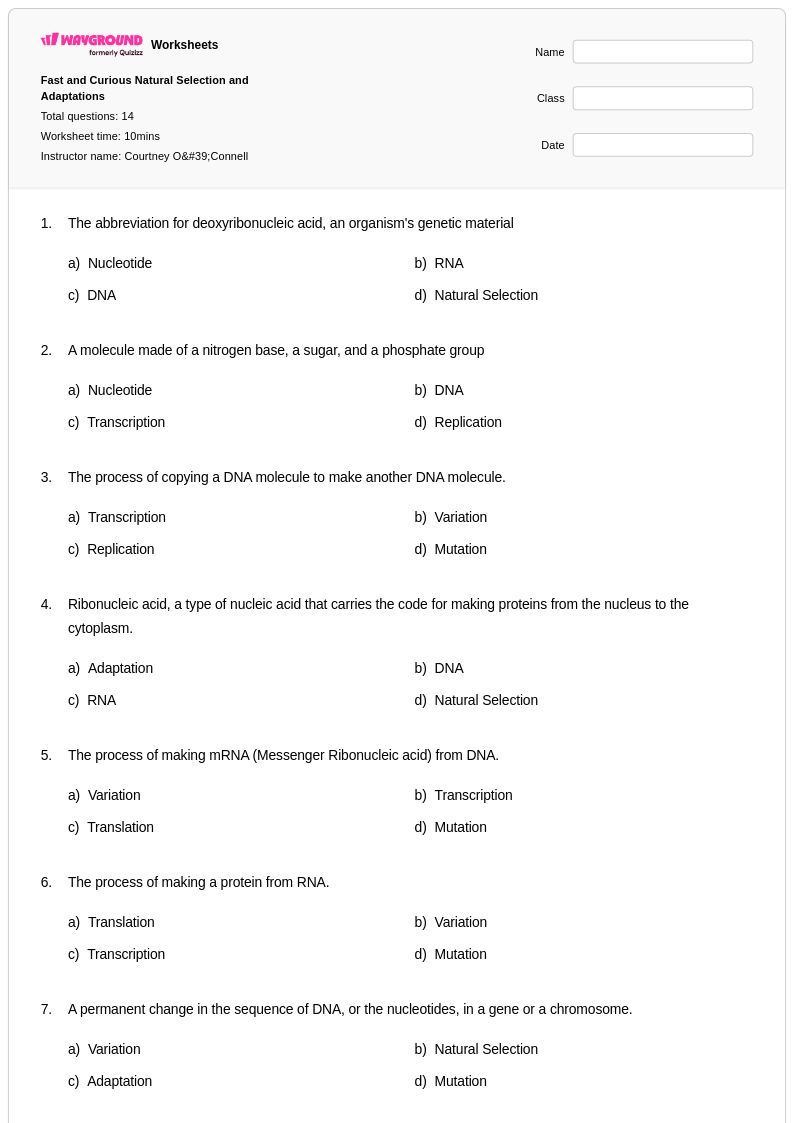
14 Q
8th
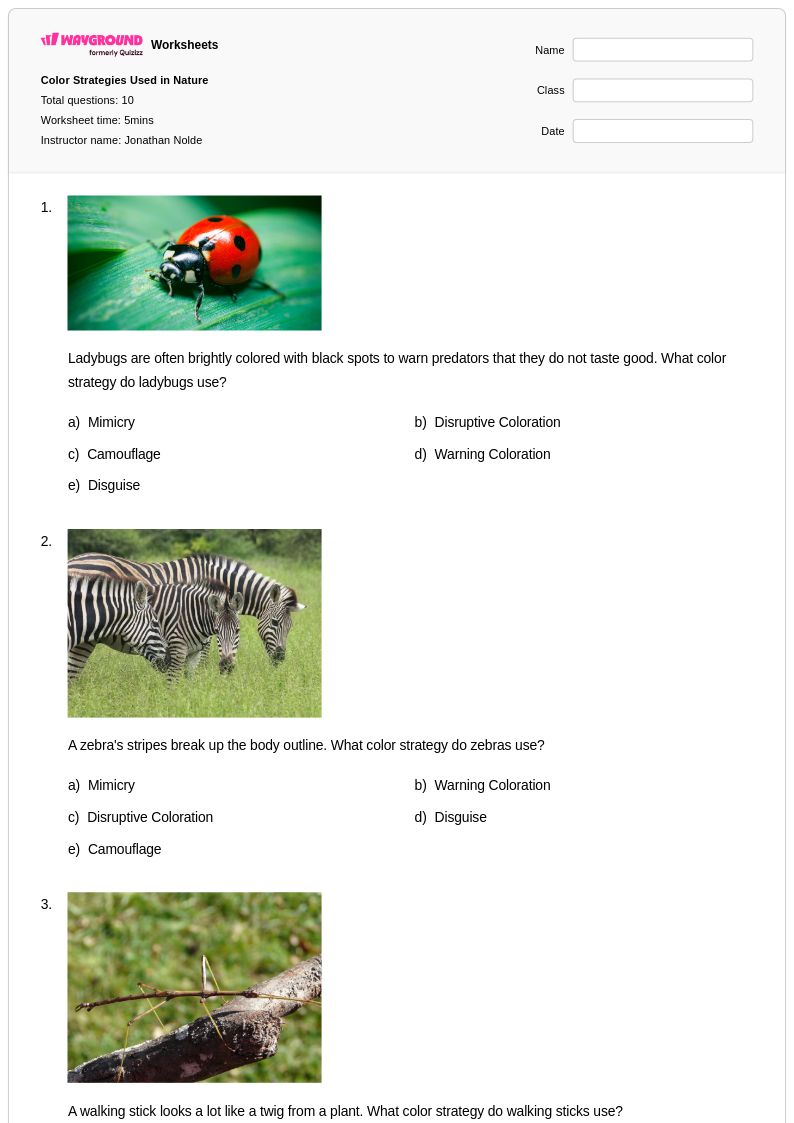
10 Q
4th - 8th
Explore Other Subject Worksheets for class 8
Explore printable Mimicry worksheets for Class 8
Class 8 mimicry worksheets available through Wayground (formerly Quizizz) provide comprehensive coverage of this fascinating biological adaptation strategy, helping students understand how organisms imitate other species or environmental features for survival advantages. These expertly designed educational resources strengthen critical thinking skills as students analyze different types of mimicry including Batesian mimicry, where harmless species mimic dangerous ones, and Müllerian mimicry, where multiple harmful species share similar warning signals. The collection includes practice problems that challenge students to identify mimicry examples in nature, compare adaptive strategies across species, and evaluate the evolutionary benefits of imitative behaviors. Each worksheet comes with a detailed answer key and is available as free printable pdf resources, making it simple for educators to incorporate these materials into their biology curriculum while reinforcing key concepts about predator-prey relationships and natural selection.
Wayground (formerly Quizizz) supports biology educators with an extensive collection of teacher-created mimicry worksheets, drawing from millions of high-quality resources developed by experienced classroom professionals. The platform's advanced search and filtering capabilities allow teachers to quickly locate materials that align with specific learning standards and match their students' academic needs, while differentiation tools enable customization for various skill levels within the same Class 8 classroom. These flexible resources are available in both printable and digital formats, including downloadable pdf versions, giving educators the freedom to adapt materials for in-person instruction, remote learning, or hybrid teaching environments. Teachers can effectively use these worksheets for lesson planning, targeted remediation for struggling students, enrichment activities for advanced learners, and regular skill practice that reinforces understanding of mimicry as a crucial survival mechanism in the natural world.
FAQs
How do I teach Batesian vs. Müllerian mimicry in a biology class?
What are good practice exercises for helping students understand mimicry as an evolutionary adaptation?
What misconceptions do students commonly have about mimicry in biology?
How can I use mimicry worksheets to support different skill levels in my classroom?
How do I use Wayground's mimicry worksheets in my classroom?