Free Printable Genetics Vocabulary Dominant and Recessive Worksheets for Class 8
Explore free Class 8 genetics vocabulary worksheets focusing on dominant and recessive traits, featuring printable PDFs with practice problems and answer keys to help students master essential biological inheritance concepts.
Explore printable Genetics Vocabulary Dominant and Recessive worksheets for Class 8
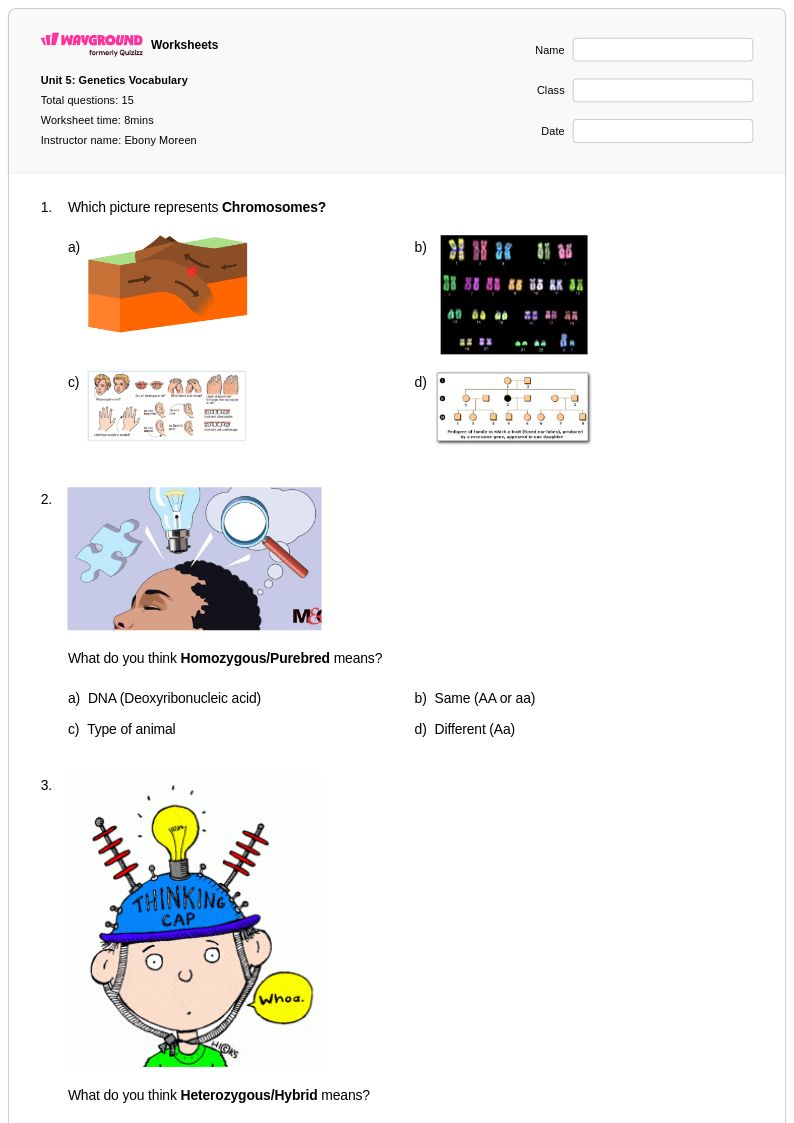
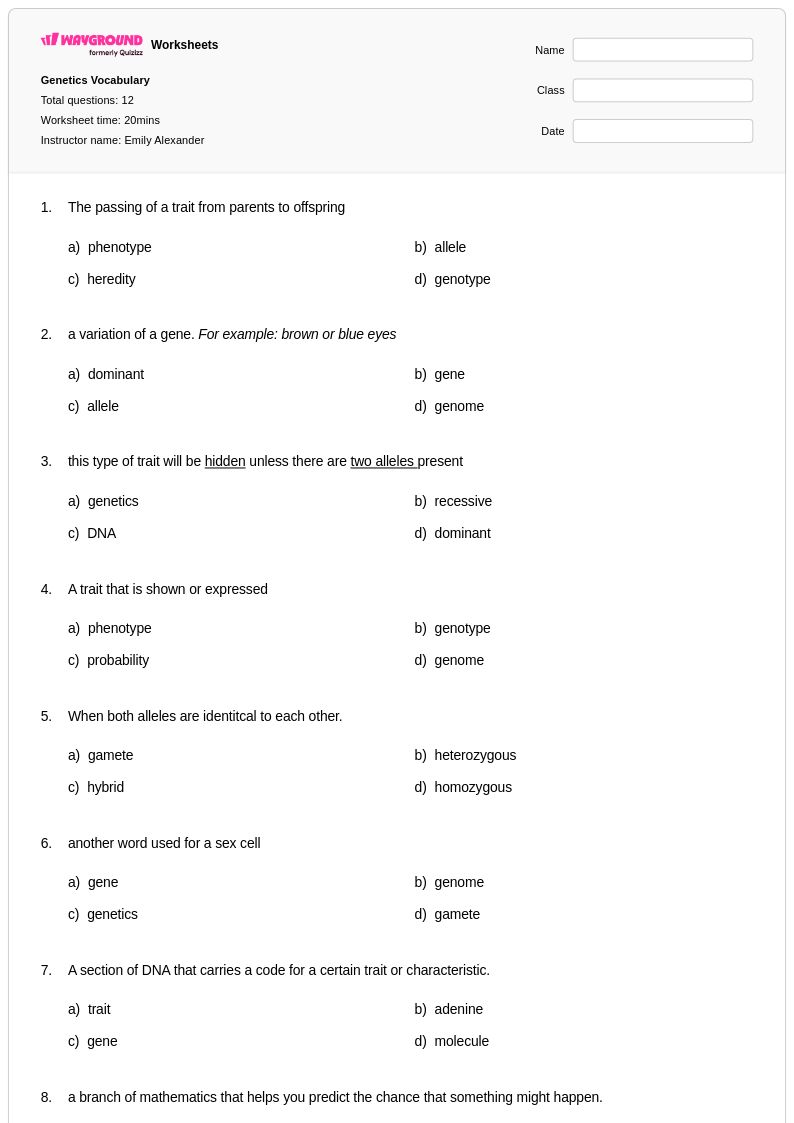
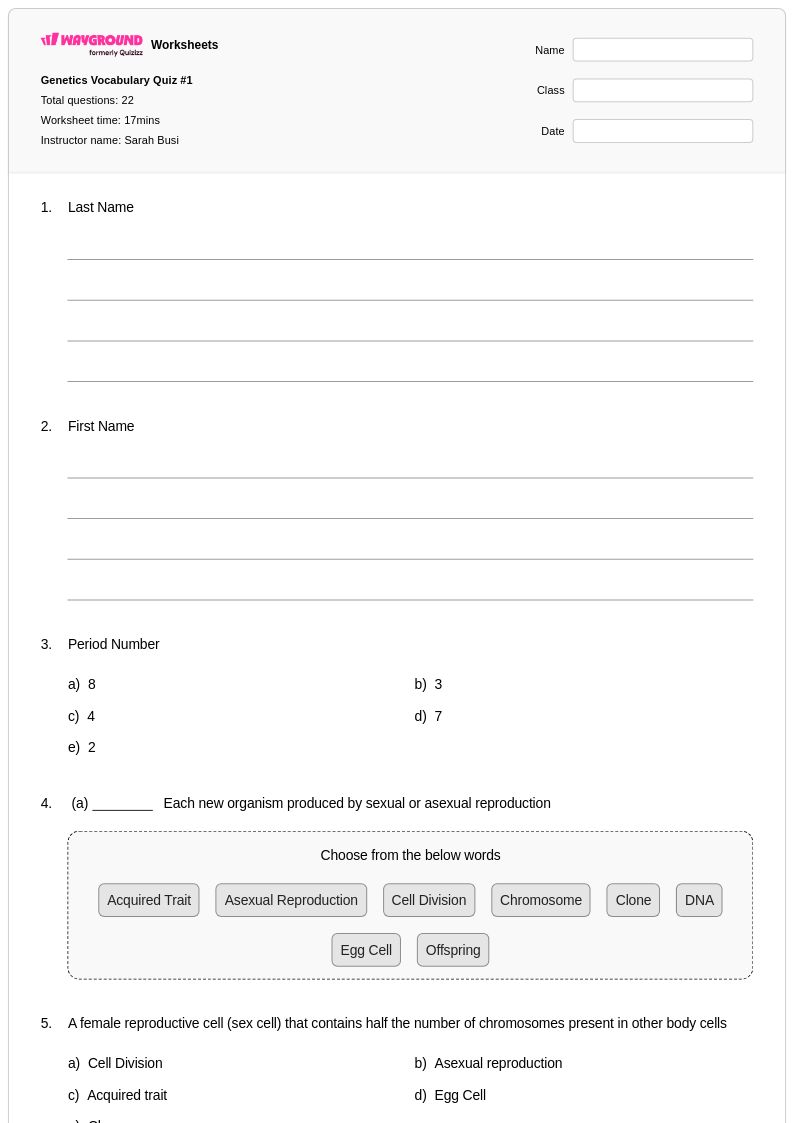
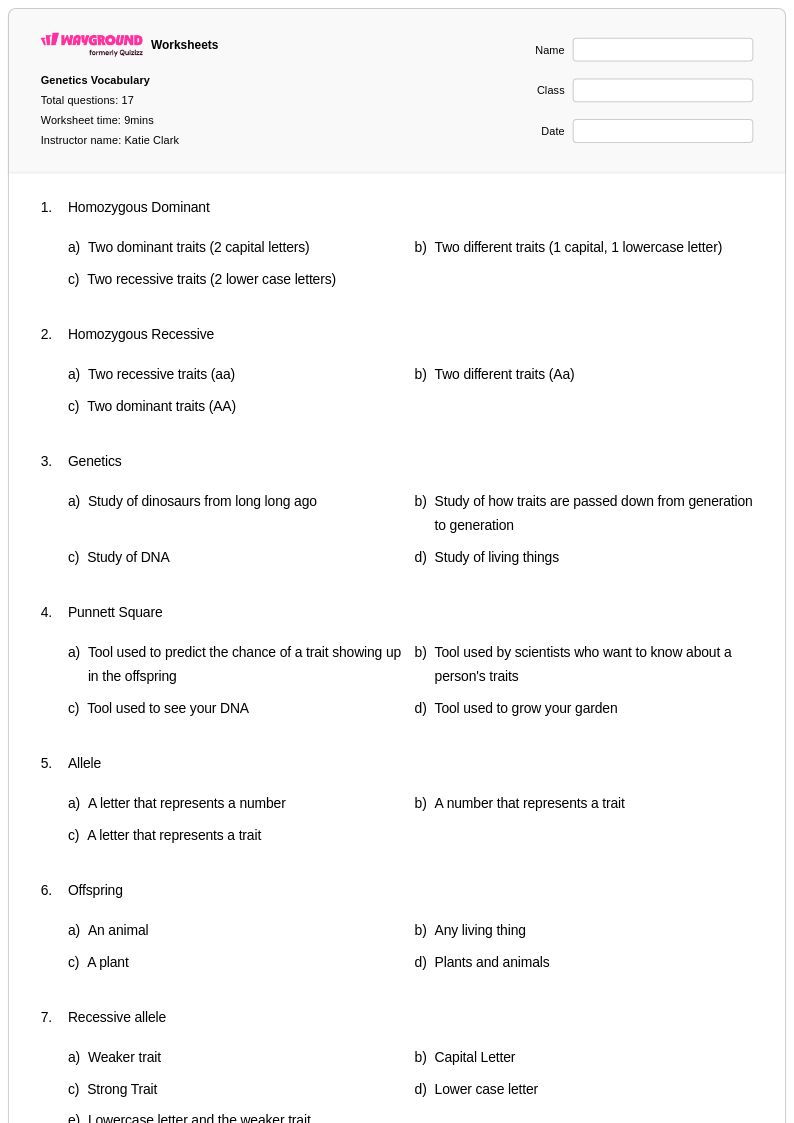
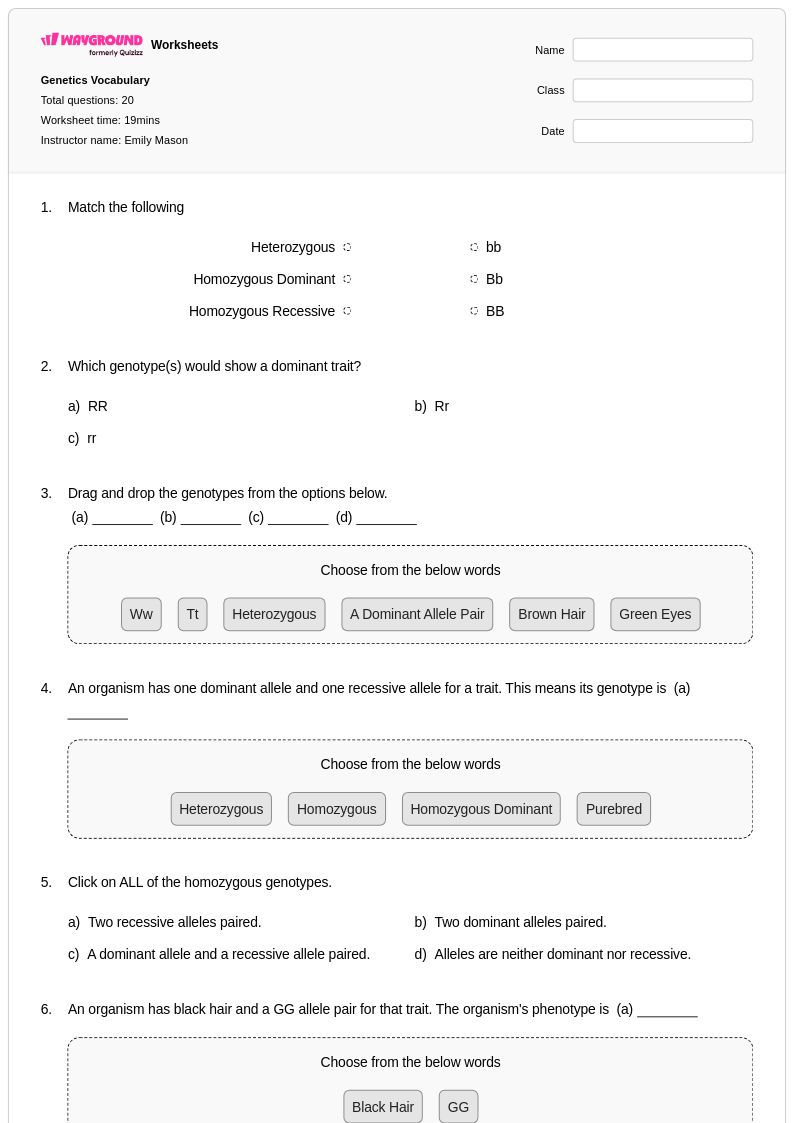
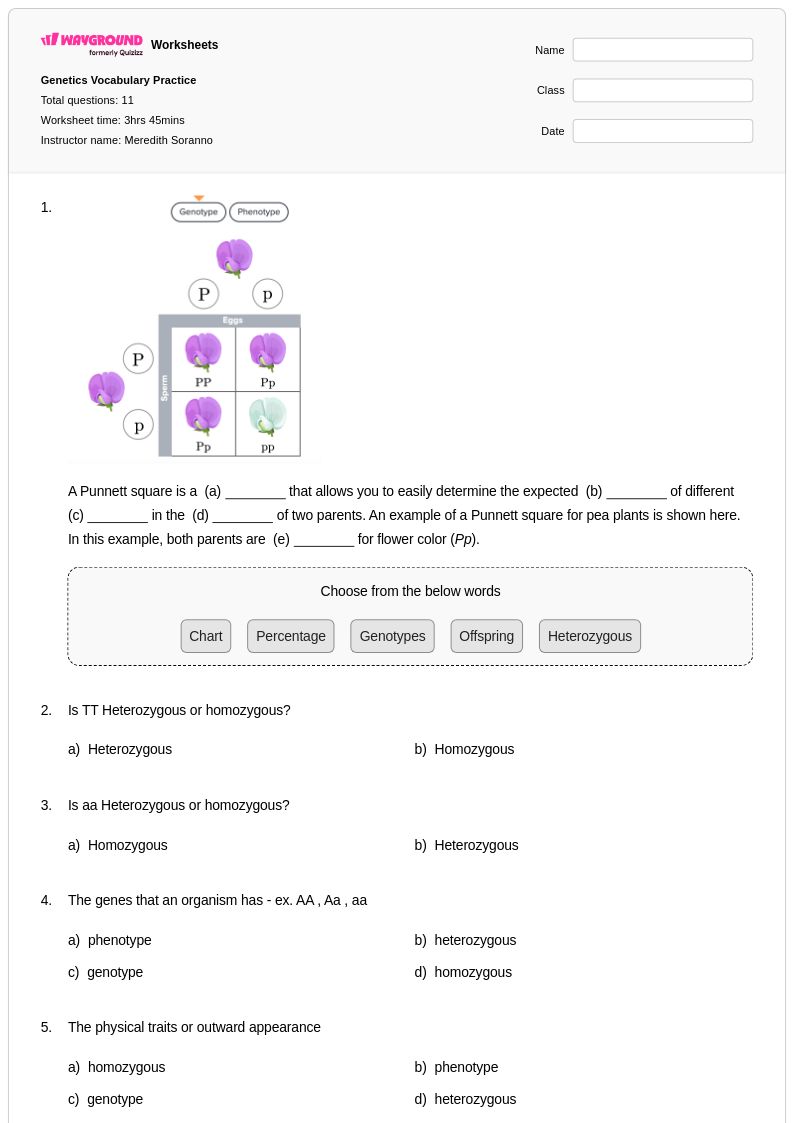
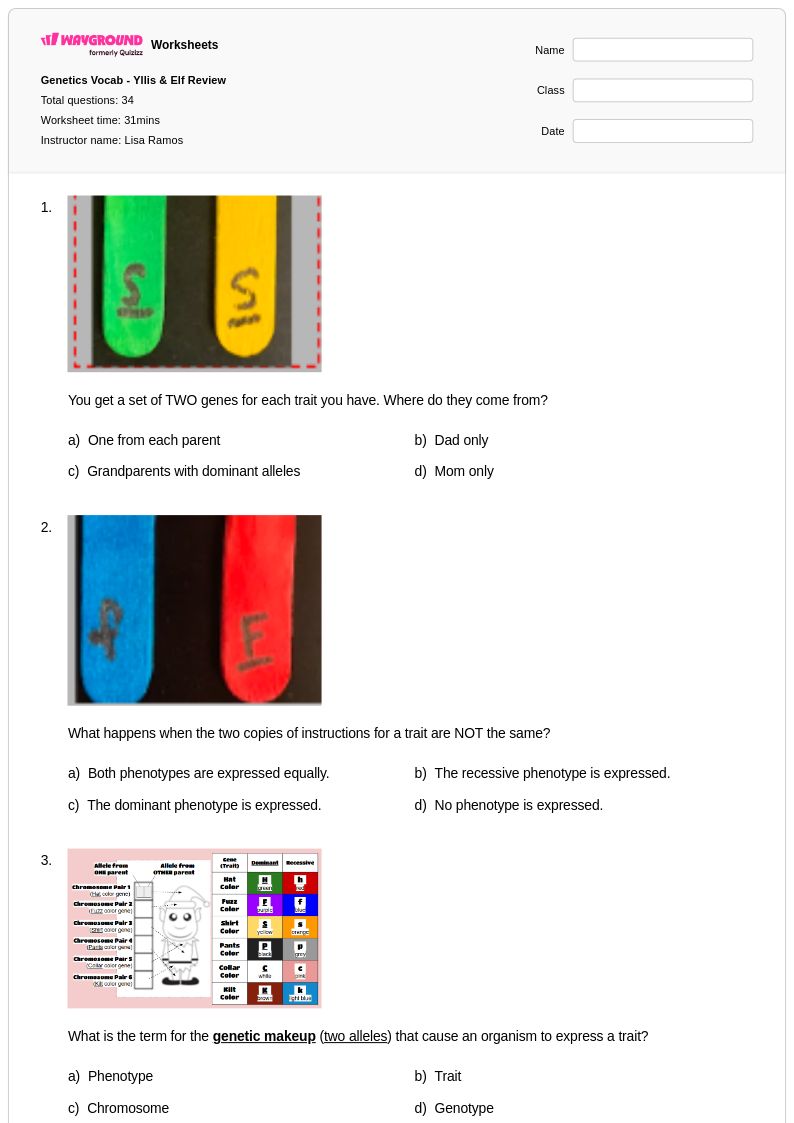
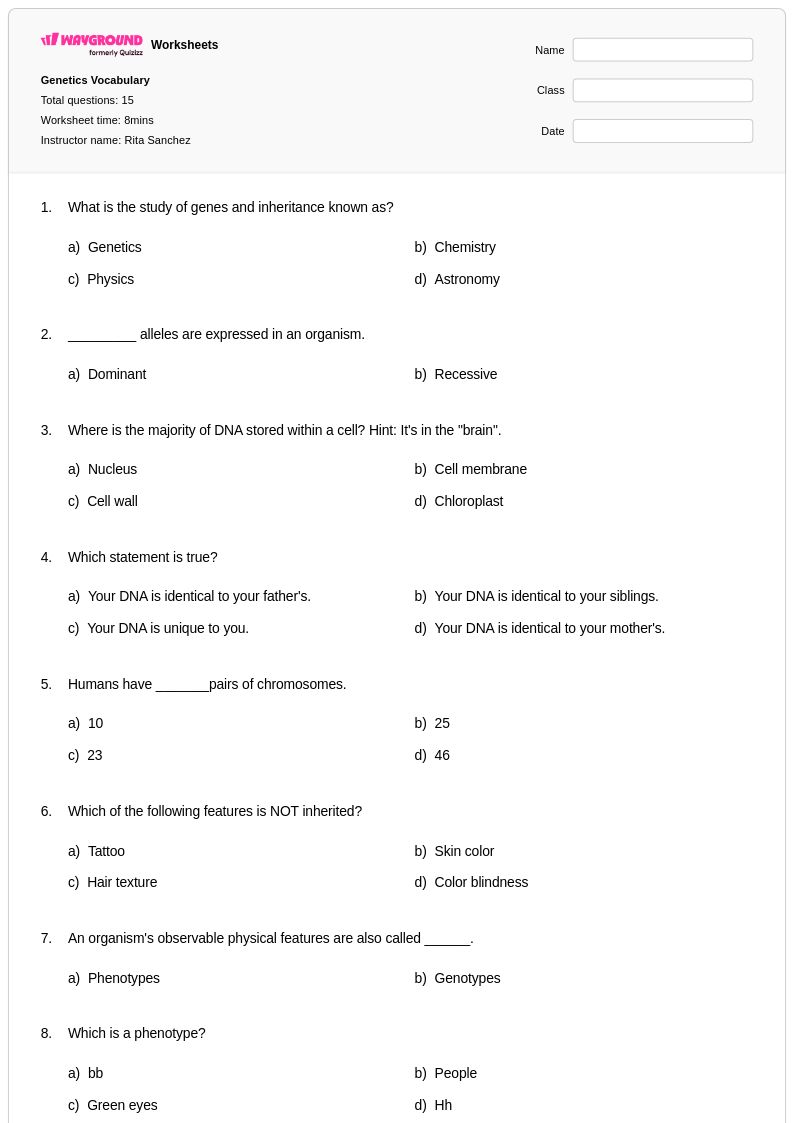
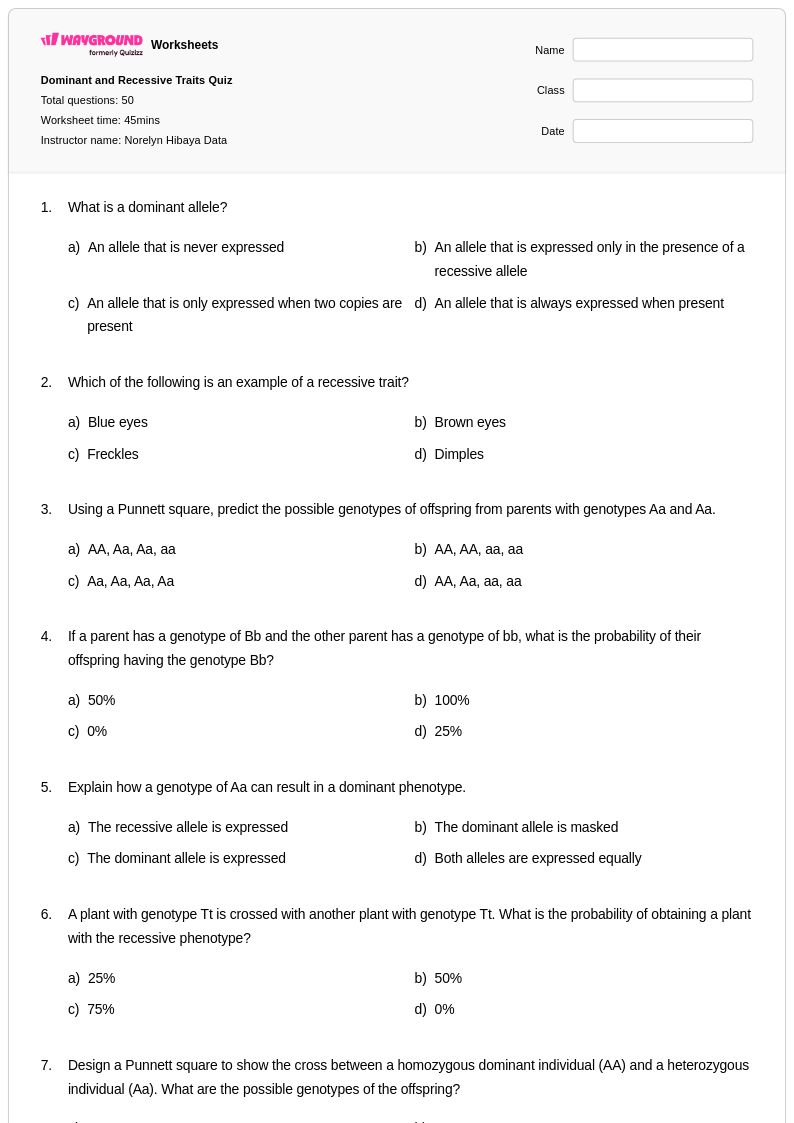
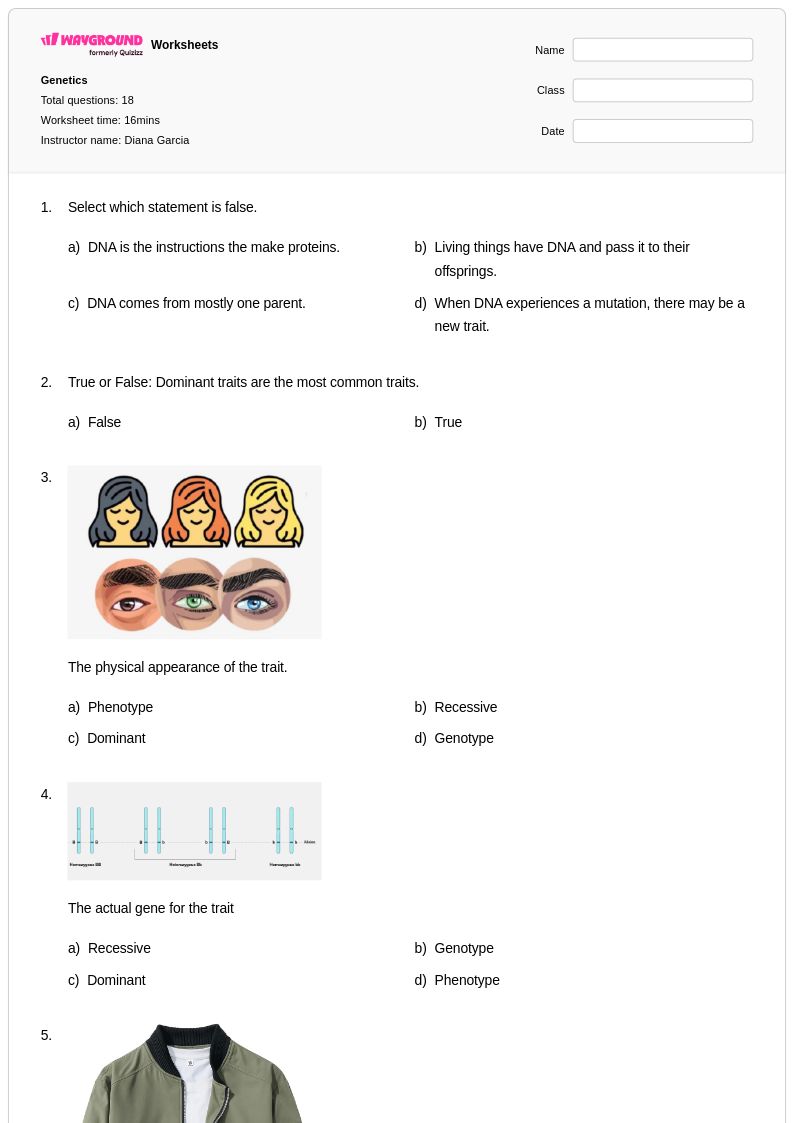
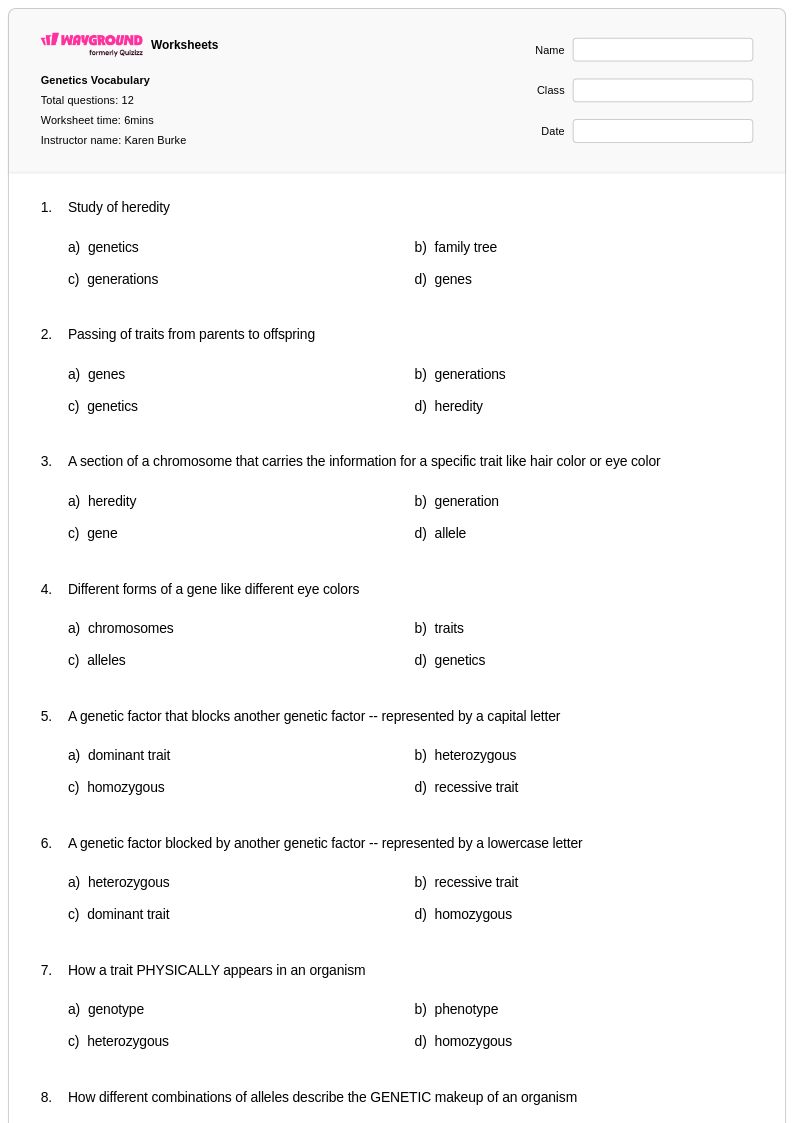
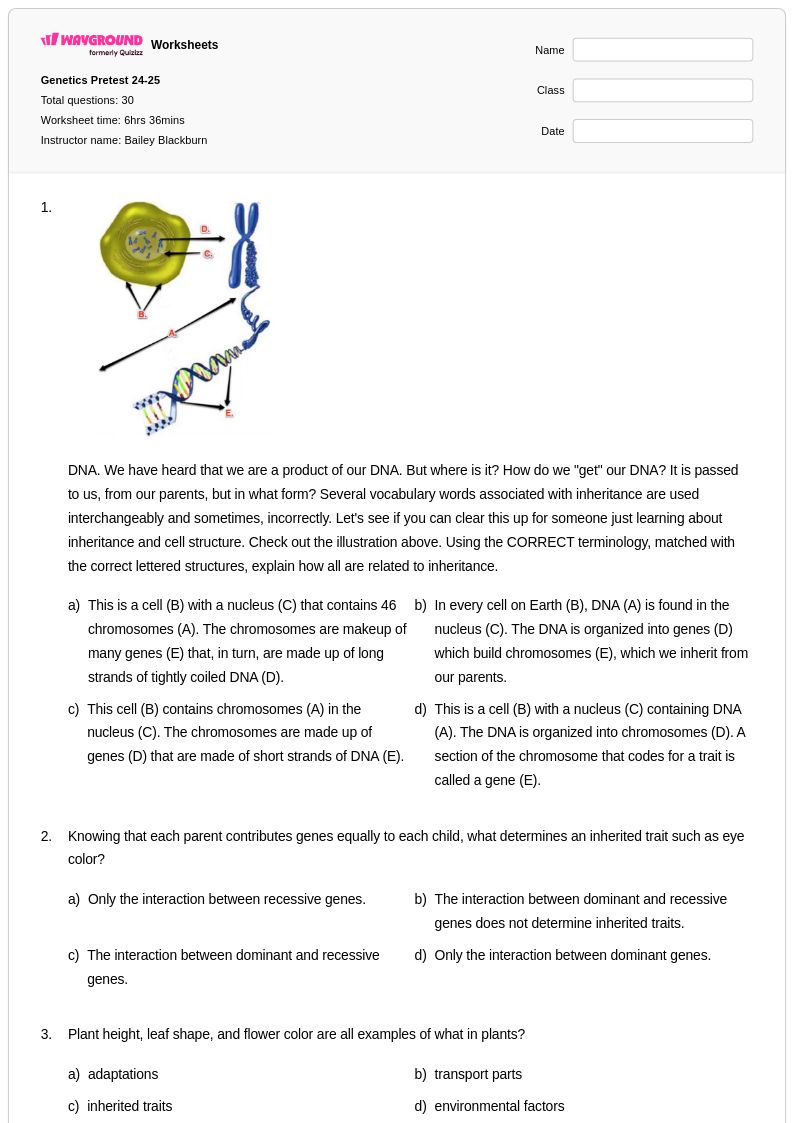
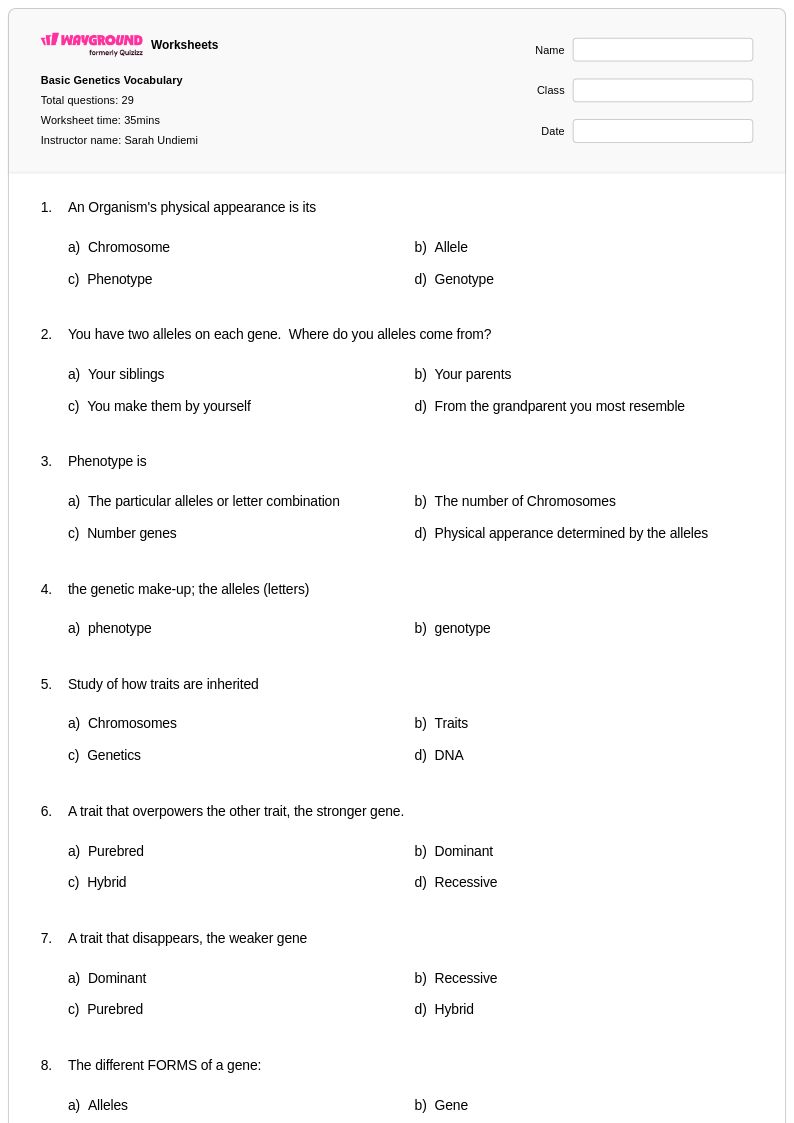
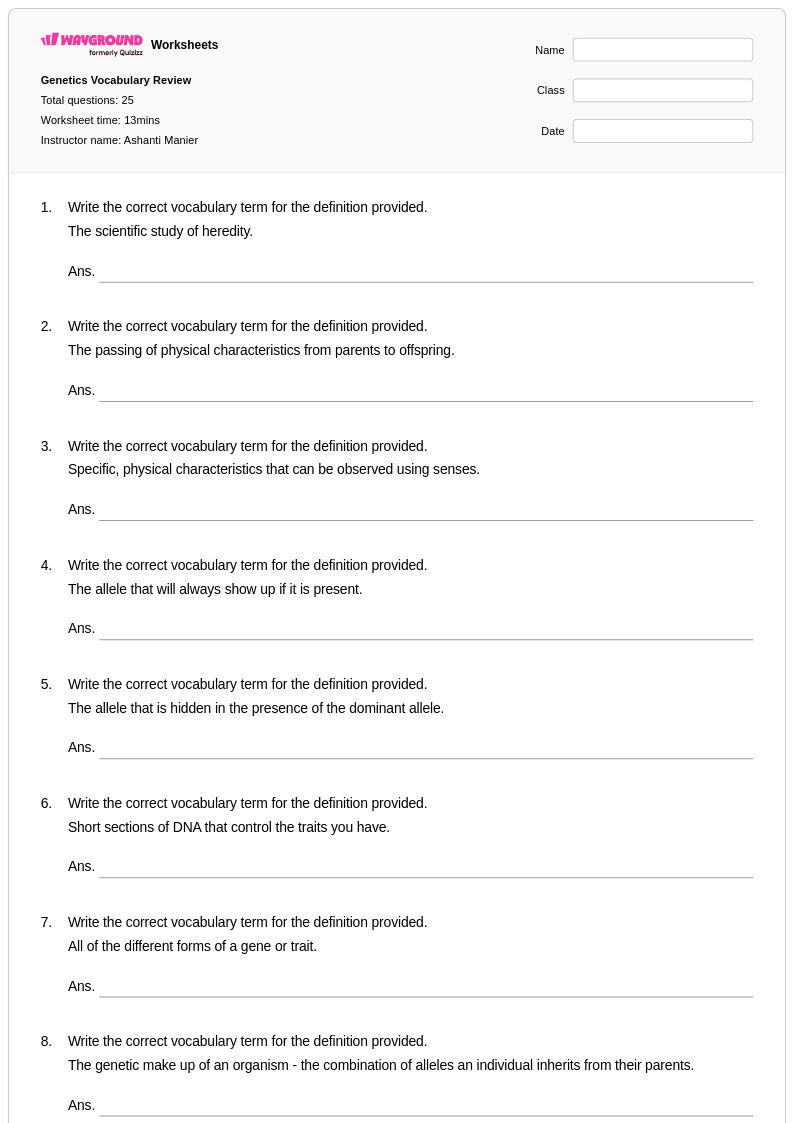
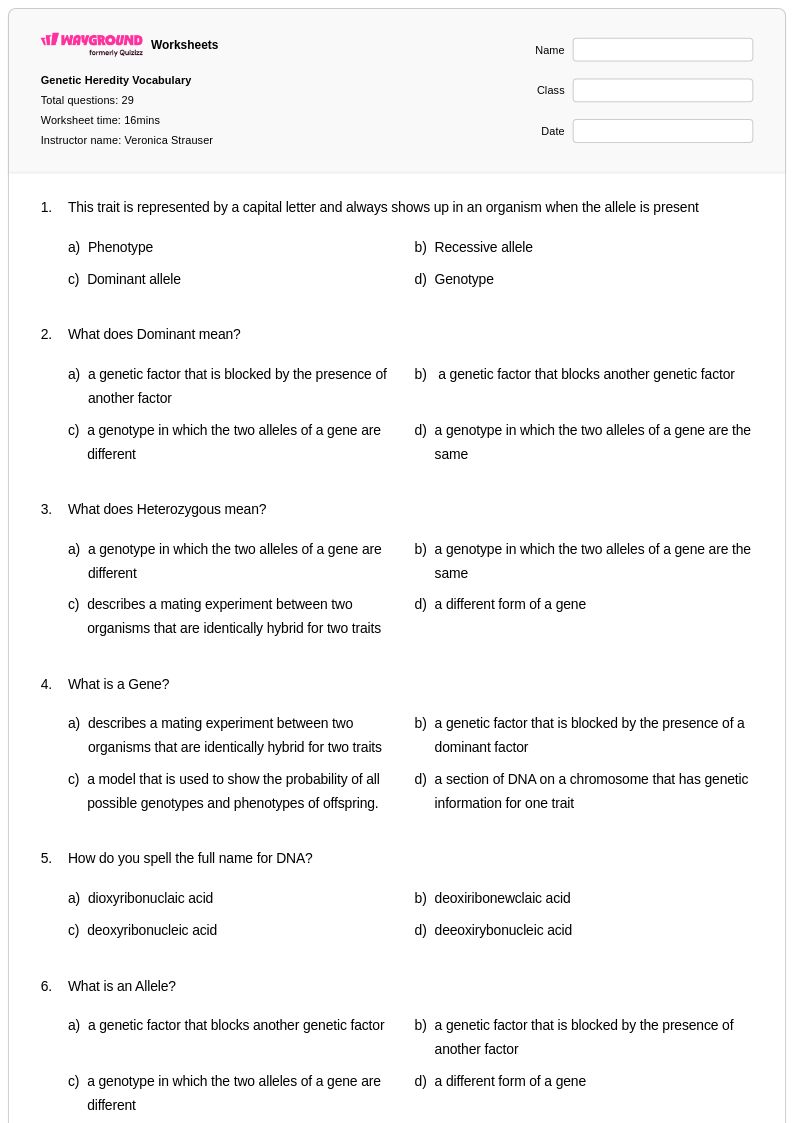
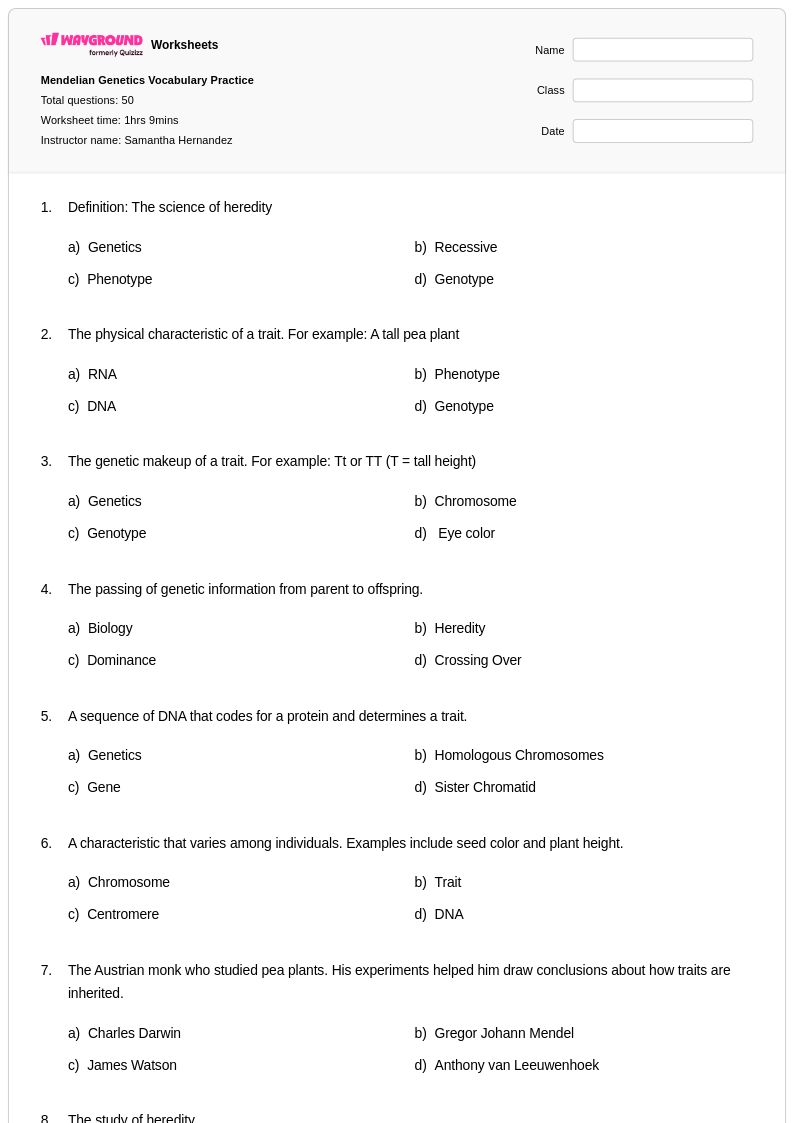
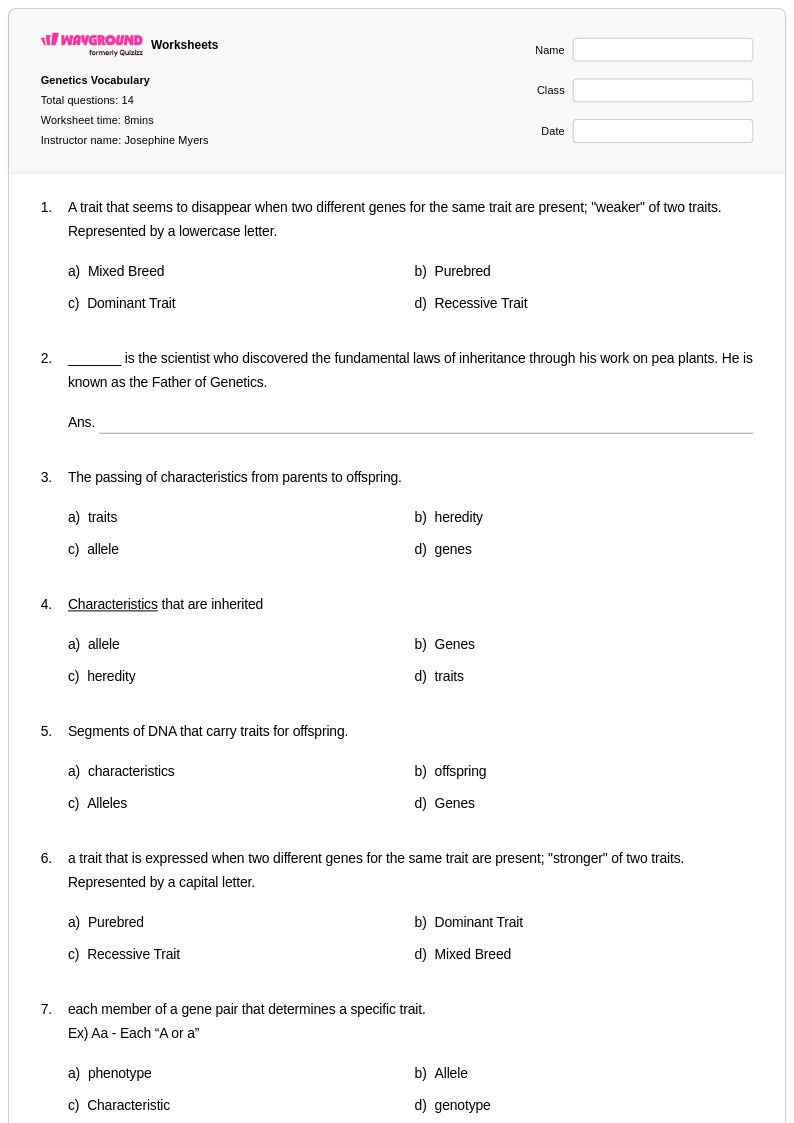
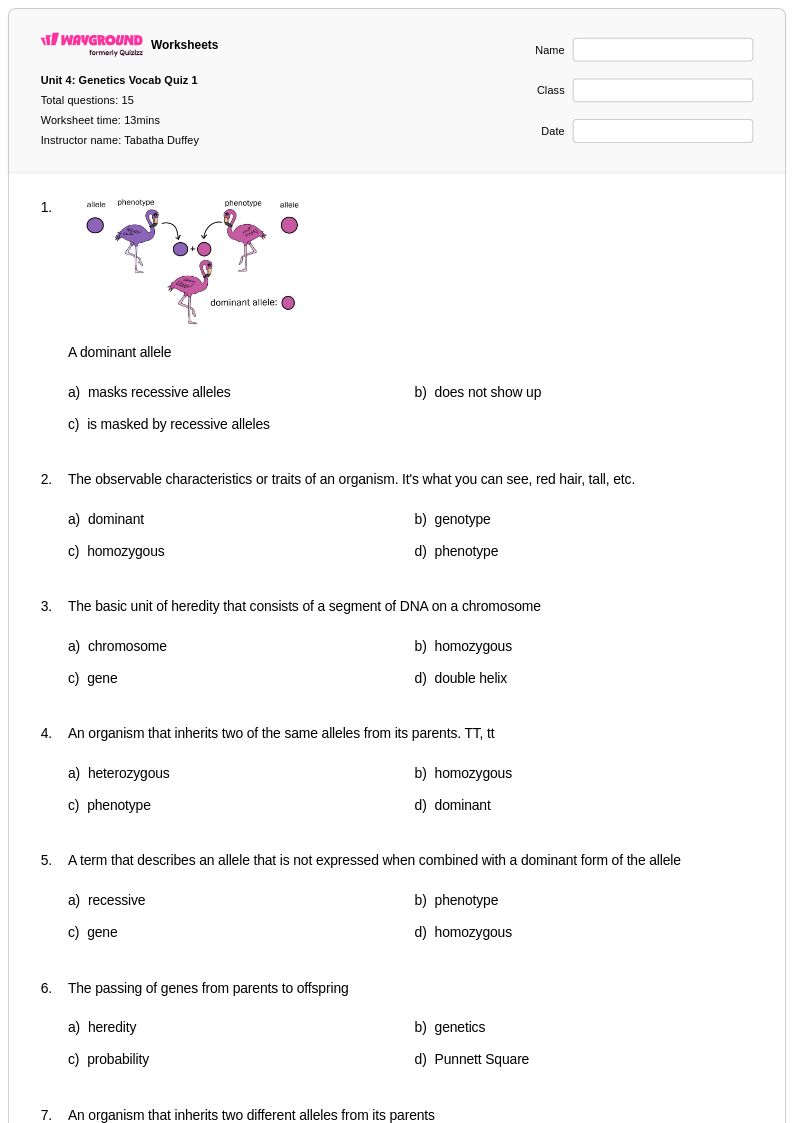
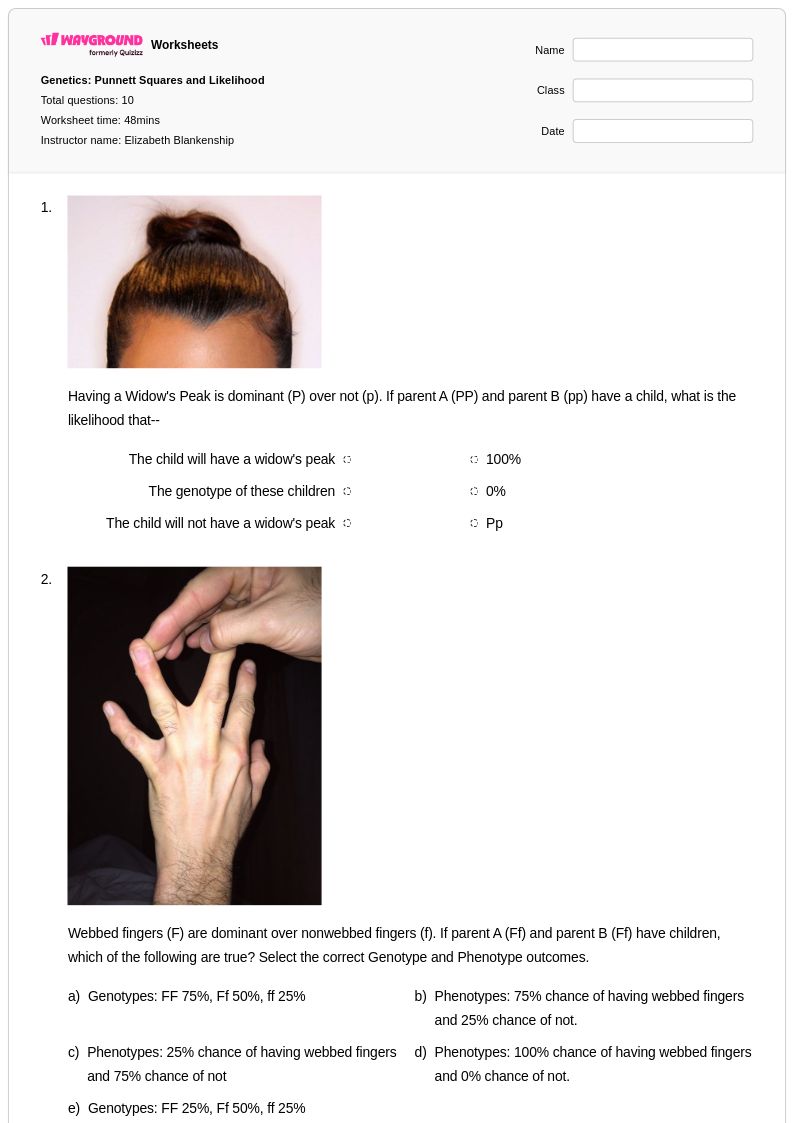
Genetics vocabulary focusing on dominant and recessive traits forms a cornerstone of Class 8 biology education, and Wayground's comprehensive worksheet collection provides students with essential practice in mastering these fundamental concepts. These carefully designed worksheets guide students through the precise terminology needed to understand inheritance patterns, including alleles, phenotypes, genotypes, and the critical distinction between dominant and recessive characteristics. Students engage with practice problems that reinforce their ability to identify and apply these genetic principles, while teachers benefit from ready-to-use resources complete with answer keys. The collection includes both printable pdf formats and interactive digital versions, ensuring that students can access free, high-quality materials that strengthen their scientific vocabulary and conceptual understanding of basic genetic mechanisms.
Wayground's extensive library, built from millions of teacher-created resources, empowers educators to efficiently locate and customize genetics vocabulary materials that align with Class 8 biology standards. The platform's robust search and filtering capabilities allow teachers to quickly identify worksheets that target specific learning objectives, from basic vocabulary recognition to complex application of dominant and recessive inheritance patterns. These differentiation tools enable instructors to select appropriate materials for diverse learning needs, supporting both remediation for struggling students and enrichment opportunities for advanced learners. The flexible format options, including printable worksheets and digital assignments, streamline lesson planning while providing teachers with versatile resources for classroom instruction, homework assignments, and assessment preparation that reinforce critical genetic vocabulary skills.
FAQs
How do I teach dominant and recessive traits to biology students?
Start by grounding students in the vocabulary: alleles, genotype, phenotype, homozygous, and heterozygous. Use concrete, familiar examples such as eye color or earlobe attachment to make dominance and recessiveness tangible before introducing Punnett squares. Once students can accurately use the terminology, move them into prediction problems that require applying those terms in inheritance scenarios.
What exercises help students practice genetics vocabulary for dominant and recessive traits?
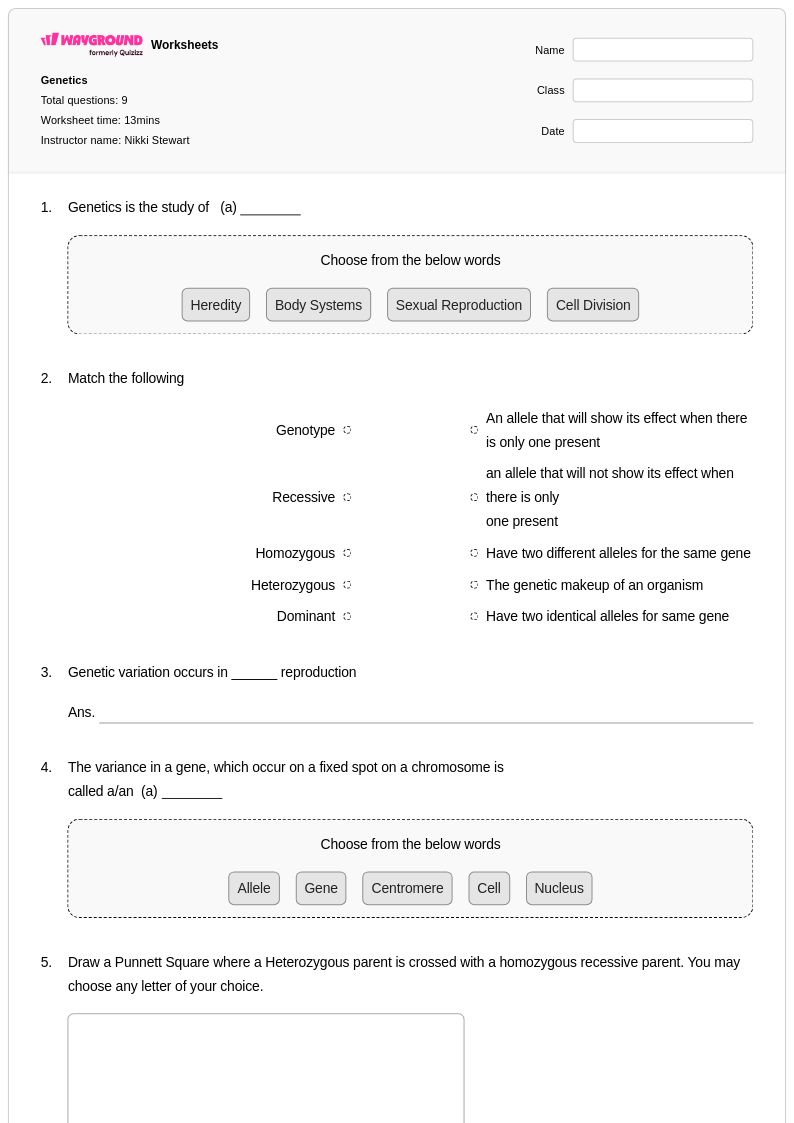
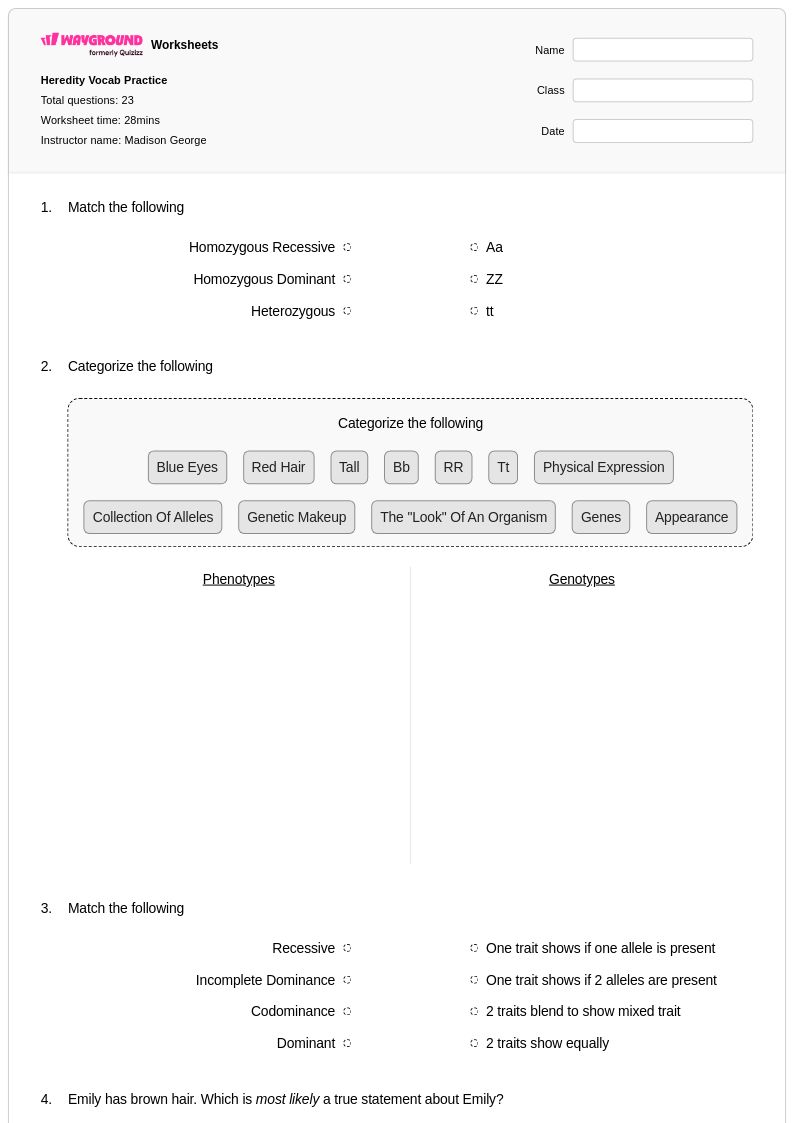
Vocabulary matching exercises are an effective starting point, requiring students to pair terms like 'homozygous dominant' or 'heterozygous' with their definitions. From there, practice problems that ask students to identify genotypes and phenotypes from written descriptions reinforce the distinctions between dominant and recessive expression. Scaffolding from definition recall to applied problem-solving ensures students build both fluency with terminology and conceptual understanding.
What mistakes do students commonly make when learning dominant and recessive genetics vocabulary?
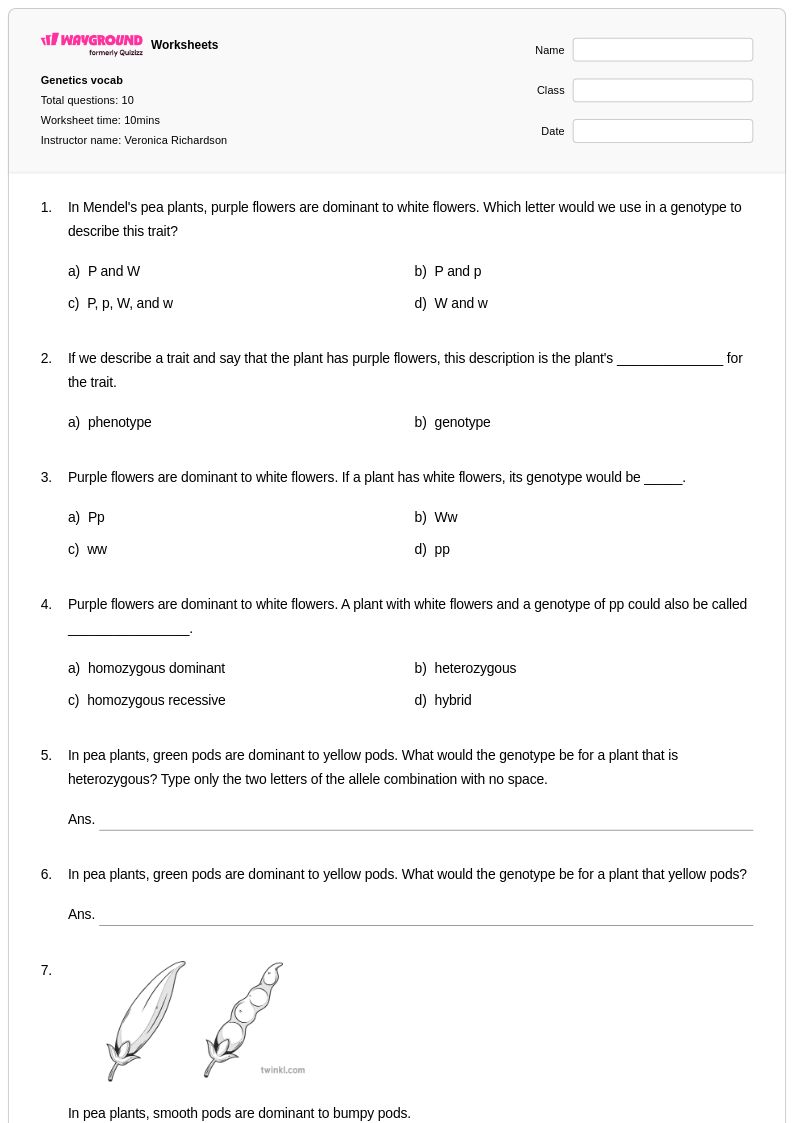
A frequent misconception is that 'dominant' means more common in a population — students often conflate frequency with dominance. Another common error is confusing genotype with phenotype, particularly when a recessive allele is present but not expressed. Students also struggle to distinguish between homozygous and heterozygous genotypes when writing allele pairs, often mixing up notation conventions like uppercase and lowercase letters.
How can I differentiate genetics vocabulary instruction for students at different skill levels?
For struggling students, reduce cognitive load by focusing first on a core set of terms — dominant, recessive, allele, and genotype — before layering in homozygous and heterozygous distinctions. Advanced learners can be challenged with scenarios involving incomplete dominance or codominance to extend their understanding beyond basic vocabulary. On Wayground, teachers can apply accommodations such as reduced answer choices or read-aloud support to individual students, while the rest of the class works through standard settings.
How do I use Wayground's dominant and recessive genetics vocabulary worksheets in my classroom?
Wayground's genetics vocabulary worksheets are available as printable PDFs for traditional classroom use and in digital formats for technology-integrated or hybrid learning environments, and teachers can also host them directly as a quiz on Wayground. Each worksheet includes a complete answer key, making them practical for independent practice, formative review, or self-paced remediation. Teachers can use them to introduce terminology at the start of a genetics unit or as targeted practice before assessments.
How do I assess whether students understand the difference between dominant and recessive alleles?
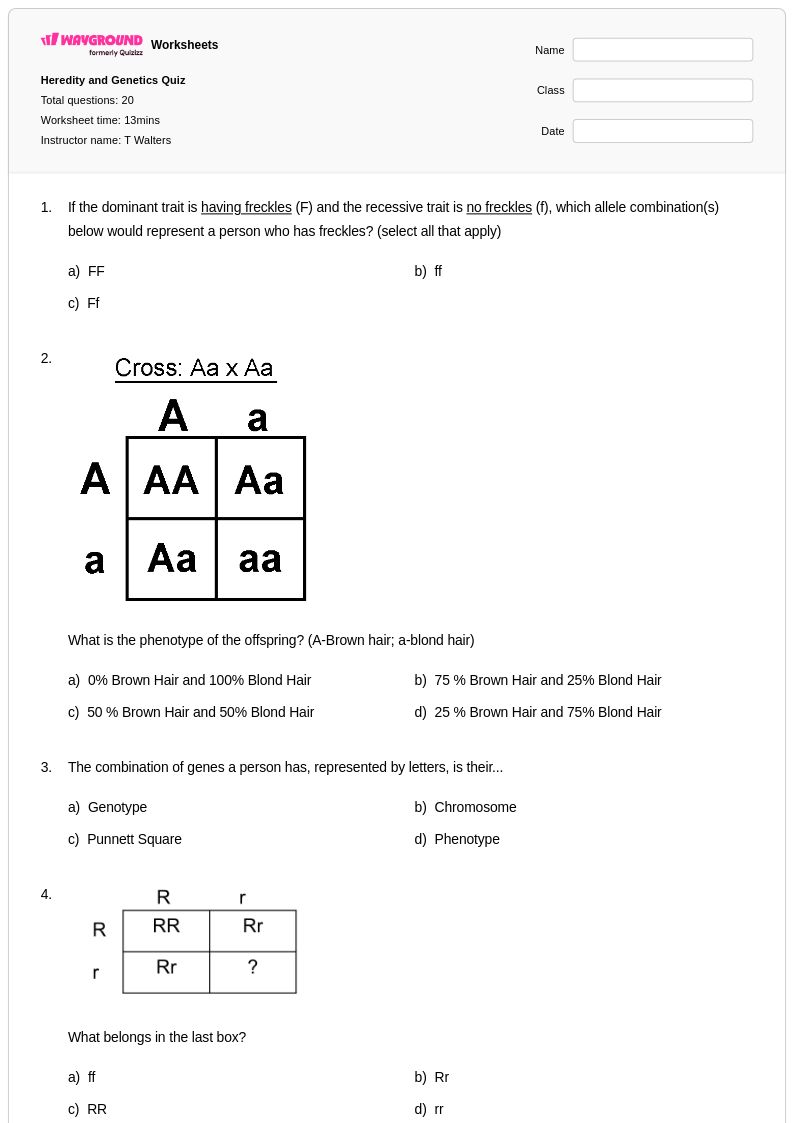
Ask students to predict phenotypes from given genotypes rather than simply define terms — this reveals whether they understand expression, not just recall definitions. A strong assessment item presents a heterozygous genotype and asks whether the dominant or recessive trait is expressed and why. Students who can explain why a recessive allele is present but not observed have moved beyond surface-level vocabulary retention to genuine conceptual understanding.