
22 Q
9th - Uni
23 Q
9th - 10th
16 Q
9th - 12th
50 Q
7th - Uni
11 Q
6th - 9th
47 Q
7th - Uni
27 Q
9th - 12th
30 Q
7th - Uni
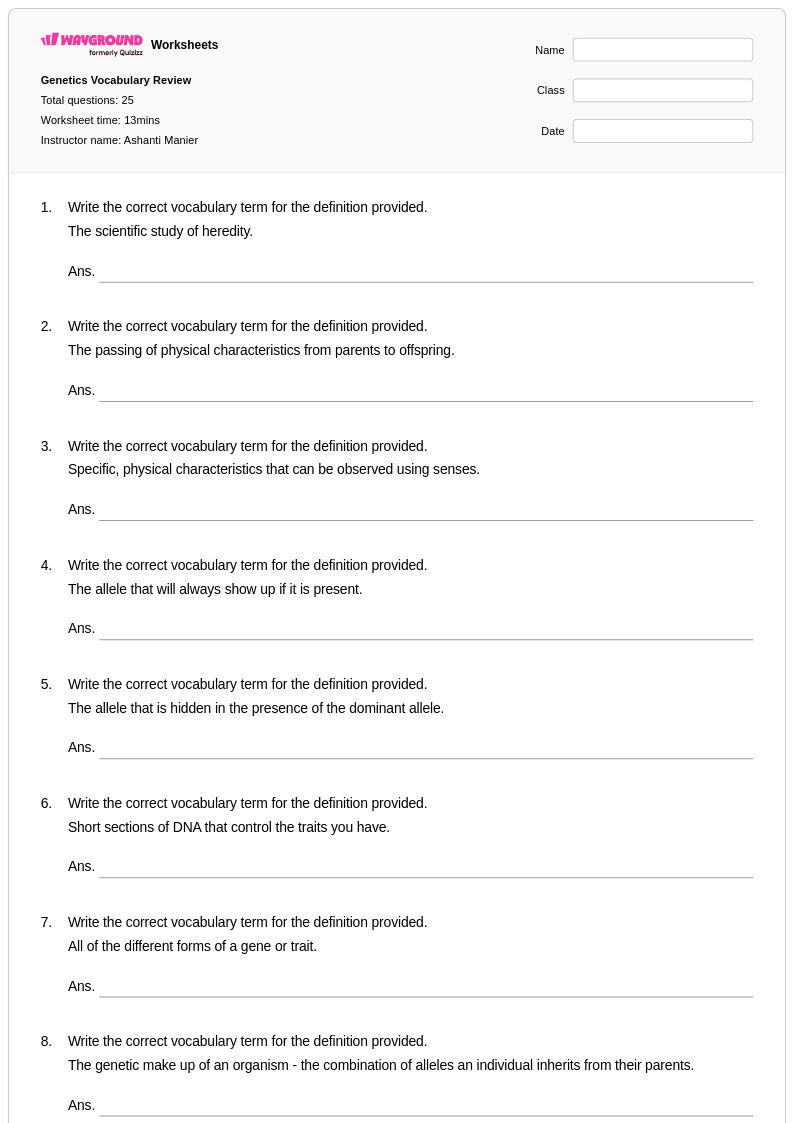
25 Q
7th - Uni
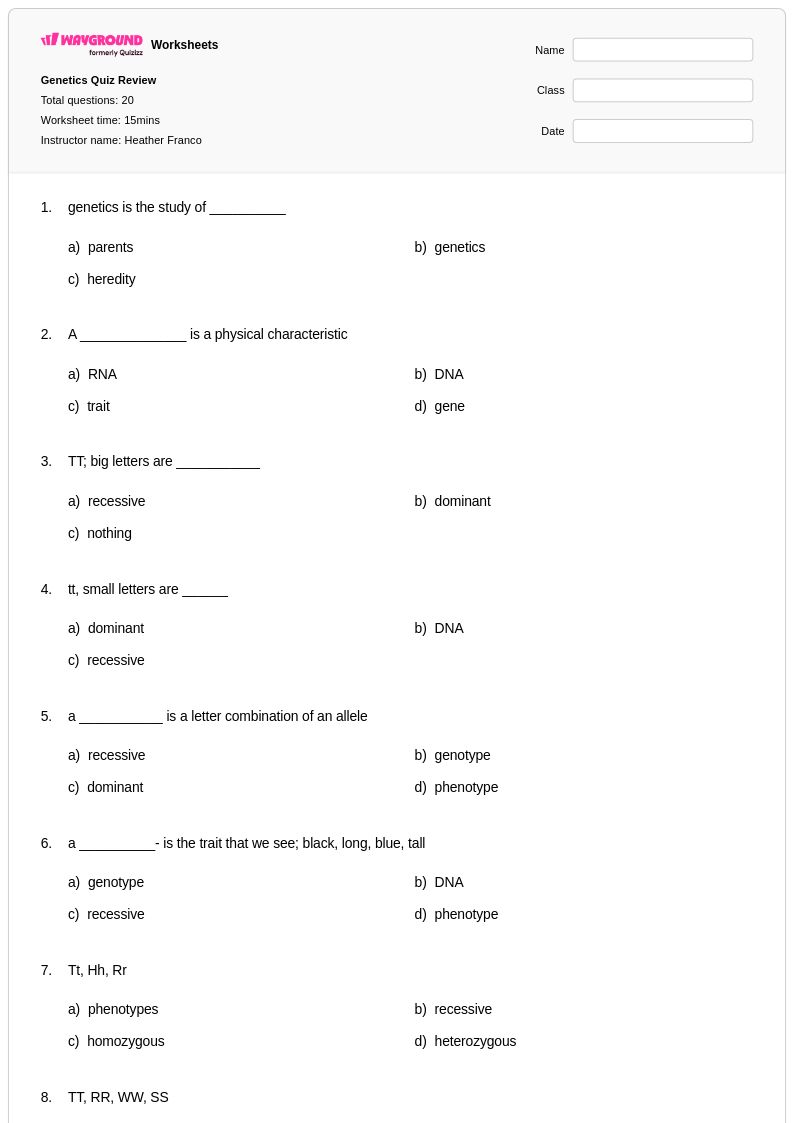
20 Q
9th
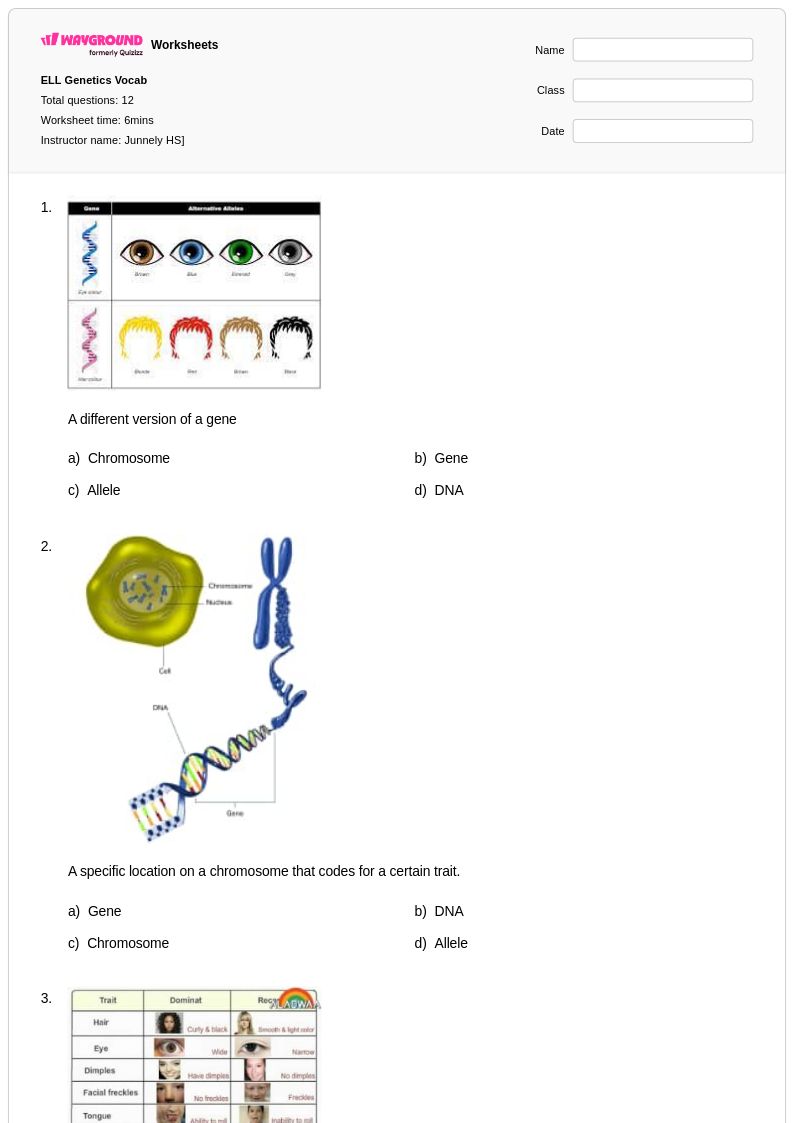
12 Q
9th
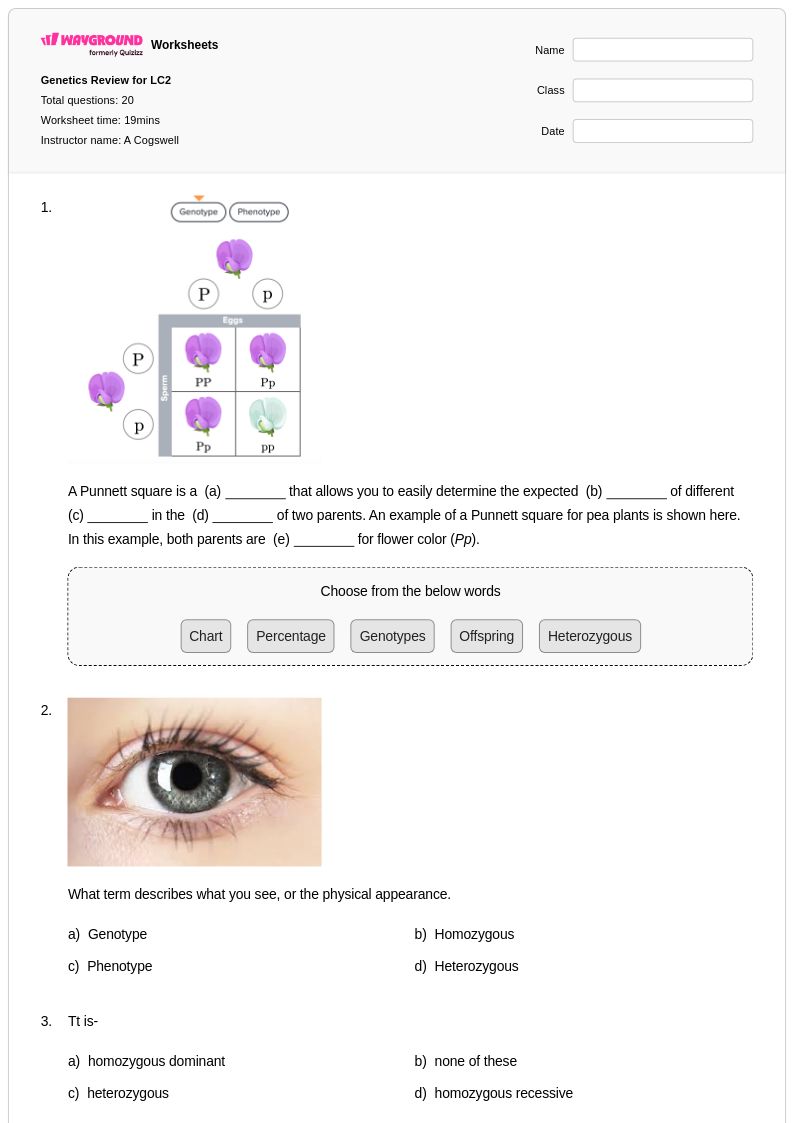
20 Q
9th
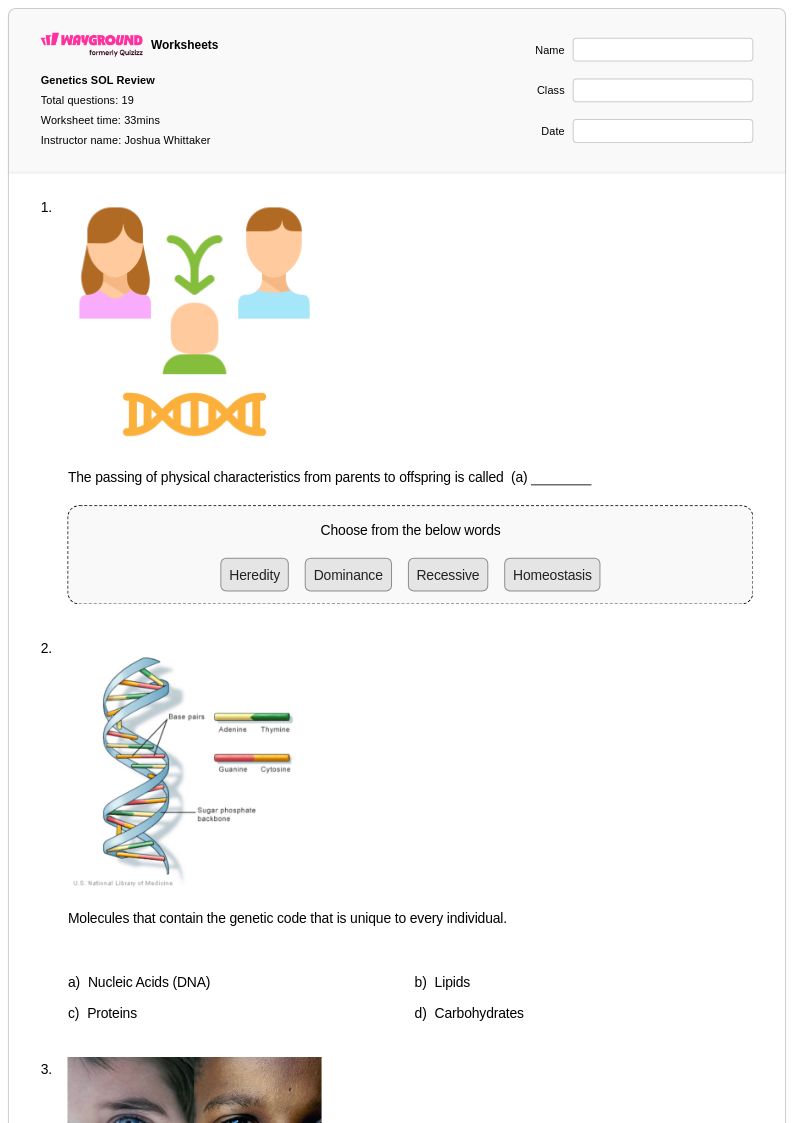
24 Q
9th - 12th
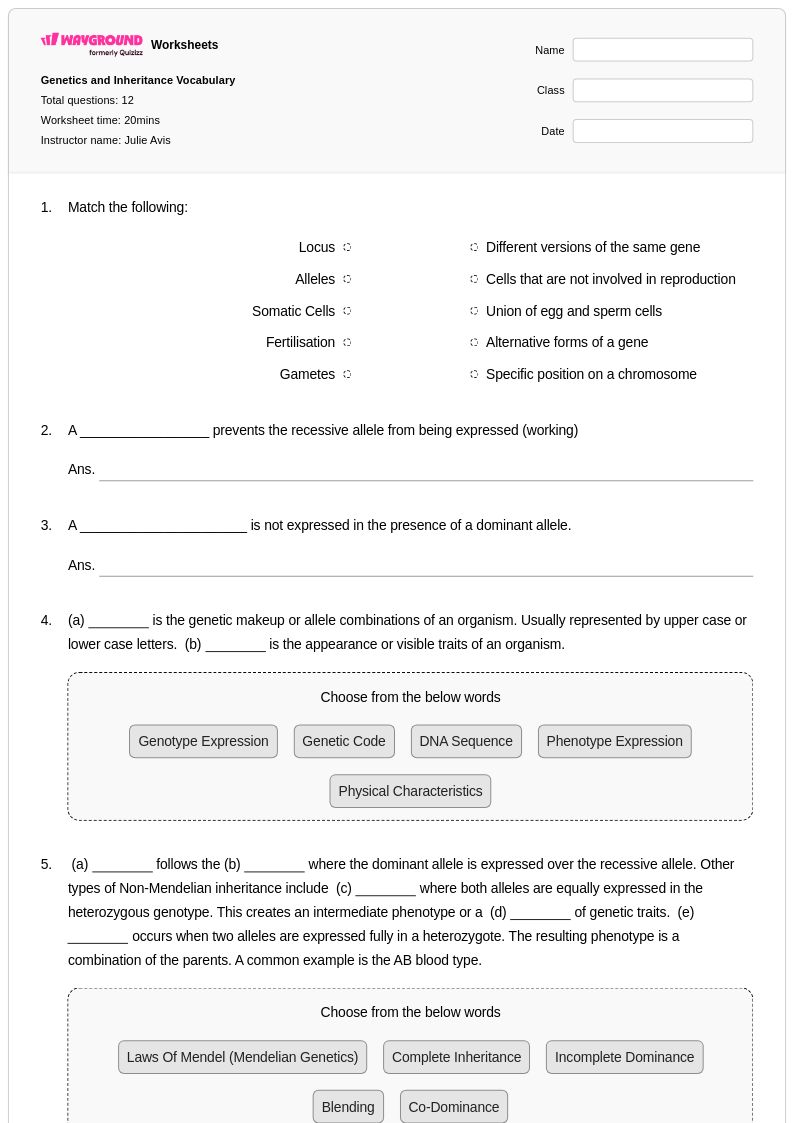
12 Q
8th - 12th
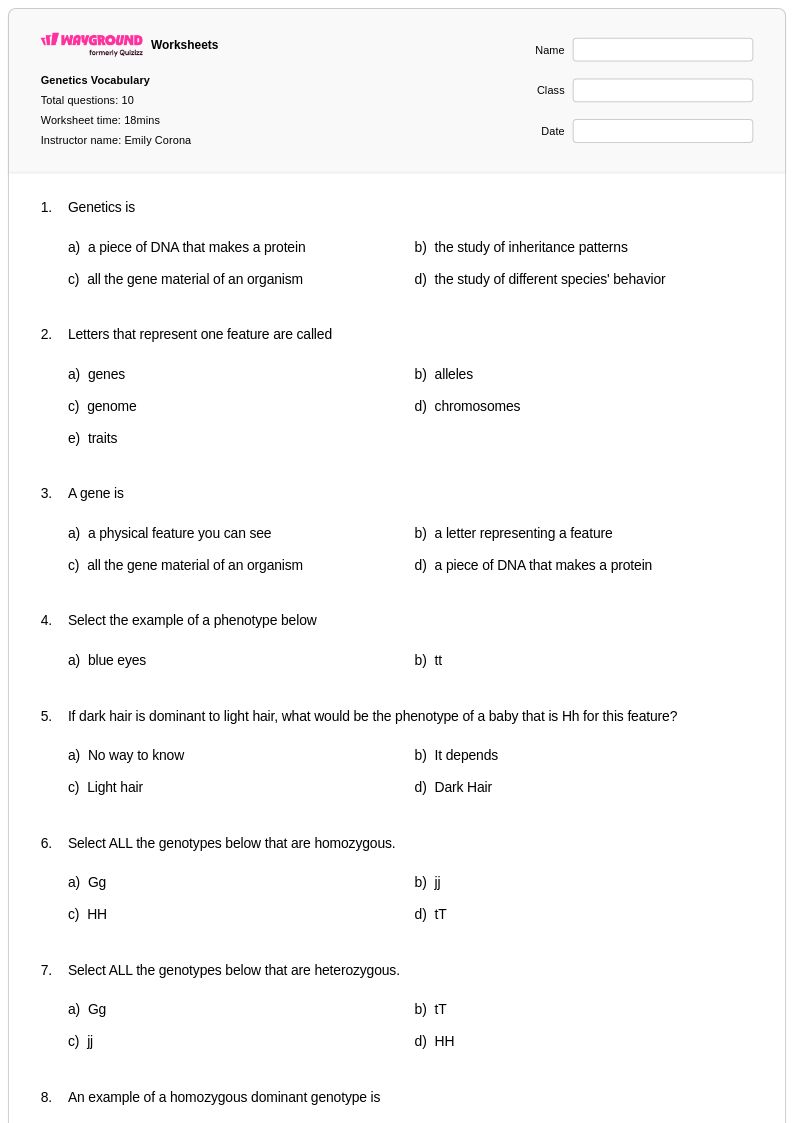
25 Q
9th - 12th
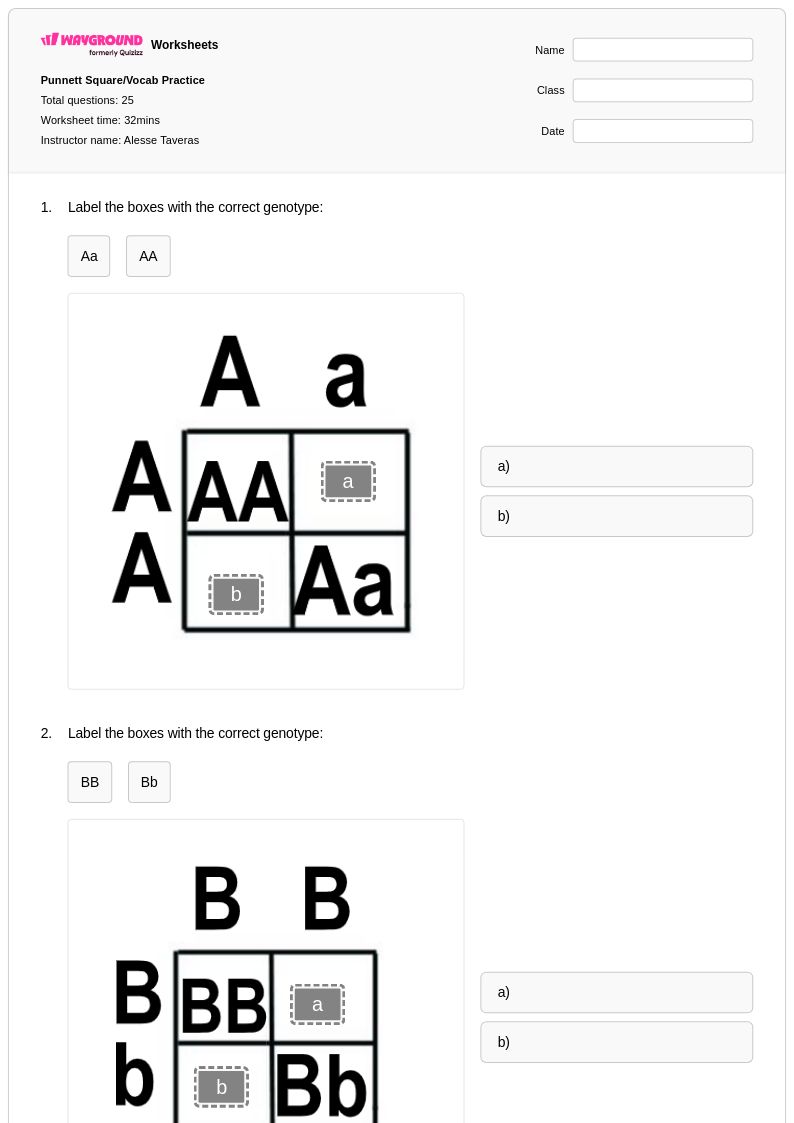
25 Q
9th - 12th
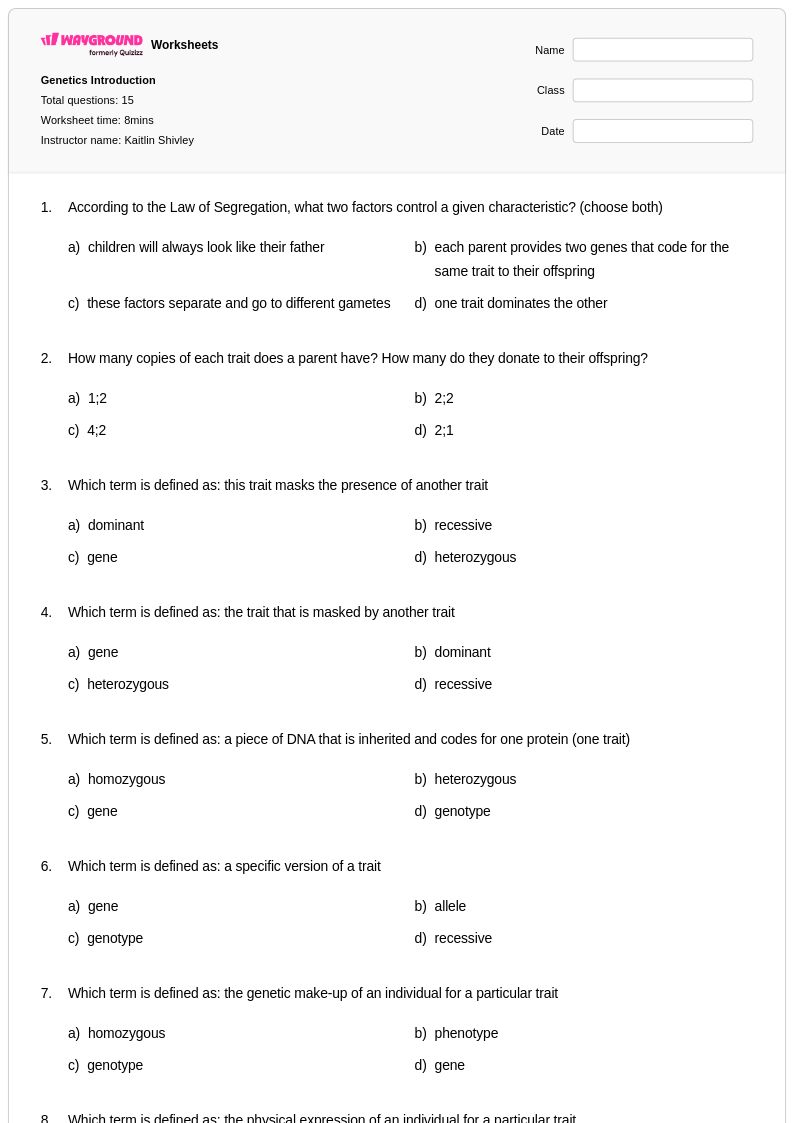
15 Q
9th - 12th
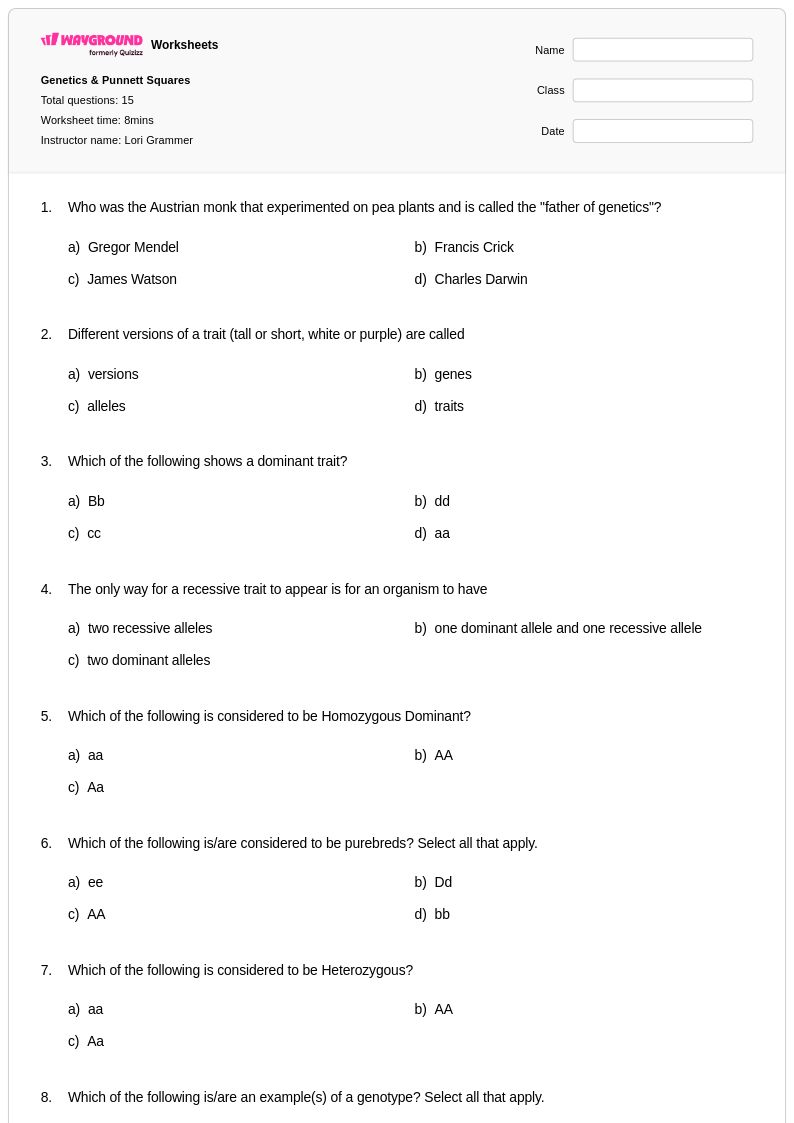
15 Q
9th - 12th
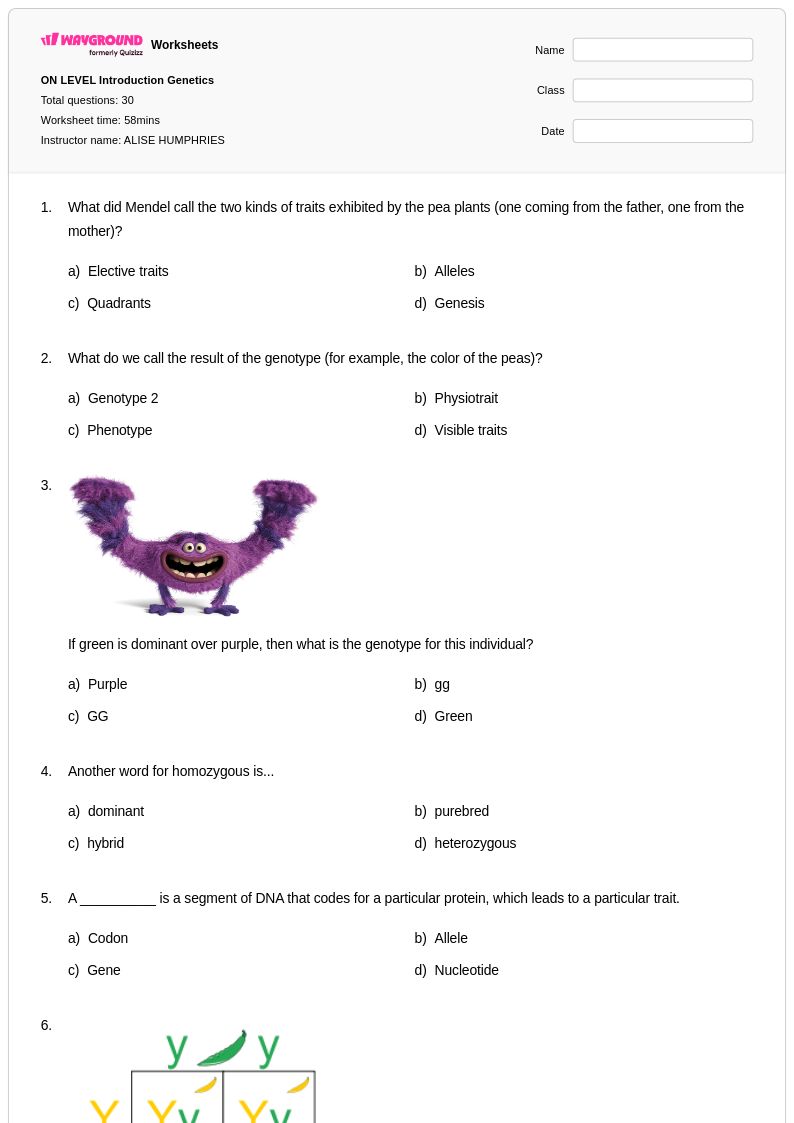
30 Q
9th - 12th
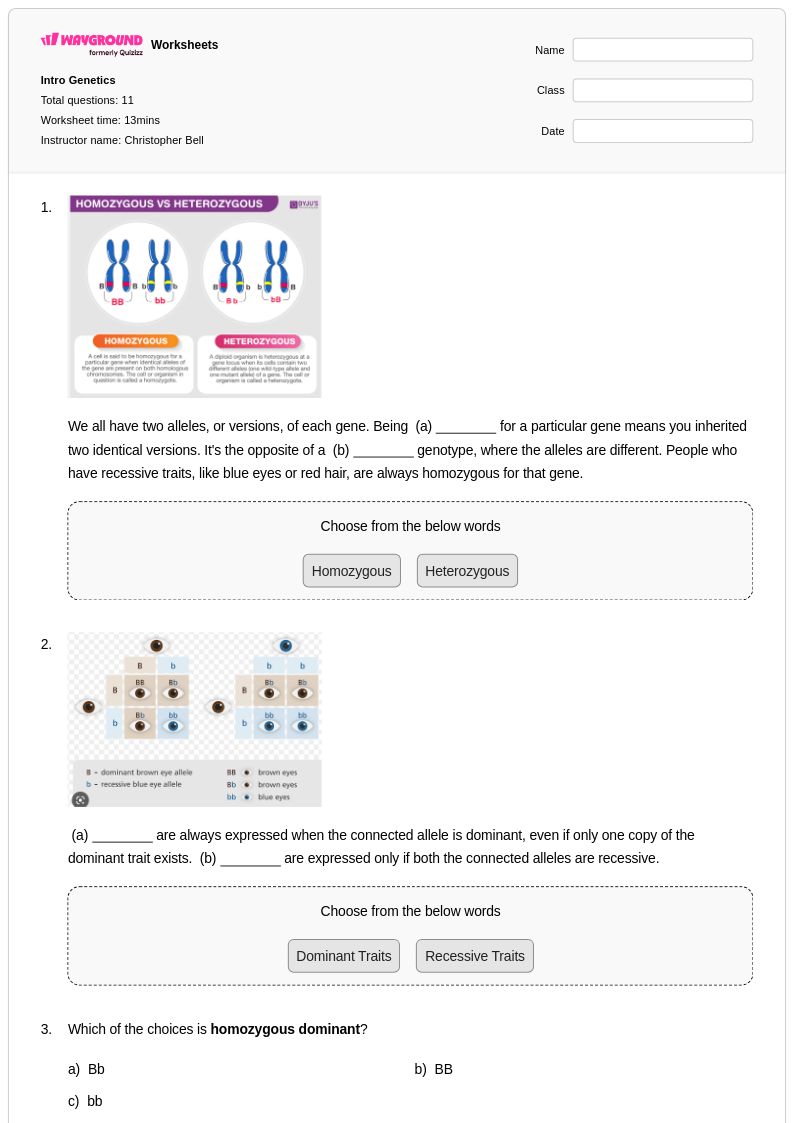
11 Q
9th
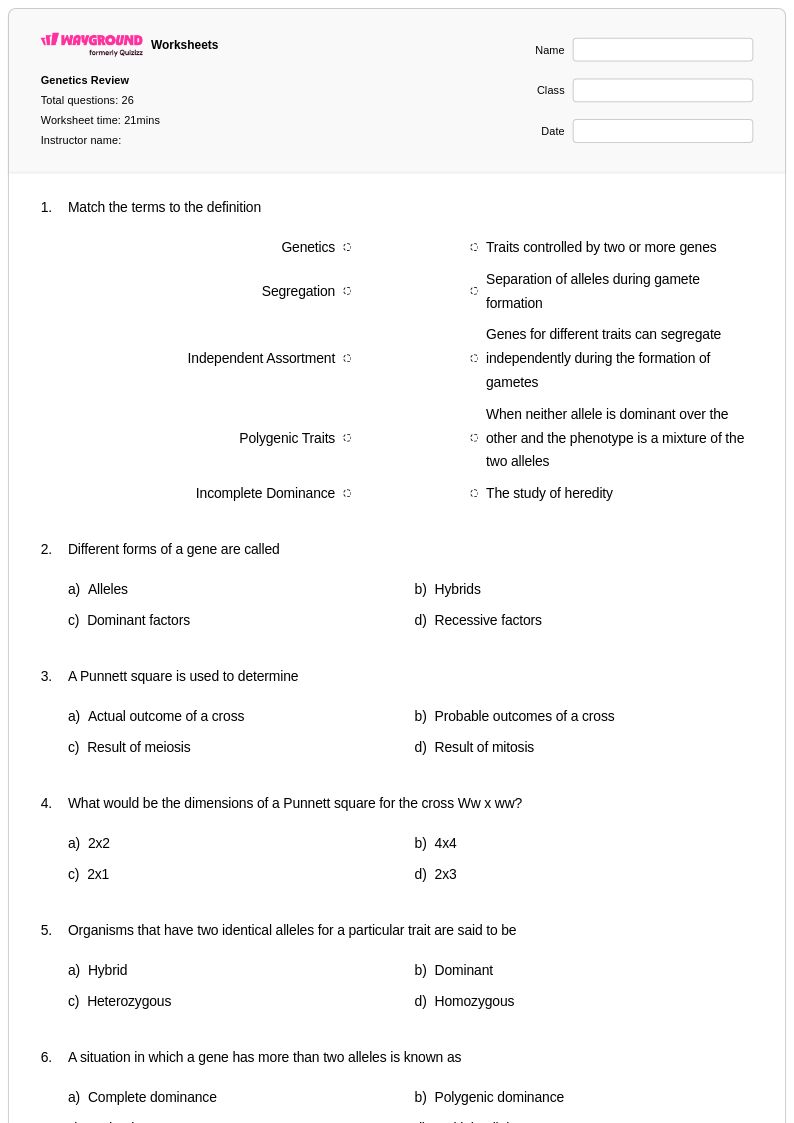
26 Q
9th
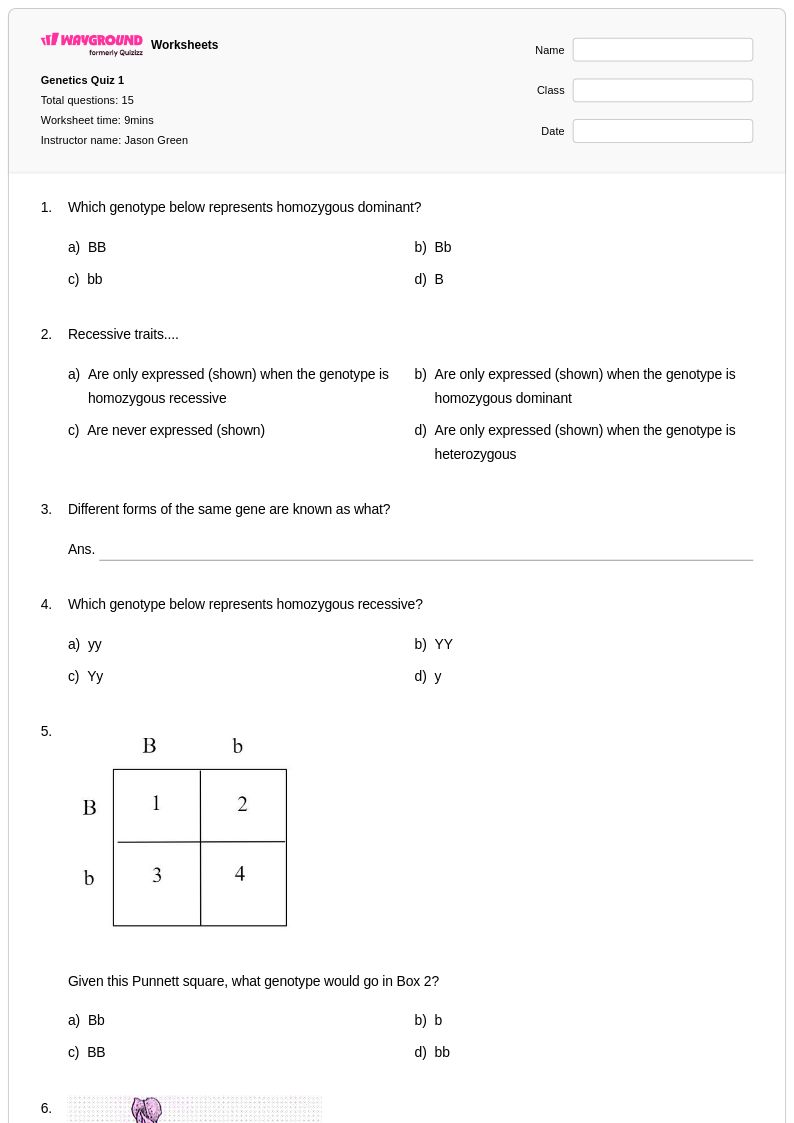
15 Q
9th
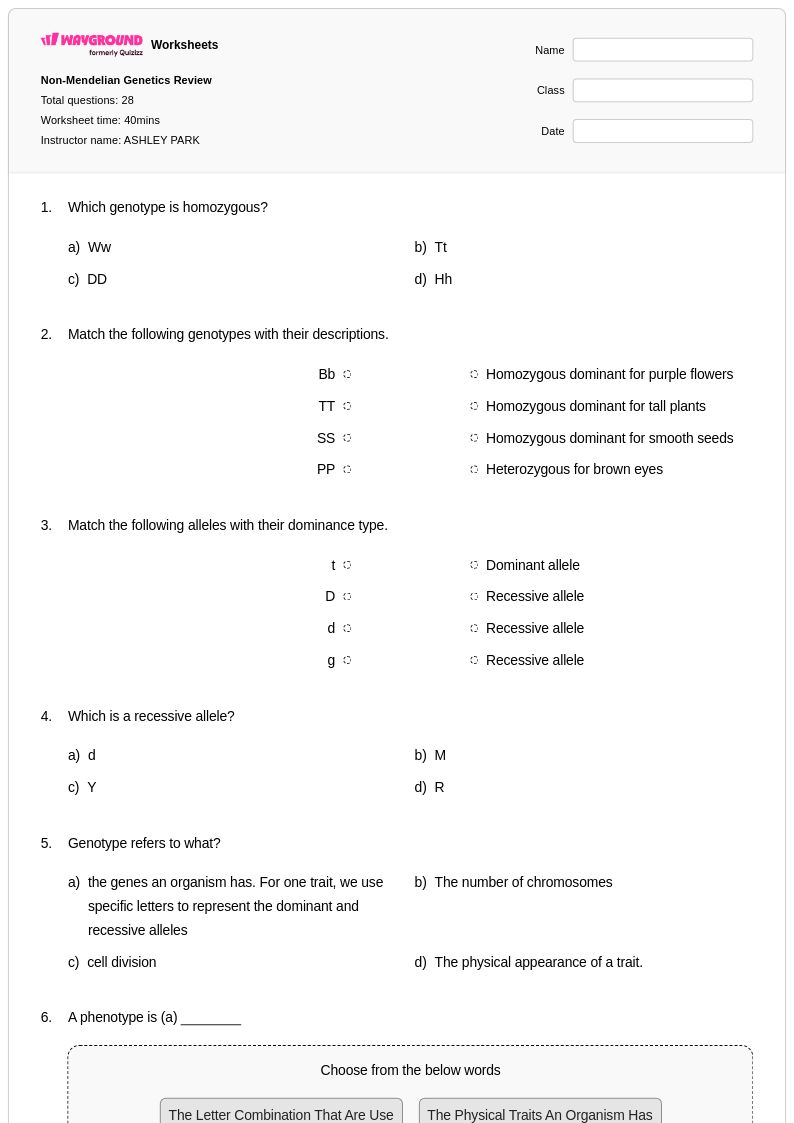
28 Q
9th - 12th
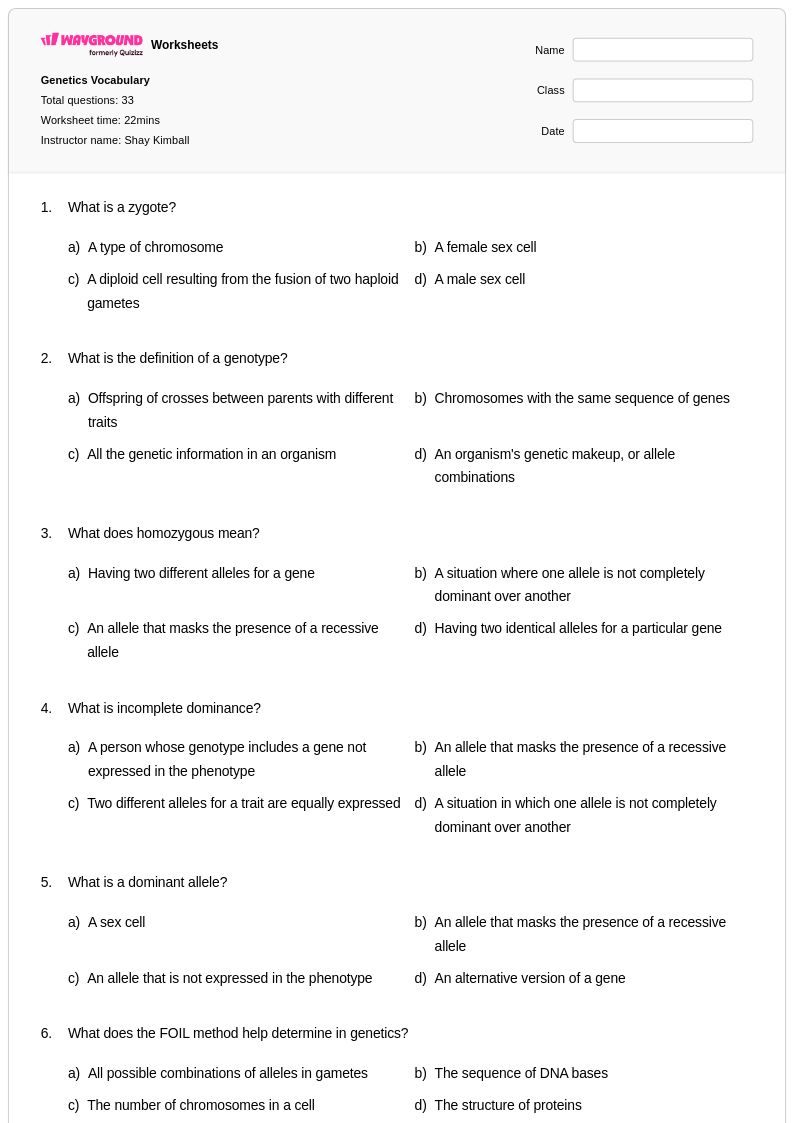
38 Q
9th
Explore Genetics Vocabulary Dominant and Recessive Worksheets by Grades
Explore Other Subject Worksheets for class 9
Explore printable Genetics Vocabulary Dominant and Recessive worksheets for Class 9
Genetics vocabulary focusing on dominant and recessive traits forms a critical foundation for Class 9 biology students as they develop their understanding of heredity and inheritance patterns. Wayground's comprehensive collection of genetics vocabulary worksheets provides students with targeted practice in mastering essential terminology including alleles, phenotypes, genotypes, homozygous, heterozygous, and the fundamental concepts of dominance and recessiveness. These carefully crafted printables strengthen students' ability to distinguish between dominant and recessive characteristics while building the scientific vocabulary necessary for advanced genetic problem-solving. Each worksheet includes detailed answer keys and features a variety of practice problems that reinforce key concepts through multiple learning approaches, from matching exercises to scenario-based applications that help students connect vocabulary terms to real-world genetic phenomena.
Wayground's extensive library of teacher-created resources supports educators with millions of high-quality genetics vocabulary materials specifically designed for Class 9 biology instruction. The platform's advanced search and filtering capabilities enable teachers to quickly locate worksheets that align with curriculum standards and meet diverse classroom needs, whether for initial instruction, remediation, or enrichment activities. Teachers can easily customize these resources to match their students' learning levels and access materials in both printable pdf format and digital versions for flexible classroom implementation. This comprehensive approach to differentiation ensures that all students can engage meaningfully with genetics vocabulary concepts, while the robust collection of practice materials supports effective lesson planning and provides educators with reliable tools for reinforcing dominant and recessive trait terminology throughout their genetics unit.
FAQs
How do I teach dominant and recessive traits to biology students?
What exercises help students practice genetics vocabulary for dominant and recessive traits?
What mistakes do students commonly make when learning dominant and recessive genetics vocabulary?
How can I differentiate genetics vocabulary instruction for students at different skill levels?
How do I use Wayground's dominant and recessive genetics vocabulary worksheets in my classroom?
How do I assess whether students understand the difference between dominant and recessive alleles?