Free Printable Brain Structure Worksheets for Class 9
Explore free Class 9 brain structure worksheets and printable PDFs from Wayground that help students master neuron anatomy, brain regions, and nervous system functions through engaging practice problems with comprehensive answer keys.
Explore printable Brain Structure worksheets for Class 9
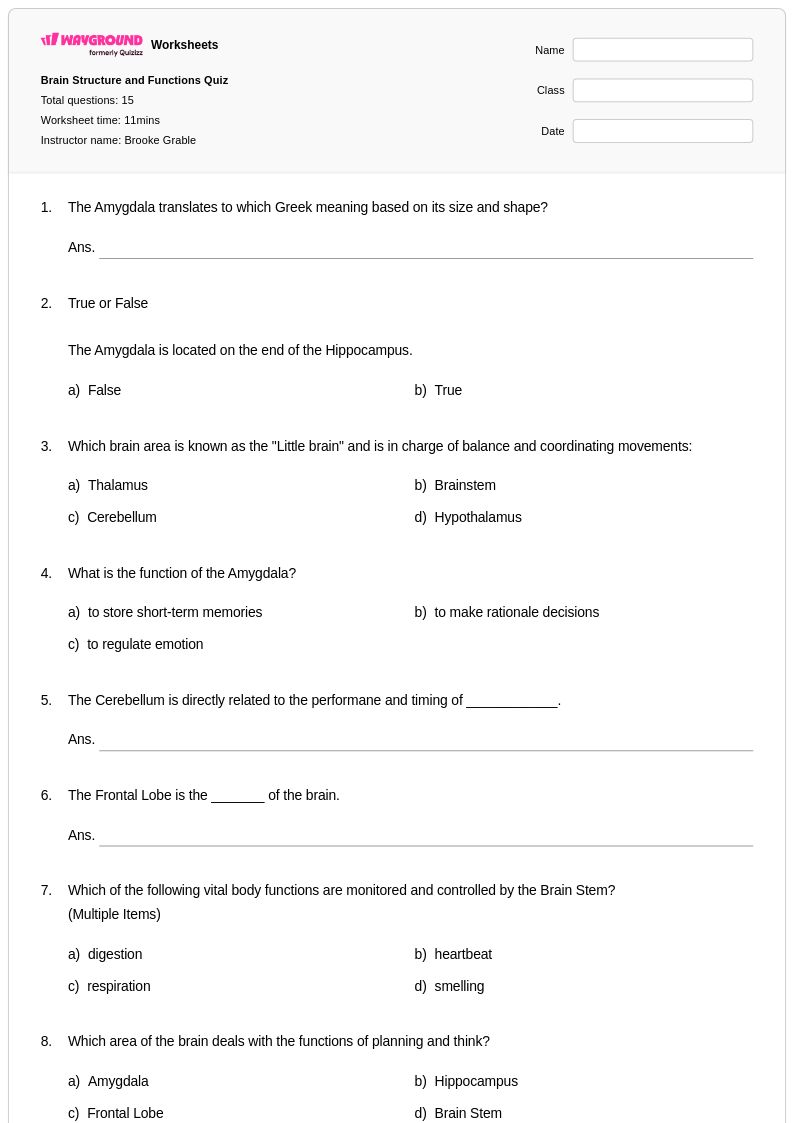
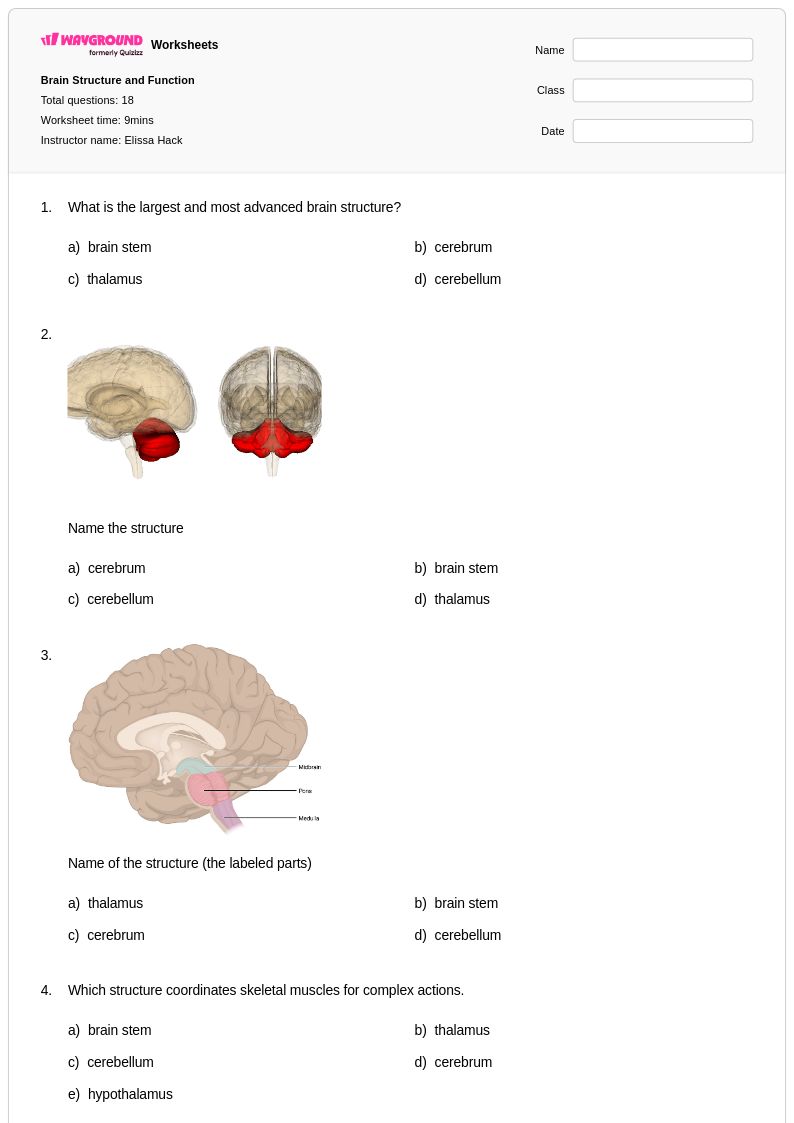
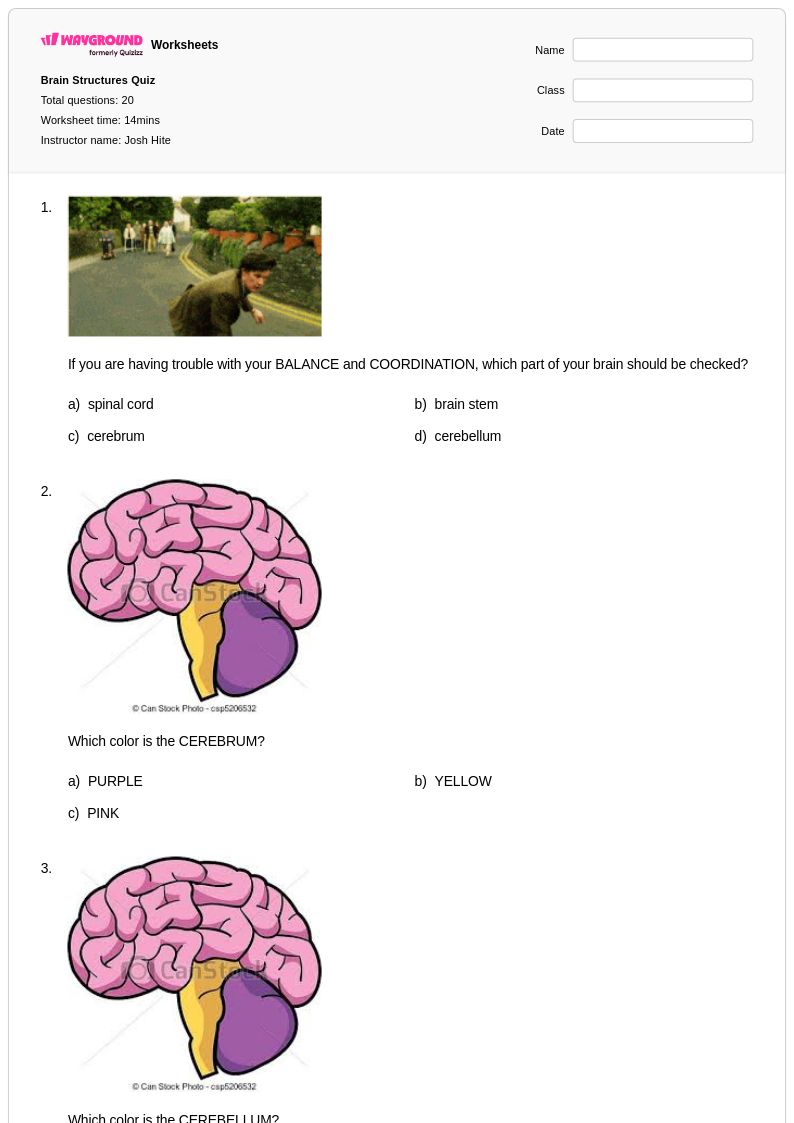
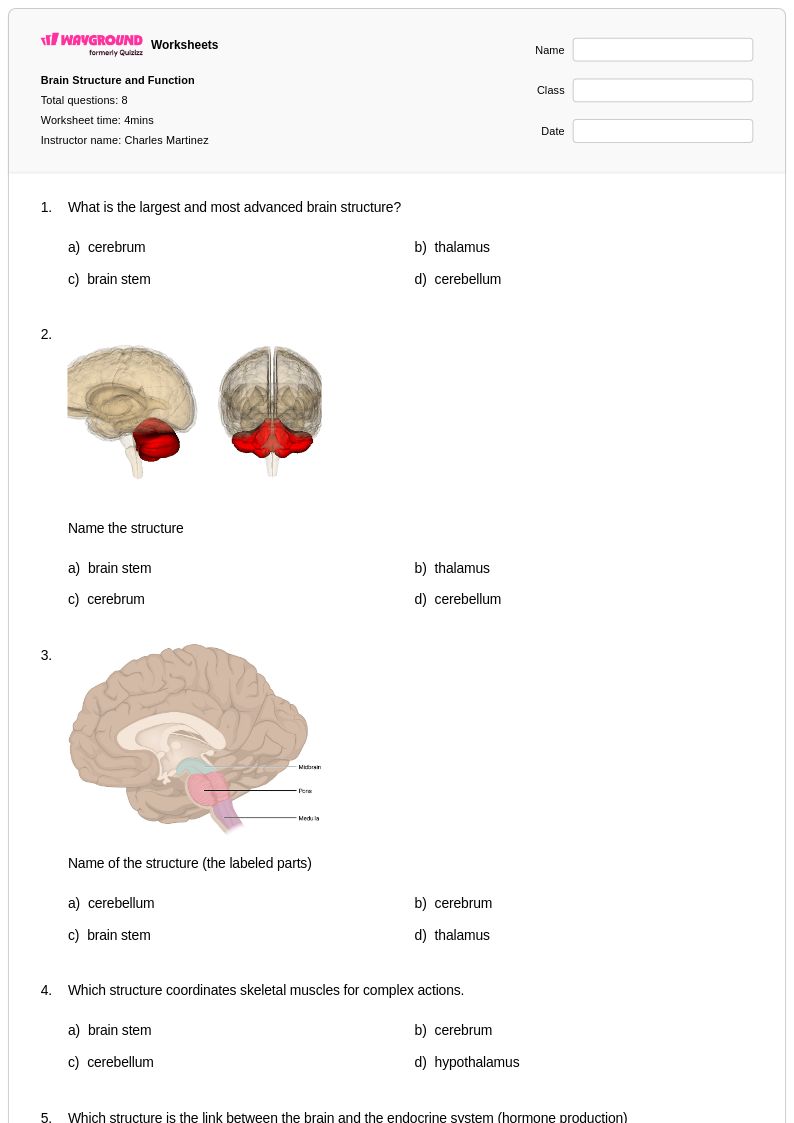
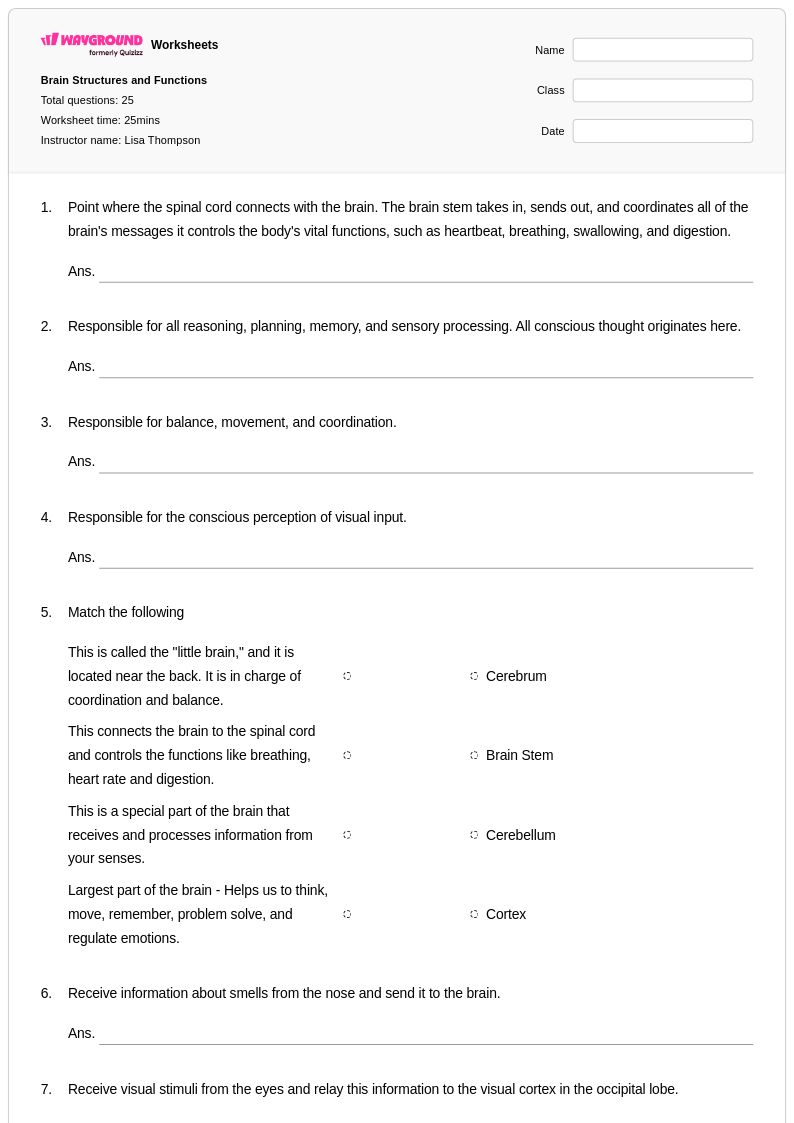
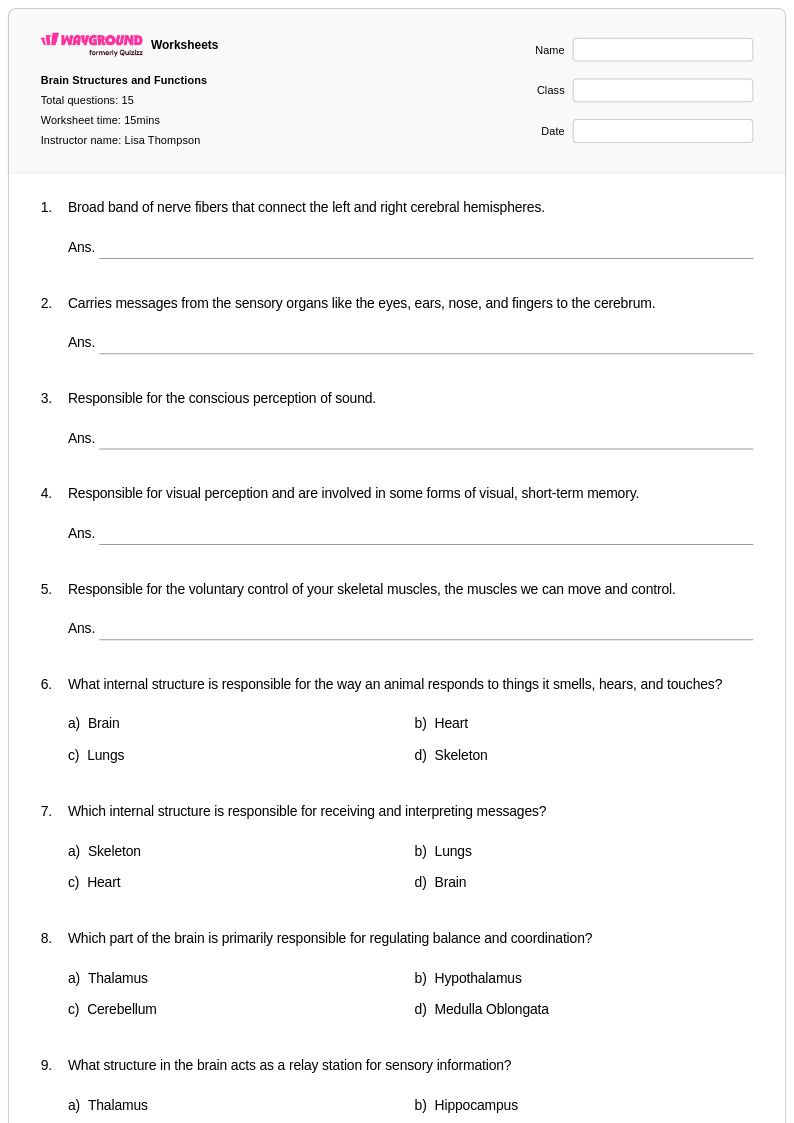
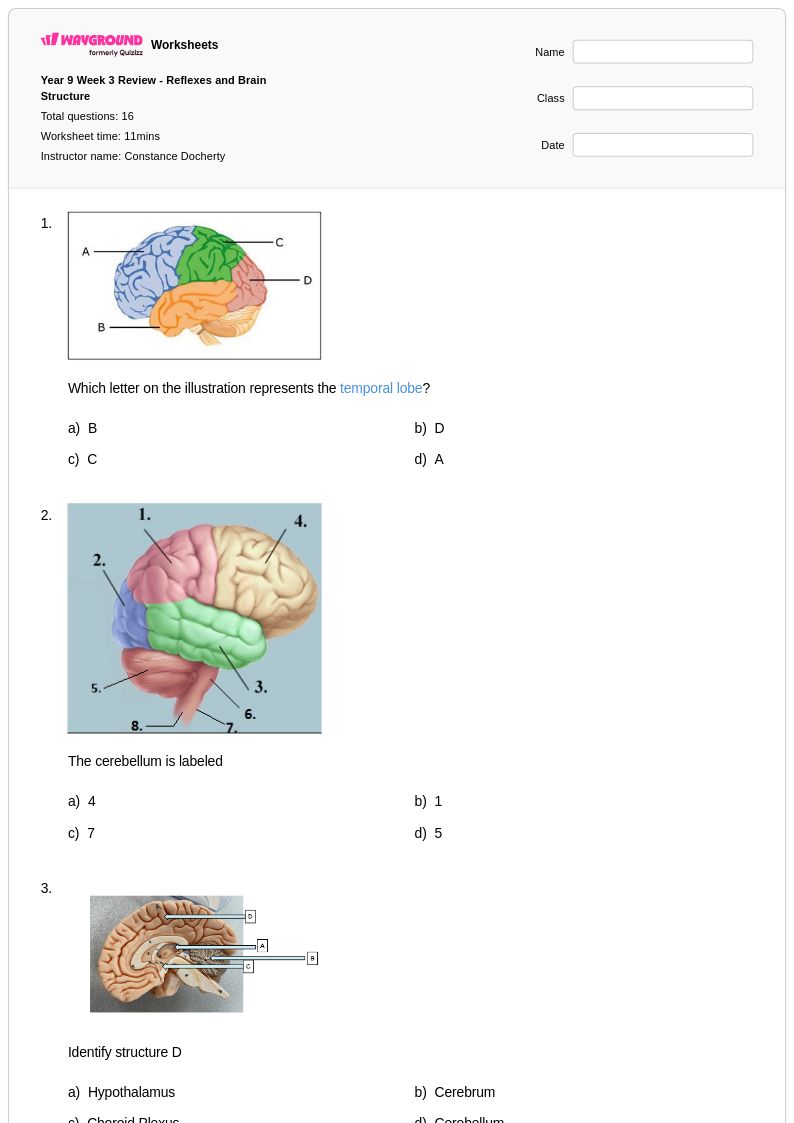
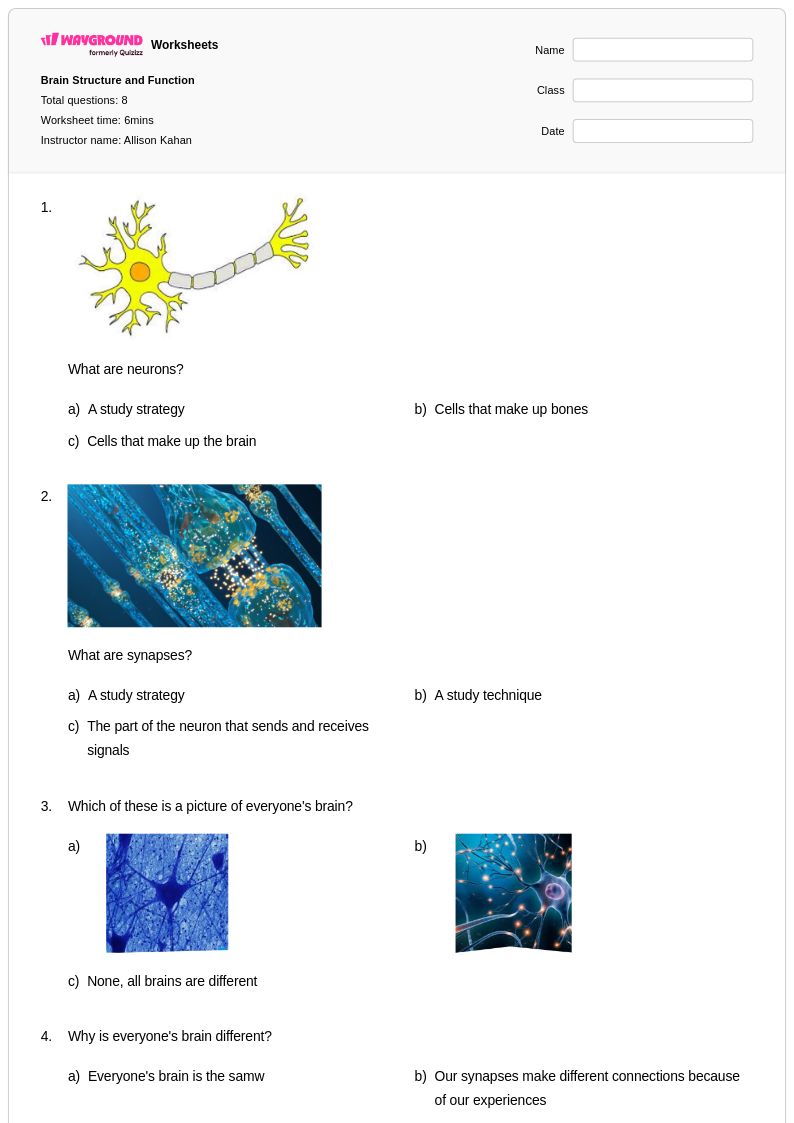
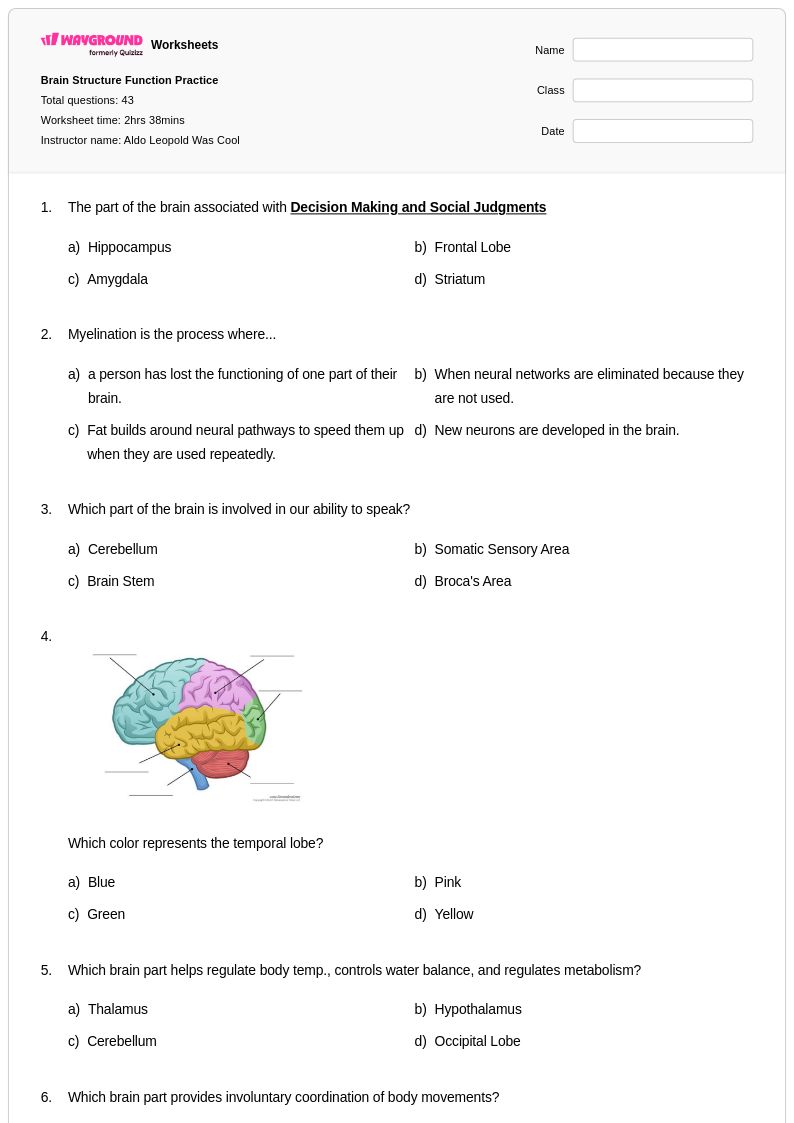
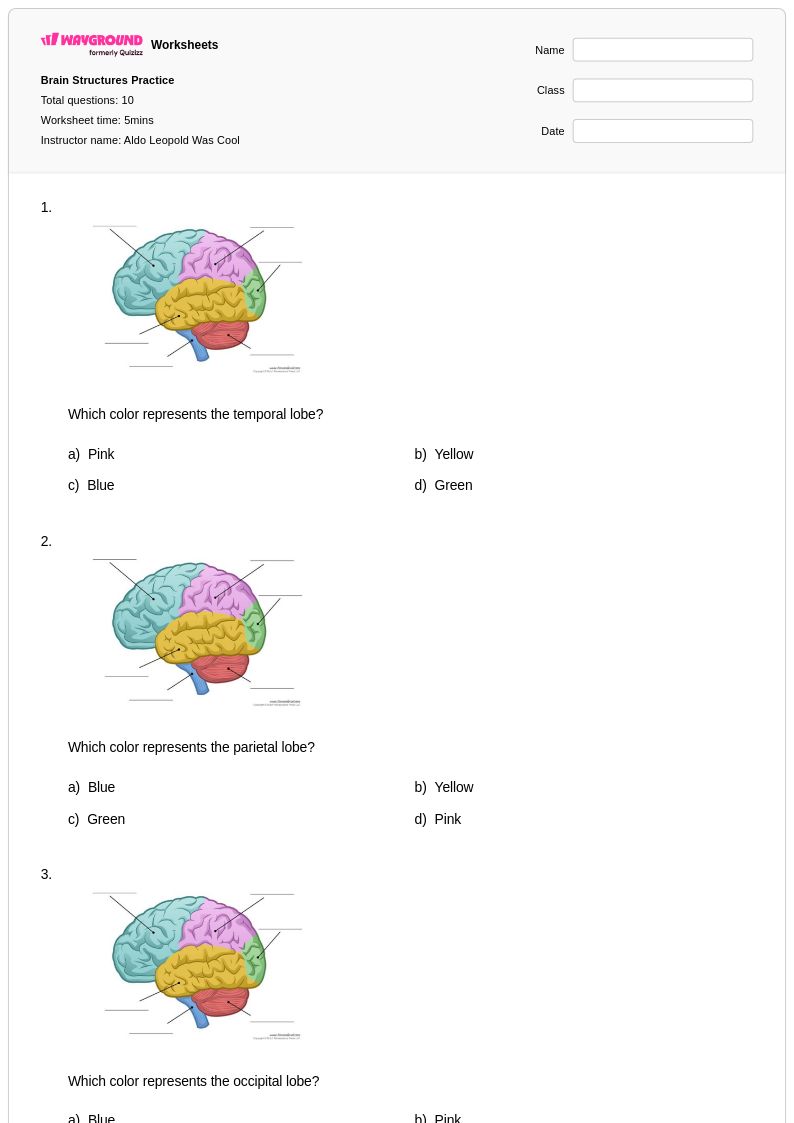
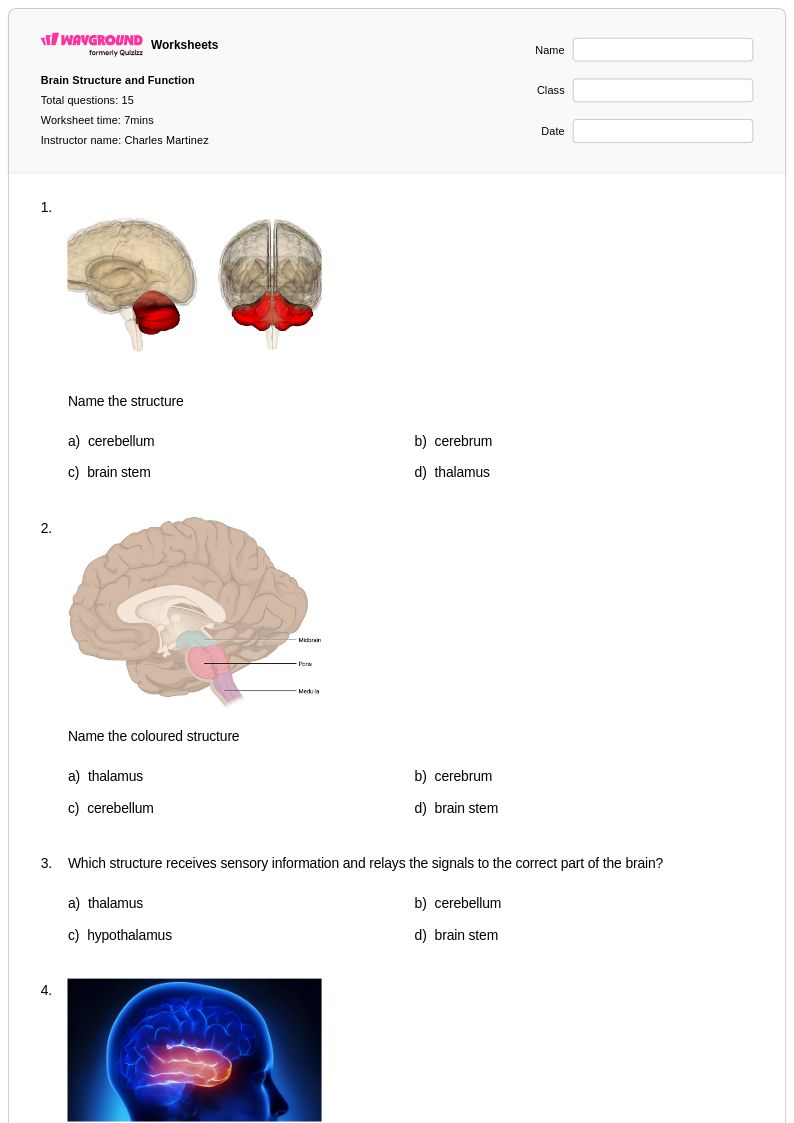
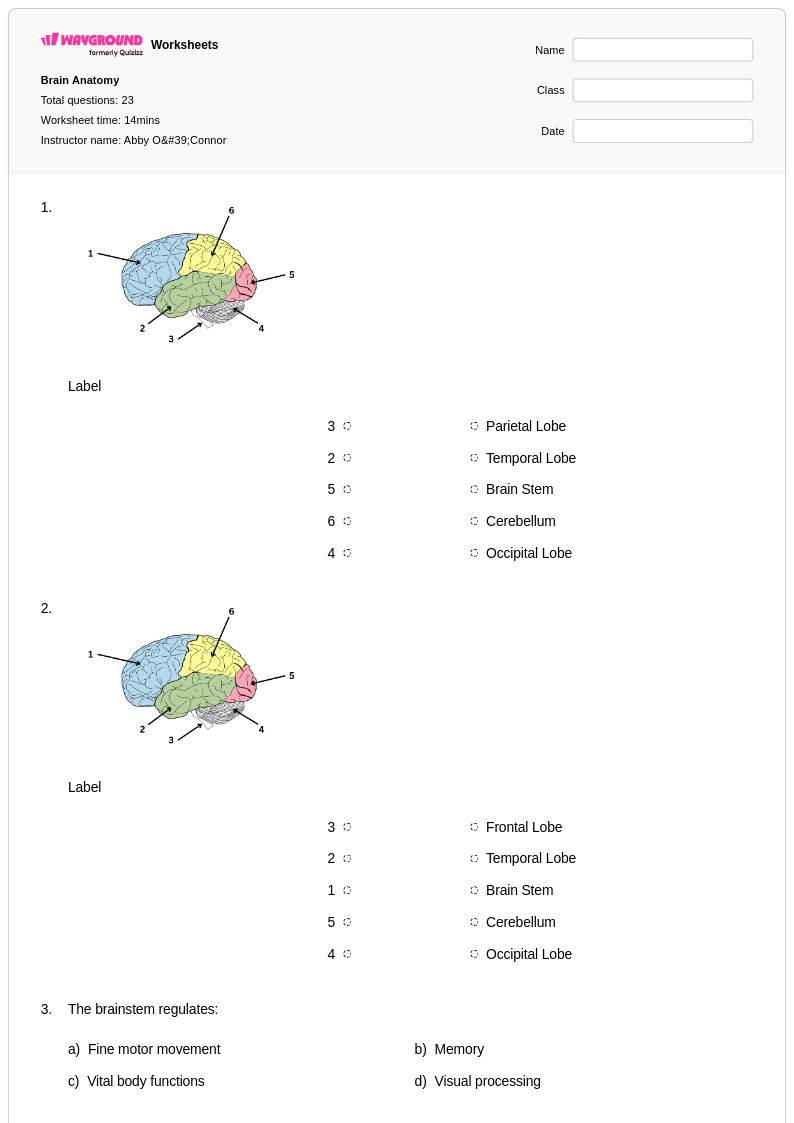
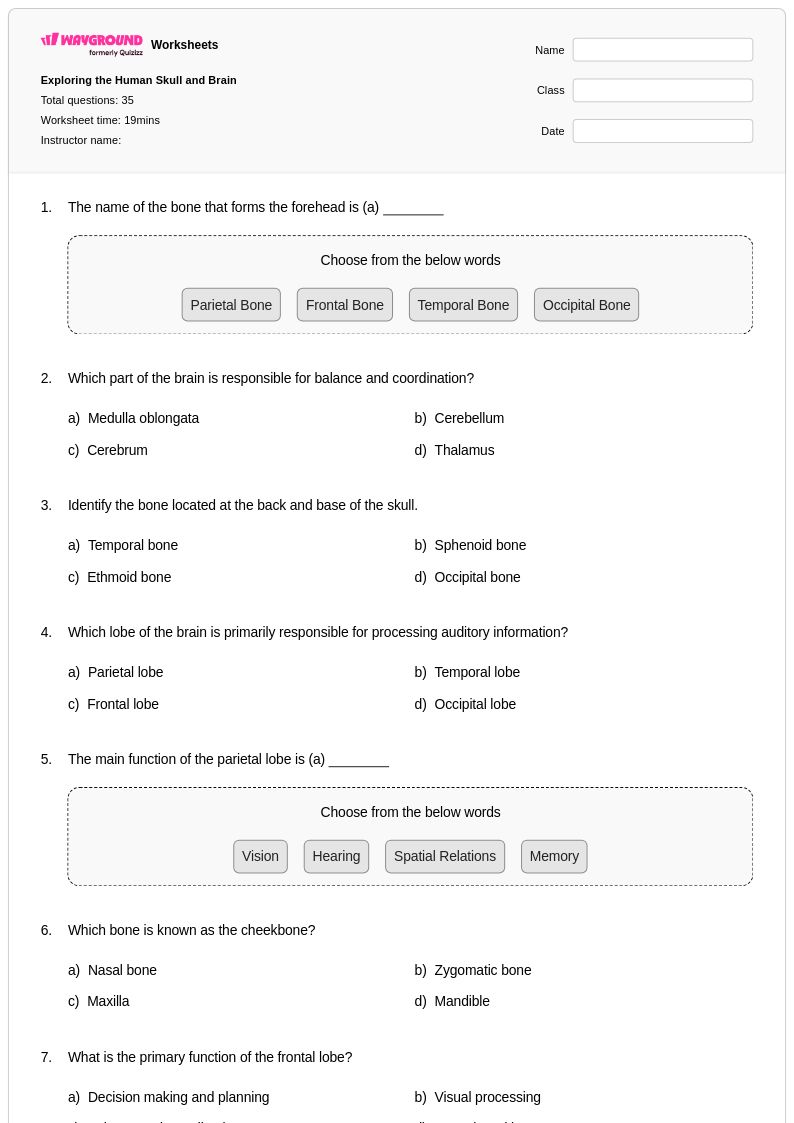
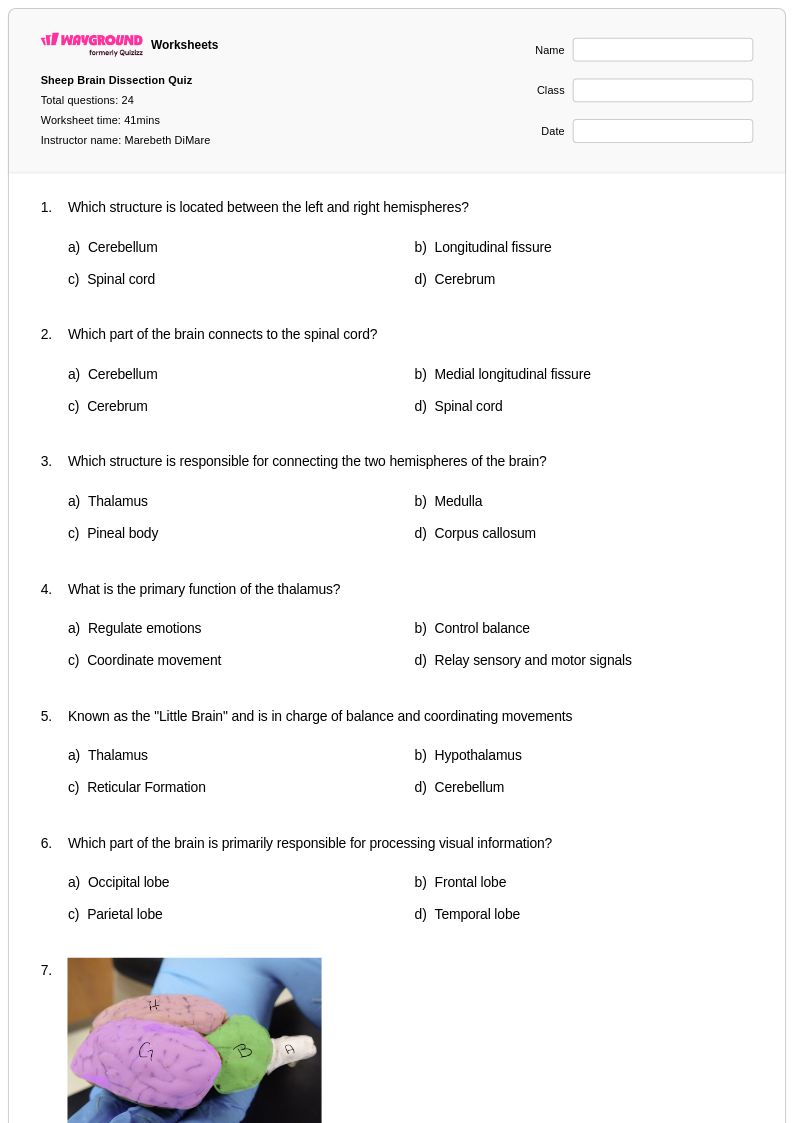
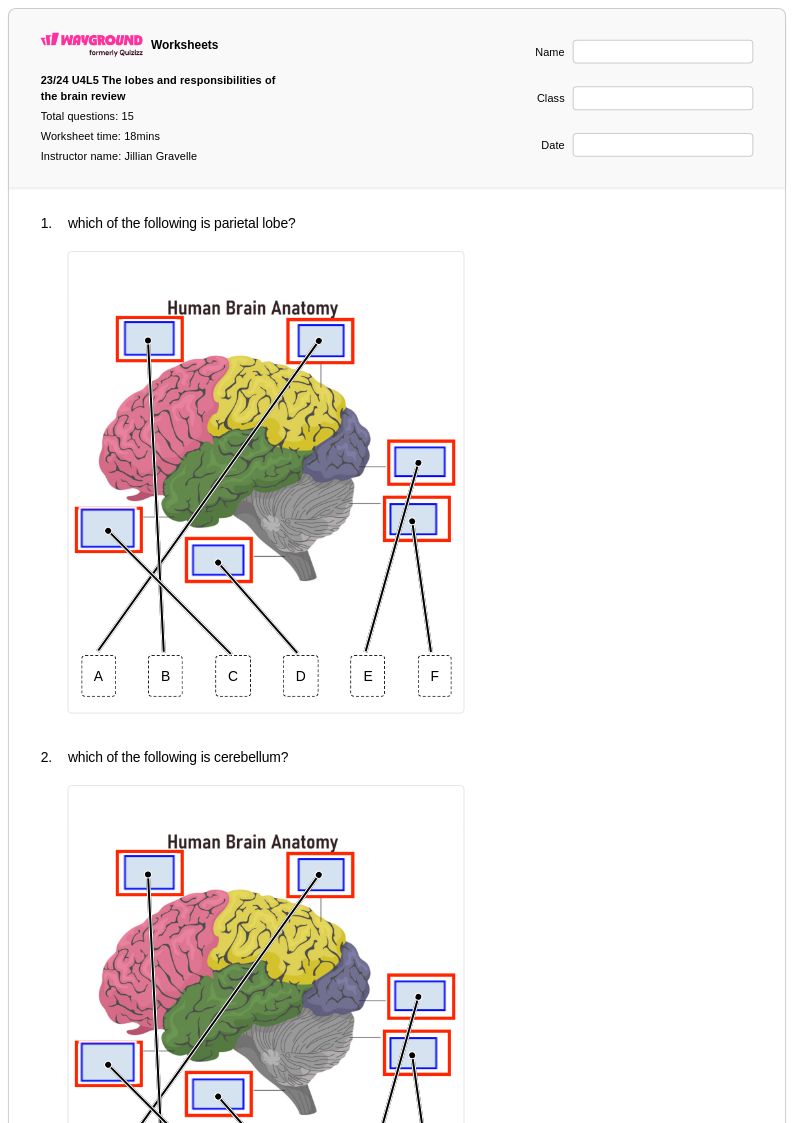
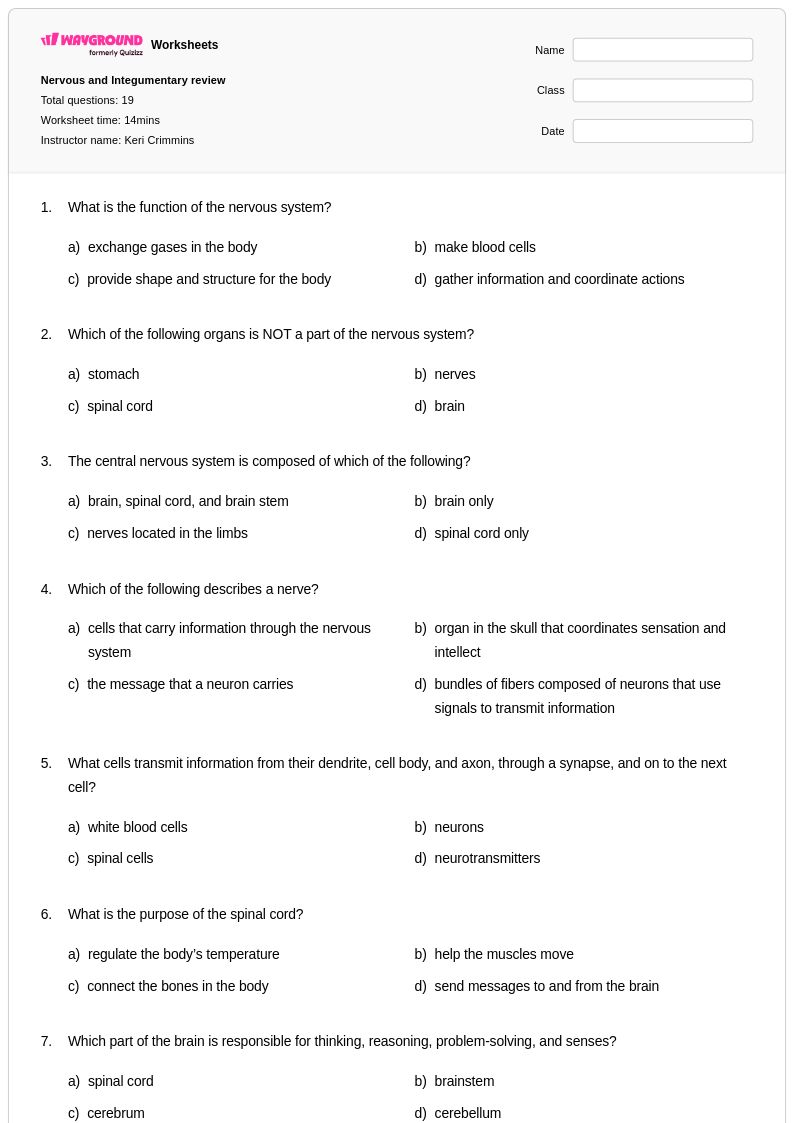
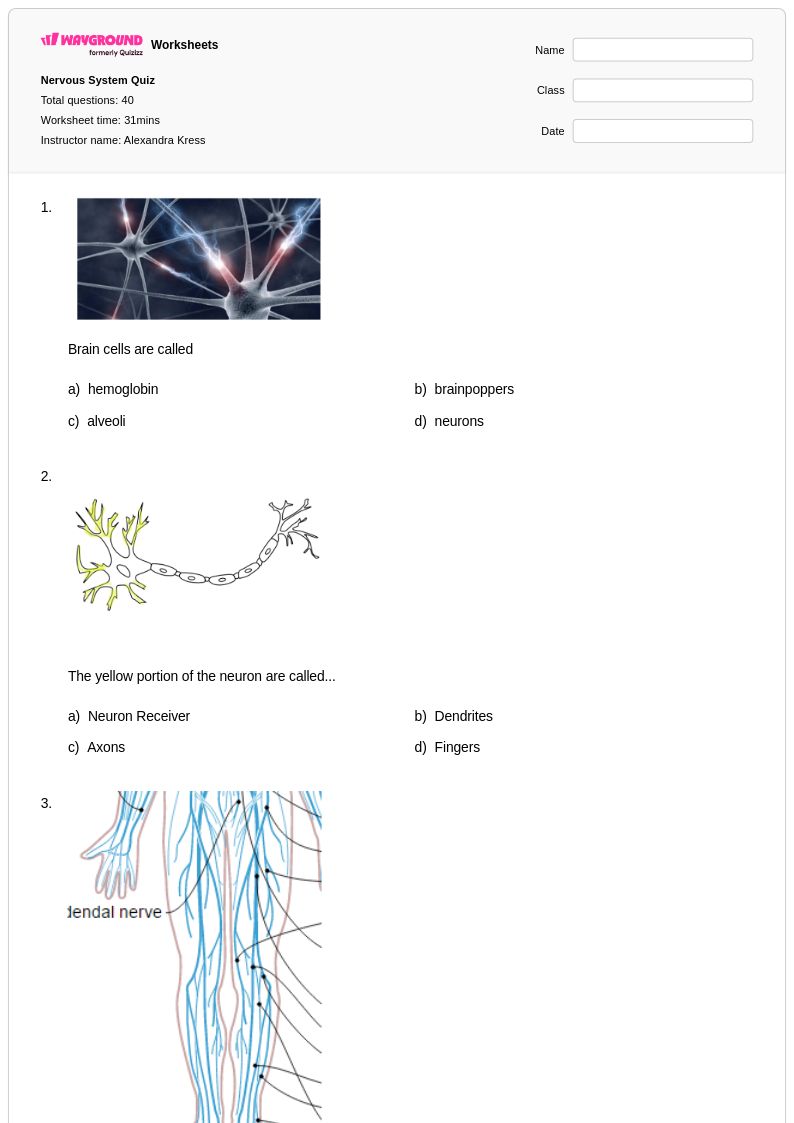
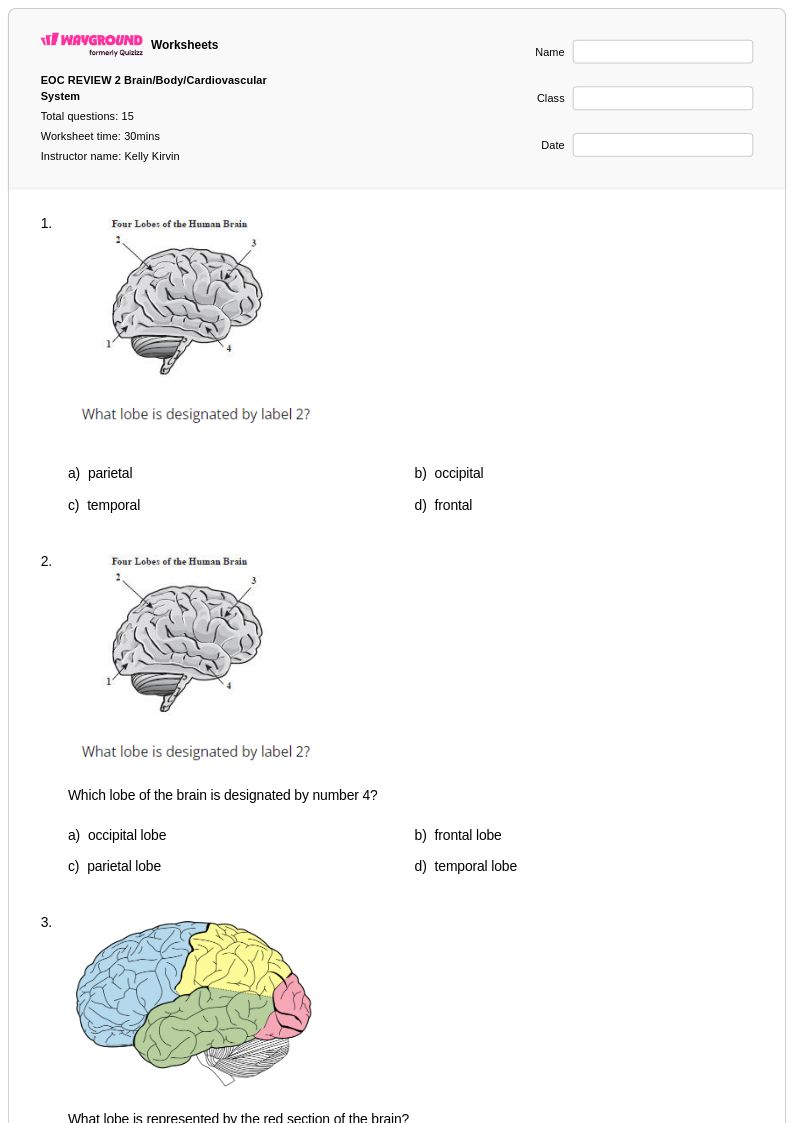
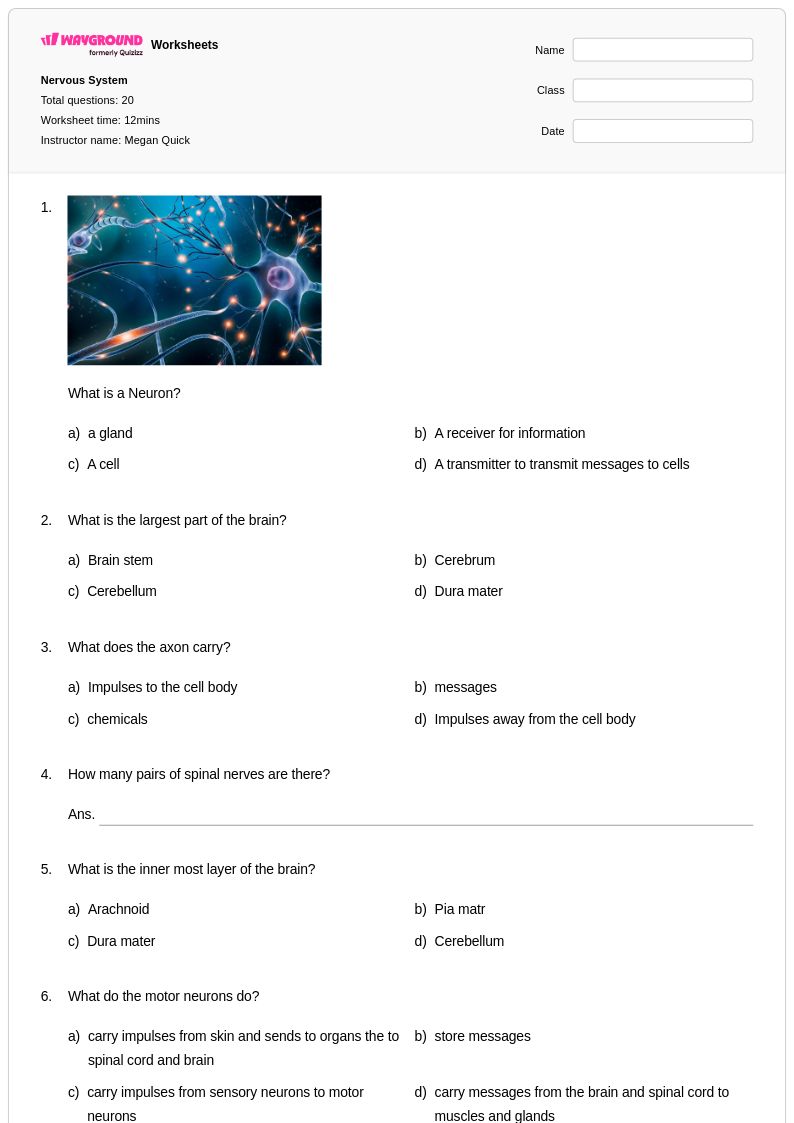
Class 9 brain structure worksheets available through Wayground (formerly Quizizz) provide comprehensive coverage of neuroanatomy fundamentals essential for high school biology students. These educational resources systematically guide students through the identification and functions of major brain regions including the cerebrum, cerebellum, brainstem, and limbic system, while developing critical scientific observation and analysis skills. The worksheet collection encompasses detailed anatomical diagrams, labeling exercises, and practice problems that reinforce understanding of how different brain structures coordinate to control behavior, movement, and cognitive processes. Each printable resource includes a complete answer key to support independent learning and self-assessment, with free pdf formats ensuring accessibility for diverse classroom environments and study preferences.
Wayground (formerly Quizizz) empowers educators with millions of teacher-created brain structure worksheets that streamline lesson planning and differentiated instruction for Class 9 biology courses. The platform's robust search and filtering capabilities allow teachers to quickly locate resources aligned with specific curriculum standards and learning objectives, while built-in customization tools enable seamless adaptation of materials to meet individual student needs. These comprehensive worksheet collections support effective remediation for struggling learners and enrichment opportunities for advanced students, with flexible delivery options including both digital and printable pdf formats. Teachers can efficiently implement targeted skill practice sessions, formative assessments, and review activities that strengthen students' mastery of neuroanatomy concepts while accommodating diverse learning styles and classroom management preferences.
FAQs
How do I teach brain structure to students who struggle with memorizing anatomical terms?
Teaching brain structure effectively starts with anchoring vocabulary to function rather than asking students to memorize terms in isolation. Have students label diagrams while simultaneously noting what each region controls, so the name and purpose are learned together. Connecting regions to real-world neurological conditions, such as how cerebellar damage affects coordination, gives abstract anatomy a concrete frame of reference that aids long-term retention.
What exercises help students practice identifying brain regions?
Diagram-labeling exercises are among the most effective for building anatomical recognition of brain regions like the cerebrum, cerebellum, brainstem, and limbic system. Case study analysis adds a functional layer, asking students to infer which brain region is involved based on described symptoms or behaviors. Combining both exercise types ensures students can identify structures visually and apply their knowledge contextually.
What mistakes do students commonly make when learning brain structure?
One of the most common errors is conflating the functions of adjacent or similarly named regions, such as confusing the cerebrum with the cerebellum or misattributing limbic functions to the brainstem. Students also frequently treat brain regions as isolated units rather than understanding that most behaviors and functions involve coordinated activity across multiple areas. Worksheets that pair labeling with functional analysis tasks help address both of these misconceptions directly.
How can I differentiate brain structure worksheets for students at different levels?
For struggling learners, reducing the number of regions covered per activity and providing a word bank for labeling tasks lowers cognitive load while maintaining engagement. Advanced students benefit from open-ended case study prompts that require them to connect multiple brain regions to a single behavior or condition. On Wayground, teachers can also enable accommodations such as read aloud support and reduced answer choices for individual students, allowing the same core worksheet to serve diverse learners without singling anyone out.
How do I use brain structure worksheets from Wayground in my classroom?
Wayground's brain structure worksheets are available as printable PDFs for traditional classroom use and in digital formats for technology-integrated environments, including the option to host them as a quiz directly on Wayground. Teachers can use printable versions for in-class labeling activities or assign the digital format for homework and independent review. Each worksheet includes a complete answer key, supporting both teacher-led correction and student self-assessment.
How do I assess student understanding of brain structure beyond labeling diagrams?
Labeling tests measure recognition, but true understanding of brain structure requires students to explain the relationship between a region's anatomy and its function. Case-based assessments, where students are given a neurological scenario and must identify the affected brain region and justify their reasoning, reveal whether students have internalized functional knowledge. Including short-answer questions about conditions like stroke or cerebellar injury can effectively surface gaps in conceptual understanding.