Free Printable Species Coexistence Worksheets for Class 9
Explore Wayground's comprehensive collection of Class 9 species coexistence worksheets featuring printable PDFs, free practice problems, and detailed answer keys to help students master biological interactions and ecosystem dynamics.
Explore printable Species Coexistence worksheets for Class 9
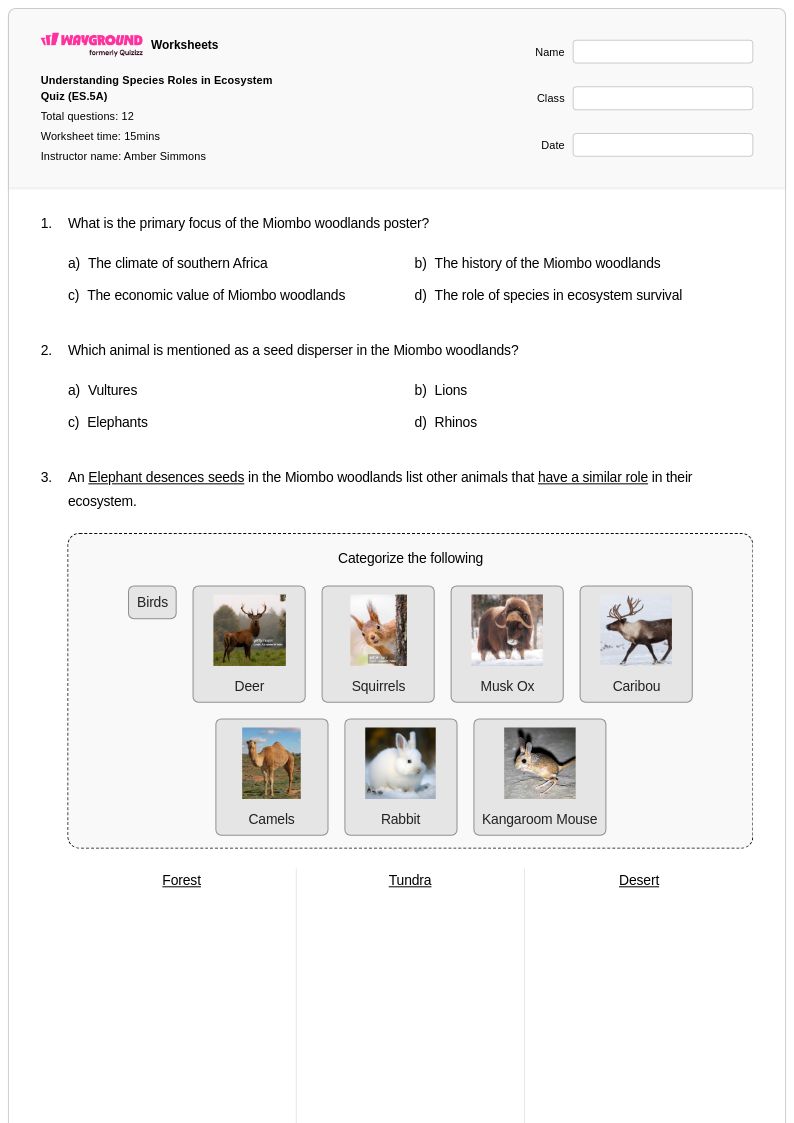
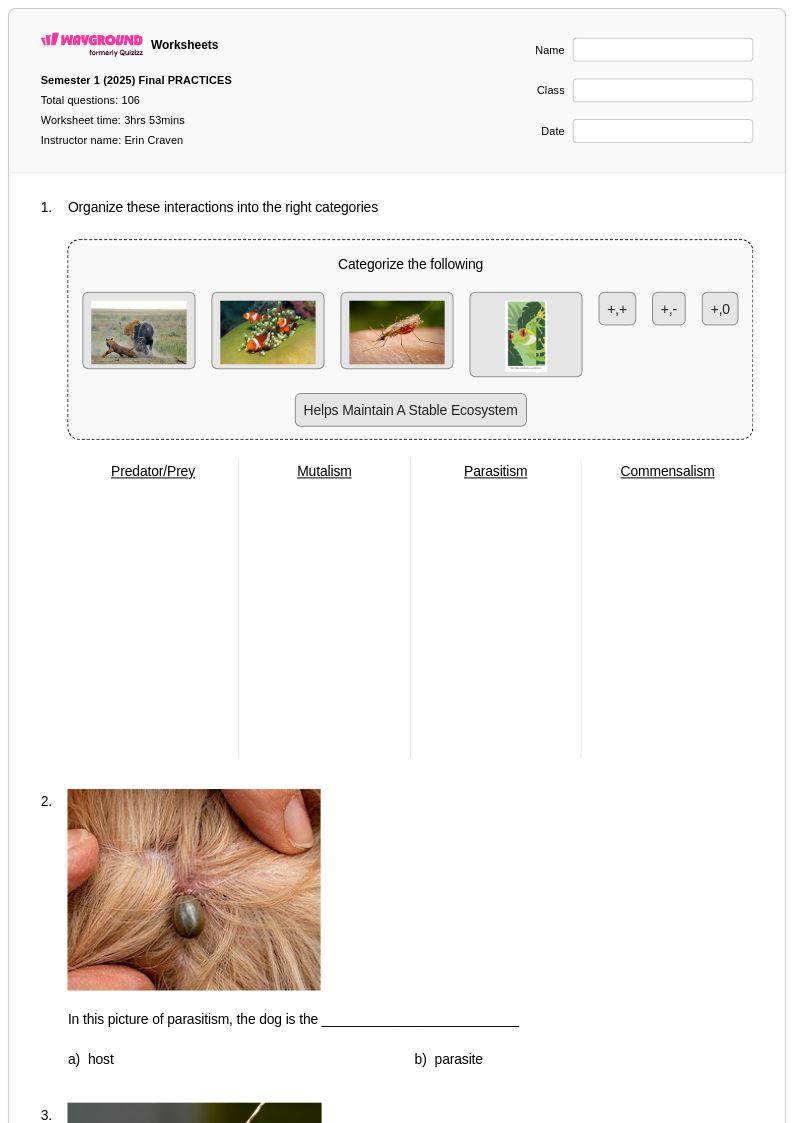
Species coexistence worksheets for Class 9 biology students available through Wayground (formerly Quizizz) provide comprehensive exploration of how different organisms share habitats and resources within ecosystems. These educational materials strengthen students' understanding of fundamental ecological principles including competitive exclusion, niche partitioning, resource allocation, and symbiotic relationships that allow multiple species to thrive in the same environment. The practice problems guide students through real-world scenarios where they analyze predator-prey dynamics, mutualistic partnerships, and habitat specialization strategies. Each worksheet collection includes detailed answer keys that help students verify their comprehension of complex ecological interactions, while printable pdf formats ensure accessibility for both classroom instruction and independent study. These free resources systematically build students' analytical skills in interpreting population data, identifying coexistence mechanisms, and predicting ecosystem stability outcomes.
Wayground (formerly Quizizz) empowers biology educators with an extensive library of millions of teacher-created species coexistence worksheets that support diverse instructional needs across Class 9 classrooms. The platform's advanced search and filtering capabilities enable teachers to quickly locate materials aligned with specific curriculum standards and learning objectives related to ecological concepts and population dynamics. Differentiation tools allow educators to customize worksheet difficulty levels, accommodating students who need additional practice with basic niche concepts as well as those ready for advanced analysis of competitive interactions and evolutionary adaptations. These resources are available in both digital and printable formats, including downloadable pdf versions, making them ideal for traditional classroom instruction, remote learning environments, and homework assignments. Teachers can seamlessly integrate these worksheets into lesson planning for initial concept introduction, targeted remediation of challenging ecological principles, enrichment activities for accelerated learners, and ongoing skill practice to reinforce understanding of species interactions and ecosystem balance.
FAQs
How do I teach species coexistence in a biology class?
Teaching species coexistence effectively starts with grounding students in the competitive exclusion principle before introducing the mechanisms that allow it to be overcome, such as niche partitioning, character displacement, and facilitation. Use real-world case studies, like Darwin's finches or ant-plant mutualism, to make abstract ecological theory concrete. From there, move students toward analyzing how temporal and spatial resource partitioning allows multiple species to occupy the same habitat without one driving the other to local extinction.
What exercises help students practice species coexistence concepts?
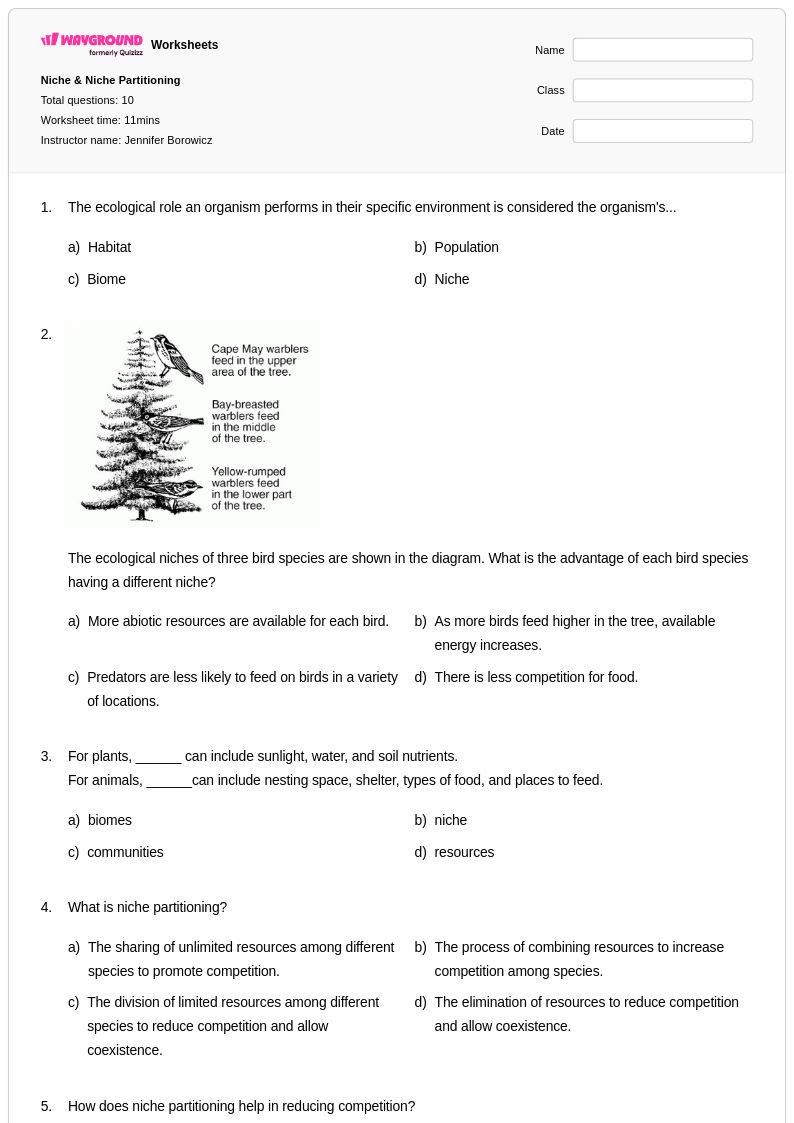
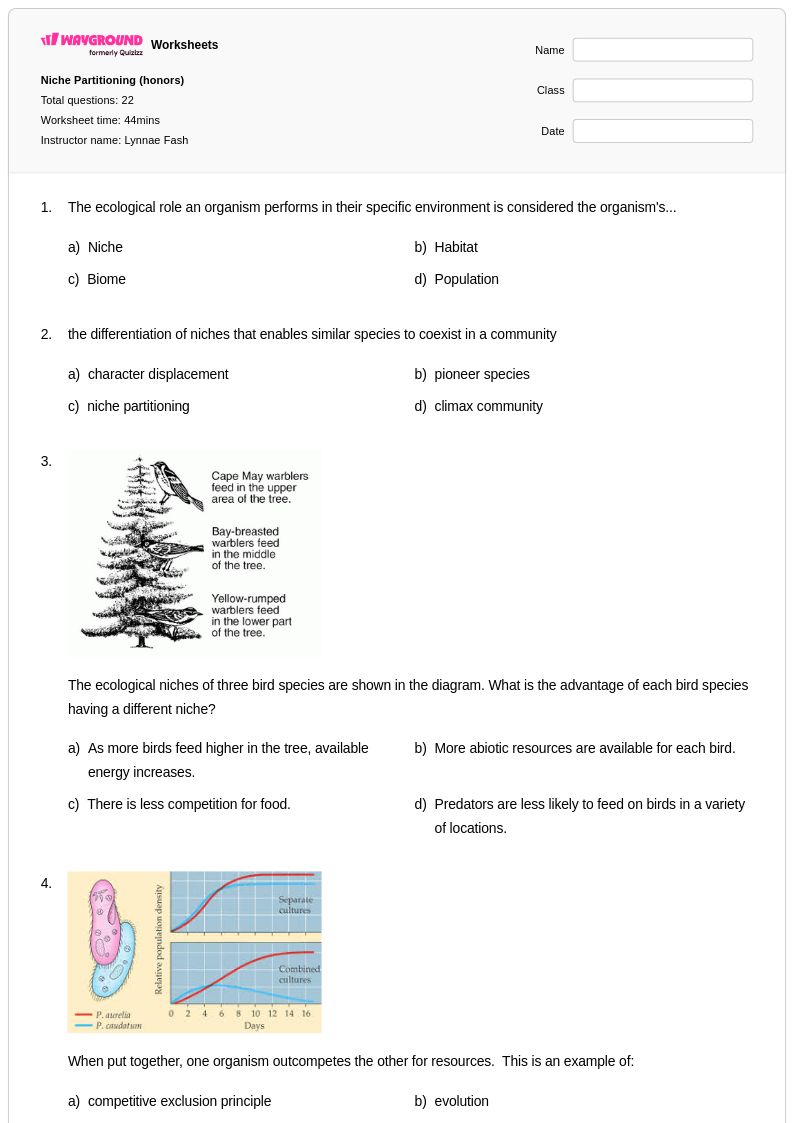
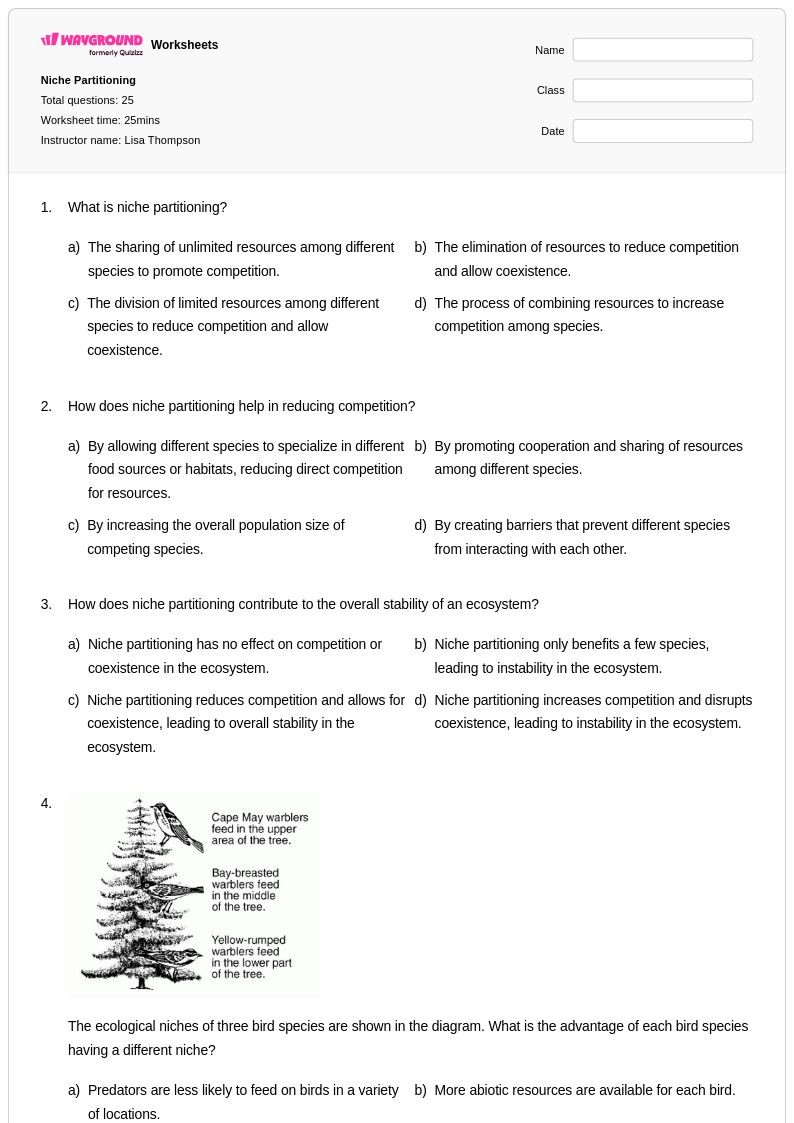
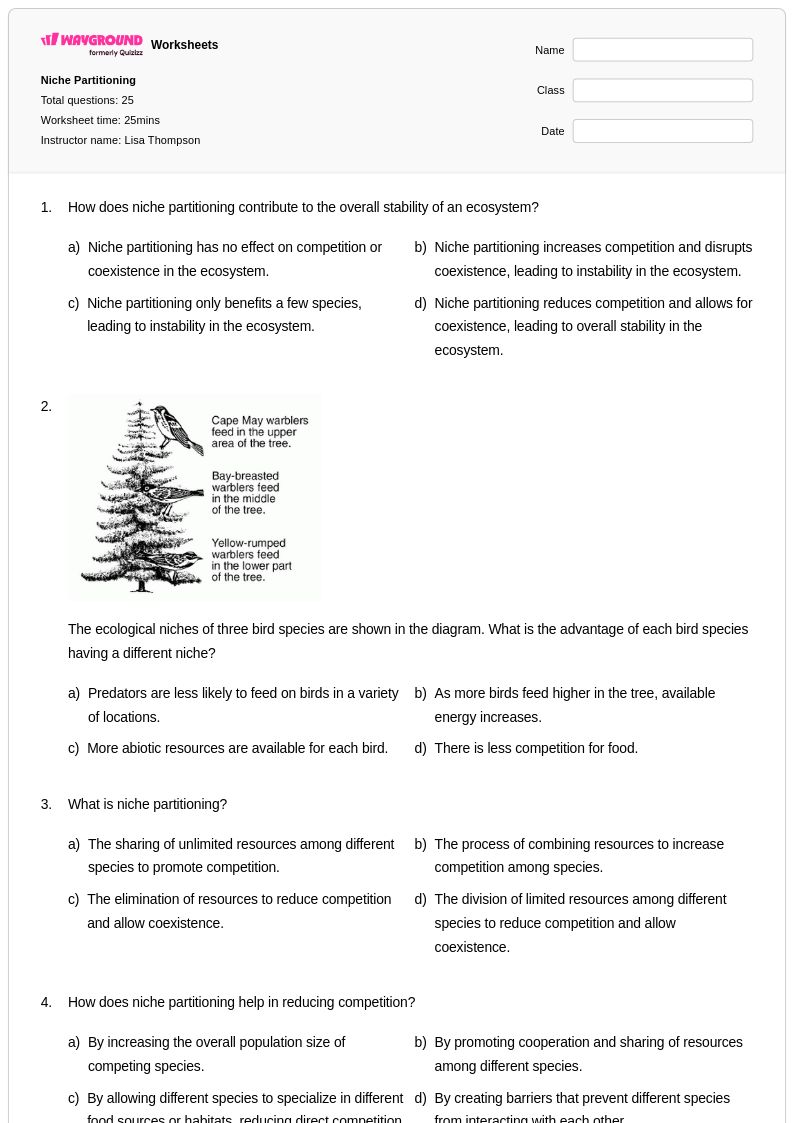
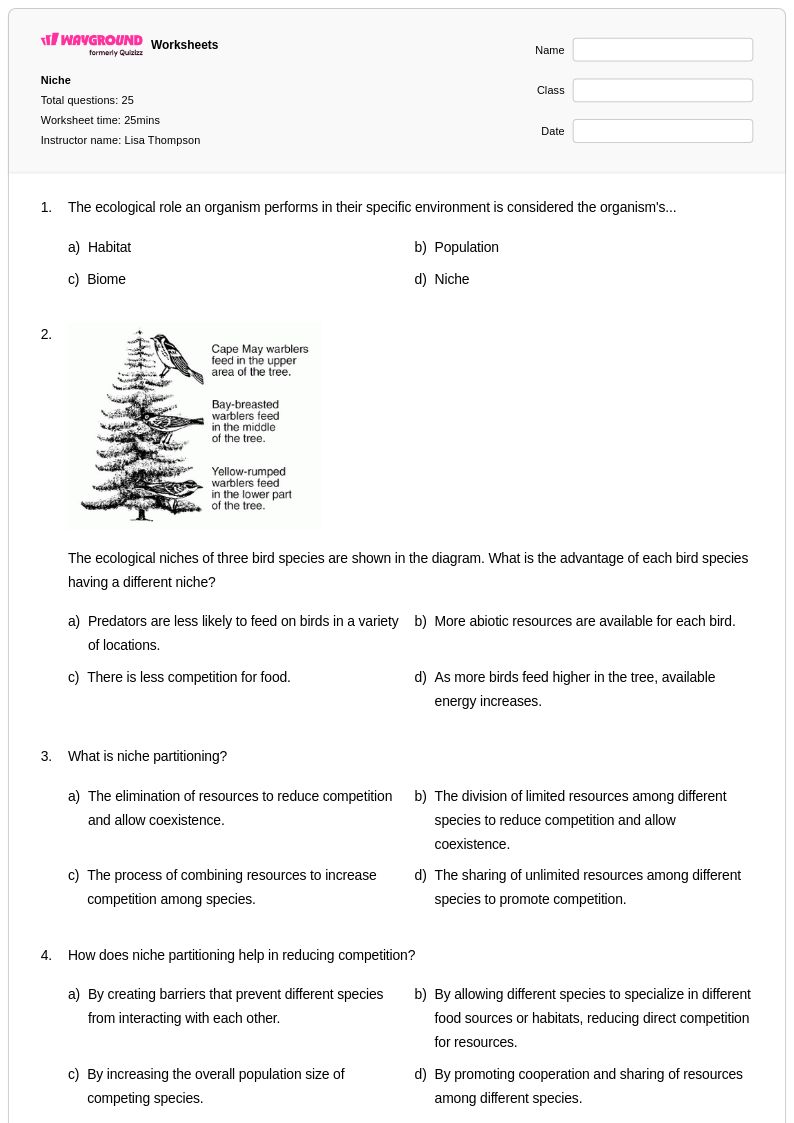
Practice problems that ask students to classify coexistence mechanisms, interpret species abundance data, and analyze niche overlap diagrams are especially effective for reinforcing this topic. Scenario-based questions, where students determine whether two species will coexist or one will competitively exclude the other, build analytical thinking alongside content knowledge. Worksheets that integrate real ecological examples, such as resource partitioning among warblers or character displacement in sticklebacks, give students the contextual practice they need to apply concepts beyond rote memorization.
What mistakes do students commonly make when learning about species coexistence?
A frequent misconception is that competition always leads to one species eliminating another; students often fail to recognize that coexistence is the norm in diverse ecosystems and that stabilizing mechanisms actively prevent exclusion. Students also commonly conflate niche partitioning with habitat separation, not recognizing that resources like time, food particle size, or microhabitat can also be partitioned. Another common error is treating mutualism and facilitation as separate from coexistence dynamics rather than as active drivers of community assembly.
How do I use species coexistence worksheets in my classroom?
Species coexistence worksheets on Wayground are available as printable PDFs for traditional classroom distribution and as digital formats for technology-integrated learning environments, giving you flexibility for in-class work, homework, or remote assignments. You can also host a worksheet as a quiz directly on Wayground, which enables you to track student responses and identify comprehension gaps in real time. For students who need additional support, Wayground's accommodation tools allow you to enable read aloud, extended time, or reduced answer choices on an individual basis without disrupting the experience for the rest of the class.
How is species coexistence different from competitive exclusion?
Competitive exclusion, described by Gause's Law, predicts that two species competing for identical resources cannot stably coexist, with one inevitably outcompeting the other. Species coexistence occurs when ecological mechanisms, such as niche differentiation, frequency-dependent competition, or environmental fluctuation, reduce the intensity of competition enough that neither species drives the other to local extinction. Understanding this distinction is essential for students before they can meaningfully analyze community structure and biodiversity patterns in ecosystems.
How do I differentiate species coexistence instruction for students at different levels?
For foundational learners, focus on the core contrast between competitive exclusion and niche partitioning using simplified food web diagrams and guided questions. Advanced students can engage with quantitative problems involving Lotka-Volterra competition models or analyze primary literature data on character displacement. On Wayground, differentiation tools allow you to customize worksheet difficulty and apply individual accommodations, such as read aloud or reduced answer choices, so students at all levels can engage with species coexistence content at an appropriate depth.