Free Printable Aquatic Ecosystems Worksheets for Class 9
Free Class 9 aquatic ecosystems worksheets and printables help students explore marine and freshwater habitats through engaging practice problems, with comprehensive answer keys and downloadable PDFs available on Wayground.
Explore printable Aquatic Ecosystems worksheets for Class 9
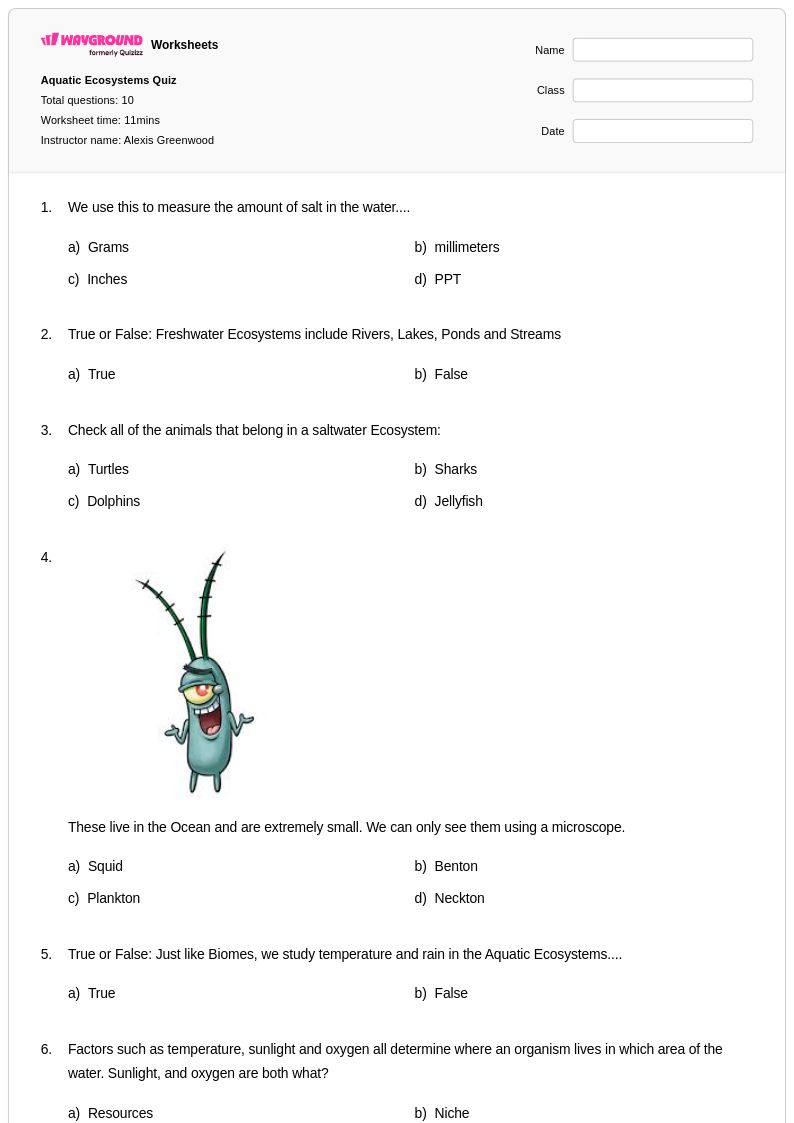
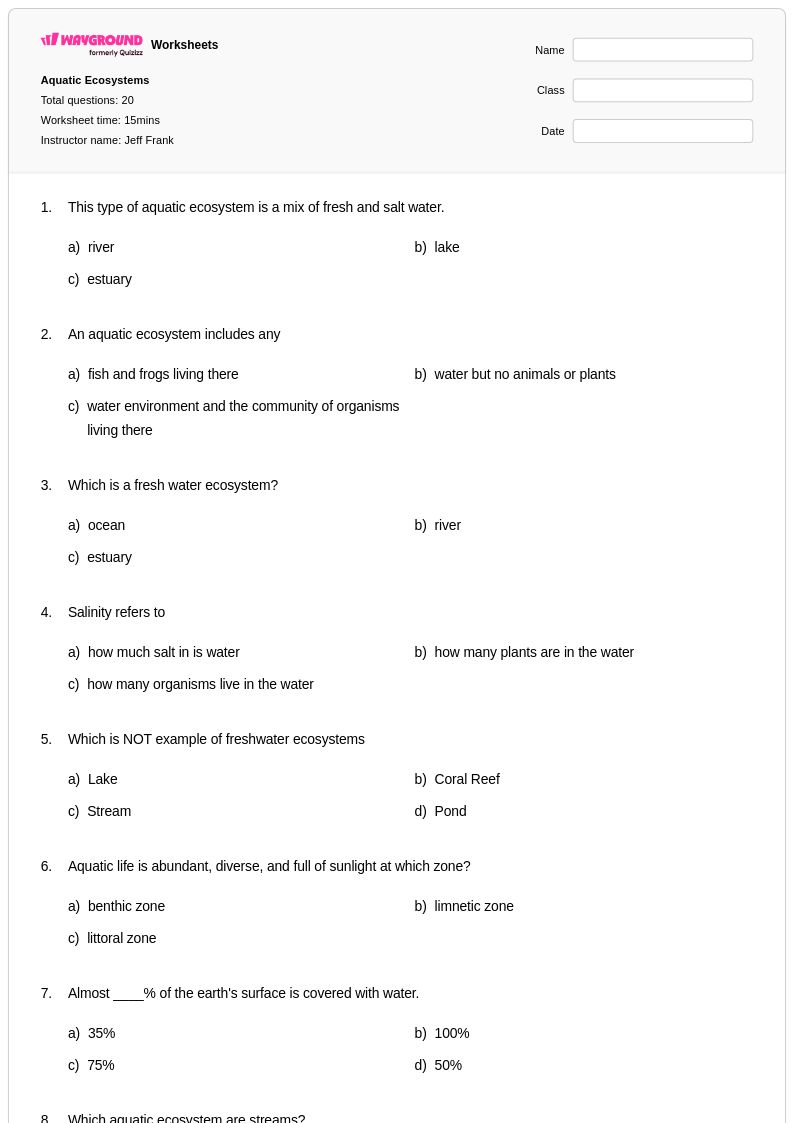
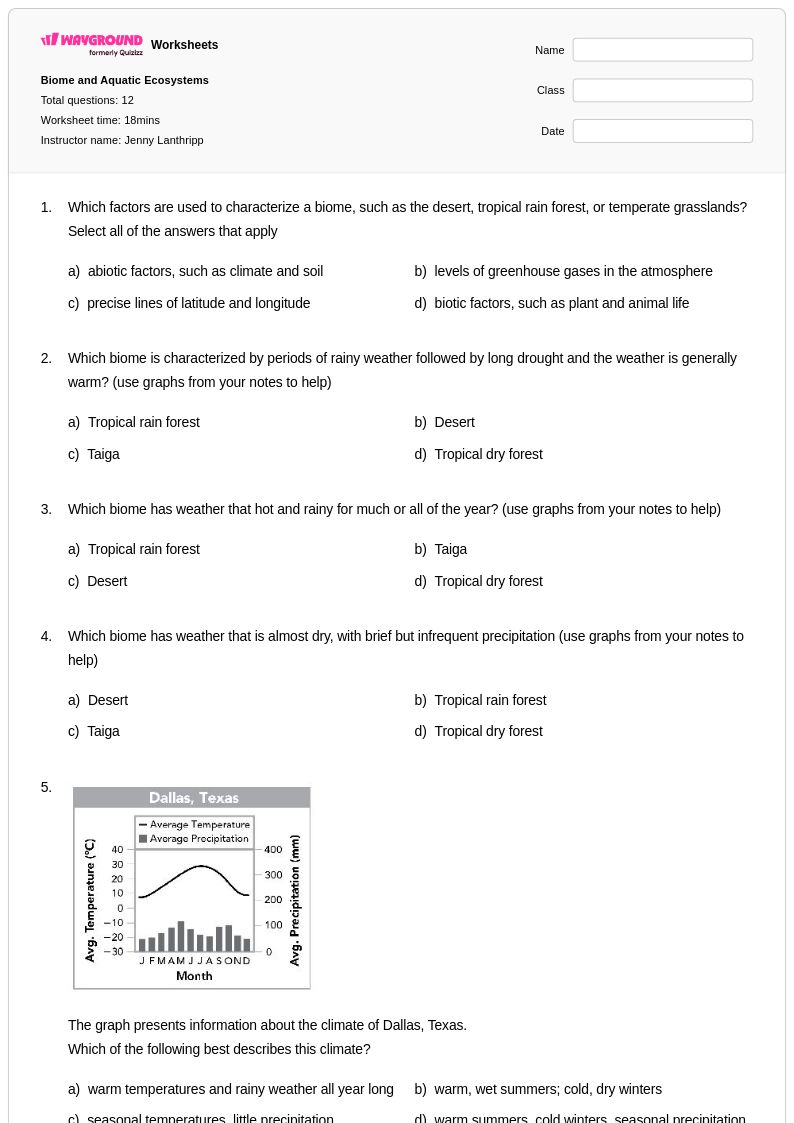
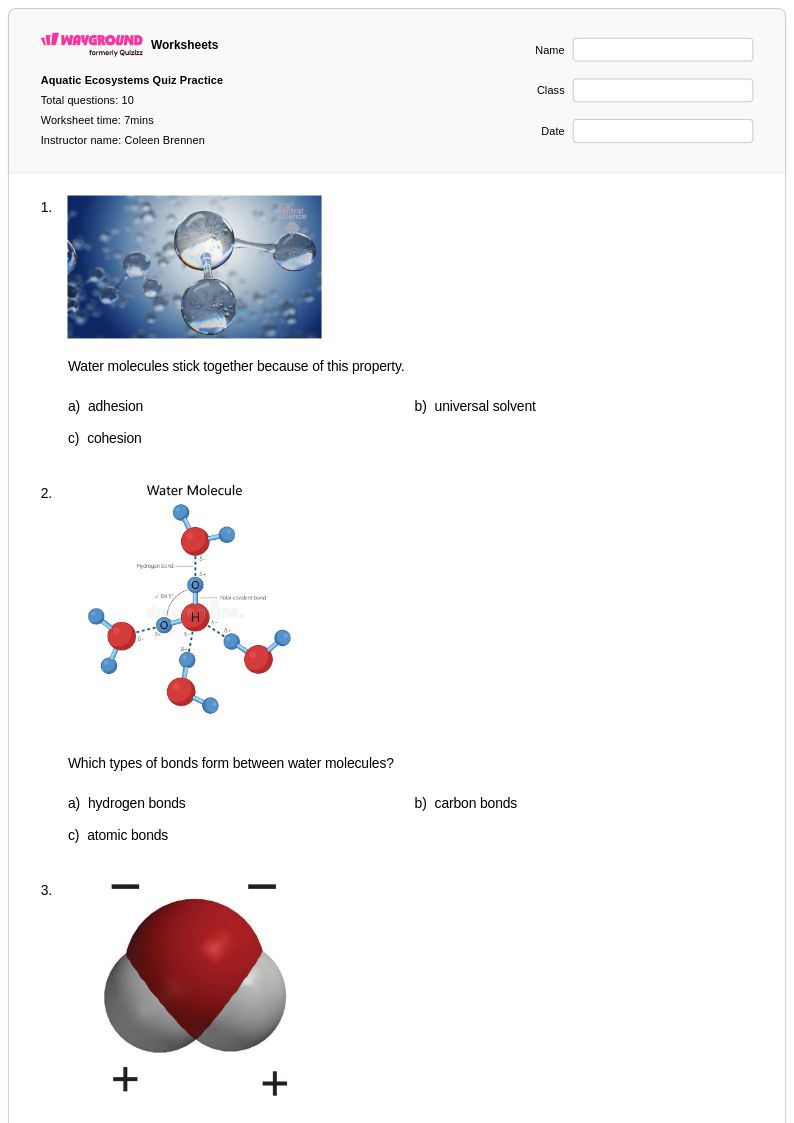
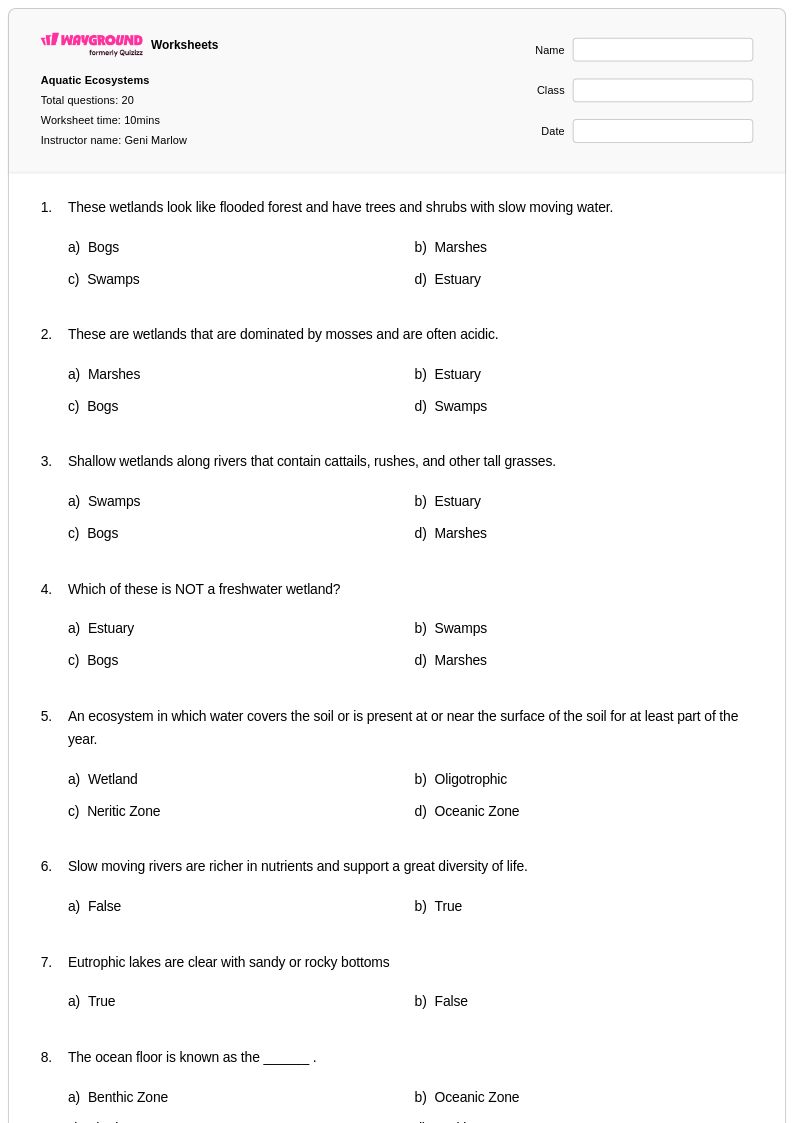
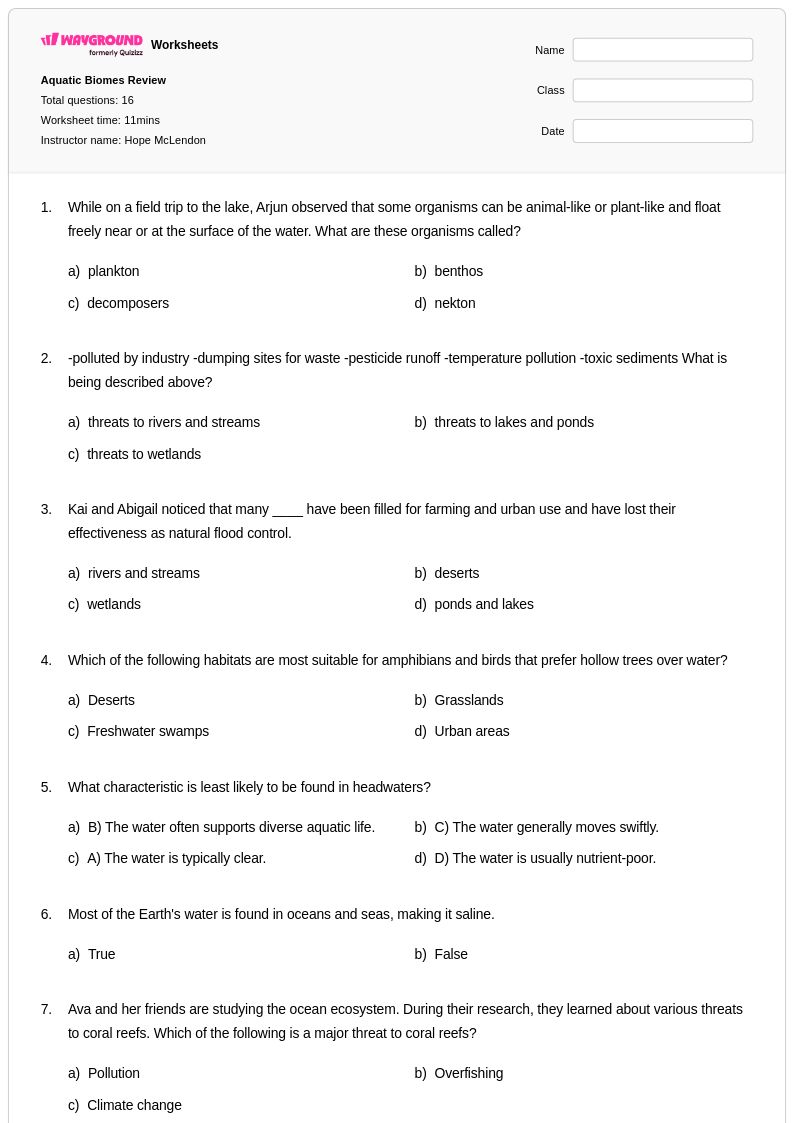
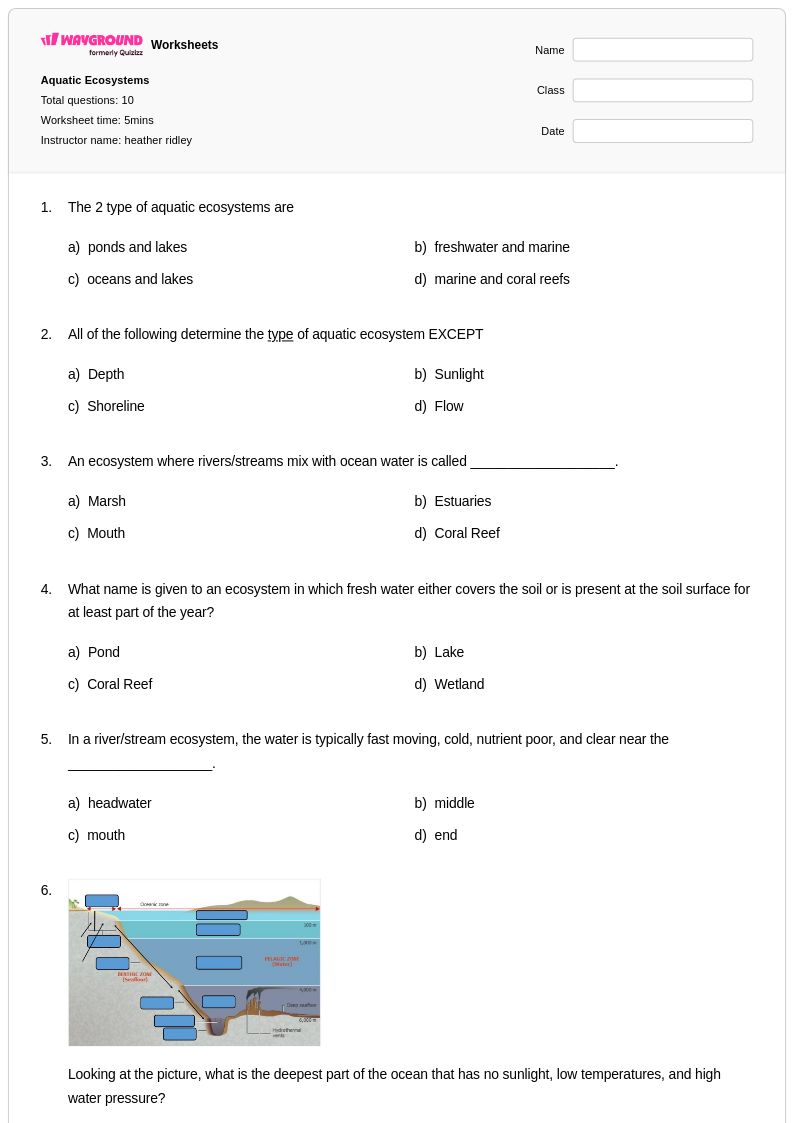
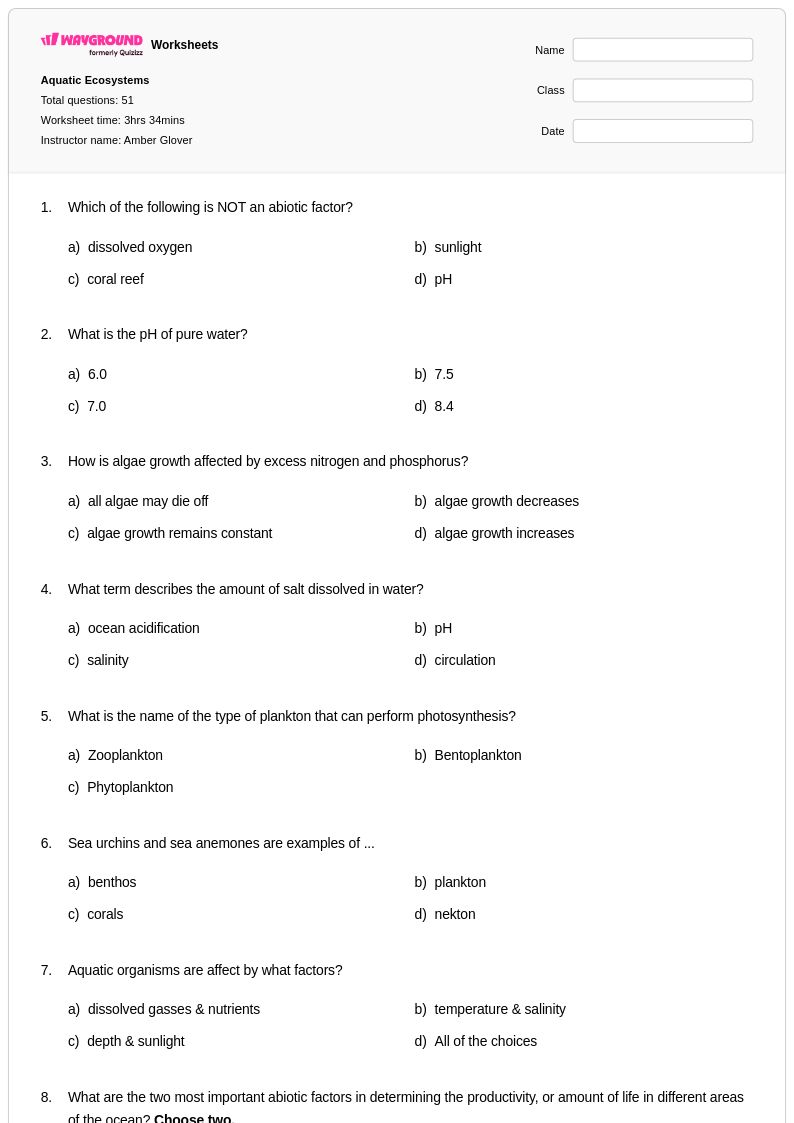
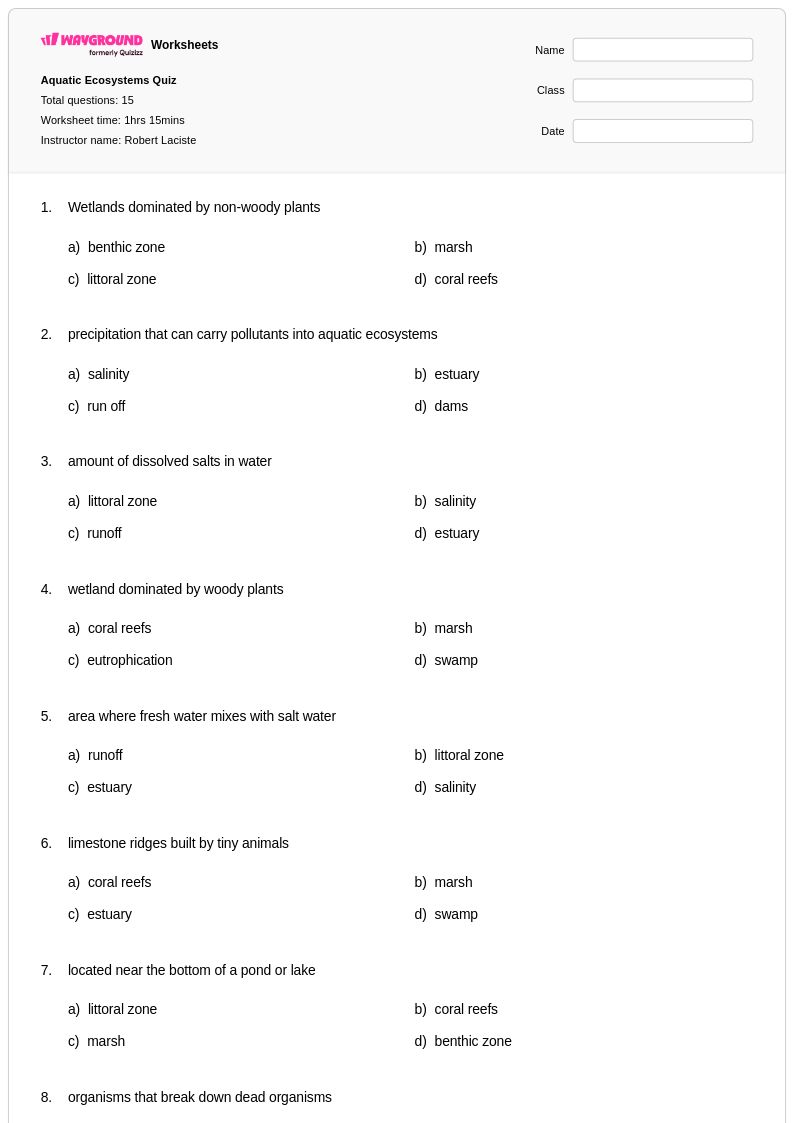
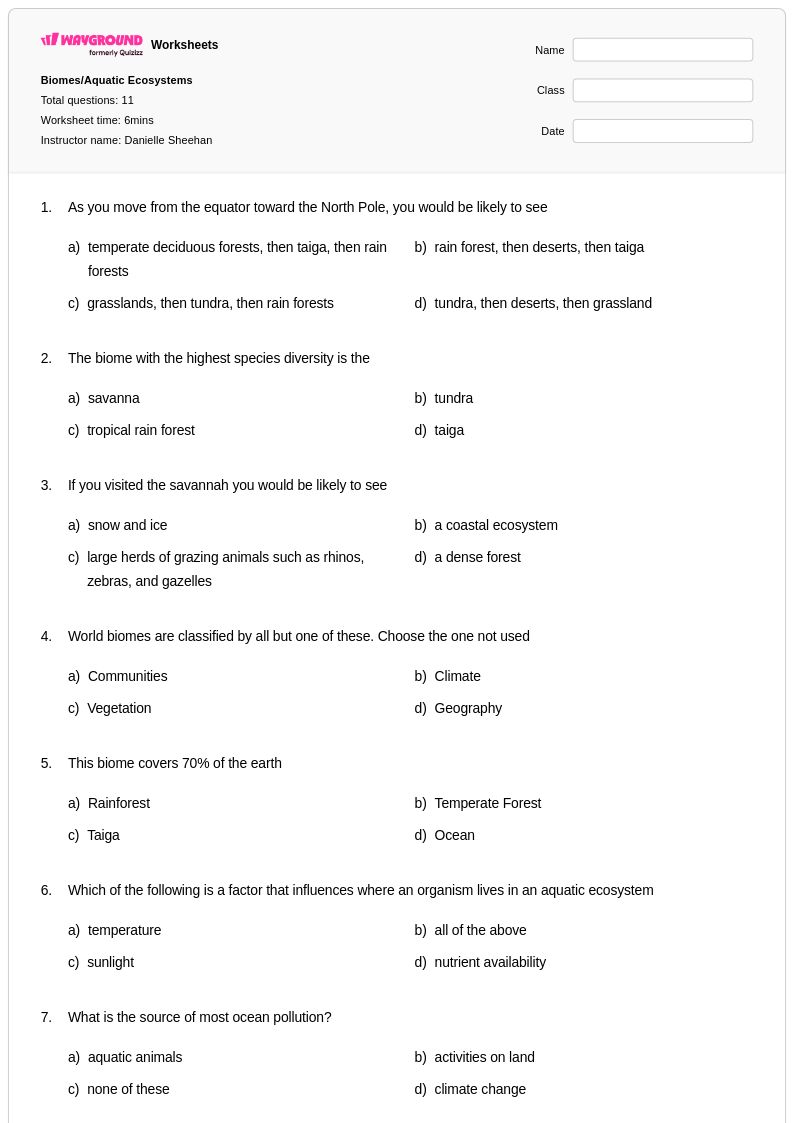
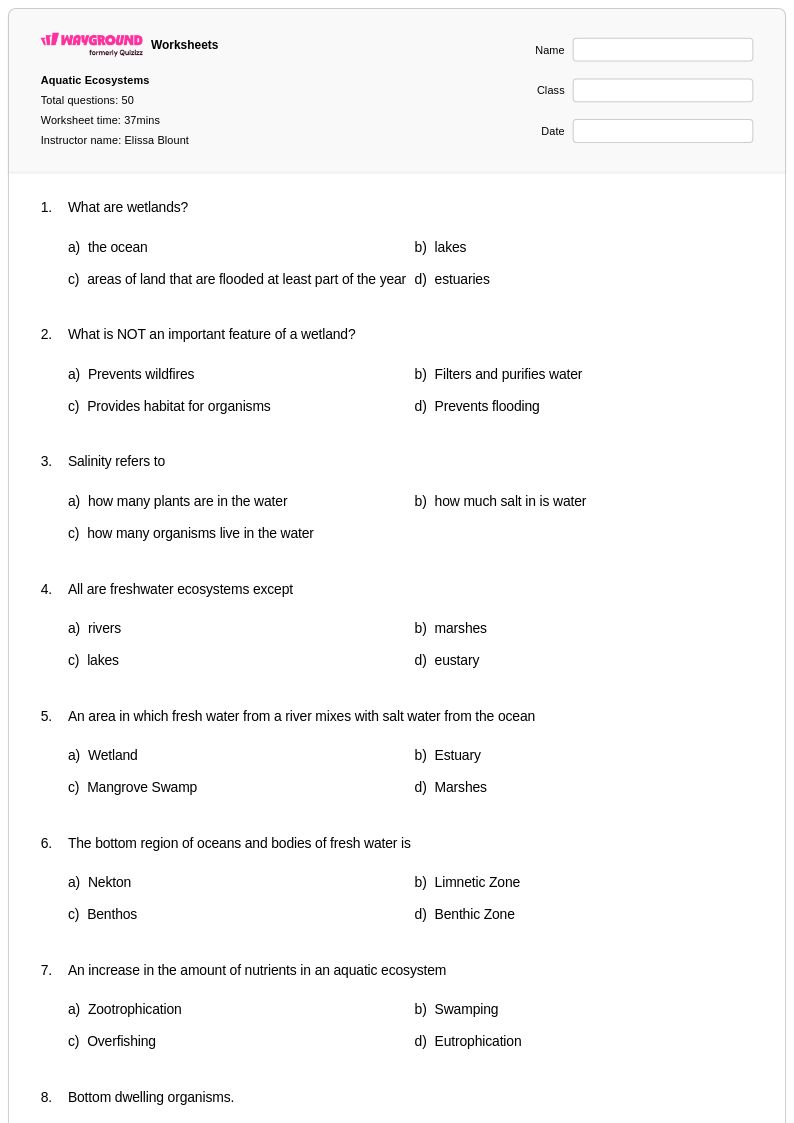
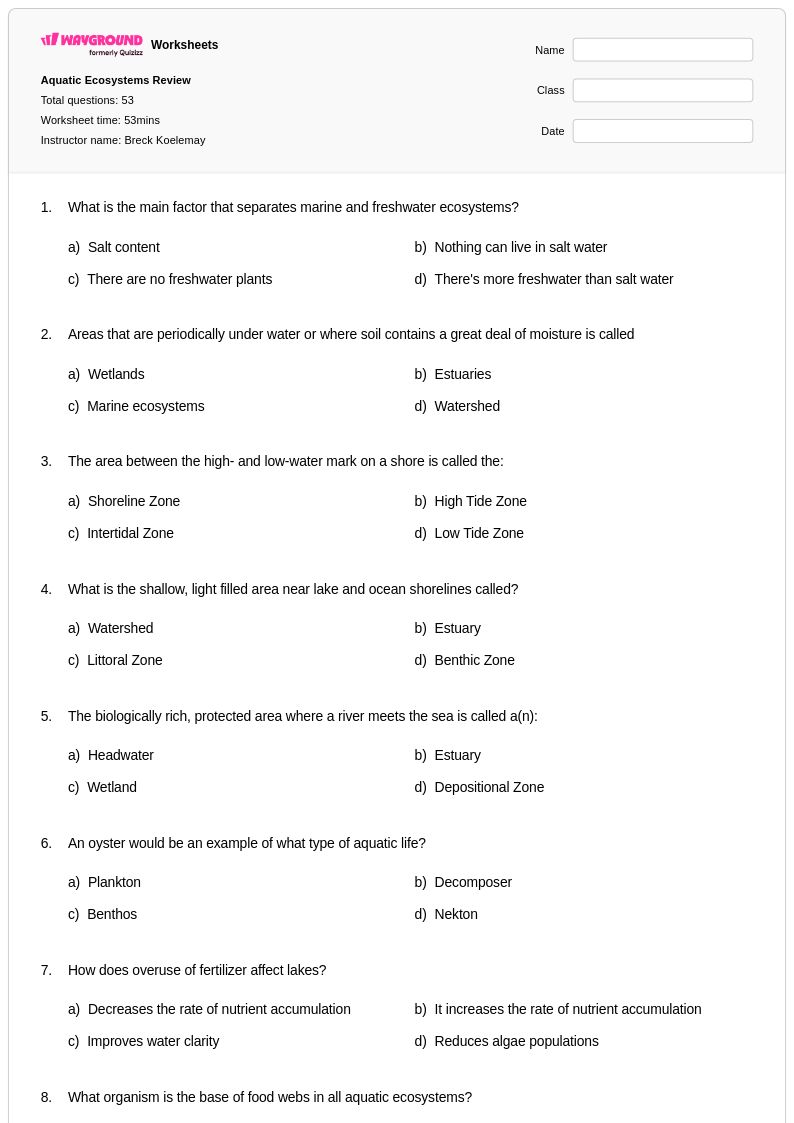
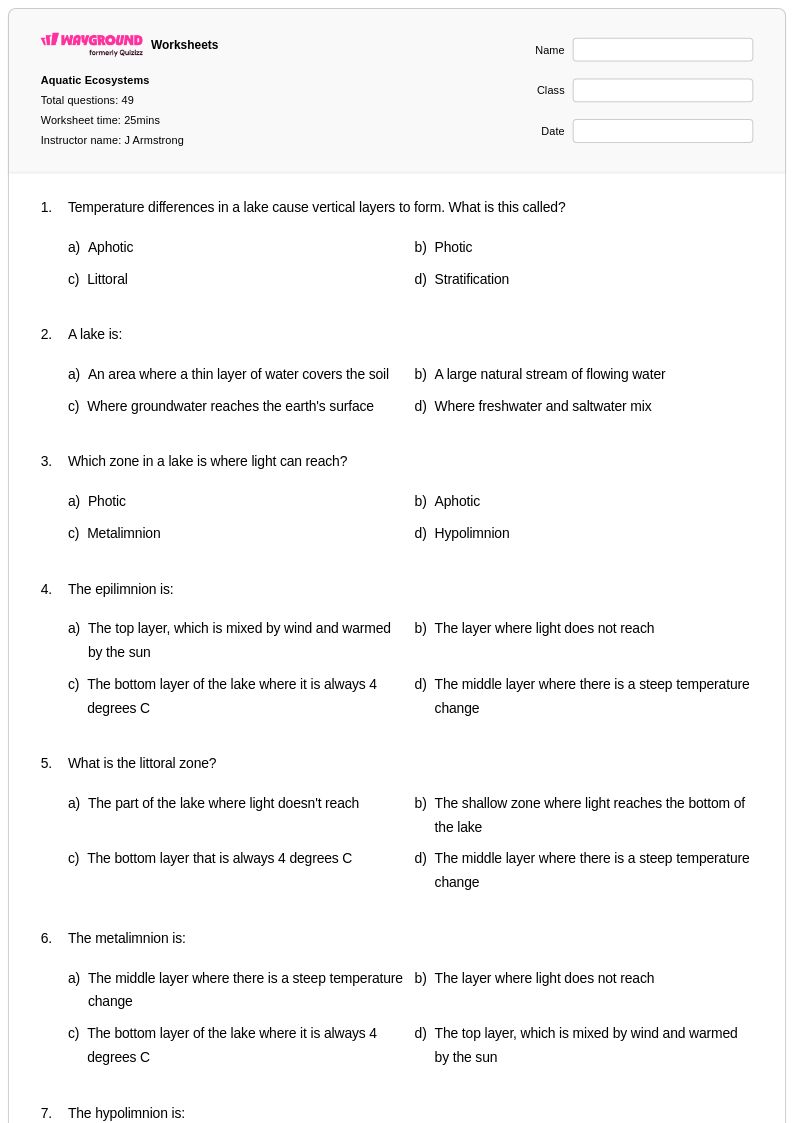
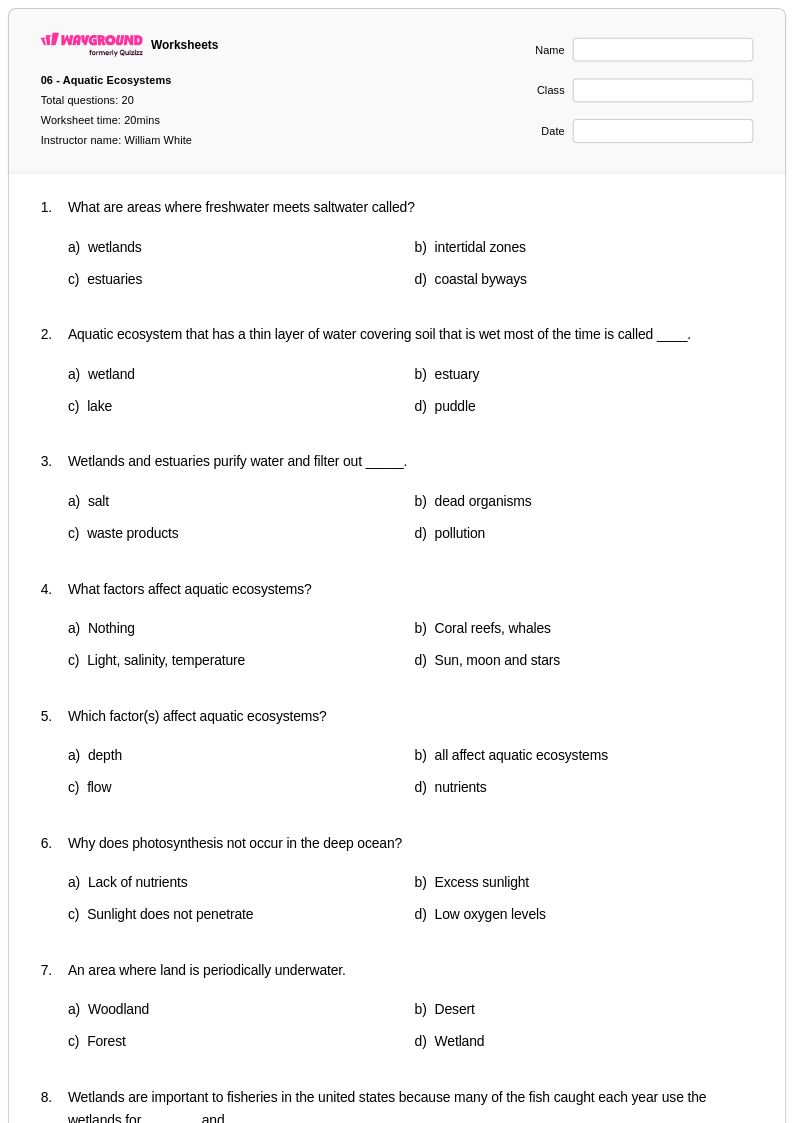
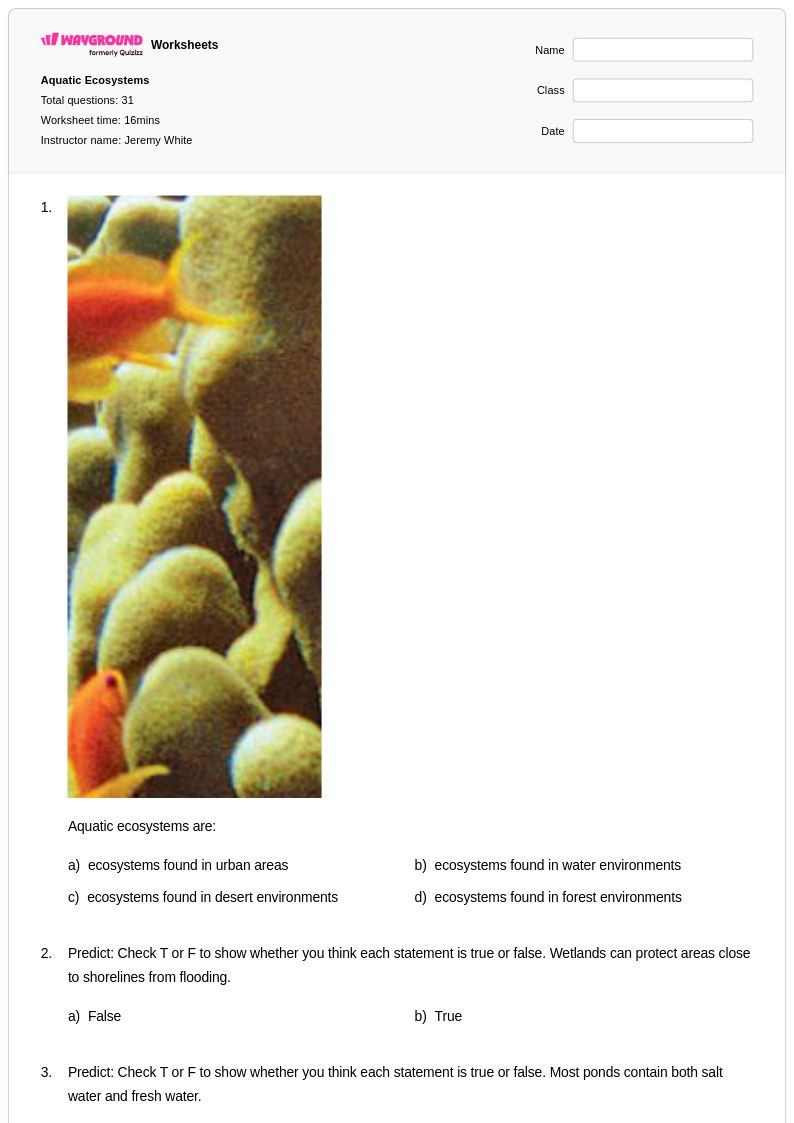
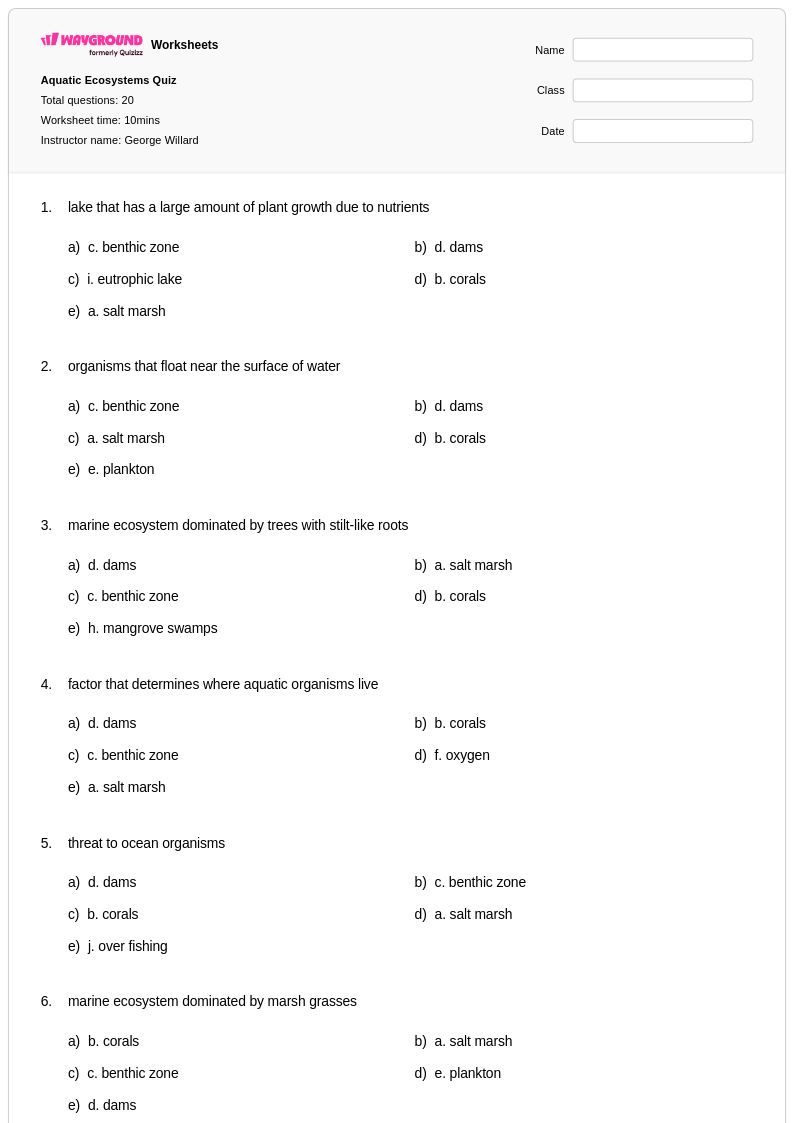
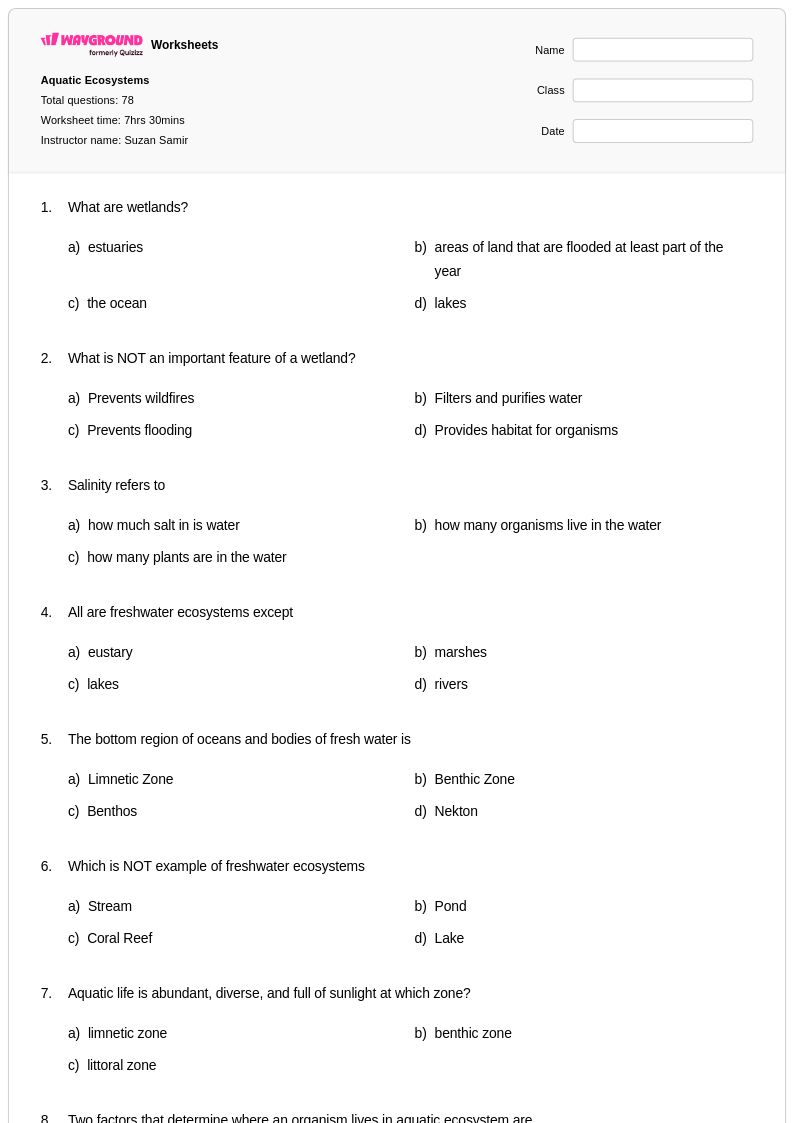
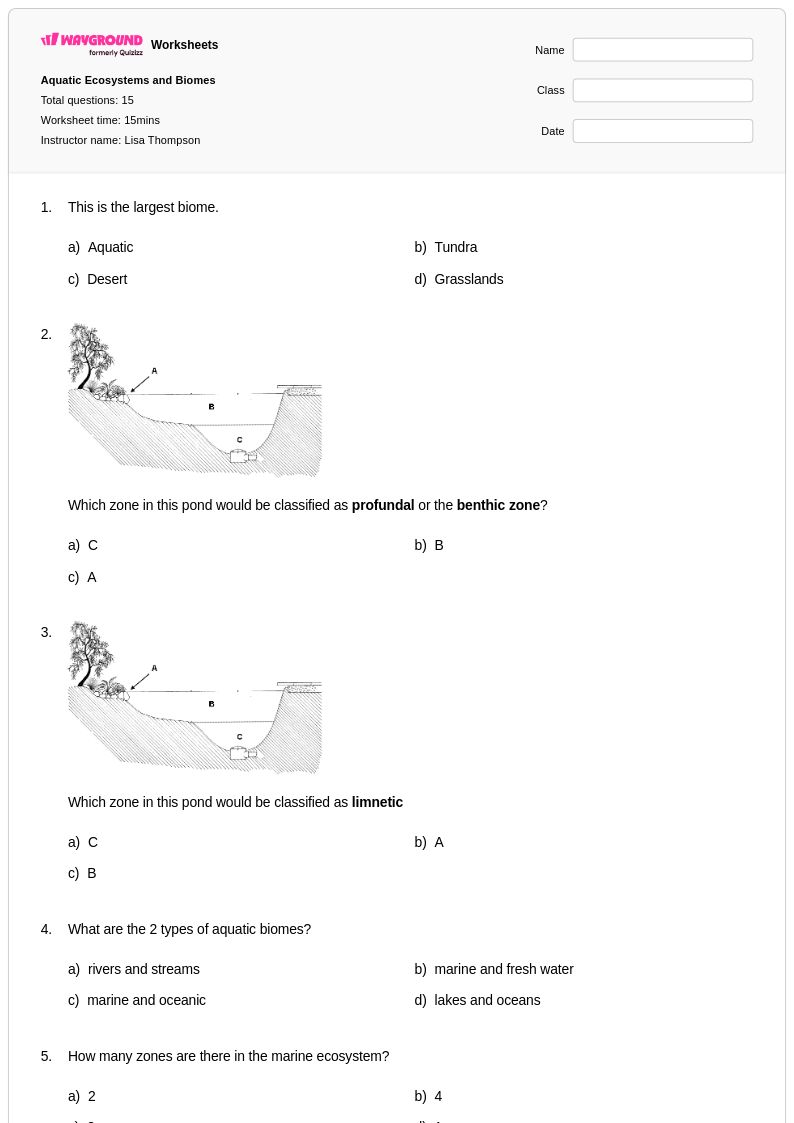
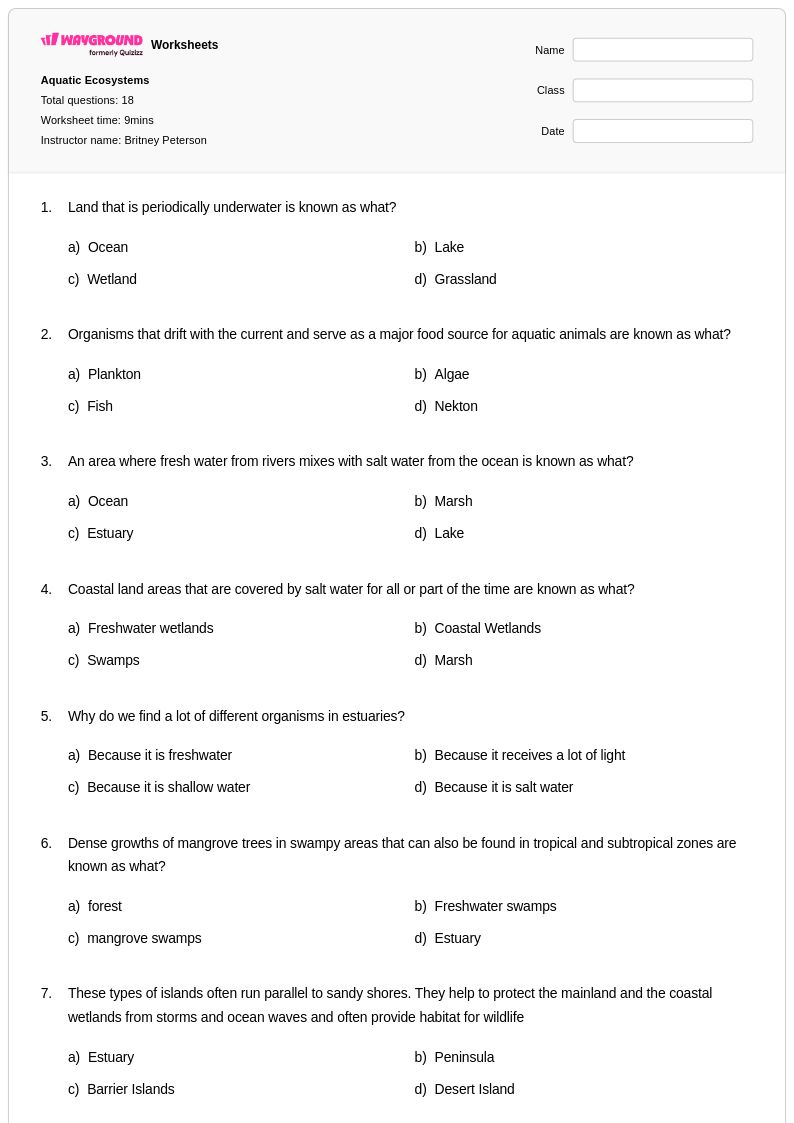
Aquatic ecosystems represent one of the most complex and fascinating areas of Class 9 biology, encompassing the intricate relationships between organisms and their water-based environments. Wayground's comprehensive collection of aquatic ecosystems worksheets provides students with structured opportunities to explore freshwater and marine habitats, food webs, nutrient cycling, and the adaptations that enable organisms to thrive in aquatic conditions. These carefully designed practice problems strengthen critical thinking skills as students analyze ecosystem interactions, interpret data about water quality and biodiversity, and examine human impacts on aquatic environments. Each worksheet includes a detailed answer key to support independent learning and self-assessment, with materials available as free printables in convenient pdf format for both classroom instruction and homework assignments.
Wayground's extensive library, built from millions of teacher-created resources, offers educators unparalleled support for teaching aquatic ecosystems concepts through targeted worksheet collections that address diverse learning needs. The platform's robust search and filtering capabilities allow teachers to quickly locate materials aligned with specific biology standards, whether focusing on pond ecosystems, coral reef dynamics, or watershed management. Advanced differentiation tools enable seamless customization of content difficulty and complexity, making it simple to provide appropriate challenges for students at various skill levels while supporting both remediation and enrichment goals. Available in both digital and printable pdf formats, these versatile resources integrate effortlessly into lesson planning, offering flexible options for in-class activities, laboratory exercises, and independent skill practice that reinforce understanding of aquatic ecosystem principles.
FAQs
How do I teach aquatic ecosystems in a way students will actually understand?
Start by anchoring instruction in ecosystems students can observe or relate to, such as a local pond, river, or the ocean. Build conceptual understanding progressively: begin with abiotic factors like water temperature, salinity, and dissolved oxygen, then layer in biotic relationships such as food webs and predator-prey dynamics. Using case studies, such as examining how nutrient runoff creates algal blooms, helps students connect abstract concepts like nutrient cycling to real-world environmental change.
What worksheet activities help students practice aquatic ecosystem concepts?
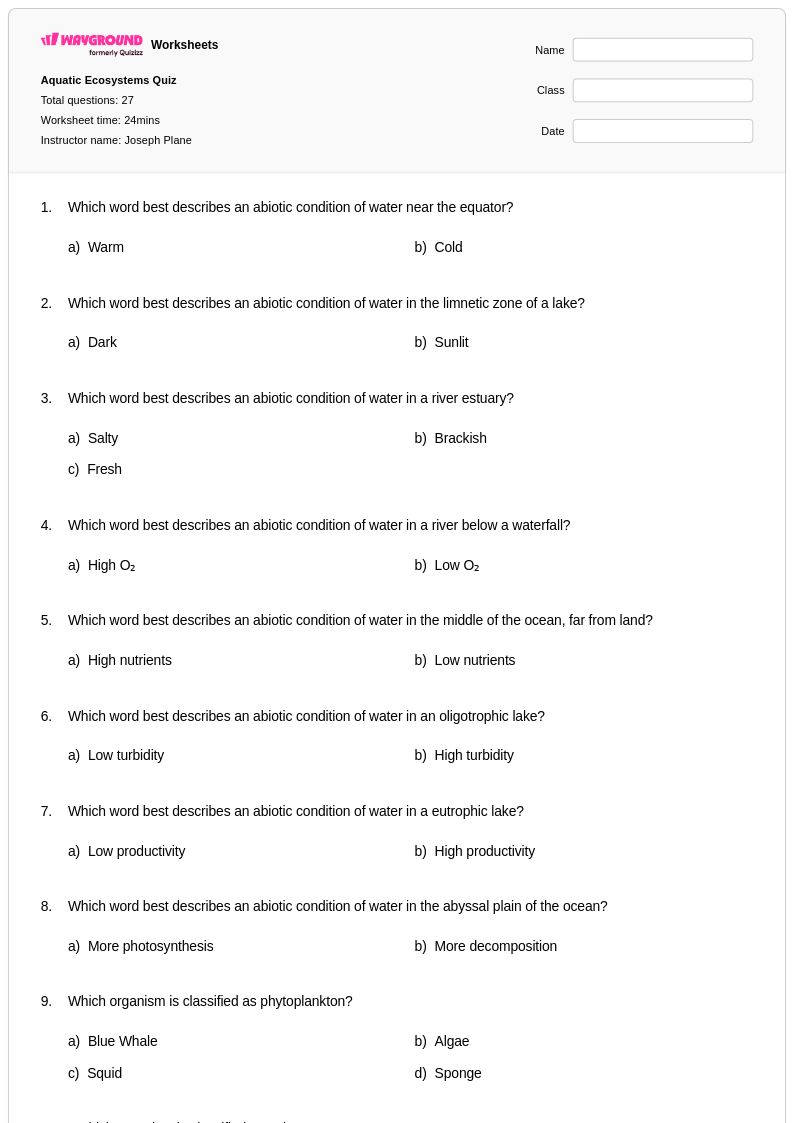
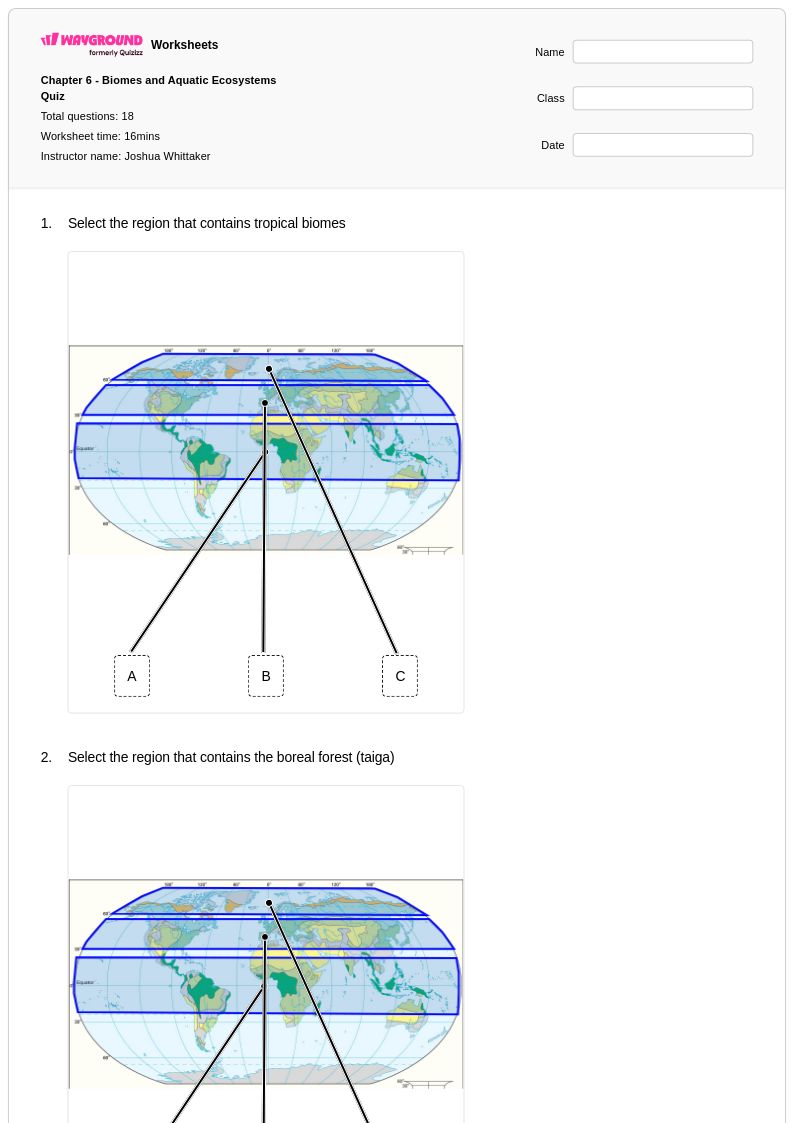
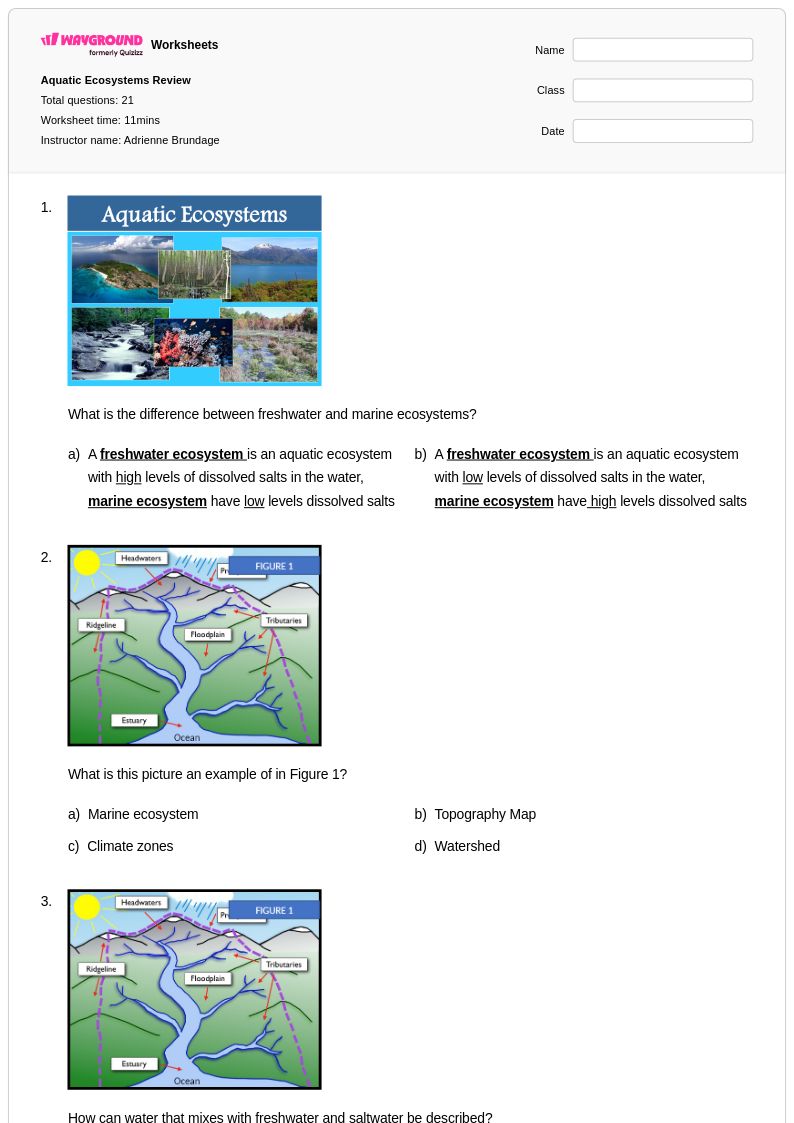
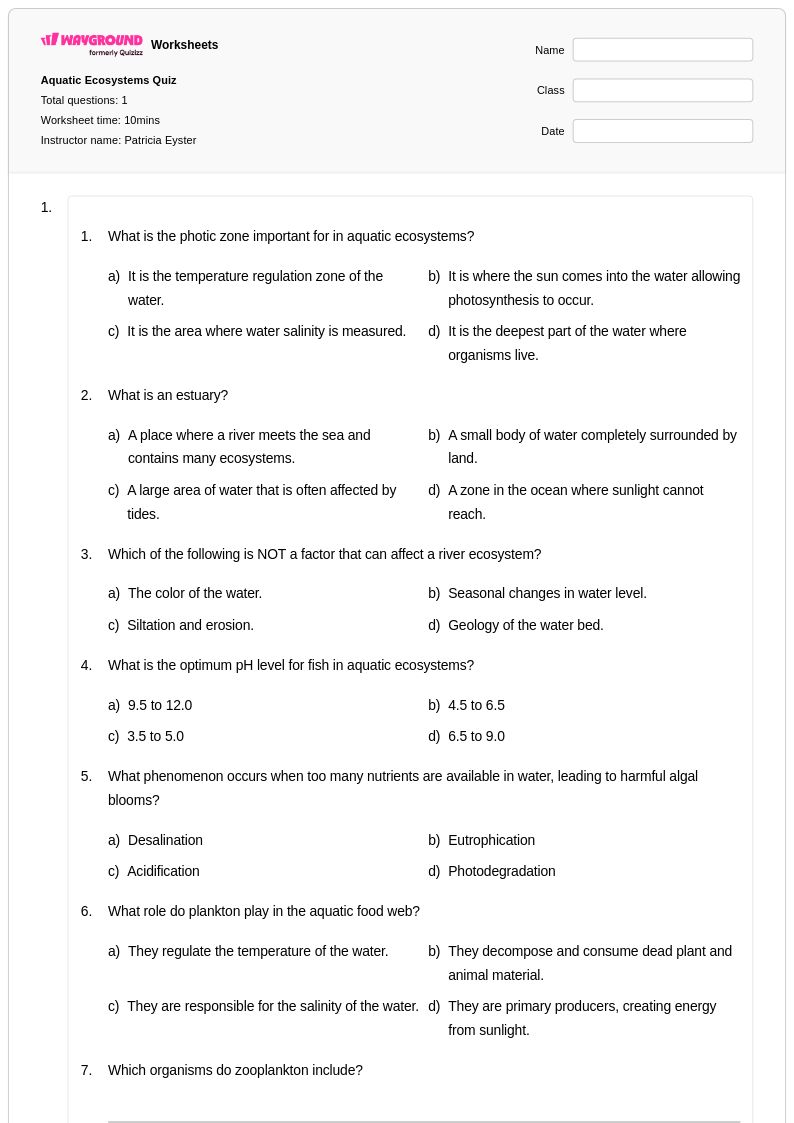
Effective practice activities include food web construction exercises where students trace energy transfer from phytoplankton to apex predators, as well as water quality analysis tasks that require interpreting data on pH, turbidity, or dissolved oxygen levels. Worksheets that ask students to compare freshwater and marine biomes, or to identify aquatic adaptations across species, reinforce both vocabulary and conceptual understanding. Practice problems covering biodiversity patterns and the interdependence of aquatic organisms build the analytical thinking needed for assessments.
What mistakes do students commonly make when learning about aquatic ecosystems?
A frequent misconception is treating freshwater and marine ecosystems as interchangeable rather than understanding that salinity, nutrient availability, and species composition differ significantly between them. Students often confuse producers in aquatic systems, overlooking phytoplankton and algae in favor of land-based plant analogies. Another common error is misunderstanding biogeochemical cycles, particularly how nitrogen and phosphorus cycle through aquatic environments and why excess nutrients cause eutrophication rather than promoting ecosystem health.
How do I differentiate aquatic ecosystems instruction for students at different levels?
For struggling learners, simplify food webs to three or four trophic levels and focus on concrete examples from familiar habitats before introducing complex concepts like nutrient cycling. Advanced students can analyze human environmental impacts, model biogeochemical cycles, or evaluate how climate change alters aquatic biodiversity. On Wayground, teachers can customize worksheet difficulty and content focus areas to match individual student needs, and accommodation settings such as reduced answer choices or read-aloud support can be assigned per student without disrupting the rest of the class.
How can I use Wayground's aquatic ecosystems worksheets in my classroom?
Wayground's aquatic ecosystems worksheets are available as printable PDFs, making them easy to distribute in a traditional classroom setting, and in digital formats that work well for remote or hybrid instruction. Teachers can also host the material as an interactive quiz directly on Wayground, which adds engagement and allows for real-time progress monitoring. Each worksheet includes a complete answer key, supporting both teacher-led instruction and independent or small-group student work.
How do physical and chemical factors affect aquatic communities?
Physical factors such as light penetration, water temperature, current speed, and depth determine which organisms can survive in a given zone, which is why species composition shifts dramatically between a sunlit littoral zone and a deep benthic zone. Chemical factors including dissolved oxygen, pH, salinity, and nutrient concentrations act as water quality indicators that reflect ecosystem health. When these parameters shift due to pollution, climate change, or habitat alteration, the entire community structure can change, making these factors central to any serious study of aquatic ecosystems.