Free Printable The Cell Membrane Worksheets for Class 9
Explore Wayground's free Class 9 cell membrane worksheets and printables that help students master membrane structure, transport processes, and cellular functions through engaging practice problems with complete answer keys.
Explore printable The Cell Membrane worksheets for Class 9
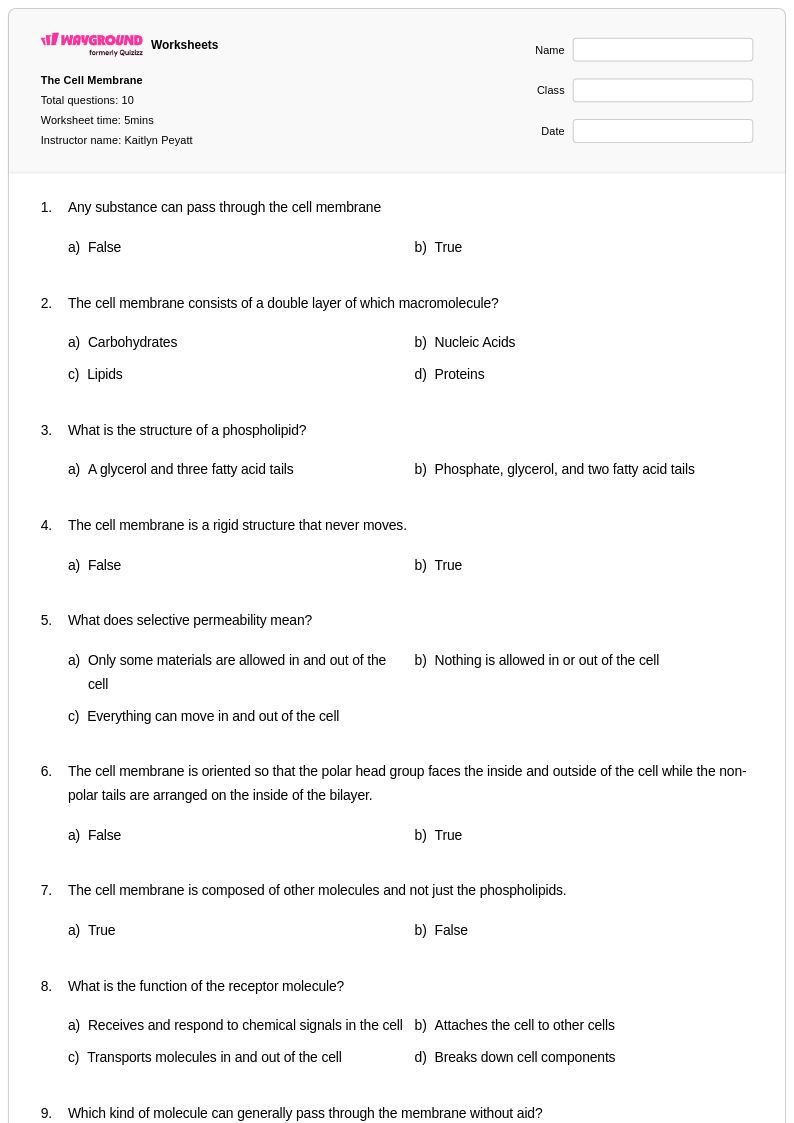
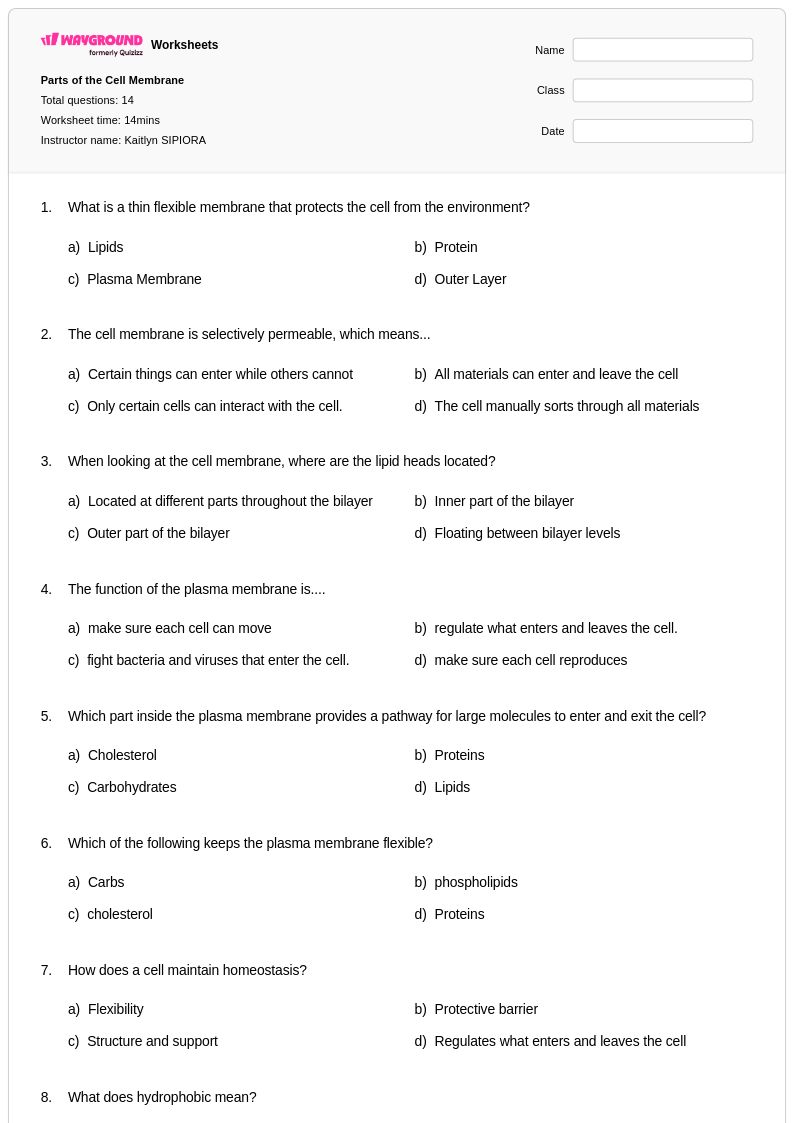
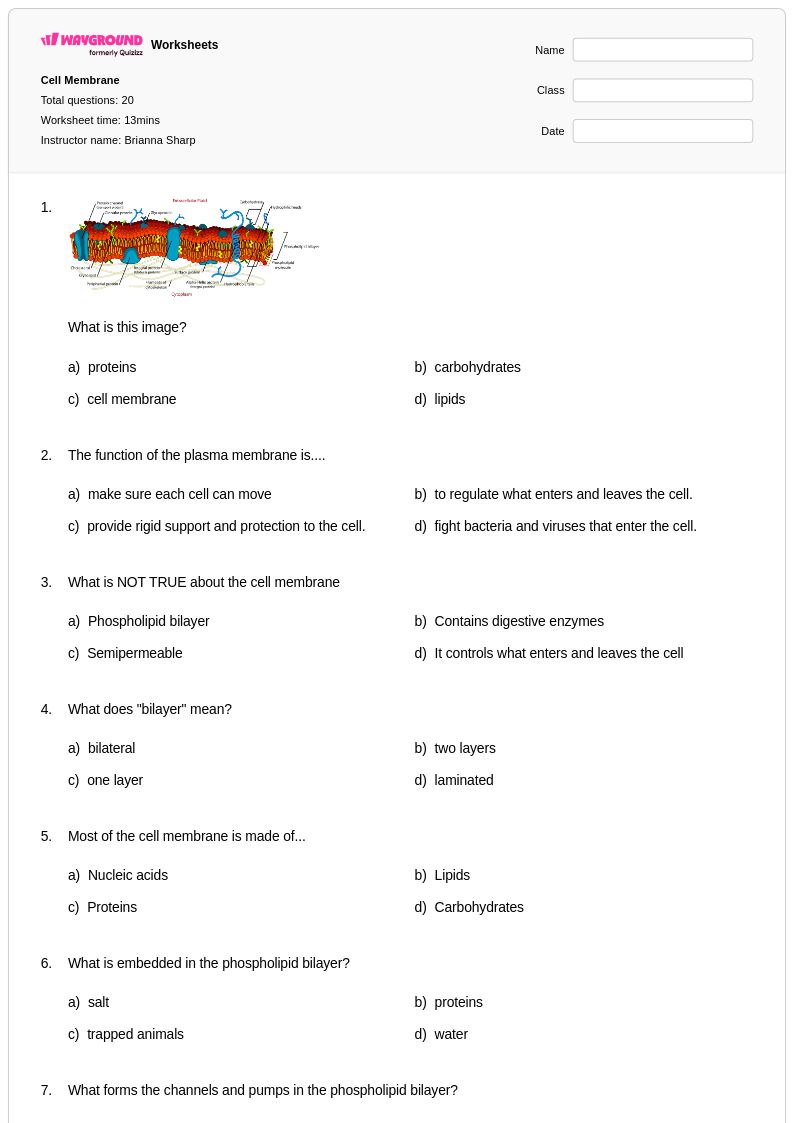
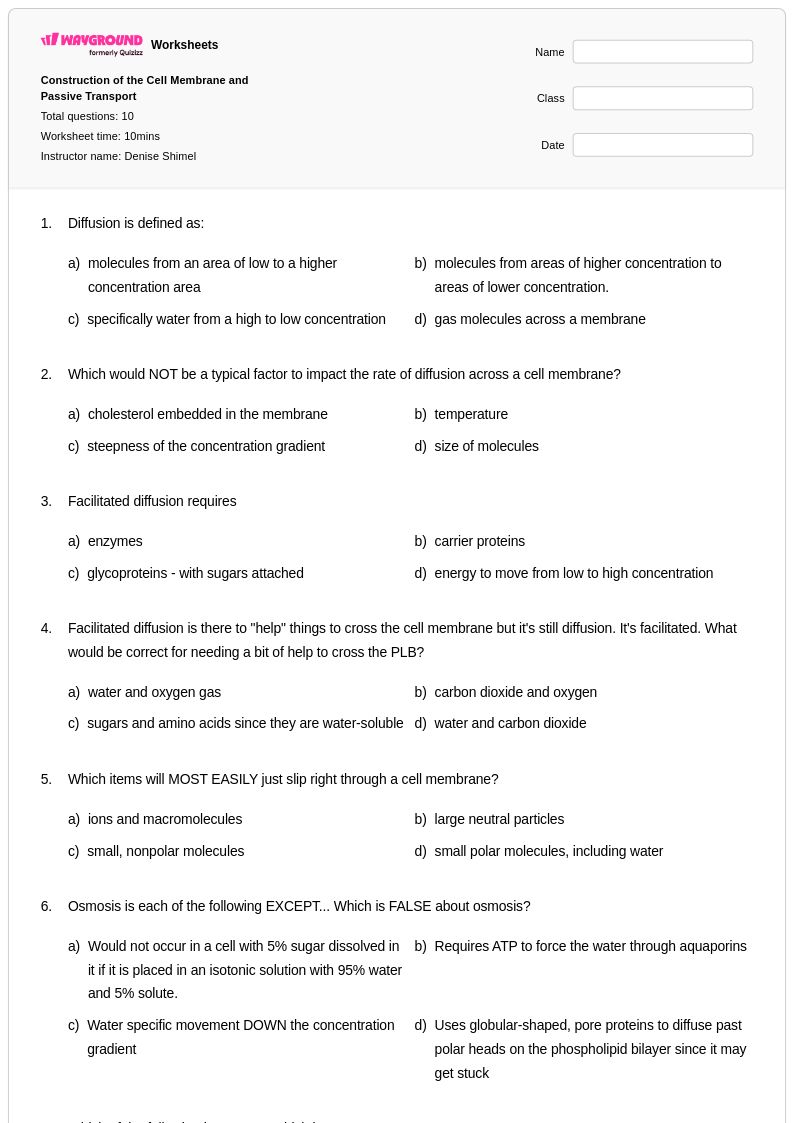
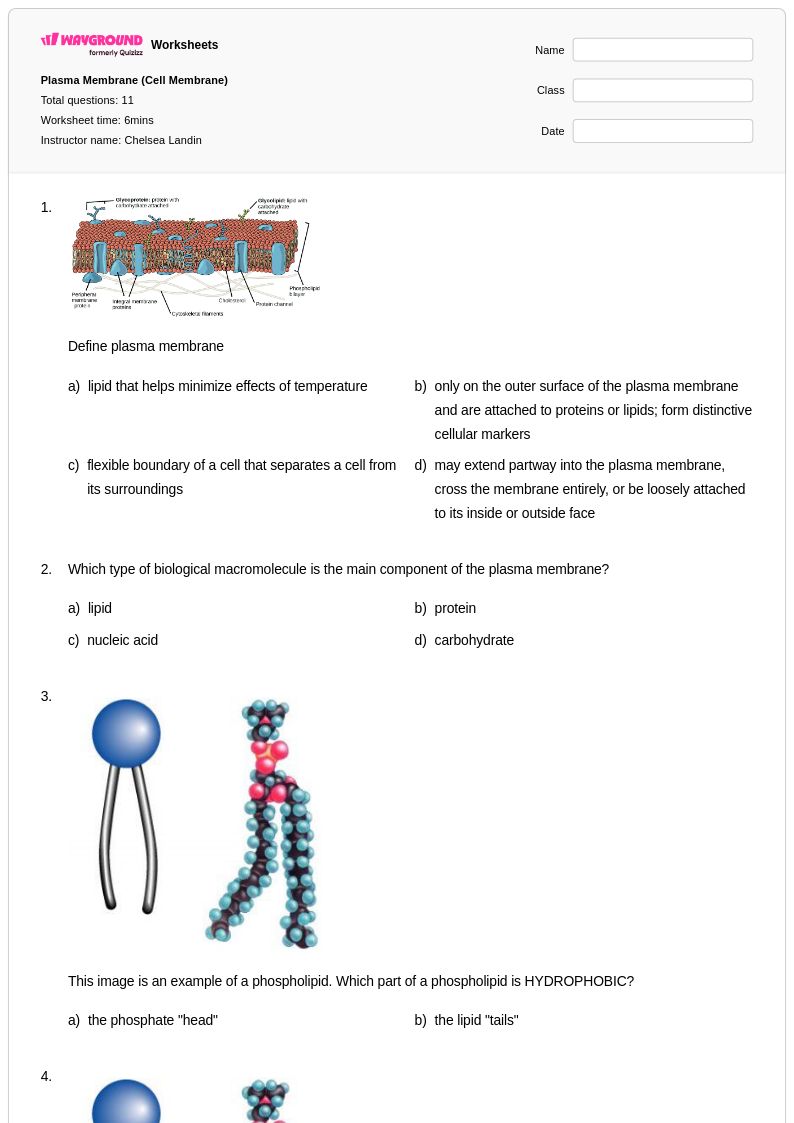
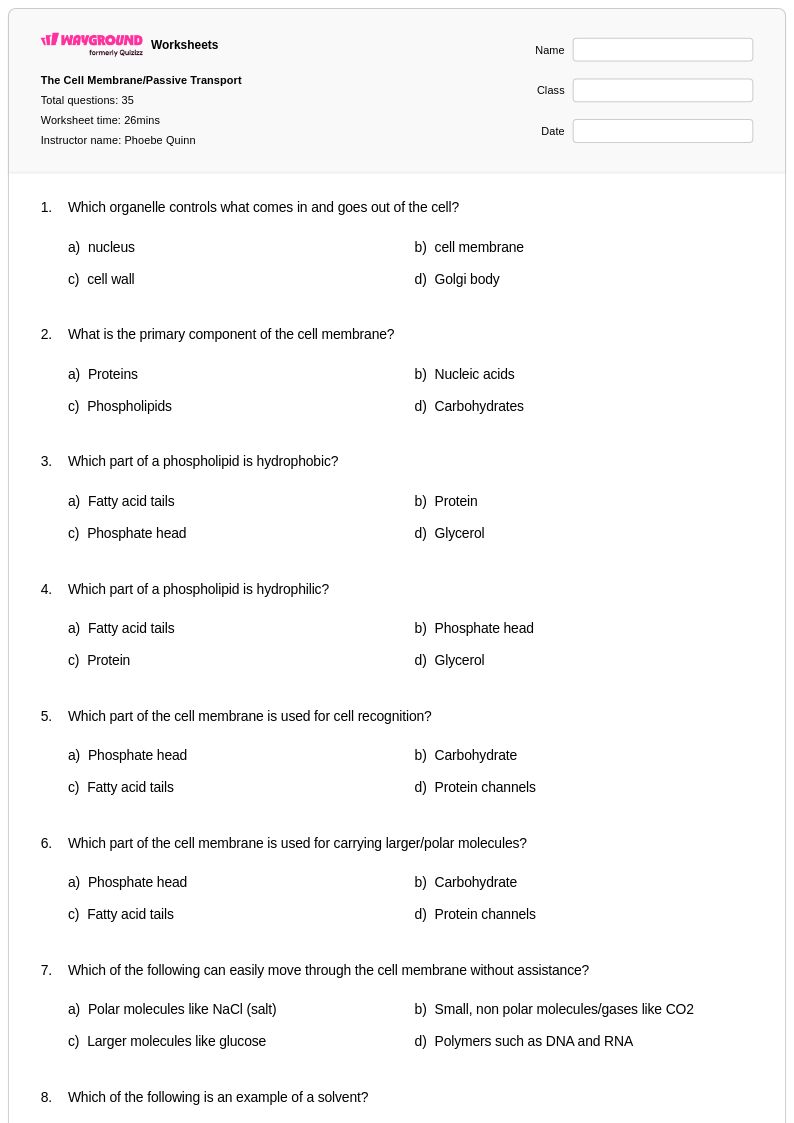
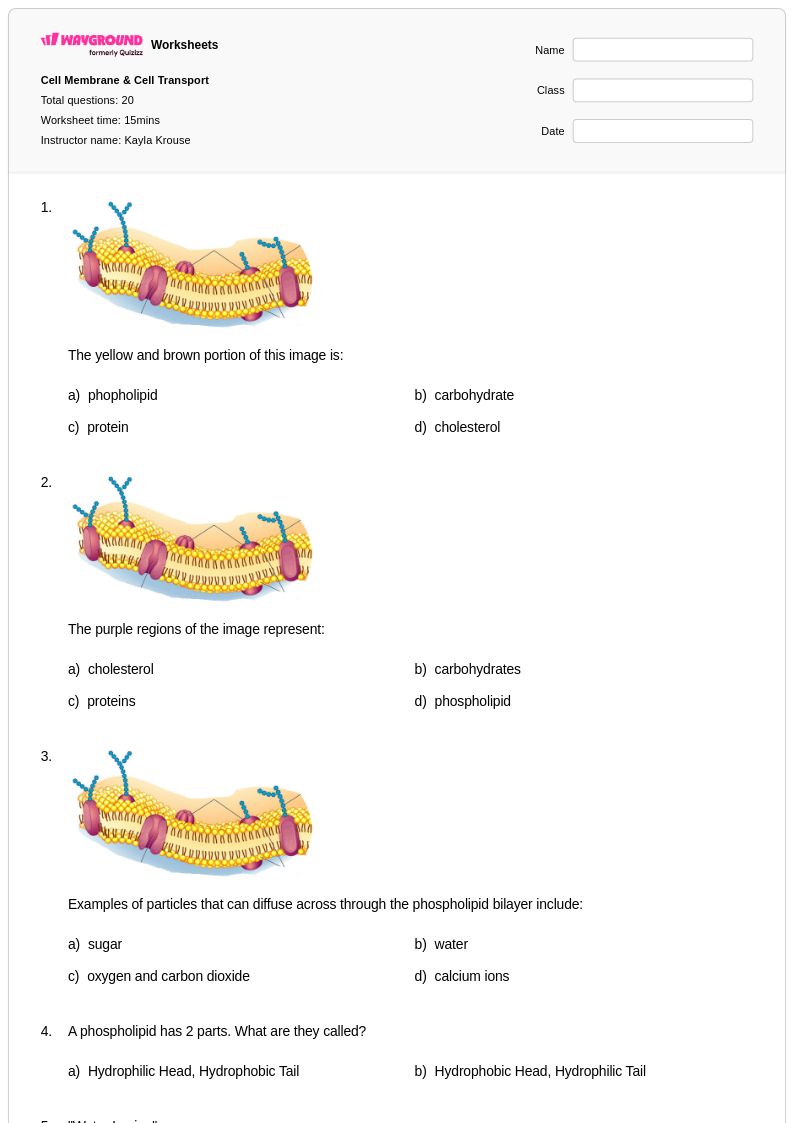
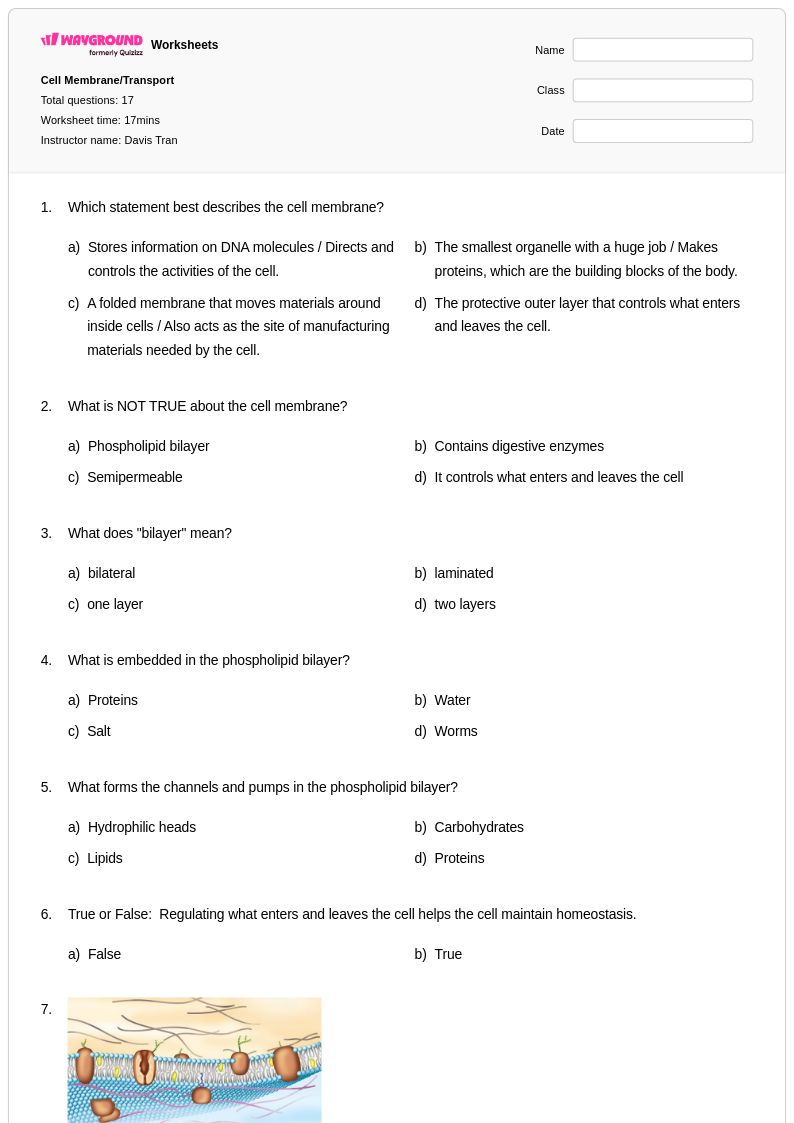
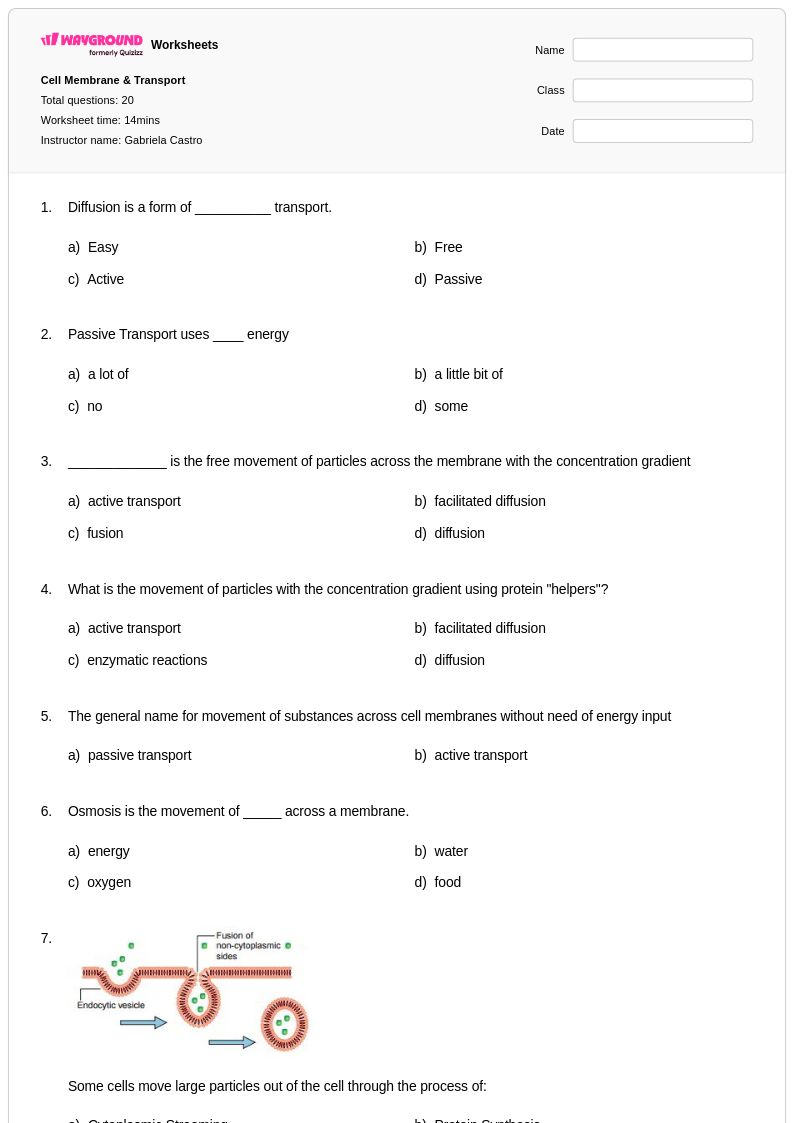
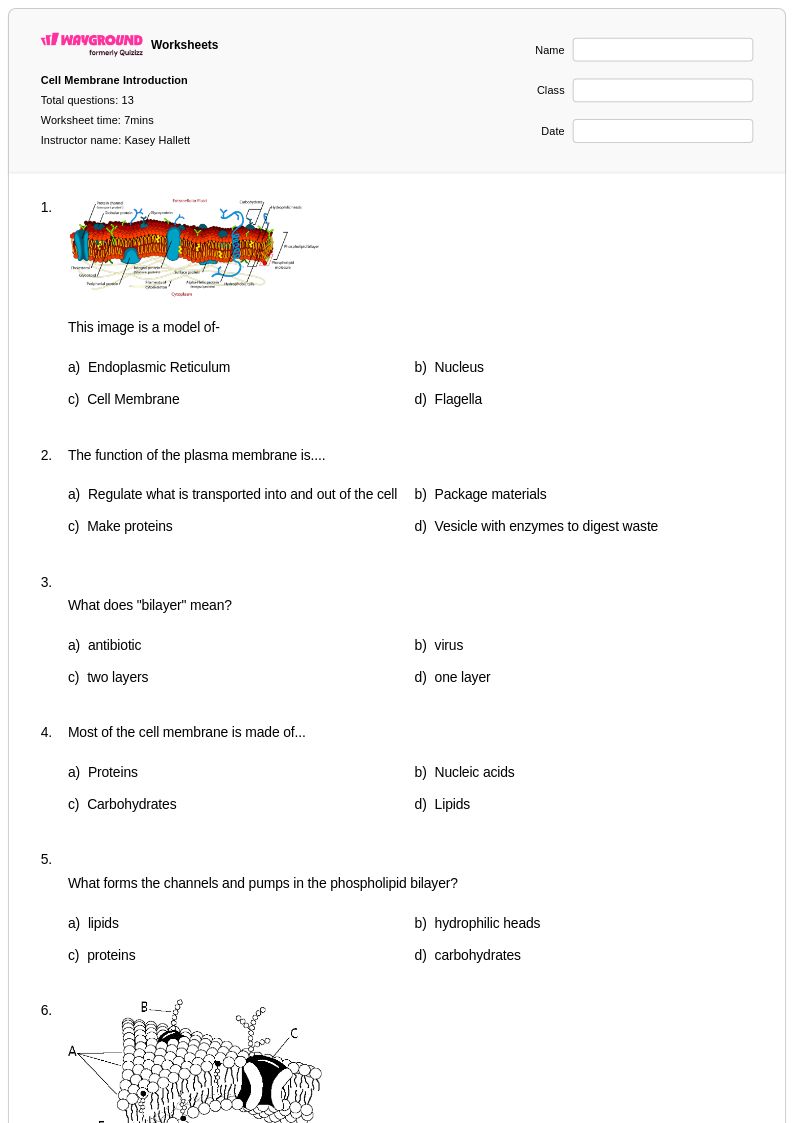
The cell membrane worksheets available through Wayground (formerly Quizizz) provide Class 9 biology students with comprehensive practice materials that explore the structure, function, and properties of cellular boundaries. These expertly crafted resources strengthen students' understanding of phospholipid bilayers, membrane proteins, selective permeability, and transport mechanisms including diffusion, osmosis, and active transport. Each worksheet collection includes detailed answer keys and is available as free printables in convenient PDF format, allowing students to work through practice problems that reinforce critical concepts such as membrane fluidity, channel proteins, and cellular homeostasis. The materials systematically build knowledge from basic membrane composition to complex transport processes, ensuring students develop a thorough grasp of how cells regulate the movement of substances across their boundaries.
Wayground (formerly Quizizz) supports biology educators with millions of teacher-created cell membrane resources that feature robust search and filtering capabilities, enabling quick identification of materials aligned with specific curriculum standards and learning objectives. The platform's differentiation tools allow teachers to customize worksheets for varying skill levels, supporting both remediation for struggling students and enrichment activities for advanced learners. These flexible resources are available in both printable and digital formats, including downloadable PDFs, making them ideal for traditional classroom instruction, homework assignments, laboratory preparation, or distance learning scenarios. Teachers can efficiently plan comprehensive units on cellular biology while accessing materials that facilitate targeted skill practice, formative assessment, and concept reinforcement across diverse learning environments and teaching styles.
FAQs
How do I teach the cell membrane to my students?
Start by grounding students in the phospholipid bilayer as the structural foundation of the cell membrane, then build outward to membrane proteins, cholesterol, and carbohydrates. Use analogies like a fluid mosaic model puzzle to make the structure tangible before introducing functional concepts like selective permeability. From there, sequence instruction through passive transport (diffusion and osmosis) and then active transport, so students understand the energy demands of each mechanism. Visual diagrams paired with practice problems help students connect structure to function before any formal assessment.
What are common mistakes students make when learning about cell membrane transport?
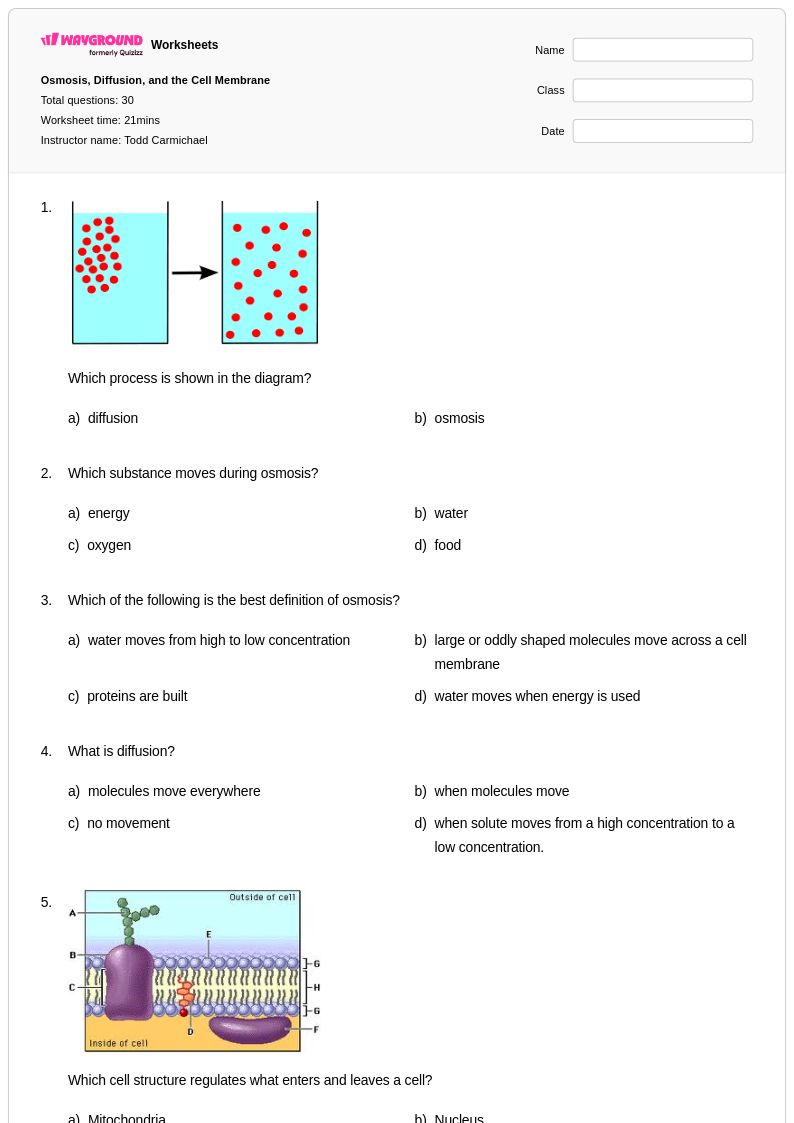
The most frequent misconception is that osmosis applies to any molecule, when it refers specifically to the movement of water across a semipermeable membrane. Students also routinely confuse the direction of transport, incorrectly assuming active transport always moves substances from low to high concentration without recognizing the ATP requirement as the distinguishing factor. Another common error is conflating facilitated diffusion with active transport simply because both involve membrane proteins. Targeted practice problems that require students to justify the type of transport occurring, rather than just label it, help surface and correct these errors.
What worksheet activities help students practice cell membrane concepts?
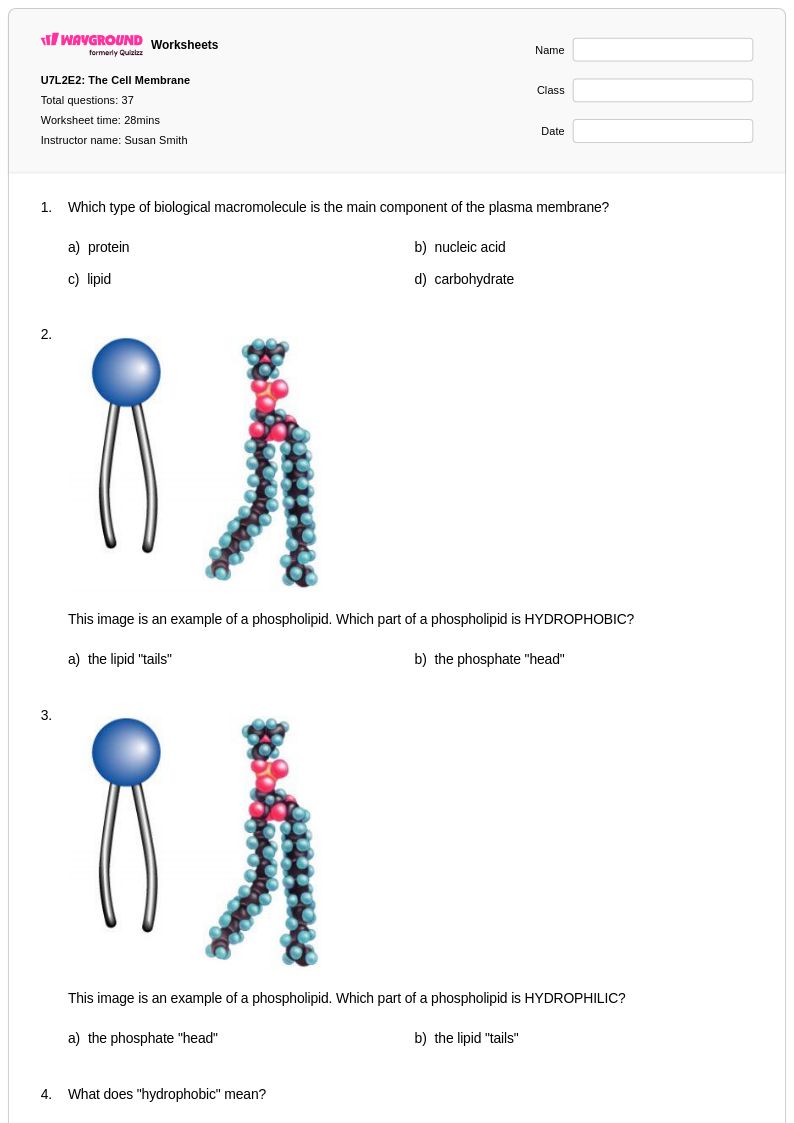
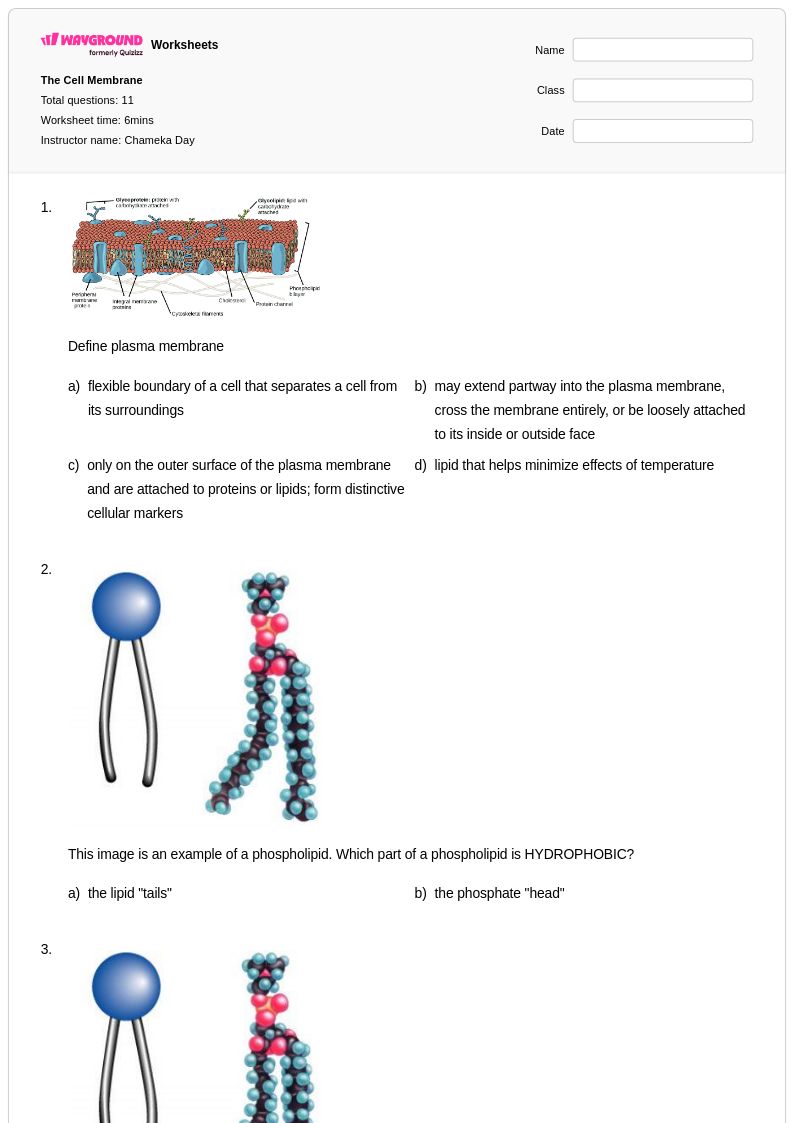
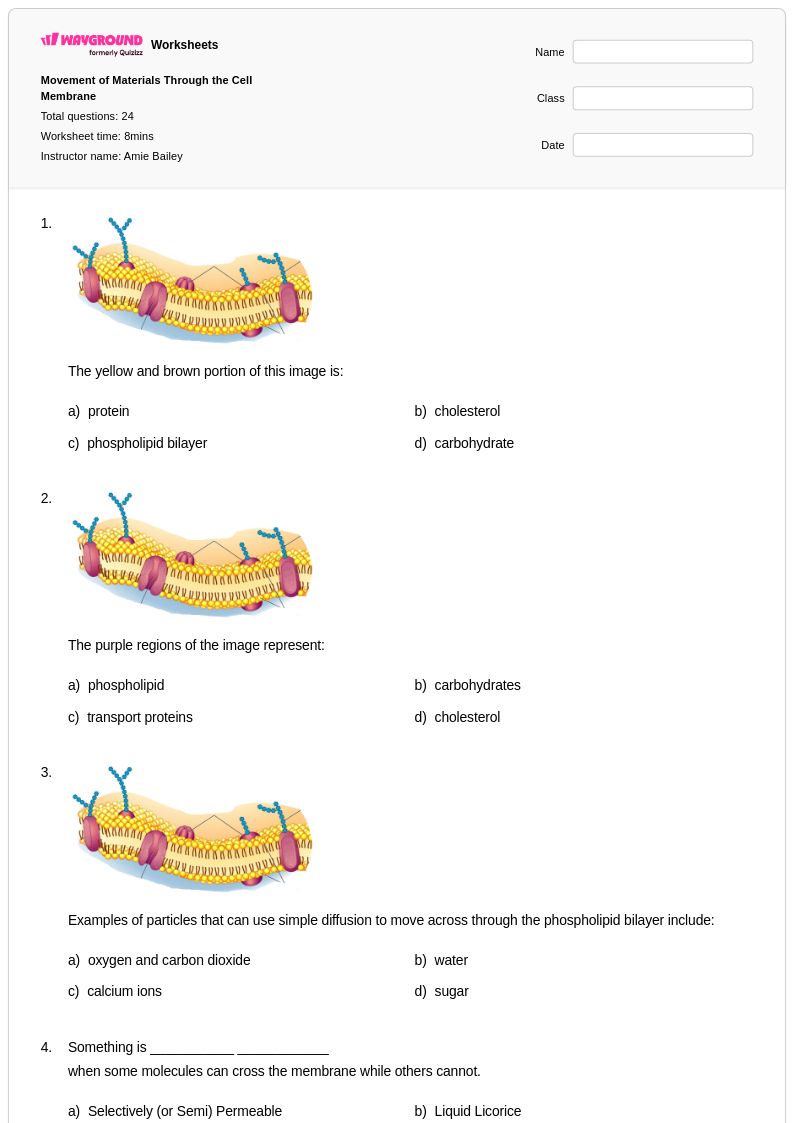
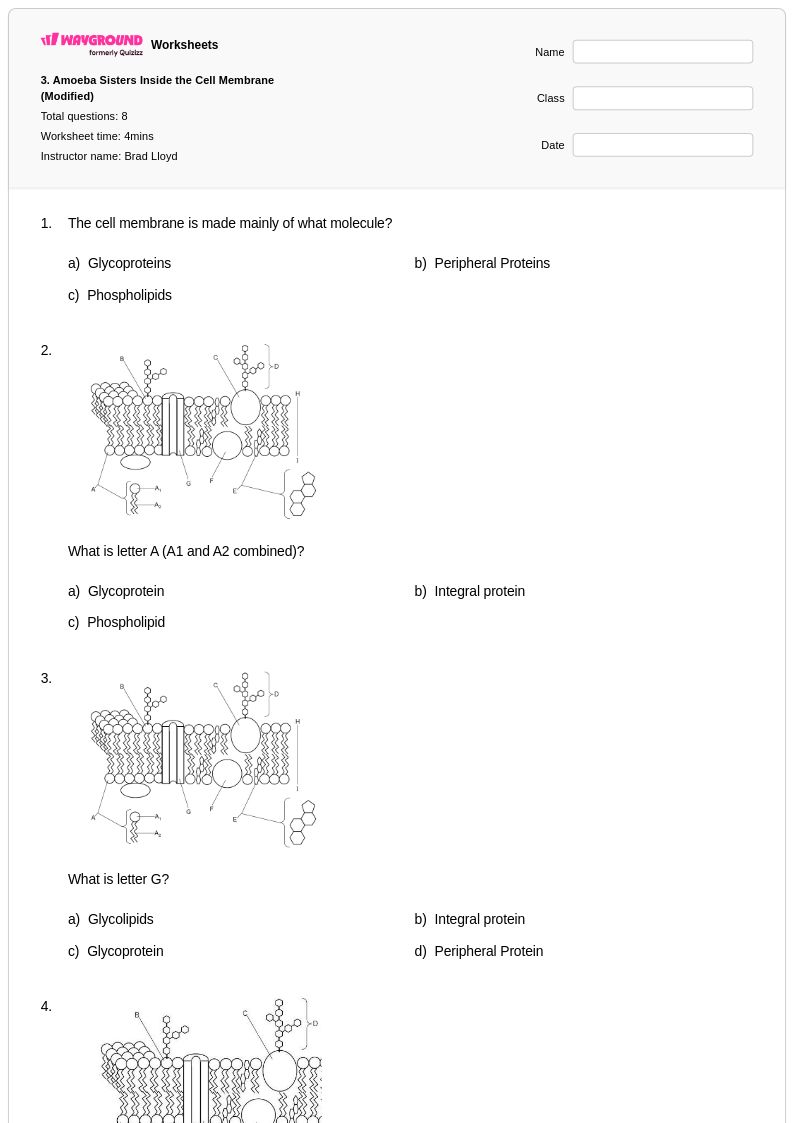
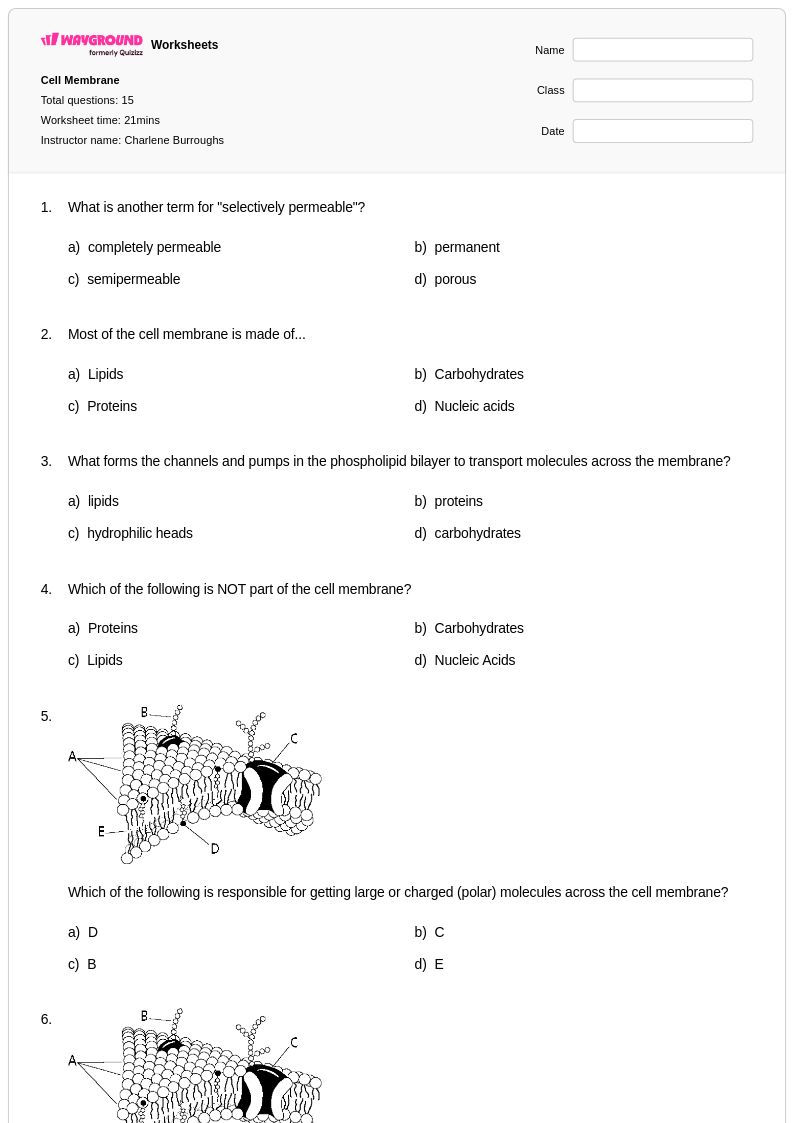
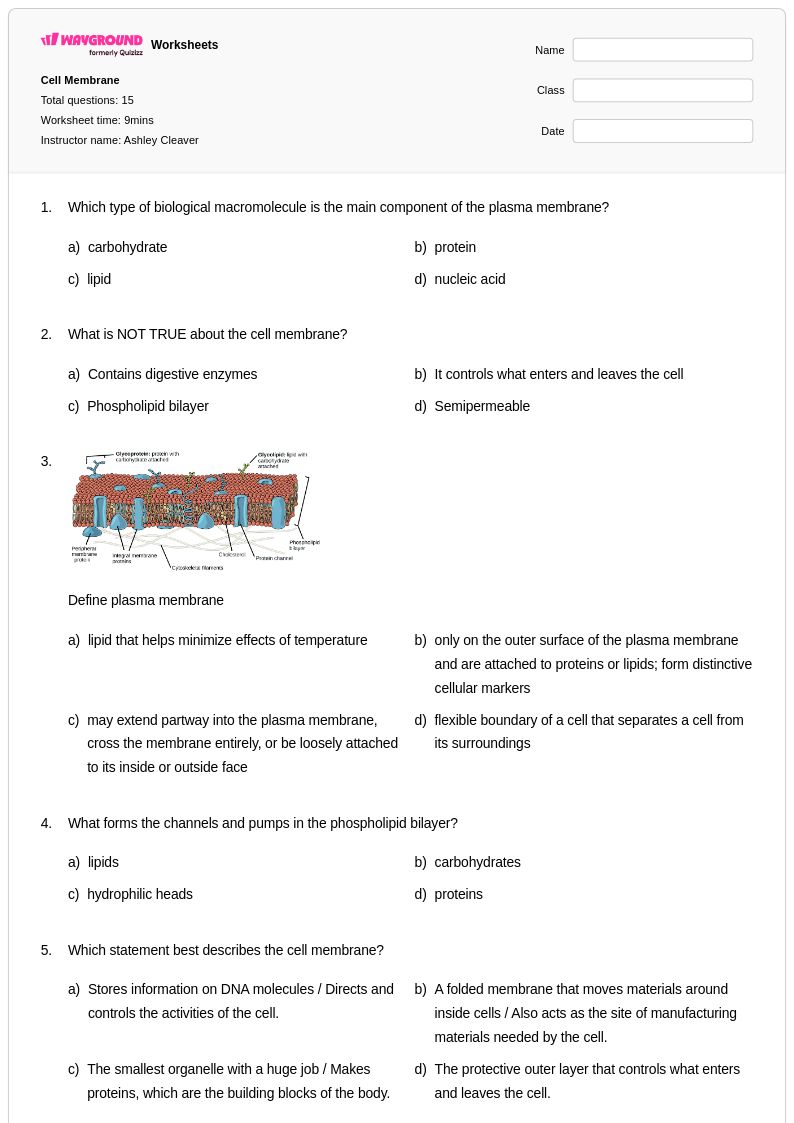
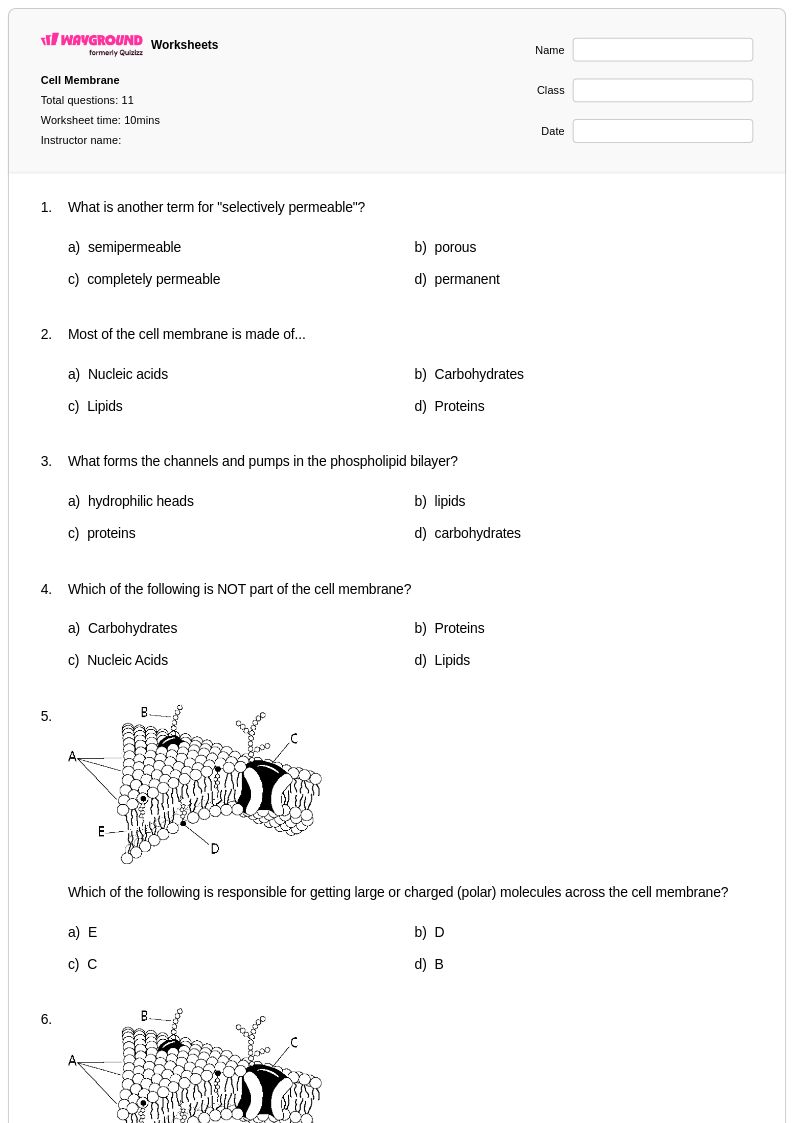
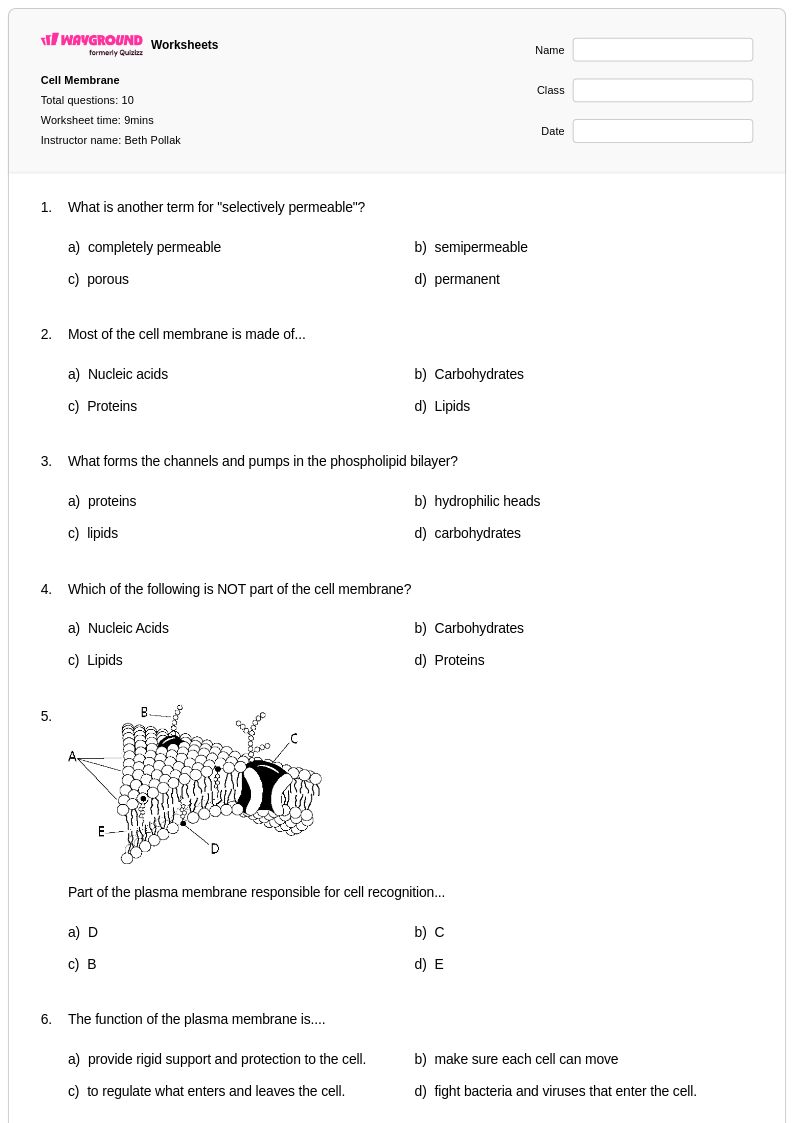
Effective practice activities include diagram labeling tasks where students identify phospholipid bilayer components, membrane proteins, and transport channels. Scenario-based problems, such as predicting whether a cell will swell or shrink in a given solution, reinforce osmosis and tonicity concepts in applied contexts. Data interpretation exercises using experimental results from membrane permeability trials build analytical skills alongside content knowledge. Combining these activity types within a single worksheet ensures students engage with the concept at multiple cognitive levels.
How can I differentiate cell membrane instruction for students at different levels?
For students who need additional support, reduce the complexity of diagram tasks by pre-labeling some components and focusing on one transport type at a time. Wayground's built-in accommodation tools allow teachers to enable Read Aloud for students who benefit from audio support, reduce answer choices to lower cognitive load for struggling learners, and set extended time on digital assignments. Advanced students benefit from open-ended analysis tasks, such as evaluating how membrane composition affects permeability in different cell types. These accommodations can be applied per student without disrupting the rest of the class.
How do I use Wayground's cell membrane worksheets in my classroom?
Wayground's cell membrane worksheets are available as printable PDFs, making them easy to distribute during in-class instruction or assign as independent practice, as well as in digital formats suited for blended and remote learning environments. Teachers can also host the worksheet as a live quiz on Wayground, allowing real-time visibility into student responses and immediate feedback. Answer keys are included with every worksheet, reducing grading time and making the materials practical for both formative checks and review sessions.
How do I assess whether students understand the difference between passive and active transport?
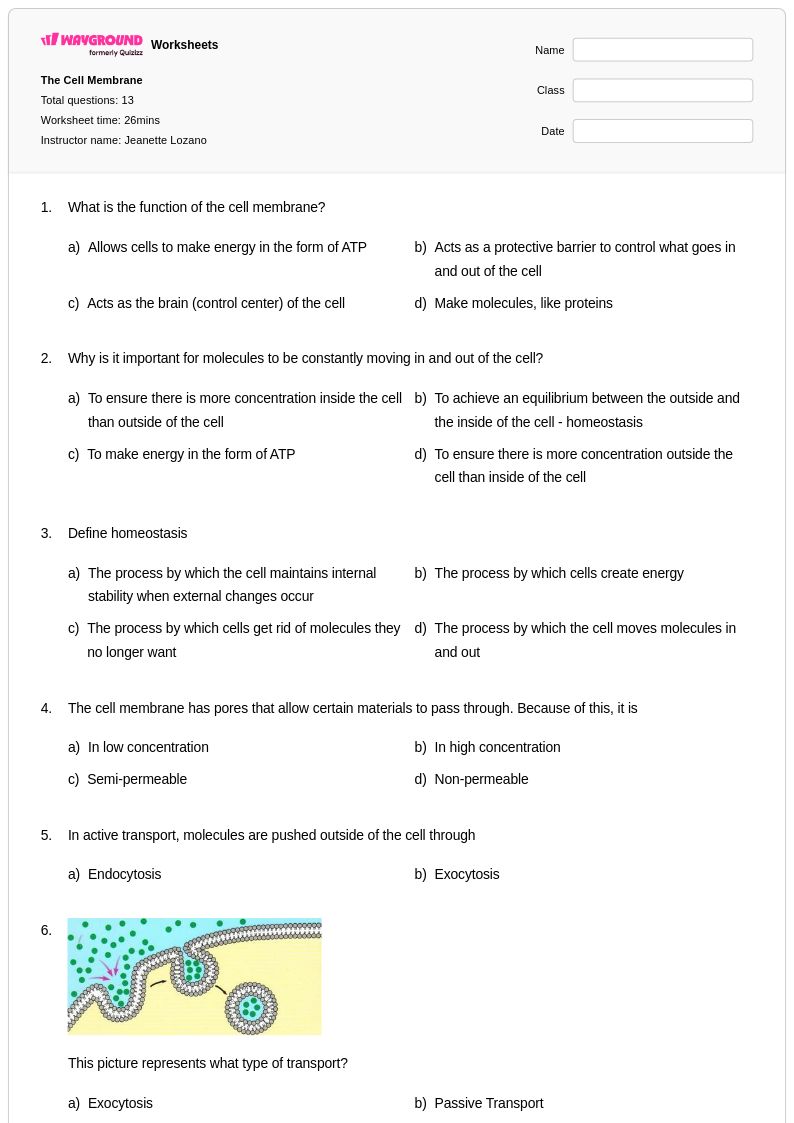
The clearest assessment approach requires students to classify transport scenarios and explain the energy source, direction of movement relative to concentration gradient, and any proteins involved. Short-answer problems that present a cellular situation, such as sodium-potassium pump activity, force students to articulate their reasoning rather than guess from a list. Misconceptions surface quickly when students must justify why a process is active rather than simply identify it. Using these targeted questions as a formative check before summative assessment gives teachers actionable data on where reteaching is needed.