Free Printable Gene Mapping Worksheets for Class 9
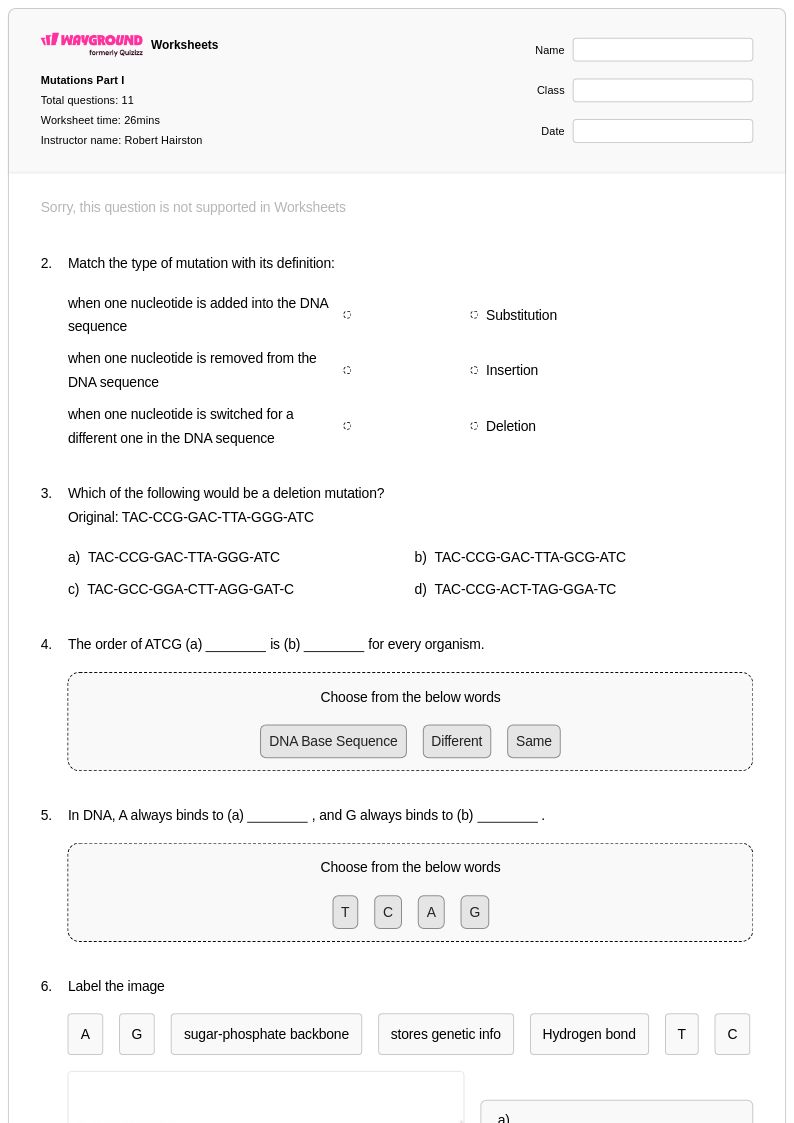
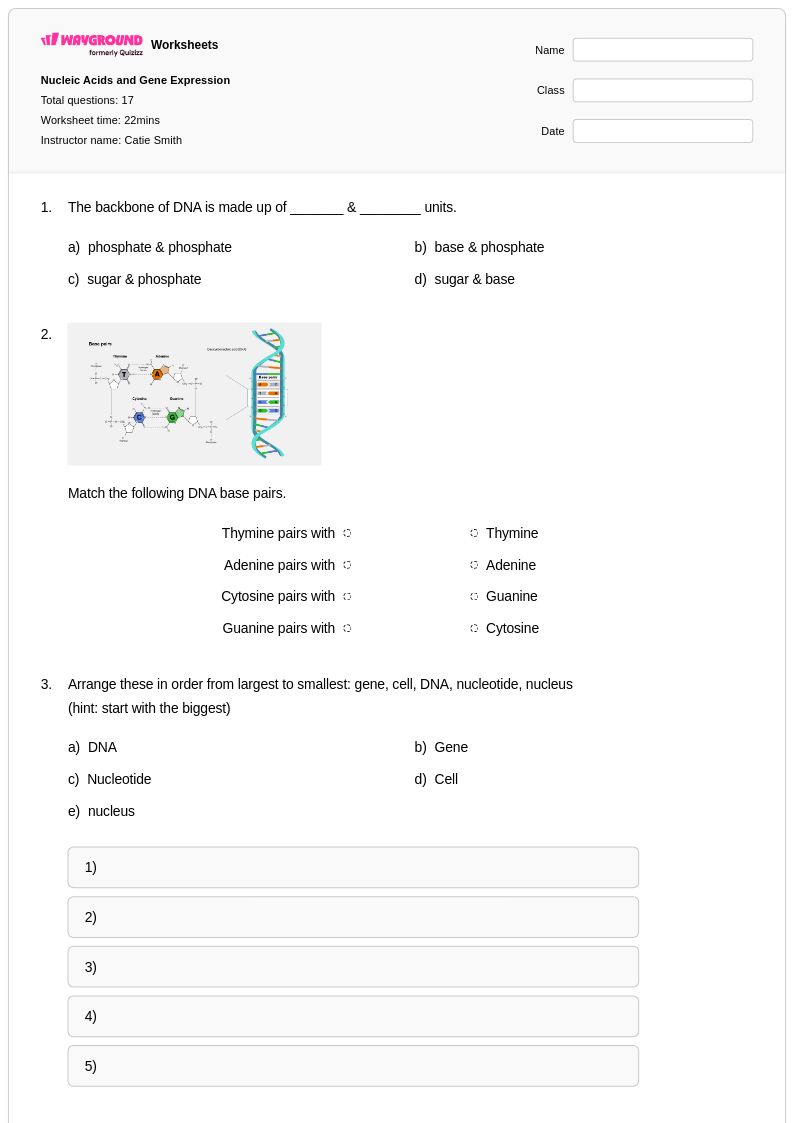
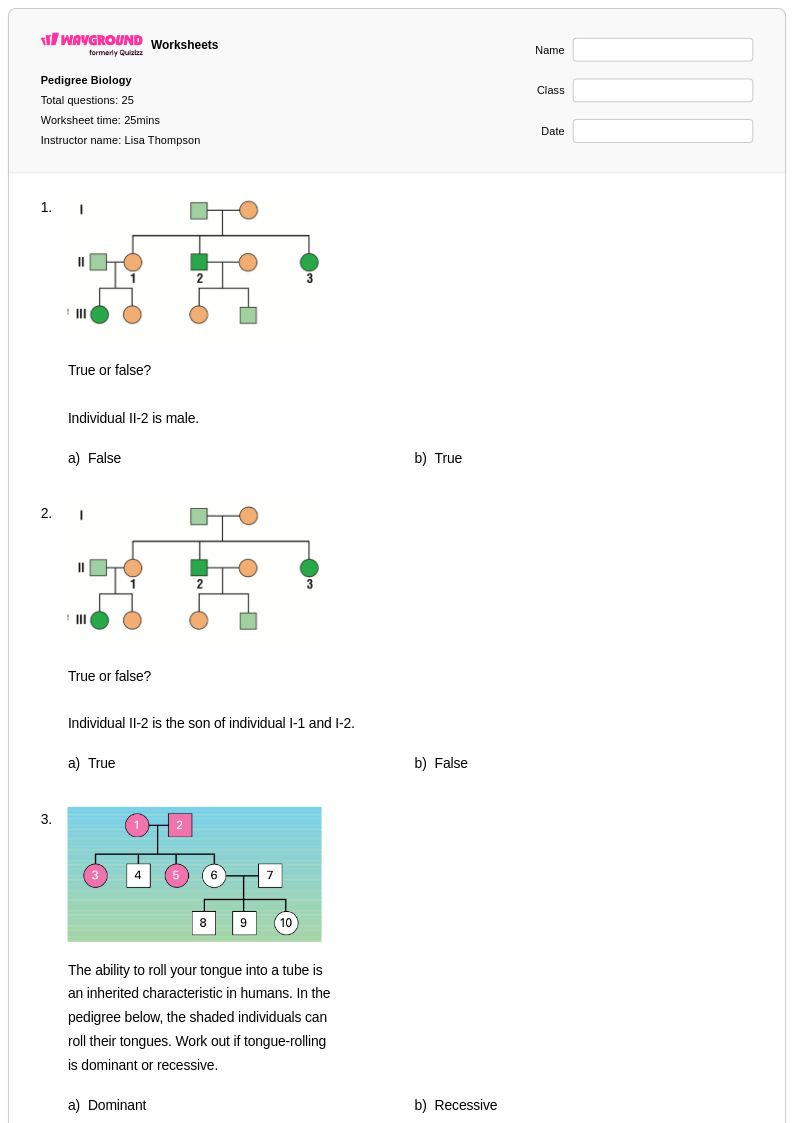
Explore Wayground's comprehensive collection of Class 9 gene mapping worksheets featuring printables, practice problems, and answer keys to help students master chromosome analysis, genetic linkage, and DNA sequencing techniques through engaging free worksheet activities.
Explore printable Gene Mapping worksheets for Class 9
Gene mapping worksheets for Class 9 students available through Wayground (formerly Quizizz) provide comprehensive practice in understanding how scientists locate and sequence genes on chromosomes. These educational resources strengthen critical skills including interpreting genetic linkage data, analyzing recombination frequencies, constructing genetic maps, and understanding the relationship between physical and genetic distances. Students work through practice problems that demonstrate techniques such as three-factor crosses, complementation testing, and chromosome walking, while building proficiency in calculating map units and determining gene order. Each worksheet collection includes detailed answer keys and is available as free printables in pdf format, allowing educators to seamlessly integrate gene mapping concepts into their biology curriculum and assess student understanding of this fundamental genomics topic.
Wayground (formerly Quizizz) supports biology teachers with an extensive collection of millions of teacher-created gene mapping resources that can be easily accessed through robust search and filtering capabilities. The platform's standards-aligned worksheets accommodate diverse learning needs through built-in differentiation tools, enabling educators to customize content difficulty and focus areas to match individual student requirements. Teachers can utilize these flexible resources in both printable and digital pdf formats for various instructional purposes, from introducing basic genetic mapping concepts to providing advanced enrichment activities for accelerated learners. The comprehensive worksheet library facilitates efficient lesson planning while offering targeted practice opportunities for remediation and skill reinforcement, ensuring students develop strong foundational knowledge in genetic analysis and chromosome mapping techniques essential for advanced biological studies.
FAQs
How do I teach gene mapping to high school biology students?
Start by establishing foundational concepts: genes occupy specific loci on chromosomes, and the frequency of recombination between two genes reflects the physical distance between them. Introduce two-factor crosses before progressing to three-point test crosses, and have students practice calculating map units (centimorgans) from recombination frequency data. Using Drosophila or corn genetics as worked examples gives students a concrete experimental context before they tackle abstract mapping problems.
What exercises help students practice gene mapping?
The most effective practice problems ask students to calculate recombination frequencies from cross data, order genes on a chromosome, and determine map distances using three-factor crosses. Students should also practice constructing linkage maps from raw experimental results, which requires both mathematical calculation and logical sequencing. Scaffolded problem sets that begin with two linked genes and gradually introduce a third gene help students build confidence before tackling complex multi-locus scenarios.
What mistakes do students commonly make when solving gene mapping problems?
The most common error is failing to identify double crossover classes correctly, which leads to incorrect gene order and inflated or underestimated map distances. Students also frequently confuse recombinant and parental phenotypes, especially when the parental genotypes are not explicitly stated. Another persistent mistake is adding map distances arithmetically without accounting for the interference value in three-point crosses, which skews the final chromosome map.
How do I help struggling students understand recombination frequency and map units?
Students who struggle with recombination frequency often need the concept reframed visually before they can work with numbers. Drawing chromosomes physically crossing over and labeling parental versus recombinant offspring helps ground the math in a biological process. On Wayground, teachers can enable the Read Aloud feature for students who benefit from audio support and reduce answer choices for struggling learners to lower cognitive load while they build foundational understanding.
How do I use gene mapping worksheets from Wayground in my classroom?
Gene mapping worksheets on Wayground are available as printable PDFs for traditional classroom use and in digital formats for technology-integrated environments, including the option to host them as a quiz directly on Wayground. Printable versions work well for in-class problem-solving sessions or homework assignments, while digital formats allow teachers to assign practice remotely and collect student responses automatically. Each worksheet includes detailed answer keys and step-by-step solutions, so teachers can use them for direct instruction, independent practice, or formative assessment.
How do I differentiate gene mapping instruction for advanced and struggling learners?
For advanced learners, assign problems involving interference calculations, three-factor crosses with unordered gene sequences, or mapping scenarios that require students to design their own experimental crosses. For struggling students, begin with two-gene linkage problems and provide a reference table for converting recombination frequency to map units. Wayground's built-in differentiation tools allow teachers to customize worksheets for varying skill levels, and accommodations such as extended time and reduced answer choices can be applied to individual students without affecting the rest of the class.