
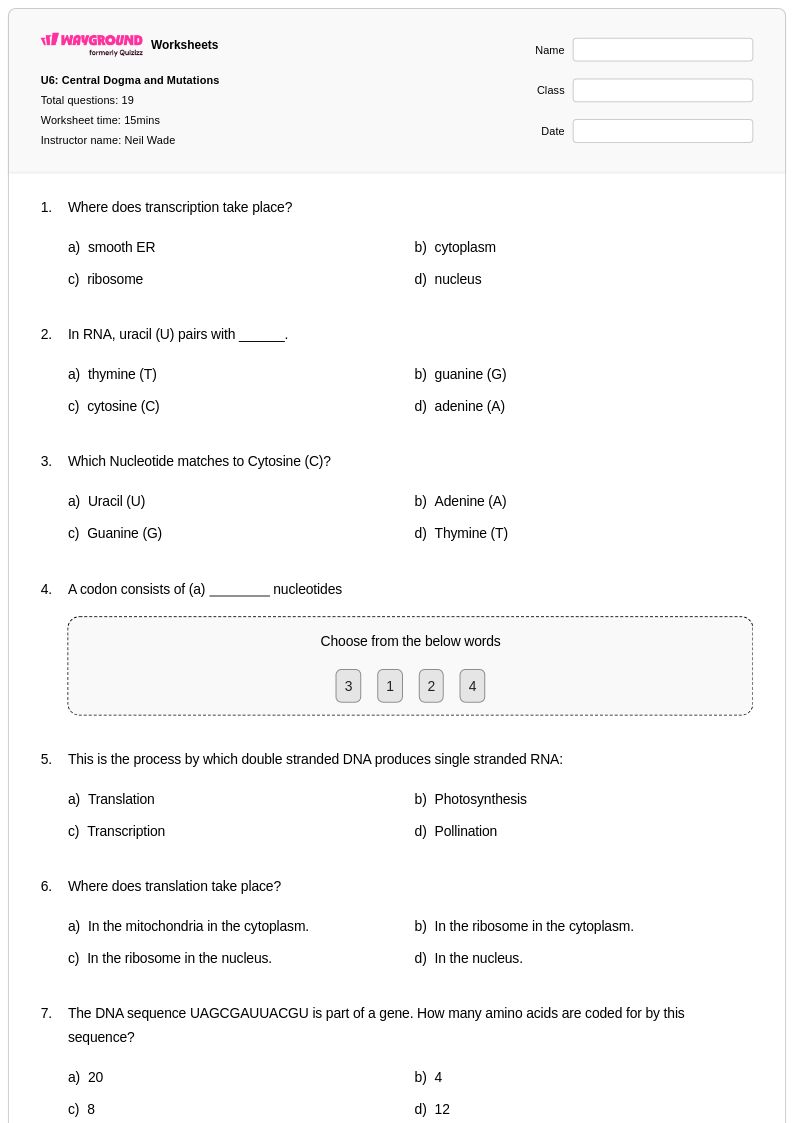
19 Q
9th
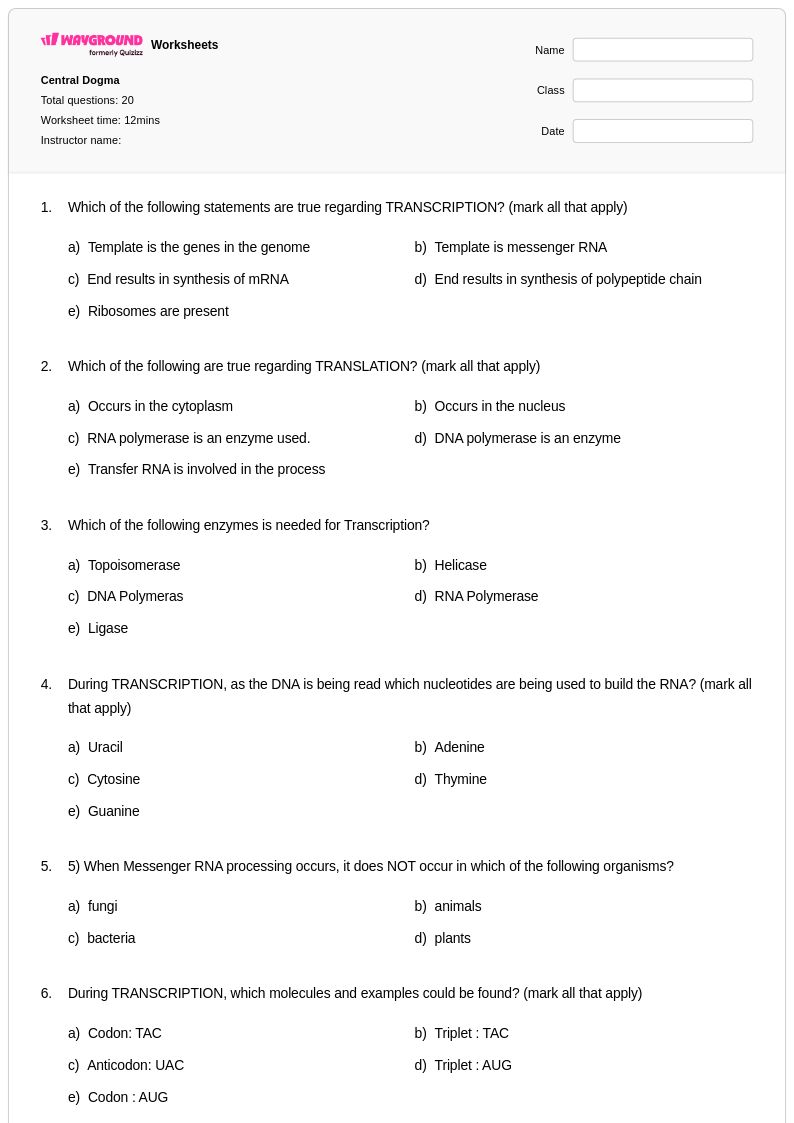
20 Q
9th - 12th
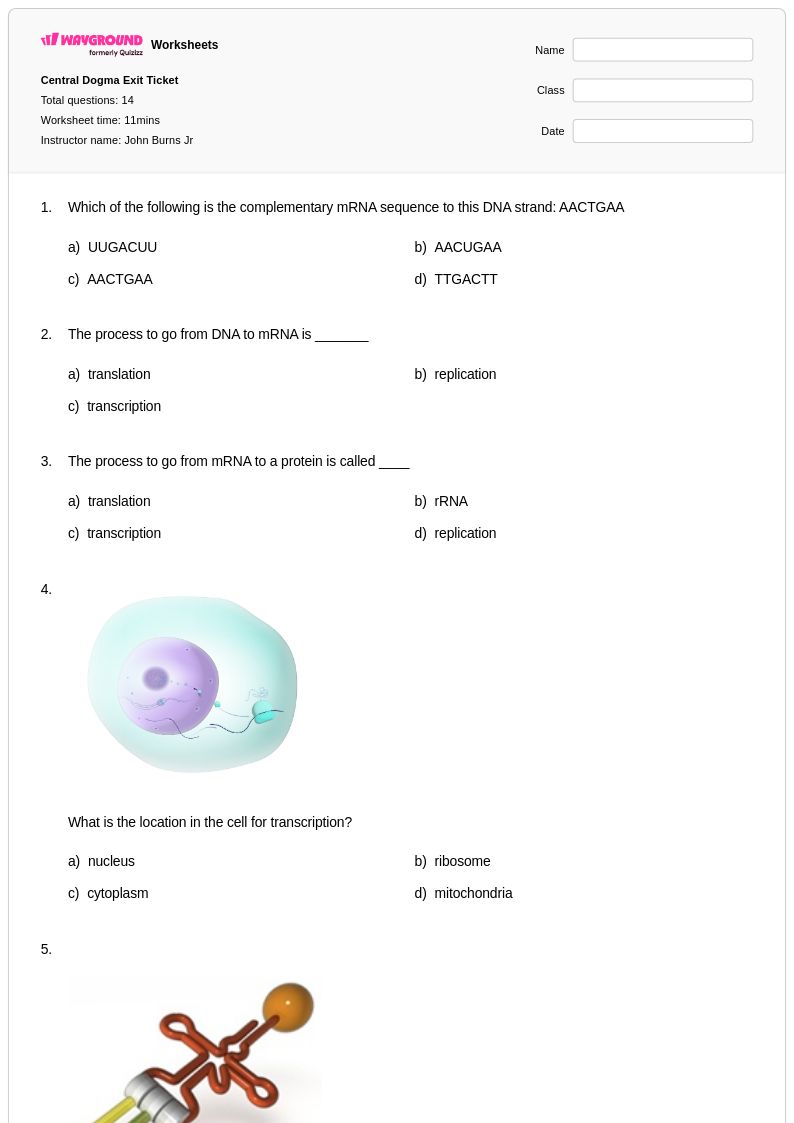
14 Q
9th - 12th
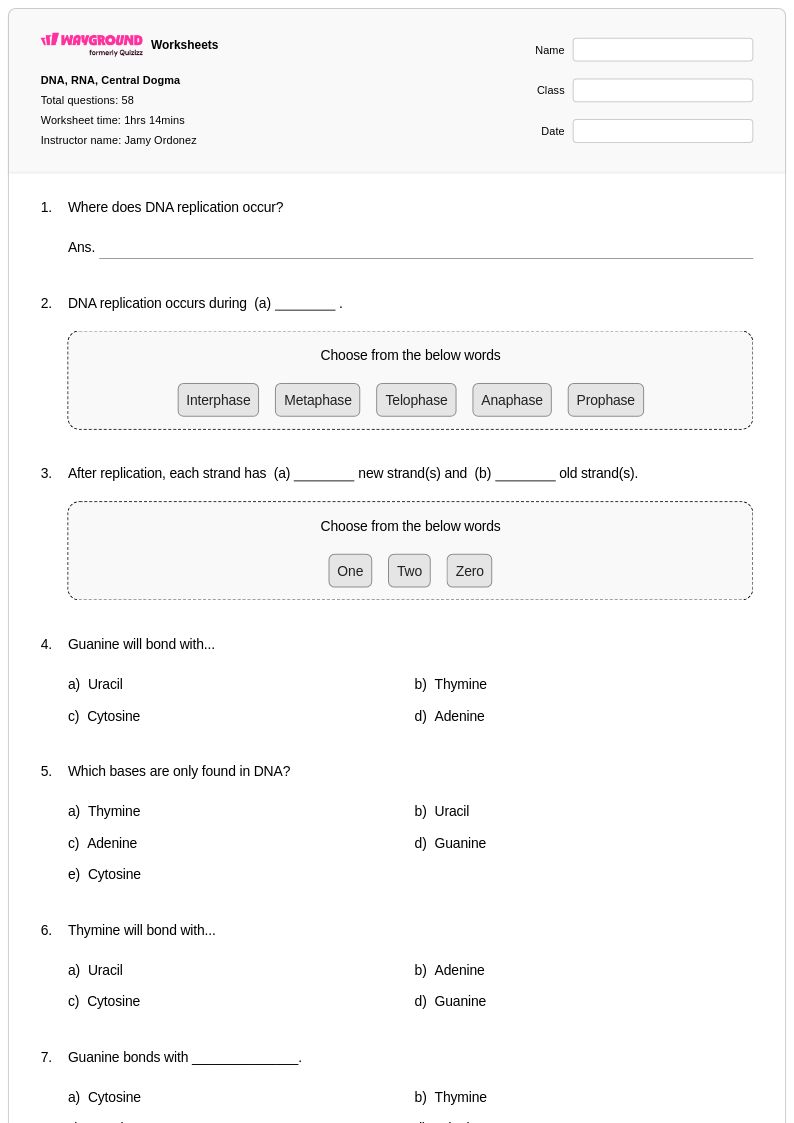
58 Q
9th - 12th

41 Q
9th - Uni
17 Q
9th - Uni
20 Q
9th
75 Q
9th
15 Q
9th - 12th
68 Q
9th
15 Q
9th - 12th
15 Q
9th - 12th
40 Q
9th - 10th
61 Q
9th
110 Q
9th - 12th
20 Q
9th
20 Q
9th - 12th
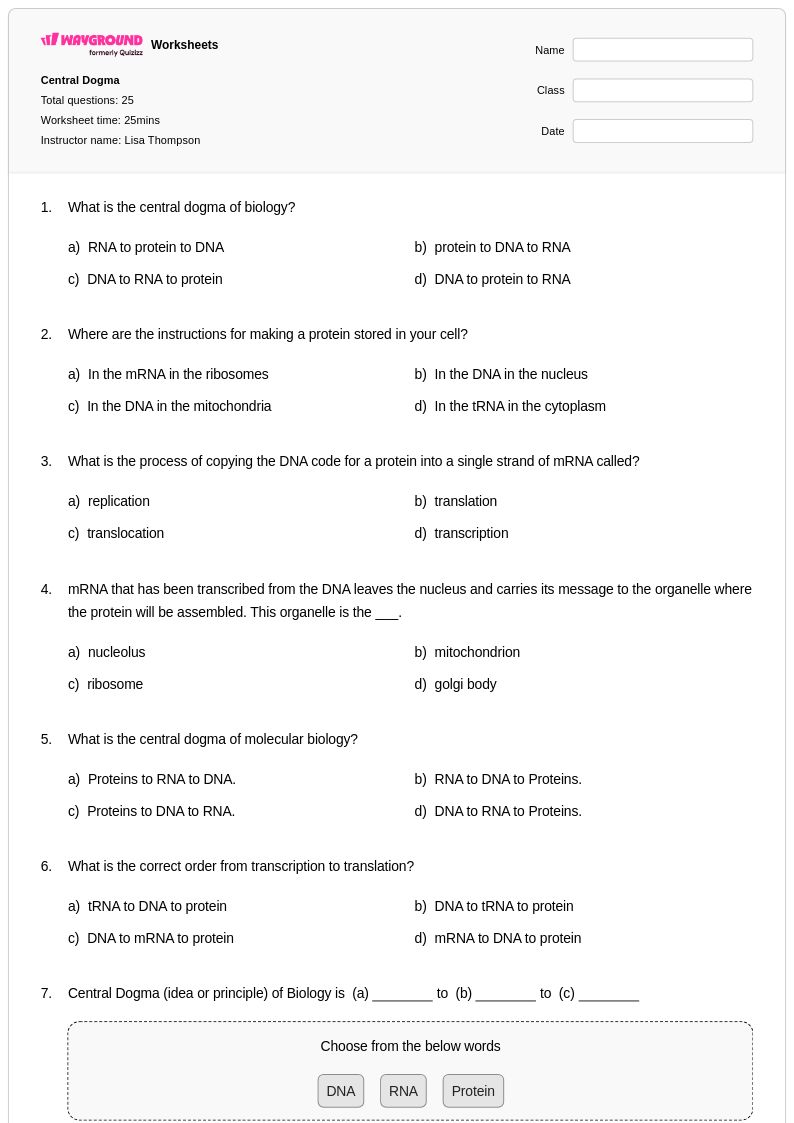
25 Q
9th - Uni
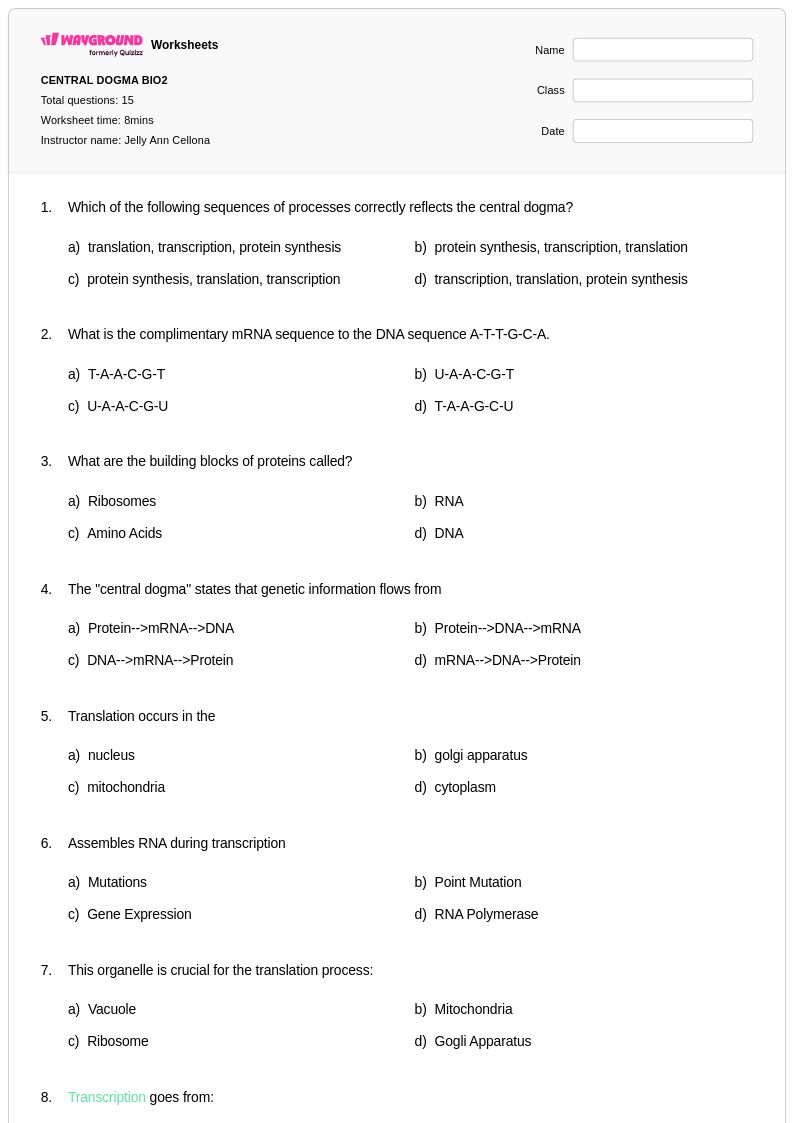
15 Q
9th - 12th
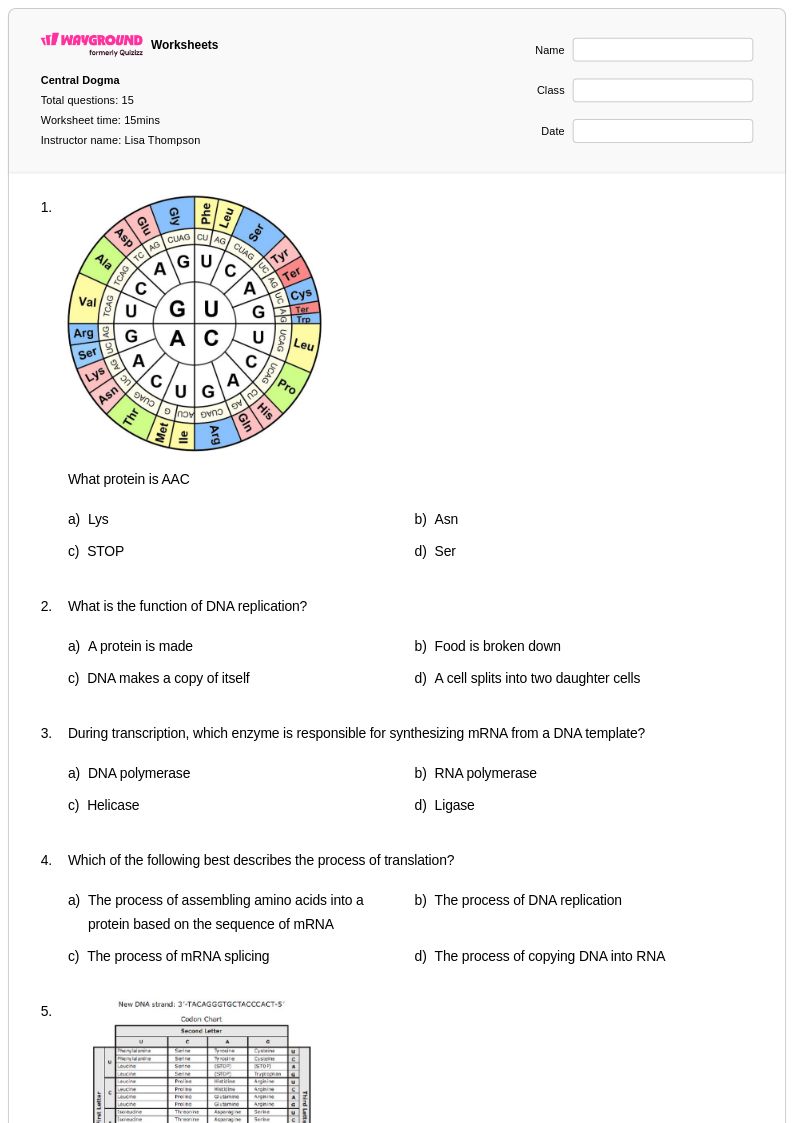
15 Q
9th - Uni
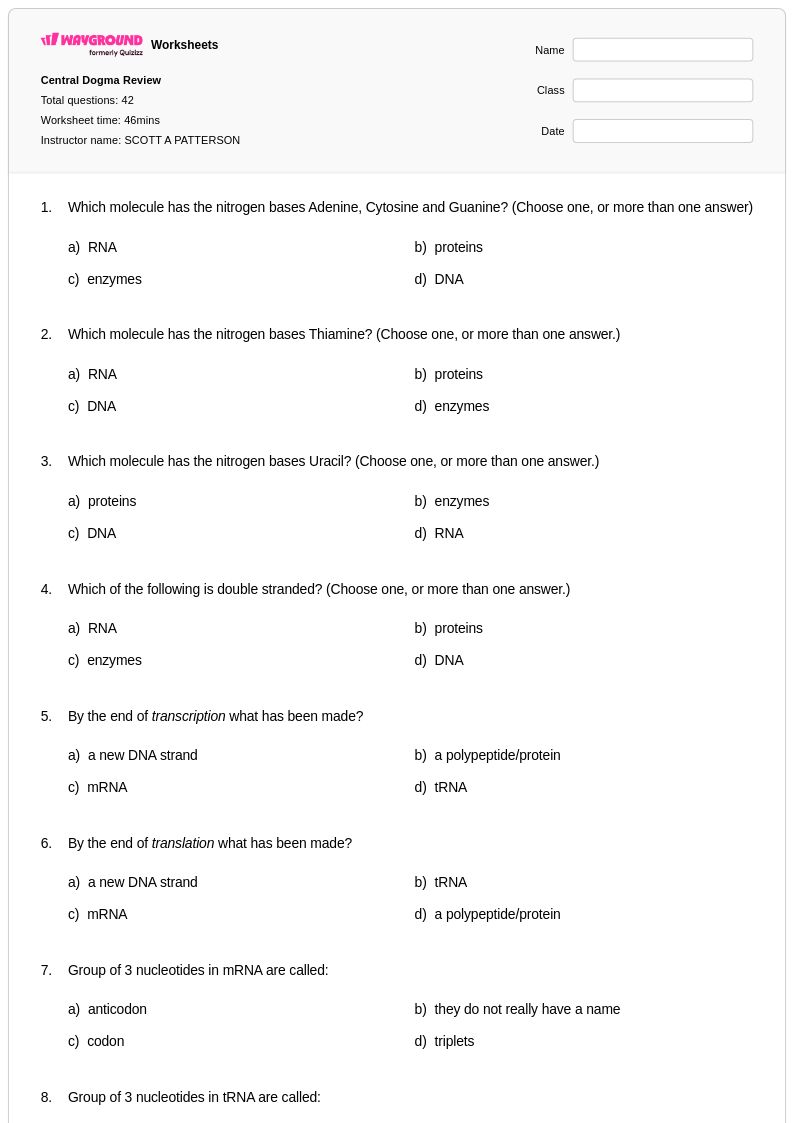
42 Q
9th
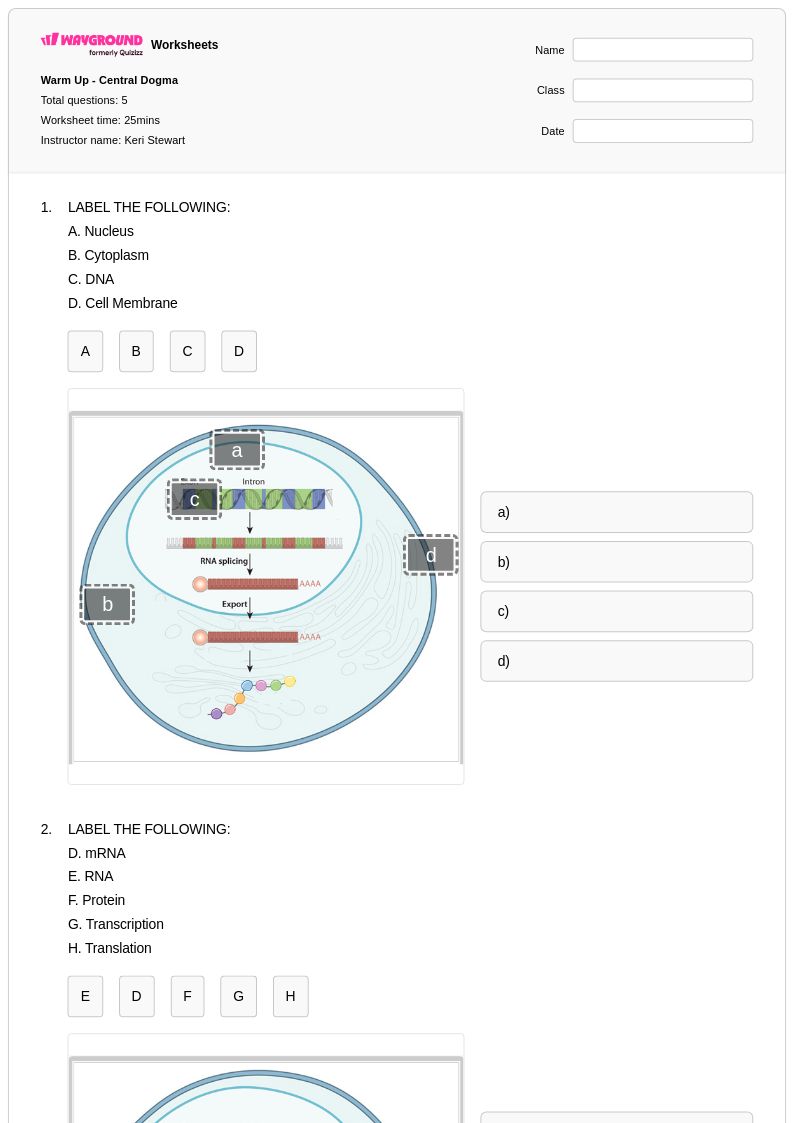
5 Q
9th

15 Q
9th
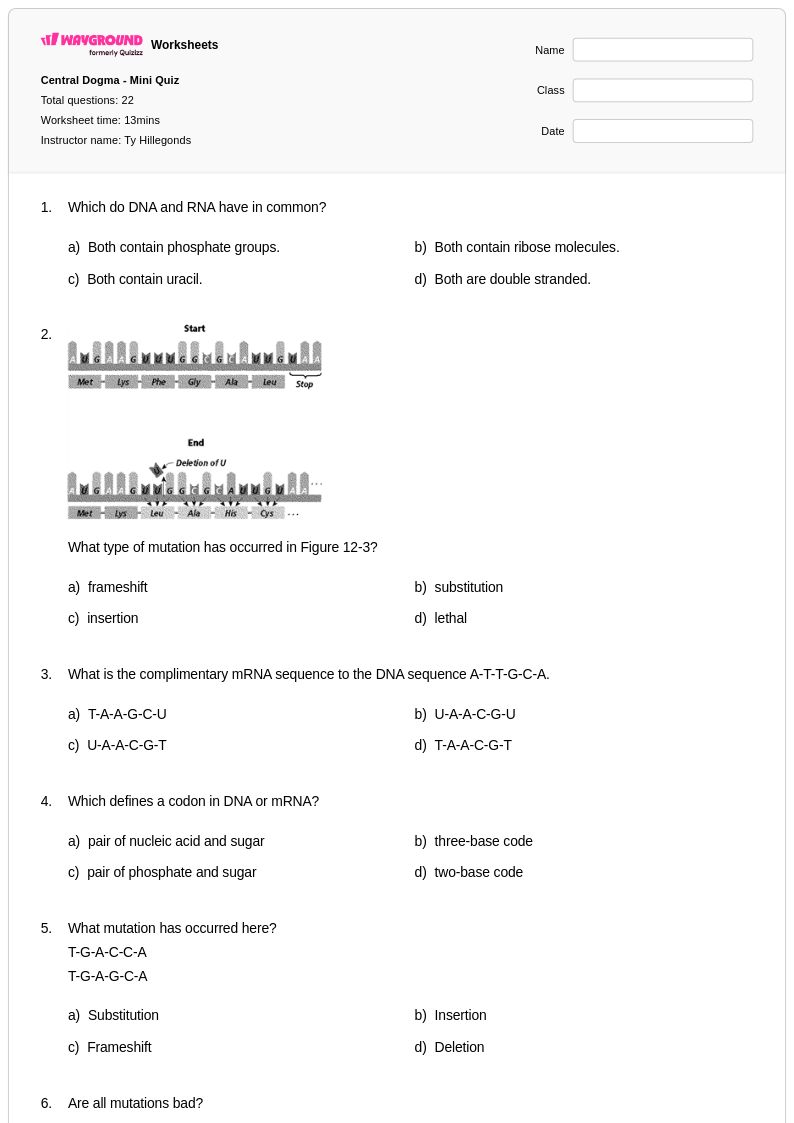
22 Q
9th - 12th
Explore Other Subject Worksheets for class 9
Explore printable Central Dogma worksheets for Class 9
Central Dogma worksheets for Class 9 biology students available through Wayground (formerly Quizizz) provide comprehensive practice materials that help students master one of biology's most fundamental concepts. These educational resources focus on the flow of genetic information from DNA to RNA to proteins, guiding students through the intricate processes of transcription and translation that govern cellular function. The worksheets strengthen critical thinking skills by challenging students to trace molecular pathways, identify key enzymes and structures involved in gene expression, and analyze how genetic information is accurately transferred and expressed within cells. Each printable resource includes detailed practice problems that reinforce understanding of nucleotide sequences, codon relationships, and protein synthesis, while accompanying answer keys enable students to verify their comprehension and teachers to assess learning outcomes effectively. These free materials serve as invaluable tools for both classroom instruction and independent study, helping students build the foundational knowledge necessary for advanced molecular biology concepts.
Wayground (formerly Quizizz) empowers educators with an extensive collection of teacher-created Central Dogma worksheets, drawing from millions of high-quality resources that have been developed and refined by biology professionals worldwide. The platform's robust search and filtering capabilities allow teachers to quickly locate materials that align with specific curriculum standards and match their students' diverse learning needs. Advanced differentiation tools enable educators to customize worksheet content, adjusting complexity levels and question types to support both struggling learners requiring additional scaffolding and advanced students seeking enrichment opportunities. These versatile resources are available in both printable pdf formats for traditional classroom use and digital formats that integrate seamlessly with modern educational technology, providing flexibility for various teaching environments and learning preferences. The comprehensive nature of these worksheet collections supports effective lesson planning while offering targeted materials for remediation sessions, skill-building practice, and formative assessment opportunities that help students develop mastery of this essential biological principle.
FAQs
How do I teach the central dogma of molecular biology?
What practice problems help students understand DNA transcription and translation?
What mistakes do students commonly make when learning the central dogma?
How do I use central dogma worksheets to support different skill levels in my class?
How can I use Wayground's central dogma worksheets in my classroom?
How do I assess whether students understand the genetic code and codon recognition?