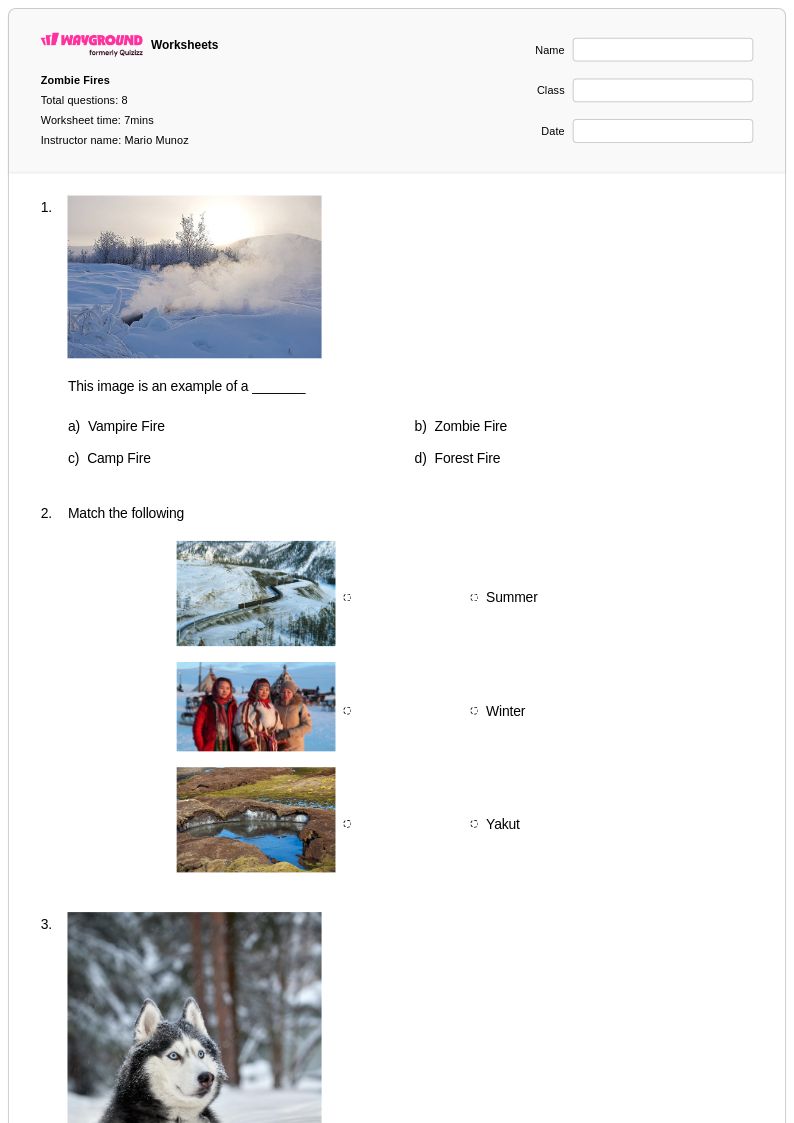
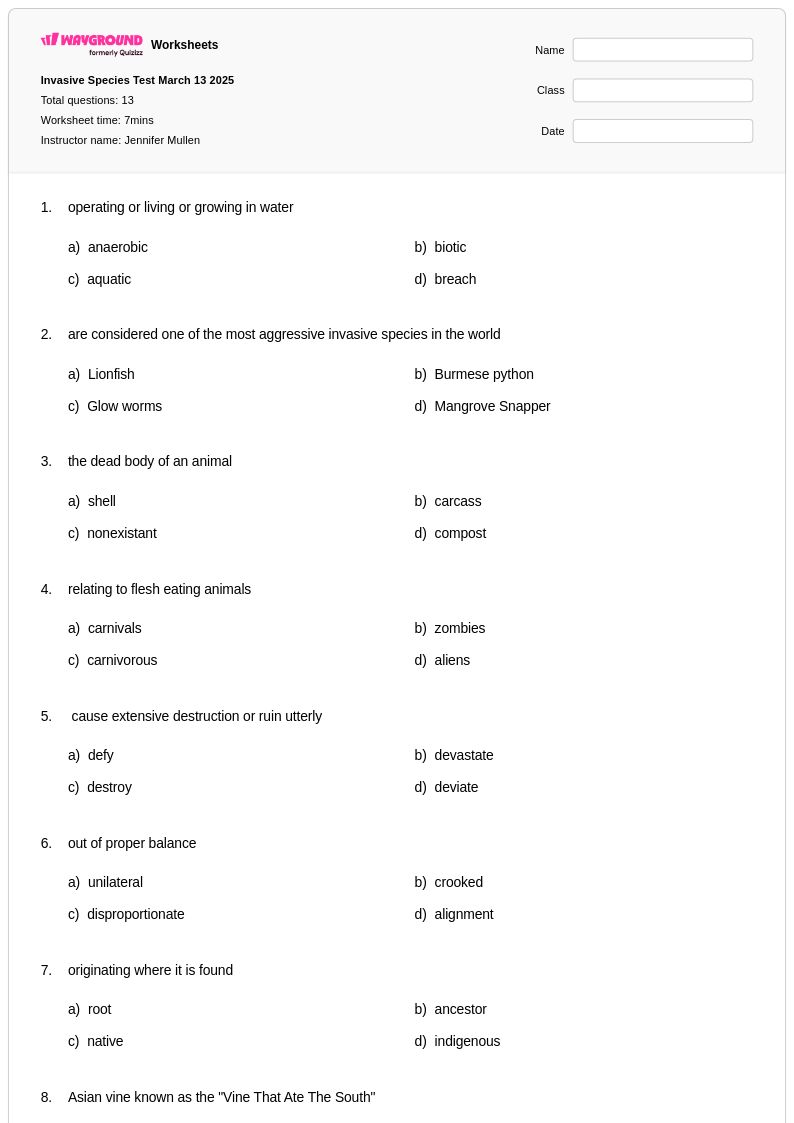
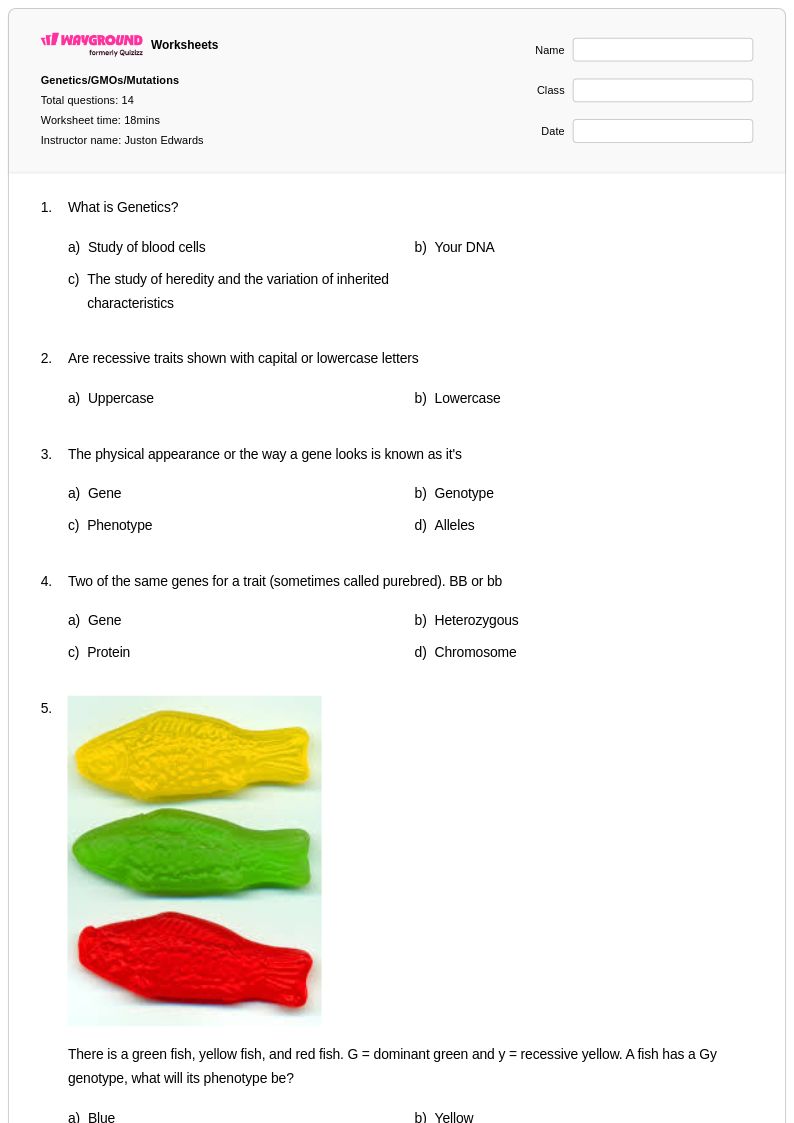
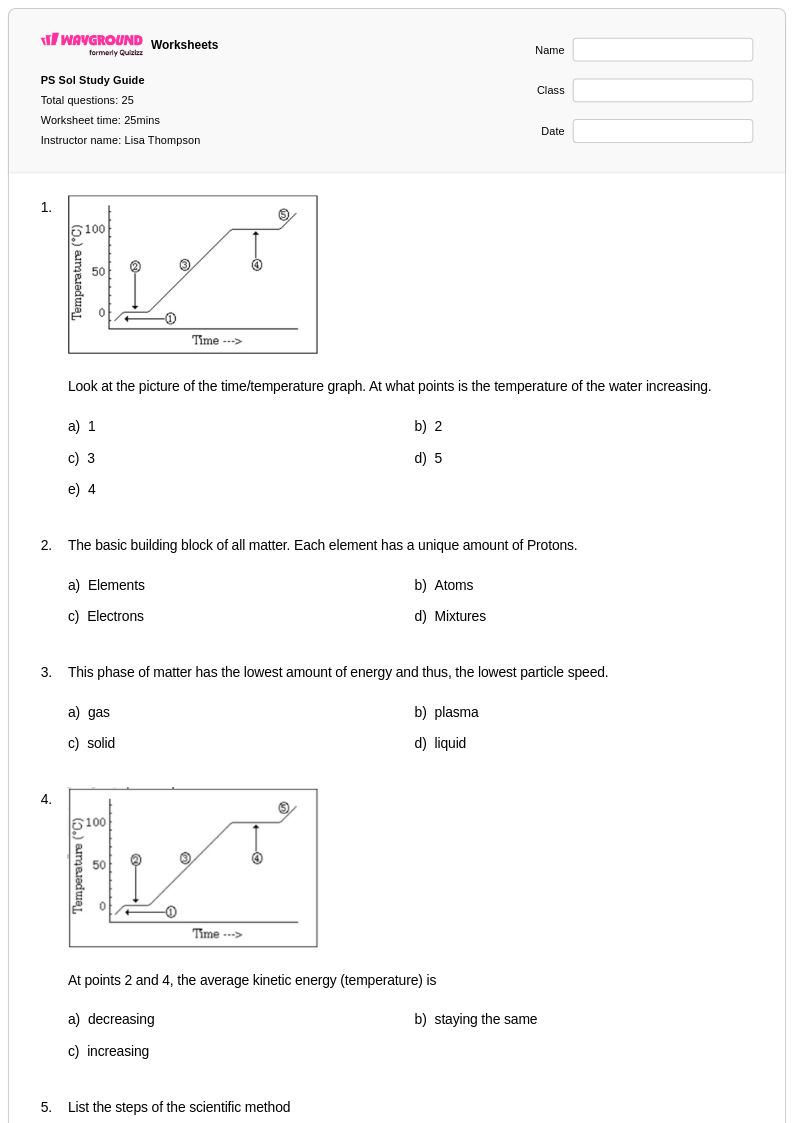
Explore Class 9 zombie-themed biology worksheets and printables that help students learn scientific concepts through engaging practice problems, complete with answer keys and free PDF downloads.
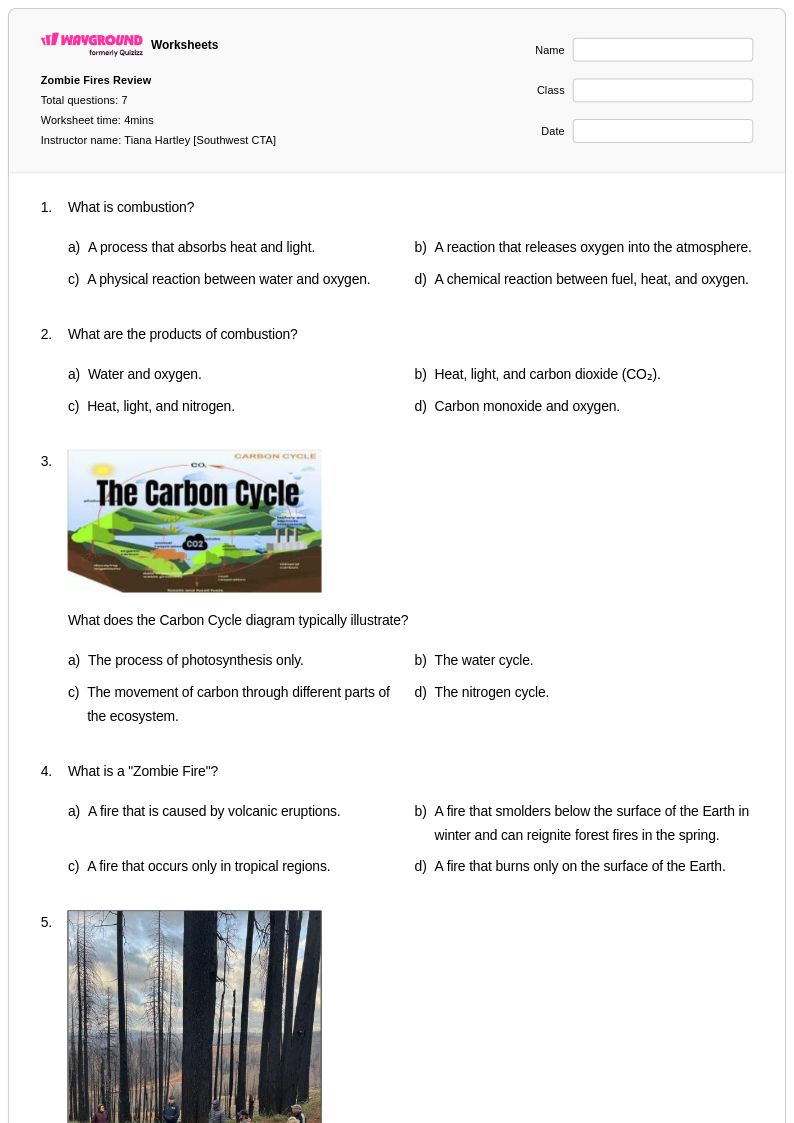
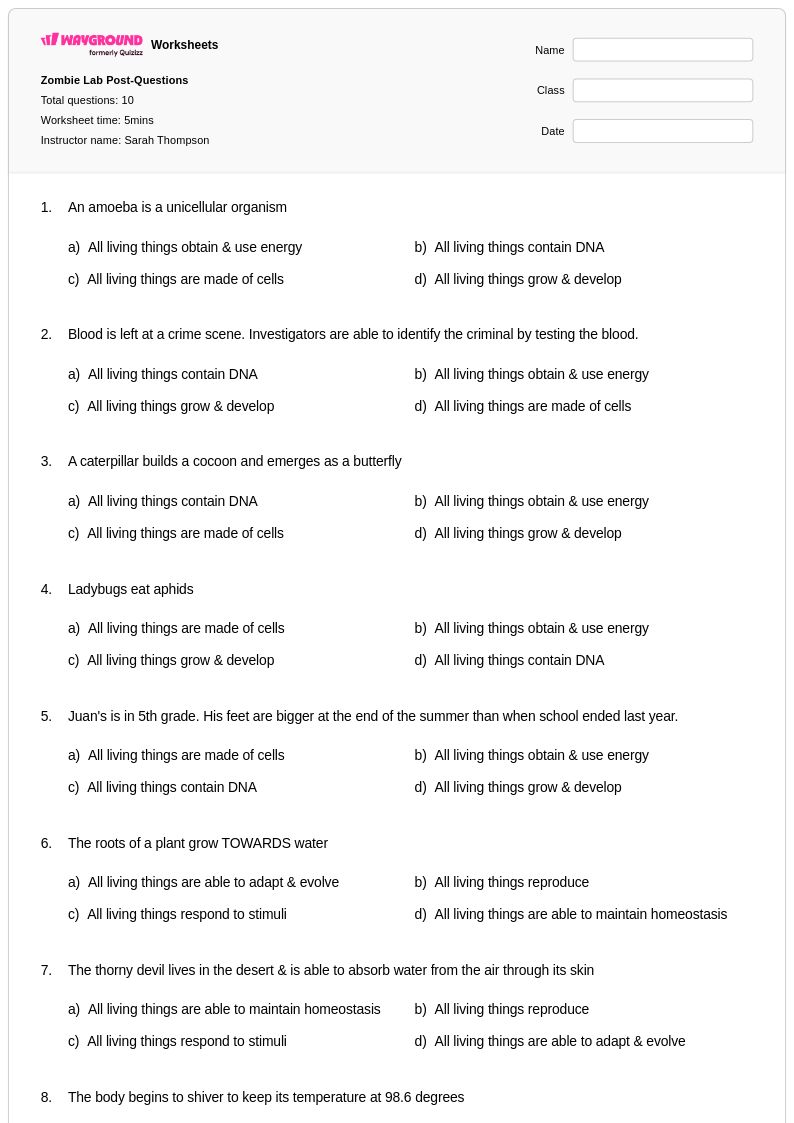
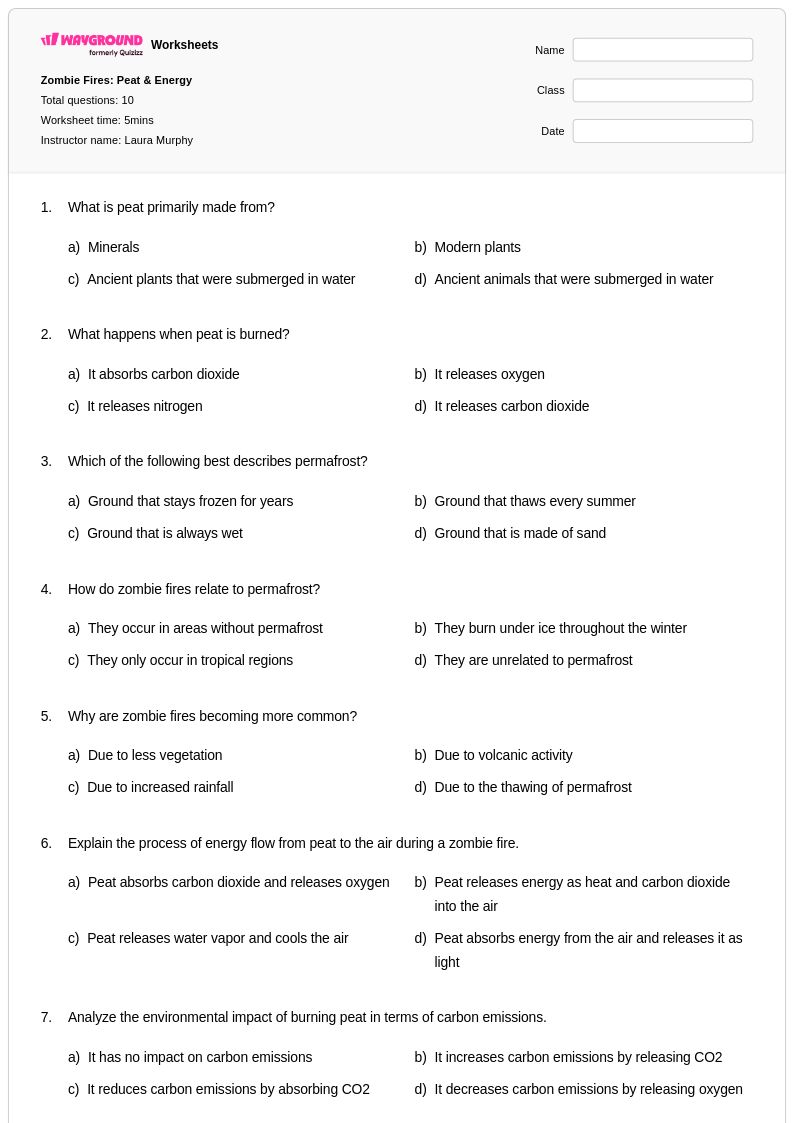
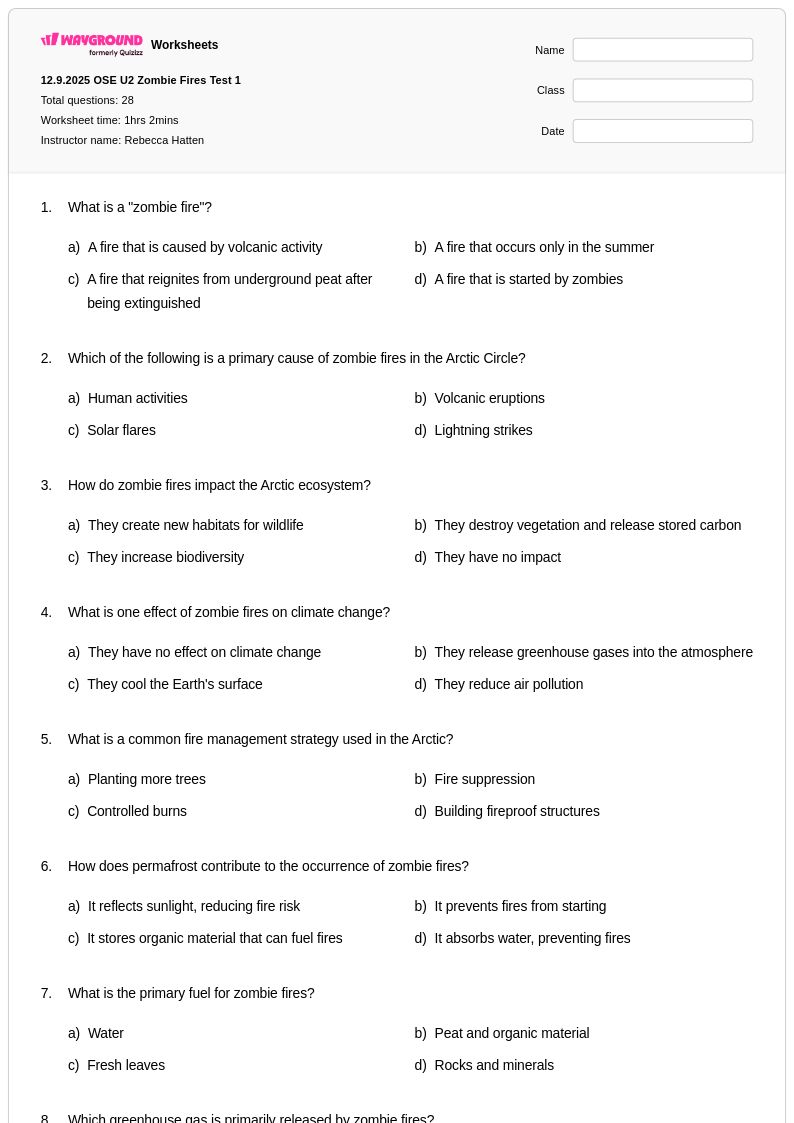
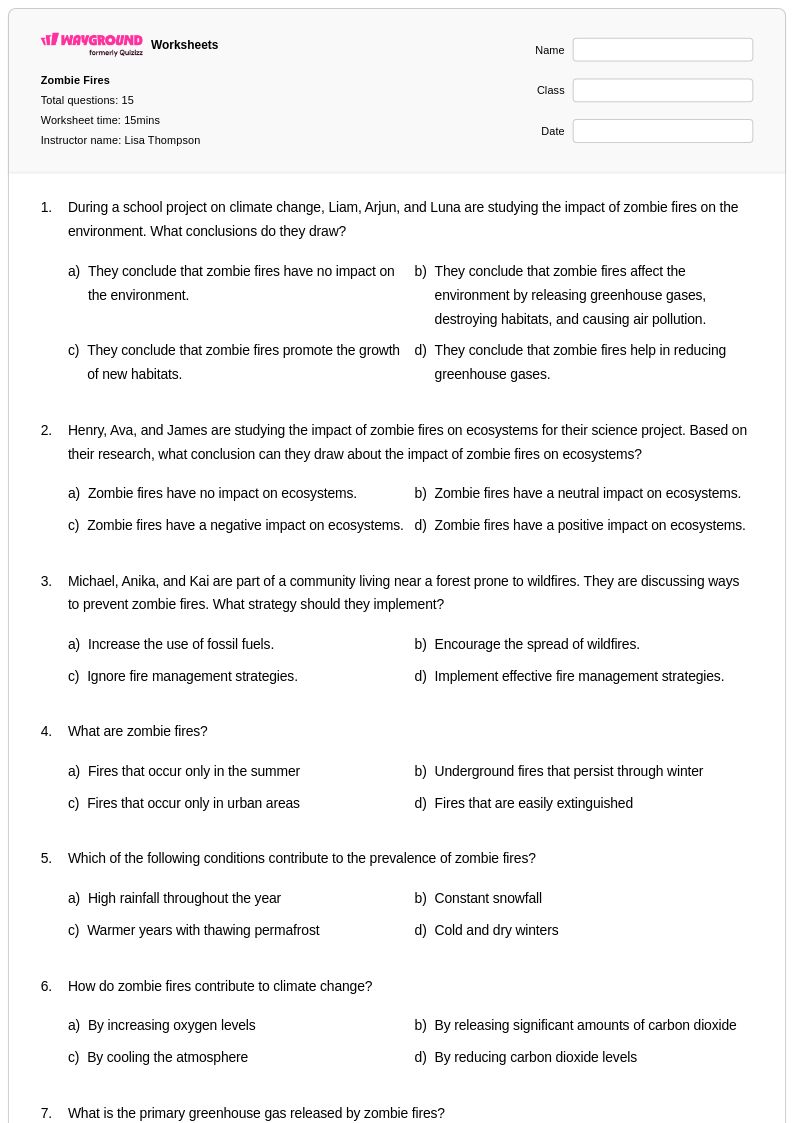
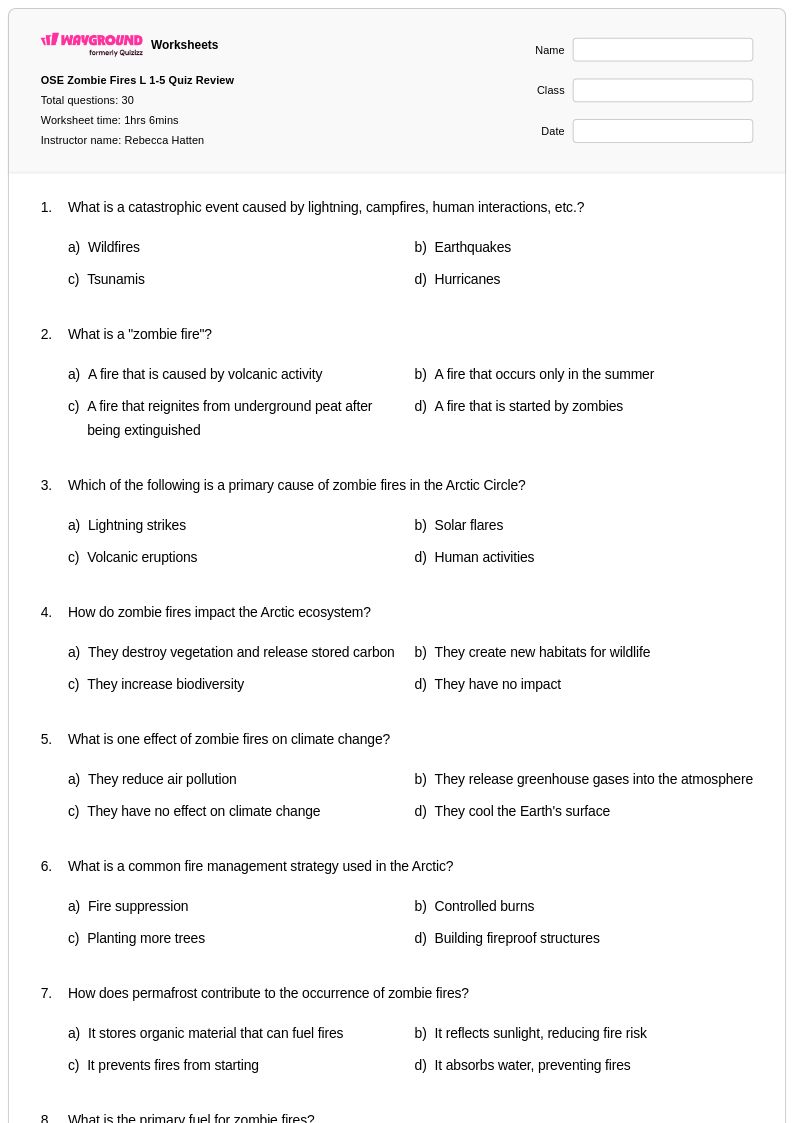
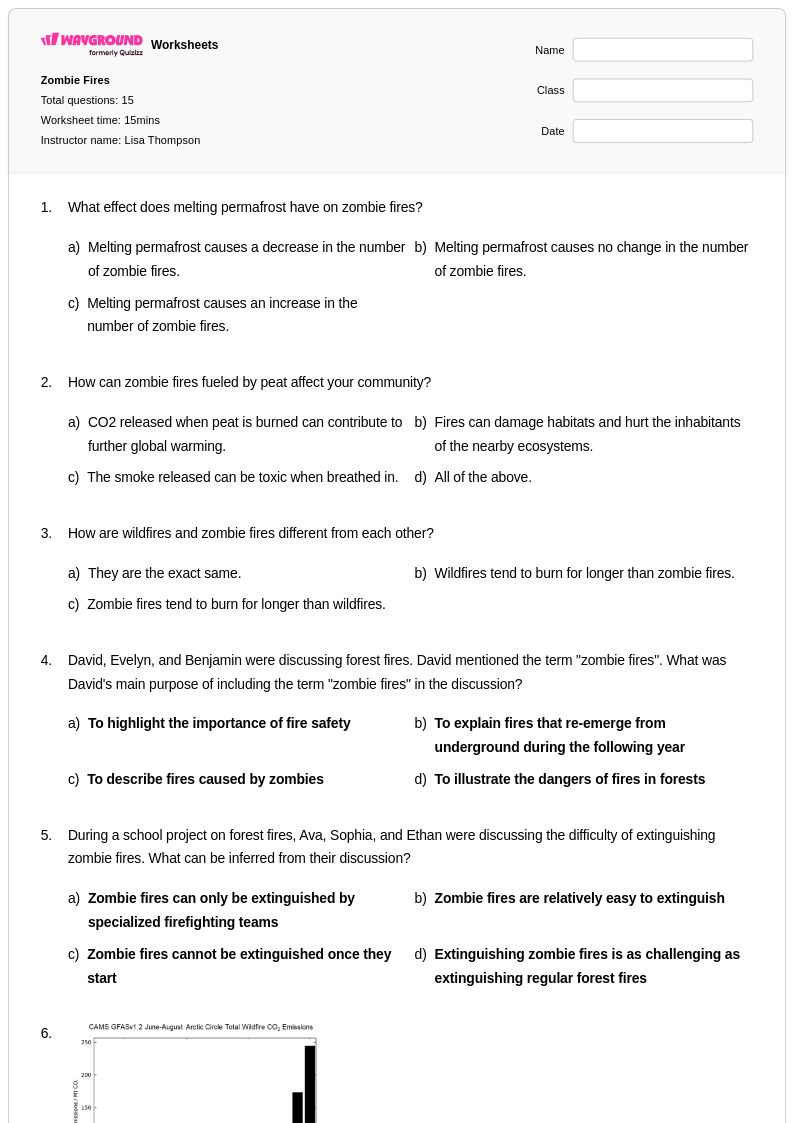
Zombie-themed biology worksheets for Class 9 students available through Wayground (formerly Quizizz) transform the study of life sciences into an engaging exploration of biological principles through the lens of fictional undead creatures. These carefully crafted educational resources challenge students to apply fundamental concepts such as cellular respiration, metabolism, nervous system function, and homeostasis while analyzing the hypothetical biology of zombies. Students work through practice problems that examine how zombie physiology might differ from living organisms, exploring questions about energy production without oxygen, the role of the brain in controlling behavior, and the breakdown of normal biological processes. Each worksheet includes comprehensive answer keys and is available as free printables in PDF format, allowing educators to seamlessly integrate these creative scenarios into their curriculum while reinforcing essential Class 9 biology standards and critical thinking skills.
Wayground (formerly Quizizz) empowers educators with access to millions of teacher-created zombie biology worksheet collections that support diverse classroom needs and learning objectives. The platform's robust search and filtering capabilities enable teachers to quickly locate resources aligned with specific biology standards, while built-in differentiation tools allow for seamless customization based on individual student abilities and learning styles. These zombie-themed materials are available in both printable PDF formats and interactive digital versions, providing flexibility for in-class activities, homework assignments, and remote learning environments. Teachers can effectively utilize these resources for lesson planning, targeted remediation of challenging concepts, enrichment activities for advanced learners, and ongoing skill practice that maintains student engagement through creative storytelling while mastering essential biological principles and scientific reasoning.
FAQs
How do I teach biology concepts using zombie-themed activities?
Zombie-themed biology activities work by anchoring abstract scientific concepts to a fictional but engaging context students already find compelling. Teachers can introduce topics like cellular respiration, nervous system function, and infectious disease transmission by asking students to analyze what biological mechanisms would theoretically make a zombie scenario possible. This approach encourages students to apply real scientific reasoning to hypothetical situations, which deepens conceptual understanding rather than surface-level memorization.
What biology topics can zombie worksheets help students practice?
Zombie-themed worksheets can cover a surprisingly wide range of core biology topics, including cellular respiration, decomposition processes, nervous system function, infectious disease transmission, and parasitic behavior that alters host biology. Students practice applying these concepts in creative scenarios that require them to think critically rather than simply recall definitions. This makes the worksheets especially useful for reinforcing difficult topics that students often find dry or disconnected from real-world relevance.
What real science can I connect to zombie scenarios in a biology class?
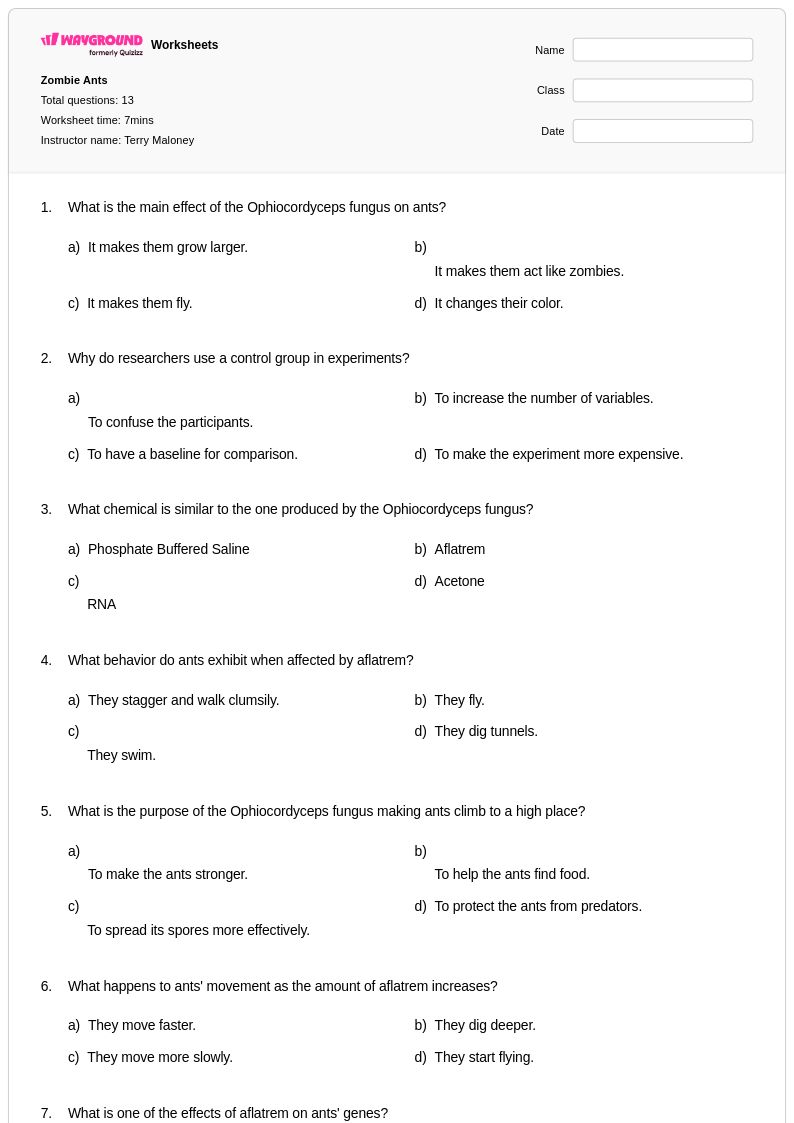
Several well-documented real-world phenomena map directly onto zombie tropes and make for rigorous classroom discussion. Parasites like Ophiocordyceps fungi, which hijack the behavior of ants, provide a legitimate entry point for studying host-parasite relationships and nervous system manipulation. Decomposition science, prion diseases, and the epidemiology of infectious disease transmission are all areas where zombie scenarios can frame genuinely complex biological content.
What misconceptions do students have when studying biological processes through fictional scenarios?
A common misconception is that fictional framing means the science is also fictional. Students sometimes struggle to distinguish between the creative scenario and the real biological principles being tested, which can lead to vague or unsupported answers. Teachers should reinforce that the zombie context is a lens for applying real science, and that answers must be grounded in actual biological mechanisms such as how pathogens spread, how the nervous system functions, or what causes tissue decay.
How do I use zombie biology worksheets in my classroom?
Wayground's zombie biology worksheets are available as printable PDFs for traditional classroom use and in digital formats for technology-integrated or remote learning environments, and can also be hosted as a quiz directly on Wayground. Teachers can use them for targeted skill practice, enrichment activities for advanced learners, or remediation of challenging biological concepts. The worksheets include complete answer keys, making them practical for both independent student work and teacher-led review sessions.
How can I differentiate zombie biology worksheets for students with different learning needs?
On Wayground, teachers can apply individual accommodations to students including extended time, read-aloud support for students who need questions read to them, and reduced answer choices to lower cognitive load for struggling learners. Font size and display themes can also be adjusted through reading mode for accessibility. These settings are saved per student and reapply automatically in future sessions, so differentiation does not require manual setup each time.