
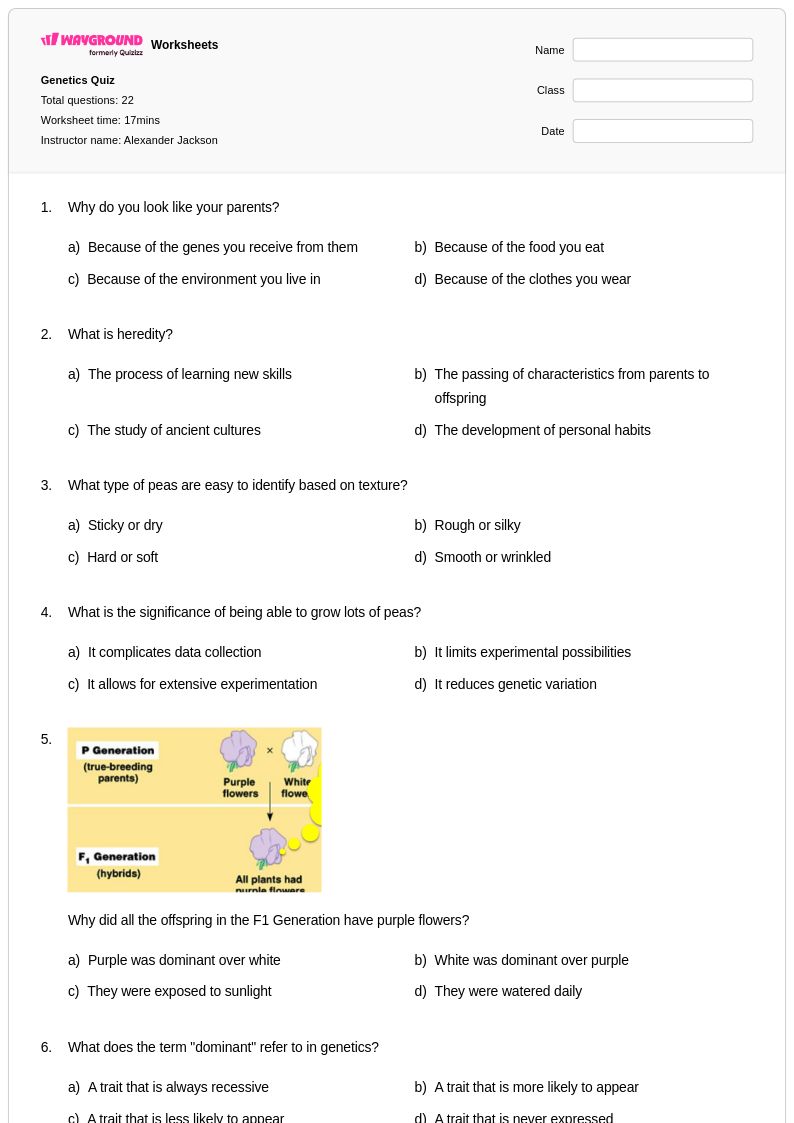
22 Q
9th - Uni
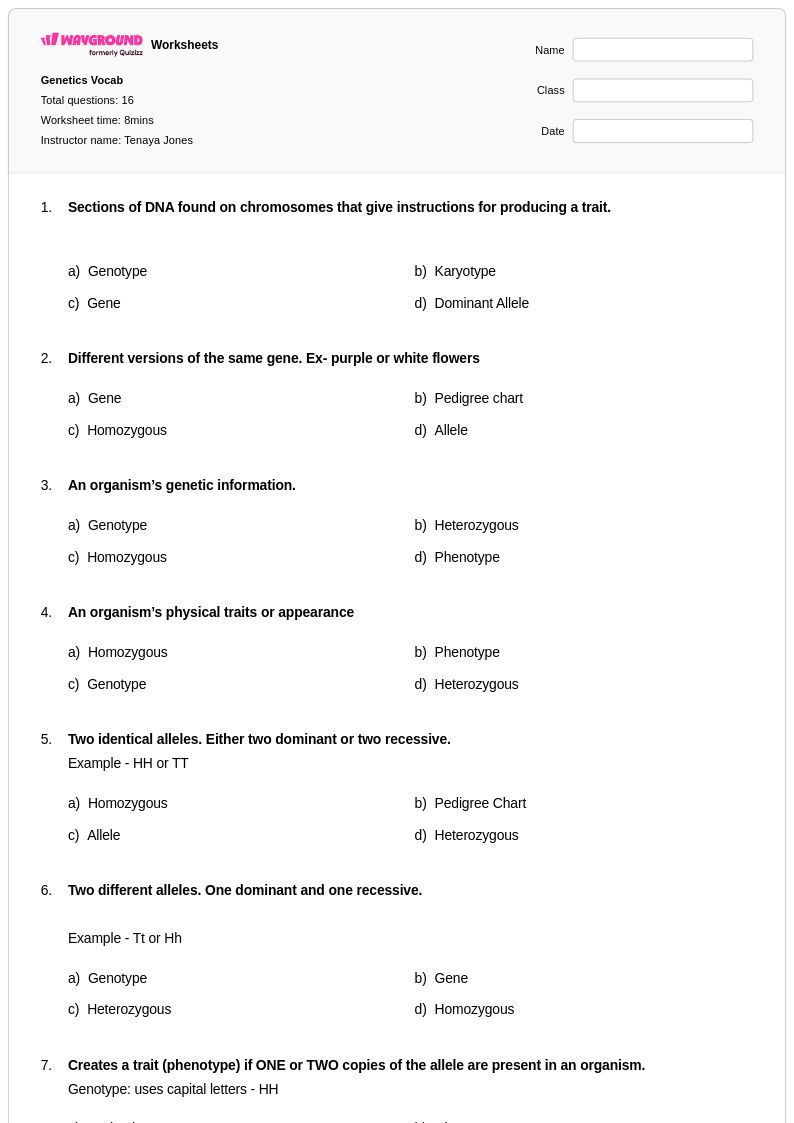
16 Q
9th - 12th
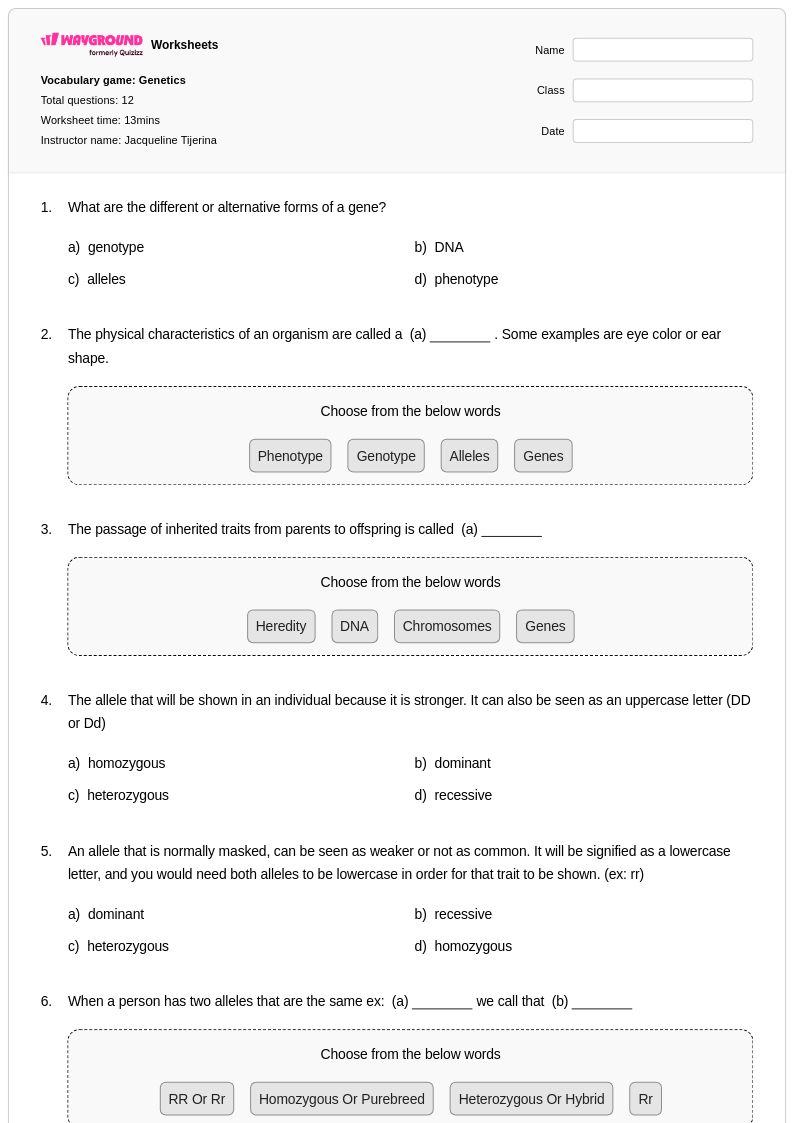
12 Q
12th
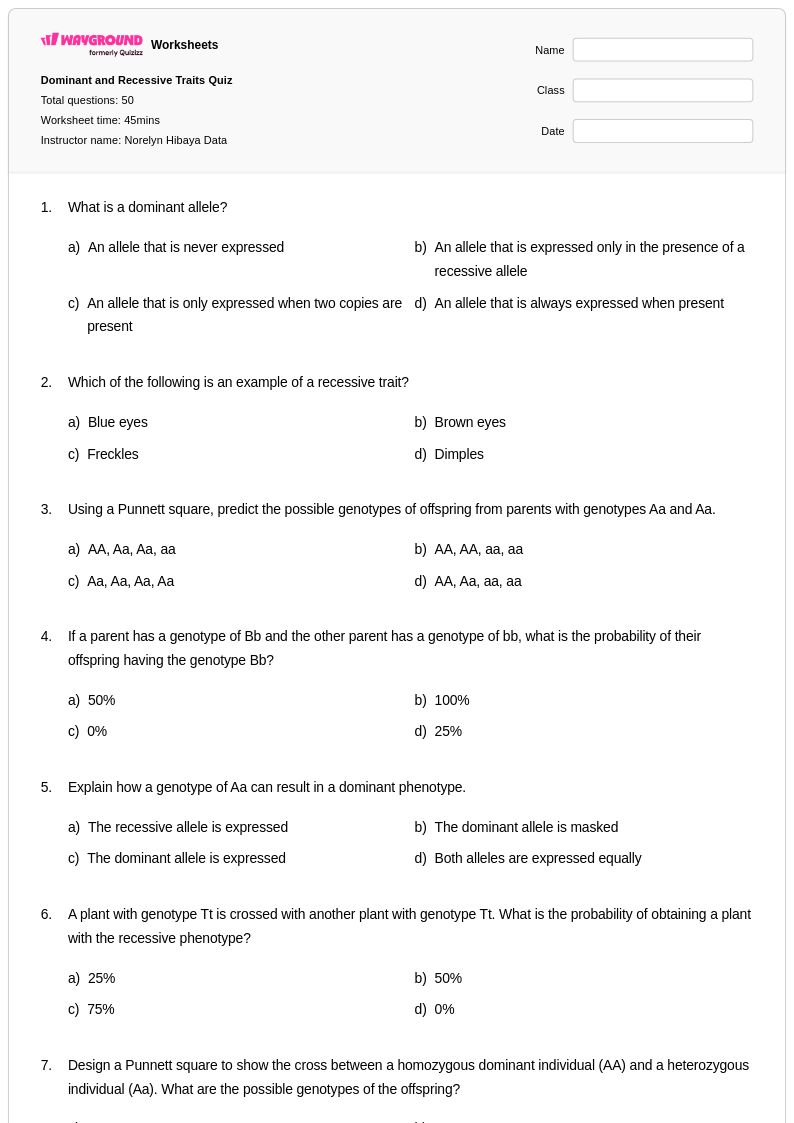
50 Q
7th - Uni
47 Q
7th - Uni
27 Q
9th - 12th
30 Q
7th - Uni
25 Q
7th - Uni
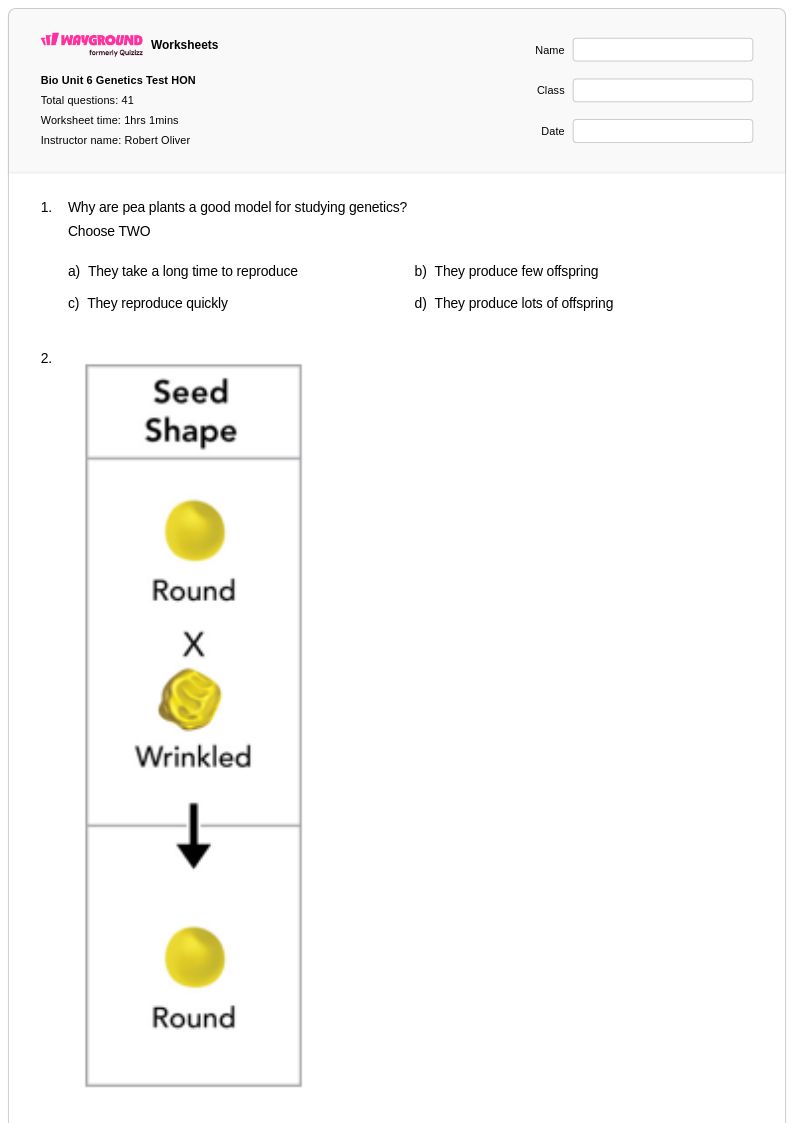
41 Q
12th - Uni
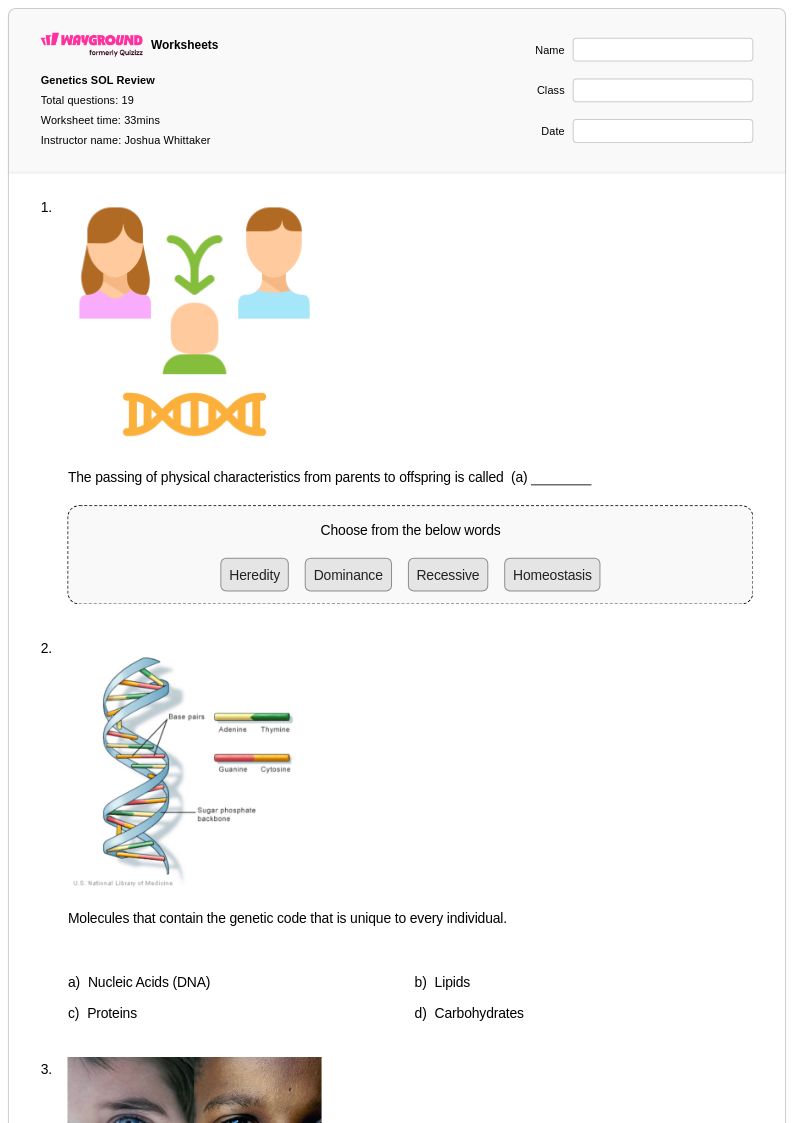
24 Q
9th - 12th
12 Q
8th - 12th
25 Q
9th - 12th
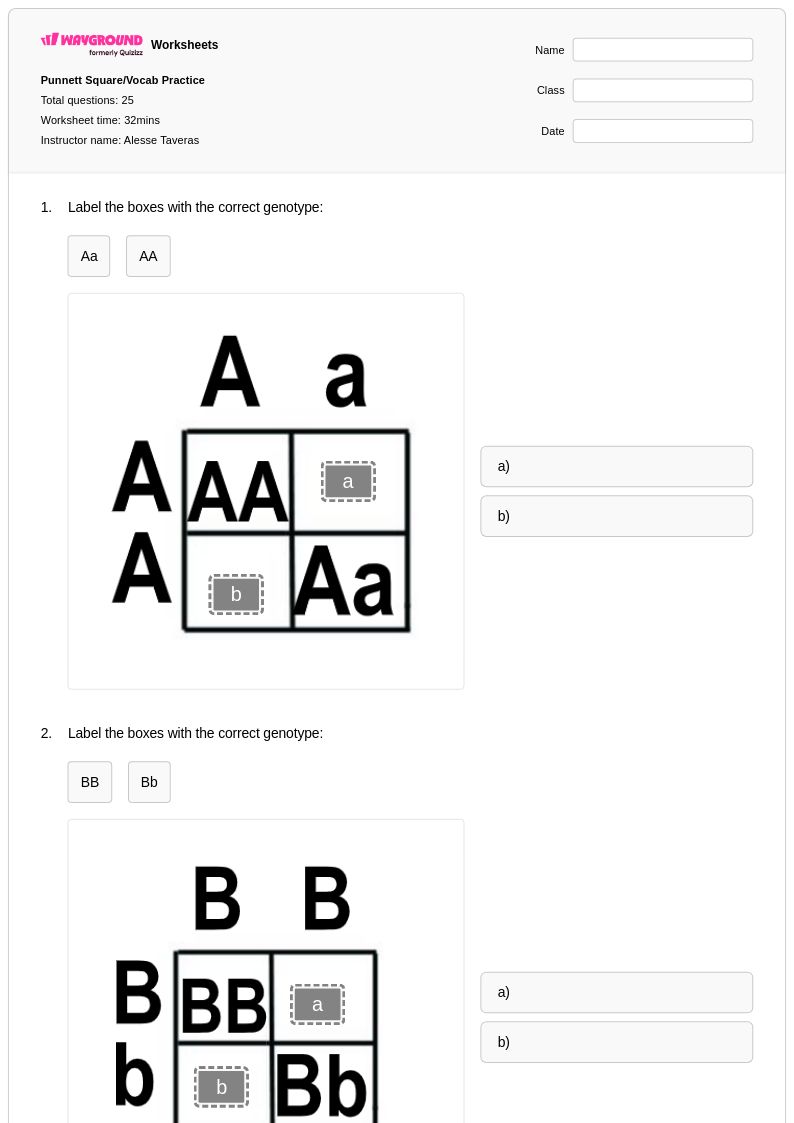
25 Q
9th - 12th
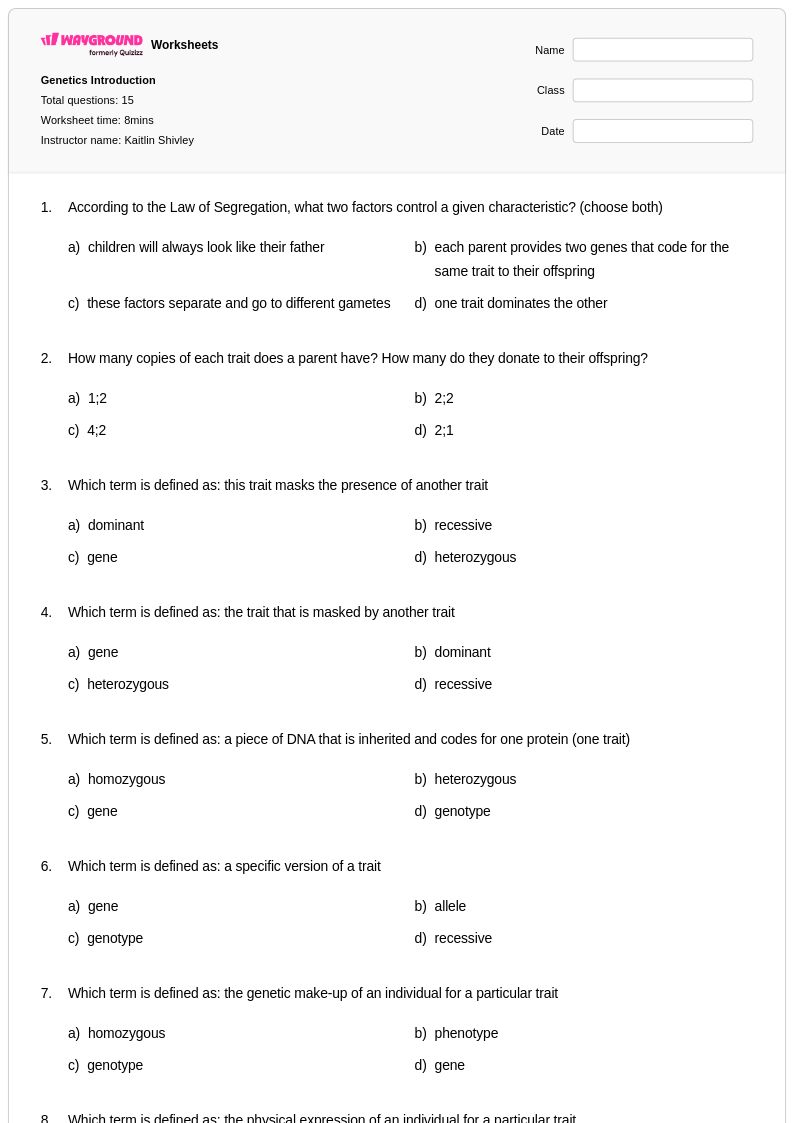
15 Q
9th - 12th
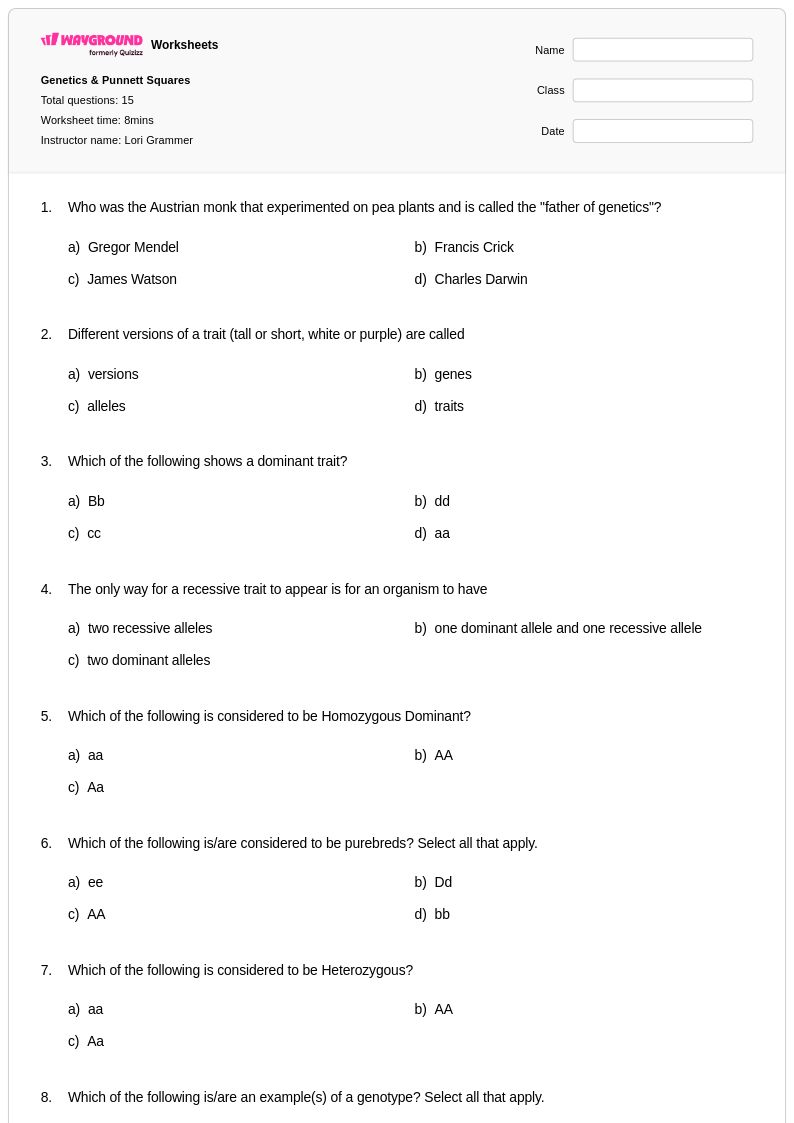
15 Q
9th - 12th
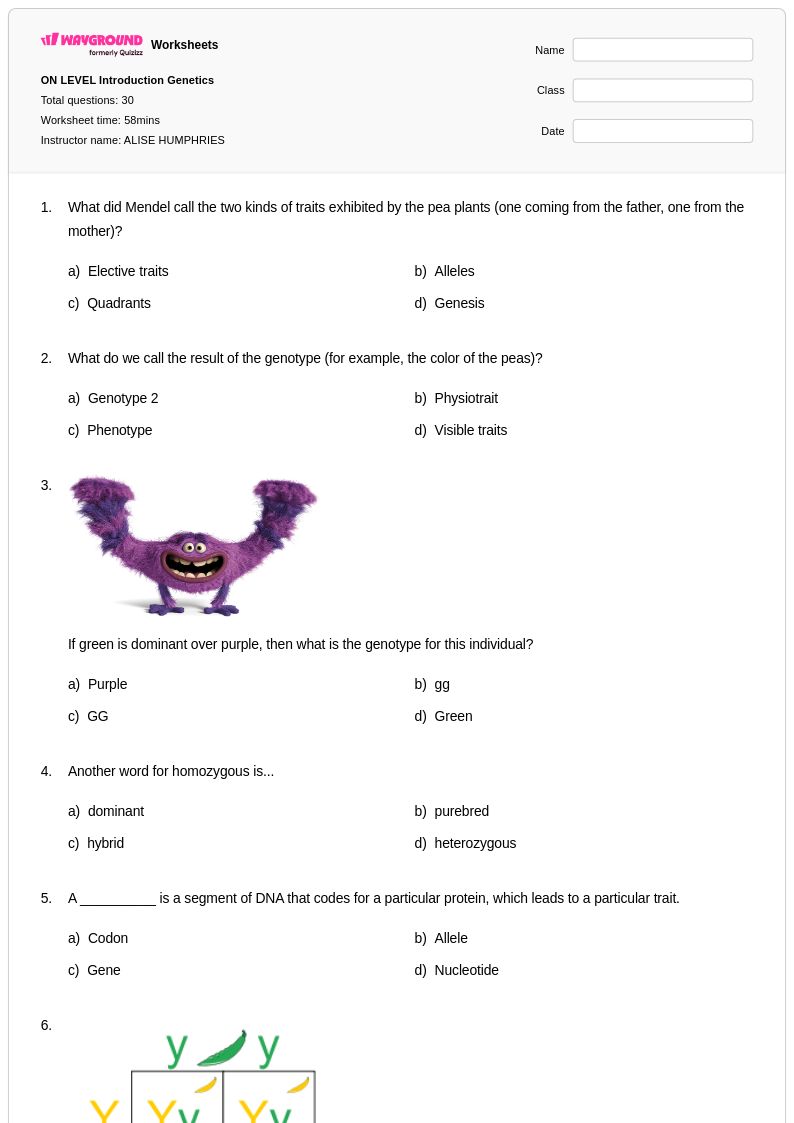
30 Q
9th - 12th
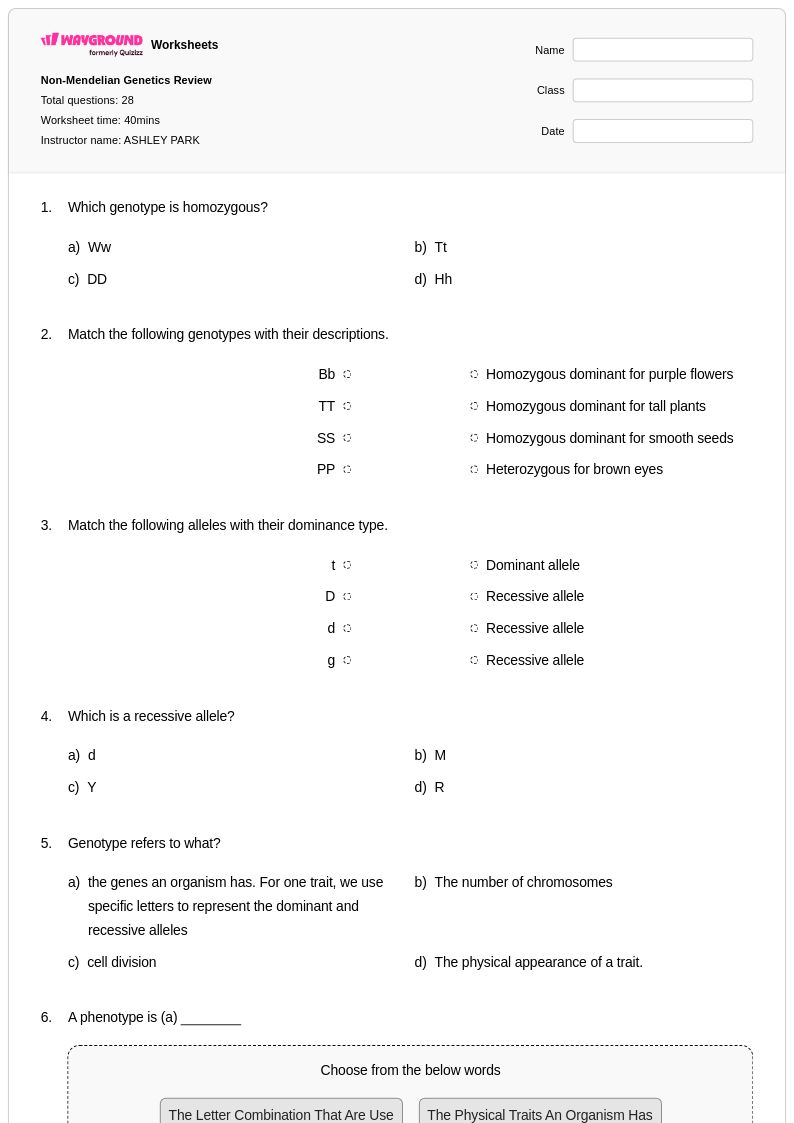
28 Q
9th - 12th
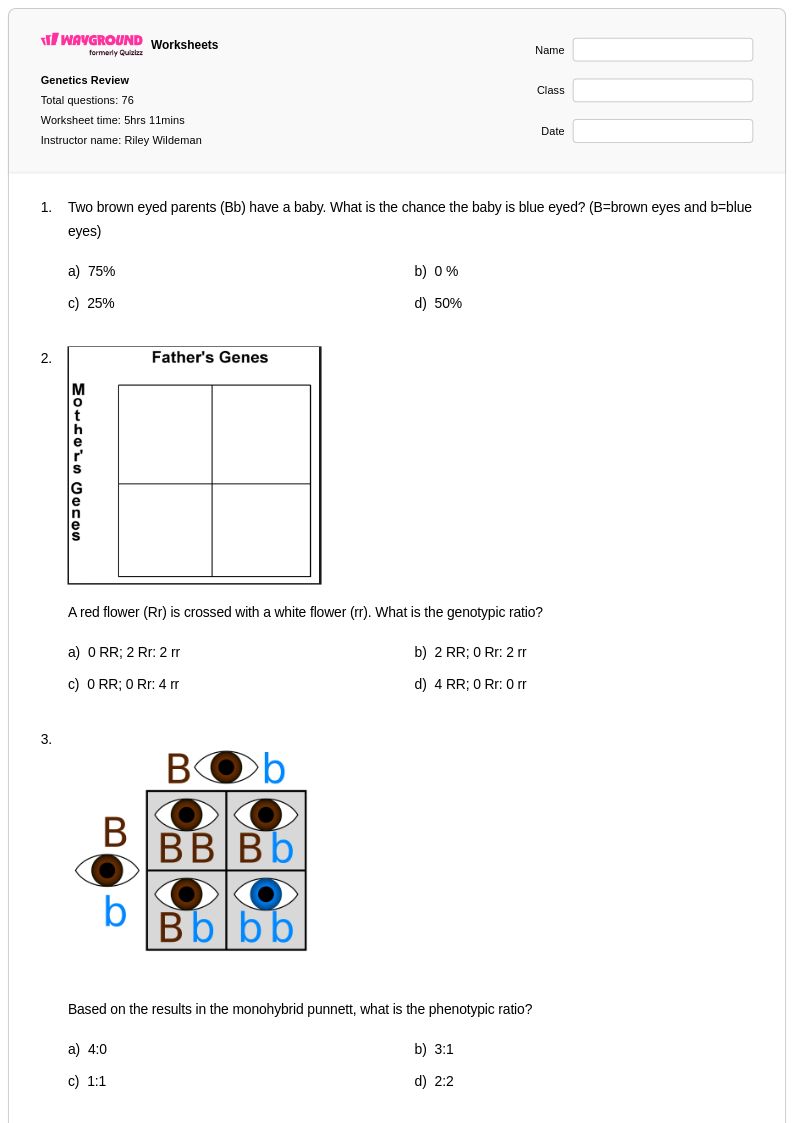
76 Q
9th - 12th
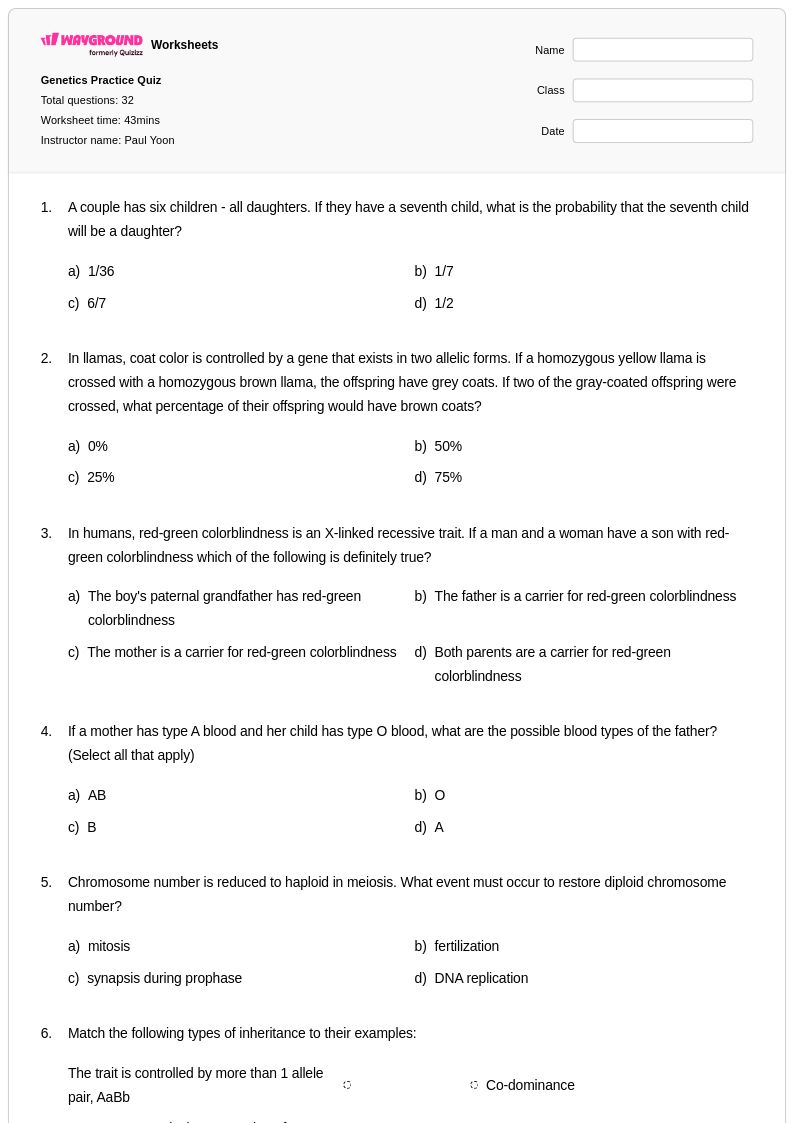
32 Q
12th
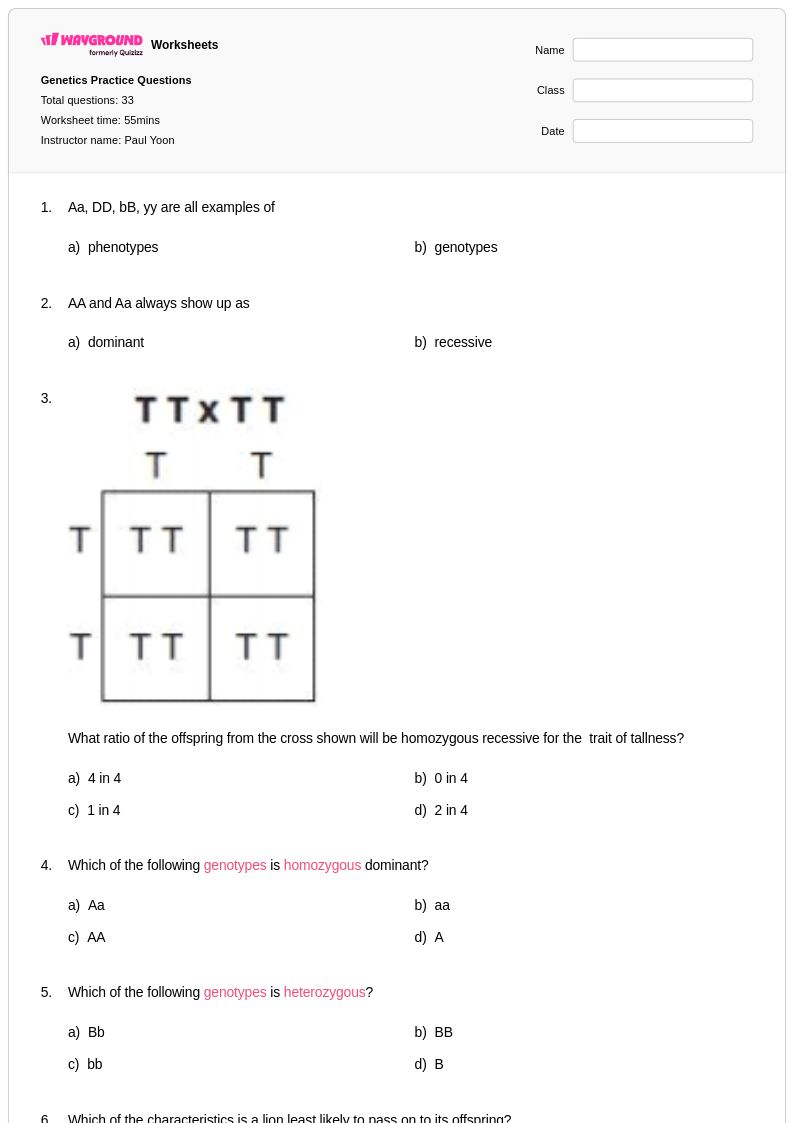
33 Q
9th - 12th
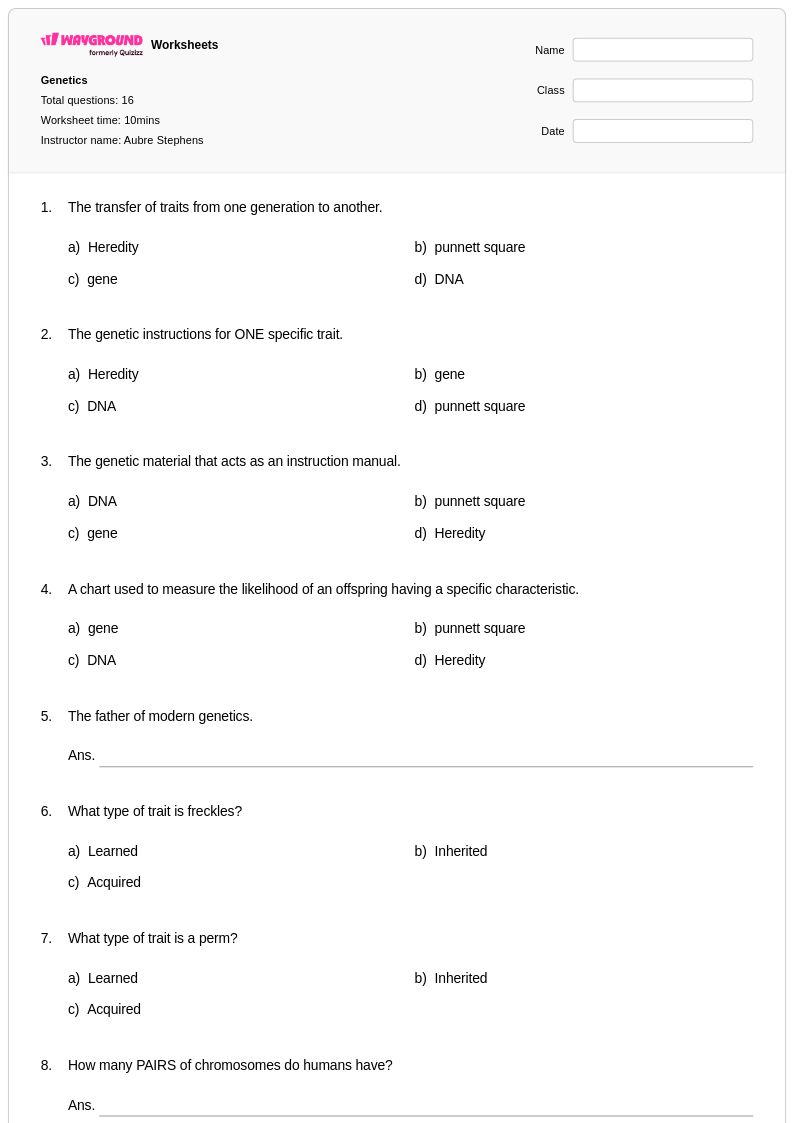
16 Q
7th - Uni
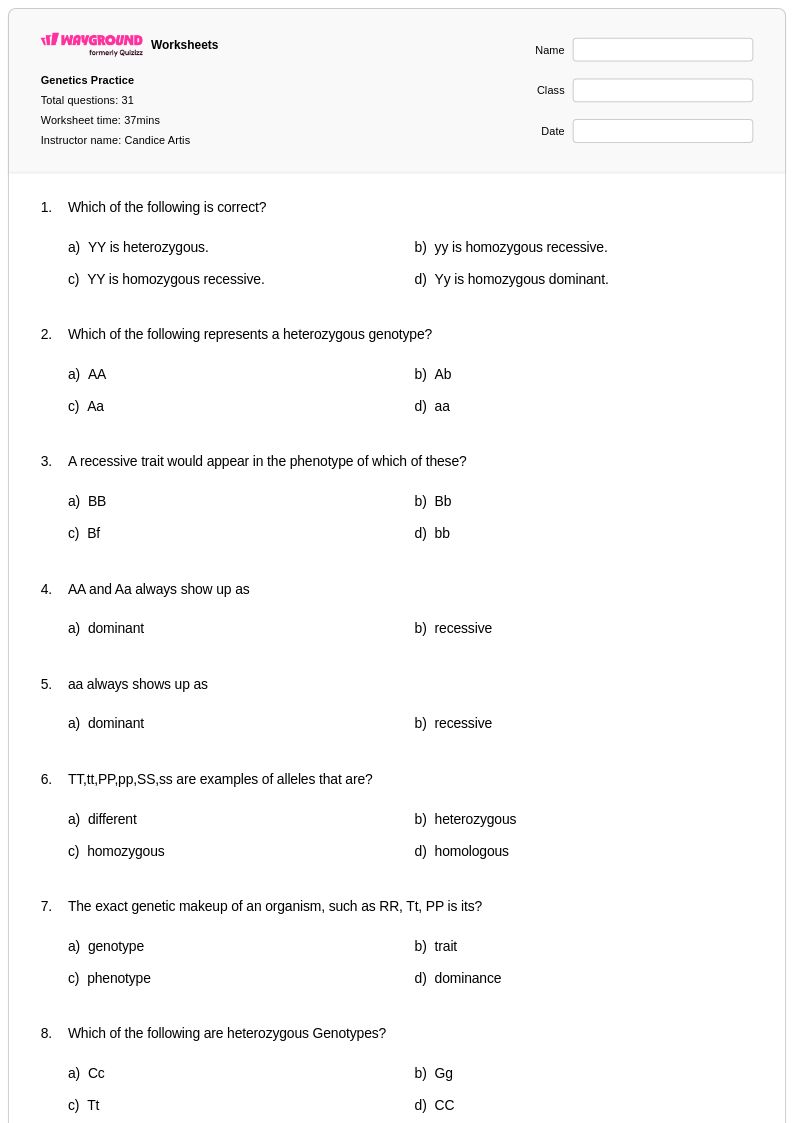
31 Q
9th - 12th
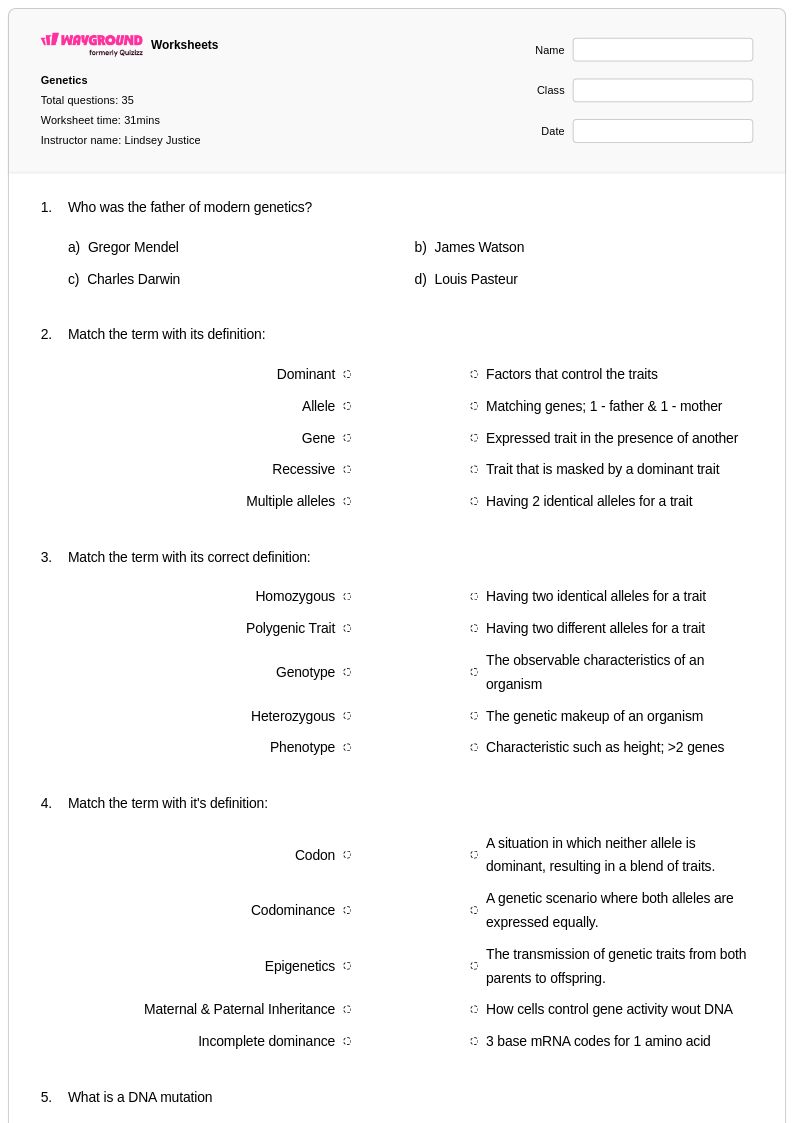
35 Q
9th - 12th
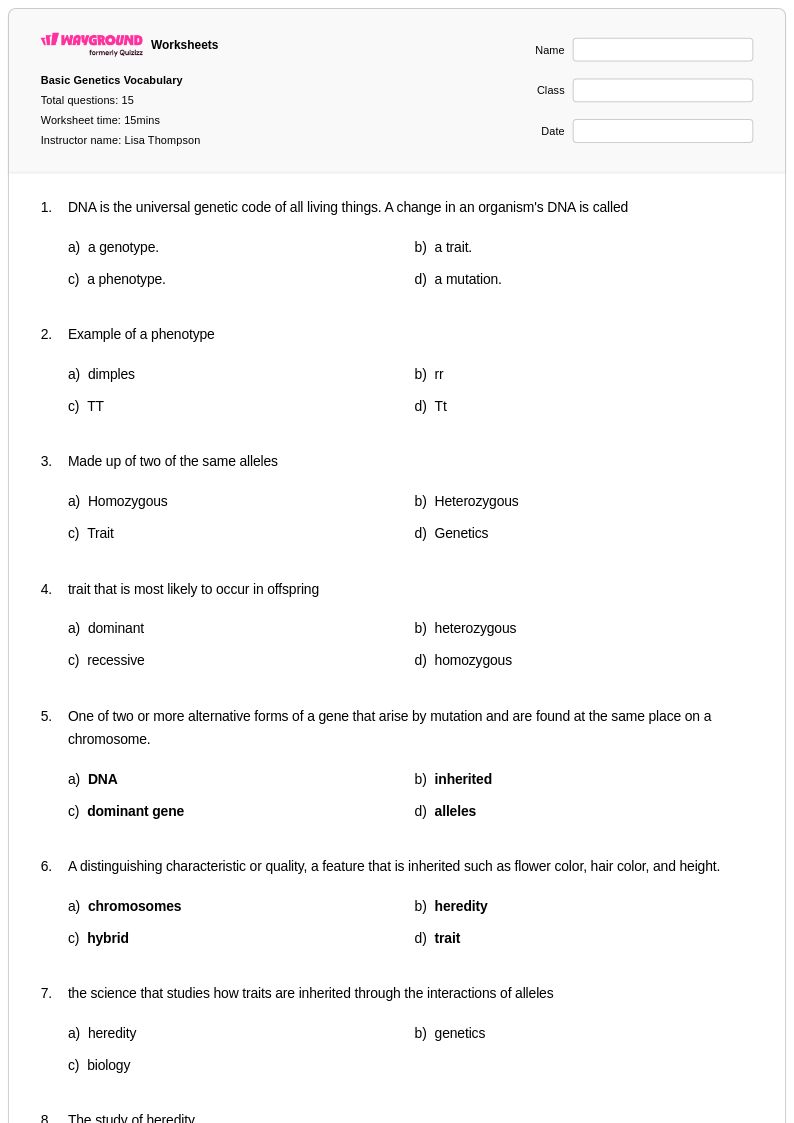
15 Q
7th - Uni
Explore Genetics Vocabulary Dominant and Recessive Worksheets by Grades
Explore Other Subject Worksheets for class 12
Explore printable Genetics Vocabulary Dominant and Recessive worksheets for Class 12
Genetics vocabulary worksheets focusing on dominant and recessive traits provide Class 12 biology students with essential practice in mastering the fundamental terminology that underlies heredity and inheritance patterns. These comprehensive worksheets available through Wayground strengthen students' understanding of key genetic concepts including alleles, phenotypes, genotypes, homozygous and heterozygous conditions, and the mechanisms by which dominant traits mask recessive ones in offspring. Students engage with practice problems that require them to apply vocabulary terms correctly while analyzing inheritance scenarios, completing Punnett squares, and interpreting genetic crosses. The collection includes detailed answer keys that support independent learning and self-assessment, with materials available as free printables and downloadable pdf formats to accommodate diverse classroom needs and study preferences.
Wayground's extensive library of teacher-created genetics vocabulary resources empowers educators with millions of professionally developed worksheets specifically designed for Class 12 biology instruction. The platform's advanced search and filtering capabilities allow teachers to quickly locate materials that align with curriculum standards and match their students' specific learning objectives around dominant and recessive trait vocabulary. Differentiation tools enable instructors to customize worksheets for varying ability levels, while the availability of both printable and digital formats, including convenient pdf downloads, provides maximum flexibility for lesson planning and resource distribution. These comprehensive collections support targeted skill practice, remediation for struggling students, and enrichment opportunities for advanced learners, ensuring that all Class 12 students can build the strong vocabulary foundation necessary for success in advanced genetics studies.
FAQs
How do I teach dominant and recessive traits to biology students?
What exercises help students practice genetics vocabulary for dominant and recessive traits?
What mistakes do students commonly make when learning dominant and recessive genetics vocabulary?
How can I differentiate genetics vocabulary instruction for students at different skill levels?
How do I use Wayground's dominant and recessive genetics vocabulary worksheets in my classroom?
How do I assess whether students understand the difference between dominant and recessive alleles?