Free Printable Citric Acid Cycle Worksheets for Class 12
Class 12 Biology students can master the citric acid cycle with Wayground's comprehensive collection of free worksheets, featuring detailed practice problems, printable PDFs, and complete answer keys to reinforce cellular respiration concepts.
Explore printable Citric Acid Cycle worksheets for Class 12
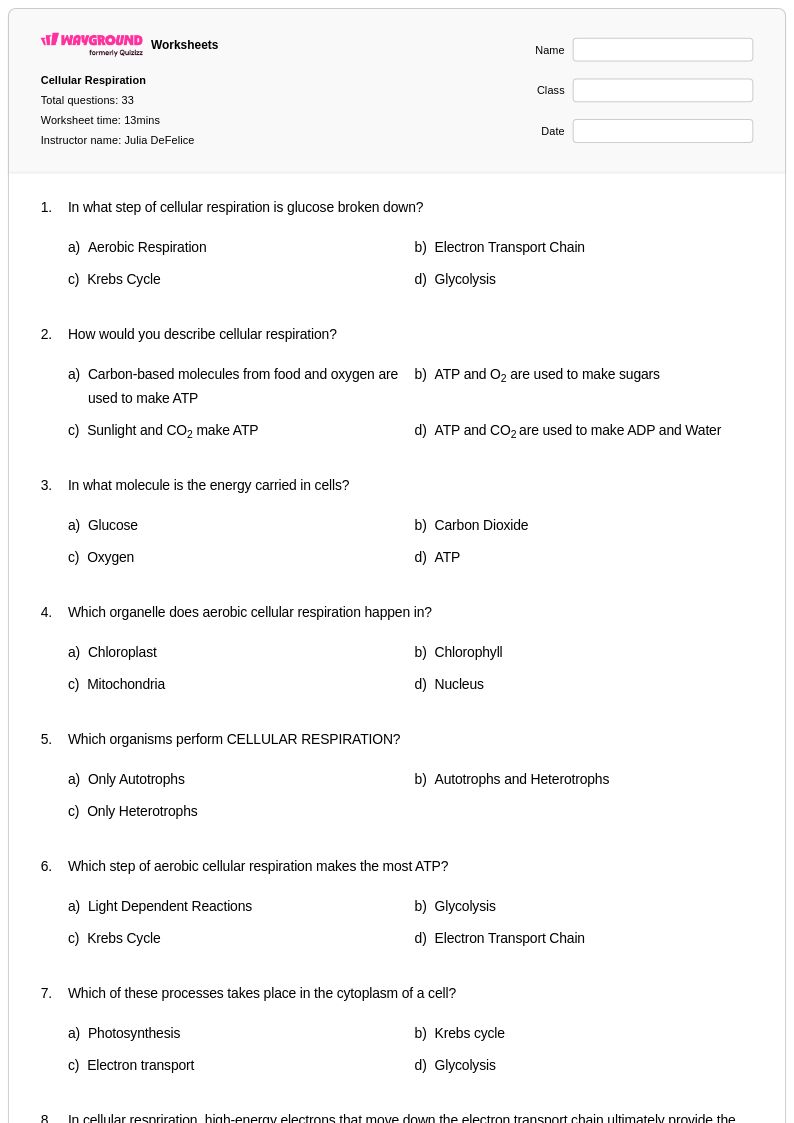
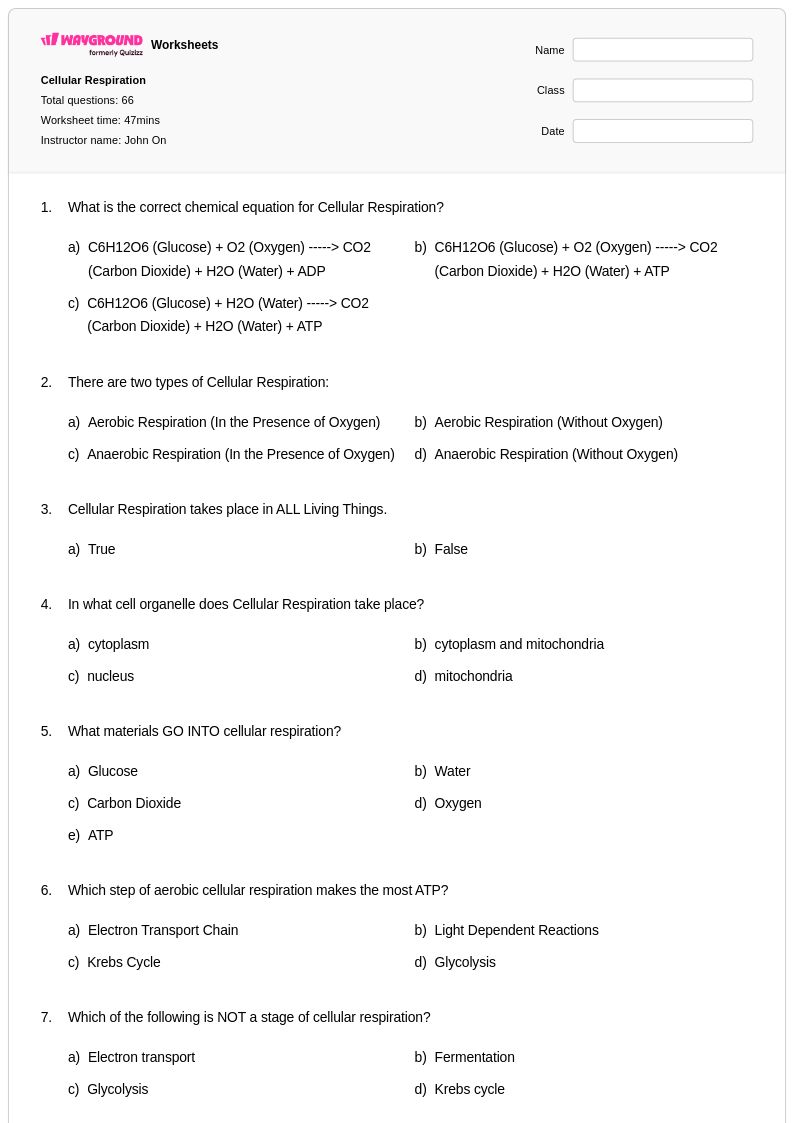
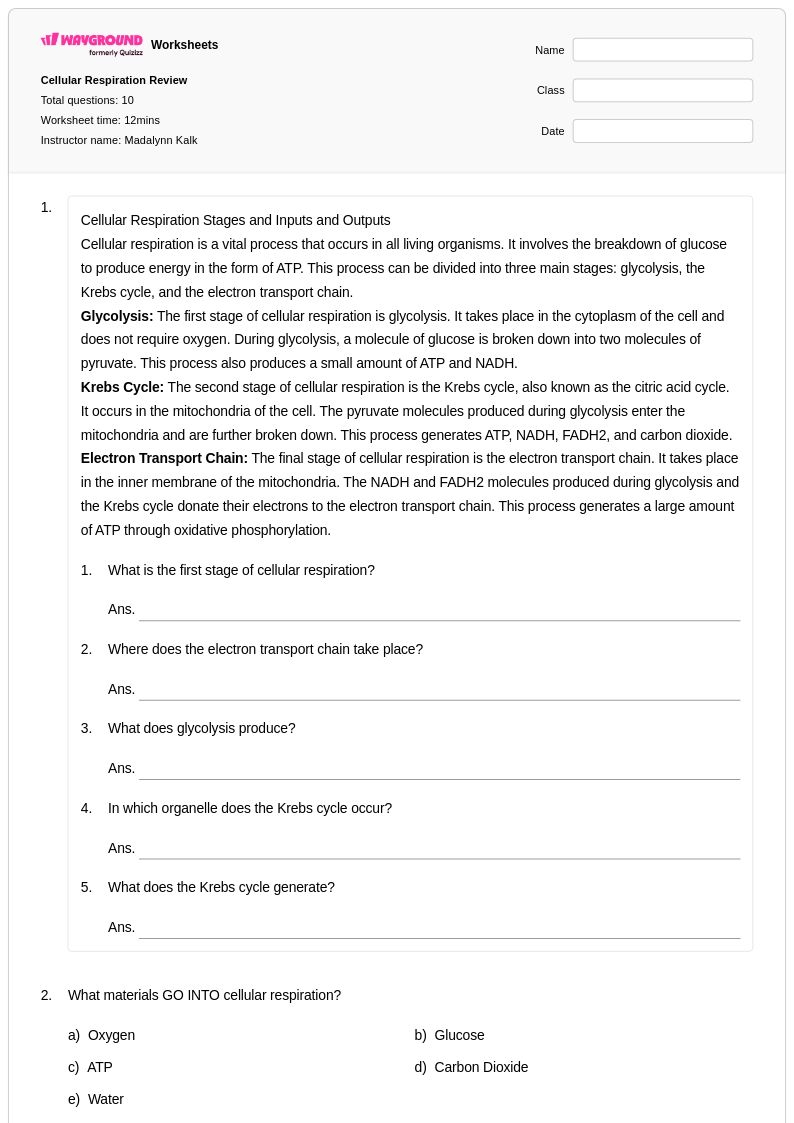
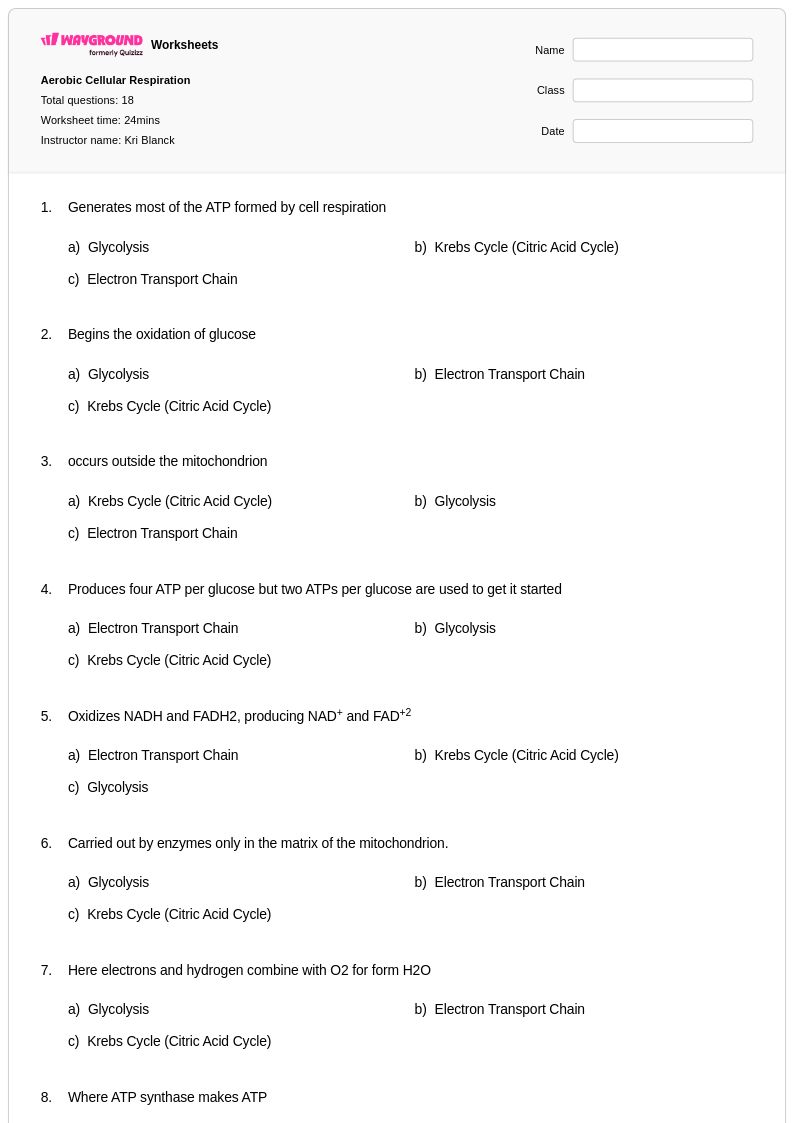
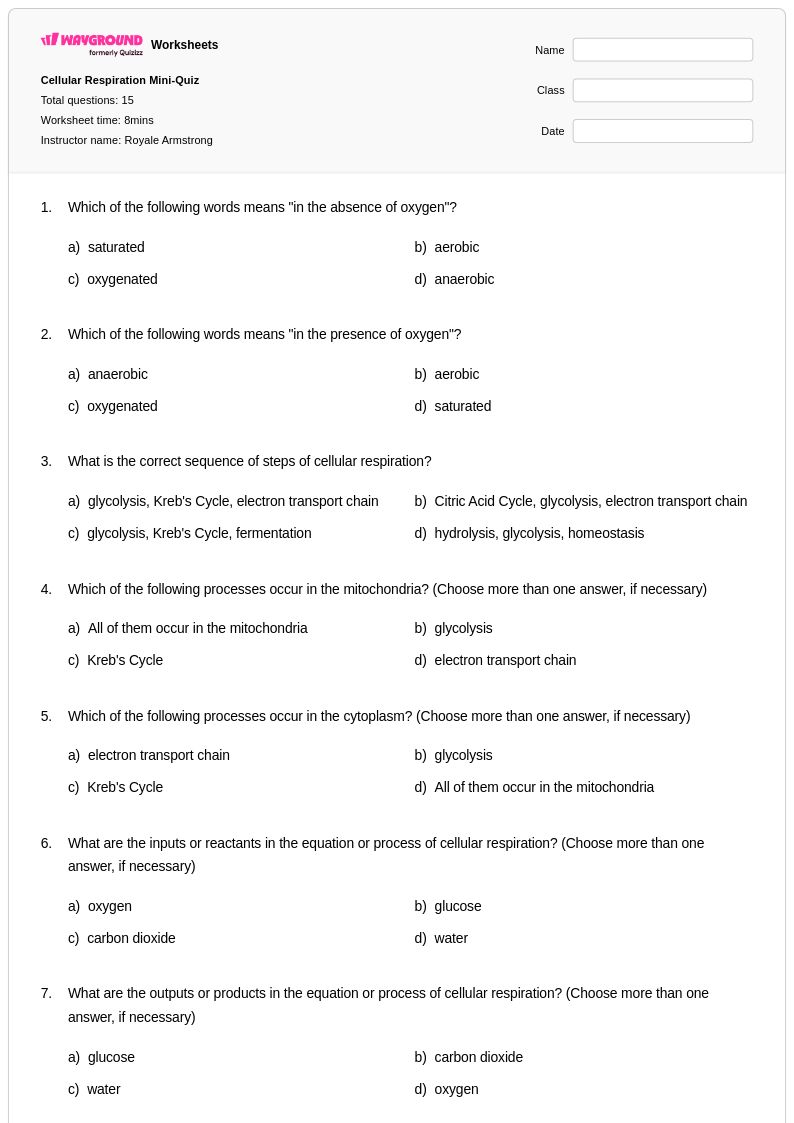
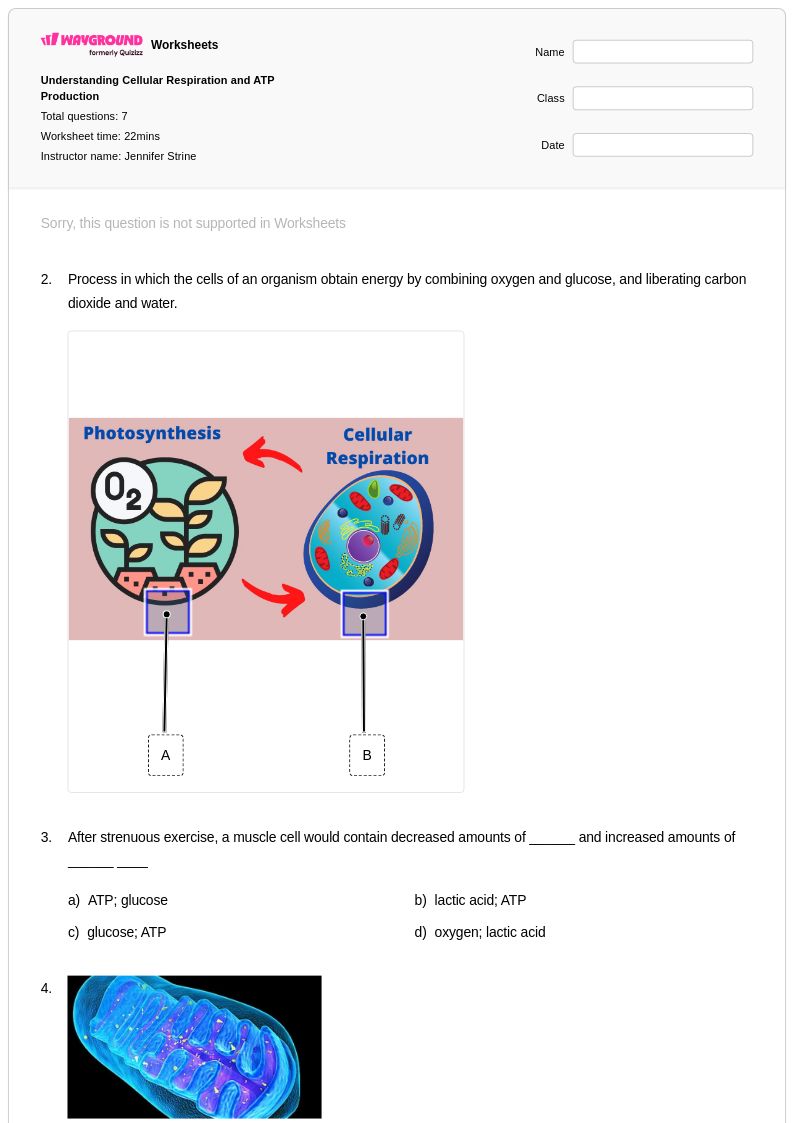
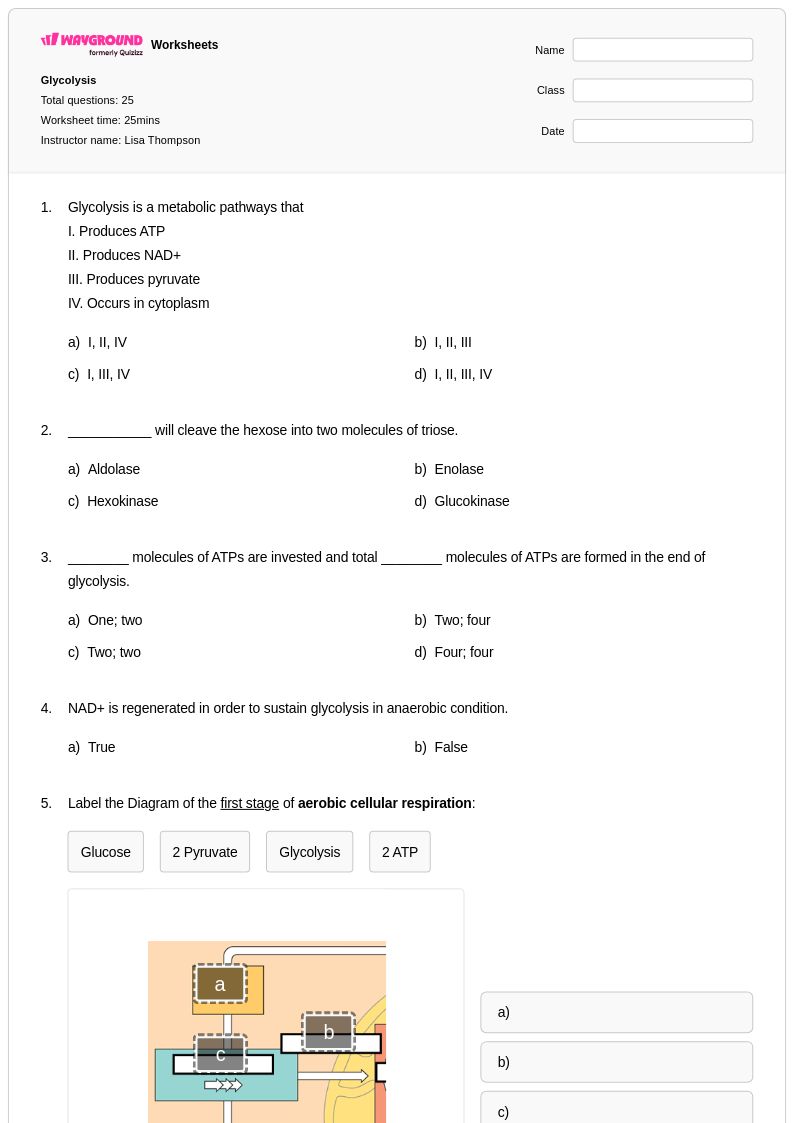
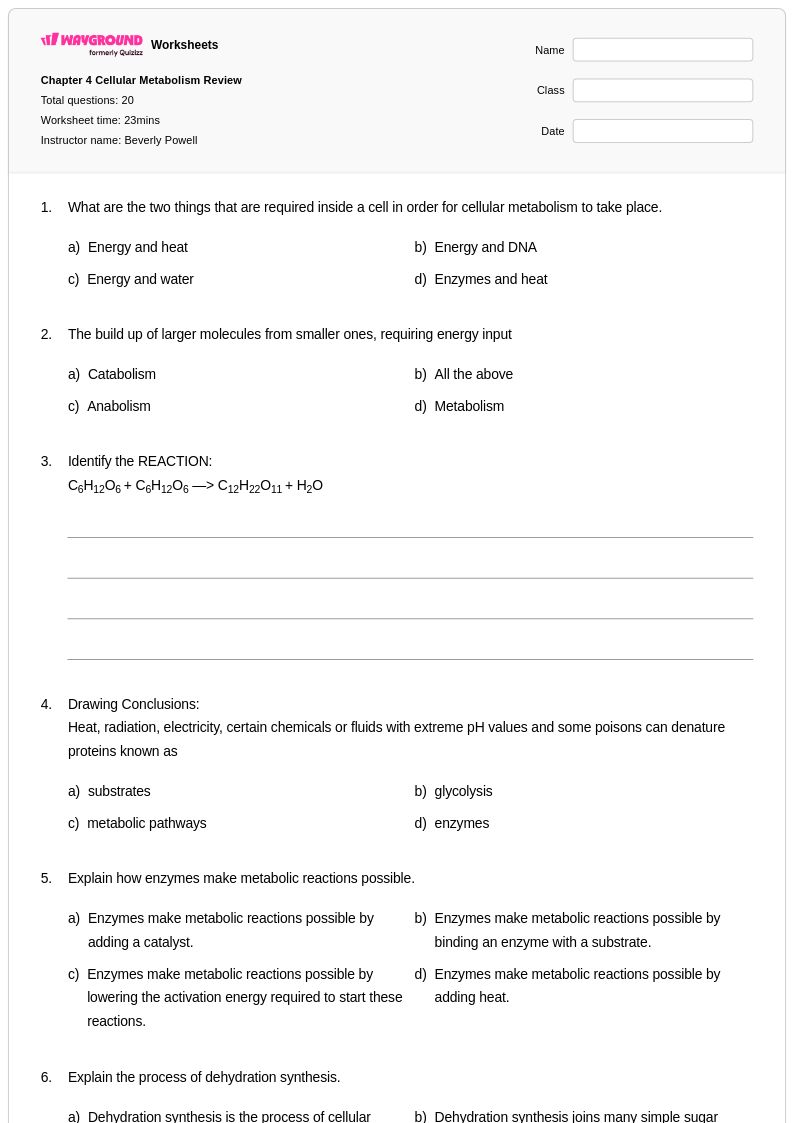
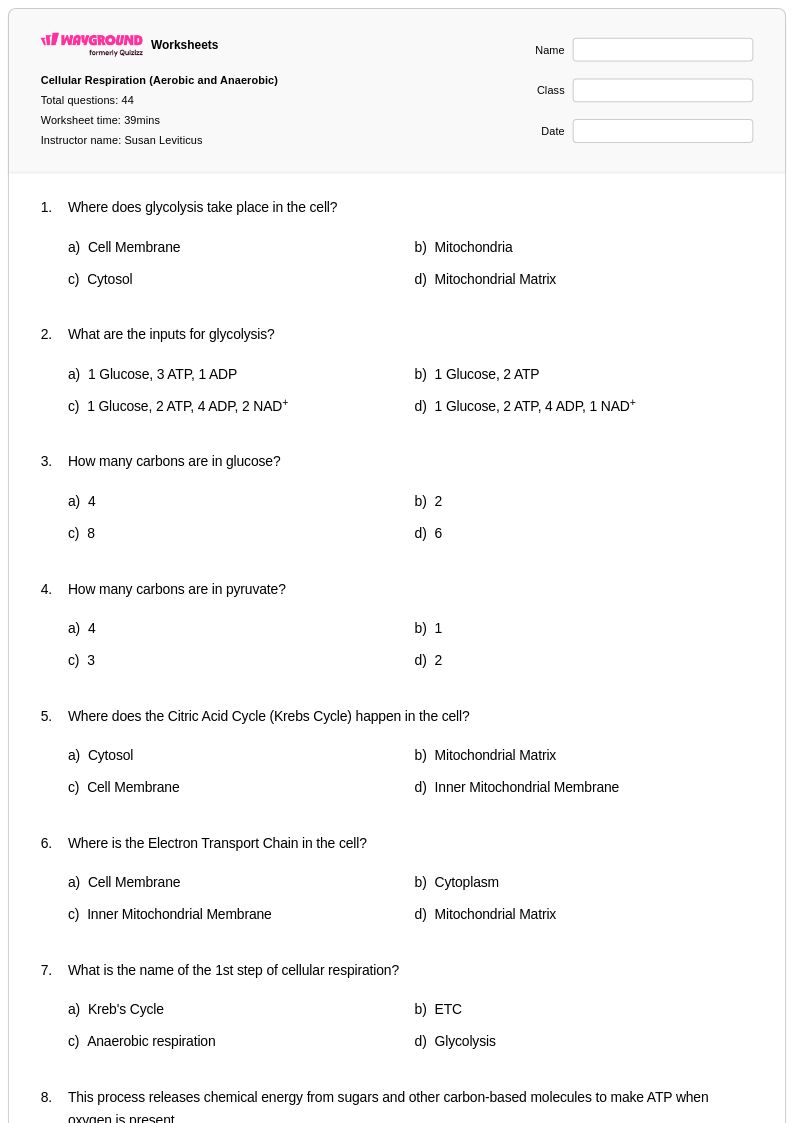
The Citric Acid Cycle worksheets available through Wayground (formerly Quizizz) provide Class 12 students with comprehensive practice materials to master this fundamental metabolic pathway central to cellular respiration. These expertly designed worksheets strengthen critical skills including tracing the eight-step enzymatic sequence, identifying key intermediates like acetyl-CoA and oxaloacetate, calculating ATP yields, and understanding the cycle's regulatory mechanisms through allosteric control and feedback inhibition. Students develop proficiency in biochemical pathway analysis while working through detailed practice problems that cover substrate-level phosphorylation, oxidative decarboxylation reactions, and the integration of the citric acid cycle with glycolysis and electron transport. Each worksheet includes answer keys and comprehensive solutions, with free printable pdf formats ensuring accessibility for both classroom instruction and independent study sessions.
Wayground (formerly Quizizz) empowers educators with an extensive collection of millions of teacher-created citric acid cycle resources that support diverse instructional needs through robust search and filtering capabilities aligned with advanced biology standards. The platform's differentiation tools enable teachers to customize worksheet complexity and focus areas, accommodating varying student readiness levels while maintaining rigorous Class 12 expectations for biochemical understanding. Teachers can seamlessly integrate these materials into lesson planning for initial instruction, targeted remediation of misconceptions about metabolic regulation, or enrichment activities exploring clinical applications of citric acid cycle dysfunction. The flexible availability of both printable and digital pdf formats facilitates adaptive classroom management, whether supporting traditional worksheet-based practice sessions or incorporating interactive digital elements that enhance student engagement with complex biochemical concepts and quantitative problem-solving skills.
FAQs
How do I teach the citric acid cycle to biology students?
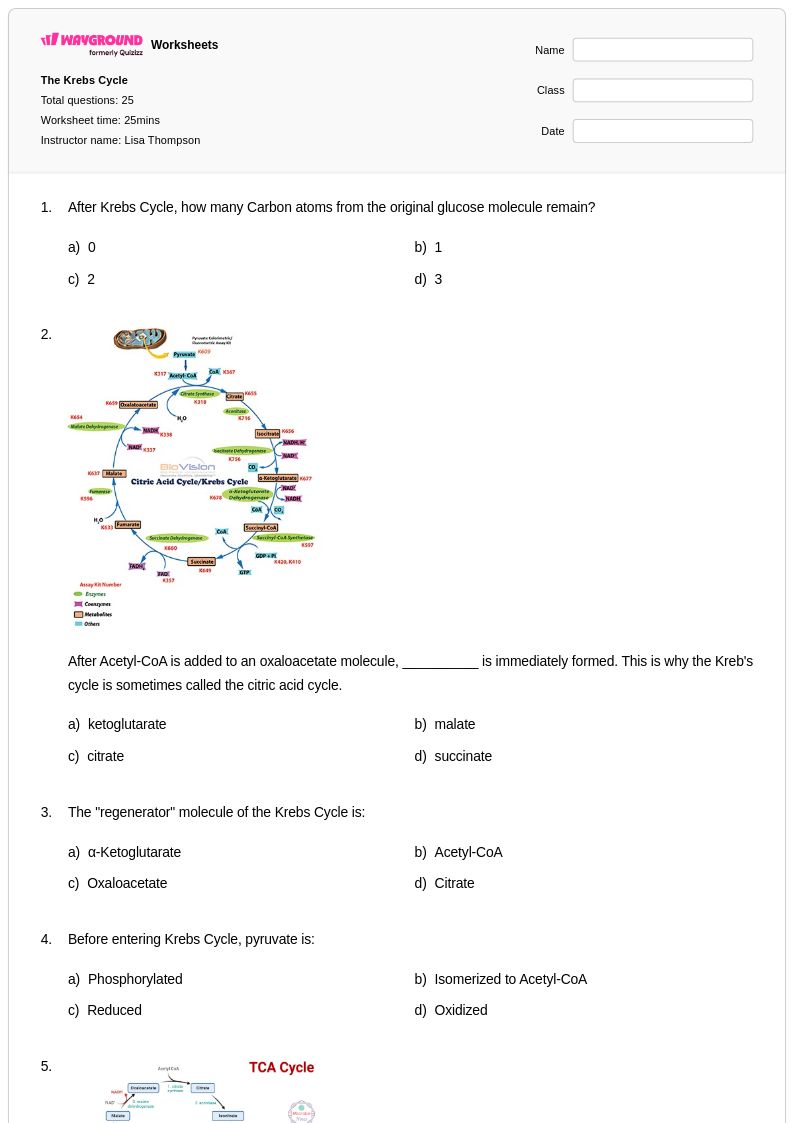
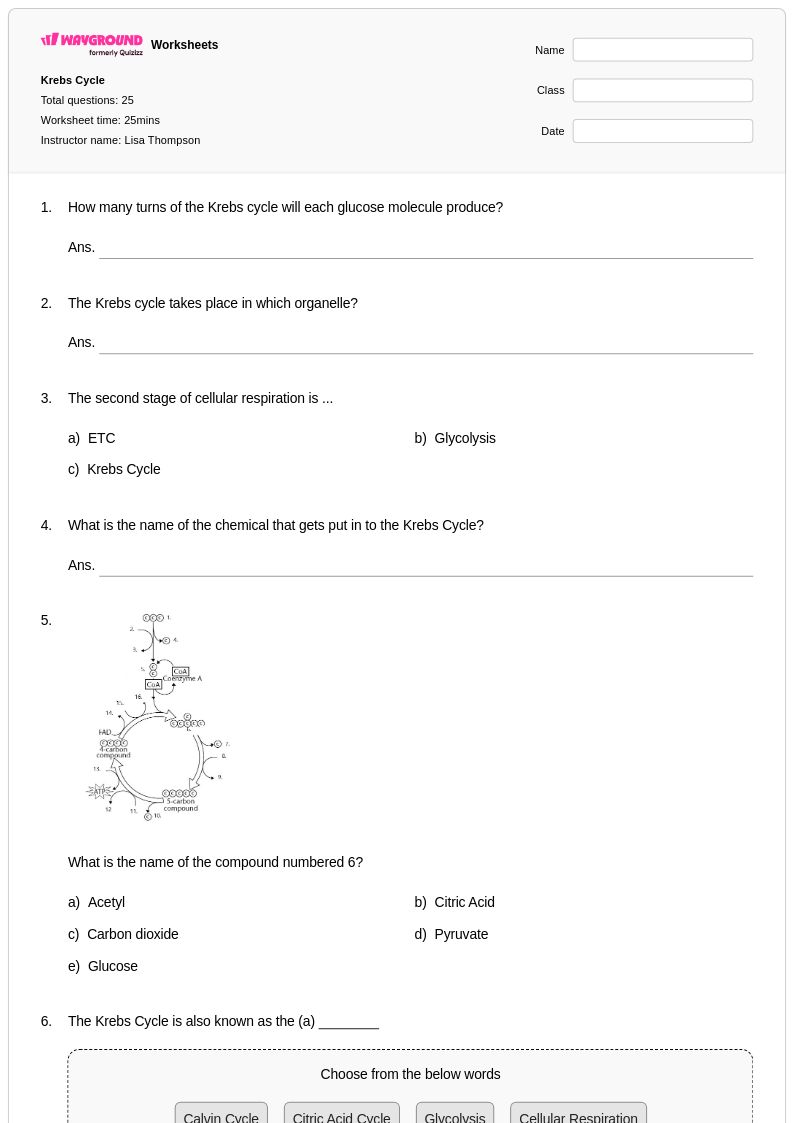
Teach the citric acid cycle by breaking it into three phases: the entry point (acetyl-CoA combining with oxaloacetate to form citrate), the two decarboxylation steps that release CO2, and the regeneration of oxaloacetate. Use a labeled cycle diagram as a visual anchor throughout instruction, then layer in enzyme names, cofactors, and energy outputs incrementally. Having students trace one acetyl-CoA molecule through all eight steps before introducing energy accounting helps prevent early confusion about what the cycle actually produces.
What exercises help students practice the citric acid cycle?
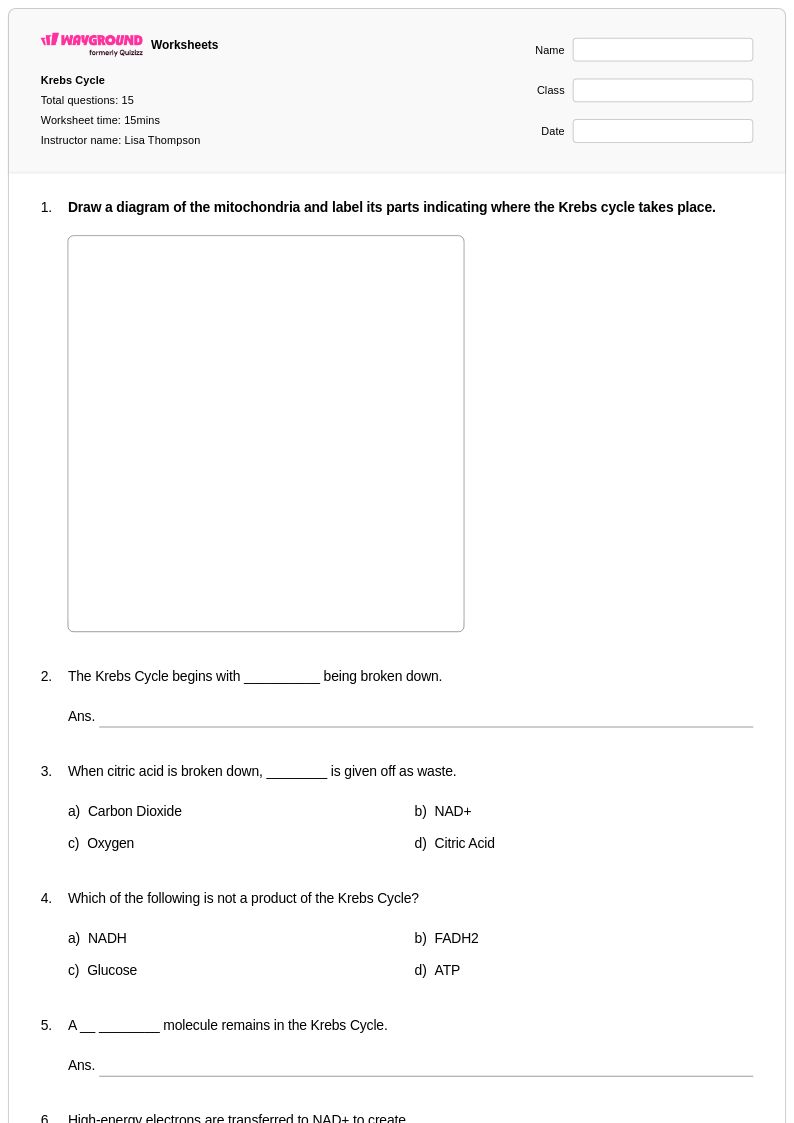
Effective practice exercises include blank cycle diagrams where students fill in intermediates and enzymes, step-by-step reaction sequencing tasks, and energy yield calculation problems that require students to tally ATP, NADH, and FADH2 per turn of the cycle. Tracing electron flow to the electron transport chain is a strong integrative exercise because it connects the citric acid cycle to the broader context of aerobic respiration. Worksheets that combine labeled diagrams with chemical equation matching reinforce both the structural and quantitative dimensions of the pathway.
What mistakes do students commonly make when learning the citric acid cycle?
The most common error is confusing per-turn energy yield with per-glucose yield — students often forget the cycle runs twice per glucose molecule because each glucose produces two acetyl-CoA. Students also frequently misidentify which steps release CO2 and which produce NADH versus FADH2. Another persistent misconception is treating ATP production in the cycle as the primary energy output, when in reality NADH and FADH2 carry the majority of usable energy to the electron transport chain.
How do I differentiate citric acid cycle instruction for students at different levels?
For students who are still building foundational understanding, focus on the inputs and outputs of the cycle as a whole before introducing individual enzyme names and reaction mechanisms. Advanced students can be challenged to explain regulatory control points, such as how isocitrate dehydrogenase is inhibited by ATP and activated by ADP, or to connect cycle intermediates to biosynthetic pathways like amino acid synthesis. On Wayground, teachers can apply accommodations such as read aloud support, reduced answer choices, and extended time to individual students, allowing the same worksheet set to serve a mixed-ability class without disrupting the flow for other learners.
How can I use Wayground's citric acid cycle worksheets in my classroom?
Wayground's citric acid cycle worksheets are available as printable PDFs, making them easy to distribute in a traditional lab or lecture setting, and in digital formats that work in technology-integrated classrooms or for remote learners. Teachers can also host the worksheets as a graded quiz directly on Wayground, which streamlines scoring and gives immediate feedback. All worksheets include complete answer keys, supporting self-paced independent study as well as structured peer review activities.
How does the citric acid cycle connect to the rest of cellular respiration?
The citric acid cycle serves as the central hub of cellular metabolism, receiving acetyl-CoA derived from pyruvate oxidation and feeding the high-energy electron carriers NADH and FADH2 into the electron transport chain. Without the cycle, cells could not fully oxidize glucose and would generate far less ATP. Teaching this connection explicitly — showing students that the cycle's real output is electron carriers rather than ATP itself — is essential for students to understand why aerobic respiration is so much more efficient than glycolysis alone.