Free Printable The Nervous and Endocrine Systems Worksheets for Class 12
Class 12 Biology worksheets on The Nervous and Endocrine Systems help students master neural pathways, hormone regulation, and body coordination through comprehensive printables, practice problems, and answer keys available as free PDF downloads.
Explore printable The Nervous and Endocrine Systems worksheets for Class 12
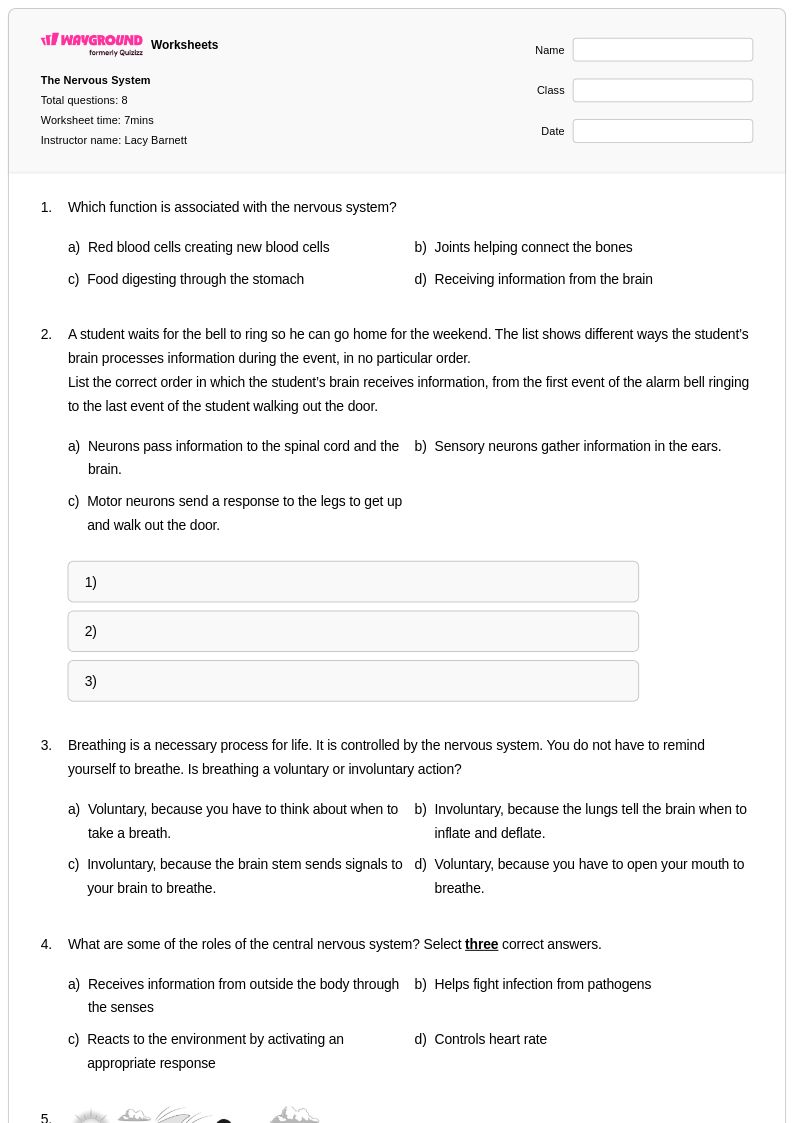
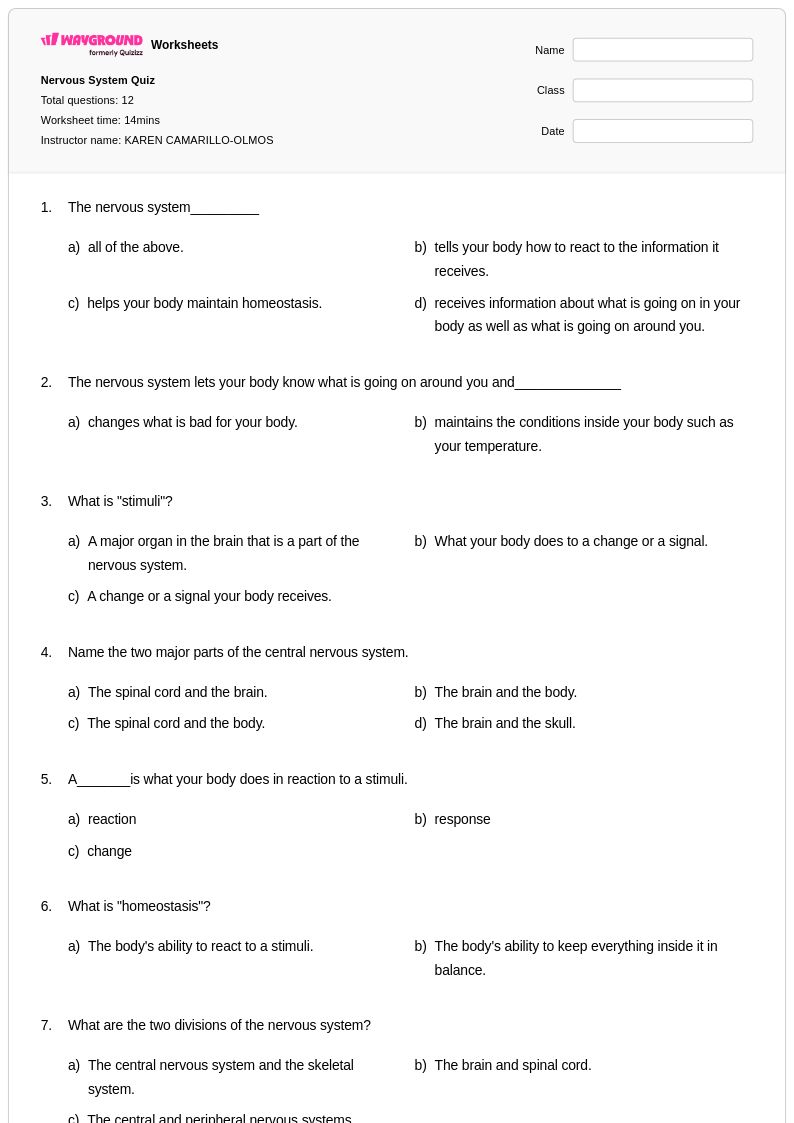
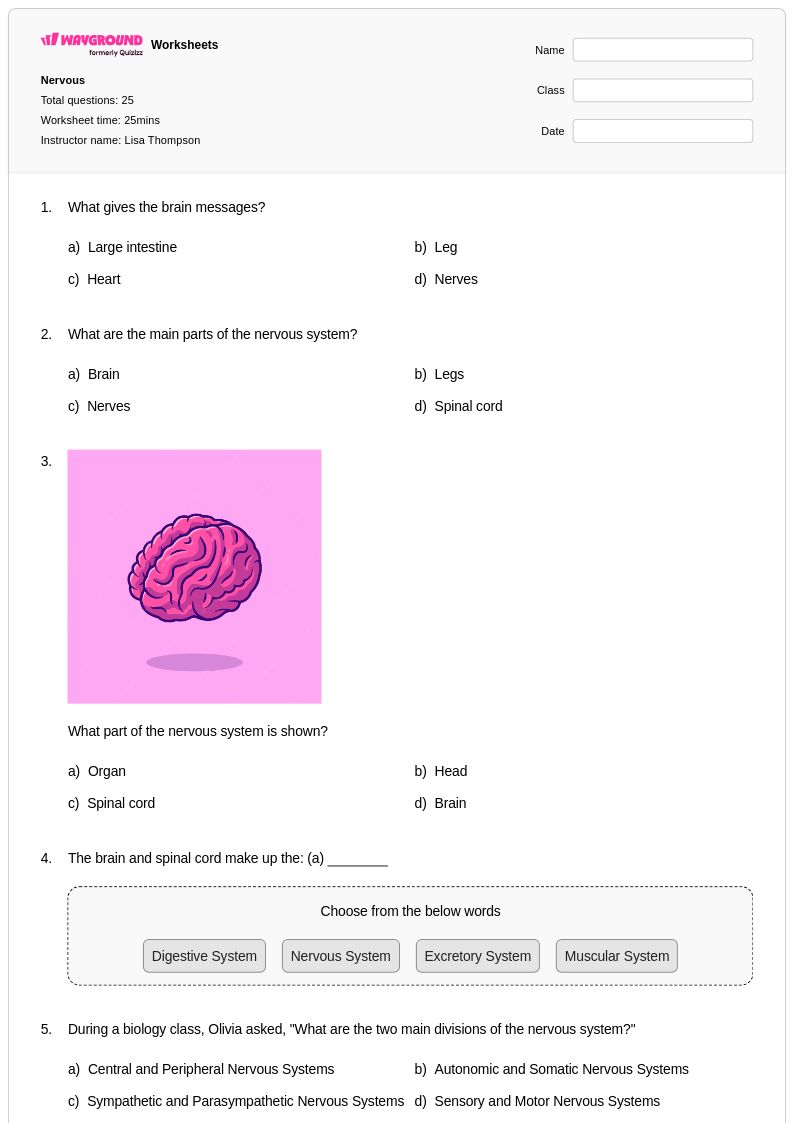
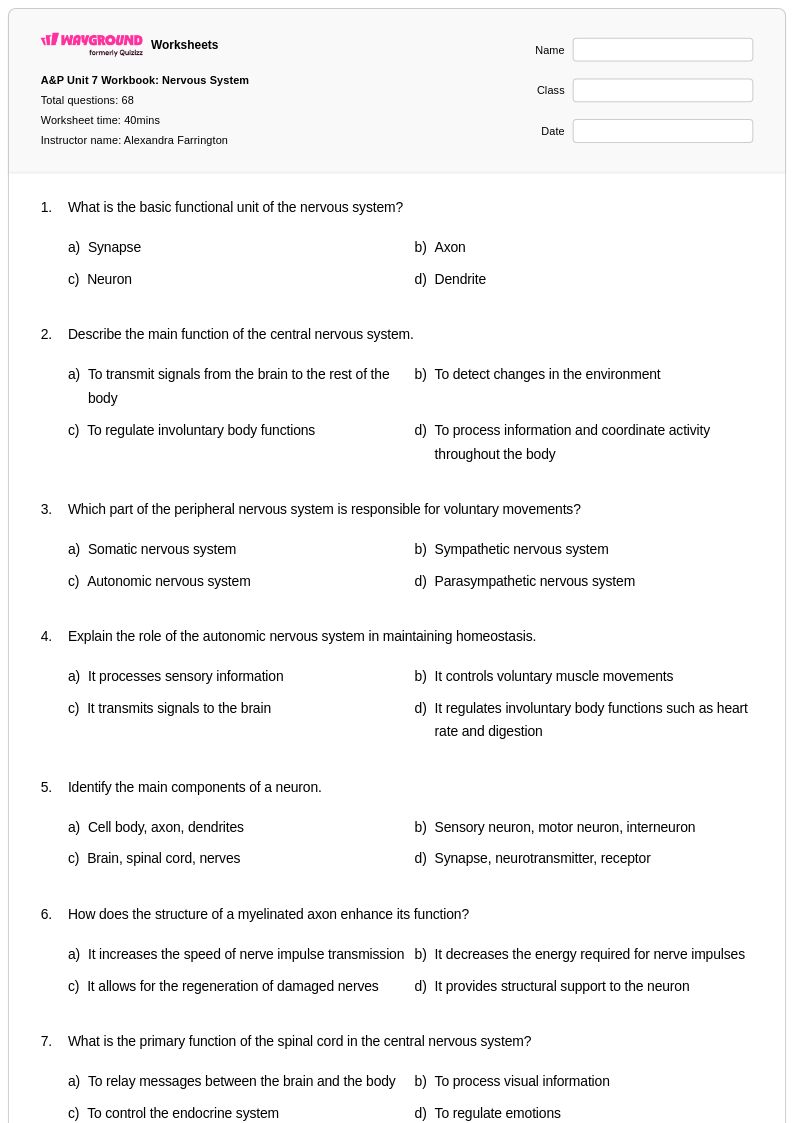
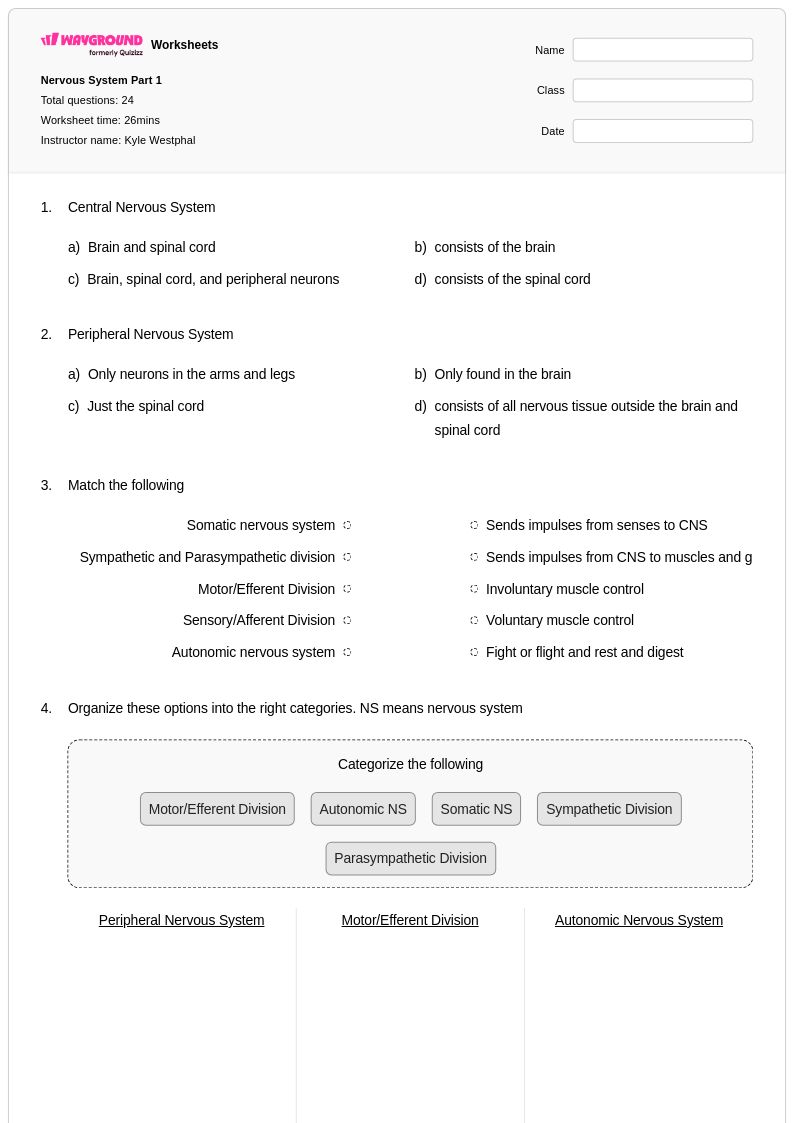
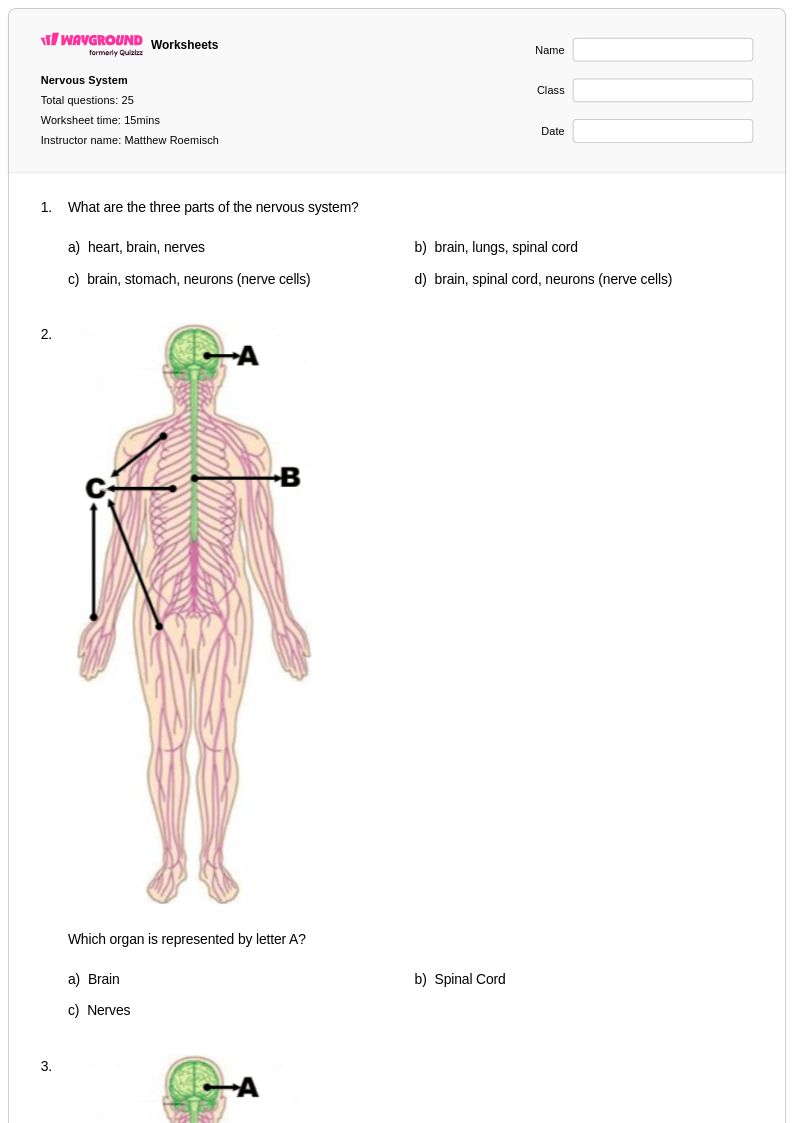
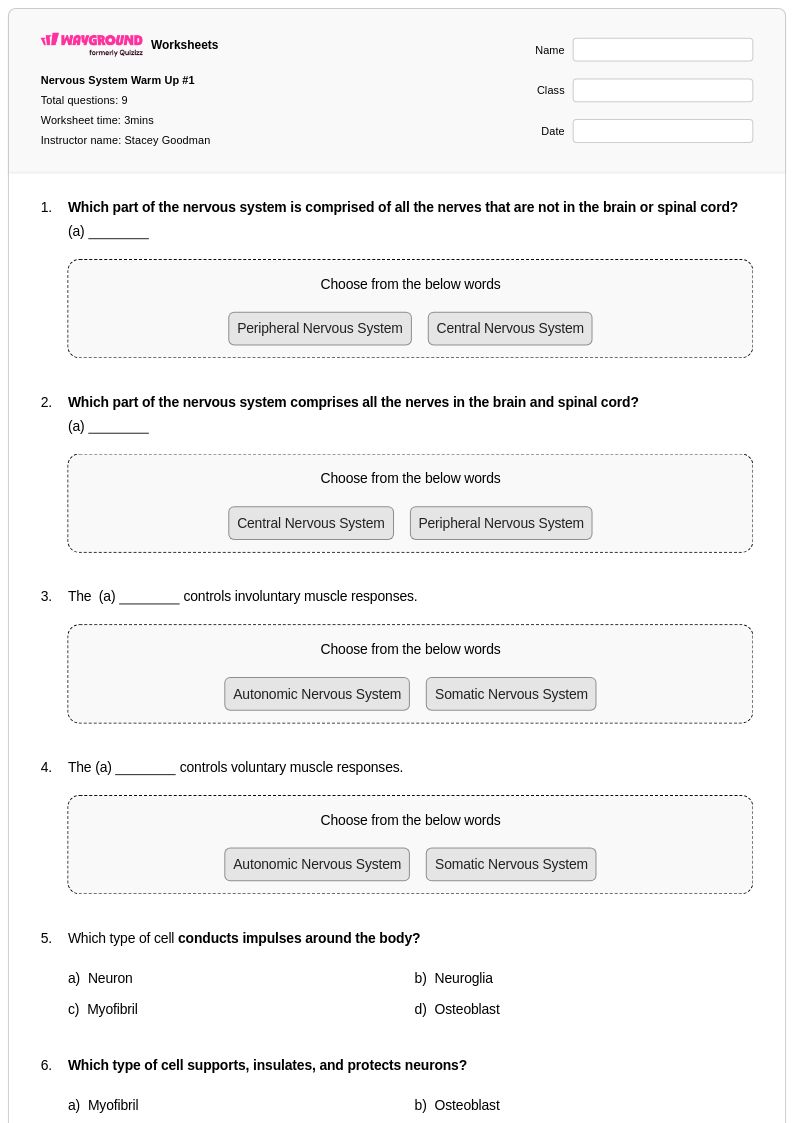
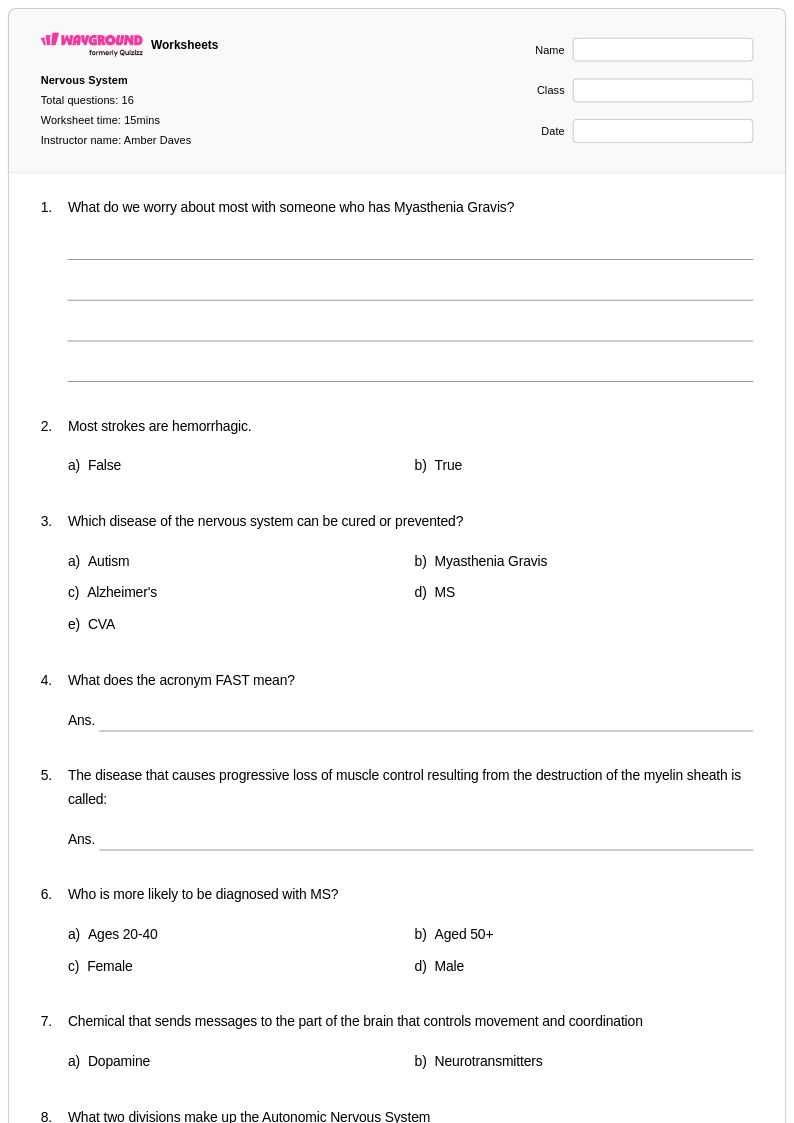
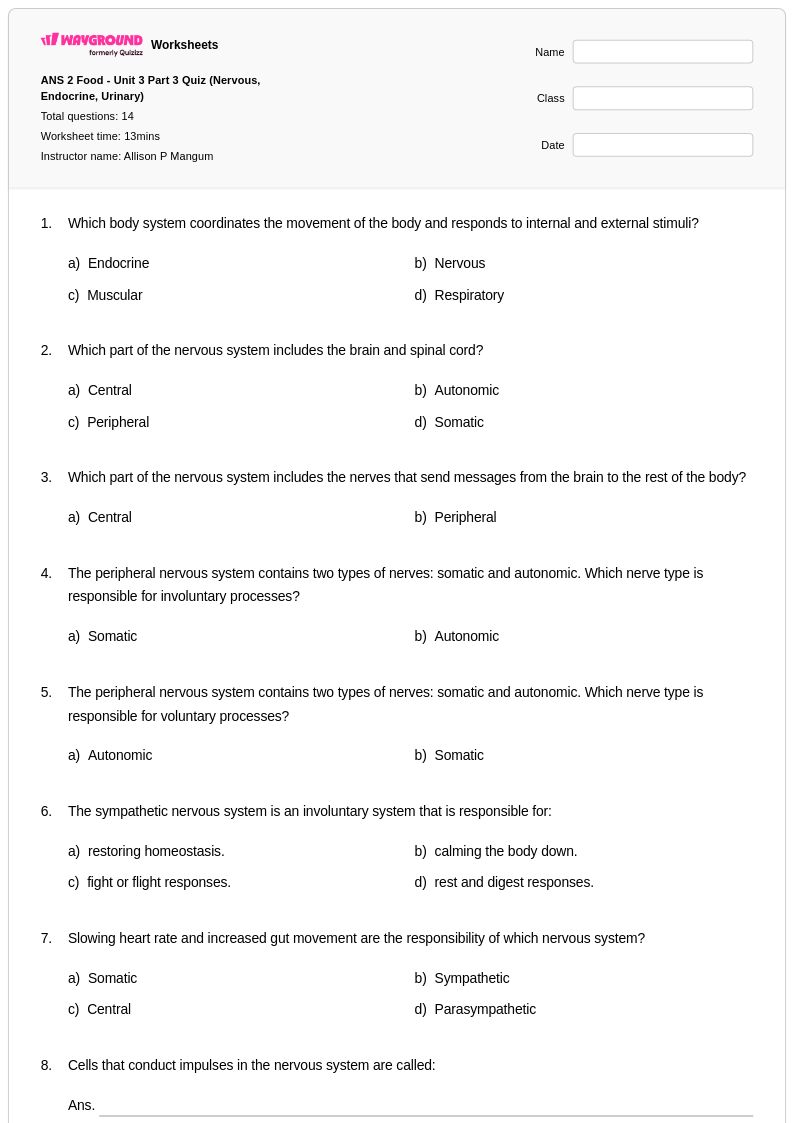
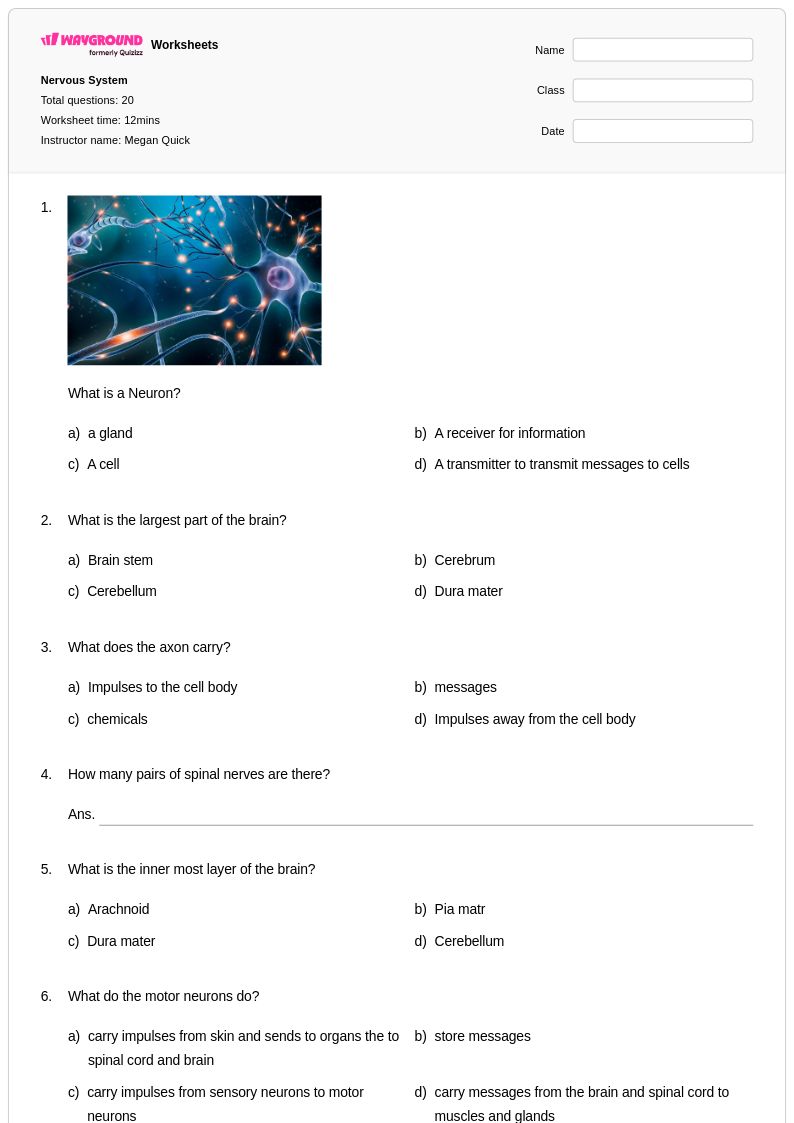
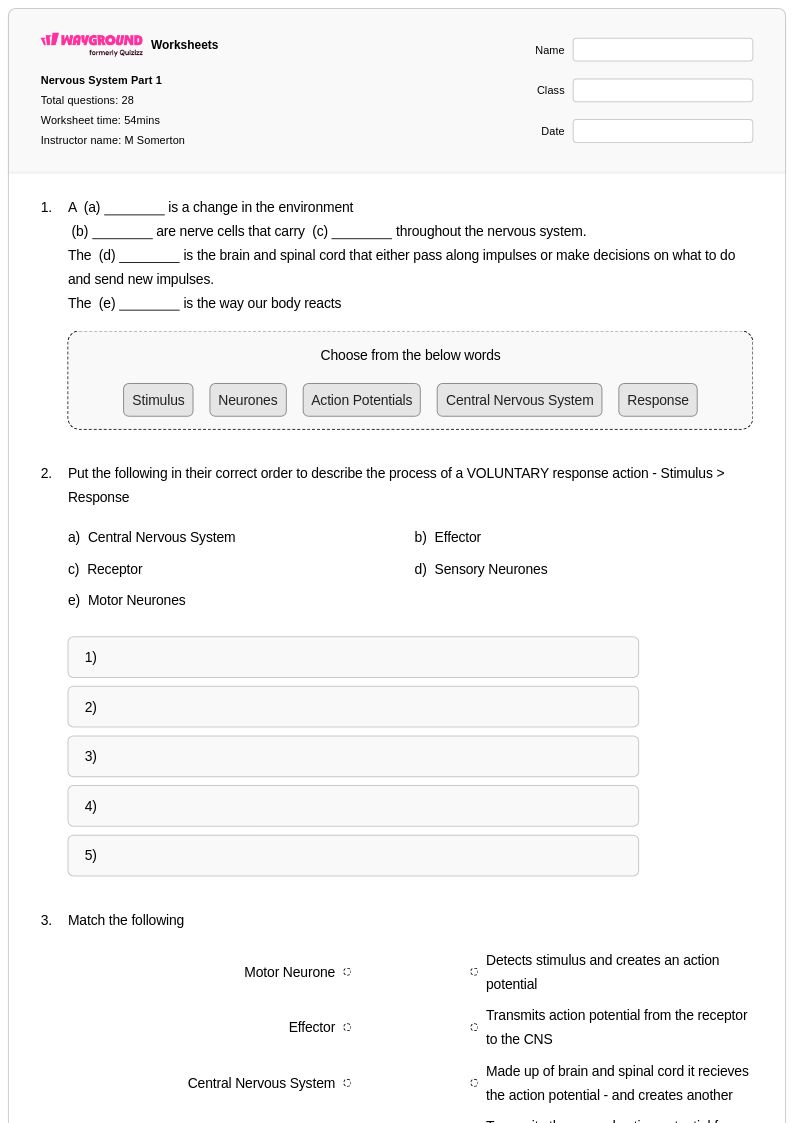
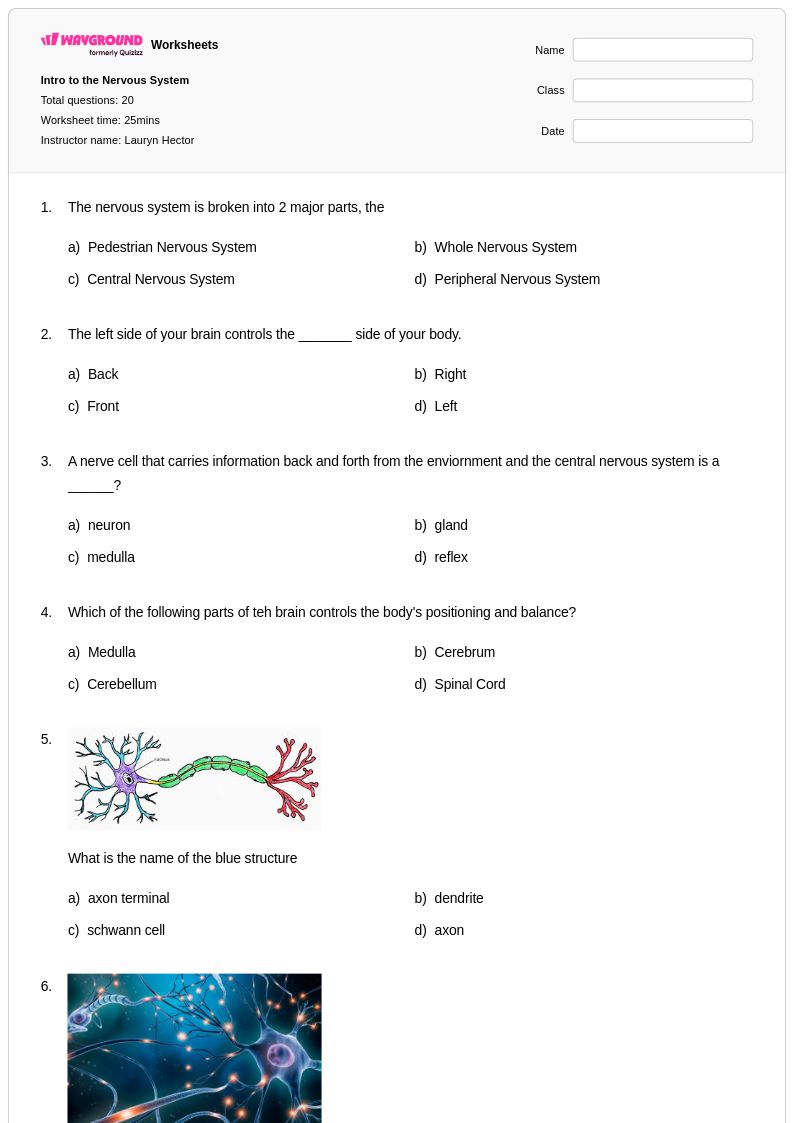
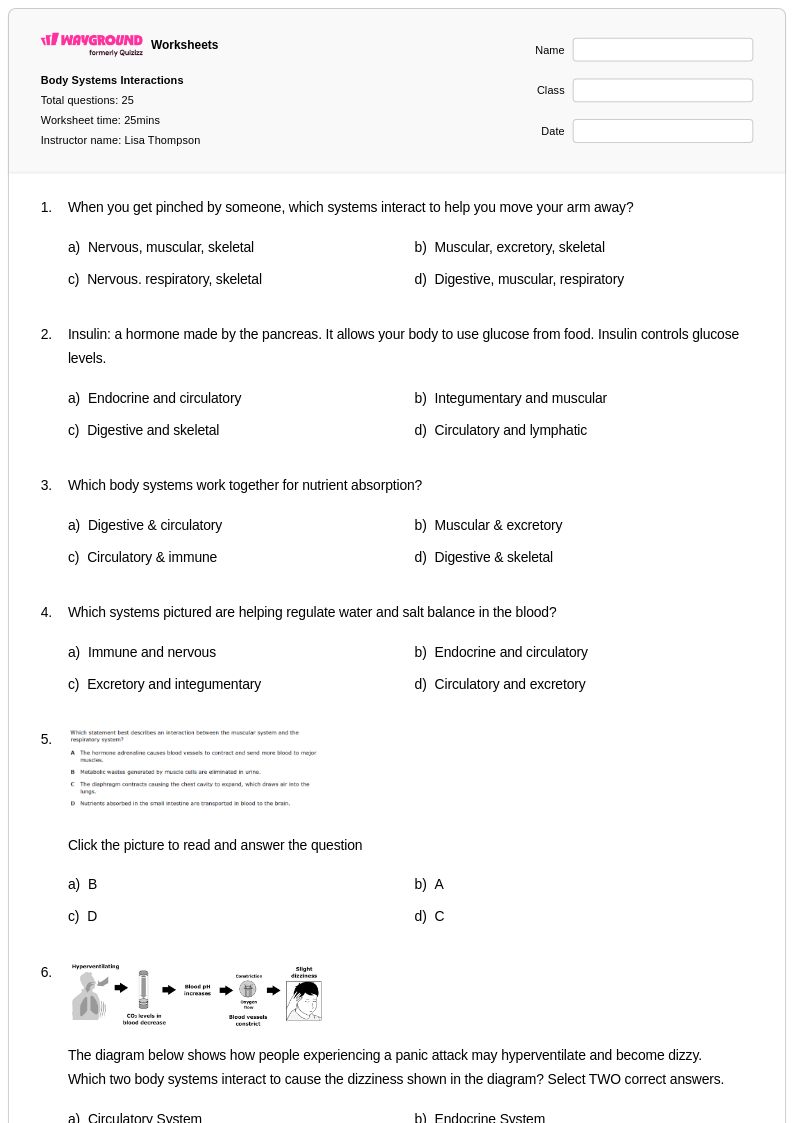
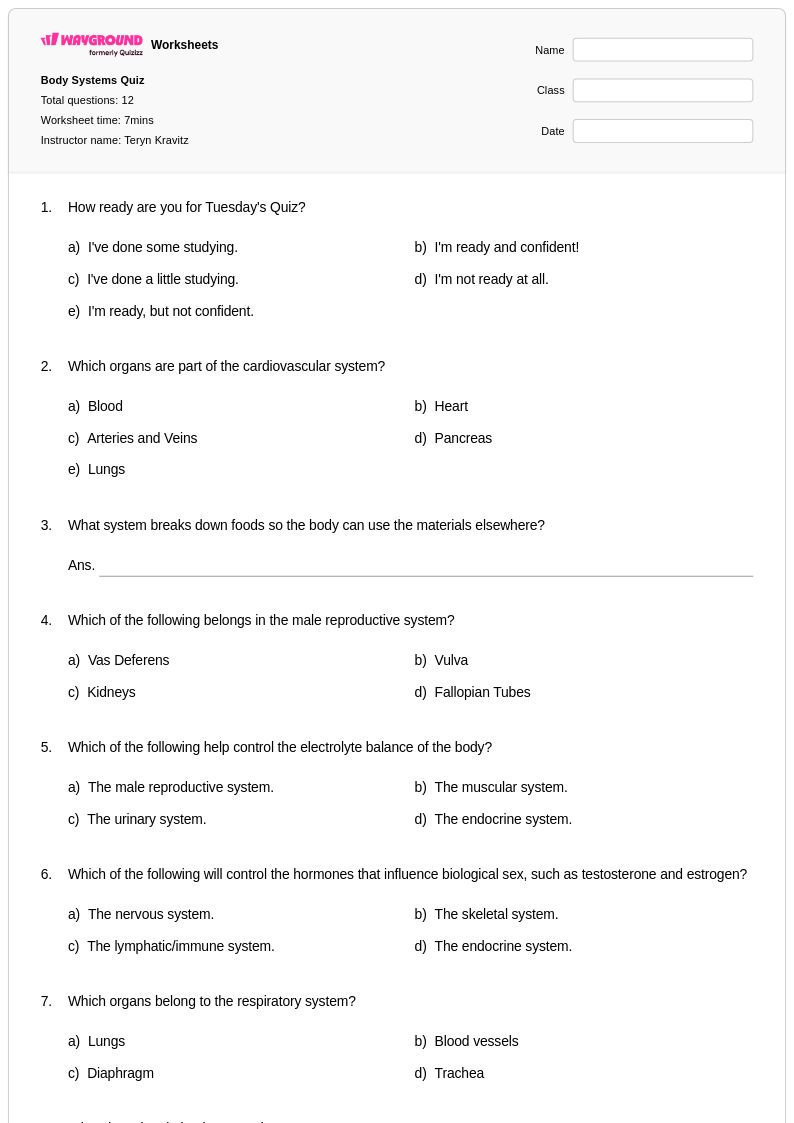
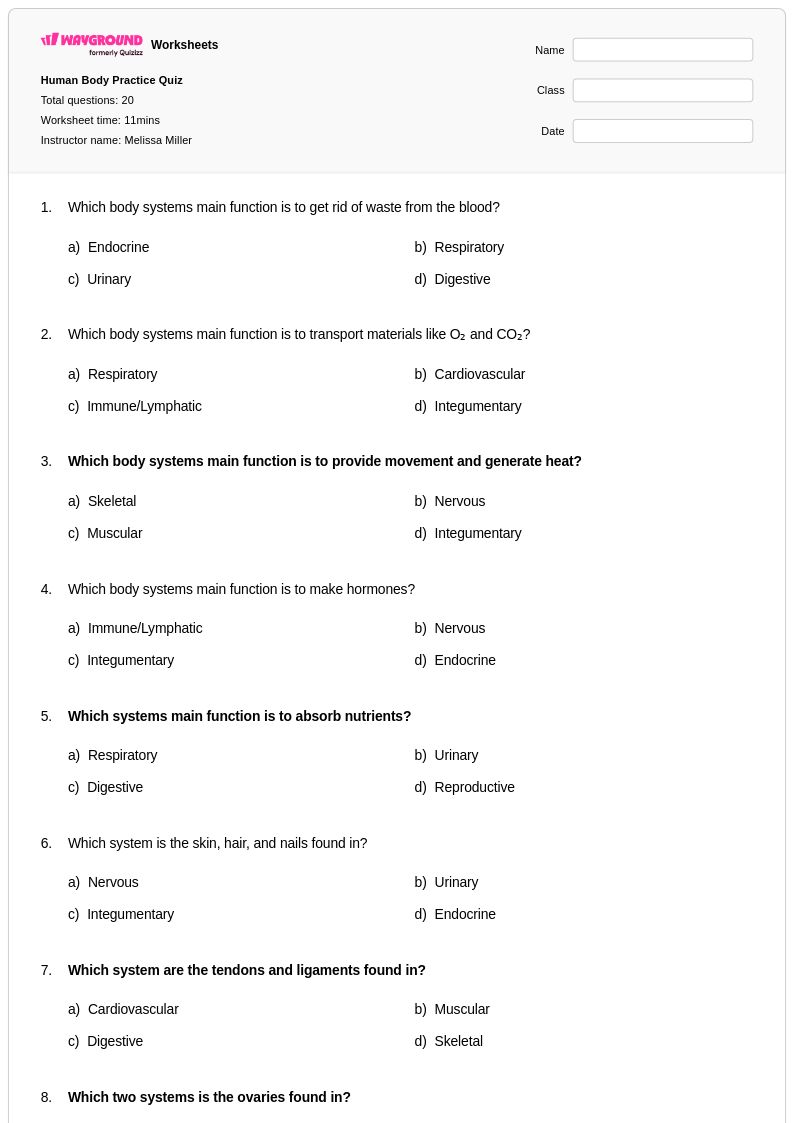
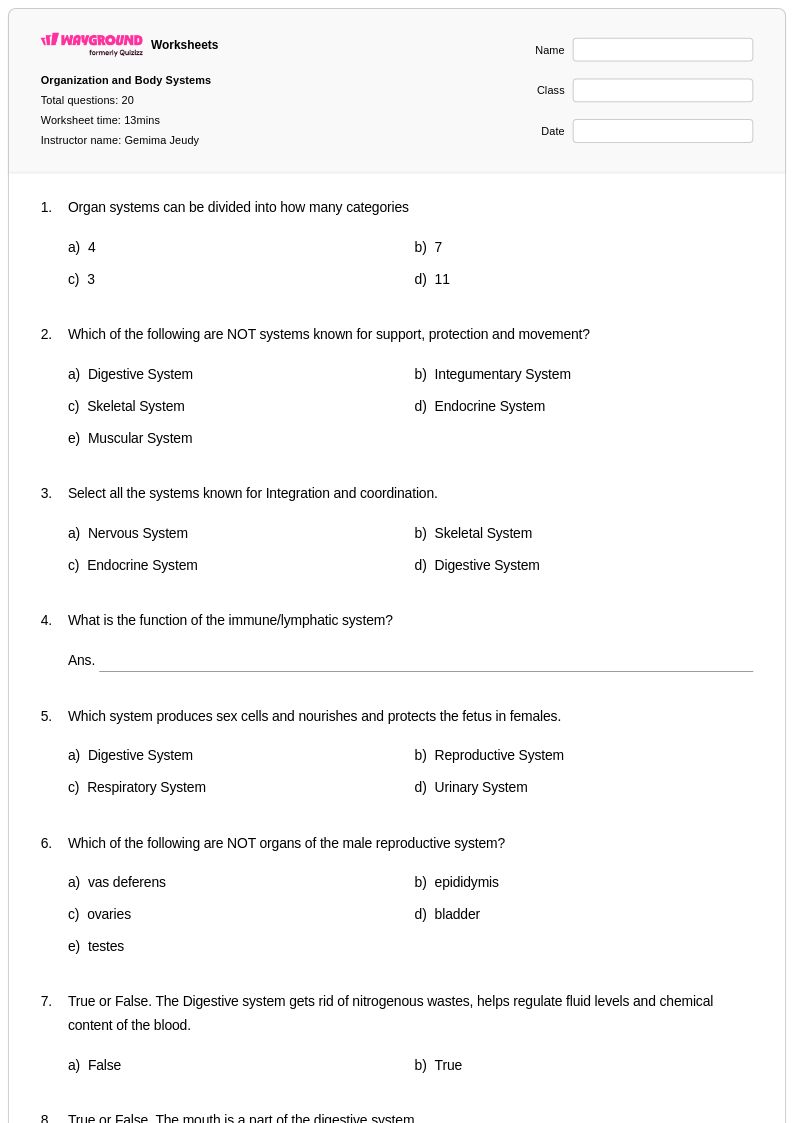
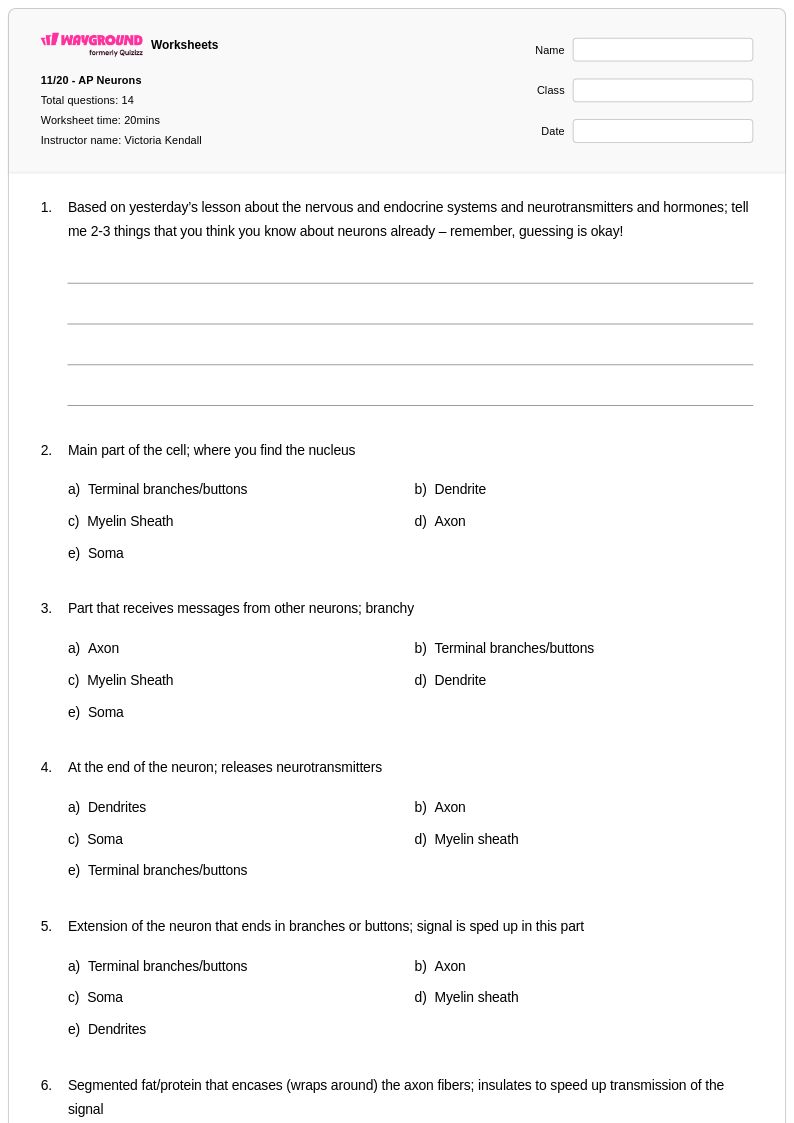
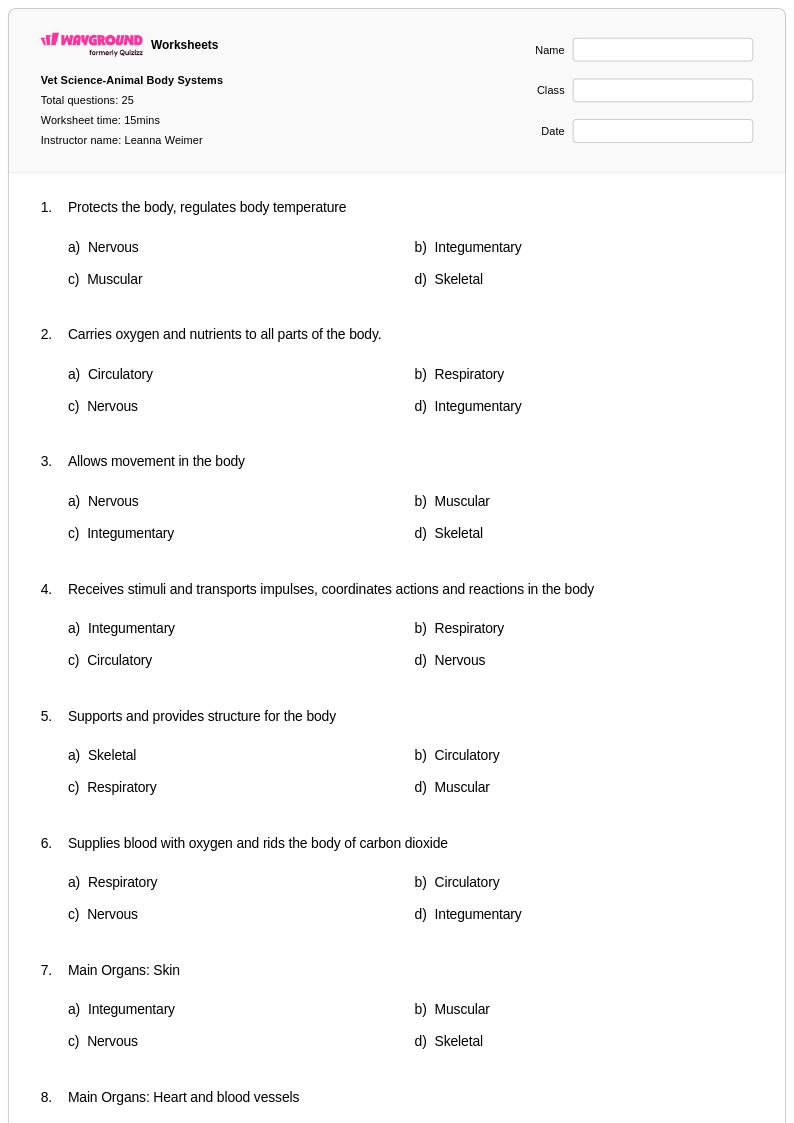
The nervous and endocrine systems represent two of the most complex and interconnected regulatory networks in the human body, making them essential components of Class 12 biology curriculum. Wayground's comprehensive collection of worksheets on the nervous and endocrine systems provides students with detailed practice problems that explore neuron structure and function, synaptic transmission, reflex arcs, hormone regulation, feedback mechanisms, and the intricate coordination between these two systems. These free printable resources strengthen critical thinking skills through challenging scenarios involving homeostasis, signal transduction pathways, and disease processes affecting neurological and hormonal function. Each worksheet includes a complete answer key in convenient pdf format, enabling students to verify their understanding of complex concepts such as action potential propagation, neurotransmitter mechanisms, endocrine gland functions, and the hypothalamic-pituitary axis while building mastery of advanced biological principles.
Wayground, formerly Quizizz, empowers educators with millions of teacher-created resources specifically designed to support comprehensive instruction on the nervous and endocrine systems for Class 12 students. The platform's robust search and filtering capabilities allow teachers to quickly locate worksheets aligned with specific curriculum standards, whether focusing on neuroanatomy, hormonal cascades, or system integration topics. These differentiation tools enable instructors to customize content difficulty levels and select from both printable pdf formats and interactive digital versions to accommodate diverse learning needs and classroom environments. Teachers can seamlessly integrate these resources into lesson planning for initial concept introduction, targeted remediation of challenging topics like membrane potential or steroid hormone action, enrichment activities for advanced learners, and systematic skill practice that reinforces understanding of how the nervous and endocrine systems maintain physiological balance and respond to environmental changes.
FAQs
How do I teach the nervous and endocrine systems together in the same unit?
Teaching these systems together works best when you anchor instruction around their shared function: coordinating the body's response to internal and external stimuli. Start with the nervous system's speed and electrical signaling, then contrast it with the endocrine system's slower, hormone-driven communication. Using comparison charts, feedback loop diagrams, and case studies involving homeostatic regulation helps students see how the two systems complement rather than duplicate each other.
What are the most effective practice exercises for the nervous and endocrine systems?
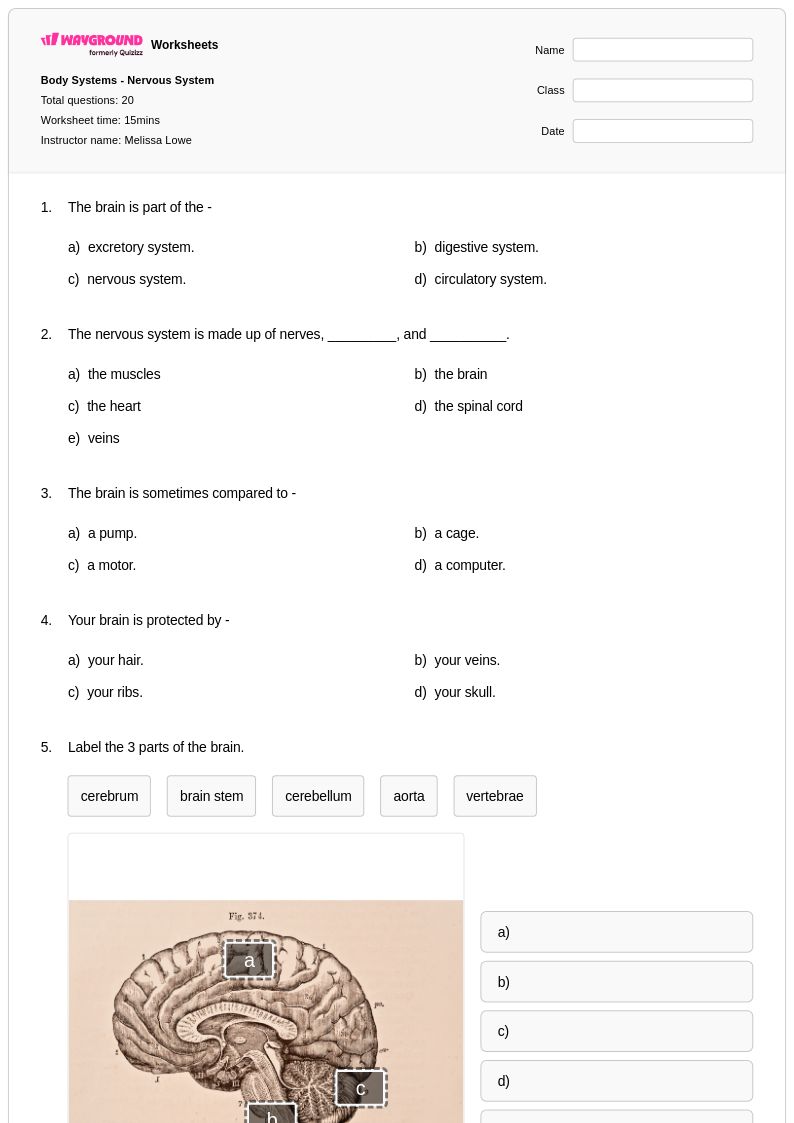
Effective practice includes labeling neuron anatomy and synapse diagrams, tracing nerve impulse pathways, and mapping hormone signaling from gland to target organ. Scenario-based problems that ask students to identify whether a response is neural or endocrine reinforce the functional differences between the two systems. Worksheets that progress from basic structure identification to complex homeostatic regulation scenarios help students build conceptual depth systematically.
What mistakes do students commonly make when learning about synaptic transmission?
A frequent misconception is that neurotransmitters cross the synapse by traveling through the membrane rather than diffusing across the synaptic cleft and binding to receptor proteins on the postsynaptic cell. Students also confuse excitatory and inhibitory neurotransmitters, assuming all neurotransmitters trigger a nerve impulse. Targeted practice that requires students to sequence each step of synaptic transmission, including reuptake and receptor binding, helps correct these errors before they become entrenched.
How do students commonly confuse the nervous system and the endocrine system?
Students often conflate the two systems because both regulate body functions, but they differ fundamentally in speed, signal type, and target specificity. The nervous system uses electrical impulses and neurotransmitters for rapid, localized responses, while the endocrine system uses hormones carried through the bloodstream for slower, body-wide effects. Comparing response timelines and signal pathways side by side, and using feedback loop problems, helps students internalize the distinction.
How can I use Wayground's nervous and endocrine systems worksheets in my classroom?
Wayground's nervous and endocrine systems worksheets are available as printable PDFs for traditional classroom use and in digital formats for technology-integrated environments, including the option to host them as a quiz directly on Wayground. Each worksheet includes a complete answer key, making them practical for independent practice, guided instruction, or formative assessment. Teachers can also apply accommodations such as read aloud, extended time, and reduced answer choices to individual students, ensuring the same materials work across diverse learners without requiring separate versions.
How do I help students understand negative feedback loops in the endocrine system?
Negative feedback loops are best taught through concrete, familiar examples such as the regulation of blood glucose by insulin and glucagon, or thyroid hormone regulation via the hypothalamus-pituitary-thyroid axis. Have students trace the sequence: stimulus, hormone release, target organ response, and the signal that turns off production. Worksheet problems that ask students to predict what happens when part of the loop is disrupted, such as in diabetes or hypothyroidism, build both comprehension and analytical reasoning.