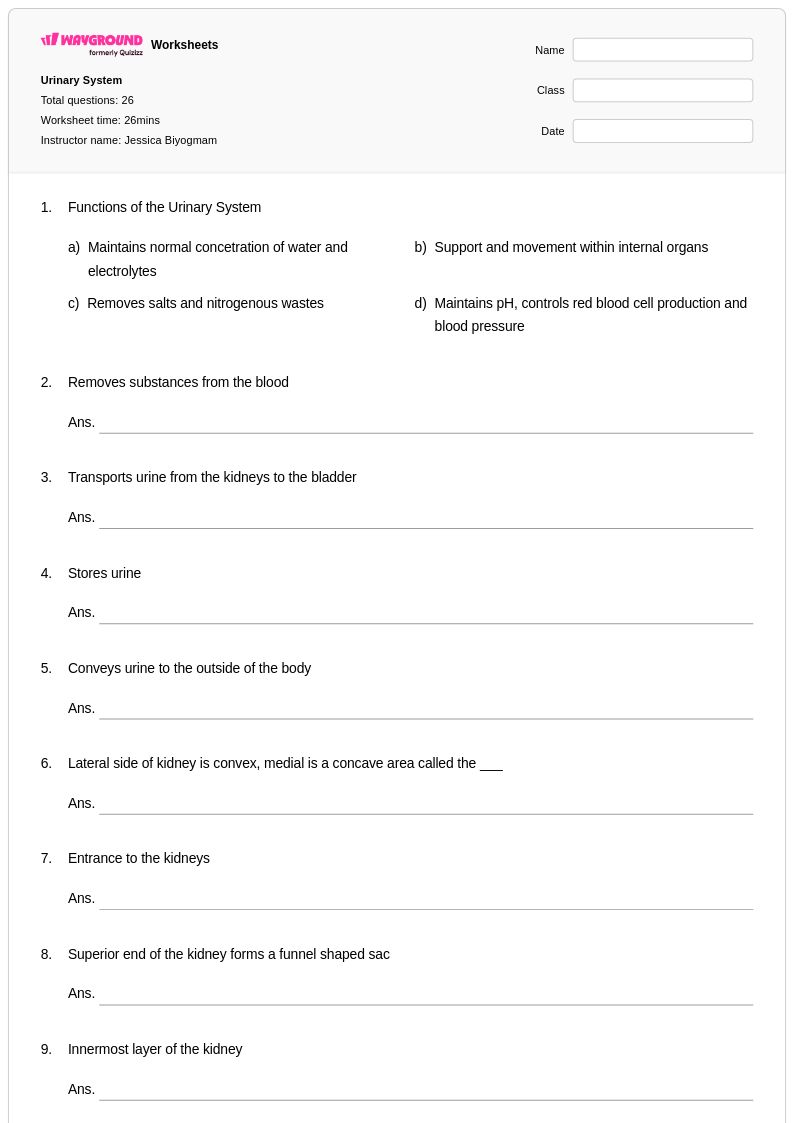
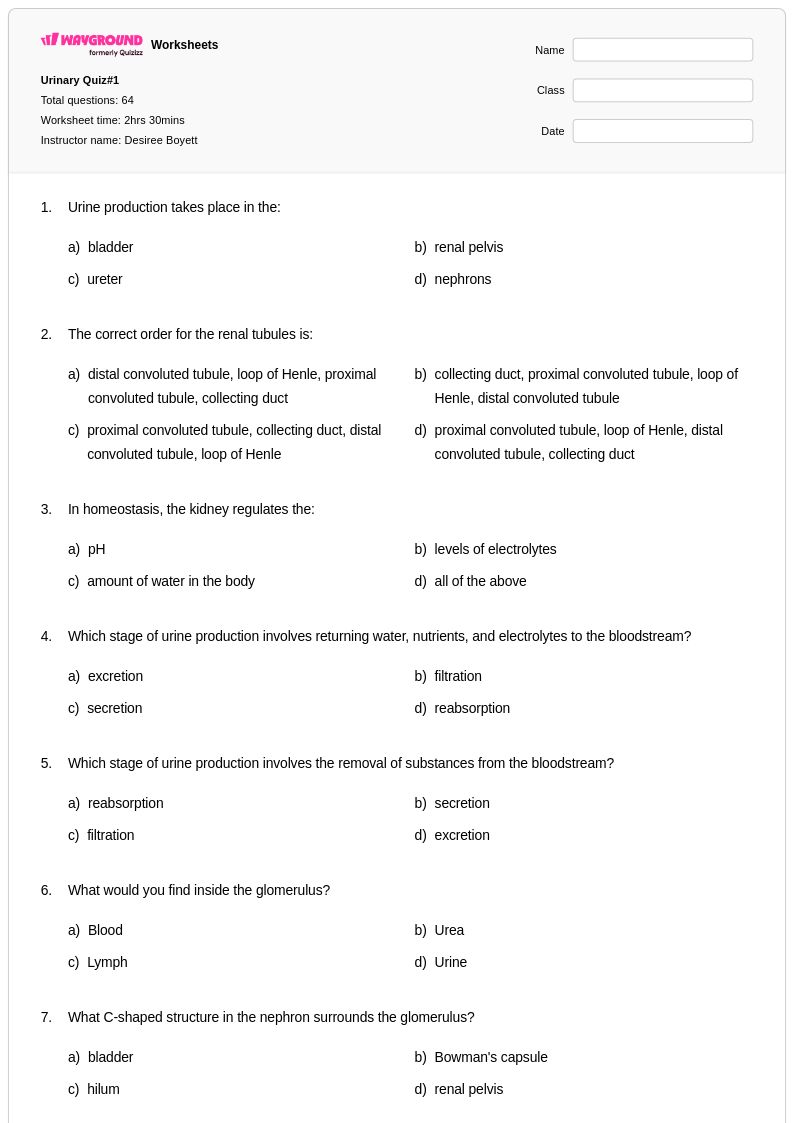
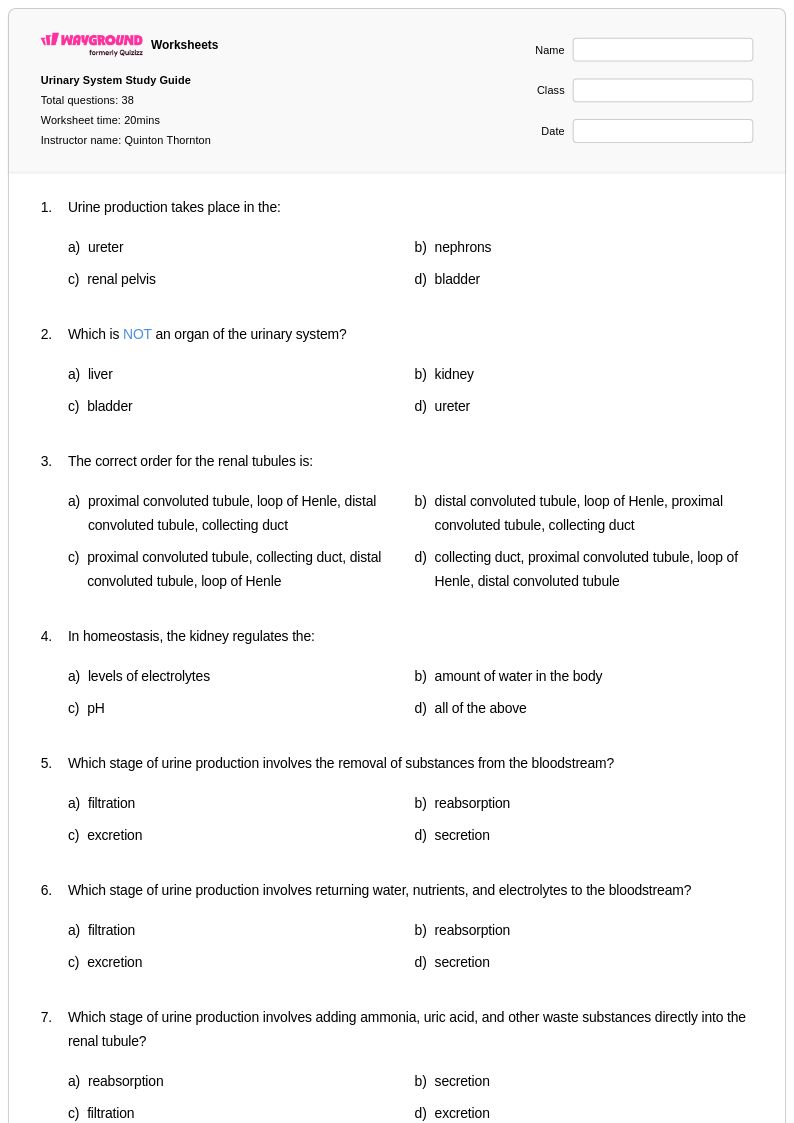
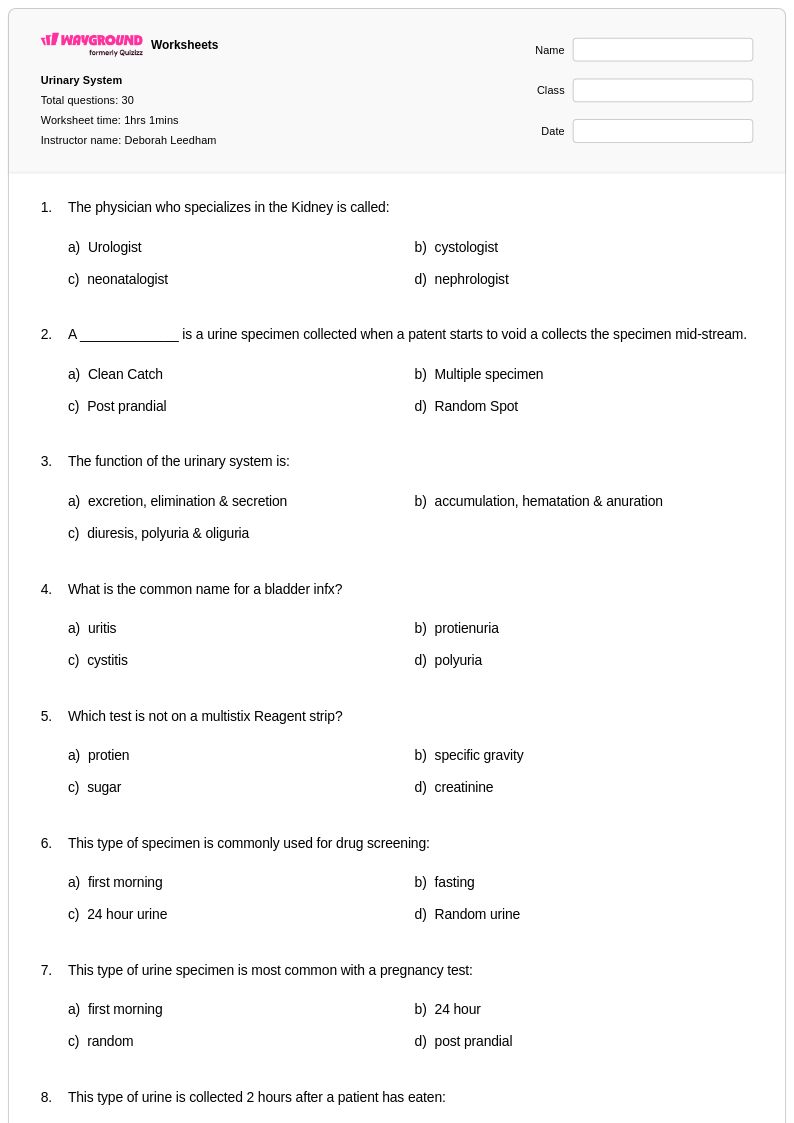
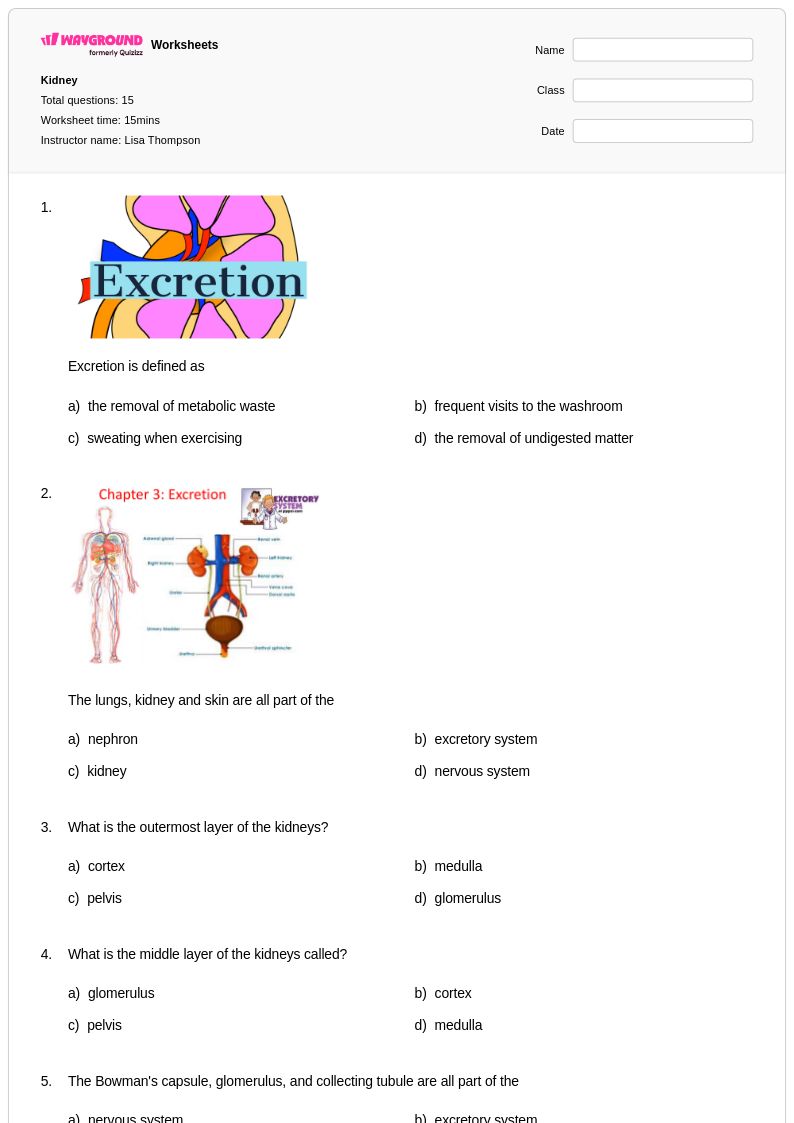
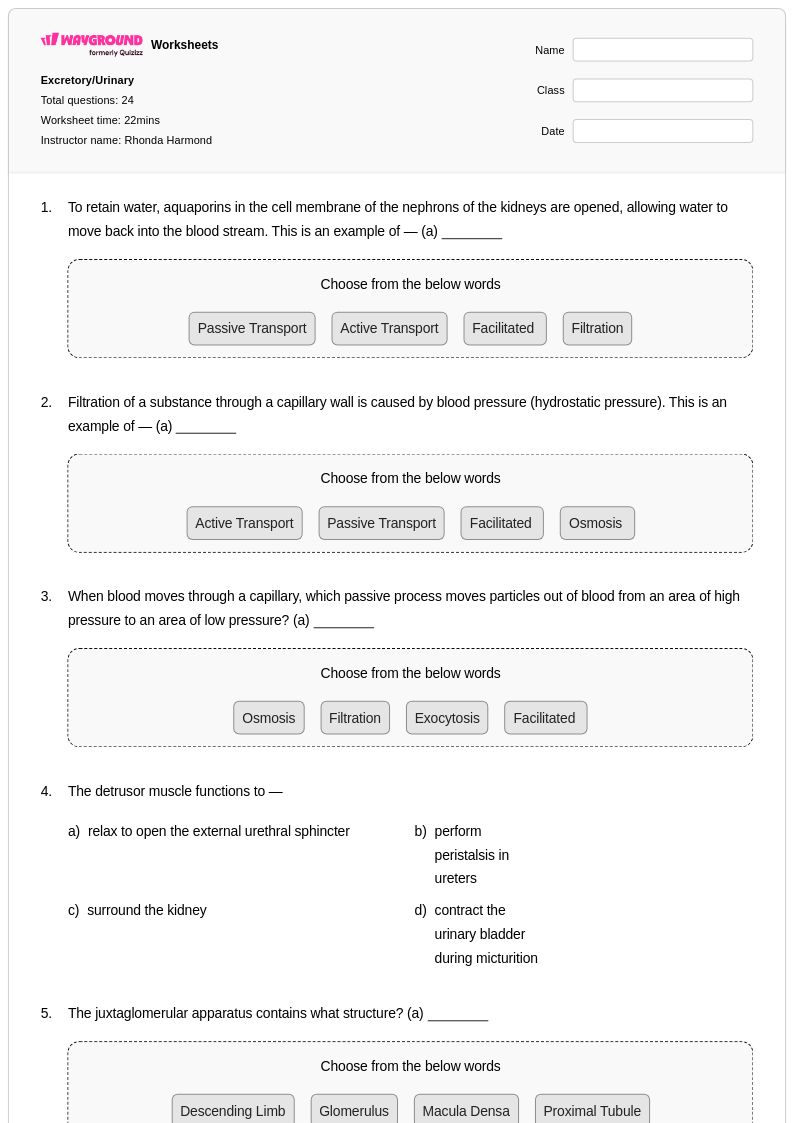
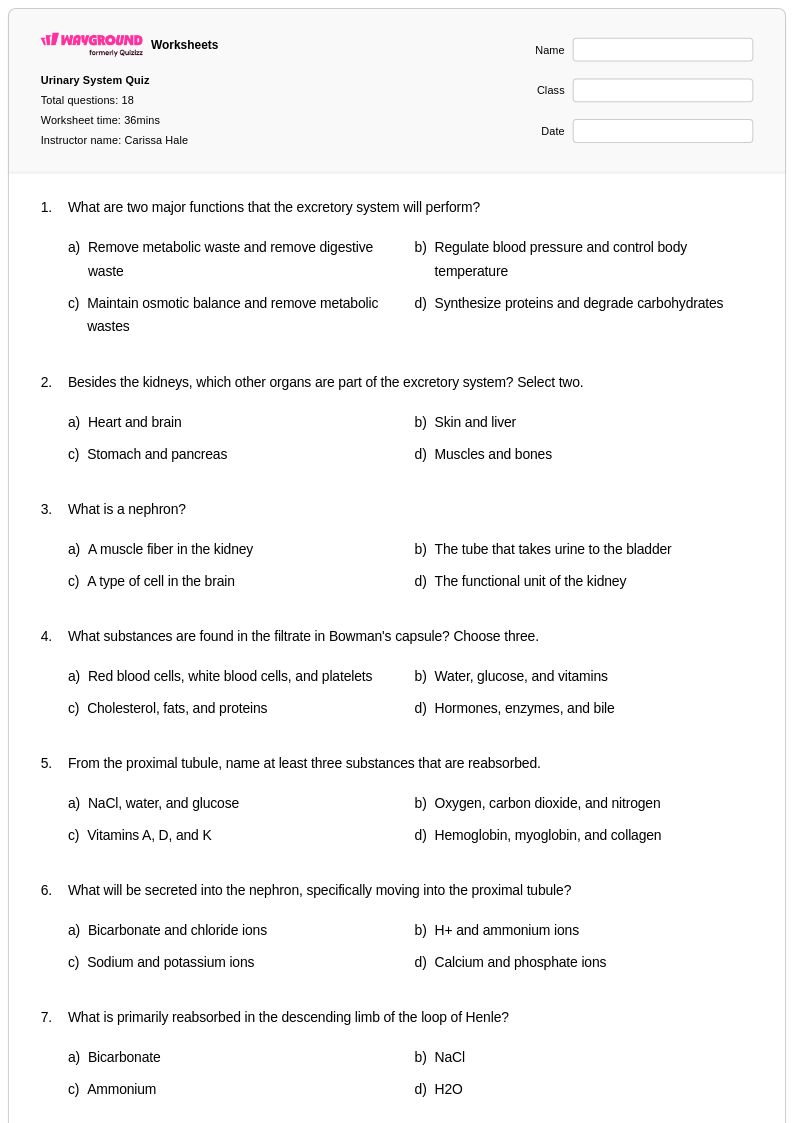
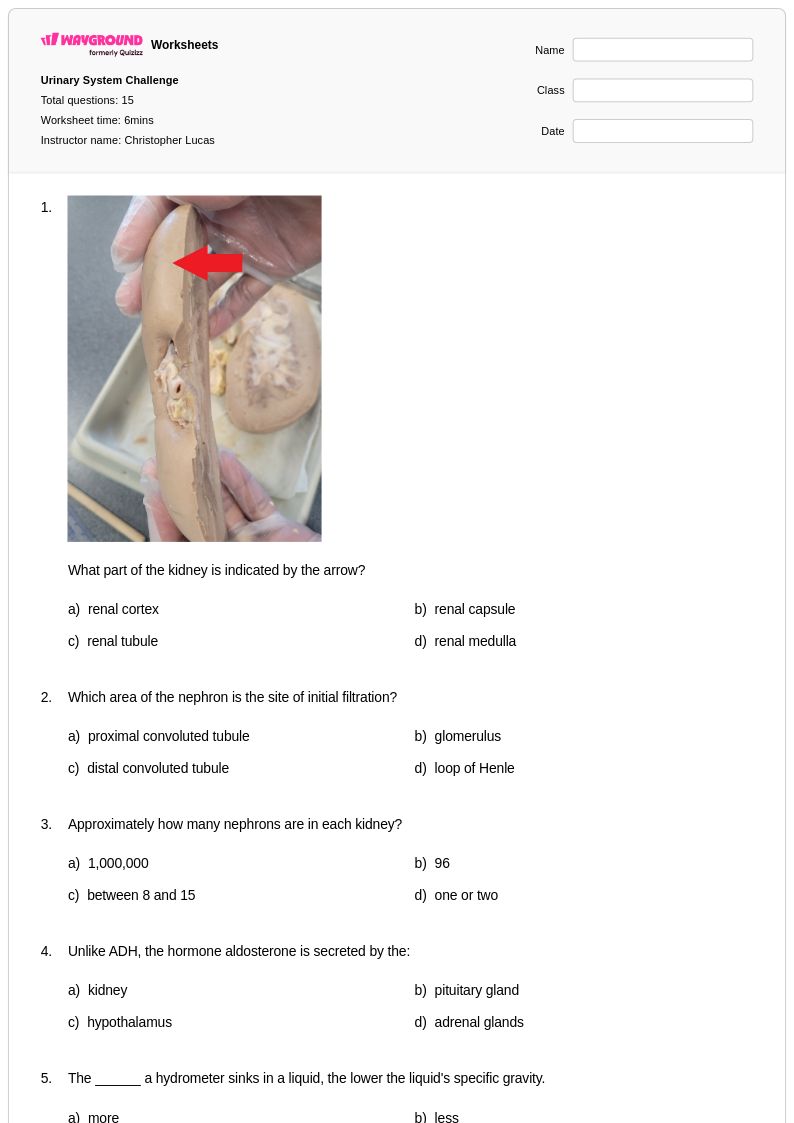
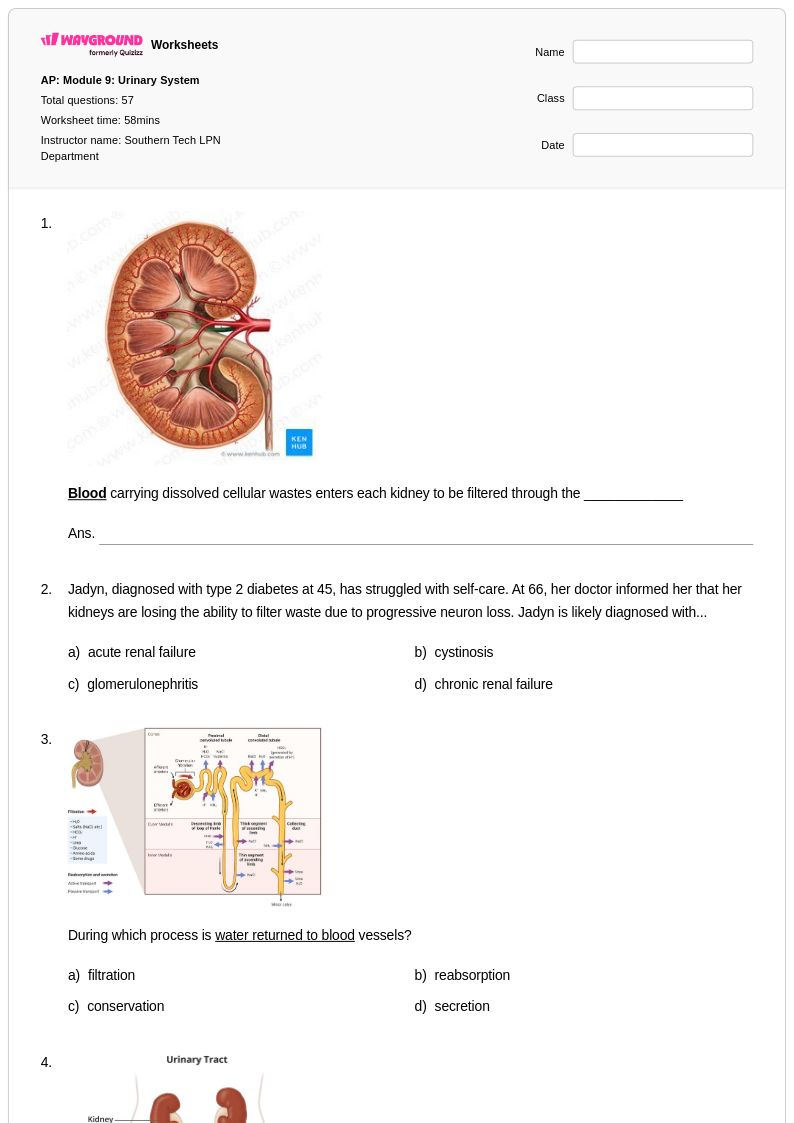
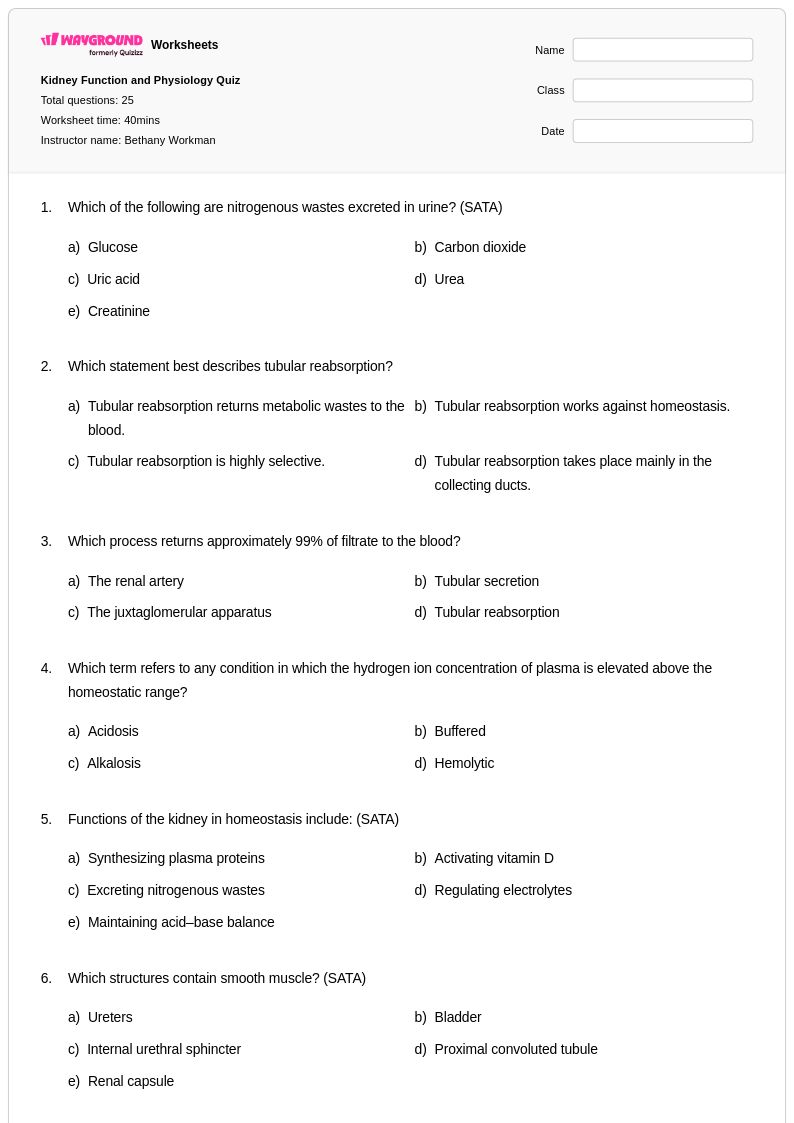
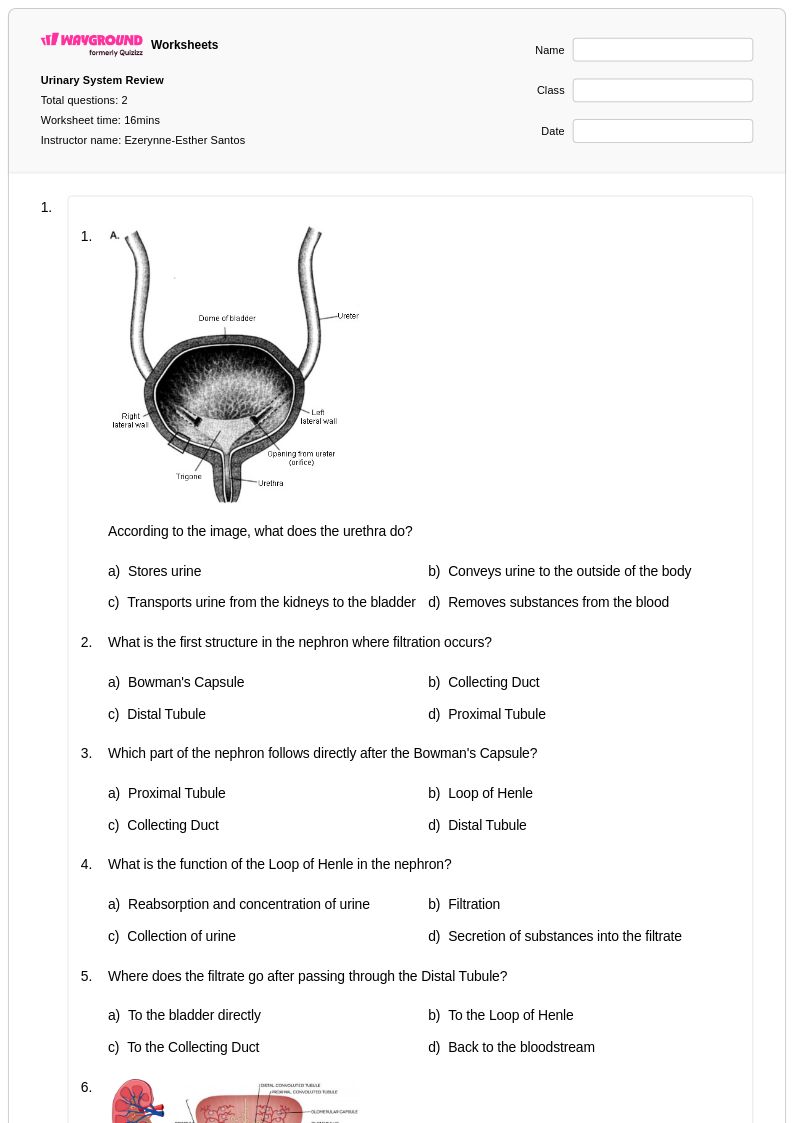
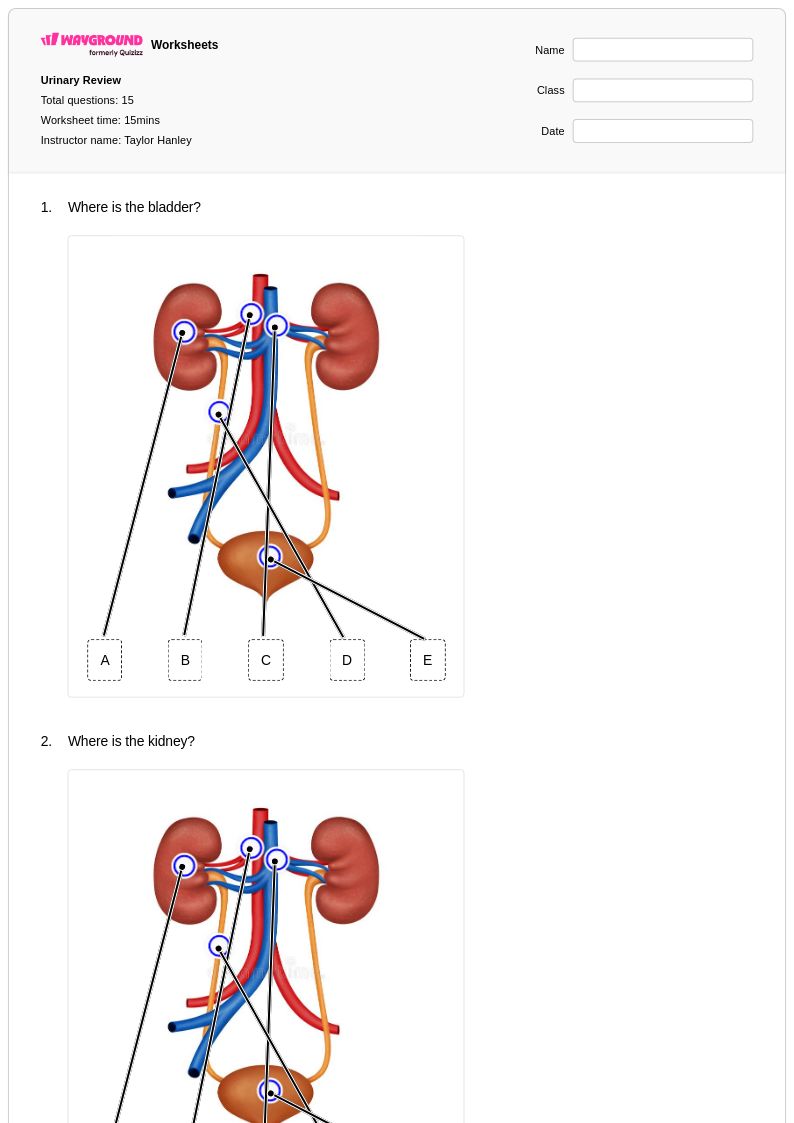
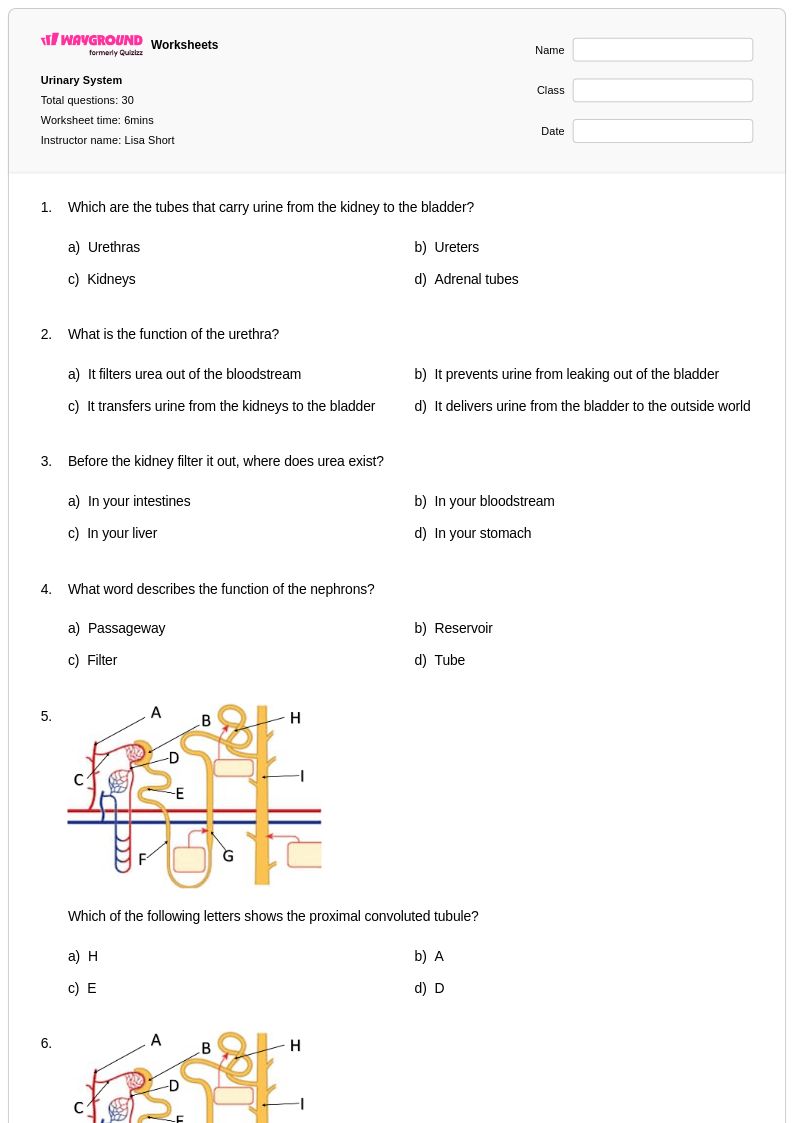
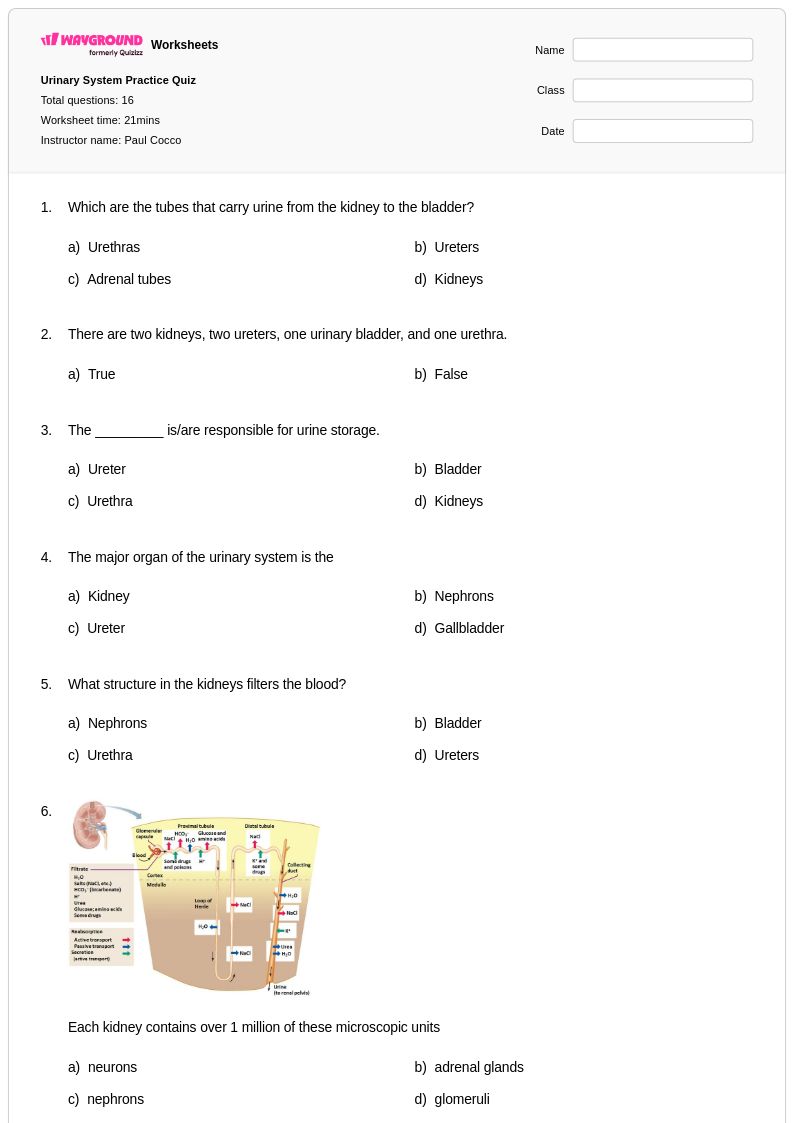
Explore comprehensive Class 12 nephron worksheets and printables from Wayground that help students master kidney structure, filtration processes, and renal function through engaging practice problems, free PDF resources, and detailed answer keys.
Nephron worksheets for Class 12 students through Wayground (formerly Quizizz) provide comprehensive coverage of kidney function and urinary system physiology at the advanced high school level. These expertly designed resources strengthen students' understanding of nephron anatomy, including the glomerulus, Bowman's capsule, proximal and distal convoluted tubules, loop of Henle, and collecting duct structures. Students engage with detailed practice problems that explore filtration, reabsorption, and secretion processes while analyzing how nephrons maintain homeostasis through osmoregulation and waste elimination. The collection includes printables with complete answer keys, free pdf downloads, and varied question formats that challenge students to interpret nephron diagrams, calculate filtration rates, and explain the countercurrent multiplier system essential for urine concentration.
Wayground (formerly Quizizz) empowers educators with millions of teacher-created nephron resources that streamline lesson planning and assessment preparation for advanced biology instruction. The platform's robust search and filtering capabilities allow teachers to quickly locate materials aligned with specific curriculum standards while accessing differentiation tools that accommodate diverse learning needs within Class 12 classrooms. Flexible customization options enable instructors to modify existing worksheets or create targeted practice sets for remediation and enrichment activities. Available in both printable and digital formats including downloadable pdfs, these nephron worksheet collections support varied instructional approaches from traditional paper-based assignments to technology-enhanced learning experiences, ensuring teachers can effectively reinforce complex physiological concepts through systematic skill practice and formative assessment opportunities.
FAQs
How do I teach nephron structure and function effectively?
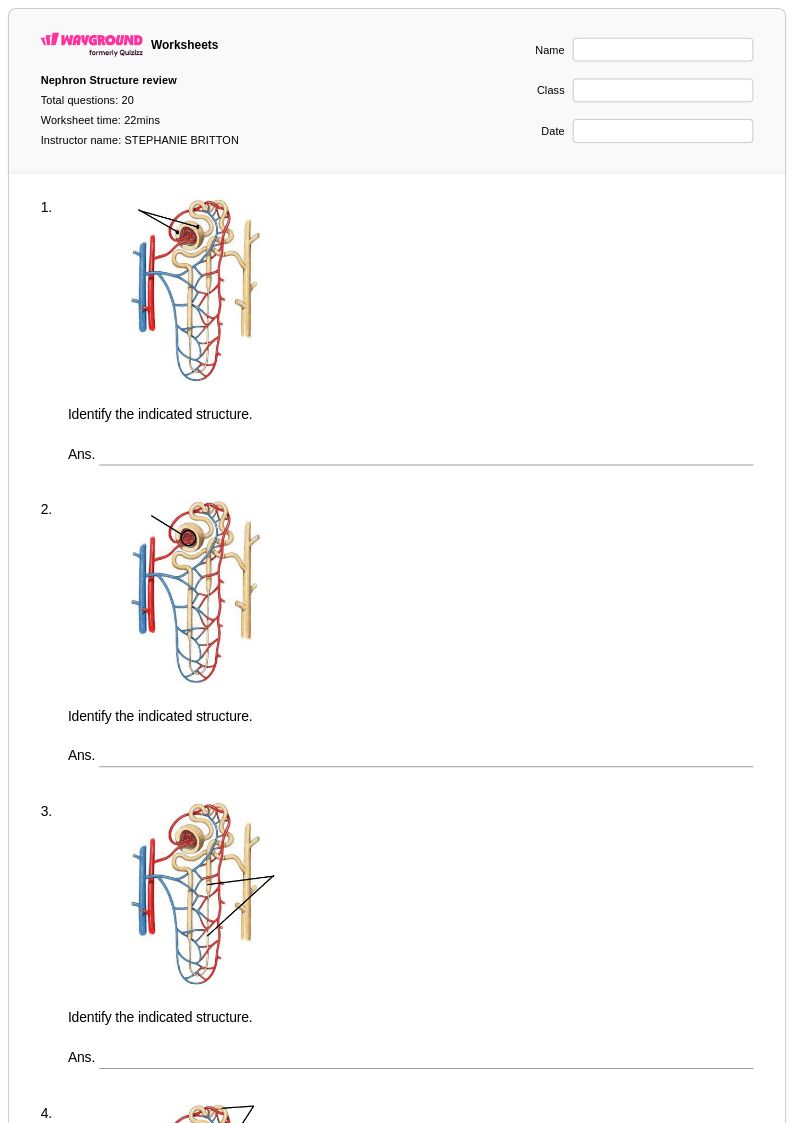
Start by anchoring the nephron's components to a physical flow — trace the path of filtrate from the glomerulus through Bowman's capsule, the proximal convoluted tubule, loop of Henle, distal convoluted tubule, and collecting duct in sequence. Teaching each structure paired with its specific function (filtration, reabsorption, or secretion) prevents students from memorizing isolated facts without understanding their physiological purpose. Using labeled diagrams alongside process-mapping activities helps students connect structure to function across the full filtration sequence.
What exercises help students practice nephron filtration and reabsorption?
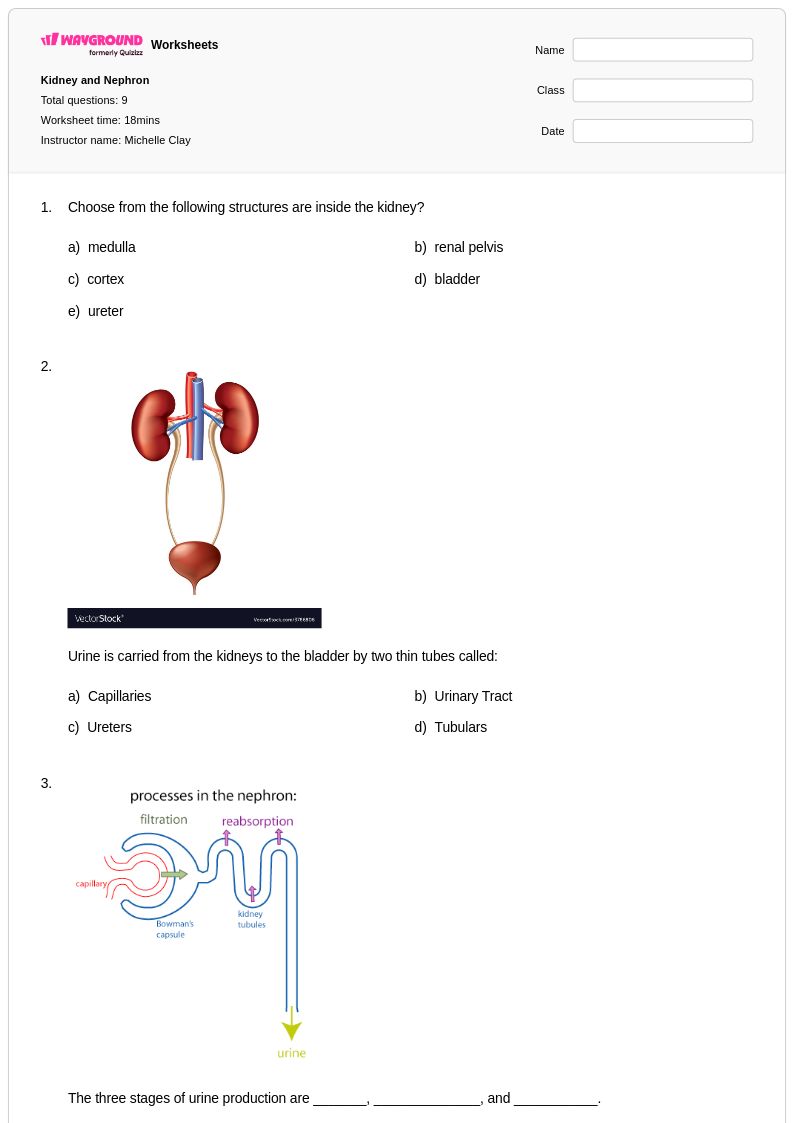
Practice problems that ask students to trace a specific substance — such as glucose, urea, or sodium — through each nephron segment and predict whether it is filtered, reabsorbed, or secreted are highly effective. Sequencing tasks, fill-in-the-blank diagrams, and comparative analysis problems (e.g., what happens to filtrate composition at each stage) reinforce the stepwise nature of kidney physiology. These exercises build both procedural understanding and the conceptual reasoning needed to connect nephron activity to whole-body homeostasis.
What mistakes do students commonly make when learning about the nephron?
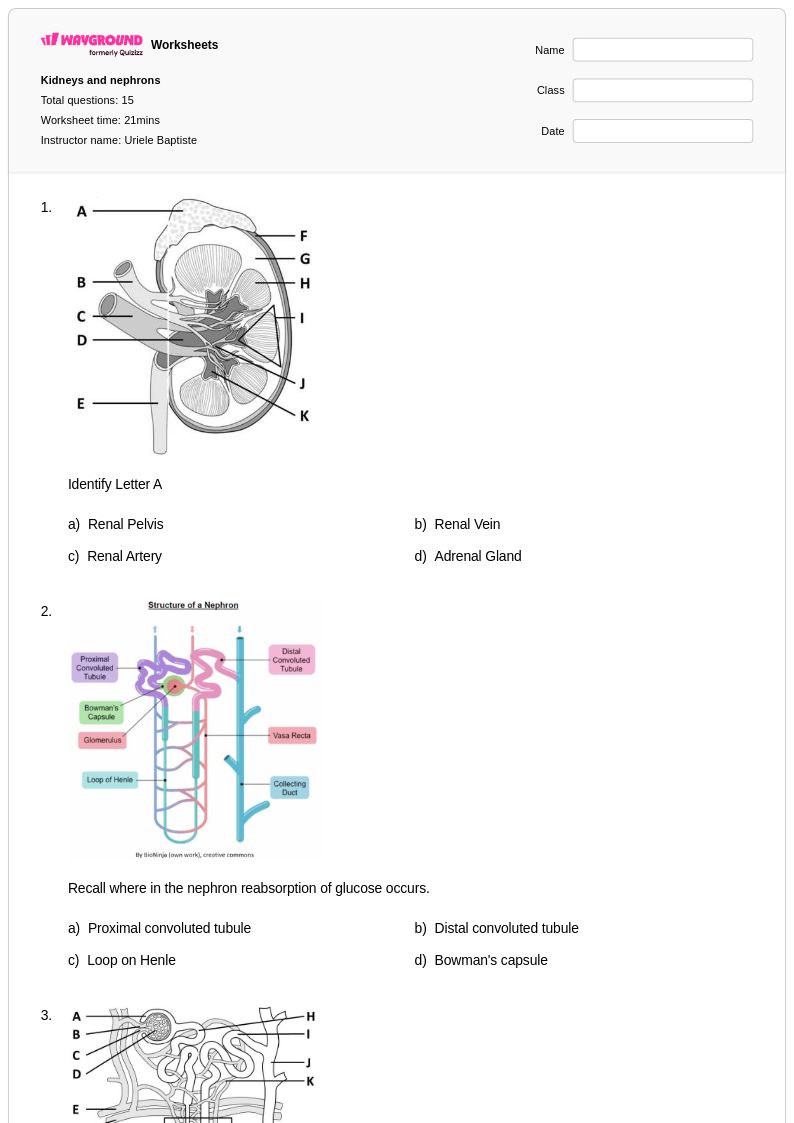
The most common error is conflating filtration with reabsorption — students often assume everything filtered from the blood is excreted, failing to account for selective reabsorption along the tubules. Students also frequently confuse the roles of the proximal versus distal convoluted tubule, or misplace the loop of Henle's function in the concentration gradient. Explicitly comparing what enters the glomerulus versus what exits in urine, using before-and-after filtrate composition charts, helps correct these misconceptions.
How do I help students remember the difference between the loop of Henle's descending and ascending limbs?
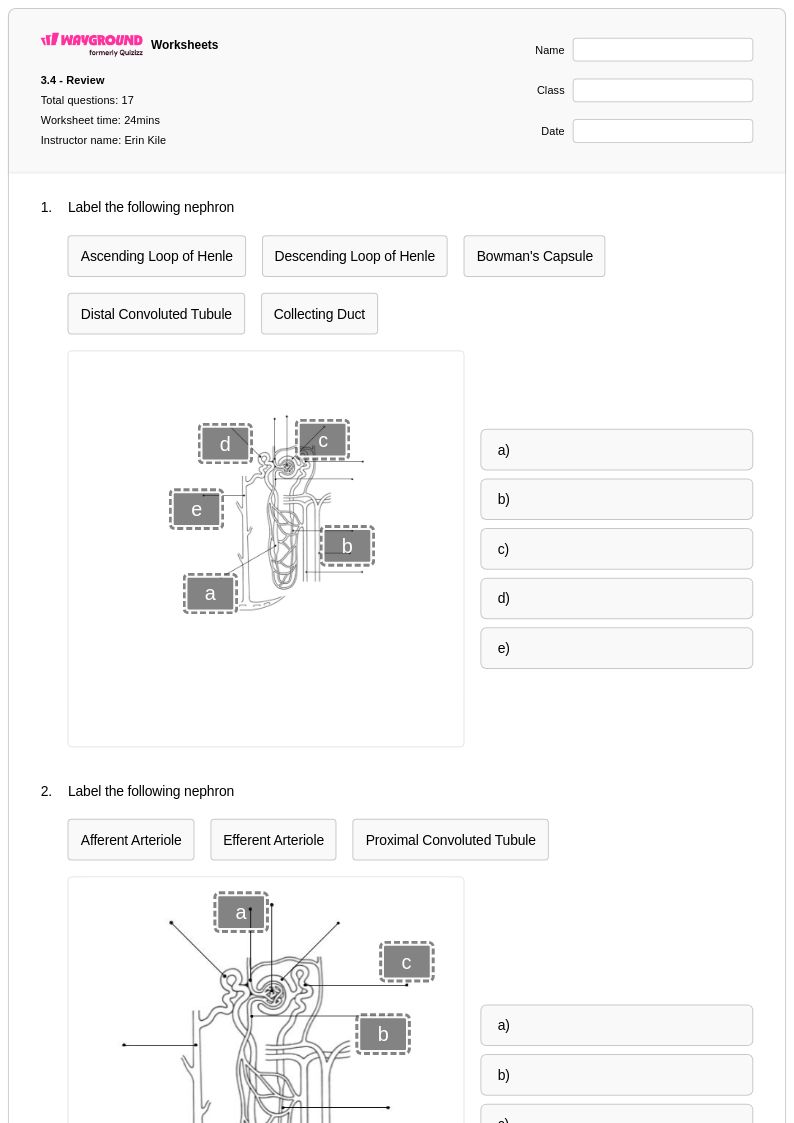
A reliable strategy is to teach permeability rules as the anchor: the descending limb is permeable to water but not solutes, while the ascending limb is permeable to solutes but not water. Having students annotate a nephron diagram with permeability labels before answering questions about concentration gradients reinforces the distinction. Pairing this with short practice problems that ask students to predict osmolarity changes at each limb solidifies understanding before moving to the countercurrent multiplier mechanism.
How do I use Wayground's nephron worksheets in my classroom?
Wayground's nephron worksheets are available as free printable PDFs for traditional classroom use and in digital formats for technology-integrated or remote learning environments, and can also be hosted as a quiz directly on Wayground. Each worksheet includes a complete answer key, making them practical for independent practice, guided review, or formative assessment. Teachers can use Wayground's search and filtering tools to locate materials aligned to specific learning standards, and built-in differentiation features allow customization for students at varying ability levels.
How can I differentiate nephron instruction for students who are struggling?
For struggling students, breaking the nephron into three discrete process zones — filtration at the glomerulus, bulk reabsorption along the proximal tubule, and fine-tuned regulation in the distal tubule and collecting duct — reduces cognitive overload. On Wayground, teachers can apply accommodations such as Read Aloud for students who need audio support, reduced answer choices to lower cognitive load on multiple-choice questions, and extended time for students who need additional processing time. These settings can be saved and reused across sessions so differentiated support is consistent without additional setup each class.