
6 Q
9th - 12th
10 Q
9th
20 Q
9th - 12th
18 Q
9th - 12th
20 Q
8th - Uni
30 Q
9th
20 Q
9th - 12th
20 Q
8th - 9th
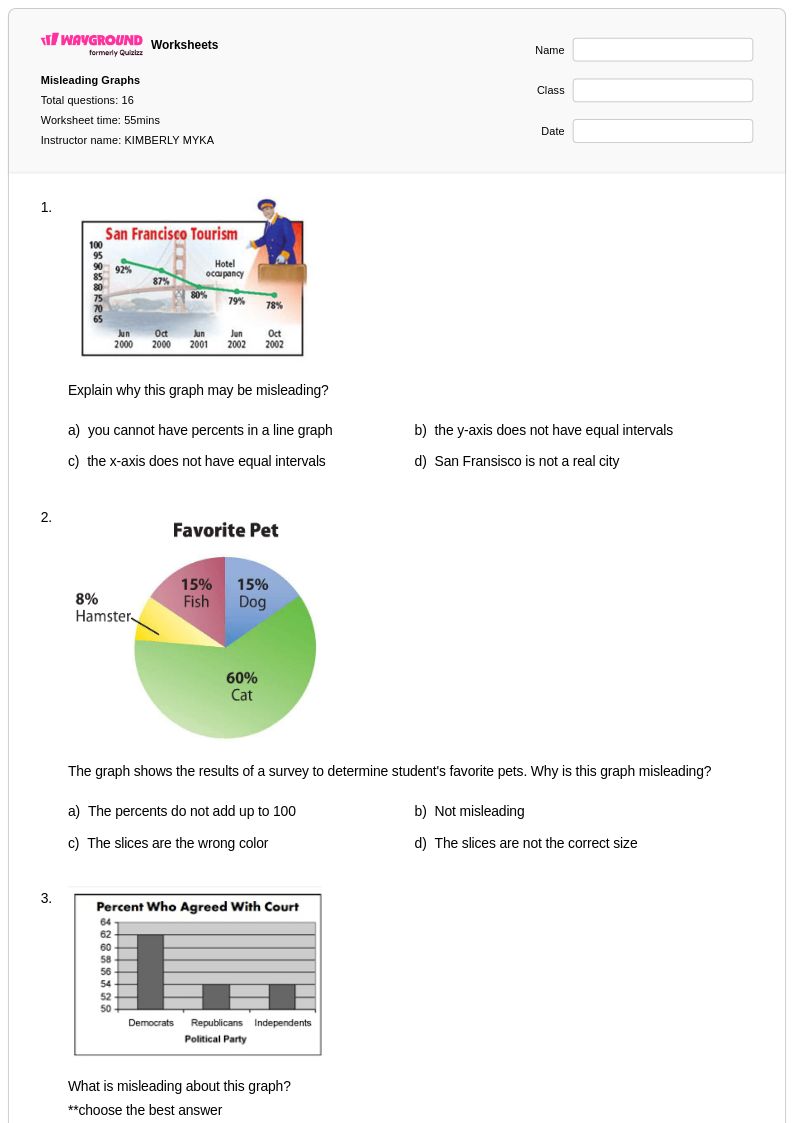
16 Q
9th - Uni
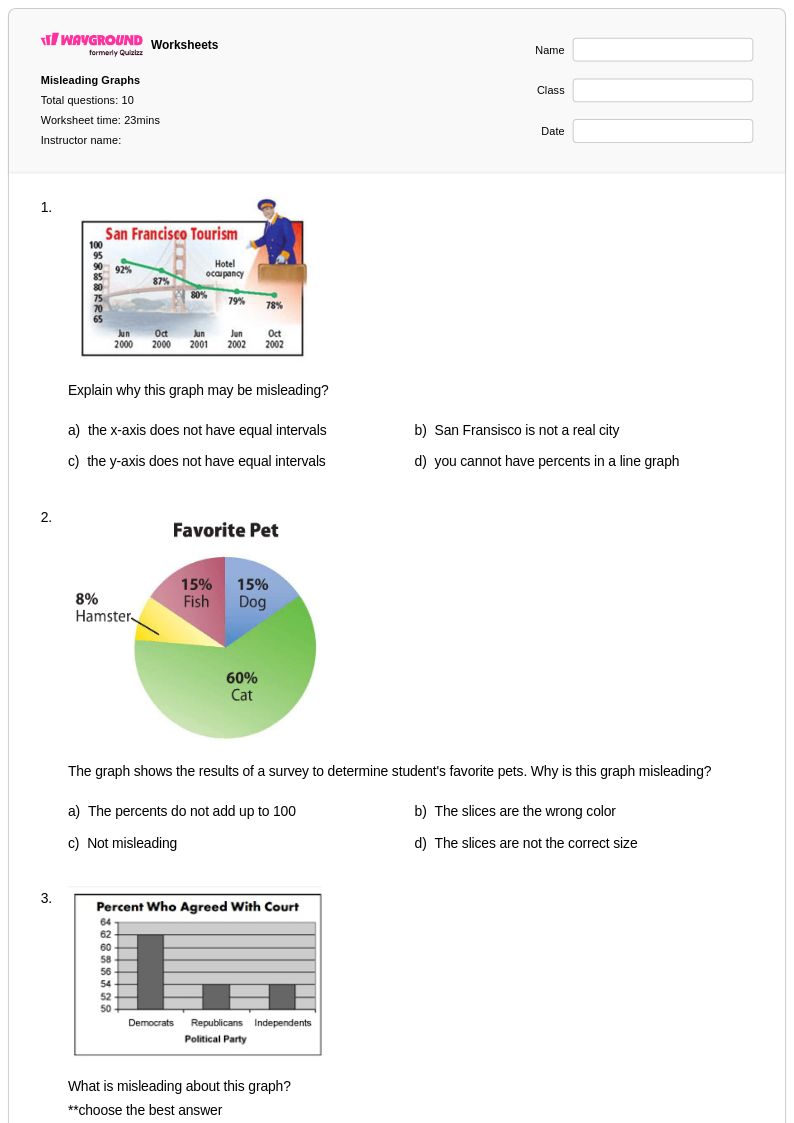
10 Q
9th
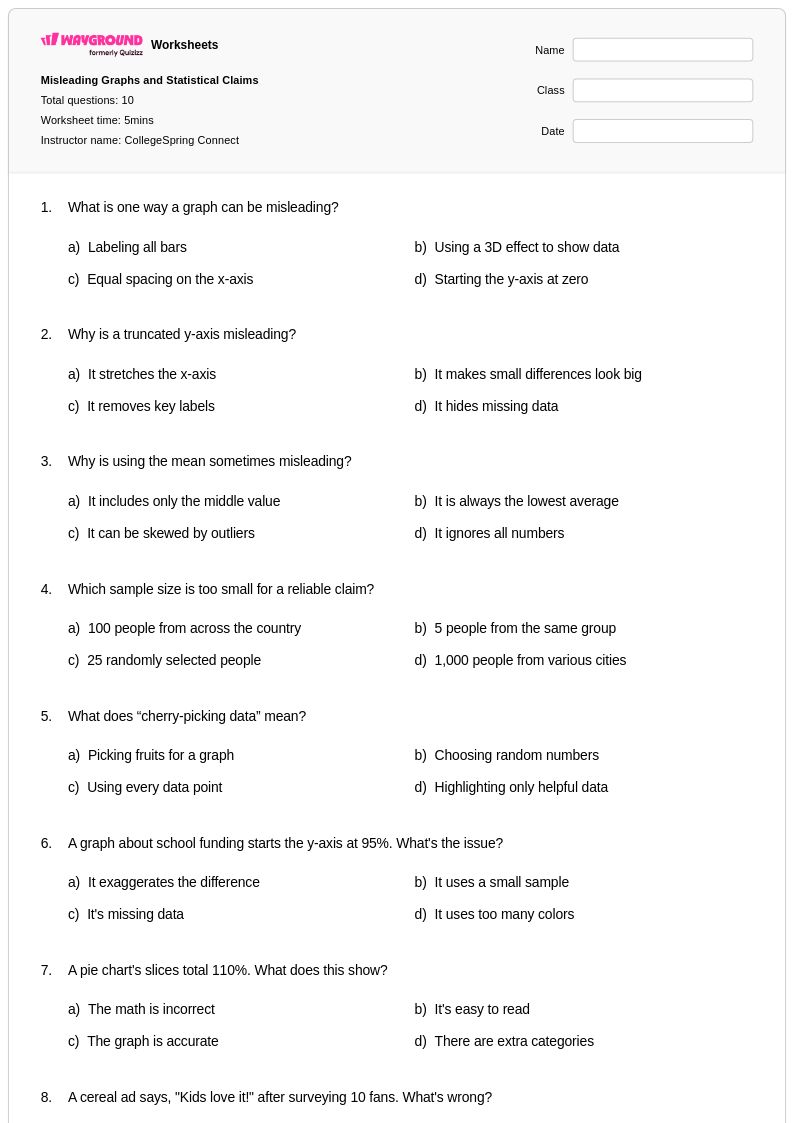
10 Q
9th - 12th
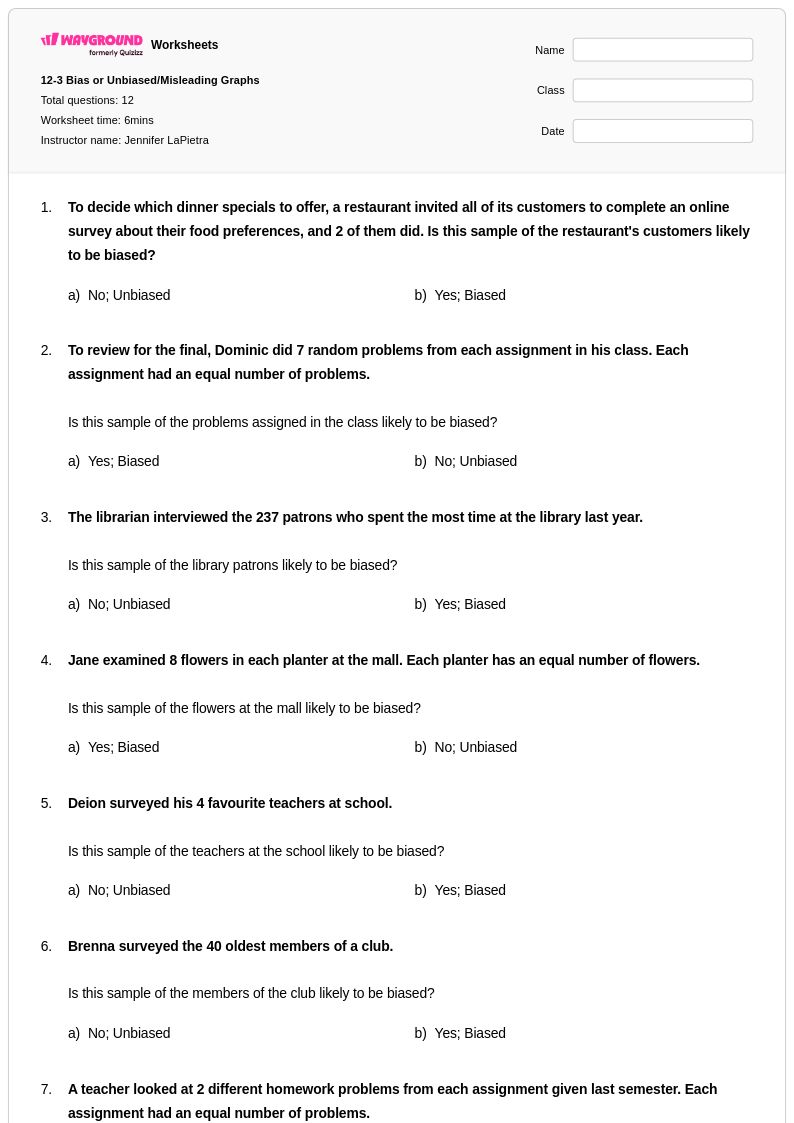
12 Q
9th
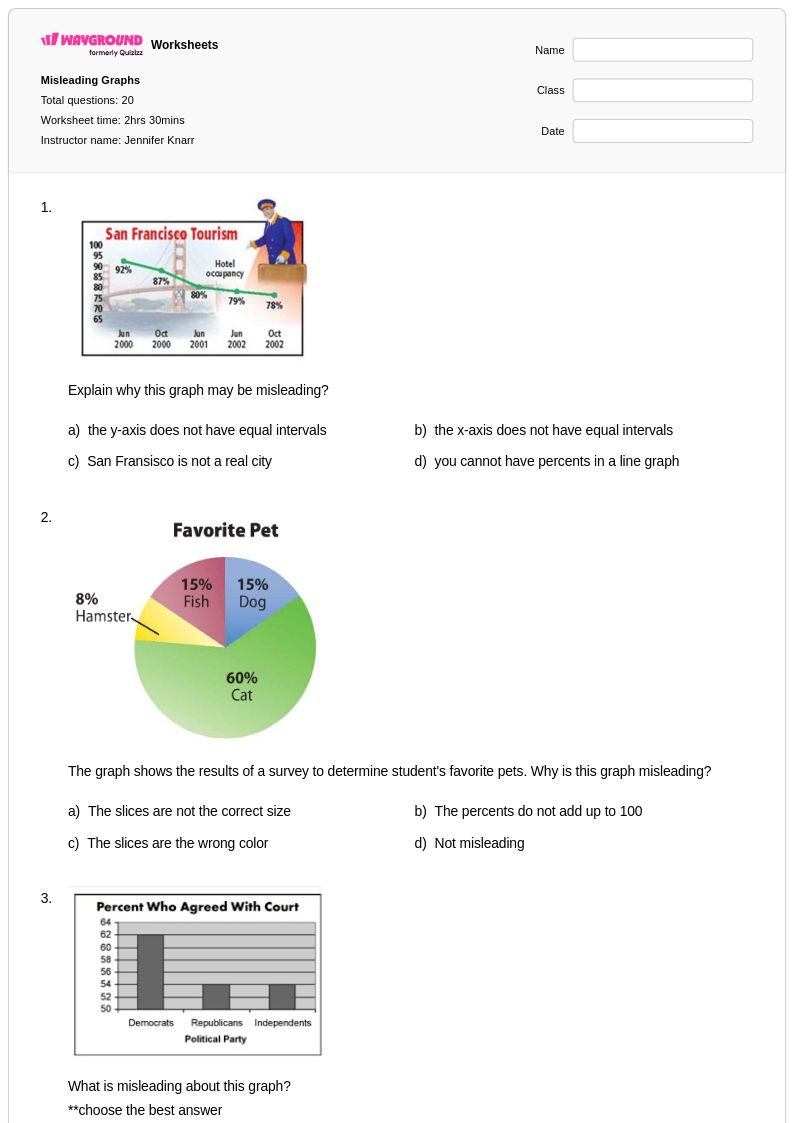
20 Q
7th - 9th
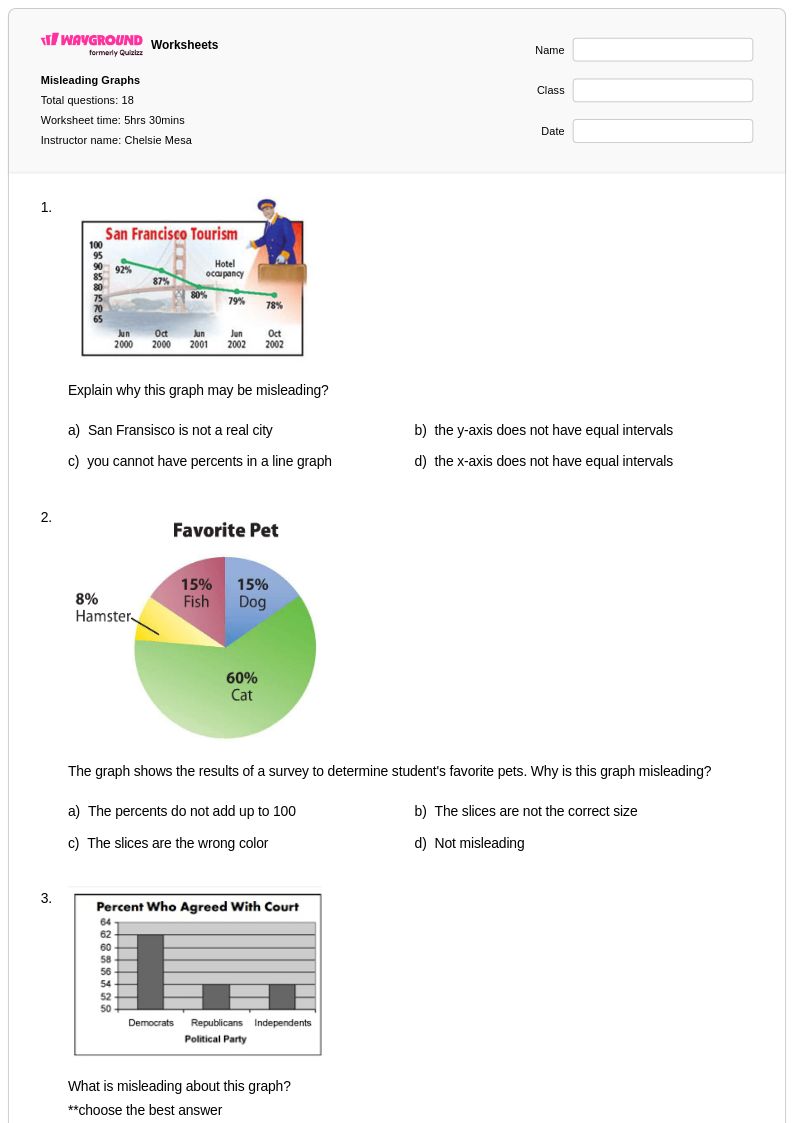
18 Q
9th - 12th
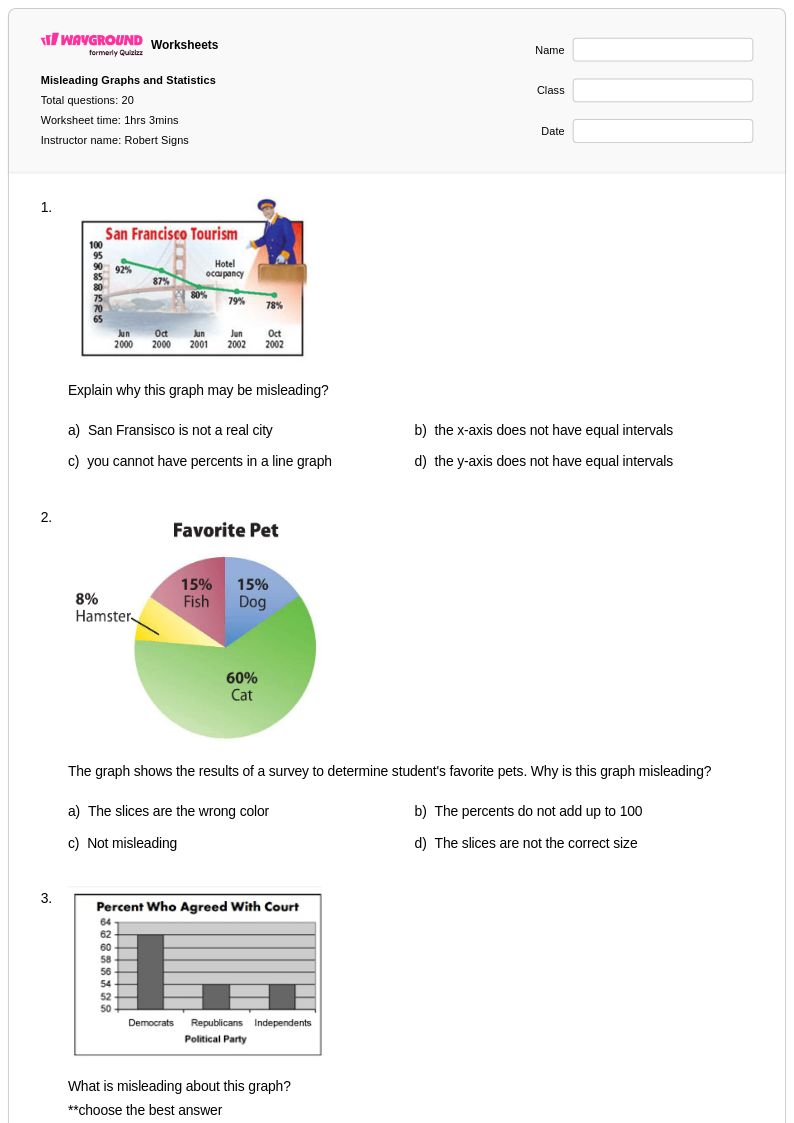
20 Q
8th - 10th
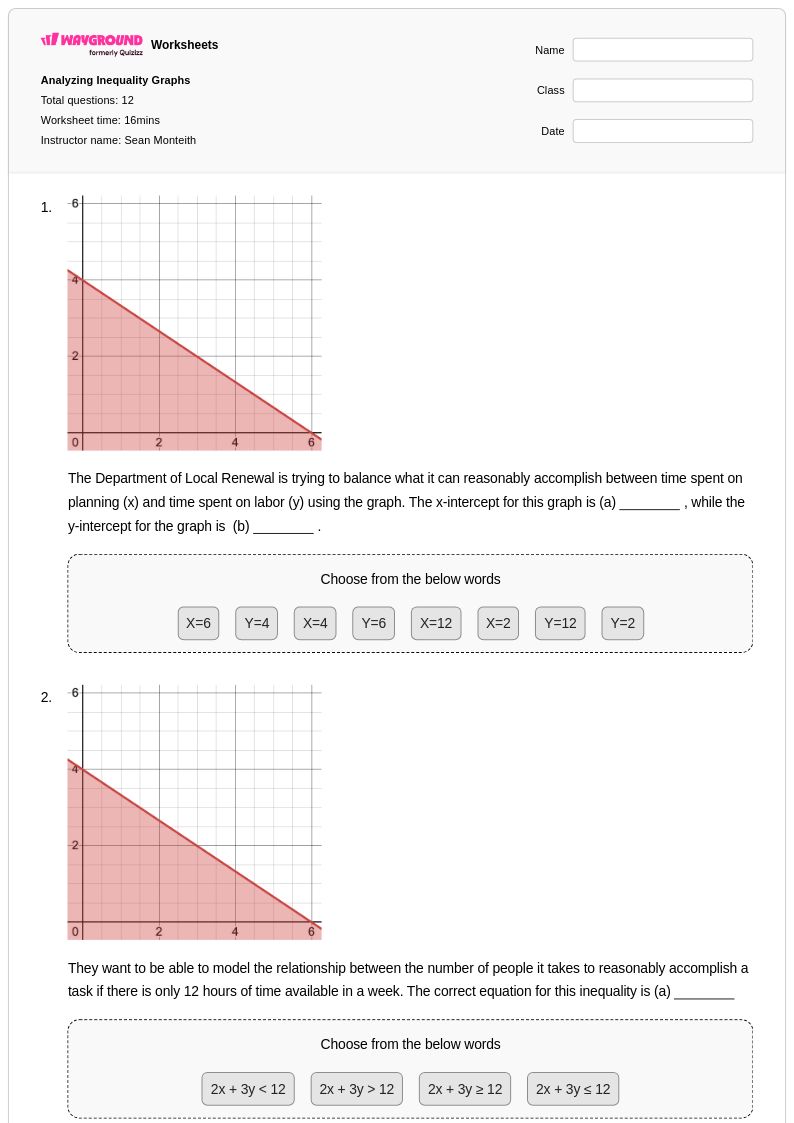
12 Q
9th
20 Q
7th - Uni
20 Q
6th - Uni
20 Q
7th - Uni
20 Q
7th - Uni
20 Q
7th - Uni
20 Q
7th - 9th
21 Q
9th
15 Q
9th - Uni
Explore Other Subject Worksheets for class 9
Explore printable Misleading Graphs worksheets for Class 9
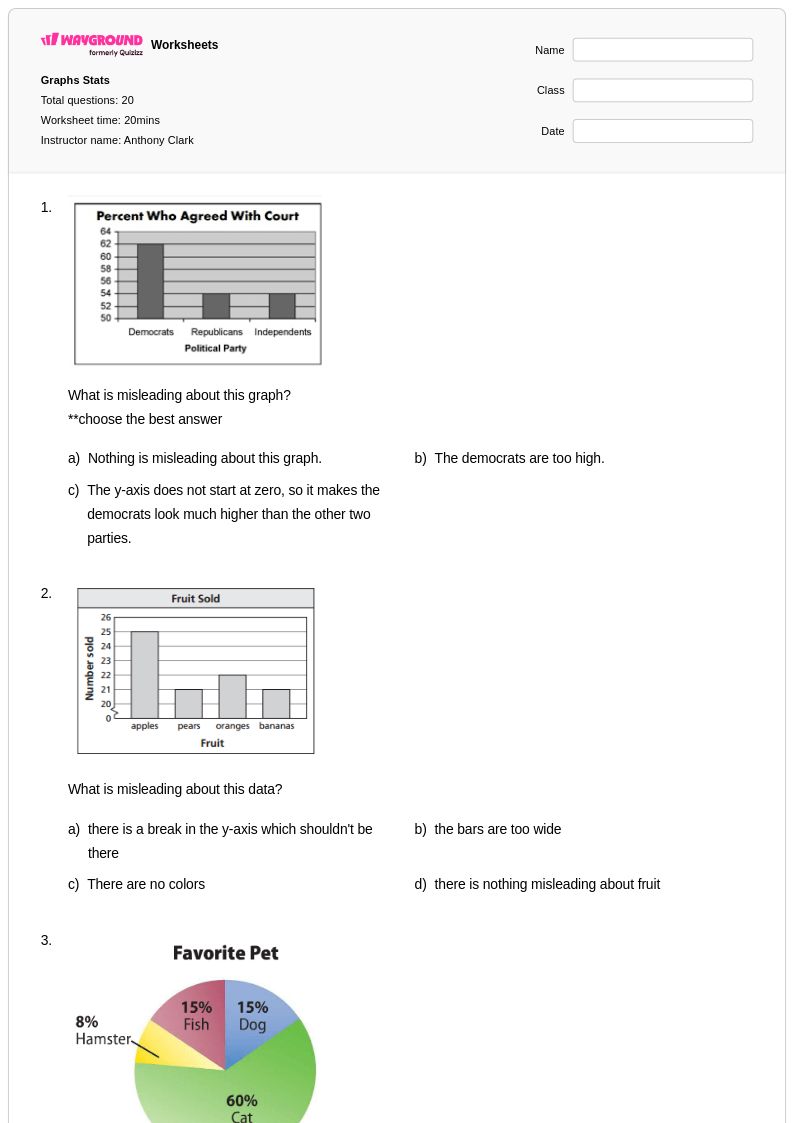
Class 9 misleading graphs worksheets from Wayground (formerly Quizizz) provide students with essential practice in critically analyzing and identifying deceptive data representations that commonly appear in media, advertising, and research. These comprehensive worksheets strengthen students' ability to recognize manipulated scales, truncated axes, inappropriate graph types, and other statistical misrepresentations that can distort data interpretation. Each worksheet includes detailed practice problems that guide students through examining real-world examples of misleading visualizations, while the accompanying answer key helps teachers efficiently assess student understanding of these crucial data literacy concepts. The free printable resources are available in convenient pdf format, making them easily accessible for classroom instruction, homework assignments, or independent study sessions focused on developing mathematical reasoning skills.
Wayground (formerly Quizizz) supports mathematics educators with an extensive collection of teacher-created misleading graphs resources, drawing from millions of high-quality worksheets developed by experienced classroom professionals. The platform's robust search and filtering capabilities allow teachers to quickly locate materials that align with specific curriculum standards and match their students' skill levels, while built-in differentiation tools enable customization for diverse learning needs. These worksheets are available in both printable pdf format and interactive digital versions, providing flexibility for various instructional approaches and learning environments. Teachers can effectively use these resources for lesson planning, targeted remediation for students struggling with data interpretation concepts, enrichment activities for advanced learners, and regular skill practice to reinforce critical thinking abilities essential for mathematical literacy and real-world application.
FAQs
What do 9th graders learn about misleading graphs?
How can I teach misleading graphs to my 9th grade class?
What are common challenges for 9th graders with this topic?
What's the best way to use this misleading graphs worksheet?
How does analyzing misleading graphs relate to the high school math curriculum?
How can I accommodate different learning needs for this topic?