
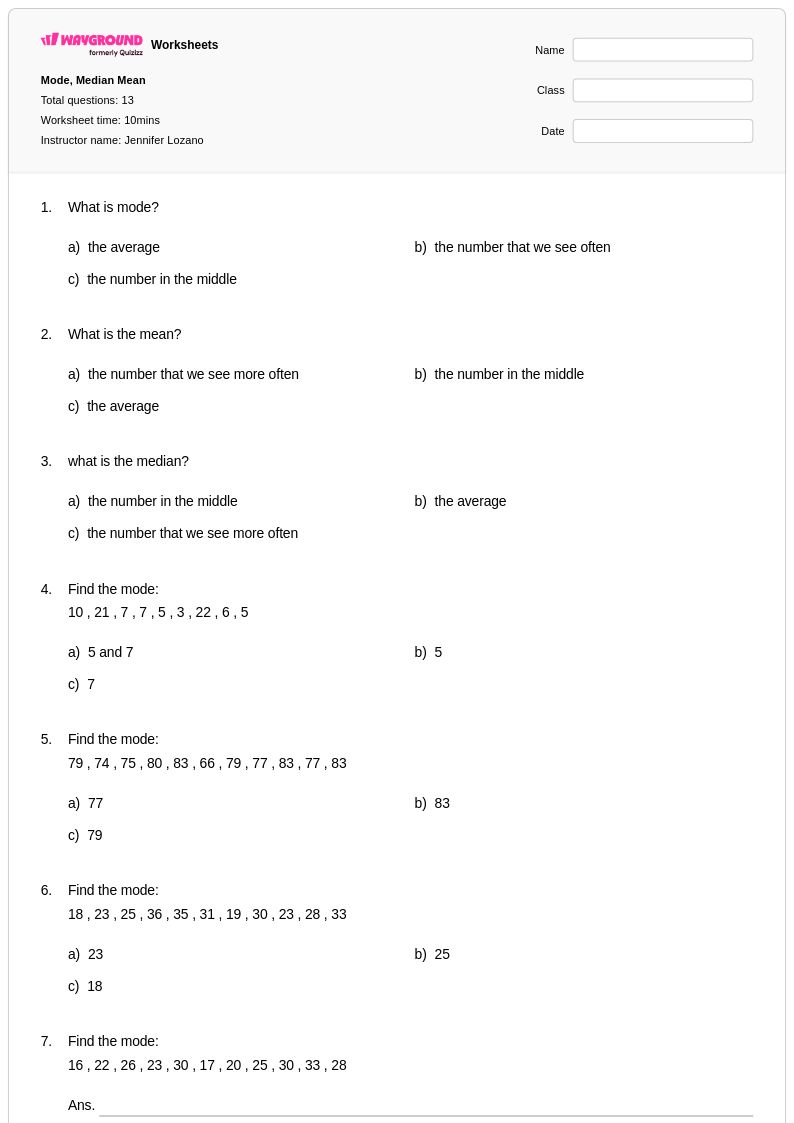
13 Q
1st - 4th
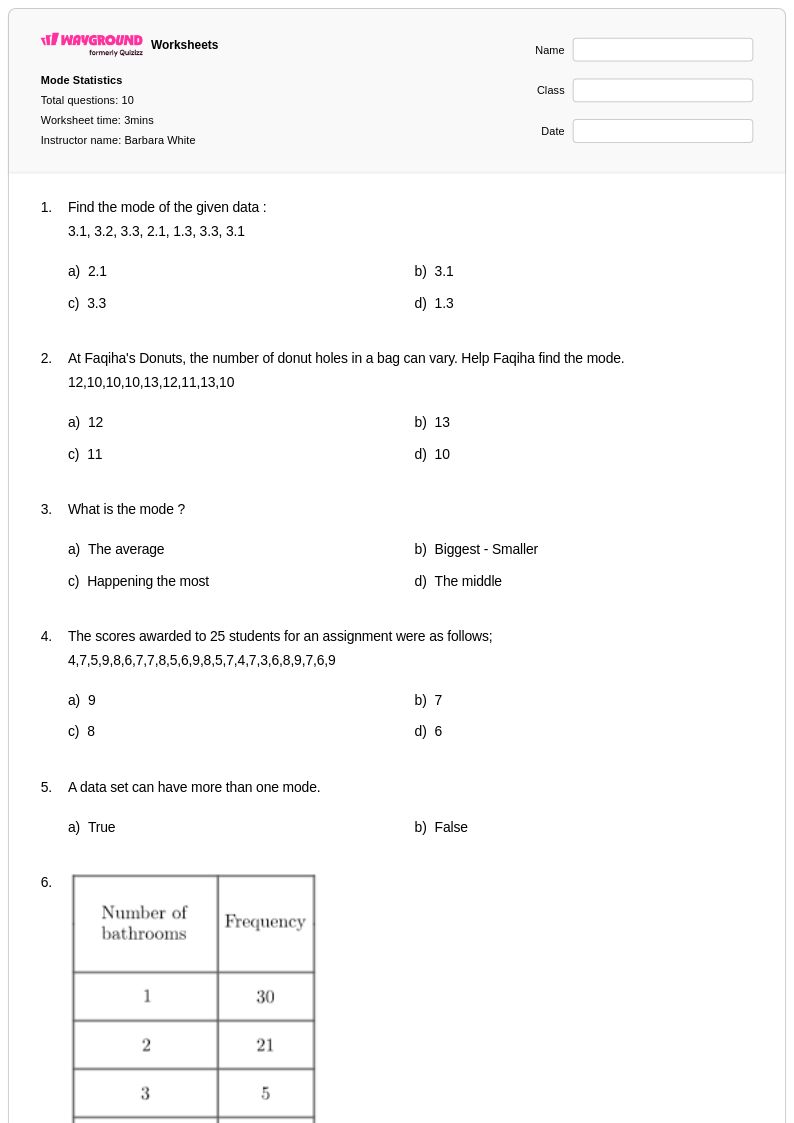
10 Q
1st - 10th
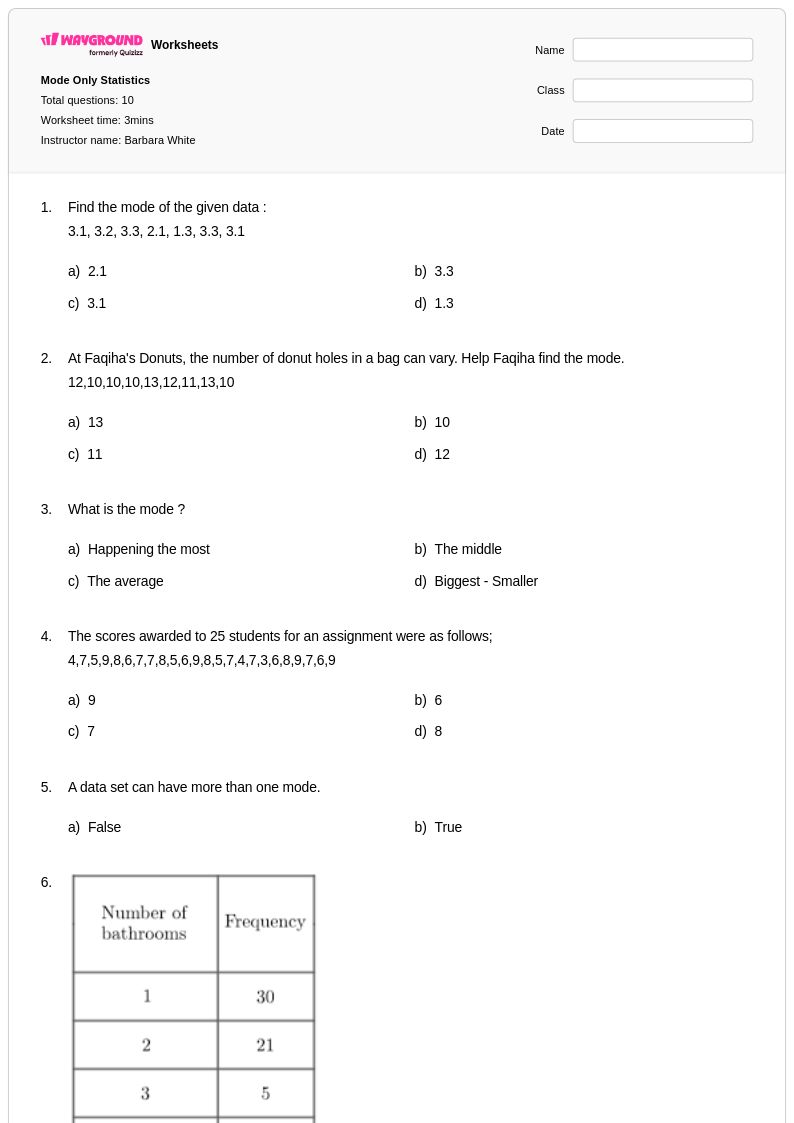
10 Q
1st - 10th
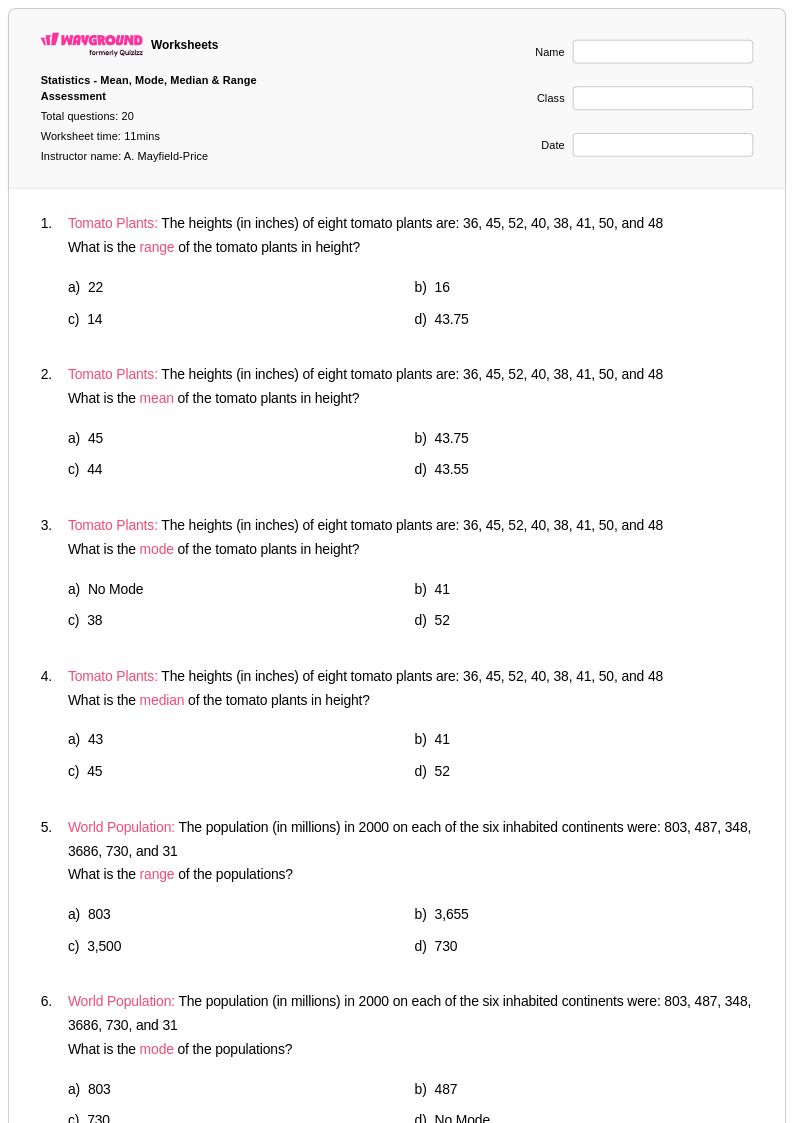
20 Q
3rd - 5th
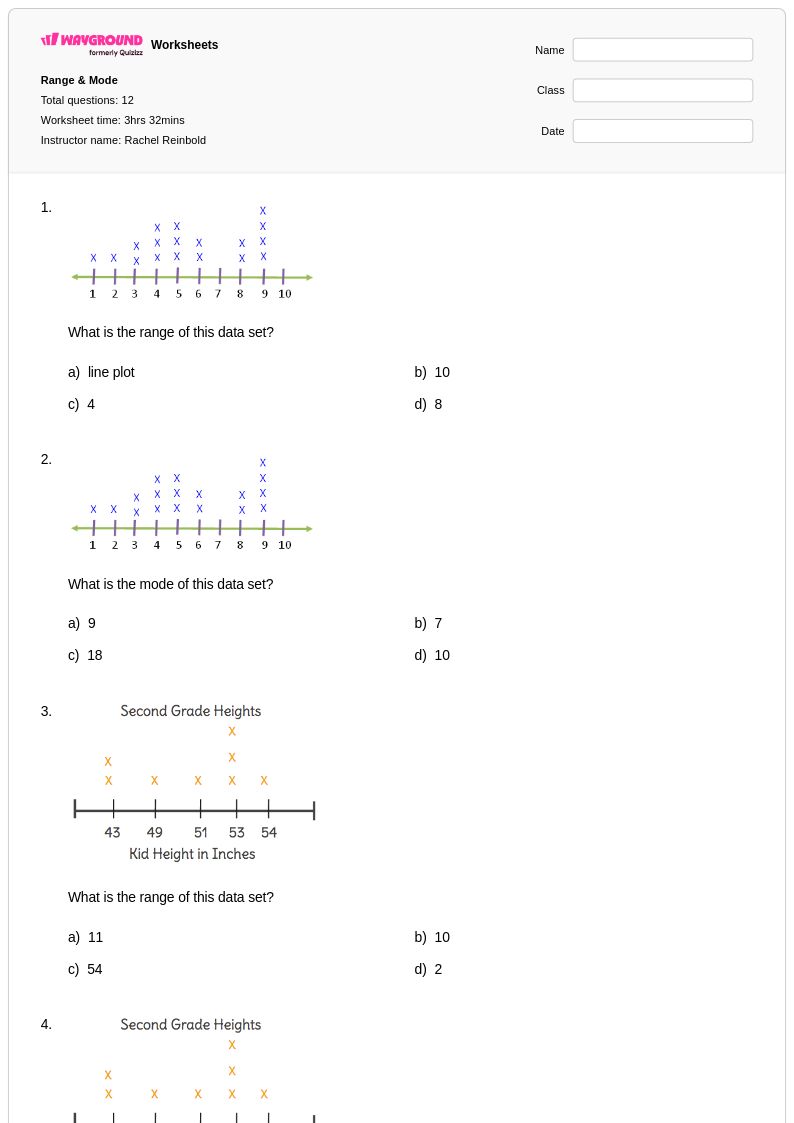
12 Q
3rd - 4th
21 Q
3rd
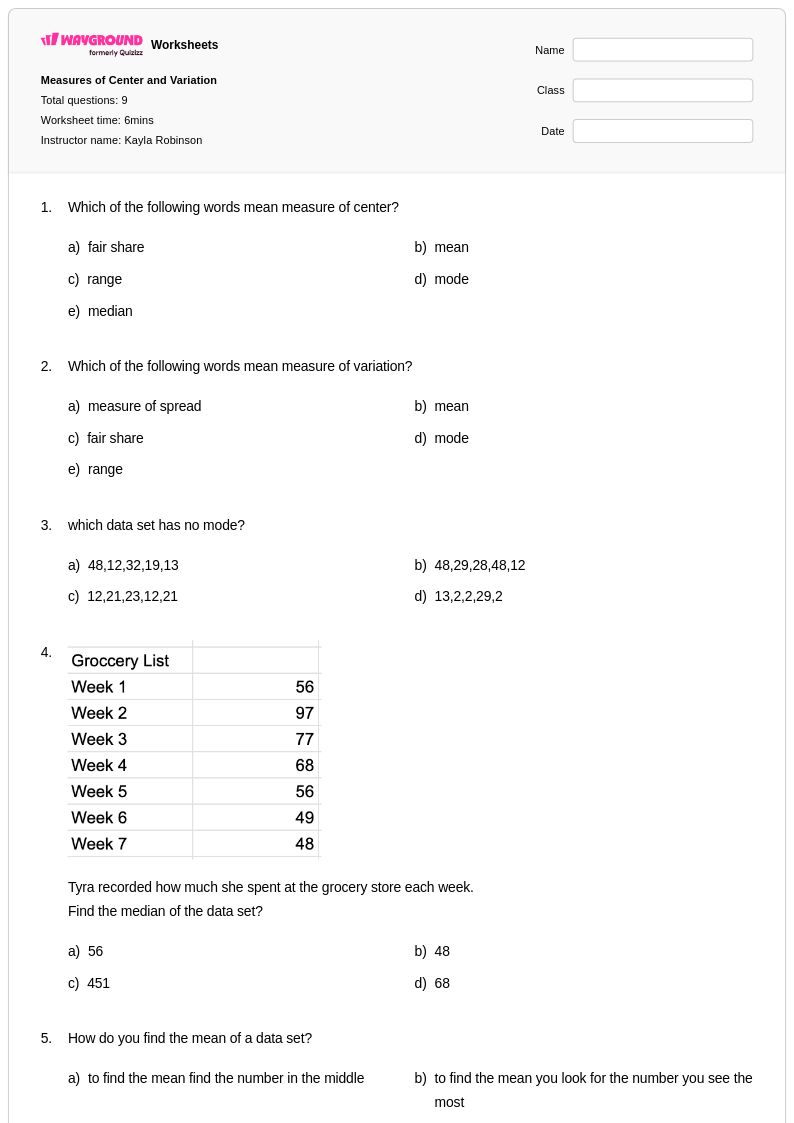
9 Q
1st - 5th
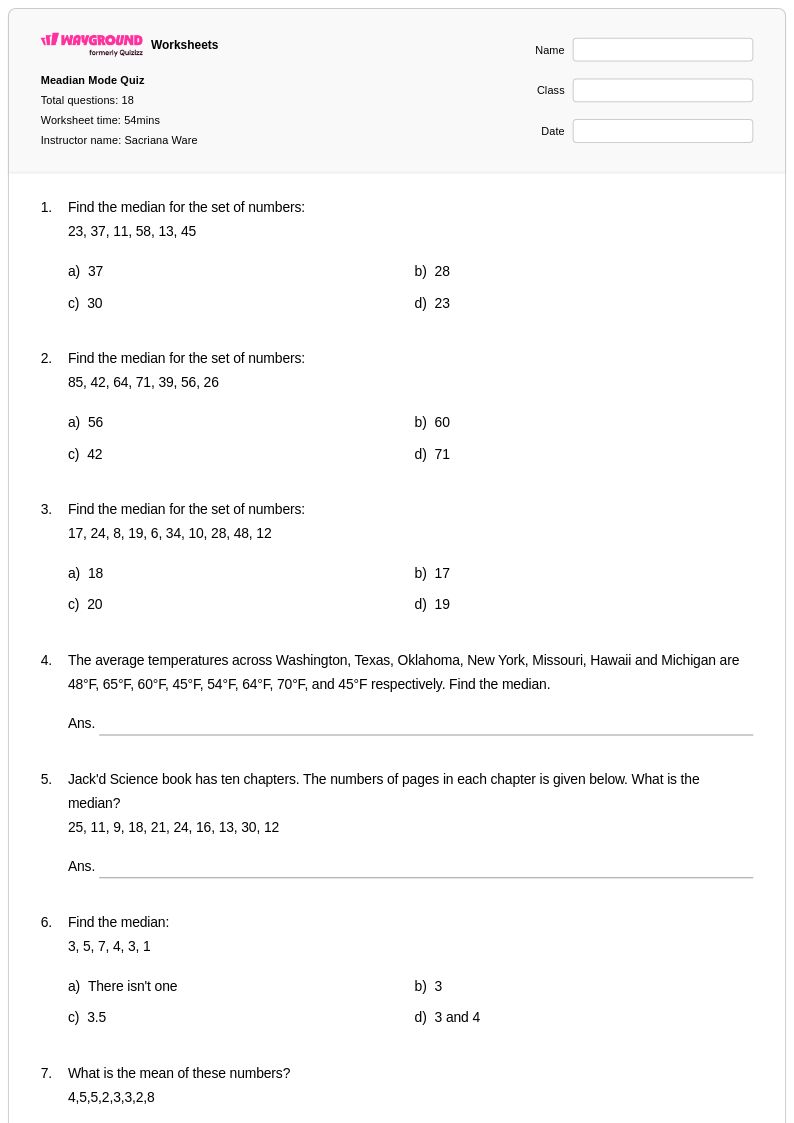
18 Q
1st - 5th
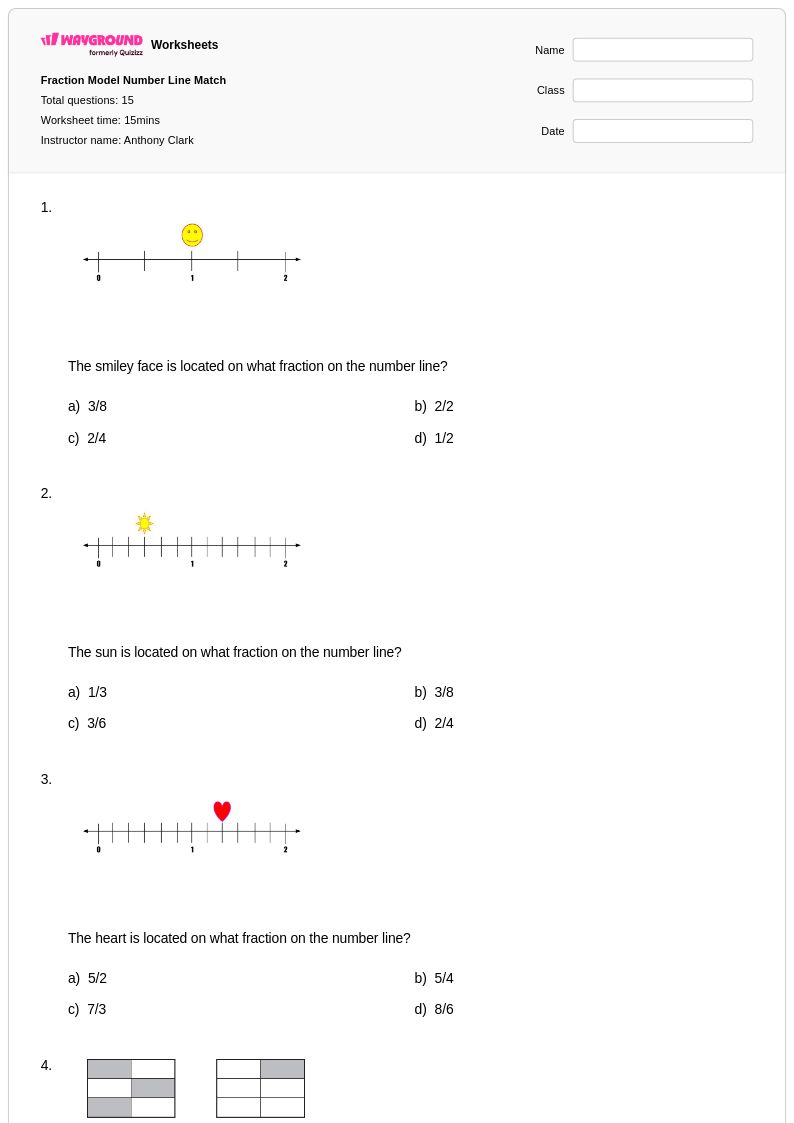
15 Q
3rd - Uni
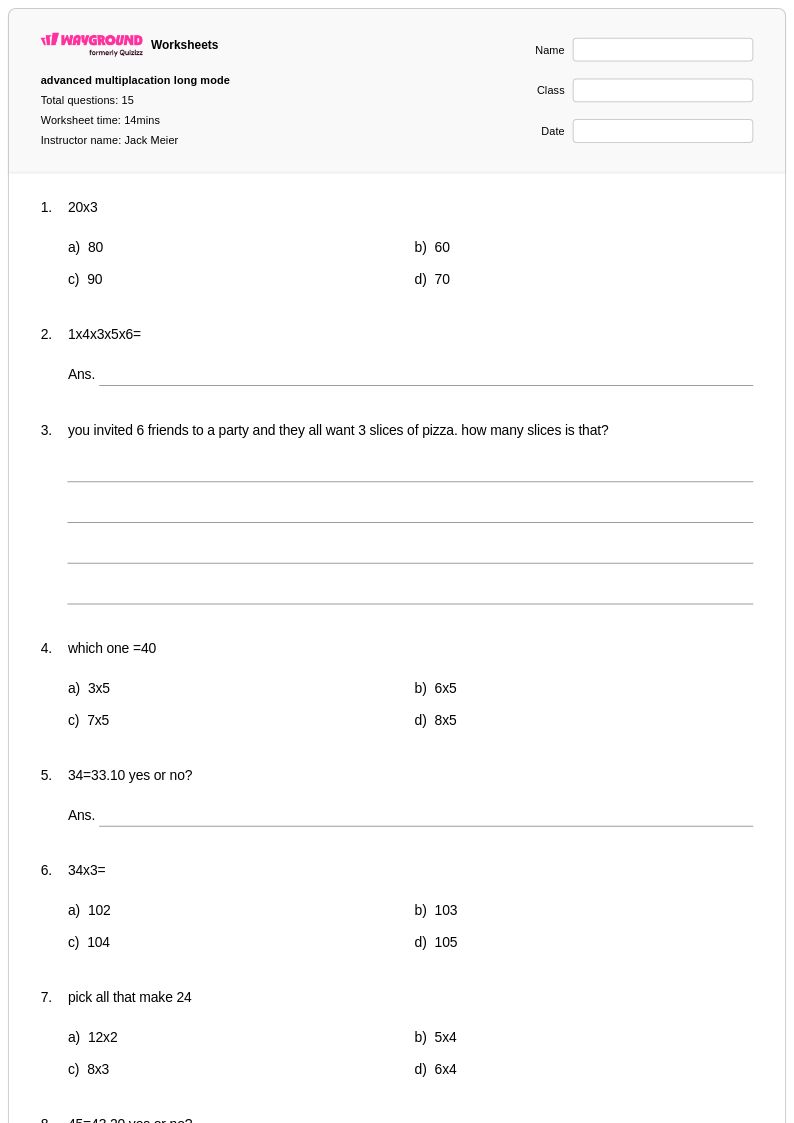
15 Q
3rd - 6th
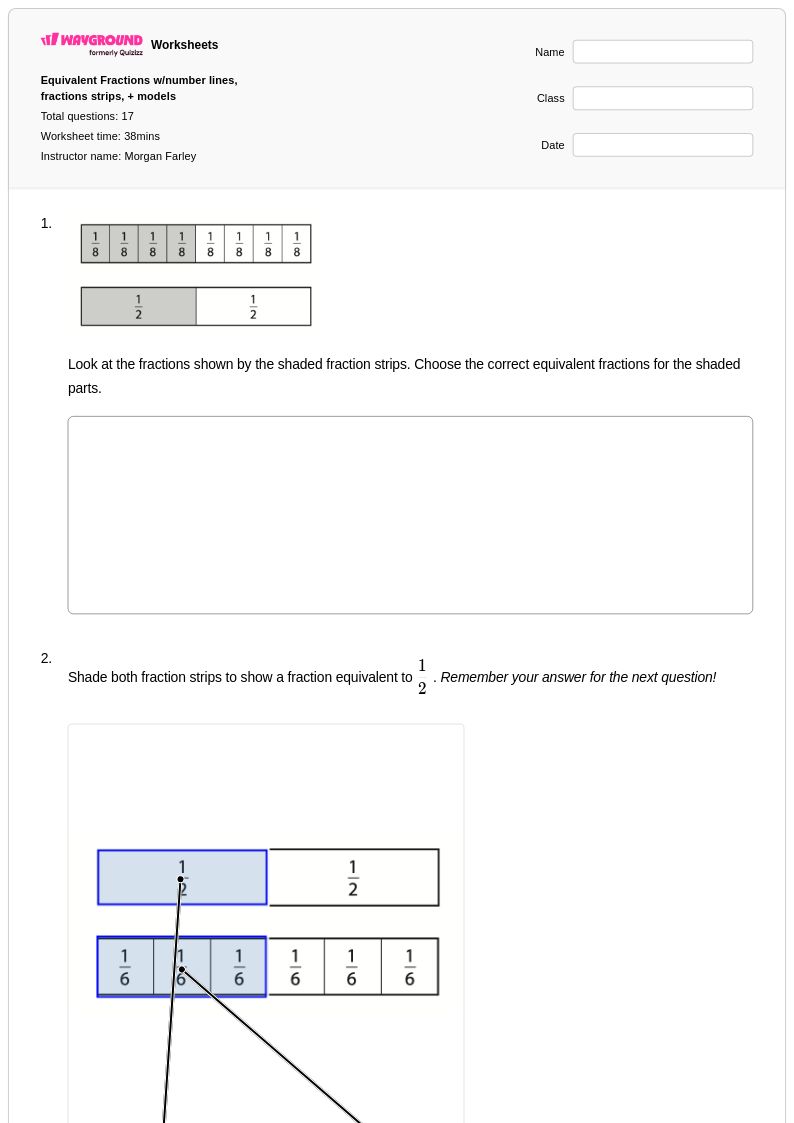
17 Q
3rd
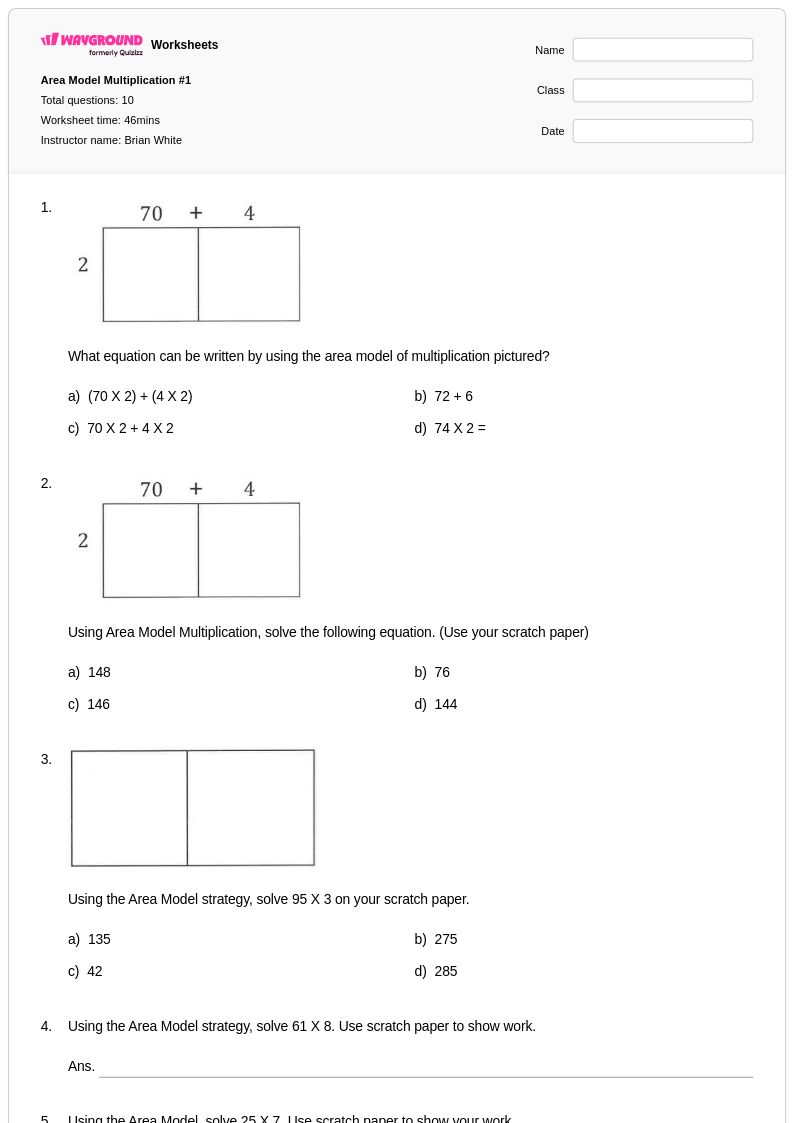
10 Q
3rd
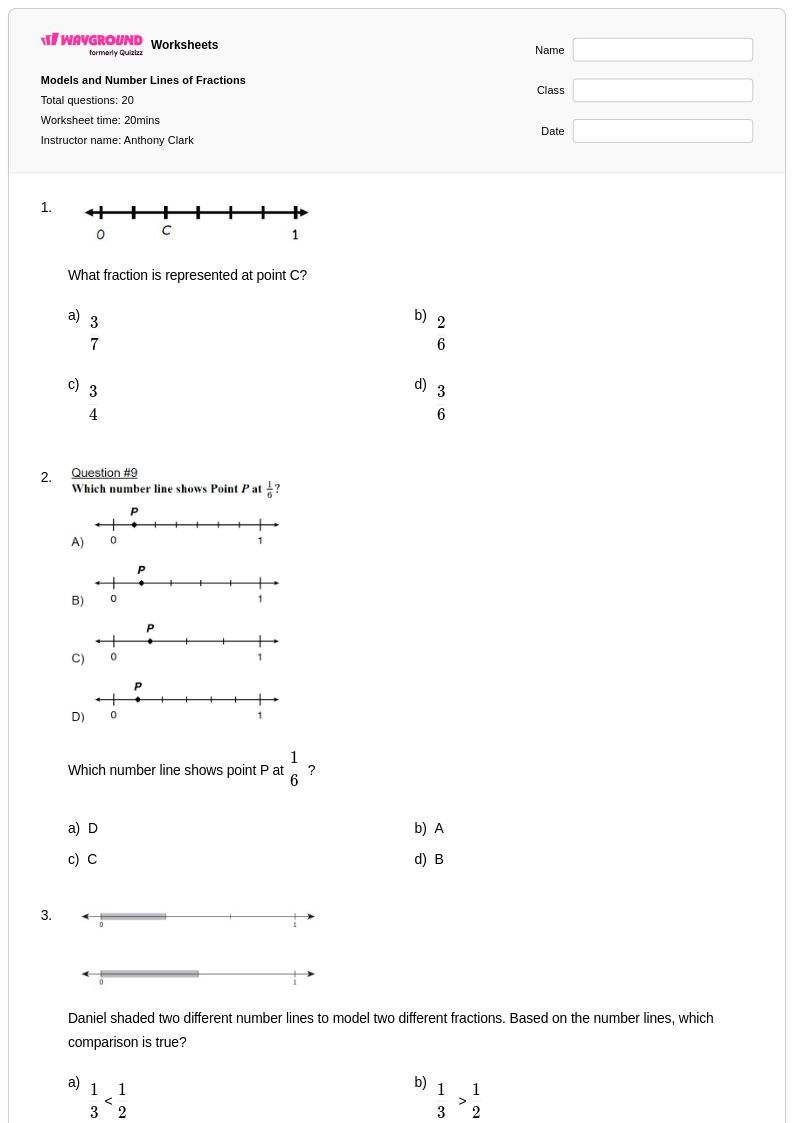
20 Q
3rd - Uni
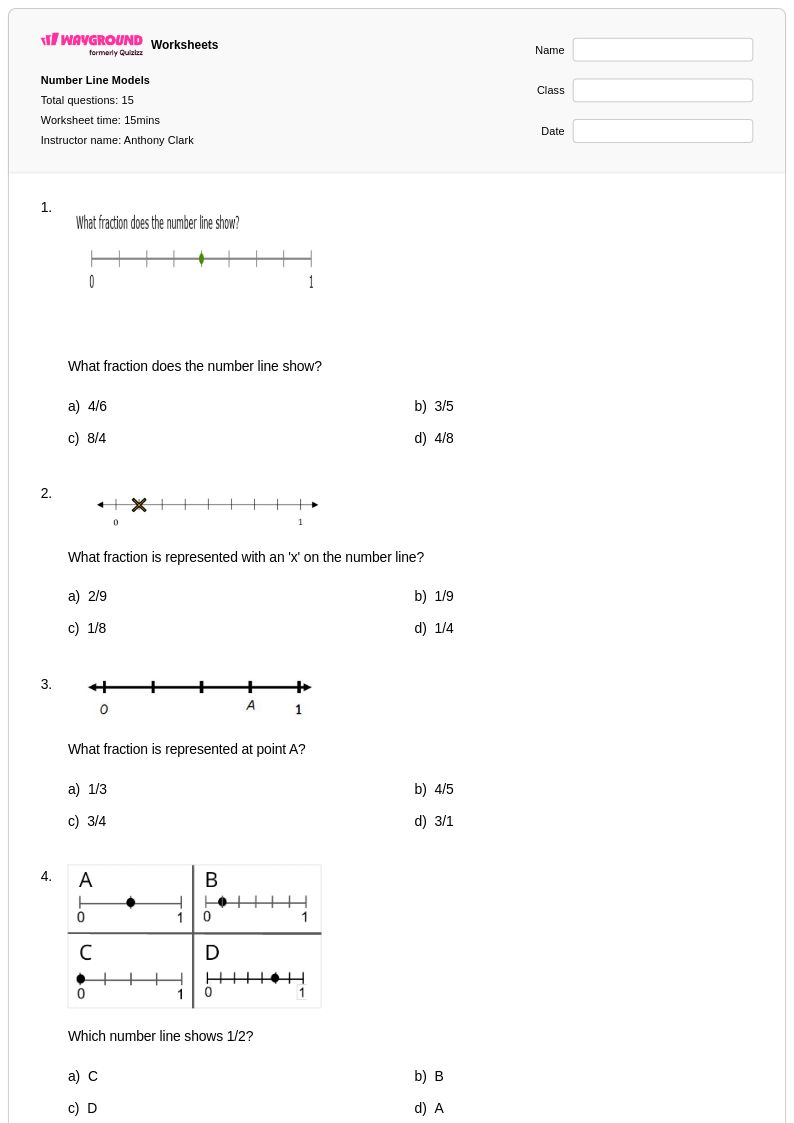
15 Q
3rd - Uni
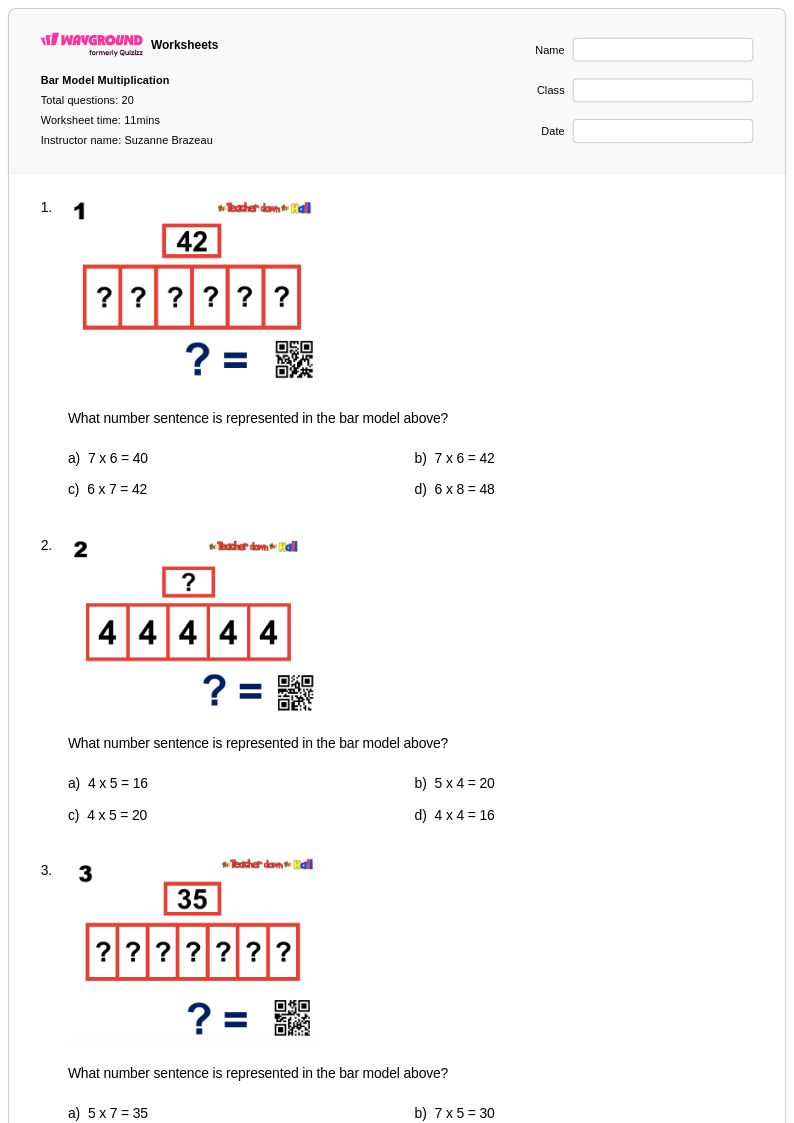
20 Q
3rd
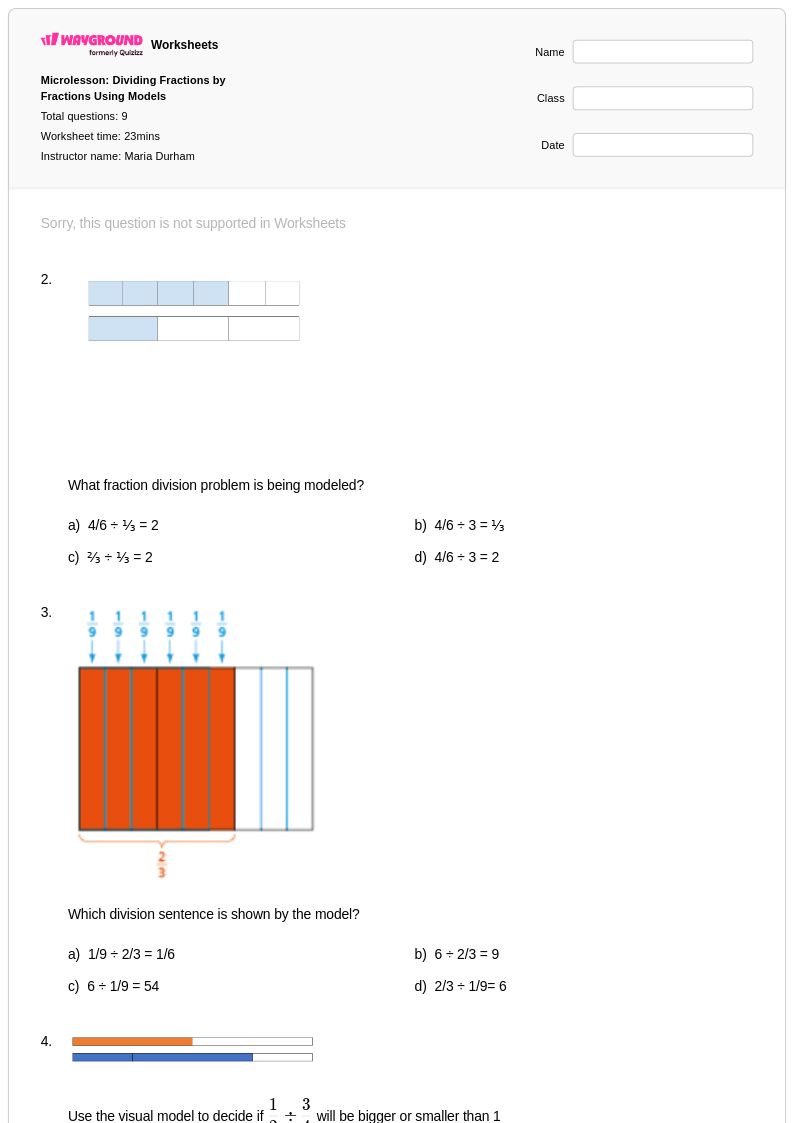
15 Q
1st - 5th
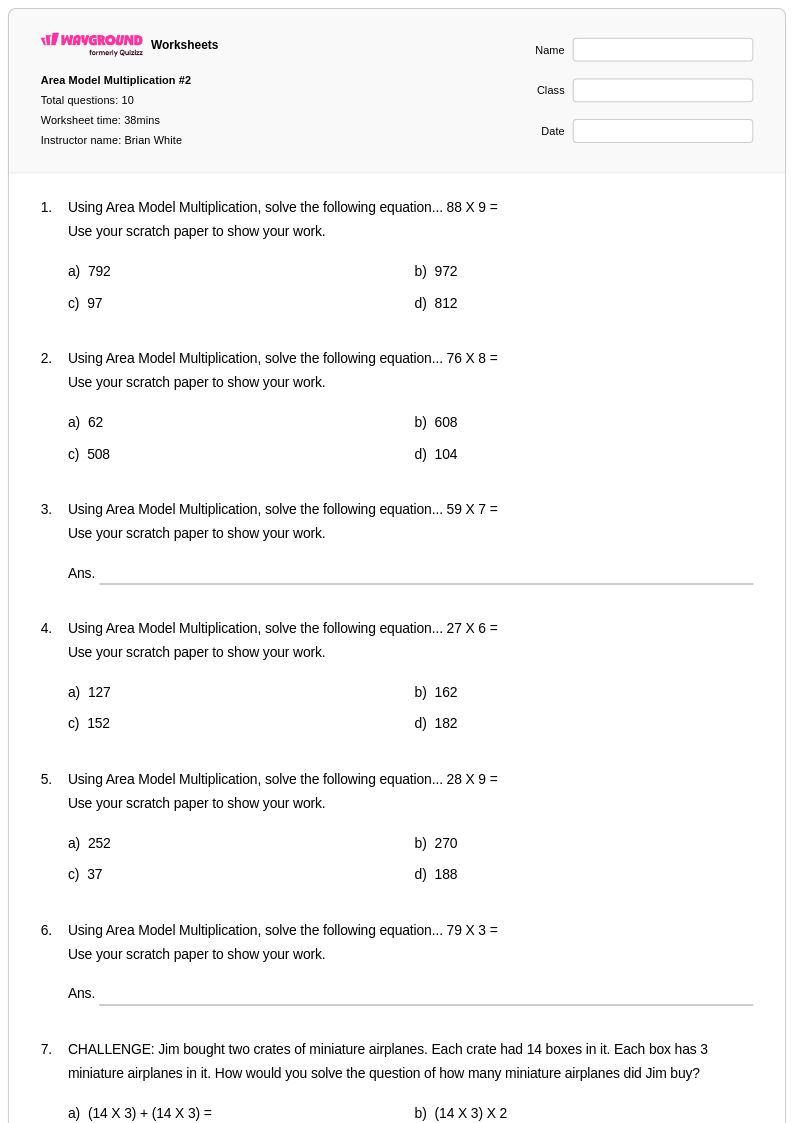
10 Q
3rd
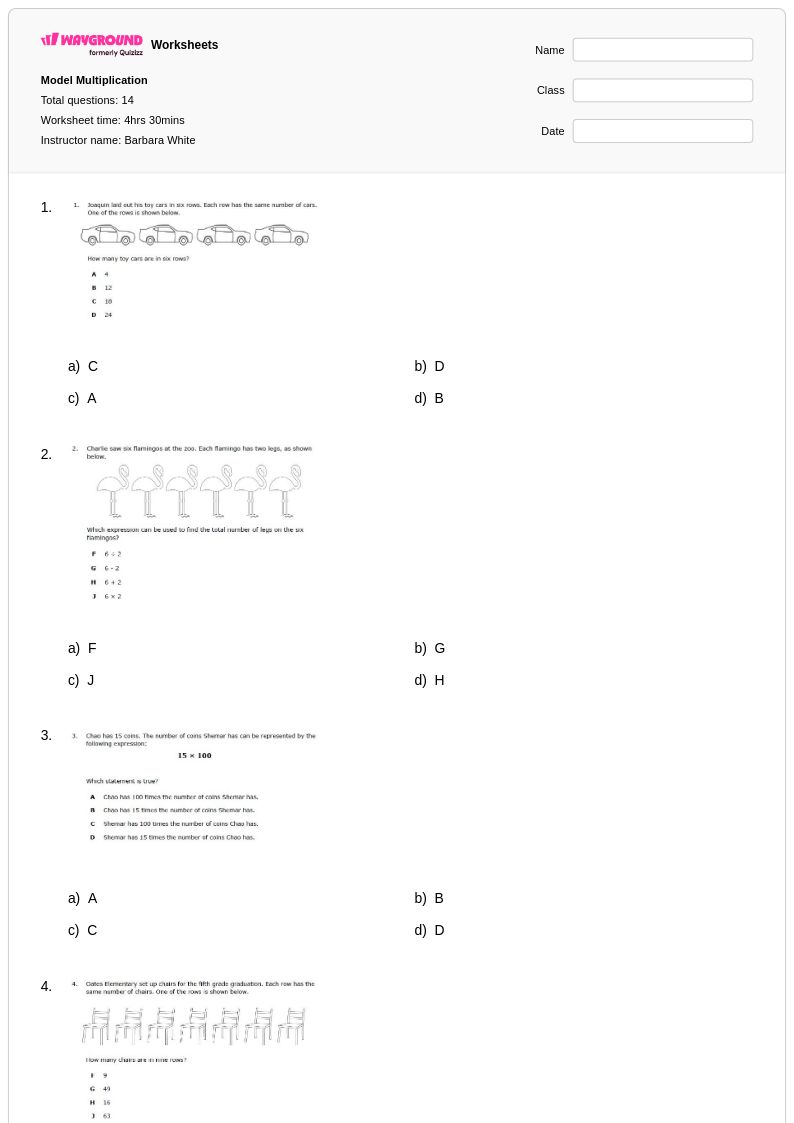
14 Q
3rd
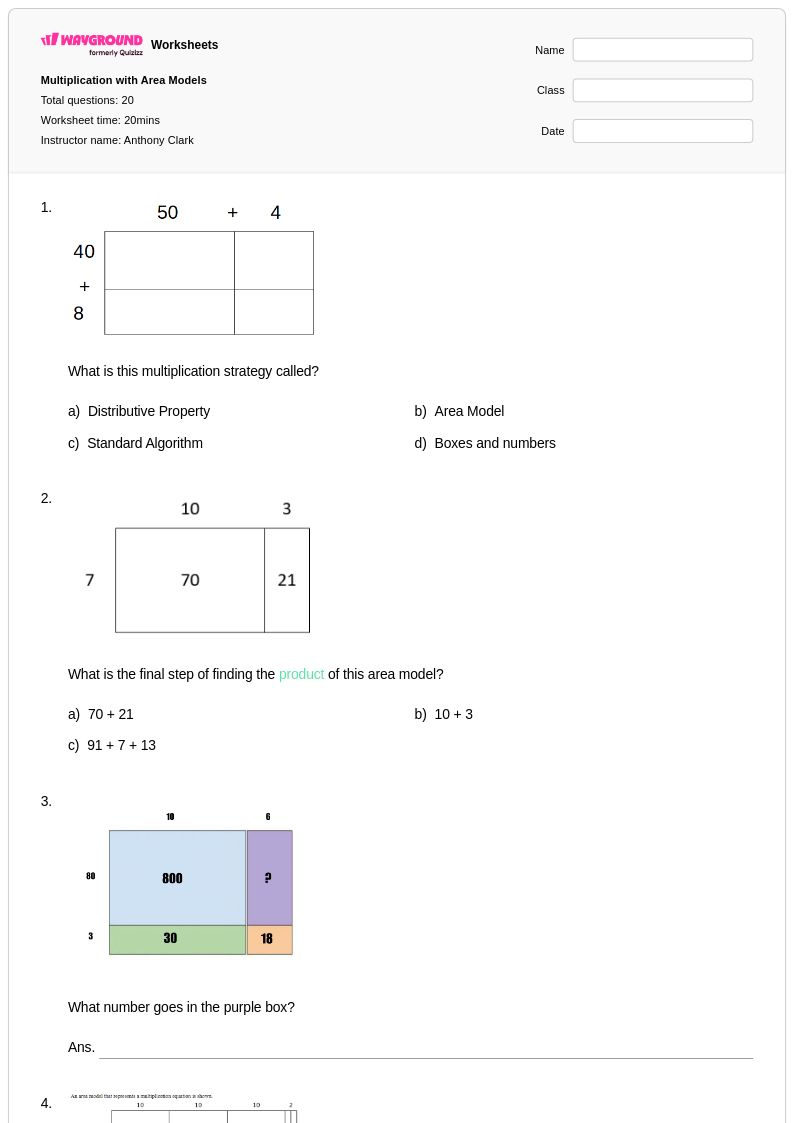
20 Q
3rd - Uni
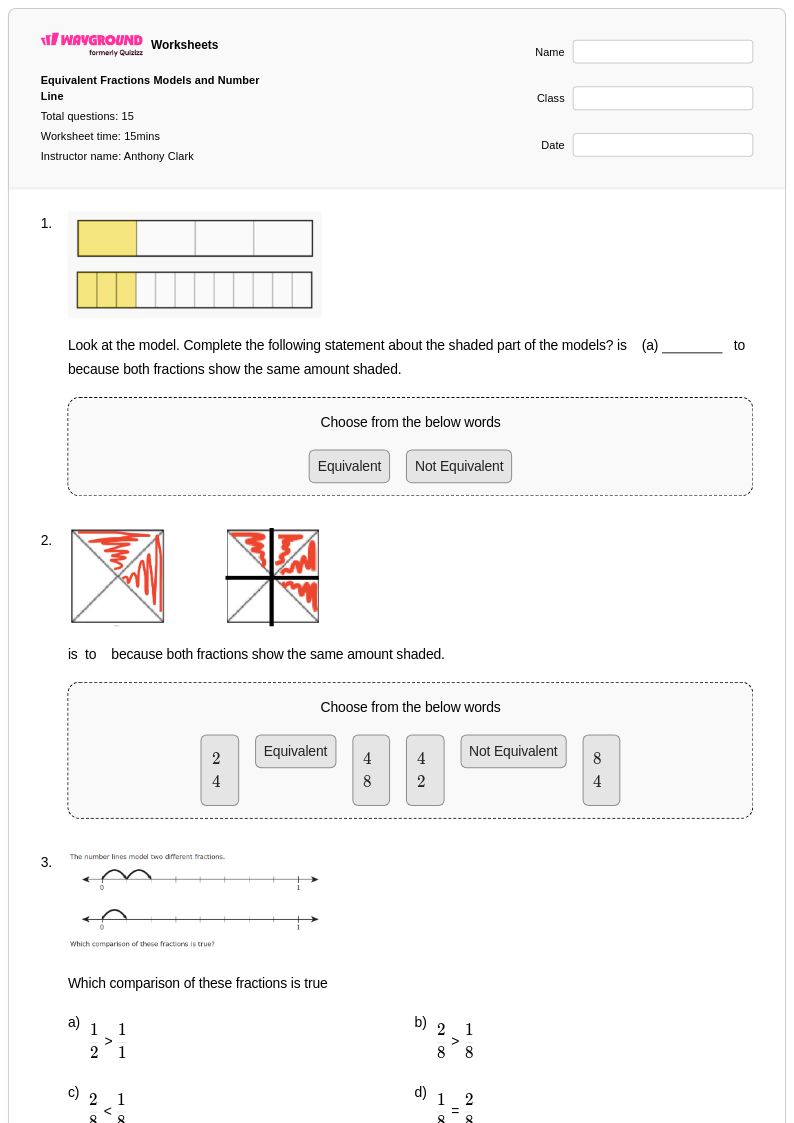
15 Q
3rd - Uni
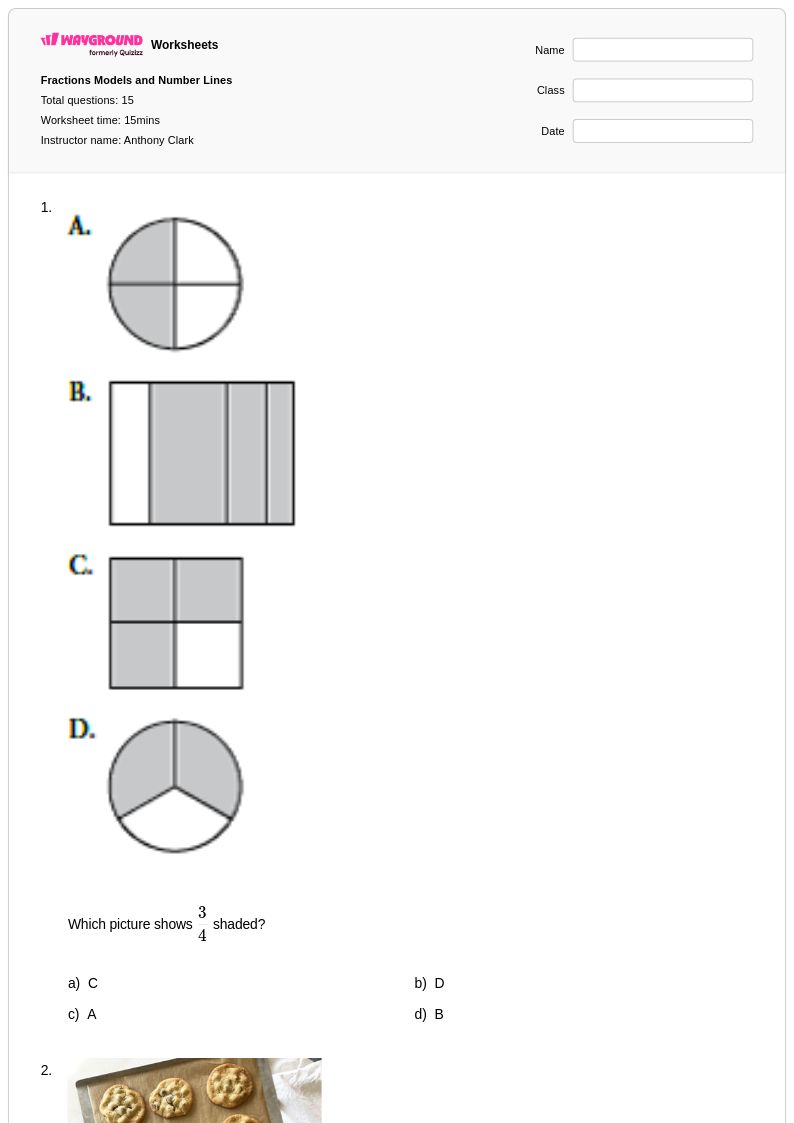
15 Q
3rd - Uni
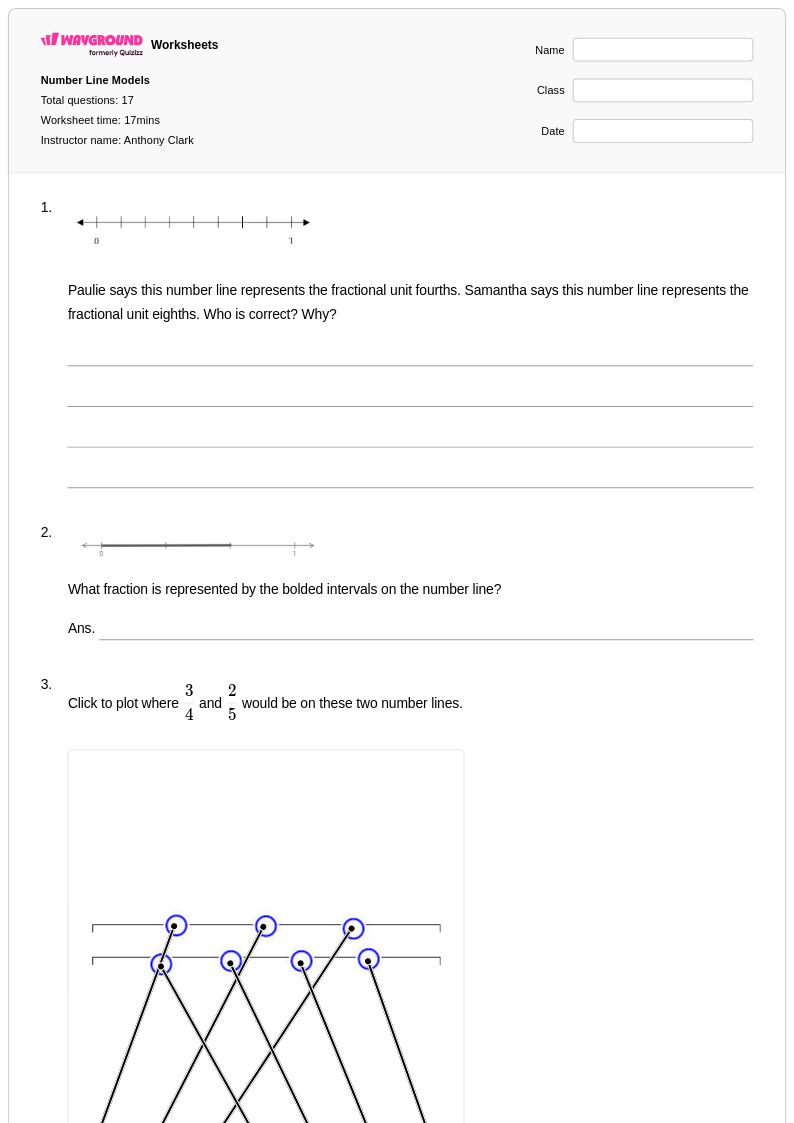
17 Q
3rd - Uni
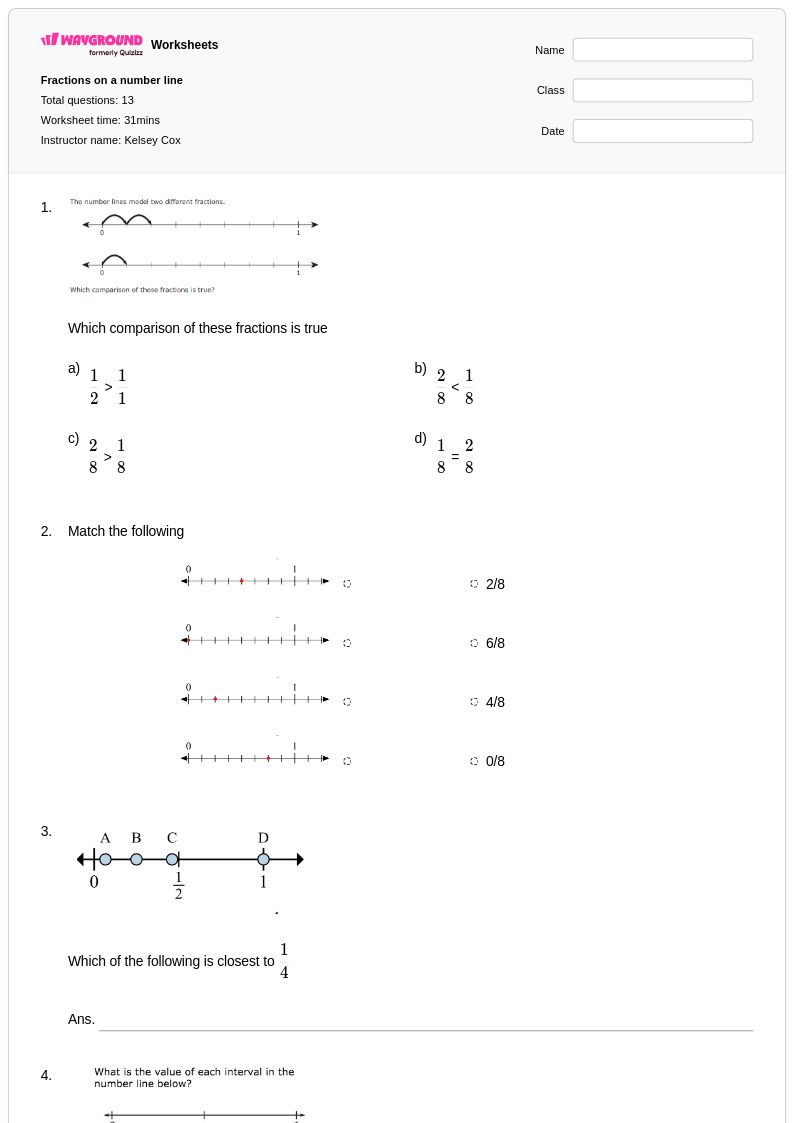
13 Q
3rd
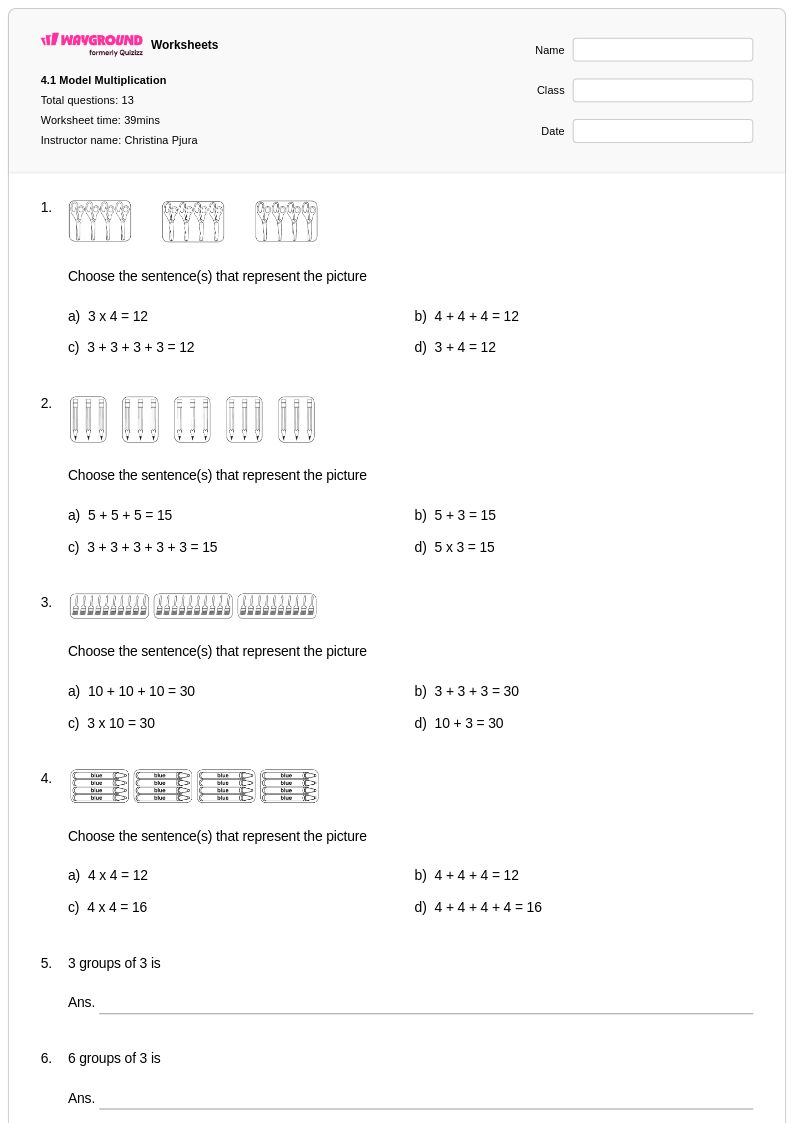
13 Q
3rd
Explore Other Subject Worksheets for class 3
Explore printable Mode worksheets for Class 3
Mode worksheets for Class 3 mathematics provide essential practice with identifying the most frequently occurring value in a data set, a fundamental concept in early statistics education. These carefully designed printables help young learners develop critical thinking skills as they analyze simple data collections, count frequencies, and determine which number appears most often in various scenarios. The worksheets feature age-appropriate problems using familiar contexts like favorite colors, pet types, or classroom surveys, making statistical concepts accessible and engaging for third-grade students. Each free resource includes comprehensive practice problems that progressively build understanding, from basic mode identification with small data sets to more complex scenarios involving ties or no mode, complete with answer keys that support independent learning and immediate feedback.
Wayground, formerly Quizizz, empowers educators with millions of teacher-created mode worksheets specifically aligned with Class 3 mathematics standards and learning objectives. The platform's robust search and filtering capabilities enable teachers to quickly locate resources that match their specific curriculum needs, whether for initial instruction, skill reinforcement, or differentiated practice. These versatile materials are available in both printable PDF formats for traditional classroom use and digital formats for interactive learning, allowing seamless integration into any teaching environment. Teachers can customize existing worksheets or create new variations to address diverse learning needs, supporting remediation for struggling students and enrichment opportunities for advanced learners, while comprehensive planning tools help educators track progress and identify areas requiring additional statistical concept development.
FAQs
What grade do students learn about mode?
How do I introduce mode to 3rd graders?
What kind of practice is best for 3rd graders learning mode?
What are common difficulties for 3rd graders with mode?
How can I use this 3rd-grade mode worksheet?
How can I support diverse learners with this 3rd-grade worksheet?