Free Printable Nuclear Chemistry Worksheets for Class 9
Class 9 Nuclear Chemistry worksheets from Wayground provide free printables and practice problems with answer keys to help students master radioactive decay, nuclear reactions, and atomic structure fundamentals.
Explore printable Nuclear Chemistry worksheets for Class 9
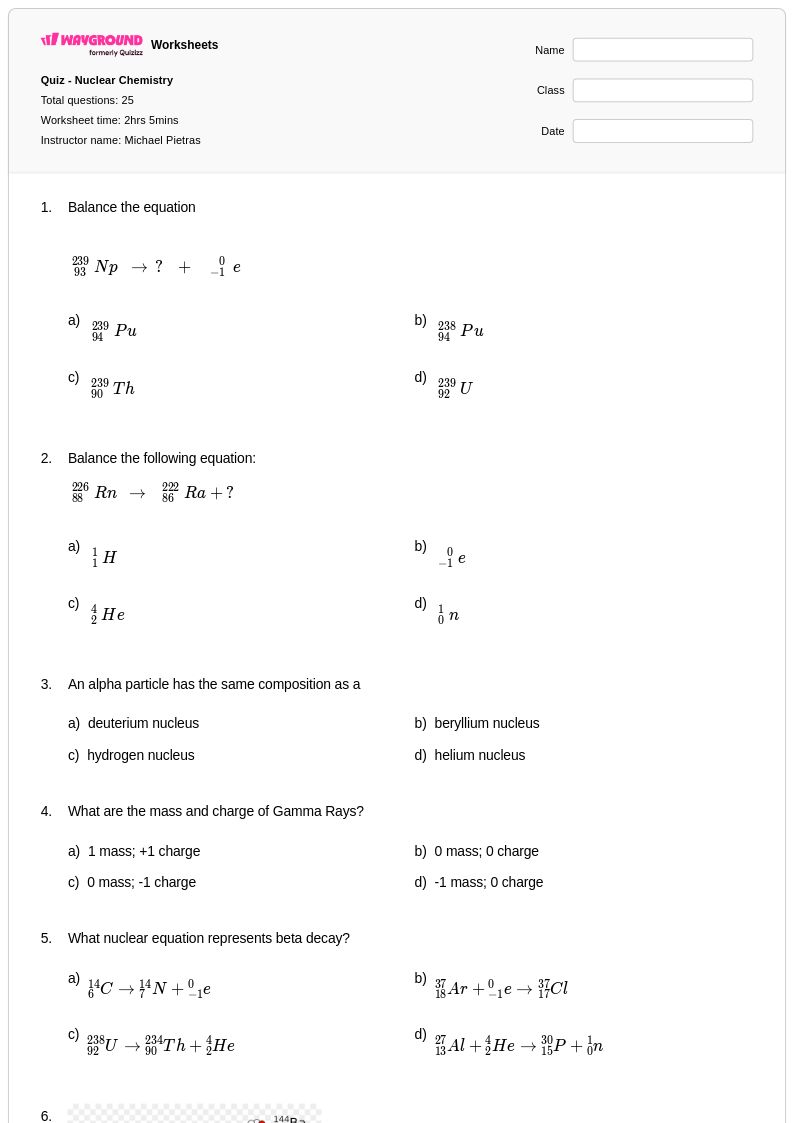
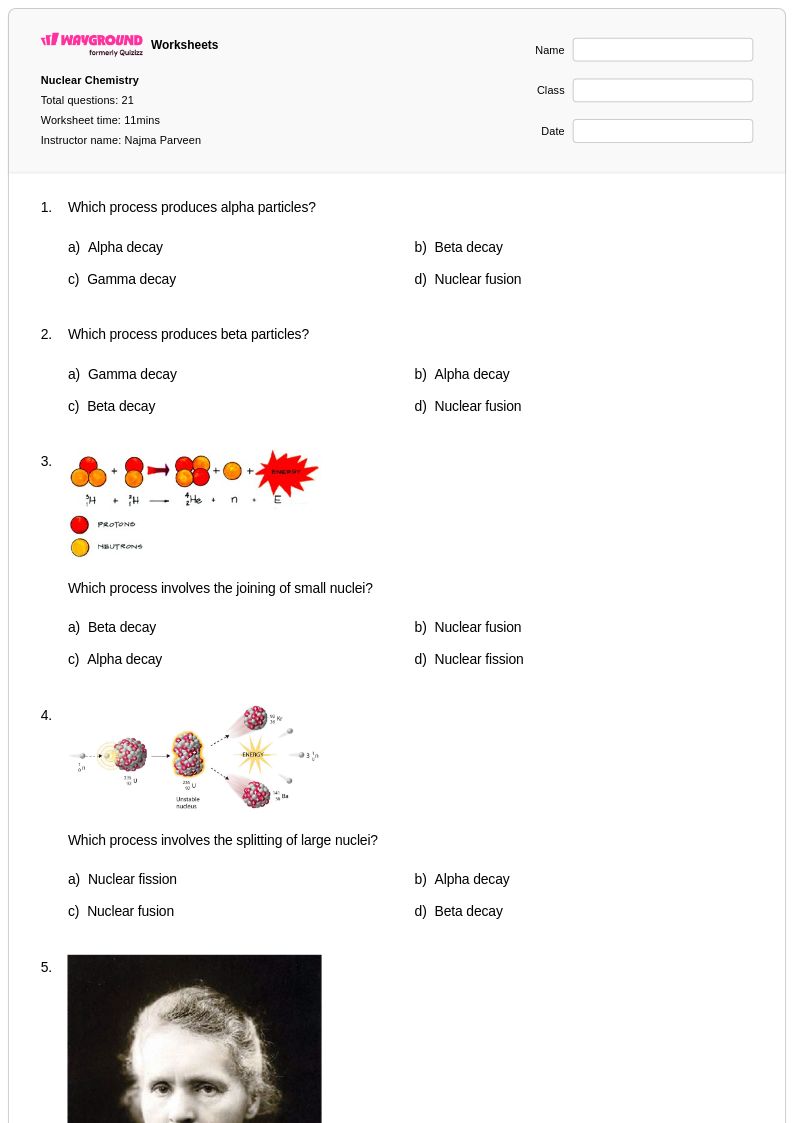
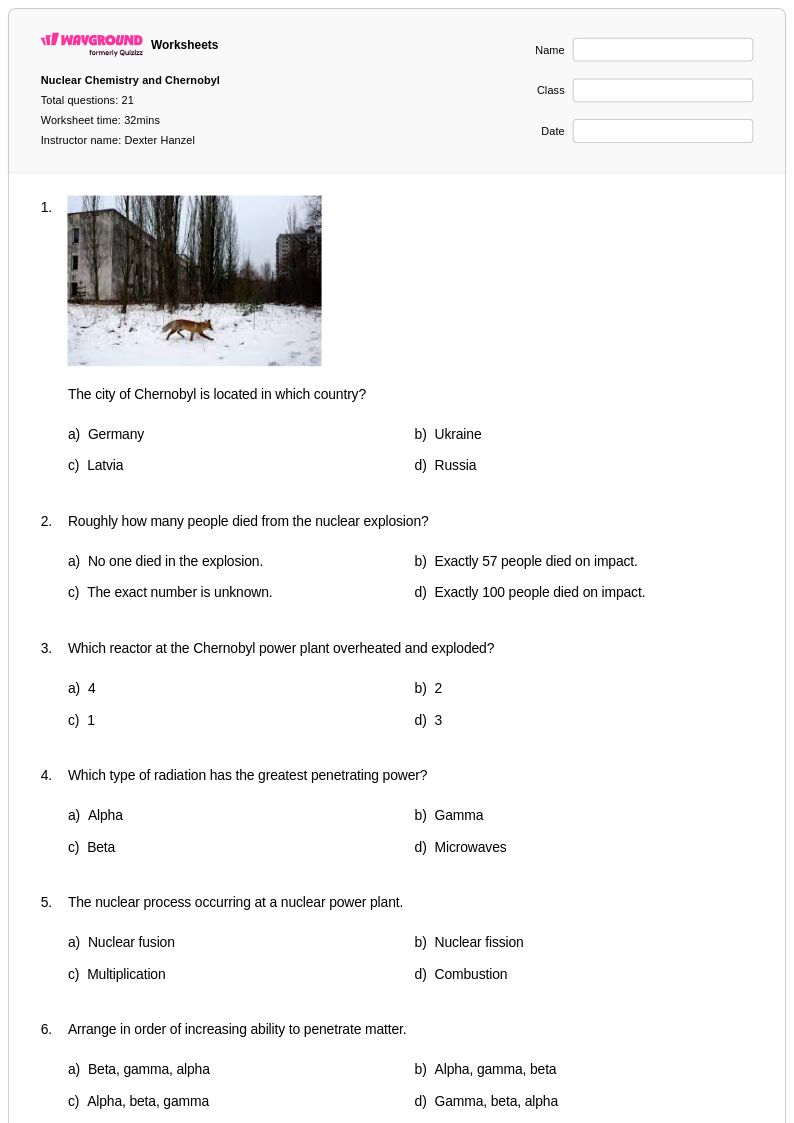
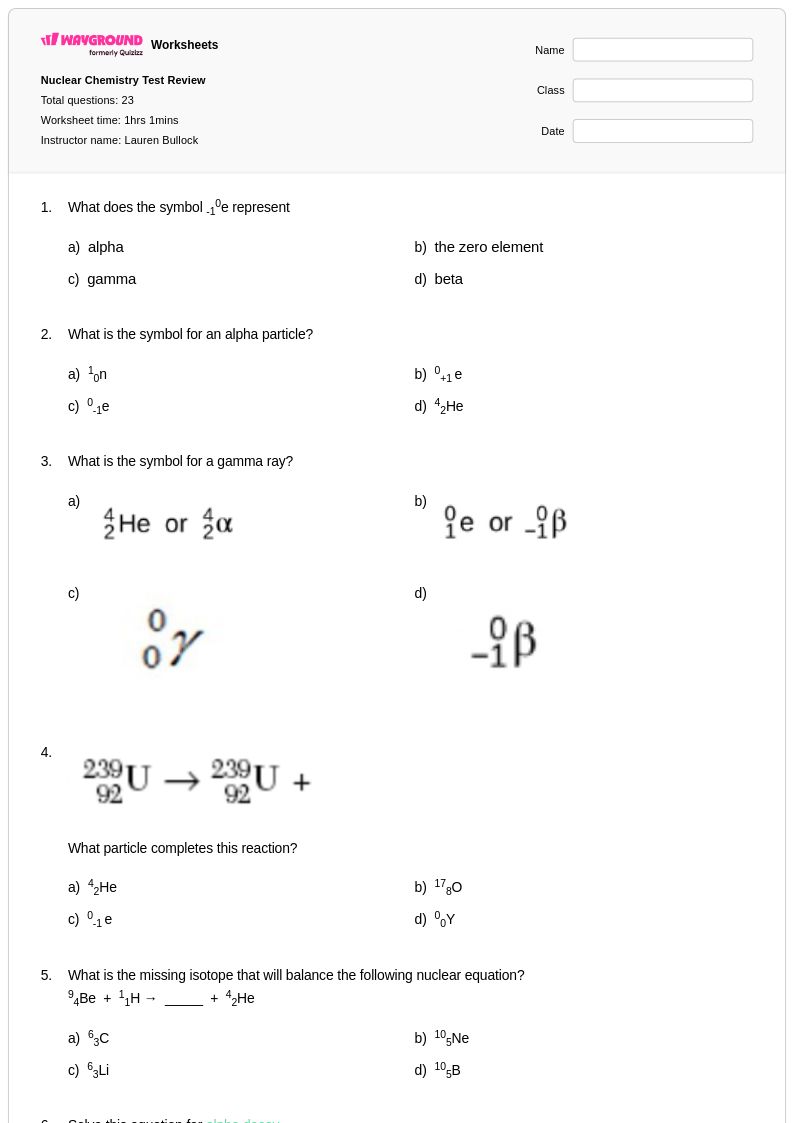
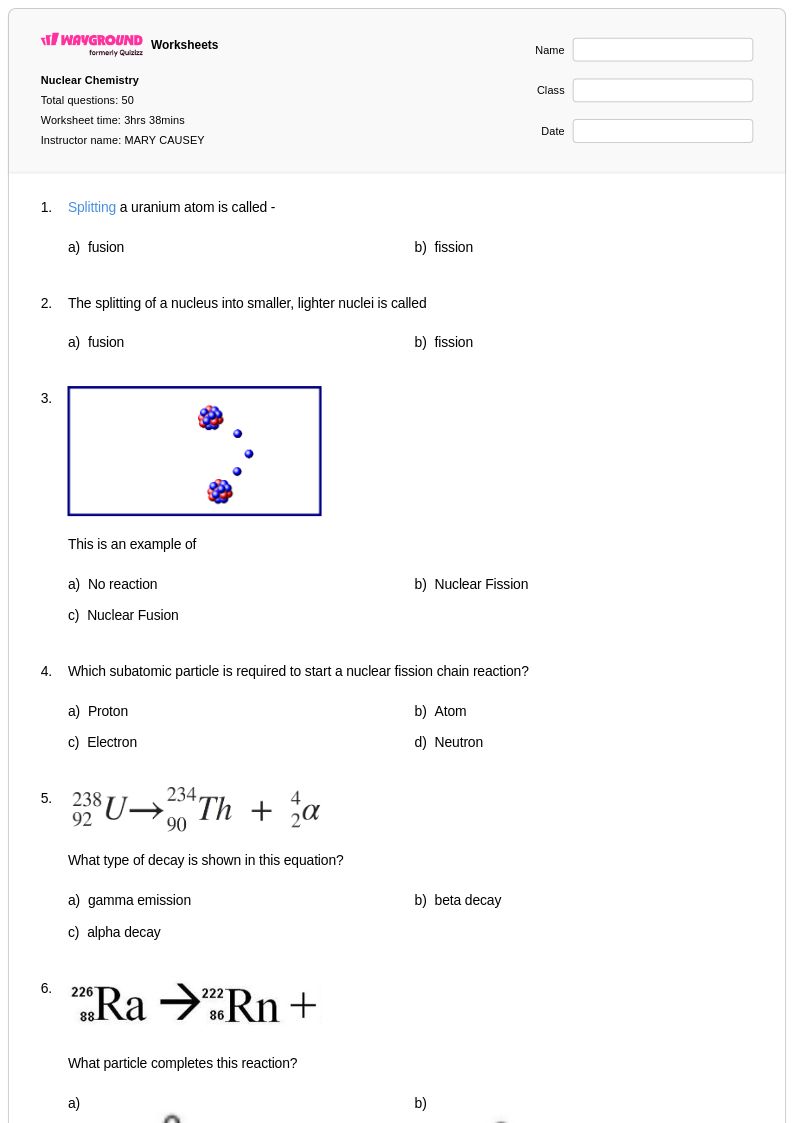
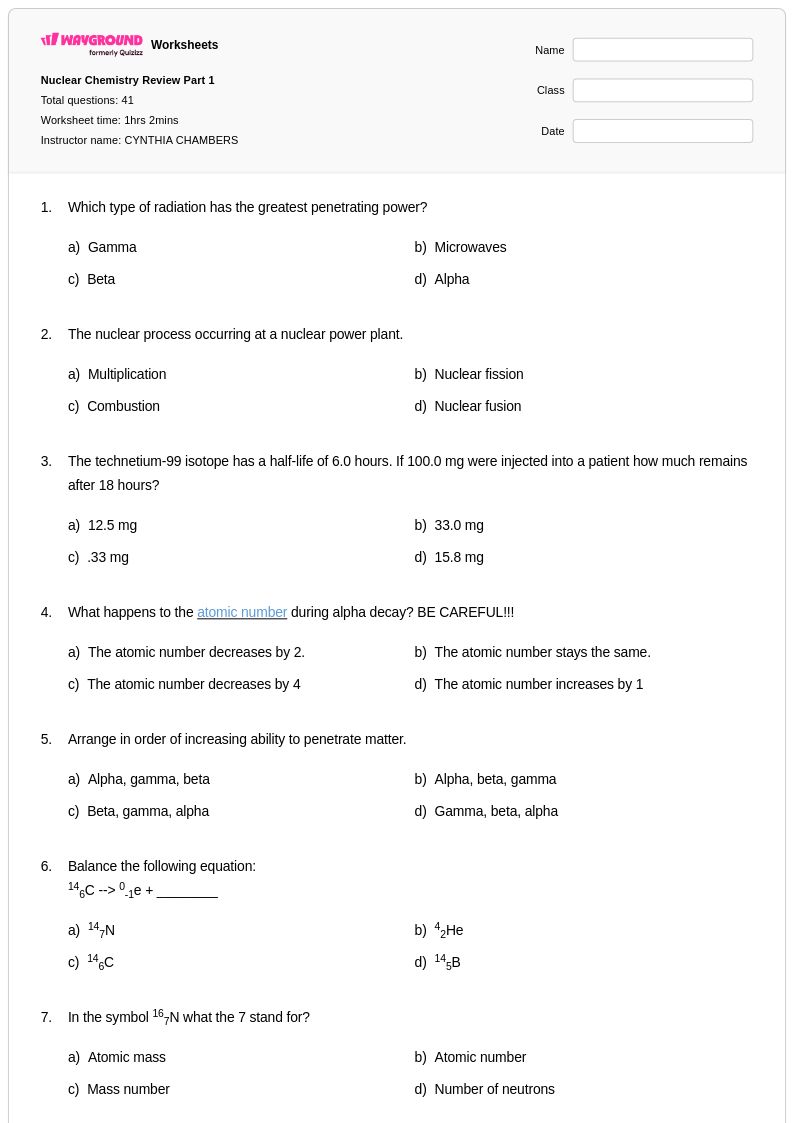
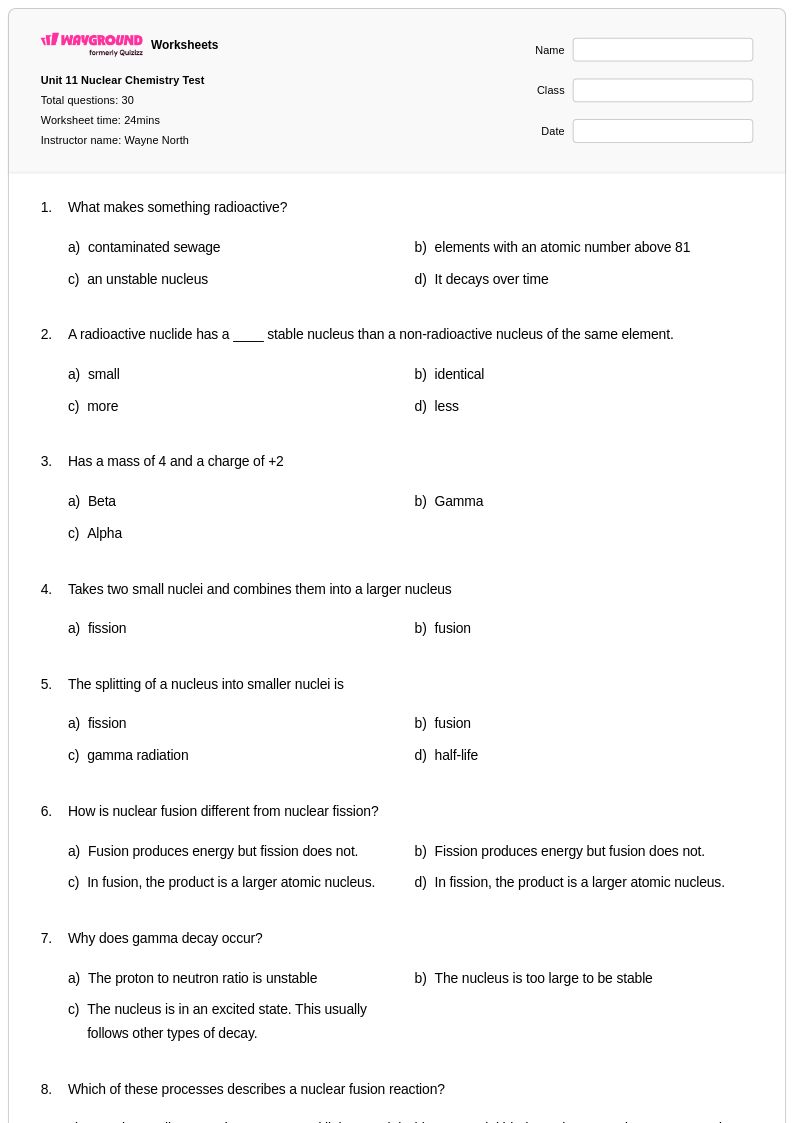
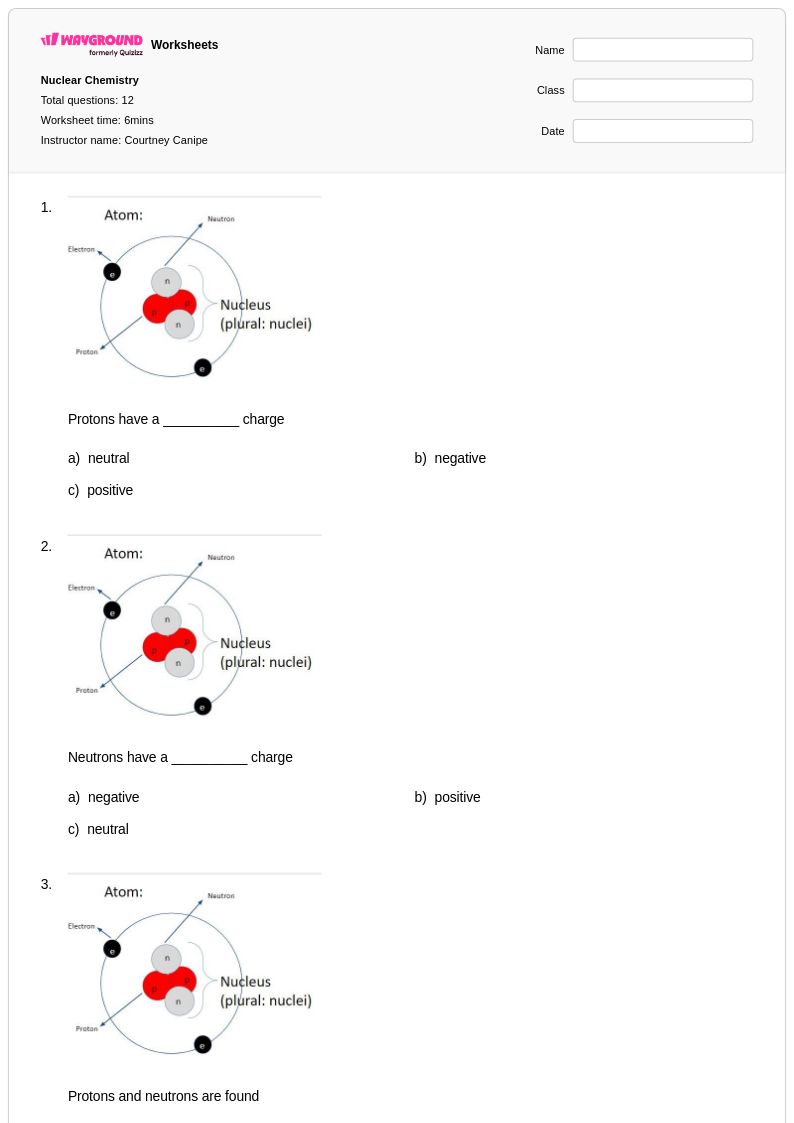
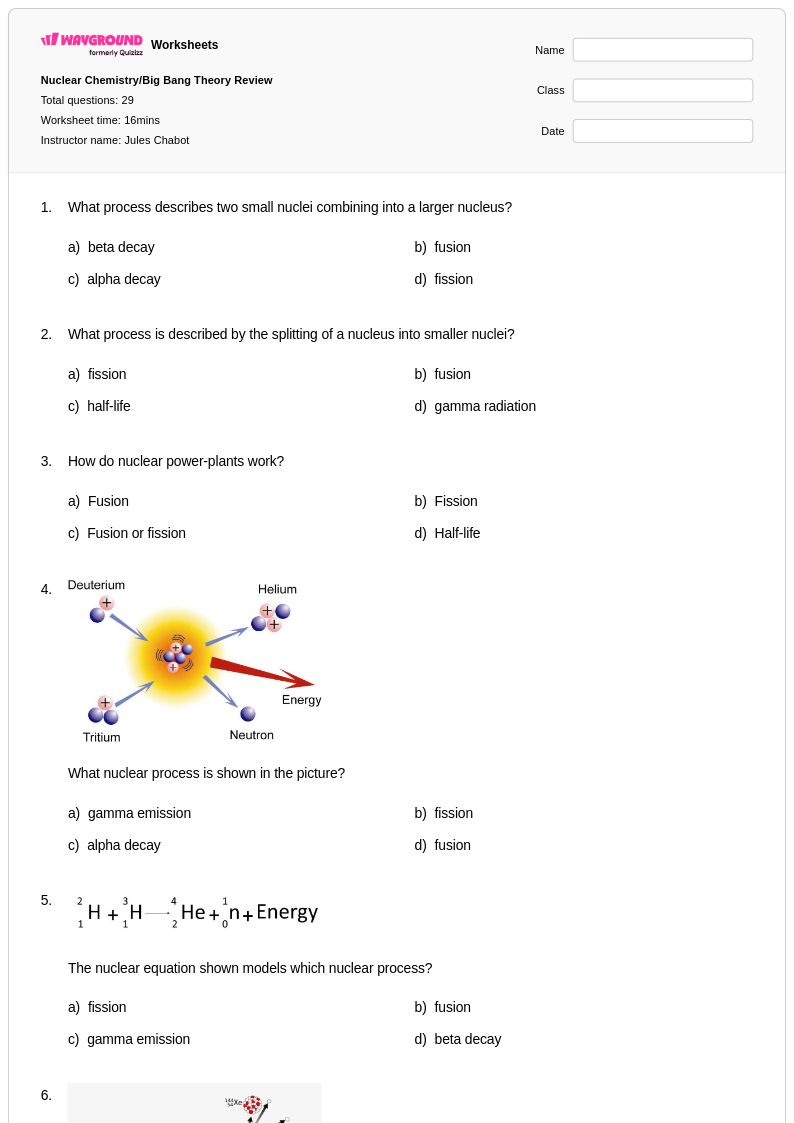
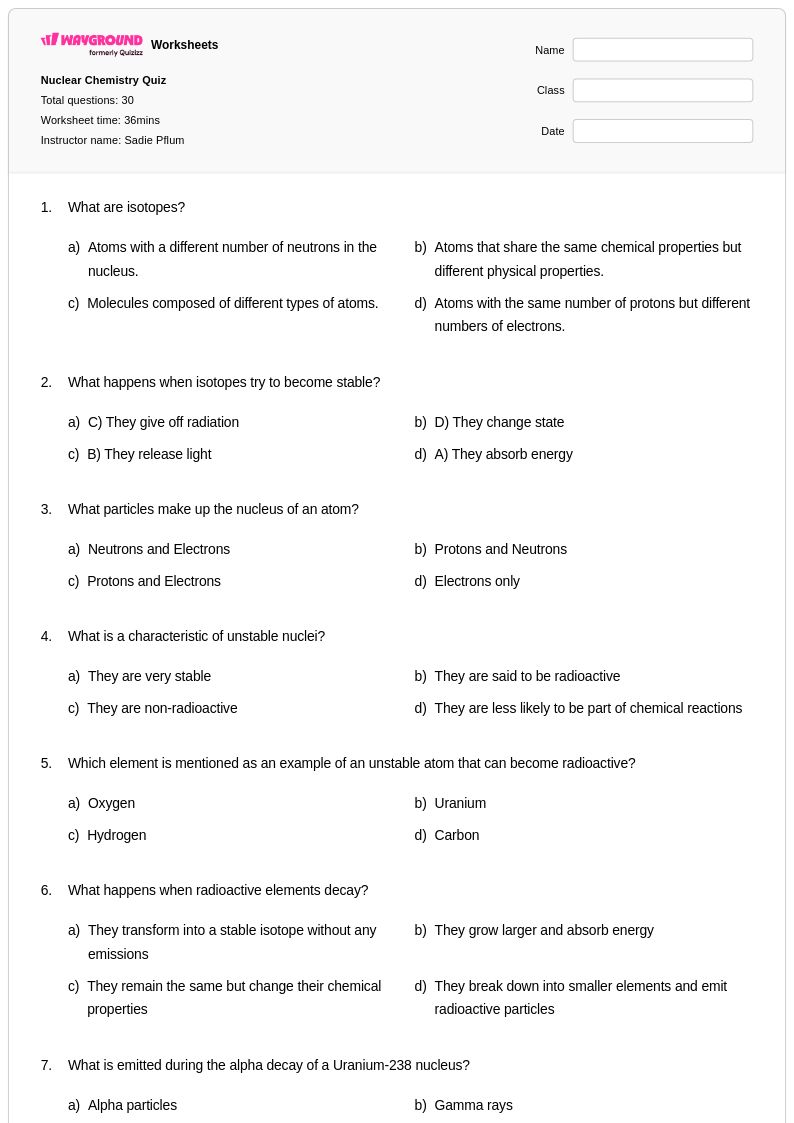
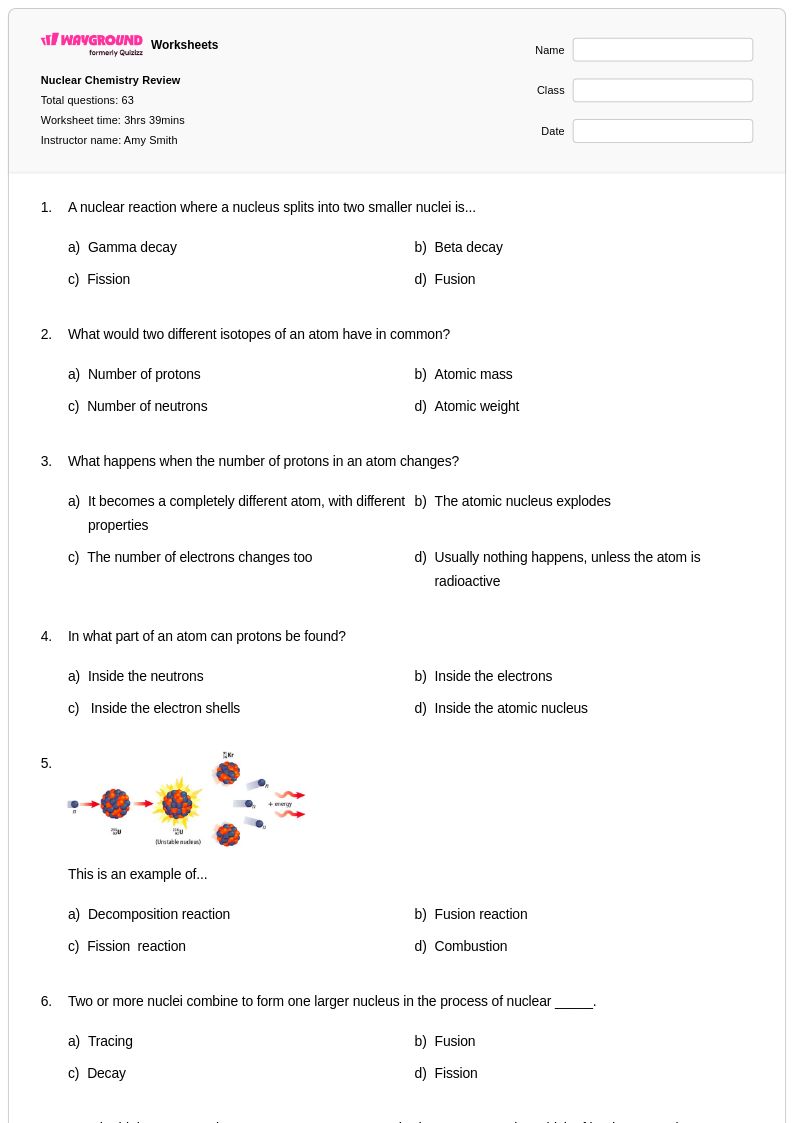
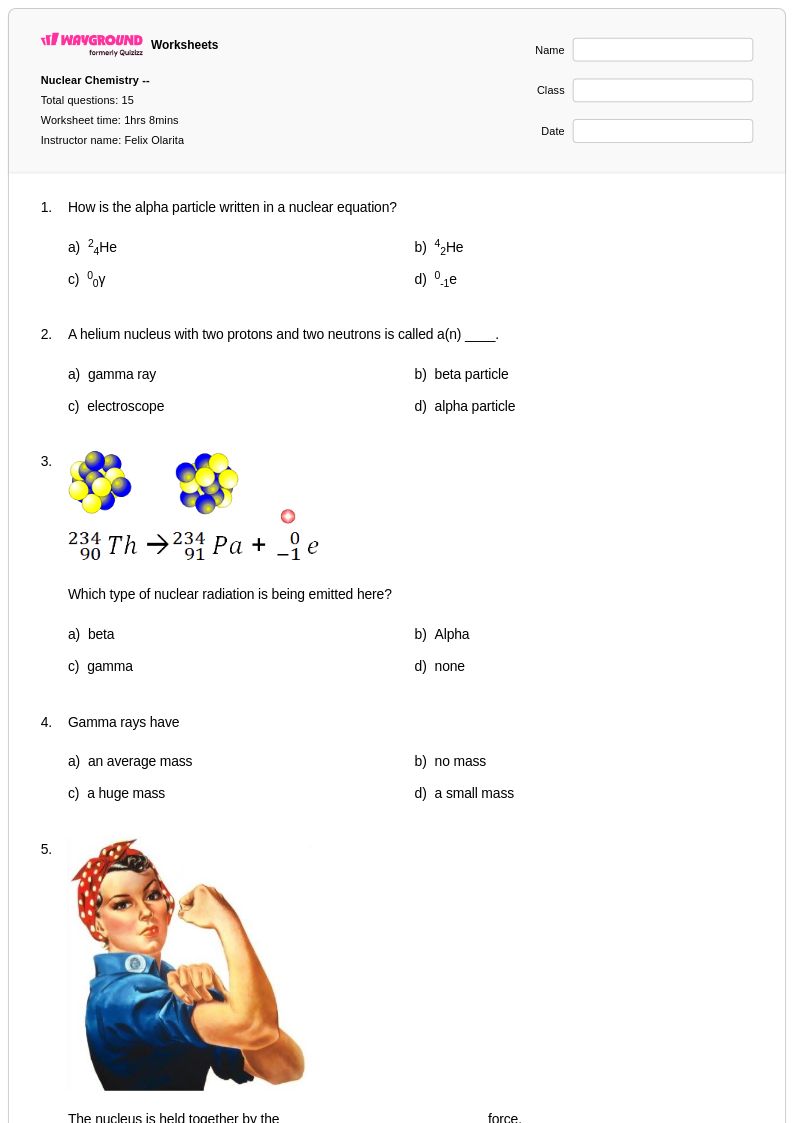
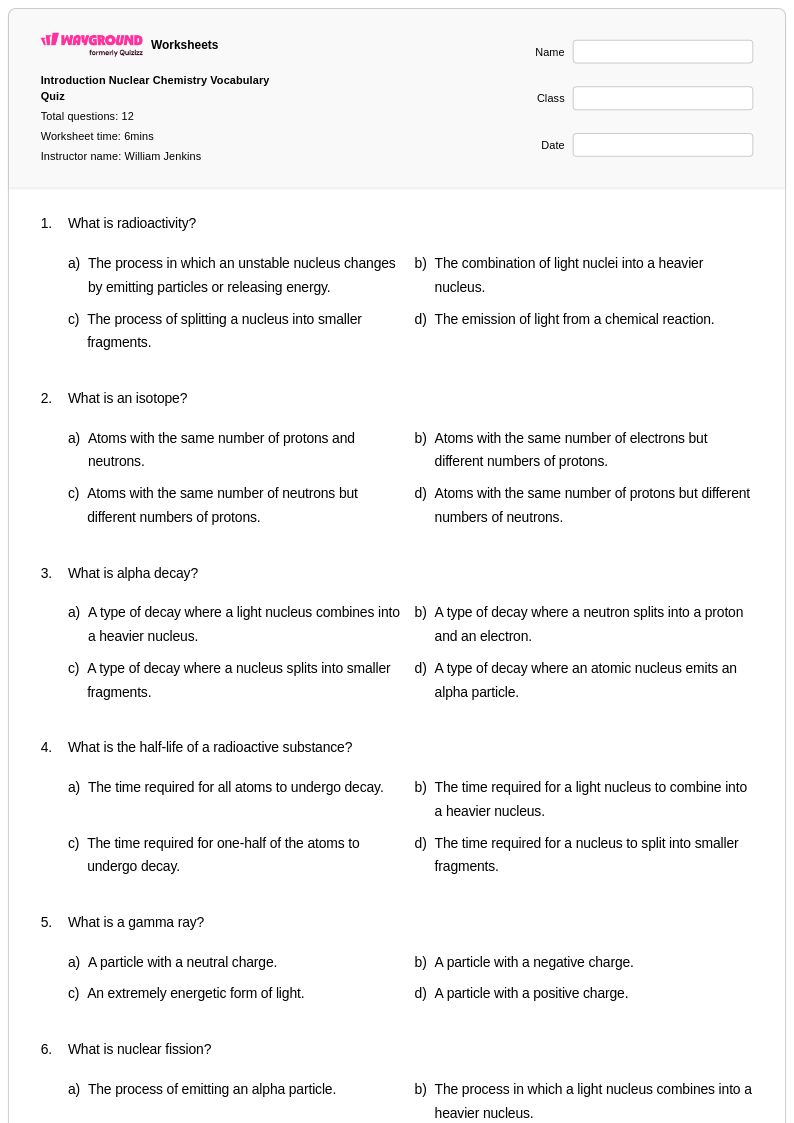
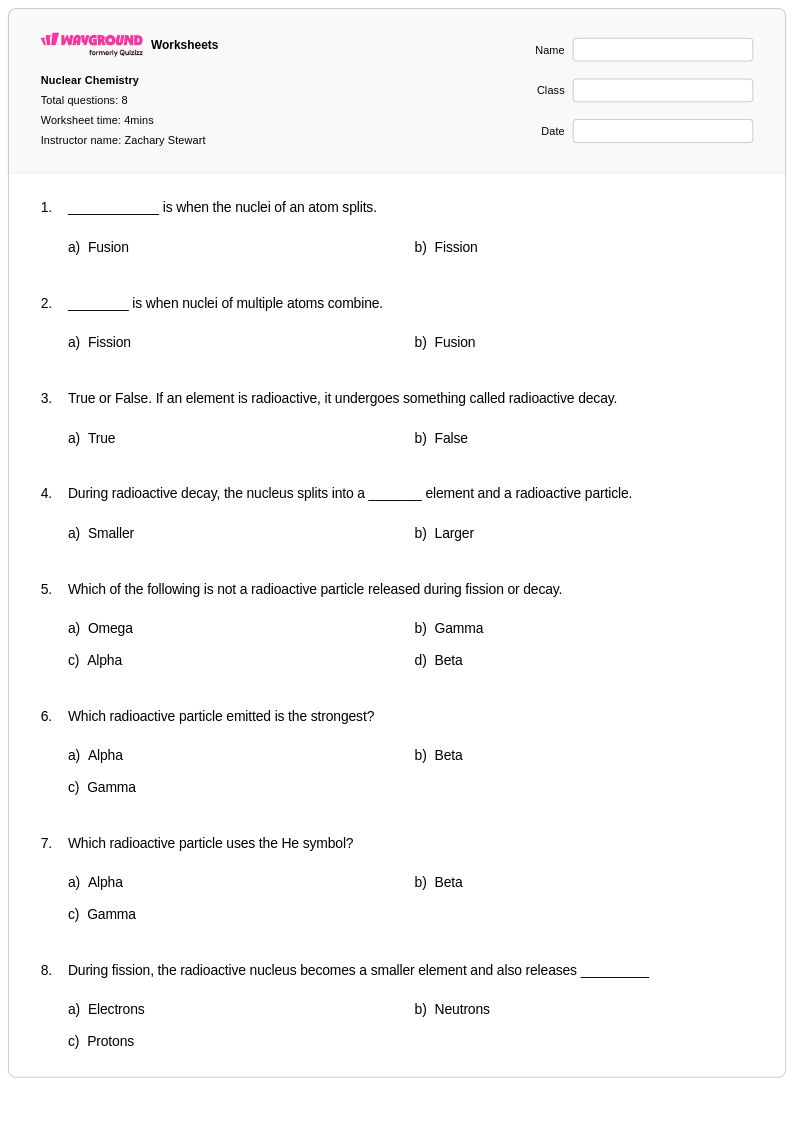
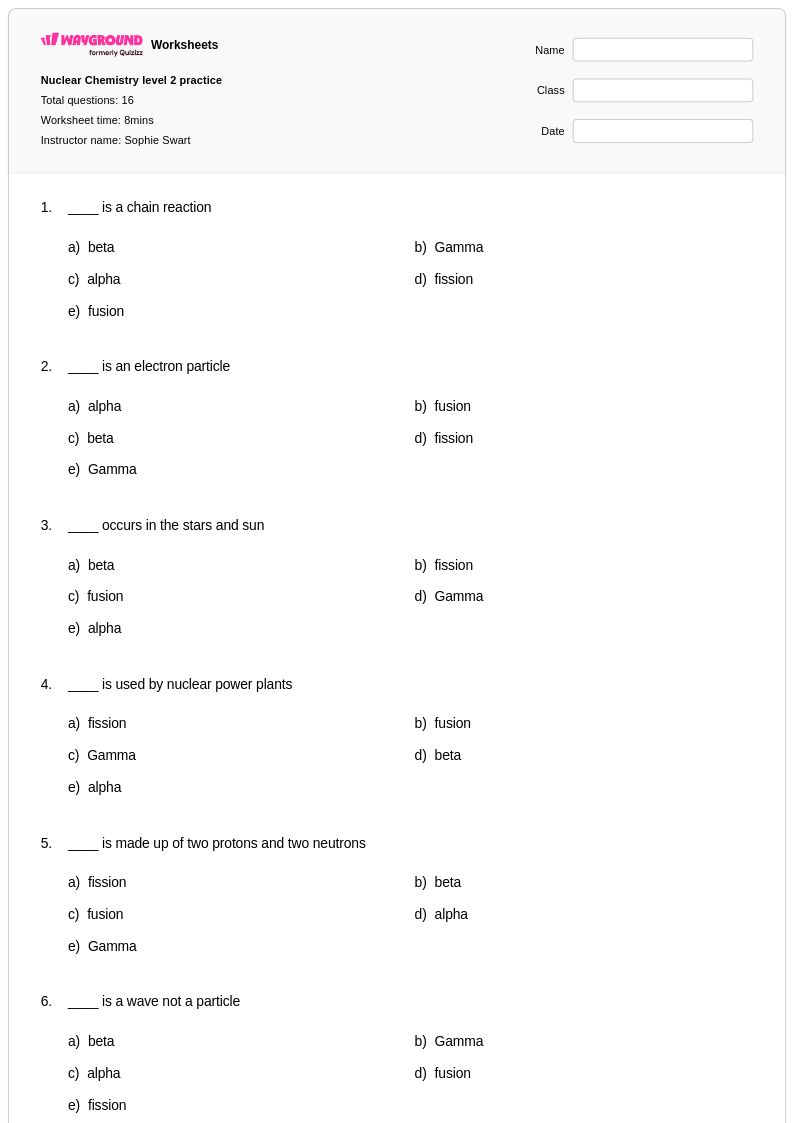
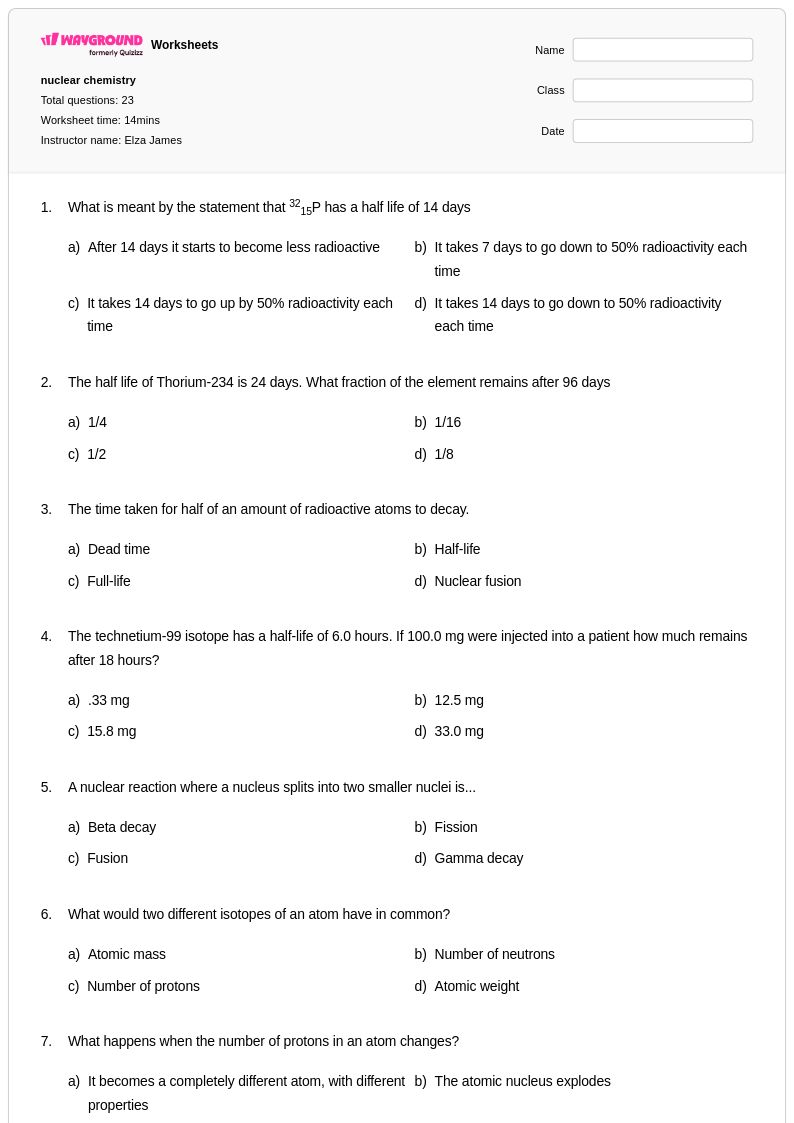
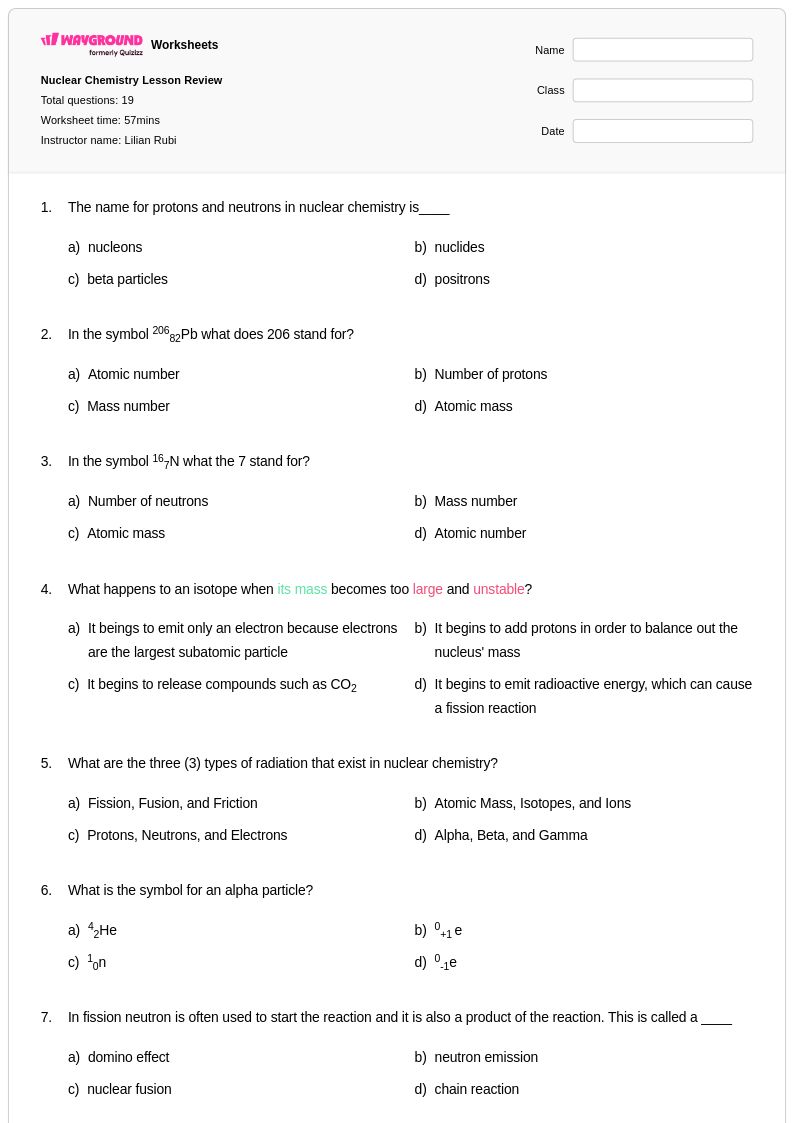
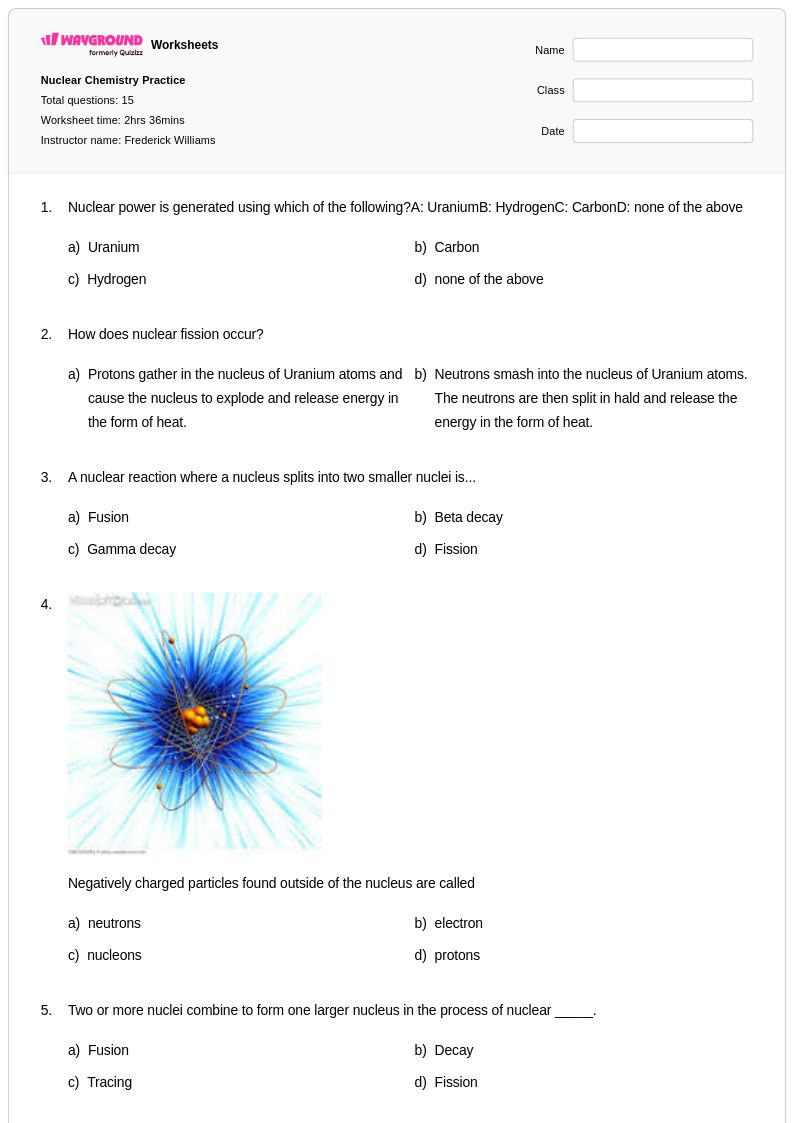
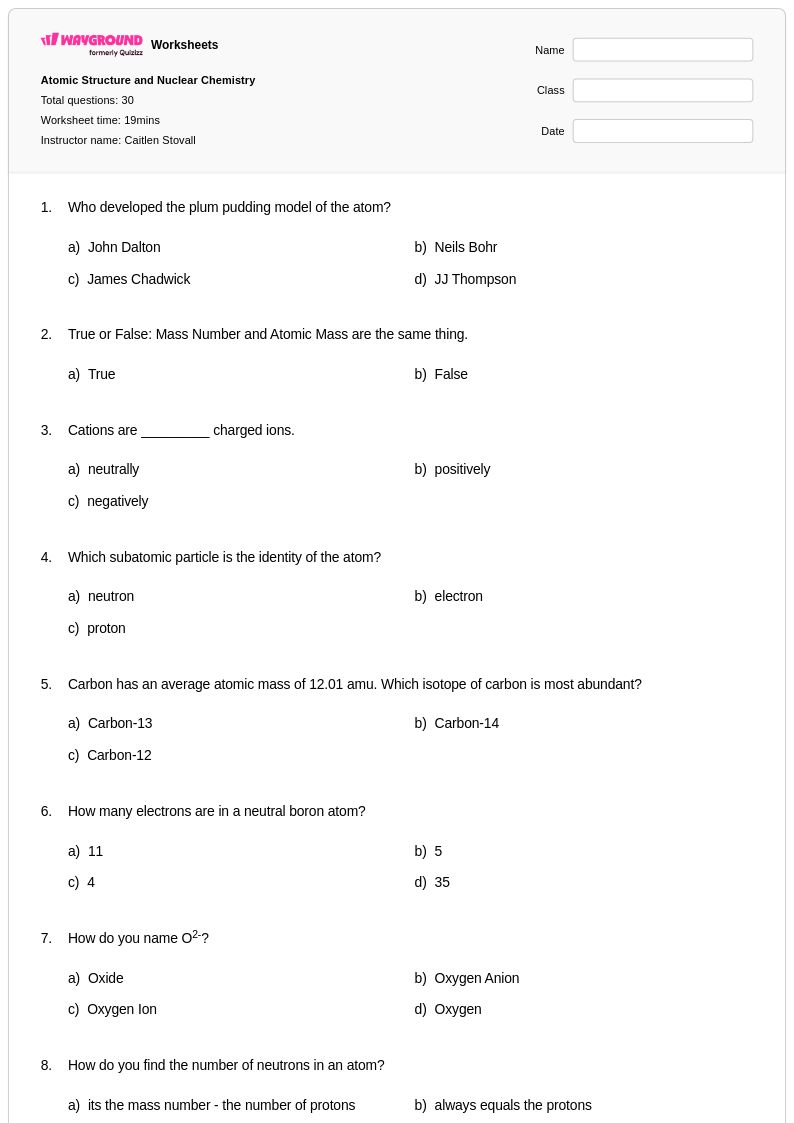
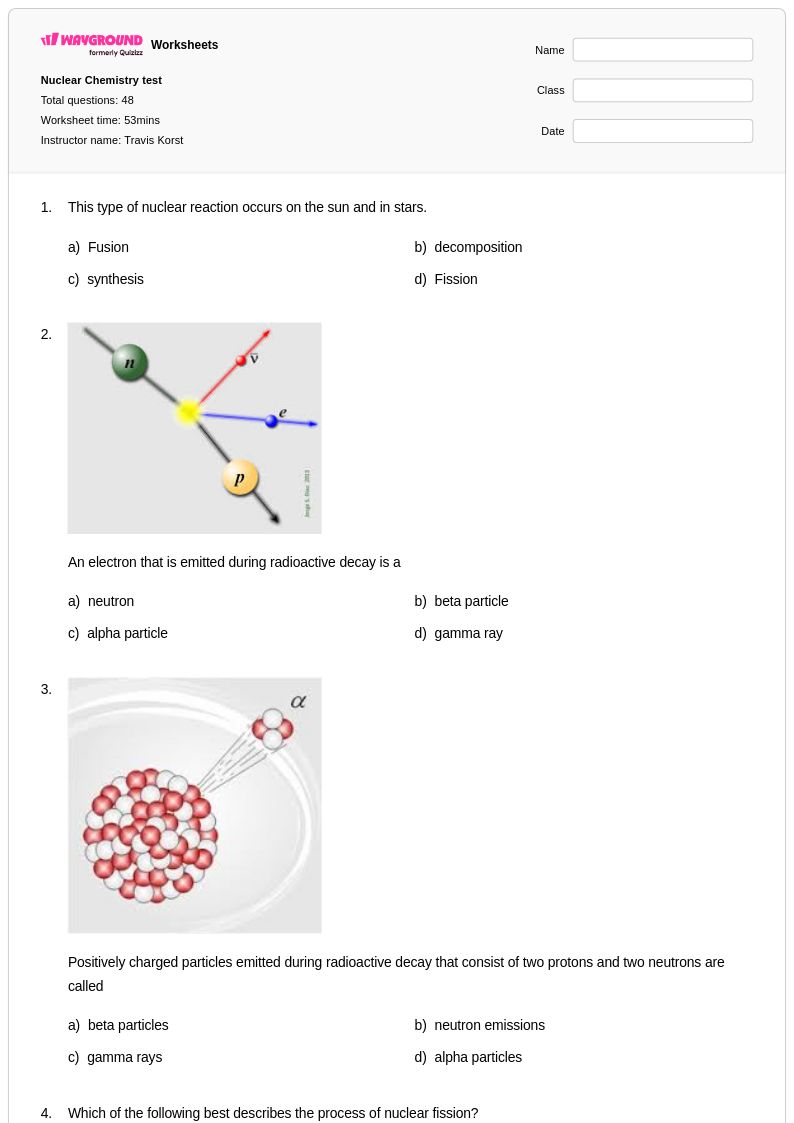
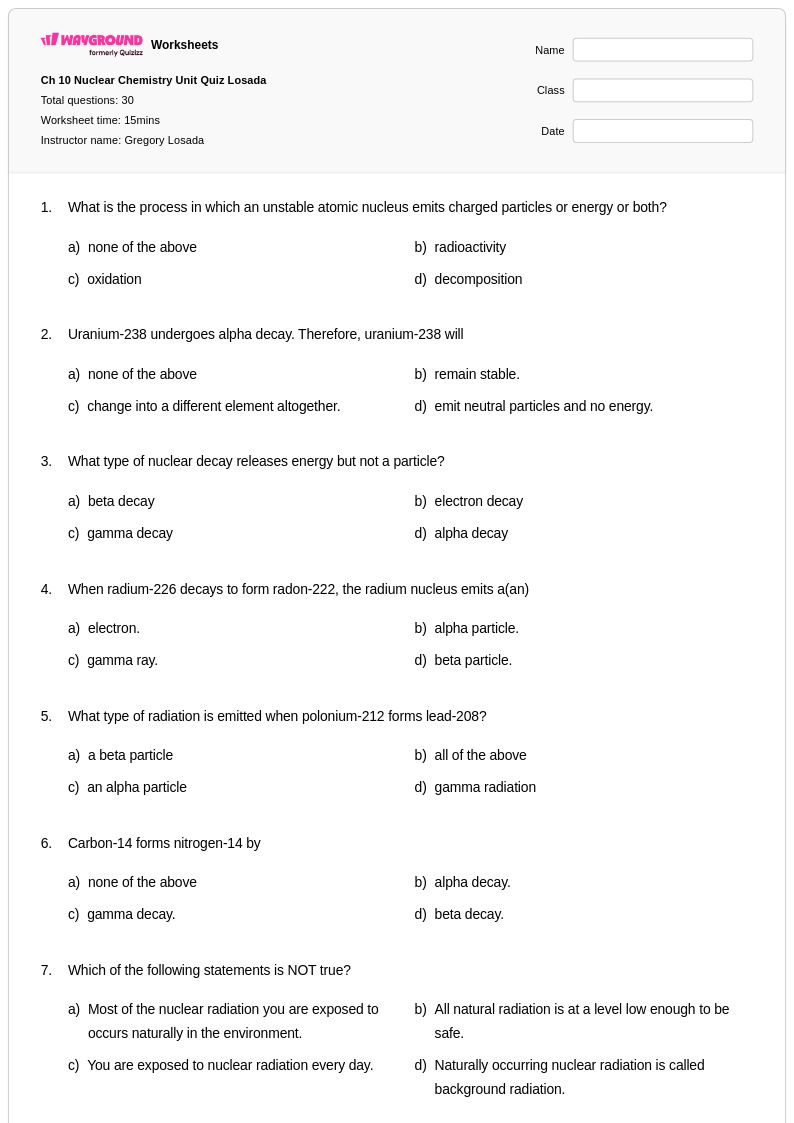
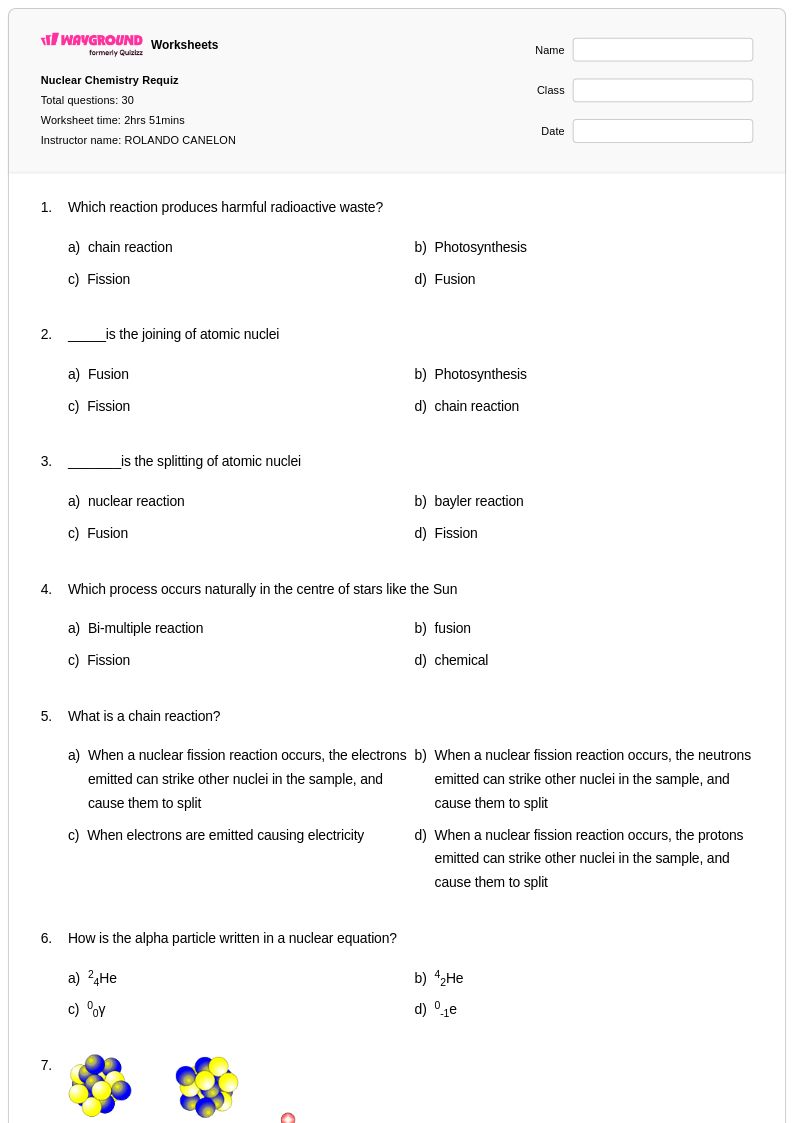
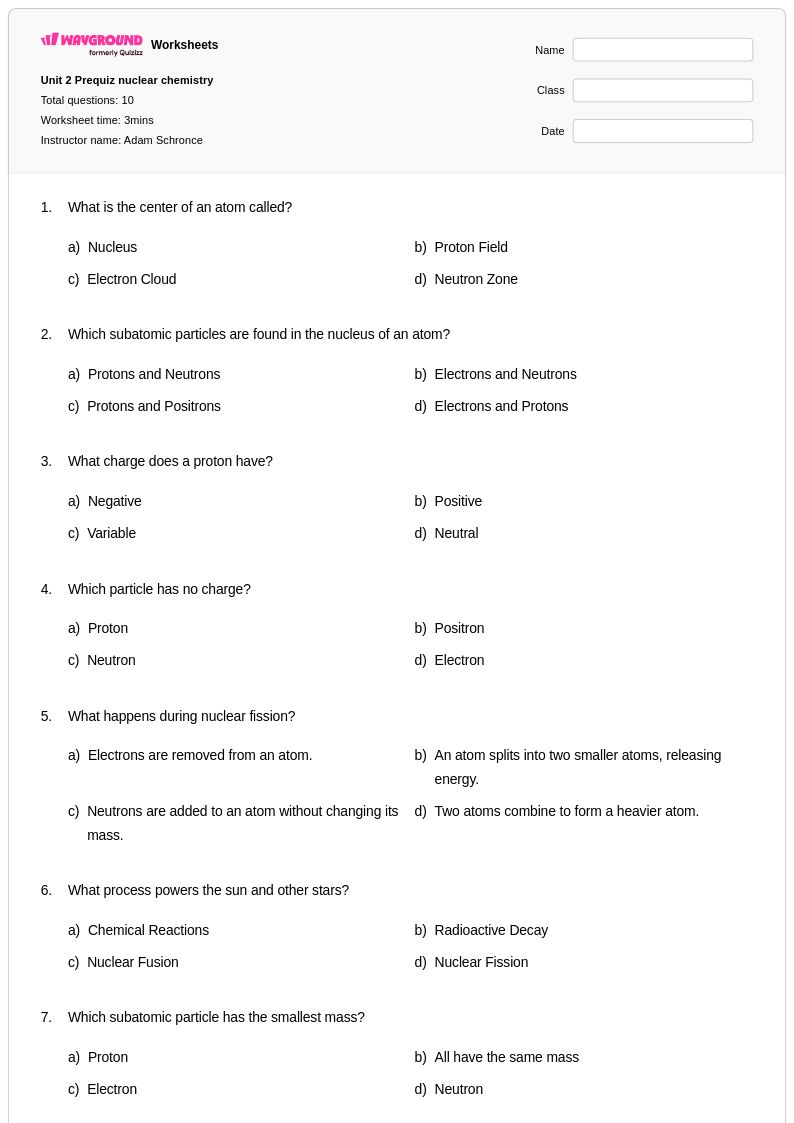
Nuclear chemistry worksheets for Class 9 students available through Wayground (formerly Quizizz) provide comprehensive coverage of radioactive decay, nuclear reactions, and atomic structure transformations. These carefully designed educational resources help students master fundamental concepts including alpha and beta decay, half-life calculations, nuclear fission and fusion processes, and the relationship between atomic number and mass number during nuclear changes. The worksheets strengthen critical thinking skills through practice problems that require students to balance nuclear equations, interpret decay series, and analyze the stability of isotopes. Each worksheet comes complete with detailed answer keys to support independent learning and self-assessment, while the free printable format ensures easy classroom distribution and homework assignments.
Wayground's extensive collection of nuclear chemistry worksheets draws from millions of teacher-created resources, offering educators powerful search and filtering capabilities to locate materials perfectly aligned with Class 9 curriculum standards and learning objectives. The platform's differentiation tools enable teachers to customize worksheets based on individual student needs, whether for remediation of basic nuclear concepts or enrichment activities exploring real-world applications like medical imaging and carbon dating. Available in both printable pdf format and interactive digital versions, these resources seamlessly integrate into diverse teaching environments and support flexible lesson planning. Teachers can efficiently organize skill practice sessions, create targeted review materials, and develop assessment tools that accurately measure student understanding of nuclear chemistry principles while saving valuable preparation time.
FAQs
How do I teach nuclear chemistry to high school students?
Start by grounding students in atomic structure before introducing radioactive decay, since understanding proton and neutron counts is essential for balancing nuclear equations. Use concrete analogies for half-life, such as comparing radioactive decay to a population that halves at regular intervals, to make the exponential math more intuitive. Progressing from alpha and beta decay to fission and fusion in sequence helps students build conceptual scaffolding before tackling more complex nuclear reactions.
What practice problems help students get better at half-life calculations?
Students benefit most from a progression that starts with whole-number half-life intervals before introducing fractional and logarithmic problems. Effective practice includes calculating remaining mass after a given number of half-lives, determining elapsed time from remaining sample percentages, and applying these skills in real-world contexts like radiocarbon dating. Repeated exposure to varied problem formats, including data tables and decay graphs, reinforces the underlying exponential relationship and reduces arithmetic errors.
What mistakes do students commonly make when balancing nuclear equations?
The most frequent error is failing to conserve both mass number and atomic number simultaneously, often because students focus on one and neglect the other. Students also regularly confuse alpha particles (helium-4 nuclei) with beta particles (electrons or positrons), leading to incorrect product identification. A consistent checklist approach, verifying that the sum of mass numbers and the sum of atomic numbers are equal on both sides of the equation, helps catch these errors before they become ingrained habits.
How do students commonly mix up fission and fusion, and how can I address it?
Students often reverse the two processes, associating fusion with splitting because the word sounds like 'cutting.' Reinforcing the etymology, fusion means joining, like in the word 'fuse', while fission means splitting, as in a physical fracture, provides a memorable anchor. Pairing each term with a canonical example, hydrogen fusion in the sun versus uranium fission in a reactor, and having students label diagrams repeatedly helps solidify the distinction.
How can I use Wayground's nuclear chemistry worksheets in my classroom?
Wayground's nuclear chemistry worksheets are available as printable PDFs for traditional classroom distribution and in digital formats for technology-integrated environments, making them adaptable to in-person, hybrid, or remote instruction. Teachers can host worksheets as interactive quizzes directly on Wayground, enabling real-time student response tracking. For students who need additional support, Wayground's accommodation tools, including read aloud, extended time, and reduced answer choices, can be configured per student so every learner can engage with nuclear chemistry content at an appropriate level.
How do I differentiate nuclear chemistry instruction for students at different skill levels?
For foundational learners, begin with identifying decay types and writing simple nuclear equations before introducing quantitative half-life problems. Advanced students can be challenged with multi-step decay chain problems, logarithmic half-life calculations, and comparative analysis of fission versus fusion energy outputs. Wayground supports this differentiation directly by allowing teachers to assign different worksheet versions and apply individual accommodations, such as reduced answer choices or adjusted time limits, to specific students without signaling those adjustments to the rest of the class.