Free Printable Photosynthesis Worksheets for Class 4
Class 4 photosynthesis worksheets and printables help students understand how plants make food using sunlight, featuring free practice problems, answer keys, and downloadable PDFs through Wayground's comprehensive biology collection.
Explore printable Photosynthesis worksheets for Class 4
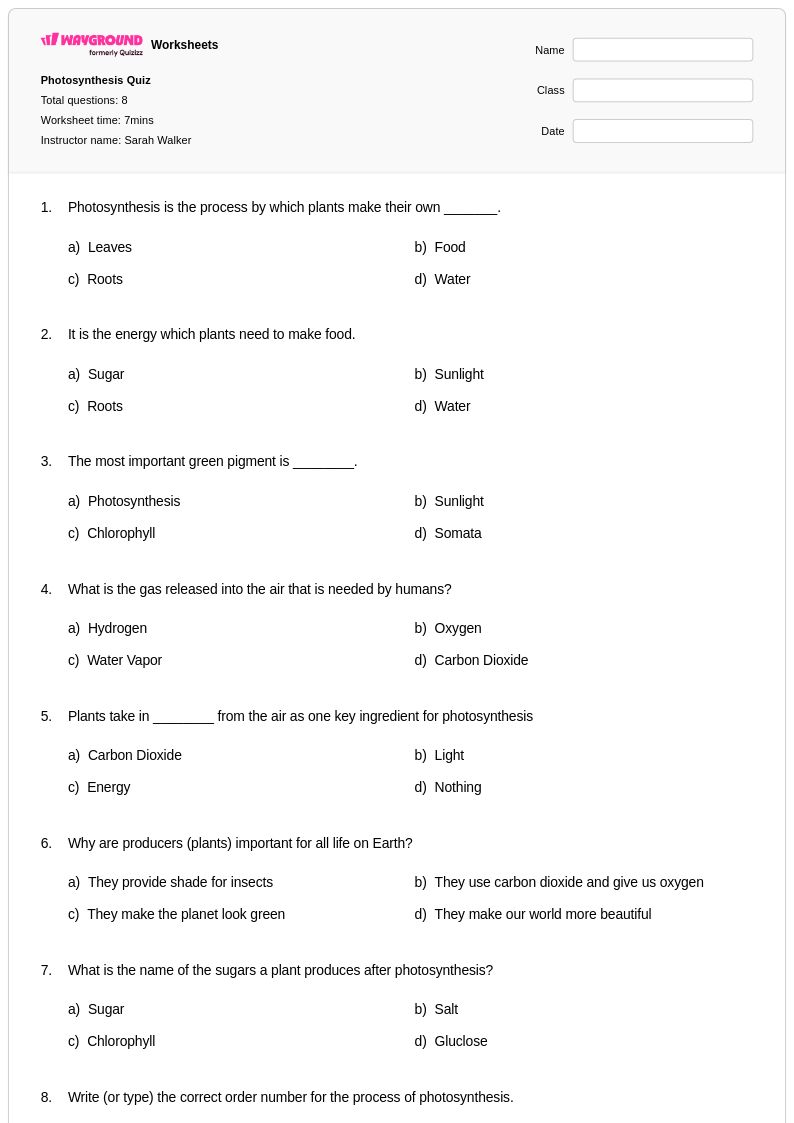
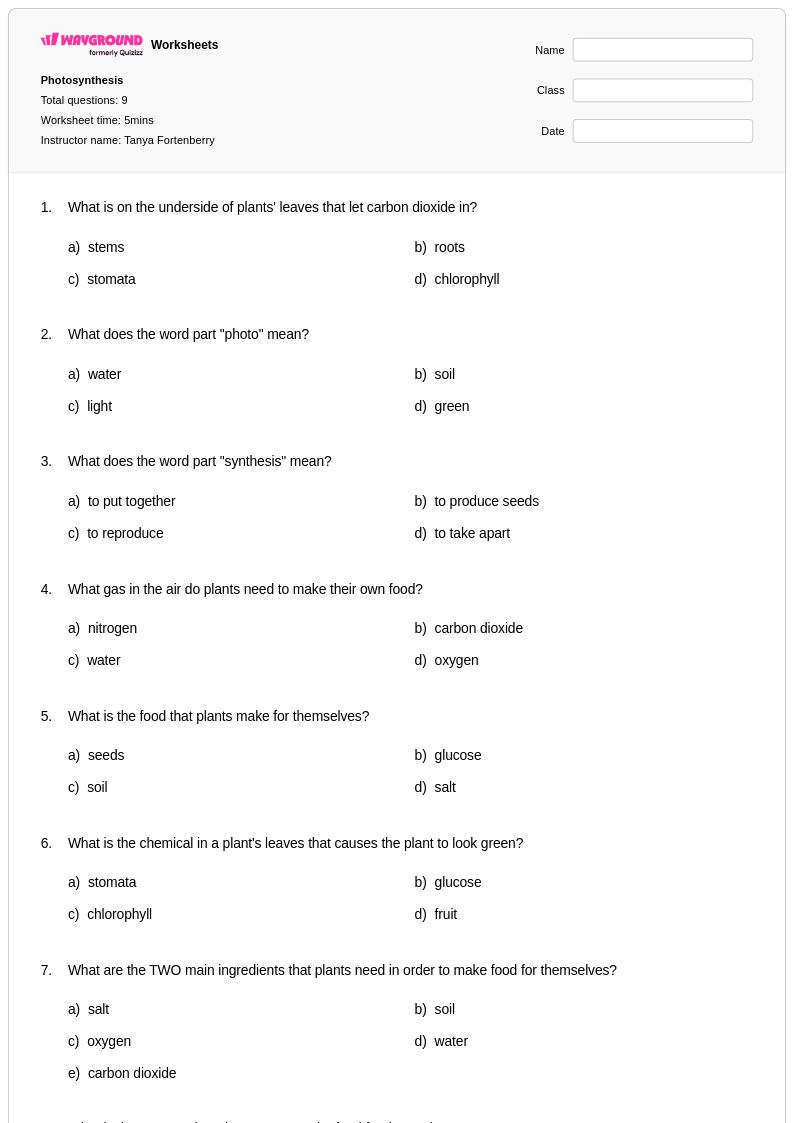
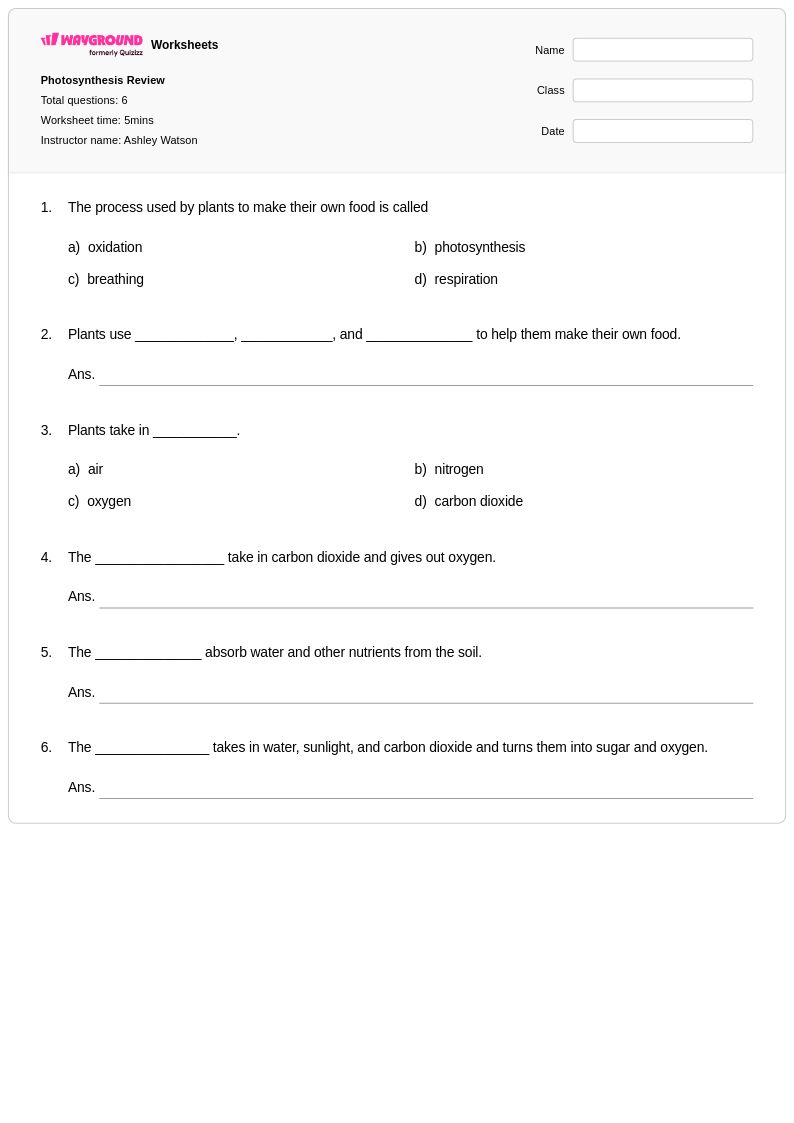
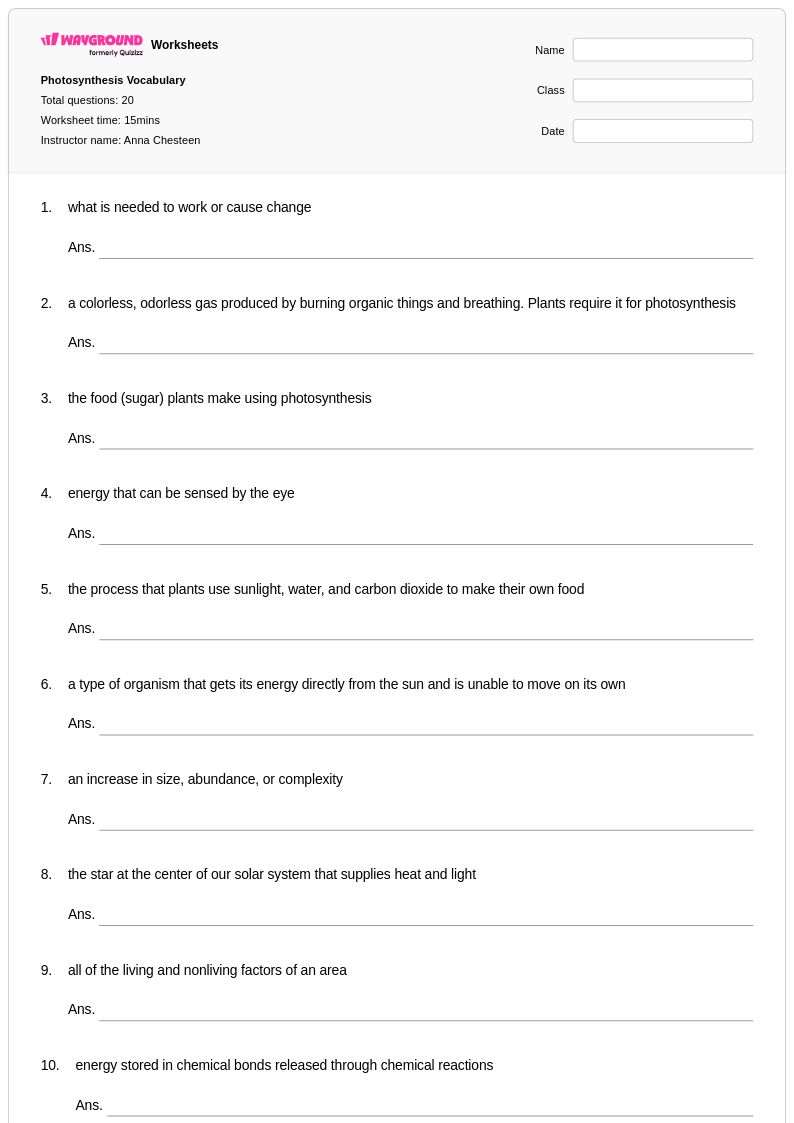
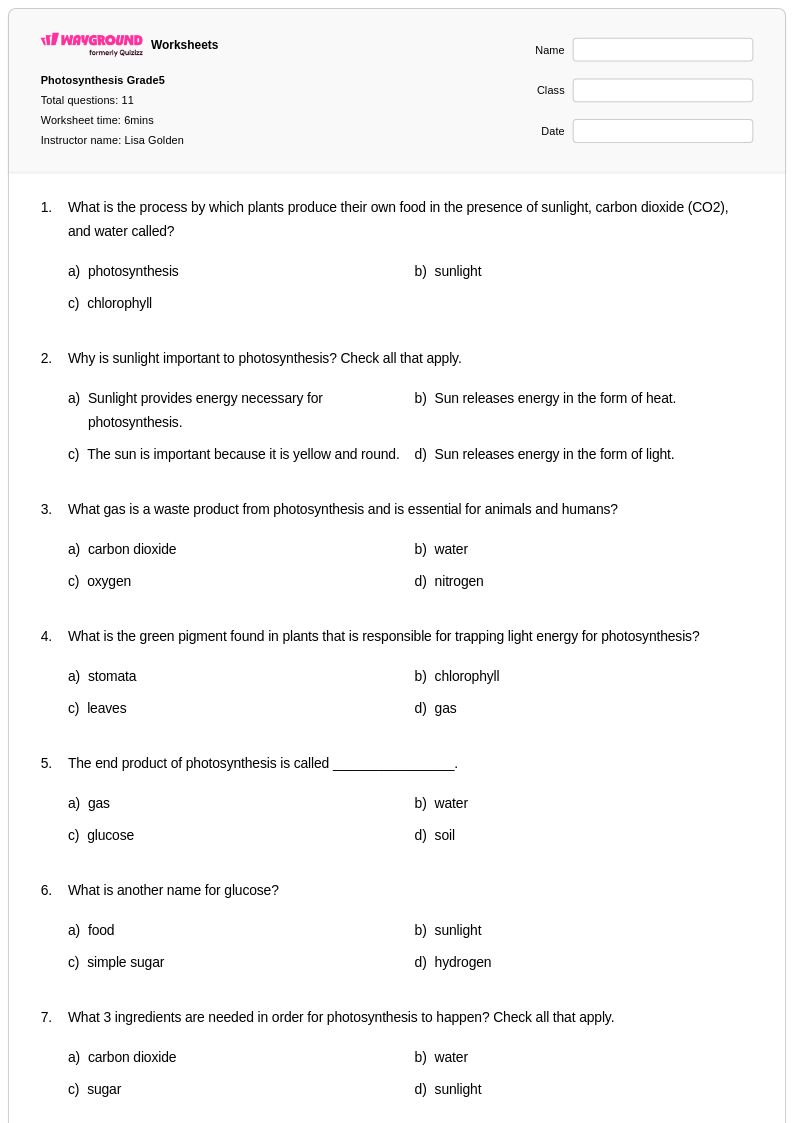
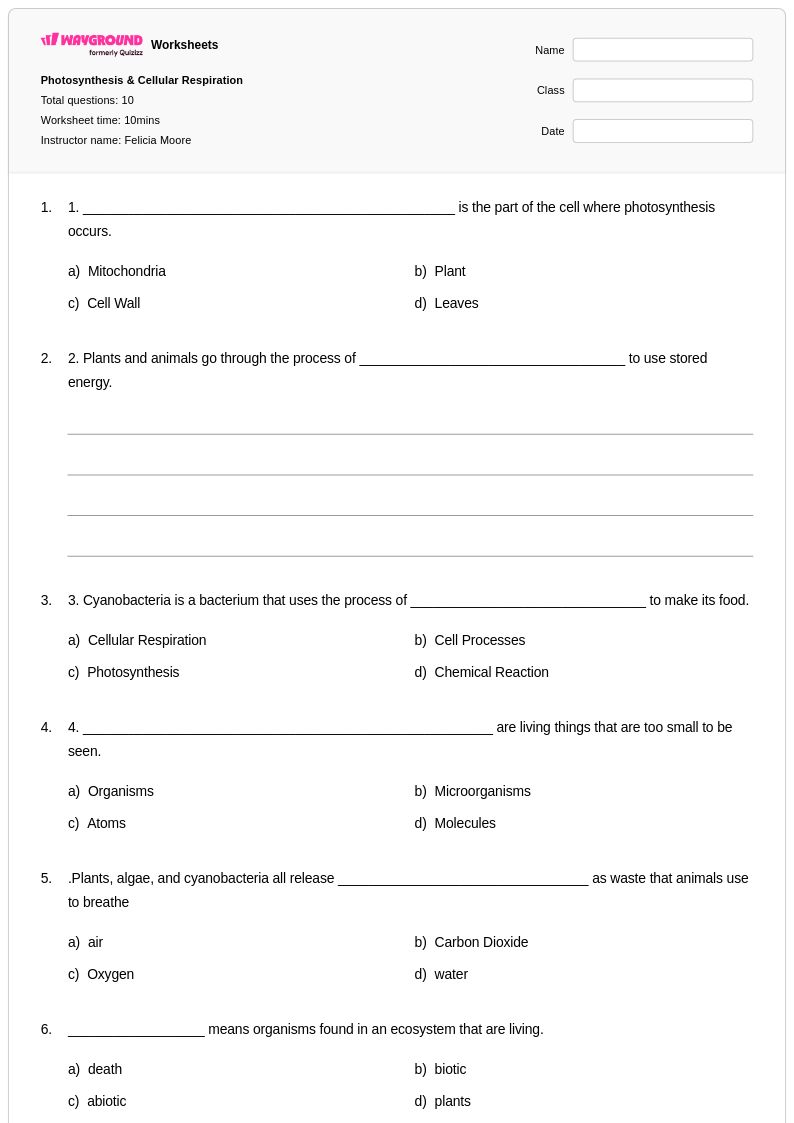
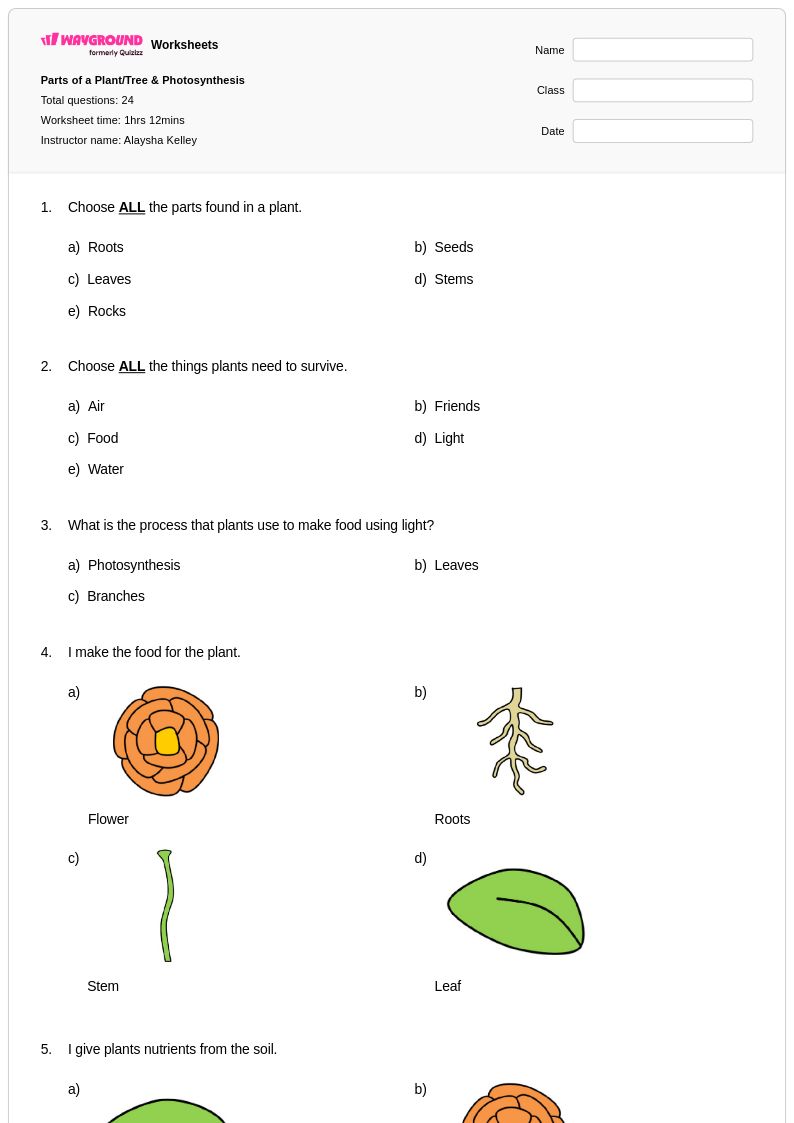
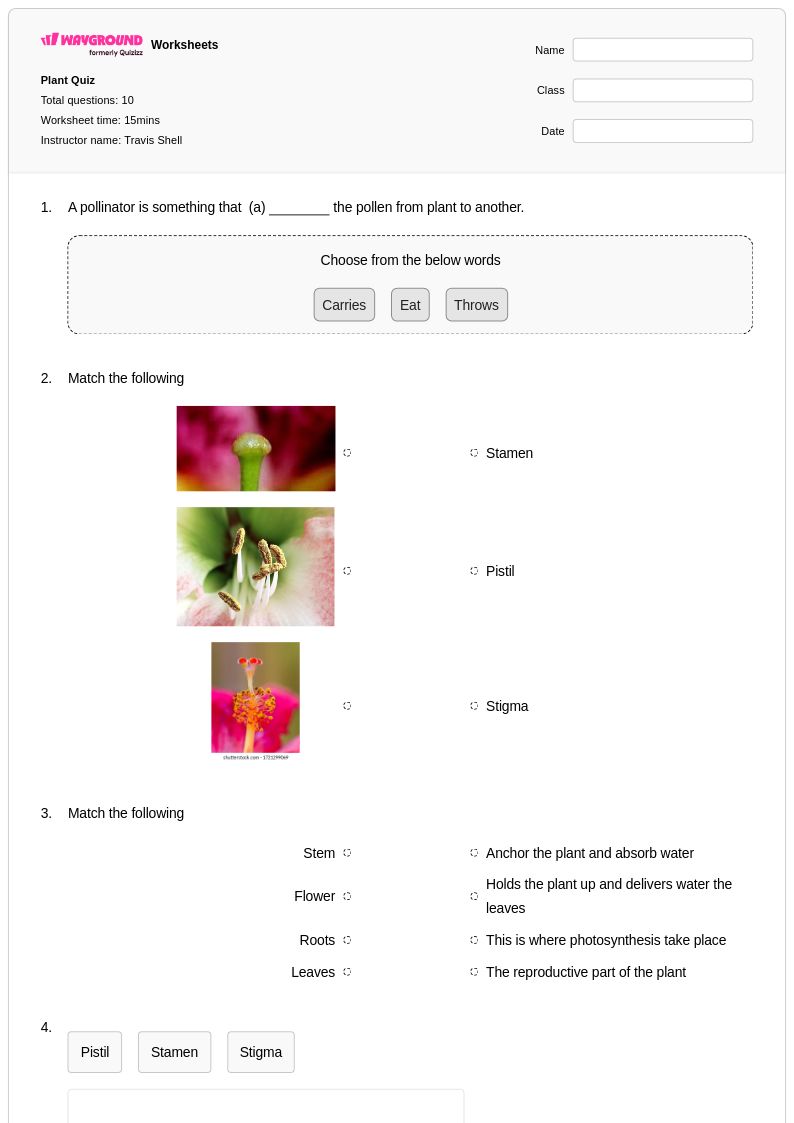
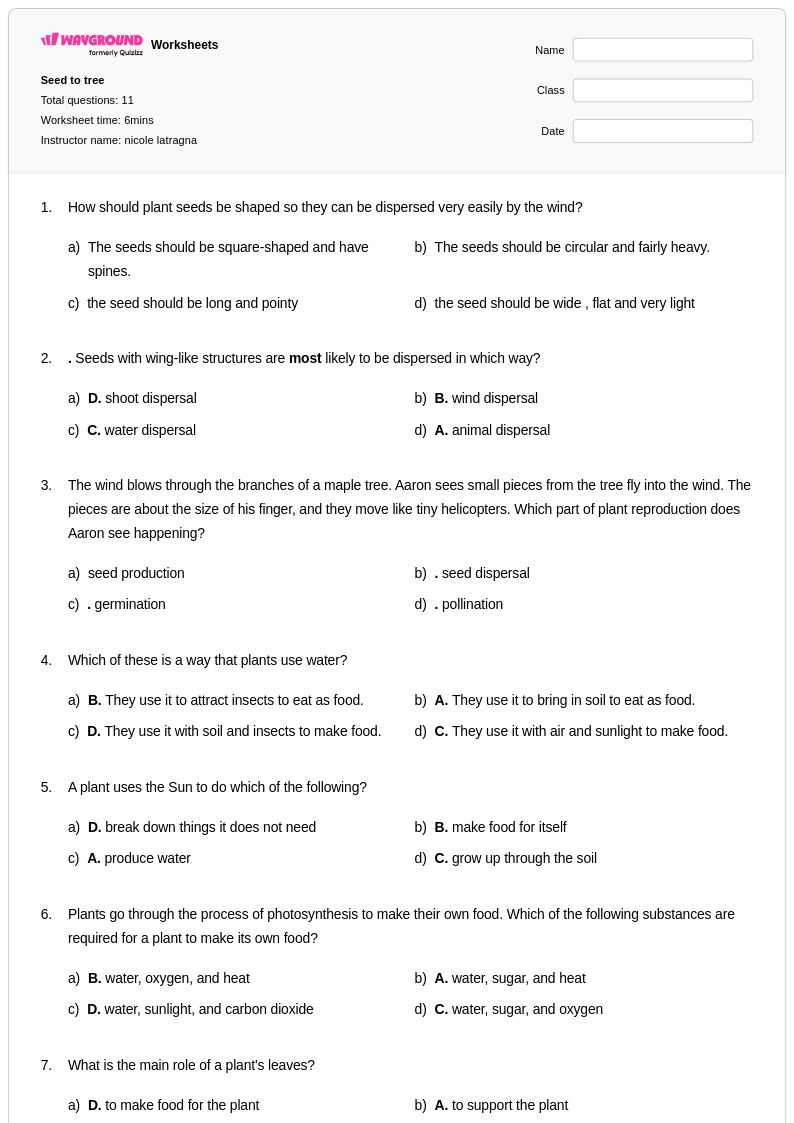
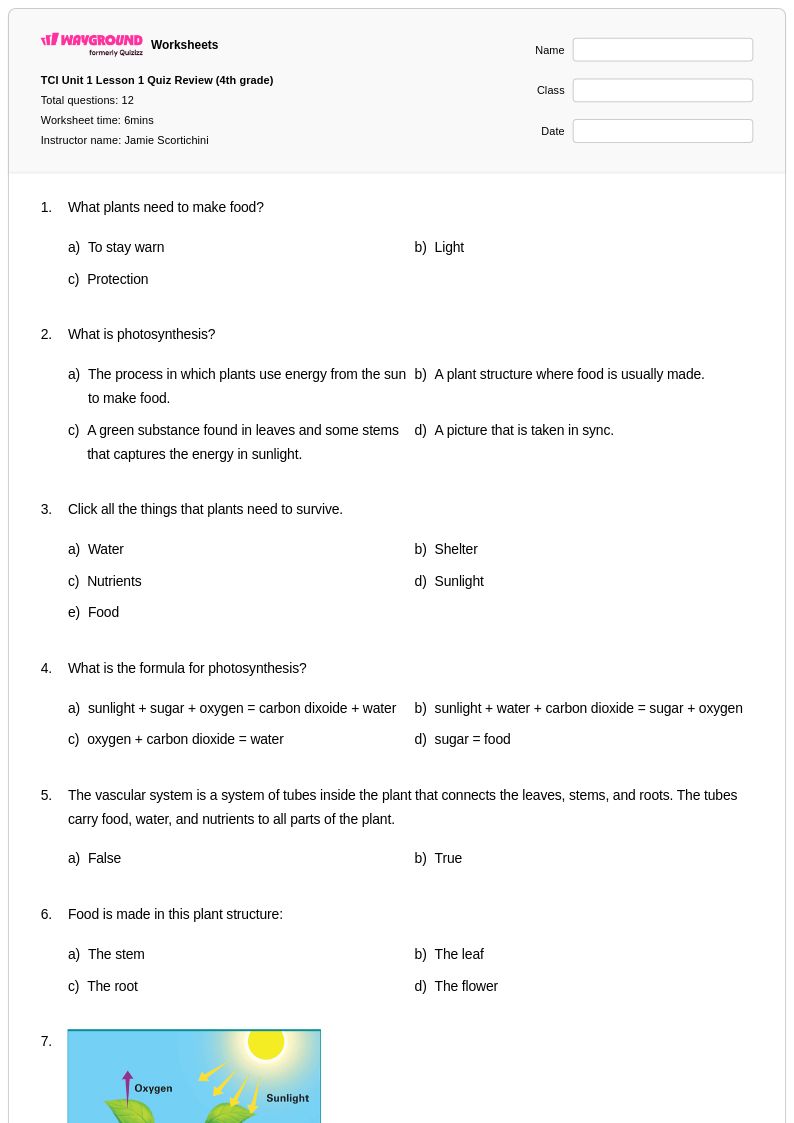
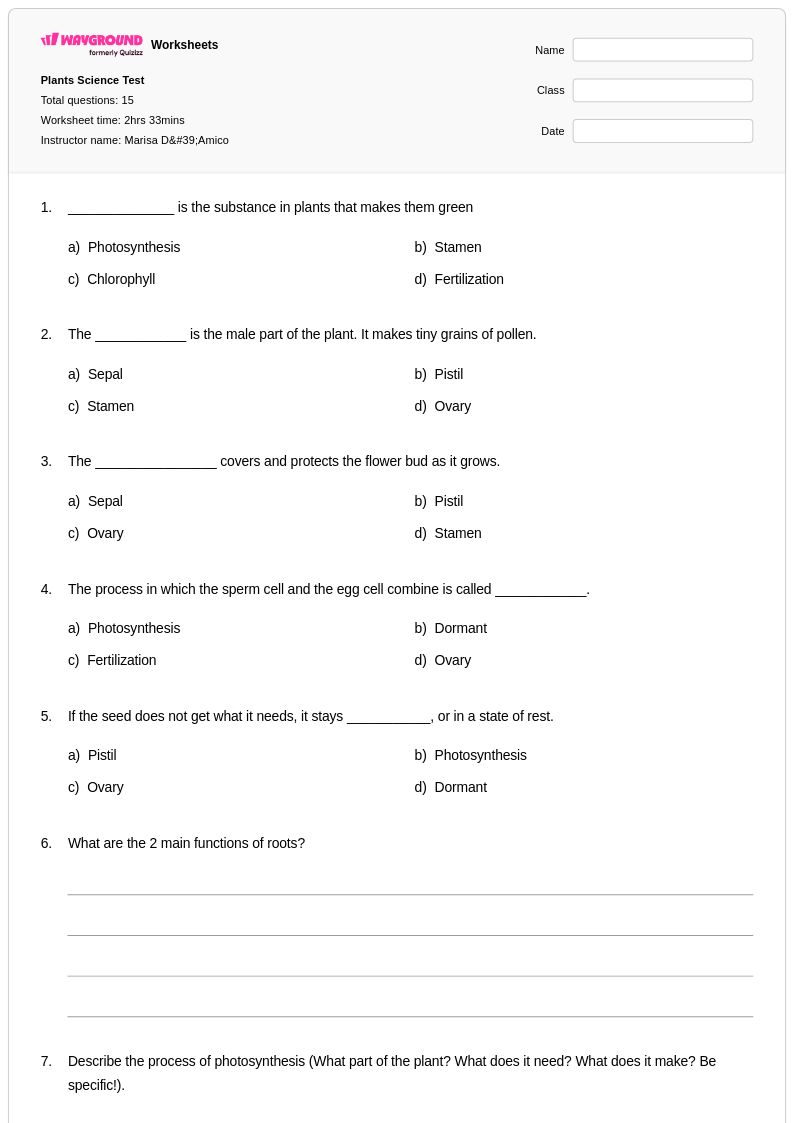
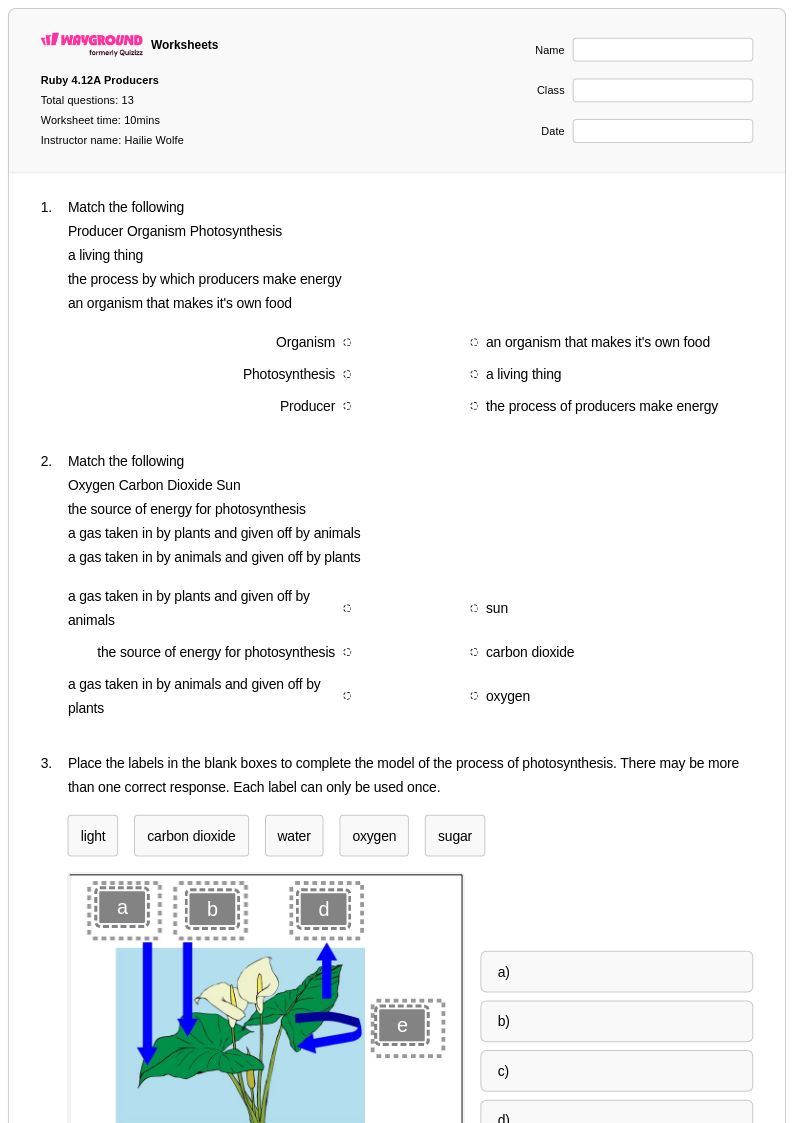
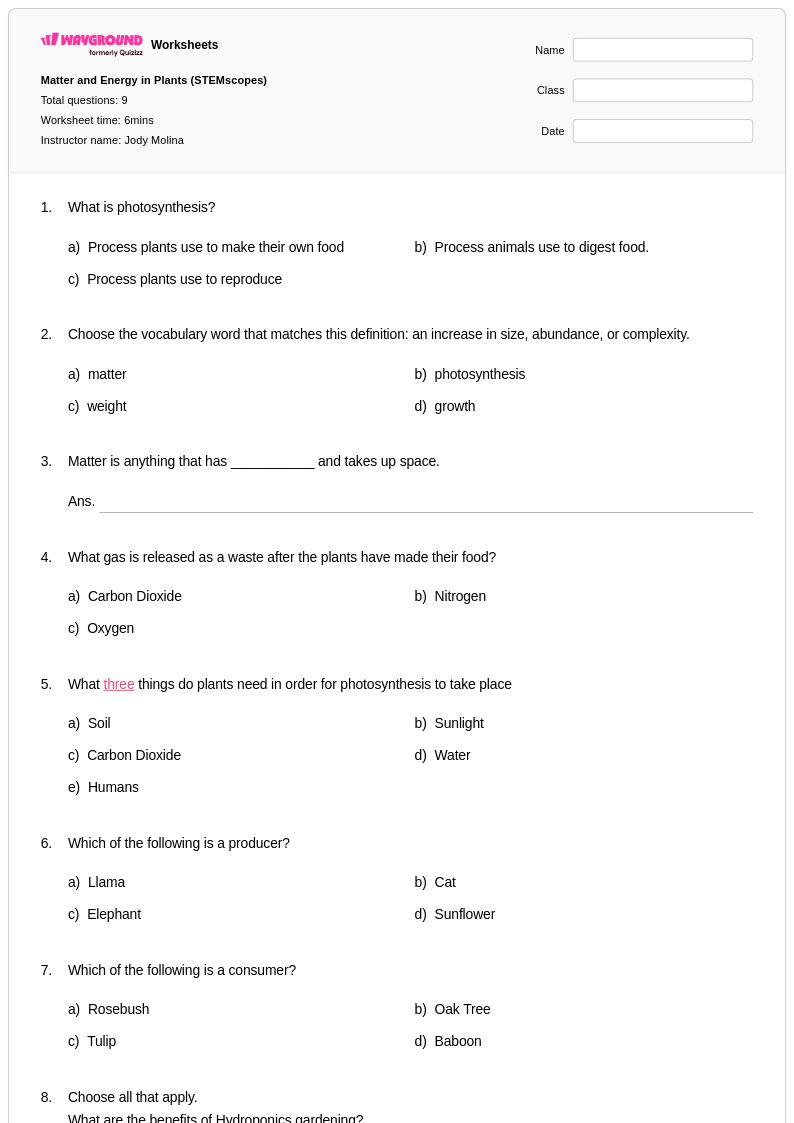
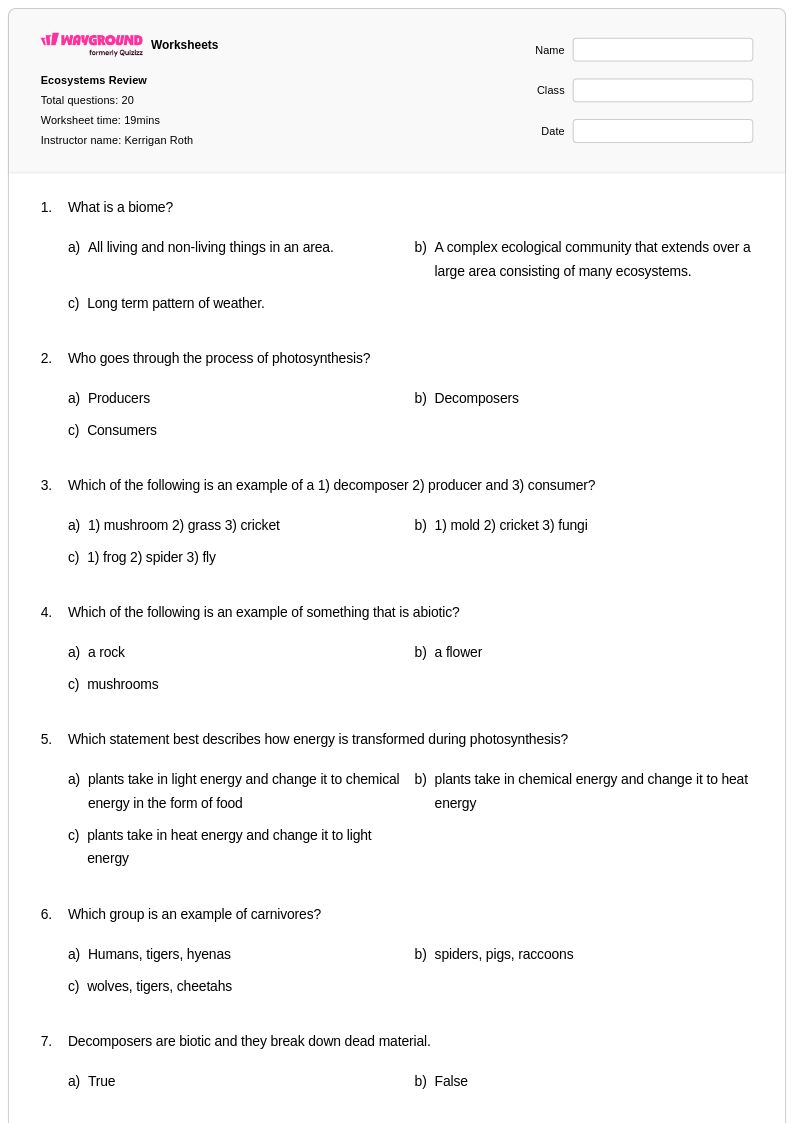
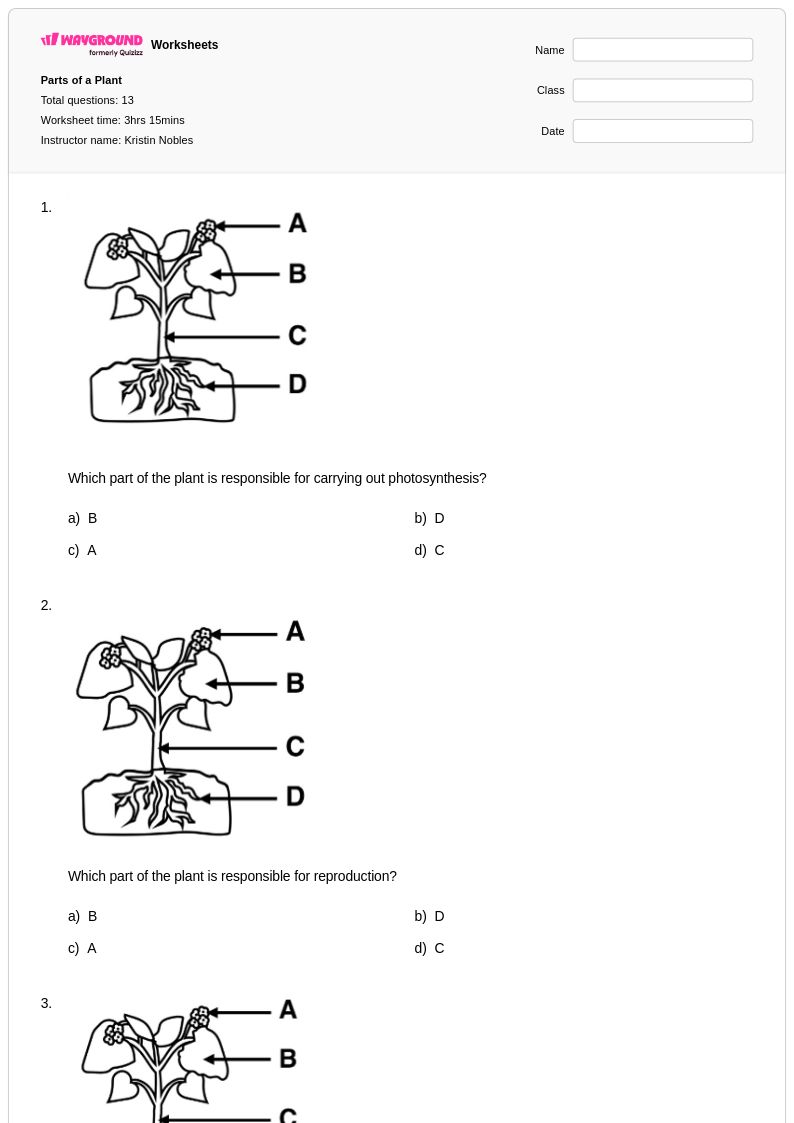
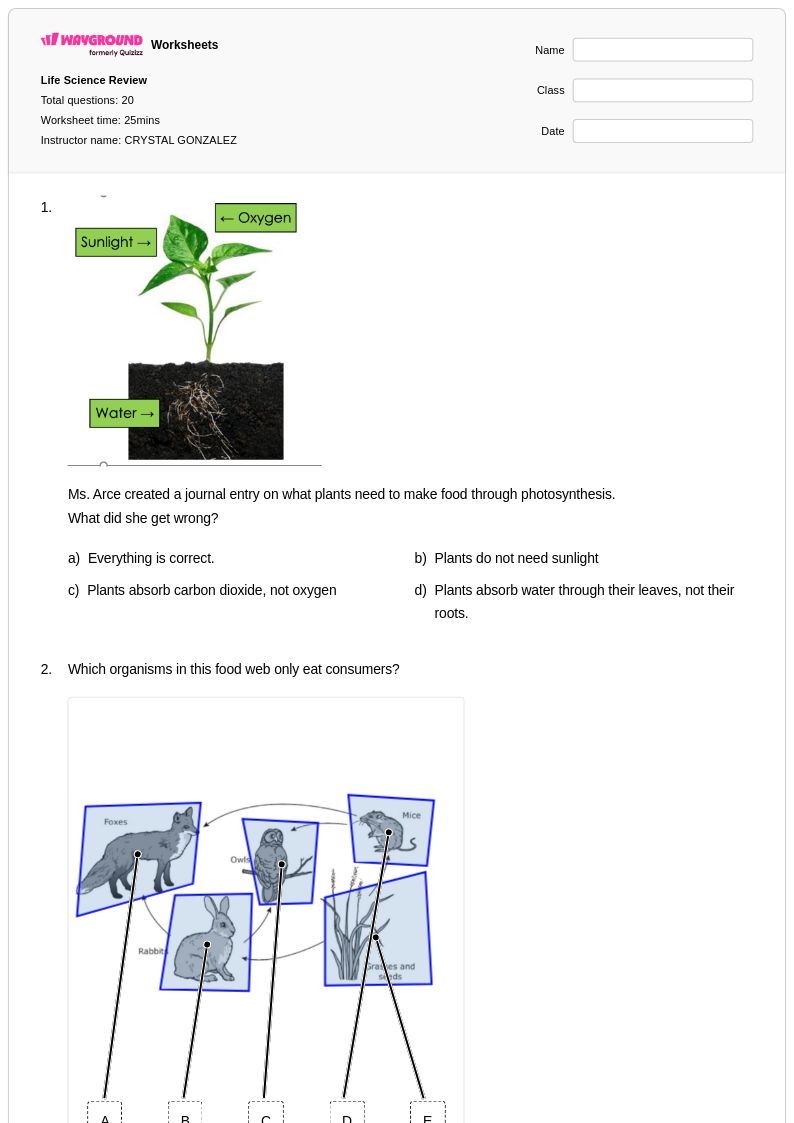
Photosynthesis worksheets for Class 4 students available through Wayground (formerly Quizizz) provide comprehensive educational resources that introduce young learners to this fundamental biological process. These carefully designed worksheets help students understand how plants use sunlight, water, and carbon dioxide to create food and oxygen, strengthening essential scientific thinking skills including observation, analysis, and vocabulary development. The collection includes diverse practice problems that guide students through identifying the key components of photosynthesis, labeling plant parts involved in the process, and understanding the importance of sunlight in plant survival. Each worksheet comes with a detailed answer key to support accurate assessment, and the free printables are available in convenient pdf format for classroom use and home learning.
Wayground (formerly Quizizz) empowers teachers with millions of educator-created resources specifically designed to support Class 4 biology instruction on photosynthesis concepts. The platform's robust search and filtering capabilities allow teachers to quickly locate worksheets that align with curriculum standards and match their students' specific learning needs. Teachers can easily differentiate instruction by selecting from various difficulty levels and activity types, while the flexible customization tools enable modifications to suit individual classroom requirements. These photosynthesis resources are available in both printable and digital formats, including downloadable pdf versions, making them ideal for lesson planning, targeted remediation for struggling students, enrichment activities for advanced learners, and consistent skill practice that reinforces understanding of this crucial biological process.
FAQs
How do I teach photosynthesis to middle or high school students?
Start by grounding students in the purpose of photosynthesis — converting light energy into chemical energy stored as glucose — before introducing the two-stage process. Teach the light-dependent reactions first, focusing on what happens in the thylakoid membrane, then move to the Calvin cycle in the stroma. Using diagrams, labeled chloroplast models, and equation analysis helps students build a concrete mental framework before tackling more abstract biochemical pathways.
What exercises help students practice the overall equation for photosynthesis?
Have students practice identifying and balancing the reactants and products in the photosynthesis equation: 6CO₂ + 6H₂O + light energy → C₆H₁₂O₆ + 6O₂. Exercises that ask students to identify where each molecule comes from and where it goes — such as tracing carbon atoms through the Calvin cycle — build deeper understanding than simple memorization. Comparing this equation to cellular respiration in a side-by-side practice problem is especially effective for reinforcing both concepts.
What are the most common mistakes students make when learning photosynthesis?
The most frequent misconception is that plants get their food from the soil rather than producing it through photosynthesis. Students also commonly confuse the roles of chlorophyll and chloroplasts, or conflate the light-dependent and light-independent reactions. Another persistent error is reversing the reactants and products of the overall equation, particularly when comparing photosynthesis to cellular respiration — a pairing that benefits from explicit side-by-side instruction.
How do I help students understand the difference between the light-dependent reactions and the Calvin cycle?
Anchor the distinction in location and input: light-dependent reactions occur in the thylakoid membranes and require direct sunlight to produce ATP, NADPH, and oxygen, while the Calvin cycle takes place in the stroma and uses those energy carriers to fix carbon dioxide into glucose. Flowchart activities and fill-in diagrams that trace energy and molecule movement between the two stages are particularly effective for making this spatial and functional separation tangible.
How can I use Wayground's photosynthesis worksheets in my classroom?
Wayground's photosynthesis worksheets are available as printable PDFs for traditional classroom distribution and in digital formats for technology-integrated or remote learning environments. Teachers can also host worksheets as quizzes directly on Wayground, enabling interactive student response and immediate feedback. The platform supports accommodations such as read aloud, extended time, and reduced answer choices, which can be assigned to individual students while the rest of the class works under default settings.
How do environmental factors affect the rate of photosynthesis, and how can I teach this concept?
Light intensity, carbon dioxide concentration, temperature, and water availability are the four primary factors that limit photosynthetic rate. Teaching this concept is most effective through graph interpretation exercises, where students analyze how changing one variable while holding others constant affects the rate of glucose production. Practice problems that ask students to predict outcomes — such as what happens to the rate when CO₂ is doubled but light is kept low — develop both scientific reasoning and content mastery.