Free Printable Plant Adaptations Worksheets for Kindergarten
Explore free kindergarten plant adaptations worksheets and printables that help young students discover how plants survive in different environments through engaging practice problems and activities with answer keys.
Explore printable Plant Adaptations worksheets for Kindergarten
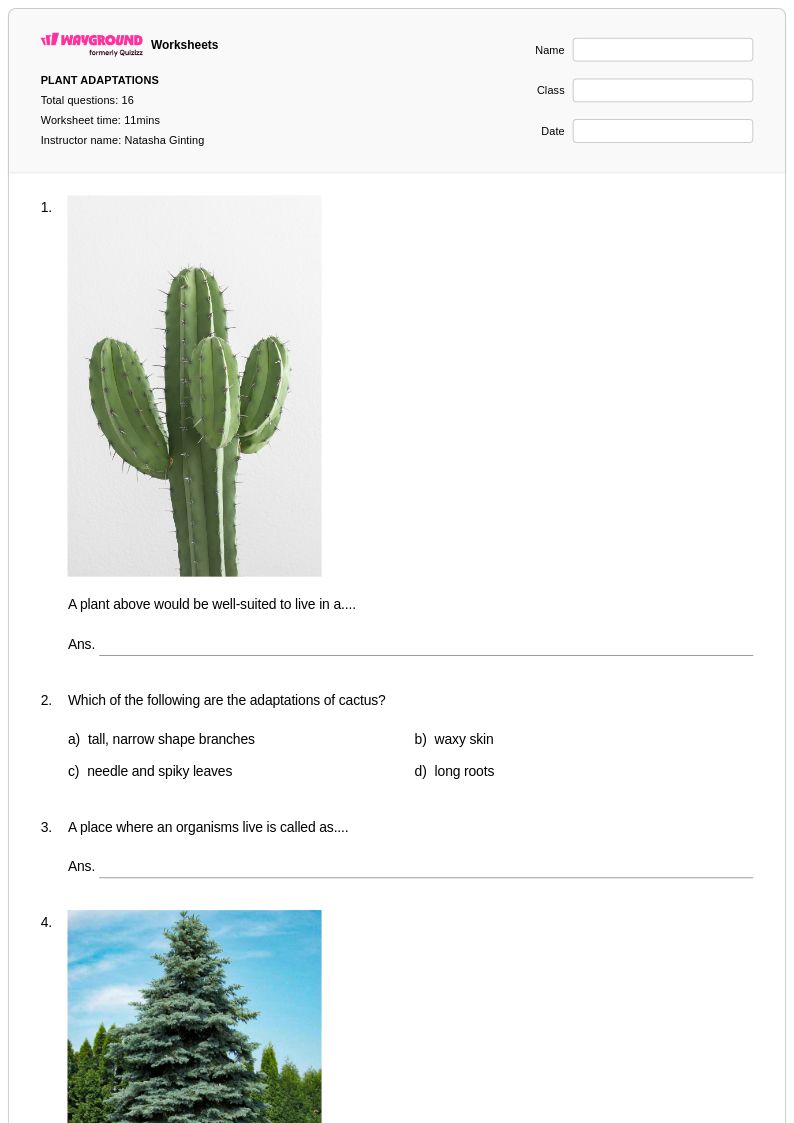
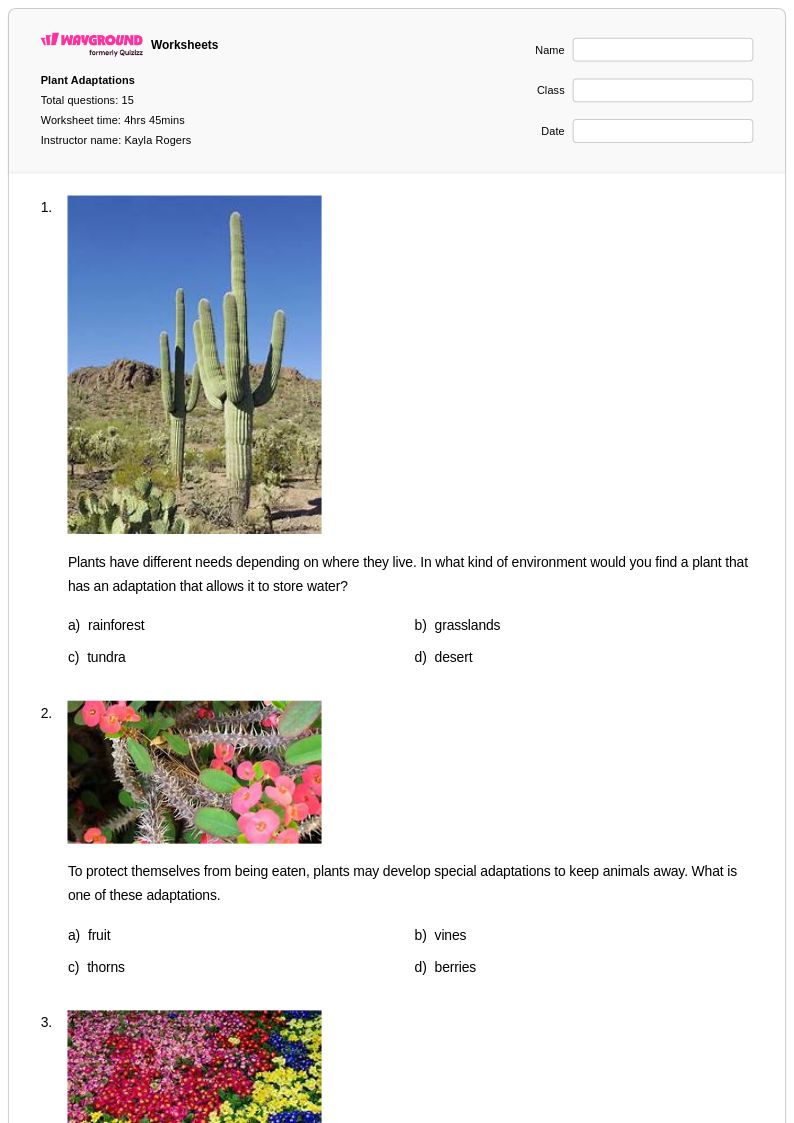
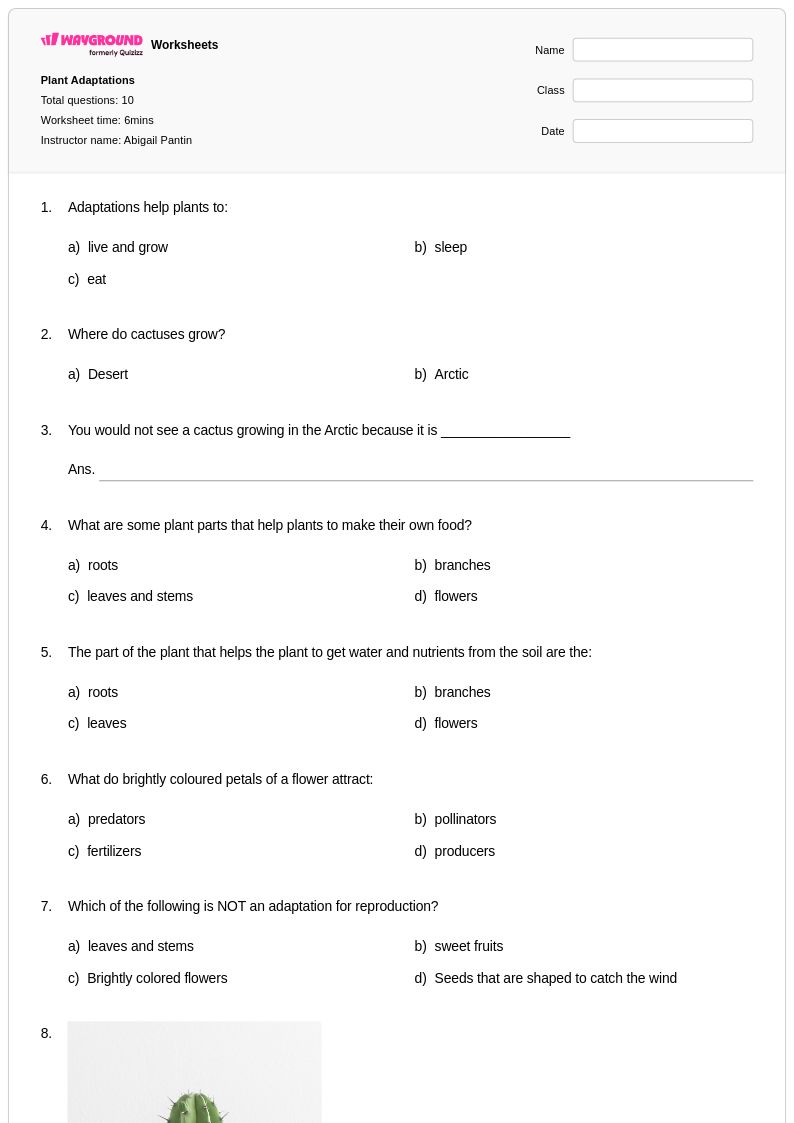
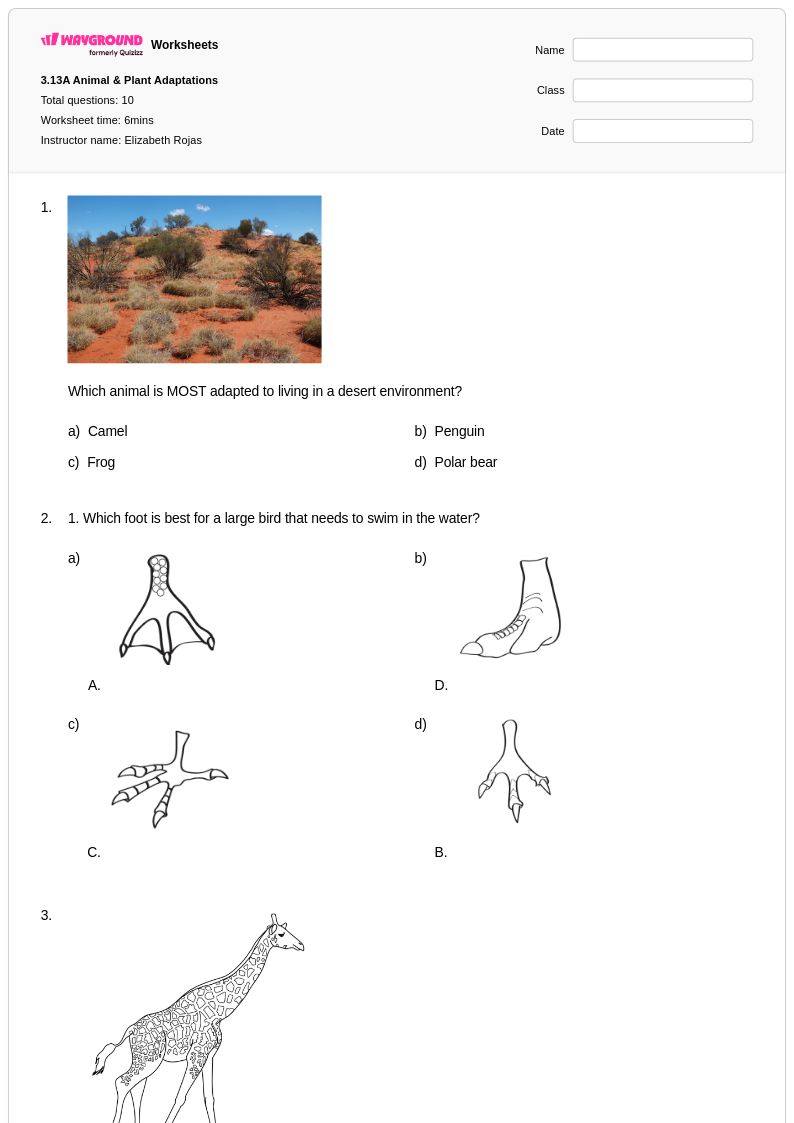
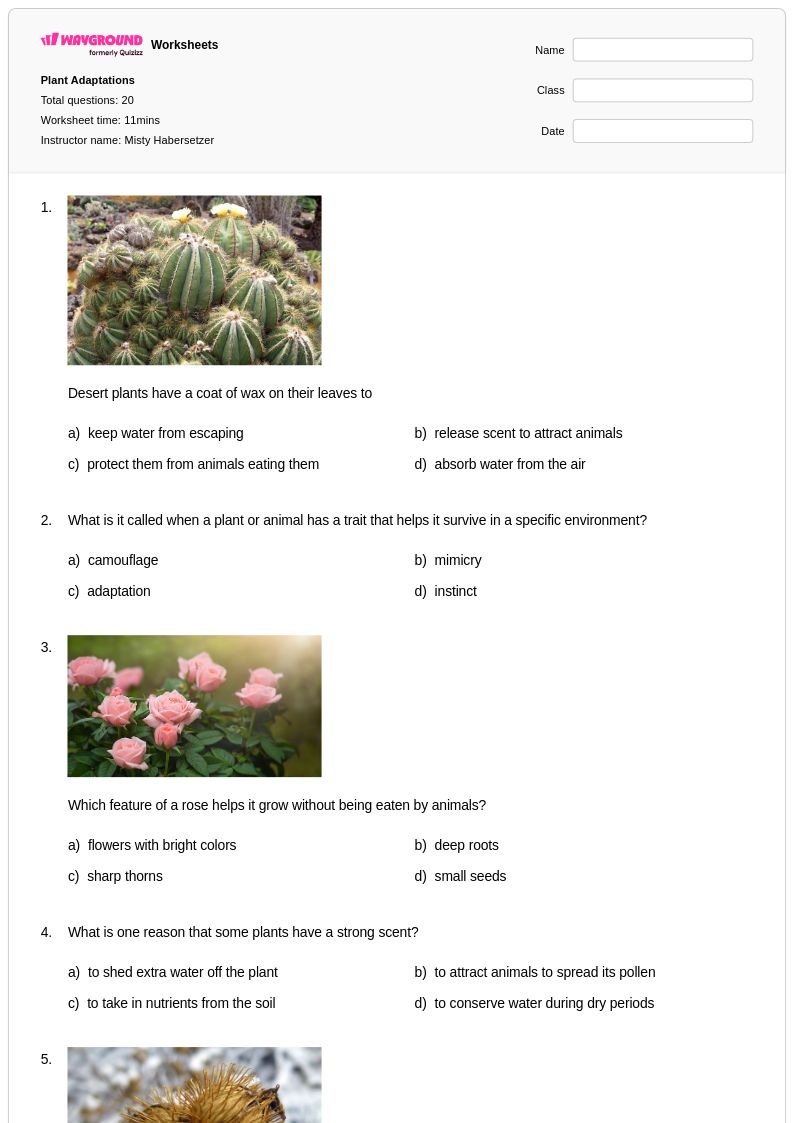
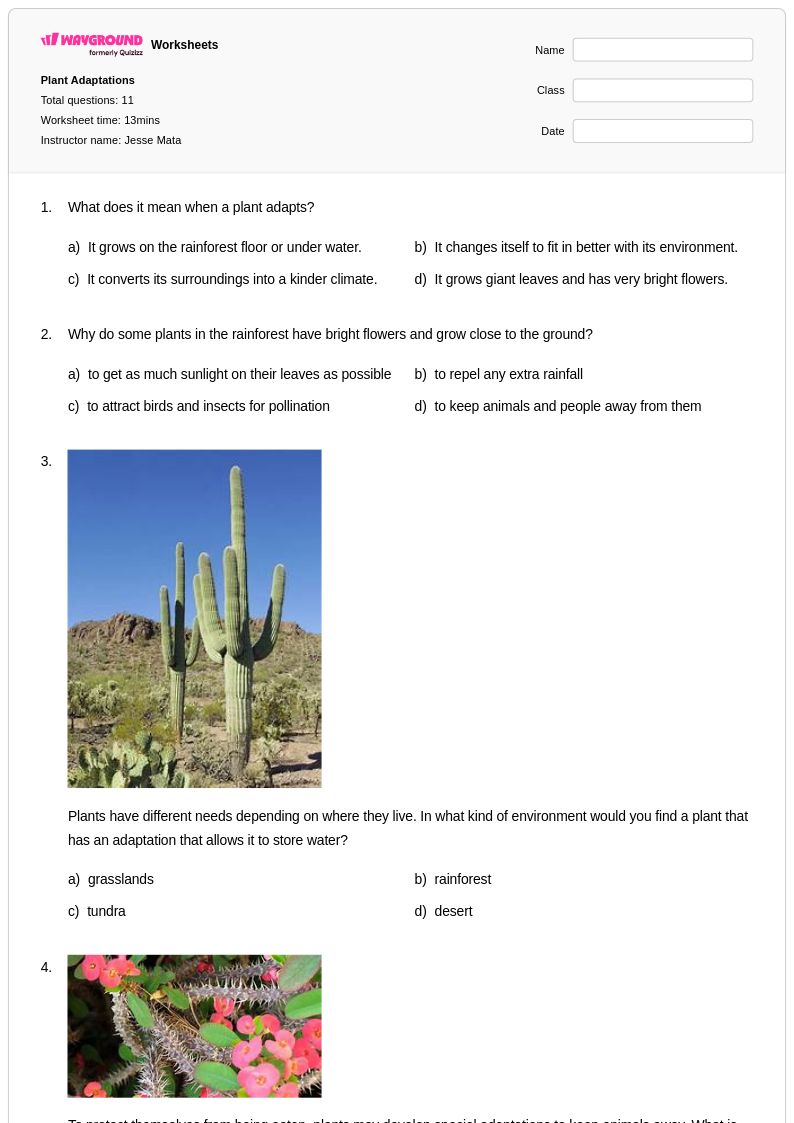
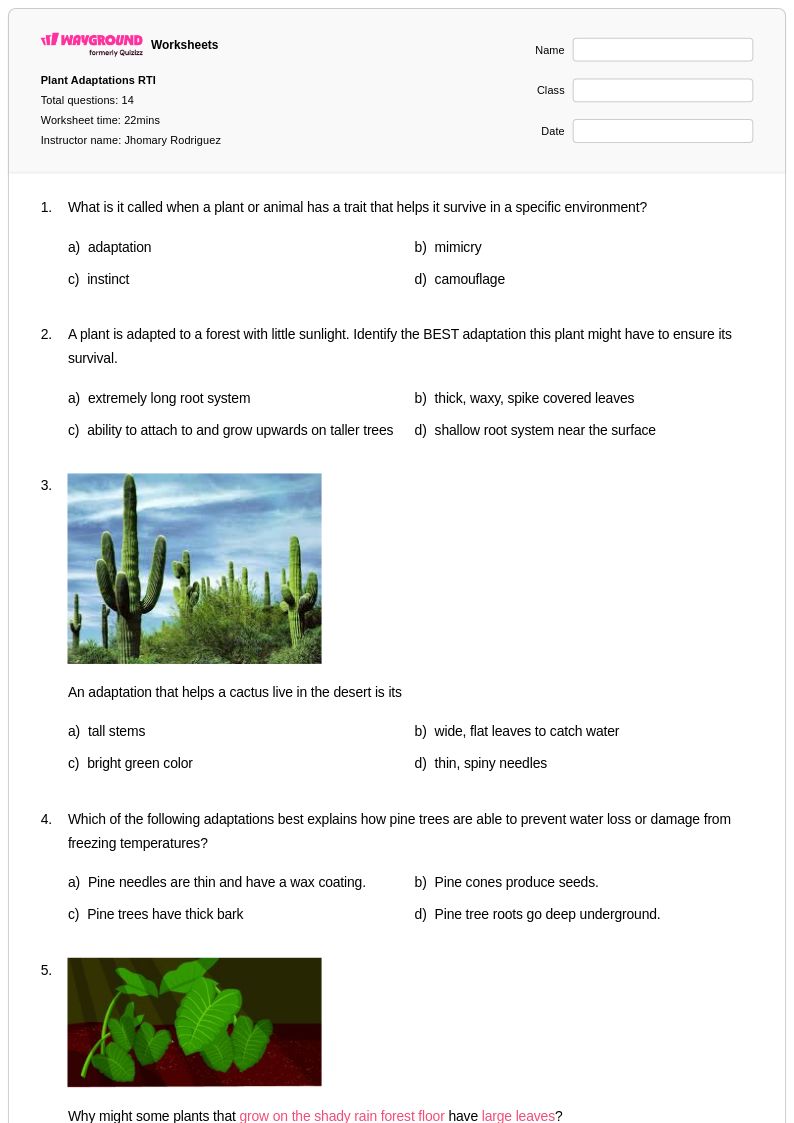
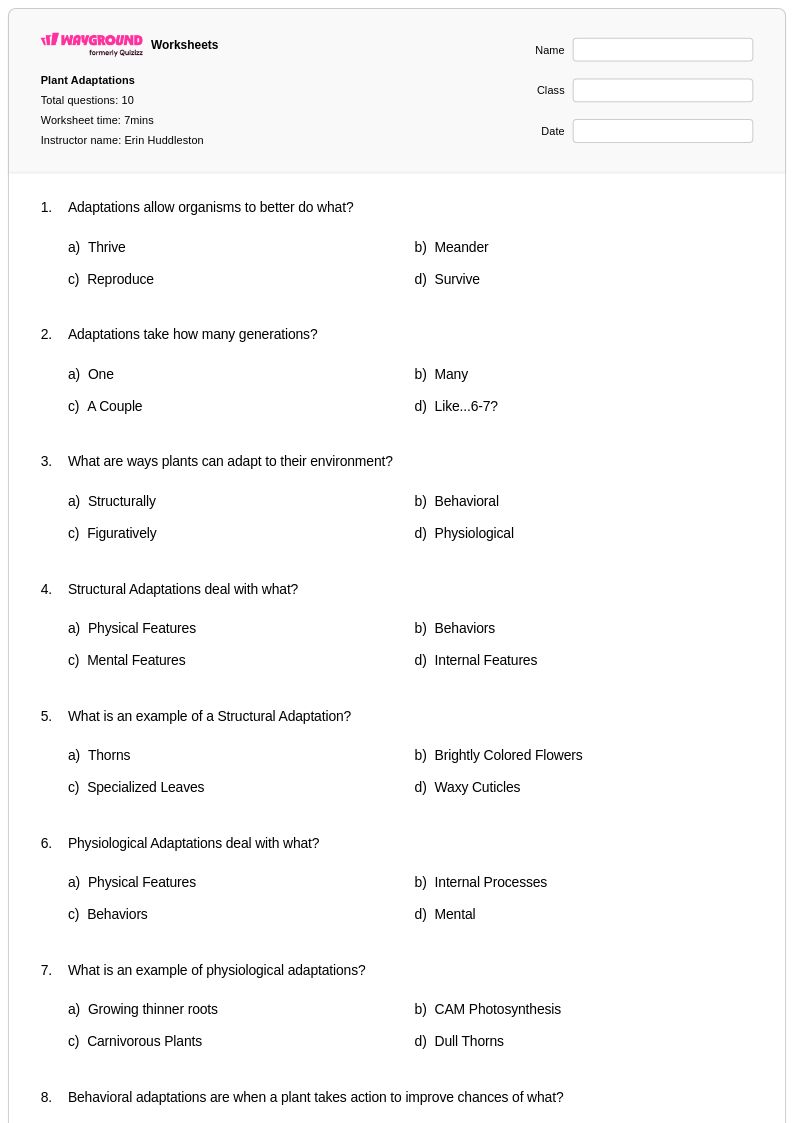
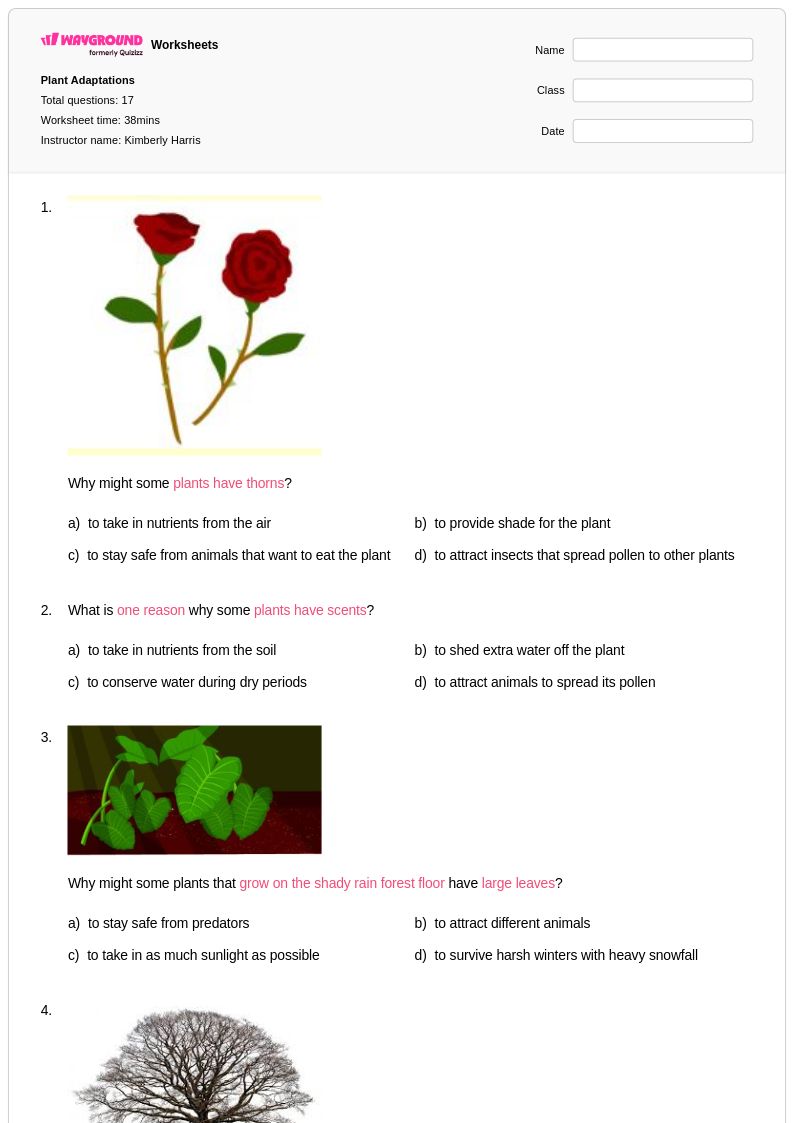
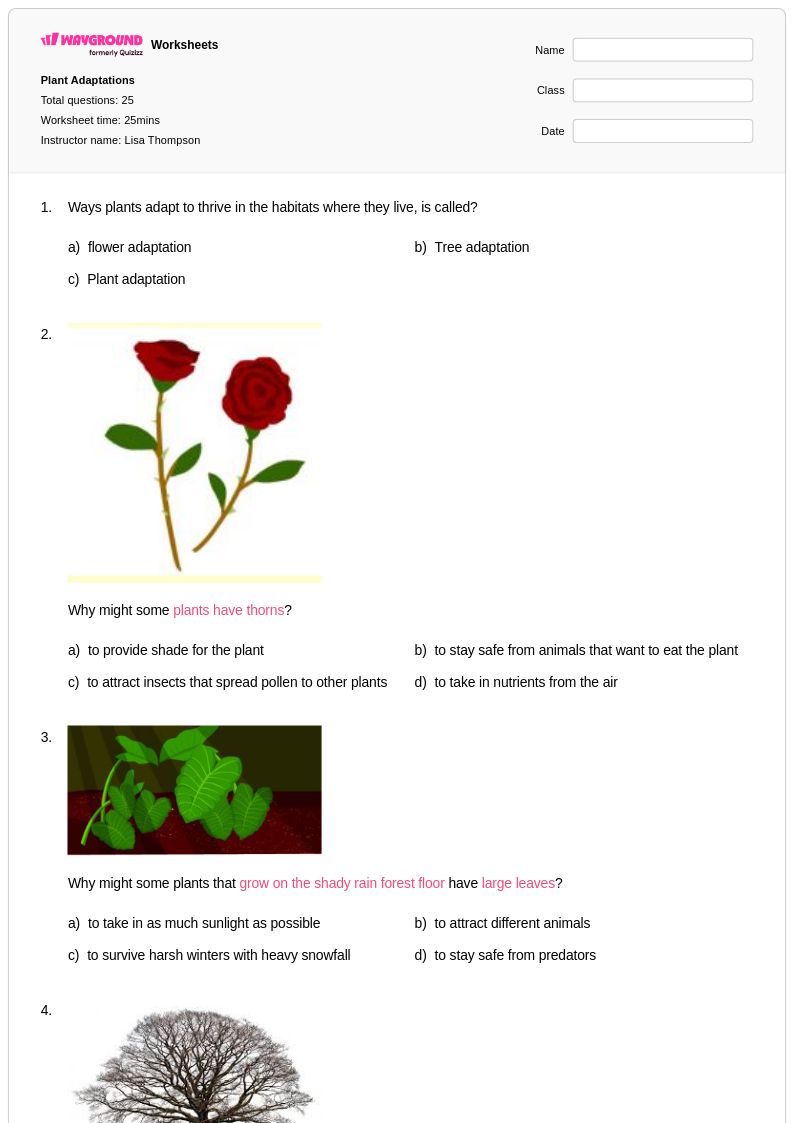
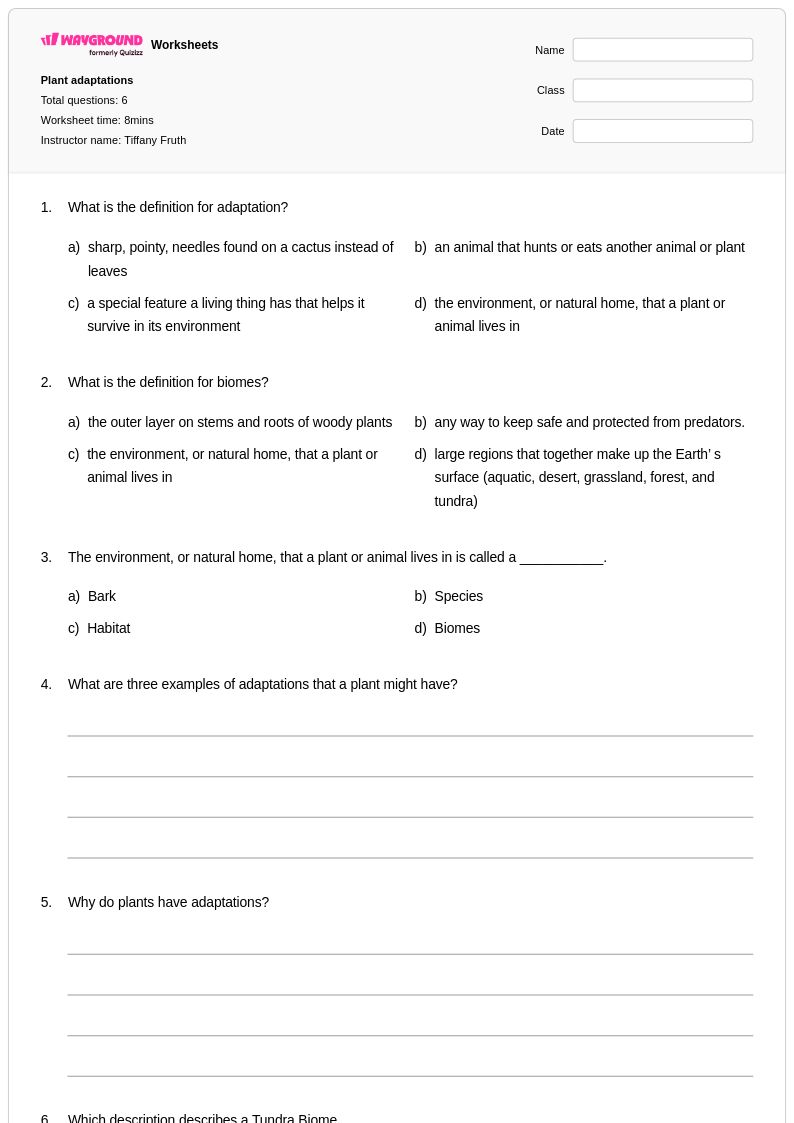
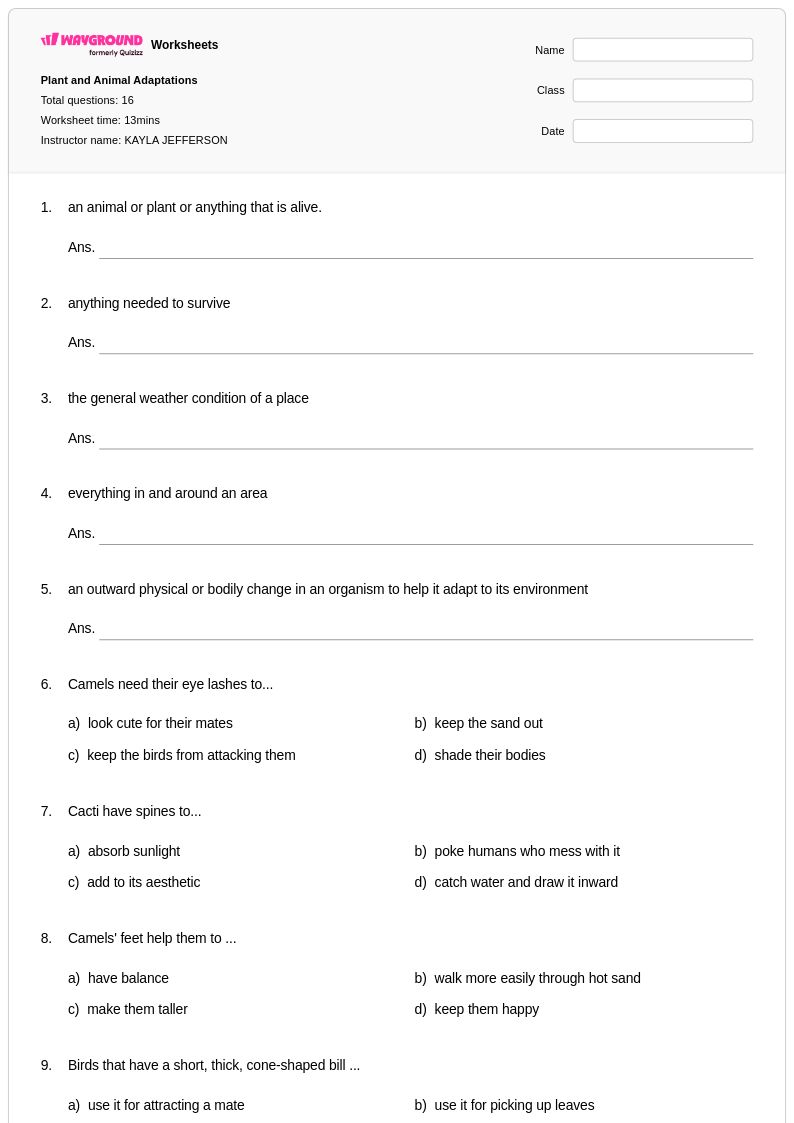
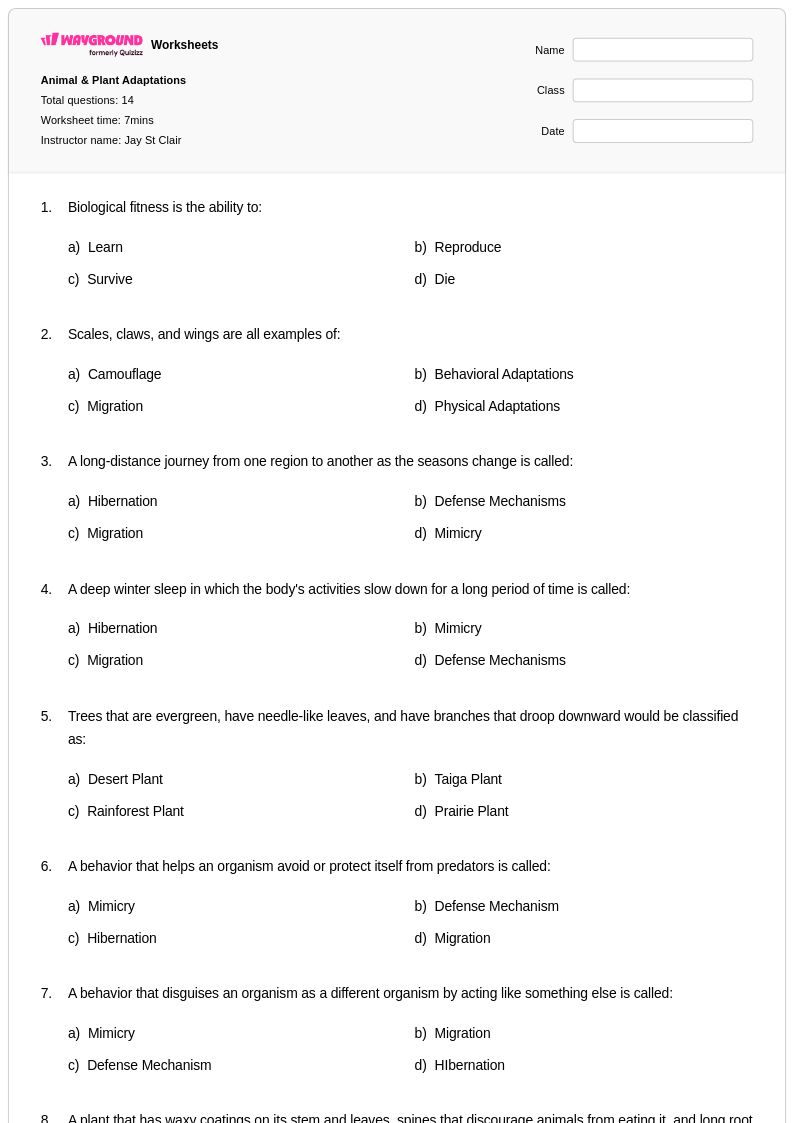
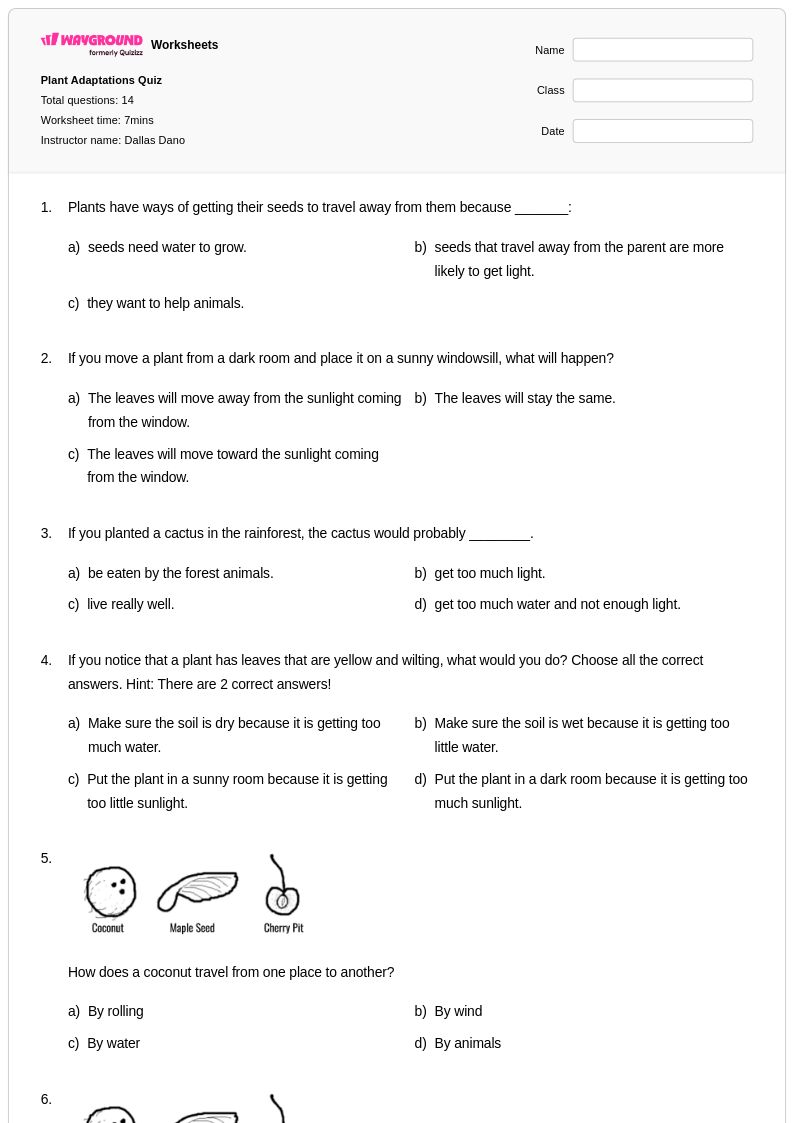
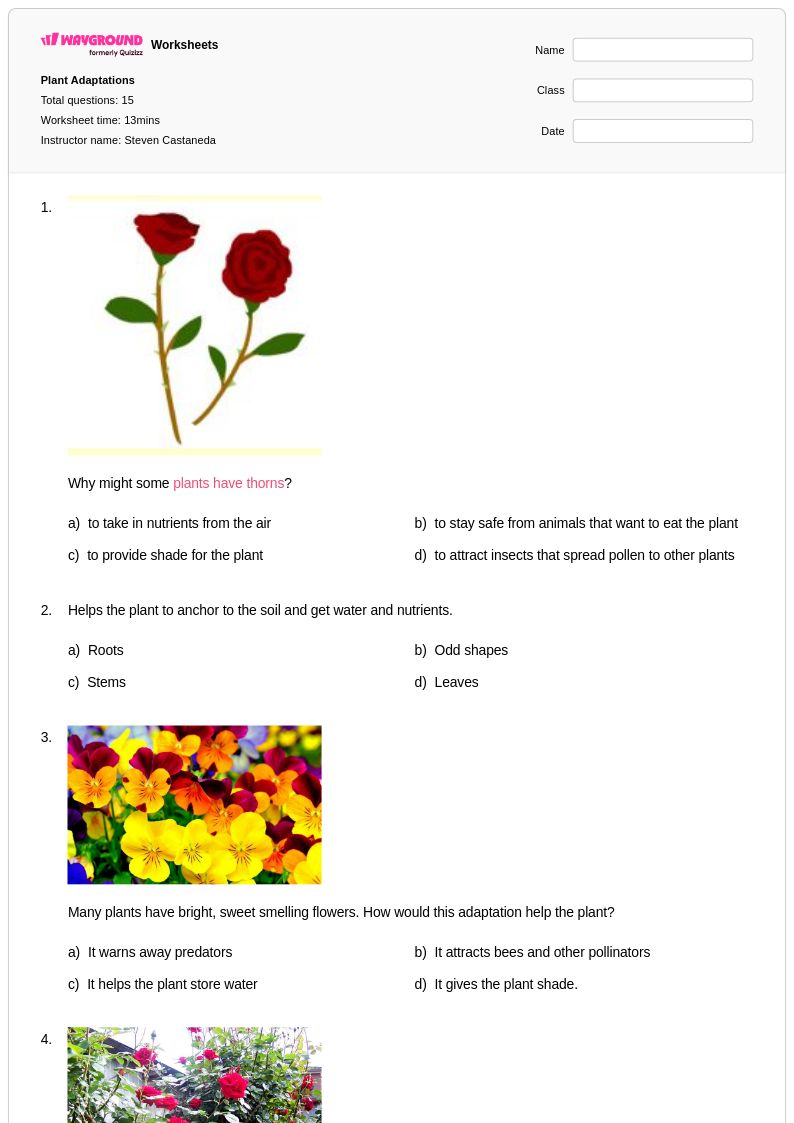
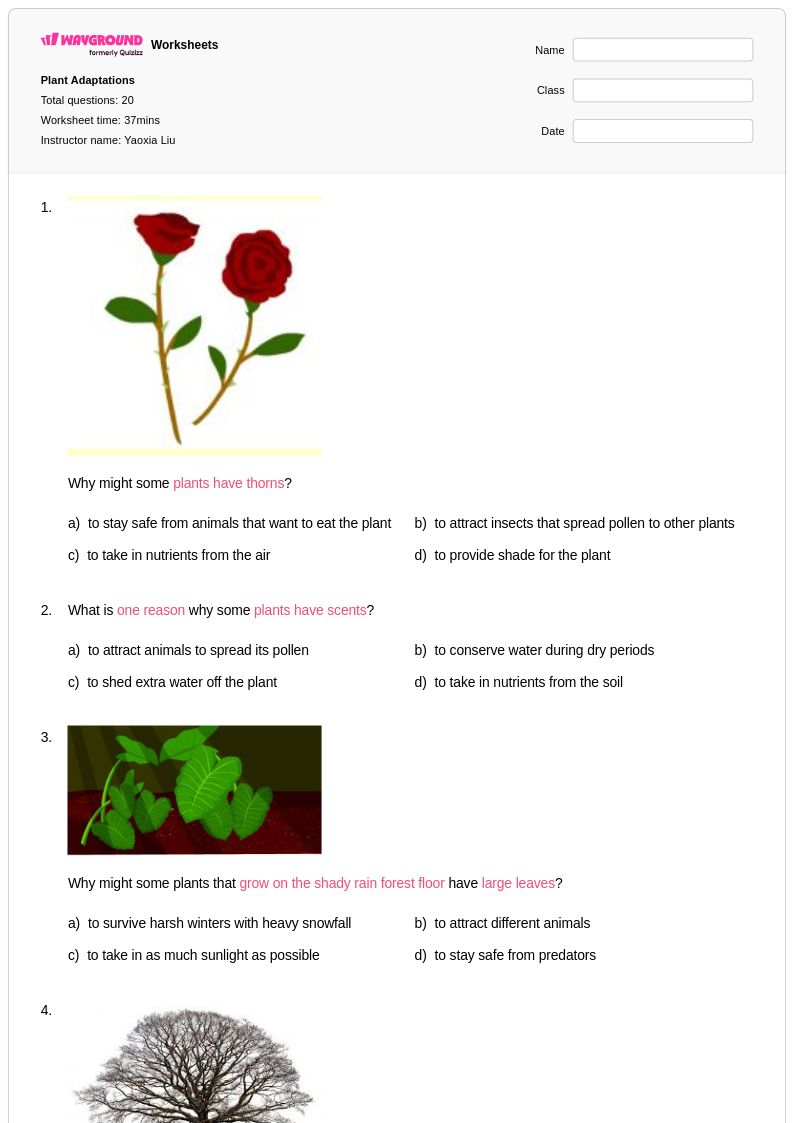
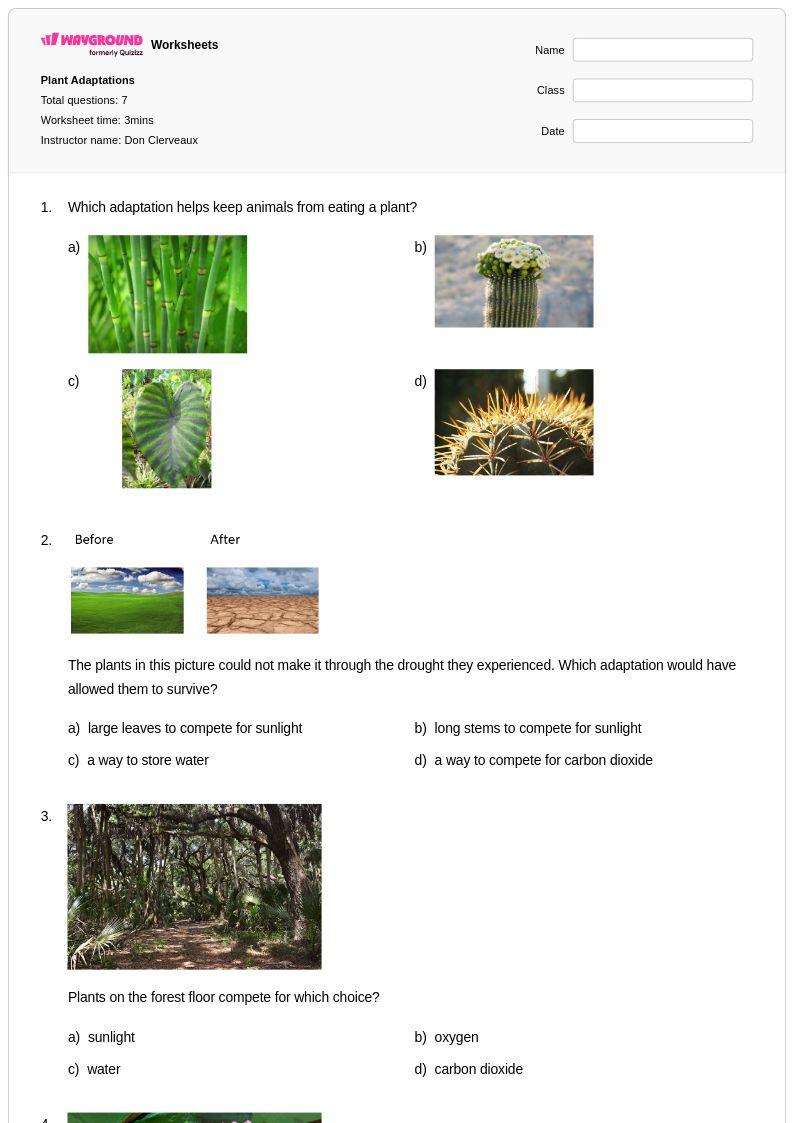
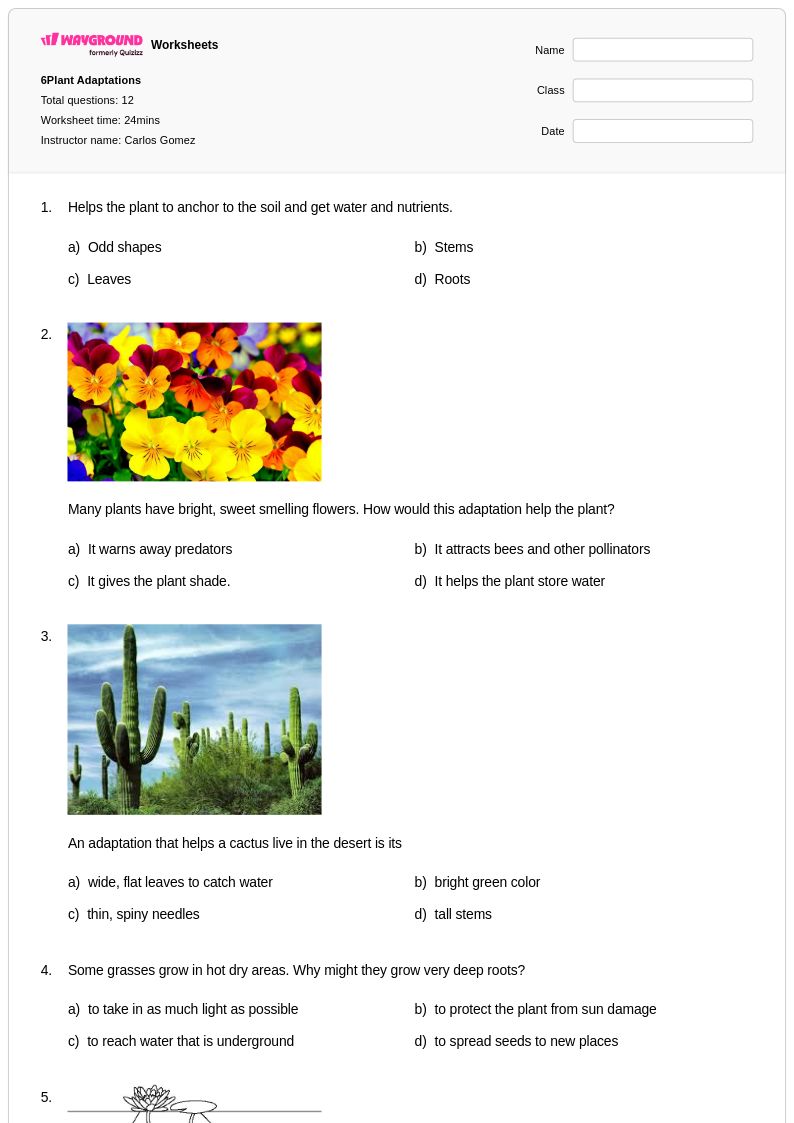
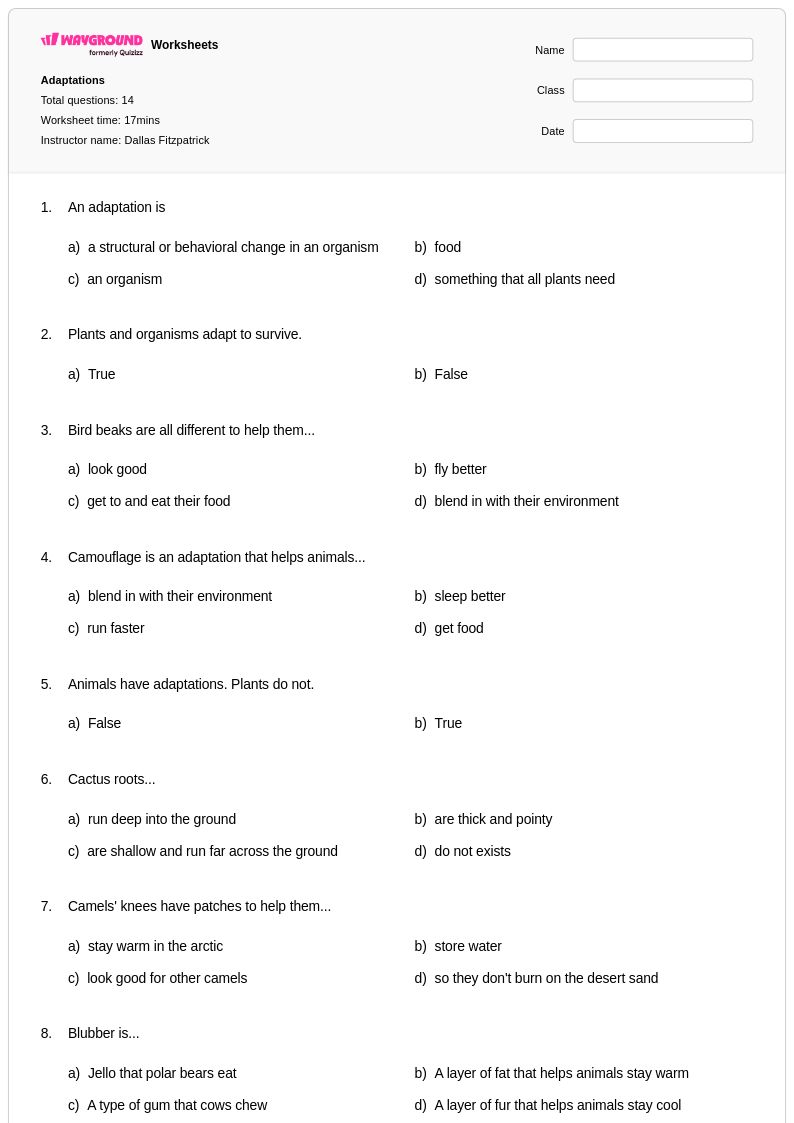
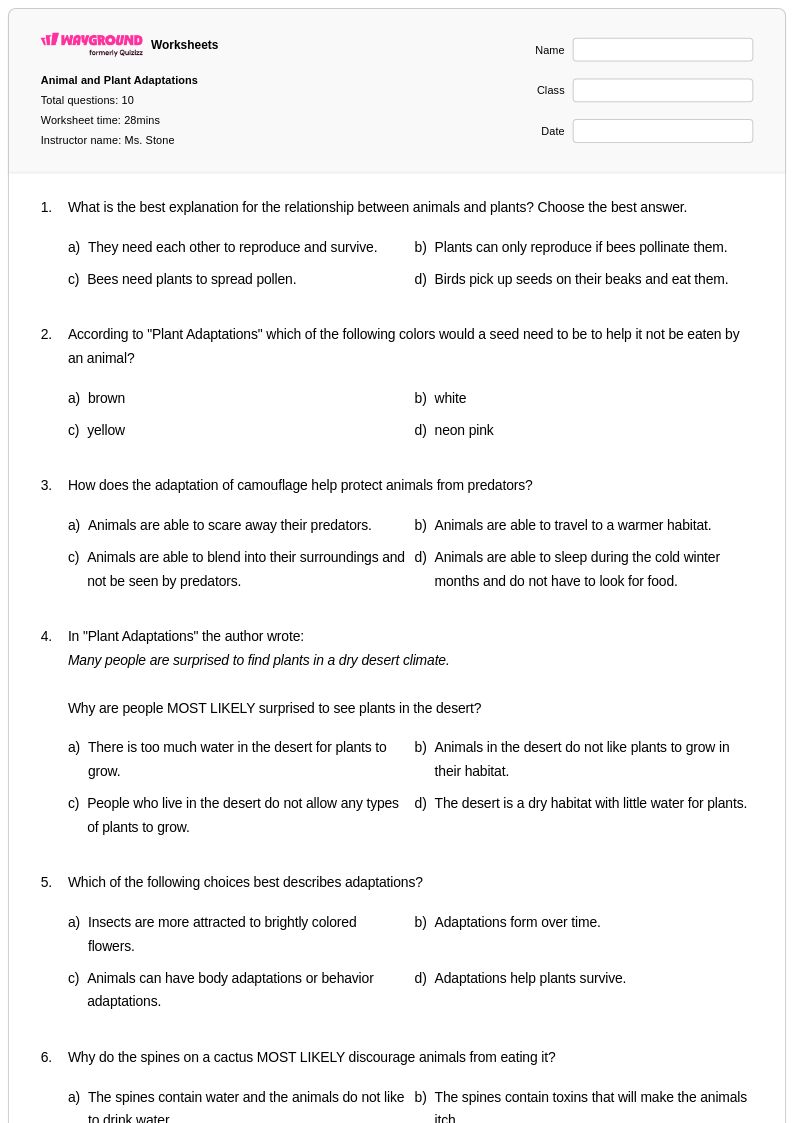
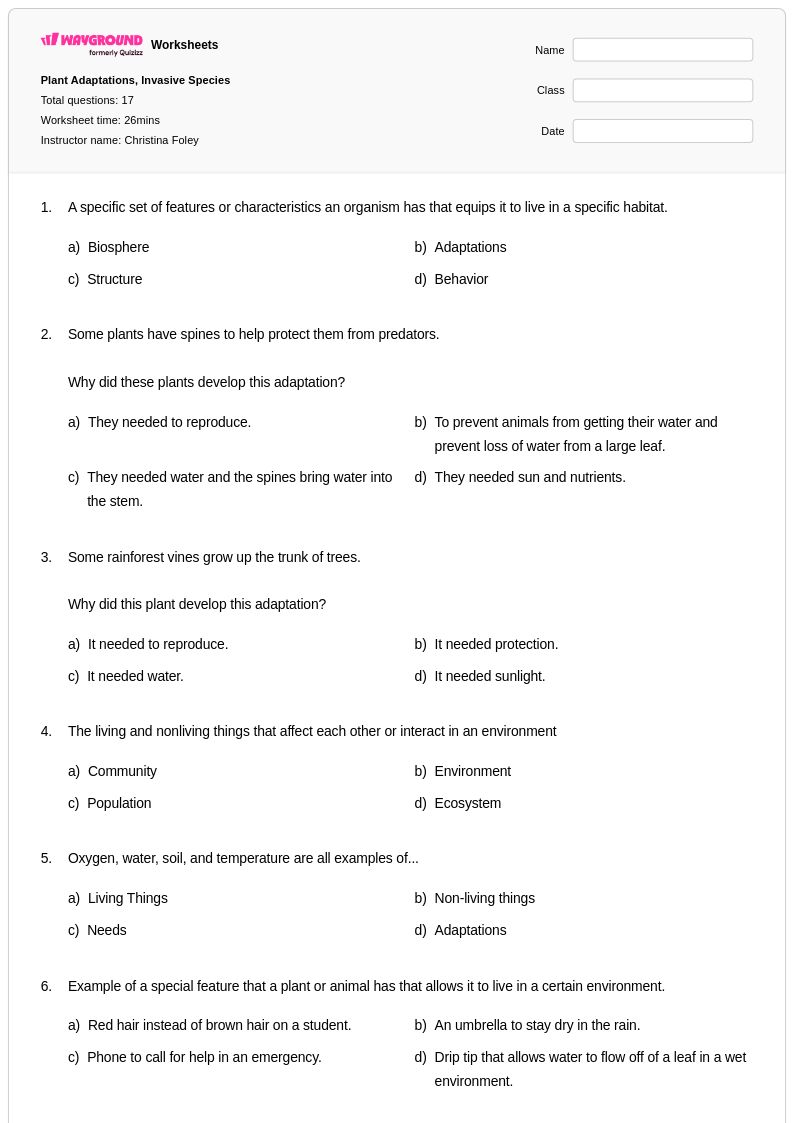
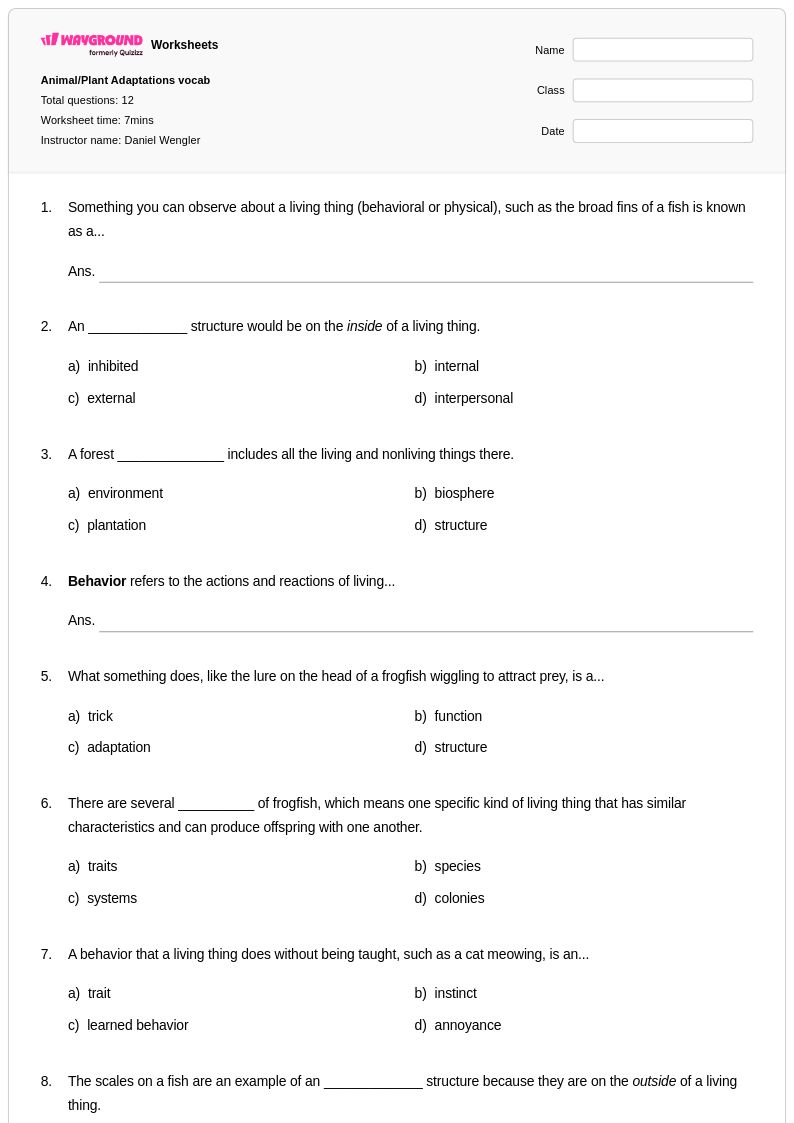
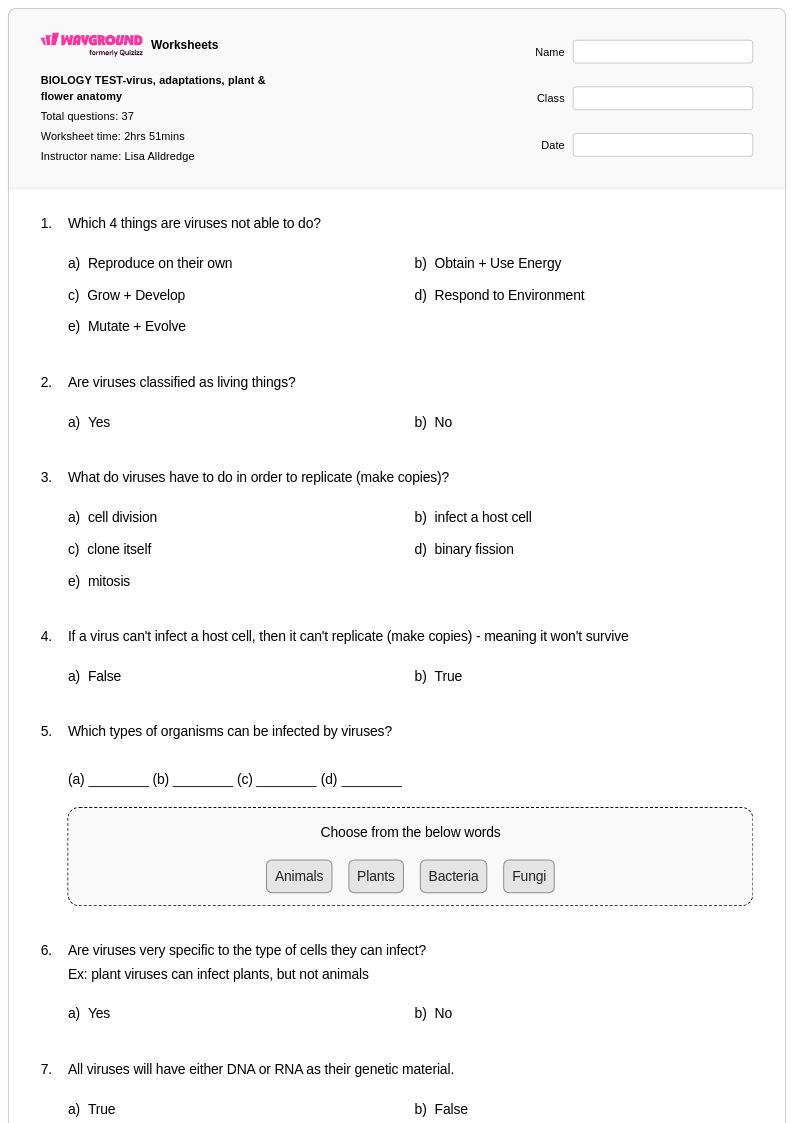
Plant adaptations worksheets for kindergarten students available through Wayground (formerly Quizizz) introduce young learners to the fascinating ways plants survive and thrive in different environments. These carefully designed educational materials help kindergarteners develop foundational observation skills while exploring concepts like how cacti store water, why some plants have thick waxy leaves, and how roots help plants find nutrients. The worksheets strengthen critical thinking abilities through age-appropriate activities that encourage students to identify, compare, and categorize different plant features they observe in nature. Teachers can access comprehensive answer keys alongside these free printables, making it easy to guide discussions and assess student understanding of basic plant survival strategies through engaging practice problems that connect scientific concepts to familiar examples from students' everyday experiences.
Wayground (formerly Quizizz) empowers educators with an extensive collection of millions of teacher-created plant adaptation resources specifically tailored for kindergarten learning objectives and developmental needs. The platform's robust search and filtering capabilities allow teachers to quickly locate worksheets that align with early childhood science standards while supporting diverse learning styles through differentiation tools. These customizable materials are available in both printable pdf format for hands-on classroom activities and digital versions for interactive learning experiences, giving educators flexibility in lesson planning and delivery. The comprehensive resource library supports effective remediation for students who need additional practice with plant identification concepts, while also providing enrichment opportunities for advanced learners ready to explore more complex adaptation examples, ensuring all kindergarten students can build confidence in their scientific observation and reasoning skills.
FAQs
How do I teach plant adaptations to middle school students?
Start by anchoring the concept in familiar environments — ask students why a cactus looks nothing like a fern, then build toward the idea that structure follows survival need. Categorize adaptations into structural (waxy cuticles, deep roots), behavioral (phototropism, seasonal dormancy), and physiological (CAM photosynthesis, salt tolerance) so students have a clear framework before analyzing specific examples. Comparing plants from contrasting biomes, such as desert succulents and rainforest epiphytes, helps students see adaptation as a response to environmental pressure rather than a random feature.
What exercises help students practice identifying plant adaptations?
Effective practice tasks ask students to match specific plant structures or behaviors to the environmental challenge they solve — for example, linking waxy cuticles to water retention in arid climates. Analysis problems that present real-world plant examples and ask students to infer the biome or survival strategy deepen reasoning beyond simple recall. Worksheets that include practice problems across structural, behavioral, and physiological categories give students exposure to the full range of adaptation types.
What misconceptions do students commonly have about plant adaptations?
A frequent misconception is that adaptations are intentional — that a plant 'decided' to develop thick leaves to survive drought. Students need explicit instruction that adaptations arise through natural selection over generations, not through individual effort or choice. Another common error is conflating all plant survival strategies as 'structural,' overlooking behavioral responses like phototropism and physiological processes like CAM photosynthesis, which are equally important categories.
How do plant adaptation worksheets connect to evolutionary biology?
Plant adaptations are a concrete entry point for teaching natural selection because students can observe the functional relationship between a trait and its environment directly. Analyzing examples like convergent evolution — where unrelated desert plants independently develop similar water-storing structures — helps students understand how selection pressure drives trait development across lineages. This makes plant adaptation content valuable not just in ecology units but as supporting evidence when teaching broader evolutionary concepts like adaptive radiation.
How do I use Wayground's plant adaptations worksheets in my classroom?
Wayground's plant adaptations worksheets are available as free printable PDFs for traditional classroom use and in digital formats for technology-integrated environments, including the option to host them as a quiz directly on Wayground. Teachers can use them to introduce new concepts, provide targeted skill reinforcement, or offer remediation and enrichment depending on where students are in the unit. Wayground also supports student-level accommodations such as read aloud, extended time, and reduced answer choices, which can be assigned individually so all learners access the same content at an appropriate level.
How can I differentiate plant adaptations instruction for students at different readiness levels?
For students who are still building foundational understanding, focus practice on clear structural adaptations with visible cause-and-effect logic, such as how a deep root system accesses groundwater in a dry environment. Advanced students can be challenged with topics like convergent evolution and adaptive radiation, analyzing why unrelated plant species arrive at similar solutions under comparable selection pressures. Wayground's differentiation tools allow teachers to customize worksheets by readiness level, and individual accommodations like reduced answer choices or read aloud can be applied to specific students without disrupting the rest of the class.