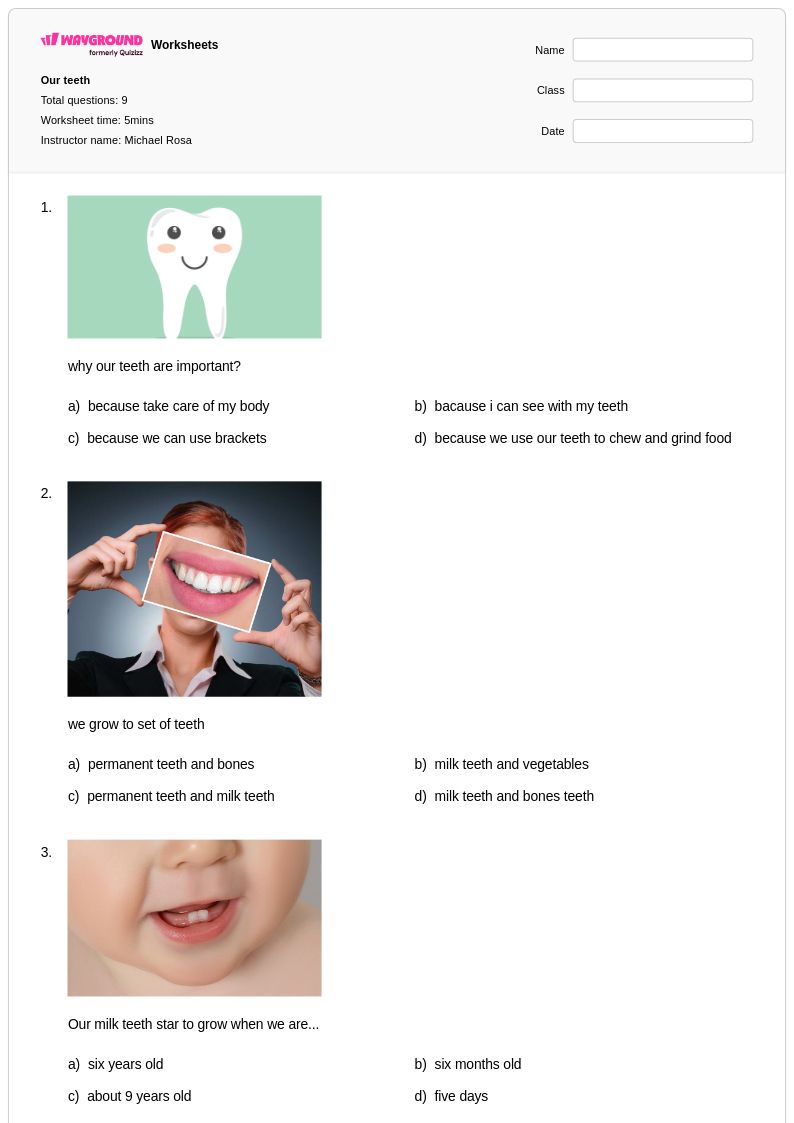
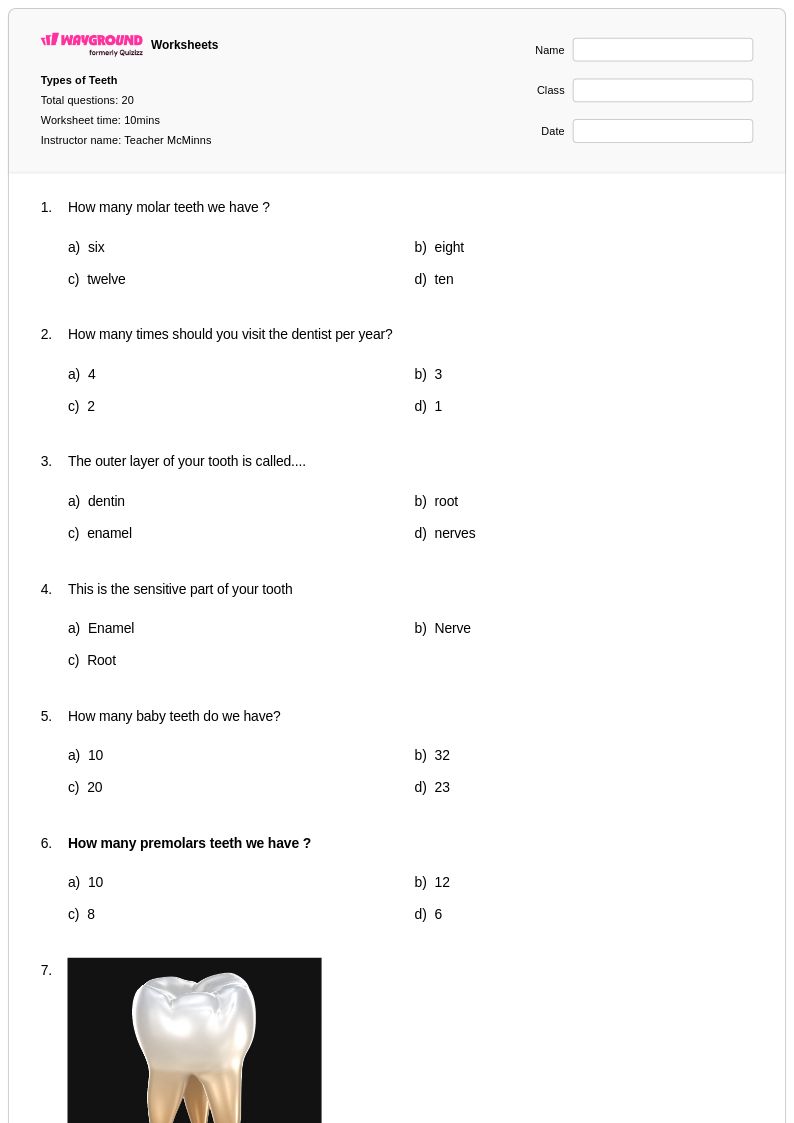
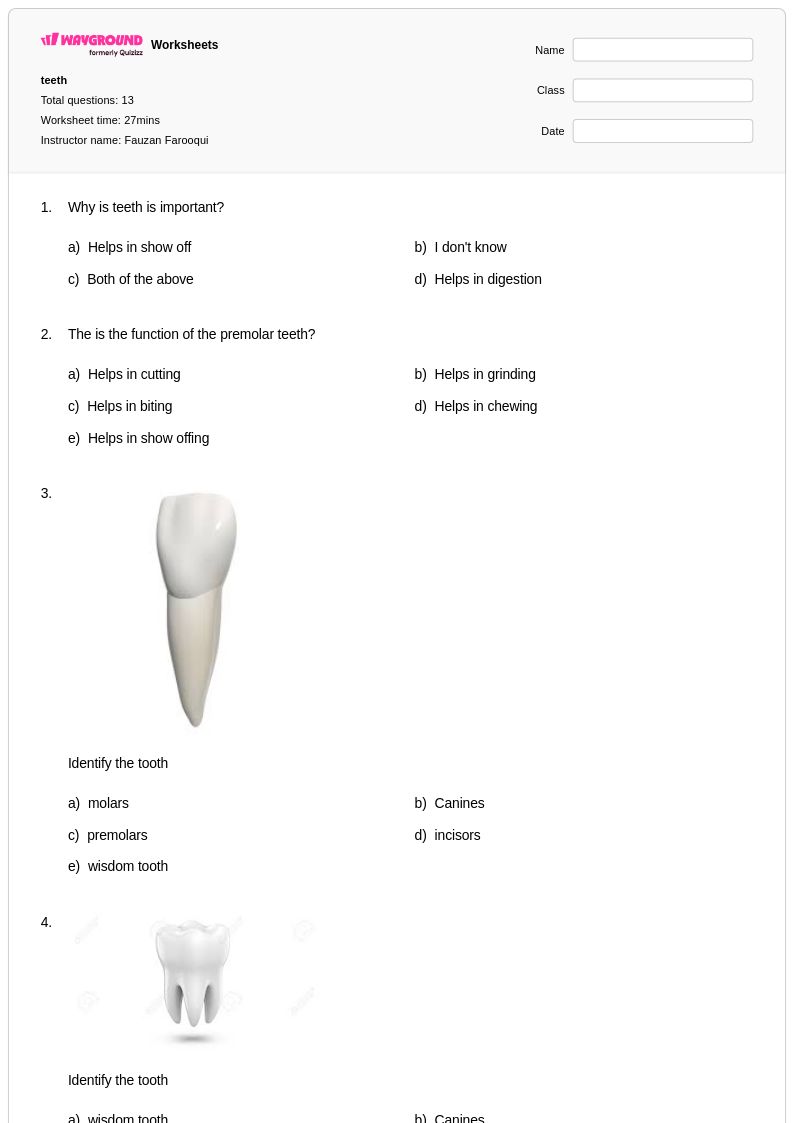
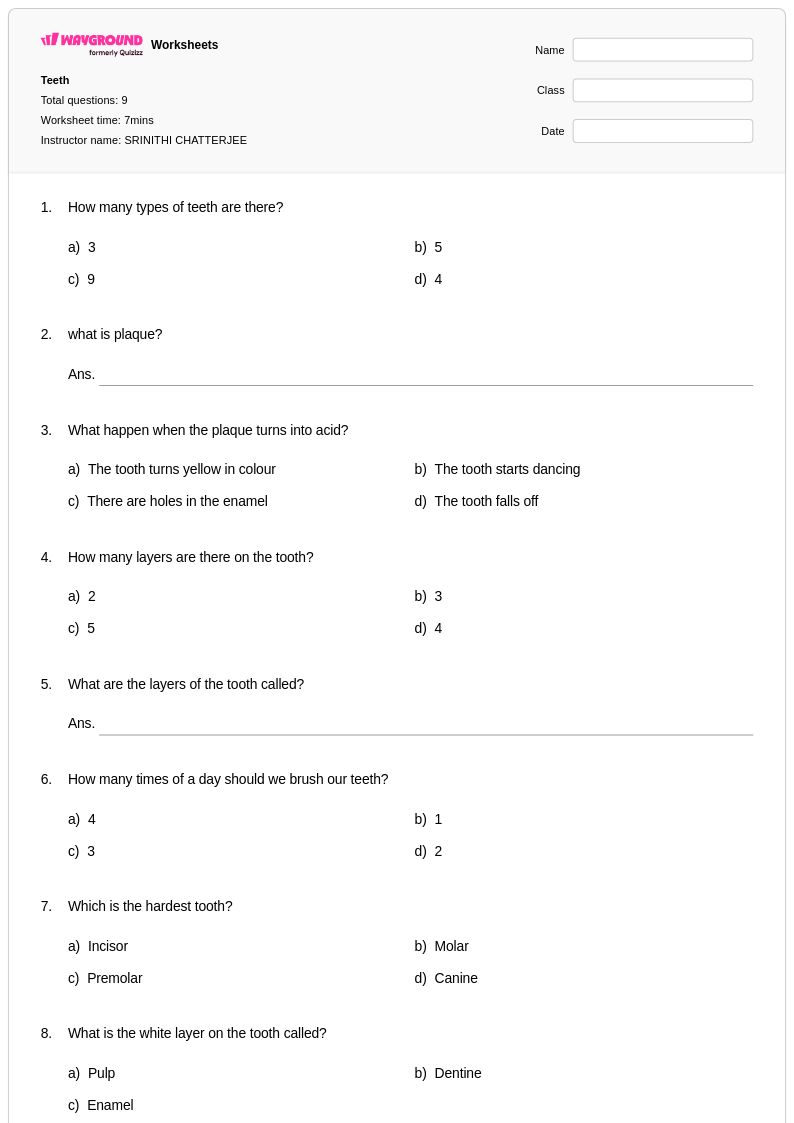
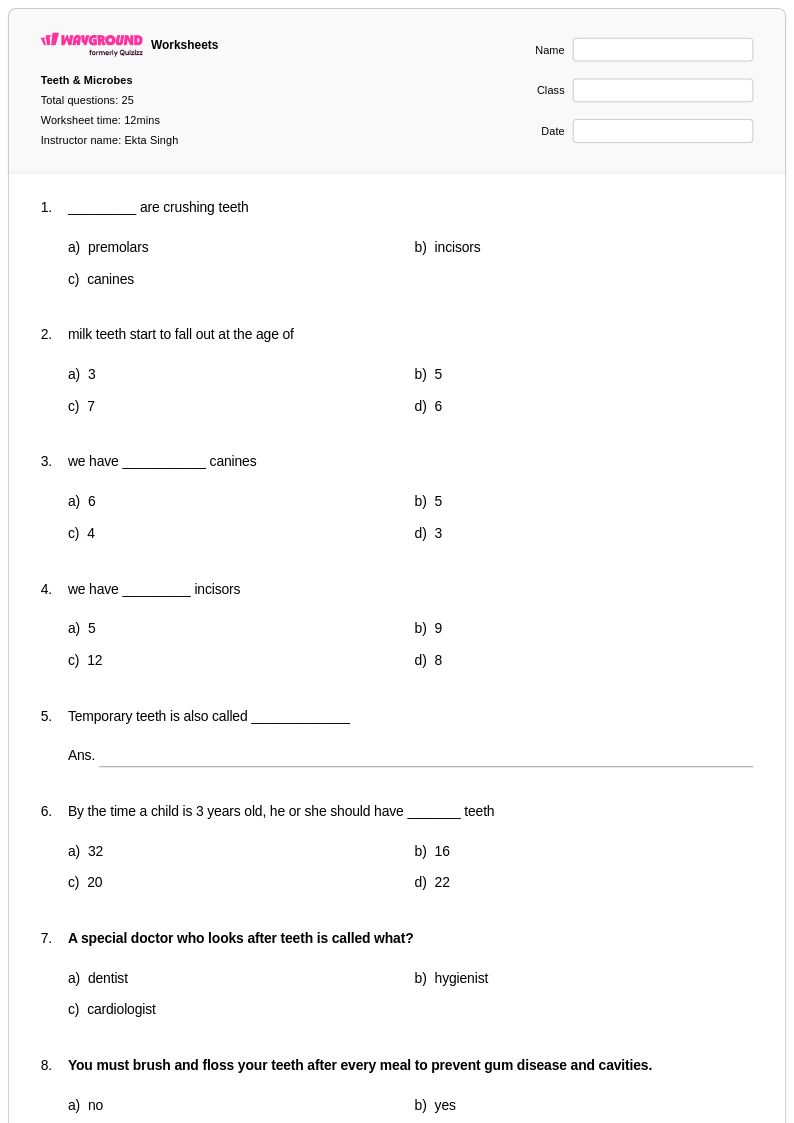
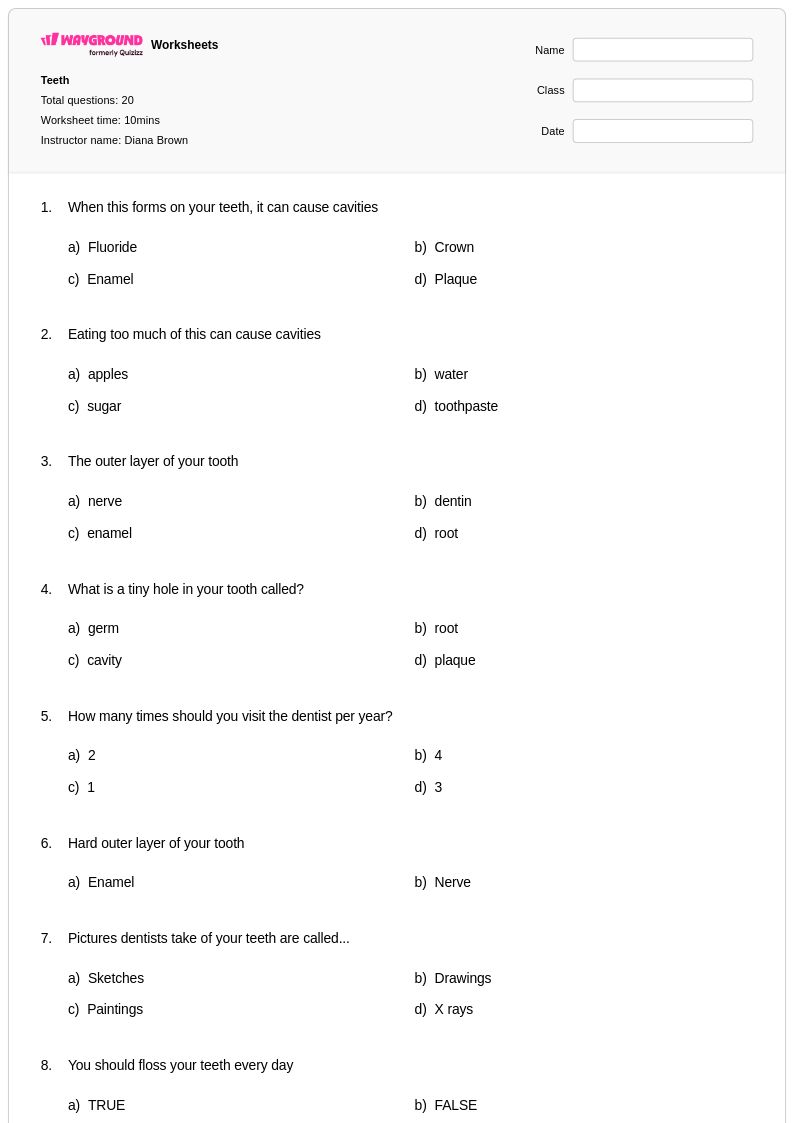
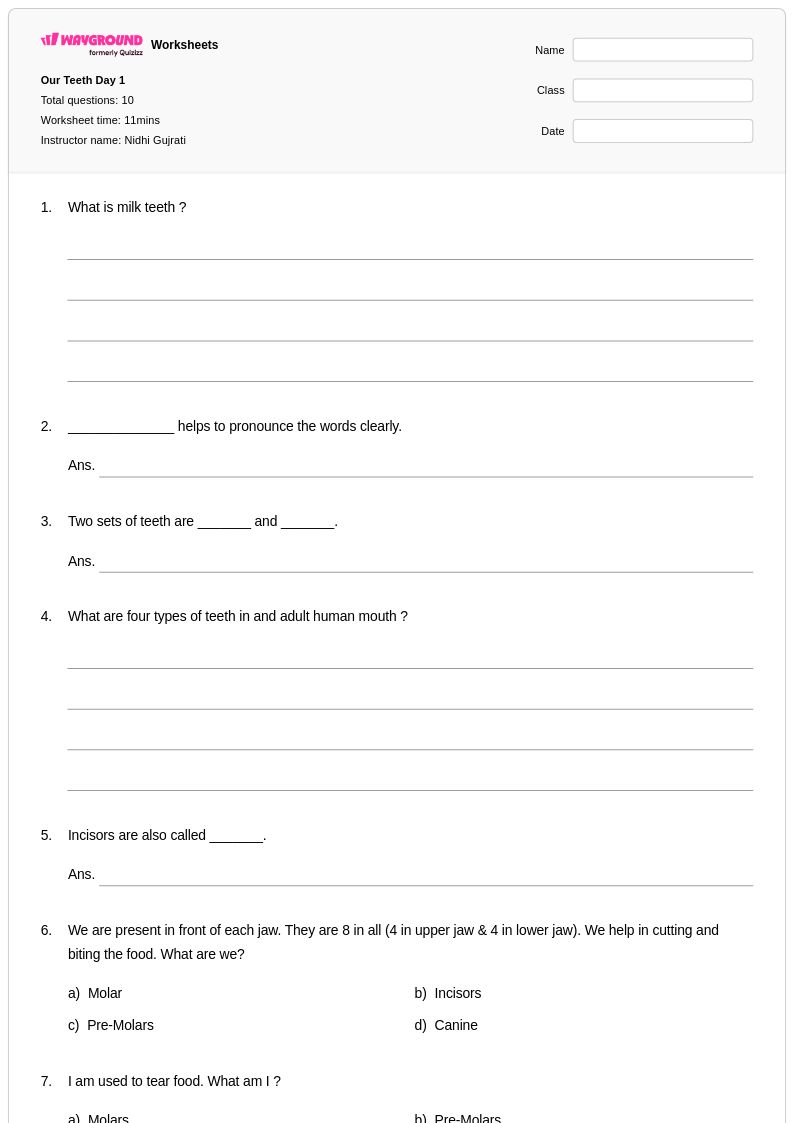
Discover free kindergarten teeth worksheets and printables from Wayground that help young learners explore dental health, tooth types, and proper oral care through engaging practice problems with answer keys.
Explore printable Teeth worksheets for Kindergarten
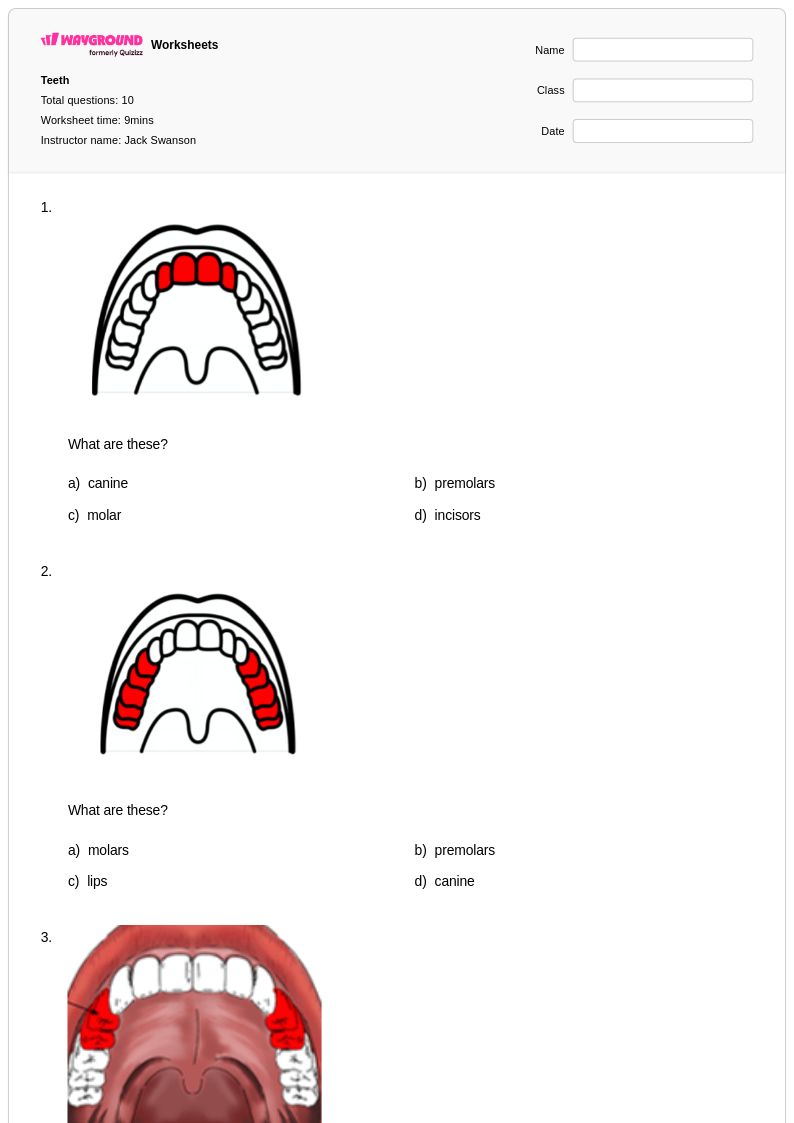
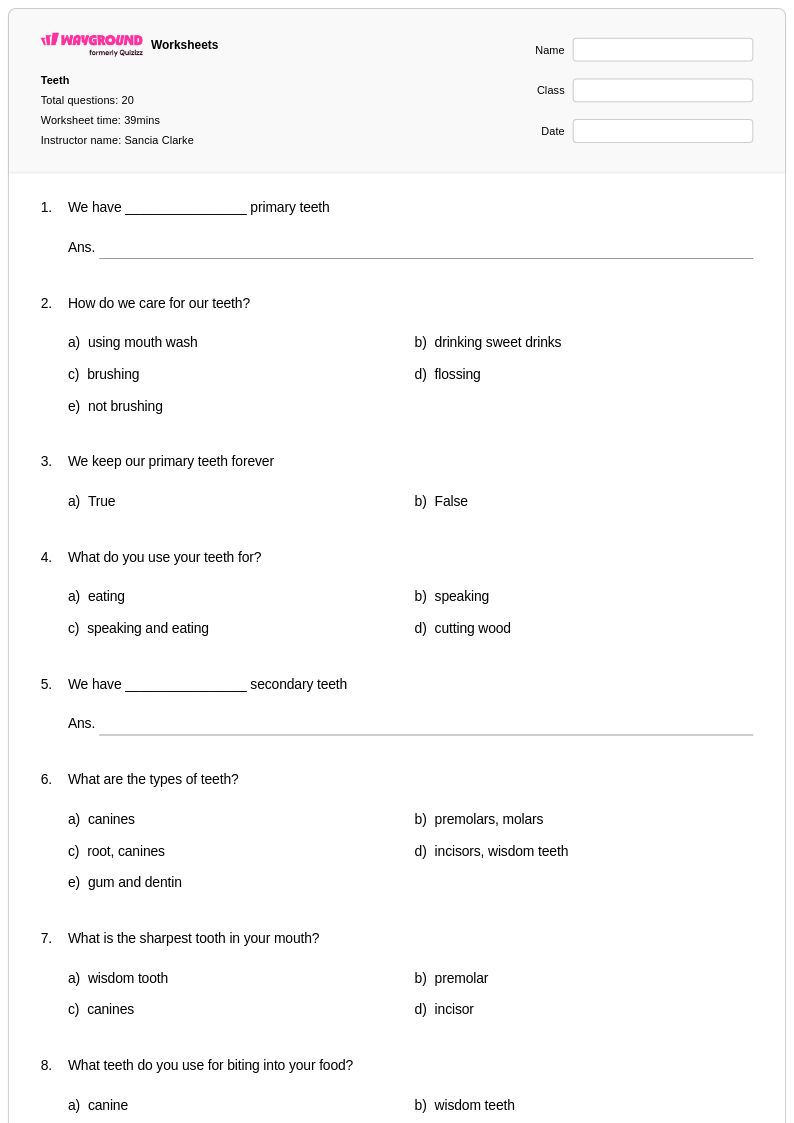
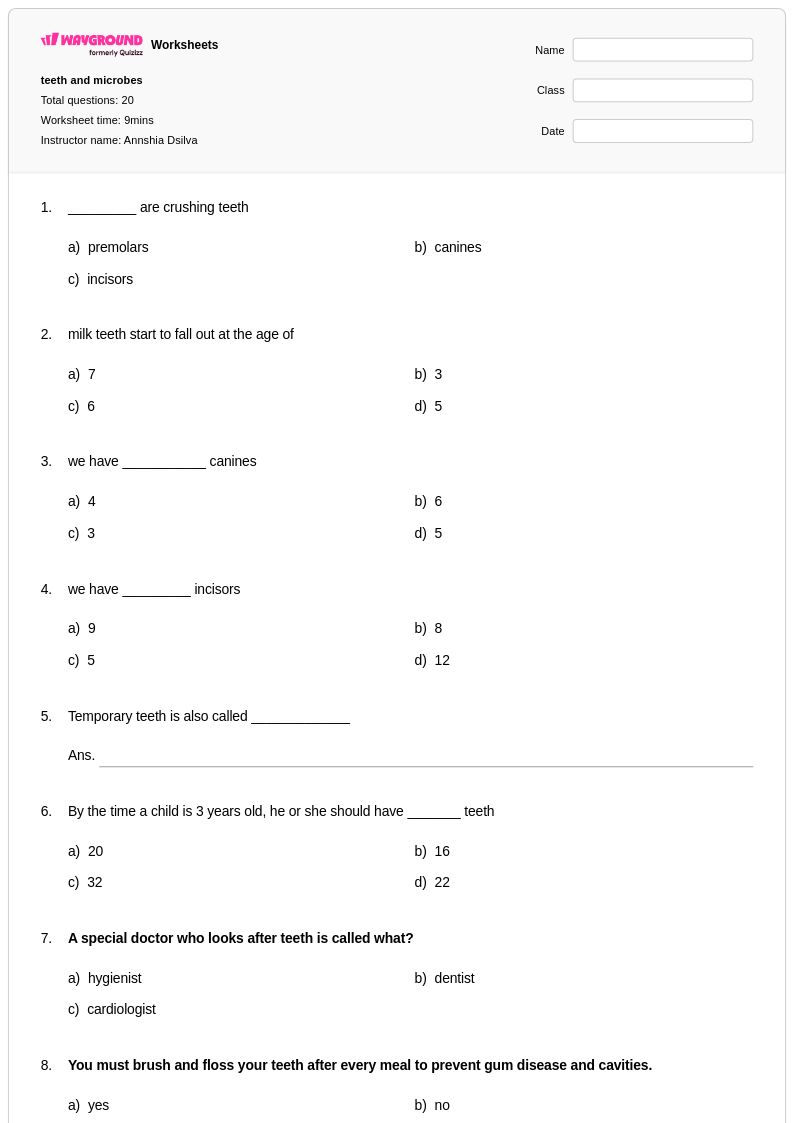
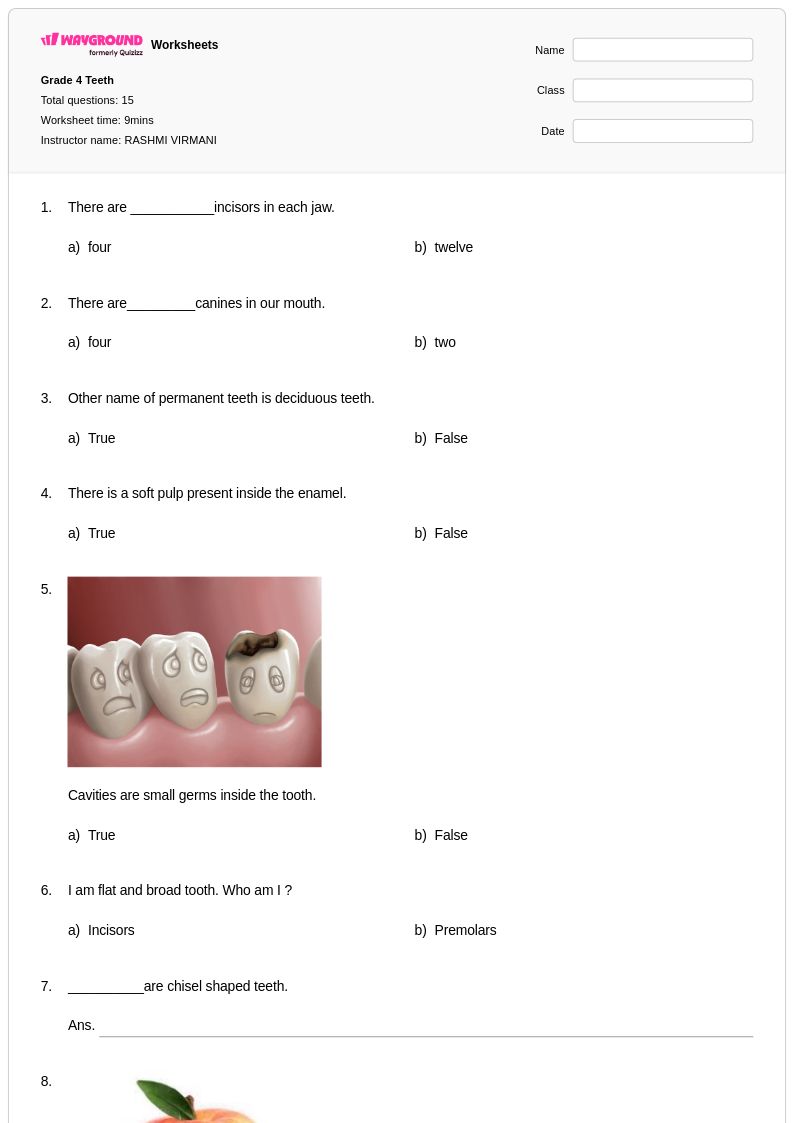
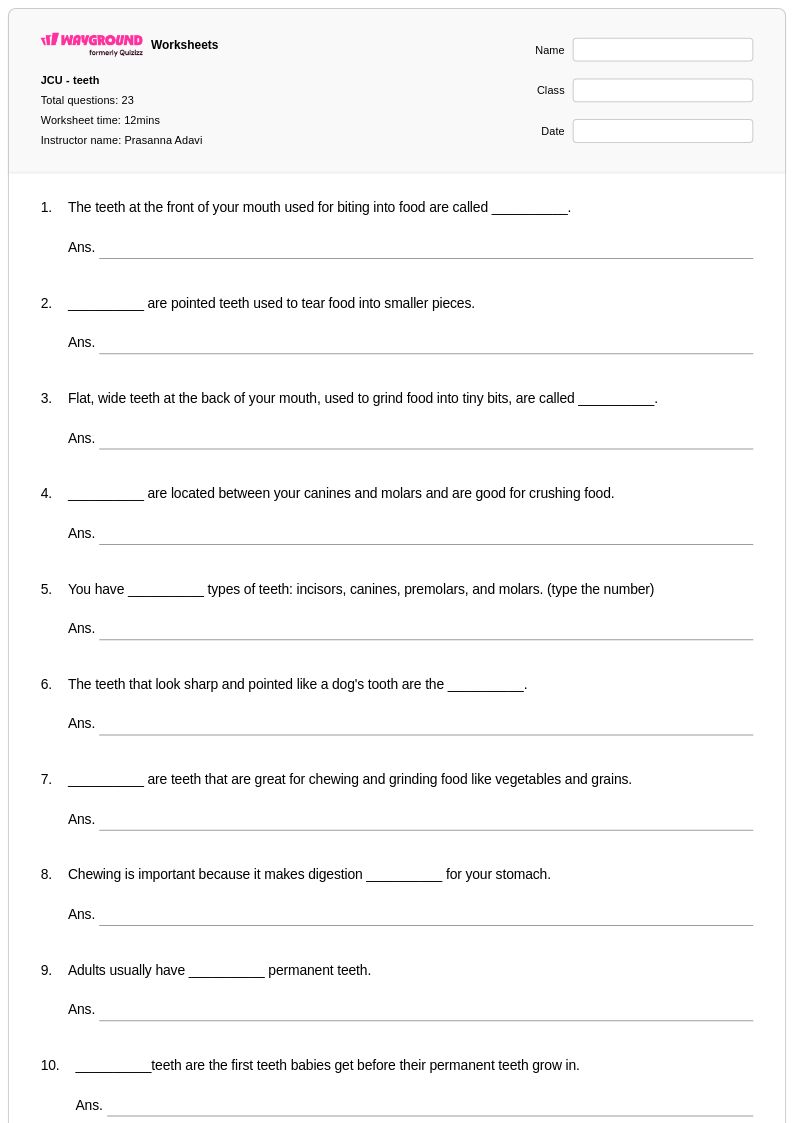
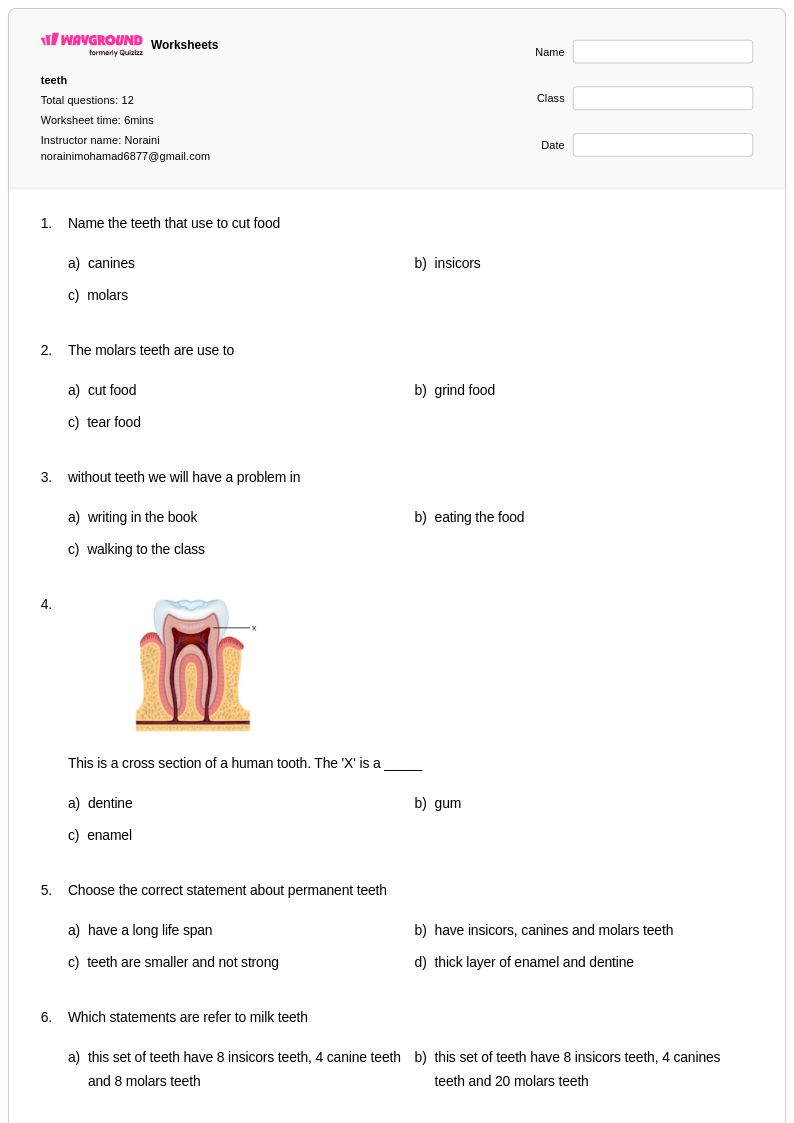
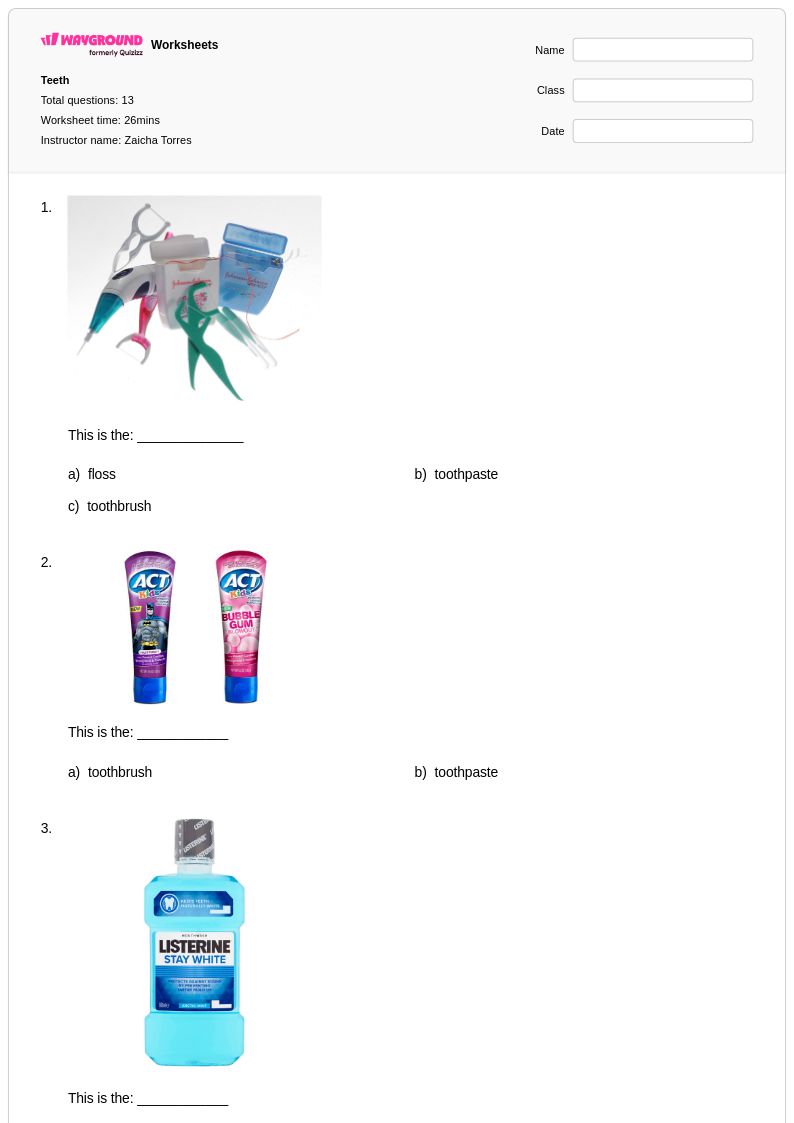
Teeth worksheets for kindergarten students available through Wayground provide young learners with engaging, age-appropriate activities that introduce fundamental concepts about dental health and basic human anatomy. These educational resources help kindergarteners develop essential skills including scientific observation, pattern recognition, and healthy habit formation while exploring the structure and function of teeth. The comprehensive collection includes free printables featuring tooth identification exercises, dental hygiene practice problems, and interactive activities that encourage students to understand the importance of caring for their teeth. Each worksheet comes with a complete answer key and is available in convenient pdf format, making it easy for educators to implement meaningful science instruction that connects to students' daily experiences with brushing, eating, and maintaining oral health.
Wayground (formerly Quizizz) empowers teachers with access to millions of teacher-created teeth and dental health resources specifically designed for kindergarten science instruction. The platform's robust search and filtering capabilities allow educators to quickly locate worksheets that align with early childhood science standards and match their students' developmental needs. Teachers can utilize differentiation tools to customize activities for various learning levels, ensuring that all kindergarteners can successfully engage with teeth-related content whether they need additional support or enrichment opportunities. The flexible format options, including both printable and digital pdf versions, support diverse classroom environments and teaching preferences, making lesson planning more efficient while providing targeted skill practice and remediation opportunities that reinforce critical health and science concepts throughout the academic year.
FAQs
How do I teach students about the different types of teeth and their functions?
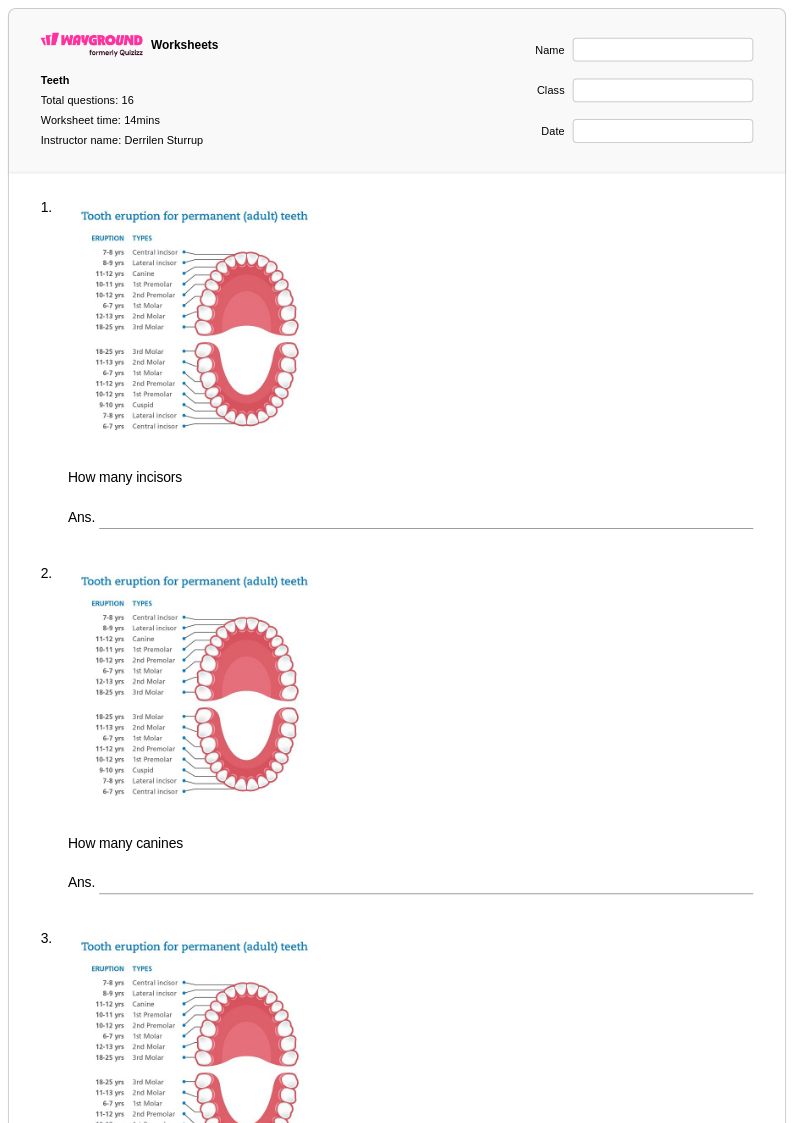
Start by introducing the four tooth types — incisors, canines, premolars, and molars — and connecting each to a specific function such as cutting, tearing, or grinding food. Using labeled diagrams of the human mouth helps students anchor each tooth type to its location before exploring its role. Comparing human dentition to that of other mammals (herbivores, carnivores, omnivores) deepens understanding by showing how tooth shape reflects diet, which makes the concept concrete and memorable.
What exercises help students practice identifying tooth structure and dental anatomy?
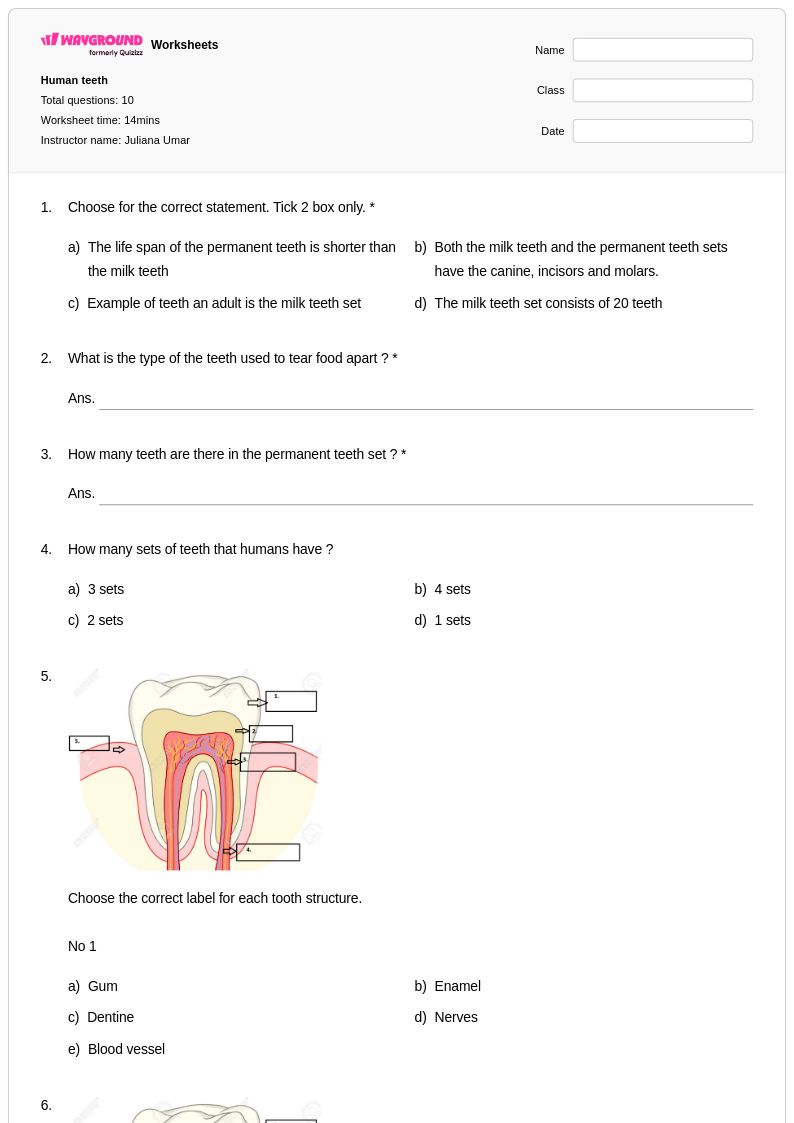
Labeling diagrams of a tooth's cross-section — identifying enamel, dentin, pulp, cementum, and root — gives students practice with anatomical vocabulary in context. Matching exercises that pair tooth types with their functions, and comparative charts showing dentition across mammal species, reinforce both identification and analytical thinking. These exercises work well as formative checks before moving into broader human body systems content.
What misconceptions do students commonly have about teeth?
A common misconception is that all teeth are the same and differ only in size. Students often don't recognize that each tooth type has a structurally distinct shape that directly determines its function. Another frequent error is conflating tooth development stages — students may not distinguish between primary (deciduous) and permanent teeth or understand why humans have two sets while many animals have one. Addressing these early prevents confusion when students encounter comparative biology topics.
How can I connect teeth and dental anatomy to broader biology concepts?
Teeth are an excellent entry point into comparative anatomy, evolutionary biology, and ecological adaptation. Teachers can use dentition patterns to illustrate how form follows function — a core principle in life science — by having students analyze how an animal's diet shapes its tooth structure over evolutionary time. This also connects naturally to food webs, digestion, and the skeletal system, making teeth a high-leverage topic for interdisciplinary science units.
How do I use Wayground's teeth worksheets in my classroom?
Wayground's teeth worksheets are available as printable PDFs for traditional classroom use and in digital formats for technology-integrated or remote learning environments, giving teachers flexibility in how they deploy the materials. Teachers can also host worksheets as a quiz directly on Wayground, and all worksheets include complete answer keys to support efficient grading and self-paced student review. For students who need accommodations, Wayground supports features such as read aloud, extended time, and reduced answer choices, which can be assigned individually without affecting the experience of other students.
How do I differentiate teeth worksheets for students at different learning levels?
For foundational learners, focus on basic identification tasks — labeling tooth types on a diagram or matching tooth names to simple function descriptions. More advanced students can engage with analytical tasks such as comparing mammalian dentition across species or explaining the biomechanical relationship between tooth shape and chewing behavior. On Wayground, teachers can also apply student-level accommodations like reduced answer choices or read aloud to lower cognitive load for students who need additional support, without changing the experience for the rest of the class.