Free Printable Plant Parts and Their Functions Worksheets for Kindergarten
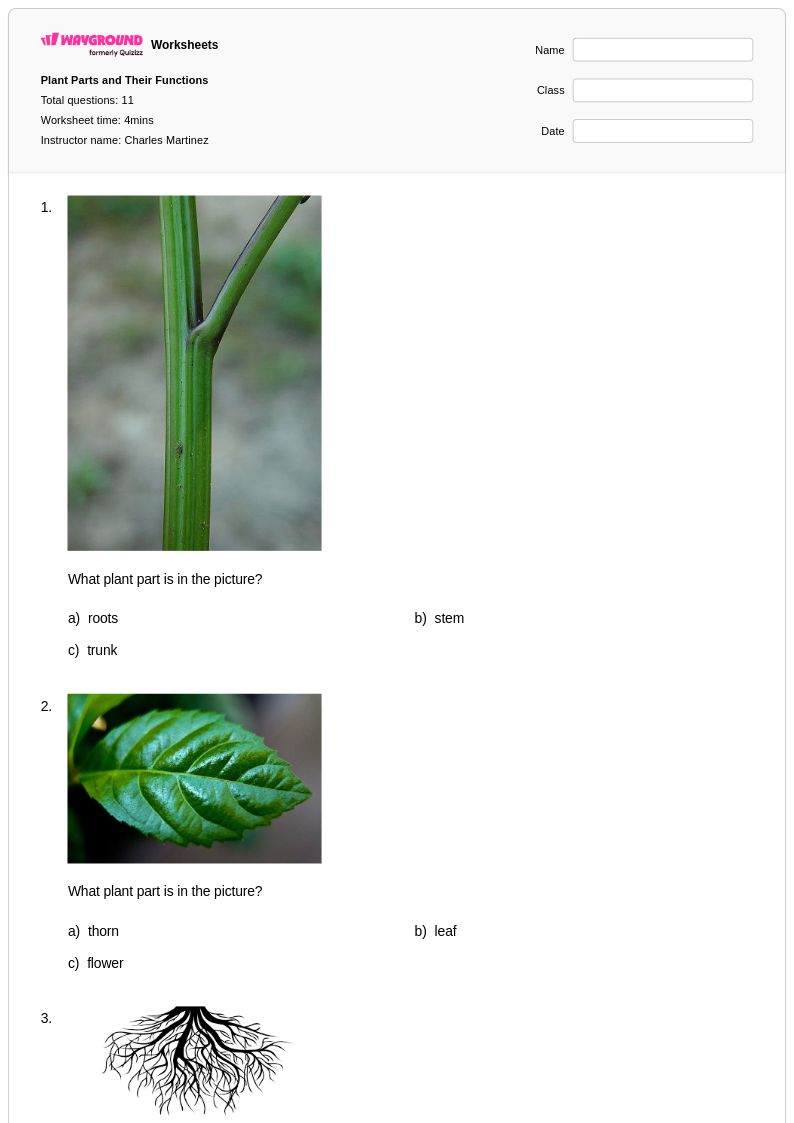
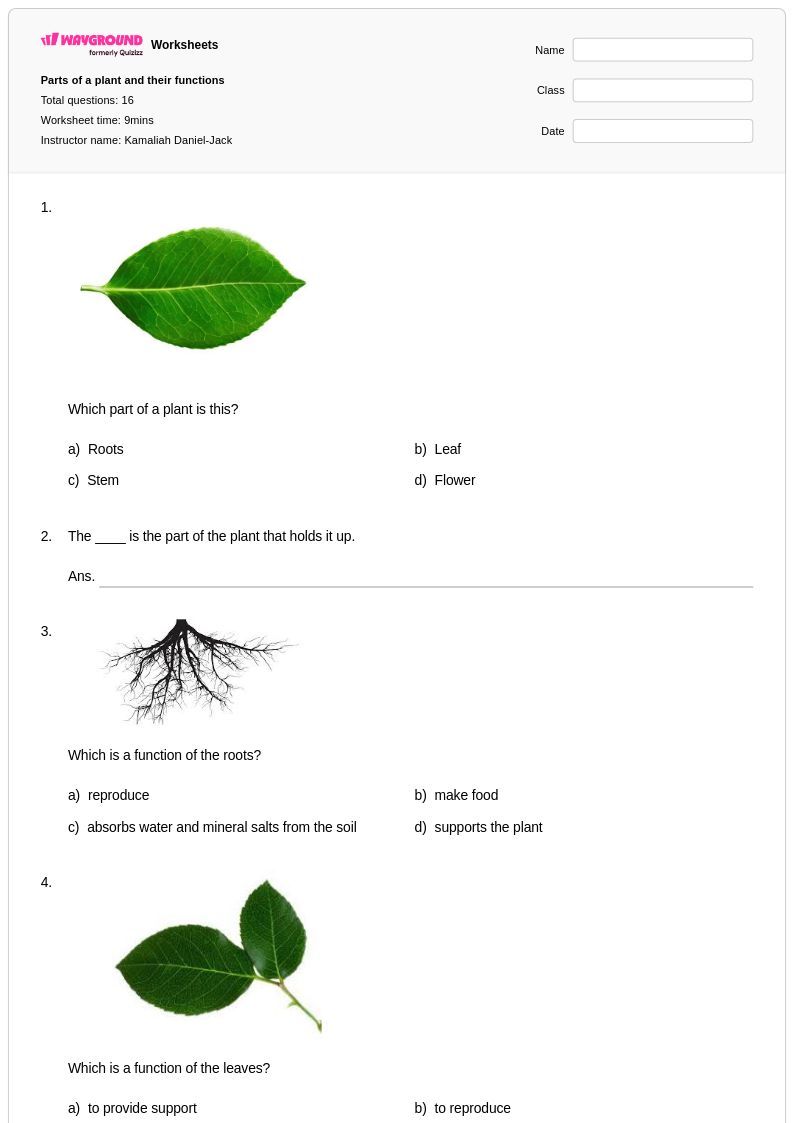
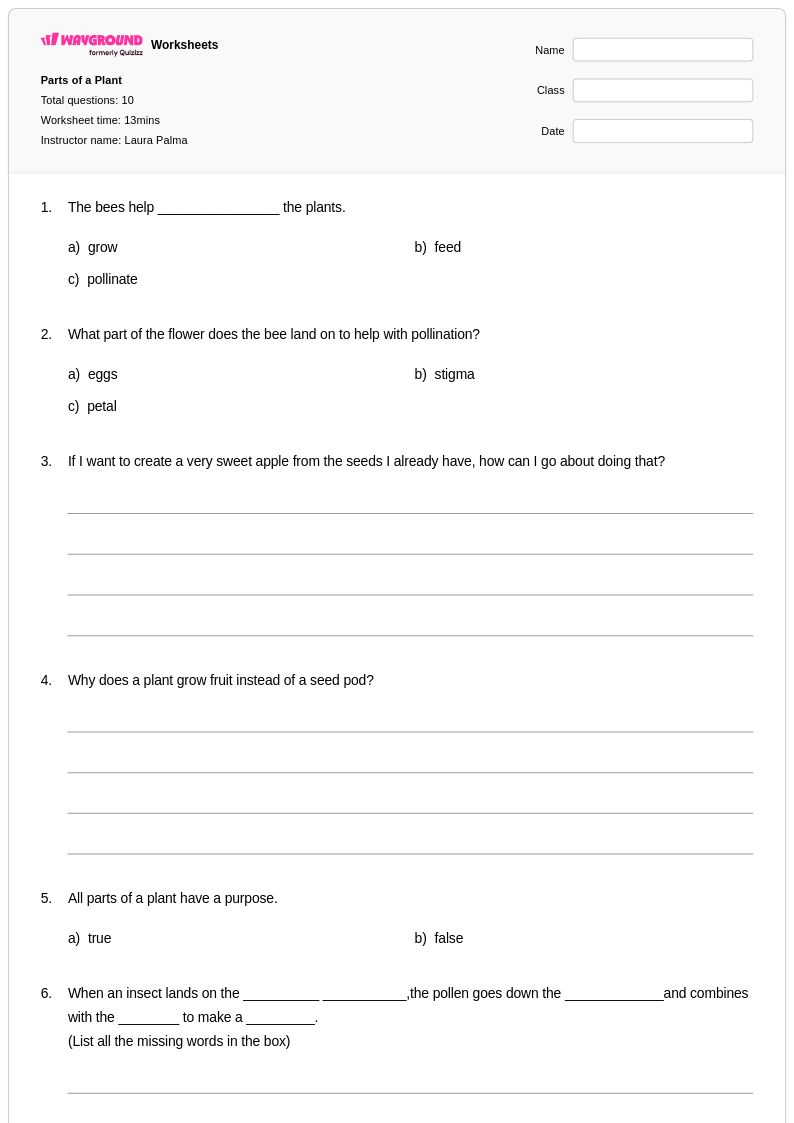
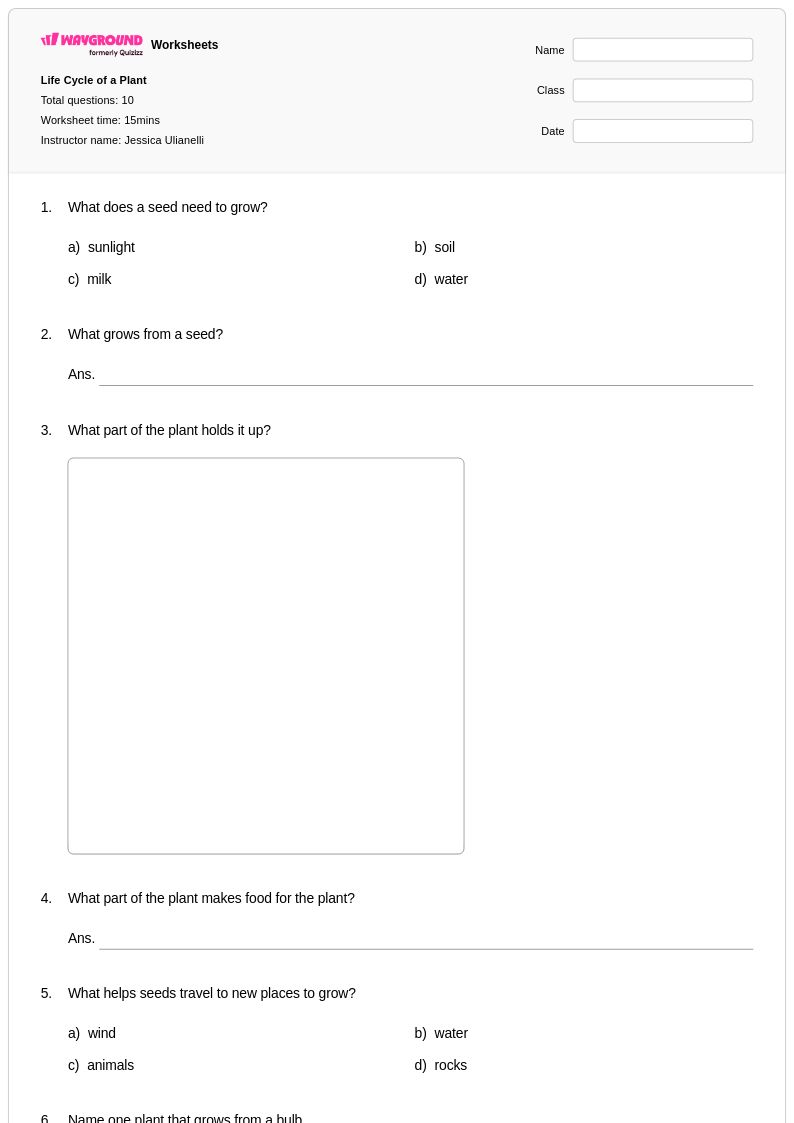
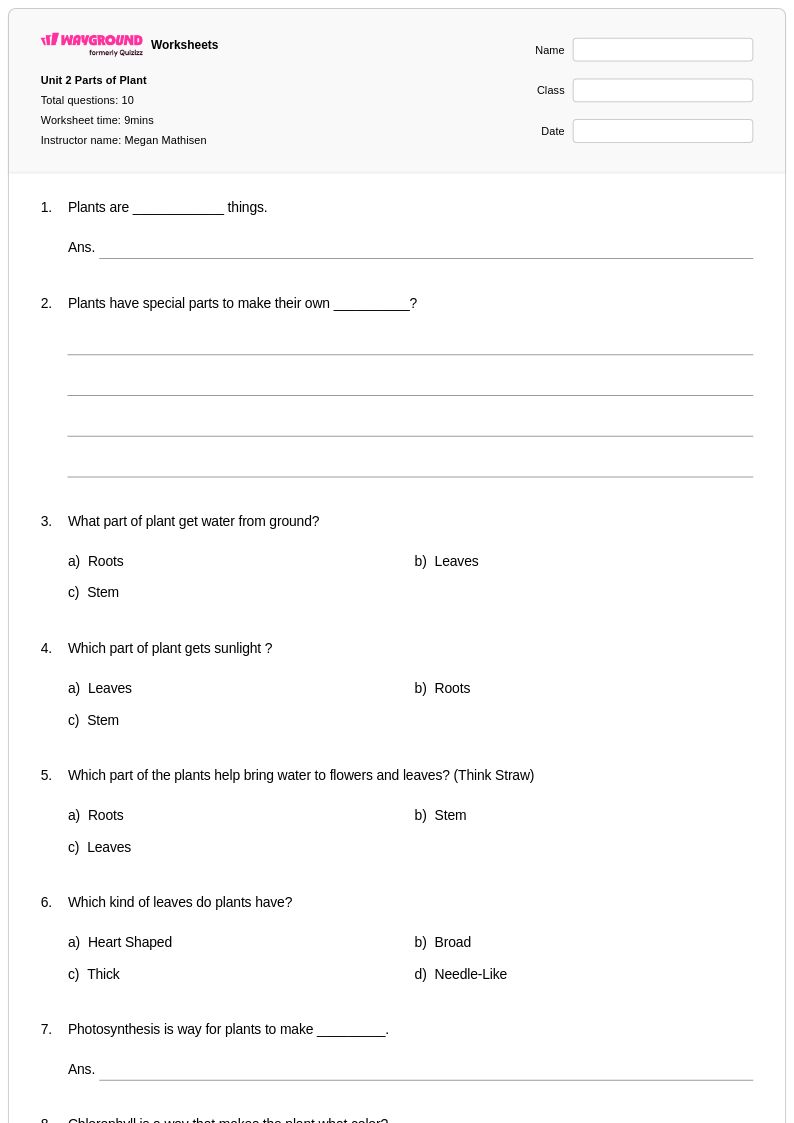
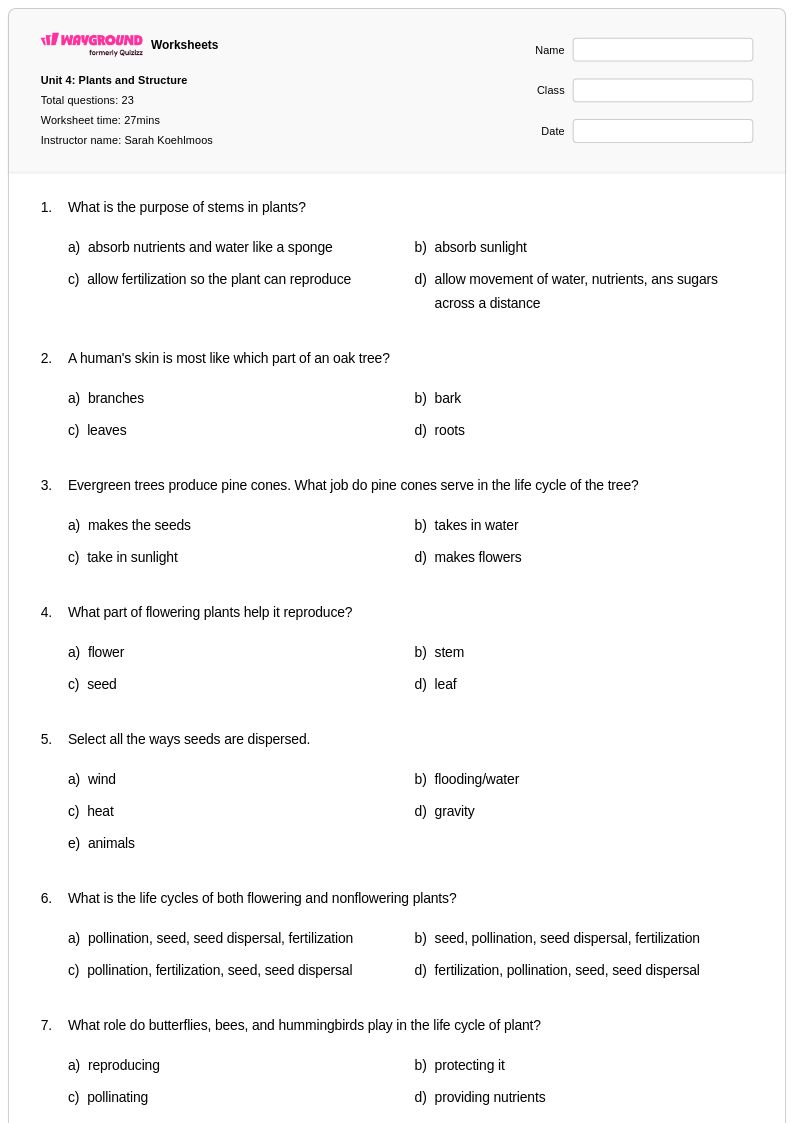
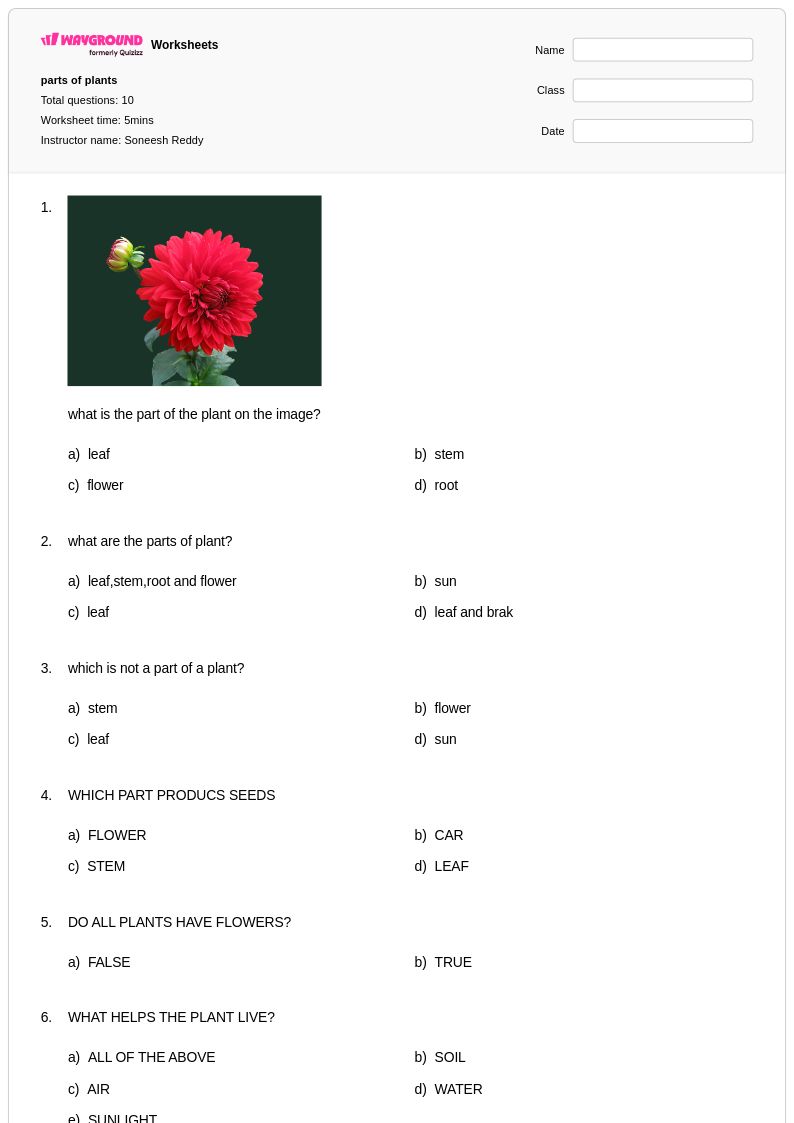
Explore free kindergarten plant parts and their functions worksheets and printables that help young students identify stems, leaves, roots, and flowers while learning how each part helps plants grow and survive.
Explore printable Plant Parts and Their Functions worksheets for Kindergarten
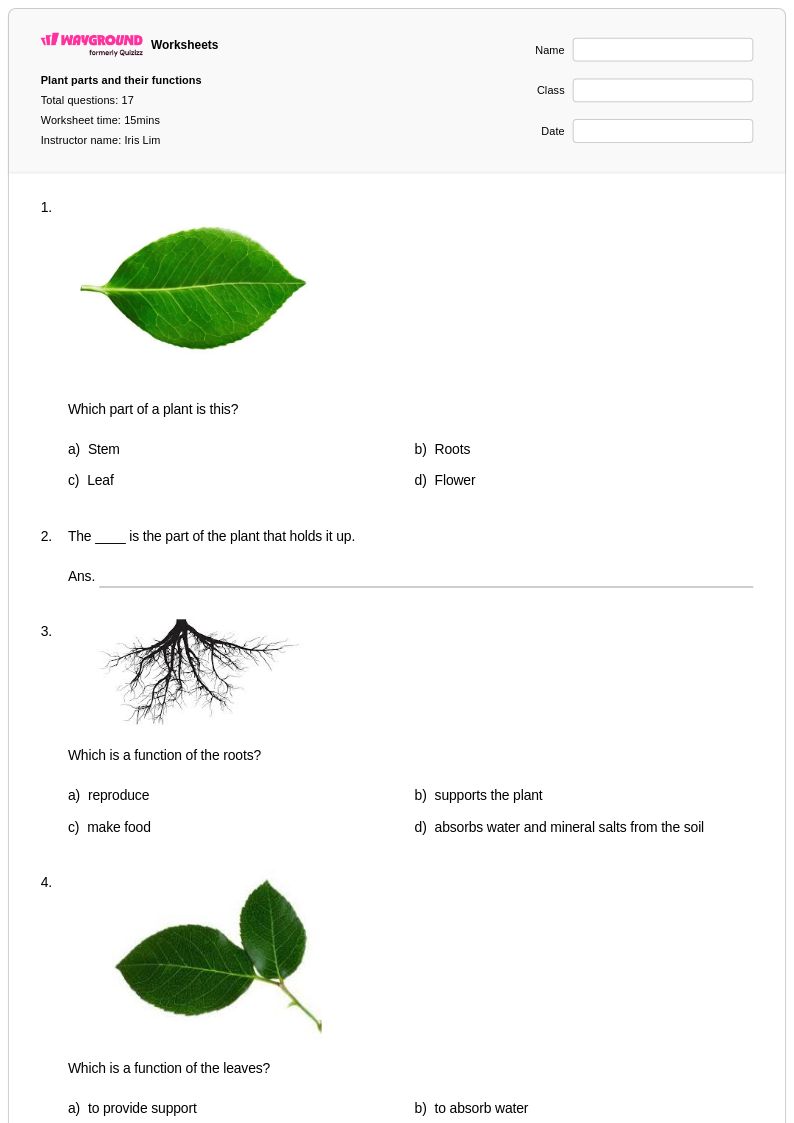
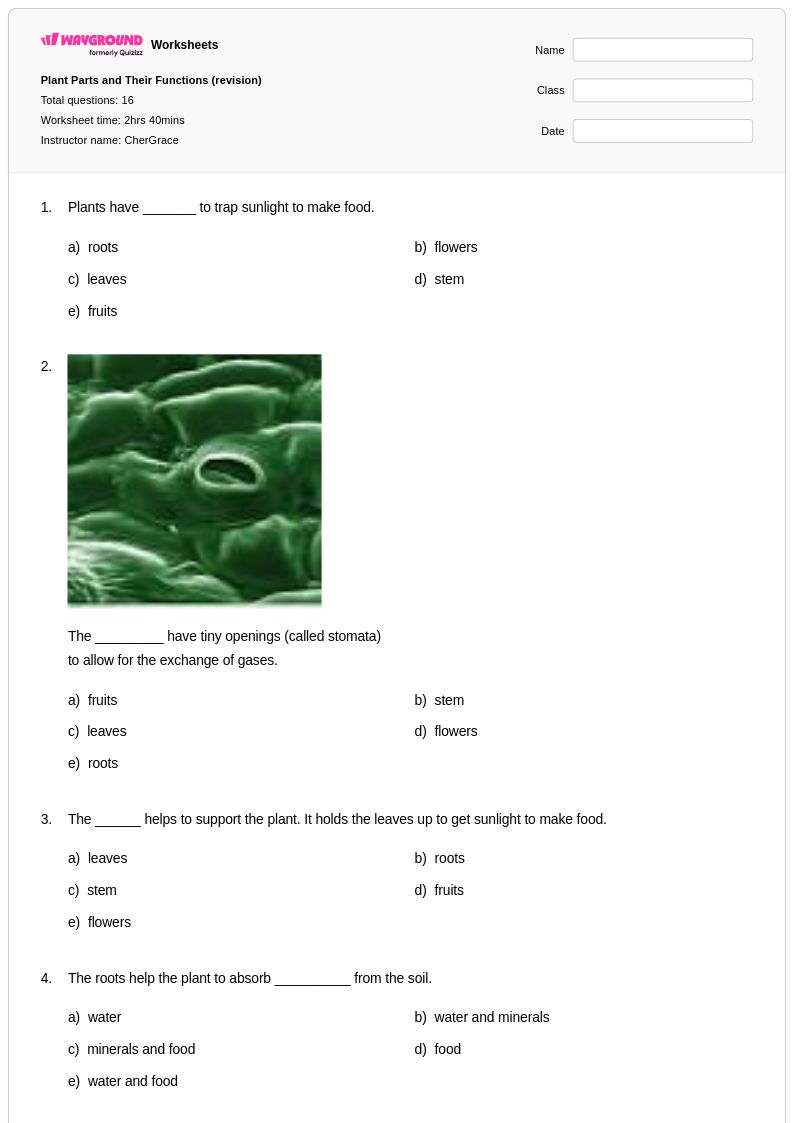
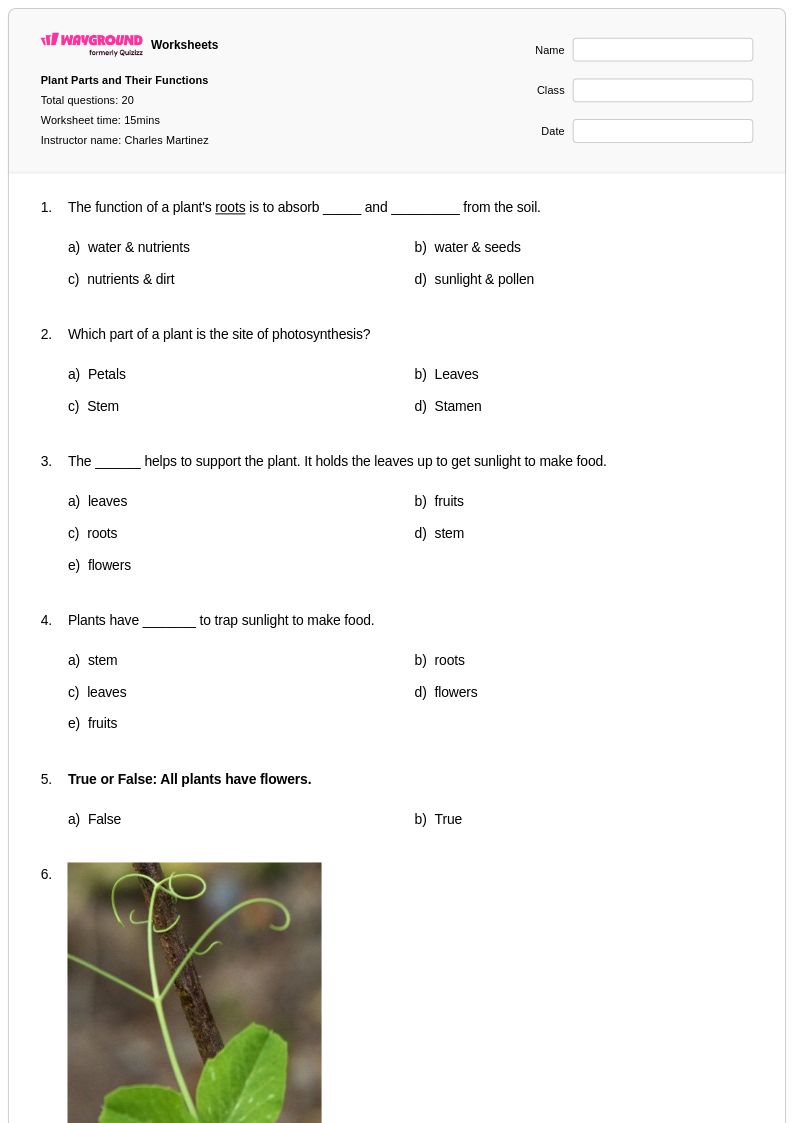
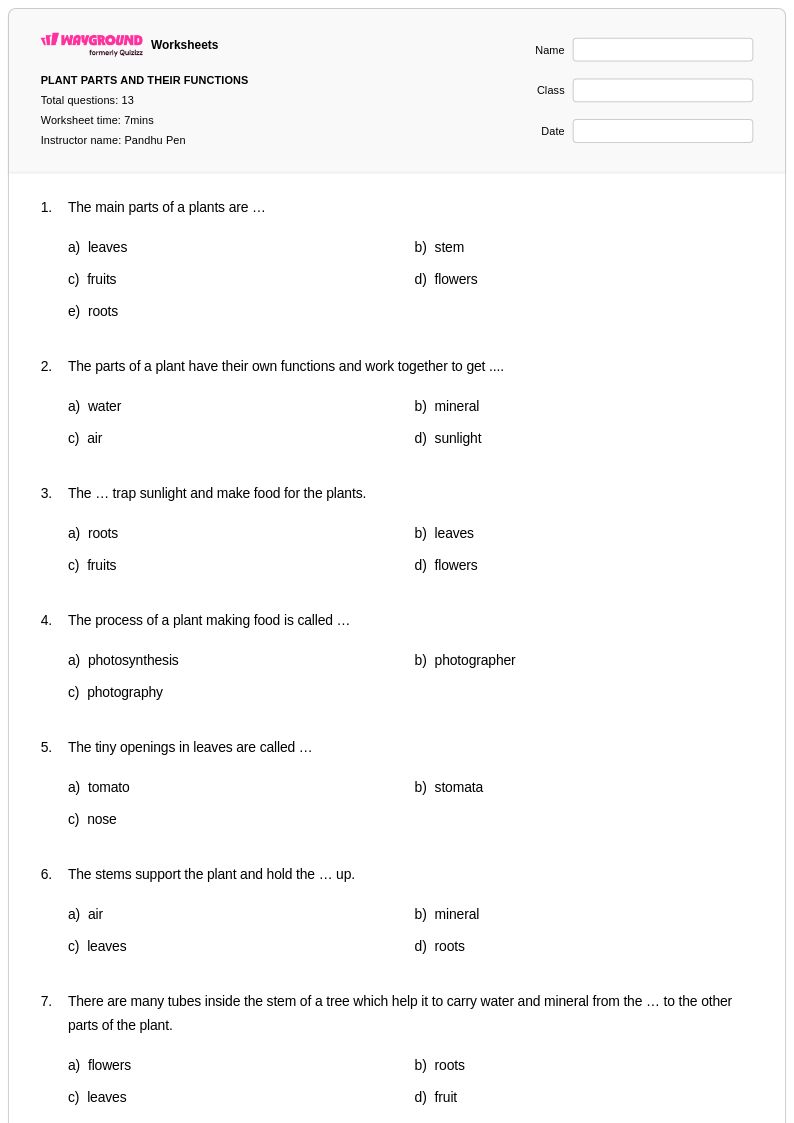
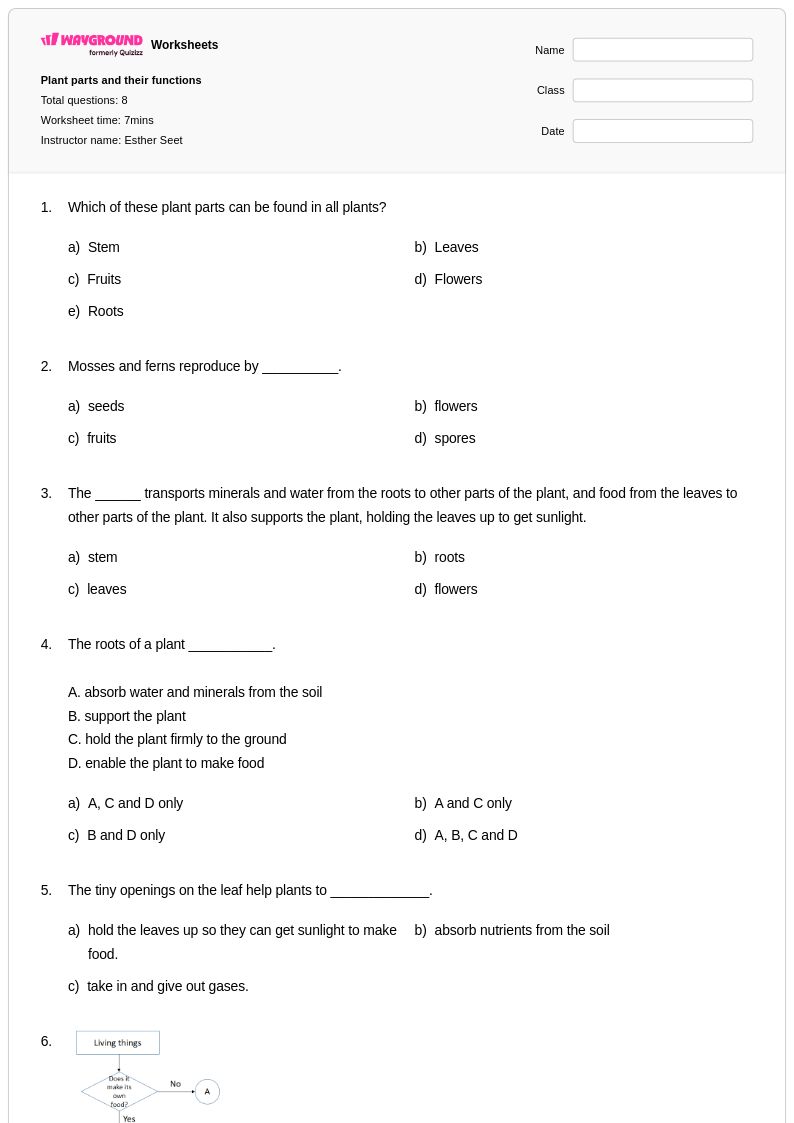
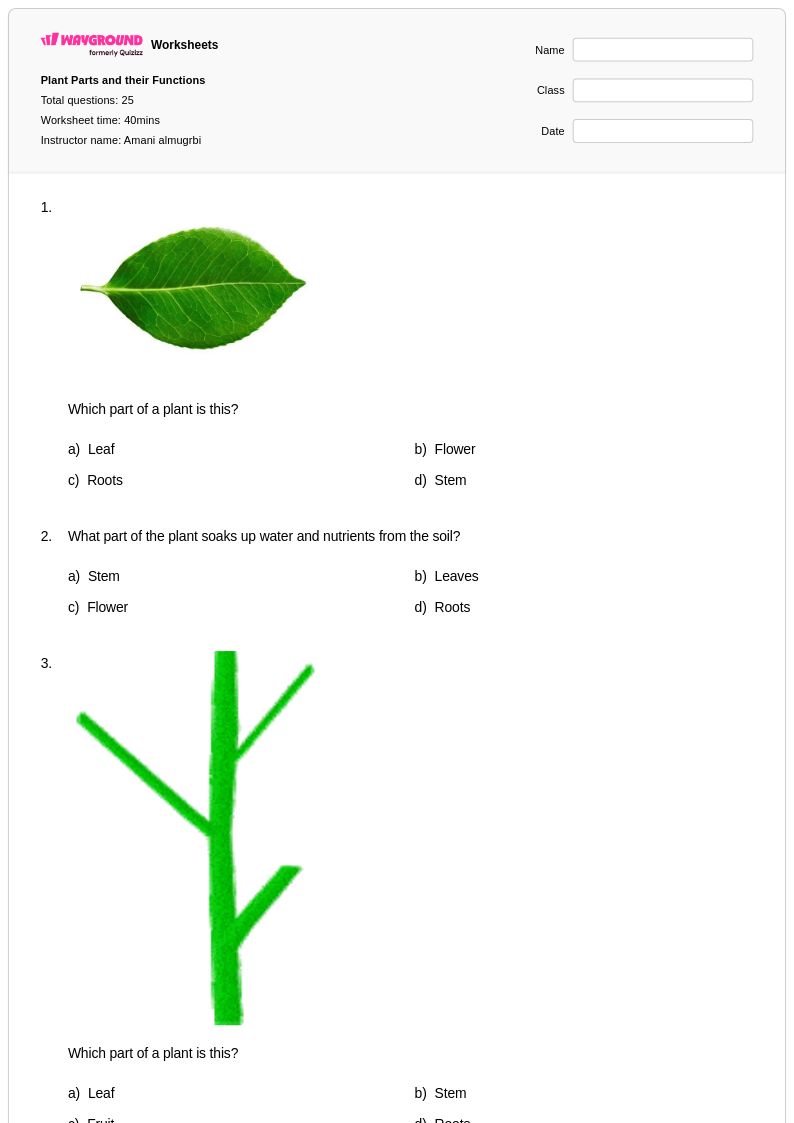
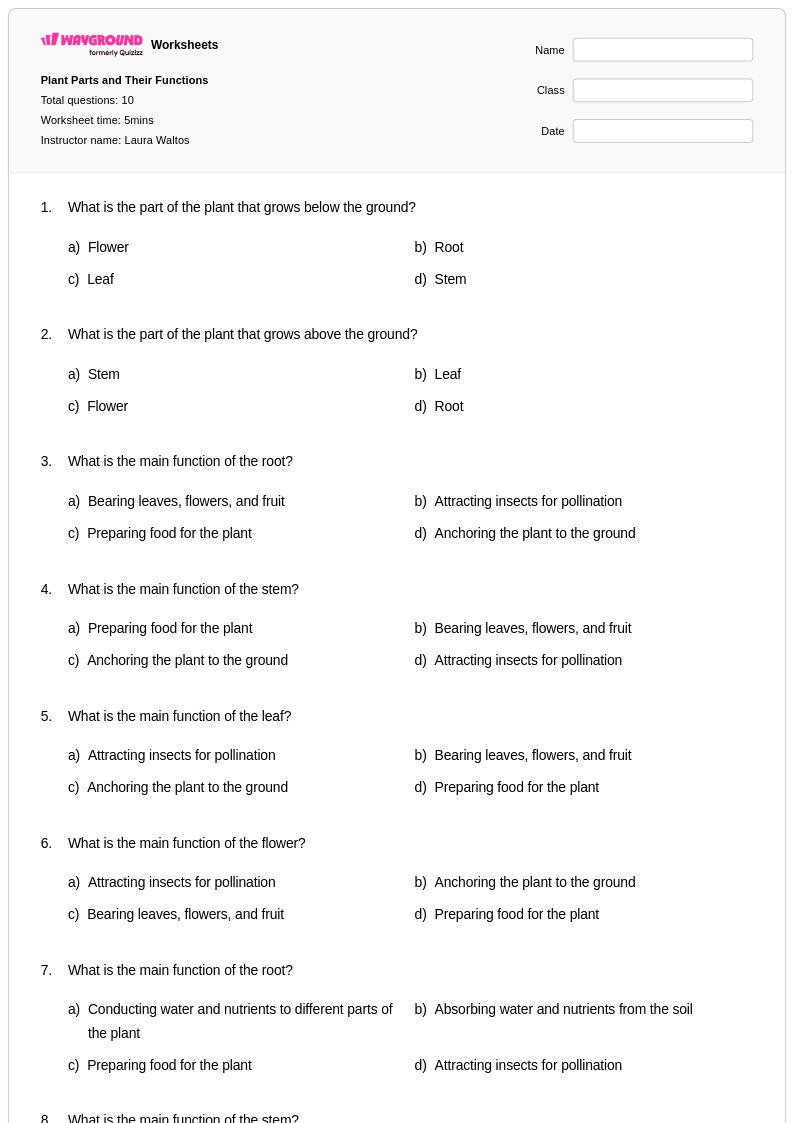
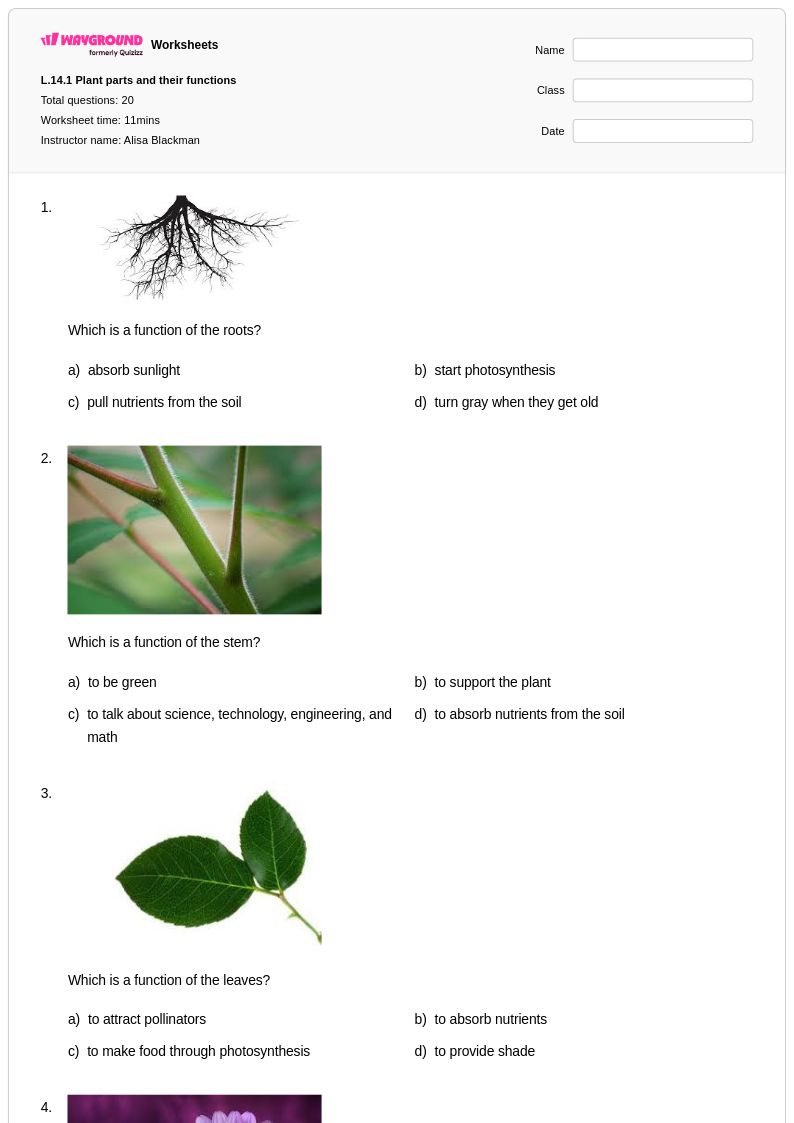
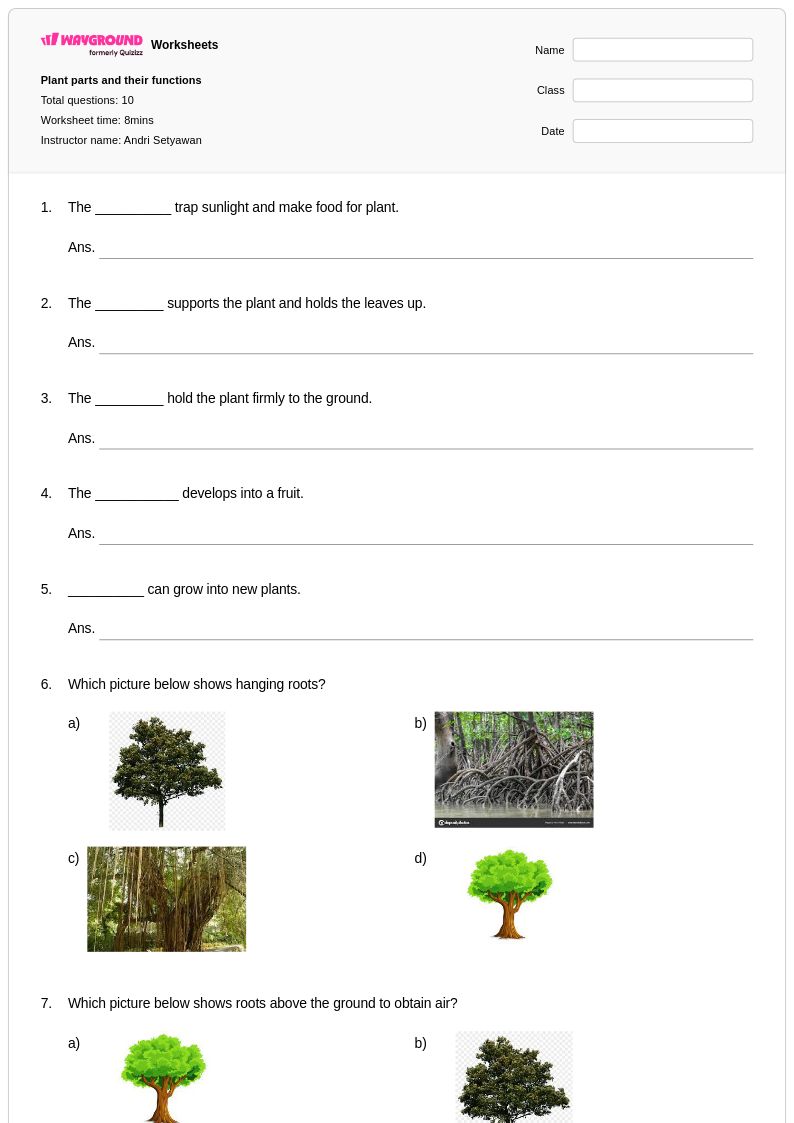
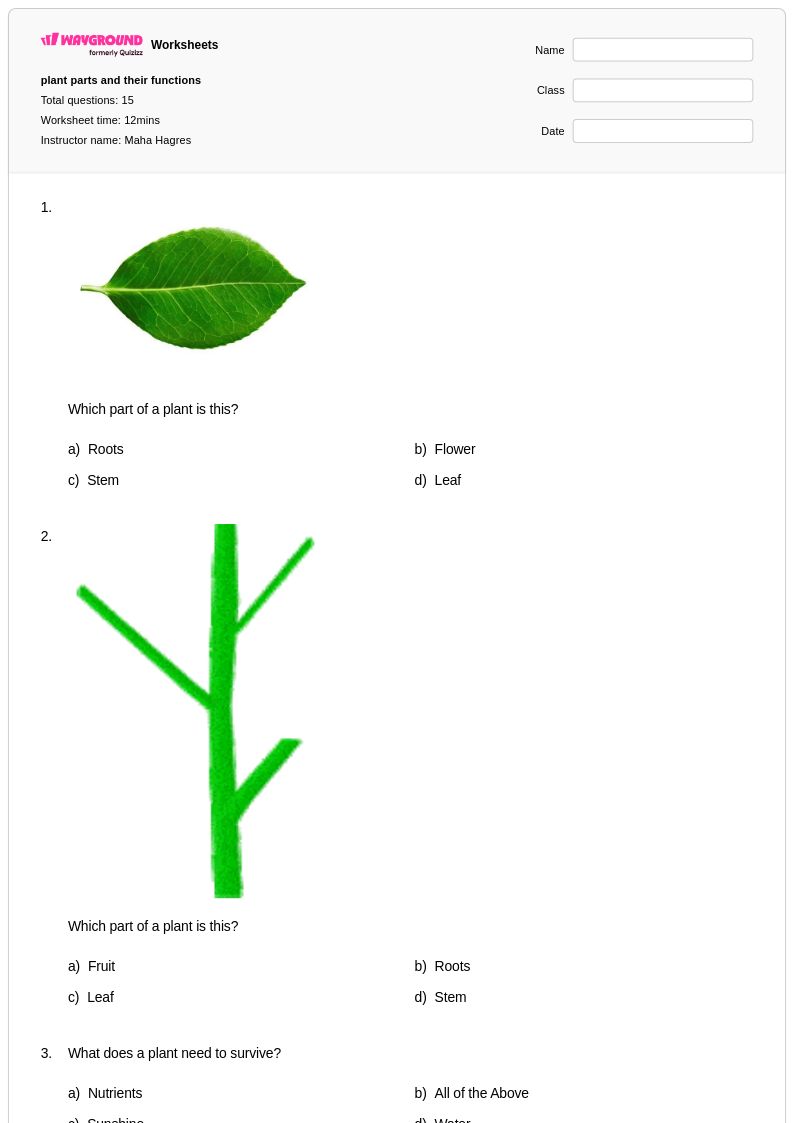
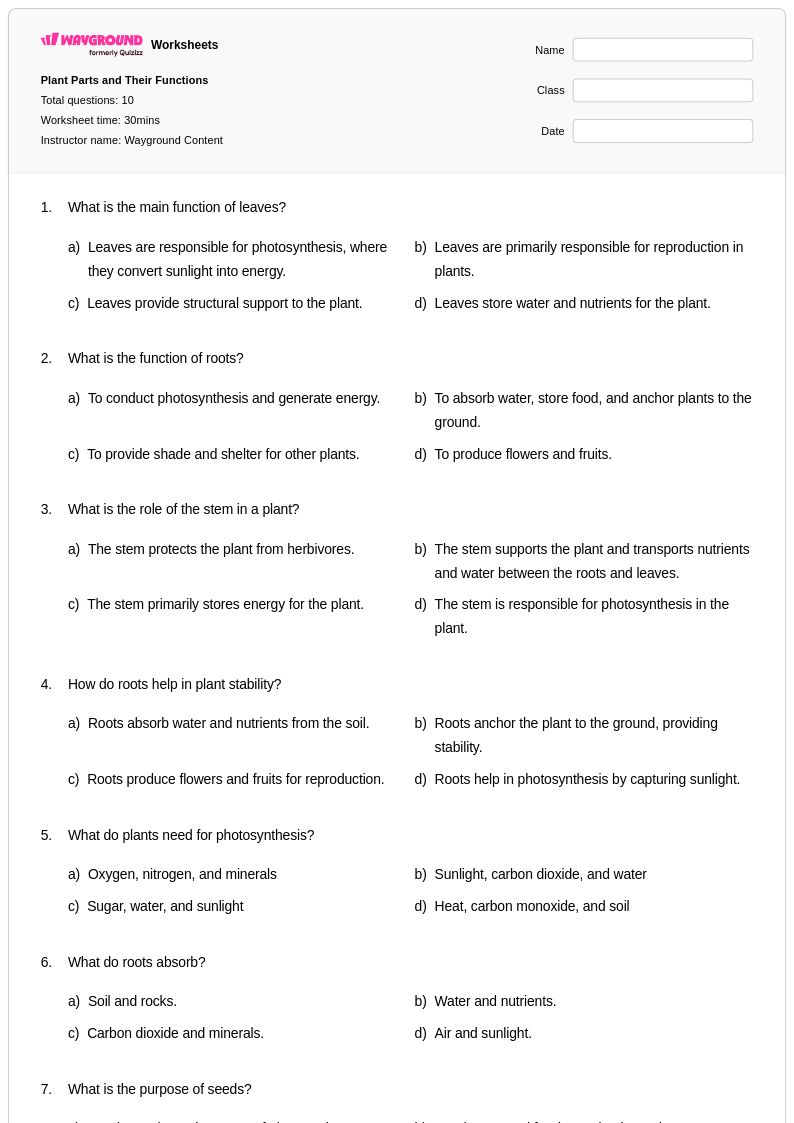
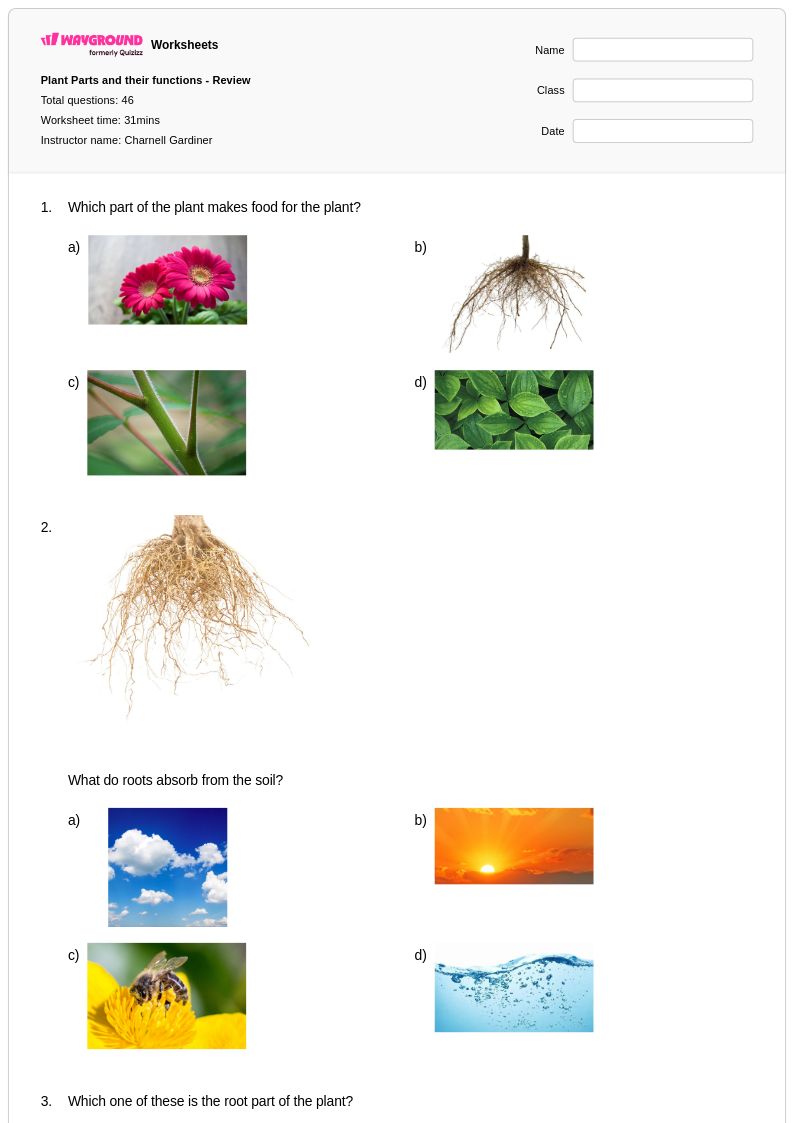
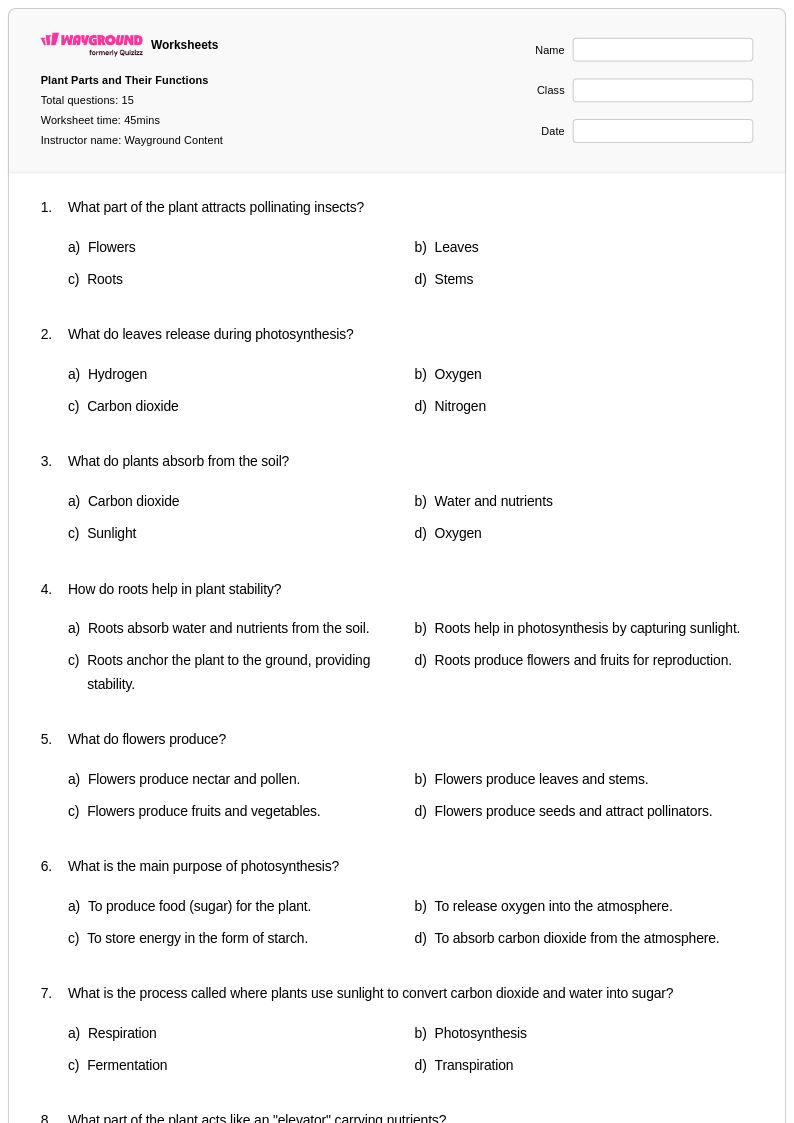
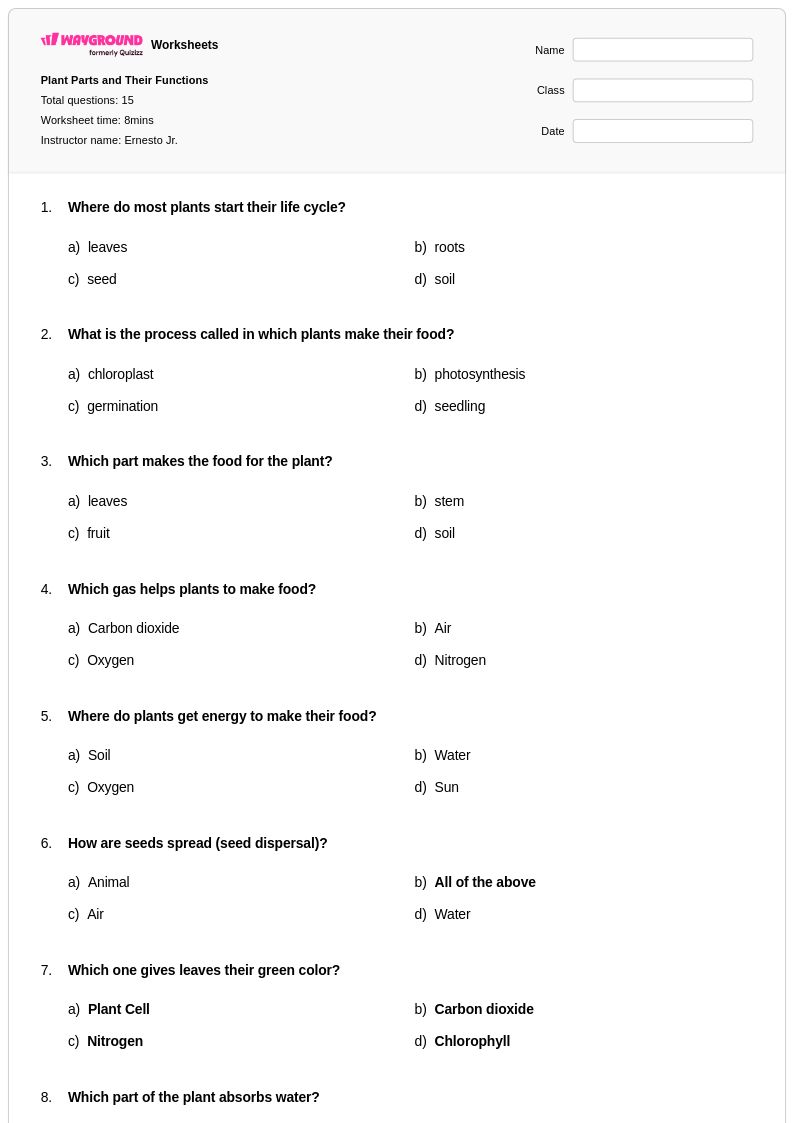
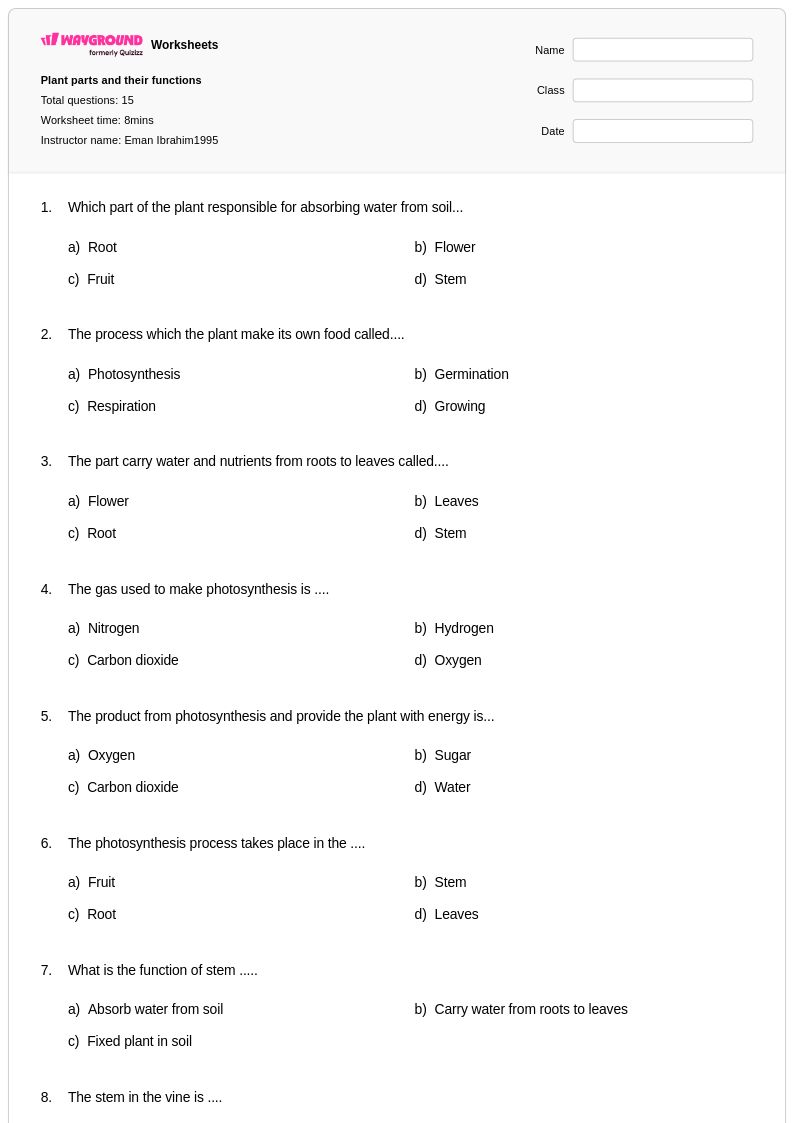
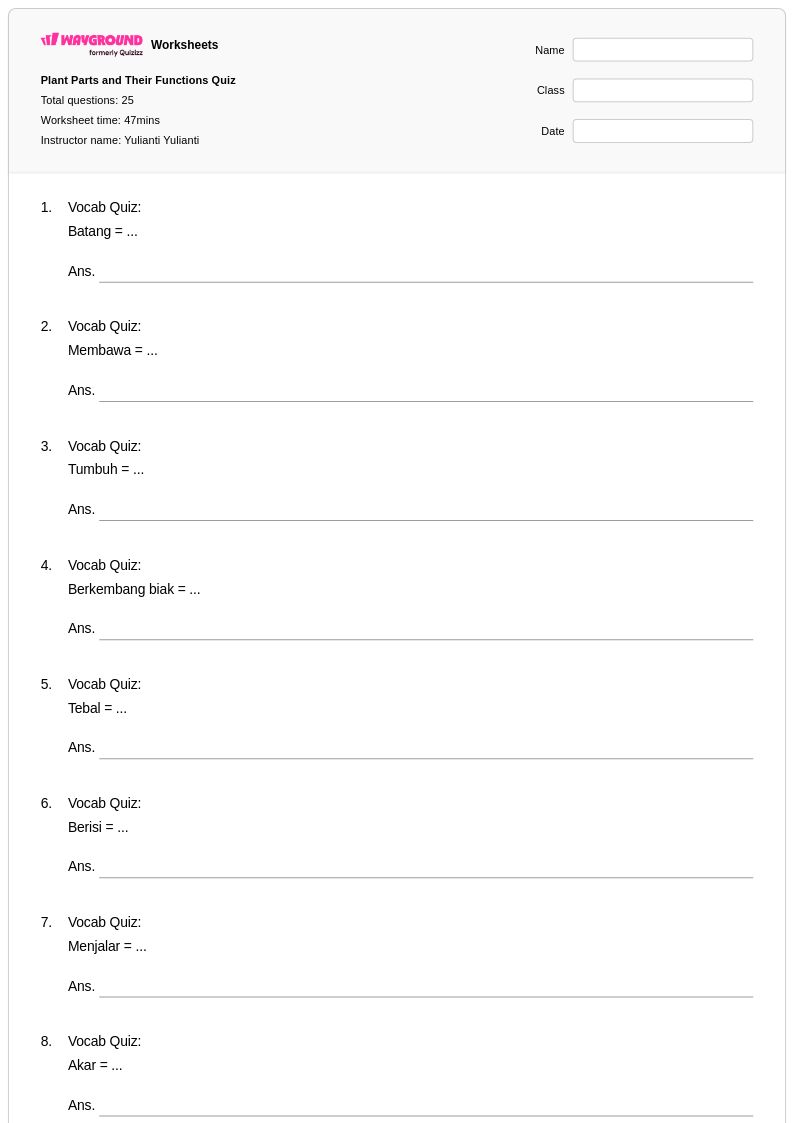
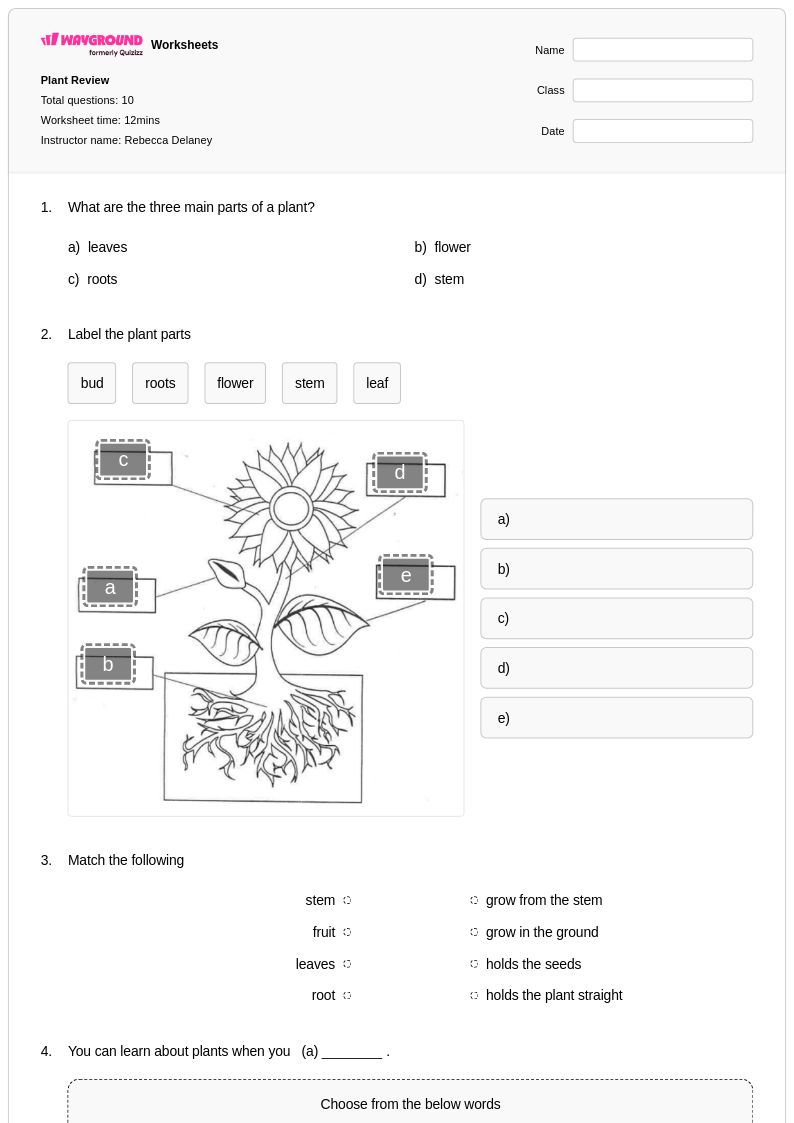
Plant parts and their functions worksheets for kindergarten students provide an essential foundation for young learners beginning their exploration of botanical science. These engaging educational resources help children identify and understand the basic components of plants, including roots, stems, leaves, and flowers, while discovering how each part contributes to plant survival and growth. The worksheets strengthen observation skills, vocabulary development, and scientific thinking as students learn to recognize different plant structures in their environment. Available as free printables and pdf downloads, these practice problems often include visual exercises like labeling diagrams, matching activities, and simple classification tasks that make learning accessible for early elementary students. Complete answer keys accompany these resources, enabling teachers and parents to provide immediate feedback and support student learning progression.
Wayground, formerly Quizizz, empowers educators with millions of teacher-created plant parts and functions worksheets specifically designed for kindergarten-level instruction. The platform's comprehensive search and filtering capabilities allow teachers to quickly locate age-appropriate materials that align with early childhood science standards and learning objectives. These differentiation tools enable instructors to customize worksheet content based on individual student needs, supporting both remediation for struggling learners and enrichment opportunities for advanced students. Available in both printable and digital formats including downloadable pdf versions, these resources facilitate flexible lesson planning whether for in-person instruction, remote learning, or homework assignments. Teachers can seamlessly integrate these worksheets into their botanical units for skill practice, formative assessment, and hands-on learning experiences that foster scientific curiosity about the natural world.
FAQs
How do I teach plant parts and their functions to elementary students?
Start by grounding students in direct observation — bring in real plants or clear photographs and have students identify visible structures before naming them. Introduce each part systematically: roots anchor the plant and absorb water and nutrients, stems transport water and nutrients between roots and leaves, leaves produce food through photosynthesis, and flowers enable reproduction. Labeling diagrams after hands-on observation reinforces vocabulary retention and helps students connect structure to function rather than just memorizing terms.
What exercises help students practice identifying plant parts and their functions?
Labeling diagrams is one of the most effective practice formats for this topic because it requires students to apply vocabulary in a visual context rather than recalling definitions in isolation. Matching exercises that pair structural features with their functions — such as connecting stomata to gas exchange or root hairs to water absorption — push students toward deeper conceptual understanding. Comparative analysis activities, where students examine two different plant types and identify structural similarities and differences, extend practice into higher-order thinking.
What mistakes do students commonly make when learning about plant parts and their functions?
A common misconception is that roots only anchor the plant, with students overlooking their critical role in water and nutrient absorption. Students also frequently confuse the roles of leaves and stems, assuming stems produce food when it is the leaves that carry out photosynthesis. Another recurring error is treating flowers as purely decorative rather than understanding their reproductive function. Targeted practice problems that explicitly link each structure to its function help correct these misconceptions before they solidify.
How do I differentiate plant parts and their functions worksheets for students at different levels?
For students who need additional support, simplified diagrams with fewer labeled parts and reduced answer choices lower cognitive load without removing the core learning objective. Advanced students benefit from comparative analysis tasks or open-ended questions that ask them to explain why a particular structure is suited to its function, pushing beyond identification toward reasoning. On Wayground, teachers can apply individual accommodations such as read aloud support, extended time, and reduced answer choices to specific students, while the rest of the class receives standard settings.
How do I use Wayground's plant parts and their functions worksheets in my classroom?
Wayground's plant parts and their functions worksheets are available as both printable PDFs and in digital formats, making them easy to deploy whether you are running a traditional paper-based lesson or a device-integrated classroom. Teachers can assign them as guided practice during instruction, independent work, or homework, and can also host them as a live quiz directly on Wayground. Each worksheet includes a complete answer key, so grading and follow-up discussion can move quickly without additional preparation.