Free Printable Plant Anatomy Worksheets for Class 4
Explore Class 4 plant anatomy worksheets and printables that help students learn about plant parts, structures, and functions through engaging practice problems with complete answer keys available as free PDF downloads.
Explore printable Plant Anatomy worksheets for Class 4
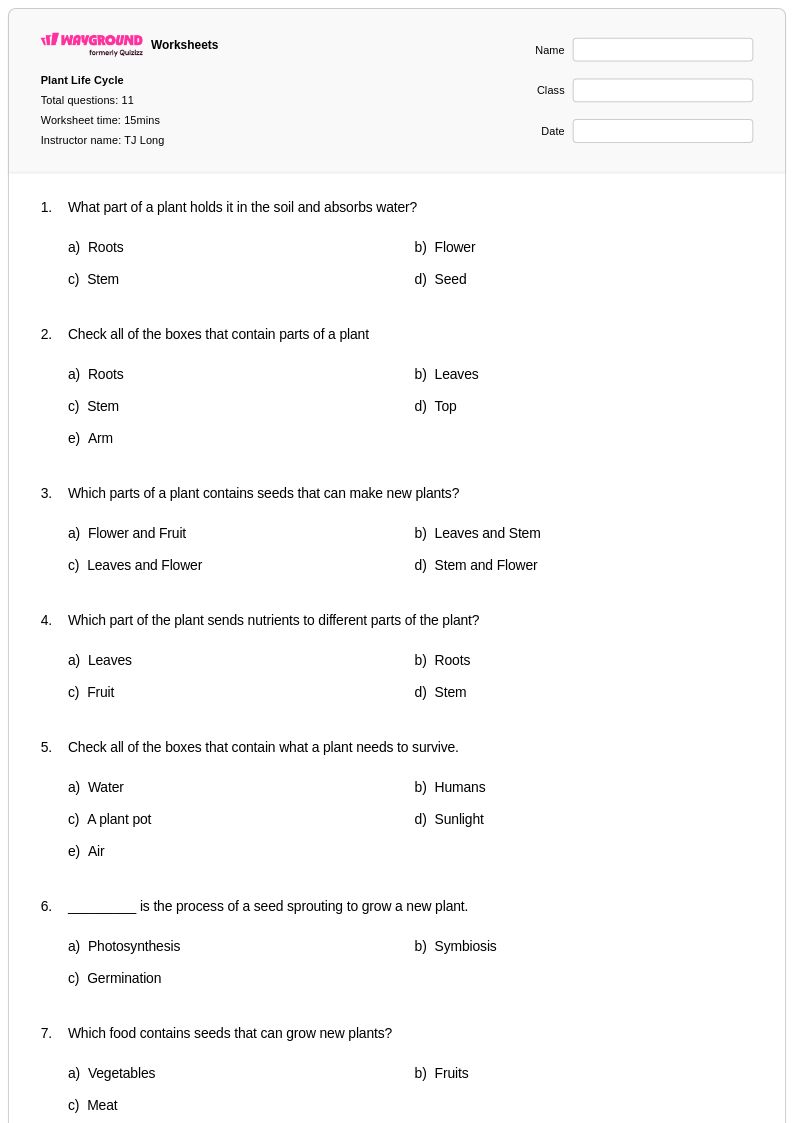
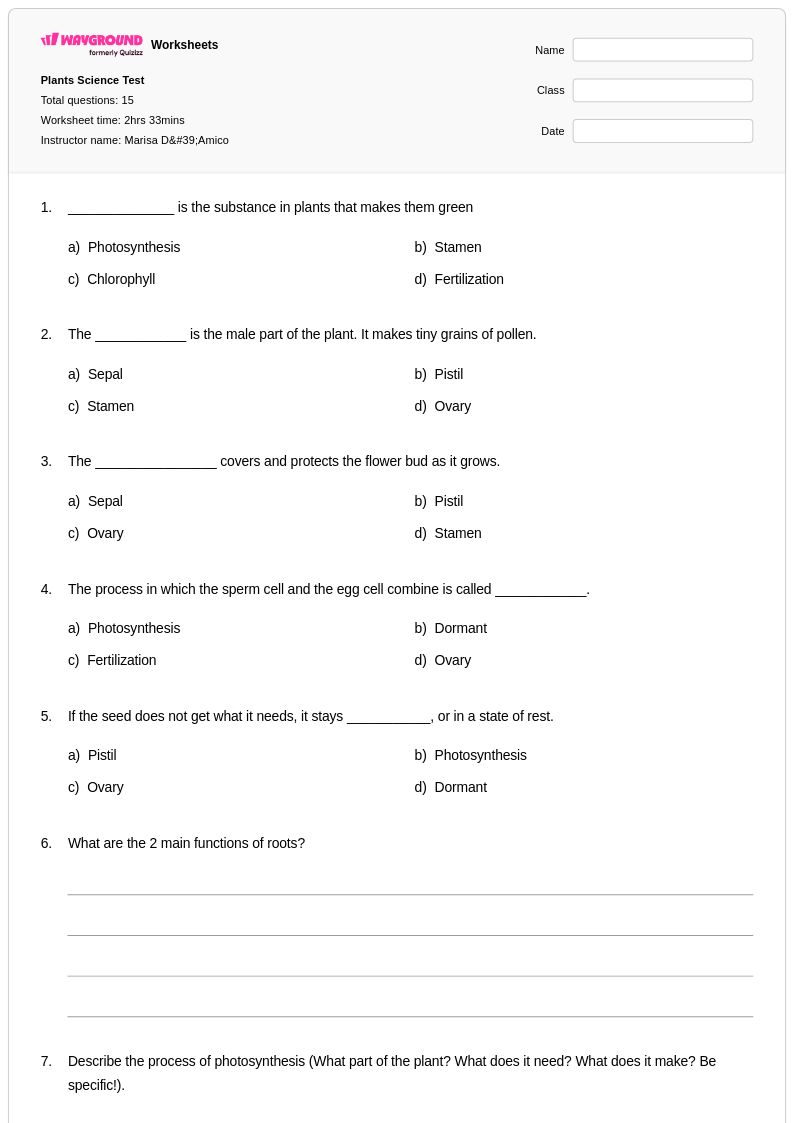
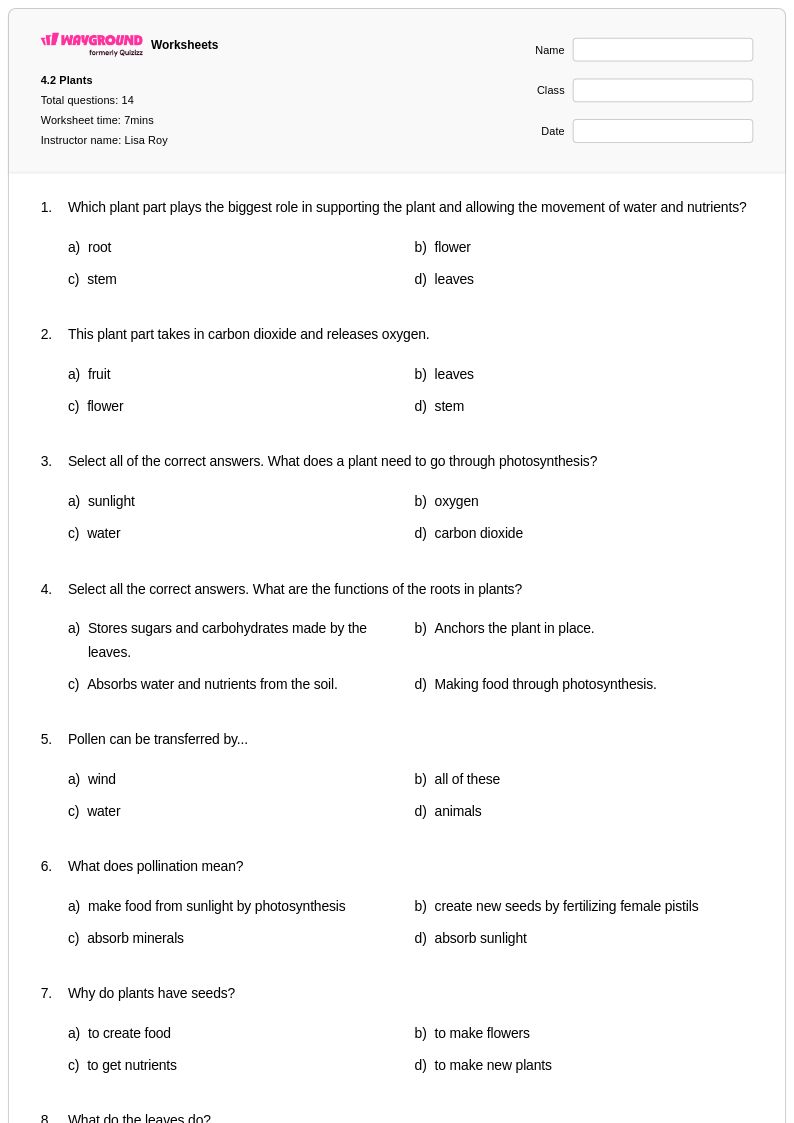
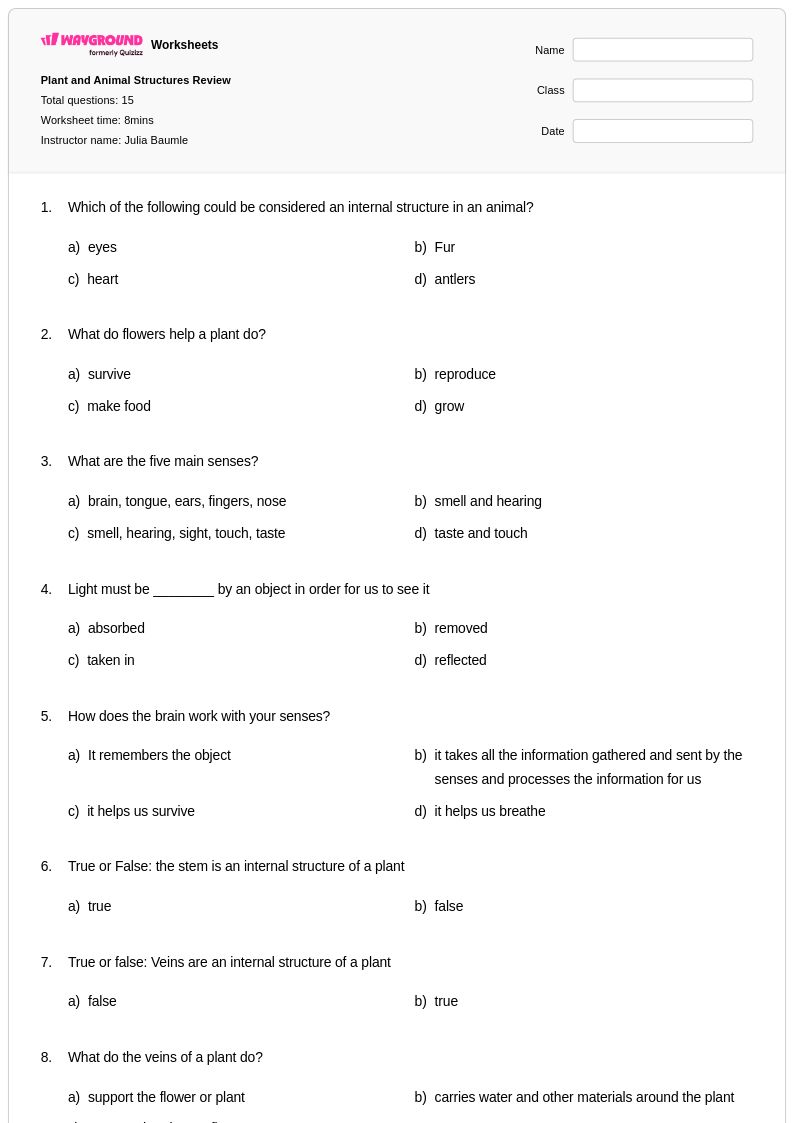
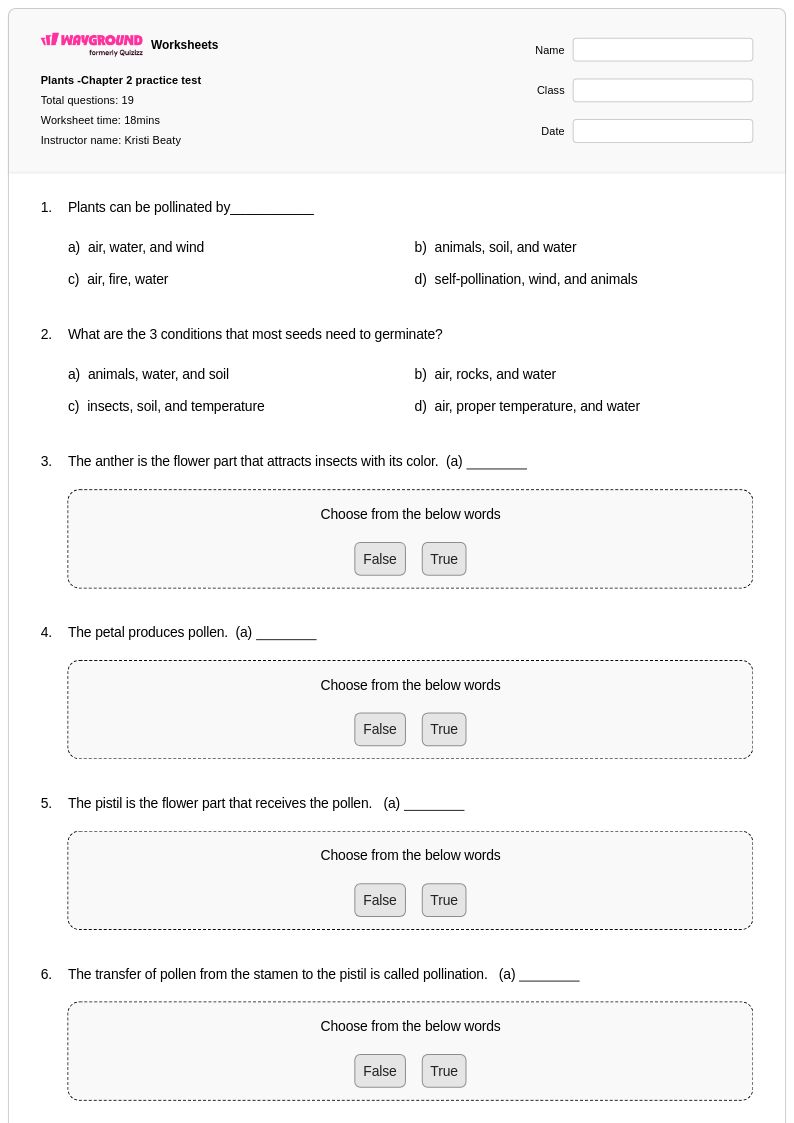
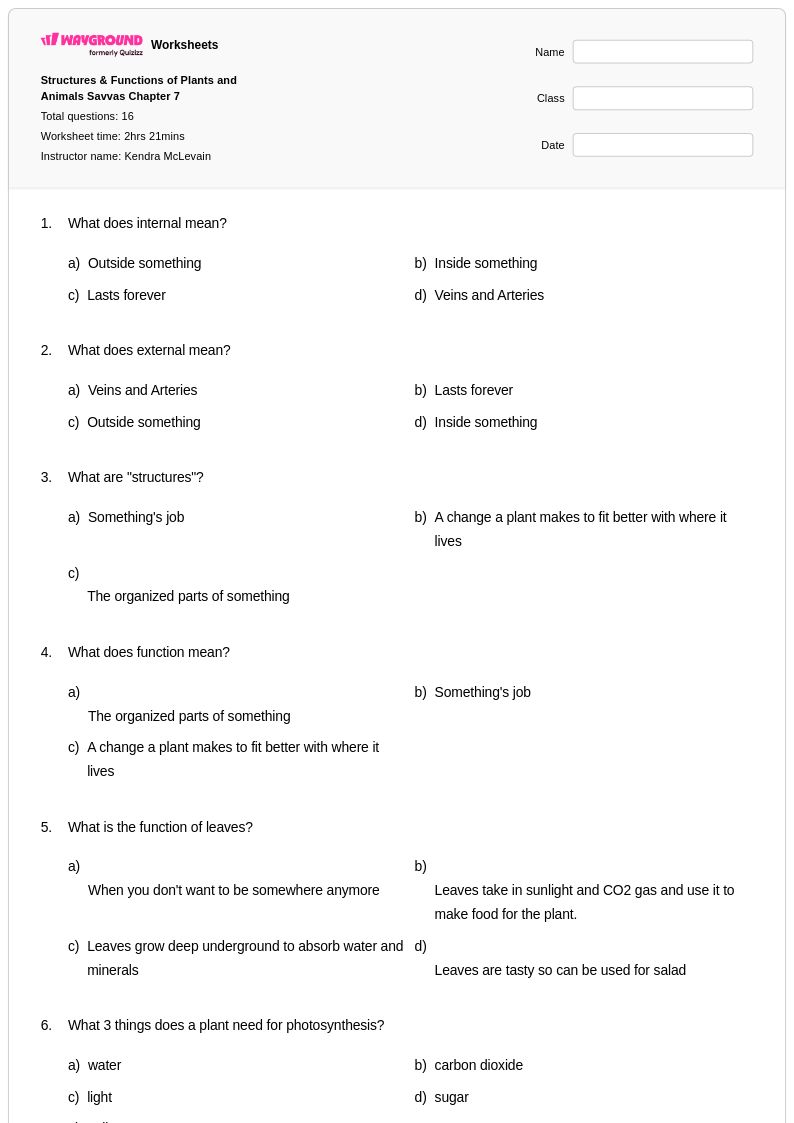
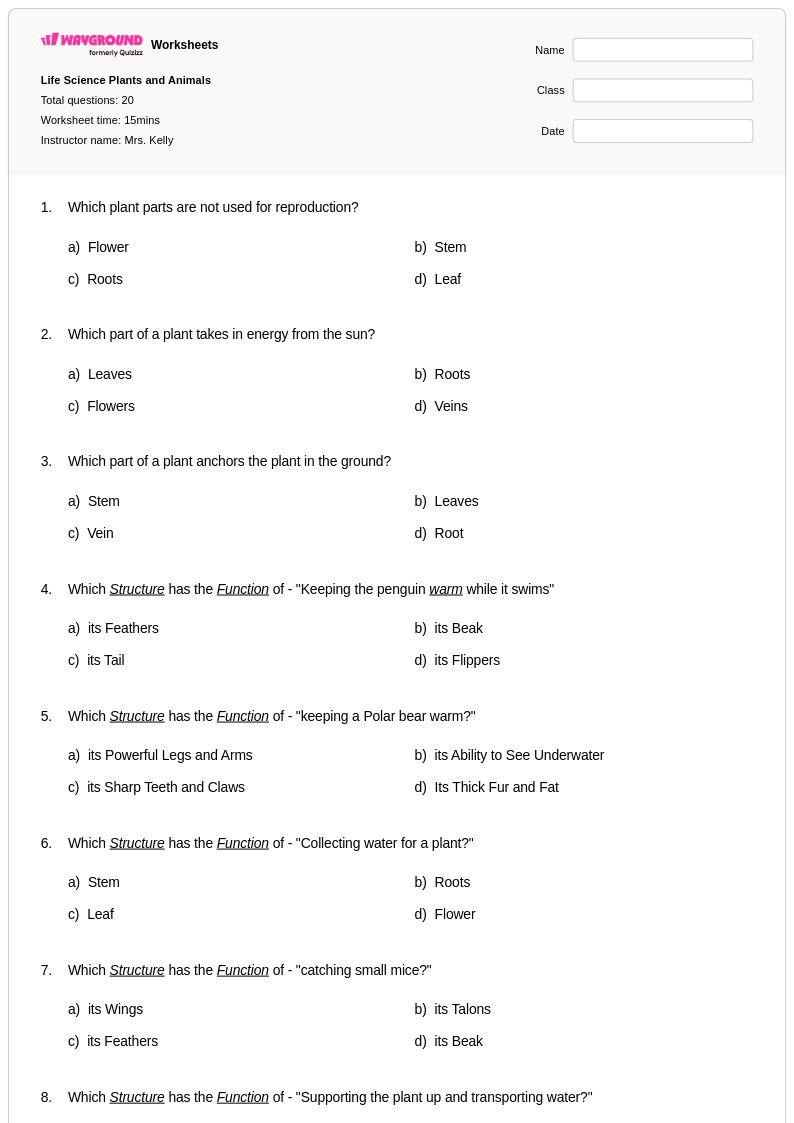
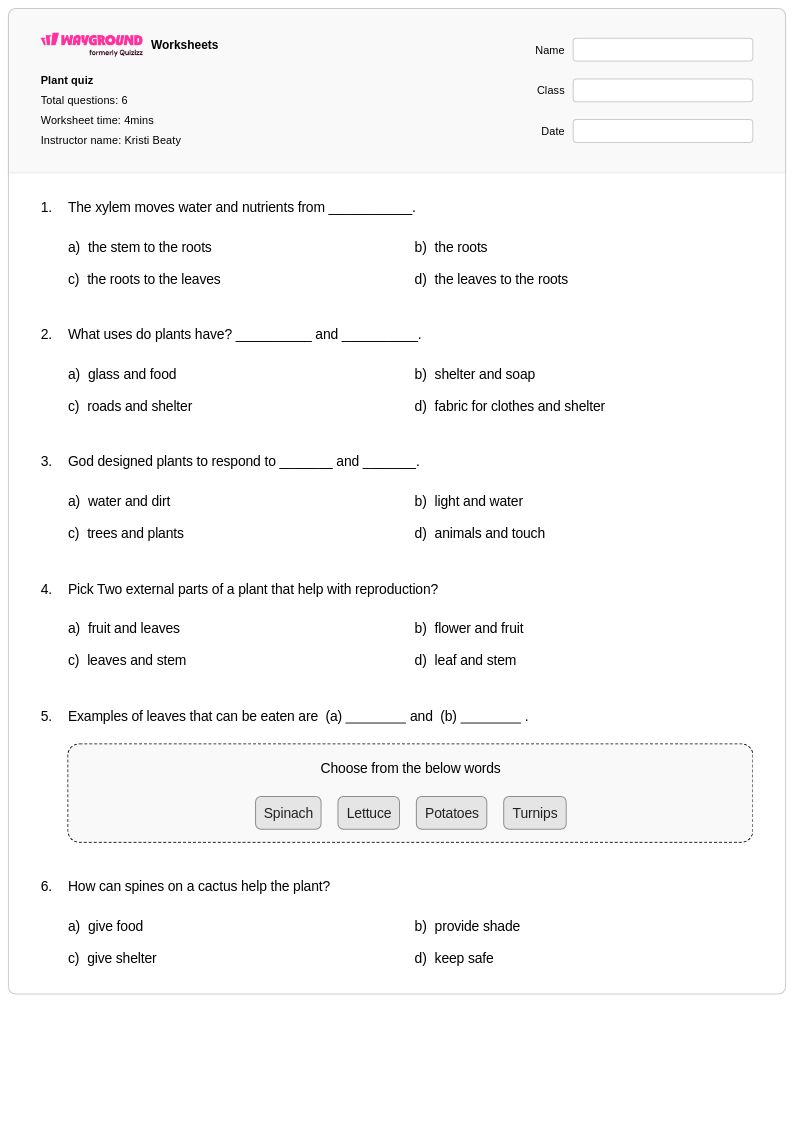
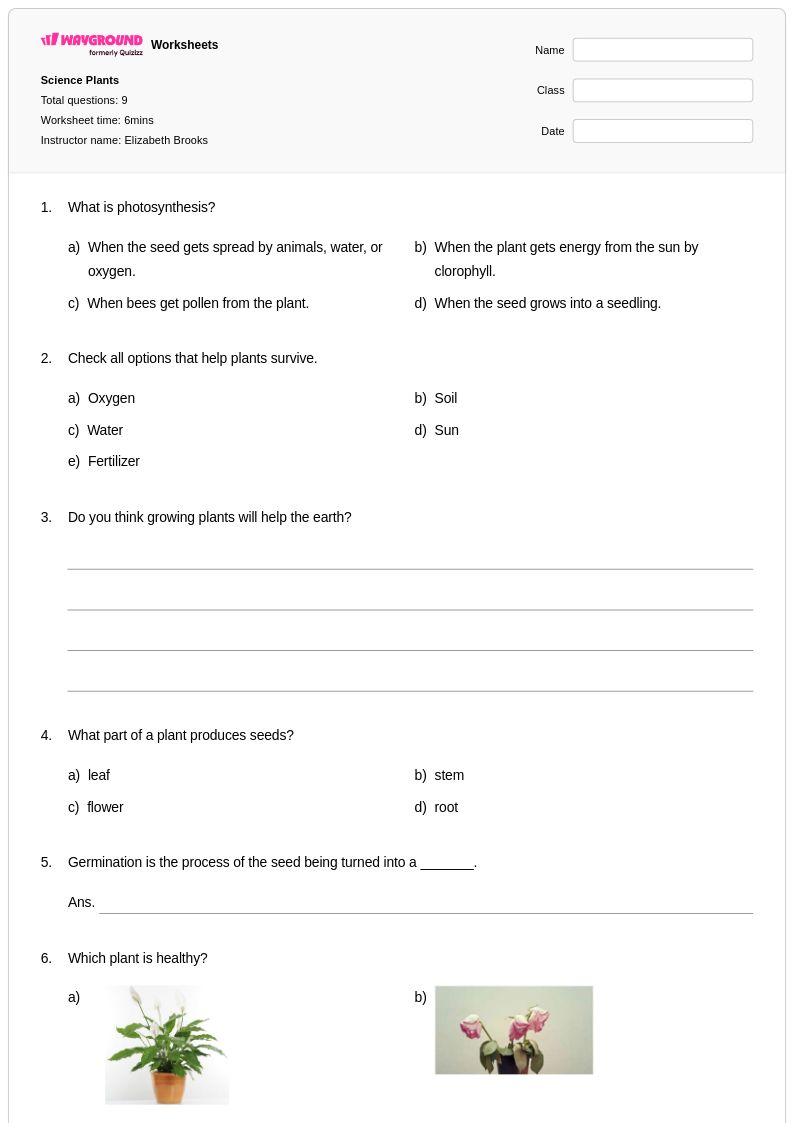
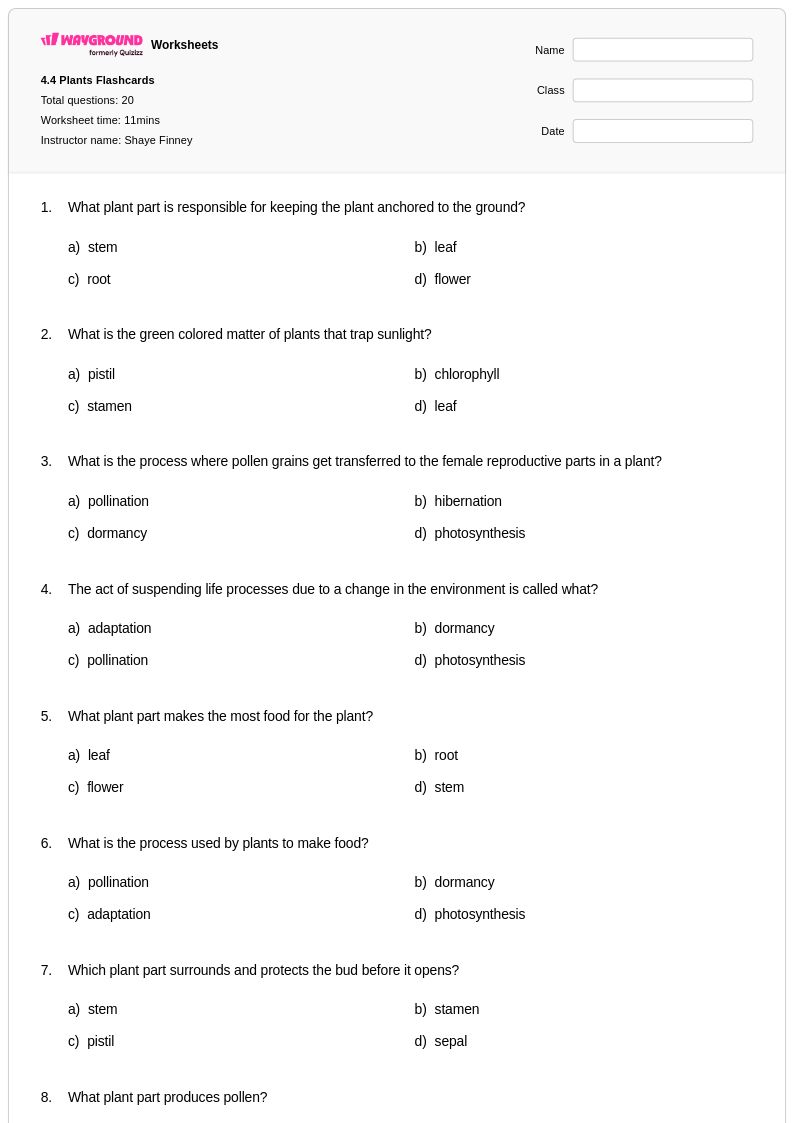
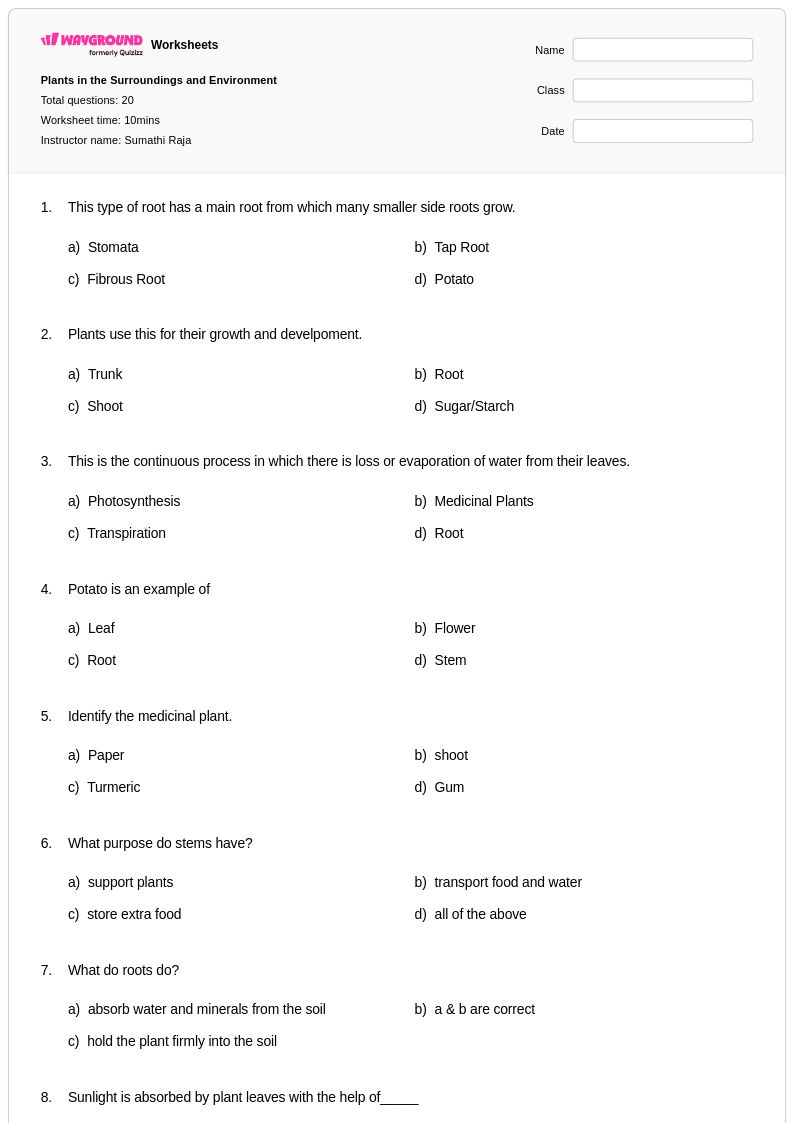
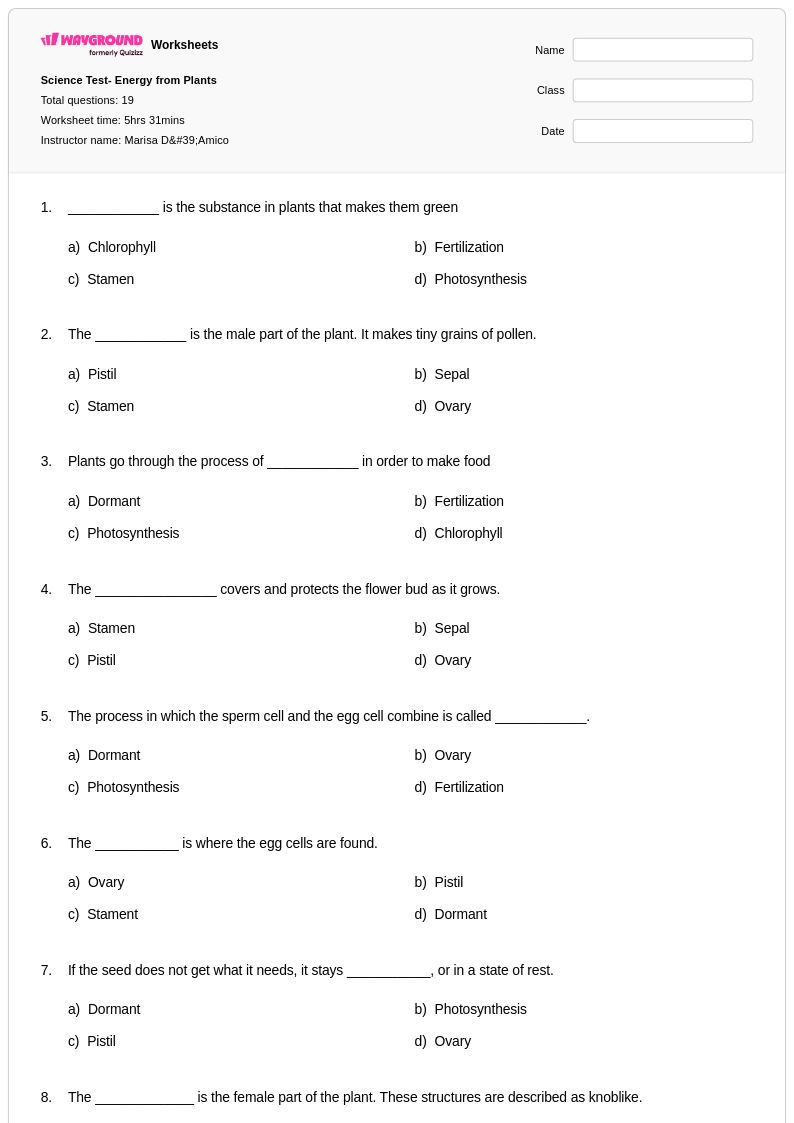
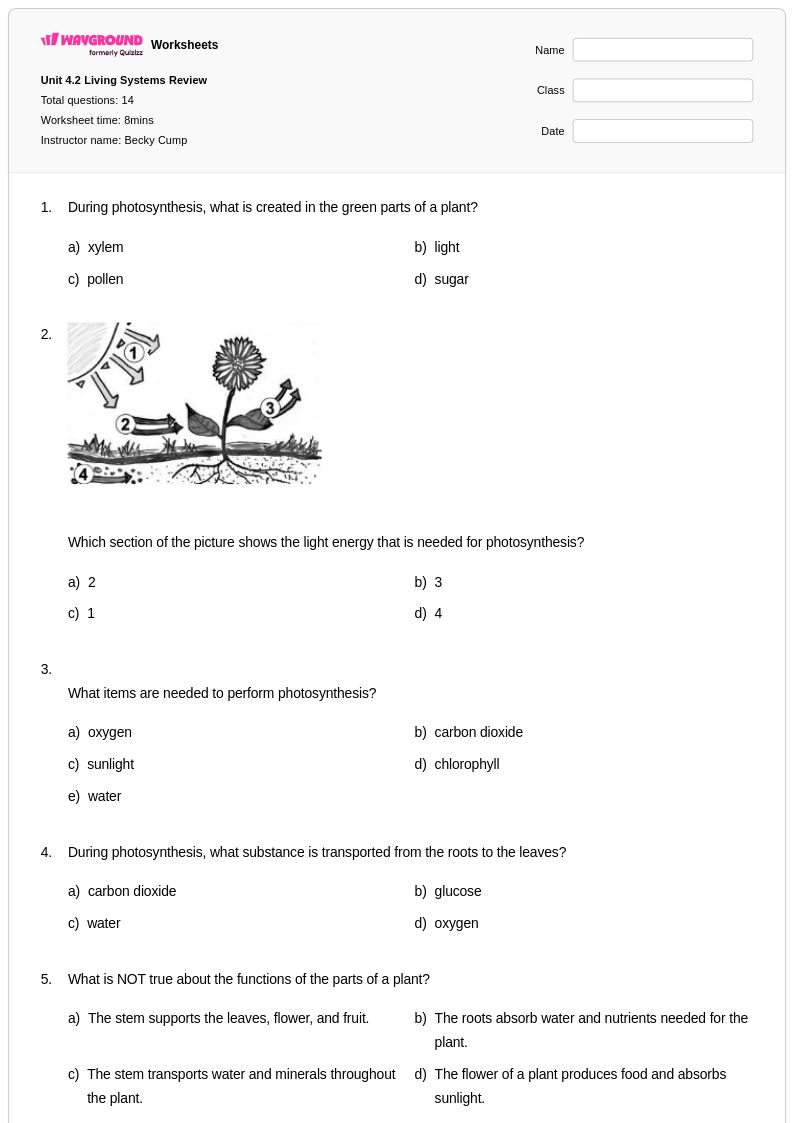
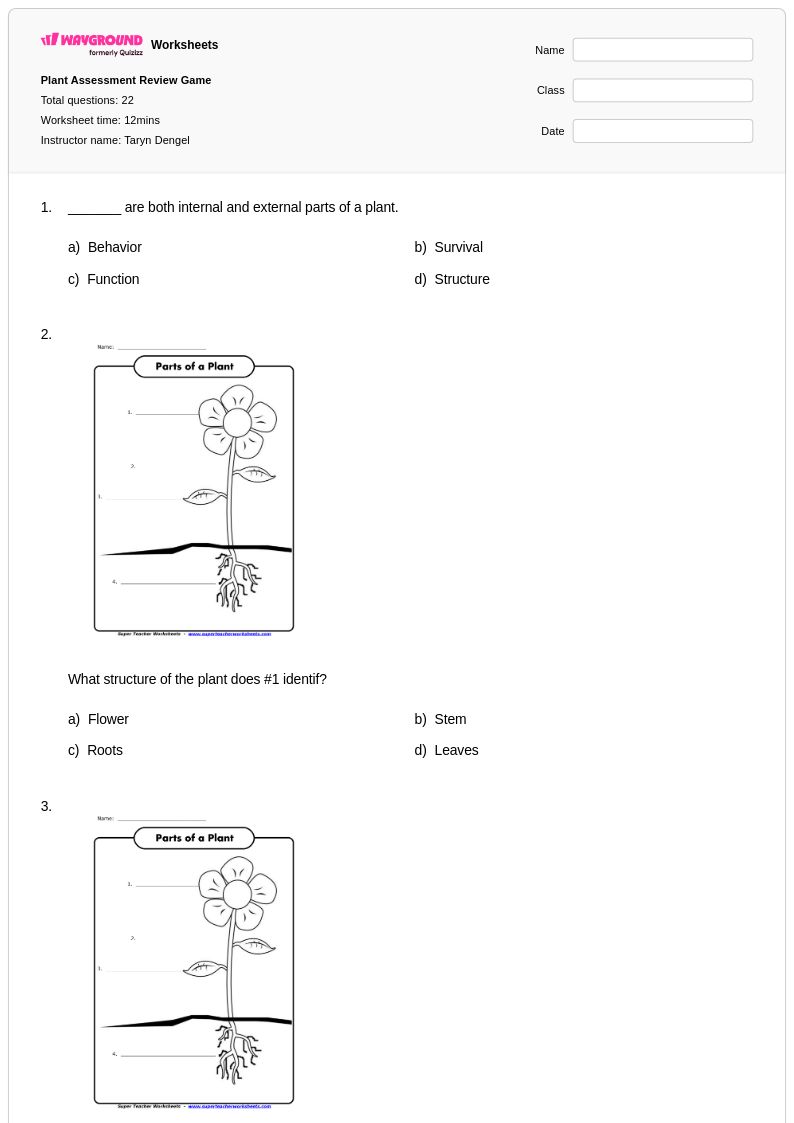
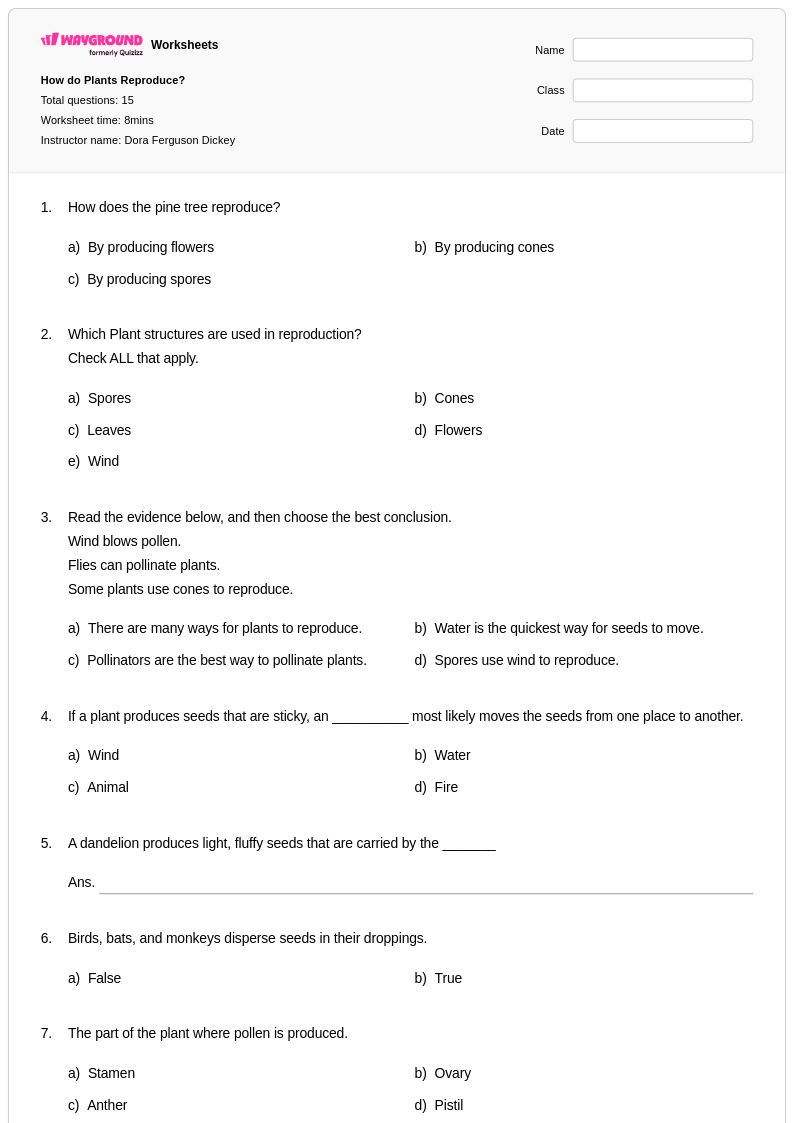
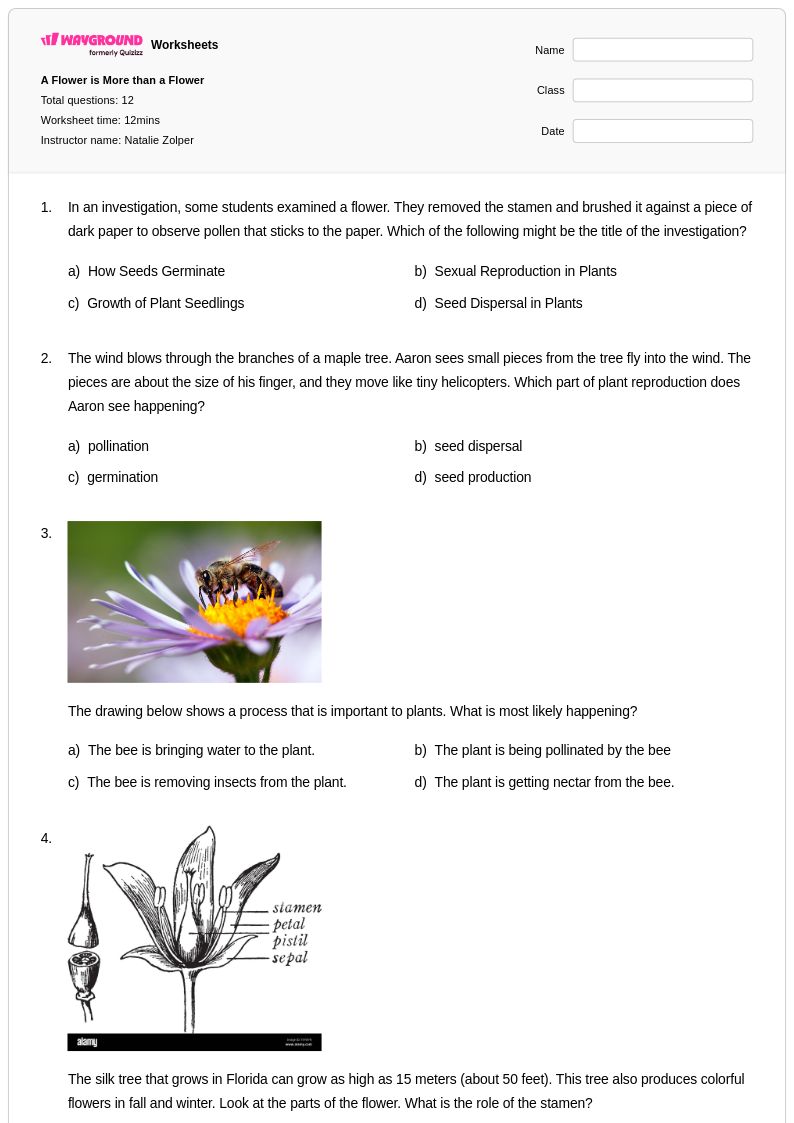
Plant anatomy worksheets for Class 4 students available through Wayground (formerly Quizizz) provide comprehensive exploration of the structural components that make plants function and thrive. These educational resources guide young learners through the identification and understanding of essential plant parts including roots, stems, leaves, flowers, and seeds, while examining how each component contributes to the plant's survival and growth. The worksheets strengthen critical observation skills, scientific vocabulary development, and analytical thinking as students learn to label diagrams, compare different plant structures, and connect form to function in the natural world. Each worksheet collection includes detailed answer keys and is designed as free printables that offer engaging practice problems, from basic plant part identification to more complex questions about how roots absorb water and nutrients or how leaves conduct photosynthesis.
Wayground (formerly Quizizz) empowers educators with an extensive library of millions of teacher-created plant anatomy resources that can be easily located through robust search and filtering capabilities aligned with science education standards. Teachers can access differentiated materials that accommodate various learning levels within their Class 4 classrooms, utilizing flexible customization tools to modify worksheets based on specific instructional goals or student needs. These comprehensive collections are available in both printable pdf formats for traditional classroom use and digital versions for interactive learning experiences, supporting diverse teaching approaches for lesson planning, targeted remediation for students struggling with botanical concepts, enrichment activities for advanced learners, and consistent skill practice that reinforces understanding of plant structure and function throughout the academic year.
FAQs
How do I teach plant anatomy to my students?
Teaching plant anatomy is most effective when students move from whole-plant observation to microscopic structure. Start by having students identify external parts such as roots, stems, leaves, and flowers before introducing internal structures like vascular tissue, xylem, and phloem. Connecting structure to function at each stage, for example explaining how root hair cells increase surface area for water absorption, helps students build lasting conceptual understanding rather than memorizing isolated vocabulary.
What worksheets or exercises help students practice plant anatomy?
Labeling diagrams of plant organs such as roots, stems, leaves, and flowers is one of the most effective practice formats for plant anatomy because it requires students to connect names to specific structures. Matching exercises that pair plant cell types with their functions reinforce vascular system concepts, while fill-in-the-blank problems targeting leaf morphology and tissue organization help consolidate terminology. Practice problems that ask students to explain how structure relates to function push beyond recall into genuine understanding.
What mistakes do students commonly make when learning plant anatomy?
One of the most common errors is confusing the roles of xylem and phloem, with students frequently reversing which transports water and which transports sugars. Students also tend to treat roots as structurally simple, underestimating the complexity of root hair cells and root cap differentiation. Another frequent misconception is assuming all leaves are structurally identical, when in fact leaf morphology varies considerably based on adaptation to environment and function.
How do I use Wayground's plant anatomy worksheets in my classroom?
Wayground's plant anatomy worksheets are available as printable PDFs for traditional classroom use and in digital formats for technology-integrated learning environments, so they fit naturally into both paper-based and device-based instruction. You can also host any worksheet as a live quiz on Wayground, which allows you to track student responses in real time and identify which concepts need reteaching. Each worksheet includes a complete answer key, making them straightforward to use for guided practice, independent work, or homework assignments.
How can I differentiate plant anatomy worksheets for students at different skill levels?
For students who need additional support, reducing the number of answer choices on labeling or matching activities lowers cognitive load without removing the learning objective. Wayground also supports read-aloud functionality, which benefits students who struggle with the dense botanical vocabulary common in plant anatomy. For advanced learners, worksheets that move beyond labeling into analysis of vascular system function or organ-level adaptations provide appropriate challenge within the same topic.
What plant anatomy topics should I prioritize for a biology unit?
A well-sequenced plant anatomy unit should prioritize root systems, stem structures, leaf morphology, and flower parts as the core organ-level content, since these form the foundation for understanding plant function and reproduction. Tissue-level concepts including vascular systems, parenchyma, and meristematic tissue are essential for students continuing into advanced biology. Cell-level structures such as chloroplasts and guard cells are best introduced after students have a secure understanding of the organ and tissue context they operate within.