
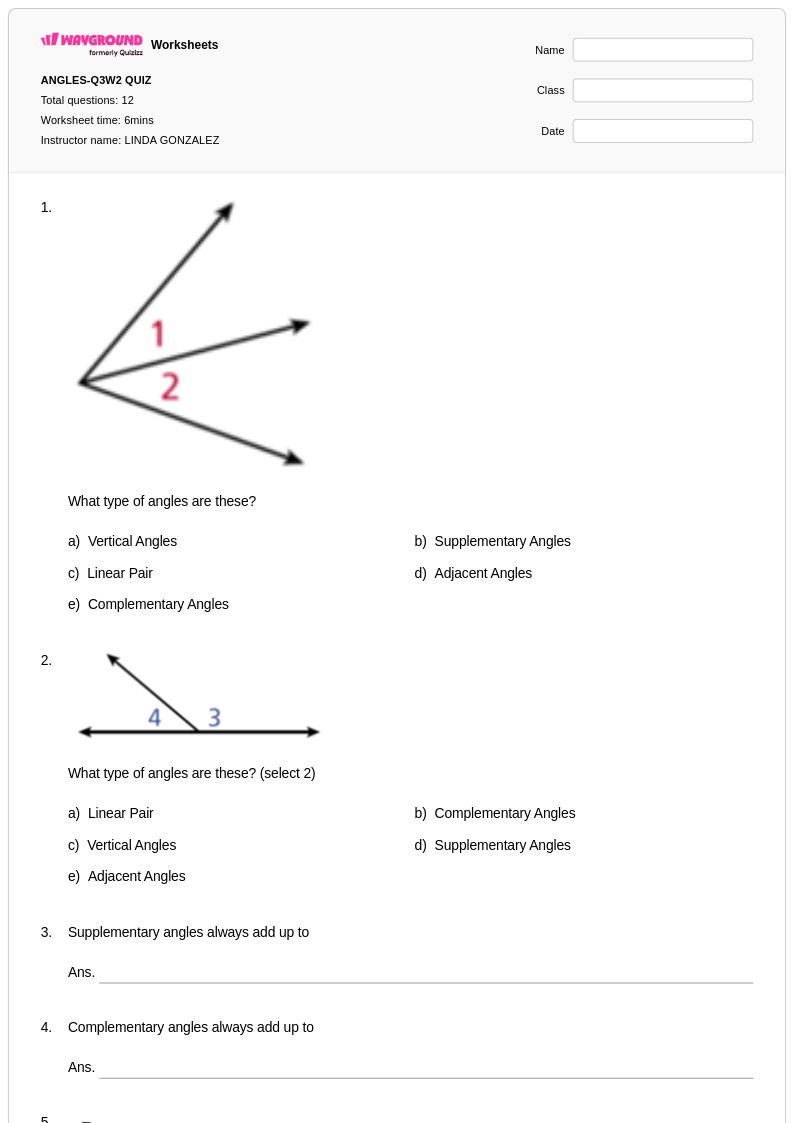
12 คิว
7th
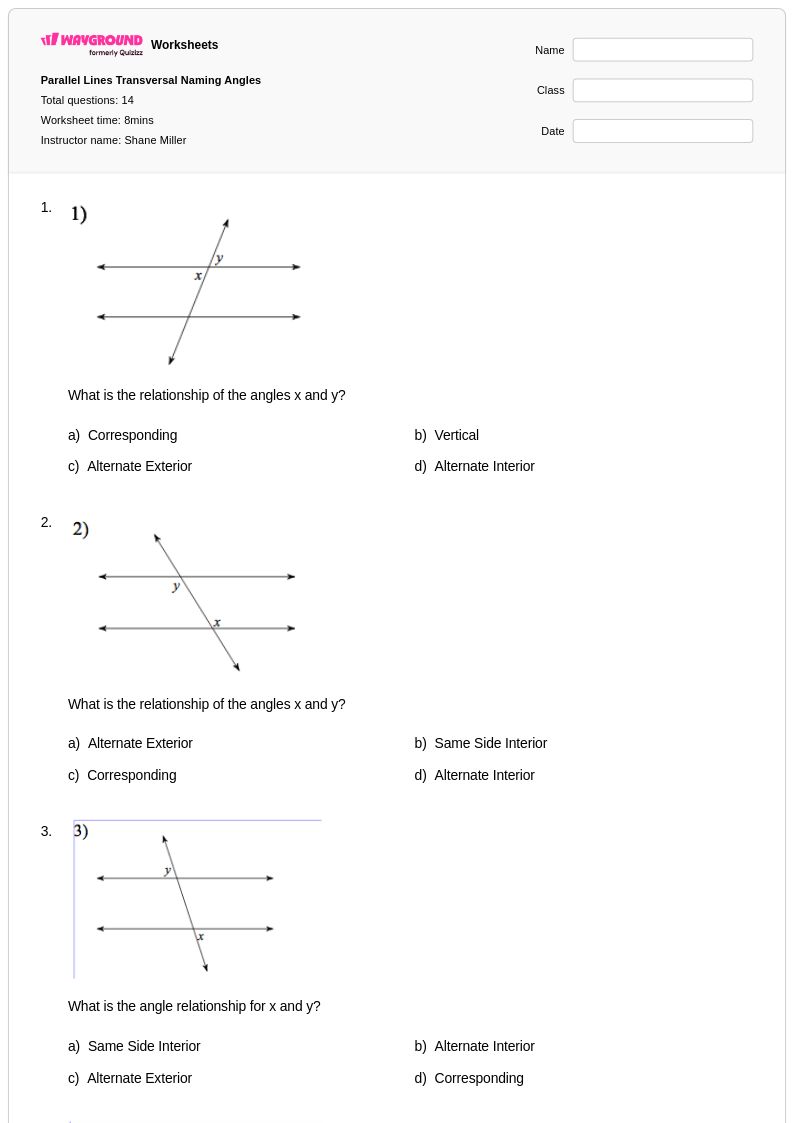
14 คิว
7th - 10th
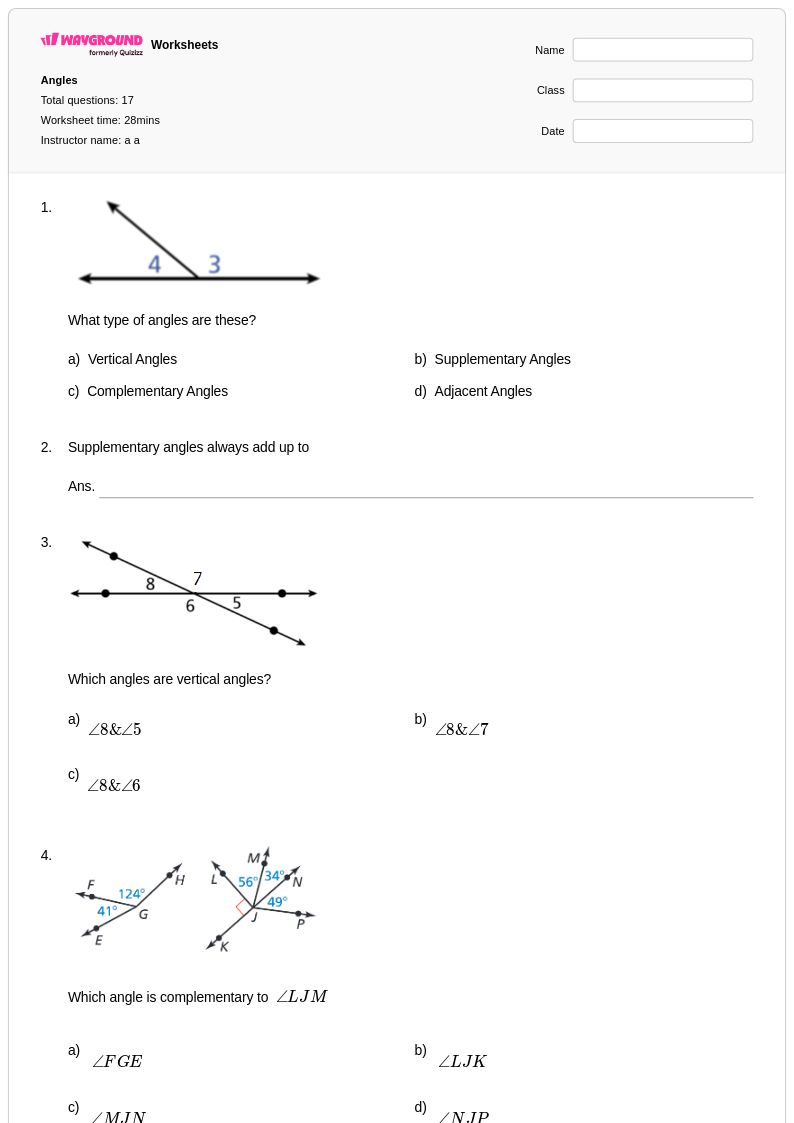
17 คิว
6th - 7th
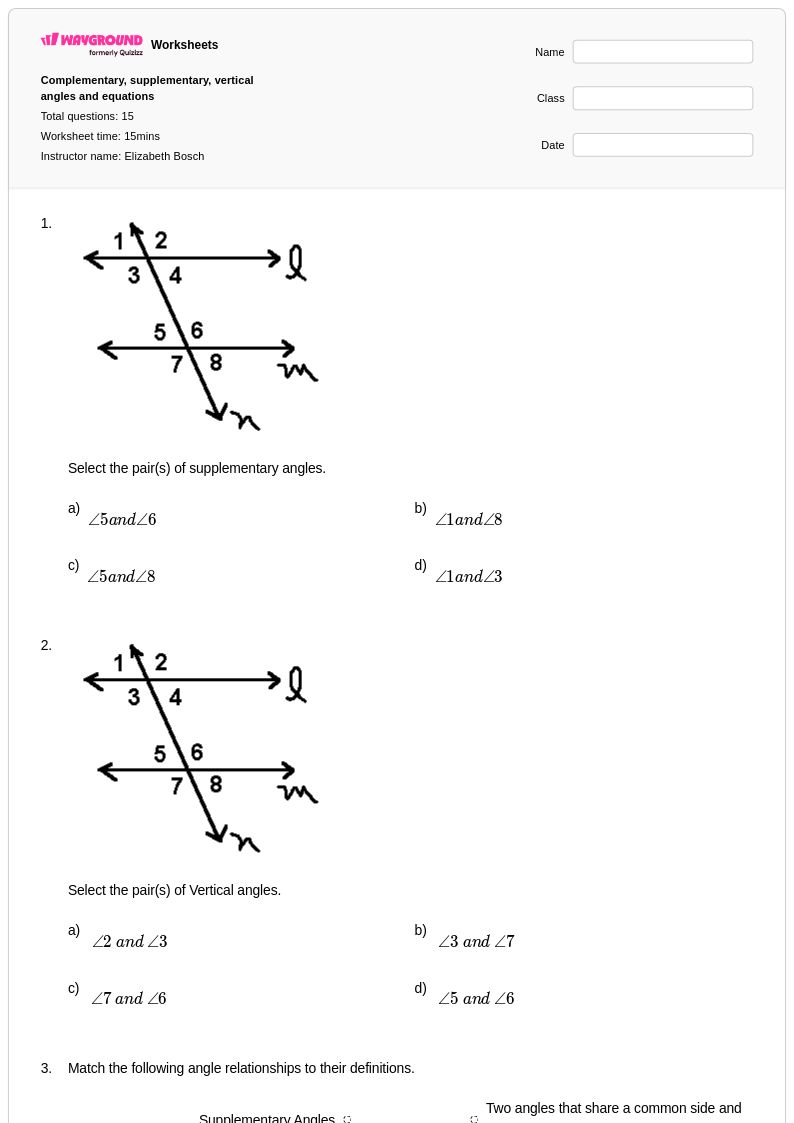
15 คิว
7th - Uni
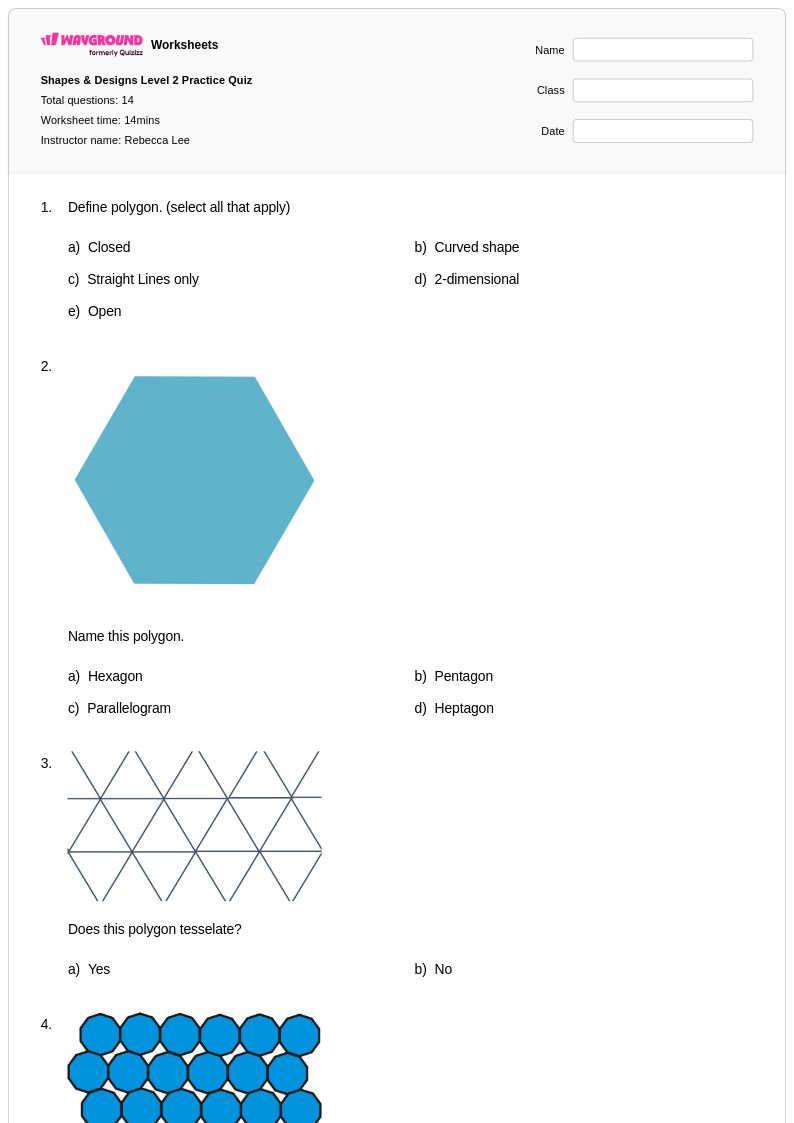
14 คิว
7th
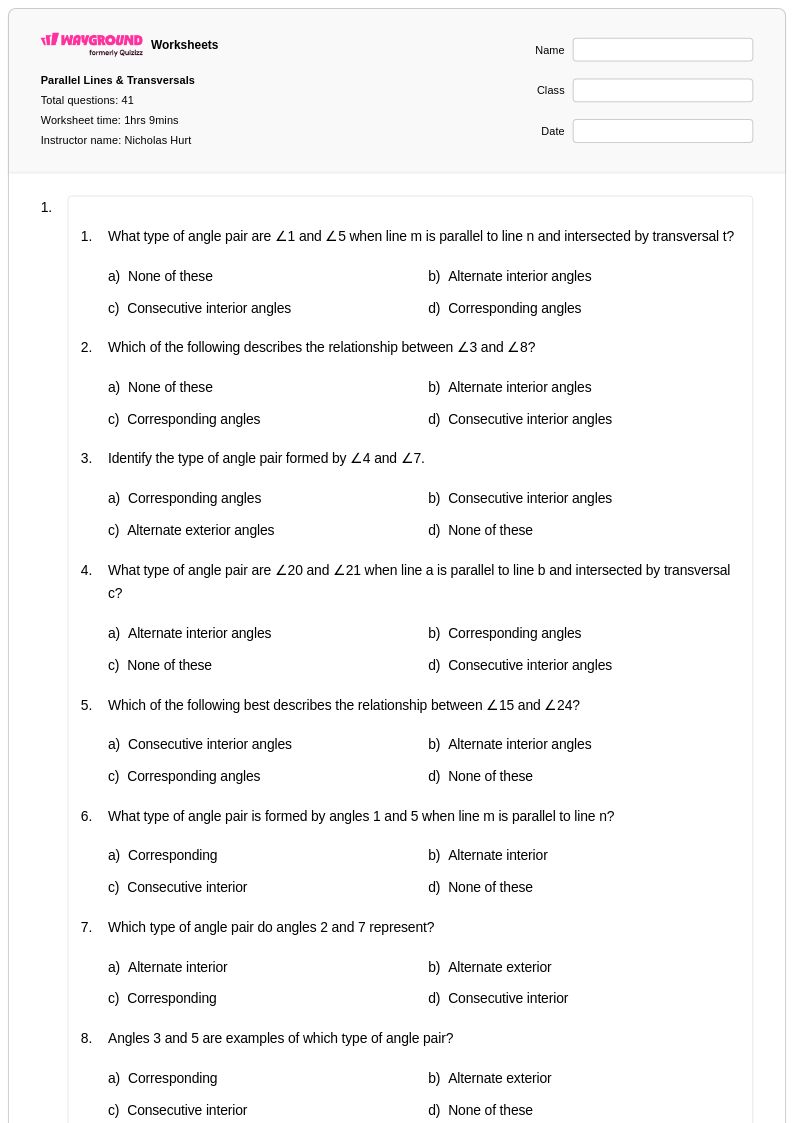
52 คิว
7th
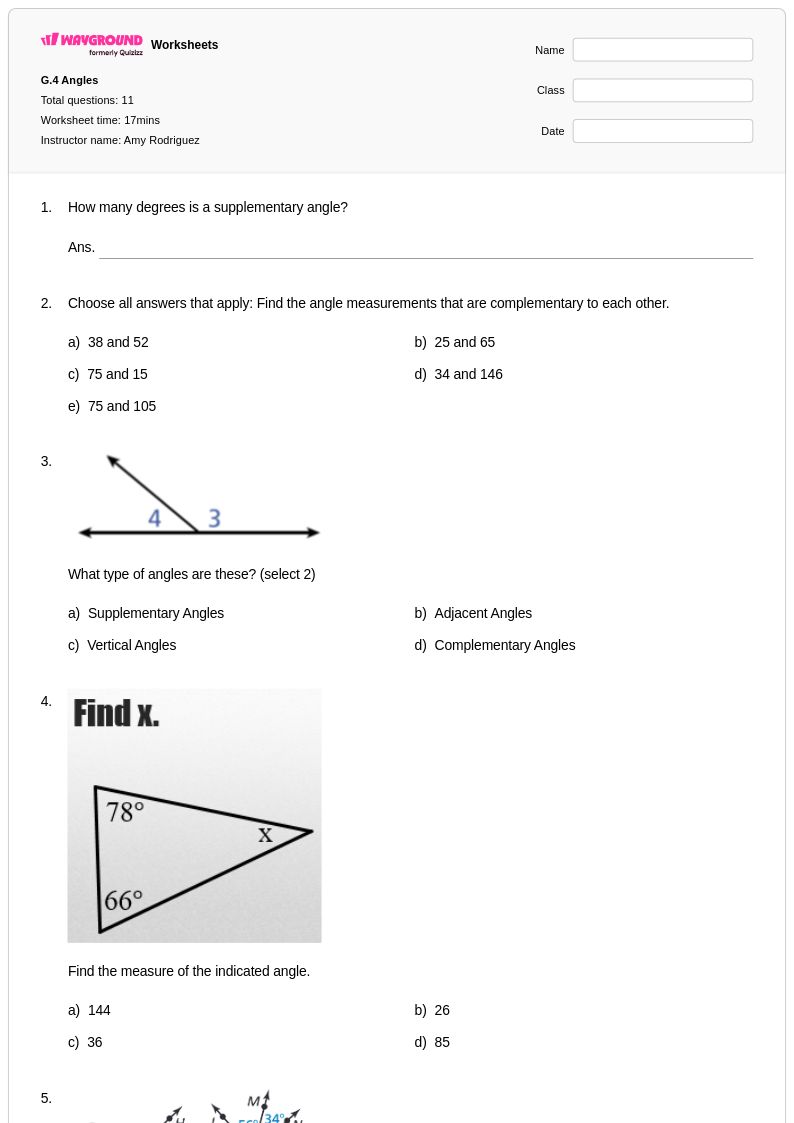
11 คิว
7th
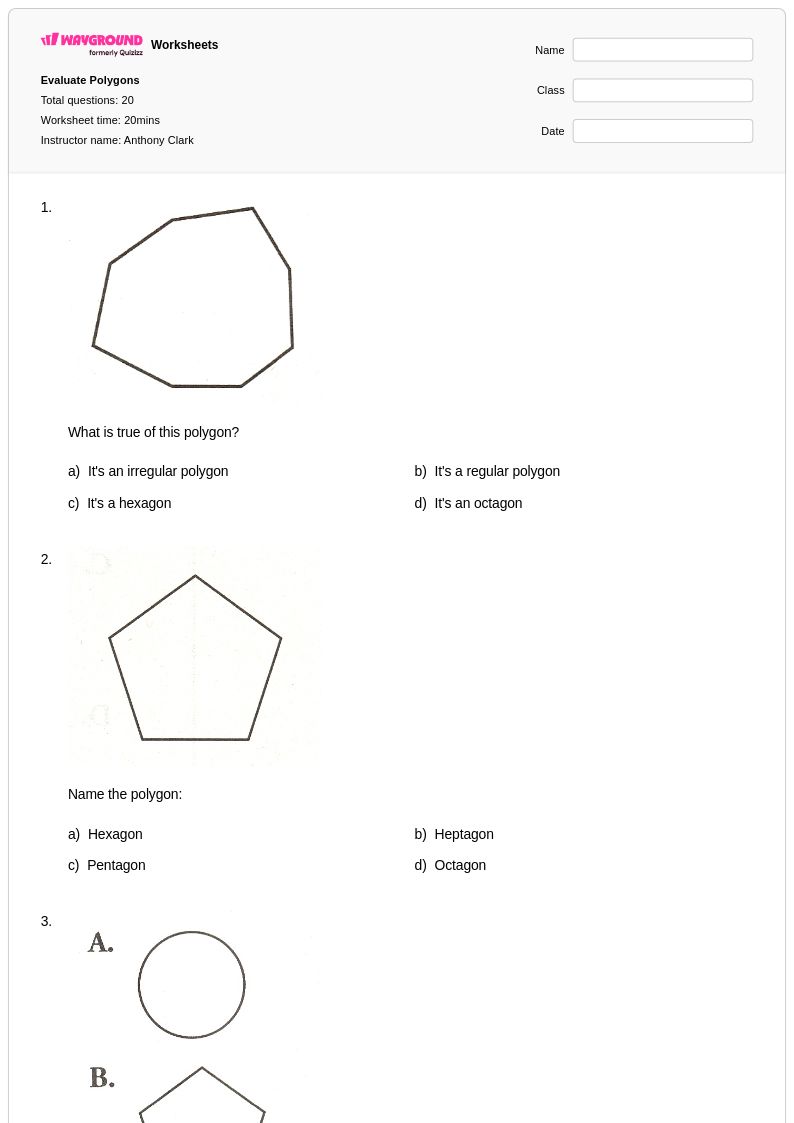
20 คิว
5th - Uni
16 คิว
7th - 12th
20 คิว
6th - 7th
50 คิว
6th - 12th
11 คิว
7th - 8th
25 คิว
5th - 12th
12 คิว
7th - 8th
16 คิว
6th - 12th
22 คิว
6th - 10th
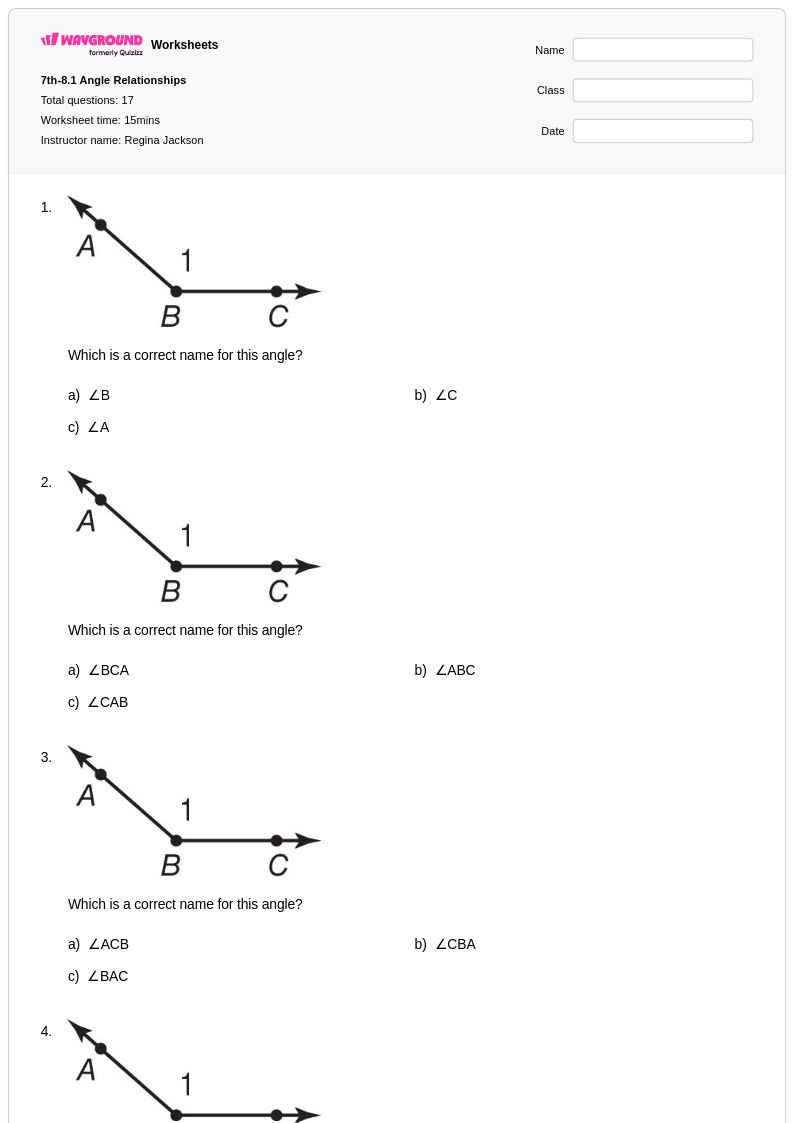
17 คิว
7th
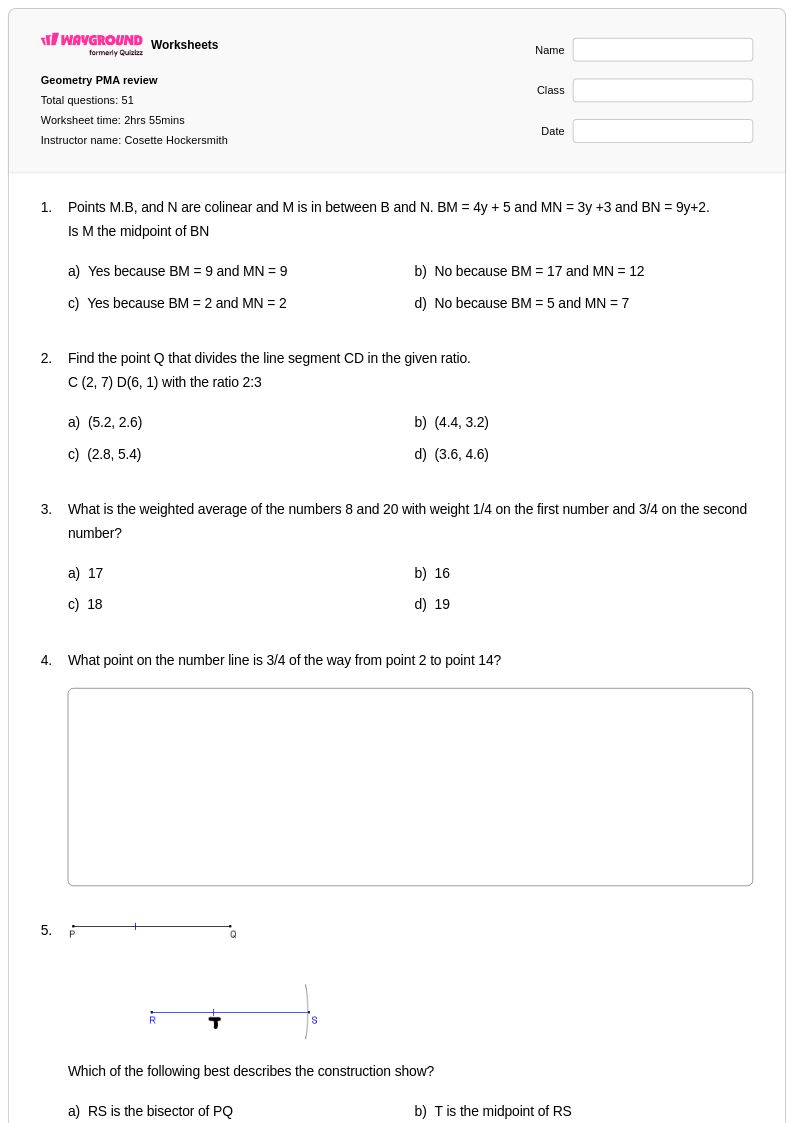
51 คิว
6th - 8th
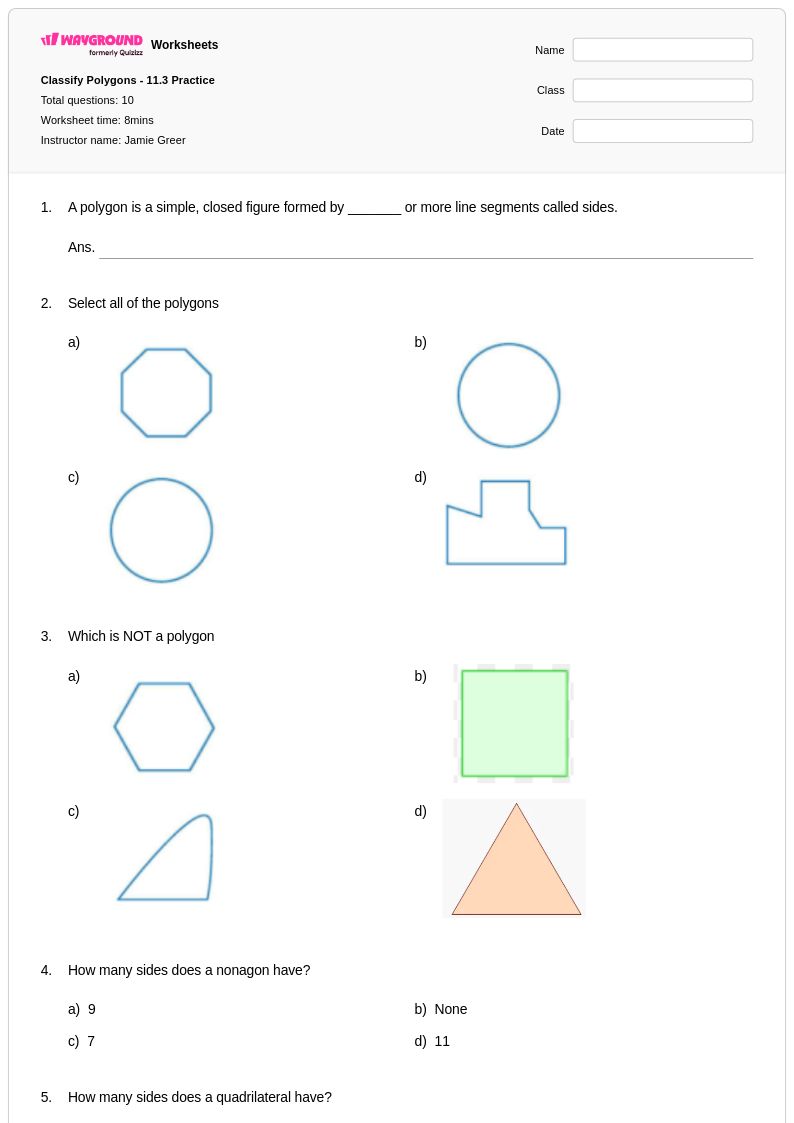
10 คิว
5th - 7th
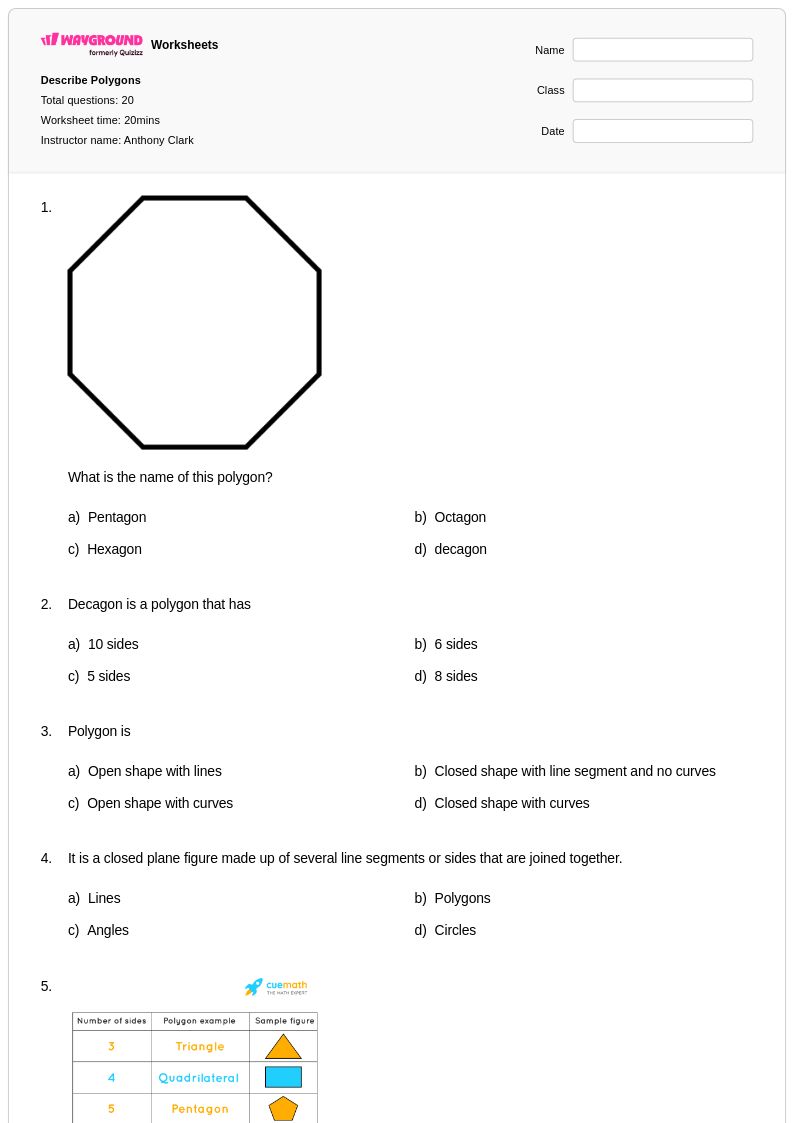
20 คิว
5th - Uni
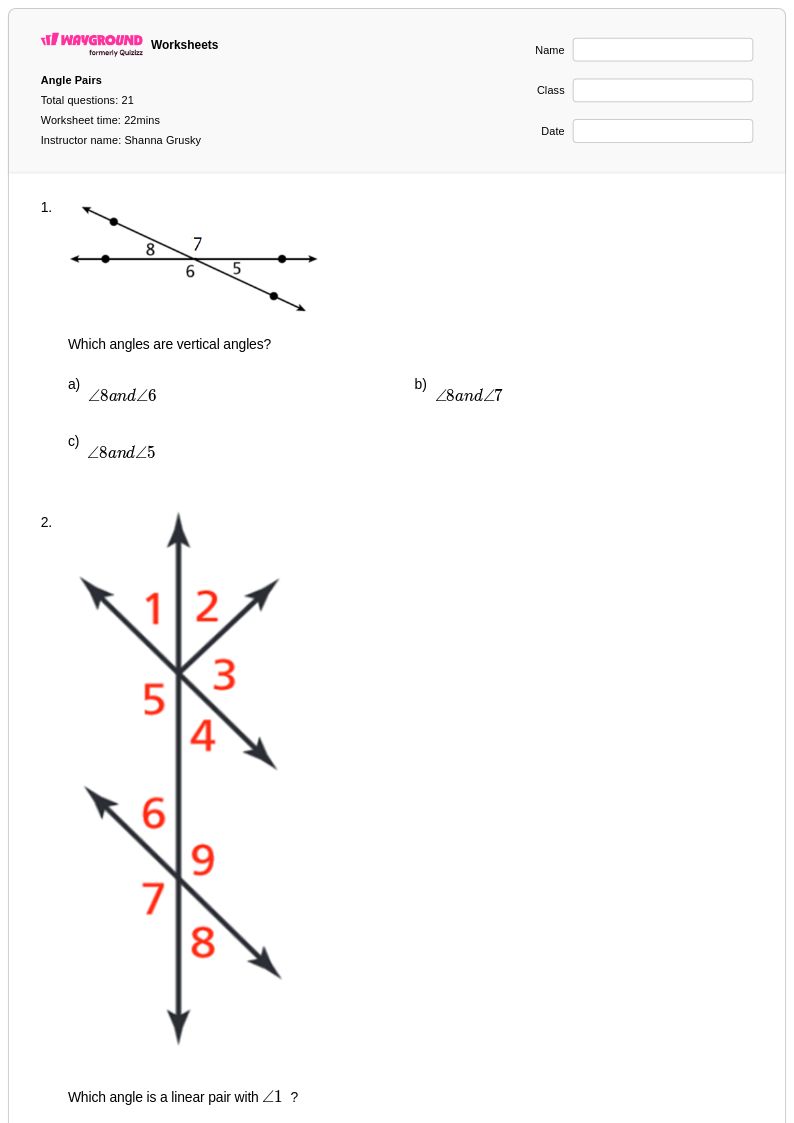
21 คิว
7th
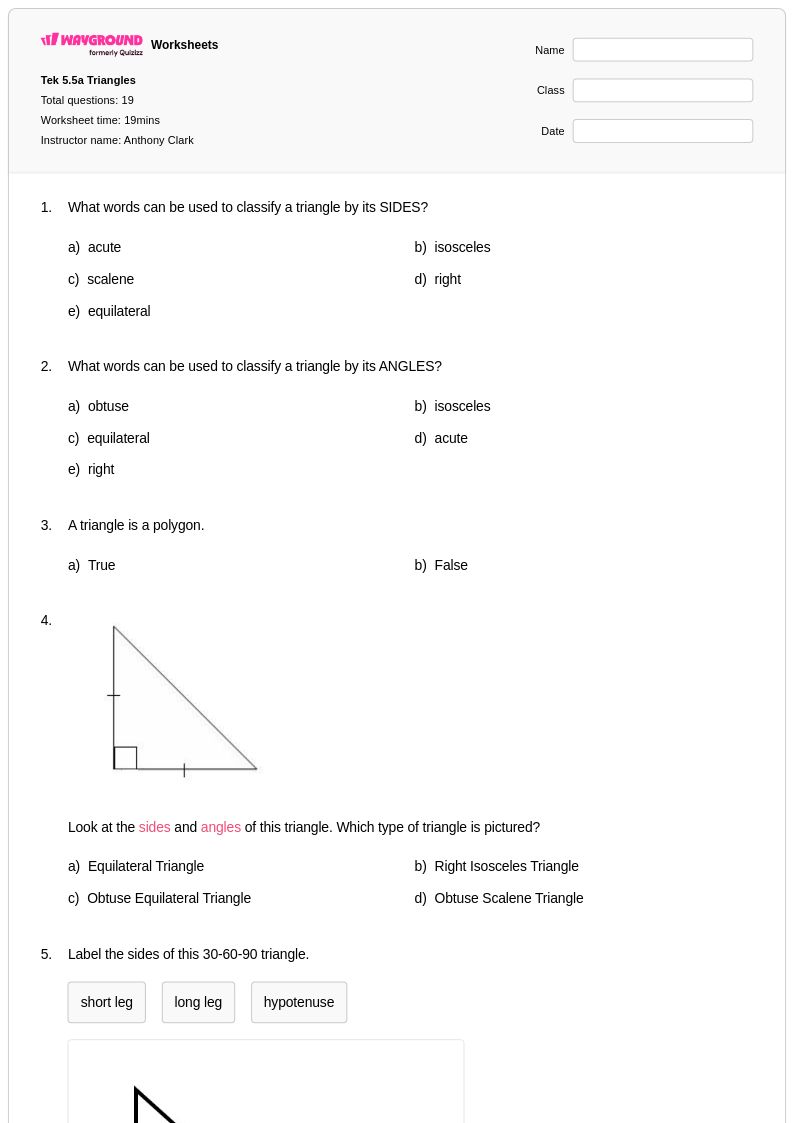
19 คิว
7th - Uni
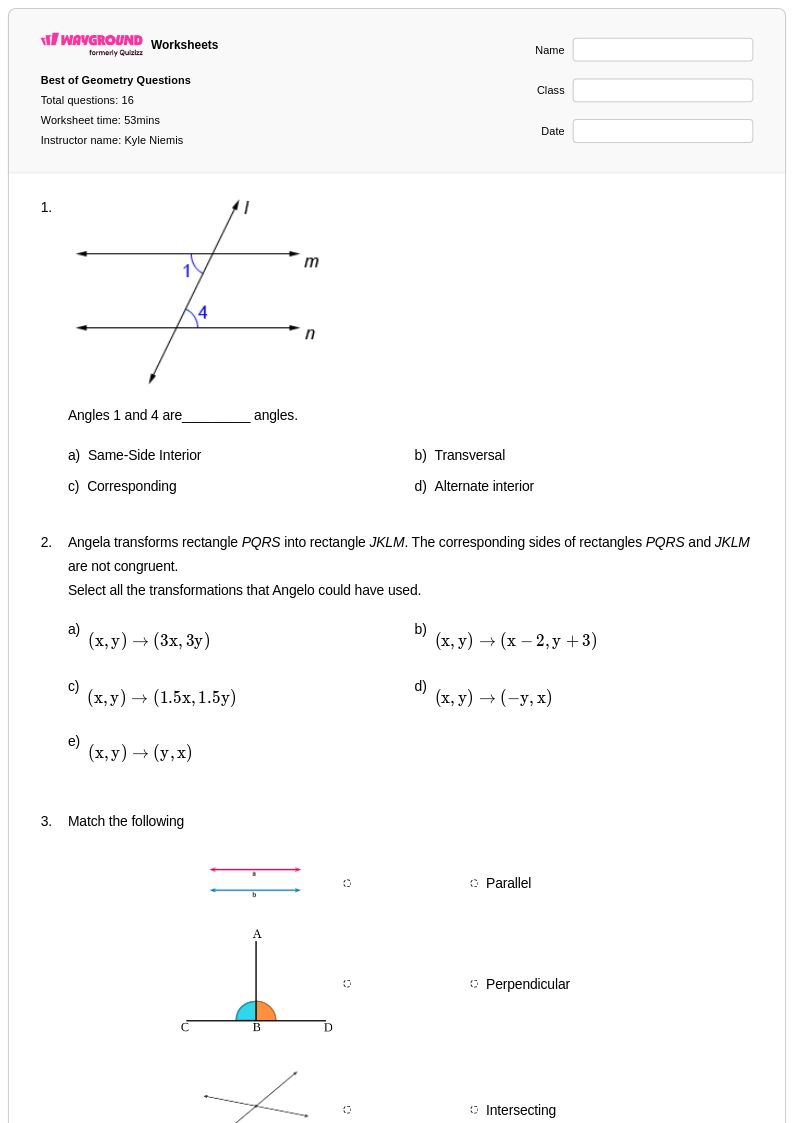
34 คิว
7th
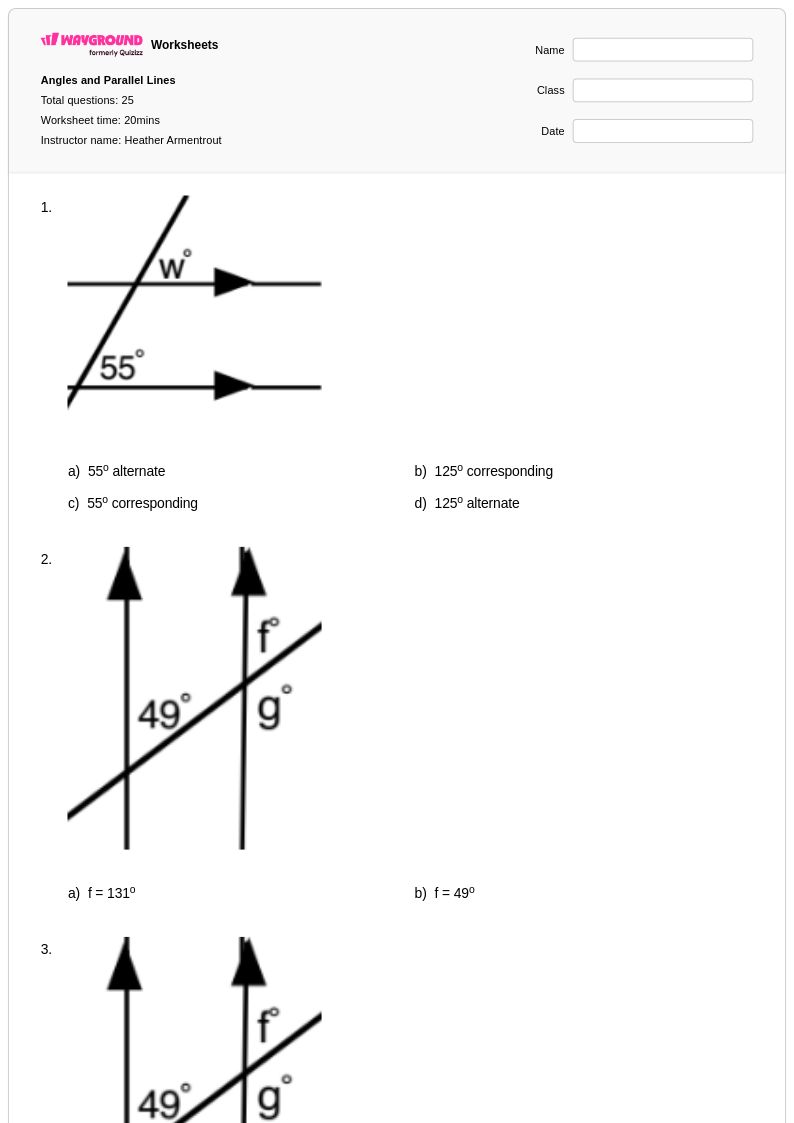
25 คิว
7th - 12th
สำรวจใบงานวิชาอื่นๆ สำหรับ class 7
Explore printable Polygon Angle Sum Theorem worksheets for Class 7
Polygon Angle Sum Theorem worksheets for Class 7 students available through Wayground provide comprehensive practice with one of geometry's most fundamental concepts. These carefully designed resources help students master the critical skill of calculating interior angle sums in polygons using the formula (n-2) × 180°, where n represents the number of sides. Students work through systematic practice problems that build understanding of how triangles, quadrilaterals, pentagons, hexagons, and other polygons relate to their interior angle measurements. Each worksheet collection includes detailed answer keys and comes in convenient pdf format, making these free printables ideal for both classroom instruction and independent study as students develop fluency with polygon properties.
Wayground's extensive collection of teacher-created Polygon Angle Sum Theorem resources draws from millions of educator-contributed materials, ensuring Class 7 mathematics teachers have access to diverse, high-quality worksheet options. The platform's robust search and filtering capabilities allow educators to quickly locate materials aligned with specific curriculum standards and differentiate instruction based on individual student needs. Teachers can customize these printable and digital pdf worksheets to target particular skill gaps during remediation sessions or provide enrichment opportunities for advanced learners. This flexibility supports comprehensive lesson planning while giving educators the tools necessary to reinforce polygon angle calculations through varied practice formats that accommodate different learning styles and mathematical readiness levels.
FAQs
Is the Polygon Angle Sum Theorem a 7th-grade topic?
How can I extend my 7th graders' understanding of this theorem?
What problems are appropriate for 7th graders learning the Polygon Angle Sum Theorem?
What's a common misconception for 7th graders with this theorem?
How do I assign this 7th-grade polygon worksheet?
How does this topic align with 7th-grade Common Core math standards?