Free Printable Production Possibilities Frontier Worksheets for Class 11
Explore Wayground's free Class 11 Production Possibilities Frontier worksheets and printables that help students master economic trade-offs, opportunity costs, and resource allocation through engaging practice problems with comprehensive answer keys.
Explore printable Production Possibilities Frontier worksheets for Class 11
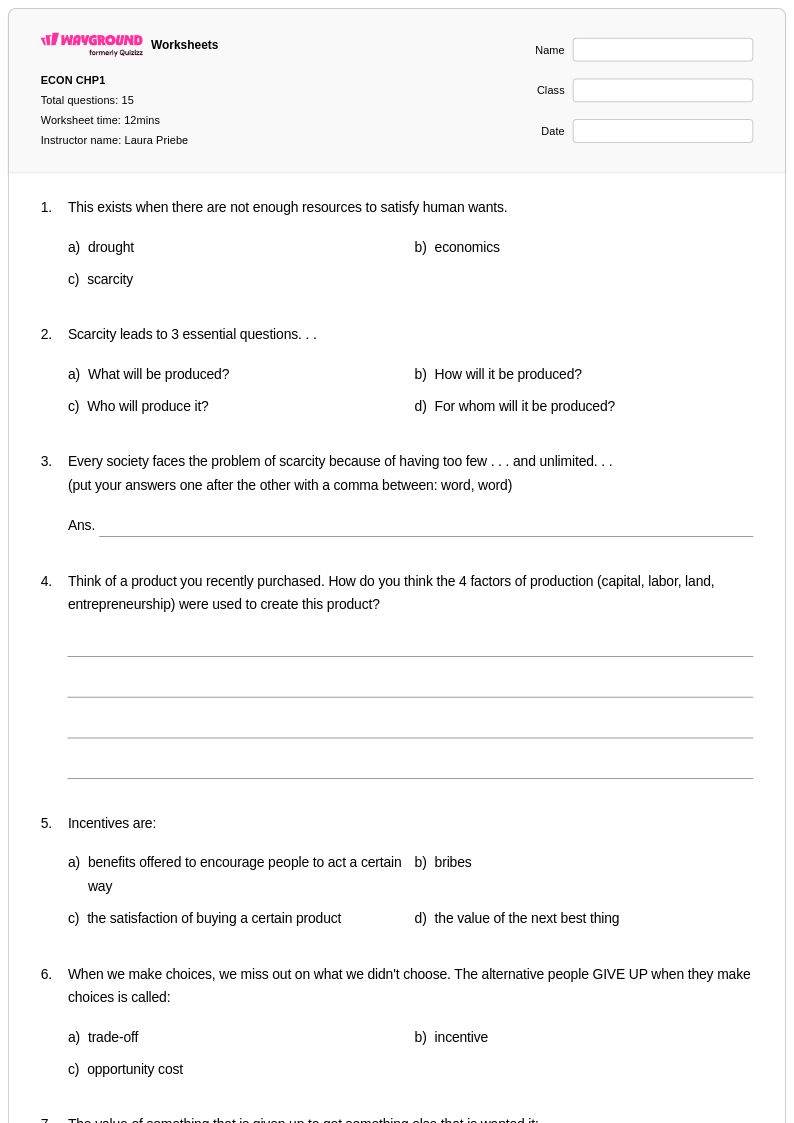
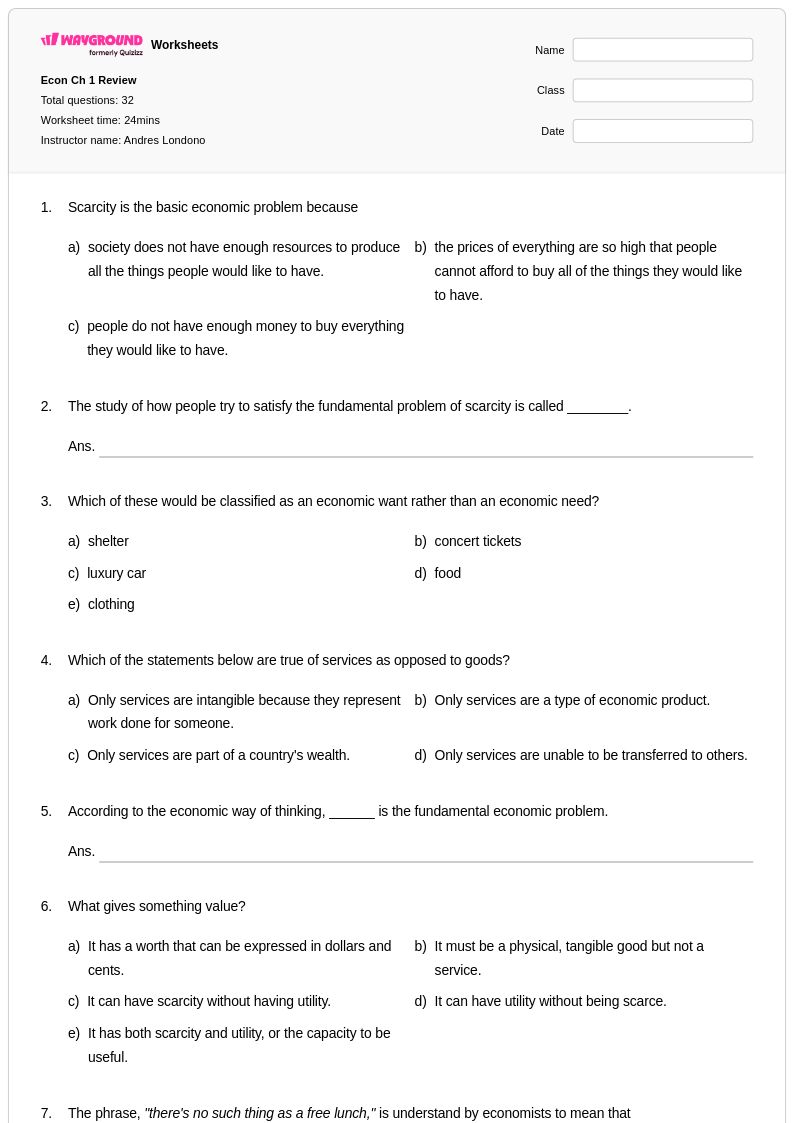
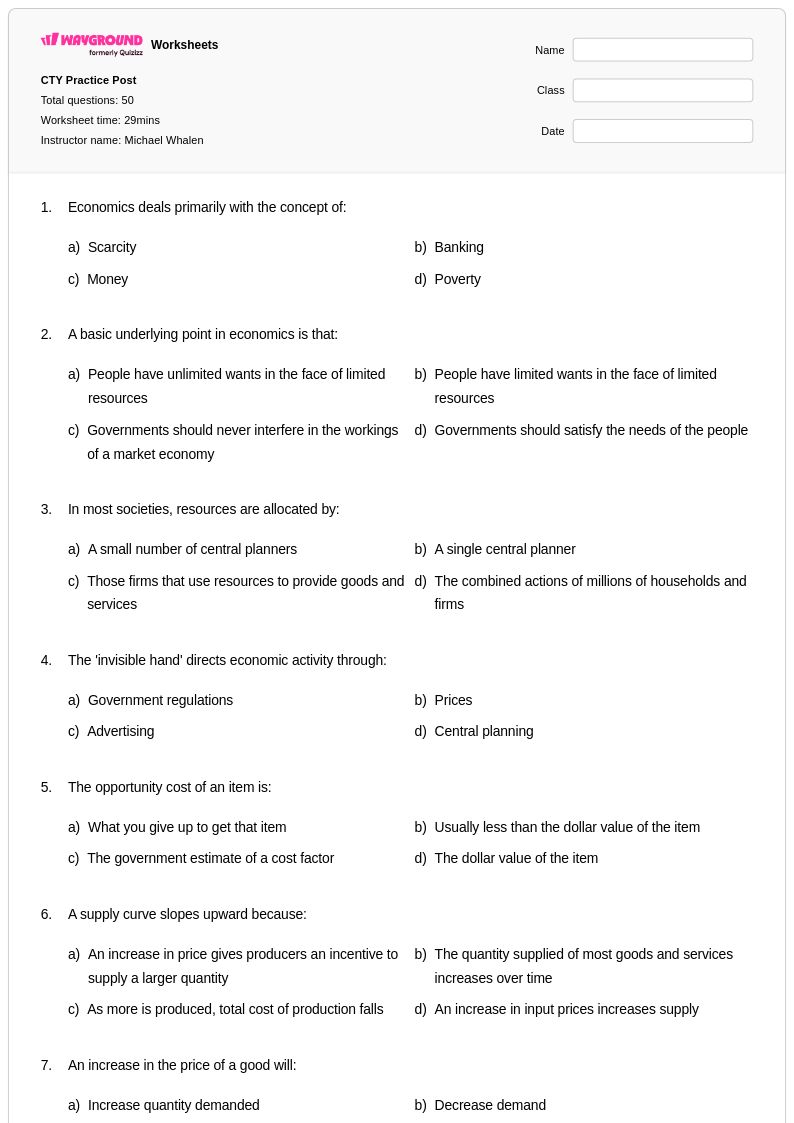
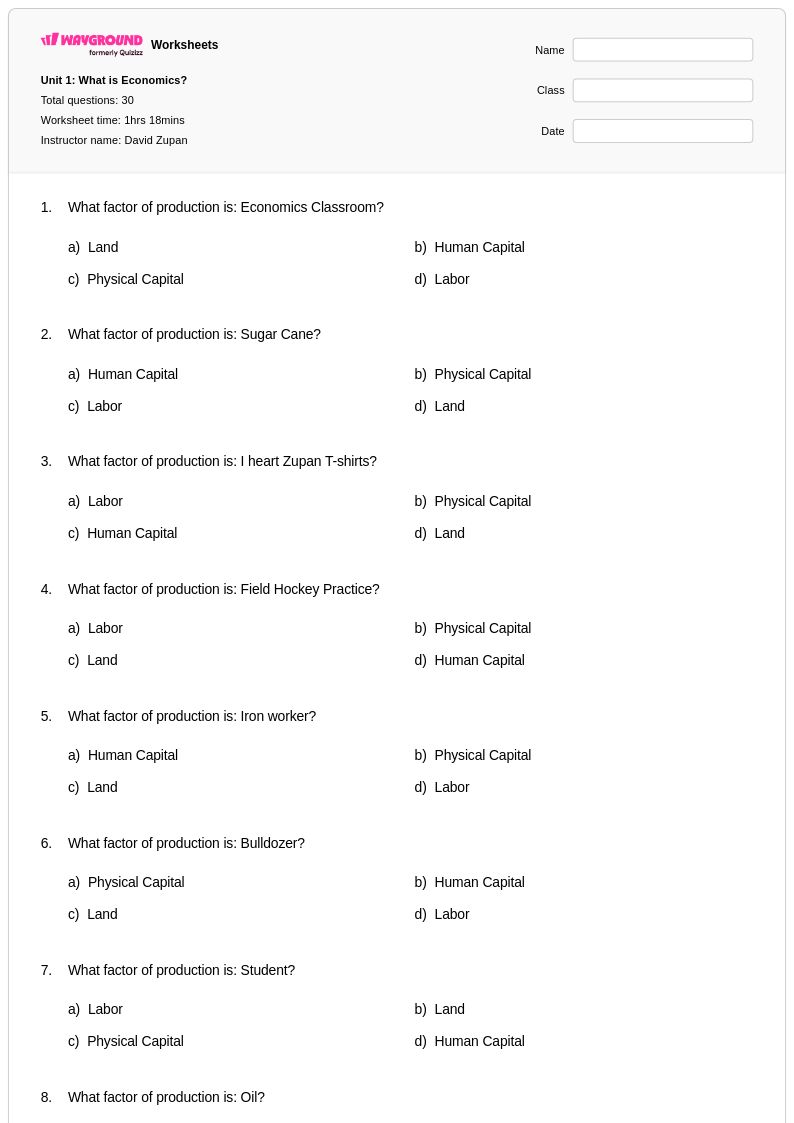
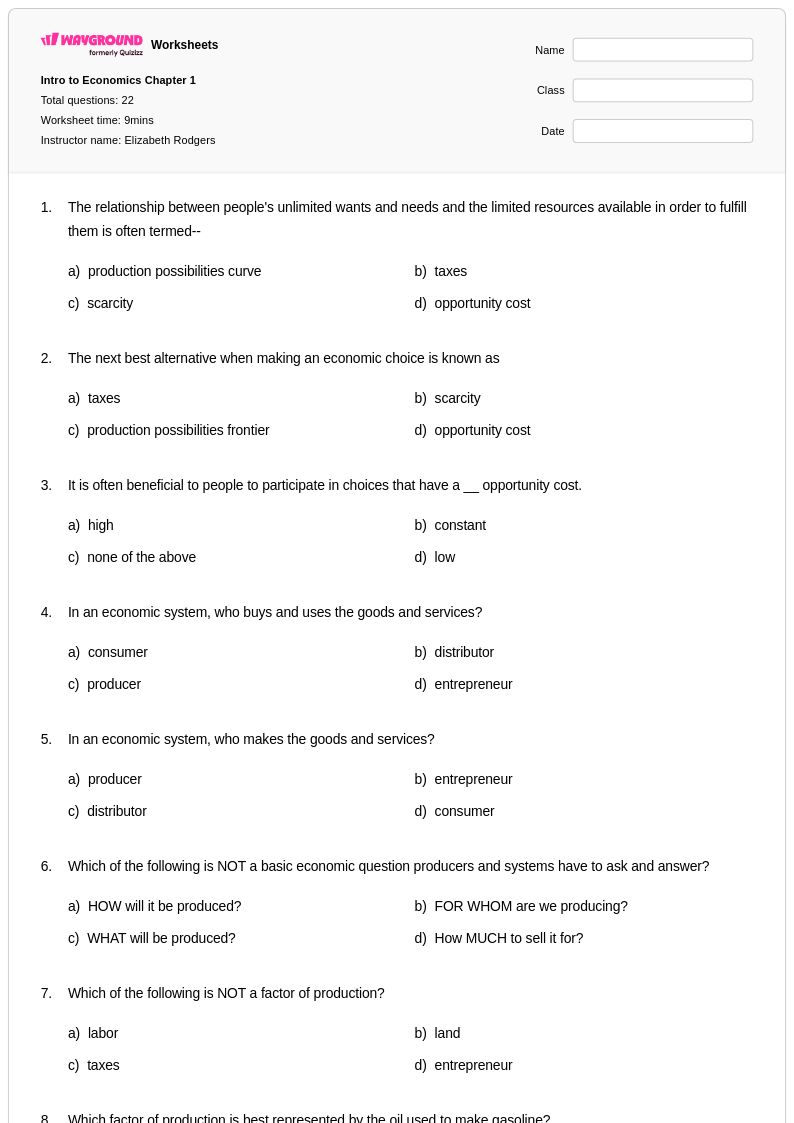
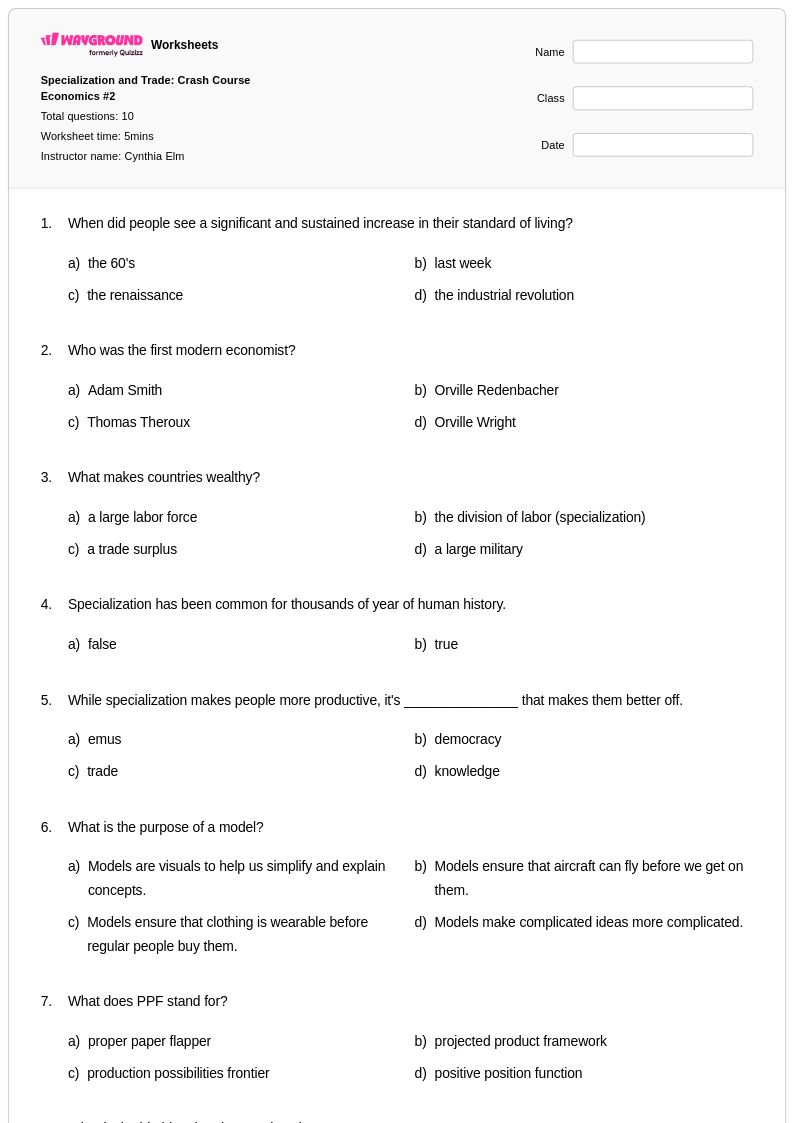
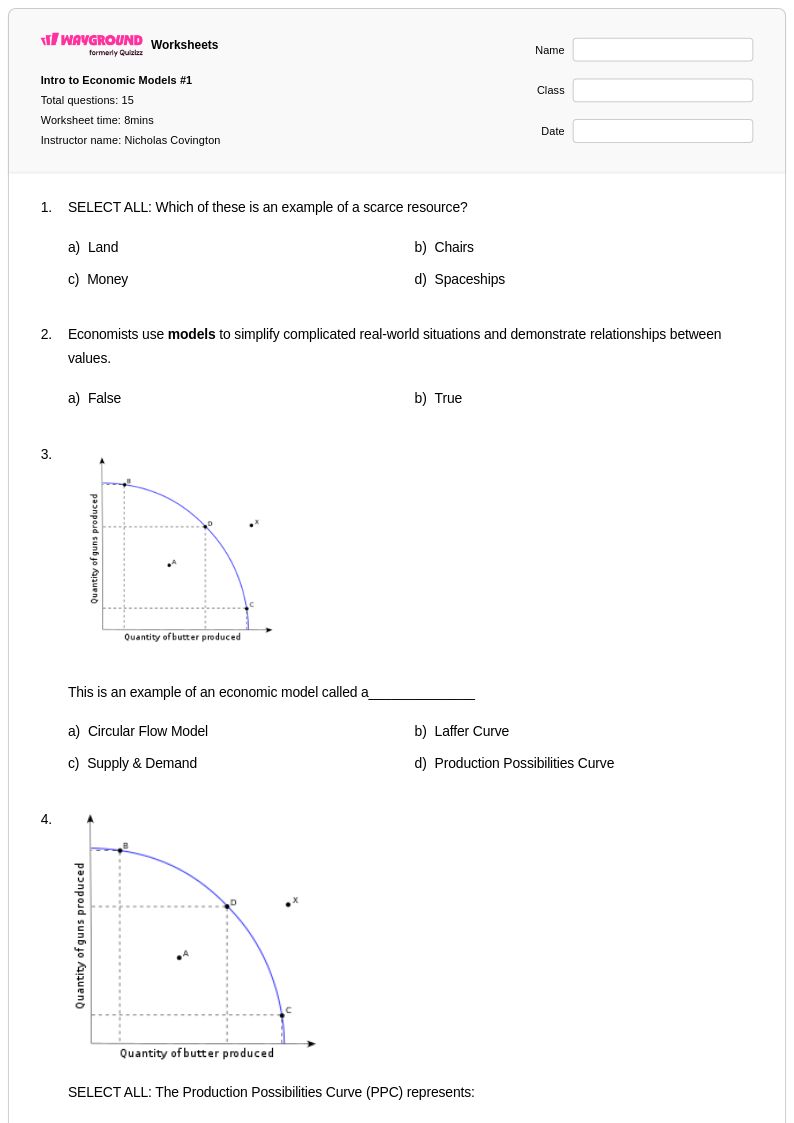
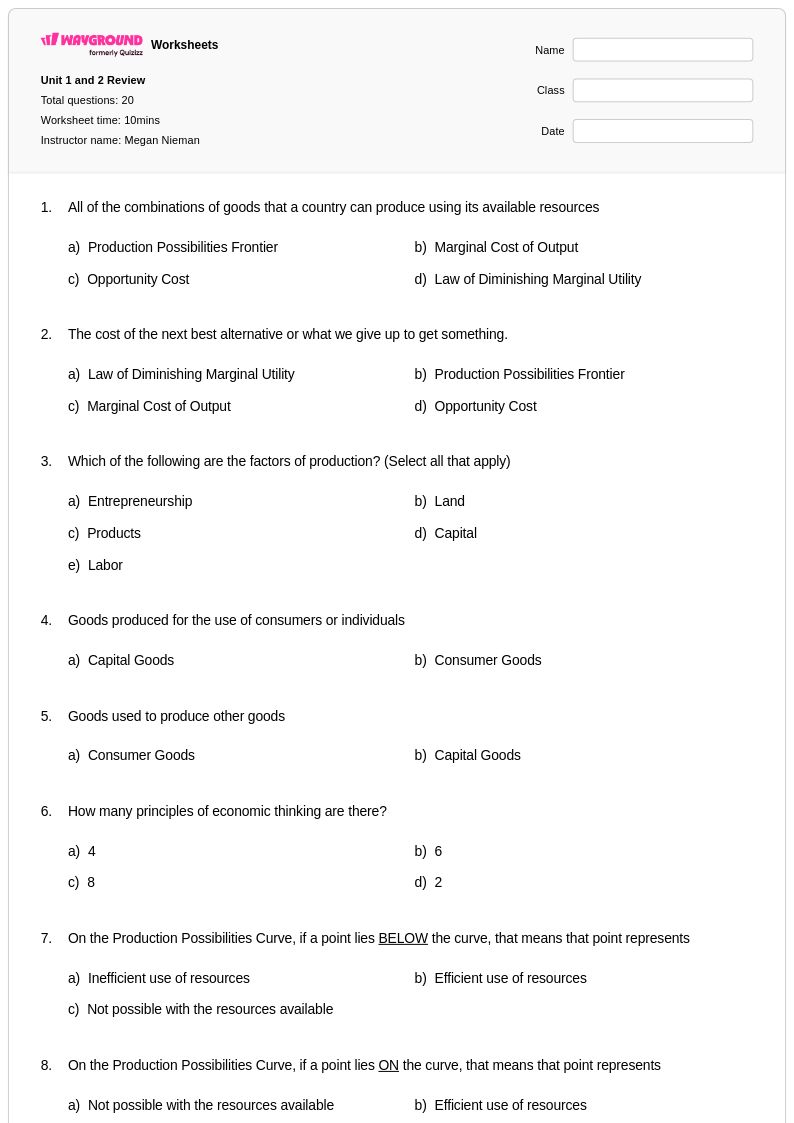
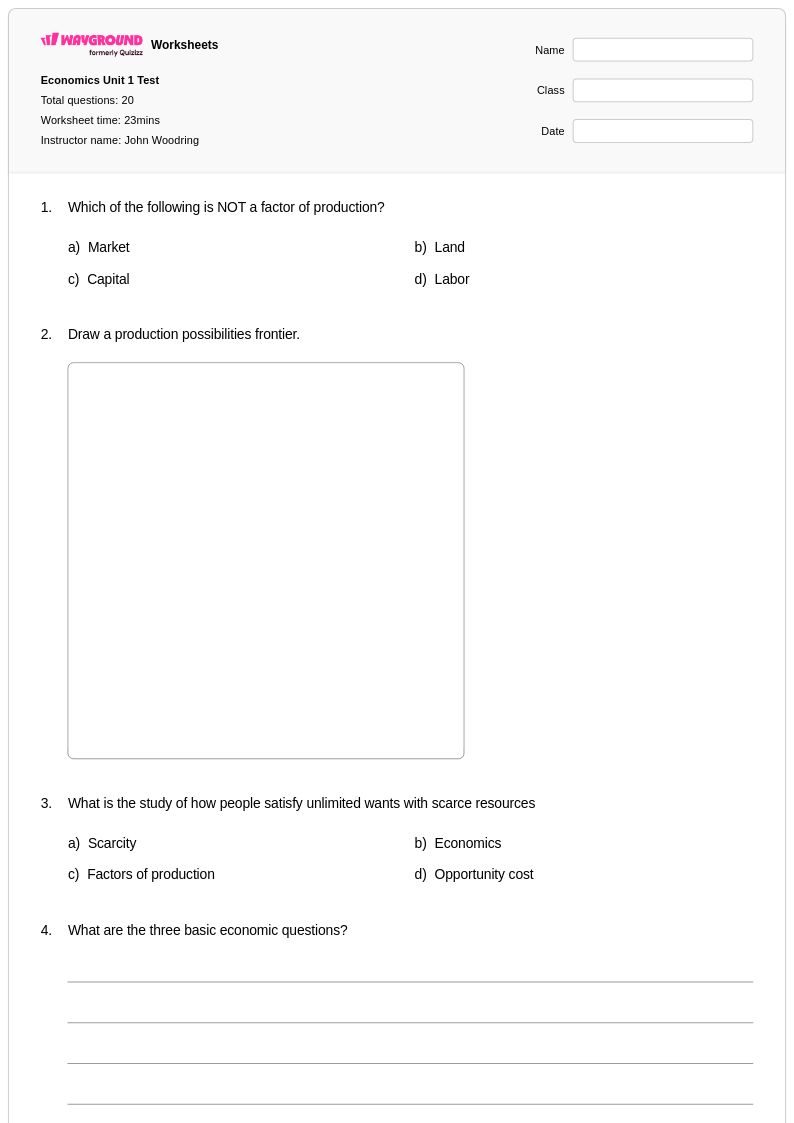
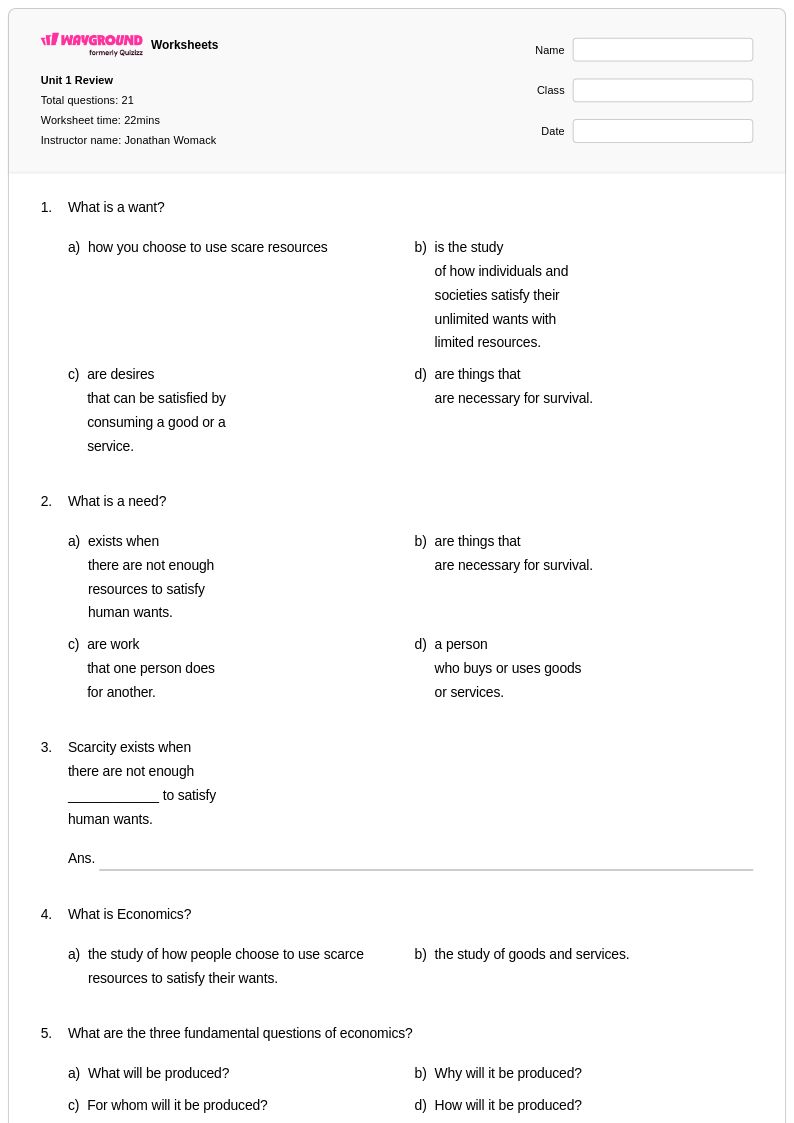
Production Possibilities Frontier worksheets available through Wayground (formerly Quizizz) provide Class 11 students with comprehensive practice in understanding one of economics' most fundamental analytical tools. These carefully designed worksheets guide students through the construction and interpretation of PPF graphs, helping them grasp essential concepts such as opportunity cost, efficiency, scarcity, and economic trade-offs. Students work through practice problems that challenge them to analyze different production scenarios, calculate opportunity costs, and identify points of productive efficiency and inefficiency on the curve. Each worksheet includes detailed answer keys that support independent learning and self-assessment, while the free printable format ensures accessibility for all classroom environments. The materials strengthen critical thinking skills as students learn to evaluate economic decisions and understand how societies allocate limited resources among competing alternatives.
Wayground (formerly Quizizz) empowers educators with millions of teacher-created resources specifically focused on Production Possibilities Frontier concepts, offering robust search and filtering capabilities that help instructors quickly locate materials aligned with Class 11 economics standards. The platform's differentiation tools allow teachers to customize worksheets for varying skill levels within their classrooms, supporting both remediation for struggling students and enrichment opportunities for advanced learners. Available in both printable pdf format and interactive digital versions, these resources provide flexibility for diverse teaching environments and learning preferences. Teachers can efficiently plan comprehensive lesson sequences, create targeted skill practice sessions, and develop assessment materials that reinforce students' understanding of fundamental economic principles. The extensive collection ensures educators have access to varied problem types and scenarios that keep students engaged while building mastery of this critical economic concept.
FAQs
How do I teach the Production Possibilities Frontier to high school economics students?
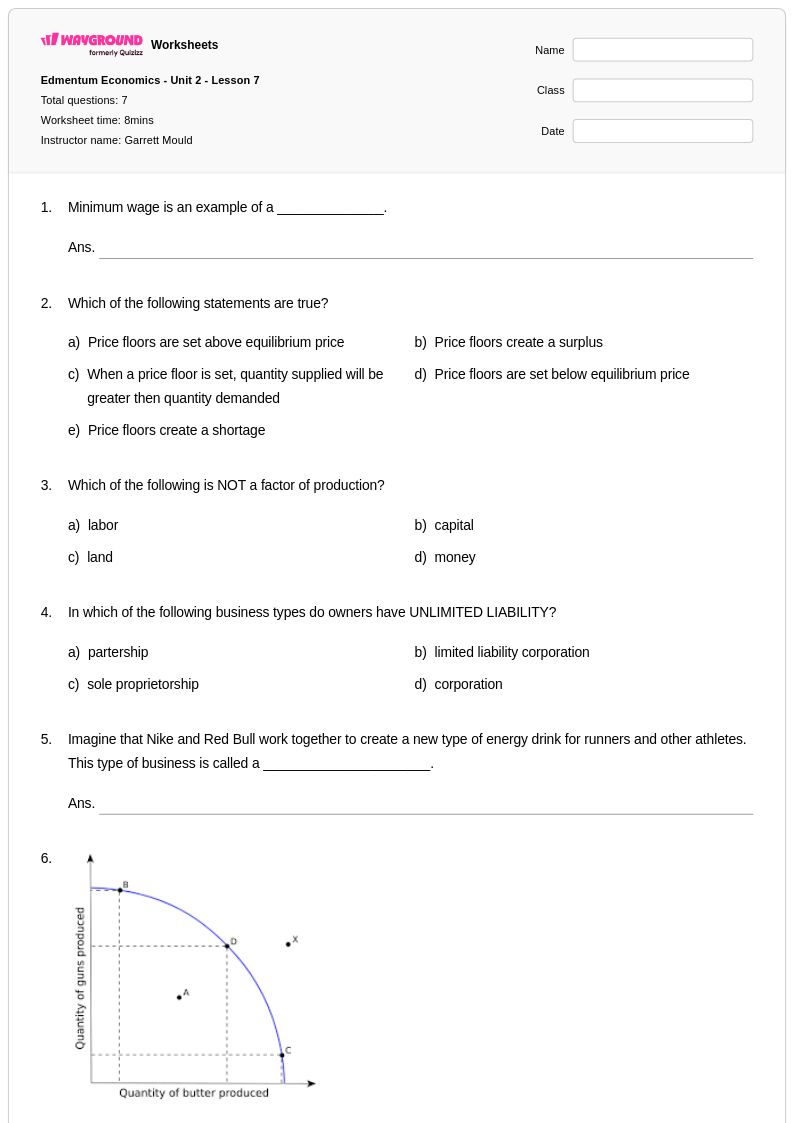
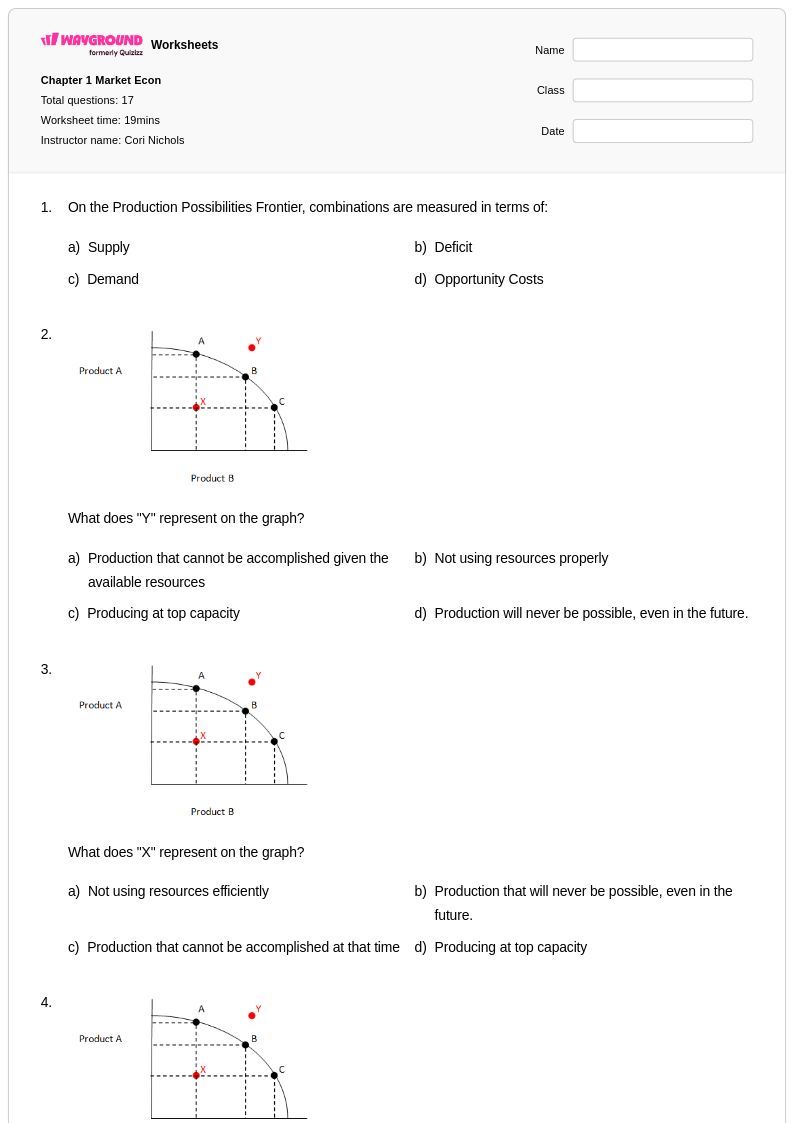
Start by grounding the PPF in a concrete scenario students can relate to, such as a country choosing between producing butter and guns, or a student dividing study time between two subjects. Use a simple two-good model to introduce the concept visually before moving into graphing. Once students can plot basic curves, introduce the ideas of efficiency (points on the curve), inefficiency (points inside), and unattainability (points outside), then layer in opportunity cost by walking through the trade-offs represented at each point along the curve.
What exercises help students practice reading and interpreting a Production Possibilities Frontier graph?
Effective practice exercises include plotting production possibilities curves from data tables, identifying whether given coordinate points are efficient, inefficient, or unattainable, and calculating the opportunity cost of shifting production from one good to another. Students should also practice interpreting shifts of the entire PPF curve outward or inward, as these represent economic growth or contraction. Worksheets that combine graphing with short written explanation prompts reinforce both computational and conceptual understanding.
What mistakes do students commonly make when working with the Production Possibilities Frontier?
The most common misconception is confusing points inside the curve (inefficient, not impossible) with points outside the curve (unattainable with current resources). Students also frequently misstate opportunity cost by listing both goods sacrificed rather than identifying the specific amount of one good given up to gain a unit of another. A third common error is assuming a linear PPF is always correct, without understanding that a bowed-out curve reflects increasing opportunity costs due to resources not being equally suited to producing all goods.
How do I explain opportunity cost using the Production Possibilities Frontier?
Opportunity cost on a PPF is the amount of one good that must be given up to produce one additional unit of another good. Teachers can make this concrete by walking students through two specific points on the curve and asking: what was lost when we moved from point A to point B? On a linear PPF, opportunity cost is constant along the entire curve, while a bowed-out PPF demonstrates increasing opportunity costs, making it a useful visual tool for showing why specialization and trade-offs are central to economic decision-making.
How can I use Production Possibilities Frontier worksheets in my classroom?
Production Possibilities Frontier worksheets on Wayground are available as printable PDFs for traditional classroom use and in digital formats for technology-integrated environments, including the option to host them as a quiz directly on Wayground. Printable versions work well for guided notes, homework assignments, and assessment prep, while digital versions allow for self-paced practice and immediate feedback. Wayground also supports accommodations such as read aloud, extended time, and reduced answer choices, which can be assigned to individual students without disrupting the experience for the rest of the class.
How do I differentiate Production Possibilities Frontier instruction for students at different skill levels?
For students who are still building foundational skills, start with linear PPF models and focus on identifying efficient versus inefficient points before introducing opportunity cost calculations. Advanced learners can work with bowed-out curves, analyze shifts caused by technological change or new resources, and connect PPF concepts to comparative advantage and international trade. On Wayground, teachers can apply differentiated settings per student, including reduced answer choices for students who need scaffolding and extended time for those requiring additional processing support, all without signaling differences to the rest of the class.