
15 Q
7th - Uni
16 Q
7th
20 Q
7th
20 Q
7th
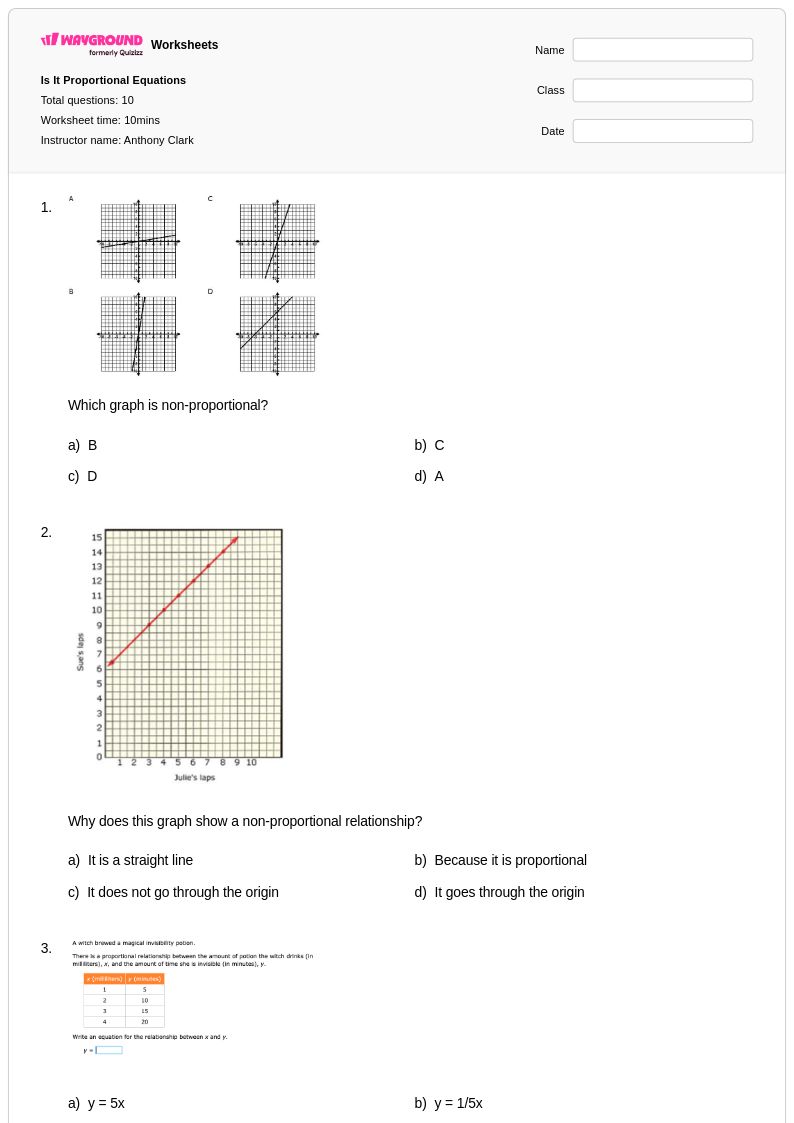
10 Q
7th - Uni
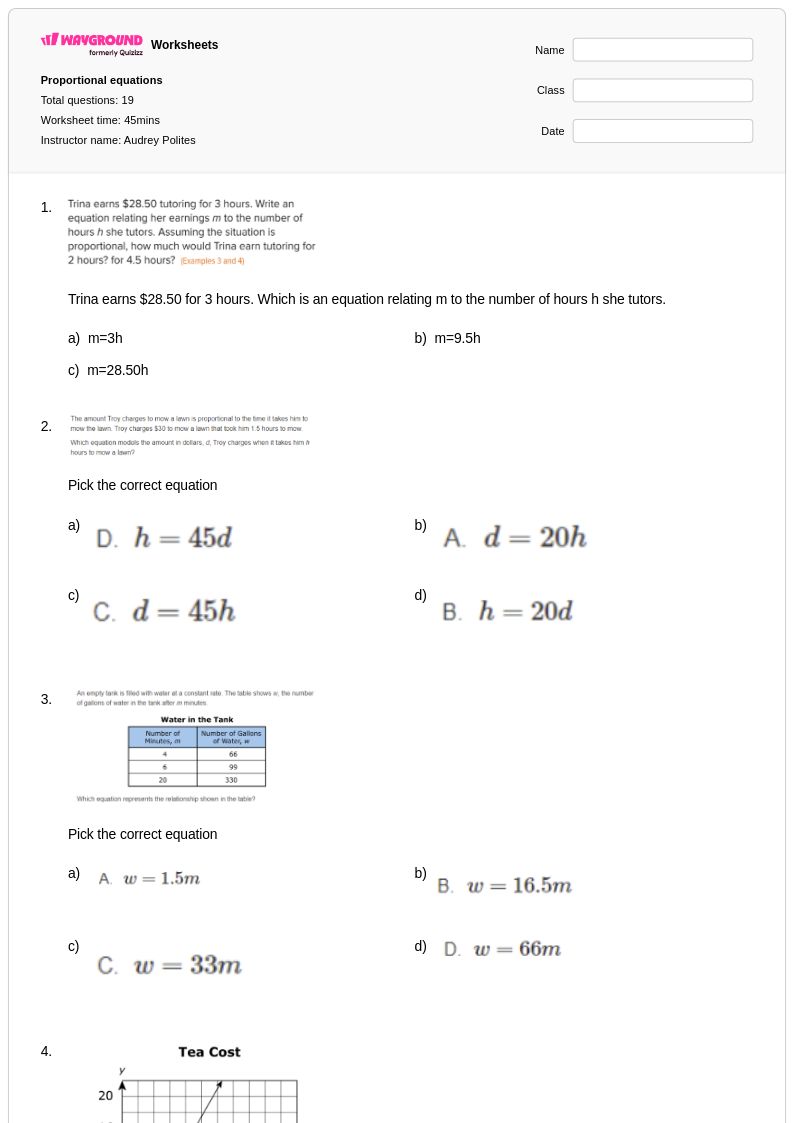
19 Q
7th
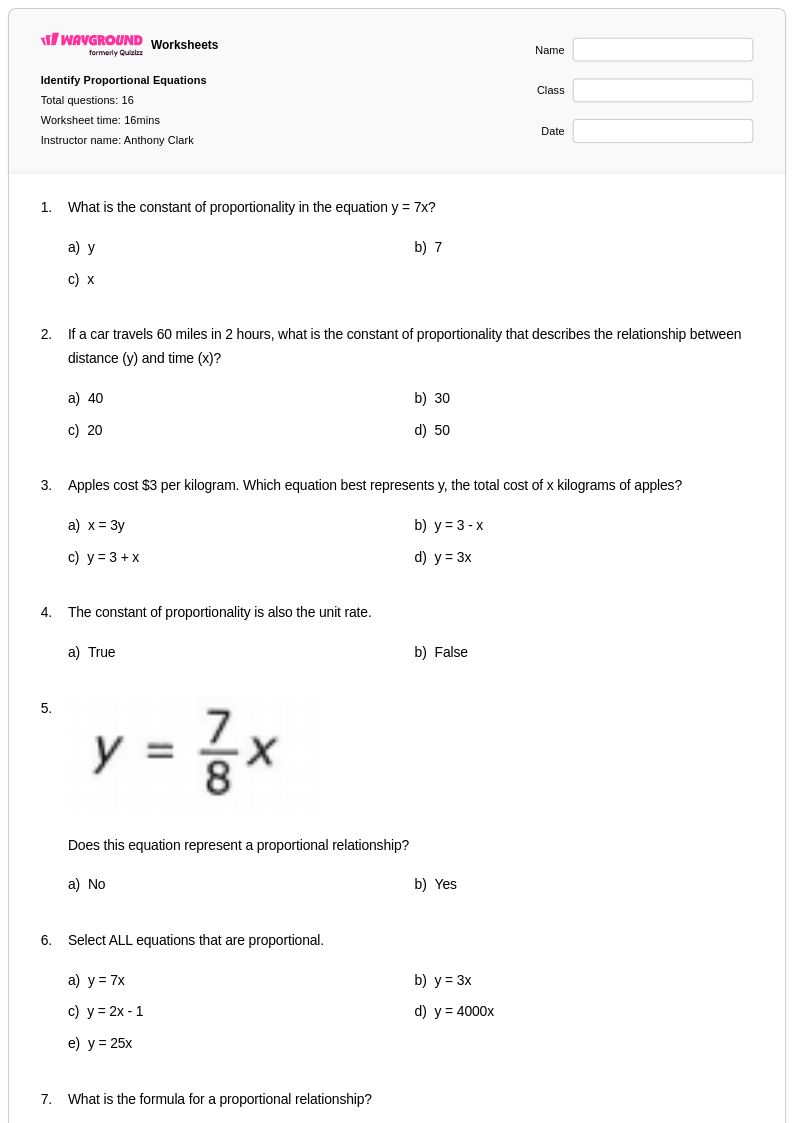
16 Q
7th - Uni
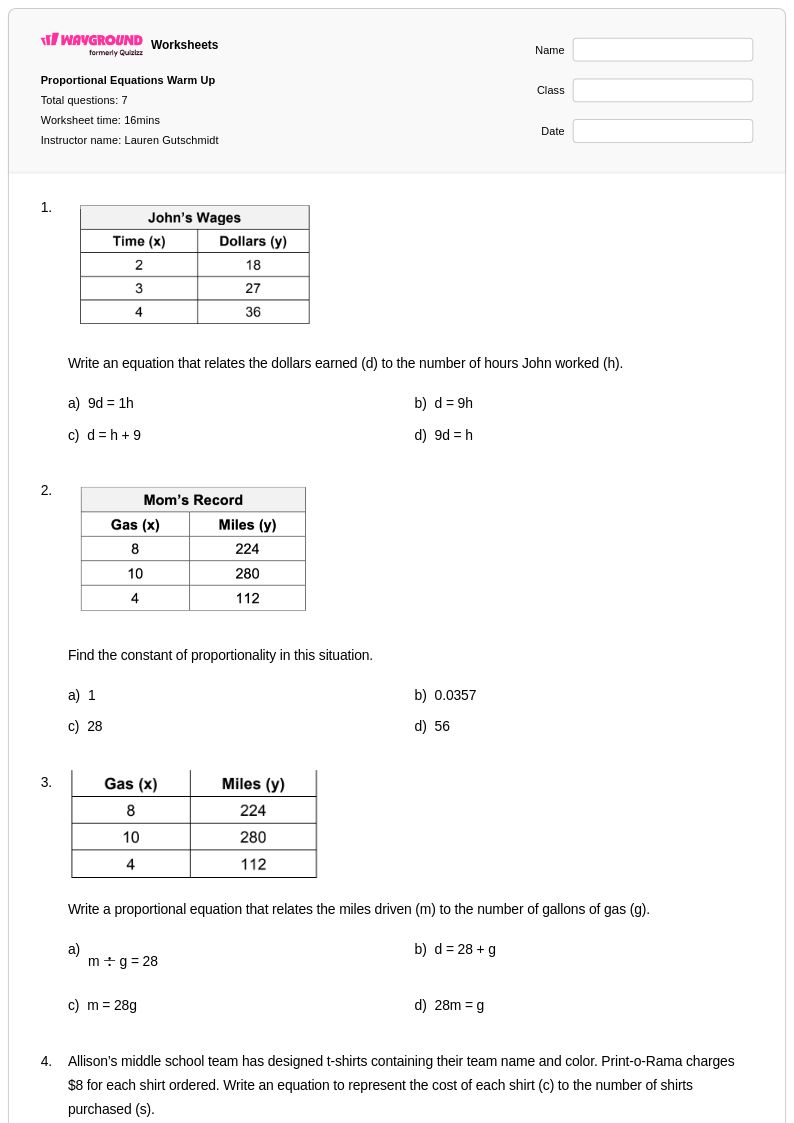
7 Q
7th
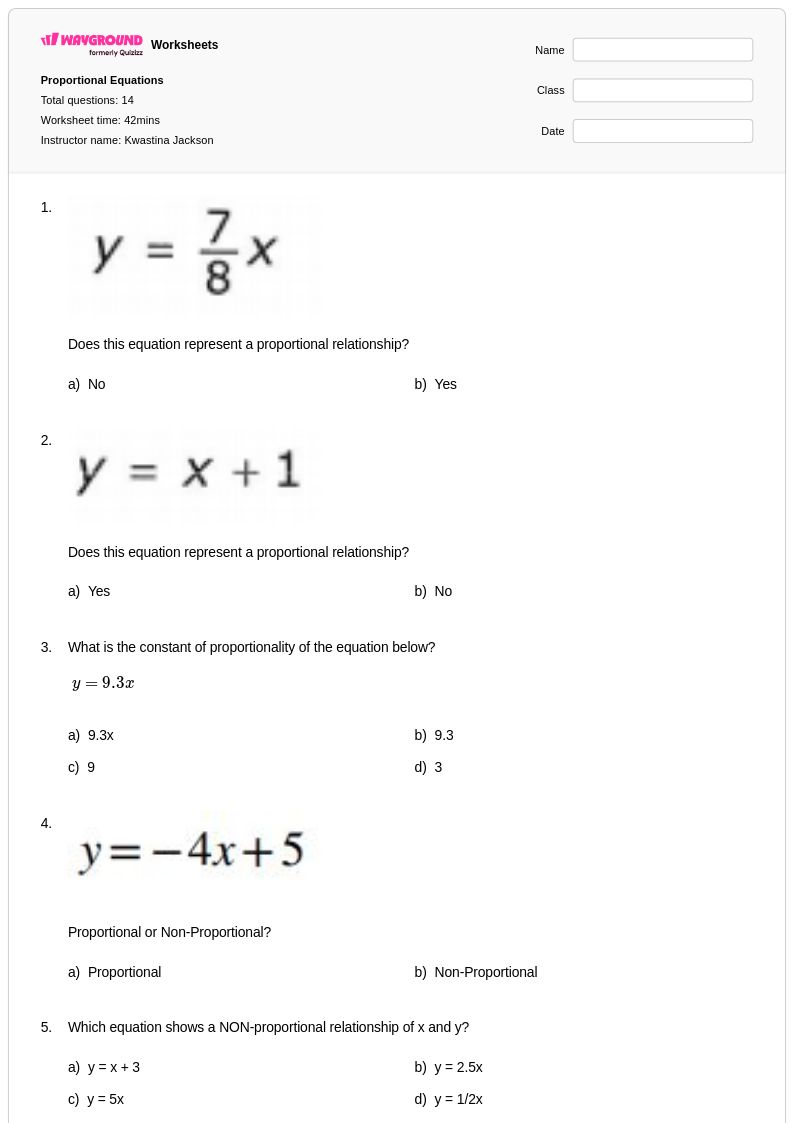
14 Q
7th
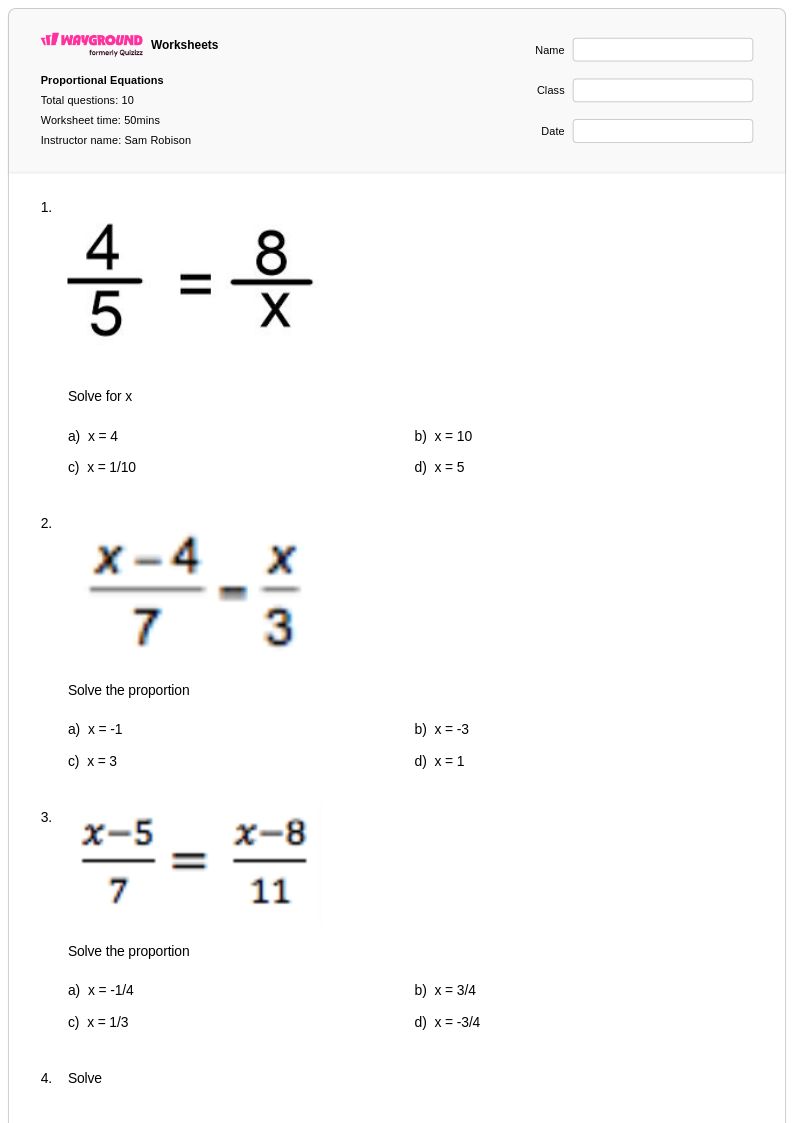
10 Q
12th
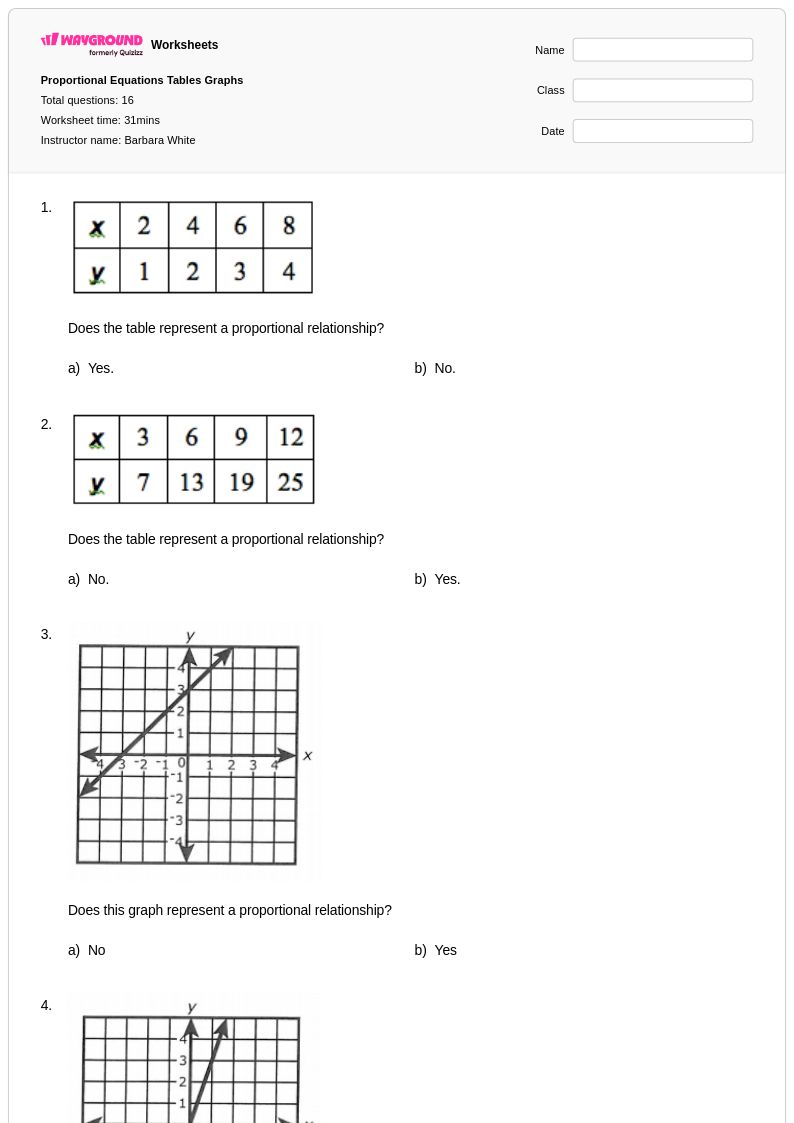
16 Q
7th
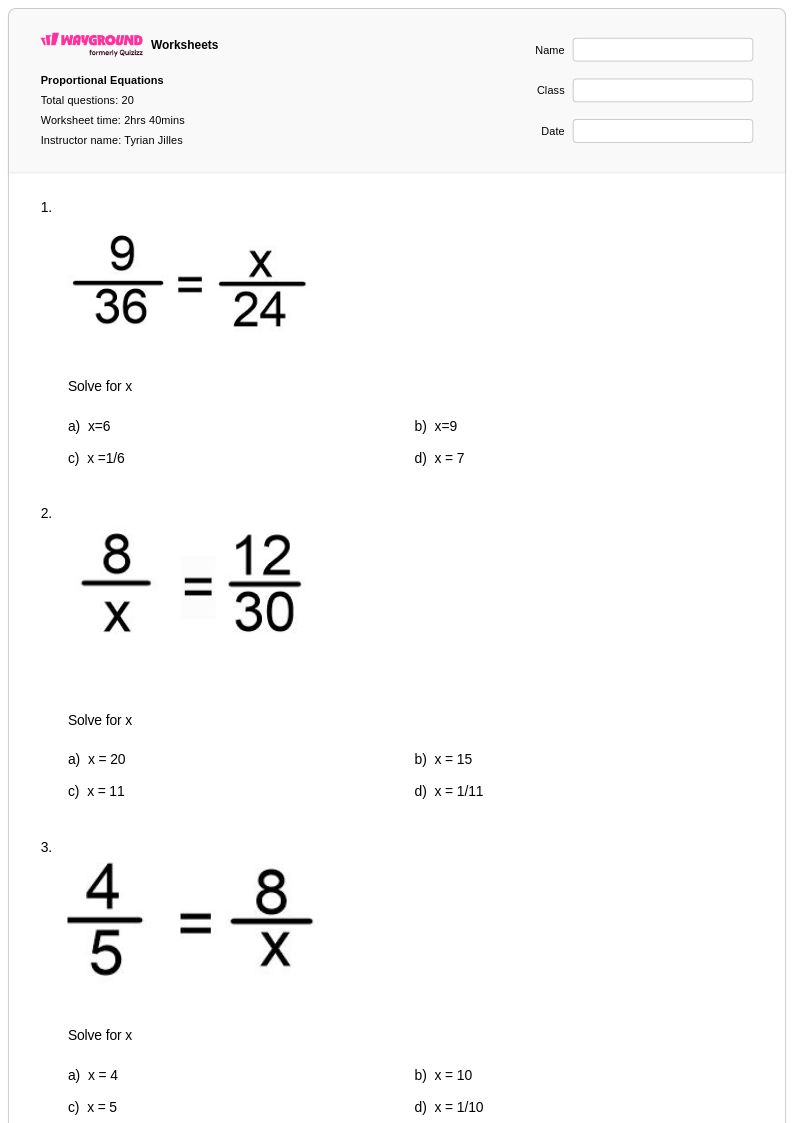
20 Q
9th - 10th
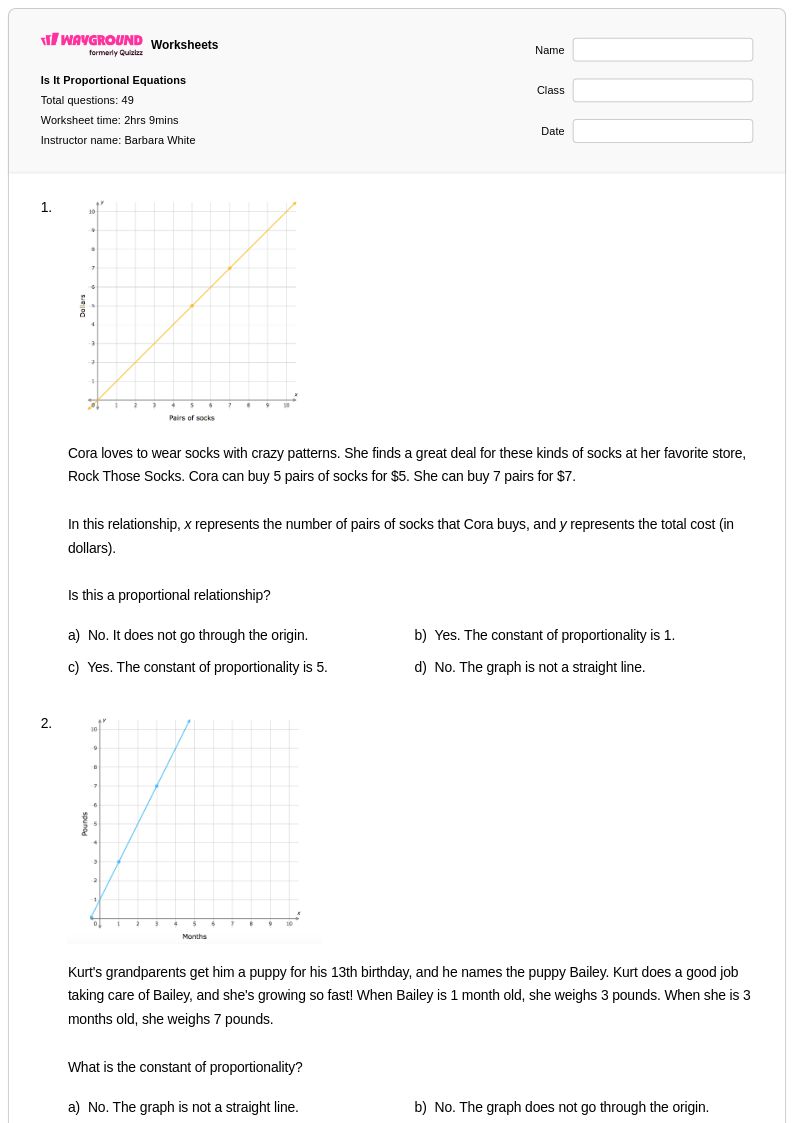
49 Q
7th
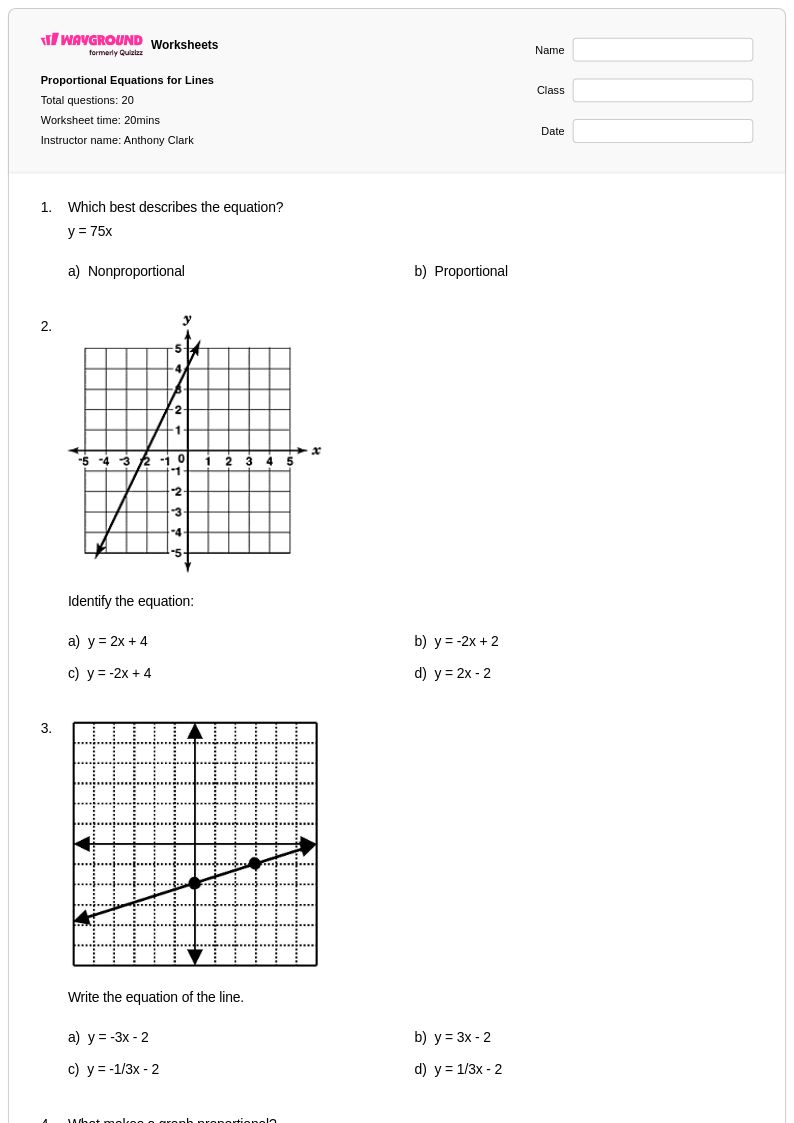
20 Q
8th - Uni
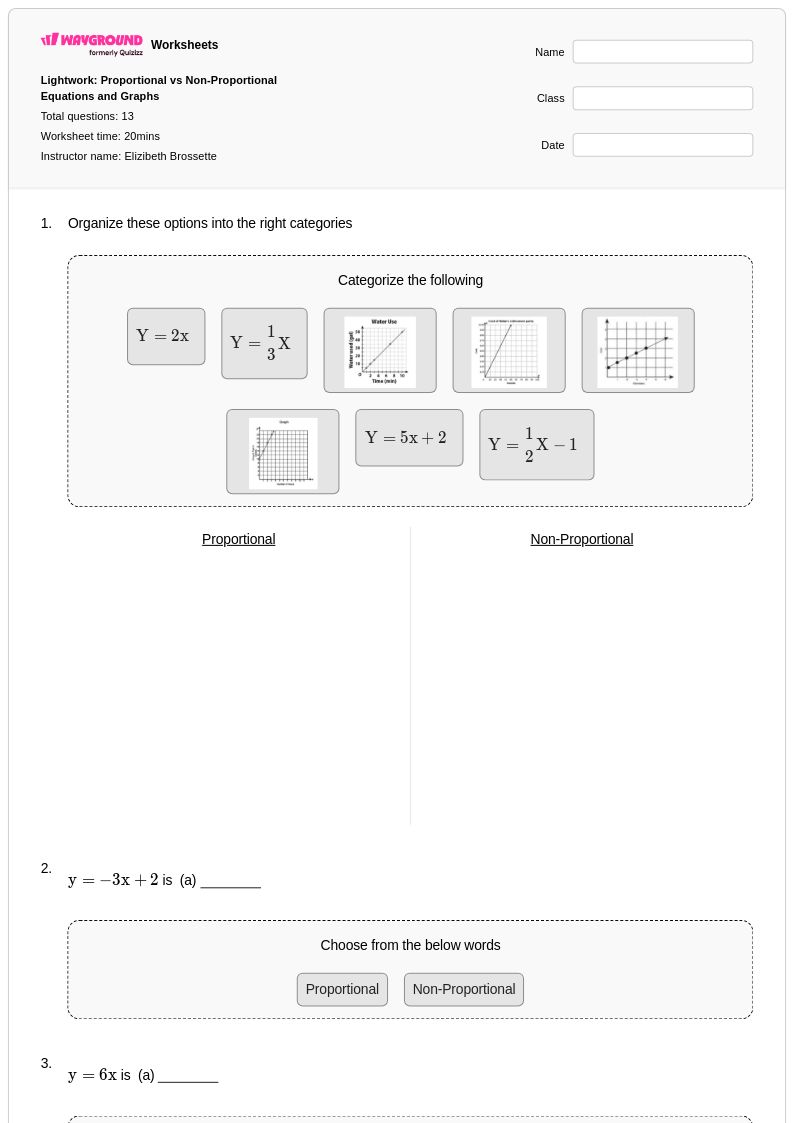
13 Q
8th
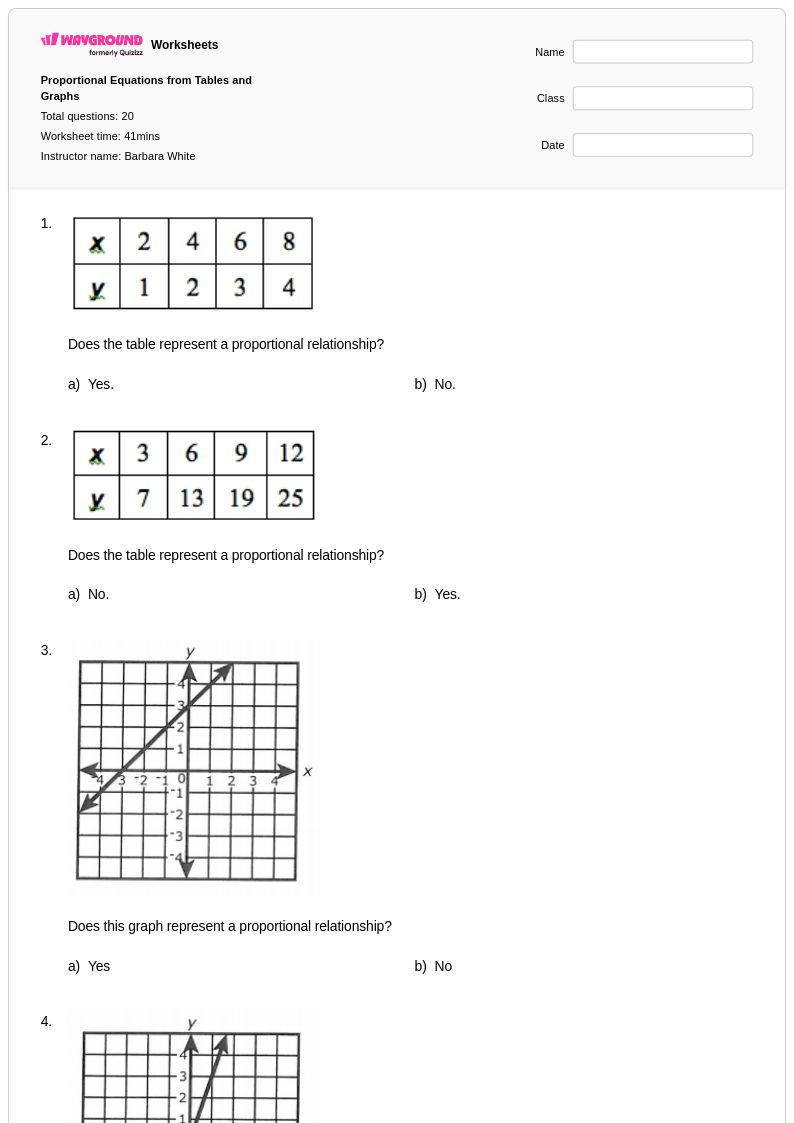
20 Q
7th
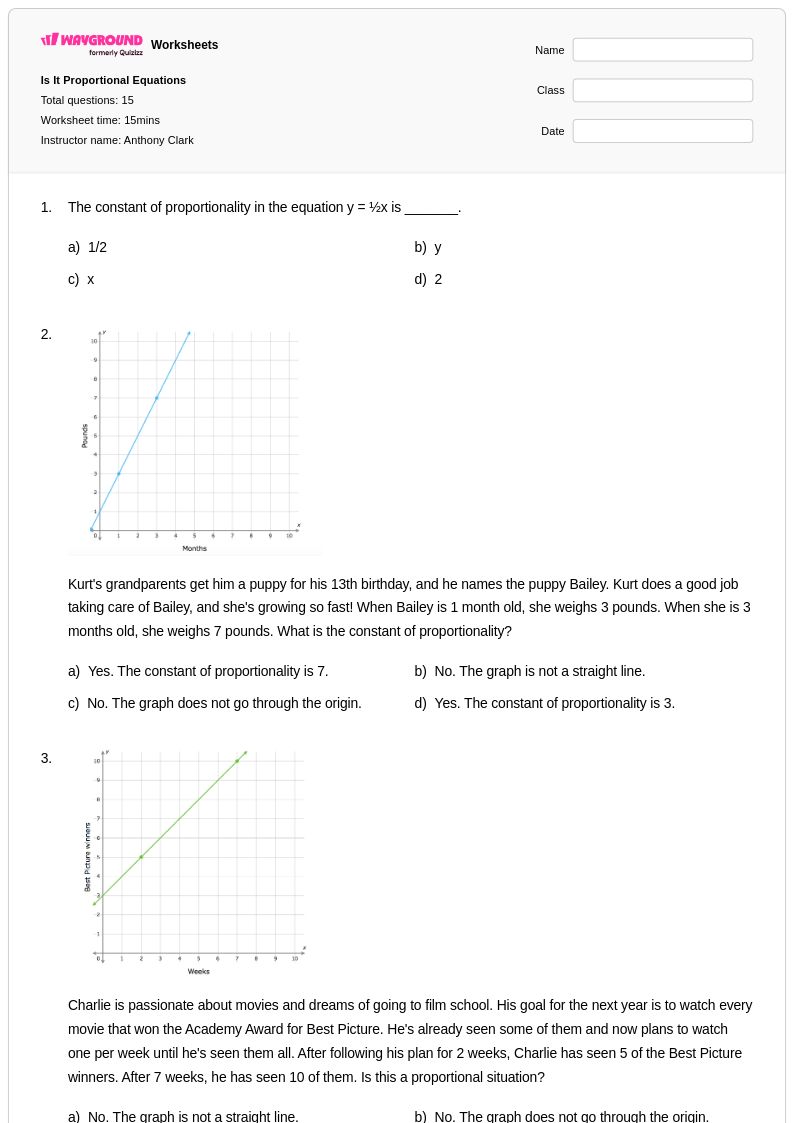
15 Q
7th - Uni
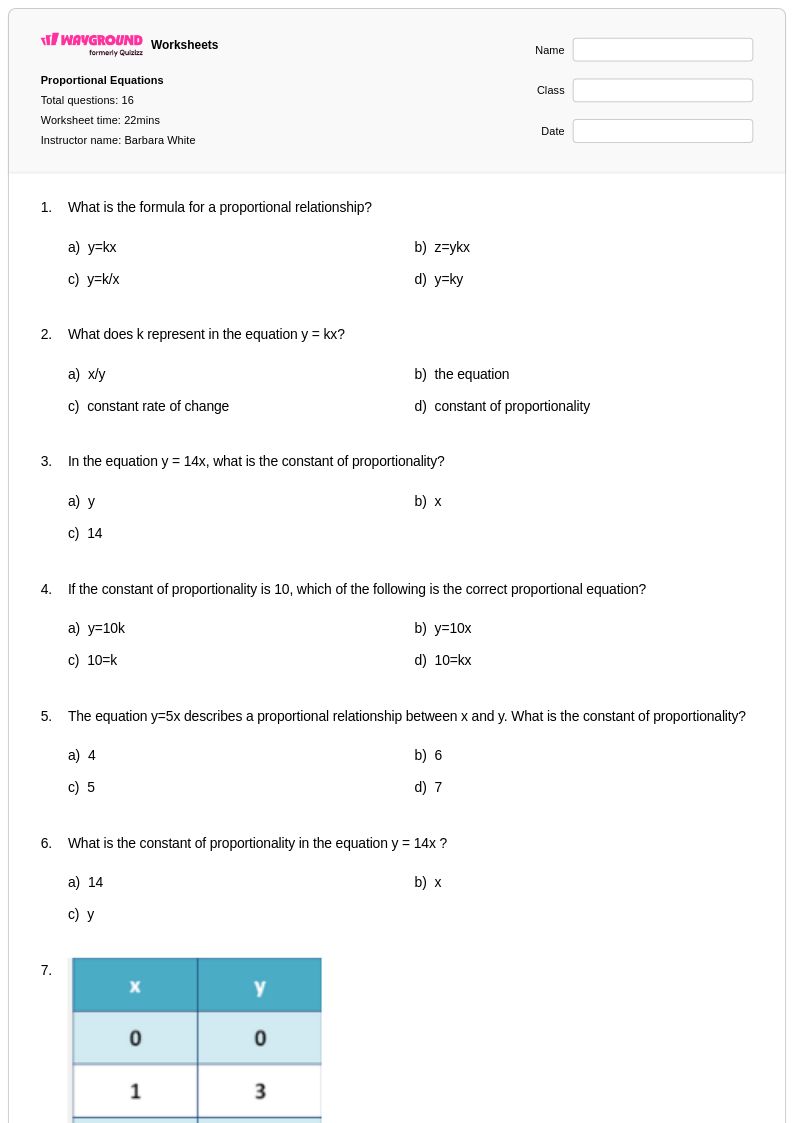
16 Q
7th
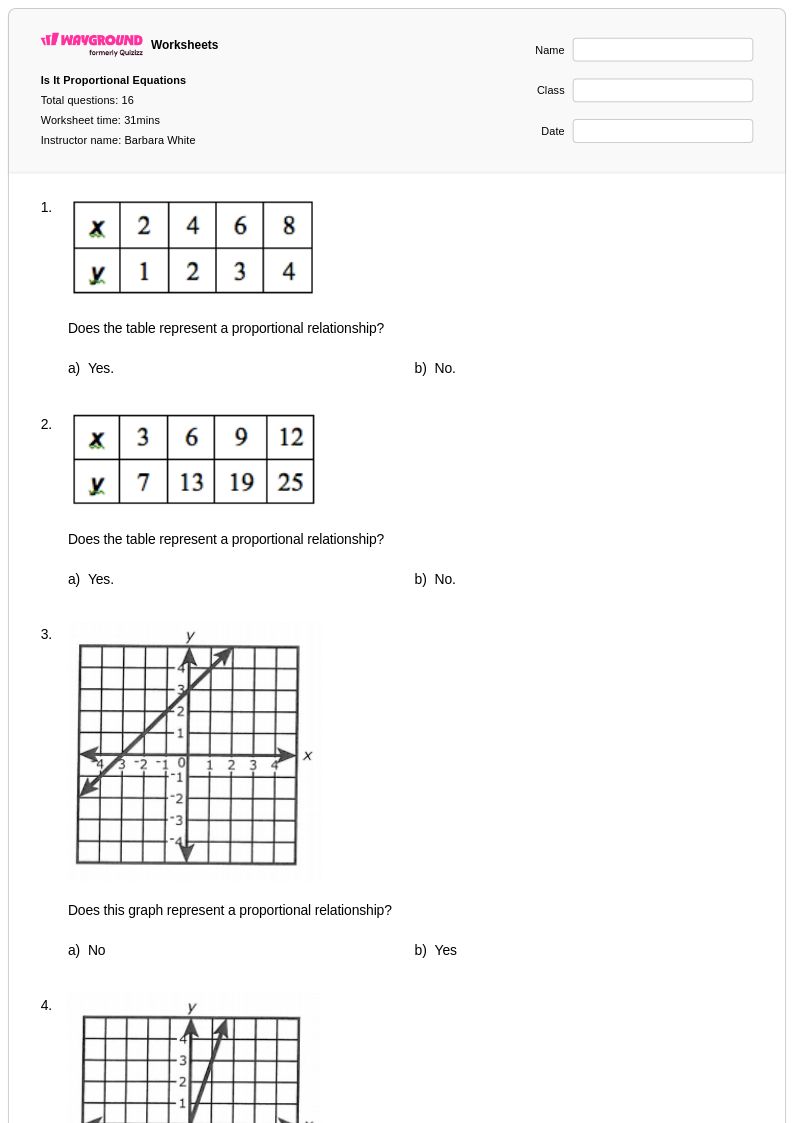
16 Q
7th
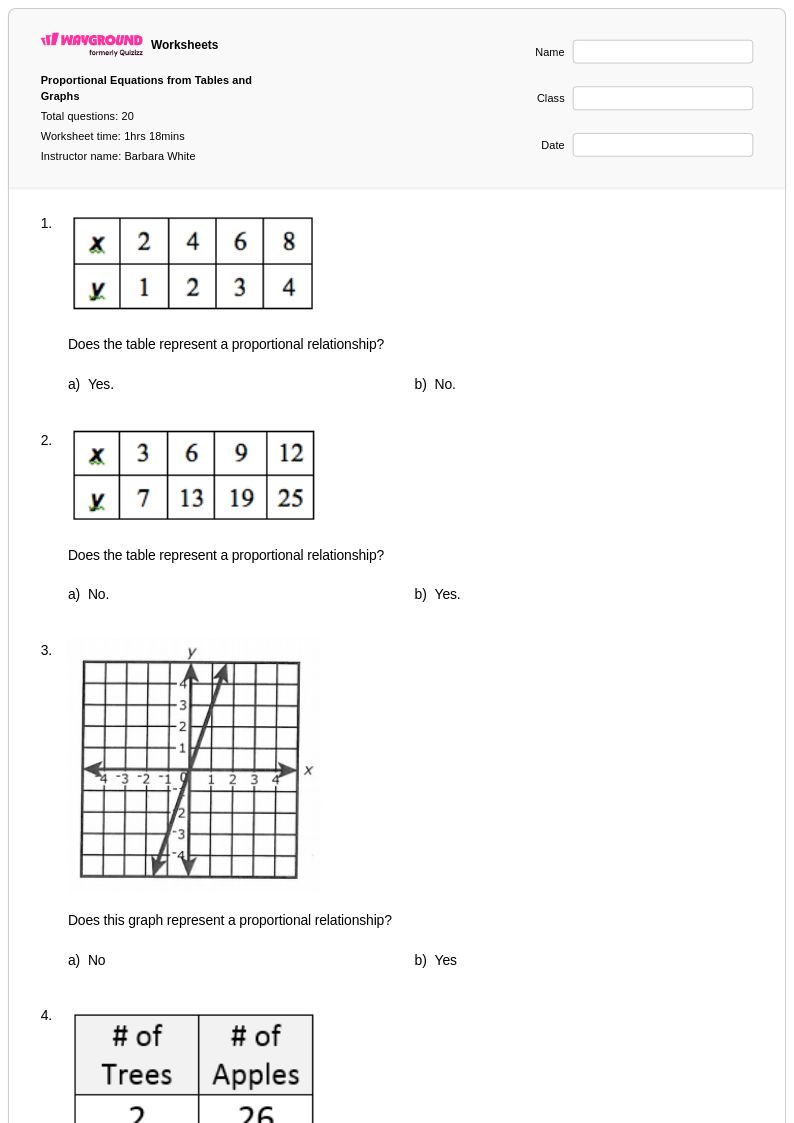
20 Q
7th - 8th
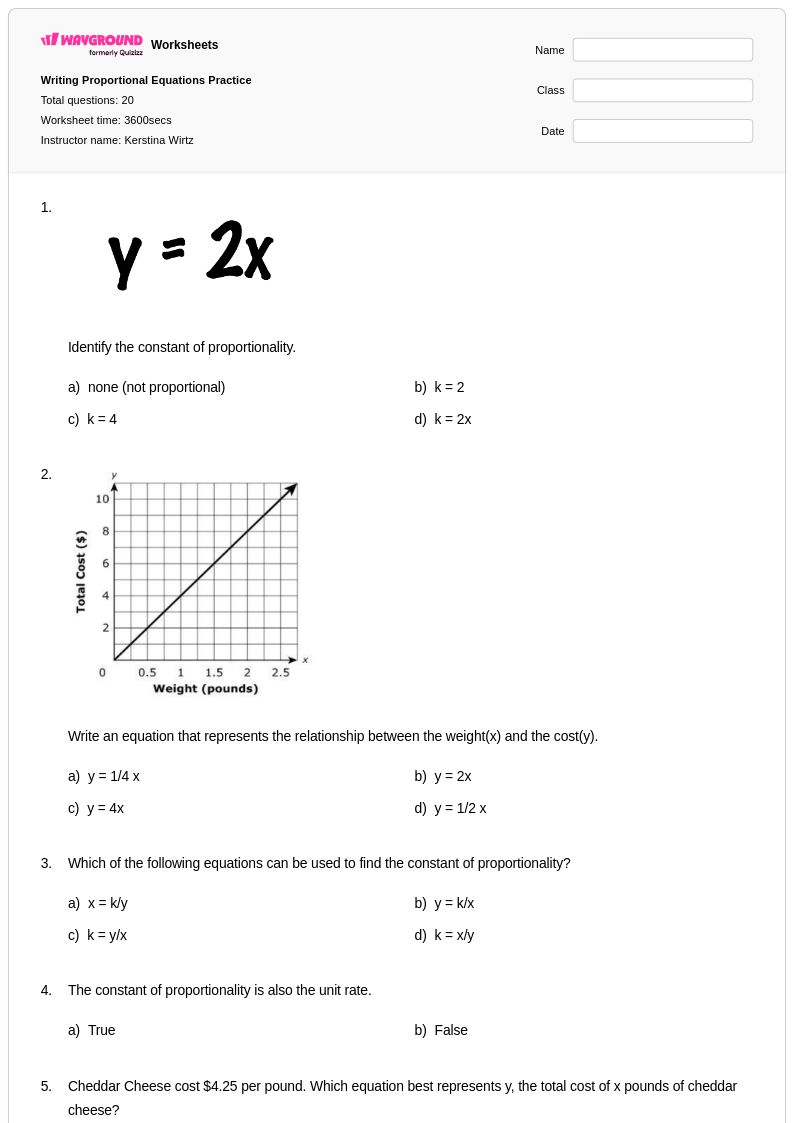
20 Q
7th
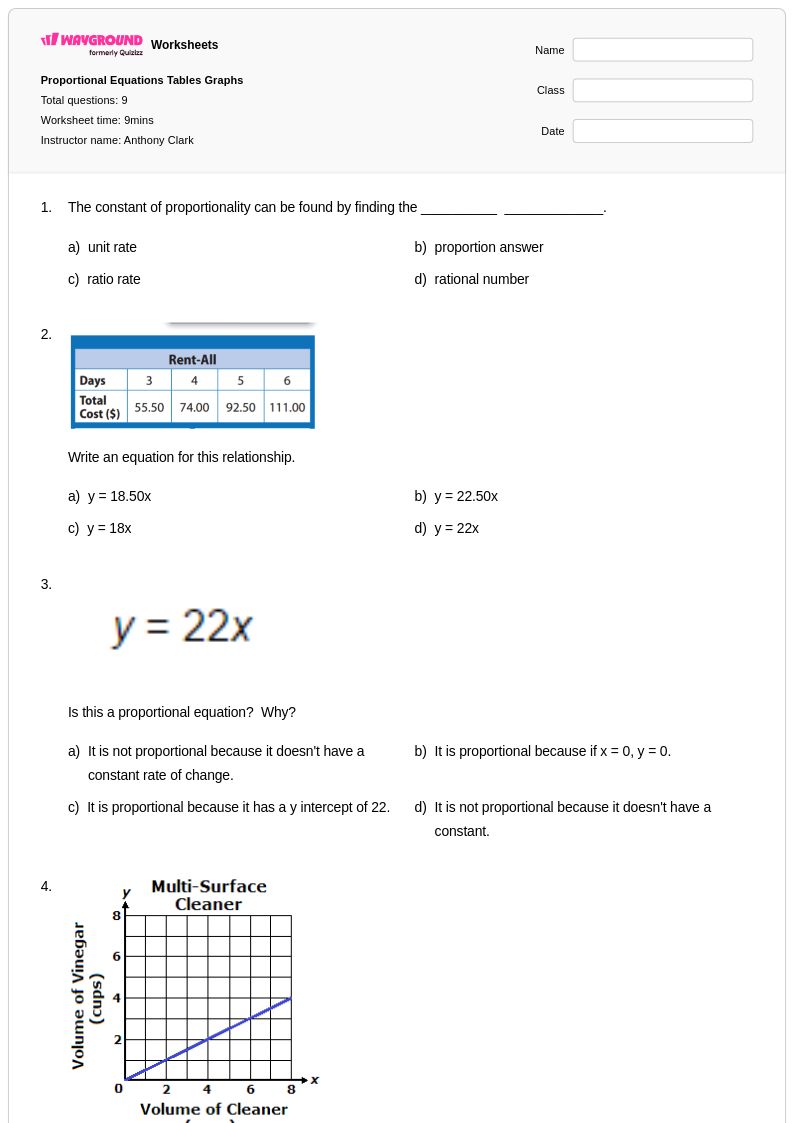
9 Q
7th - Uni
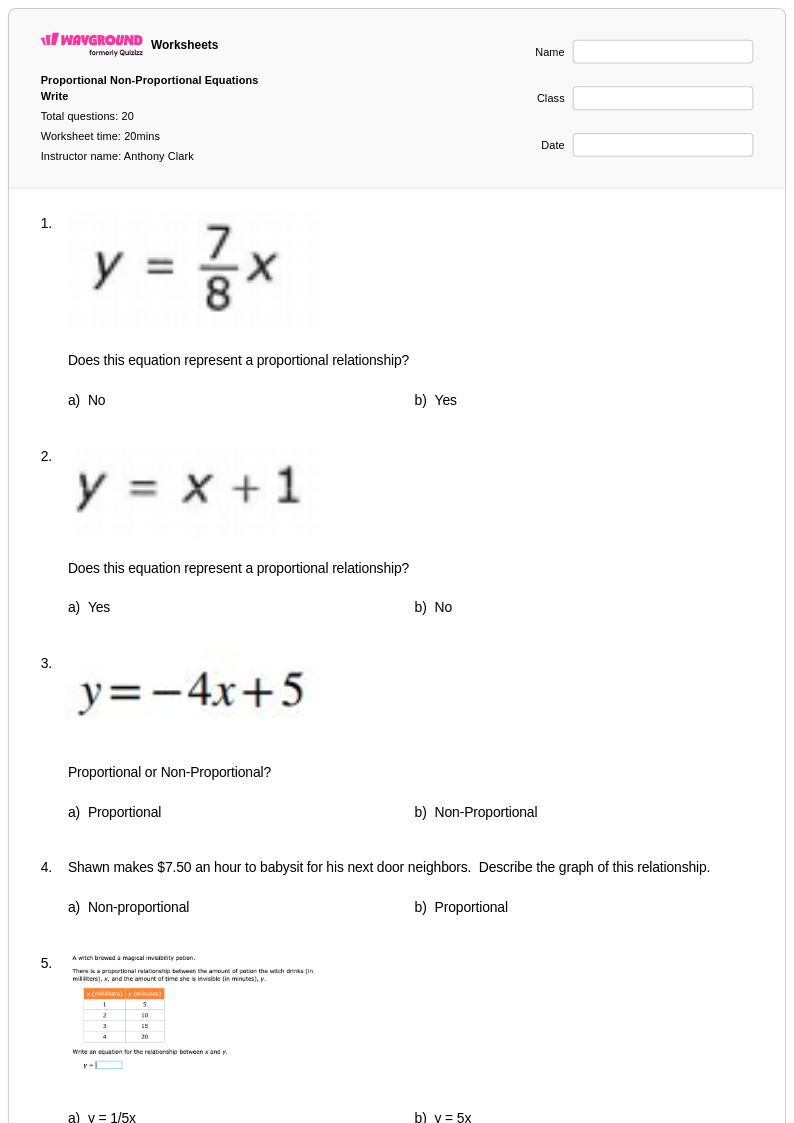
20 Q
7th - Uni
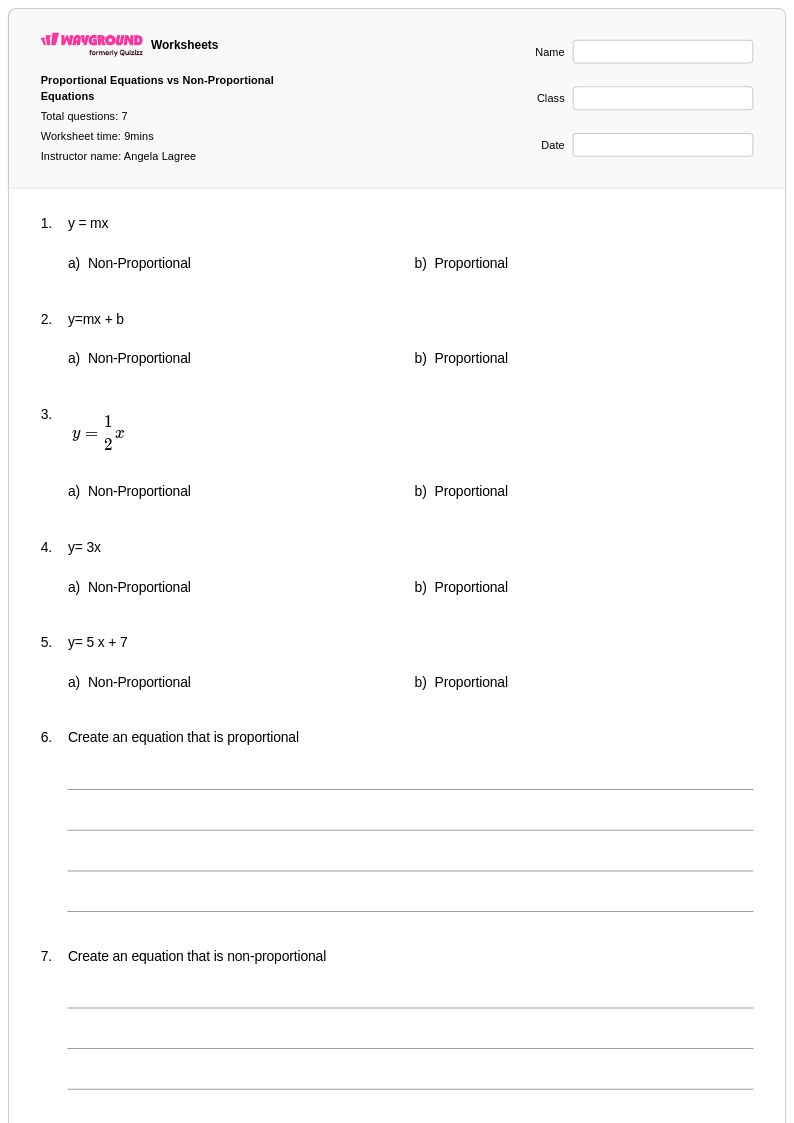
7 Q
7th - 8th
Explore Worksheets by Subjects
Explore printable Proportional Equations worksheets
Proportional equations worksheets available through Wayground (formerly Quizizz) provide students with comprehensive practice in solving problems involving direct and inverse proportional relationships. These educational resources strengthen critical algebraic thinking skills by challenging students to identify proportional constants, set up equivalent ratios, and solve for unknown variables using cross-multiplication and other algebraic techniques. The collection includes diverse practice problems ranging from basic proportion solving to complex real-world applications involving rates, scaling, and unit conversions. Each worksheet comes with detailed answer keys that support independent learning and self-assessment, while the free printable format ensures accessibility for both classroom instruction and homework assignments. Students develop fluency in recognizing proportional relationships in tables, graphs, and equations while building the foundational skills necessary for advanced algebraic concepts.
Wayground (formerly Quizizz) empowers educators with millions of teacher-created proportional equations resources that feature robust search and filtering capabilities for quick content discovery. The platform's standards alignment ensures worksheets meet curriculum requirements, while differentiation tools allow teachers to modify difficulty levels and problem types to accommodate diverse learning needs. Flexible customization options enable educators to add, remove, or modify practice problems to target specific skill gaps or extend learning for advanced students. Available in both printable pdf format and interactive digital versions, these worksheets support various instructional models from traditional paper-and-pencil practice to technology-enhanced learning environments. Teachers can efficiently plan lessons, provide targeted remediation for struggling students, offer enrichment opportunities for accelerated learners, and deliver consistent skill practice that reinforces mastery of proportional reasoning across multiple mathematical contexts.
FAQs
How do I teach proportional equations?
What exercises help students practice proportional equations?
What are common mistakes students make with proportional equations?
How can I use this proportional equations worksheet?
How do proportional equations fit into the math curriculum?
How can I differentiate this topic for my students?