
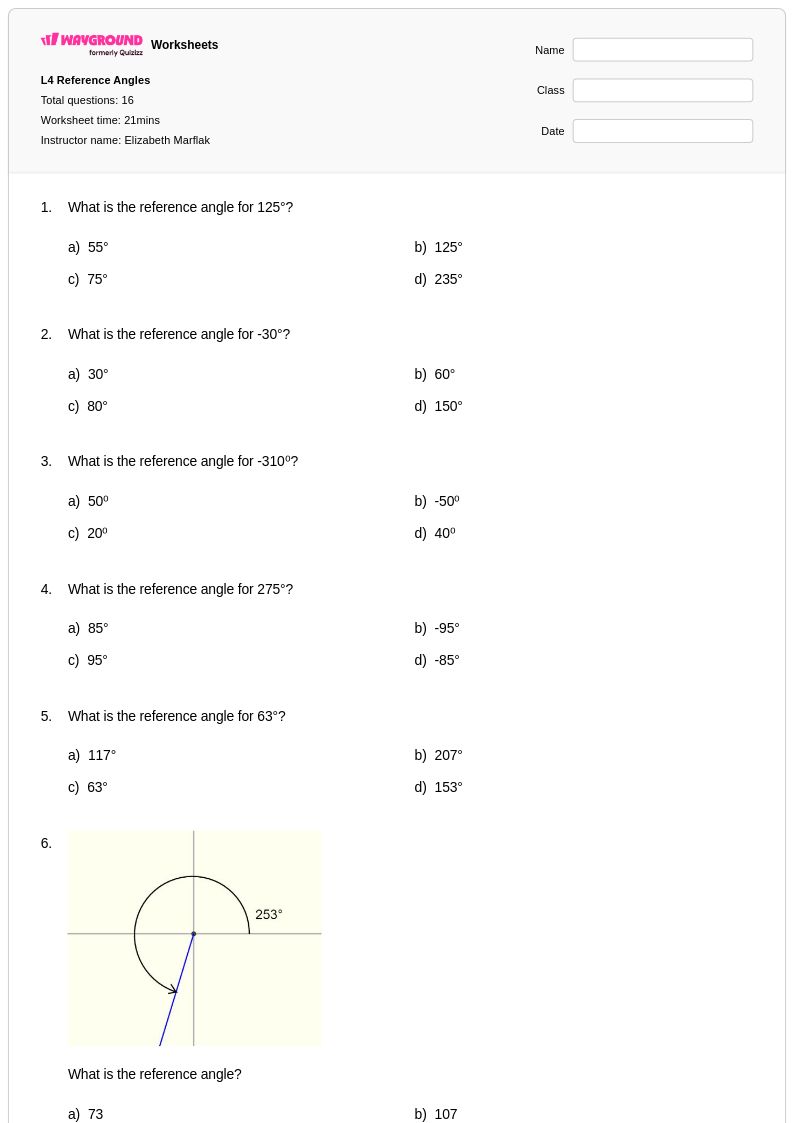
16 Q
9th - 12th
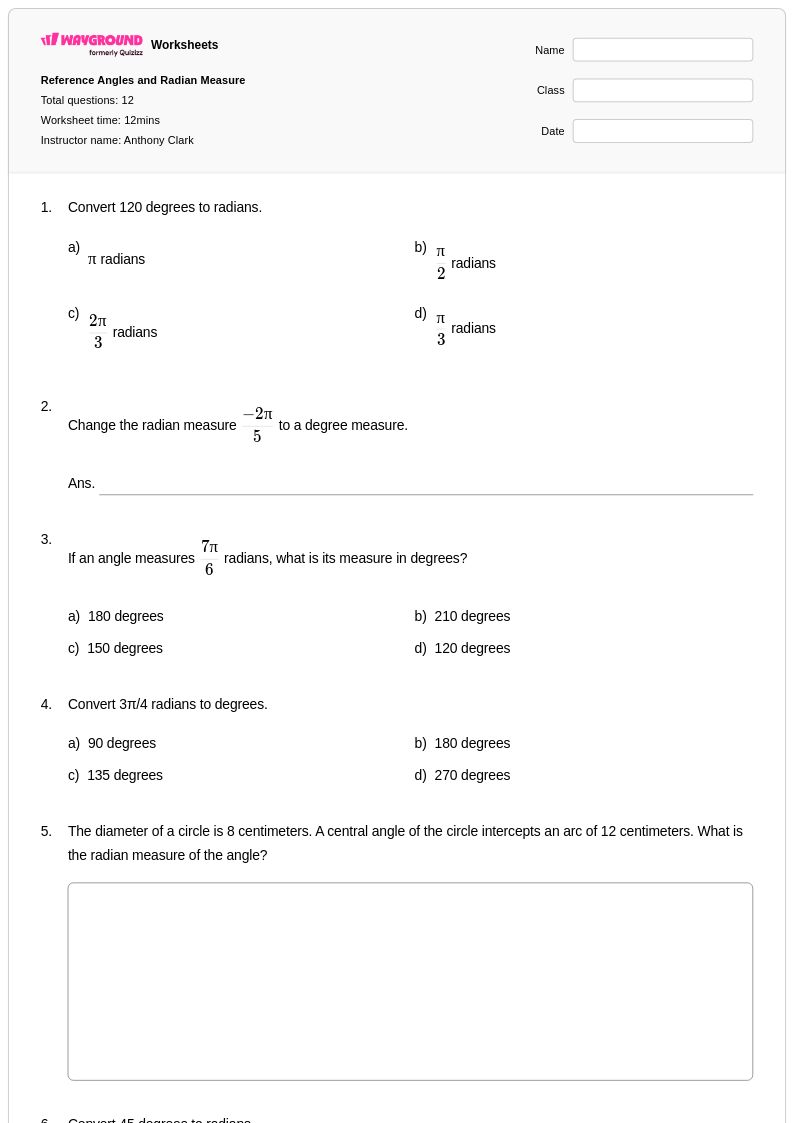
12 Q
8th - Uni
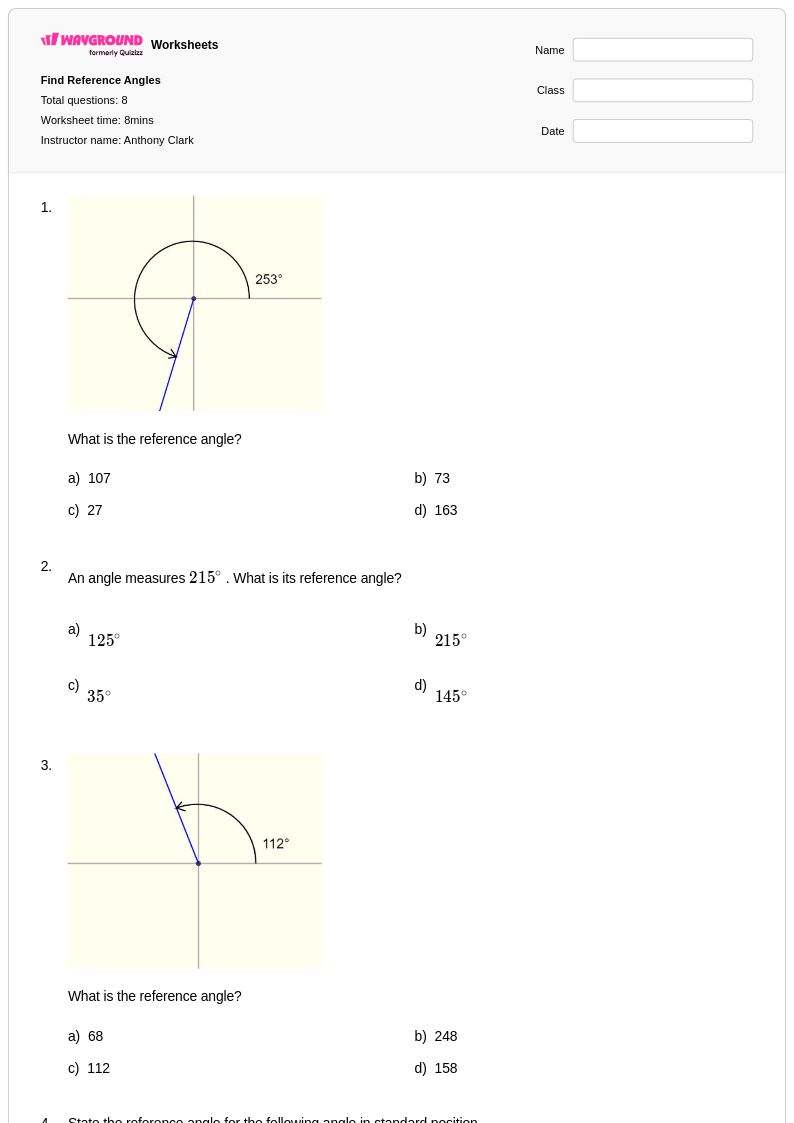
8 Q
8th - Uni
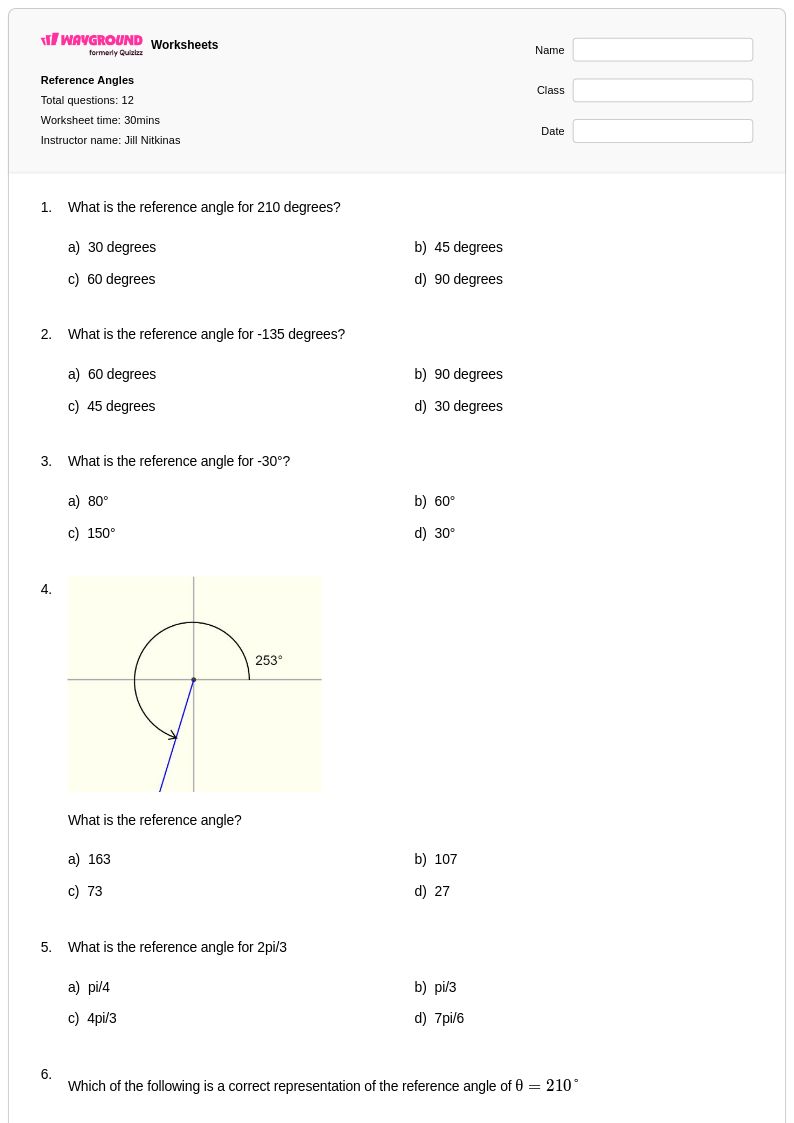
12 Q
9th - 12th
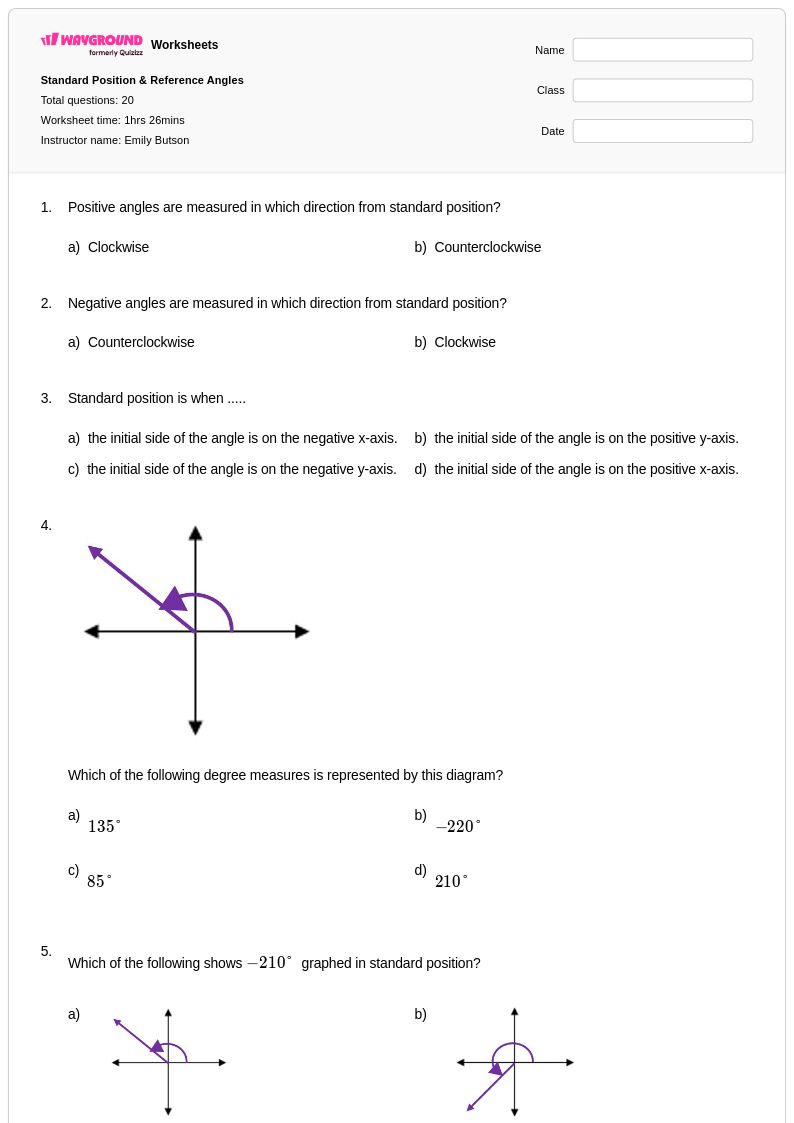
20 Q
9th - 12th
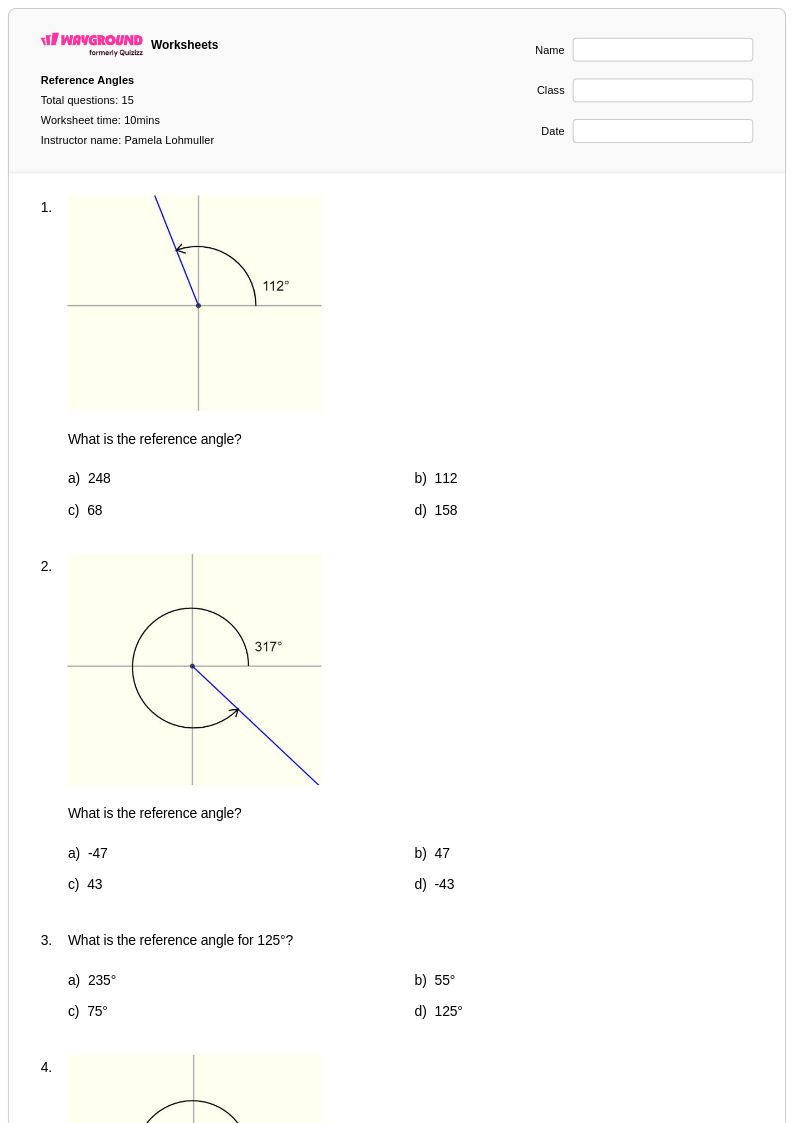
15 Q
9th - 12th

20 Q
9th - Uni

35 Q
9th - 12th
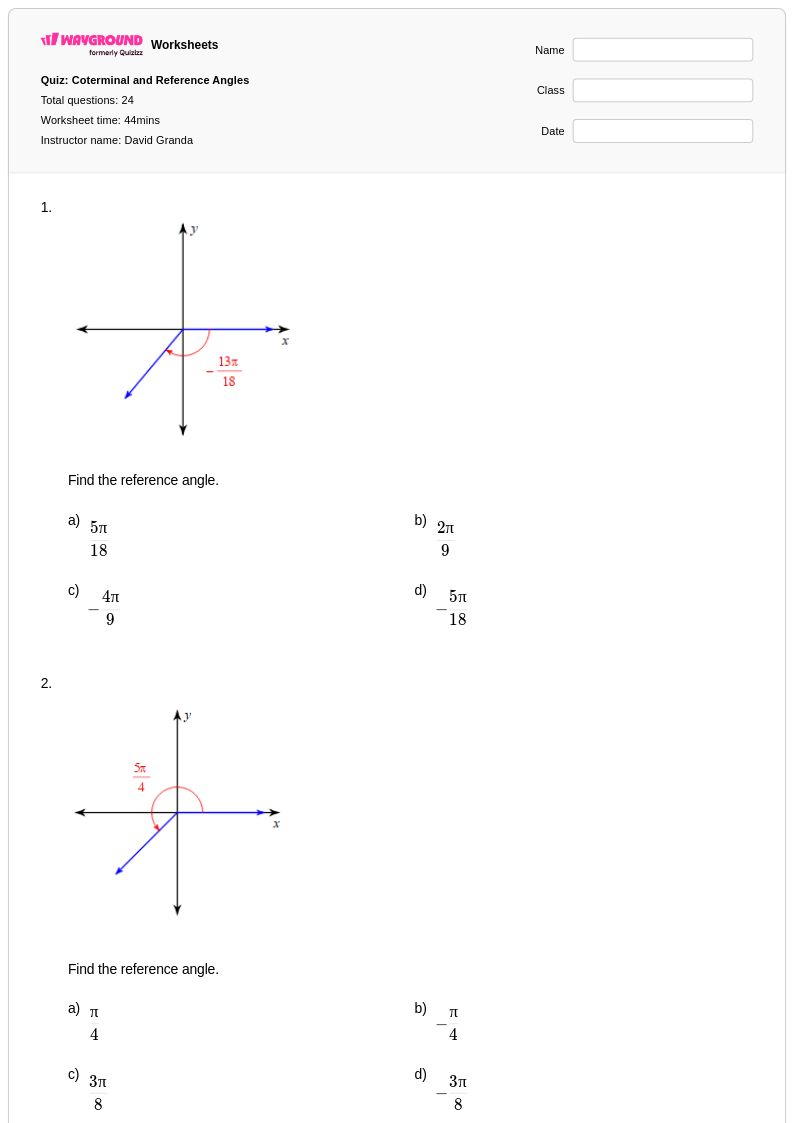
24 Q
9th - 12th
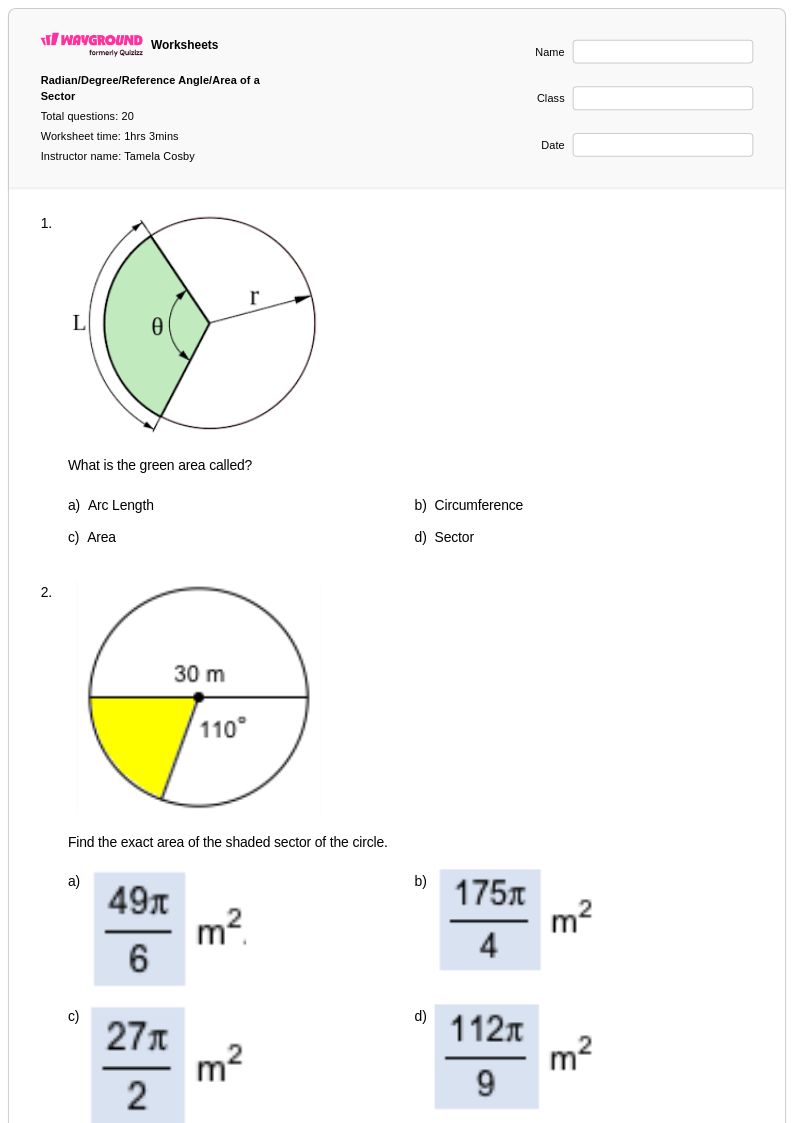
20 Q
9th
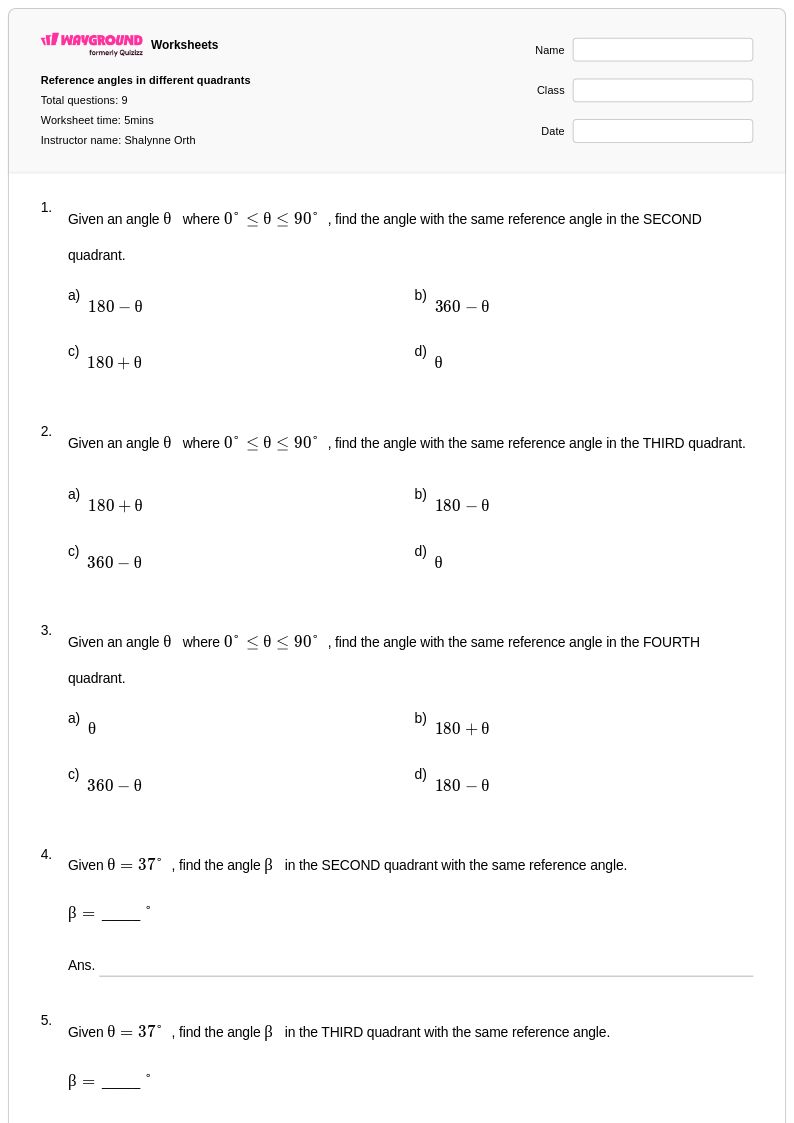
9 Q
7th - 9th
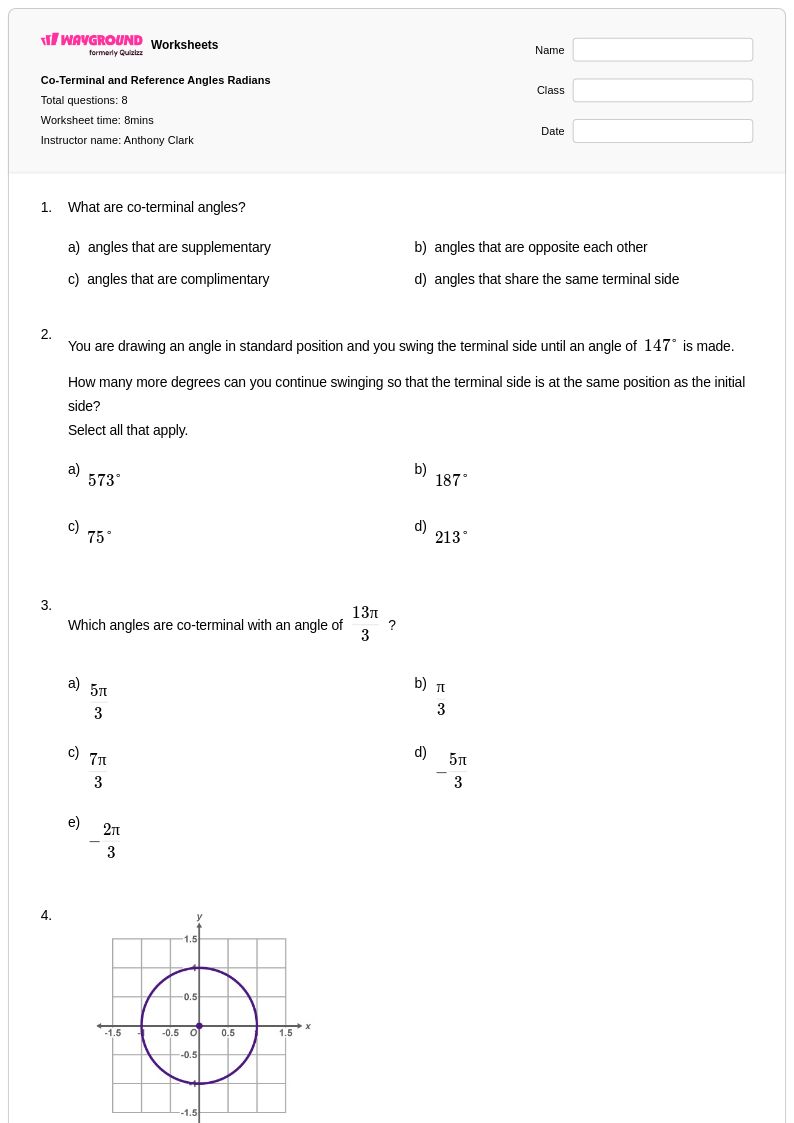
8 Q
9th - Uni
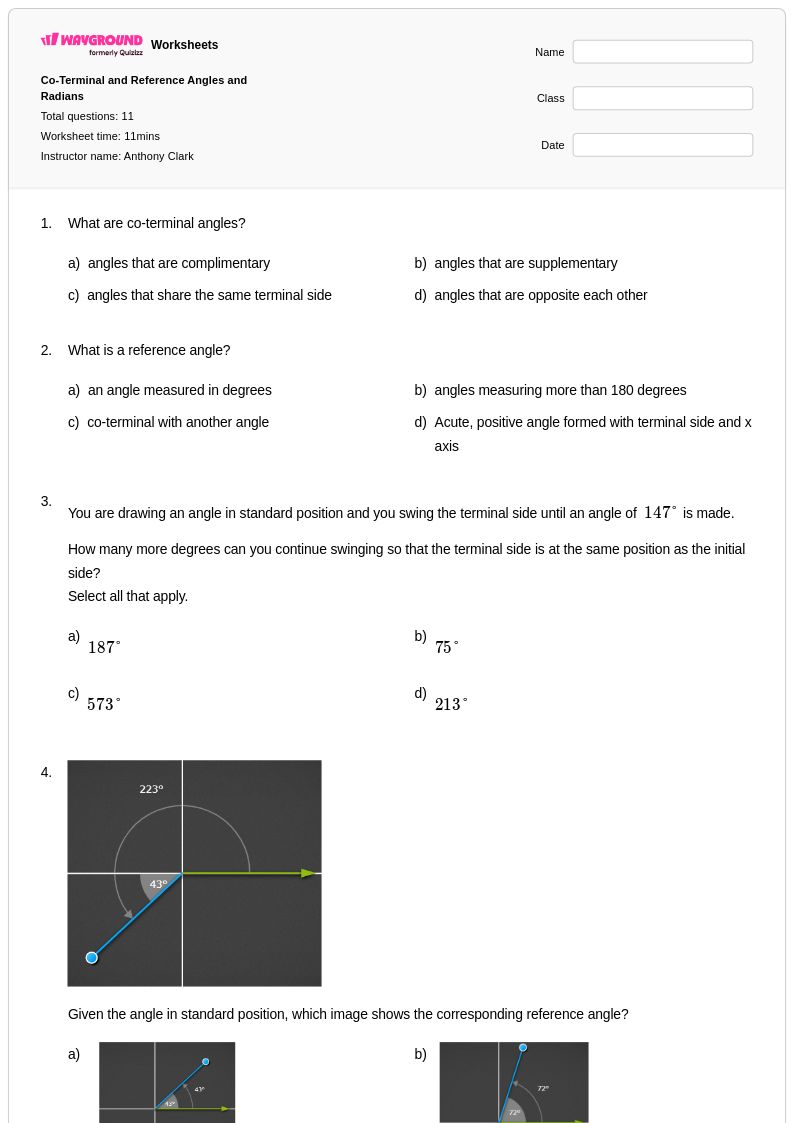
11 Q
9th - Uni
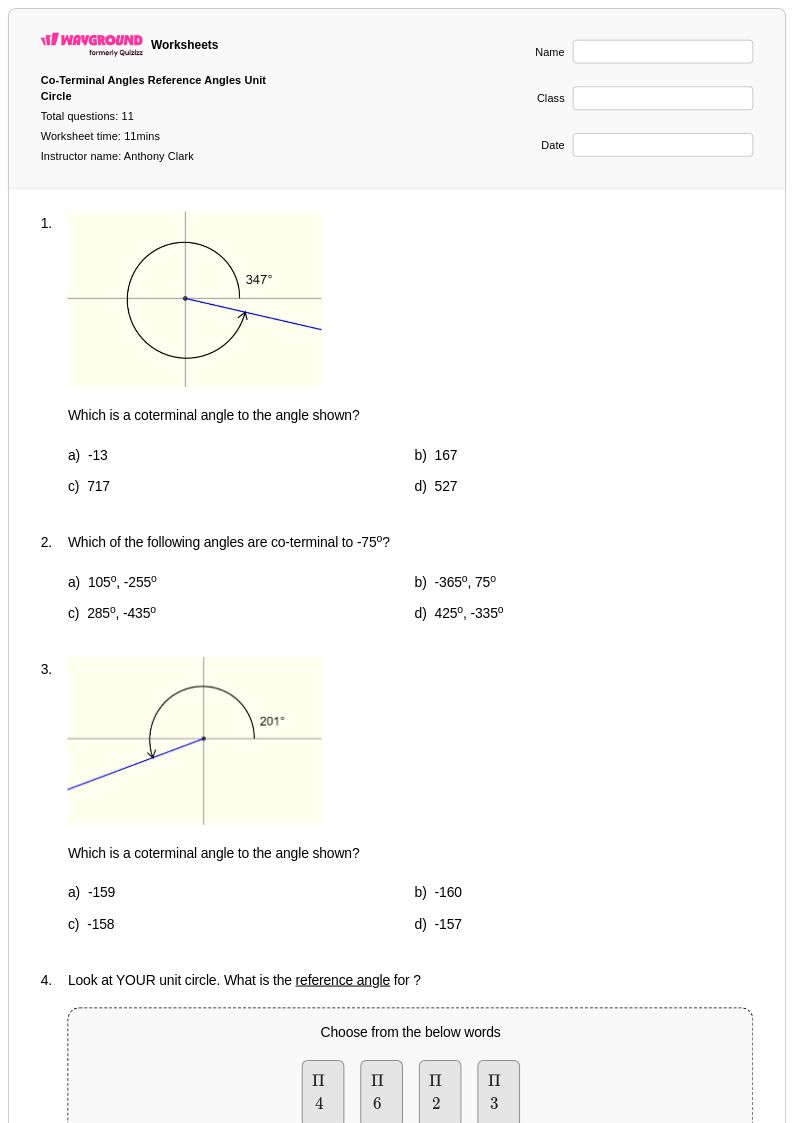
11 Q
9th - Uni
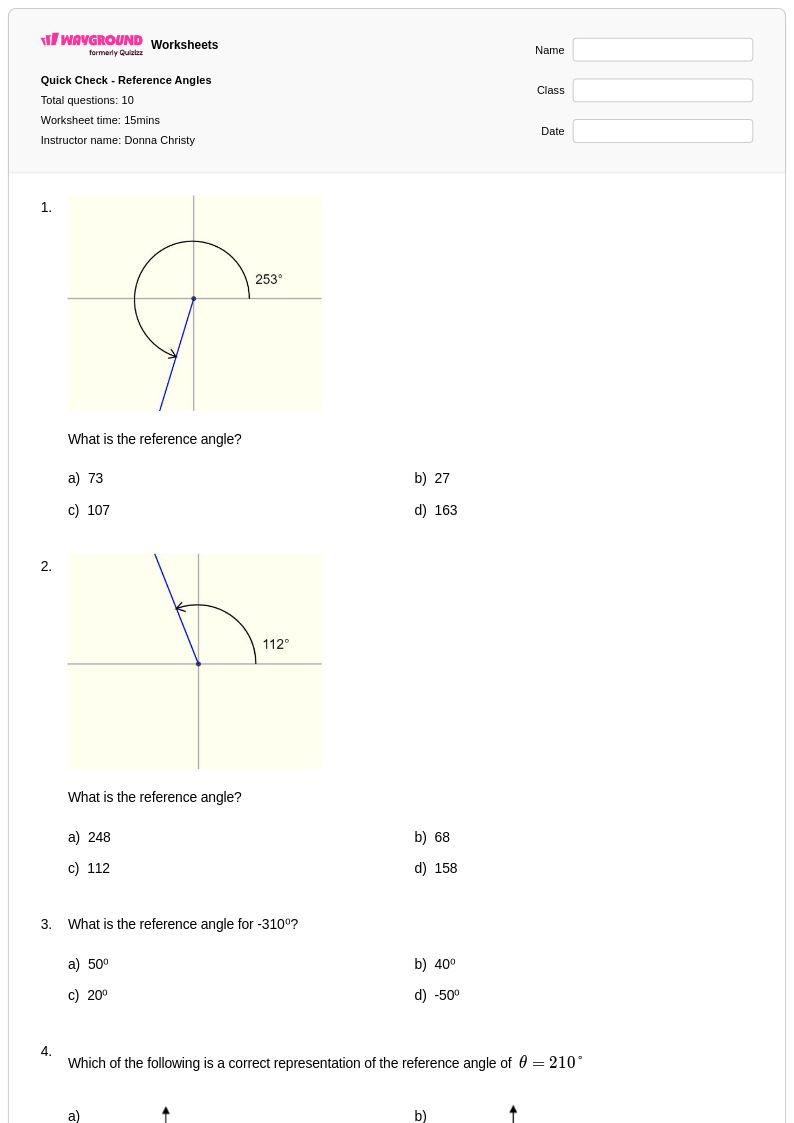
10 Q
9th - 12th
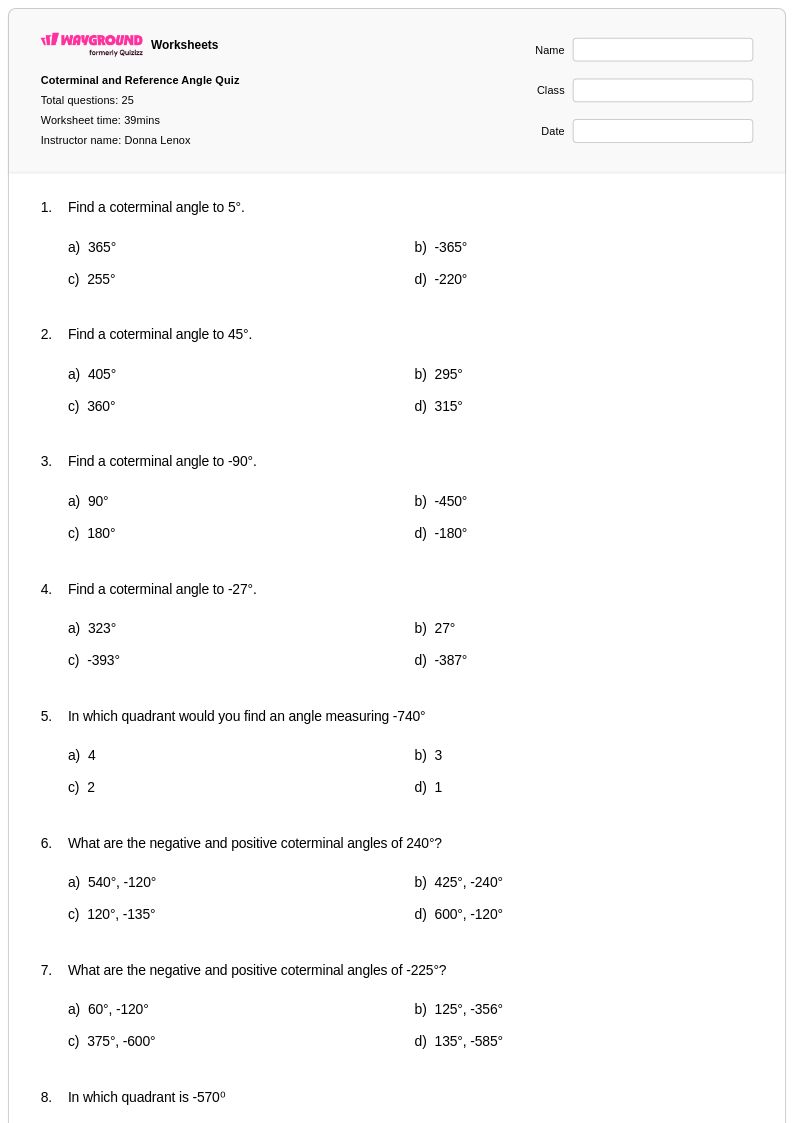
25 Q
9th - 12th
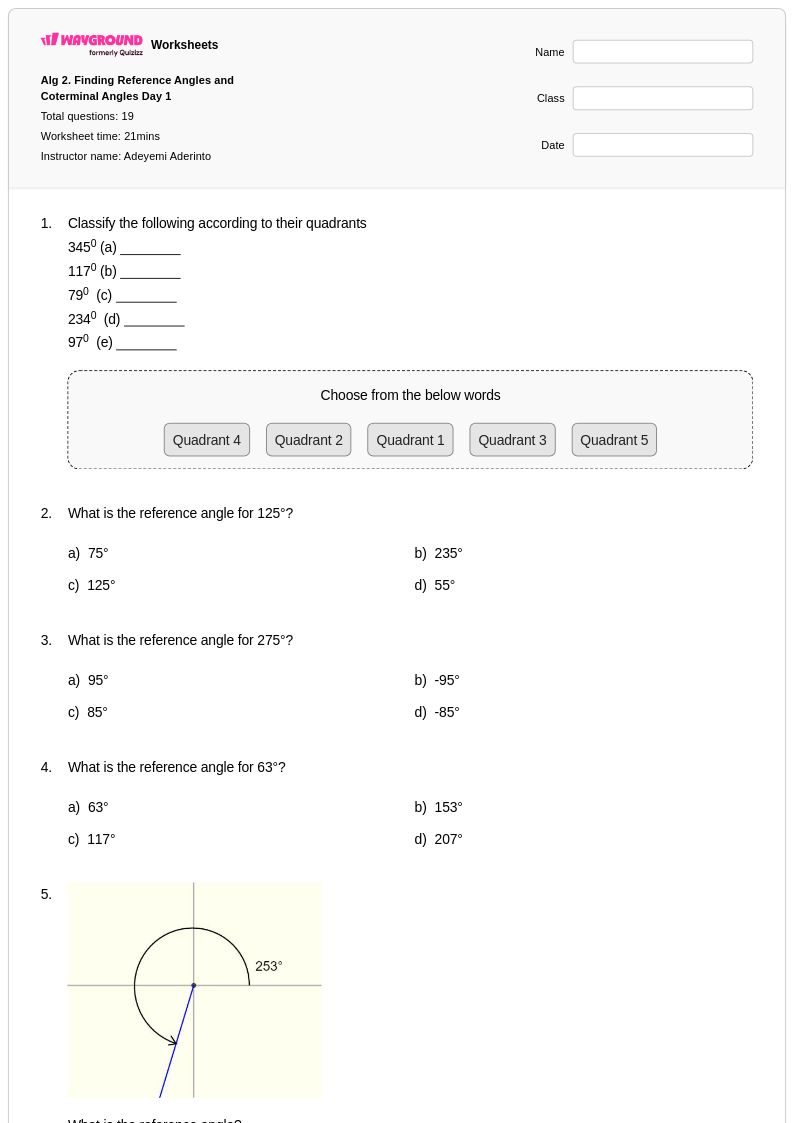
19 Q
9th - 12th
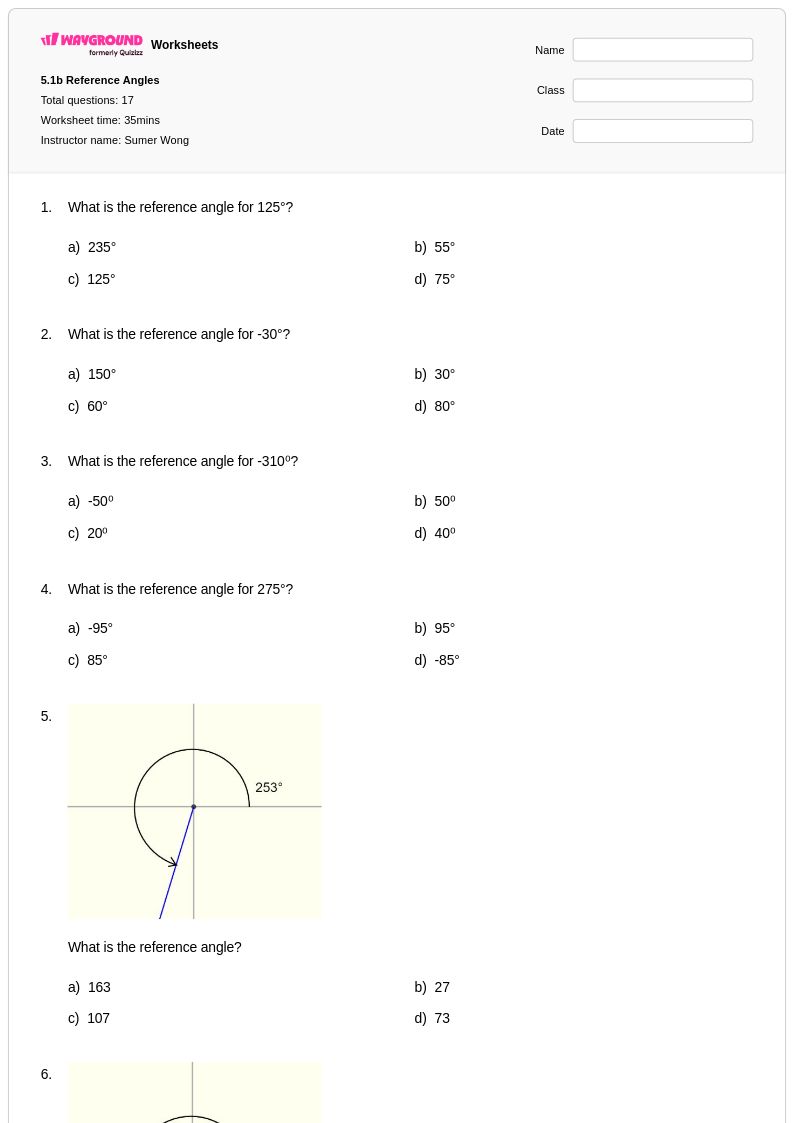
17 Q
9th
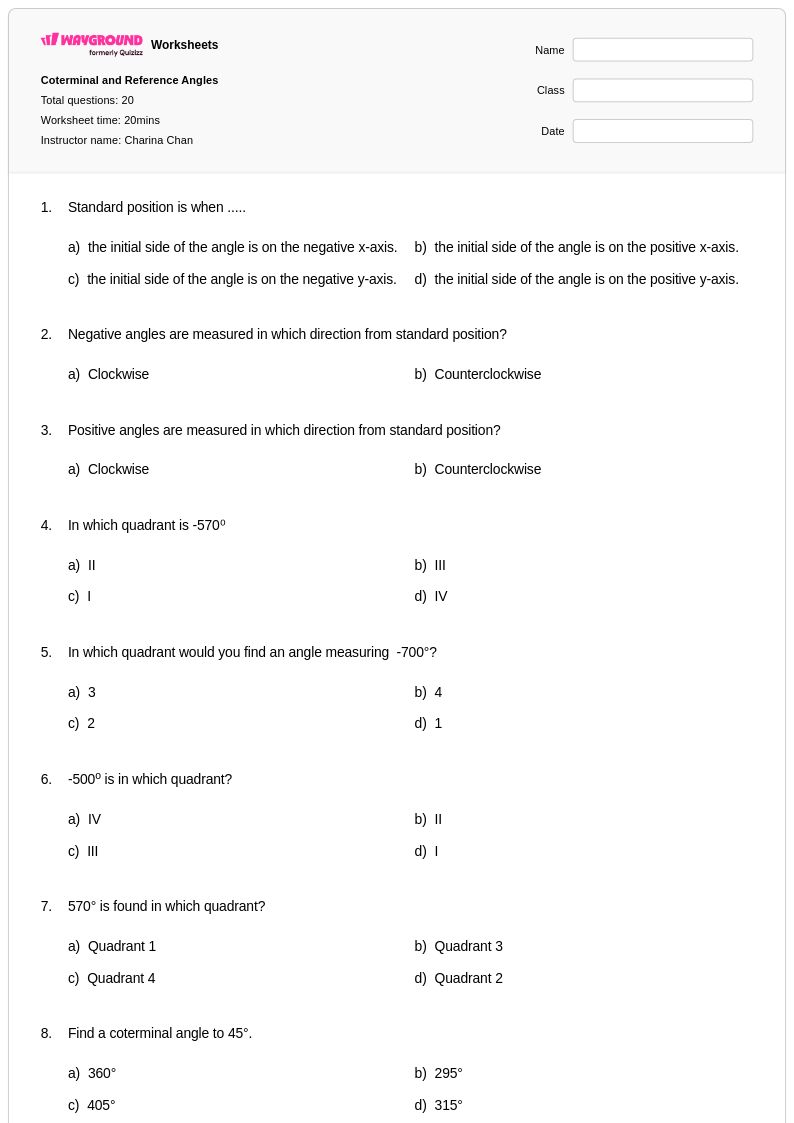
20 Q
9th - 12th
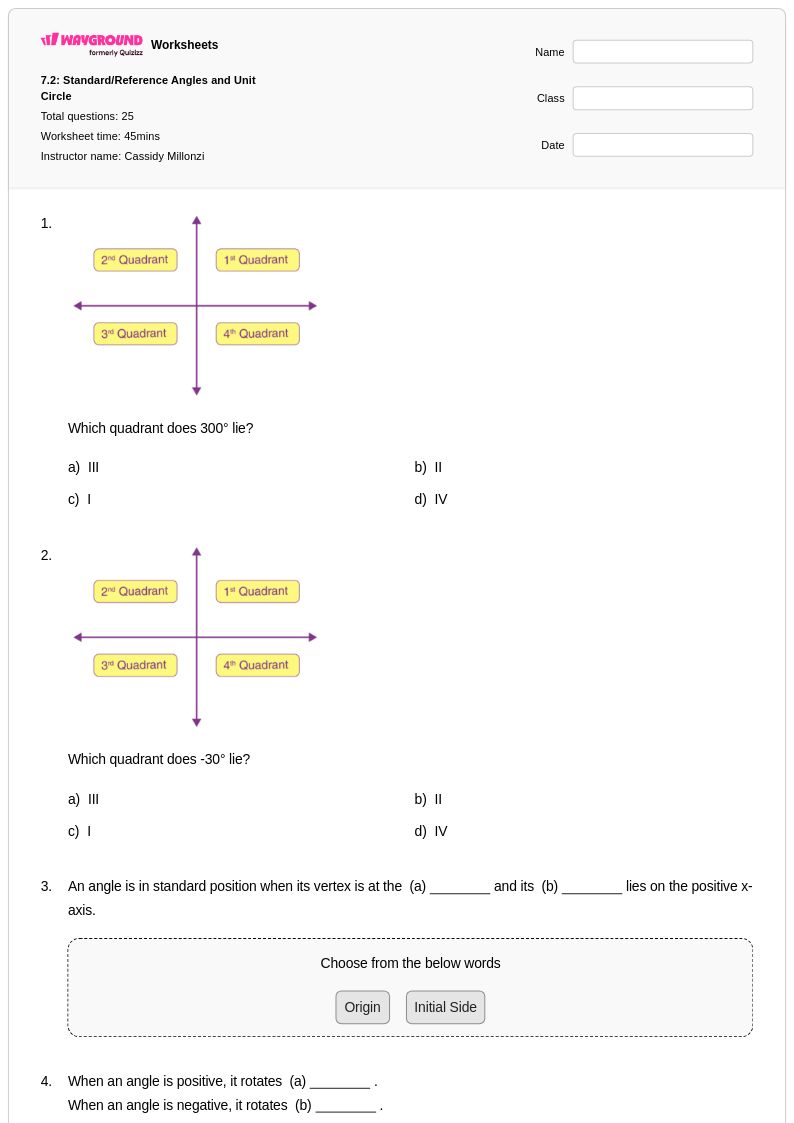
25 Q
9th - 12th
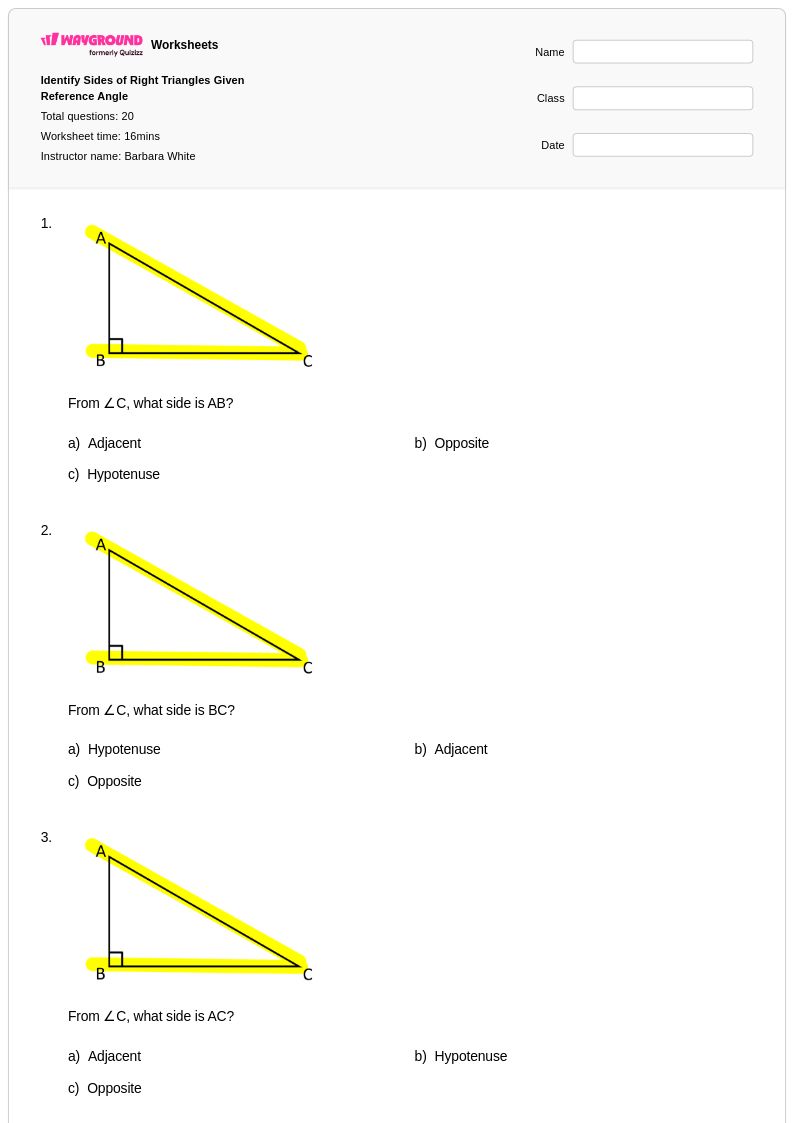
20 Q
8th - 12th
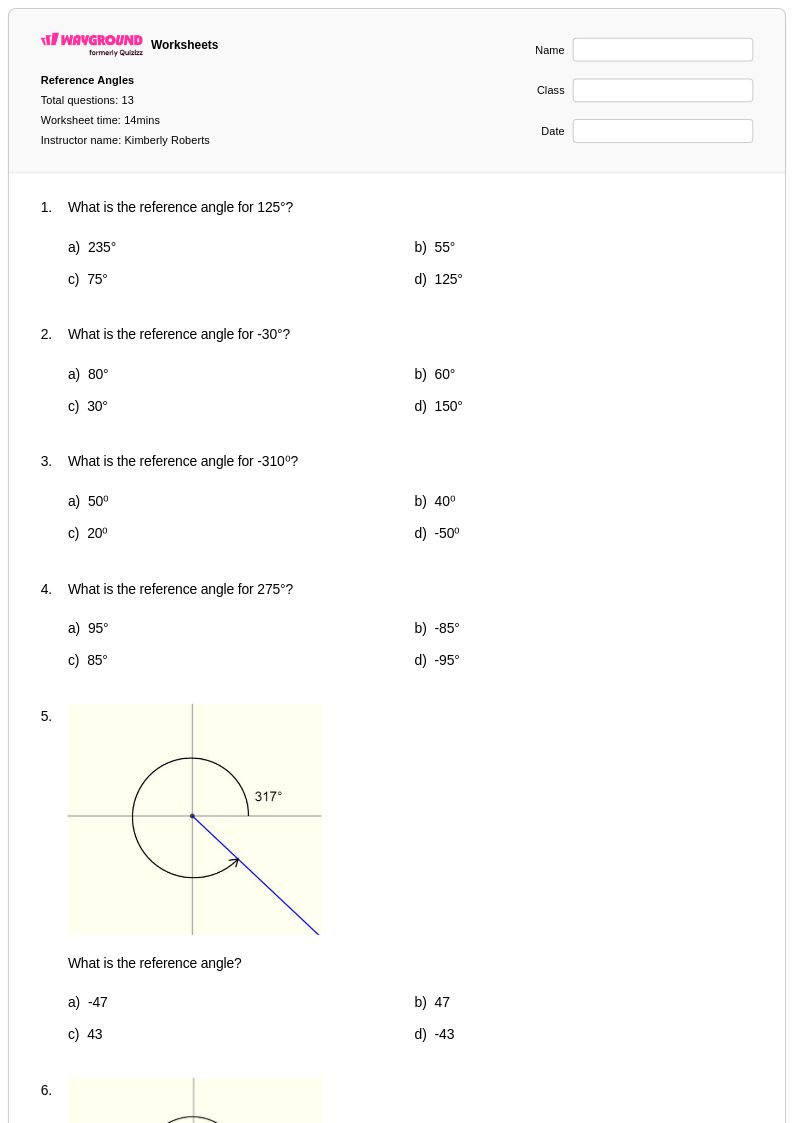
13 Q
9th - 11th
8 Q
9th - 12th
10 Q
9th - 12th
Explore Other Subject Worksheets for class 9
Explore printable Reference Angle worksheets for Class 9
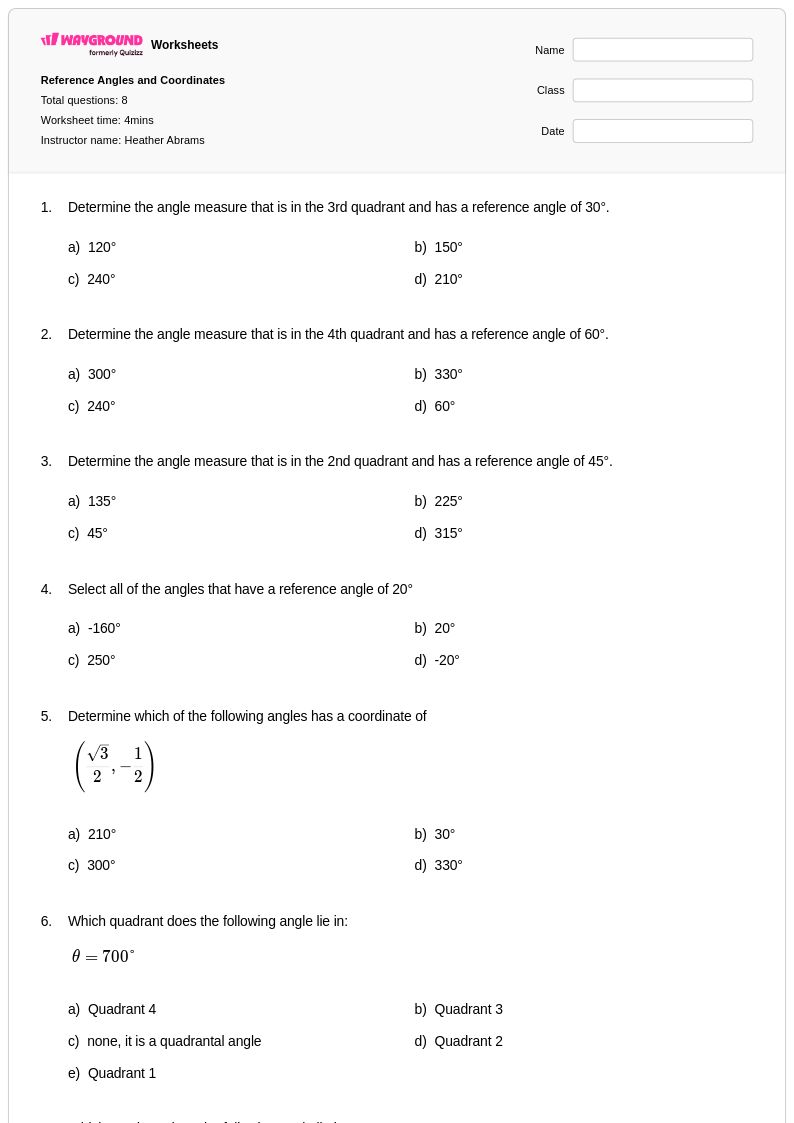
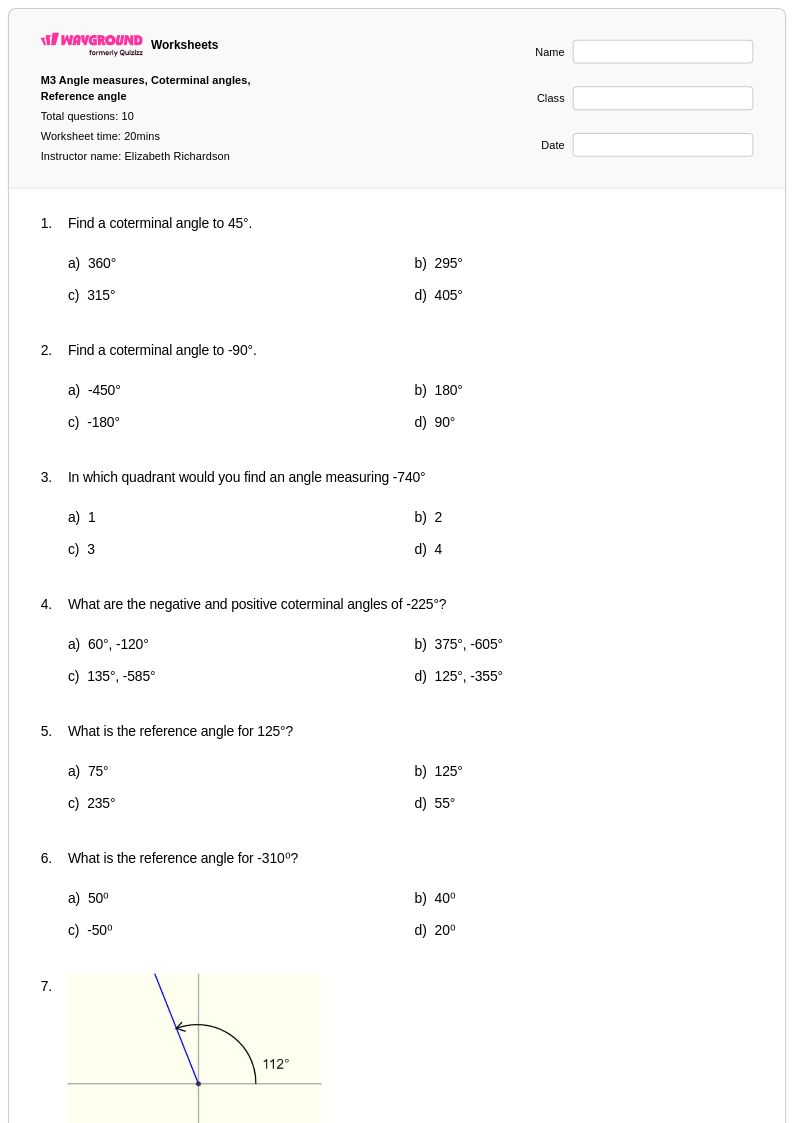
Reference angle worksheets for Class 9 students available through Wayground (formerly Quizizz) provide comprehensive practice in identifying and calculating reference angles across all four quadrants of the coordinate plane. These carefully designed worksheets strengthen students' understanding of how reference angles relate to the acute angle formed between the terminal side of an angle and the x-axis, regardless of which quadrant the angle terminates in. Students work through systematic practice problems that reinforce the fundamental concept that reference angles are always positive and acute, helping them develop fluency in finding reference angles for angles measured in both degrees and radians. Each worksheet includes detailed answer keys and step-by-step solutions, making these free printable resources invaluable for independent study and homework assignments in pdf format.
Wayground (formerly Quizizz) supports mathematics educators with an extensive collection of teacher-created reference angle worksheets, drawing from millions of educational resources that have been developed and refined by classroom professionals. The platform's robust search and filtering capabilities allow teachers to quickly locate materials that align with specific curriculum standards and match their students' varying skill levels through built-in differentiation tools. These customizable worksheets are available in both printable pdf format and interactive digital versions, enabling teachers to seamlessly integrate reference angle practice into their lesson planning while addressing diverse learning needs through targeted remediation and enrichment activities. The flexible format options ensure that educators can efficiently provide focused skill practice whether students are working individually, in small groups, or as part of whole-class instruction.
FAQs
What do 9th graders learn about reference angles?
What's a good way to introduce reference angles to 9th graders?
What kind of practice is best for mastering reference angles?
What mistakes do students commonly make with reference angles?
How can I use this Grade 9 reference angle worksheet?
How do reference angles connect to the high school math curriculum?