
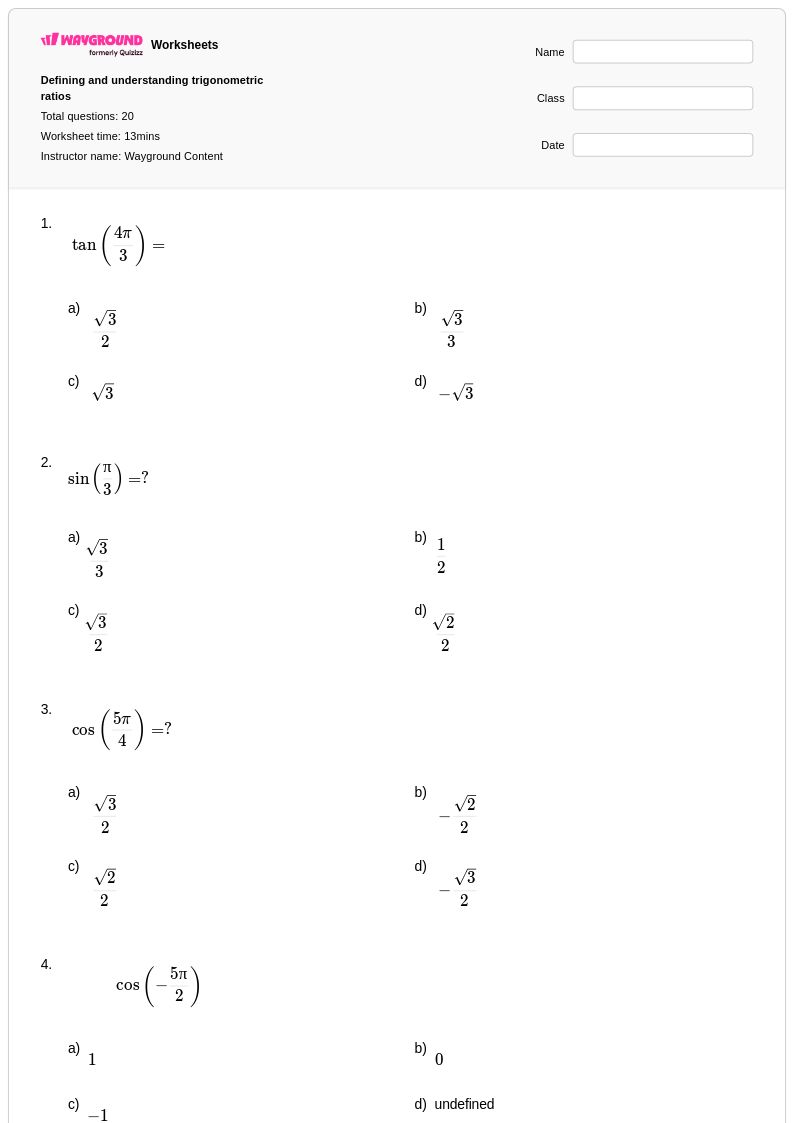
20 Q
9th - 12th
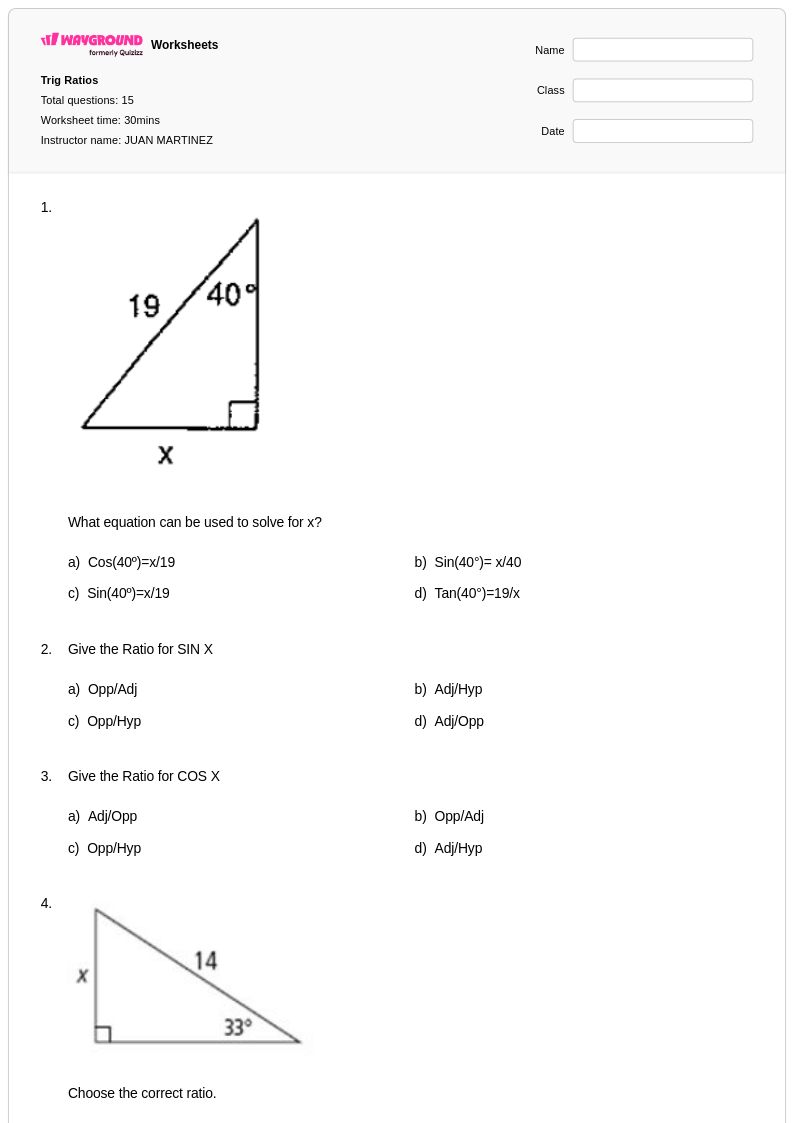
15 Q
9th - 12th
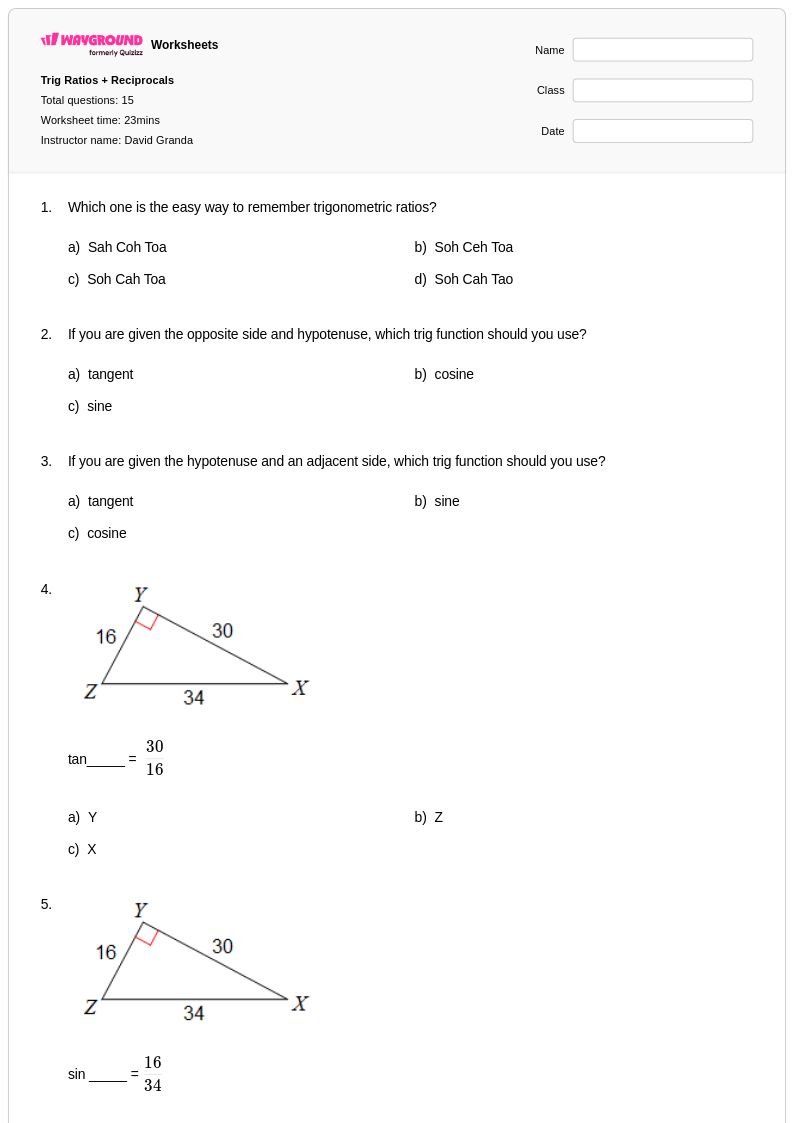
15 Q
9th - 12th
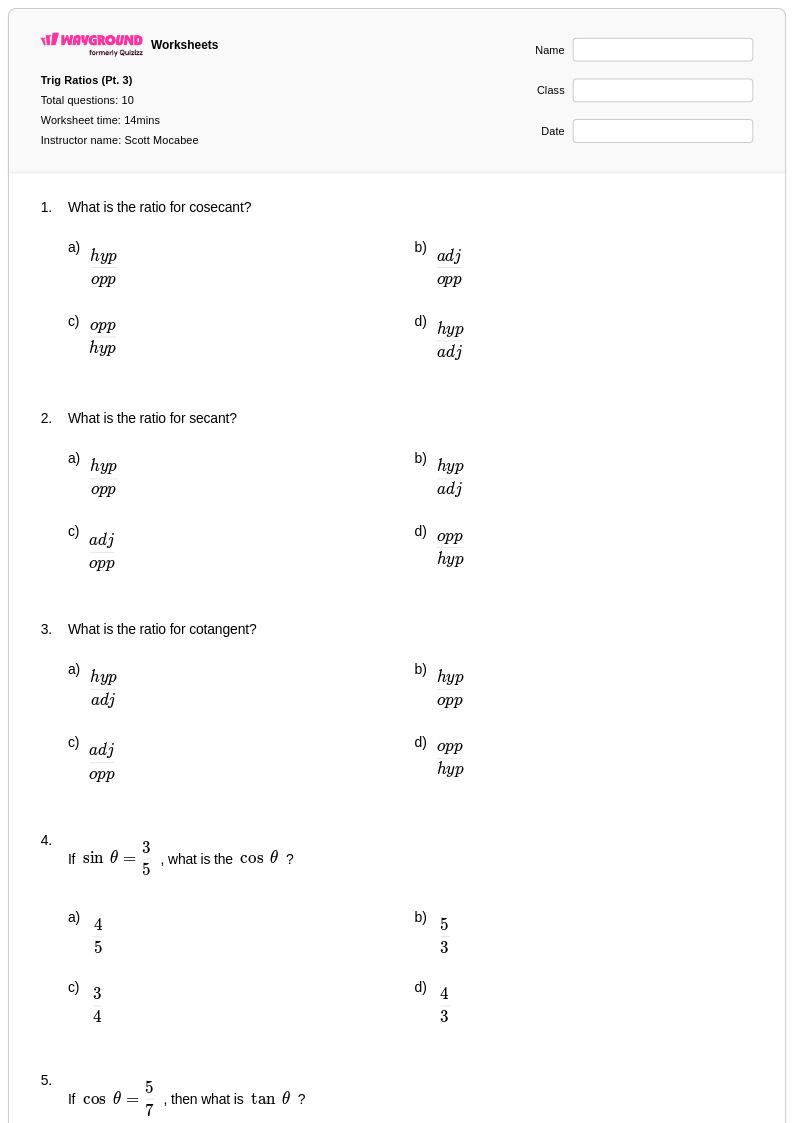
10 Q
9th - 12th
10 Q
9th - 12th
18 Q
9th - 12th
20 Q
9th - Uni
27 Q
9th
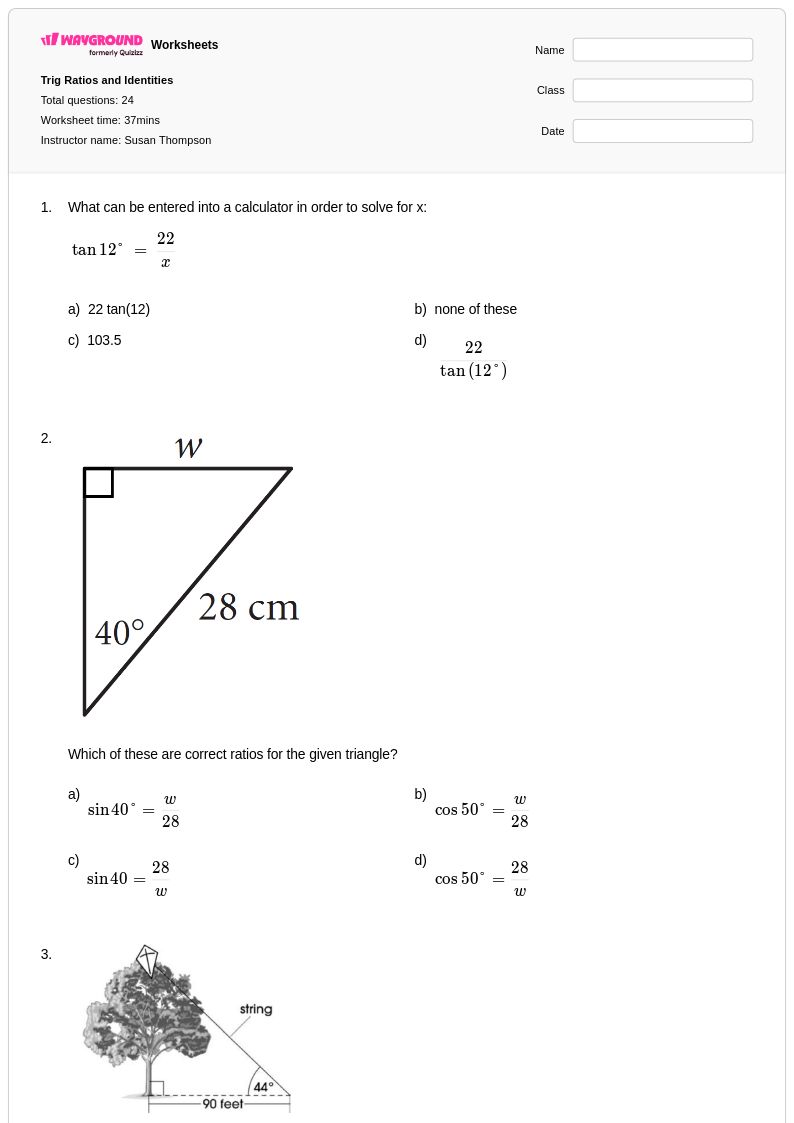
24 Q
9th - 12th
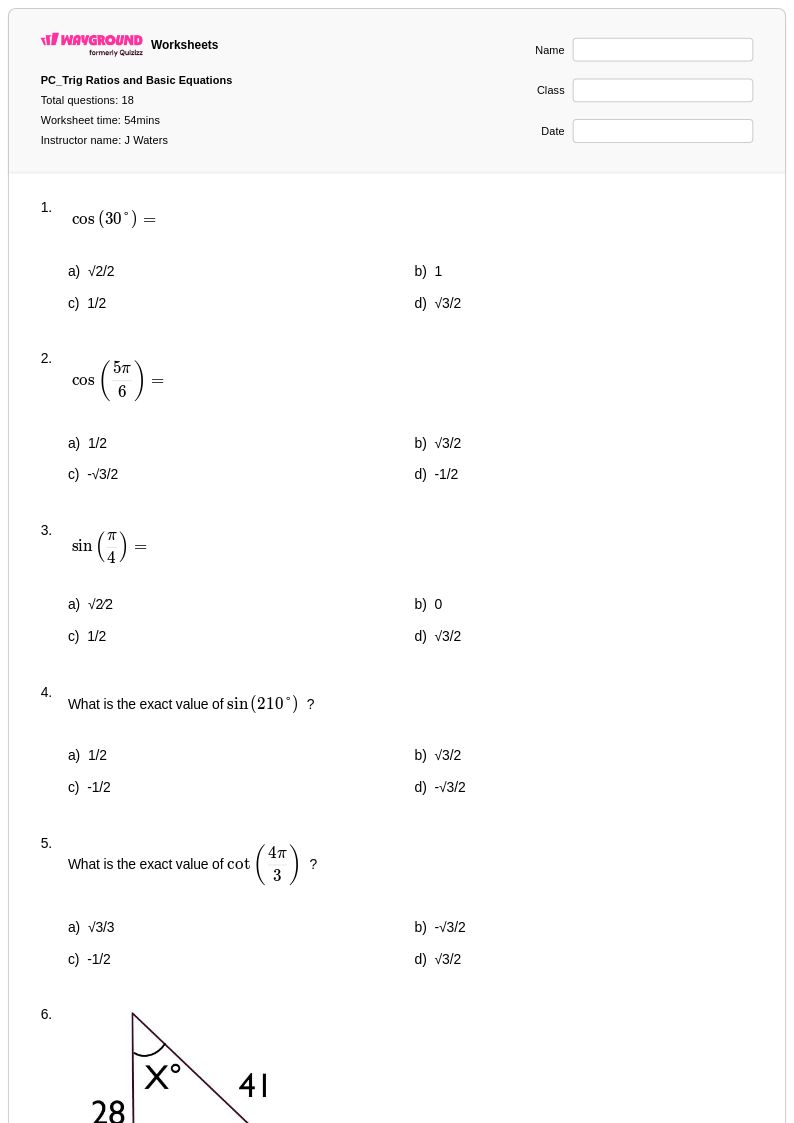
18 Q
9th - 12th
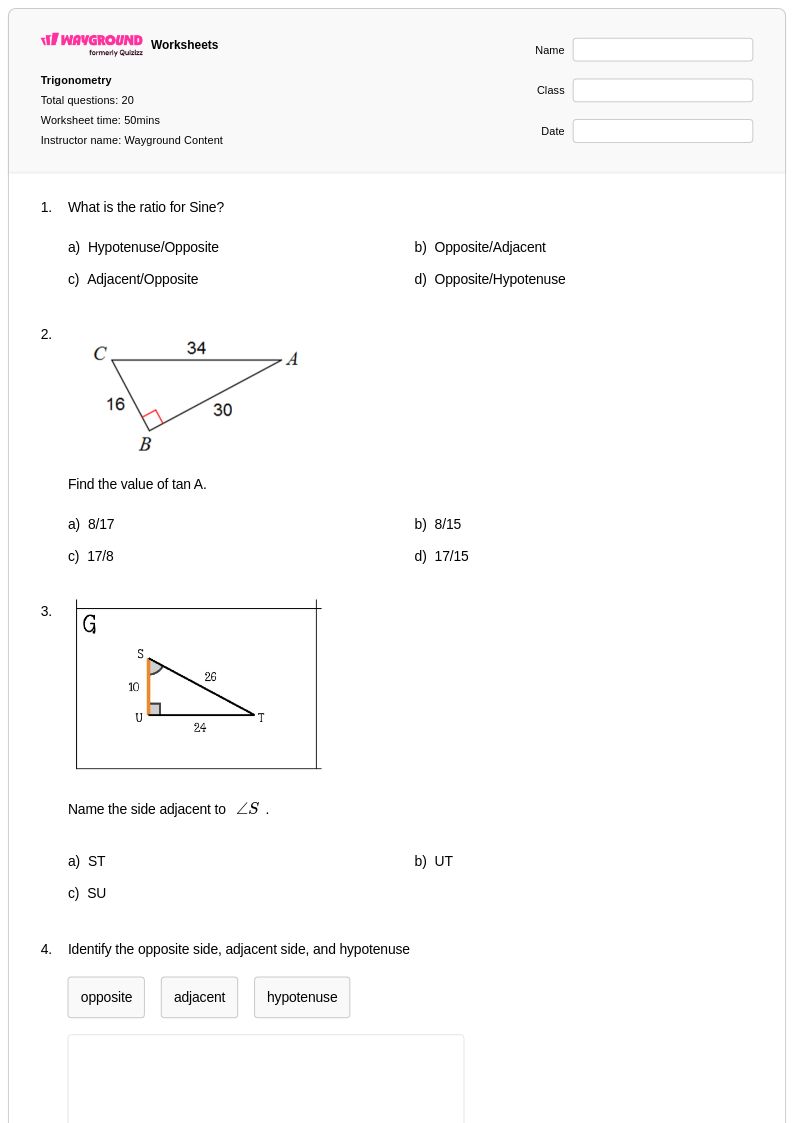
20 Q
9th - 12th
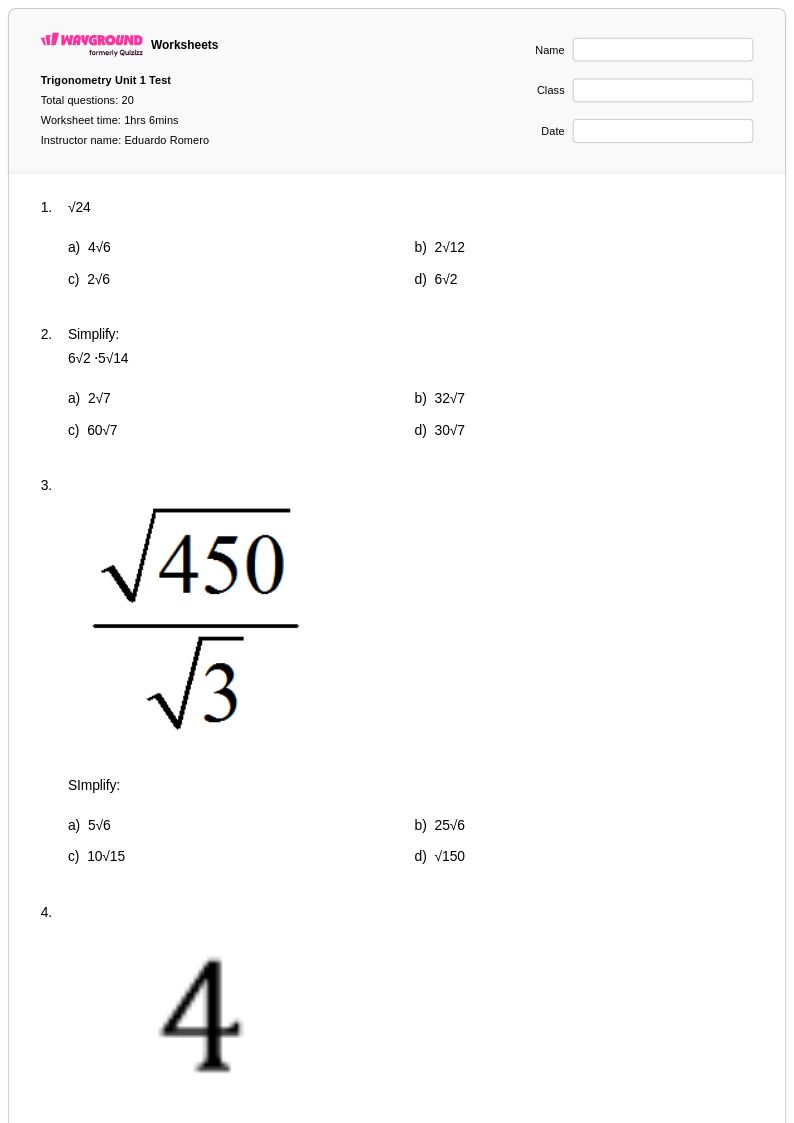
20 Q
9th - 12th
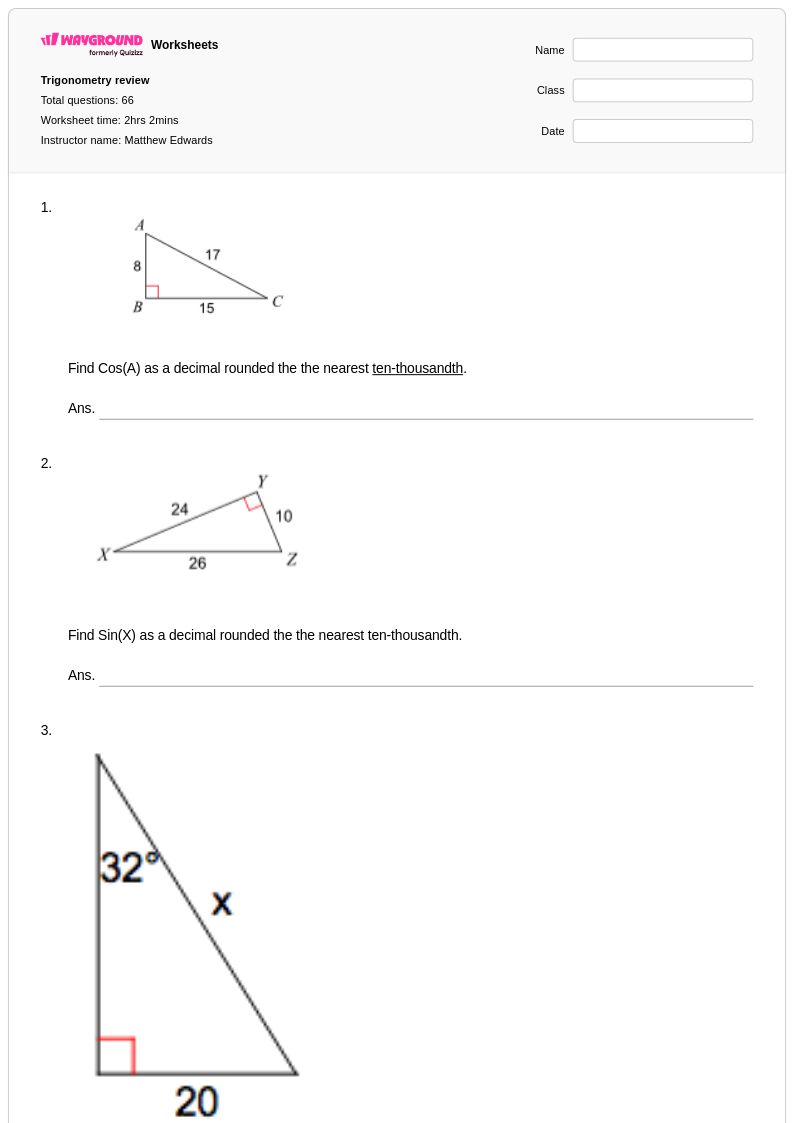
66 Q
9th - 12th
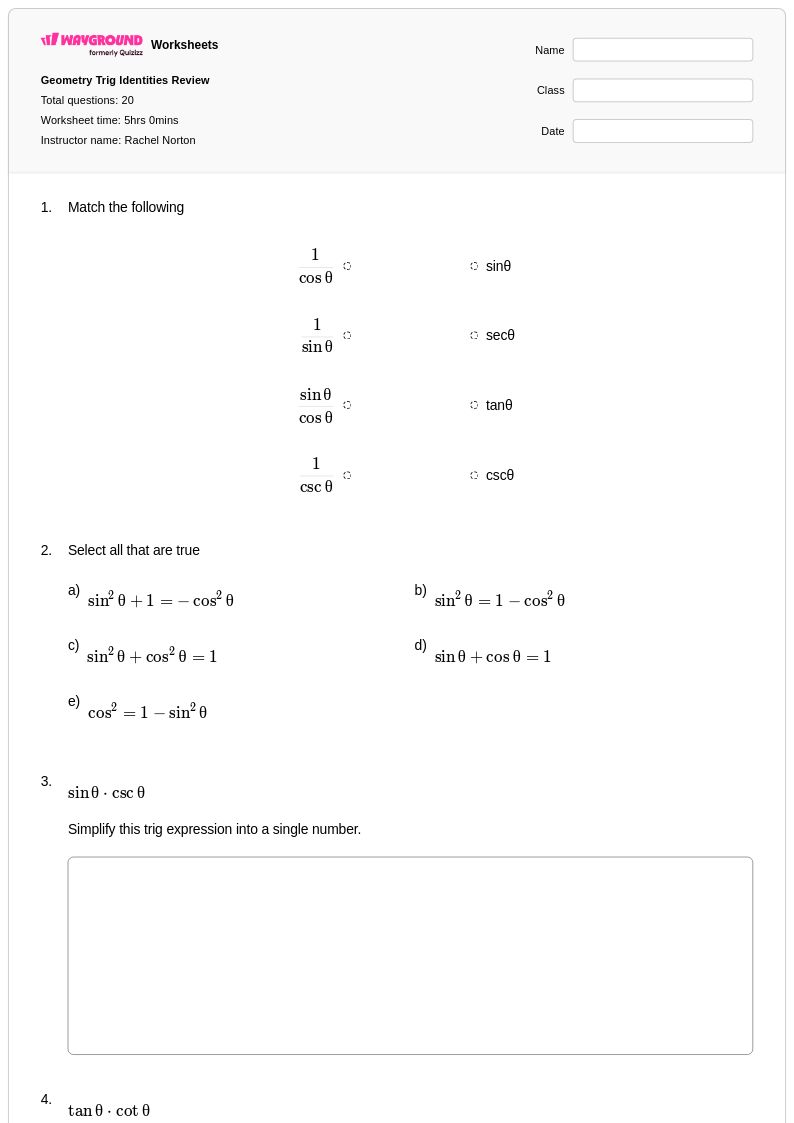
20 Q
9th - 12th

15 Q
9th - 12th
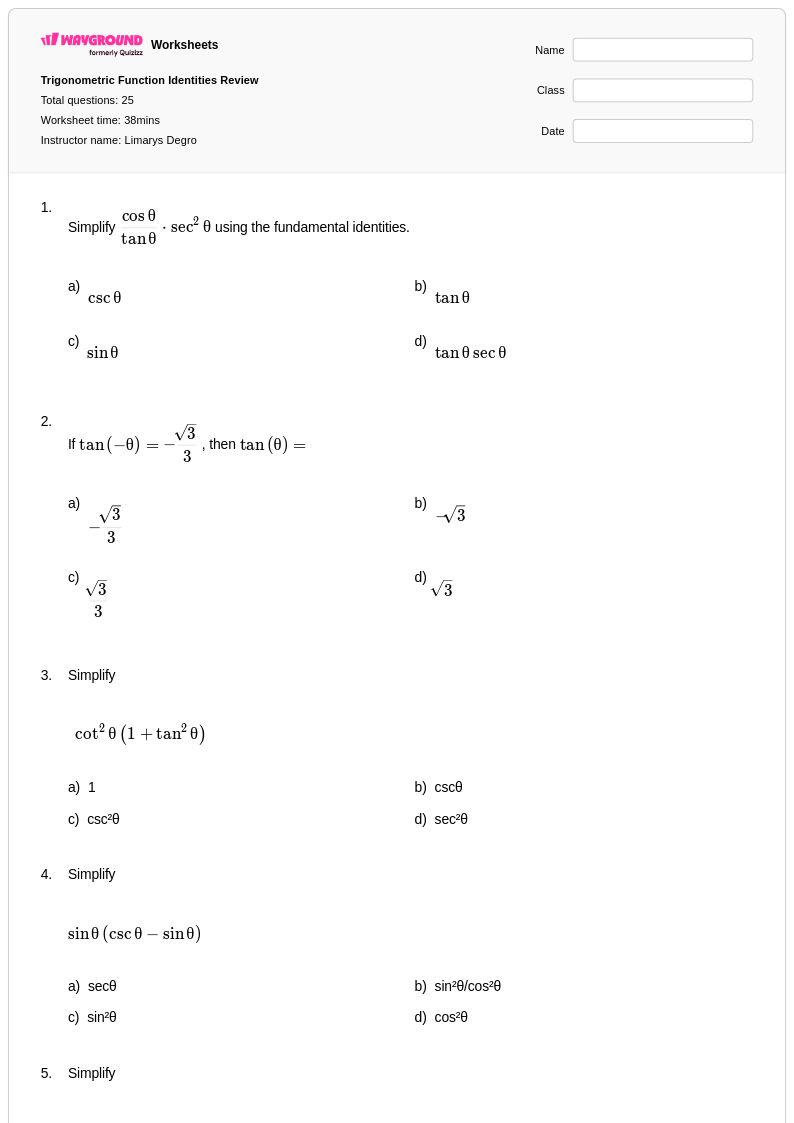
25 Q
9th - 12th
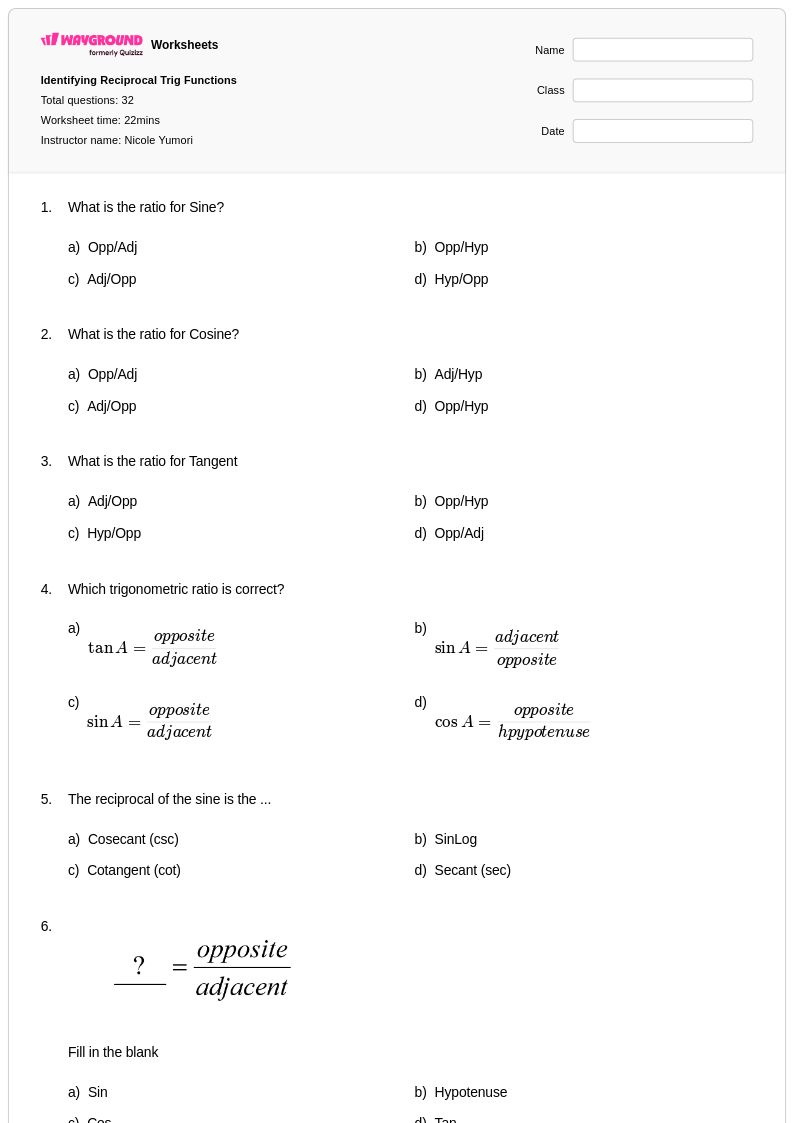
32 Q
9th - 12th
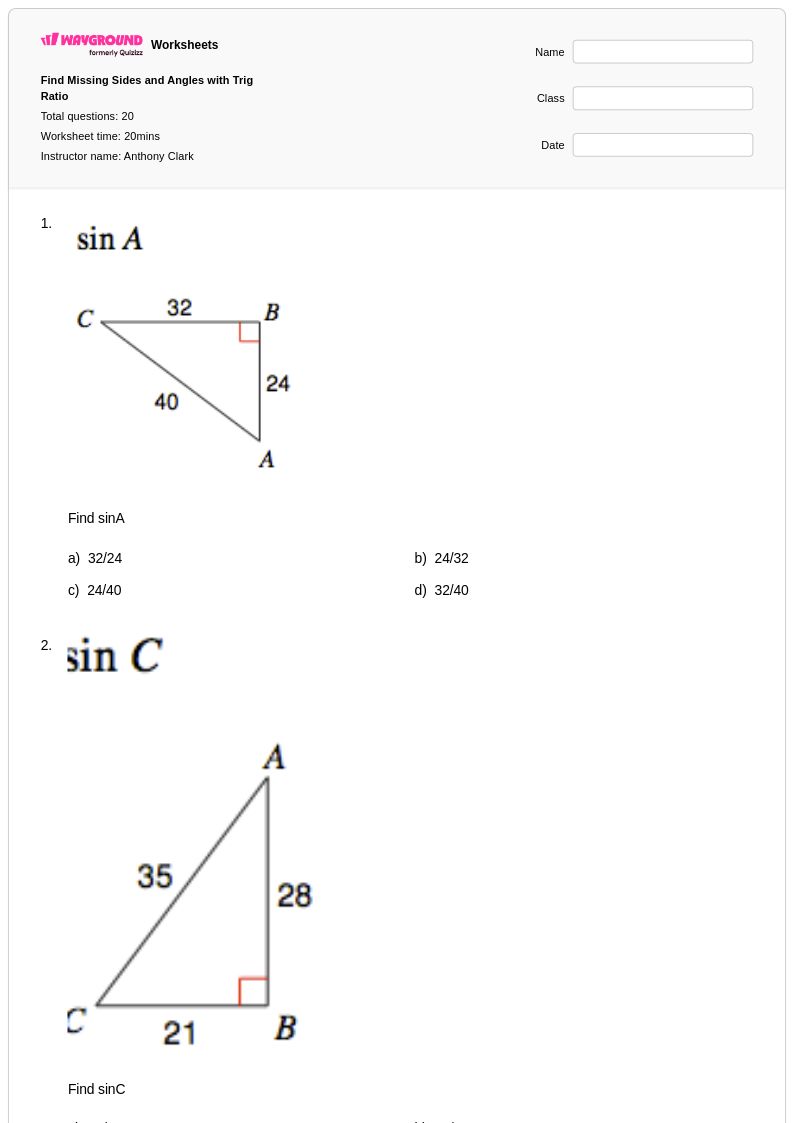
20 Q
9th - Uni
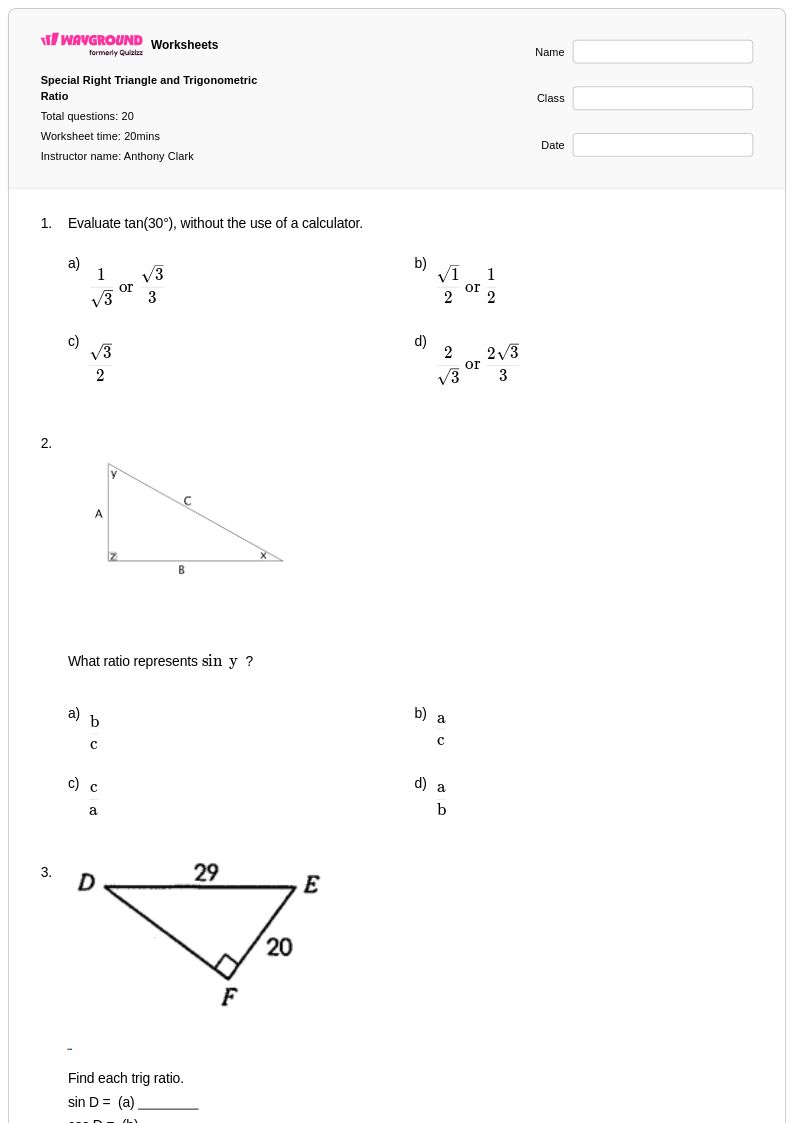
20 Q
9th - Uni
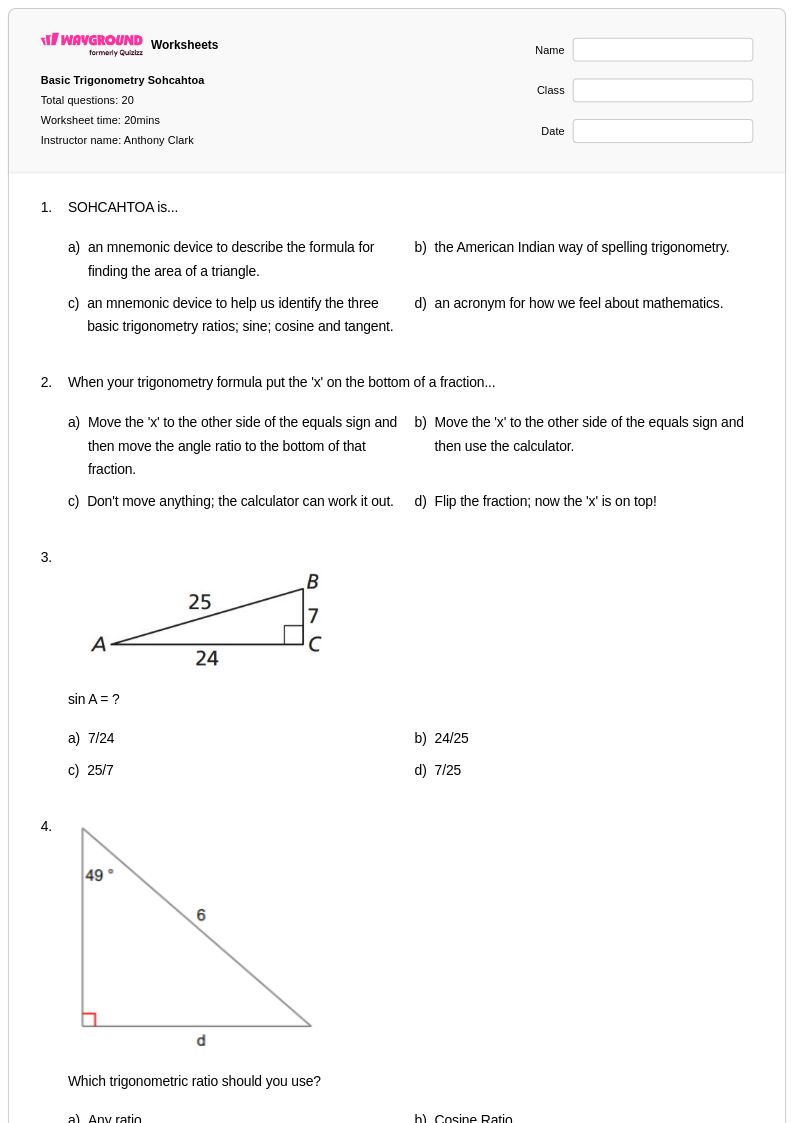
20 Q
9th - Uni
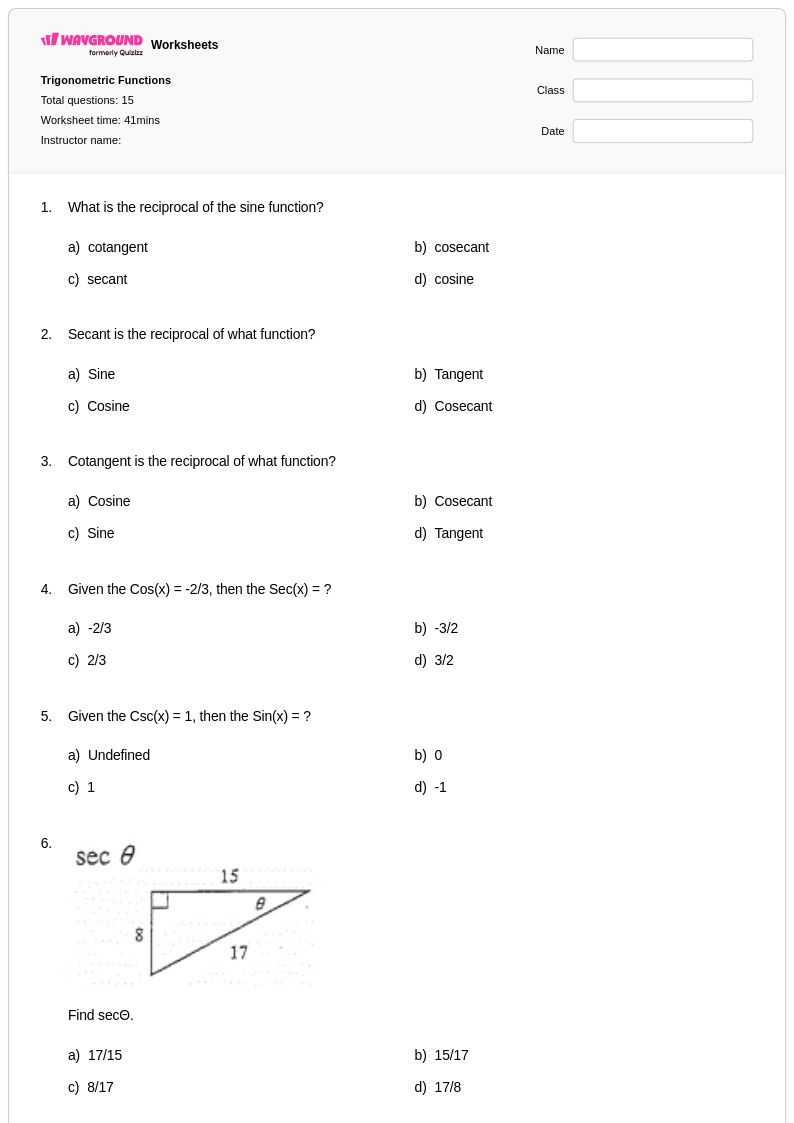
15 Q
9th - 12th
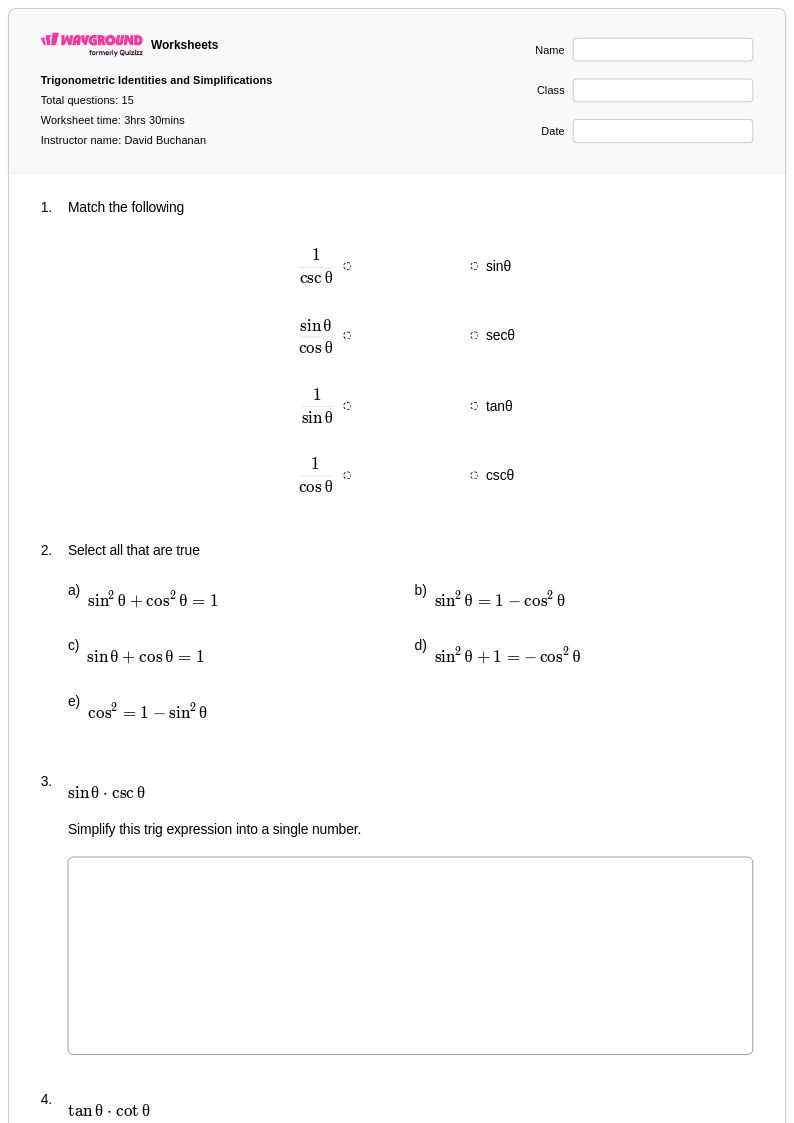
15 Q
9th - 12th
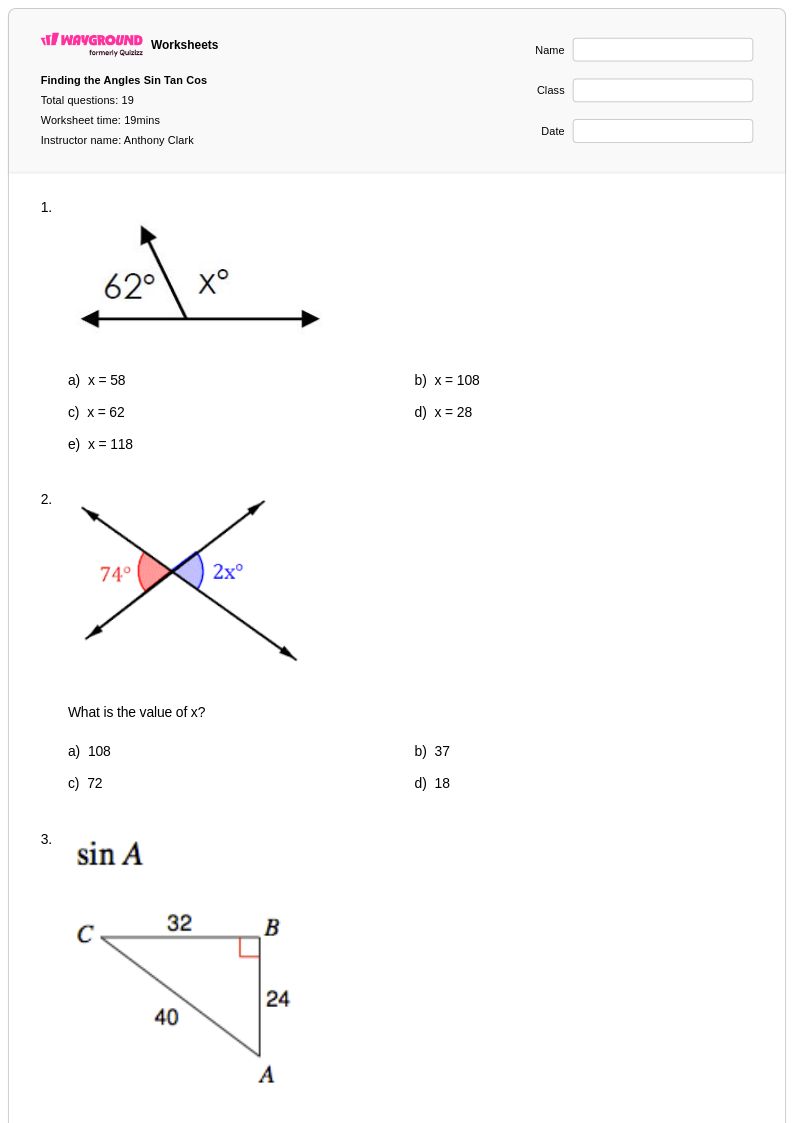
19 Q
9th - Uni
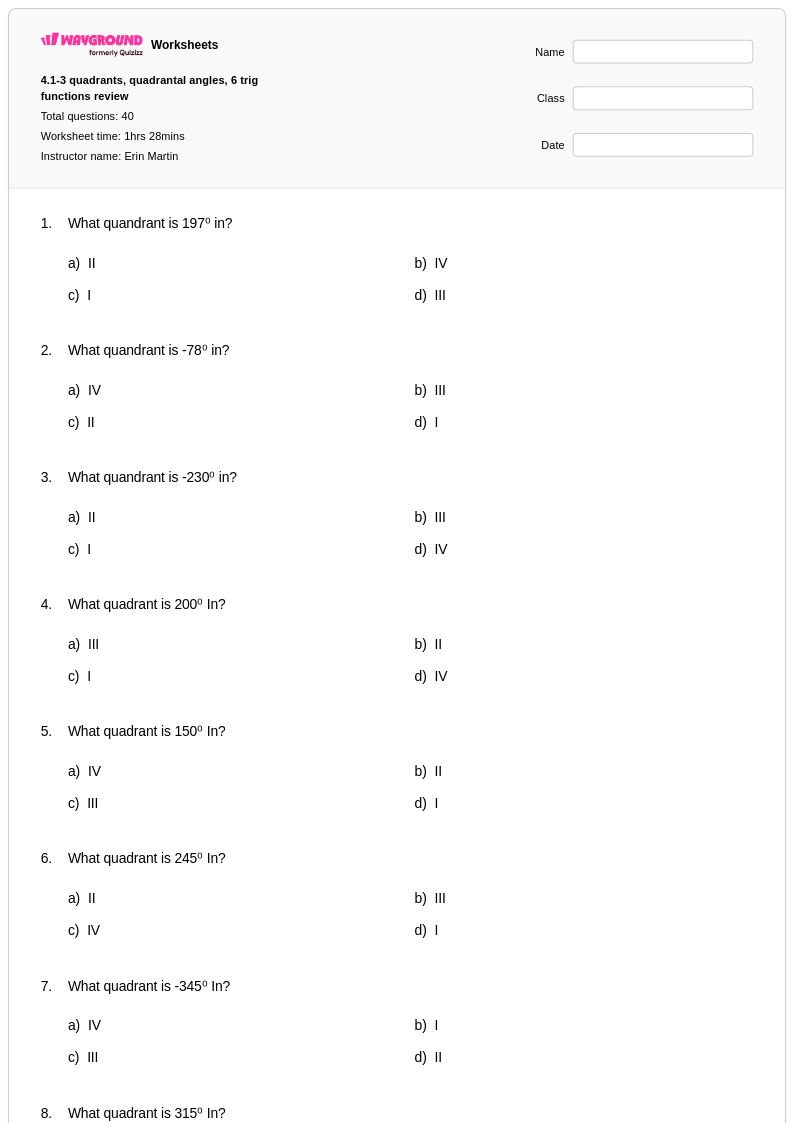
40 Q
9th - 12th
Explore Trigonometric Ratios Sin, Cos, Tan, Csc, Sec and Cot Worksheets by Grades
Explore Other Subject Worksheets for class 9
Explore printable Trigonometric Ratios Sin, Cos, Tan, Csc, Sec and Cot worksheets for Class 9
Trigonometric ratios including sine, cosine, tangent, cosecant, secant, and cotangent form the foundation of Class 9 trigonometry studies, and Wayground's comprehensive worksheet collection provides students with extensive practice in mastering these essential mathematical relationships. These carefully designed worksheets guide students through calculating trigonometric ratios using right triangles, understanding reciprocal relationships between functions, and applying these concepts to solve real-world problems involving angles and side lengths. Each worksheet includes detailed answer keys that enable students to check their work independently, while the free printable format allows for flexible use in classrooms, homework assignments, and individual study sessions. The practice problems progress systematically from basic ratio identification to more complex applications, ensuring students develop both computational fluency and conceptual understanding of how sin, cos, tan, csc, sec, and cot relate to triangle geometry.
Wayground's extensive library of teacher-created trigonometric ratio worksheets draws from millions of educational resources, providing mathematics educators with powerful search and filtering capabilities to locate materials perfectly suited to their Class 9 curriculum requirements. The platform's standards alignment features ensure that selected worksheets meet specific learning objectives for trigonometric functions, while differentiation tools allow teachers to modify content complexity for diverse learner needs within the same classroom. These resources are available in both printable pdf format for traditional paper-based instruction and digital formats for technology-integrated learning environments, supporting flexible lesson planning and varied instructional approaches. Teachers can customize worksheet content, adjust problem difficulty levels, and create targeted practice sets for remediation or enrichment, making it simple to address individual student needs while maintaining rigorous mathematical standards throughout their trigonometry instruction.