Free Printable Sentence Variety Worksheets for Class 11
Class 11 sentence variety worksheets and printables help students master diverse sentence structures through engaging practice problems, featuring free PDF downloads with comprehensive answer keys to strengthen writing skills.
Explore printable Sentence Variety worksheets for Class 11
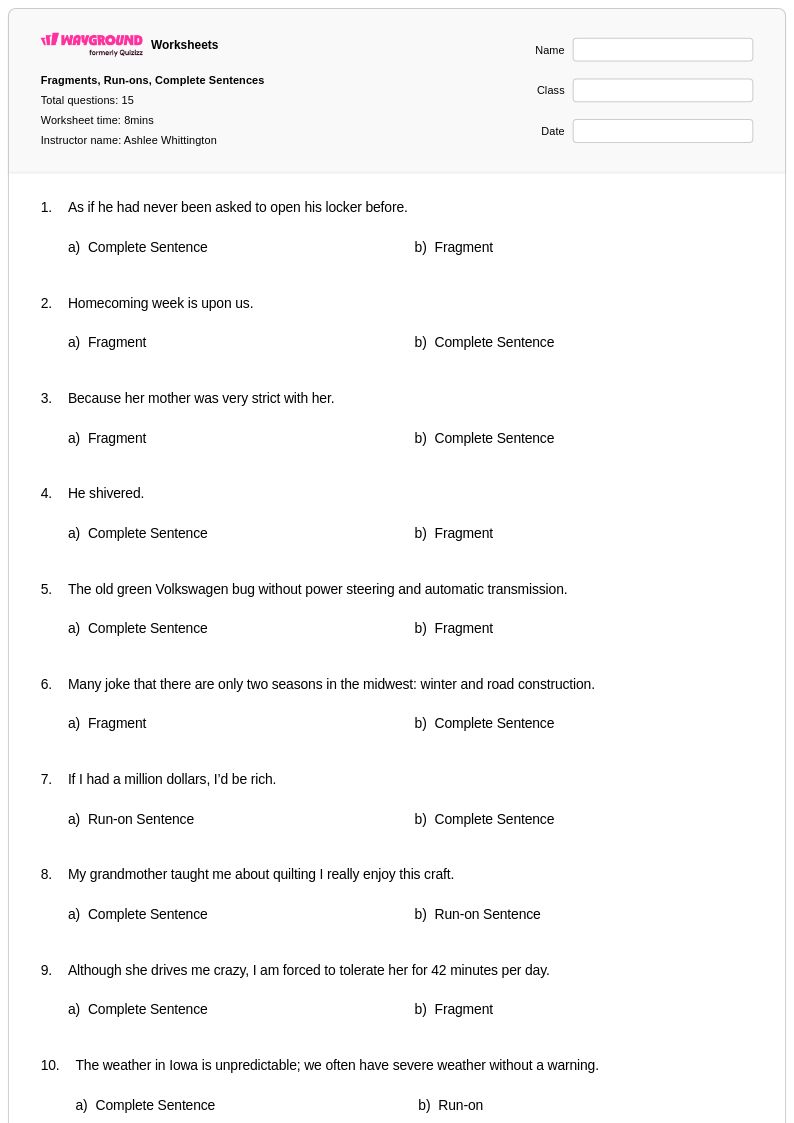
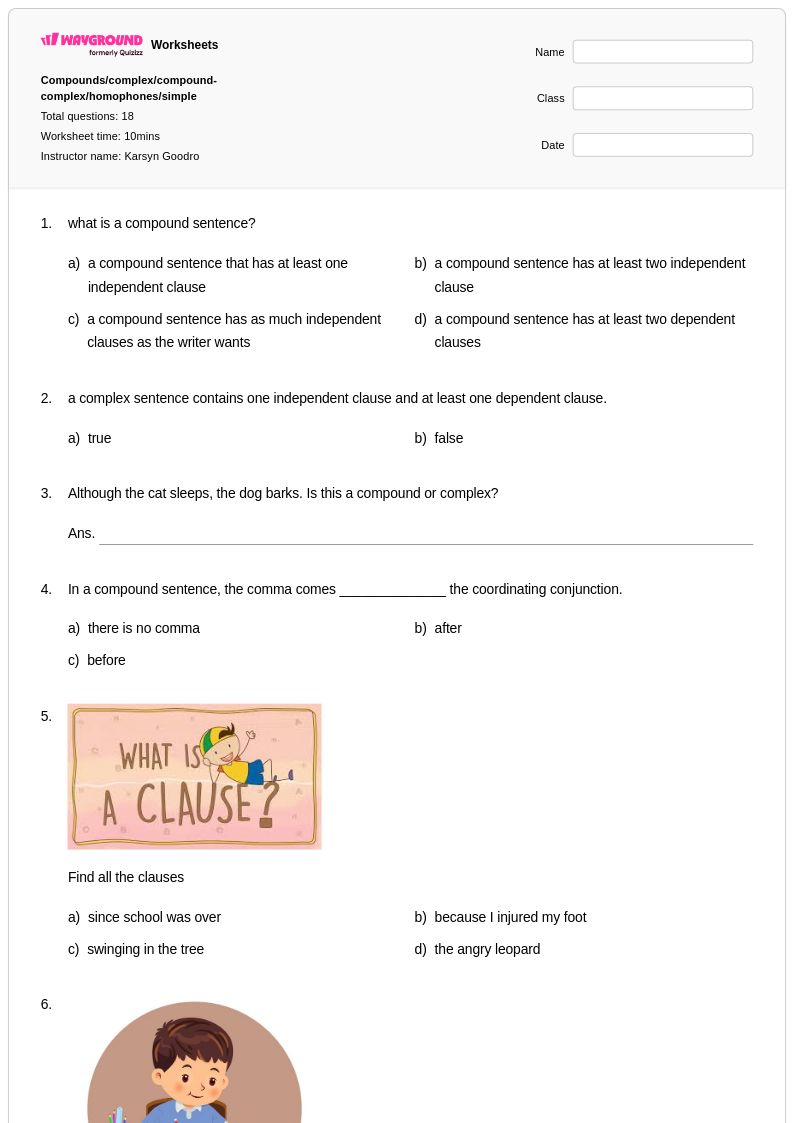
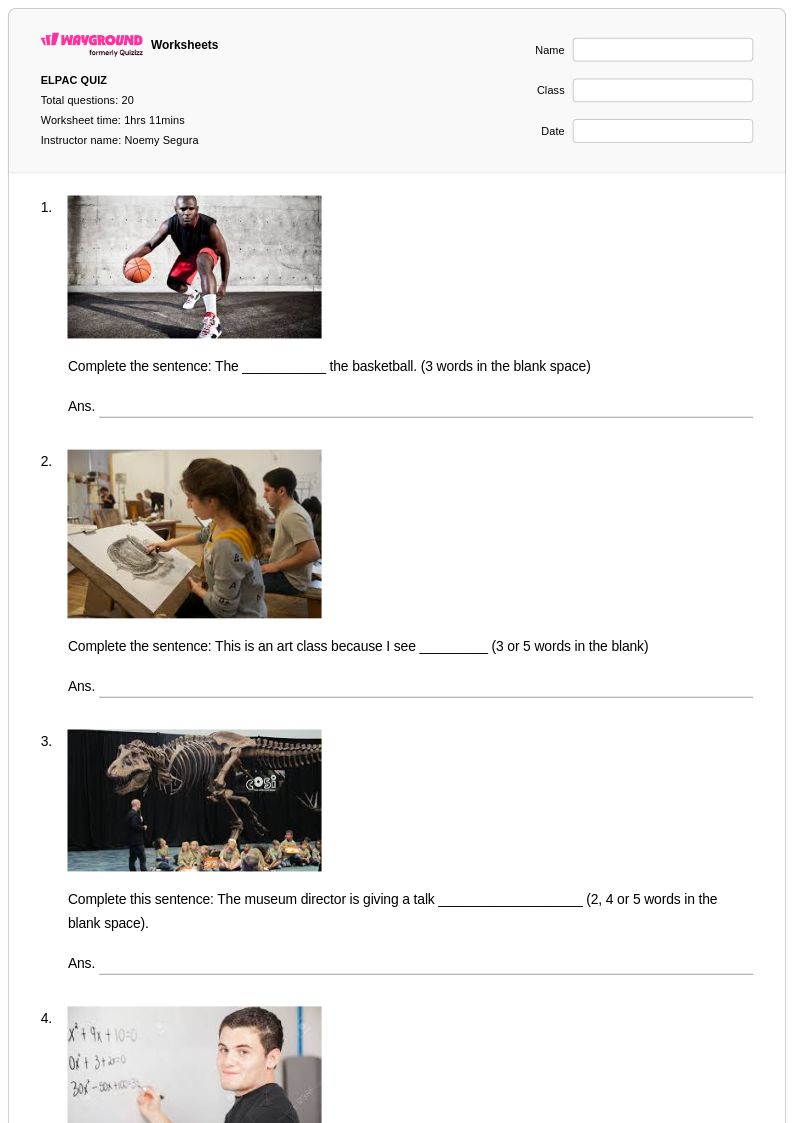
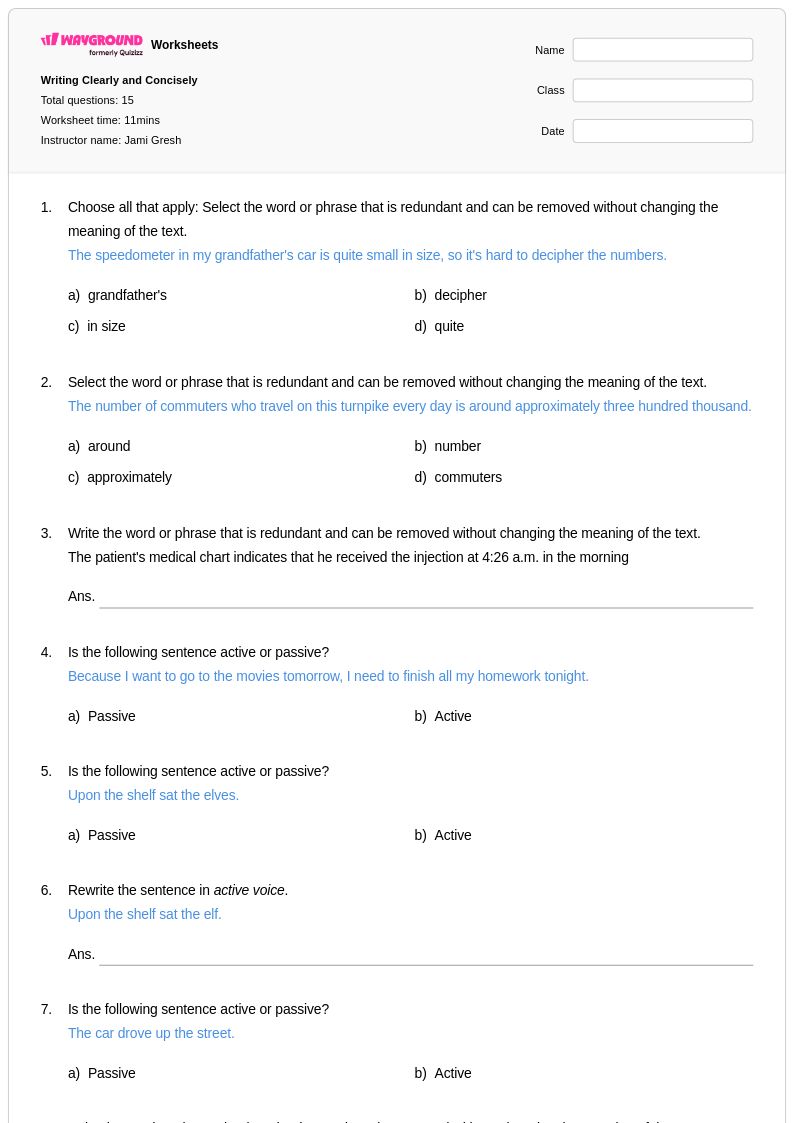
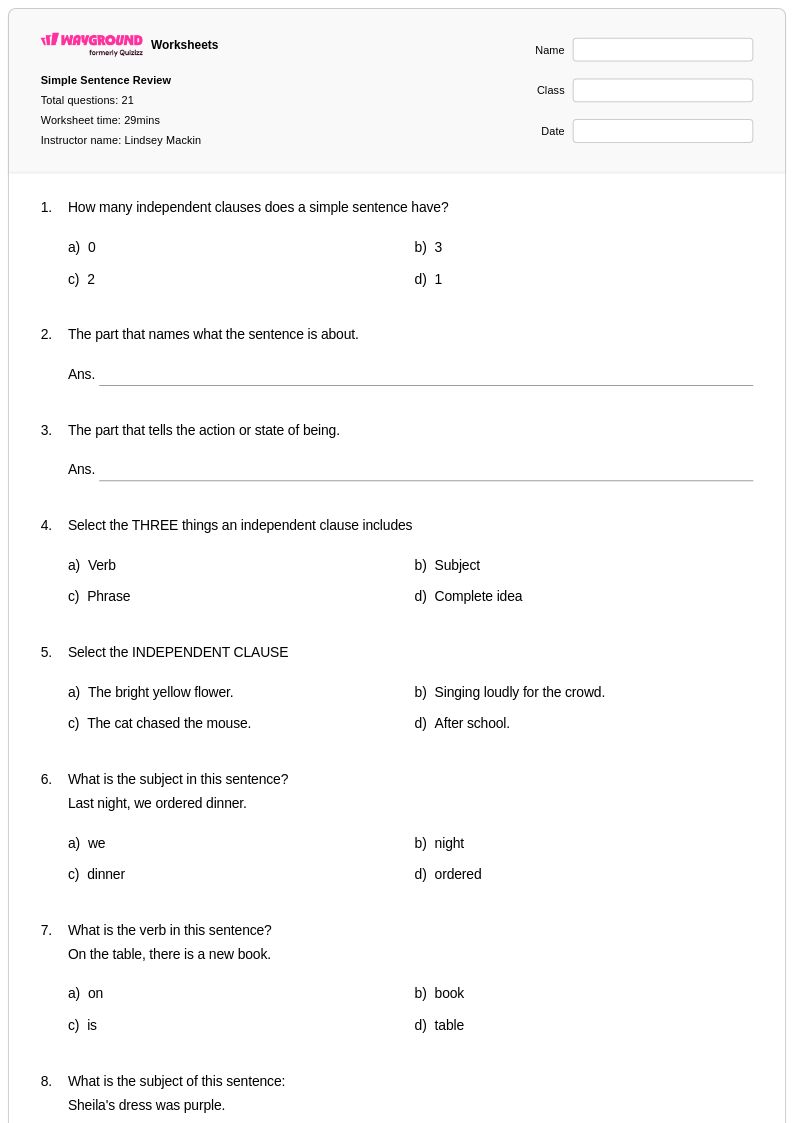
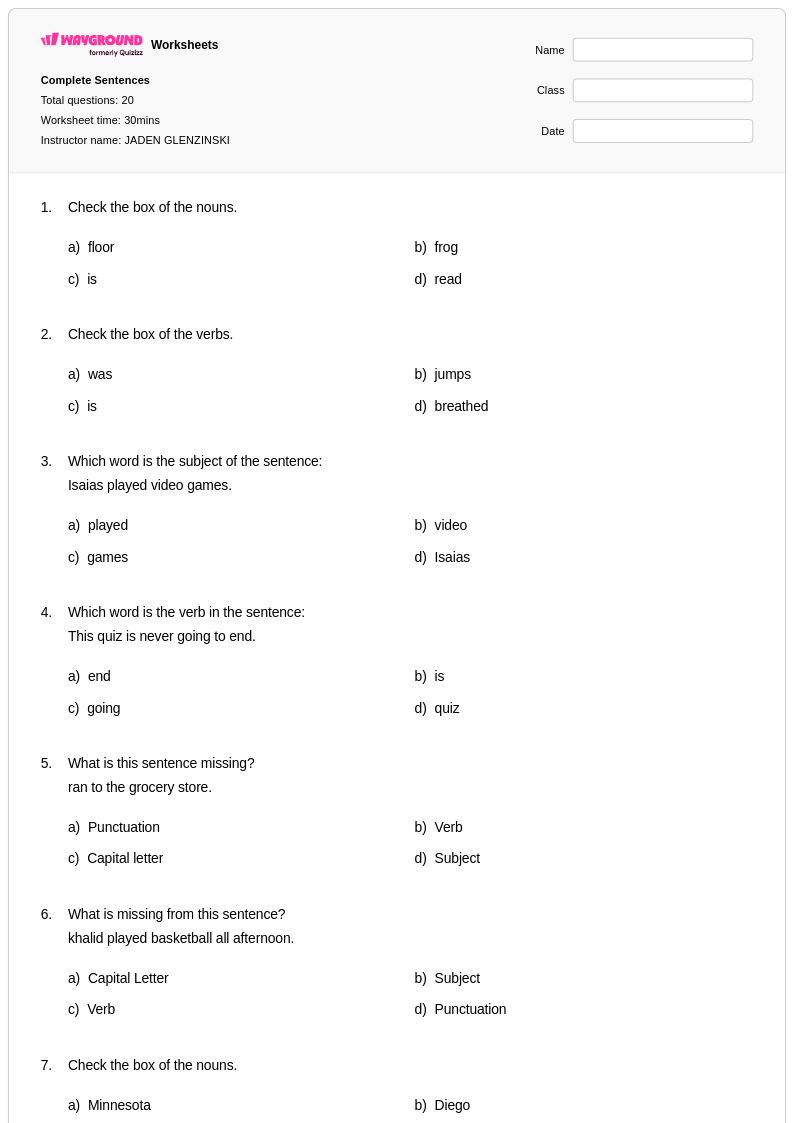
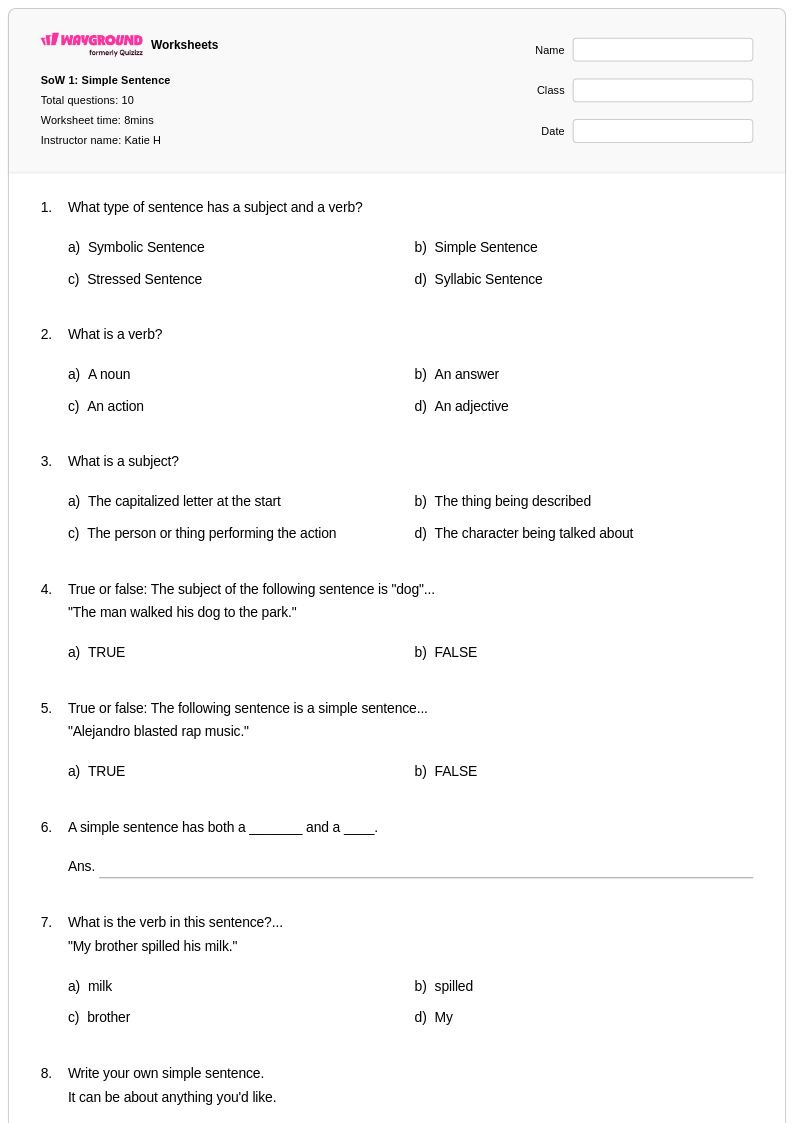
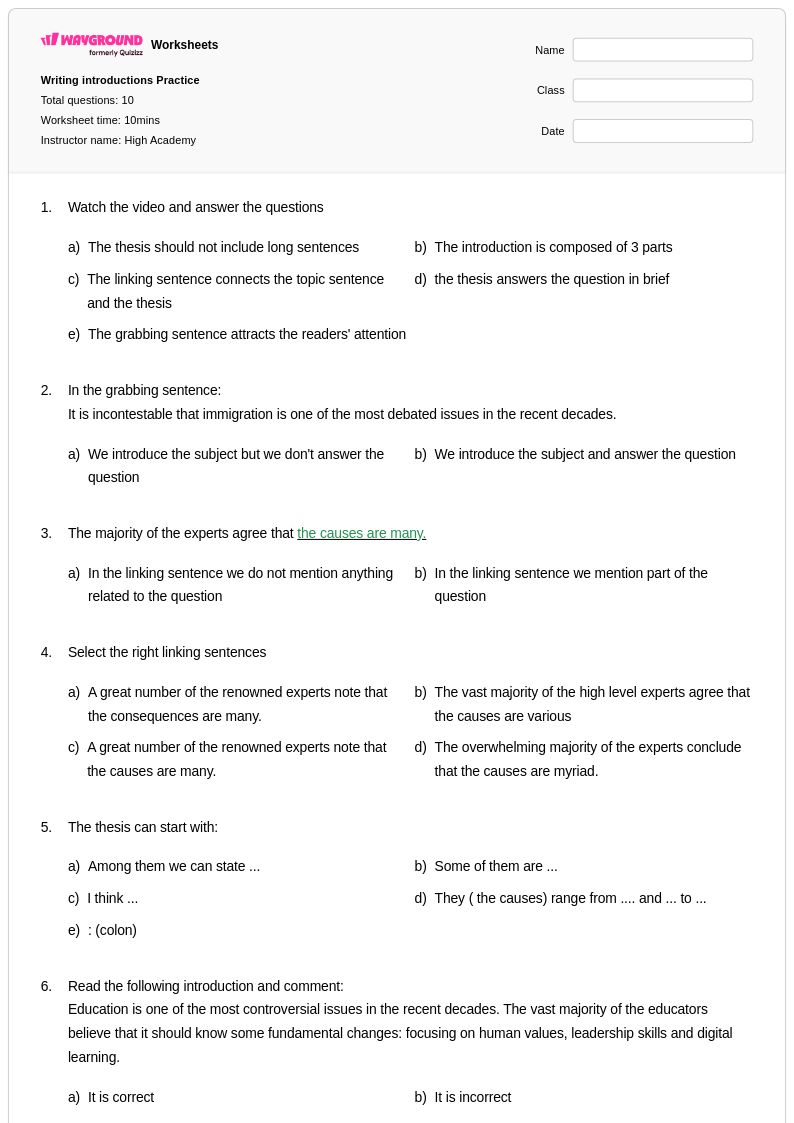
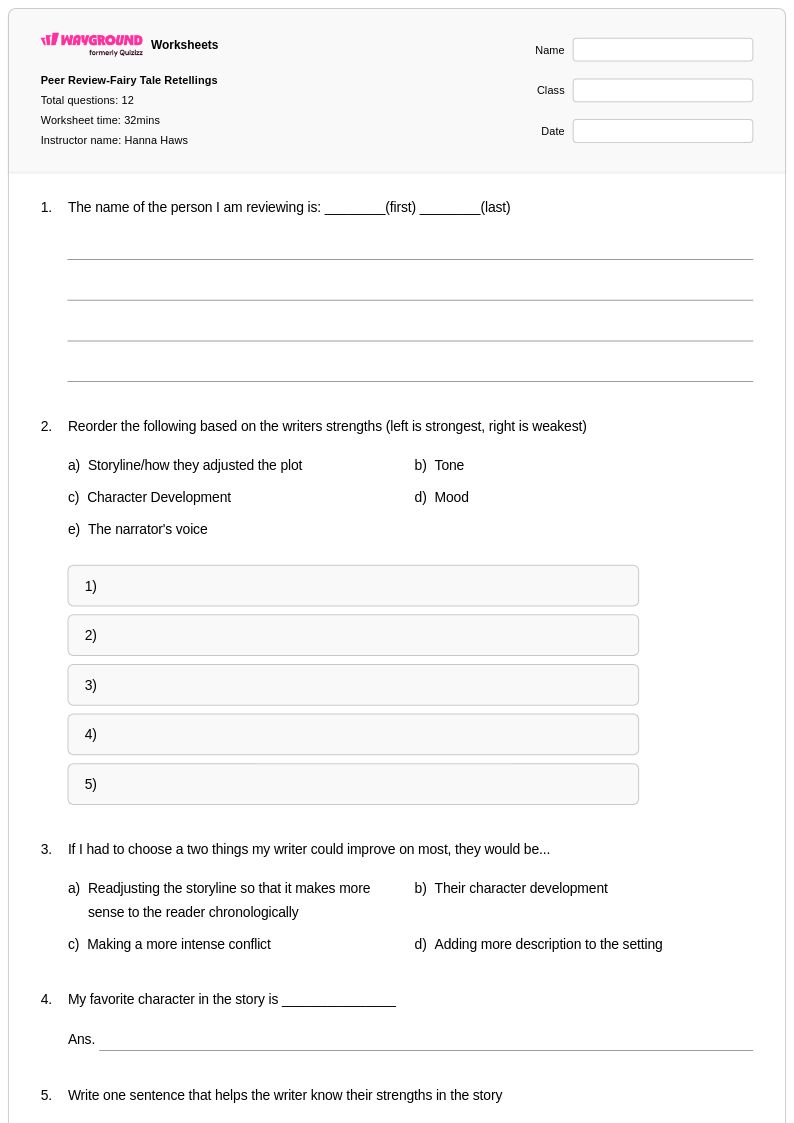
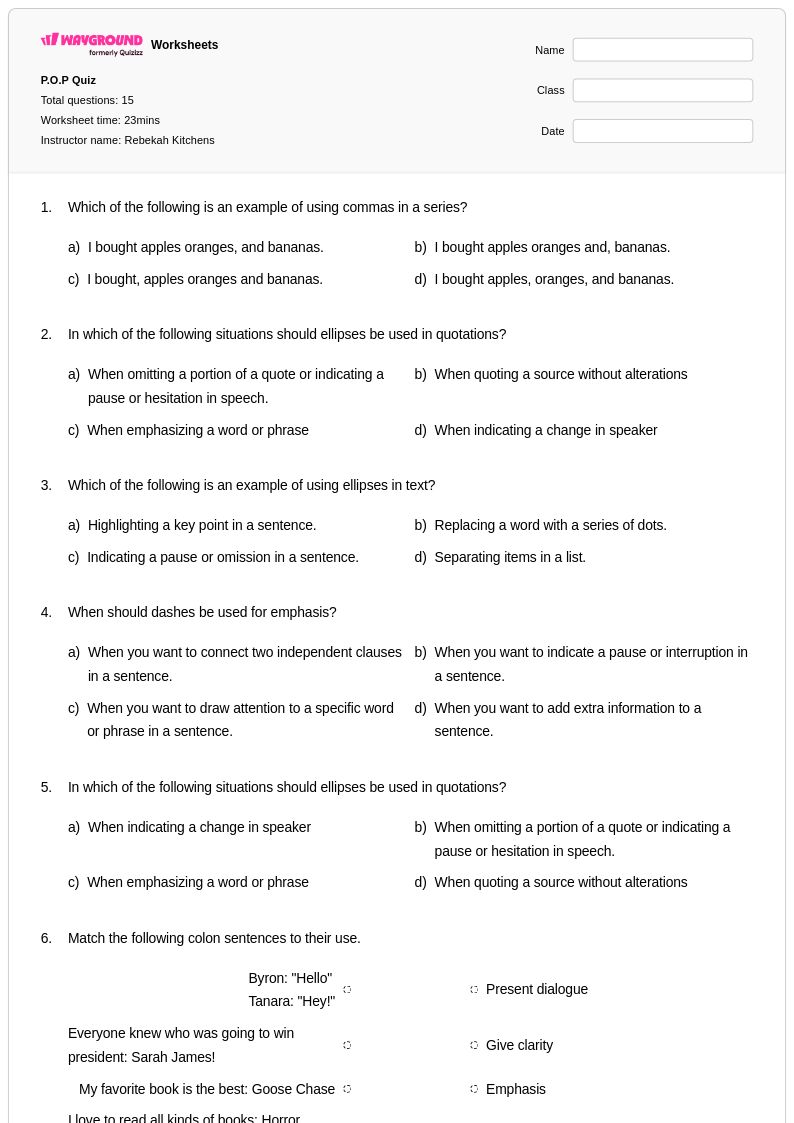
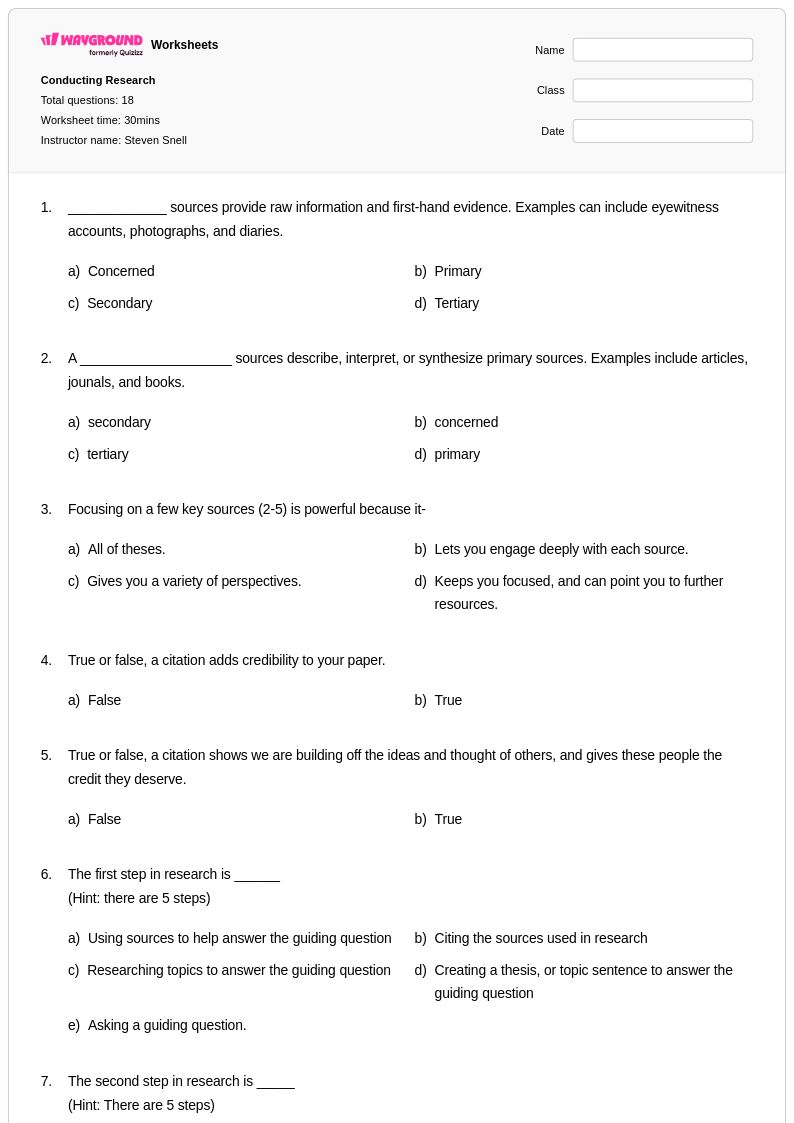
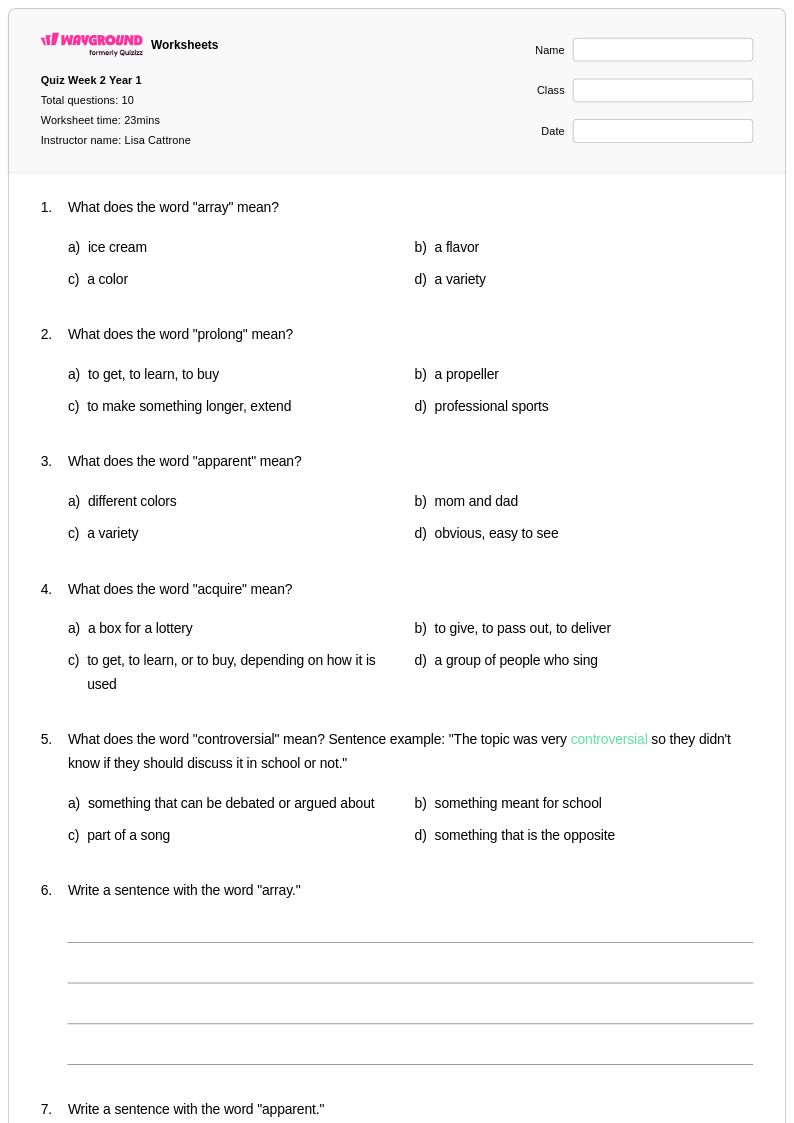
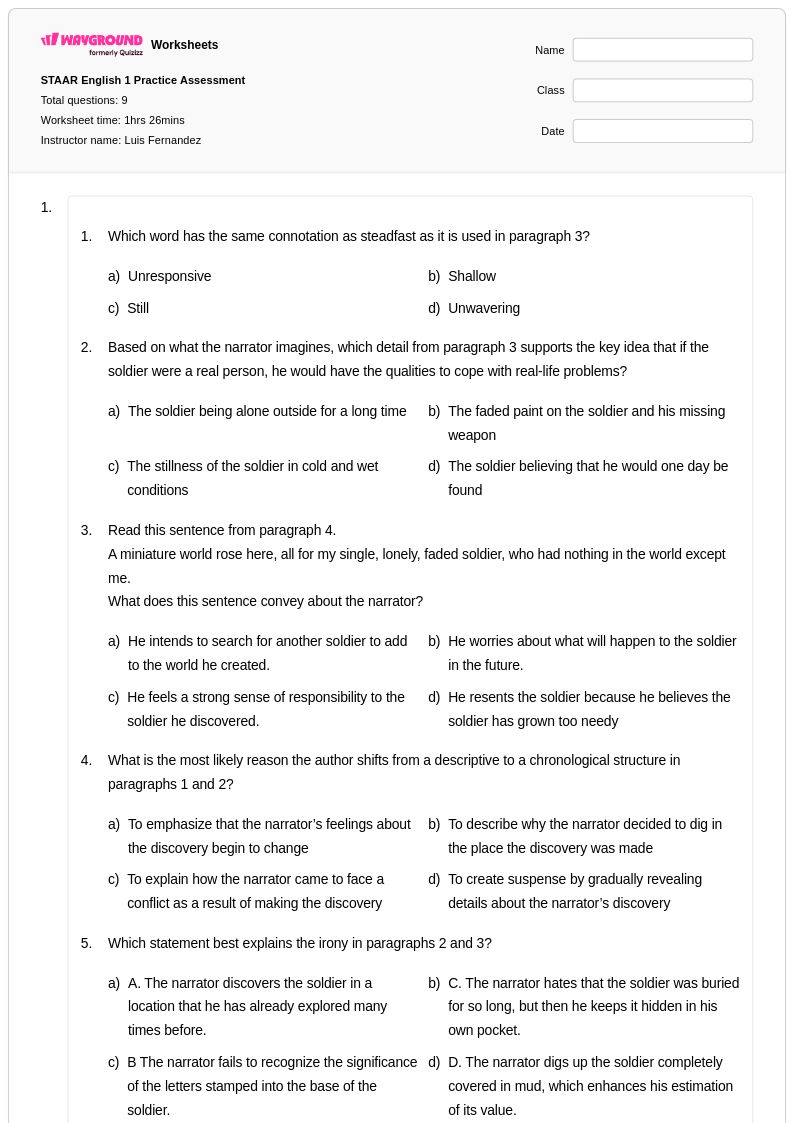
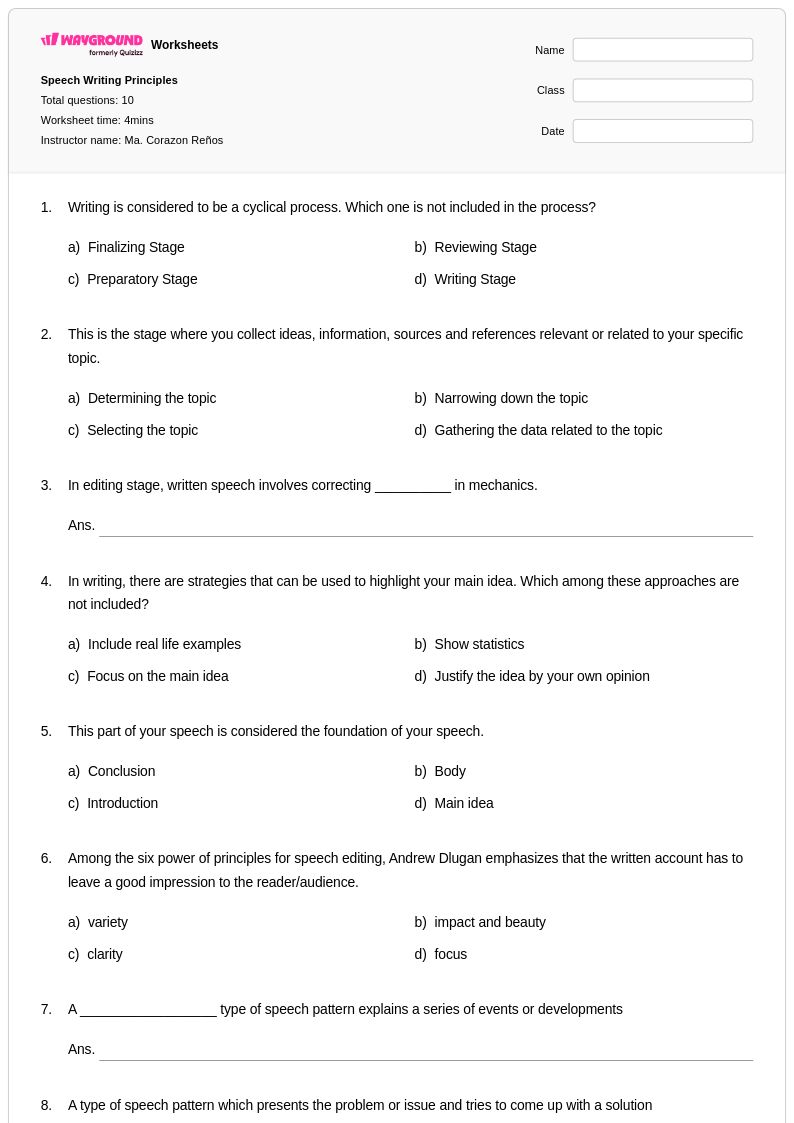
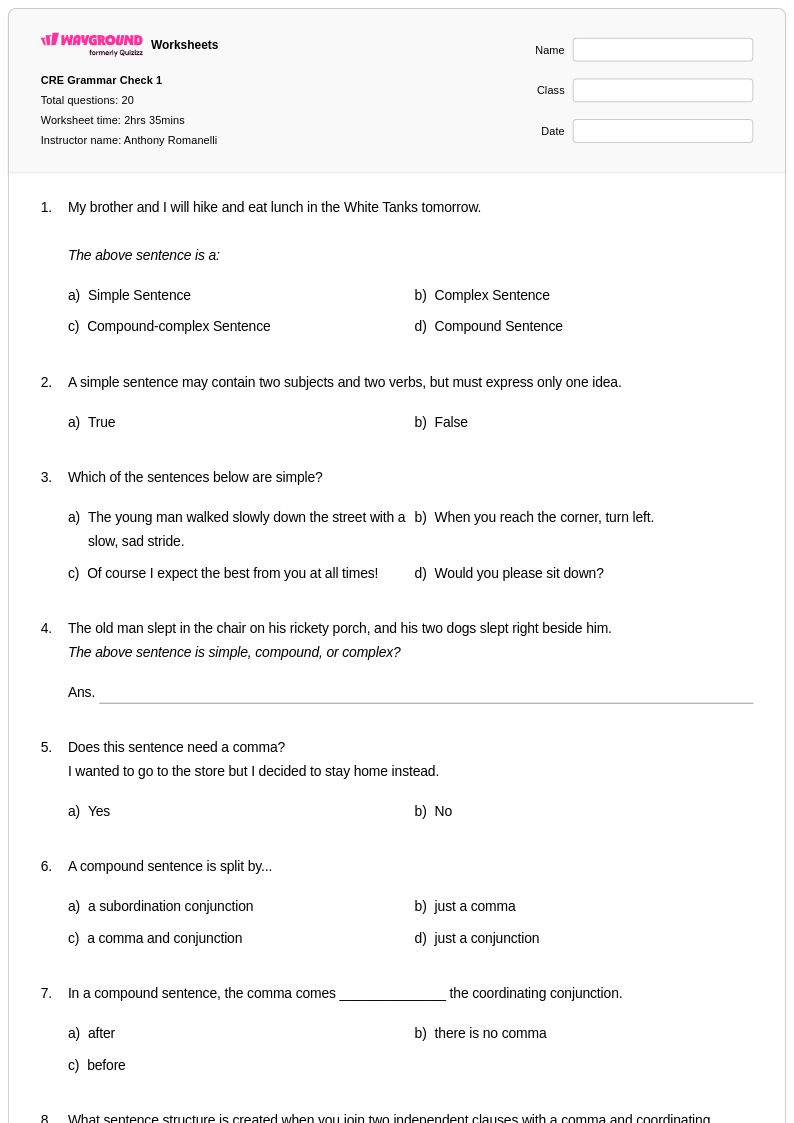
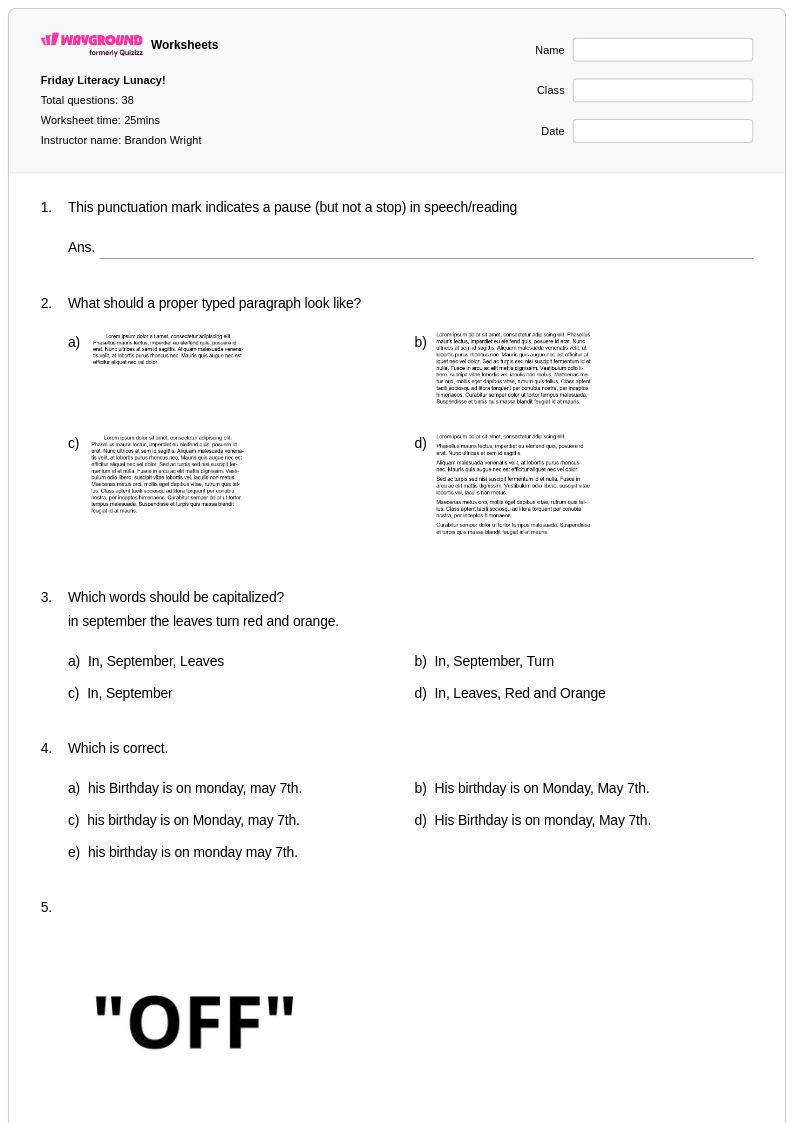
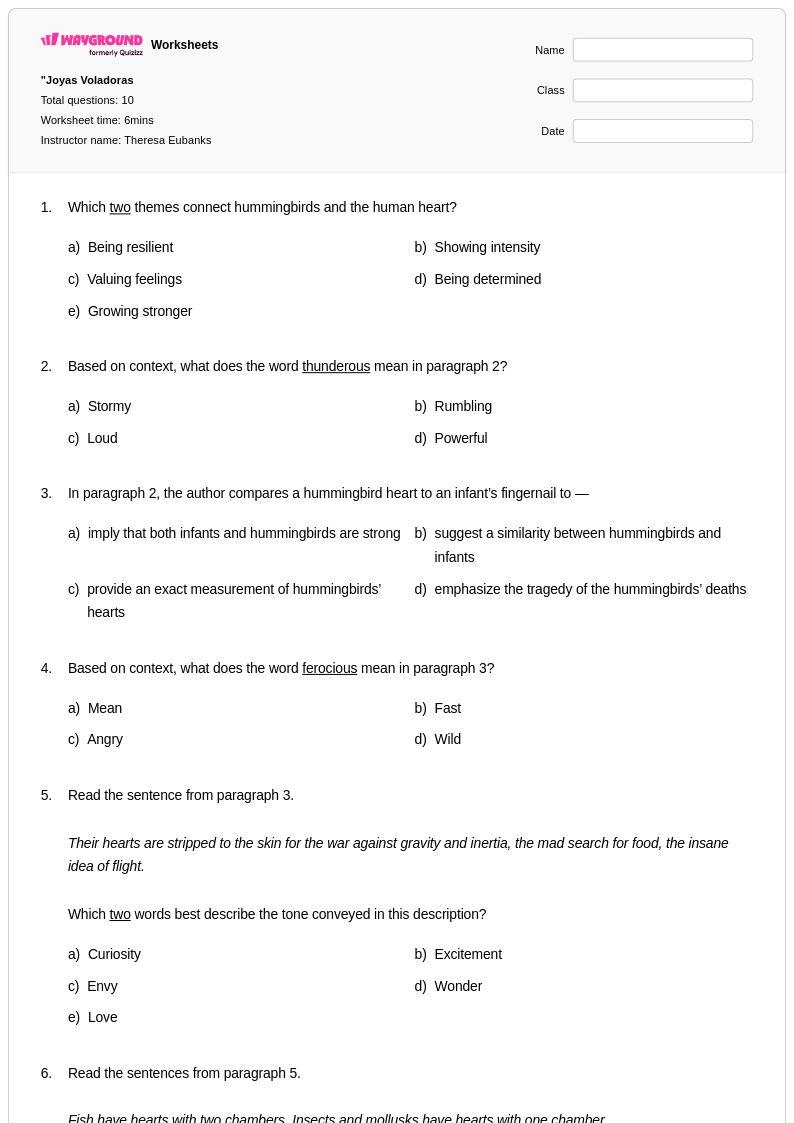
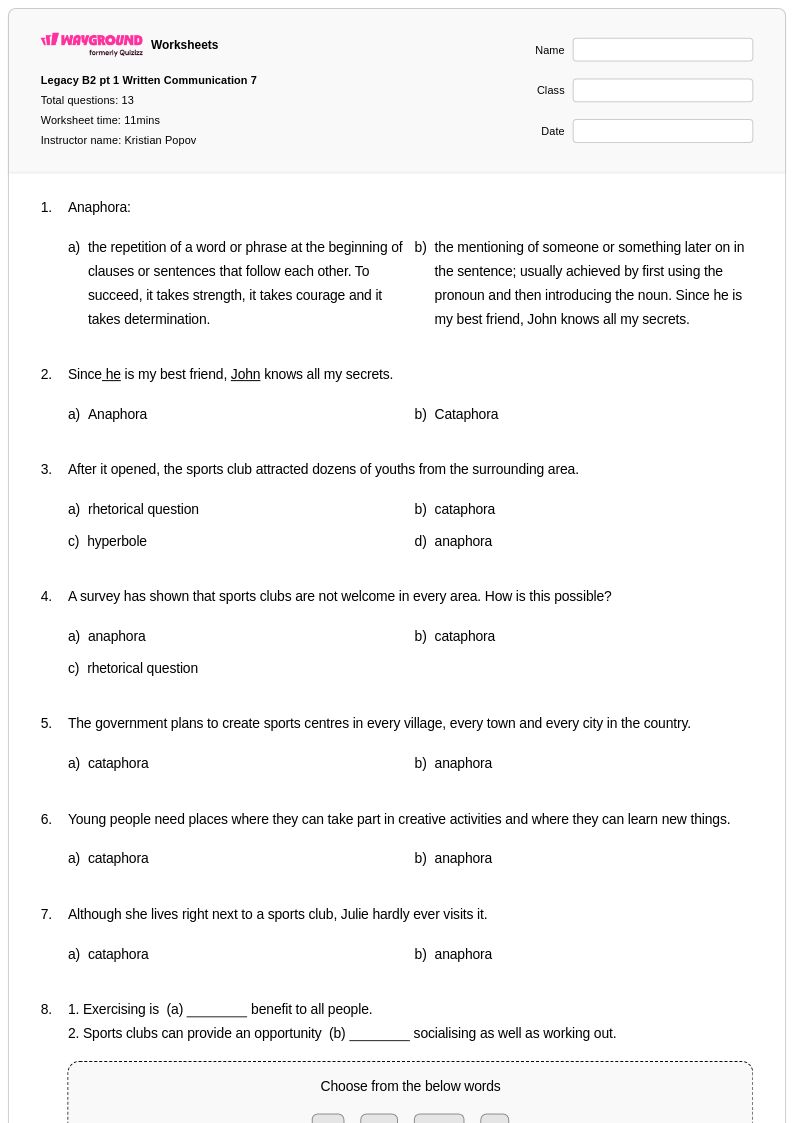
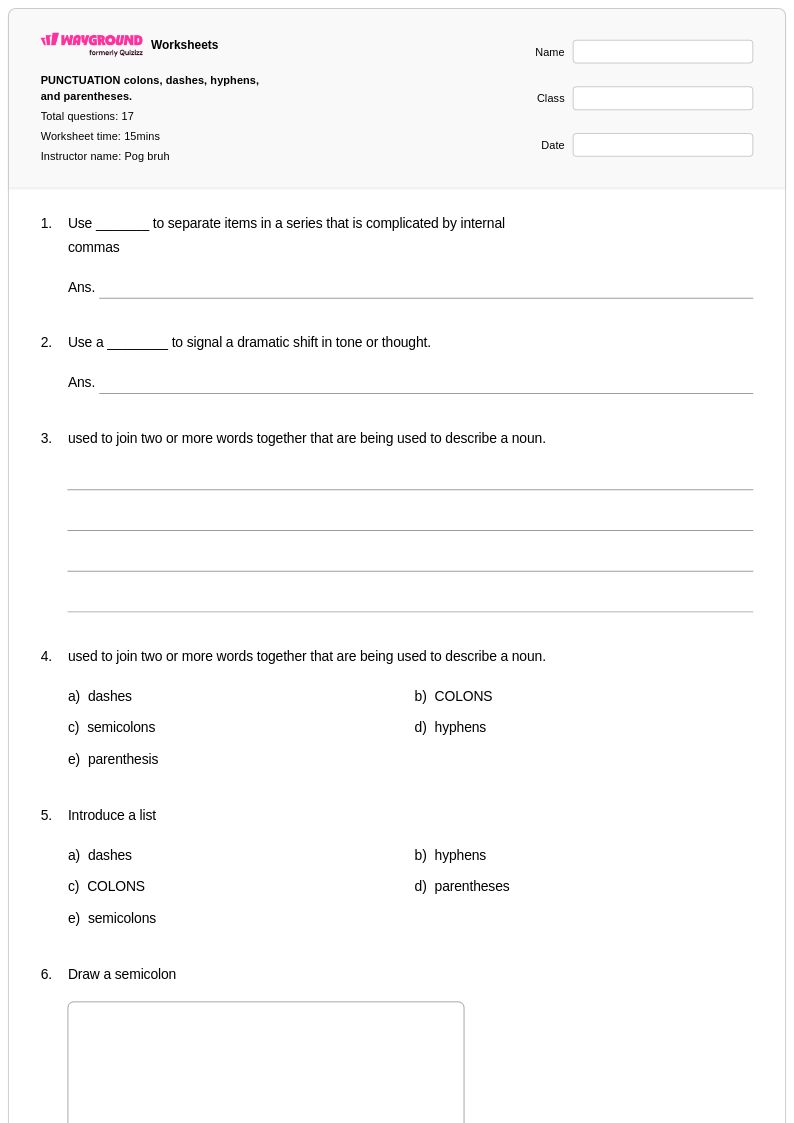
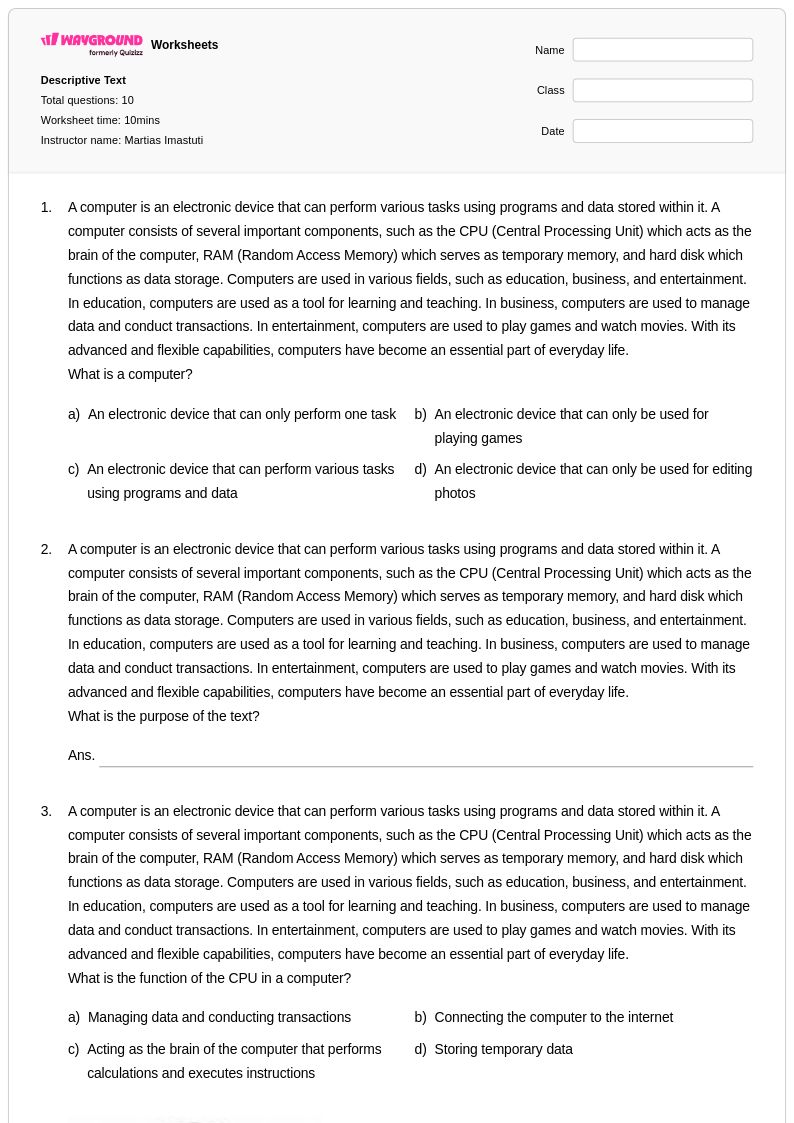
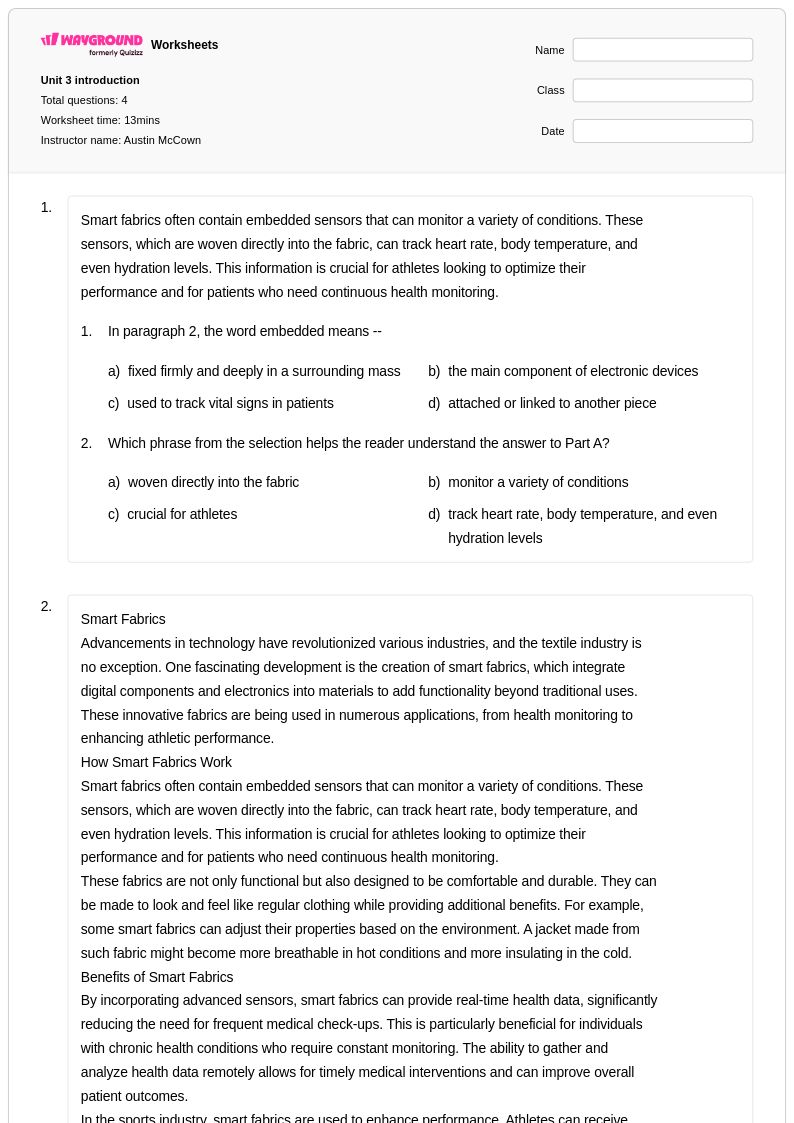
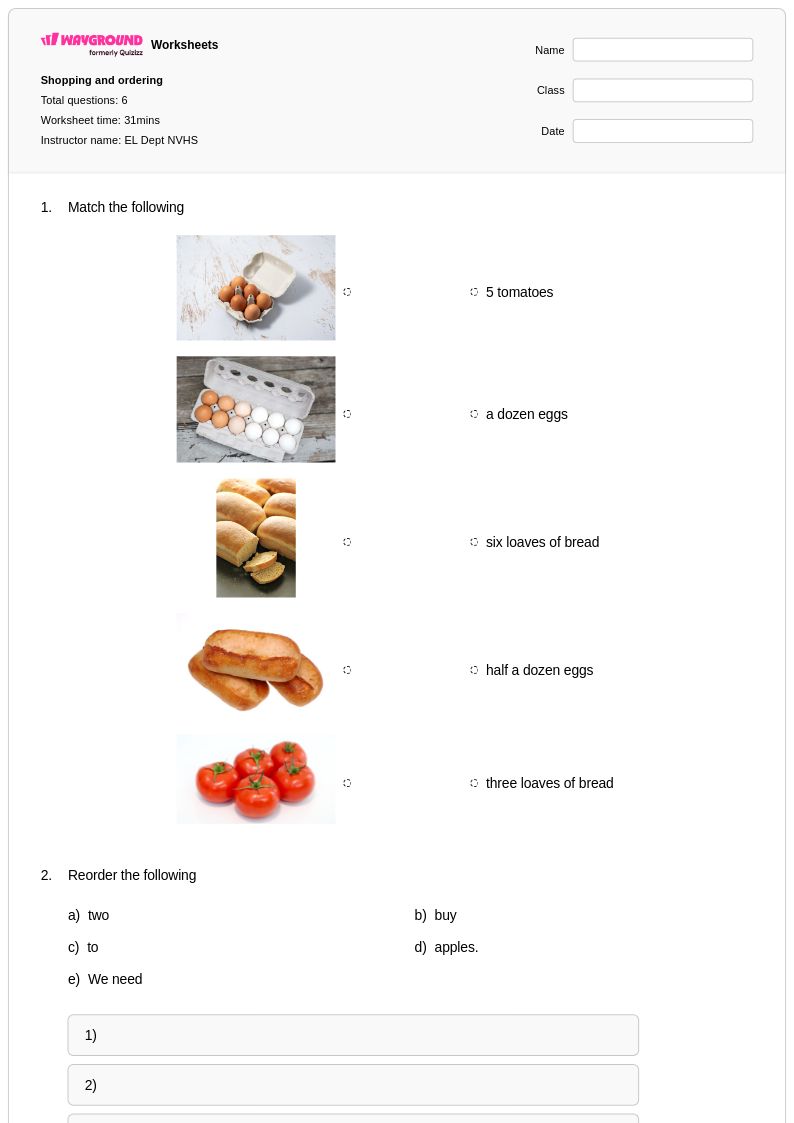
Sentence variety worksheets for Class 11 students available through Wayground (formerly Quizizz) provide comprehensive practice in creating dynamic, engaging writing through diverse sentence structures and patterns. These carefully designed resources help eleventh-grade students master the art of combining simple, compound, complex, and compound-complex sentences to enhance their writing's rhythm, flow, and sophistication. Students work through practice problems that challenge them to transform monotonous paragraph structures into compelling prose by varying sentence length, beginnings, and types. Each worksheet includes detailed answer keys that guide students through the revision process, while the free printable format allows for flexible classroom implementation and individual study sessions.
Wayground's extensive collection of teacher-created sentence variety resources offers educators powerful tools to strengthen their Class 11 writing instruction through millions of professionally developed worksheets and activities. The platform's advanced search and filtering capabilities enable teachers to quickly locate materials aligned with specific writing standards and learning objectives, while built-in differentiation tools allow for seamless adaptation to meet diverse student needs. These printable and digital resources, including convenient pdf downloads, support comprehensive lesson planning by providing ready-to-use materials for direct instruction, independent practice, and targeted remediation. Teachers can customize worksheets to focus on particular sentence patterns or combine multiple resources to create enrichment opportunities that challenge advanced writers while providing additional scaffolding for students who need extra support in developing sentence fluency and structural awareness.
FAQs
How do I teach sentence variety to students who rely on simple sentences?
Start by having students identify repetitive patterns in their own writing, then model how to combine short sentences into compound and complex structures using coordinating and subordinating conjunctions. Teaching sentence beginnings is equally important — show students how to open sentences with adverbs, prepositional phrases, or dependent clauses instead of always starting with the subject. Gradually releasing responsibility through guided practice before independent writing helps students internalize variety as a natural habit rather than a corrective step.
What exercises help students practice sentence variety?
Sentence-combining exercises are among the most effective practice tools — students take two or three short sentences and rewrite them as a single compound or complex sentence. Sentence-starter drills, where students must begin a sentence with a specific word type such as a gerund or prepositional phrase, push students to break default patterns. Worksheets that ask students to revise a monotonous paragraph by varying structure, length, and openings give them authentic, transferable practice that mirrors real writing revision.
What mistakes do students commonly make when trying to vary their sentences?
The most common error is over-relying on one connector, typically 'and' or 'but,' when combining sentences, which creates run-on structures rather than genuine variety. Students also confuse length variation with structural variation — writing one long sentence followed by one short one does not automatically create effective rhythm if the underlying grammatical patterns remain the same. Another frequent mistake is adding variety in isolated exercises but reverting to simple, repetitive structures when writing independently, which signals that the skill has not yet transferred to authentic writing contexts.
How can I use sentence variety worksheets in my classroom?
Sentence variety worksheets on Wayground are available as printable PDFs for traditional classroom use and in digital formats for technology-integrated environments, making them flexible for whole-class instruction, small group work, or independent practice. Teachers can also host them as a quiz directly on Wayground, allowing students to complete the activity digitally while the teacher tracks progress in real time. Each worksheet includes a complete answer key, which supports both self-paced student review and efficient teacher-led correction.
How do I differentiate sentence variety instruction for struggling writers?
For students who find sentence combining overwhelming, reduce the cognitive load by starting with sentence frames that provide the structure and ask students only to fill in the content. On Wayground, teachers can apply accommodations such as reduced answer choices or read-aloud support to individual students without disrupting the rest of the class, allowing differentiation to happen quietly and effectively. Pairing these supports with sentence variety worksheets targeting foundational skills, such as identifying simple versus compound sentences, gives struggling writers a clear entry point before tackling more complex structures.
At what grade level should sentence variety be formally taught?
Sentence variety is typically introduced in upper elementary grades, around grades 3 and 4, when students begin drafting multi-sentence paragraphs, and it is reinforced and deepened through middle and high school as writing assignments become more complex. By middle school, students are expected to move beyond simple sentences and deliberately craft compound-complex structures that support argumentation and narrative pacing. Formal instruction in sentence variety at multiple grade levels ensures students develop it as a writerly habit rather than a one-time correction.