Free Printable Short Vowels Worksheets for Class 1
Wayground's free Class 1 short vowels worksheets provide printable PDF practice problems with answer keys to help young learners master essential phonics skills through engaging activities.
Explore printable Short Vowels worksheets for Class 1
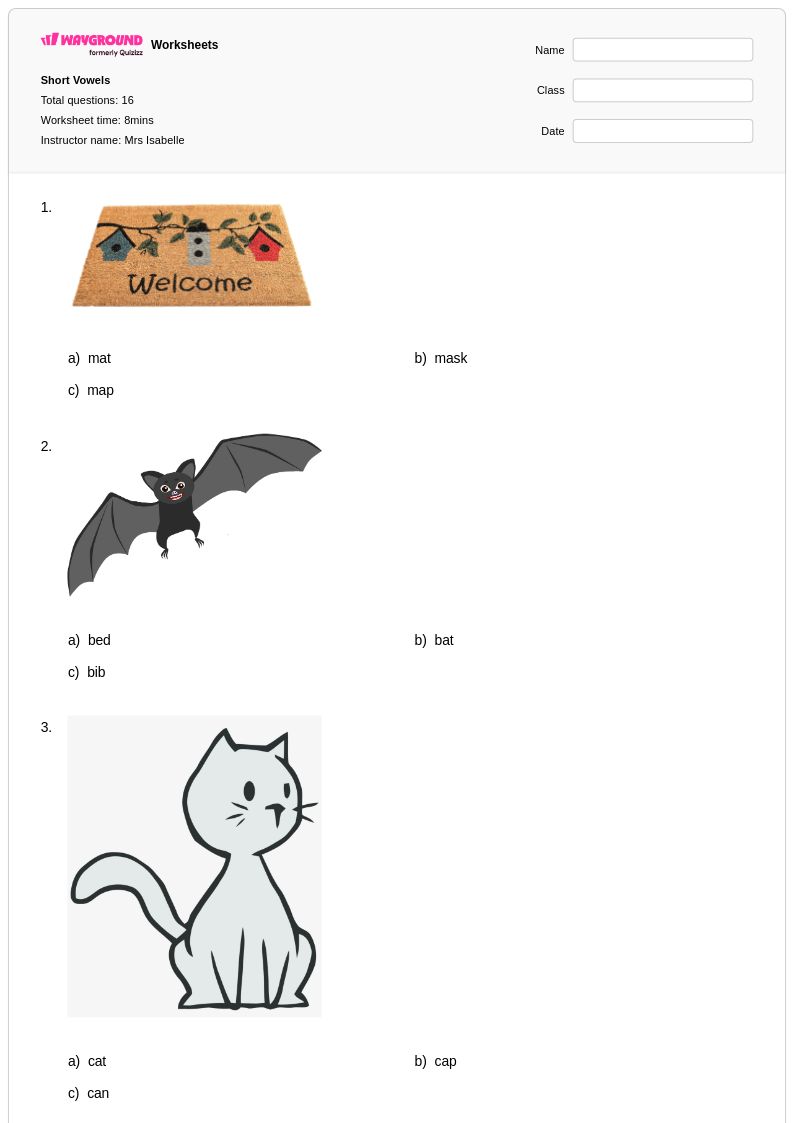
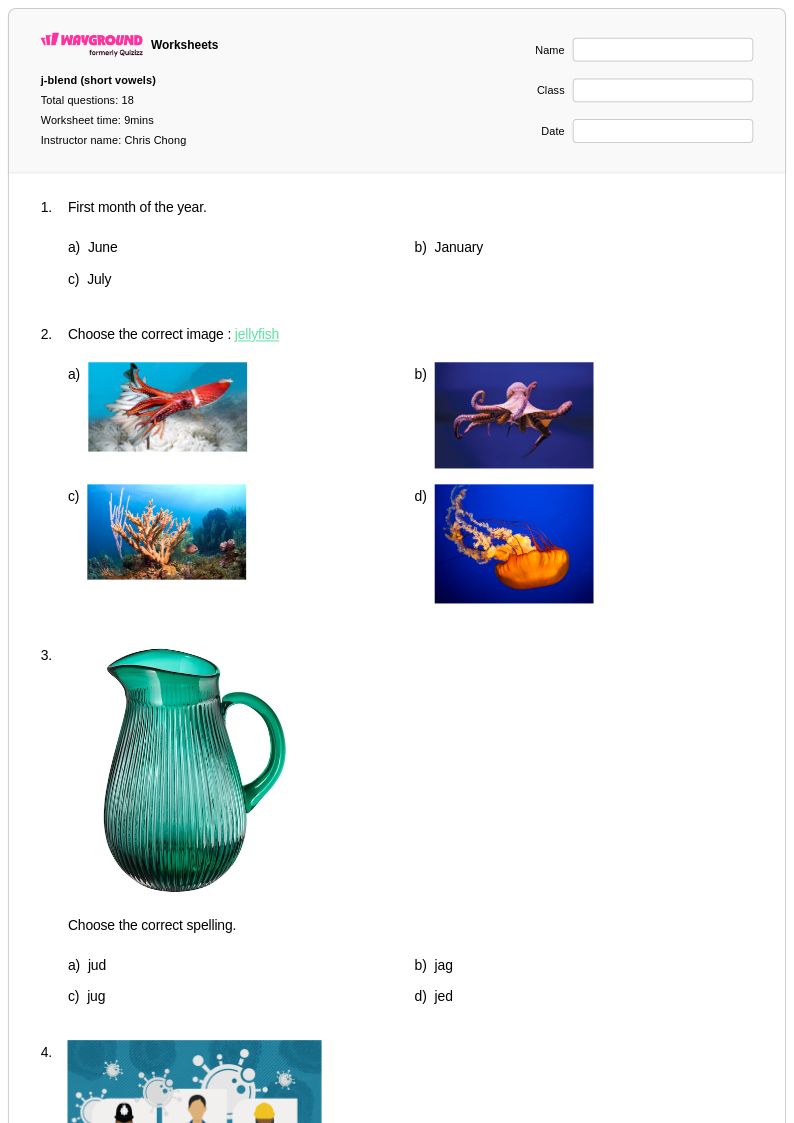
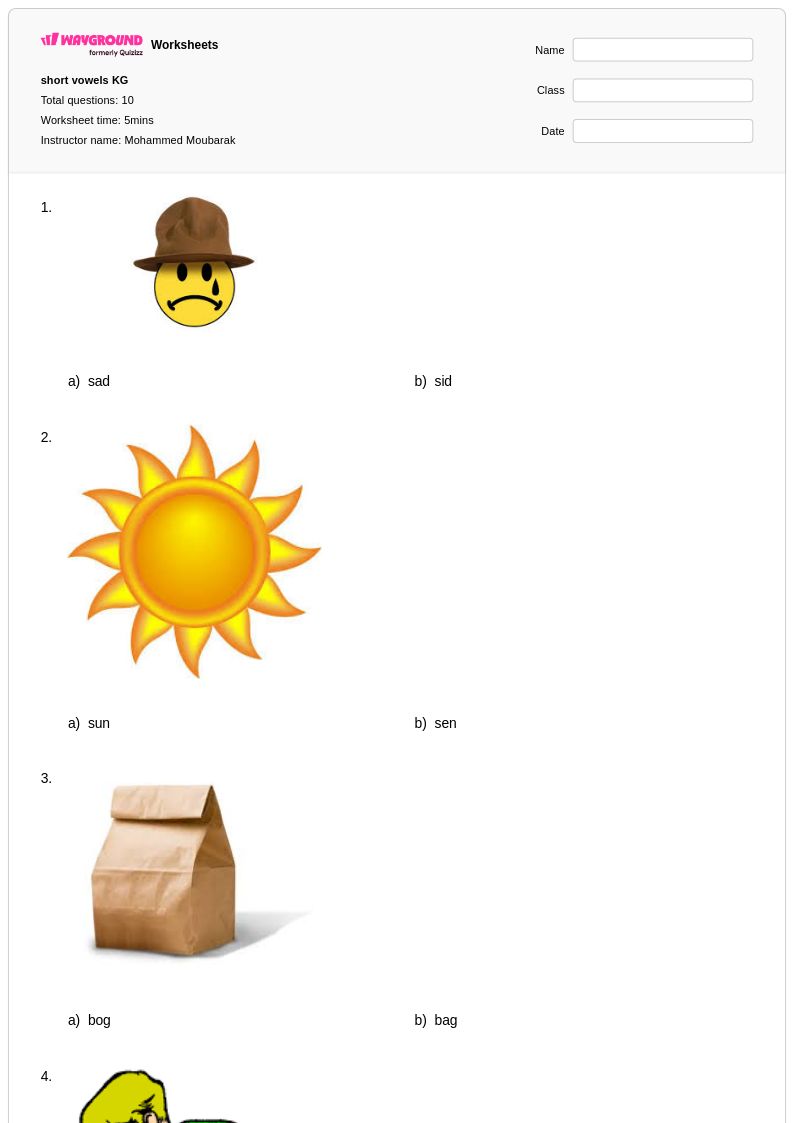
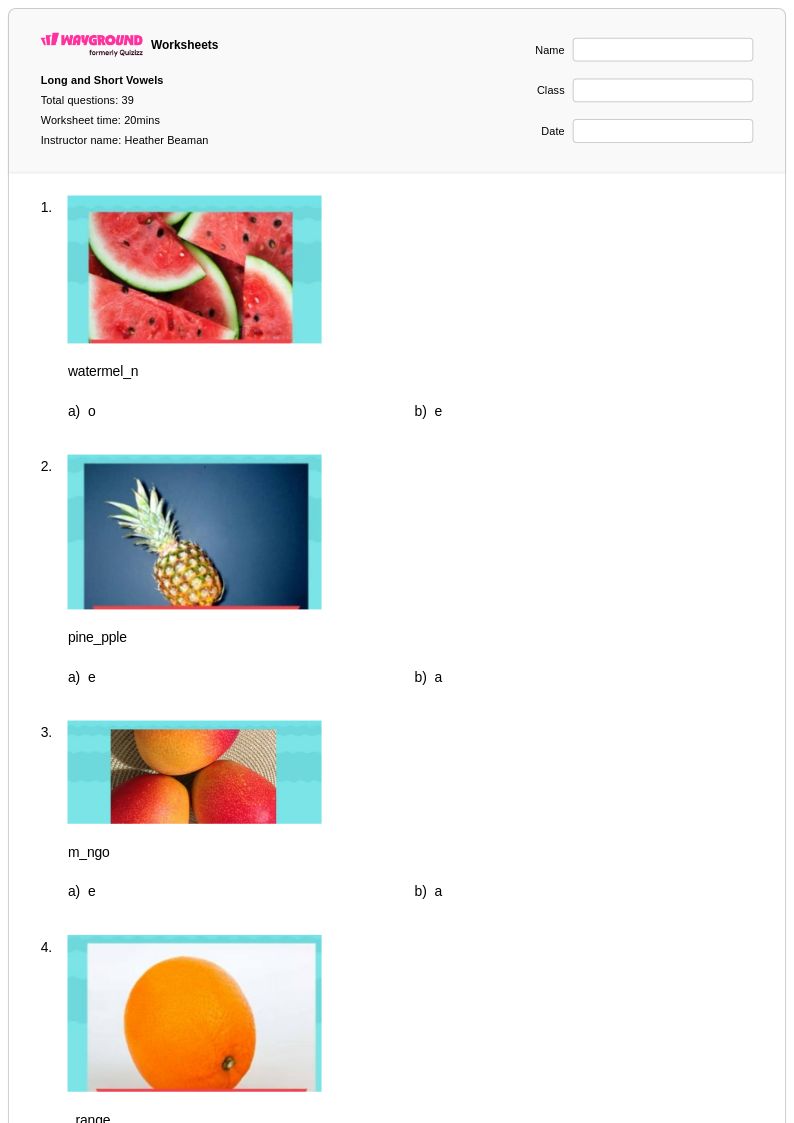
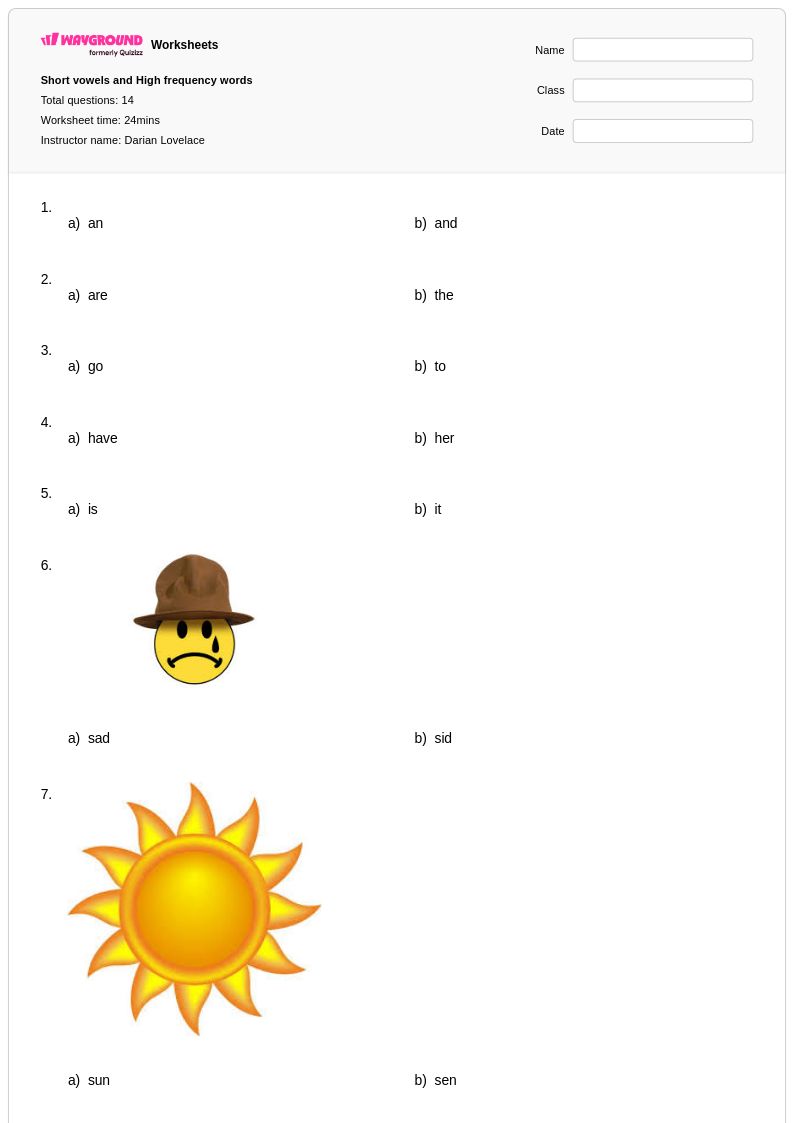
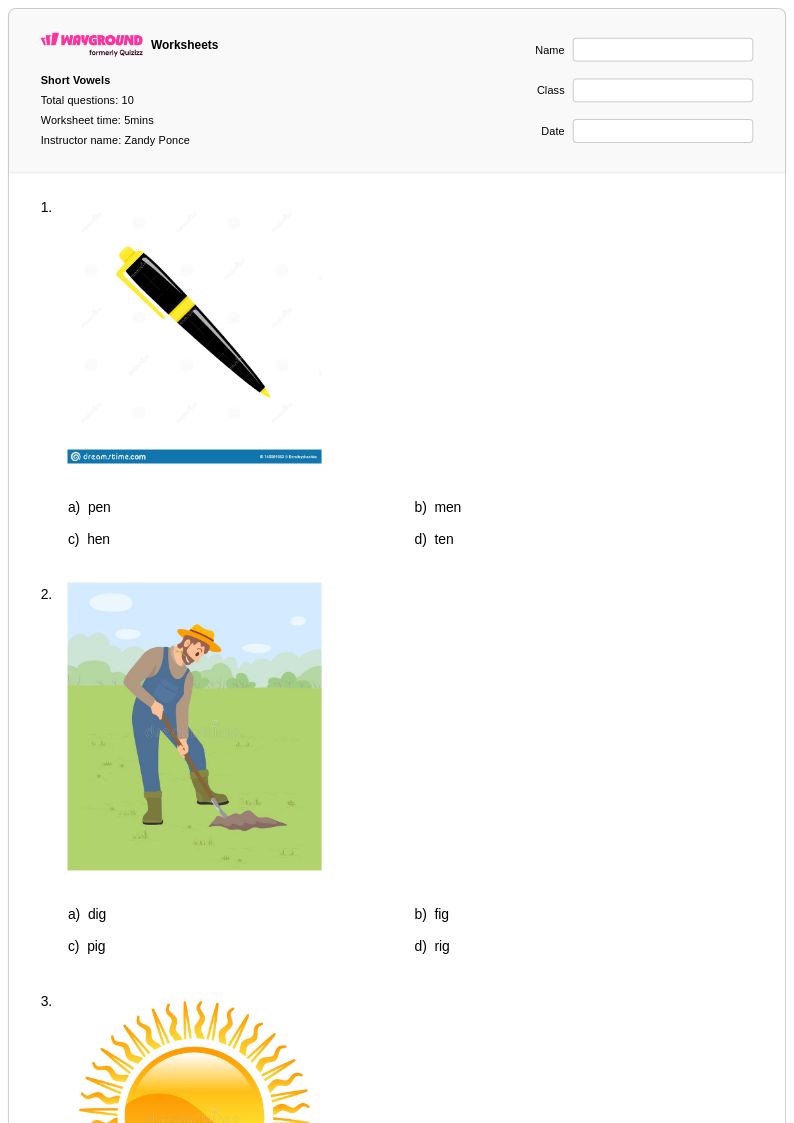
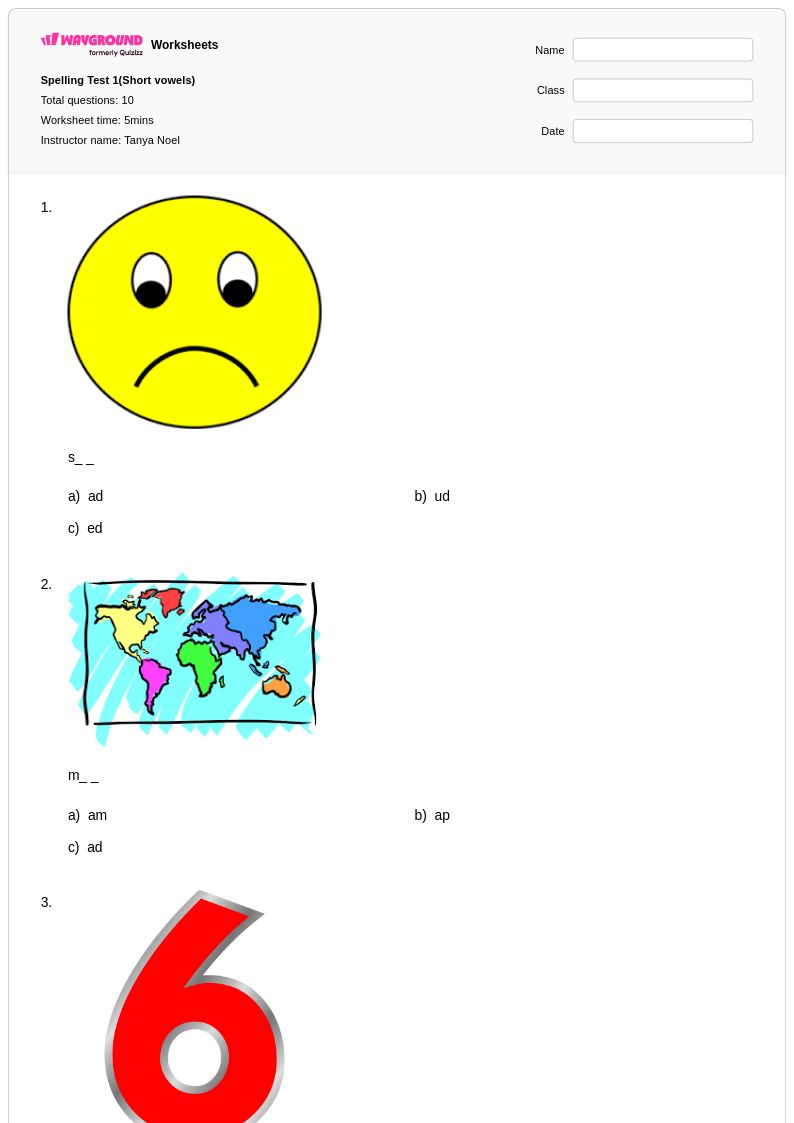
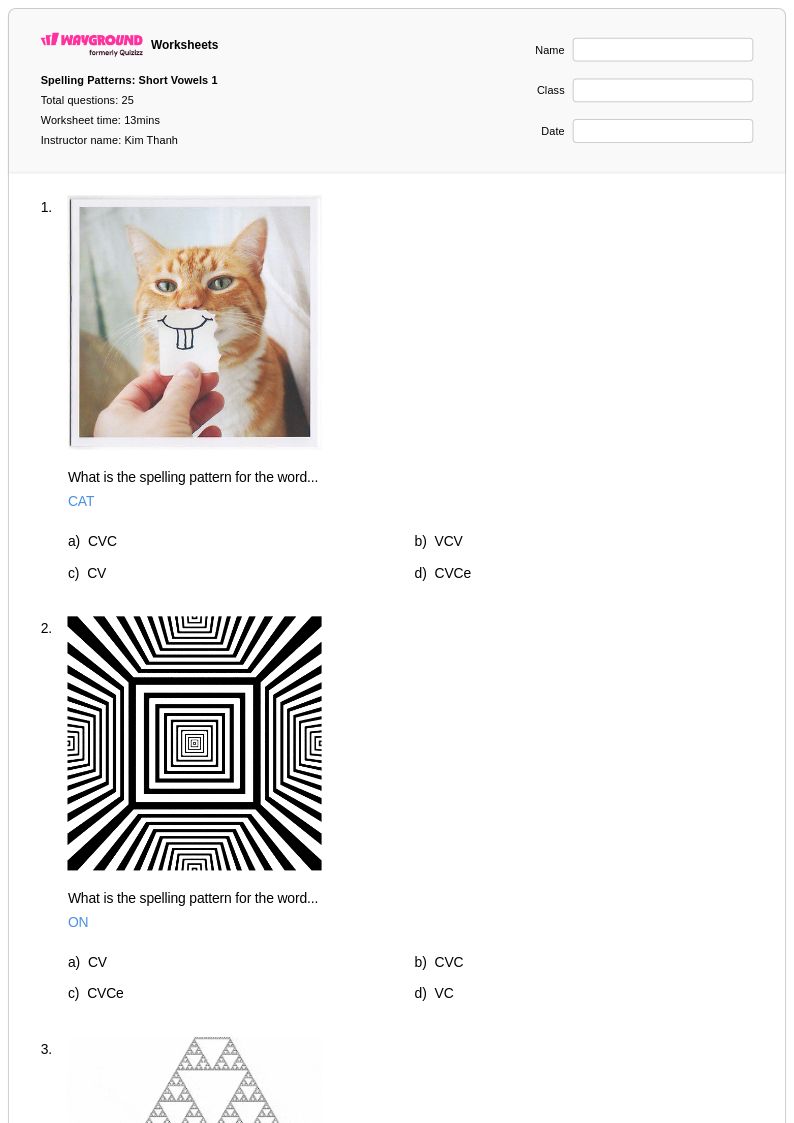
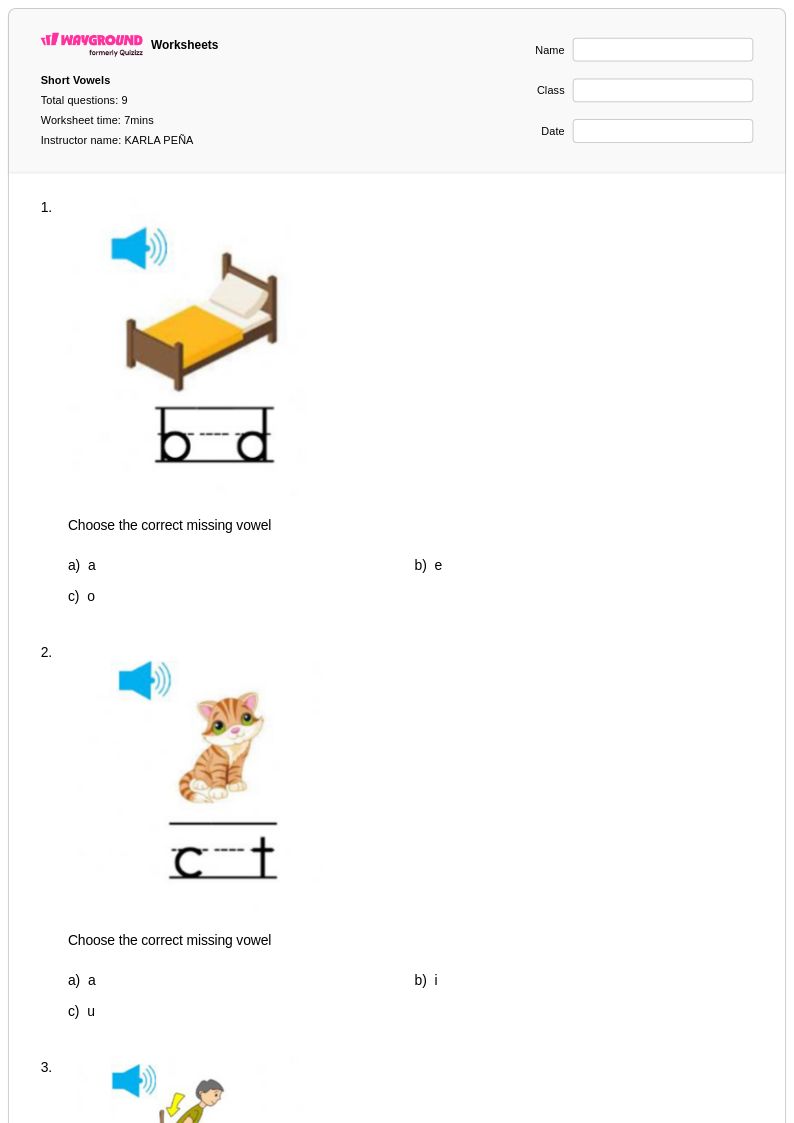
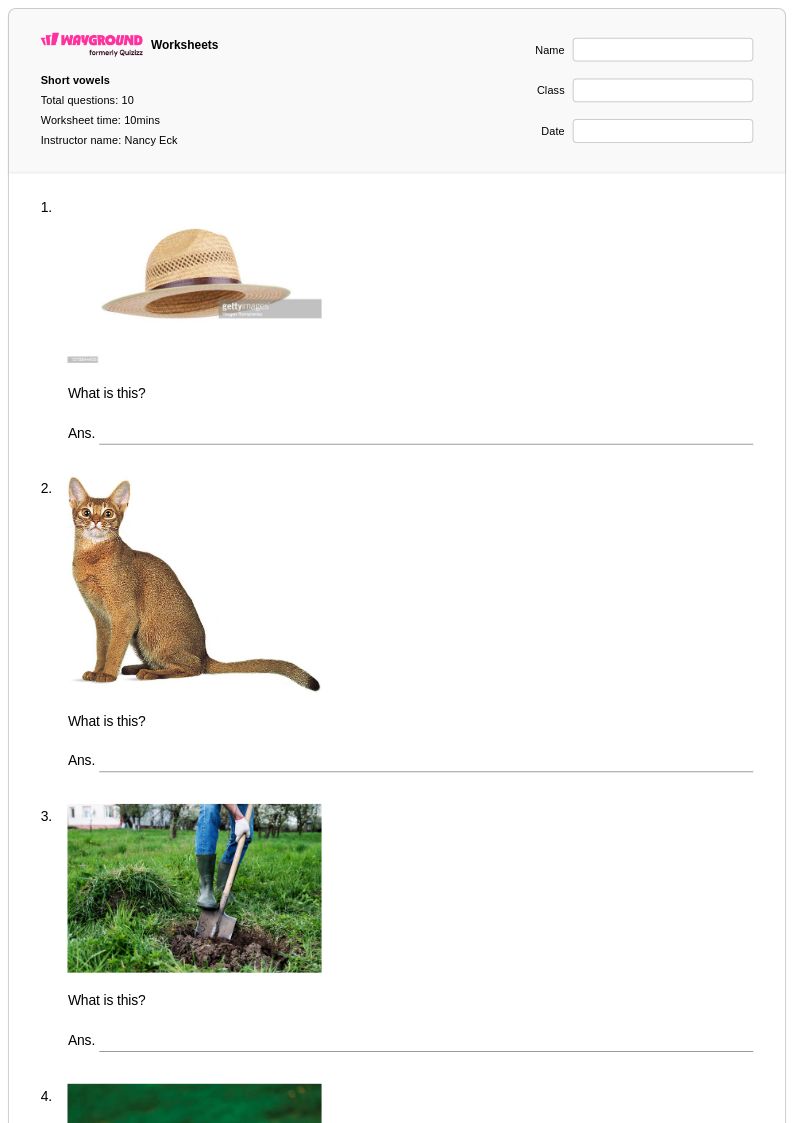
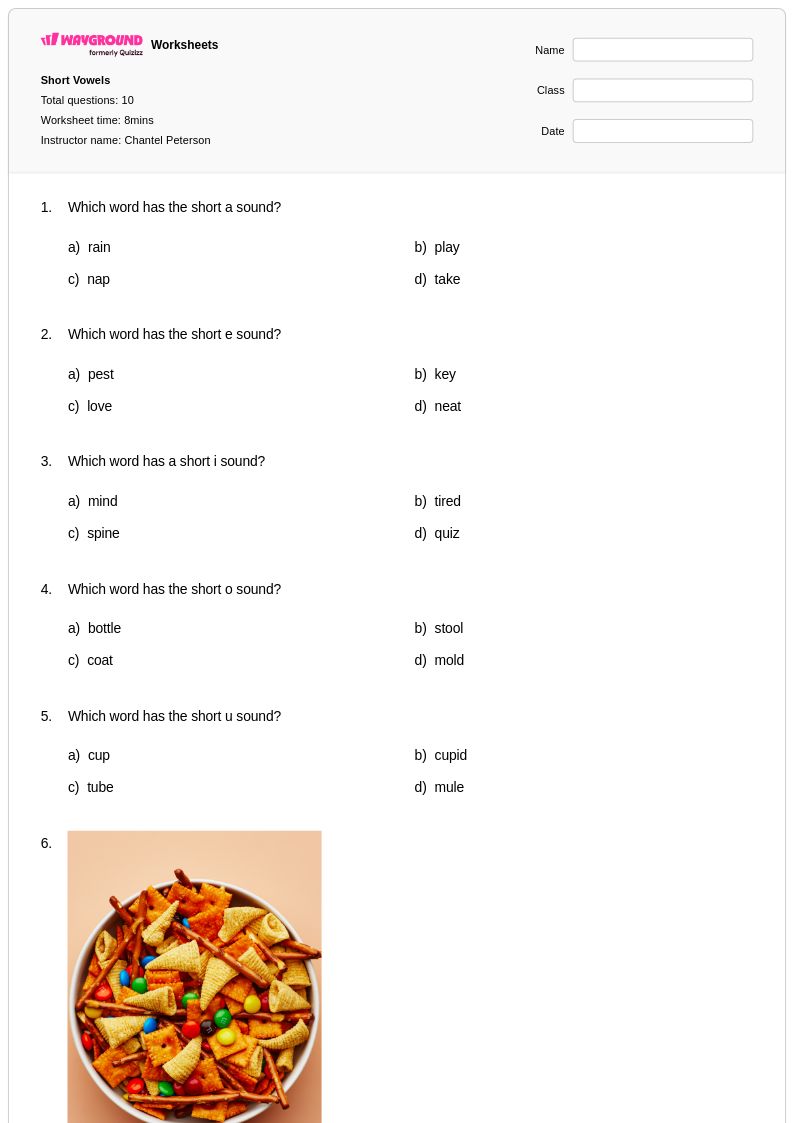
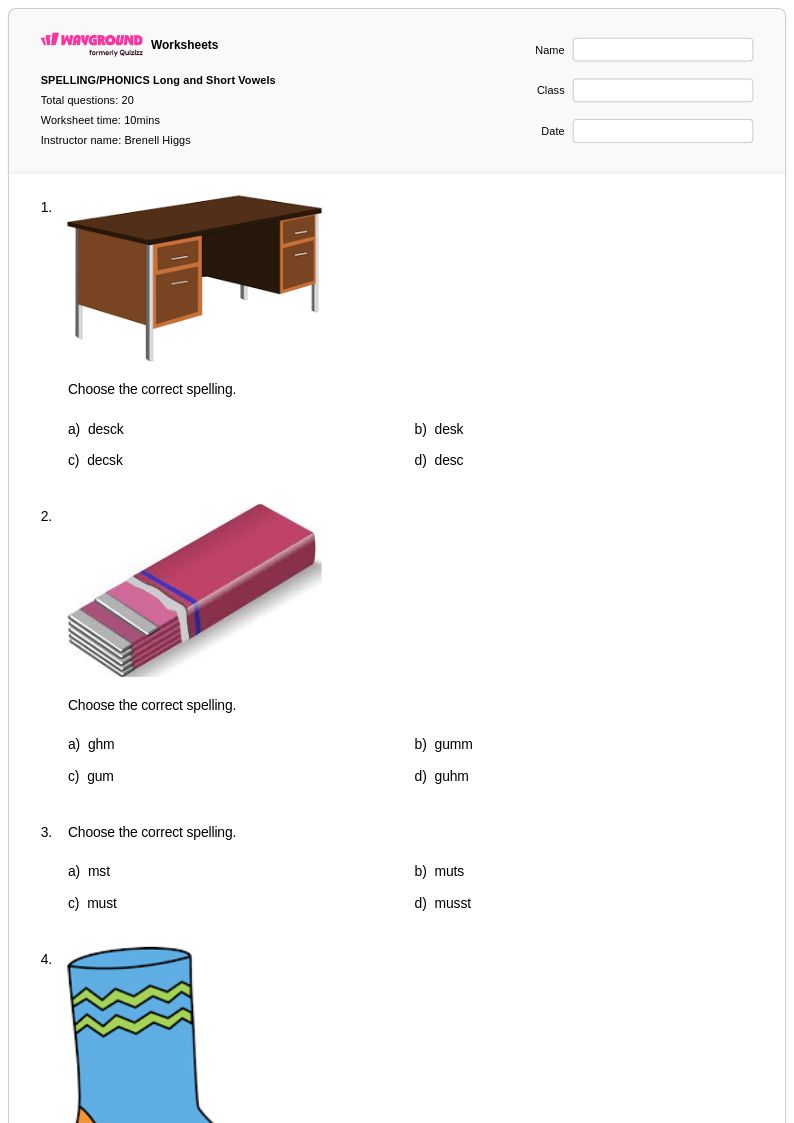
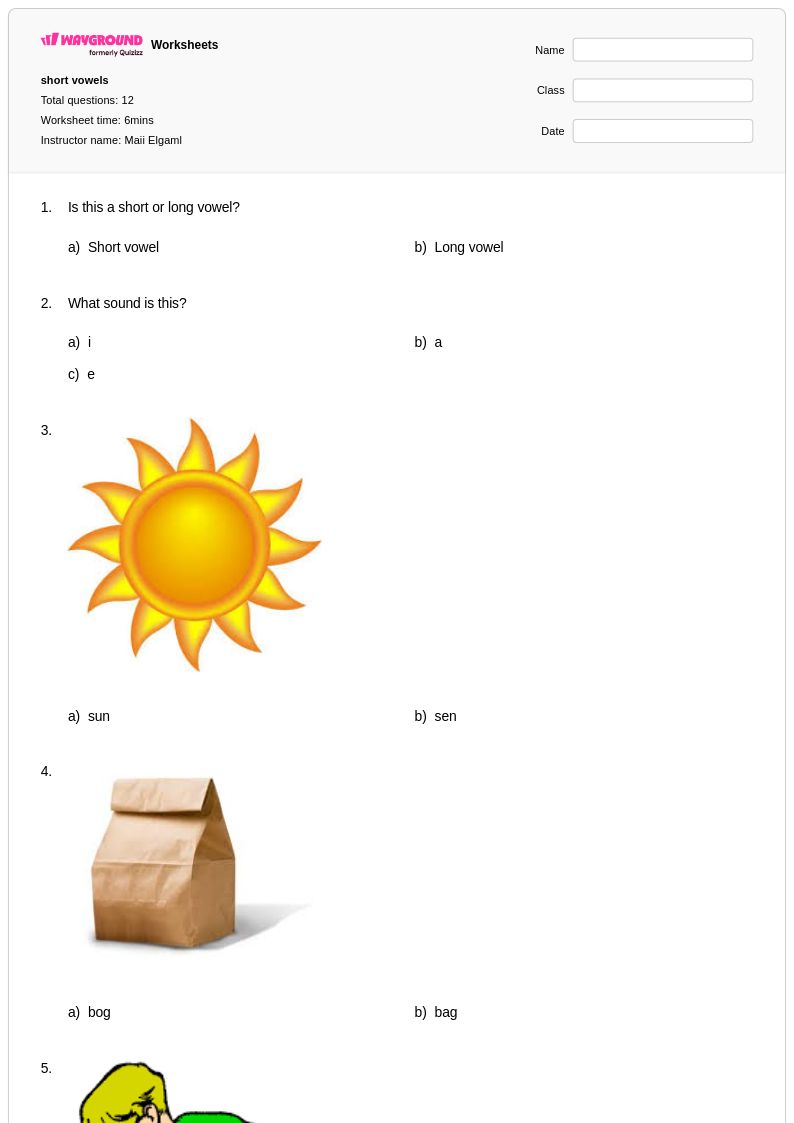
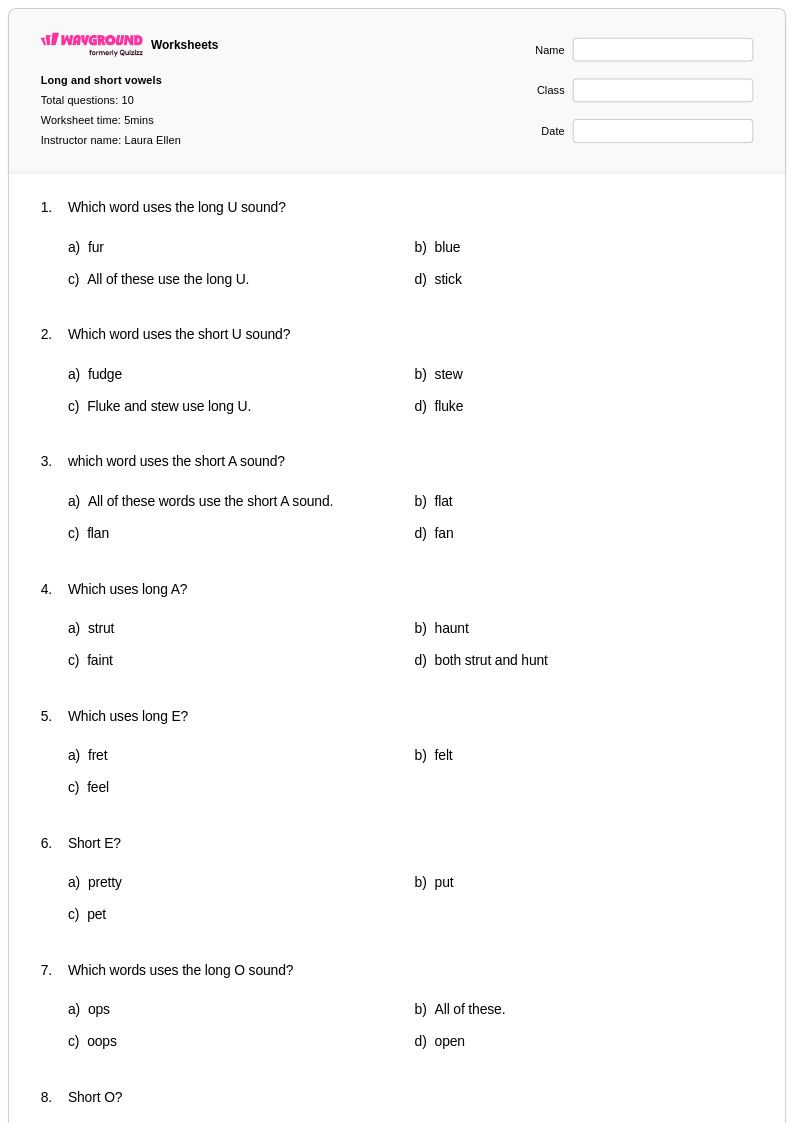
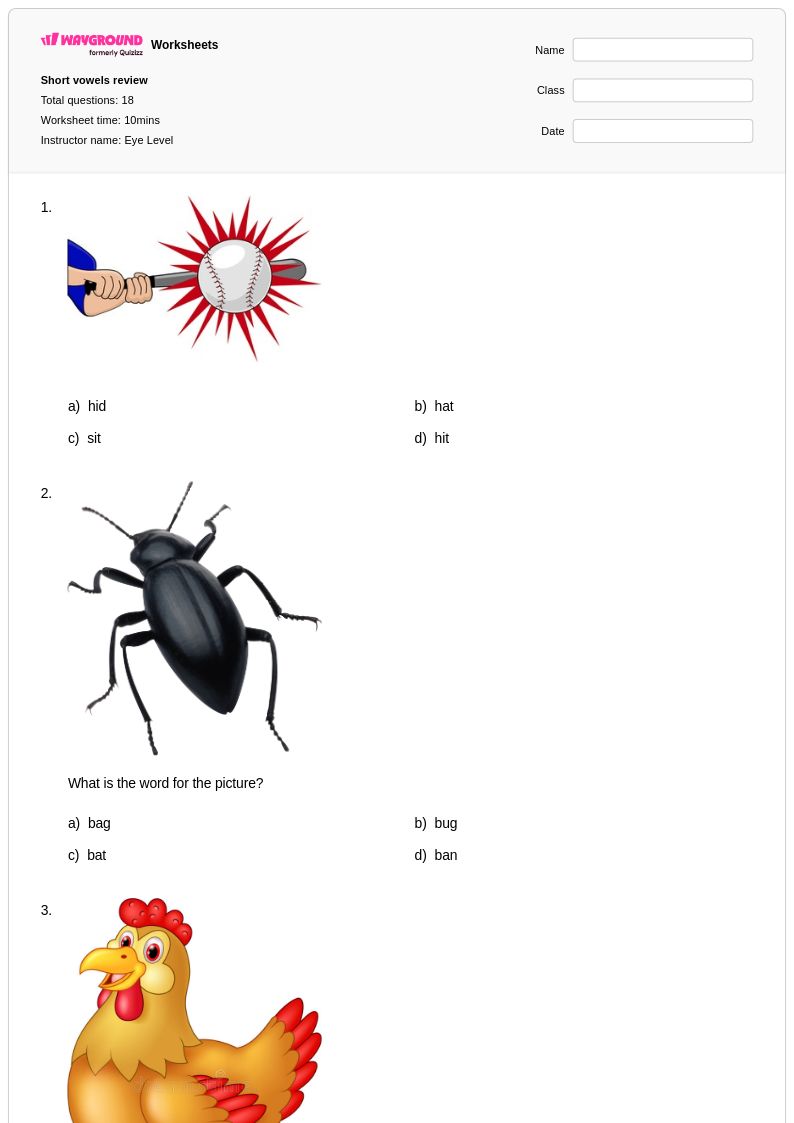
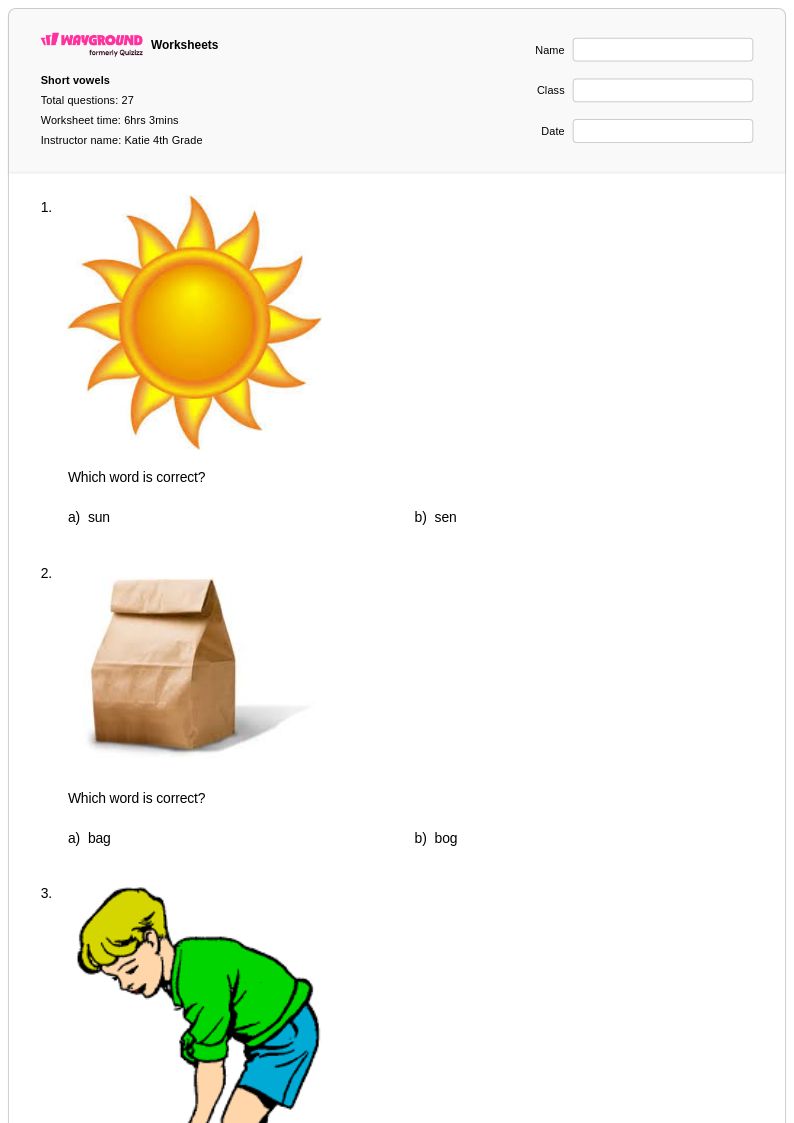
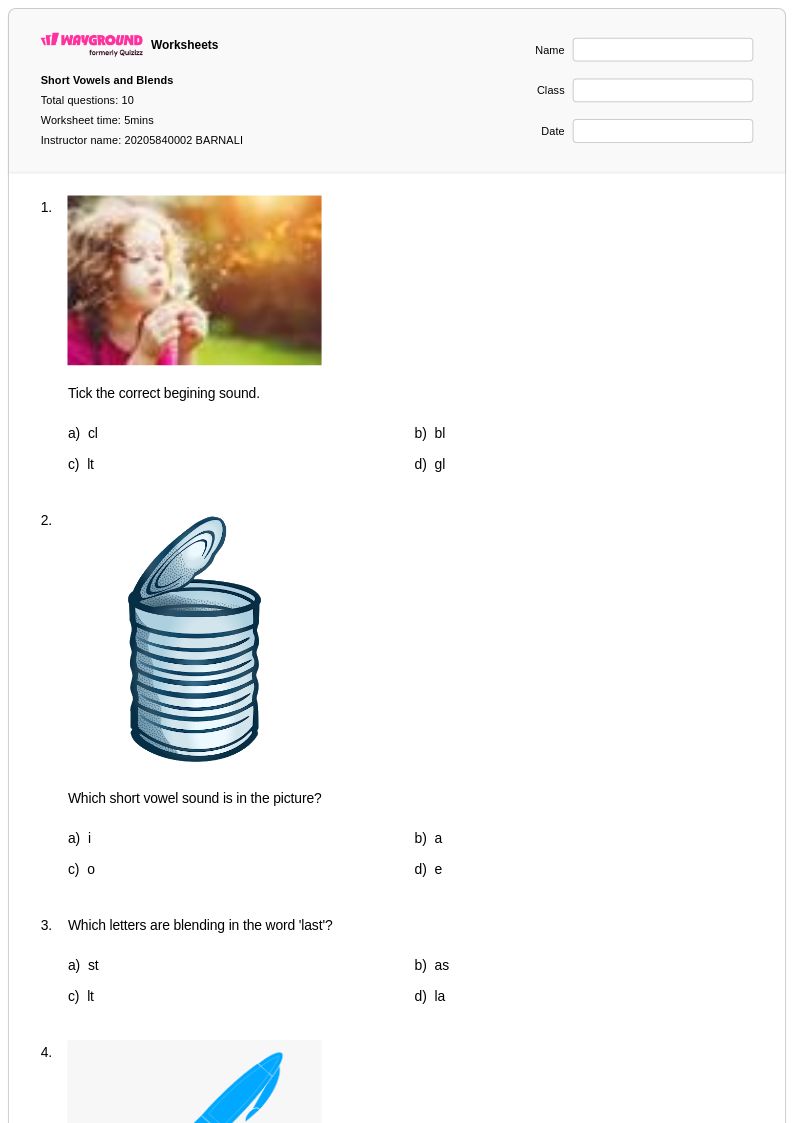
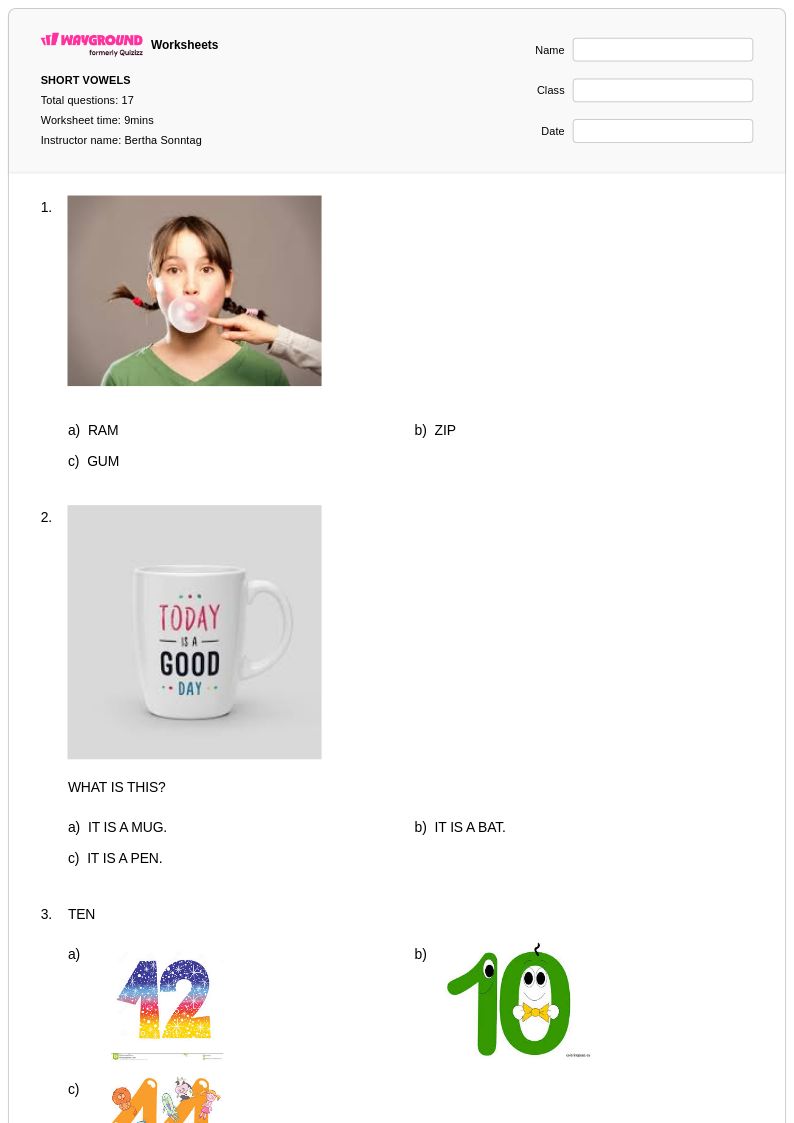
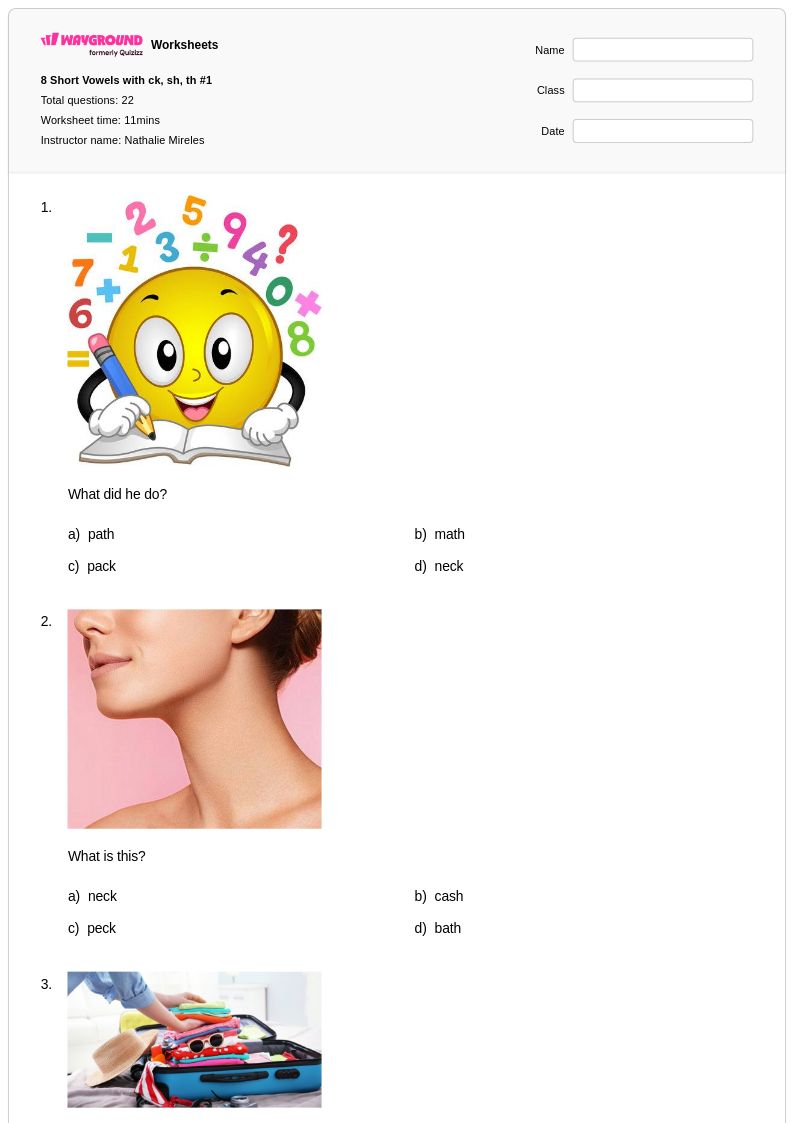
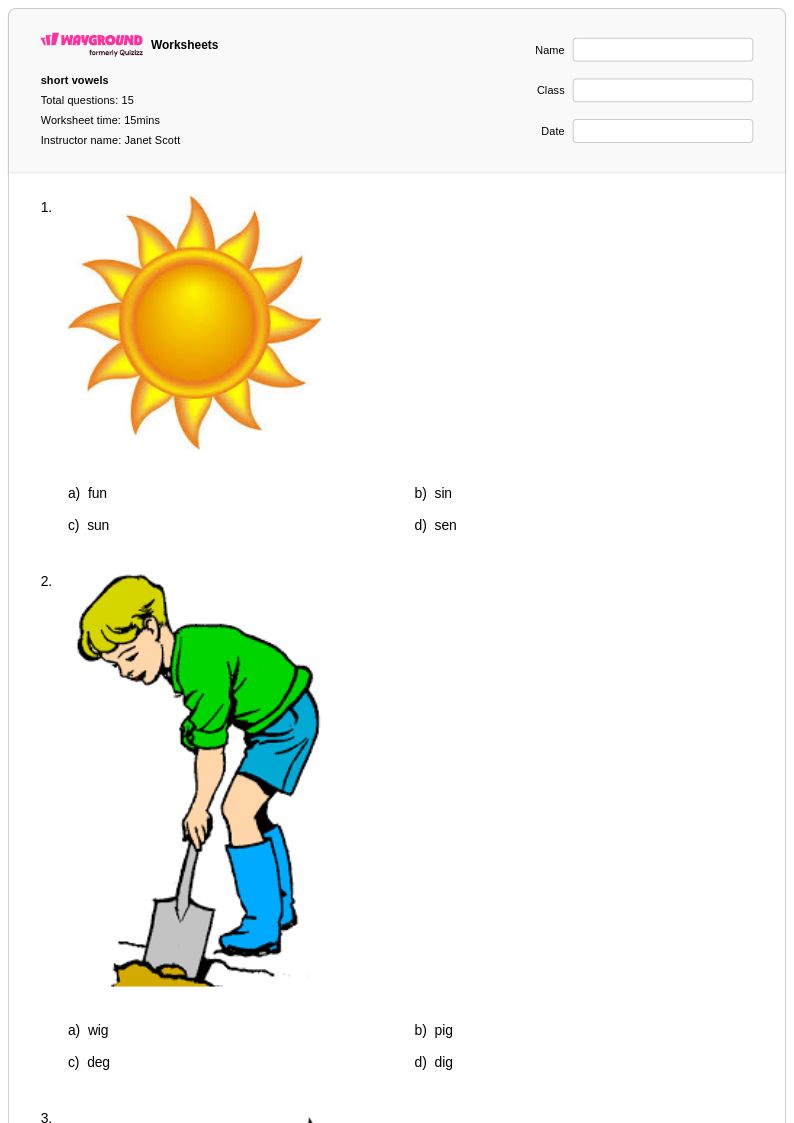
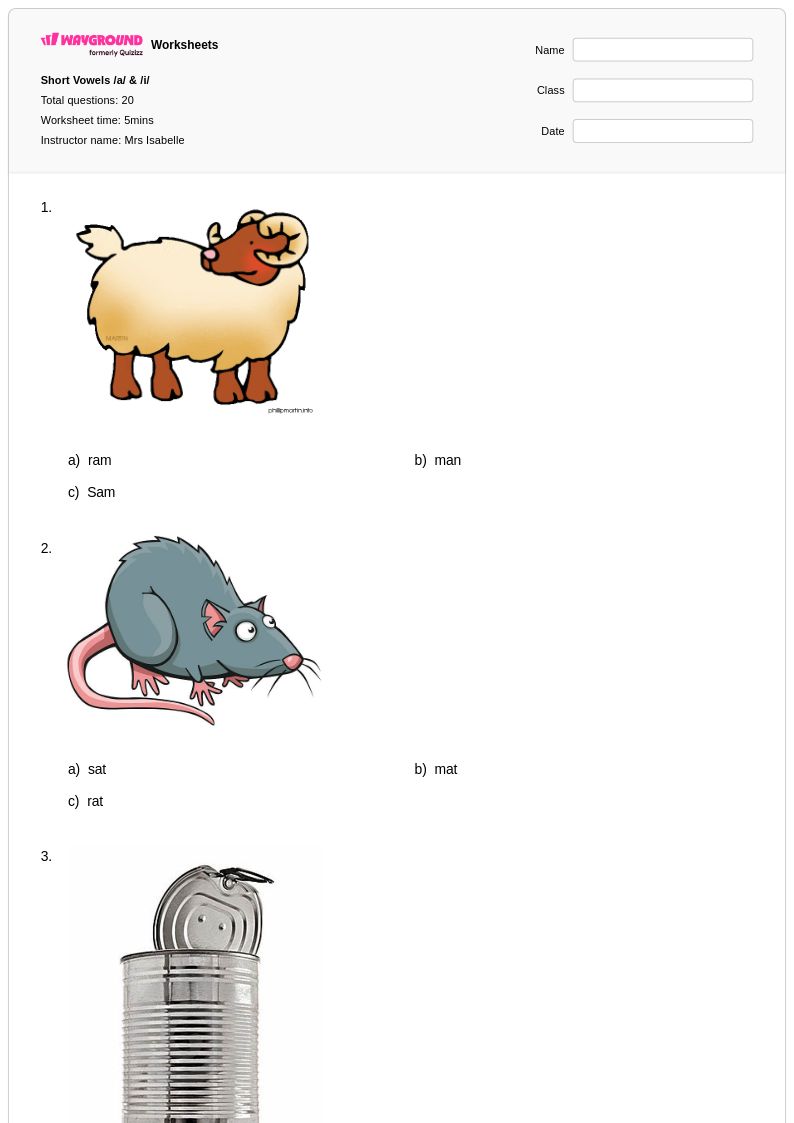
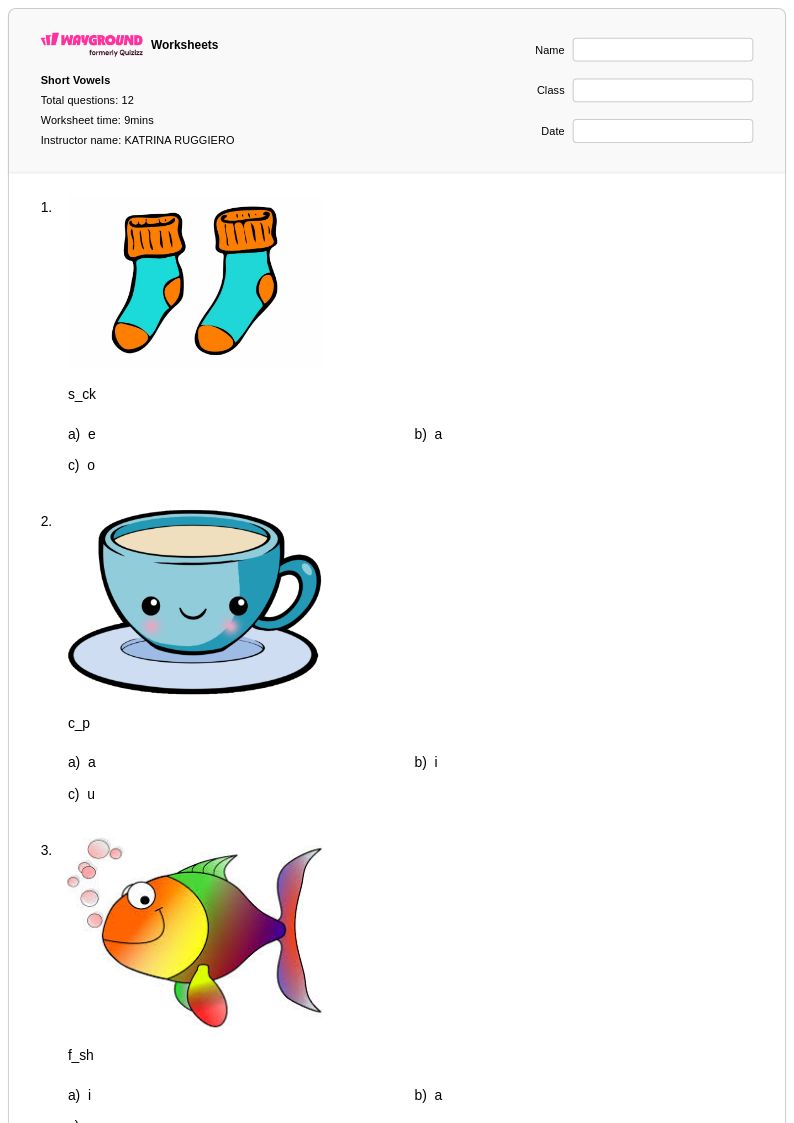
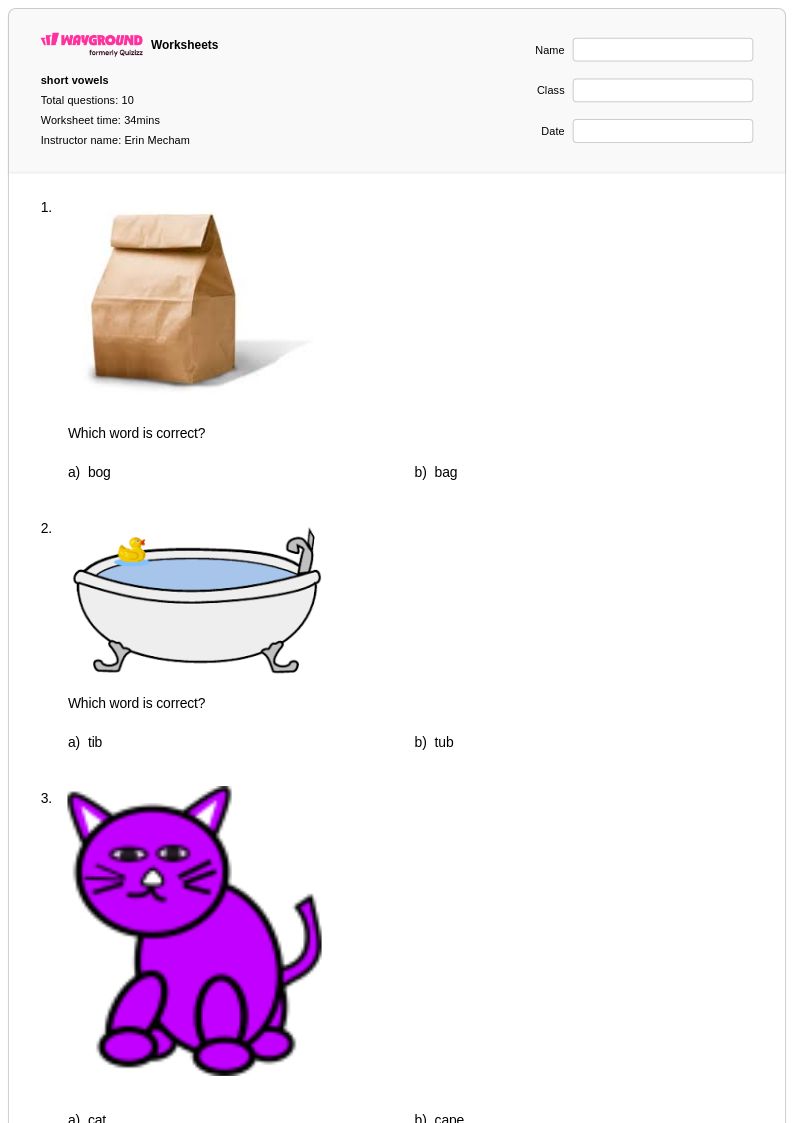
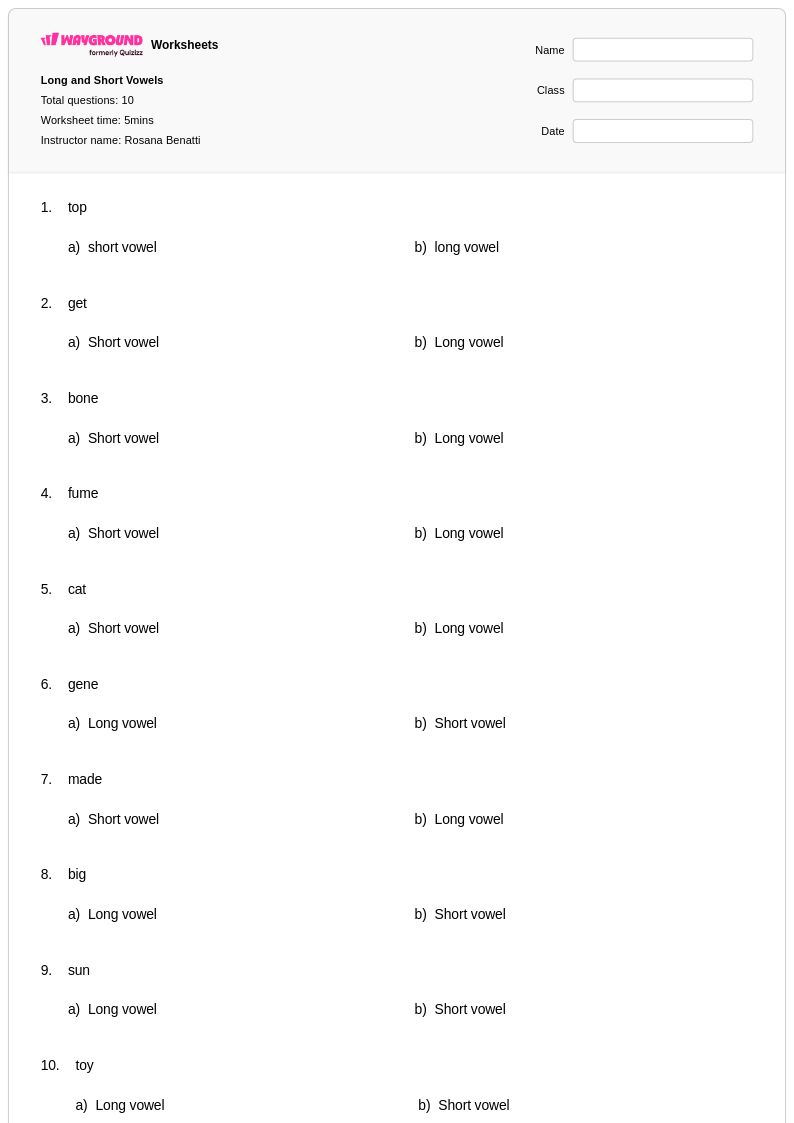
Short vowels form the foundation of early reading instruction for Class 1 students, and Wayground's comprehensive worksheet collection provides educators with expertly designed resources to build these essential phonics skills. These printable worksheets systematically introduce young learners to the five short vowel sounds through engaging activities that include word identification, picture matching, fill-in-the-blank exercises, and sound discrimination tasks. Each worksheet comes with a complete answer key, making assessment and guided practice seamless for both classroom instruction and independent work. The free pdf format ensures accessibility while maintaining high-quality graphics and age-appropriate fonts that support beginning readers as they master the sounds of short a, e, i, o, and u through varied practice problems that reinforce phonemic awareness and decoding abilities.
Wayground, formerly Quizizz, empowers teachers with millions of educator-created short vowel resources that streamline lesson planning and differentiated instruction for Class 1 phonics education. The platform's robust search and filtering capabilities allow teachers to quickly locate worksheets aligned with specific curriculum standards while accessing customization tools that adapt content difficulty to meet diverse learning needs. These digital and printable materials support comprehensive classroom management by providing flexible options for whole-group instruction, small-group remediation, and individual enrichment activities. Teachers can seamlessly integrate these short vowel worksheets into literacy centers, homework assignments, and assessment protocols, ensuring students receive consistent skill practice across multiple learning environments while building the phonetic foundation necessary for successful reading development.
FAQs
How do I teach short vowel sounds to early readers?
Start by introducing each short vowel sound in isolation using minimal pairs — words that differ only in their vowel sound, such as 'cat' vs. 'cut' or 'bit' vs. 'bat'. Once students can identify each sound individually, move into blending and segmenting CVC (consonant-vowel-consonant) words to reinforce how short vowels function within words. Repeated, structured practice with word families helps students internalize the patterns rather than memorize individual words.
What exercises help students practice short vowel sounds?
Effective short vowel practice includes word sorting activities where students categorize words by their vowel sound, fill-in-the-blank exercises that require students to supply the missing vowel, and picture-to-word matching tasks that connect spoken sounds to written patterns. Reading short passages containing targeted CVC words gives students practice recognizing short vowels in context, which is a critical step toward reading fluency.
What mistakes do students commonly make with short vowel sounds?
The most frequent error is confusing short /e/ and short /i/, since the mouth position for both sounds is similar and the distinction is subtle in natural speech. Students also commonly swap short /a/ and short /u/ in words like 'cap' and 'cup'. Teachers should plan targeted practice around these specific vowel pairs rather than treating all five short vowels as equally difficult.
How can I differentiate short vowel instruction for struggling readers?
For struggling readers, narrow the focus to one or two short vowel sounds at a time before introducing all five. Reduce the number of answer choices on exercises to lower cognitive load, and pair written practice with audio support so students hear the target sound as they work through problems. On Wayground, teachers can enable accommodations such as Read Aloud and reduced answer choices for individual students, while the rest of the class works with standard settings.
How do I use Wayground's short vowel worksheets in my classroom?
Wayground's short vowel worksheets are available as printable PDFs for traditional classroom use and in digital formats for technology-integrated instruction, including the option to host them as a live quiz on Wayground. The included answer keys make it easy to use these materials for independent practice, small-group intervention, homework, or formative assessment without additional teacher preparation.
At what reading level should students be introduced to short vowel worksheets?
Short vowel instruction typically begins in kindergarten and extends through first grade, aligning with the early phonics scope and sequence in most reading programs. Students should have a solid grasp of letter-sound correspondence for consonants before short vowel practice begins. Worksheets targeting short vowels are most effective once students can blend and segment simple two- and three-phoneme words.