Free Printable Shortage and Surplus Worksheets for Class 10
Explore Wayground's free Class 10 shortage and surplus worksheets and printables that help students master economic market imbalances through engaging practice problems and comprehensive answer keys.
Explore printable Shortage and Surplus worksheets for Class 10
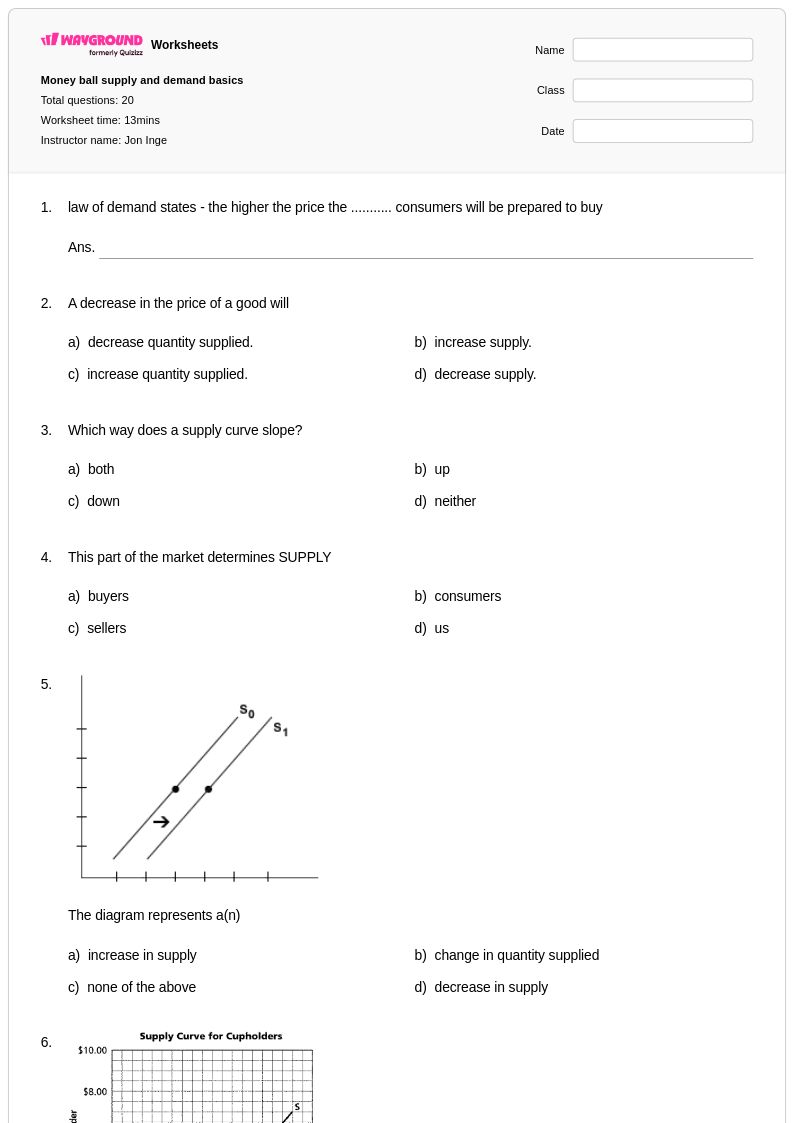
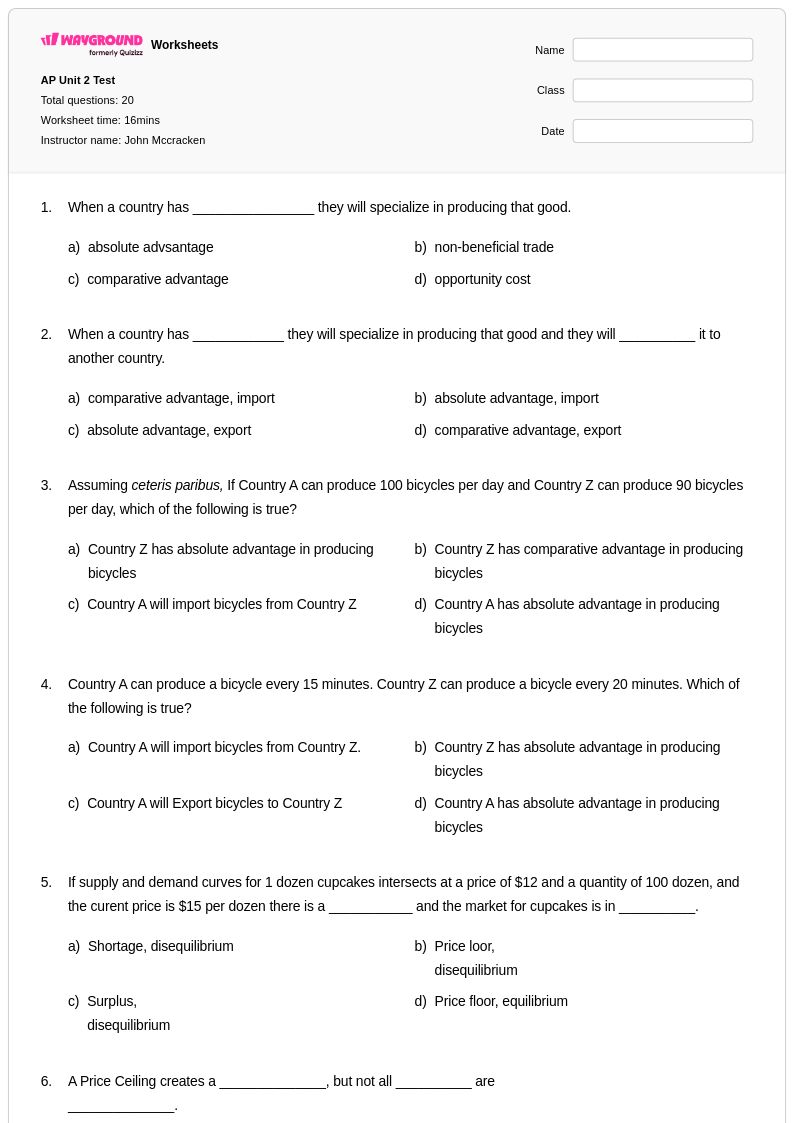
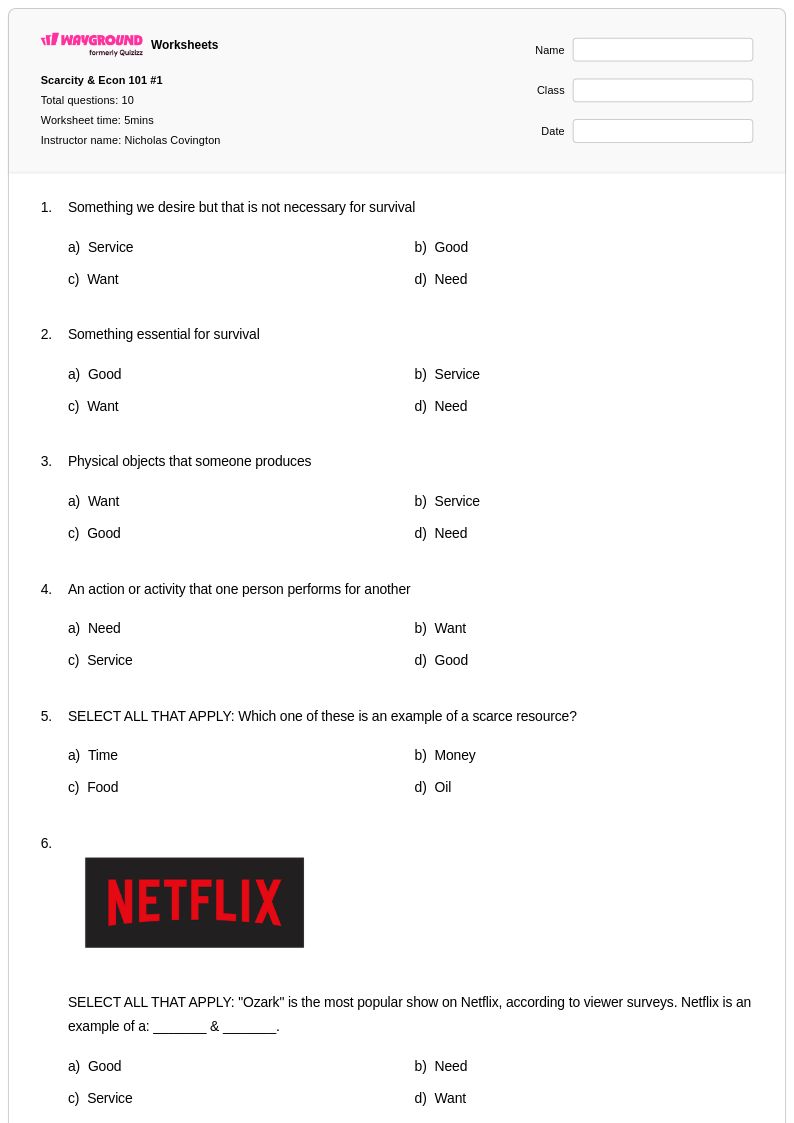
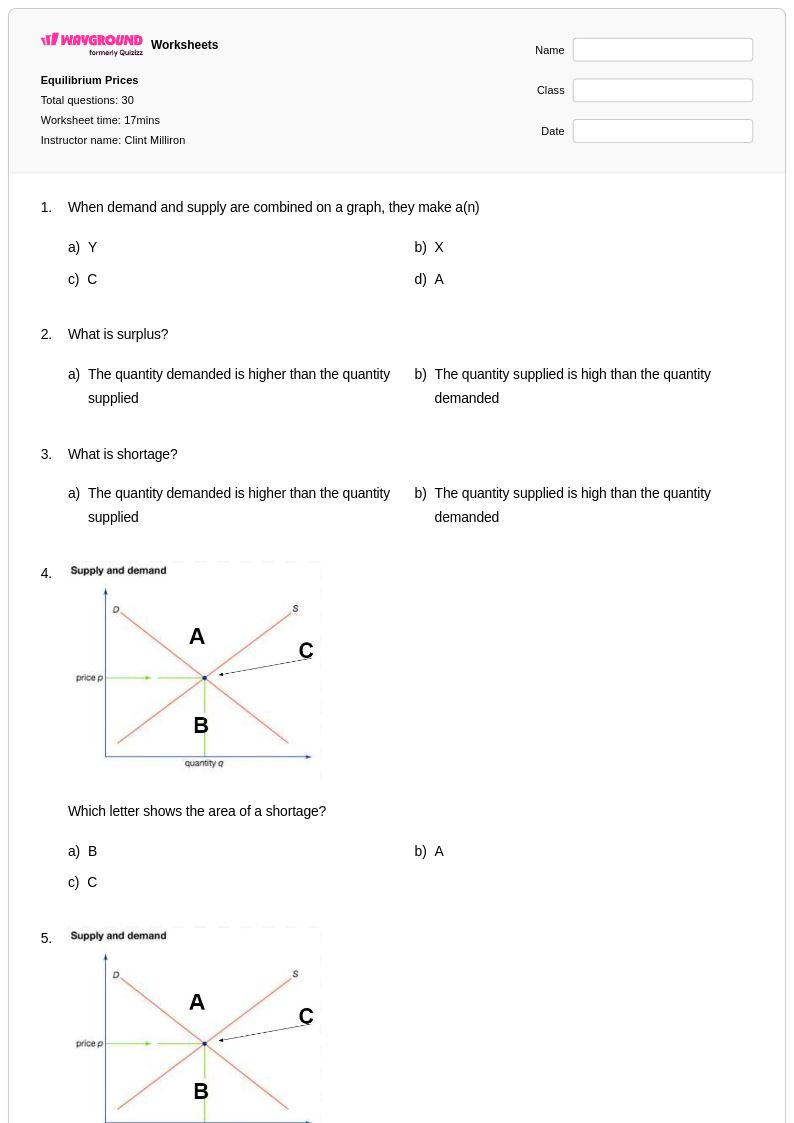
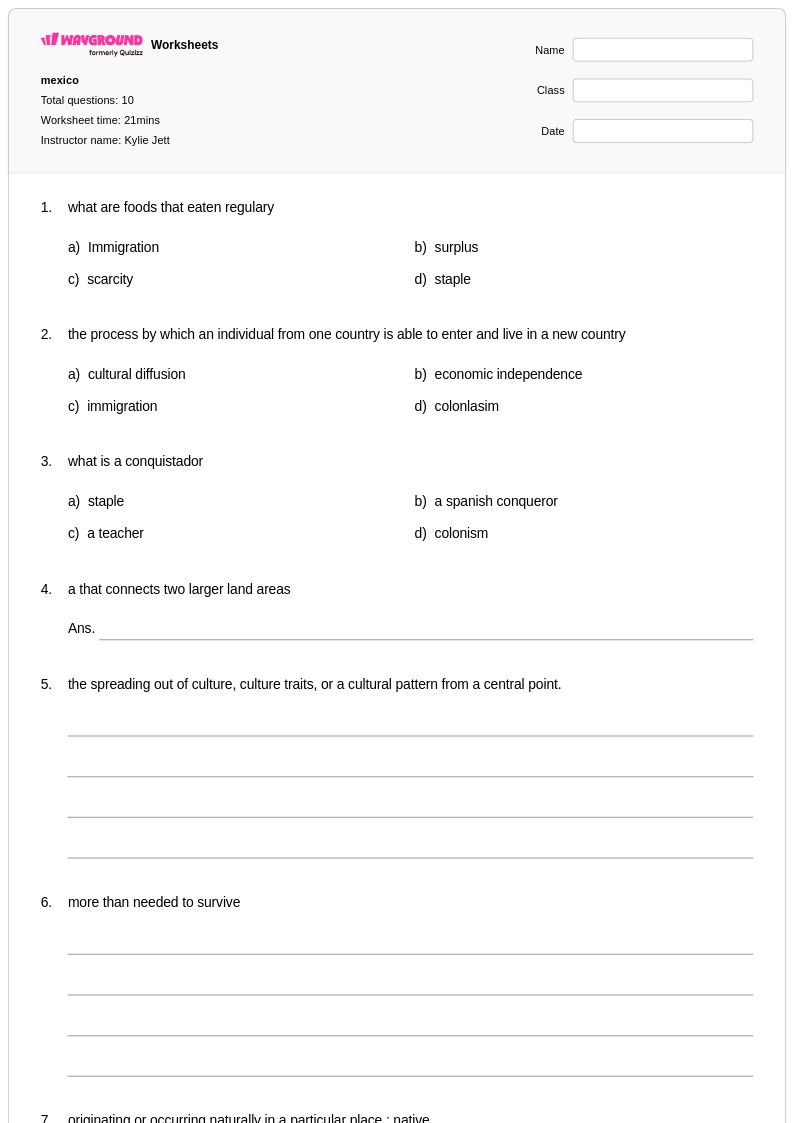
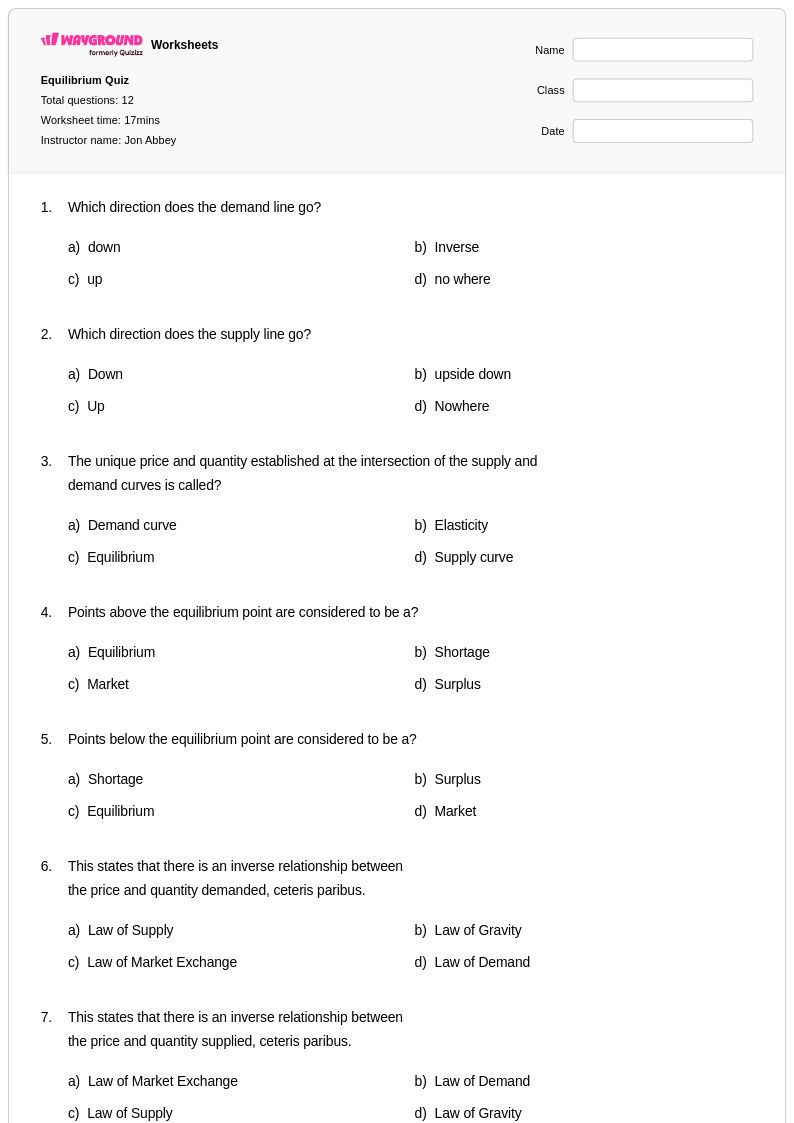
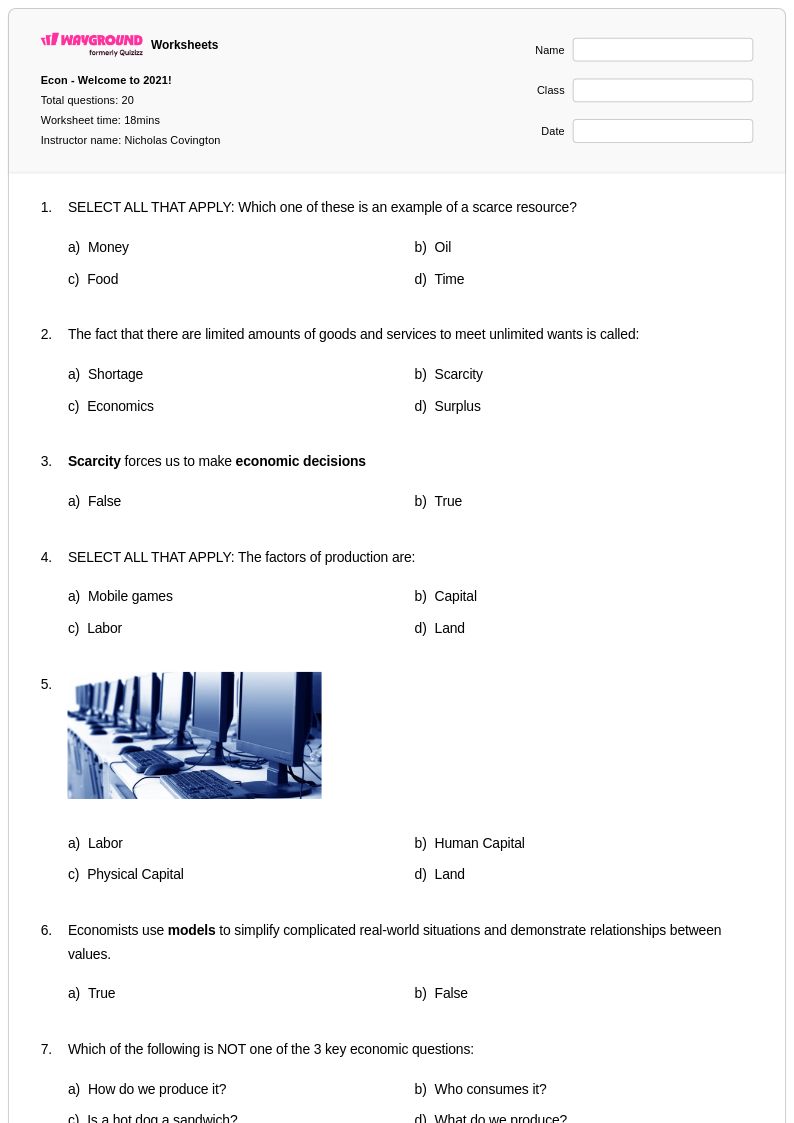
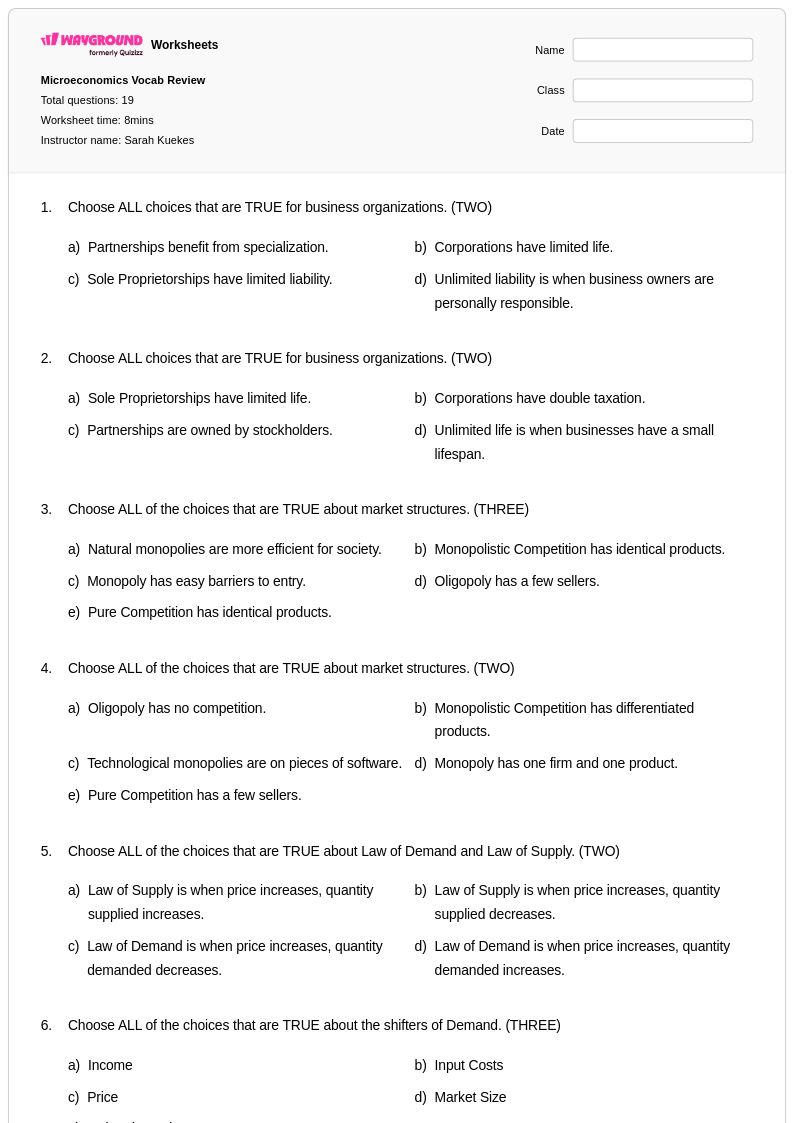
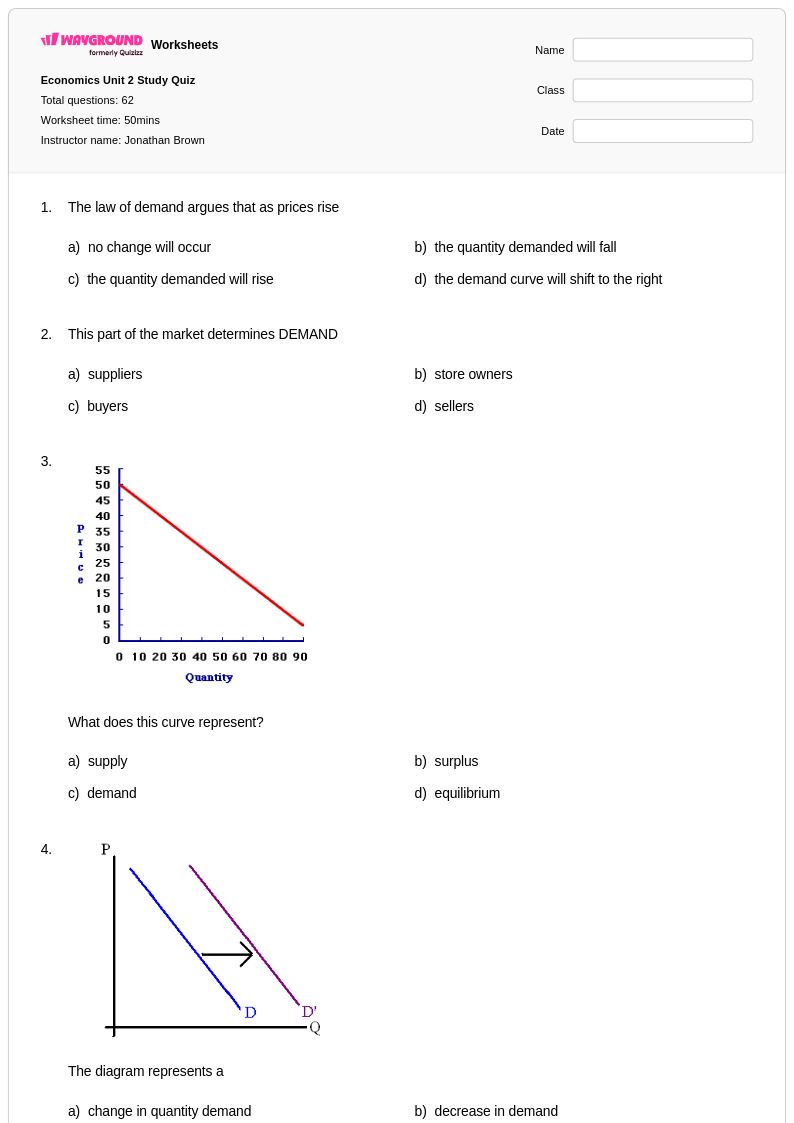
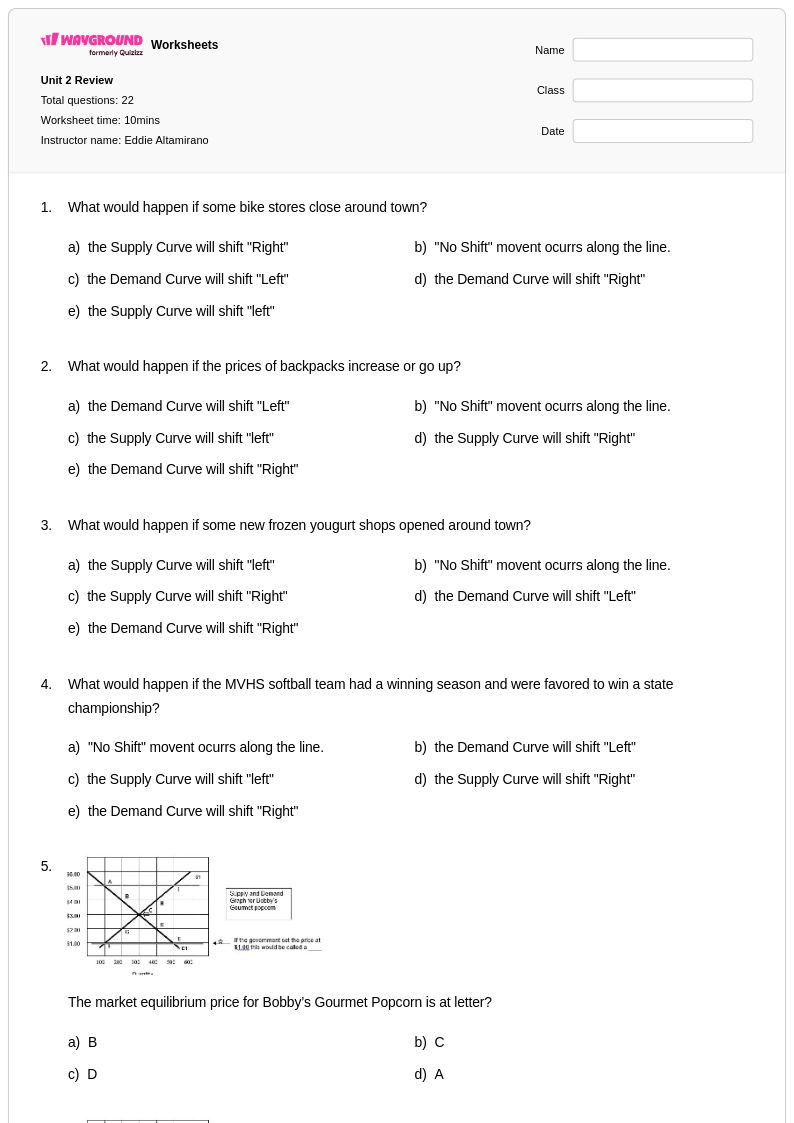
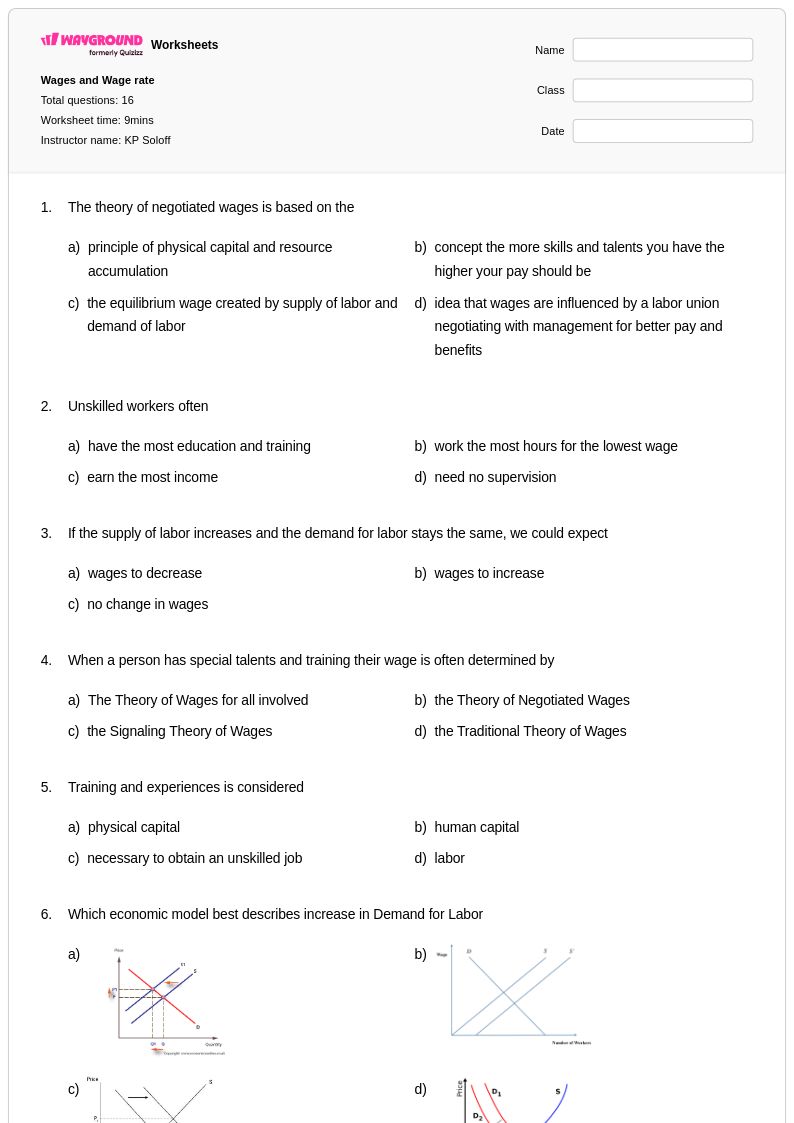
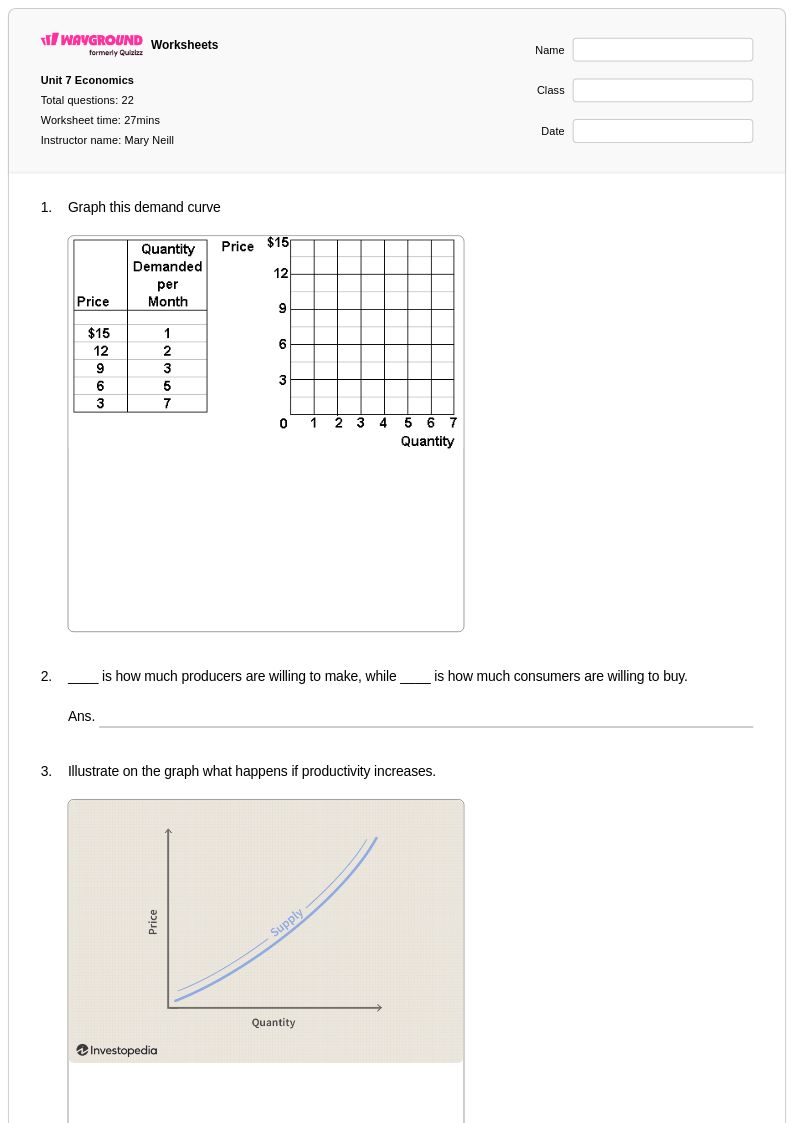
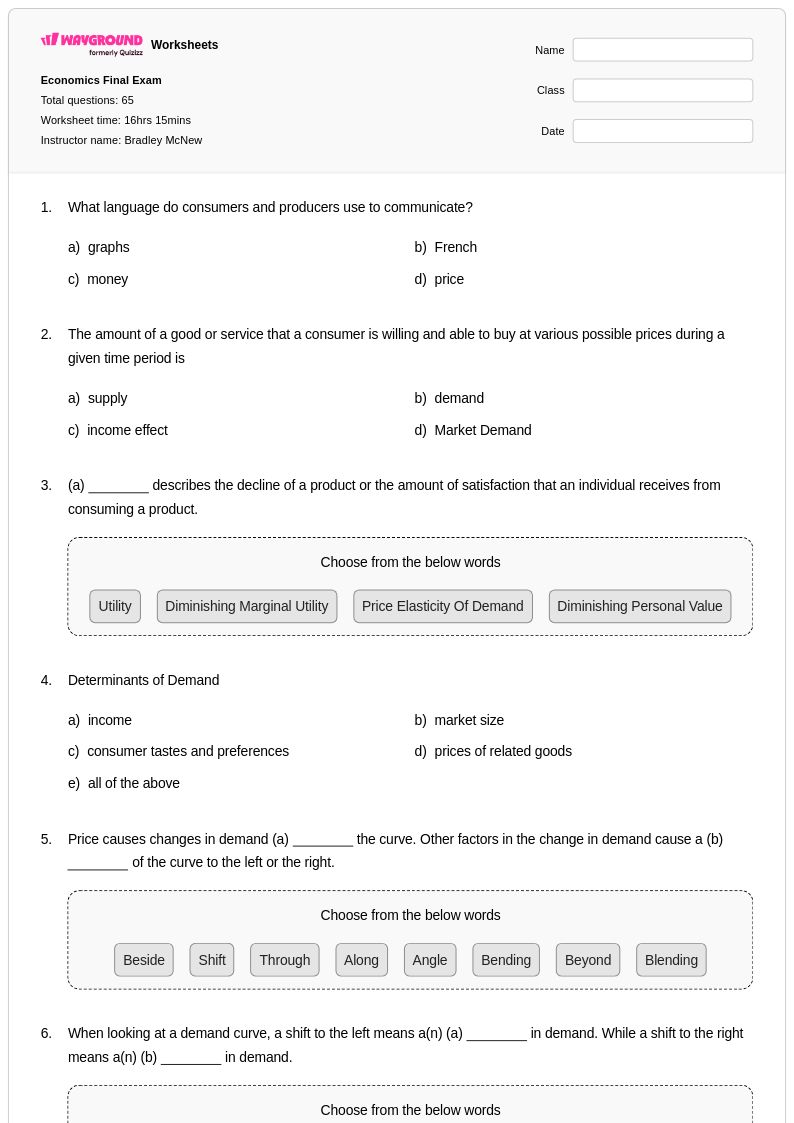
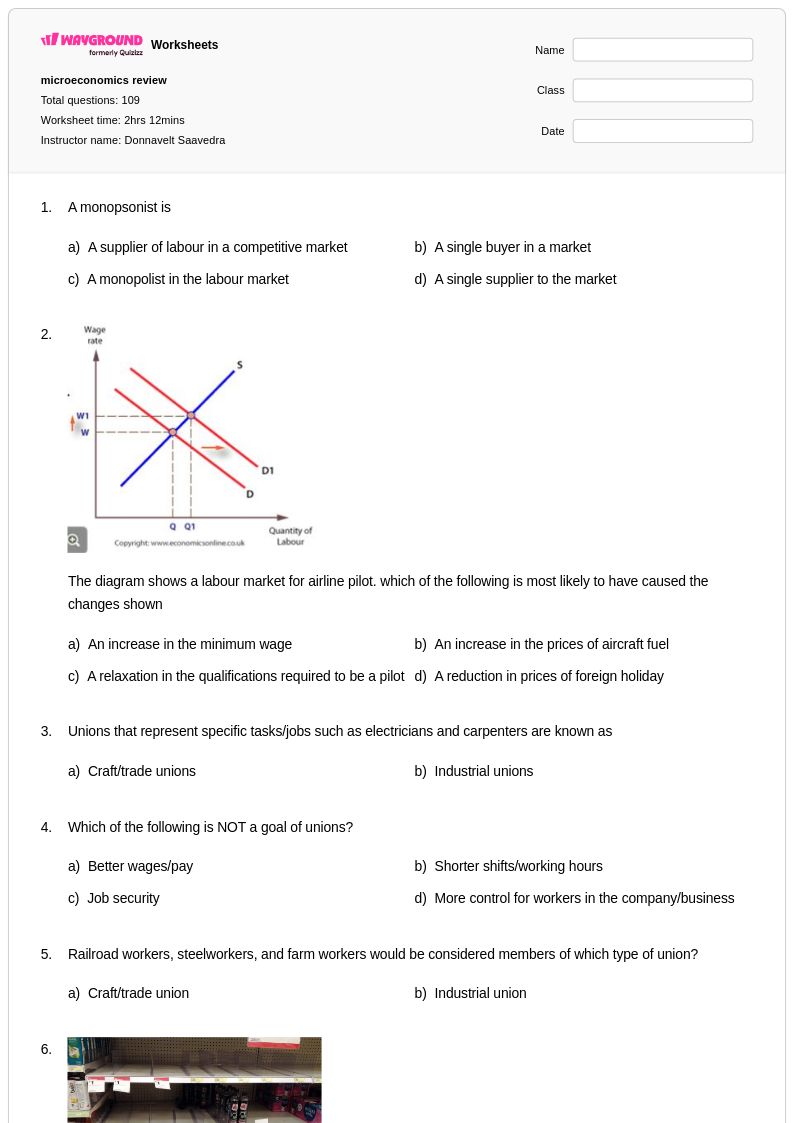
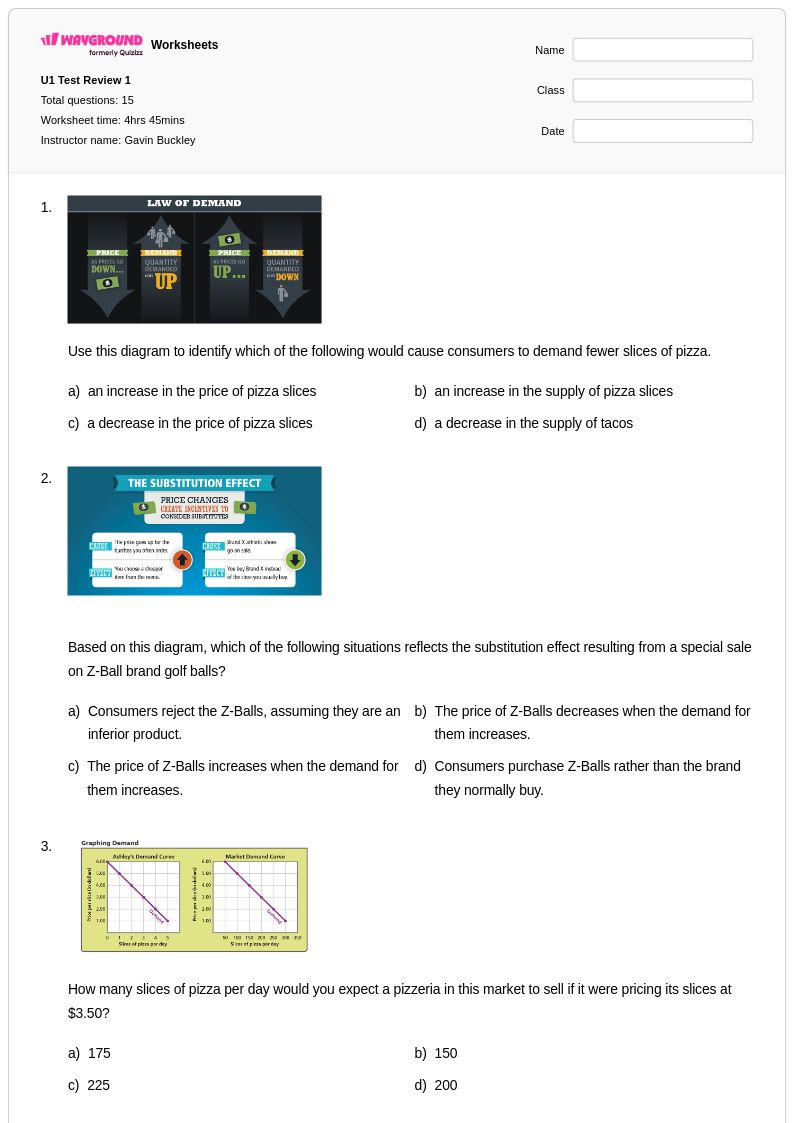
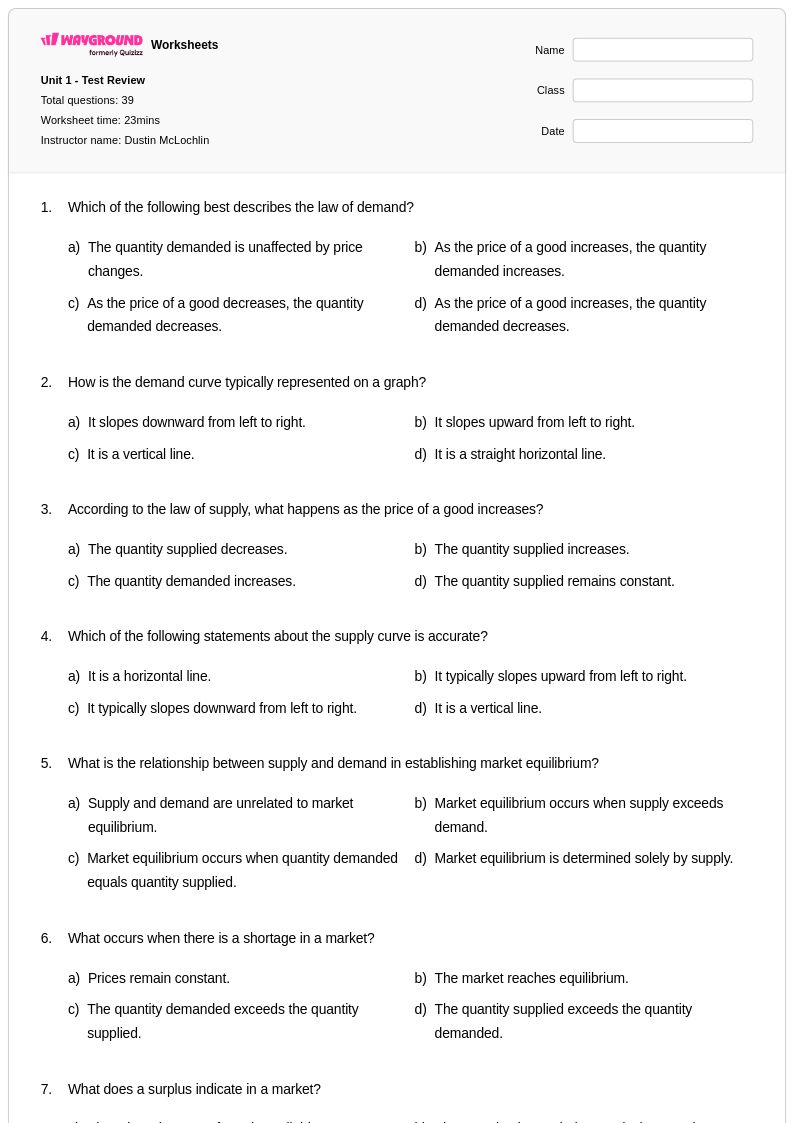
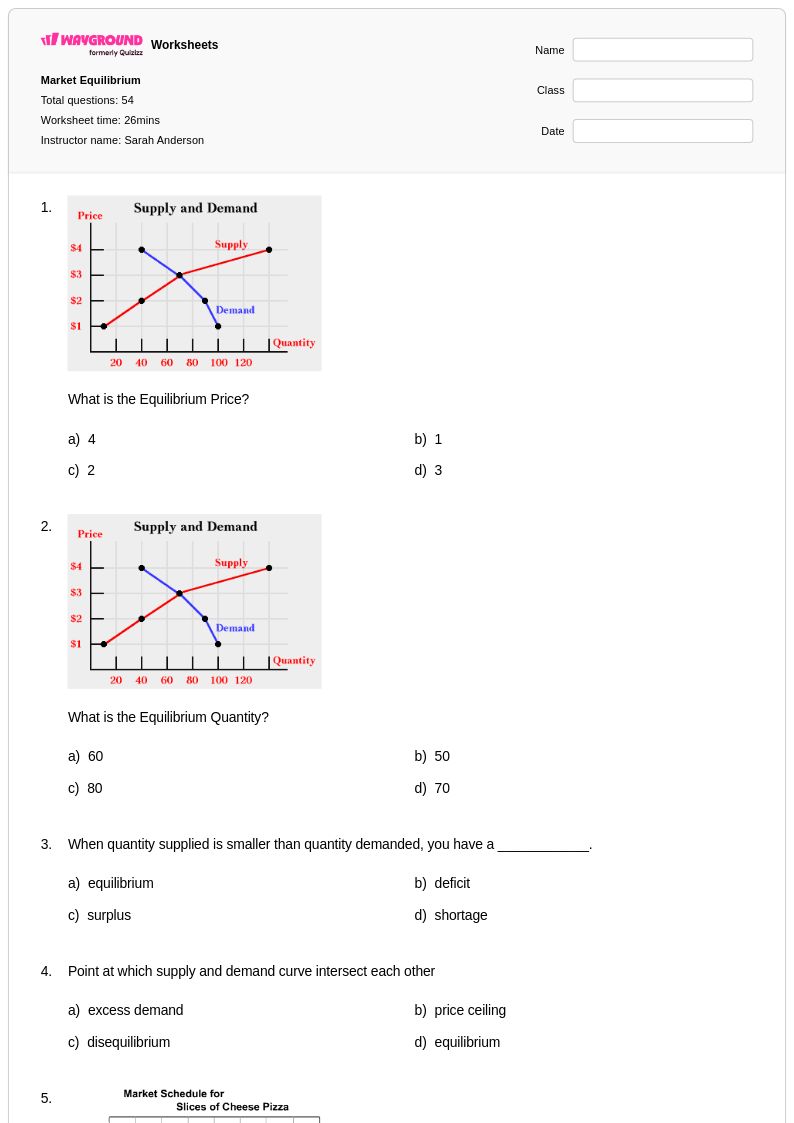
Shortage and surplus worksheets for Class 10 students available through Wayground provide essential practice with fundamental economic concepts that form the backbone of market analysis. These comprehensive resources help students develop critical thinking skills as they examine how supply and demand imbalances create market inefficiencies, analyze real-world examples of product shortages and surpluses, and calculate the economic impact of these conditions on consumers and producers. The worksheets feature diverse practice problems that challenge students to interpret supply and demand graphs, identify factors that cause market disequilibrium, and predict how markets naturally correct these imbalances over time. Each printable resource includes detailed answer keys that support independent learning and self-assessment, while the free pdf format ensures accessibility for all classroom environments and home study situations.
Wayground's extensive collection of teacher-created shortage and surplus worksheets offers educators powerful tools to enhance their Class 10 economics instruction through millions of professionally developed resources. The platform's robust search and filtering capabilities enable teachers to quickly locate materials that align with specific curriculum standards and match their students' varying skill levels, while built-in differentiation tools support both remediation for struggling learners and enrichment for advanced students. Teachers can customize these digital and printable worksheets to address specific learning objectives, modify difficulty levels, and incorporate relevant local economic examples that resonate with their student populations. This flexibility proves invaluable for lesson planning, targeted skill practice, and creating assessments that accurately measure student understanding of how shortage and surplus conditions influence market behavior and economic decision-making.
FAQs
How do I teach shortage and surplus to students?
Start with concrete, relatable scenarios before introducing formal definitions — for example, ask students what happens to ticket prices when a concert sells out (shortage) or when a store over-orders seasonal items (surplus). Use supply and demand diagrams to show how price acts as a signal that corrects both conditions. Once students can identify real-world examples, move into analytical practice where they explain the market forces driving each imbalance.
What exercises help students practice shortage and surplus concepts?
Effective practice exercises include market scenario analysis, where students read a description of a real-world situation and identify whether a shortage or surplus exists and explain why. Graph interpretation tasks that show supply and demand curves at disequilibrium reinforce the visual understanding of these concepts. Problem-solving activities that ask students to predict price and quantity changes as markets adjust toward equilibrium build the deeper analytical skills required at the high school economics level.
What mistakes do students commonly make when learning about shortage and surplus?
The most common error is confusing shortage and scarcity — students often treat them as synonyms, but scarcity is a permanent condition of limited resources while shortage is a temporary market imbalance caused by price being set below equilibrium. Students also frequently misidentify which condition is present in a scenario because they focus on the quantity of goods available rather than the relationship between quantity supplied and quantity demanded at a given price. Reinforcing that both shortage and surplus are resolved through price adjustment helps address this pattern.
How do shortage and surplus connect to supply and demand?
Shortage occurs when the quantity demanded exceeds the quantity supplied at the current price, typically because the price is set below the market equilibrium. Surplus occurs when the quantity supplied exceeds the quantity demanded, typically because the price is above equilibrium. In both cases, price movement is the corrective mechanism: prices rise to eliminate a shortage and fall to eliminate a surplus, restoring the market to equilibrium.
How can I use Wayground's shortage and surplus worksheets in my classroom?
Wayground's shortage and surplus worksheets are available as printable PDFs for traditional classroom use and in digital formats for technology-integrated learning environments, including the option to host them as a quiz directly on Wayground. Each worksheet includes a complete answer key, making them suitable for independent practice, guided instruction, or homework assignments. Teachers can also apply student-level accommodations such as read aloud, extended time, and reduced answer choices to support diverse learners without disrupting the rest of the class.
How can I differentiate shortage and surplus instruction for students at different levels?
For students who are just beginning, focus on basic identification exercises using simple, familiar scenarios before introducing graphical representations. Intermediate learners benefit from tasks that require them to explain the economic forces causing each condition, while advanced students can tackle complex analytical scenarios involving price ceilings, price floors, and government intervention. On Wayground, teachers can apply accommodations such as reduced answer choices or read aloud for individual students, allowing the same worksheet set to serve a range of learning needs simultaneously.