
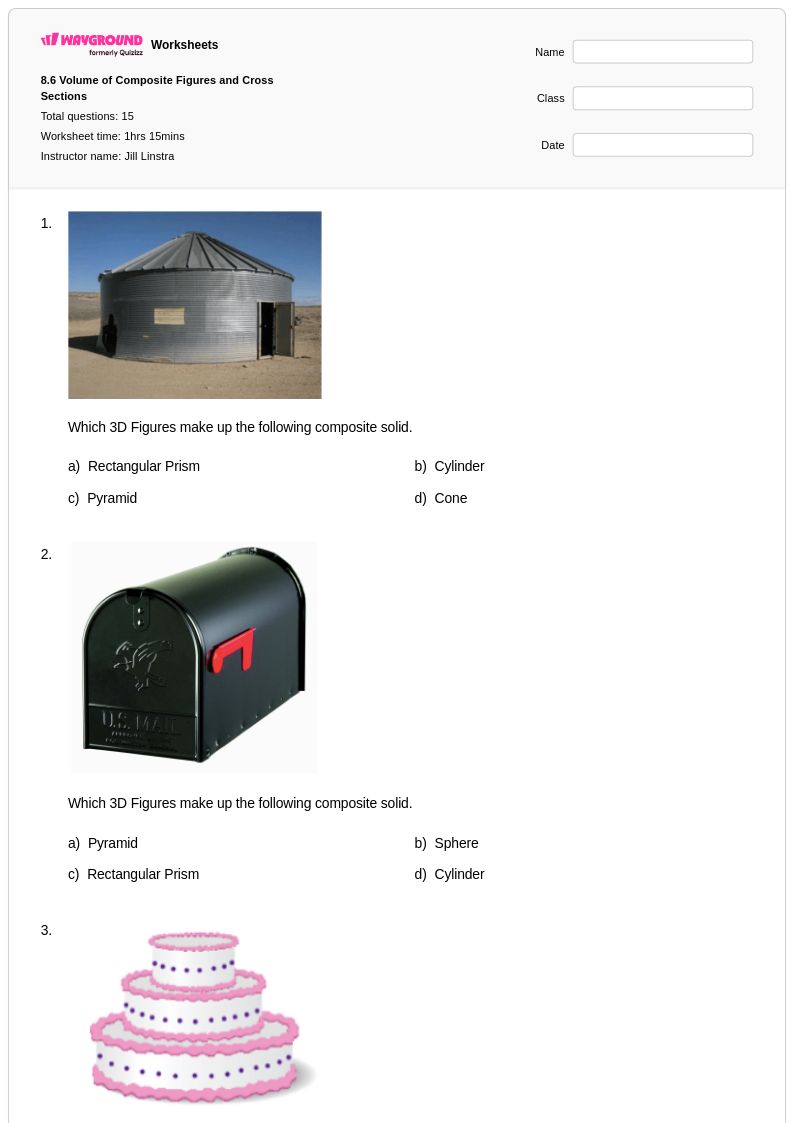
15 Q
9th - 10th
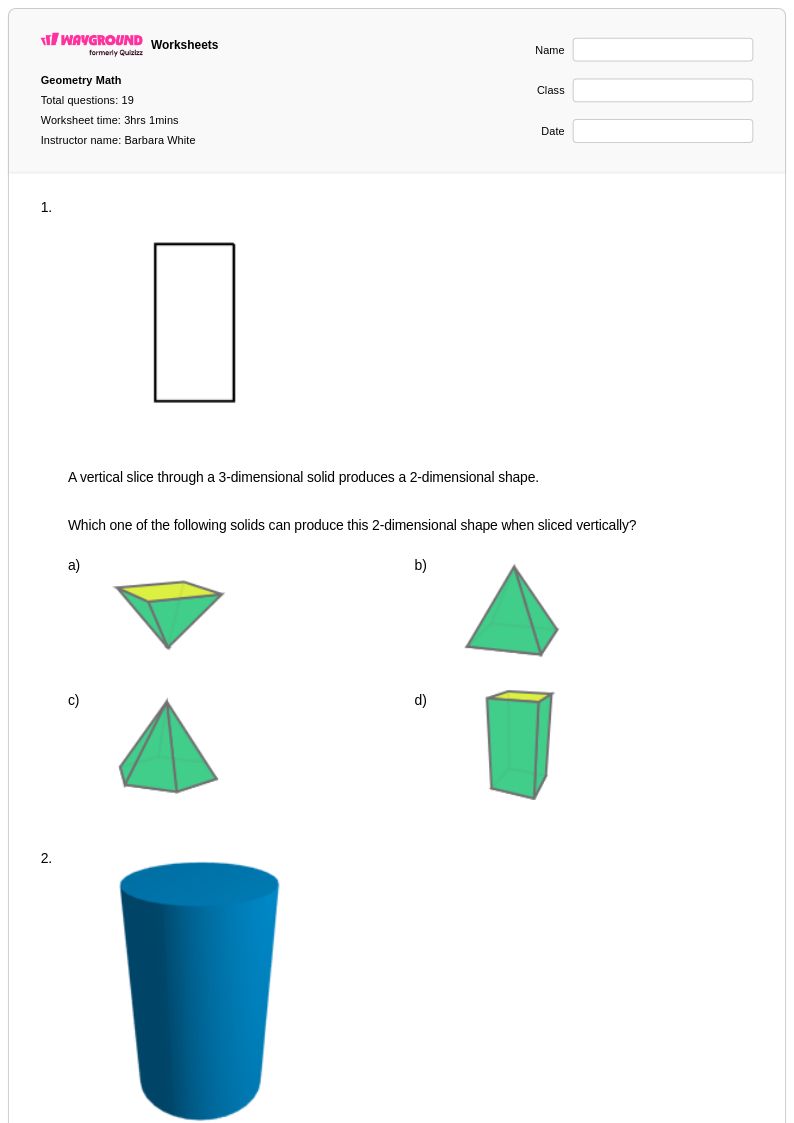
19 Q
7th - 10th
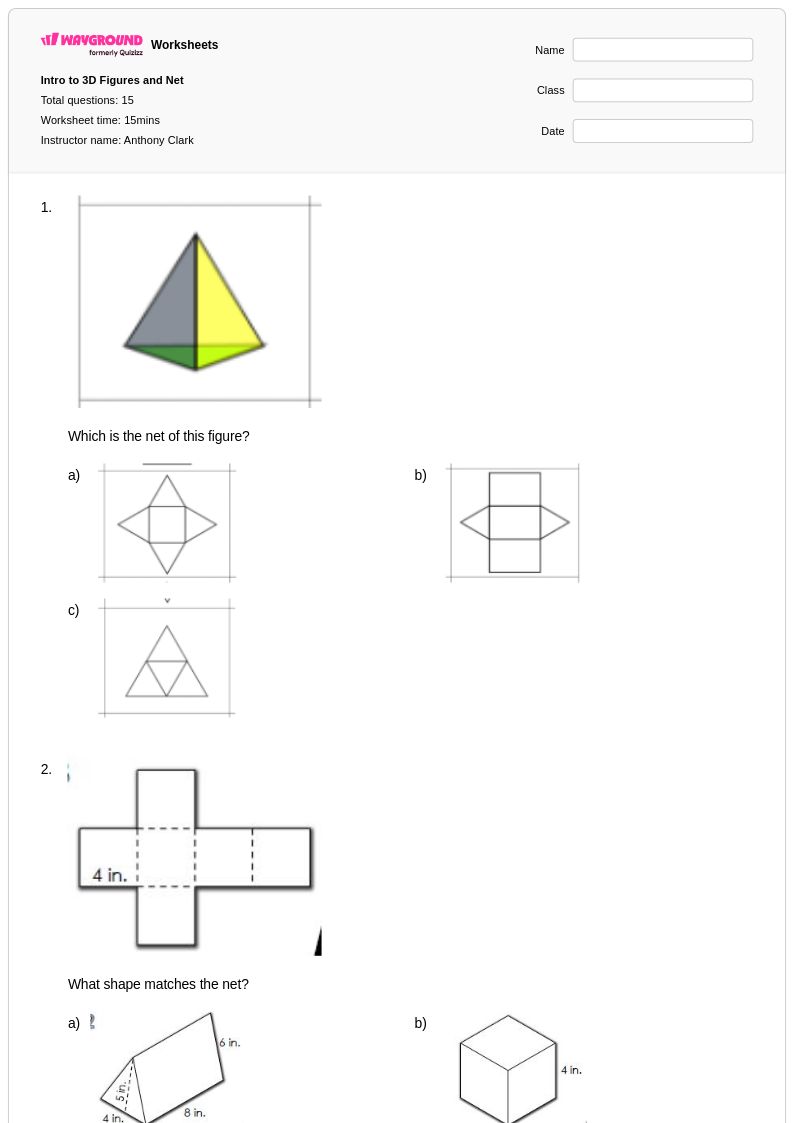
15 Q
7th - Uni
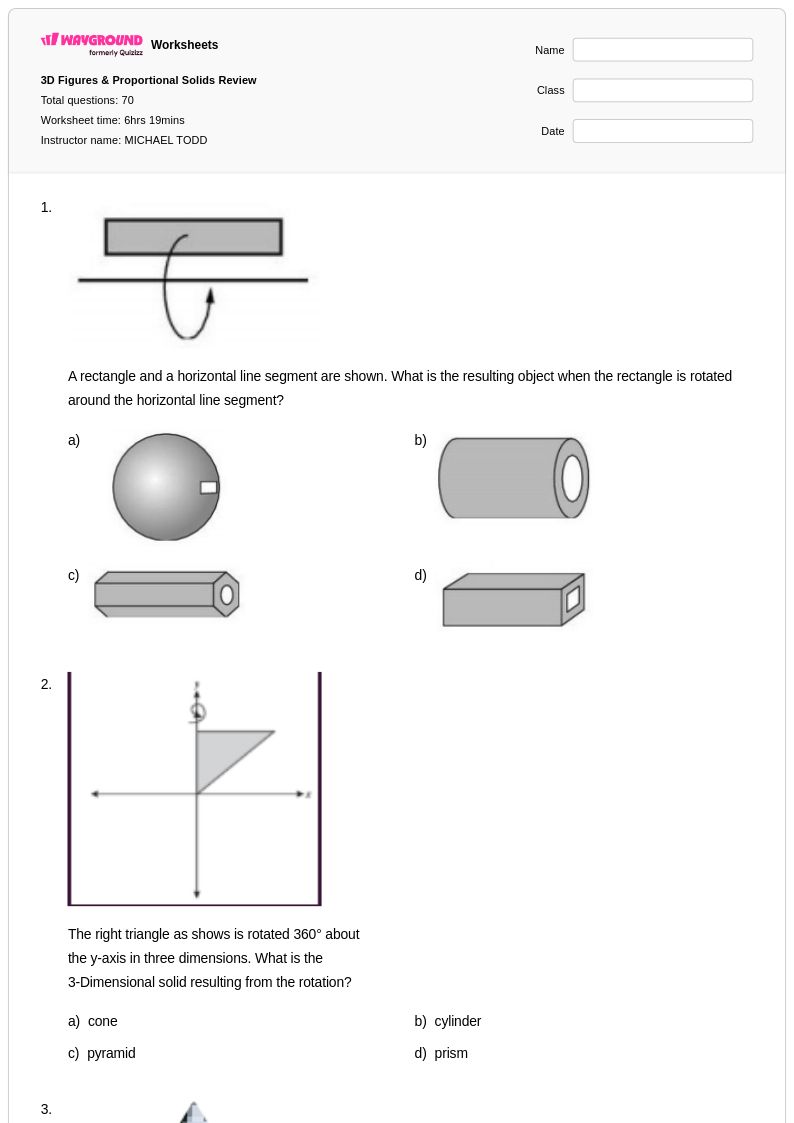
70 Q
9th - 12th
20 Q
10th
20 Q
6th - Uni
25 Q
10th
15 Q
10th
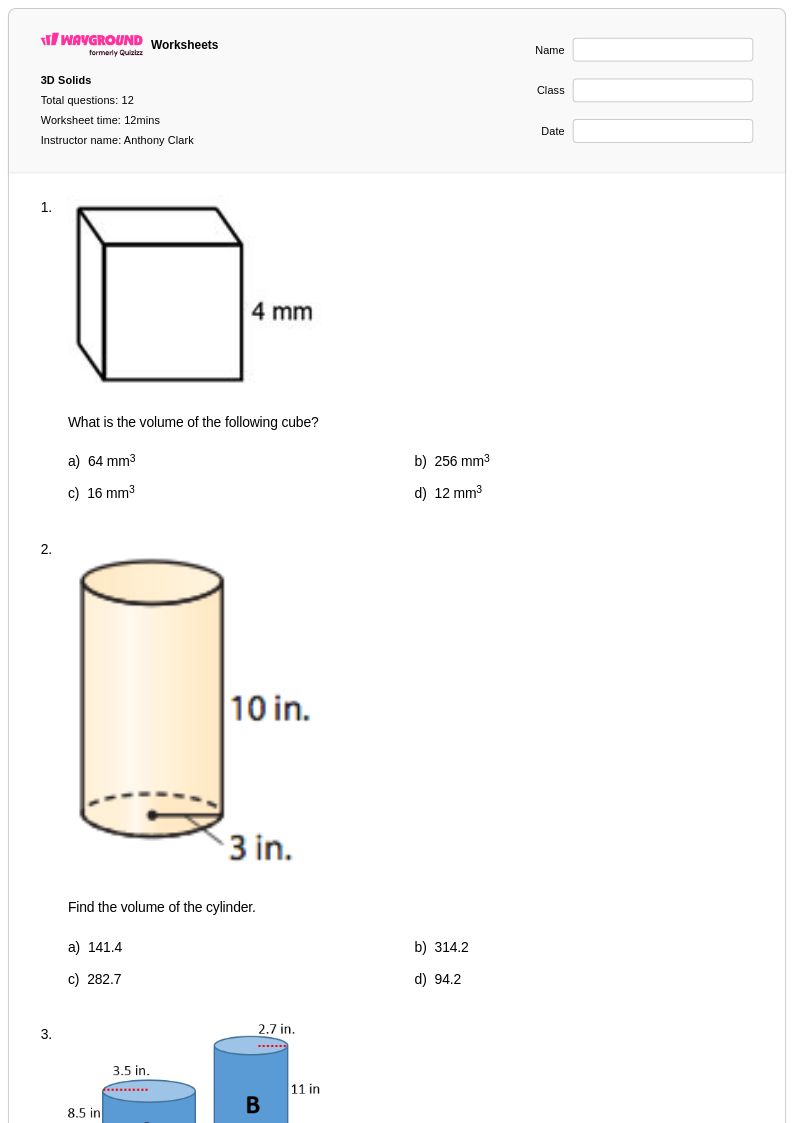
12 Q
10th - Uni
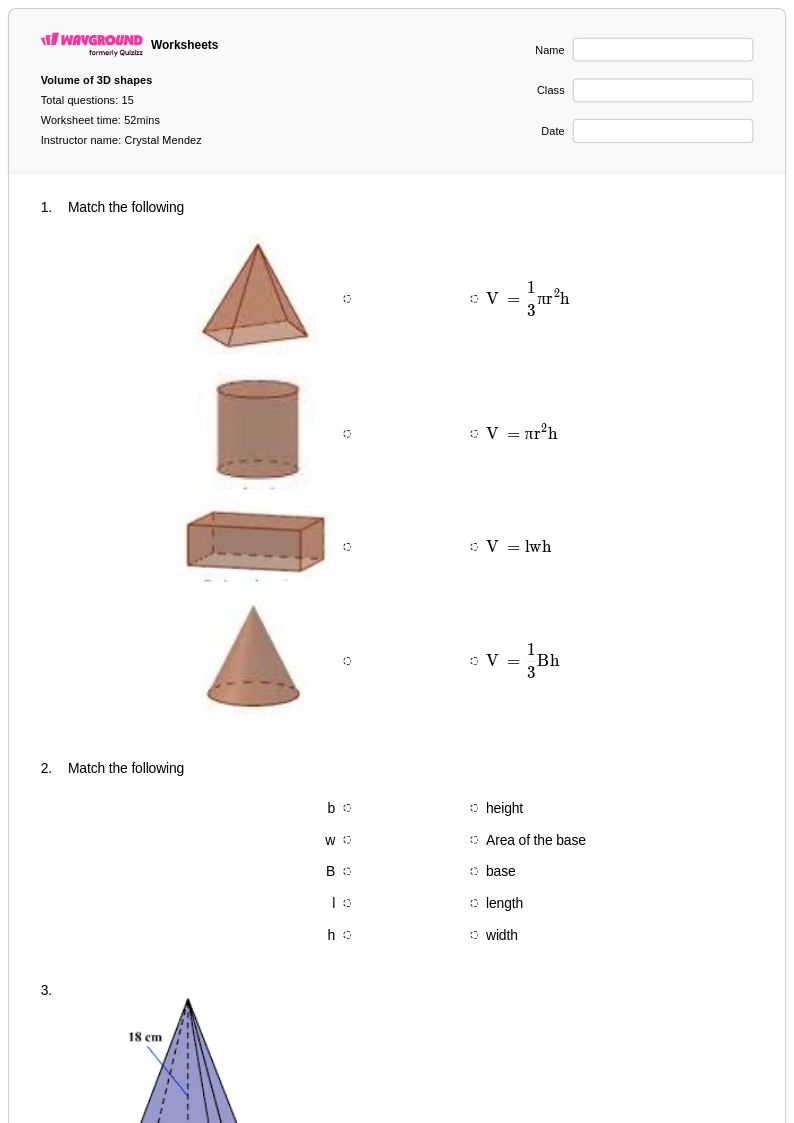
15 Q
10th
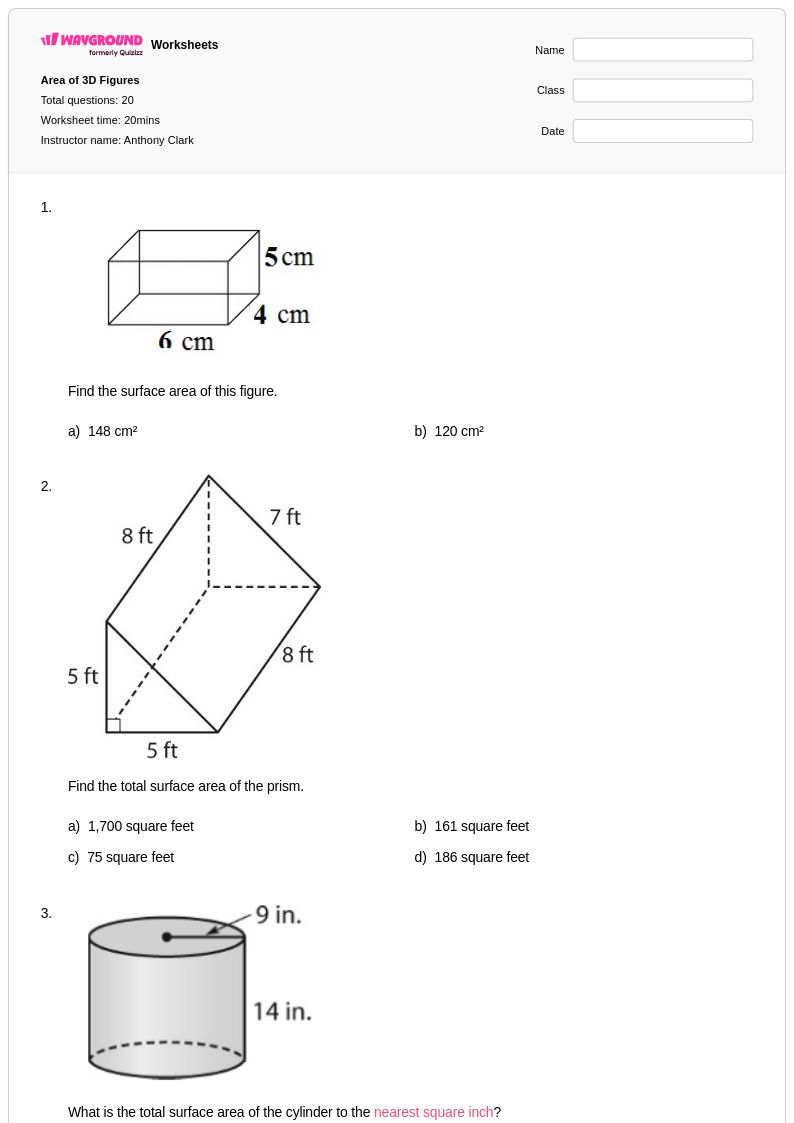
20 Q
6th - Uni
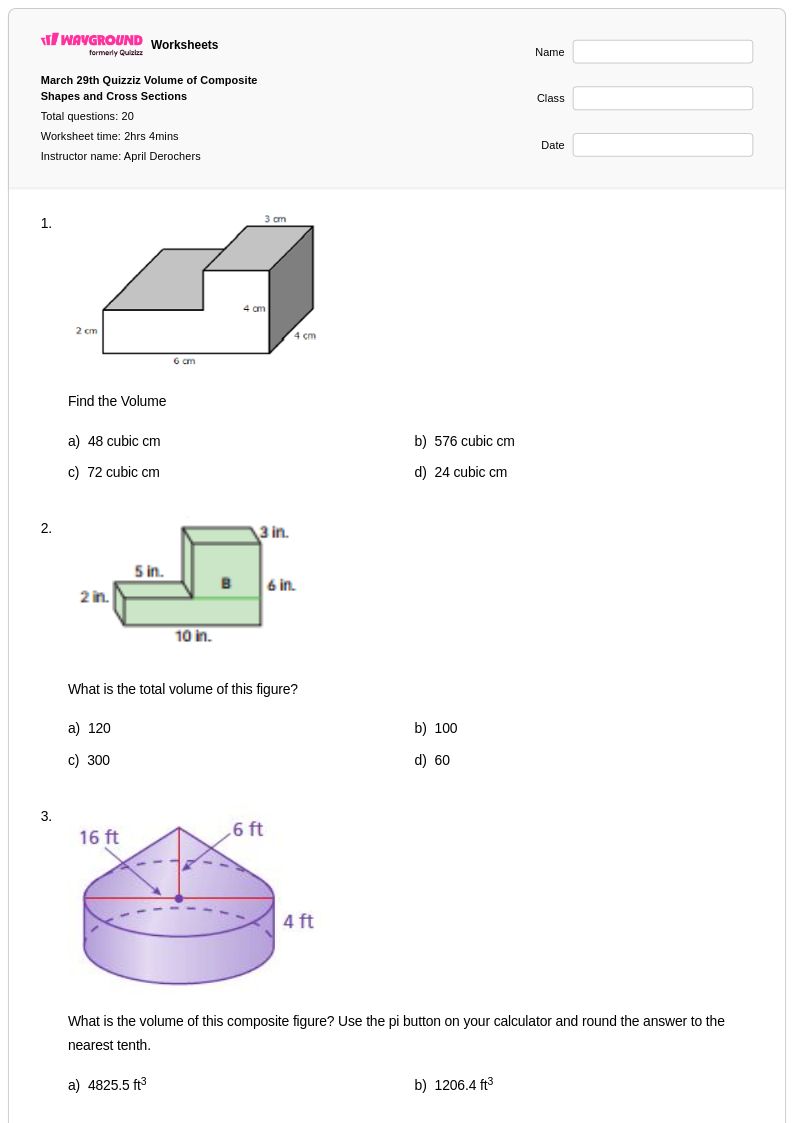
20 Q
10th
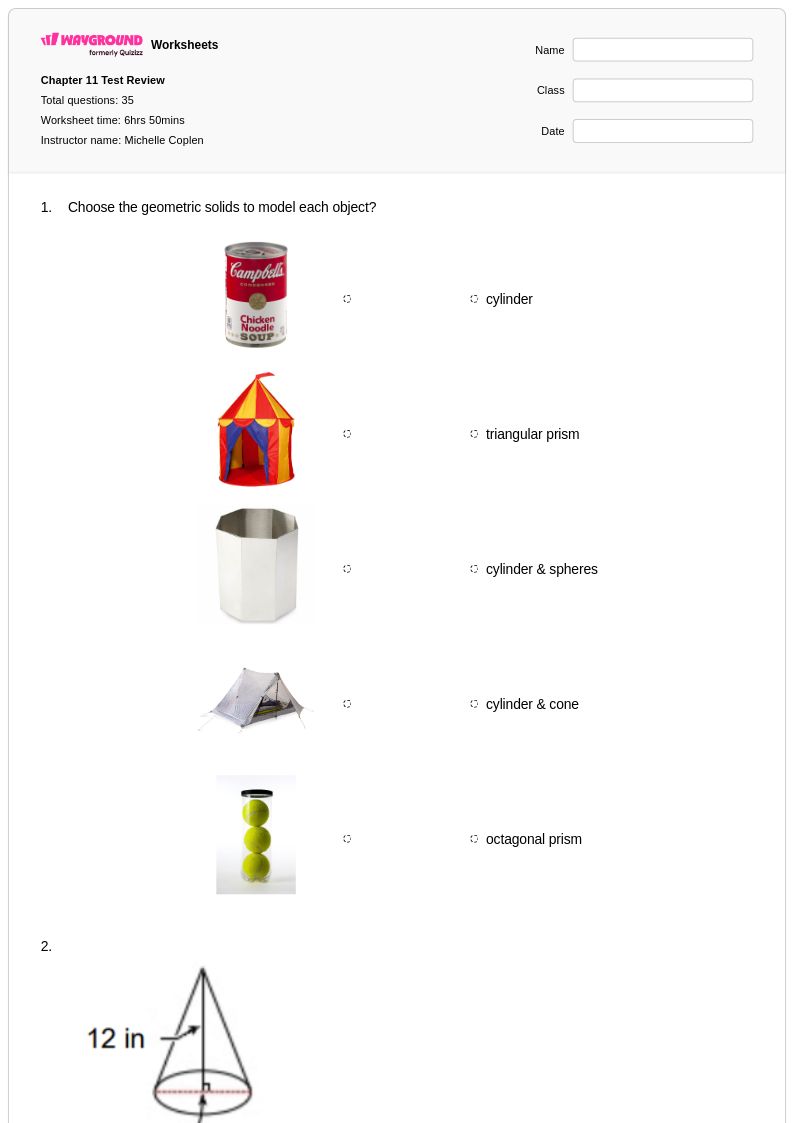
35 Q
9th - 12th
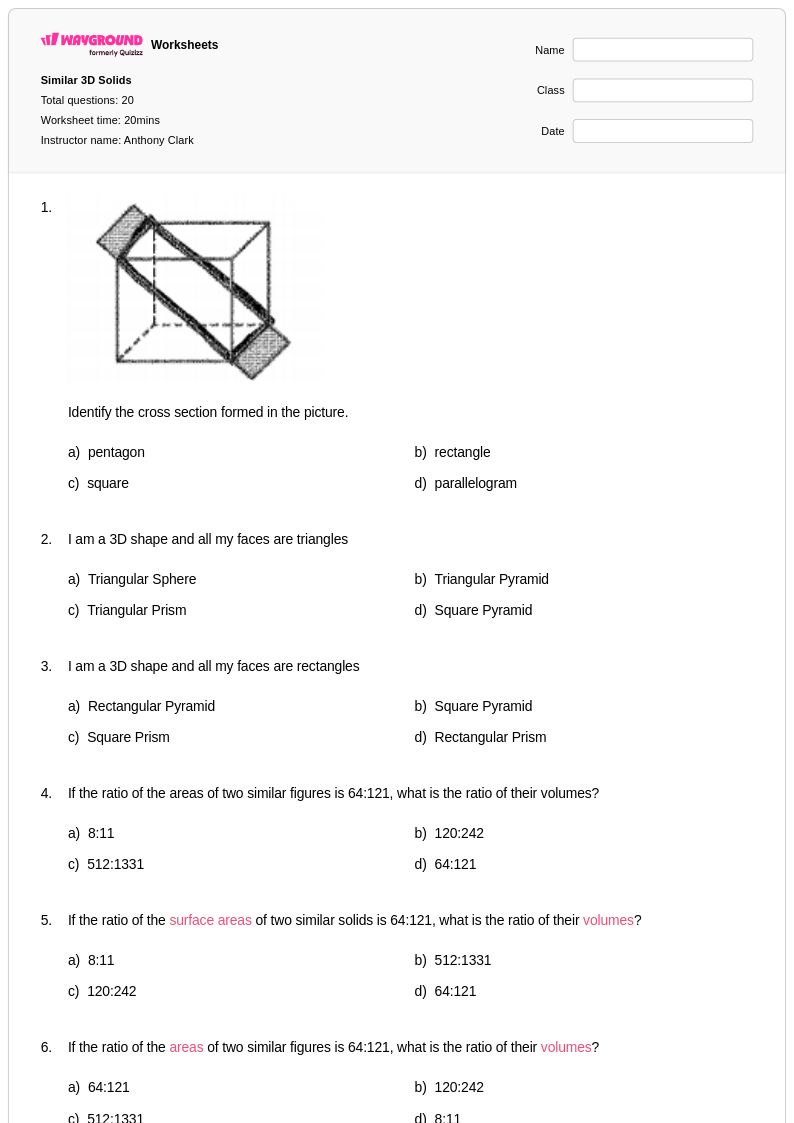
20 Q
10th - Uni
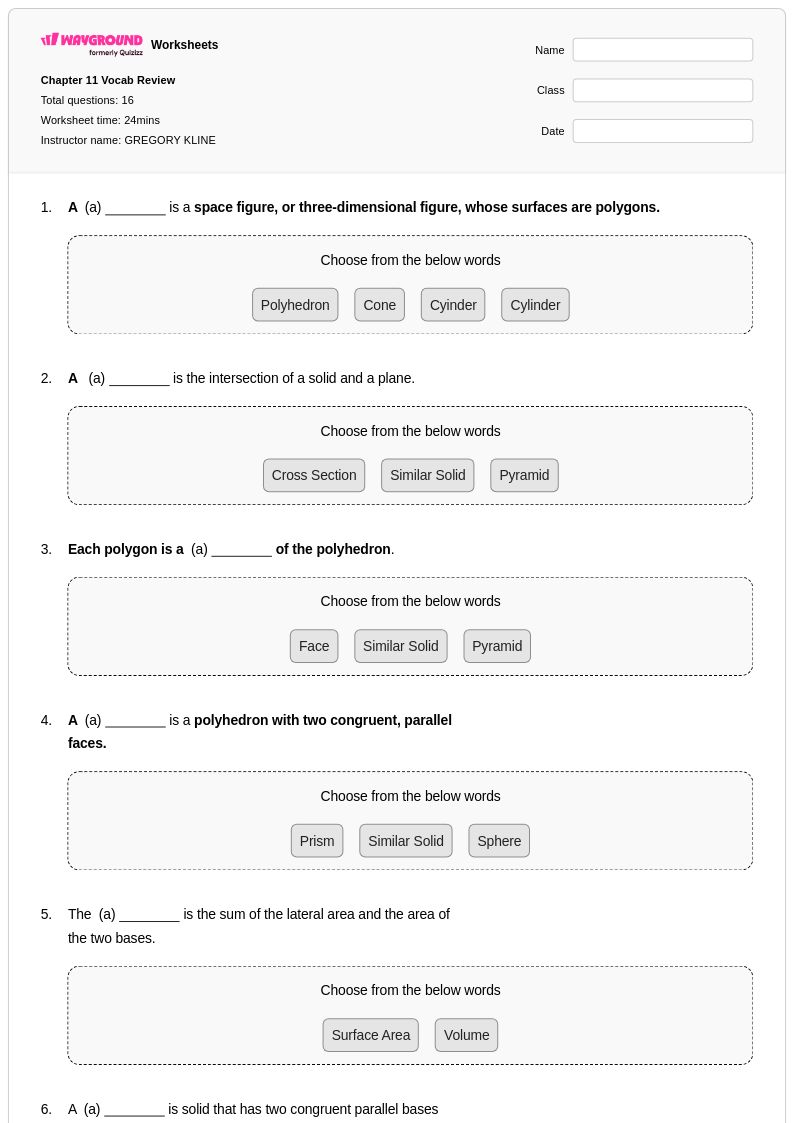
16 Q
10th
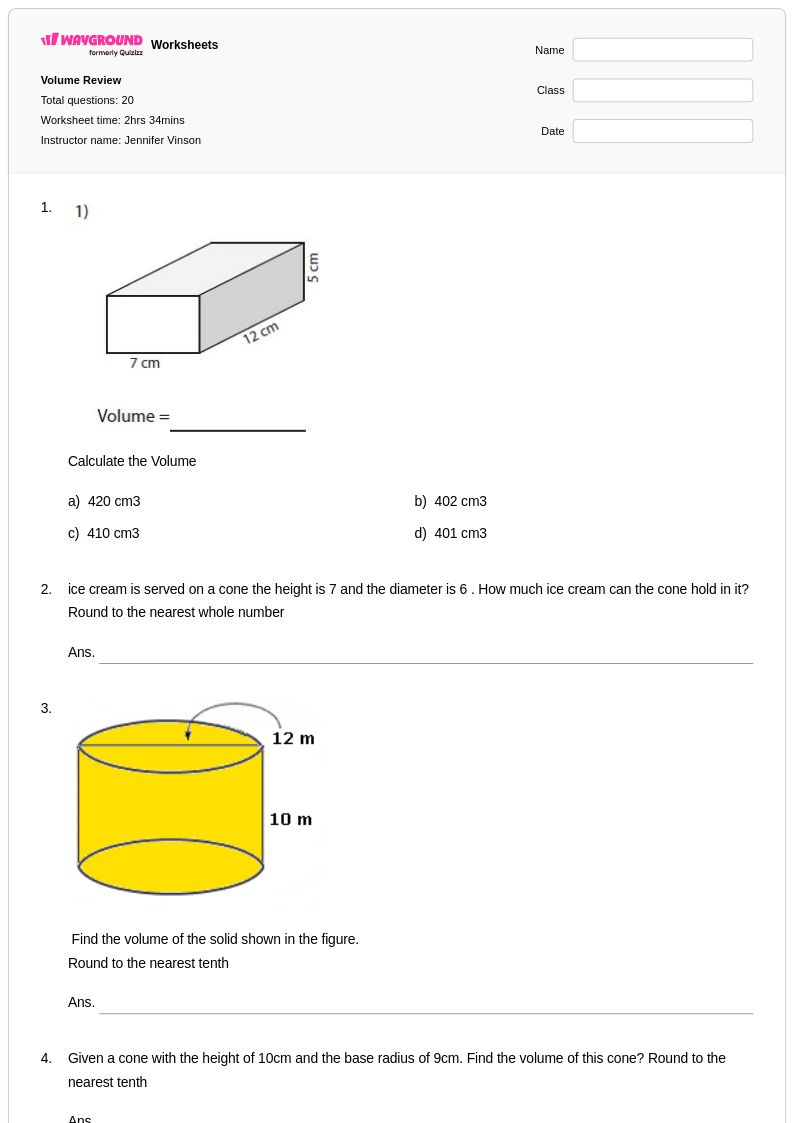
20 Q
9th - 12th
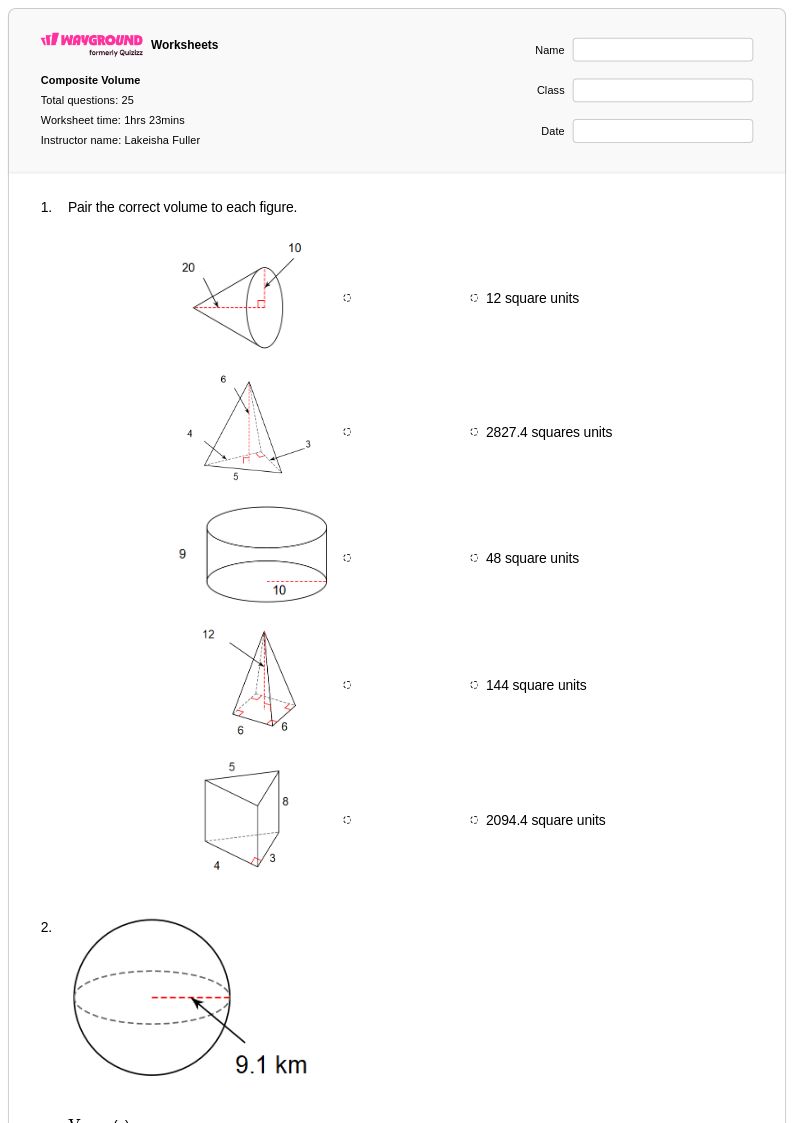
25 Q
10th
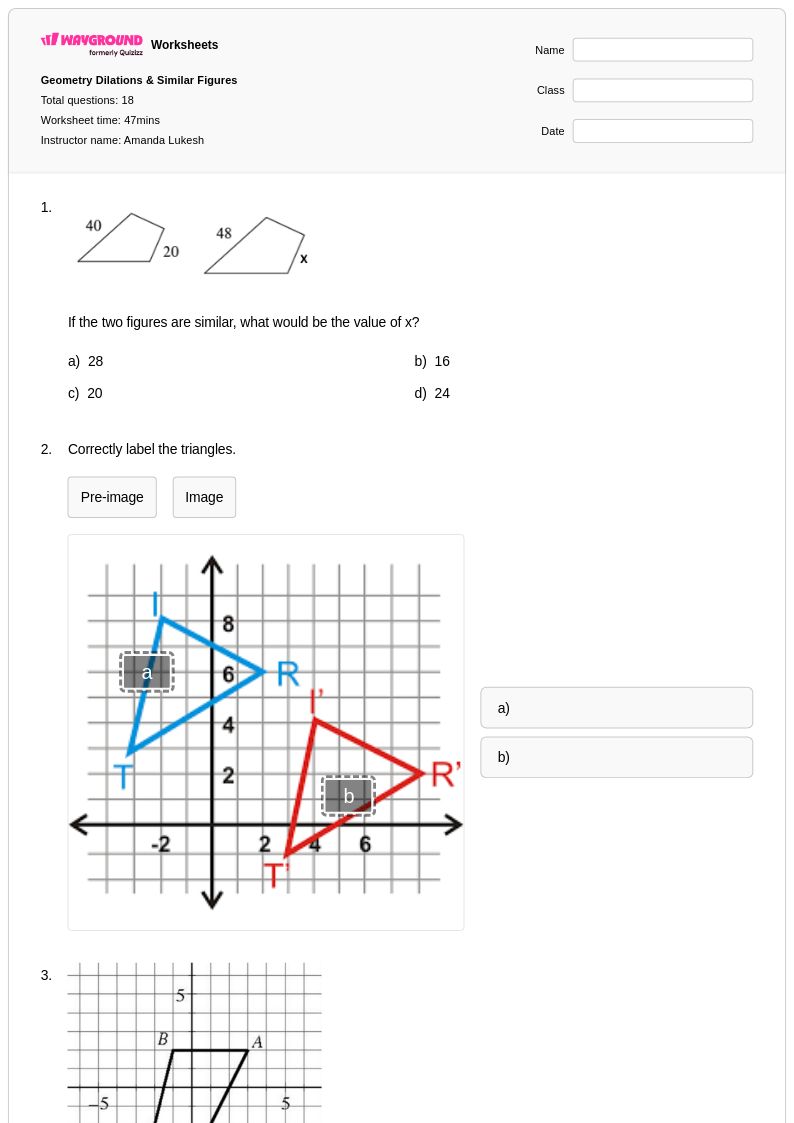
18 Q
10th
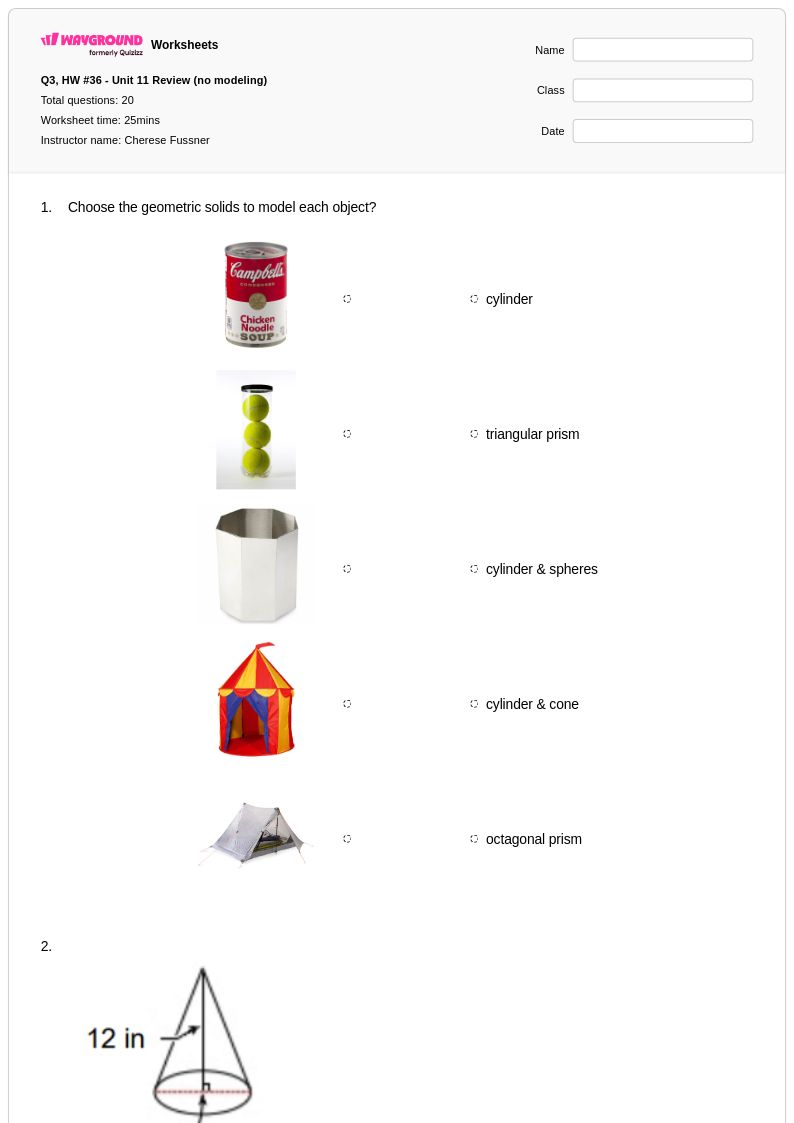
20 Q
9th - 12th
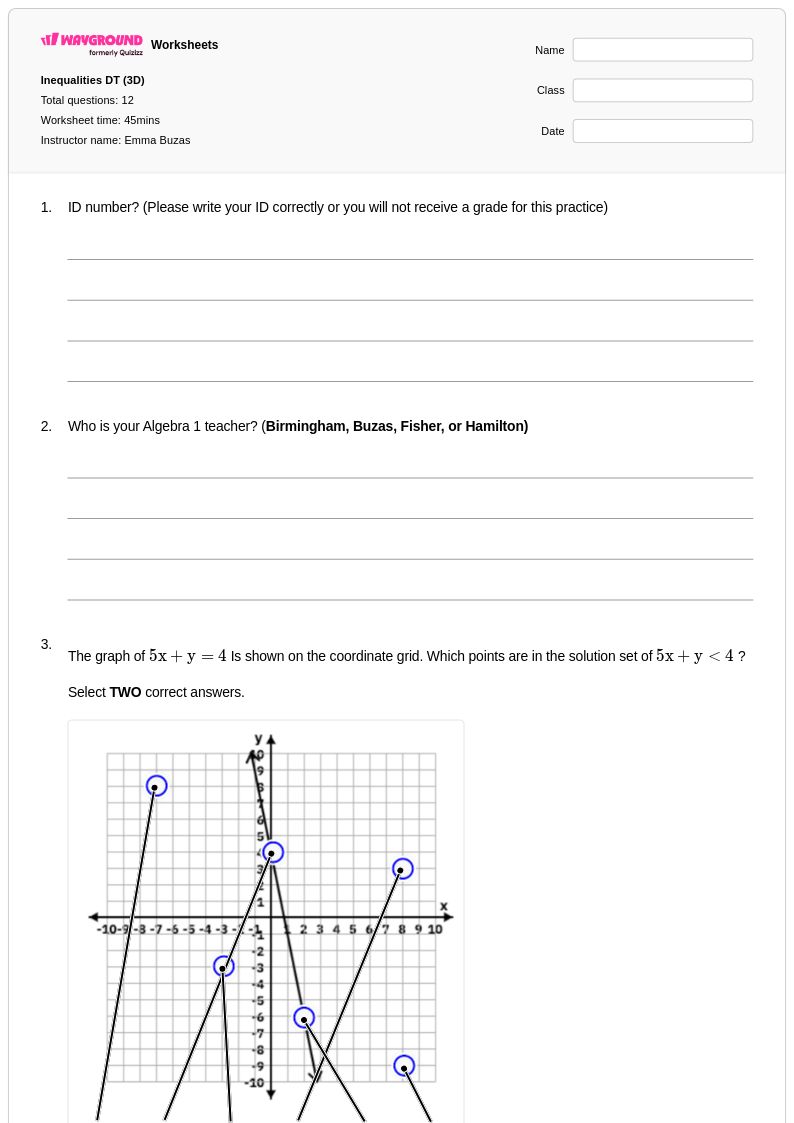
12 Q
9th - 12th
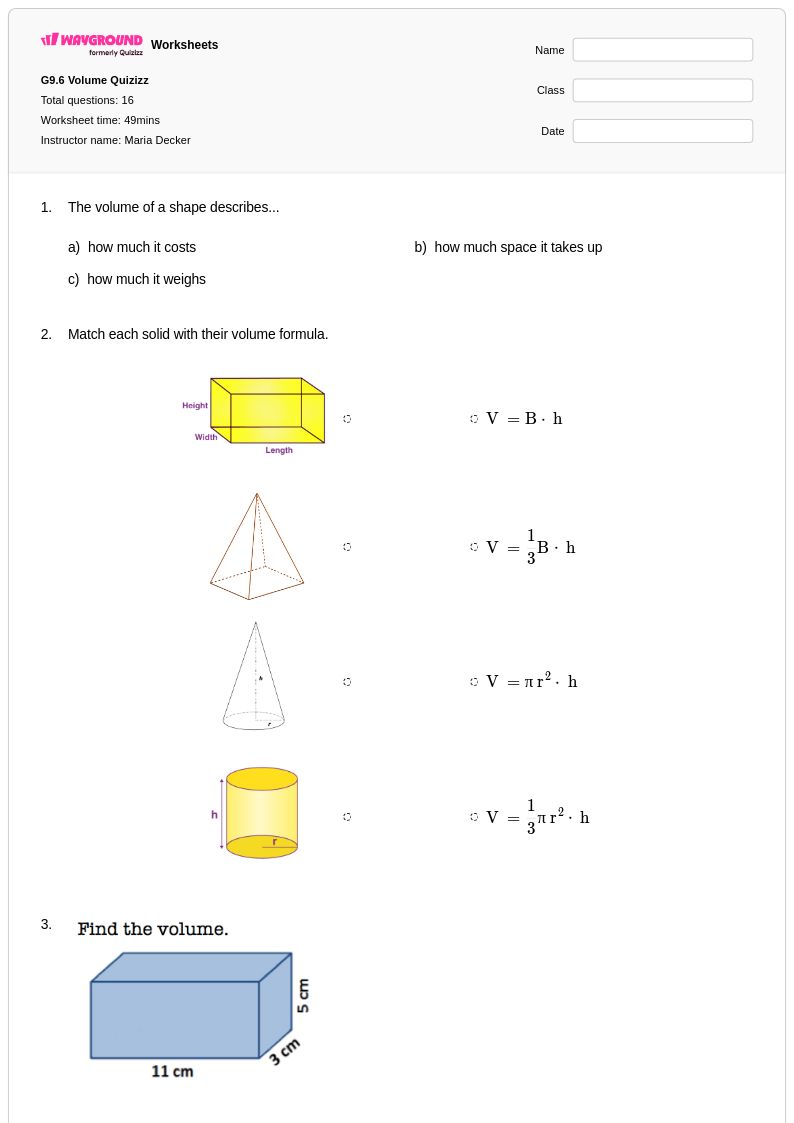
16 Q
9th - 12th
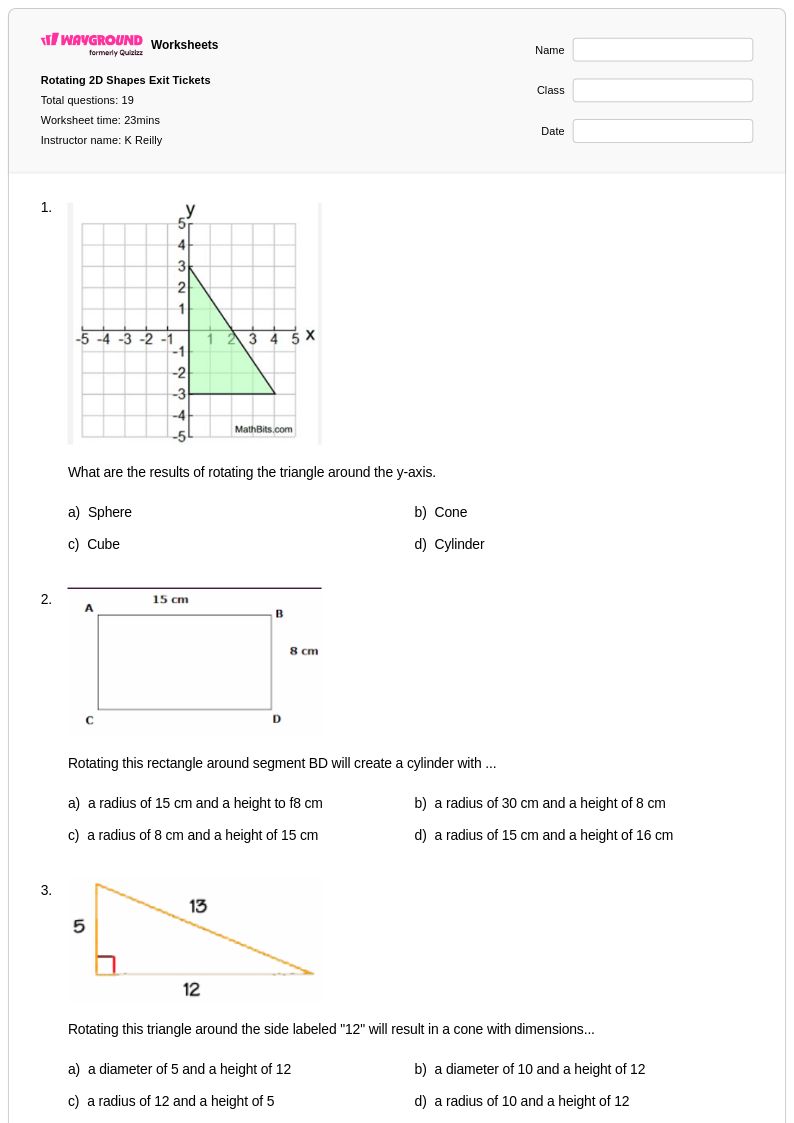
19 Q
9th - 12th
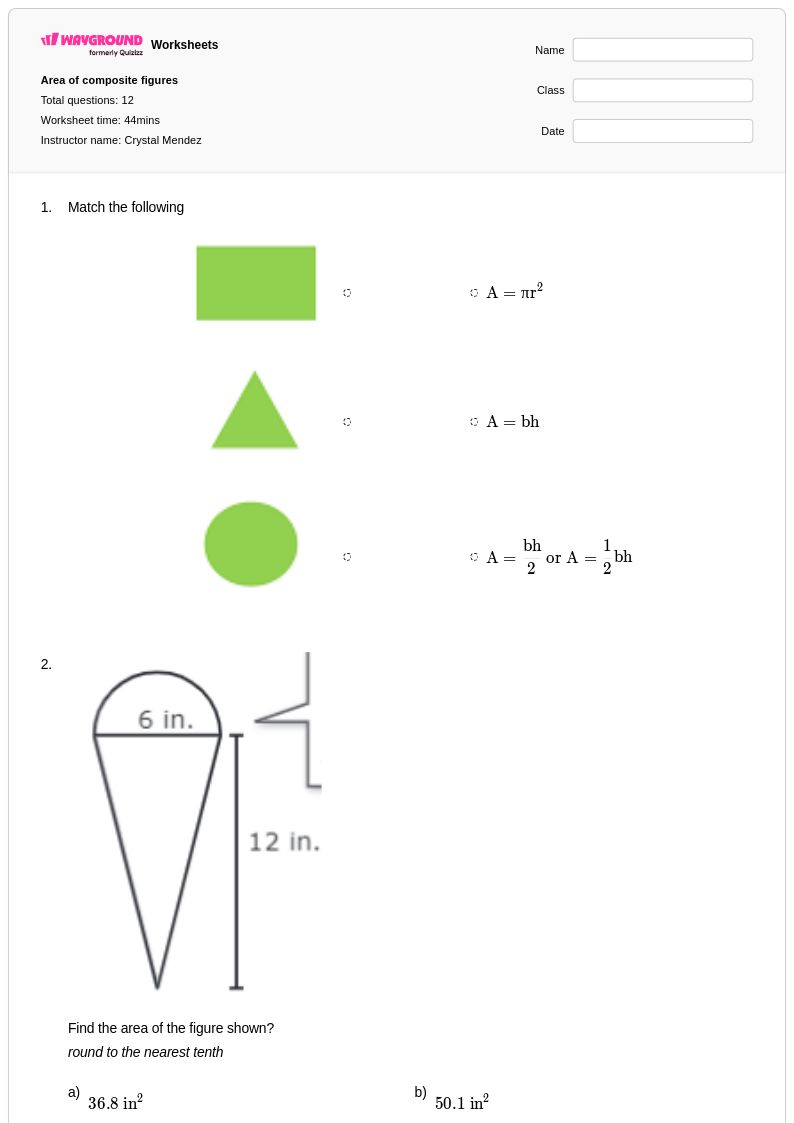
12 Q
10th
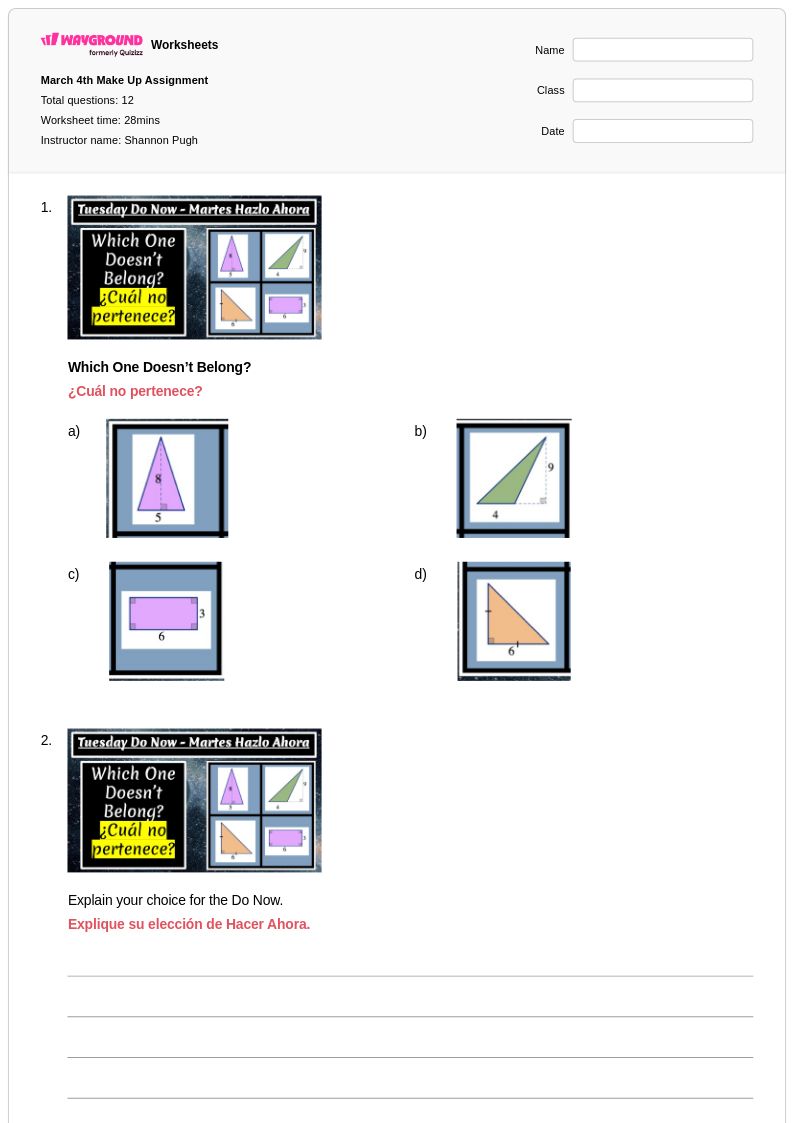
12 Q
9th - 12th
Explore Slicing 3d Figures Worksheets by Grades
Explore Other Subject Worksheets for class 10
Explore printable Slicing 3d Figures worksheets for Class 10
Slicing 3D figures represents a fundamental concept in Class 10 geometry that challenges students to visualize and analyze cross-sections of three-dimensional objects. Wayground's comprehensive collection of slicing 3D figures worksheets provides students with targeted practice in understanding how planes intersect with geometric solids to create two-dimensional cross-sections. These carefully designed practice problems strengthen spatial reasoning skills while helping students master the relationship between three-dimensional objects and their resulting cross-sectional shapes, including circles, rectangles, triangles, and more complex polygons. Each worksheet includes detailed answer keys and is available as free printable PDF resources, allowing students to work systematically through problems involving cylinders, cones, prisms, pyramids, and spheres to develop their geometric intuition and analytical thinking abilities.
Wayground supports mathematics educators with an extensive library of millions of teacher-created resources specifically designed for slicing 3D figures instruction at the Class 10 level. The platform's robust search and filtering capabilities enable teachers to quickly locate worksheets that align with curriculum standards and match their students' specific learning needs, while built-in differentiation tools allow for seamless customization of difficulty levels and problem types. These versatile resources are available in both printable PDF format and interactive digital versions, providing flexibility for classroom instruction, homework assignments, remediation sessions, and enrichment activities. Teachers can efficiently plan geometry lessons, assess student understanding of cross-sectional concepts, and provide targeted skill practice that builds confidence in visualizing three-dimensional relationships, ultimately preparing students for advanced geometric problem-solving in higher-level mathematics courses.