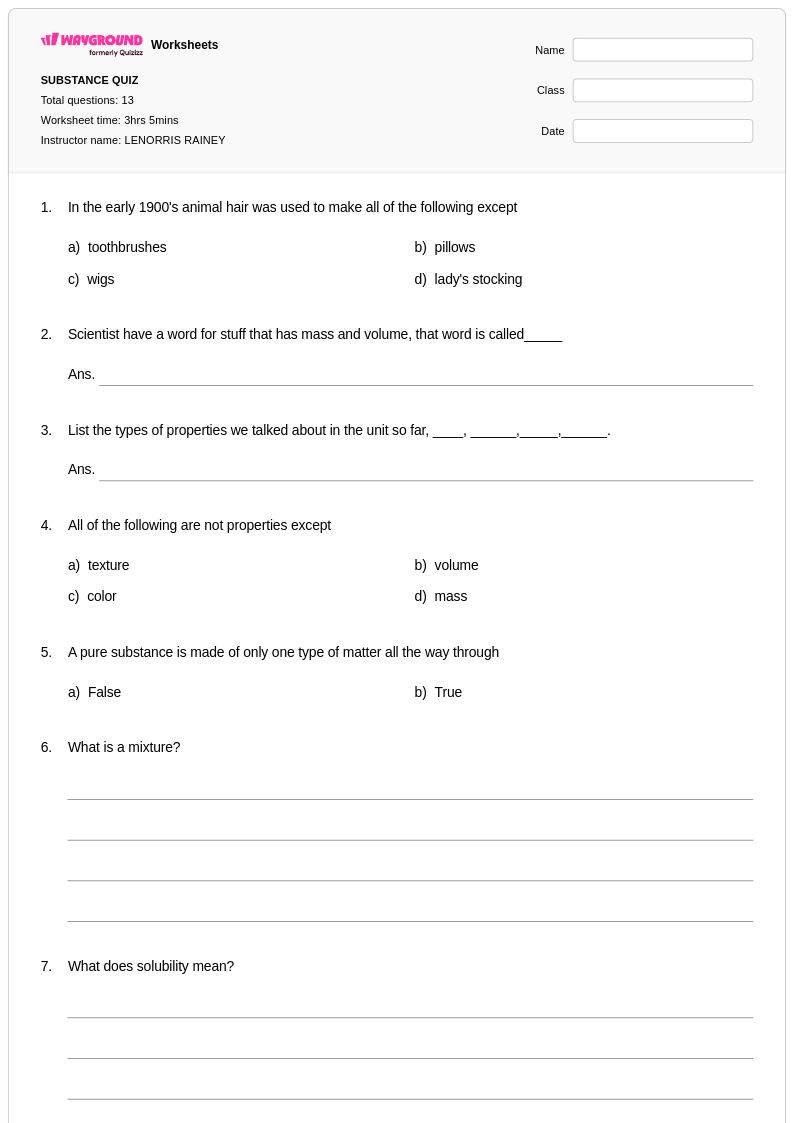
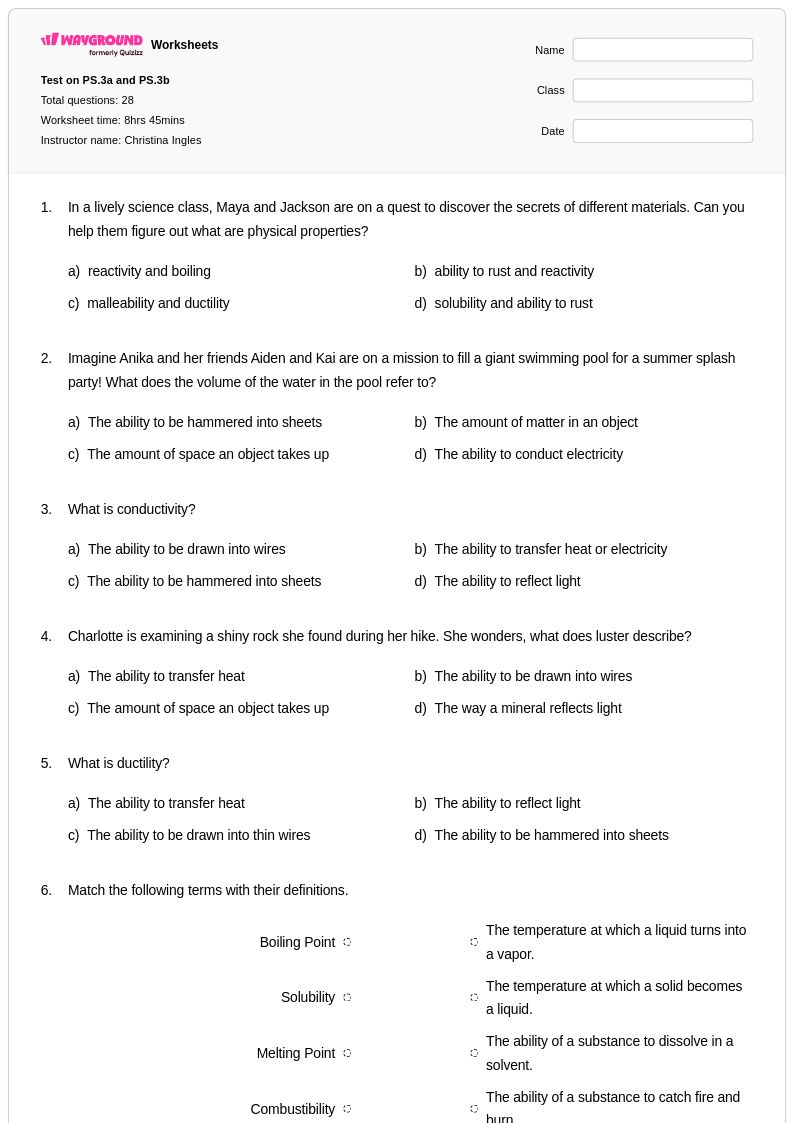
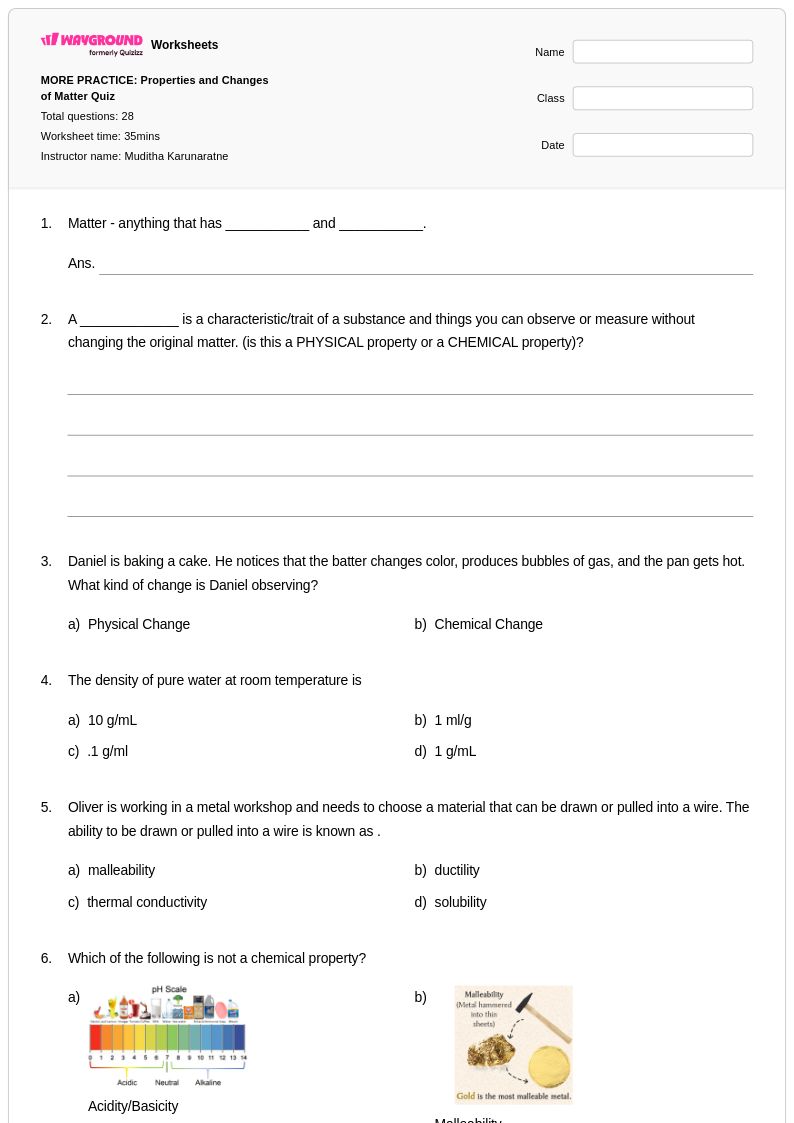
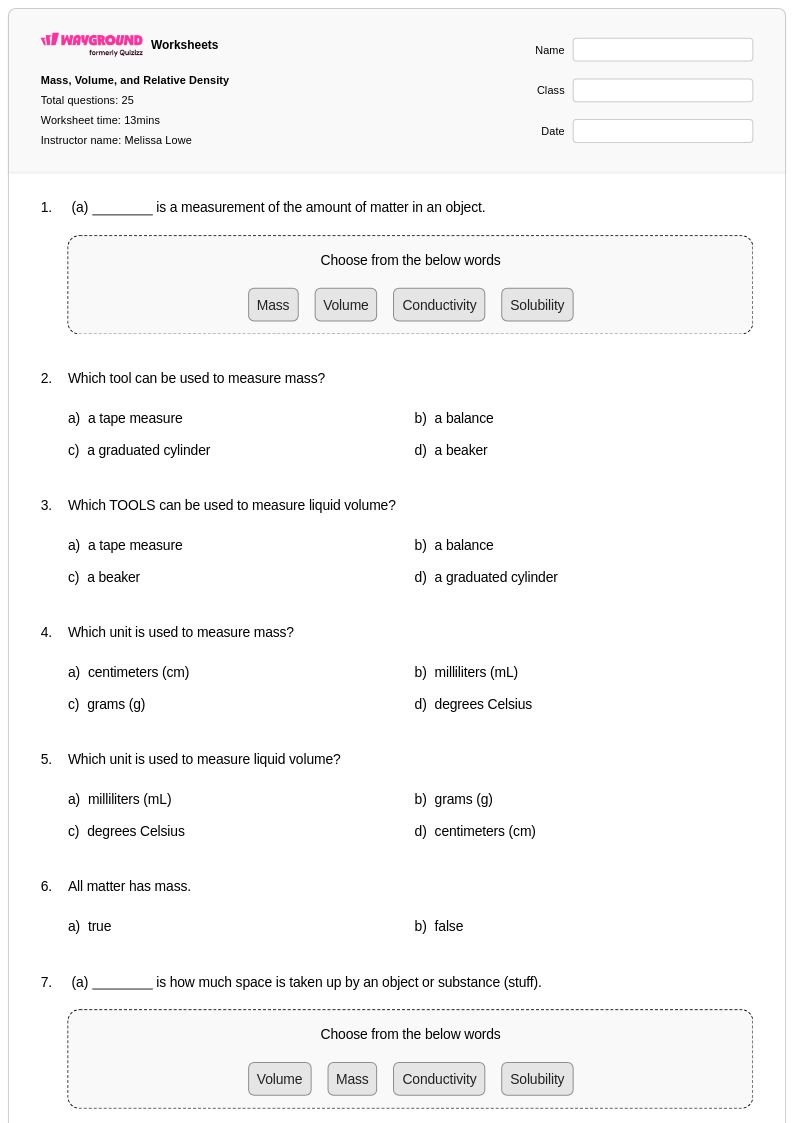
Explore Class 8 solubility worksheets and printables from Wayground that help students master chemical dissolution concepts through engaging practice problems, free PDF downloads, and comprehensive answer keys.
Explore printable Solubility worksheets for Class 8
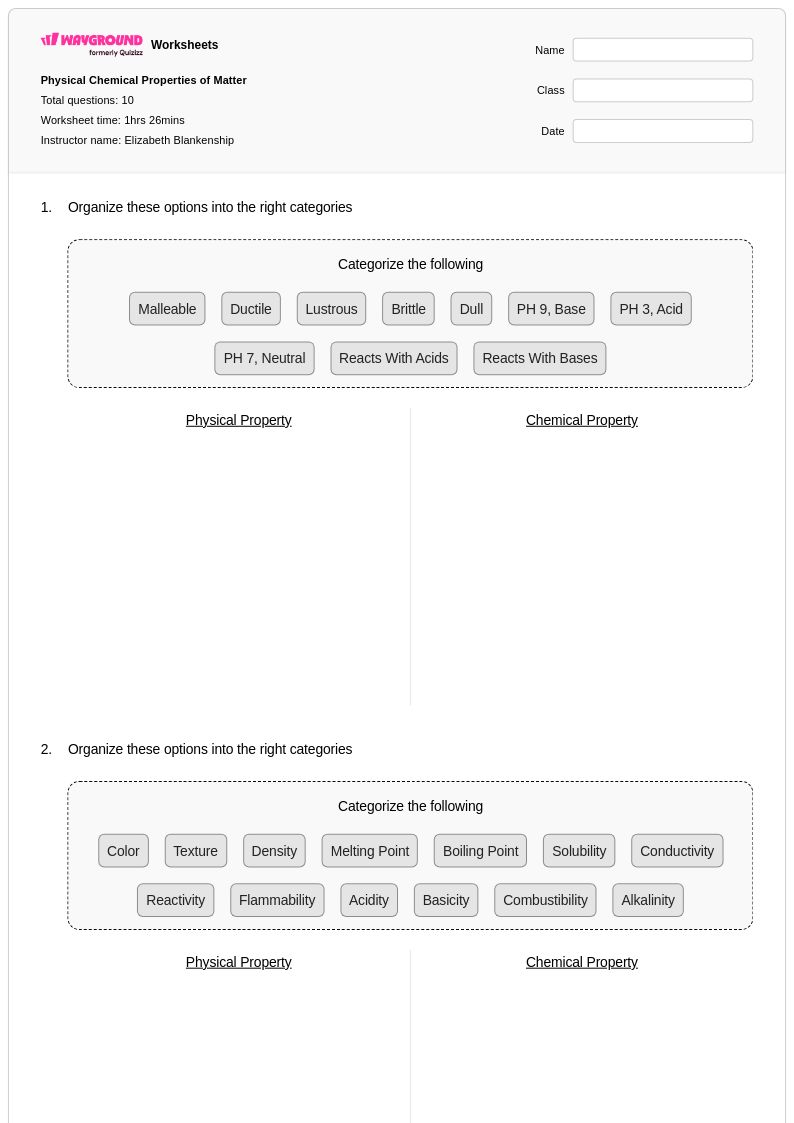
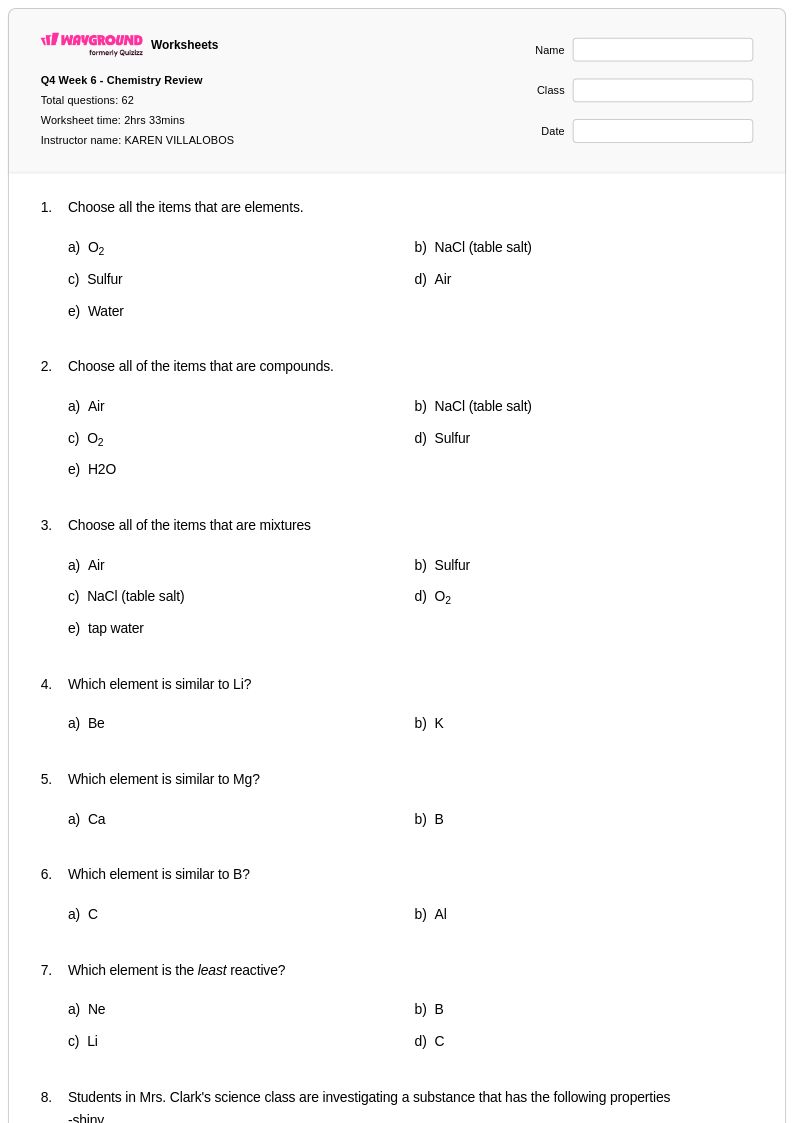
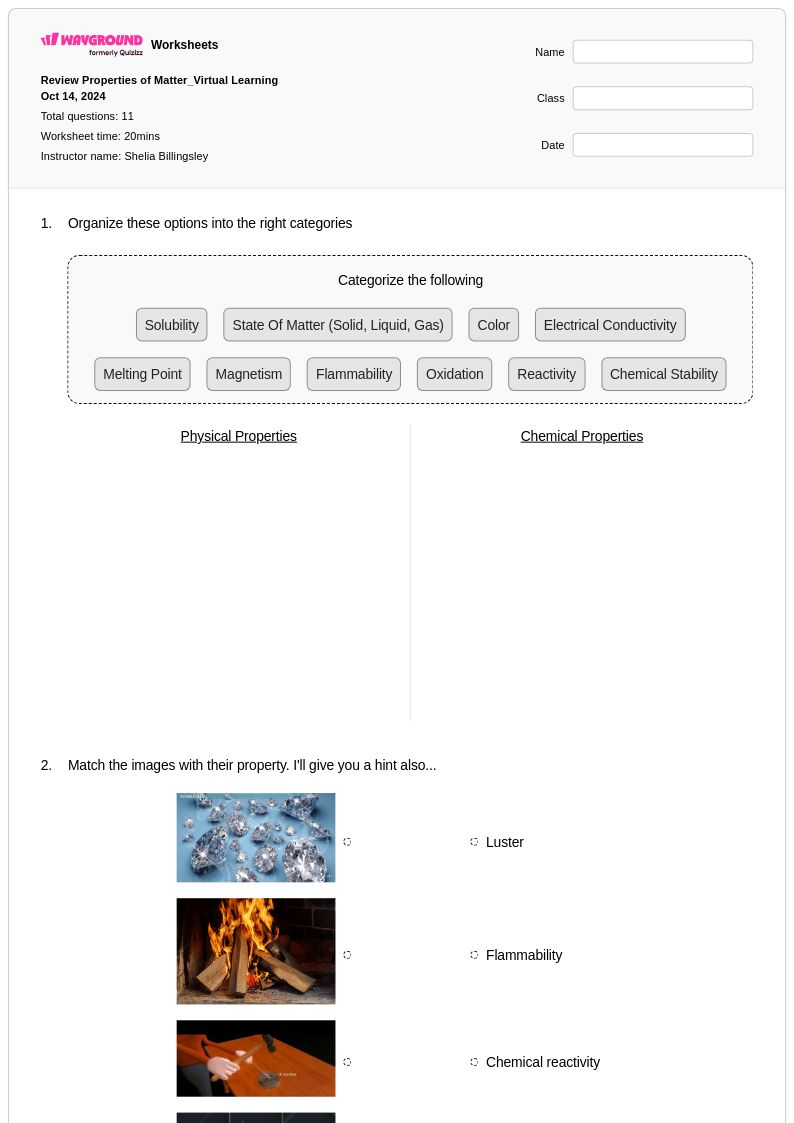
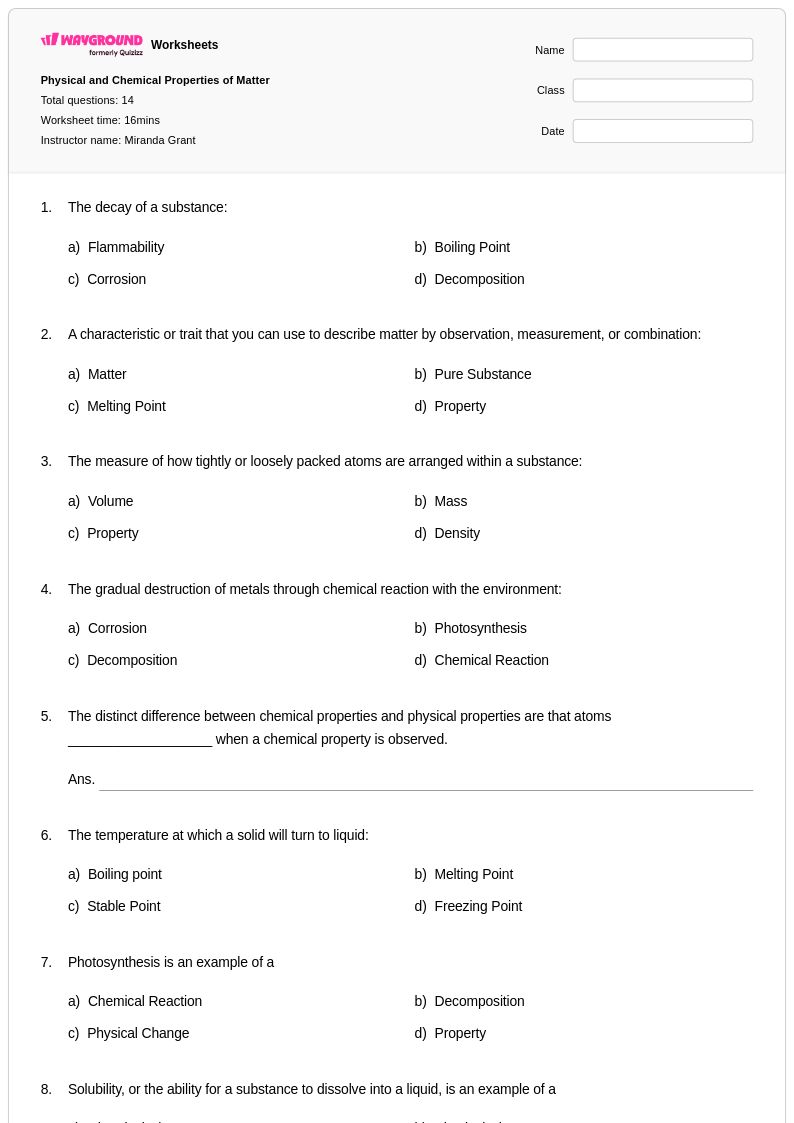
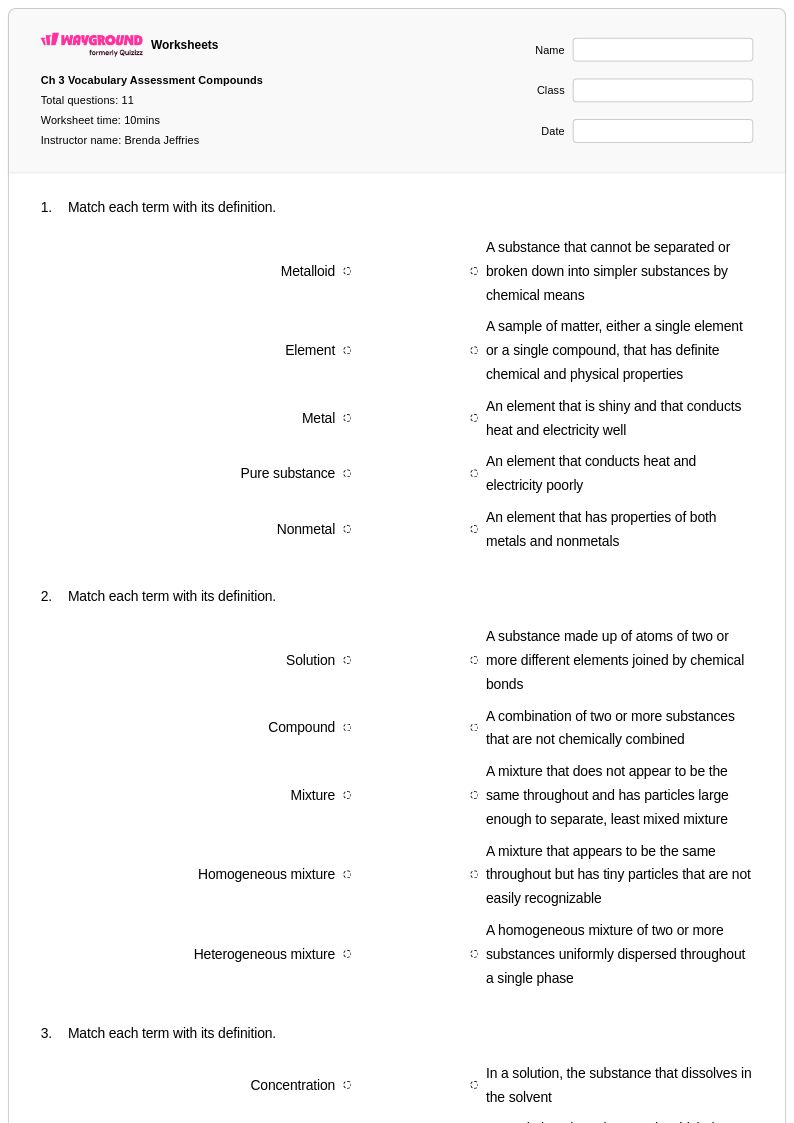
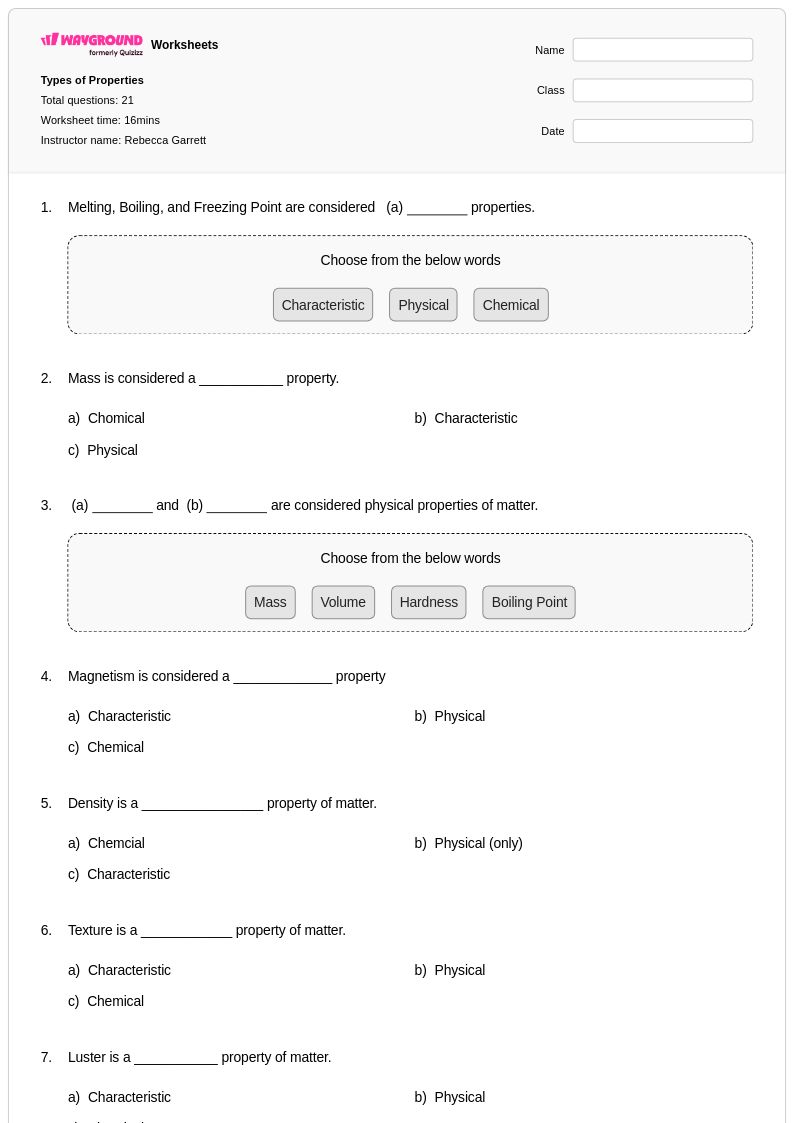
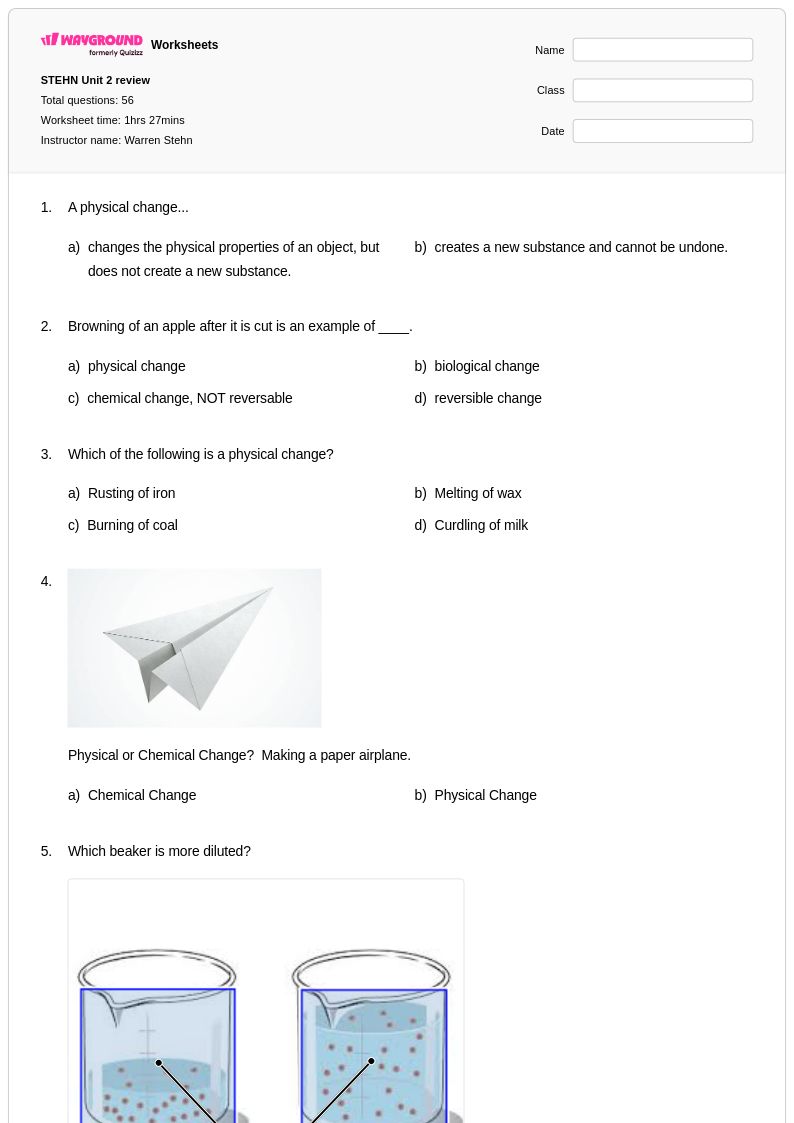
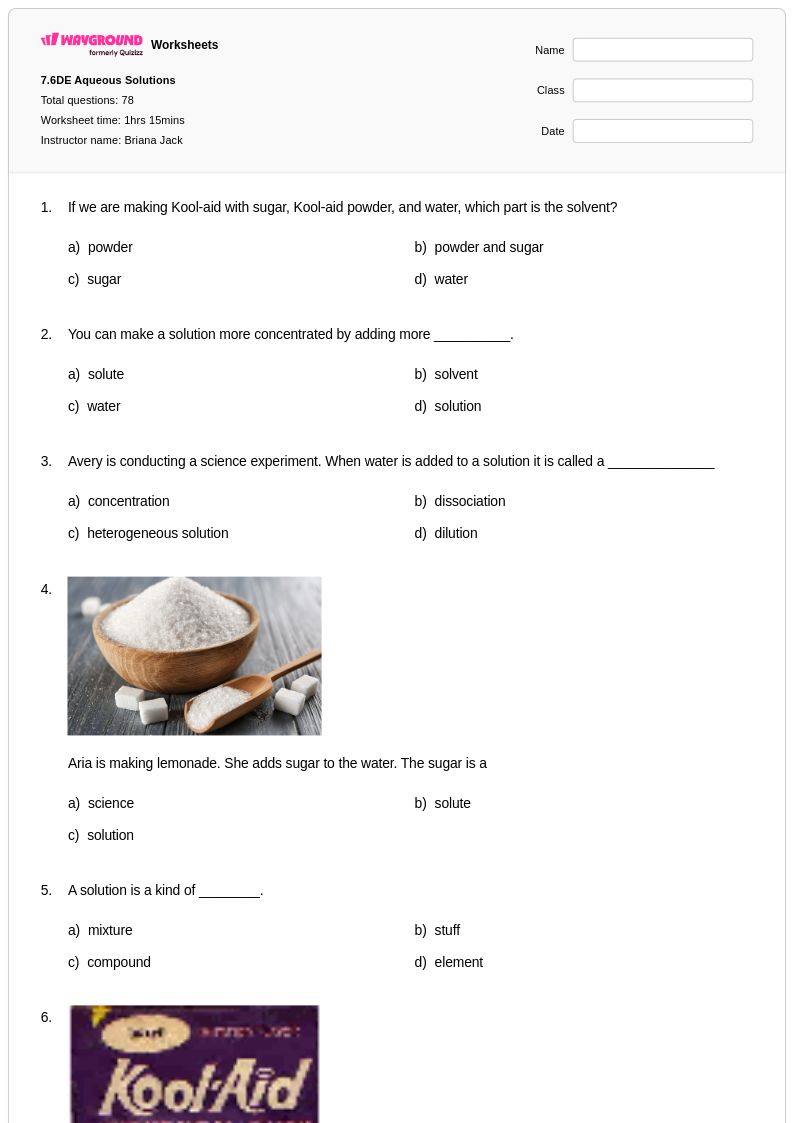
Solubility worksheets for Class 8 students available through Wayground (formerly Quizizz) provide comprehensive practice with the fundamental concepts of how substances dissolve in various solvents. These expertly crafted resources strengthen students' understanding of solubility curves, concentration calculations, and the factors that influence dissolution rates including temperature, pressure, and particle size. The worksheets feature carefully designed practice problems that guide students through interpreting solubility graphs, determining saturation points, and calculating solution concentrations using molarity and mass percentage. Each printable worksheet includes a detailed answer key that helps teachers provide immediate feedback and supports independent learning, while the free pdf format ensures accessibility for both classroom instruction and homework assignments.
Wayground (formerly Quizizz) empowers educators with an extensive collection of millions of teacher-created solubility worksheets that can be easily searched and filtered by specific learning objectives and difficulty levels. The platform's robust differentiation tools allow teachers to customize content for diverse learners, while standards alignment features ensure worksheets meet curriculum requirements for Class 8 chemistry instruction. Teachers can seamlessly switch between printable pdf versions for traditional paper-and-pencil work and digital formats for interactive online learning experiences. These versatile resources support effective lesson planning by providing ready-made materials for skill practice, targeted remediation for struggling students, and enrichment opportunities for advanced learners who need additional challenges in understanding solution chemistry concepts.
FAQs
How do I teach solubility rules to high school chemistry students?
Start by introducing the fundamental solubility rules for ionic compounds, helping students recognize which combinations of ions typically produce soluble versus insoluble precipitates. From there, connect solubility to molecular polarity using the 'like dissolves like' principle so students can extend their reasoning beyond memorized rules. Visual tools like solubility curves are especially effective for illustrating how temperature affects dissolution, and guided practice problems help students apply both rule-based and graph-based reasoning before they encounter more advanced solution chemistry.
What exercises help students practice interpreting solubility curves?
Effective practice exercises ask students to read a solubility curve graph and identify whether a solution is saturated, unsaturated, or supersaturated at a given temperature and concentration. Students should also practice predicting what happens when a saturated solution is cooled, which requires them to calculate the mass of solute that would crystallize out. Pairing these graph-reading tasks with calculation problems that involve solution concentration reinforces both conceptual understanding and quantitative skills.
What mistakes do students commonly make when working with solubility problems?
One of the most frequent errors is confusing solubility with dissolution rate — students often incorrectly assume that factors like stirring or particle size change how much solute can dissolve, rather than how quickly it dissolves. Another common misconception is misreading solubility curves, particularly when distinguishing between a saturated and a supersaturated solution. Students also frequently apply solubility rules inconsistently, forgetting exceptions or misidentifying the ionic species involved in a given compound.
How do I differentiate solubility instruction for students at different skill levels?
For students who are still building foundational skills, focus first on memorizing and applying the basic solubility rules for common ionic compounds before introducing concentration calculations. More advanced students can work with solubility curve analysis, supersaturation problems, and multi-step solution concentration calculations. On Wayground, teachers can apply accommodations such as reduced answer choices or read-aloud support for individual students who need additional scaffolding, while the rest of the class works through standard problem sets without disruption.
How can I use solubility worksheets from Wayground in my chemistry class?
Wayground's solubility worksheets are available as printable PDFs for traditional classroom use and in digital formats for technology-integrated or hybrid learning environments, including the option to host them as a quiz directly on Wayground. Teachers can use them for guided practice, independent work, homework, or formative assessment, and each worksheet includes a detailed answer key to support self-assessment and efficient grading. The ability to customize existing materials means you can target specific learning objectives, whether you're reinforcing solubility rules, reviewing solubility curves, or preparing students for a unit assessment.
How do temperature and pressure affect solubility, and how should I teach these concepts?
Temperature increases the solubility of most solid solutes in water but decreases the solubility of gases, which is why carbonated drinks go flat when warm. Pressure has a significant effect only on gas solubility, as described by Henry's Law, and has a negligible effect on solids and liquids. Teaching these concepts side by side helps students avoid the common error of applying temperature-solubility reasoning to gases or pressure-solubility reasoning to solids, and worked problems using solubility curves make the temperature relationship concrete and visual.