Free Printable Speed and Velocity Worksheets for Class 4
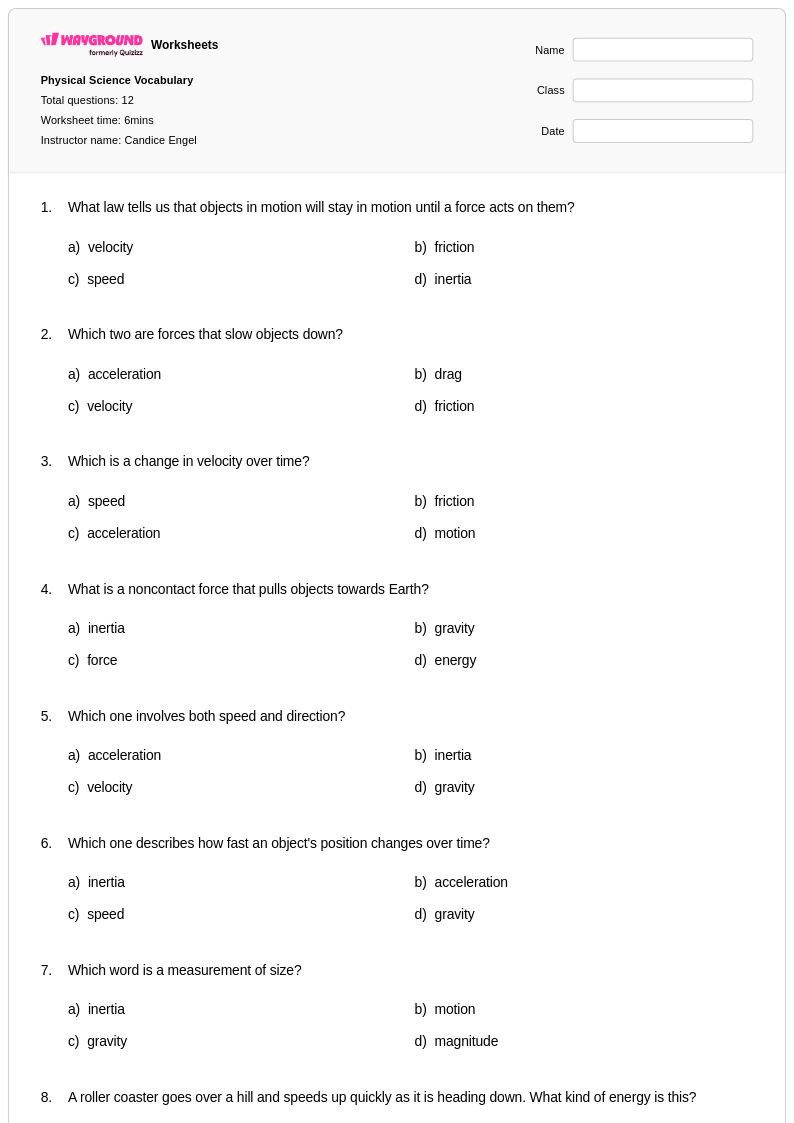
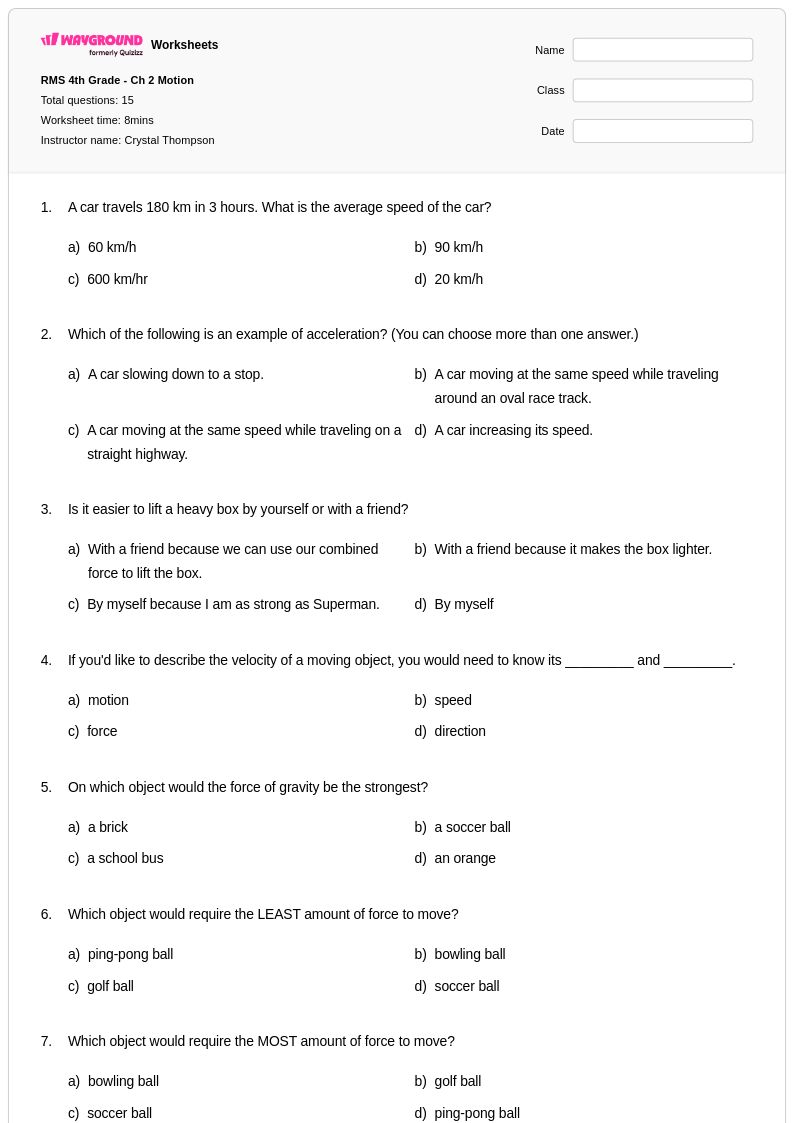
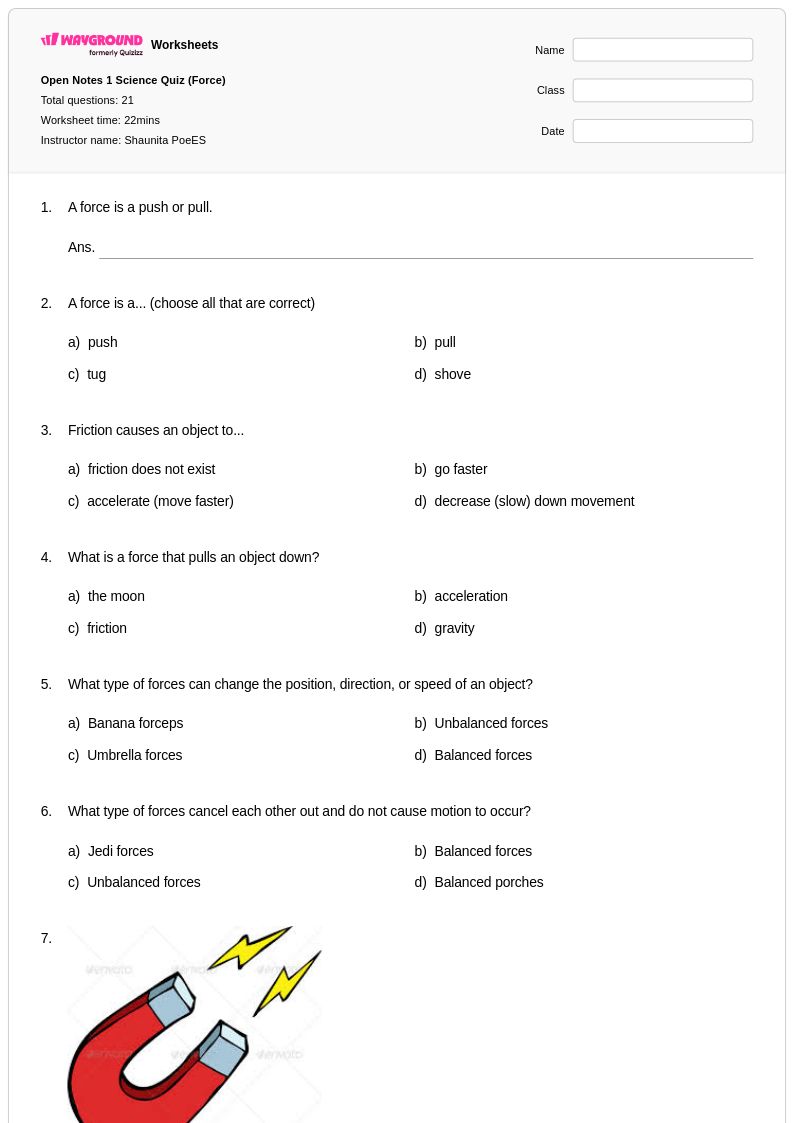
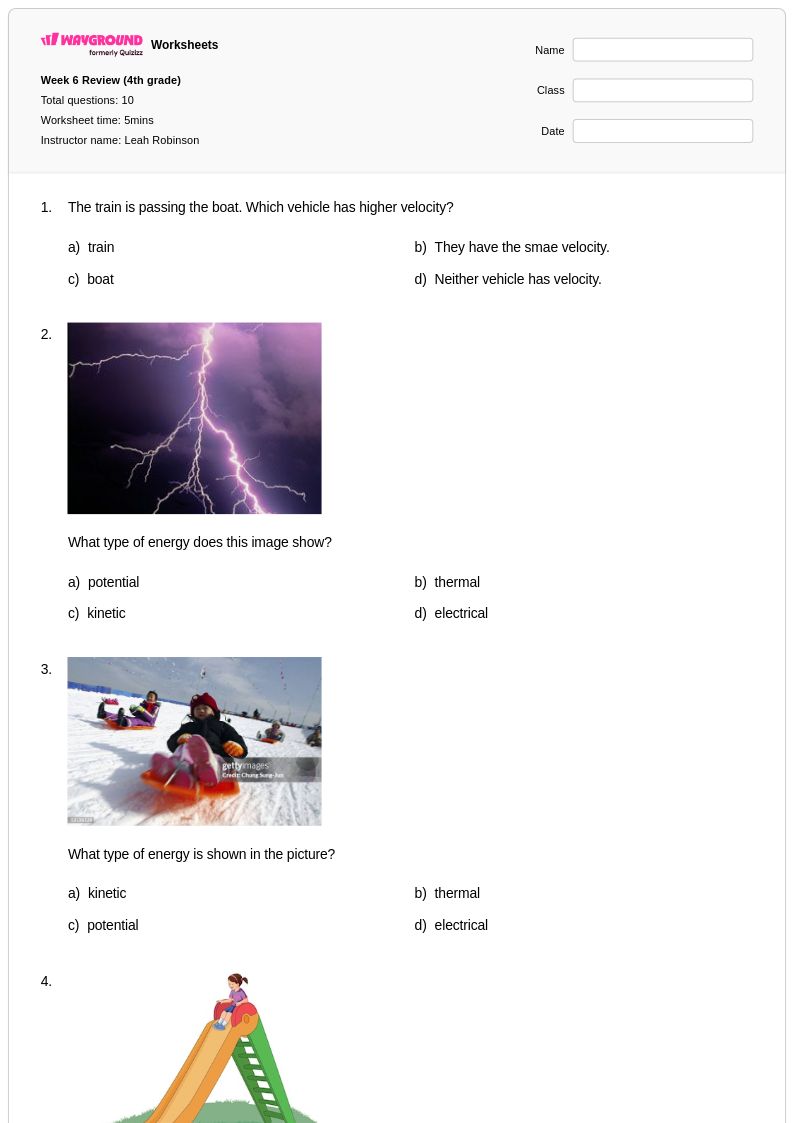
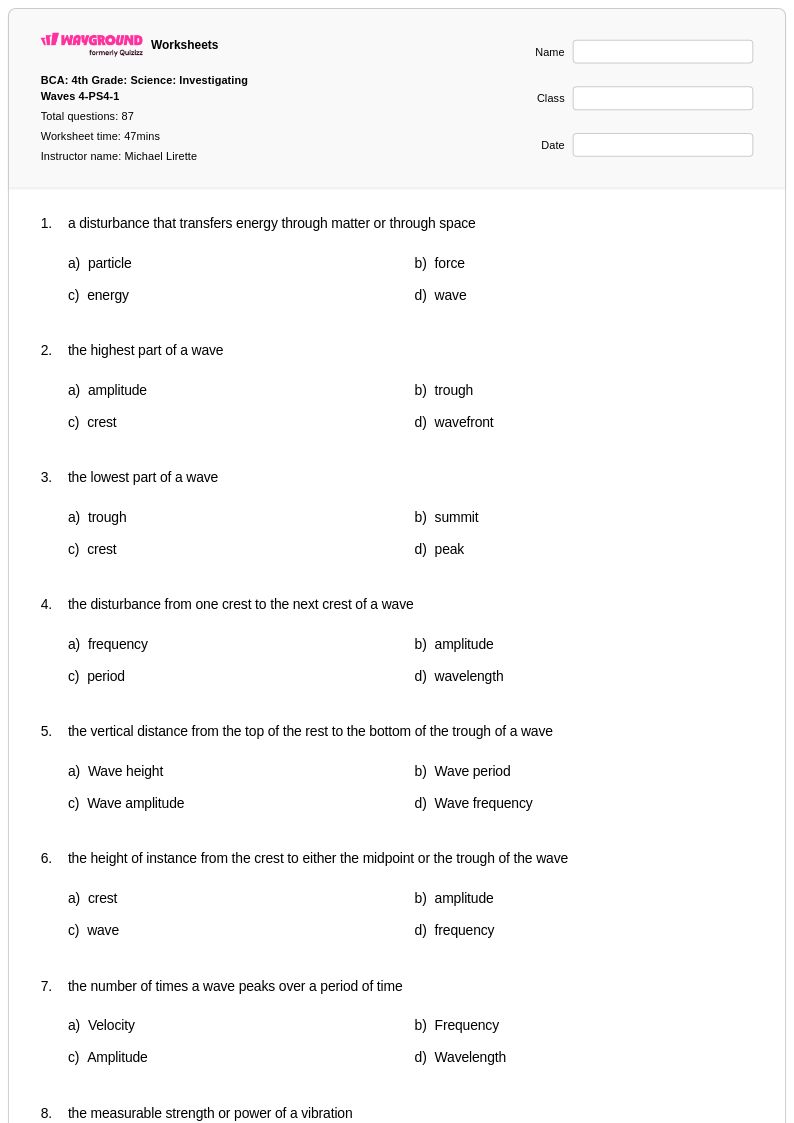
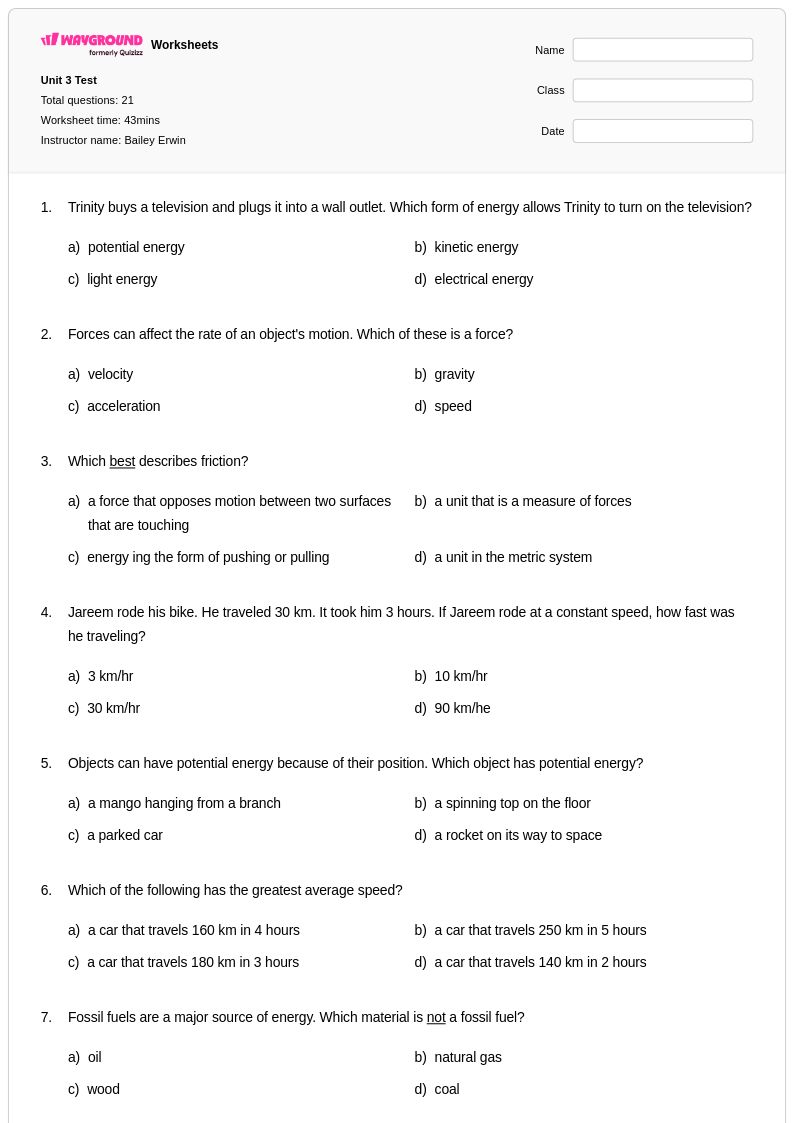
Class 4 speed and velocity worksheets from Wayground offer free printable PDFs with practice problems and answer keys to help students understand motion, calculate speed, and distinguish between speed and velocity concepts.
Explore printable Speed and Velocity worksheets for Class 4
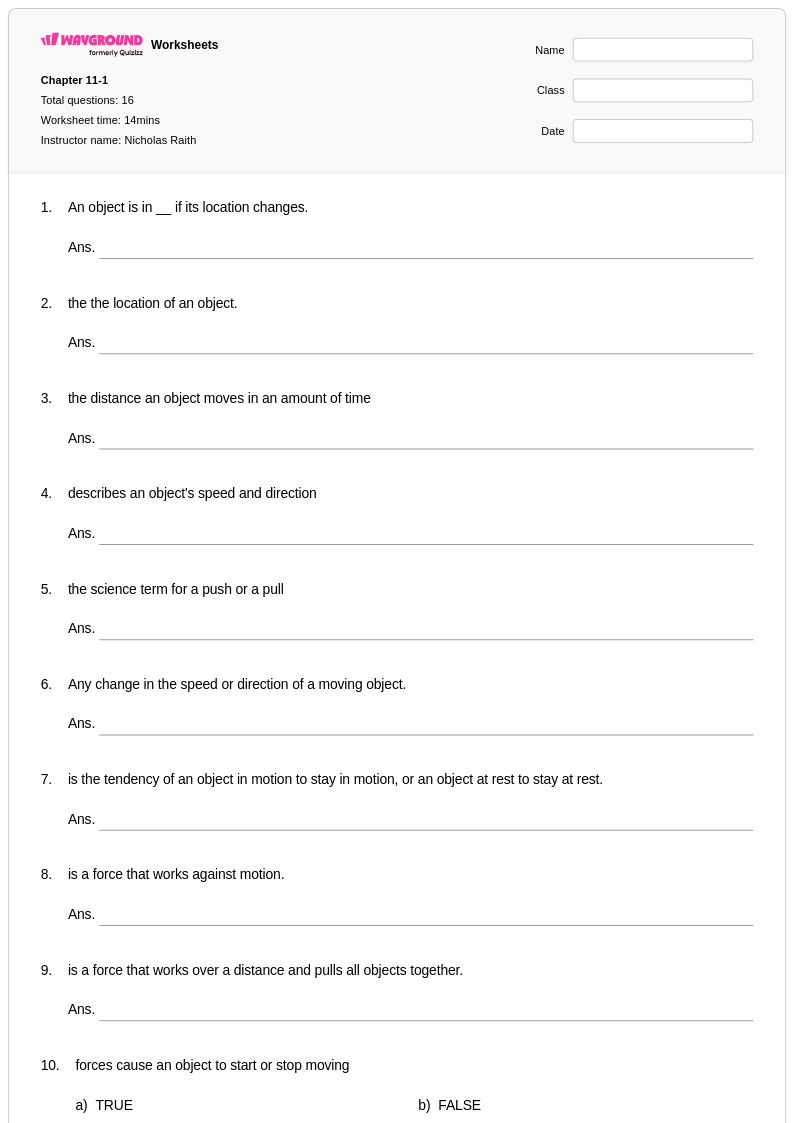
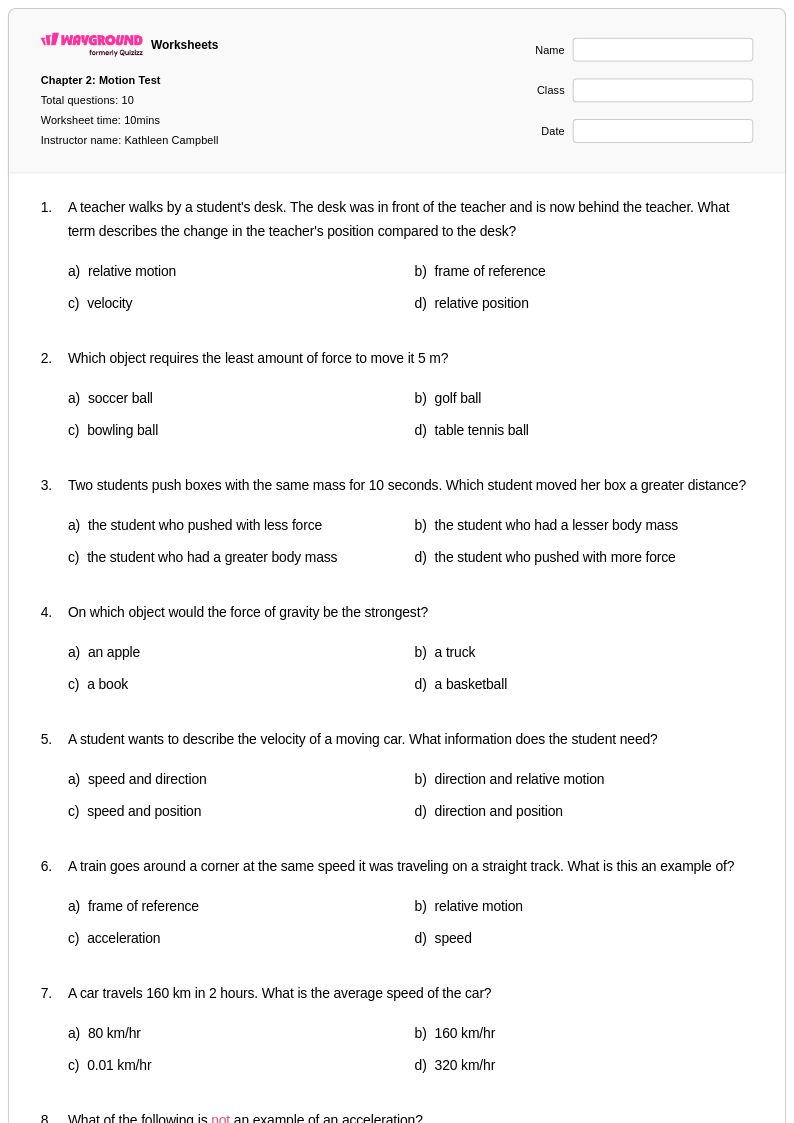
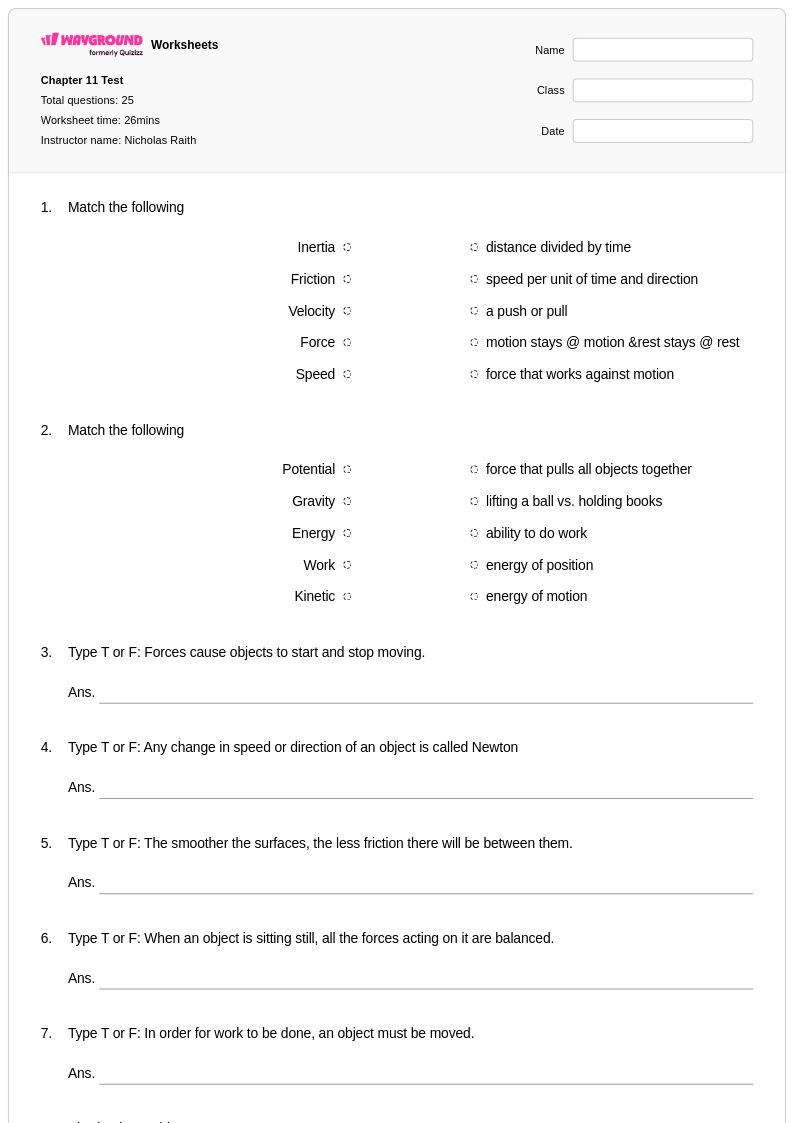
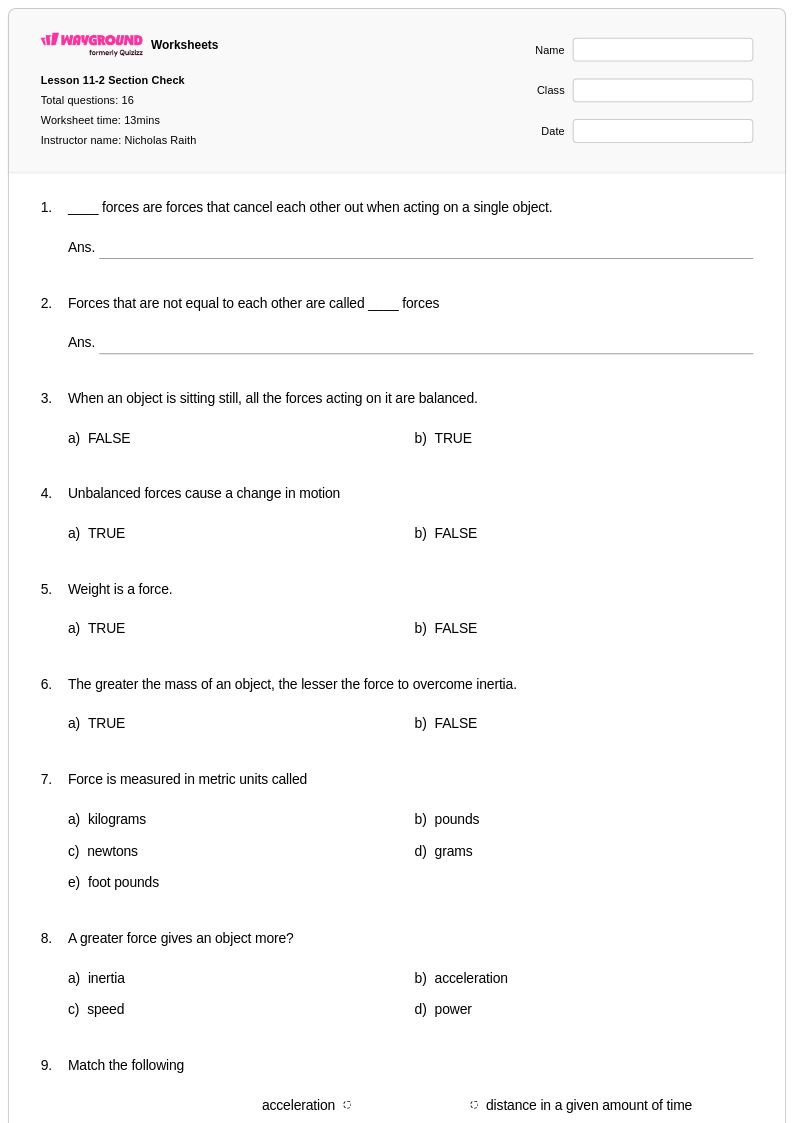
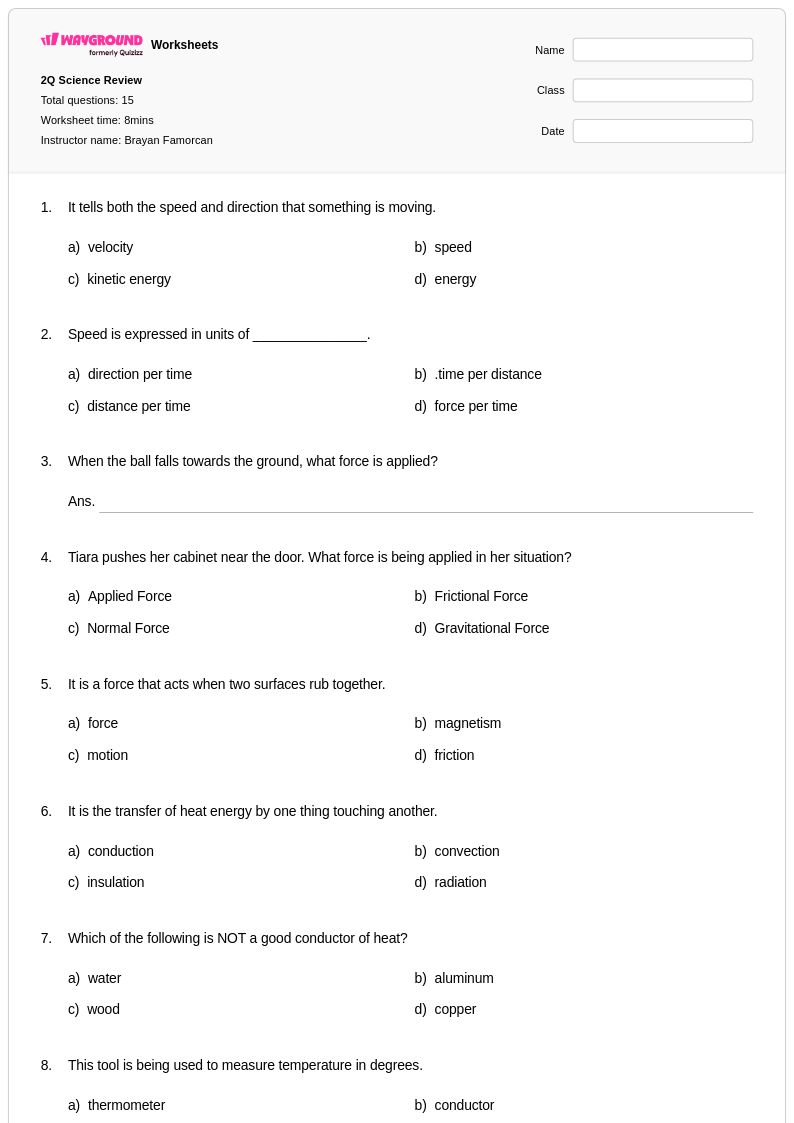
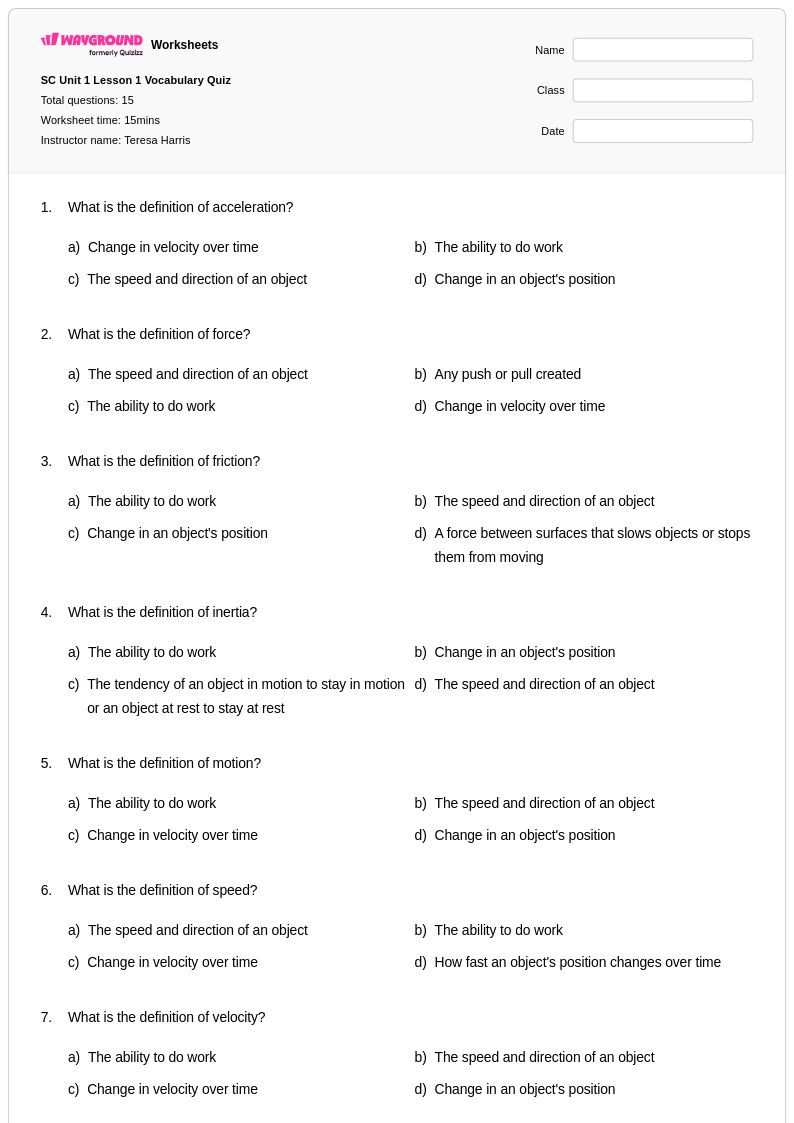
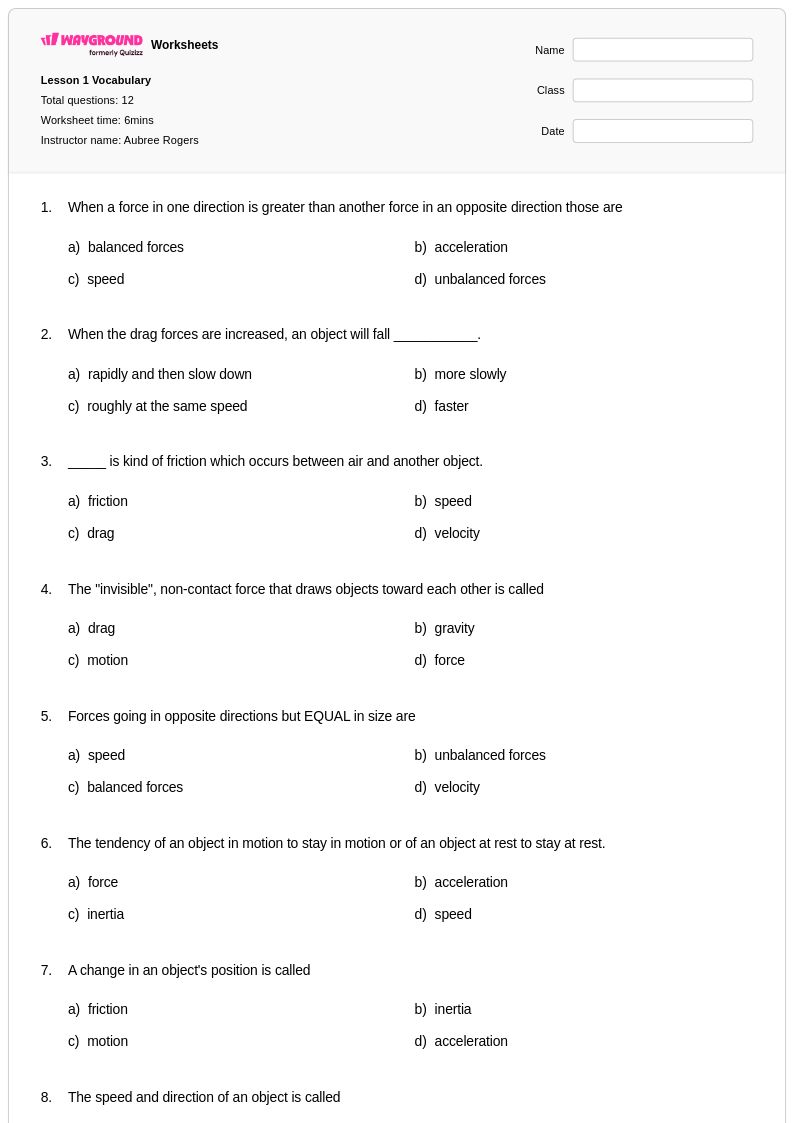
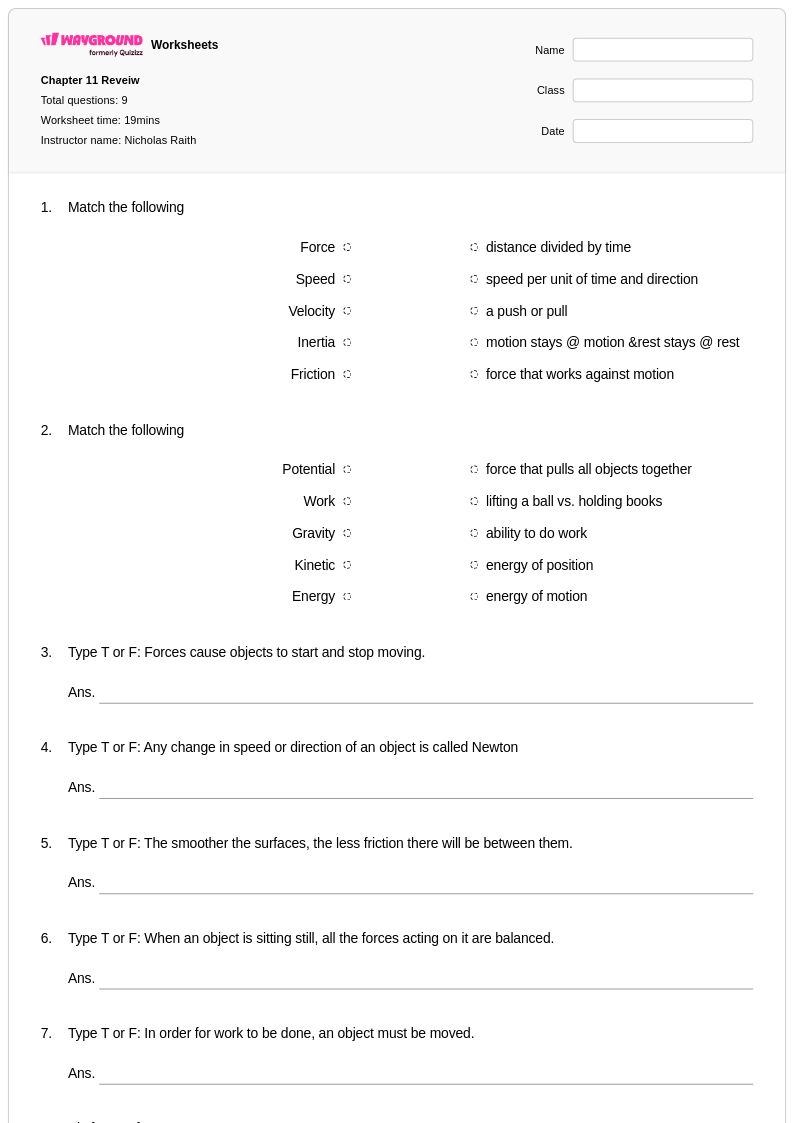
Speed and velocity worksheets for Class 4 students through Wayground (formerly Quizizz) provide essential foundational practice for understanding motion concepts in elementary physics. These comprehensive worksheets help fourth-grade learners distinguish between speed as a measure of how fast something moves and velocity as speed with direction, building critical scientific thinking skills through engaging practice problems. Students develop their ability to calculate simple speeds using distance and time measurements, interpret basic motion graphs, and apply real-world examples like moving vehicles or running speeds to strengthen their conceptual understanding. The collection includes printable pdf resources with complete answer keys, ensuring teachers can efficiently assess student progress while providing free, accessible materials that support both classroom instruction and independent practice.
Wayground (formerly Quizizz) empowers educators with millions of teacher-created speed and velocity resources specifically designed for Class 4 physics instruction, featuring robust search and filtering capabilities that align with state and national science standards. Teachers can easily differentiate instruction by selecting worksheets that match individual student needs, customize existing materials to address specific learning objectives, and access both digital and printable formats including downloadable pdf versions for maximum classroom flexibility. These comprehensive tools streamline lesson planning while supporting targeted remediation for struggling learners and enrichment opportunities for advanced students, enabling educators to provide systematic skill practice that builds confidence in fundamental motion concepts. The platform's extensive worksheet library ensures teachers have immediate access to high-quality materials that reinforce speed and velocity understanding through varied problem types and real-world applications appropriate for fourth-grade learners.
FAQs
How do I teach the difference between speed and velocity to middle or high school students?
The most effective approach is to anchor the distinction in a concrete example before introducing the formal definitions. Speed is a scalar quantity that describes how fast an object is moving, while velocity is a vector quantity that includes both magnitude and direction. A car traveling 60 mph has a speed, but a car traveling 60 mph due north has a velocity. Having students compare two scenarios where the speed is identical but direction differs — such as two runners completing a lap on a circular track — helps solidify why direction changes the physical meaning of the measurement.
What types of problems should students practice to build fluency with speed and velocity calculations?
Students benefit most from a sequenced mix of problem types: first, basic speed calculations using the formula speed = distance ÷ time; then average velocity problems that require accounting for direction; and finally, multi-step problems involving velocity-time graphs or changing motion. Including problems that require unit conversions — such as m/s to km/h — and problems where students must identify whether a scalar or vector answer is appropriate builds both procedural and conceptual fluency.
What mistakes do students commonly make when solving speed and velocity problems?
The most common error is treating speed and velocity as interchangeable, which leads students to ignore direction entirely when solving vector problems. Students also frequently confuse distance with displacement, calculating total path length rather than net directional change when computing average velocity. A third common mistake is misreading velocity-time graphs — students often interpret a flat line as 'no movement' rather than understanding it represents constant velocity. Targeting these three misconceptions directly in practice problems significantly improves accuracy.
How do I help students who struggle with interpreting velocity-time graphs?
Start by having students physically act out the motion described in a graph before analyzing it mathematically — this grounds abstract representations in real movement. Focus first on the meaning of slope (acceleration) and area under the curve (displacement) as distinct concepts before combining them in problem sets. Worked examples that show the same motion in both graph and table form help students cross-reference representations and build interpretive confidence.
How can I use Wayground's speed and velocity worksheets in my classroom?
Wayground's speed and velocity worksheets are available as printable PDFs for traditional classroom use and in digital formats for technology-integrated learning environments, making them adaptable to in-person, hybrid, or remote instruction. Teachers can also host the worksheets as a quiz directly on Wayground, enabling real-time student interaction and automated scoring. The included answer keys support immediate feedback, whether students are self-checking printed work or completing assignments digitally. Wayground also supports student-level accommodations such as extended time, read-aloud, and reduced answer choices, which can be assigned individually so that students with different needs receive tailored support without disrupting the rest of the class.
How do I differentiate speed and velocity instruction for students at different skill levels?
For introductory learners, focus on single-step speed calculations with straightforward units before introducing direction or vectors. Intermediate students can work on average velocity problems and basic graph interpretation. Advanced learners should engage with multi-step vector problems, displacement calculations, and graph analysis that requires computing slope and area. Wayground's differentiation tools allow teachers to assign different worksheet versions by skill level within the same class, and accommodations like reduced answer choices can lower cognitive load for students who need additional support without altering the core content.