Free Printable Subjects Worksheets for Kindergarten
Explore Wayground's free kindergarten subjects worksheets and printables that help young learners identify and understand sentence subjects through engaging practice problems with answer keys included.
Explore printable Subjects worksheets for Kindergarten
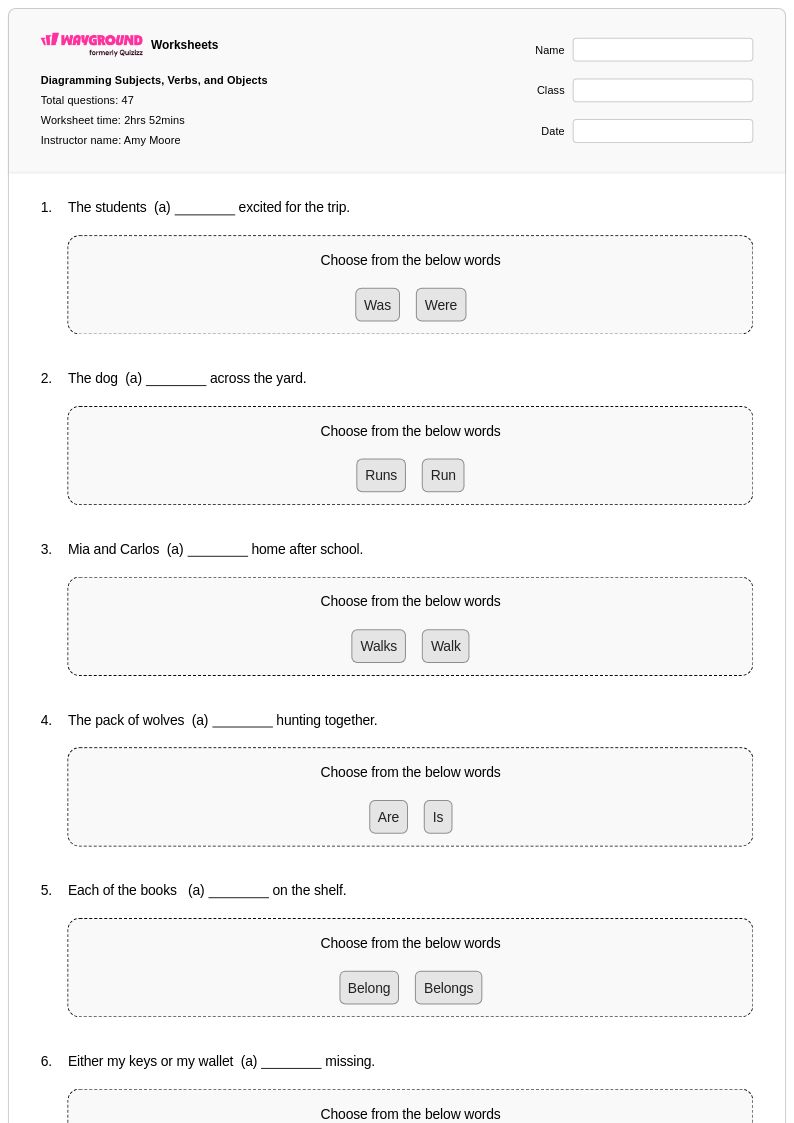
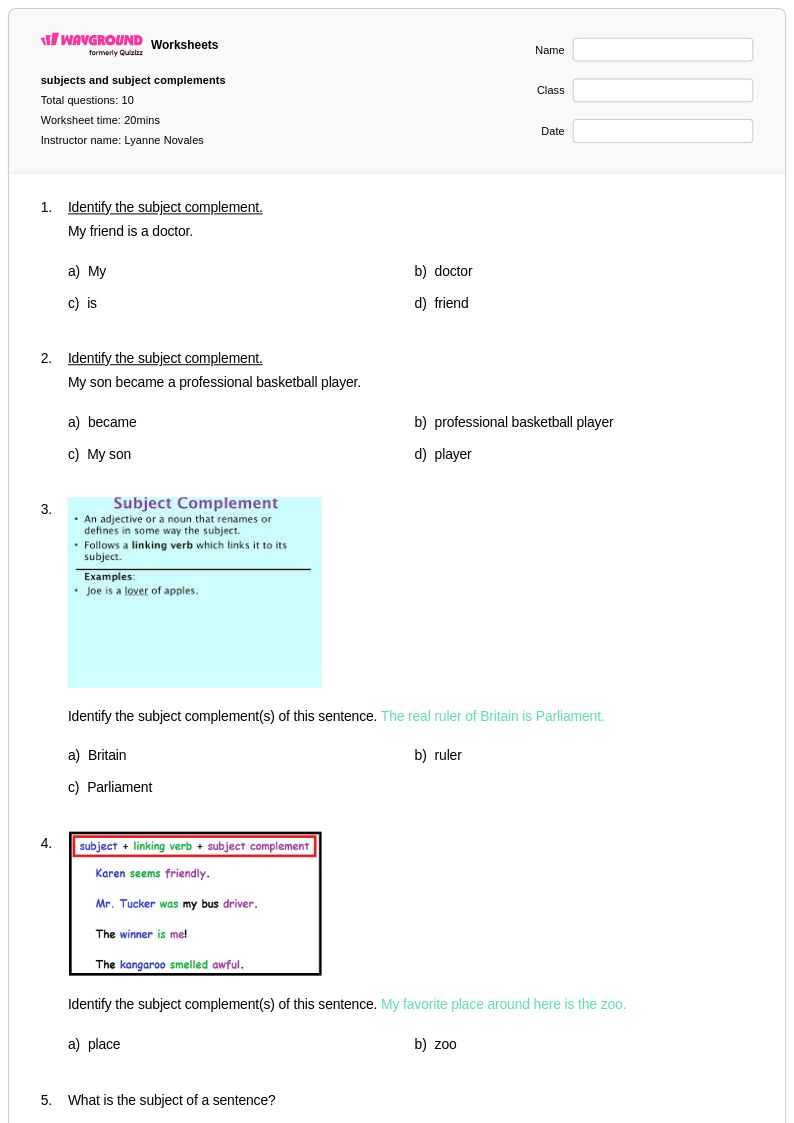
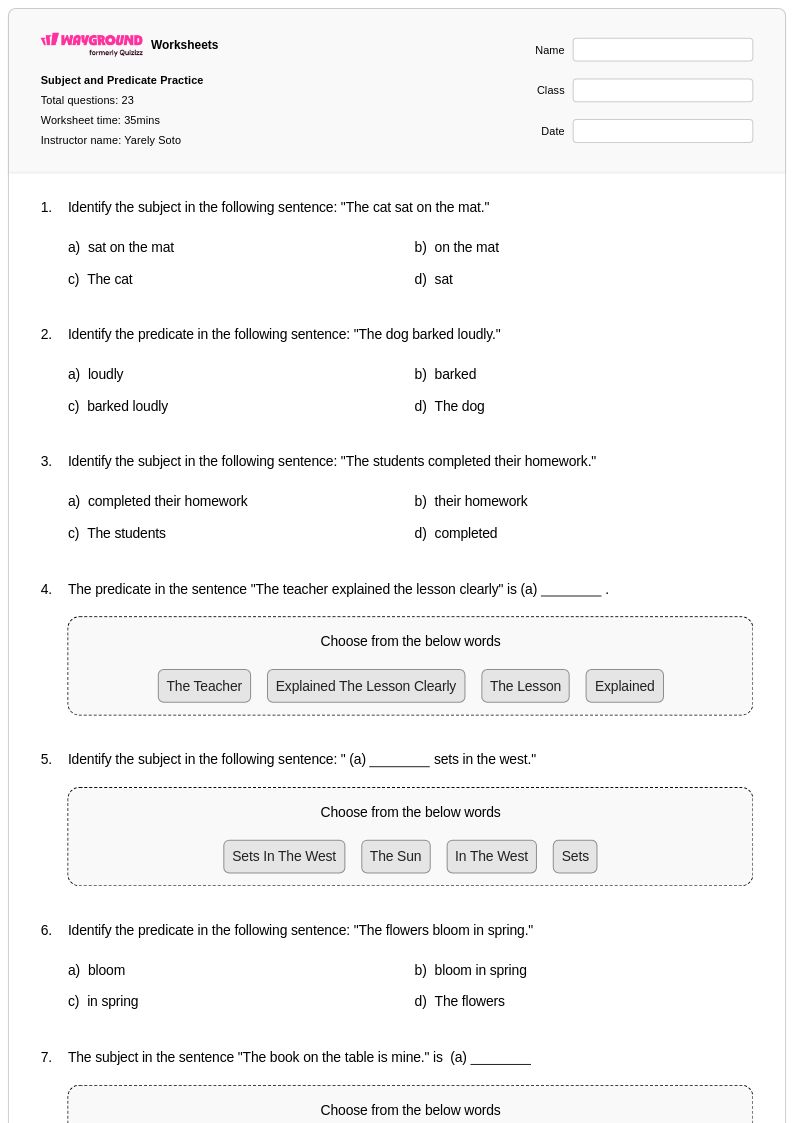
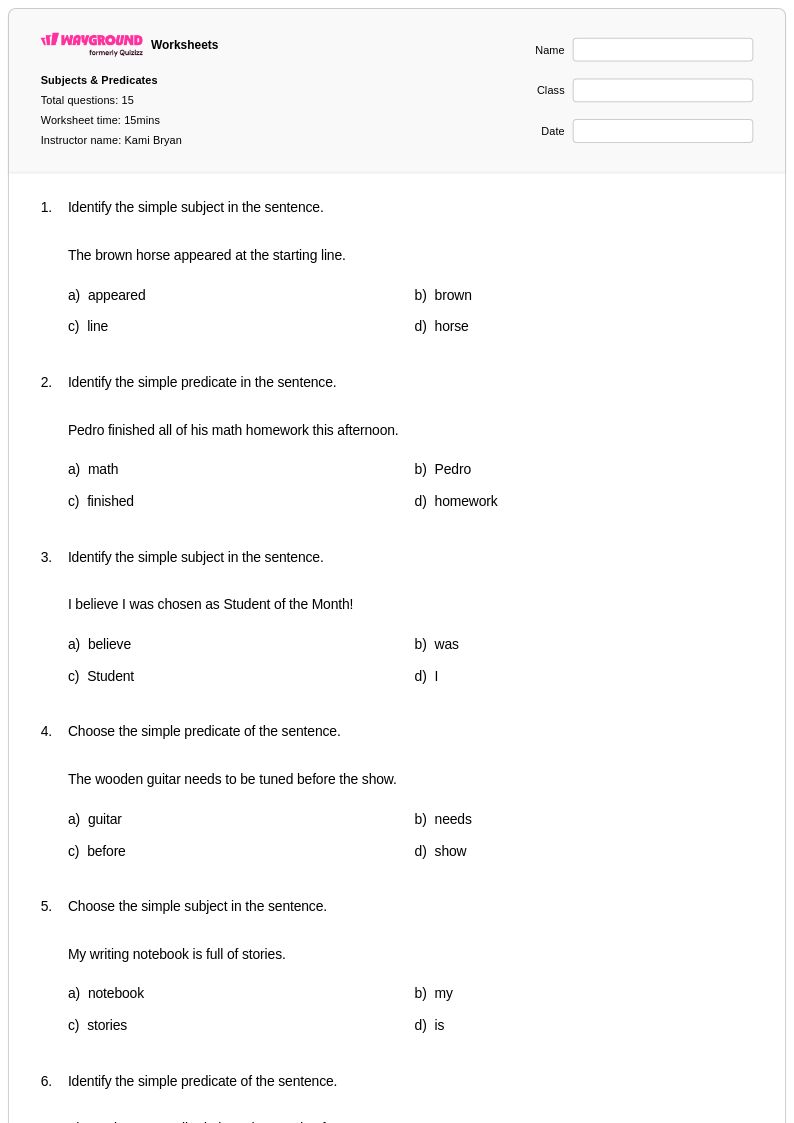
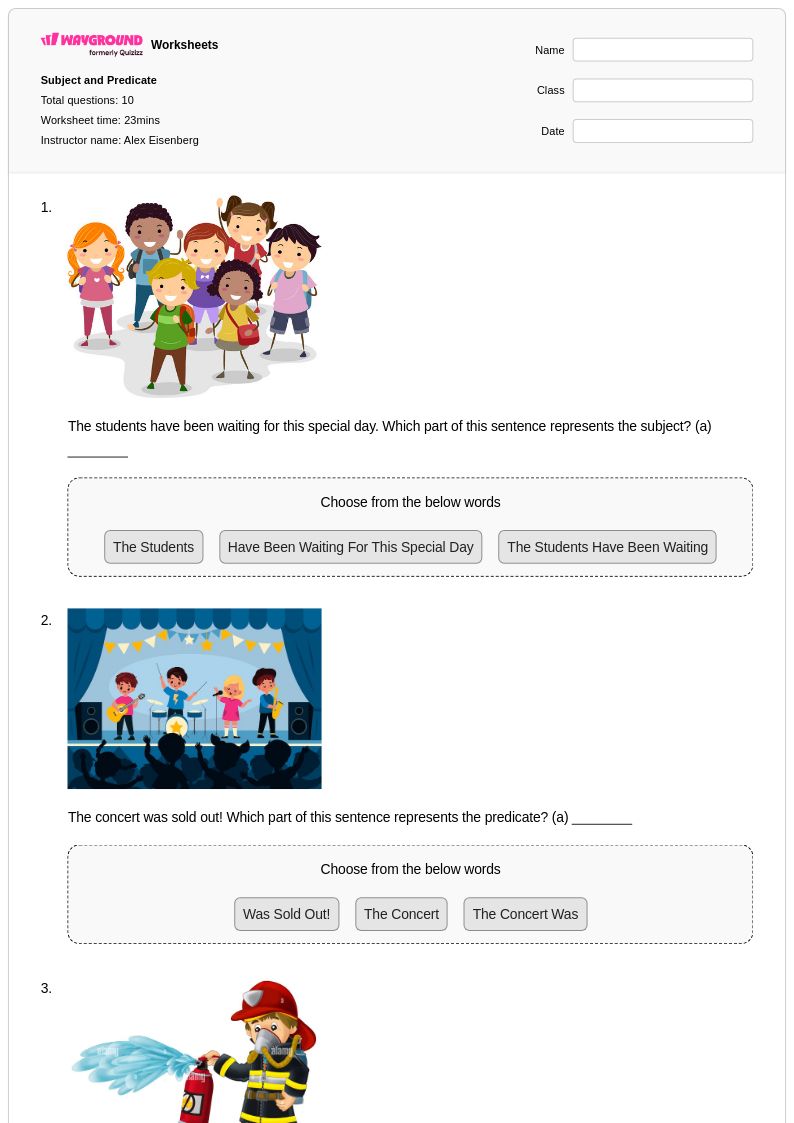
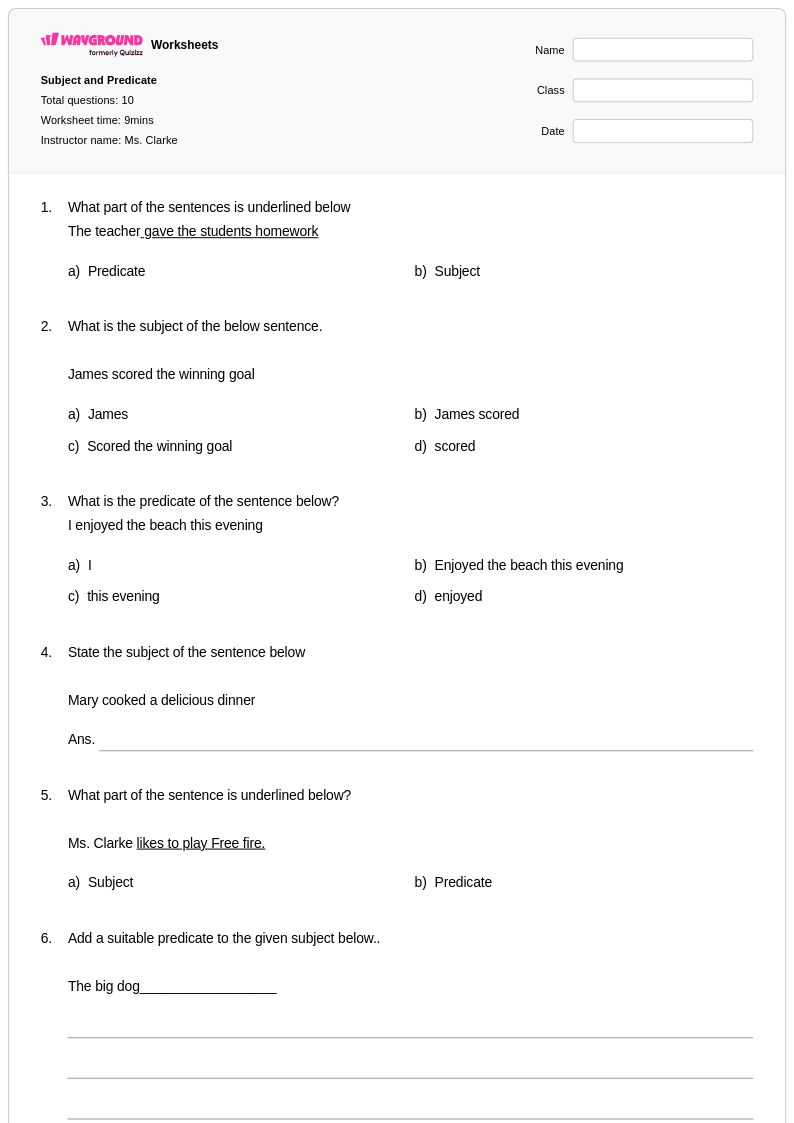
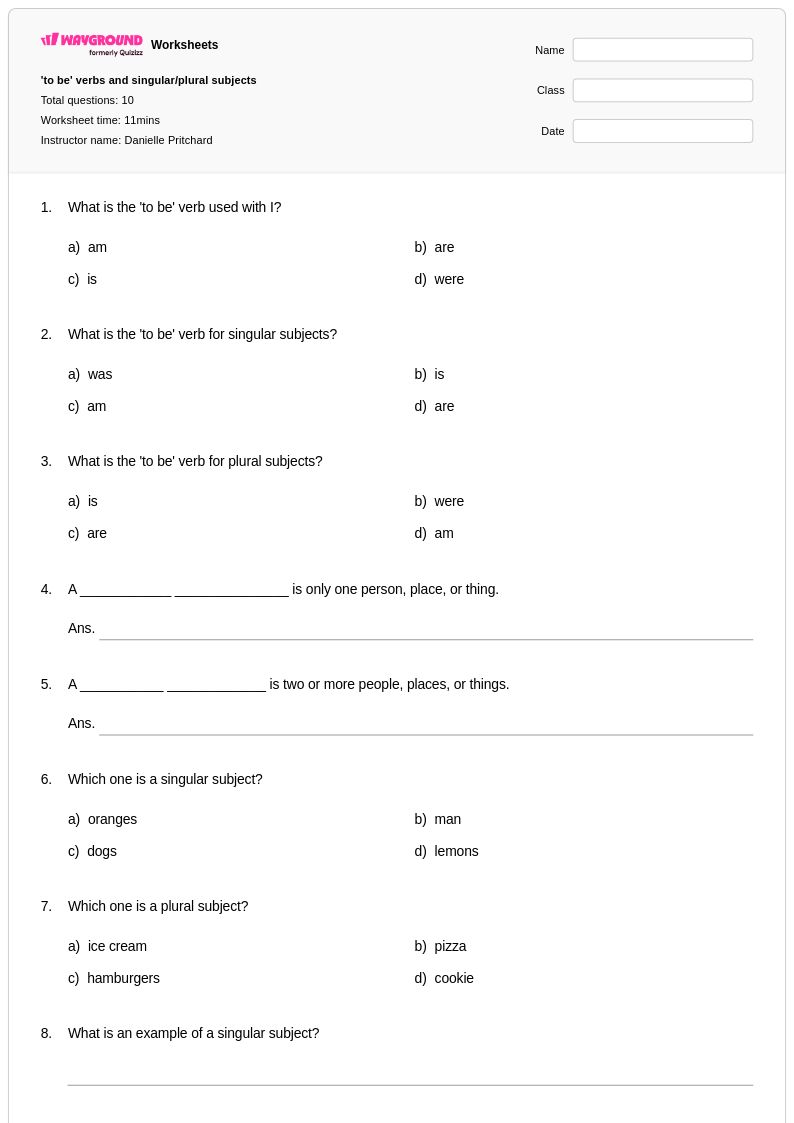
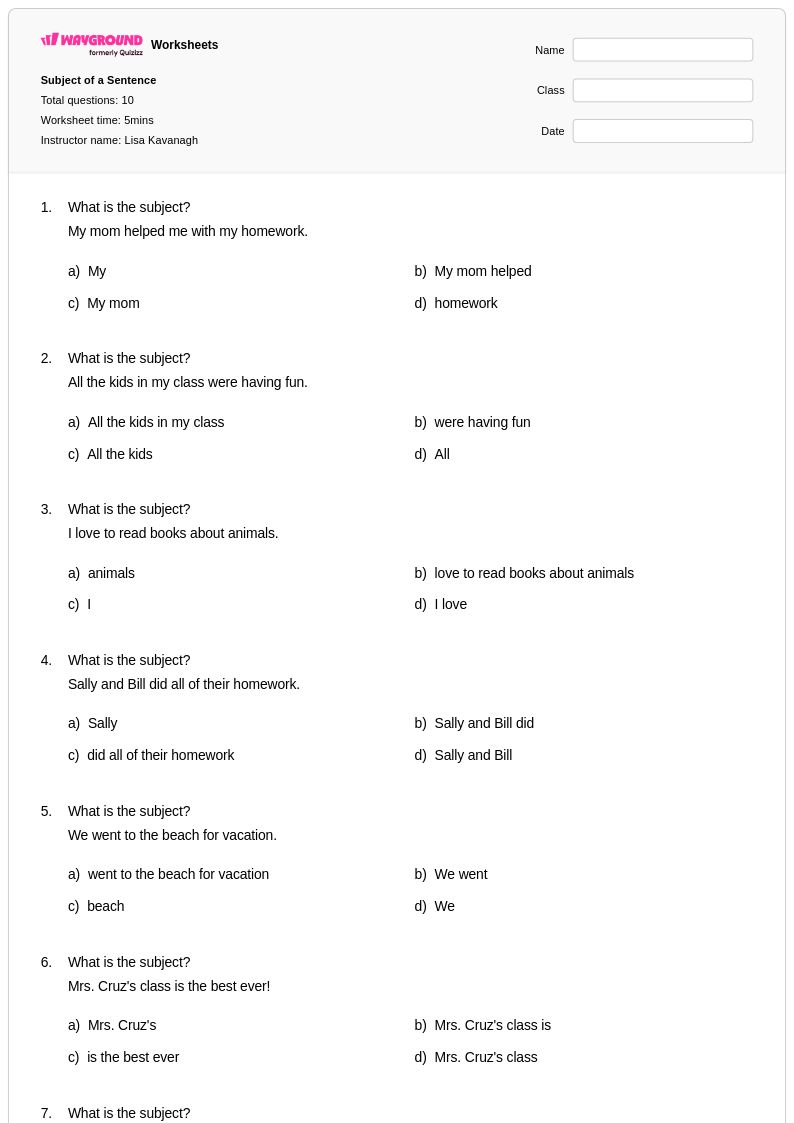
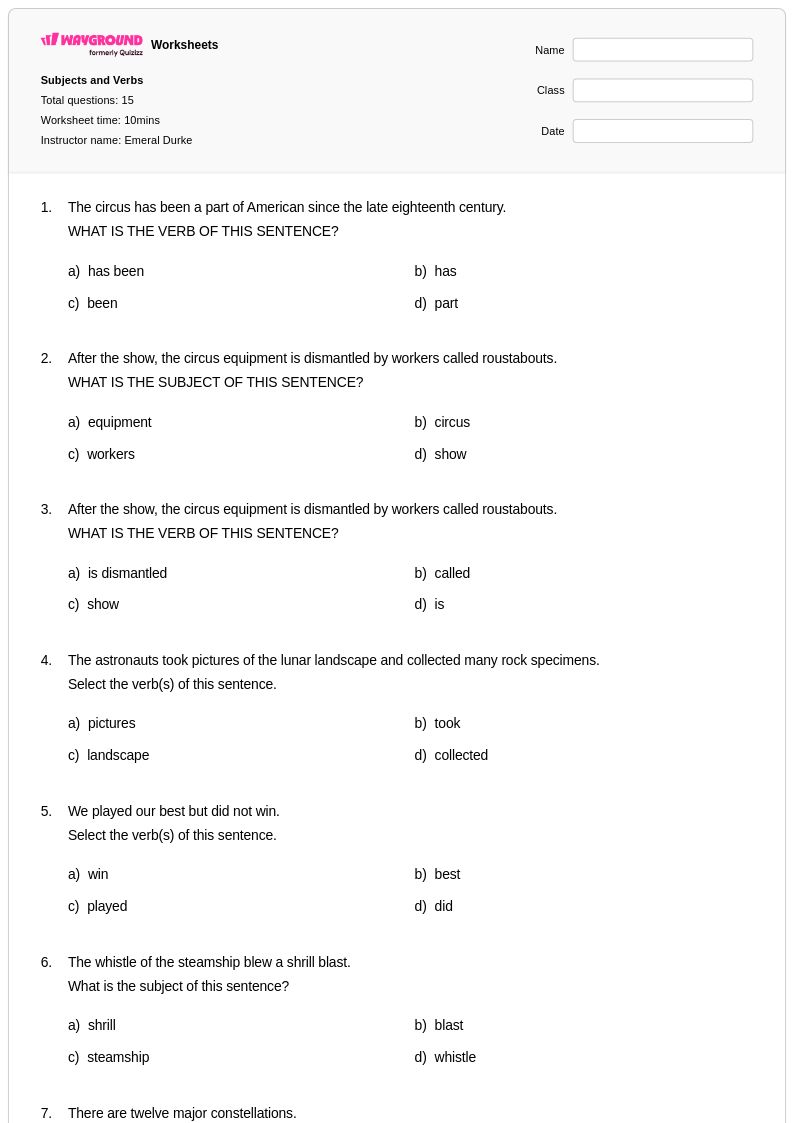
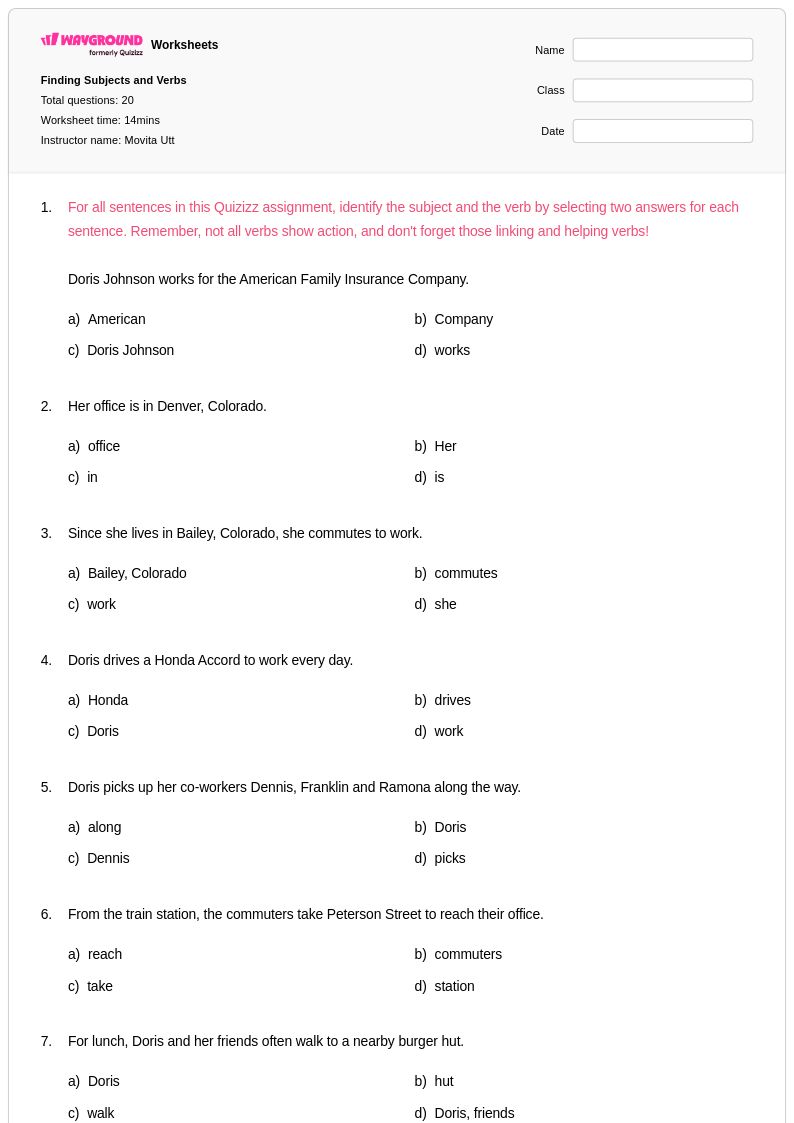
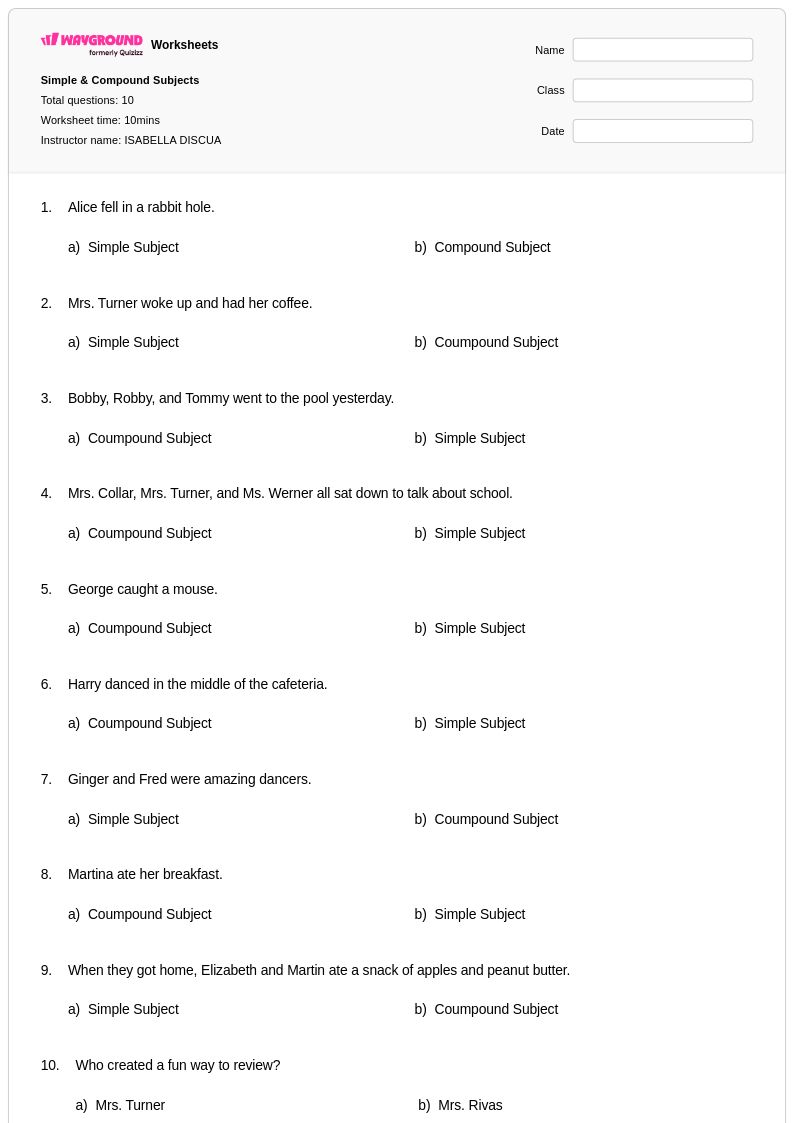
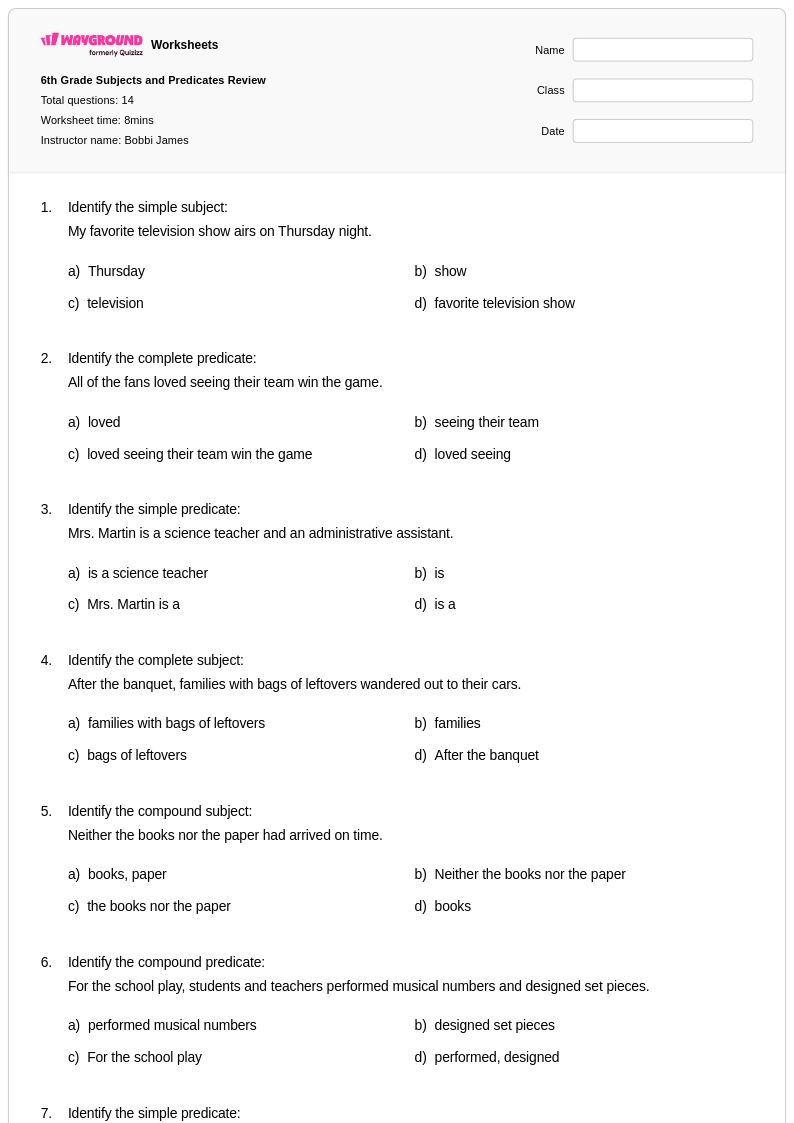
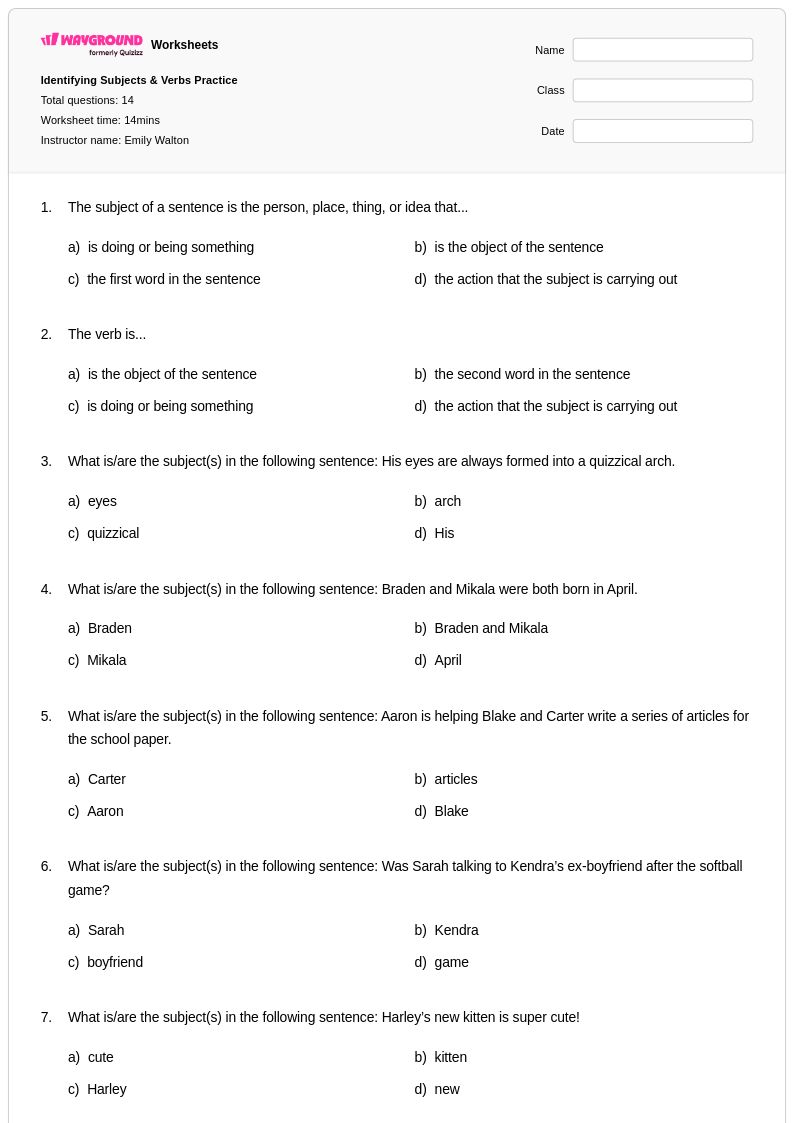
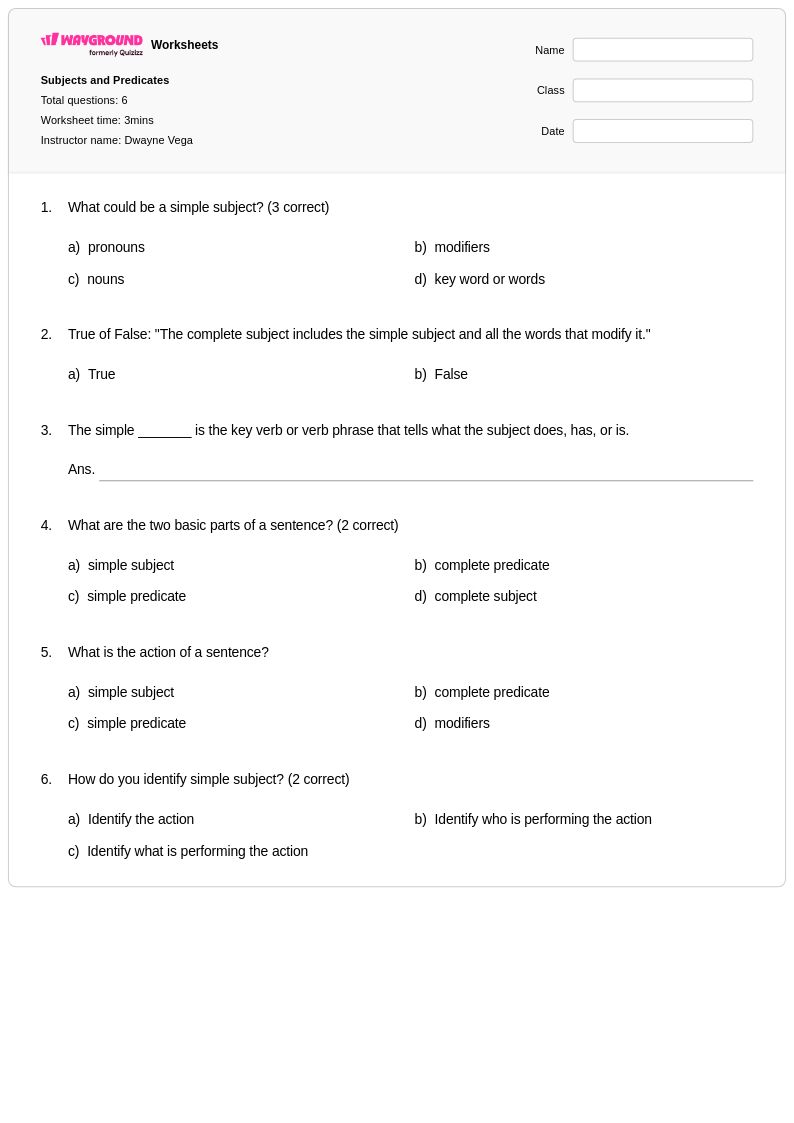
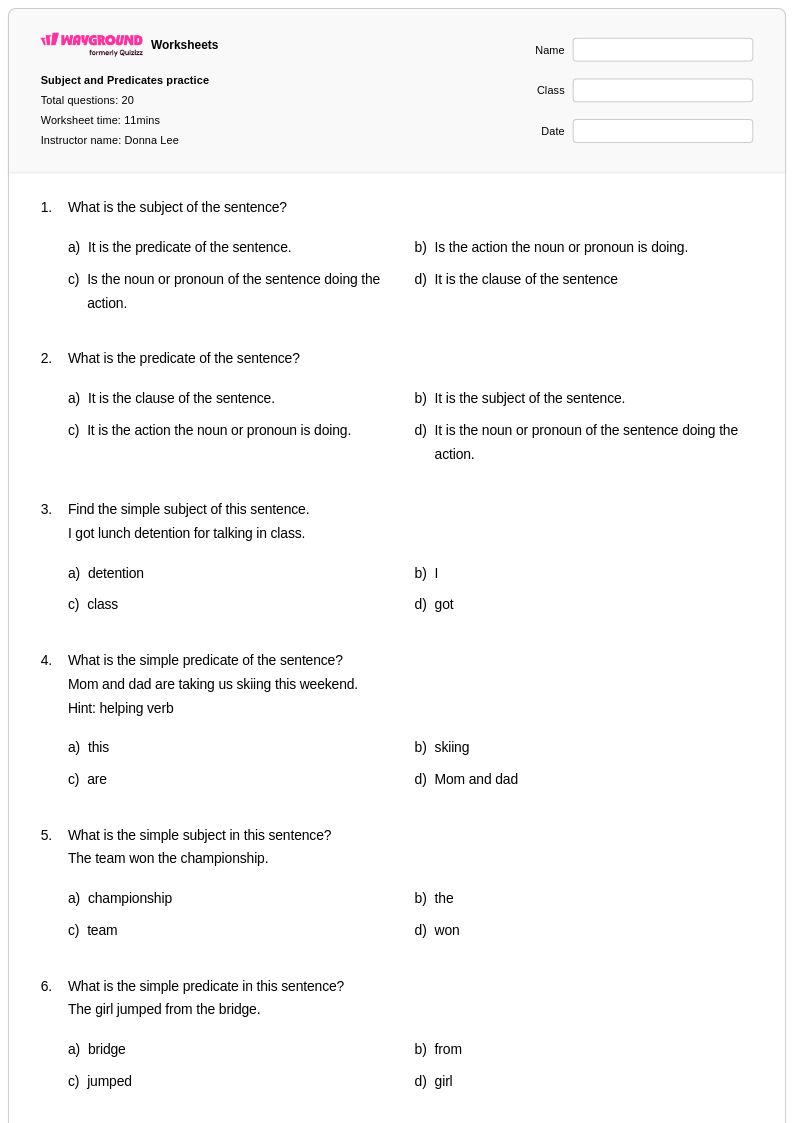
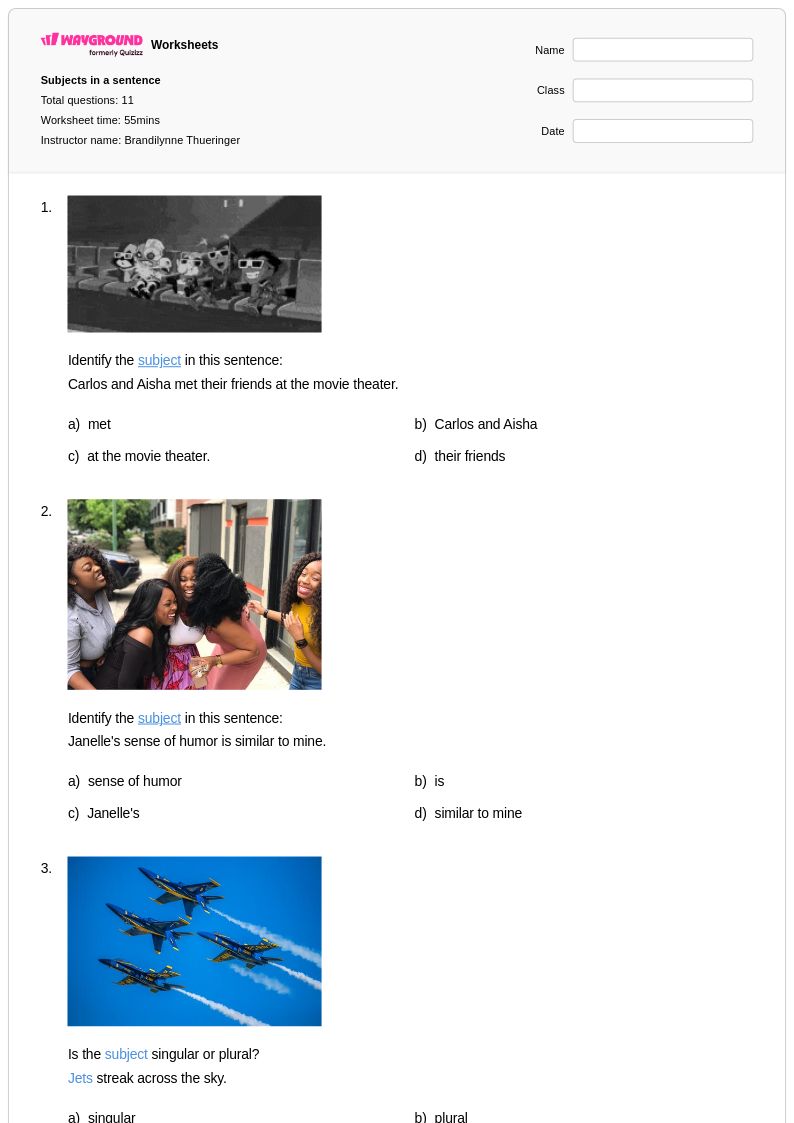
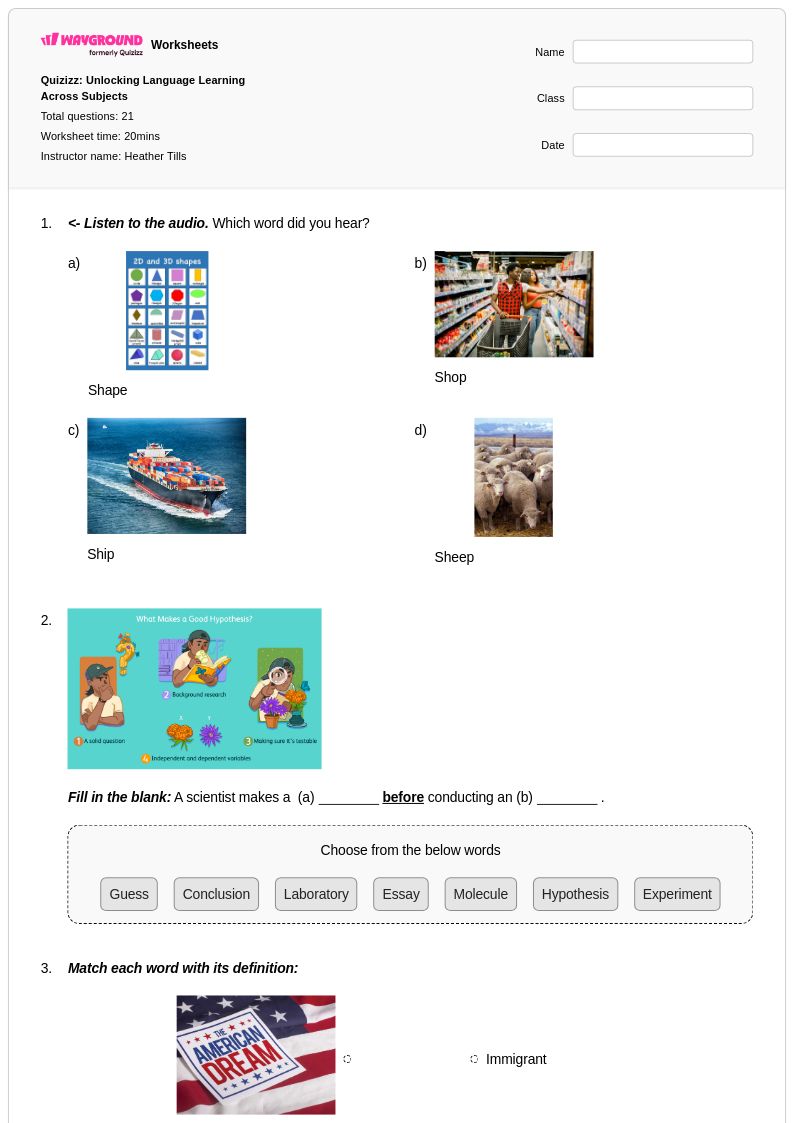
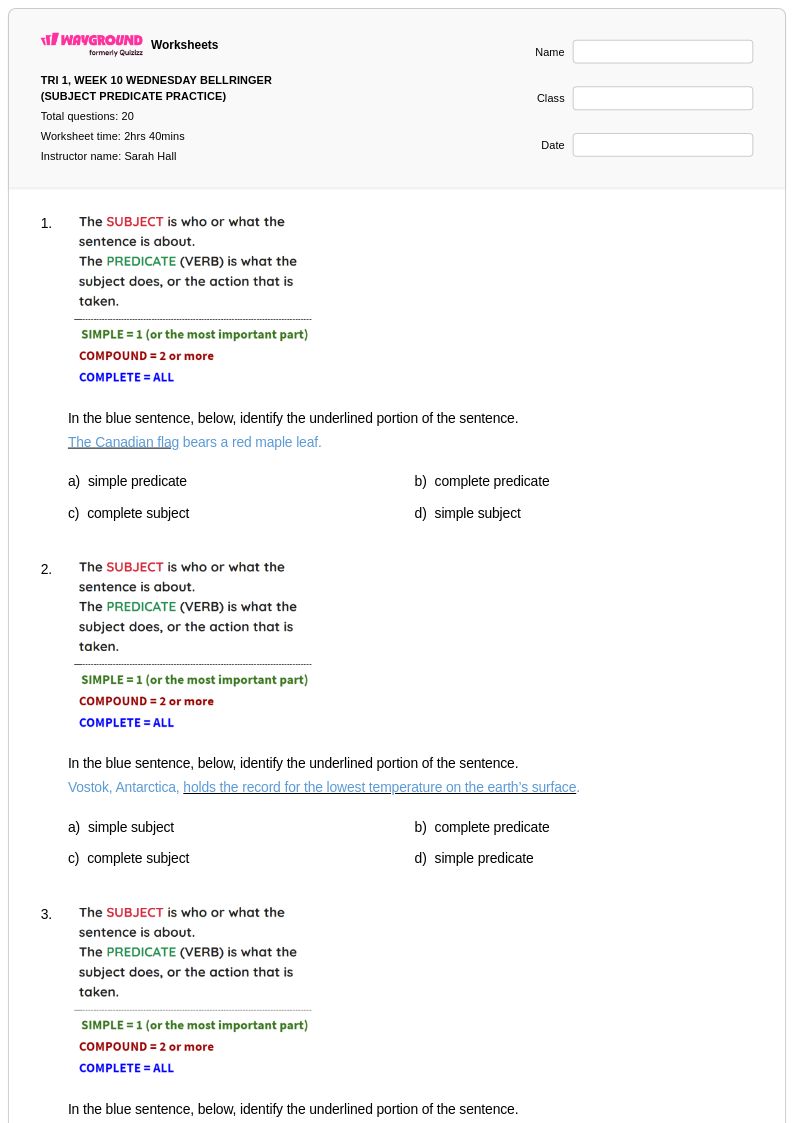
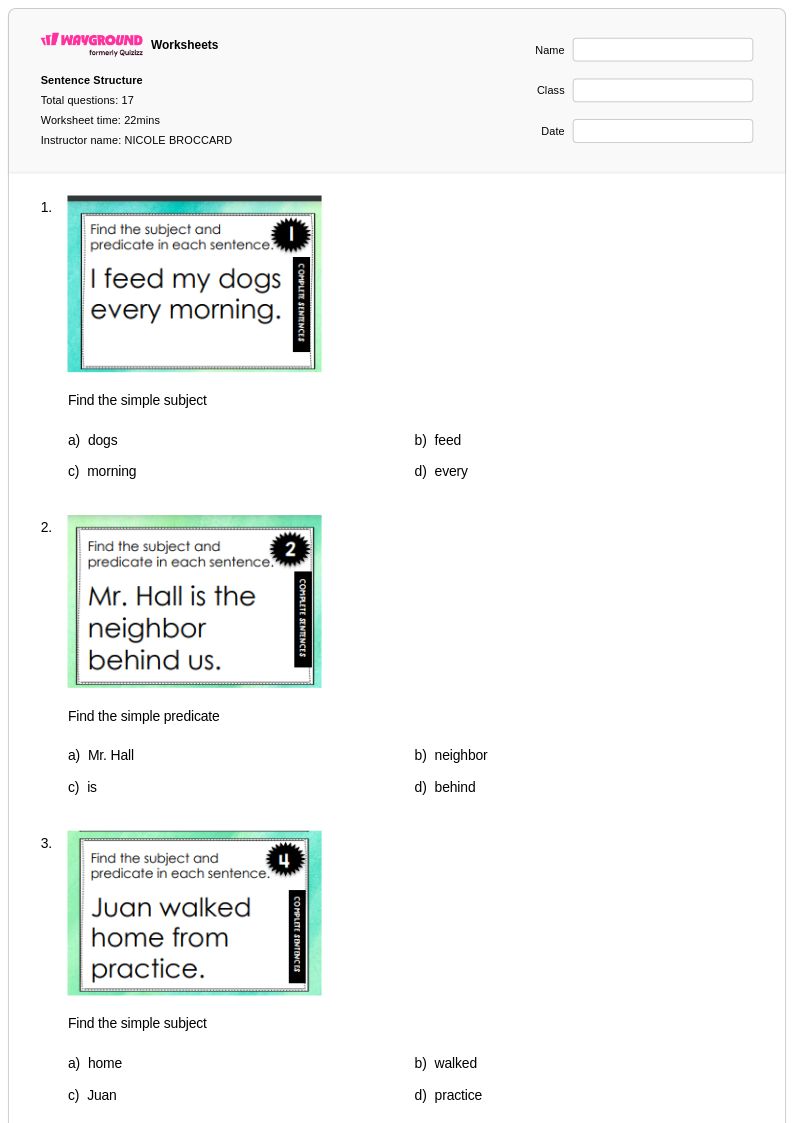
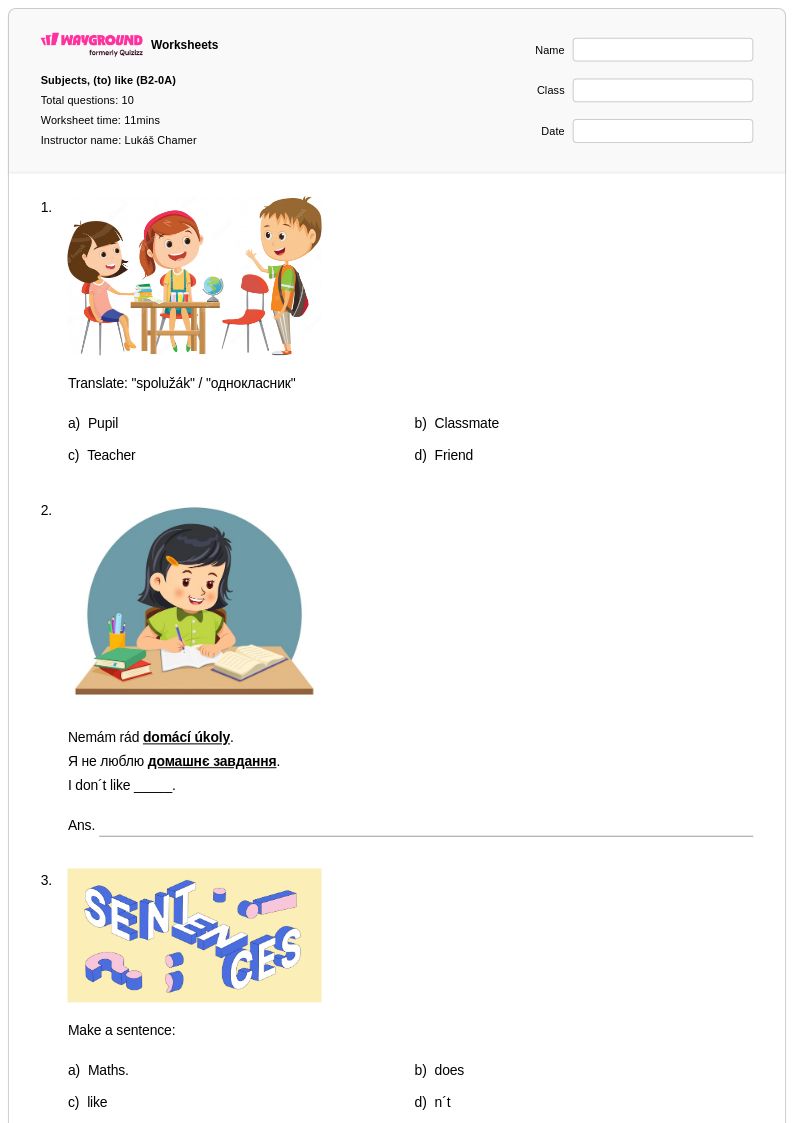
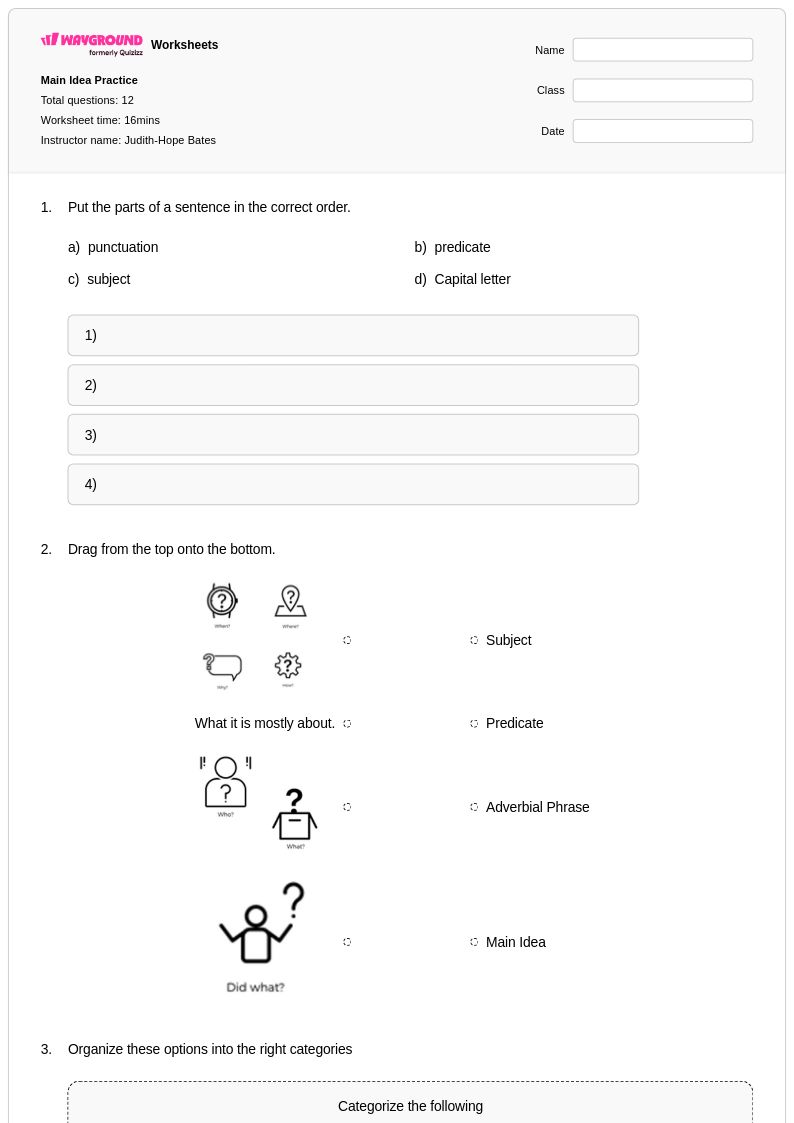
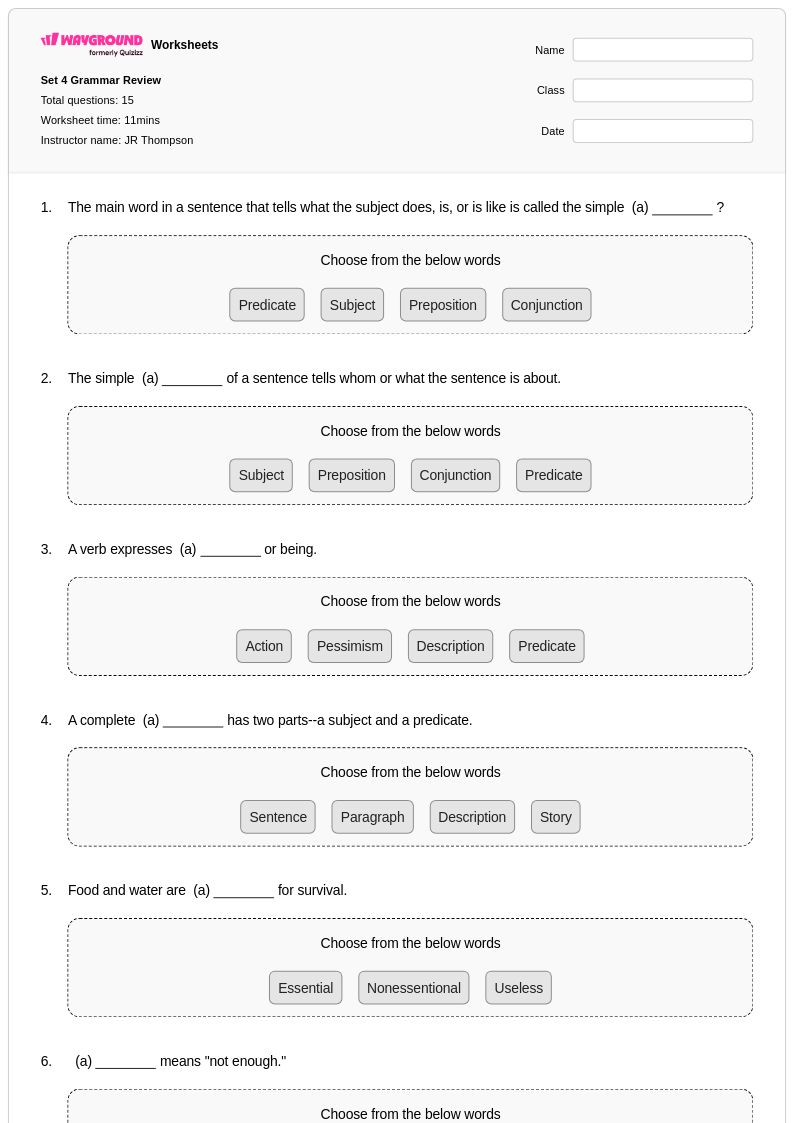
Subjects worksheets for kindergarten students through Wayground (formerly Quizizz) introduce young learners to one of the fundamental building blocks of sentence structure within parts of speech instruction. These carefully designed educational resources help kindergarteners identify who or what a sentence is about, establishing the foundation for reading comprehension and early writing skills. The worksheets feature age-appropriate exercises that guide students through recognizing subjects in simple sentences, distinguishing between people, animals, and objects that perform actions, and understanding how subjects connect to the rest of the sentence. Each printable resource includes an answer key to support accurate assessment, while the free practice problems incorporate colorful illustrations and familiar vocabulary that engage kindergarten students in meaningful language learning experiences.
Wayground (formerly Quizizz) empowers educators with an extensive collection of millions of teacher-created resources specifically focused on subjects instruction for kindergarten learners. The platform's robust search and filtering capabilities allow teachers to quickly locate worksheets that align with developmental standards and match their students' specific learning needs. These differentiation tools enable instructors to customize content for various skill levels within their classroom, supporting both remediation for struggling learners and enrichment opportunities for advanced students. Available in both printable pdf format and interactive digital versions, these subject identification worksheets seamlessly integrate into lesson planning, independent practice sessions, small group instruction, and homework assignments, providing teachers with the flexibility to deliver consistent, high-quality grammar instruction across multiple learning environments.
FAQs
How do I teach students to identify the subject of a sentence?
Start by teaching students to locate the verb first, then ask 'Who or what is doing this action?' to isolate the subject. Begin with simple declarative sentences before introducing compound subjects, inverted sentences, and subjects buried after prepositional phrases. Using consistent sentence frames and color-coding subjects versus predicates can help students build reliable identification habits before moving to more complex structures.
What is the difference between a simple subject and a complete subject?
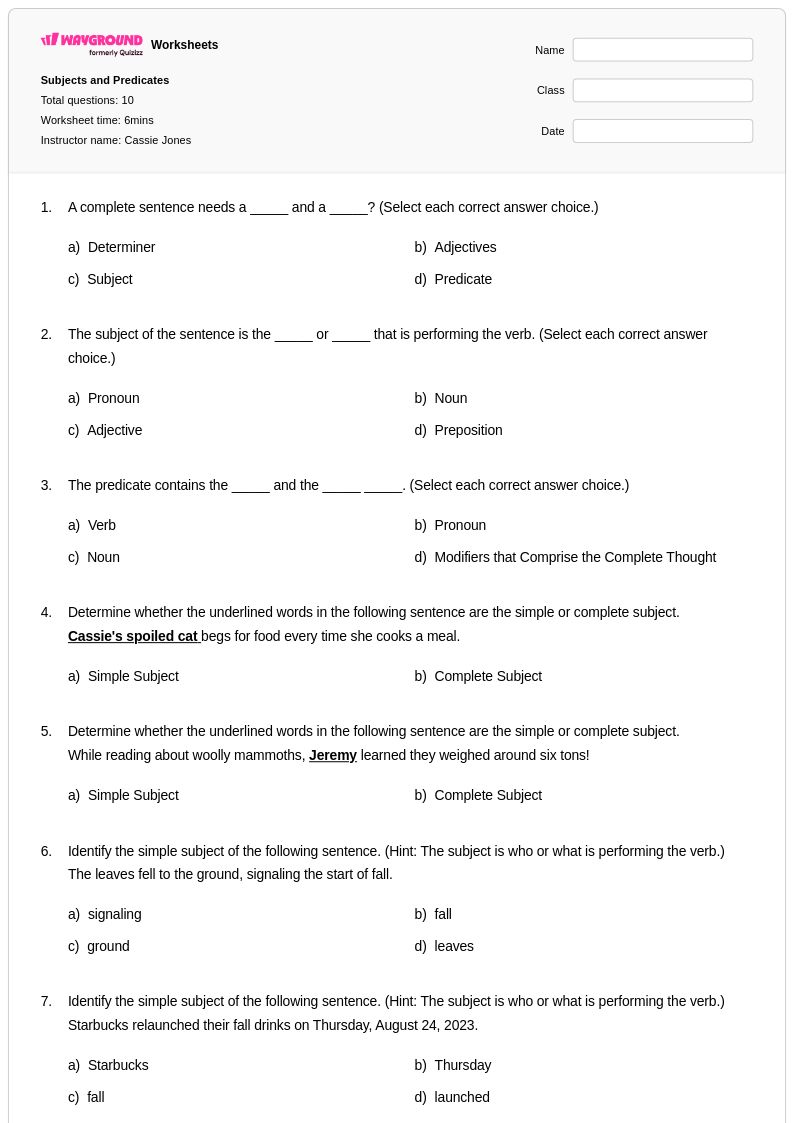
The simple subject is the core noun or pronoun that performs the action, while the complete subject includes the simple subject plus all its modifiers. For example, in 'The tall boy with red shoes runs fast,' the simple subject is 'boy' and the complete subject is 'The tall boy with red shoes.' Students often conflate the two, so explicit comparison practice with labeled examples is essential.
What exercises help students practice identifying sentence subjects?
Effective practice includes underlining subjects in isolated sentences, rewriting sentences to change the subject, and identifying subjects in student-written paragraphs to build real-world transfer. Exercises that progress from simple noun subjects to compound subjects and implied subjects in imperative sentences give students a structured skill ladder to climb.
What mistakes do students commonly make when identifying sentence subjects?
The most frequent error is confusing the noun in a prepositional phrase for the subject — for example, selecting 'box' as the subject in 'One of the boxes is missing.' Students also struggle with inverted sentences like questions and sentences beginning with 'There' or 'Here,' where the subject follows the verb. Targeted practice with these specific structures, paired with explicit instruction on prepositional phrase removal, directly addresses these patterns.
How do I support struggling students who can't identify subjects in complex sentences?
Break the task into steps: first have students cross out prepositional phrases, then find the verb, then ask who or what performs that verb. For students who need additional support, Wayground's Read Aloud accommodation can help students hear the sentence structure rather than decode it visually, while reduced answer choices can lower cognitive load during digital practice sessions.
How do I use Wayground's subjects worksheets in my classroom?
Wayground's subjects worksheets are available as printable PDFs for traditional paper-and-pencil classroom use and in digital formats for technology-integrated learning environments. Teachers can also host them as a quiz directly on Wayground, making it easy to assign practice for homework, bell ringers, or formative assessment. Each worksheet includes a complete answer key, so grading and feedback are built in.