Free Printable Suicide Prevention Worksheets for Class 11
Develop critical suicide prevention awareness and intervention skills with Class 11 social studies worksheets featuring comprehensive printables, practice scenarios, and answer keys to help students recognize warning signs and learn life-saving response strategies.
Explore printable Suicide Prevention worksheets for Class 11
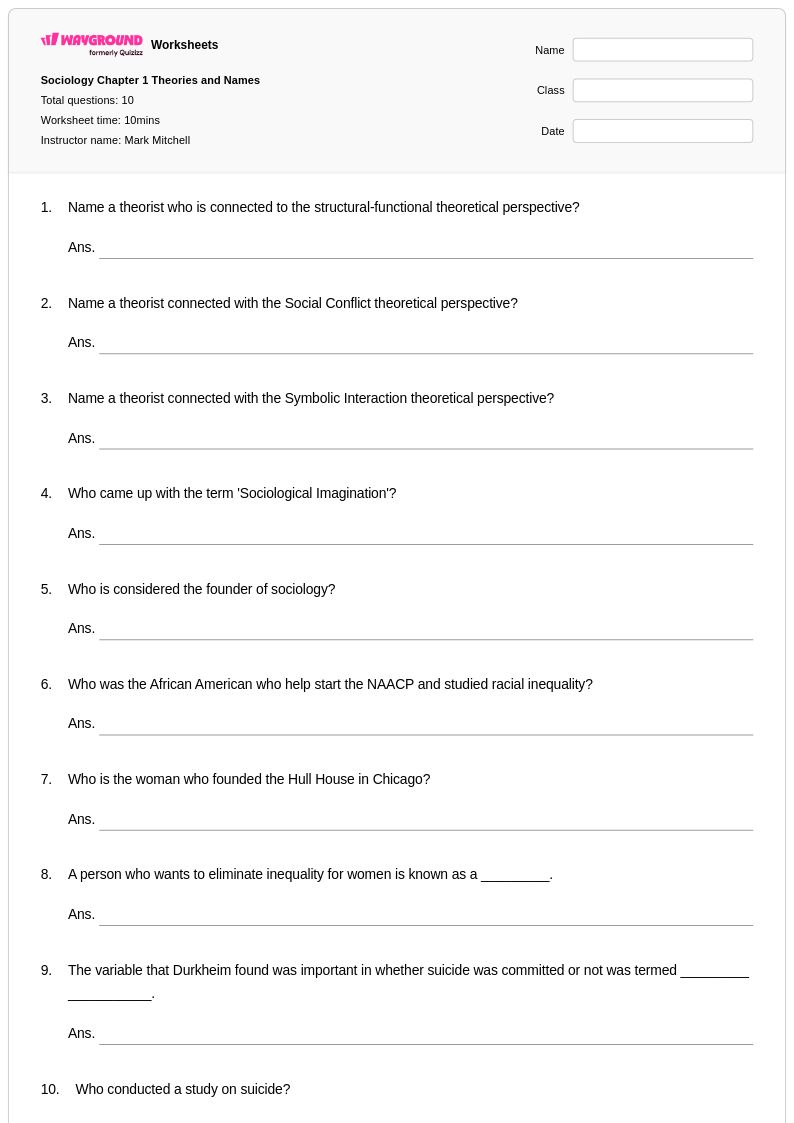
Suicide prevention worksheets for Class 11 students through Wayground (formerly Quizizz) provide essential social skills education that addresses one of the most critical mental health challenges facing adolescents today. These comprehensive educational materials focus on developing students' ability to recognize warning signs, understand risk factors, and learn appropriate intervention strategies when someone may be contemplating suicide. The worksheets strengthen vital life skills including empathetic communication, crisis recognition, help-seeking behaviors, and understanding mental health resources available in their communities. Students engage with practice problems that simulate real-world scenarios, while teachers benefit from complete answer keys and free printable pdf formats that make classroom implementation seamless and accessible.
Wayground (formerly Quizizz) supports educators with an extensive collection of teacher-created suicide prevention resources, drawing from millions of professionally developed materials that address this sensitive yet crucial topic. The platform's robust search and filtering capabilities allow teachers to locate age-appropriate Class 11 content that aligns with social studies standards while meeting diverse classroom needs. Differentiation tools enable educators to customize worksheets for various learning levels, ensuring that both struggling students and advanced learners can engage meaningfully with suicide prevention concepts. Available in both printable and digital pdf formats, these flexible resources support comprehensive lesson planning, targeted remediation for students who need additional support understanding mental health concepts, and enrichment opportunities that deepen students' understanding of community wellness and peer support systems.
FAQs
How do I teach suicide prevention in the classroom without causing harm or distress?
Effective suicide prevention education uses a safe messaging framework that avoids graphic details, sensationalism, or method discussion. Teachers should focus on warning sign recognition, empathy building, and help-seeking behaviors rather than crisis narratives. Establishing clear classroom norms before the lesson and having a school counselor available during or after the session are both recommended practices. Pre-screening students who may have personal connections to the topic allows for proactive support planning.
What skills should suicide prevention worksheets help students develop?
Suicide prevention worksheets should build four core competencies: recognizing behavioral and emotional warning signs in peers, understanding risk and protective factors, knowing how and where to seek help, and developing the communication skills needed to start a supportive conversation. Practice problems that walk students through realistic scenarios are particularly effective because they give students a structured way to rehearse these skills before they need them in real situations.
What common misconceptions do students have about suicide that teachers need to address?
One of the most persistent misconceptions is that asking someone directly about suicidal thoughts will plant the idea or make things worse. Research consistently shows that asking directly does not increase risk and often provides relief to someone who is struggling. Students also frequently underestimate the role of protective factors, such as social connection and access to mental health resources, in reducing risk. Addressing these misconceptions early helps students feel more confident and capable of stepping in when it matters.
How can I differentiate suicide prevention instruction for students at different readiness levels?
Differentiation in this topic requires both content scaffolding and emotional sensitivity. For students who need additional support, reducing the complexity of scenario-based questions and pairing visual supports with written content can lower barriers to engagement. On Wayground, teachers can apply accommodations such as Read Aloud and reduced answer choices to individual students, which is especially useful for learners with processing differences or language barriers, without drawing attention to those students in front of peers.
How do I use Wayground's suicide prevention worksheets in my classroom?
Wayground's suicide prevention worksheets are available as printable PDFs for traditional classroom use and in digital formats for technology-integrated learning environments. Teachers can also host the worksheets as a quiz directly on Wayground, which allows for real-time progress monitoring. Each worksheet includes a complete answer key, making it straightforward to use in whole-class instruction, small group discussion, or independent guided practice.