Free Printable The Executive Branch Worksheets for Class 7
Class 7 students can explore the Executive Branch through Wayground's comprehensive collection of free worksheets and printables, featuring practice problems and answer keys that help develop understanding of presidential powers and governmental responsibilities.
Explore printable The Executive Branch worksheets for Class 7
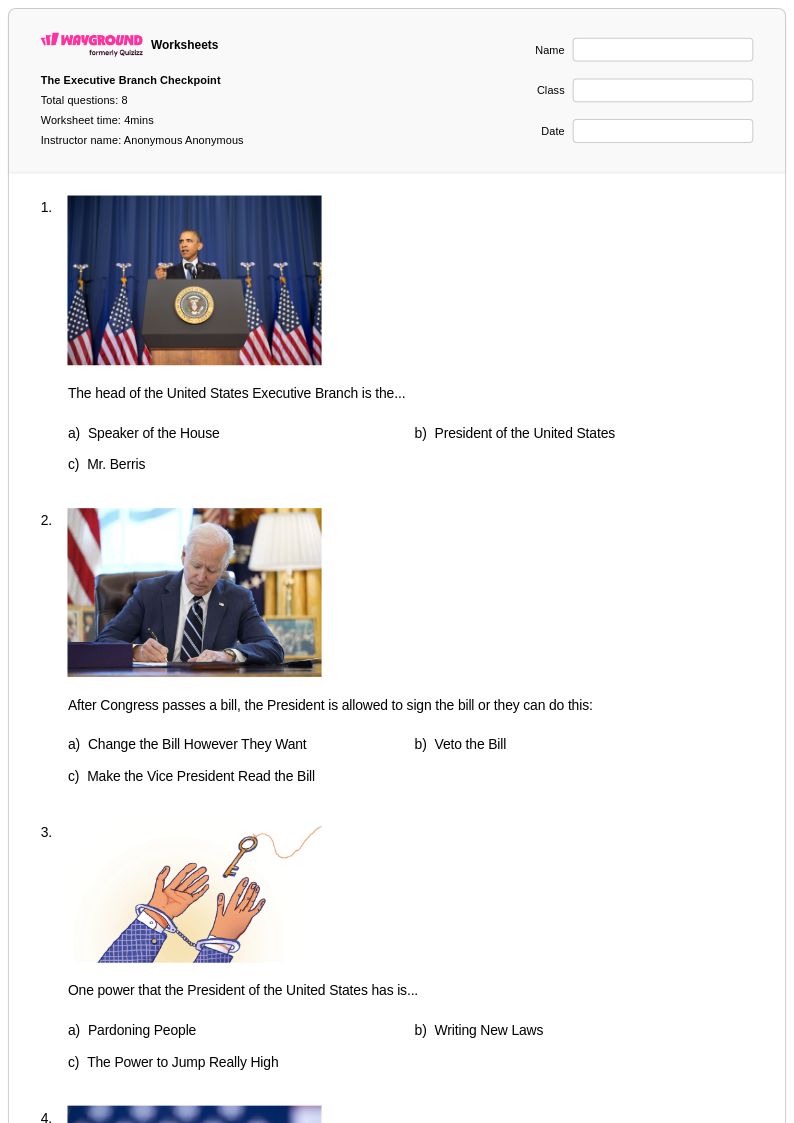
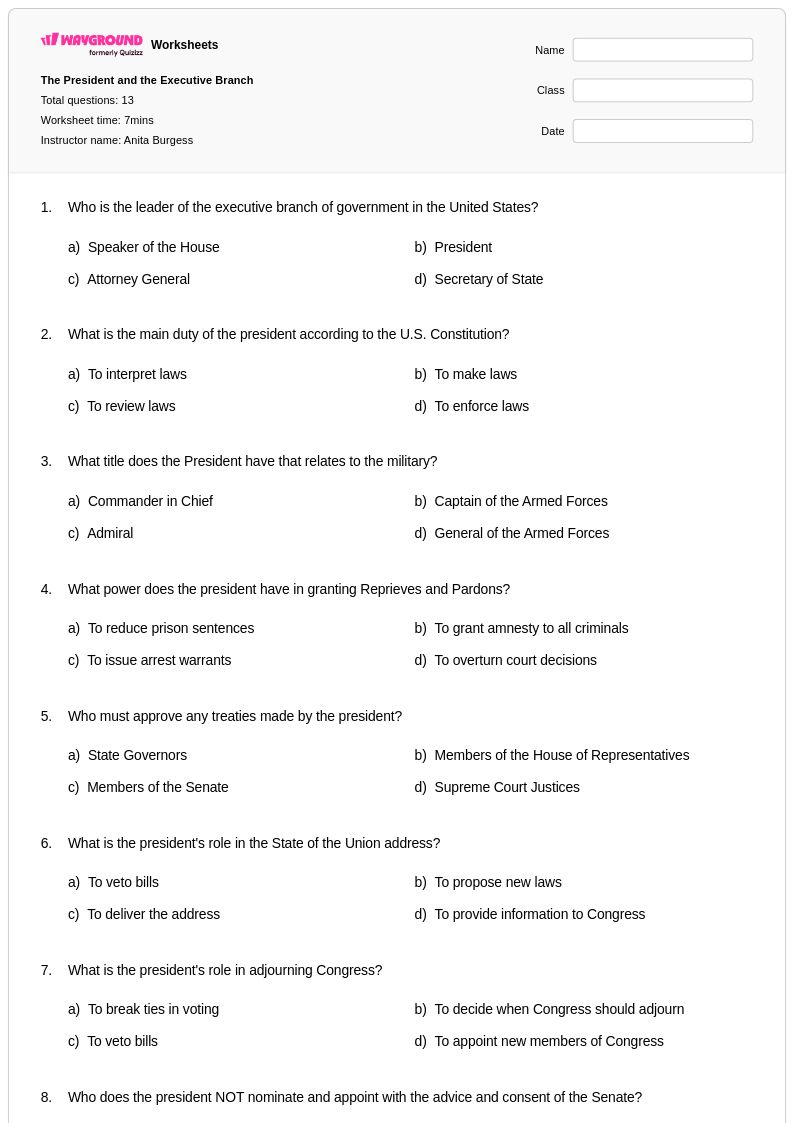
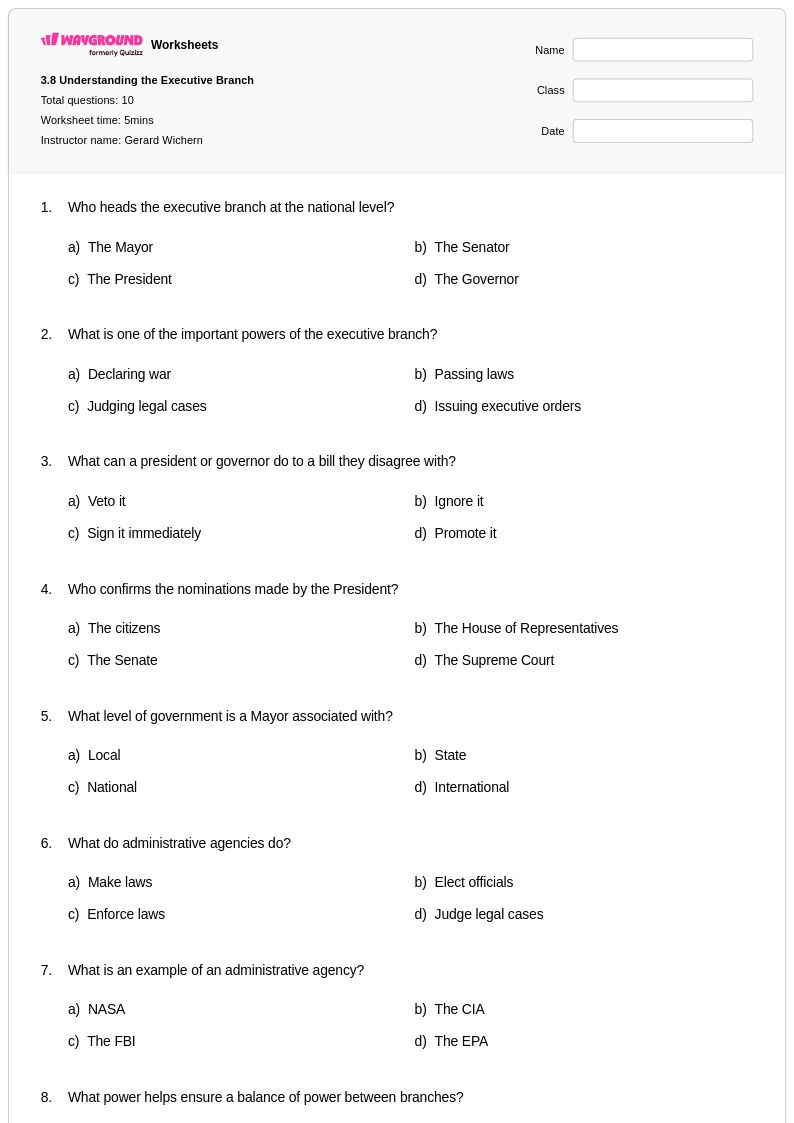
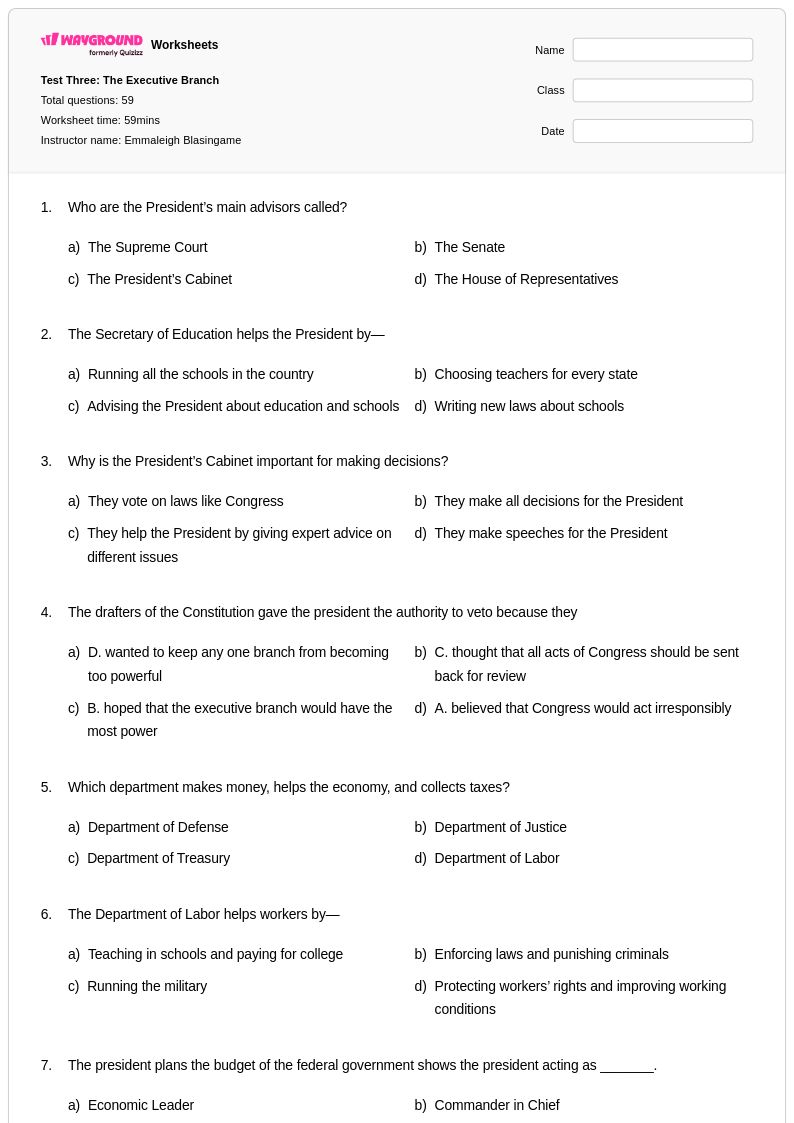
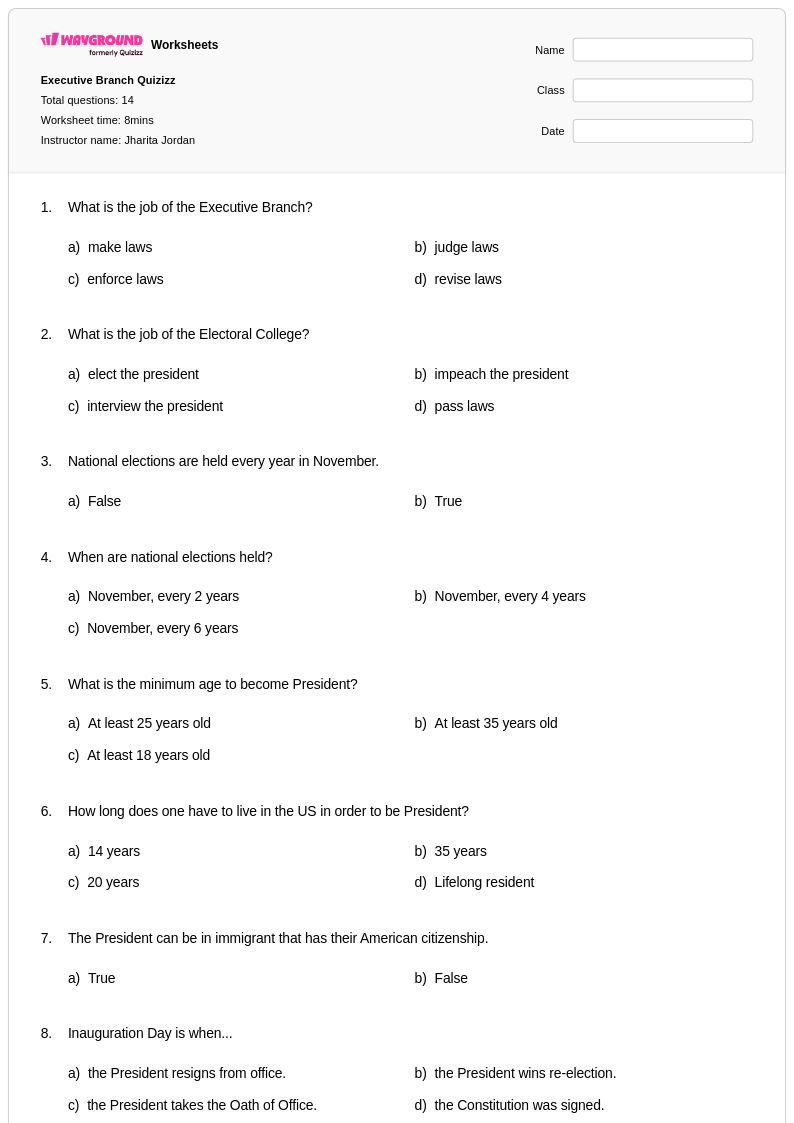
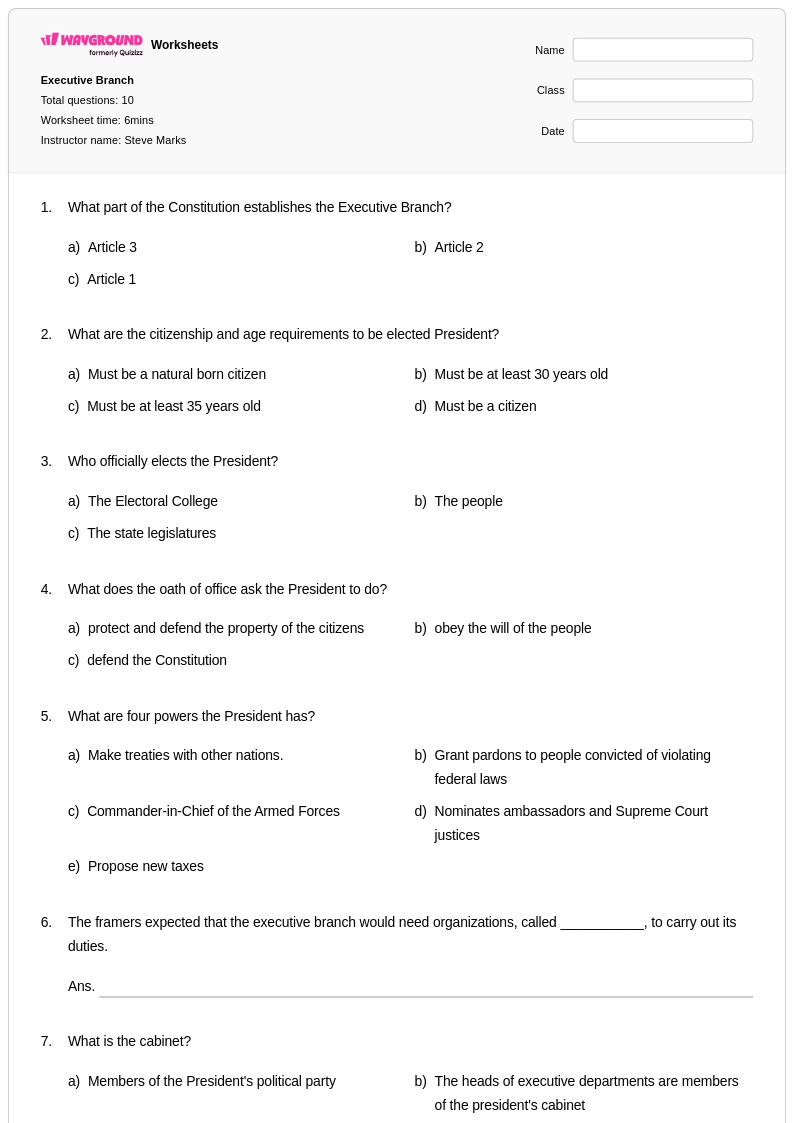
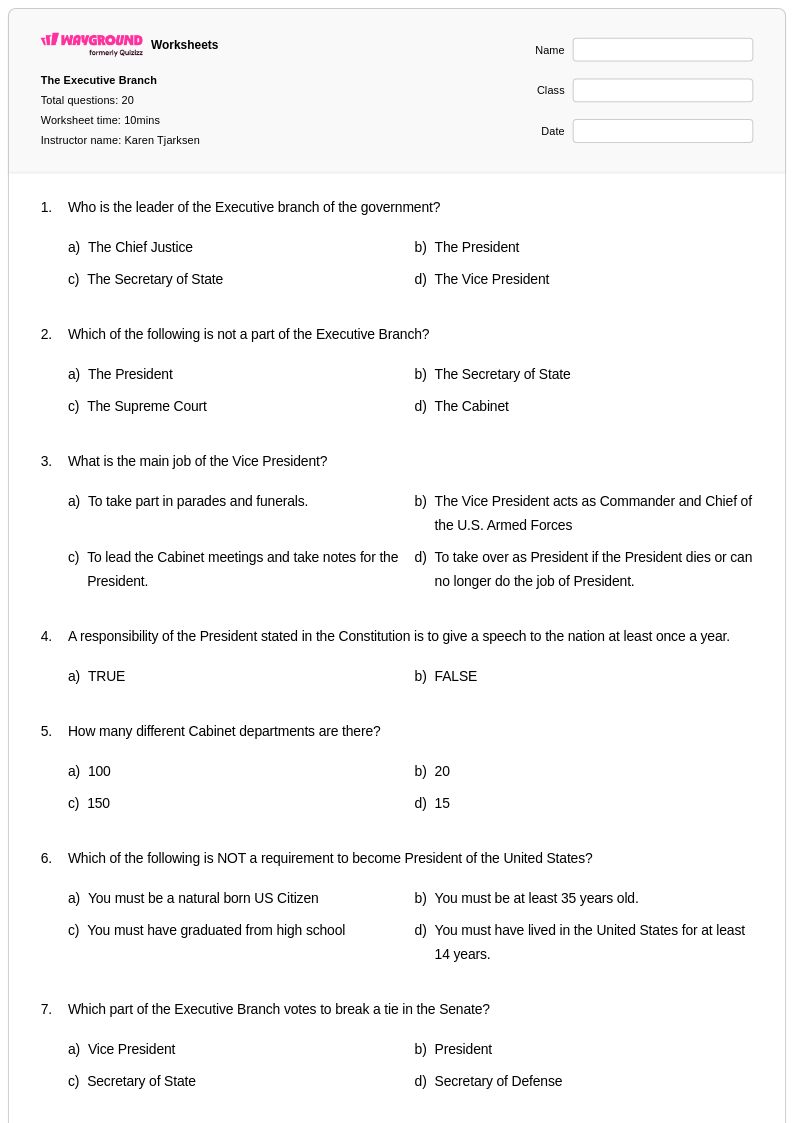
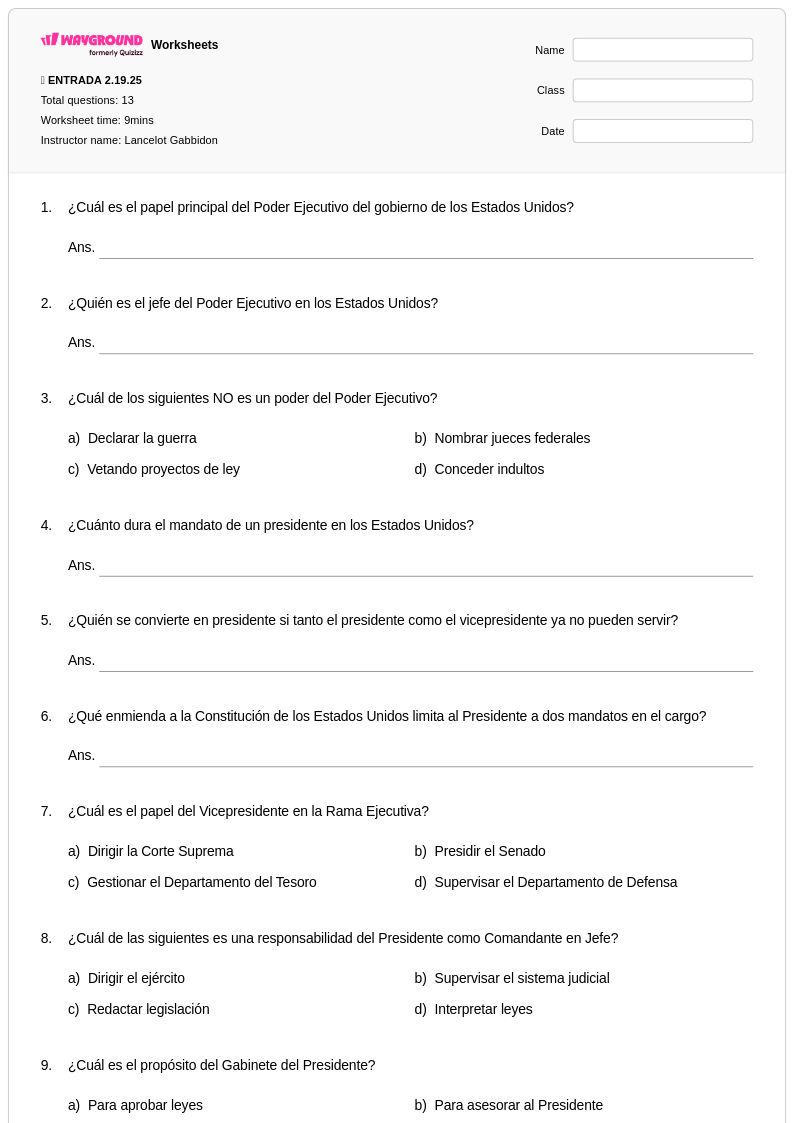
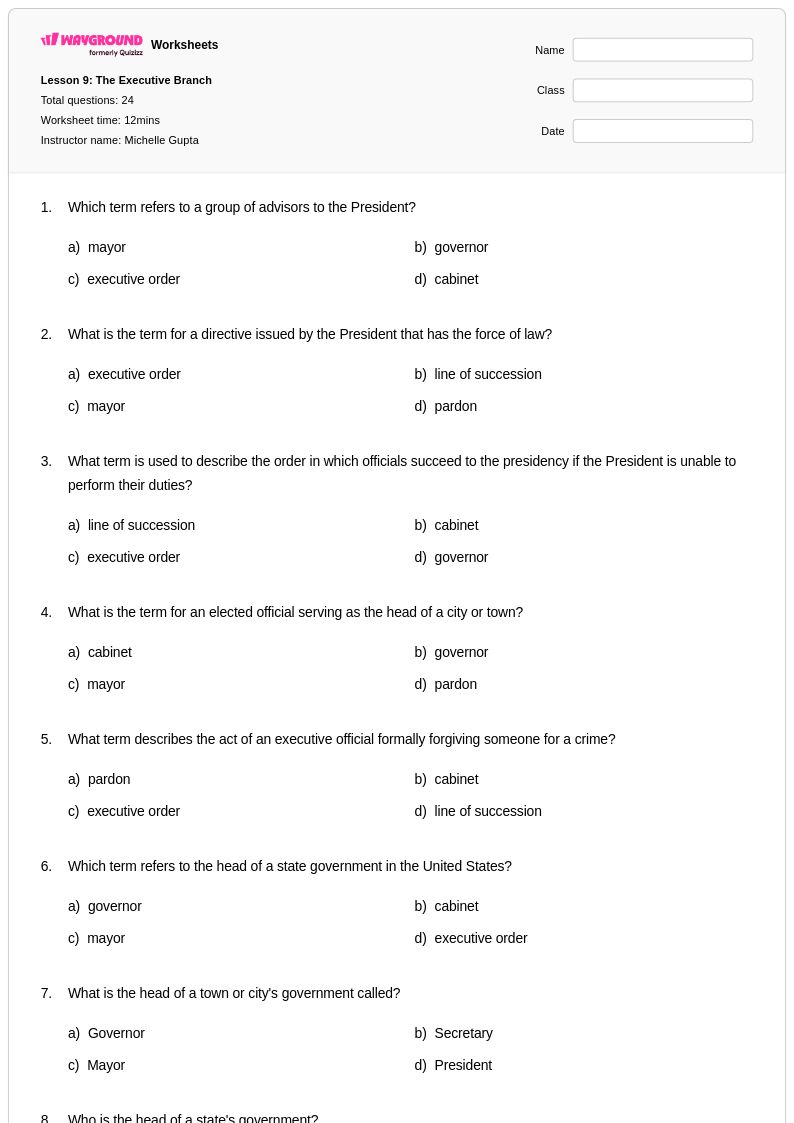
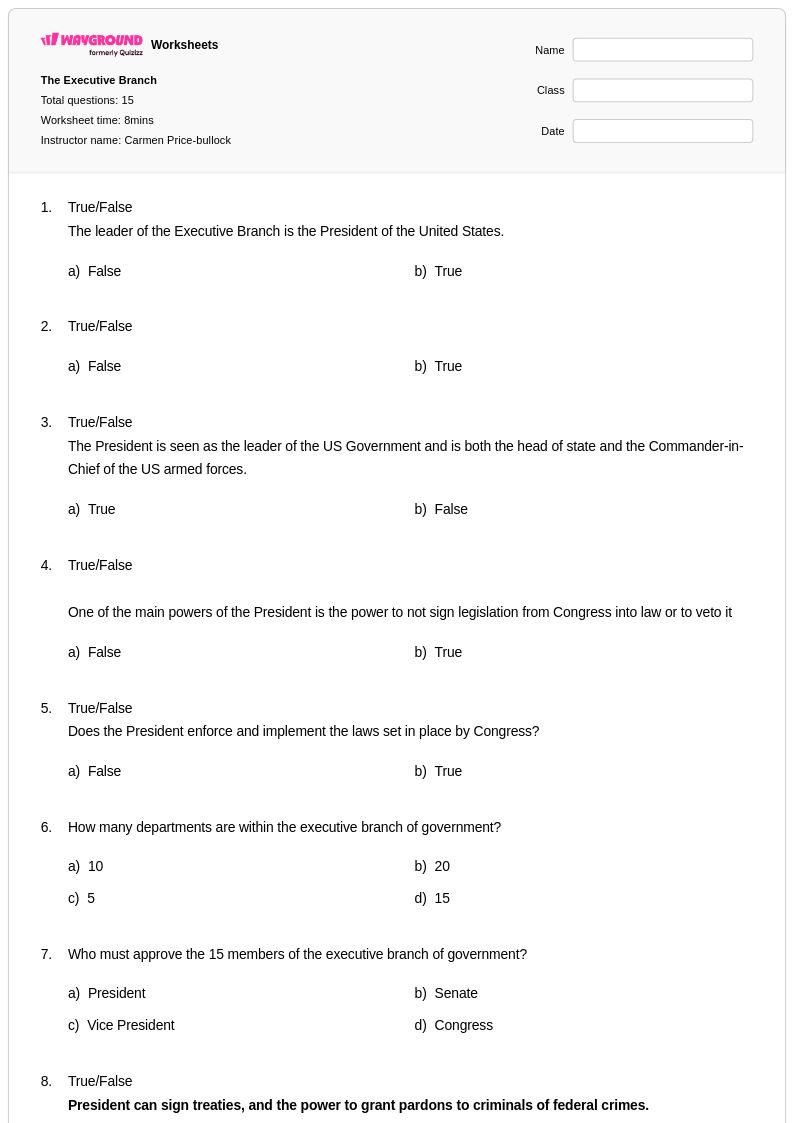
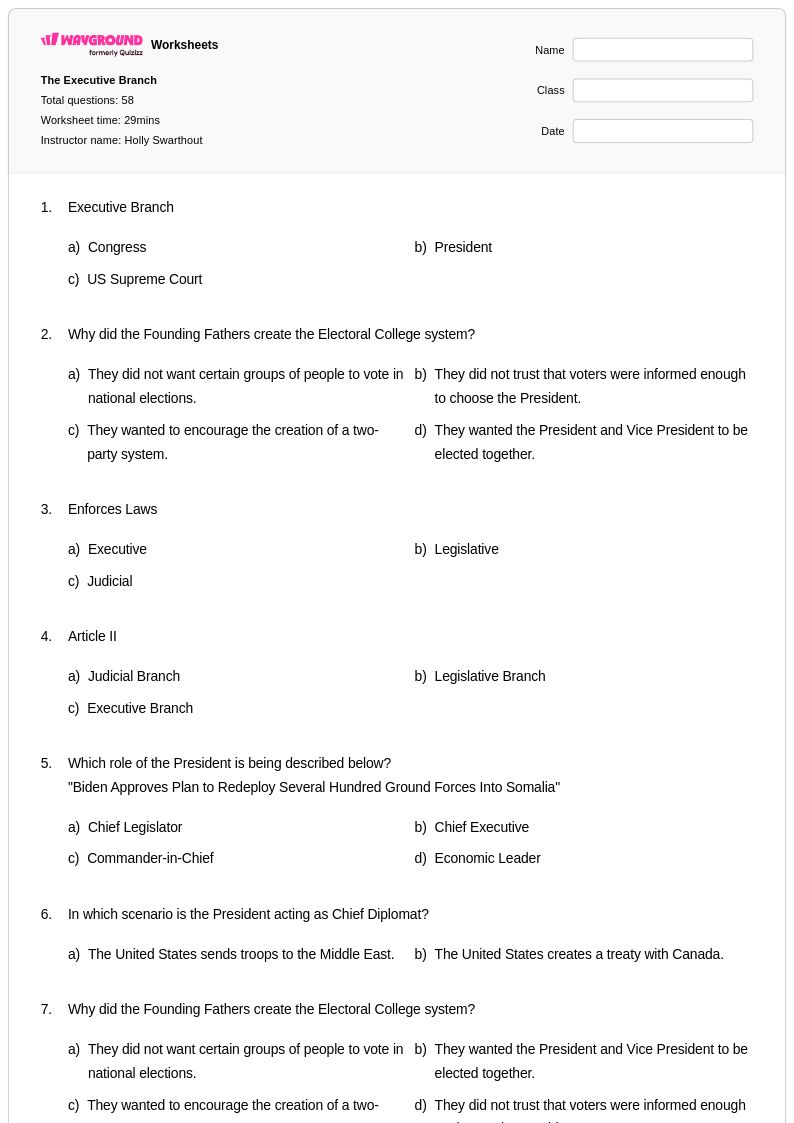
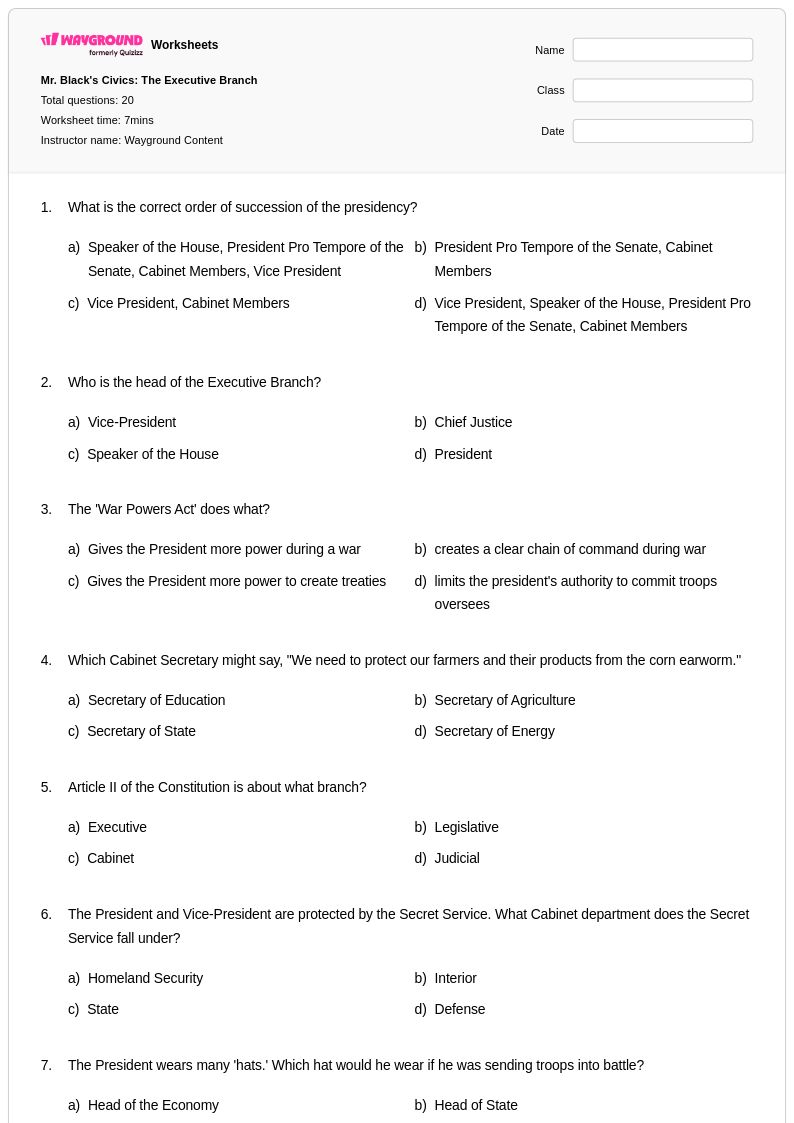
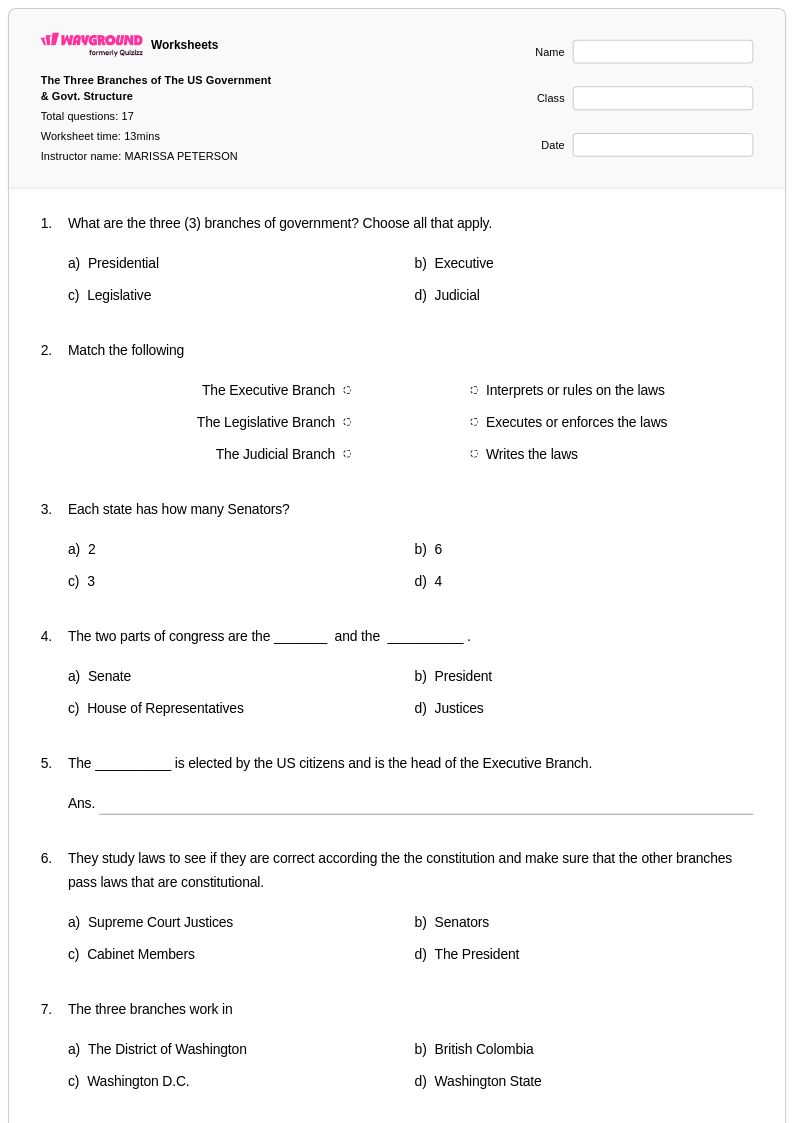
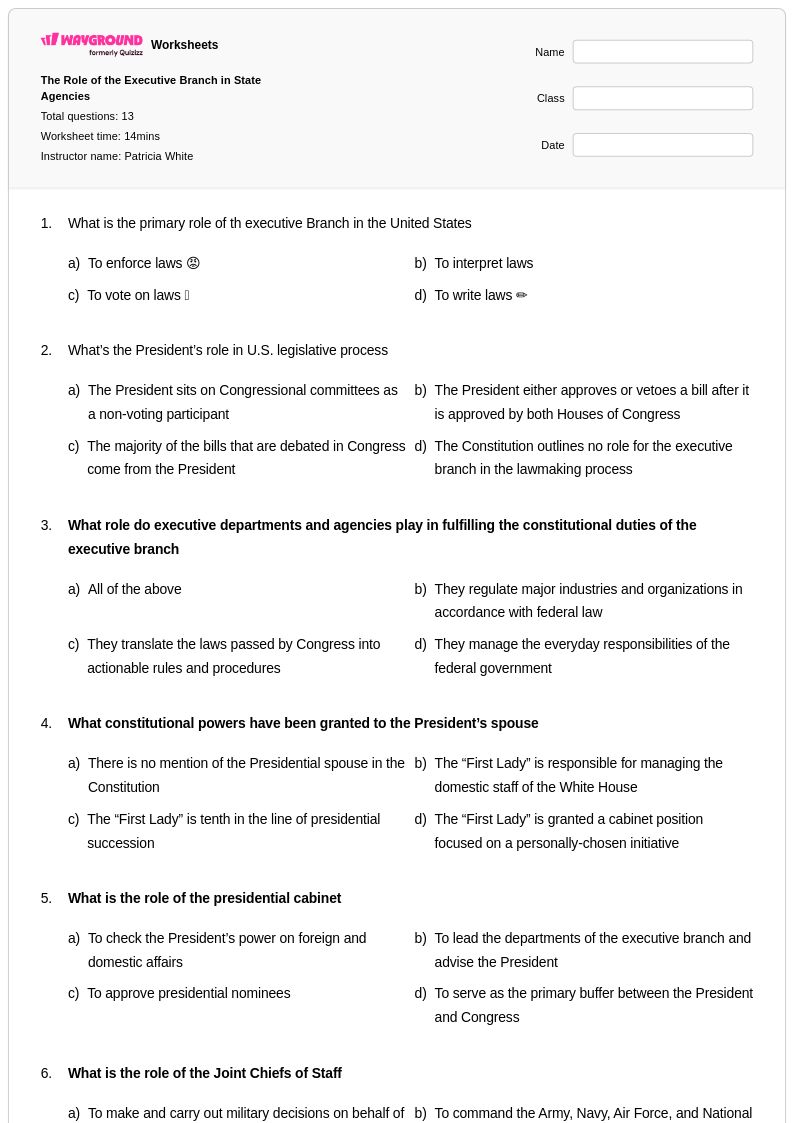
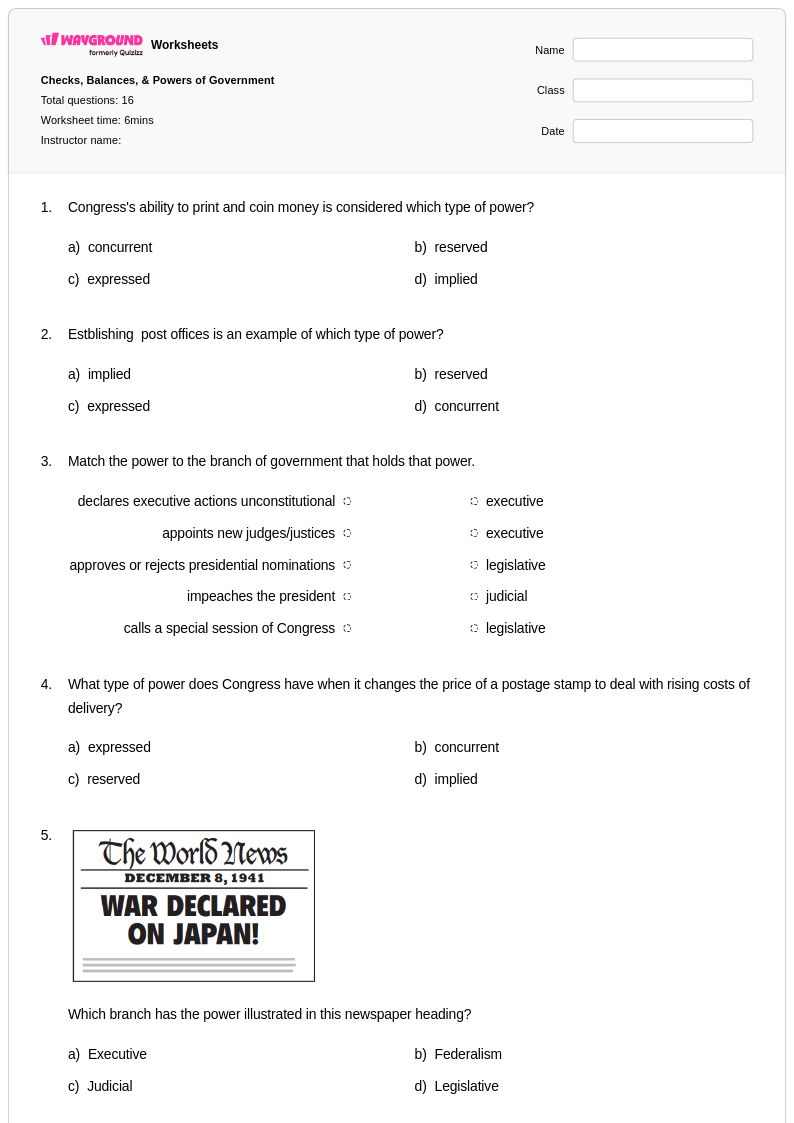
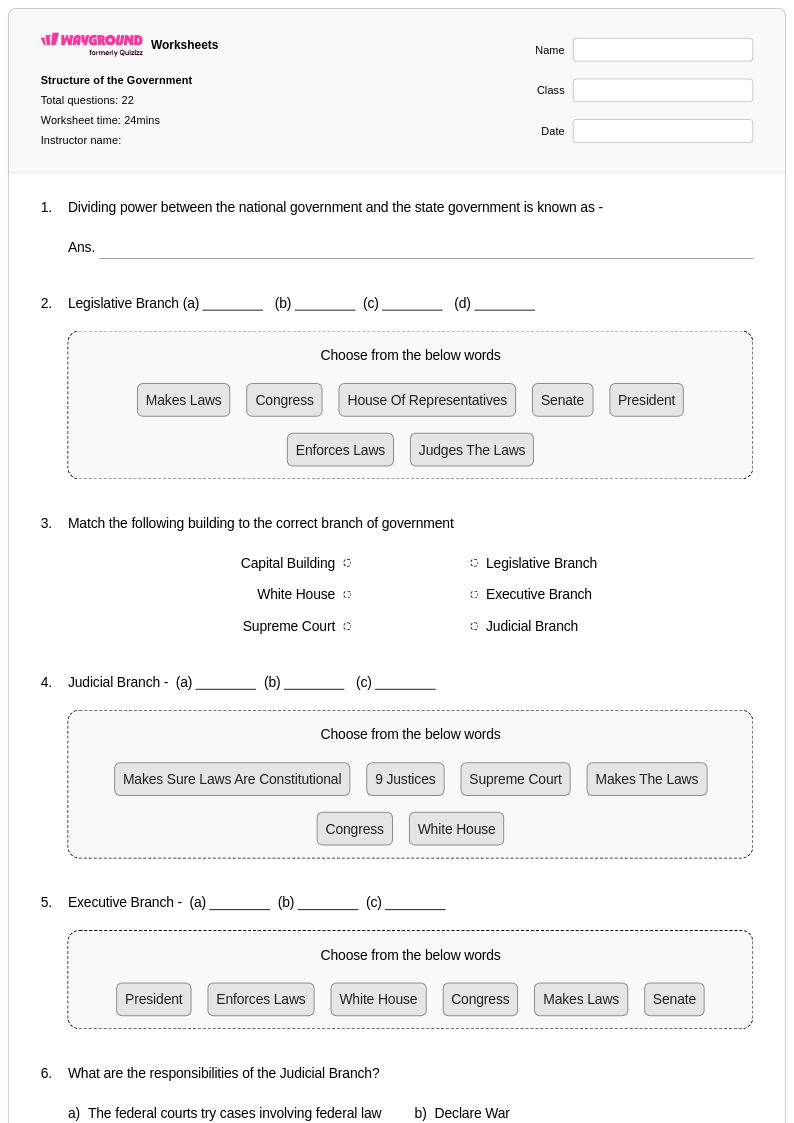
The Executive Branch worksheets available through Wayground (formerly Quizizz) provide Class 7 students with comprehensive practice materials that explore the powers, structure, and responsibilities of the presidential branch of government. These educational resources strengthen critical civics skills by guiding students through complex concepts such as executive powers, the role of the Cabinet, federal agencies, and the system of checks and balances that governs presidential authority. Students engage with practice problems that examine real-world scenarios involving executive orders, treaty negotiations, and the appointment process for federal judges and department heads. Each worksheet collection includes detailed answer keys and is available as free printables in pdf format, allowing educators to seamlessly integrate these materials into their civics curriculum while reinforcing essential constitutional principles.
Wayground (formerly Quizizz) supports social studies educators with an extensive collection of teacher-created Executive Branch resources, drawing from millions of educational materials that have been carefully organized with robust search and filtering capabilities. The platform's standards-aligned worksheets enable teachers to differentiate instruction effectively, offering flexible customization options that accommodate diverse learning needs and classroom environments. These comprehensive tools are available in both printable and digital pdf formats, making them ideal for lesson planning, targeted remediation, and enrichment activities that deepen student understanding of executive governmental functions. Teachers can efficiently locate age-appropriate materials that align with Class 7 learning objectives, ensuring that skill practice remains engaging and academically rigorous while building students' foundational knowledge of how the Executive Branch operates within America's democratic framework.
FAQs
How do I teach the Executive Branch to middle or high school students?
Effective Executive Branch instruction builds from the constitutional foundation in Article II before expanding to real-world applications. Start by grounding students in the president's enumerated and implied powers, then move into the cabinet system, federal agencies, and how executive authority interacts with the legislative and judicial branches. Using case studies of executive orders, vetoes, or agency rulemaking helps students connect abstract constitutional principles to current events and policy outcomes.
What topics should Executive Branch worksheets cover?
Executive Branch worksheets should cover presidential roles and responsibilities, the structure and function of the cabinet, the role of federal agencies in implementing policy, and the constitutional limits on executive power. Strong practice materials also include scenario-based questions that ask students to evaluate executive decision-making, analyze checks and balances, and distinguish between expressed and implied presidential powers. These exercises build both content knowledge and the critical thinking skills needed for civics assessments.
What mistakes do students commonly make when learning about the Executive Branch?
A frequent misconception is that the president has unlimited or near-absolute authority, when in fact executive power is explicitly constrained by Congress, the courts, and the Constitution. Students also commonly confuse the roles of the cabinet, federal agencies, and the Executive Office of the President, treating them as interchangeable rather than as distinct layers of the executive structure. Another common error is conflating executive orders with laws, without understanding that executive orders carry different legal weight and are subject to judicial review.
How do I assess whether students understand the Executive Branch?
Effective assessment of Executive Branch knowledge goes beyond recall and requires students to apply concepts to realistic scenarios. Ask students to explain how a specific presidential action, such as vetoing a bill or issuing an executive order, fits within constitutional boundaries. Short-answer and analysis questions that probe the balance of power between the three branches reveal whether students truly understand executive authority rather than just having memorized definitions.
How can I use Executive Branch worksheets in my classroom?
Executive Branch worksheets from Wayground are available as printable PDFs for traditional classroom use and in digital formats for technology-integrated learning environments, and teachers can also host them as a quiz directly on Wayground. Printable versions work well for guided notes, homework assignments, or in-class review, while digital formats support remote learning and interactive engagement. Each worksheet includes a detailed answer key, making them practical for both independent student practice and teacher-led formative assessment.
How do I support students who are struggling with Executive Branch concepts?
Students who struggle with the Executive Branch often need the abstract structure of federal government made more concrete and manageable. Breaking instruction into smaller components, such as focusing on one presidential power or one agency function at a time, reduces cognitive load. On Wayground, teachers can apply individual accommodations such as reduced answer choices, read aloud support, or extended time to help struggling learners access the same content without being overwhelmed, and these settings carry over to future sessions automatically.