Free Printable The Indus Civilization Worksheets for Class 6
Class 6 Indus Civilization worksheets and printables help students explore this ancient society through engaging practice problems, free PDF resources, and comprehensive answer keys for effective learning.
Explore printable The Indus Civilization worksheets for Class 6
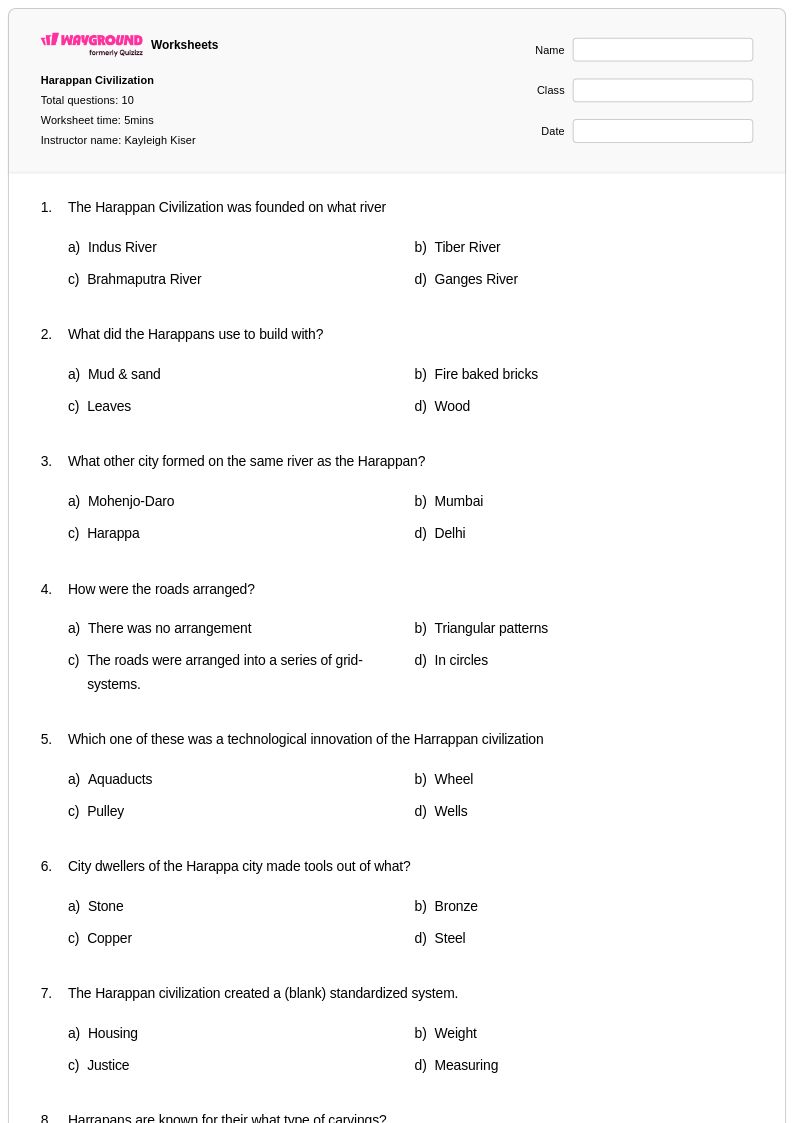
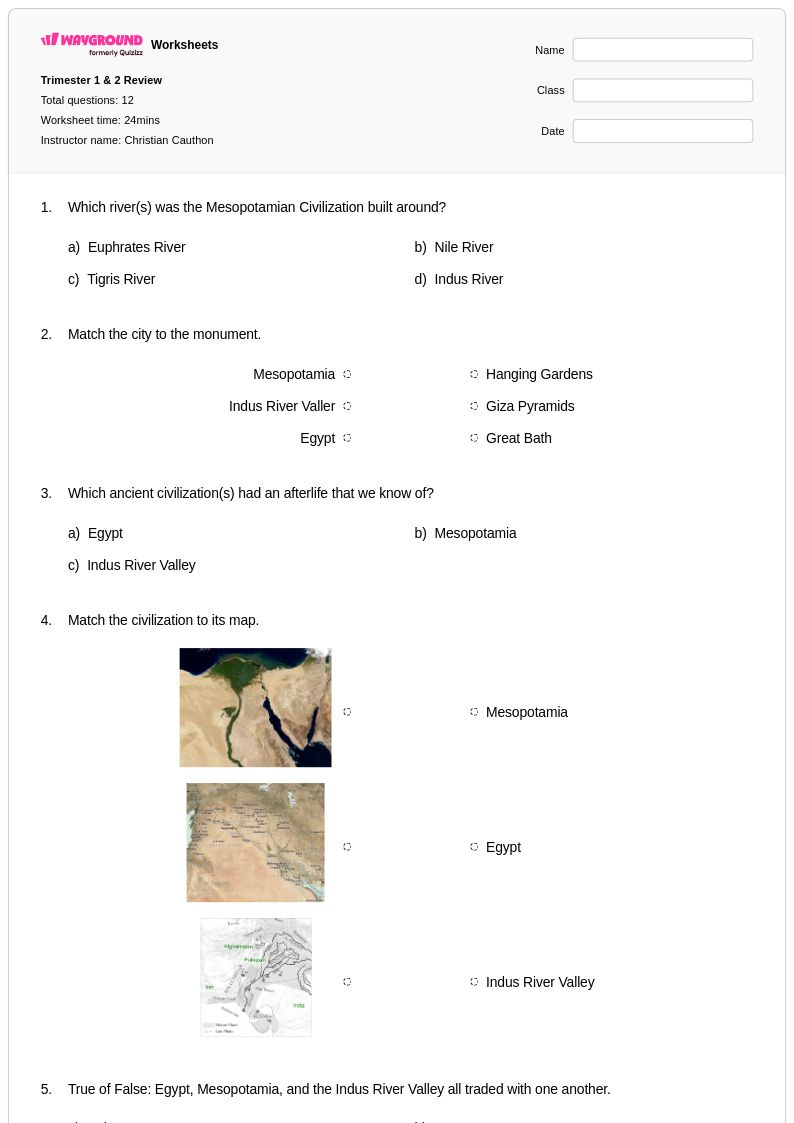
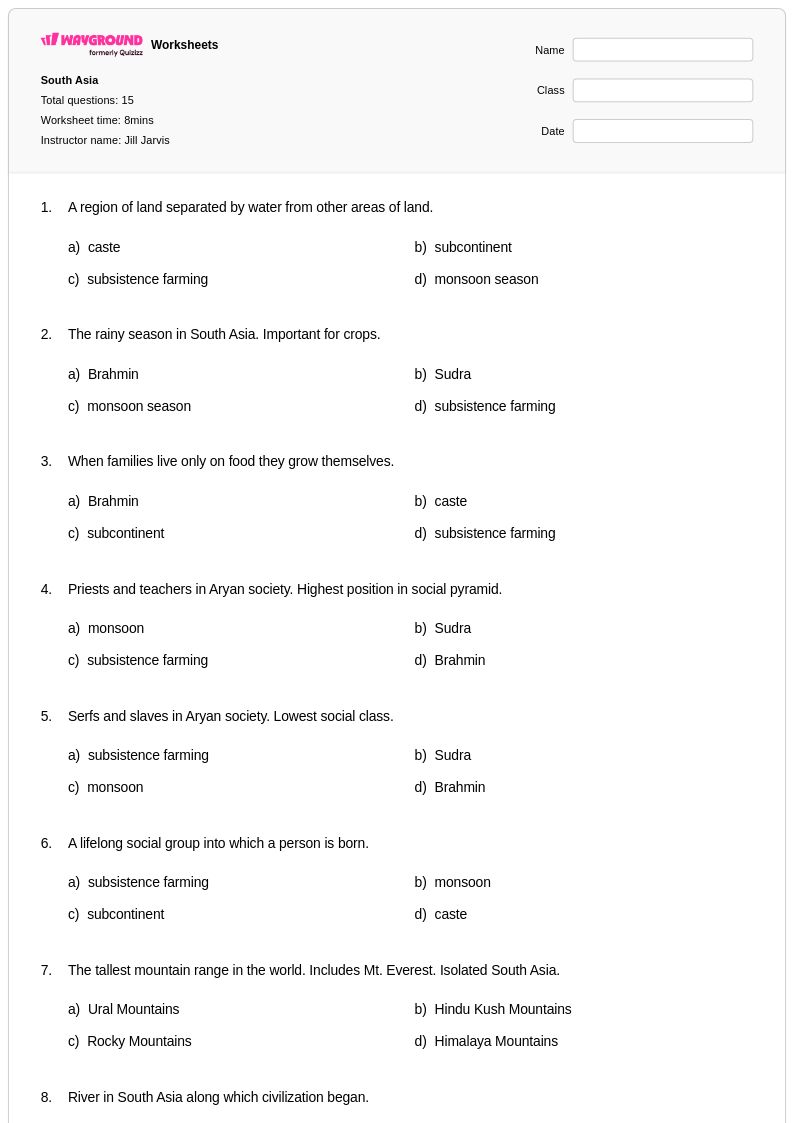
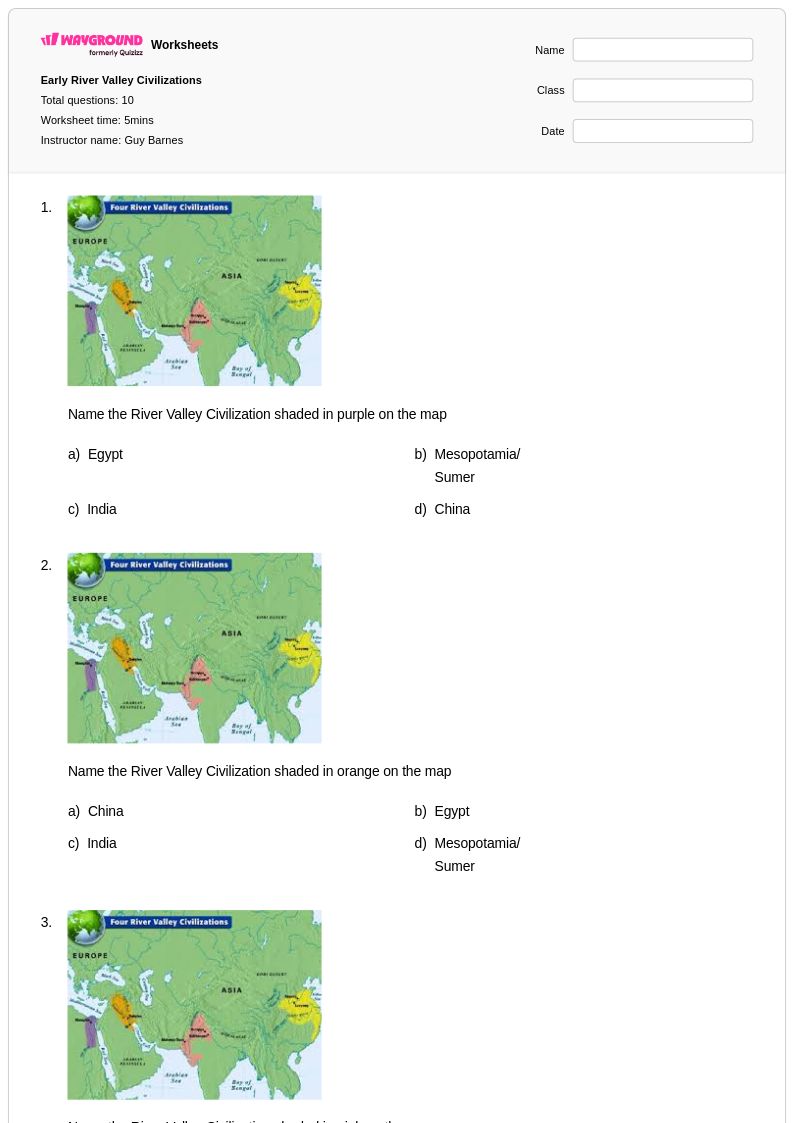
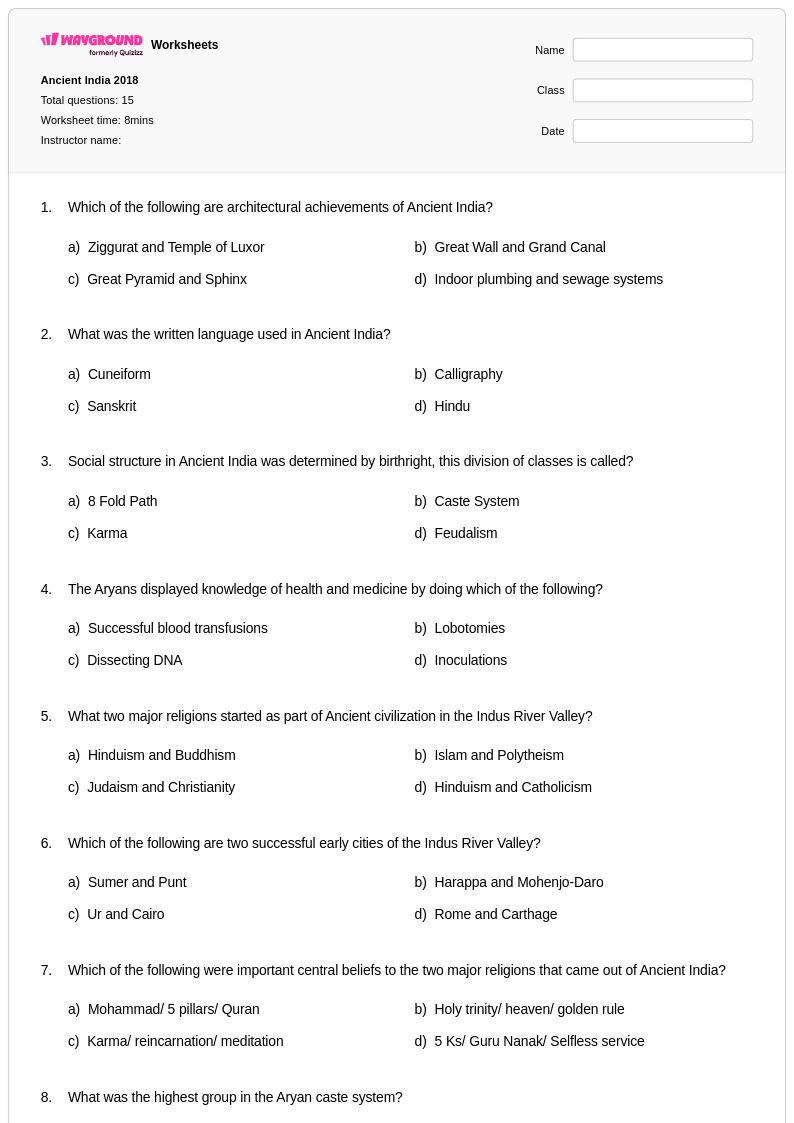
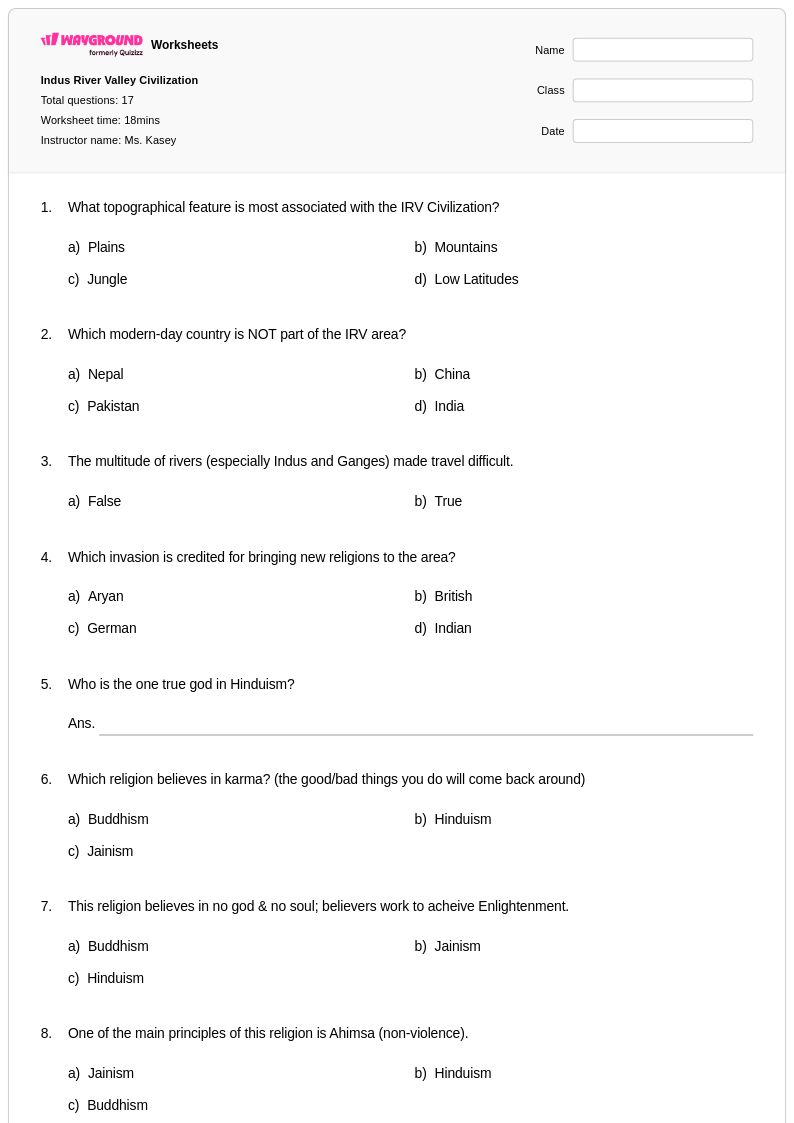
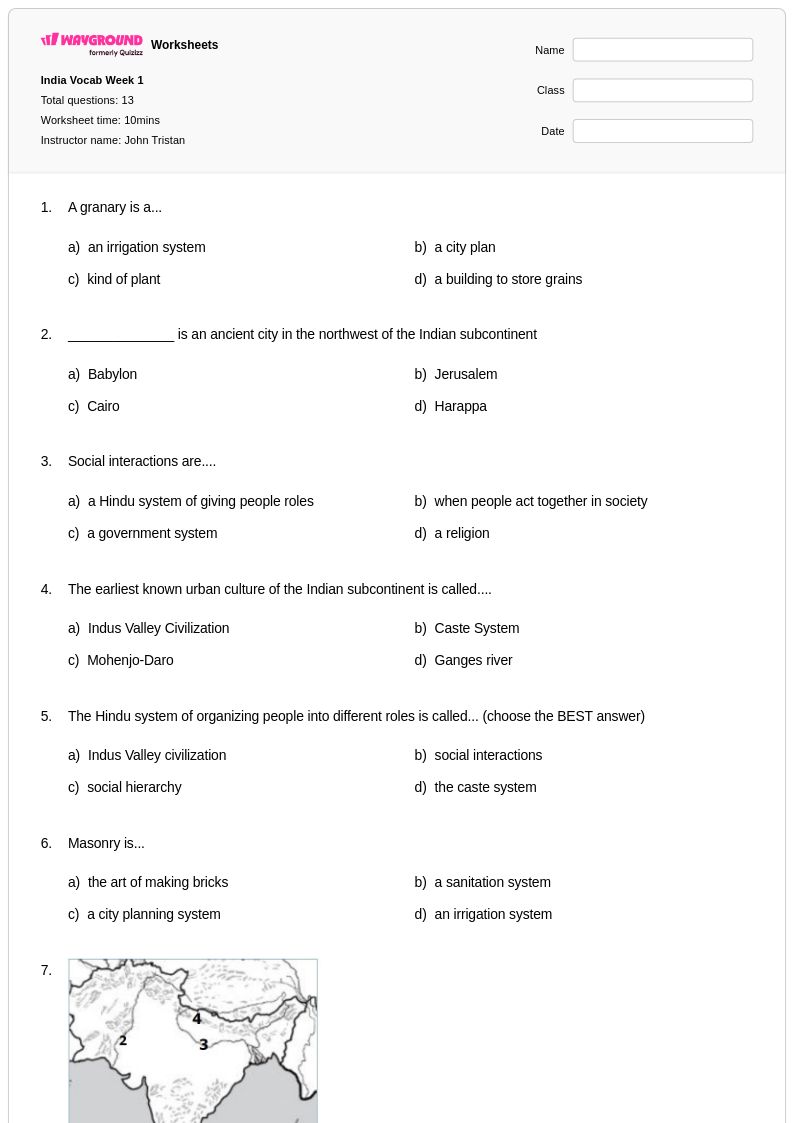
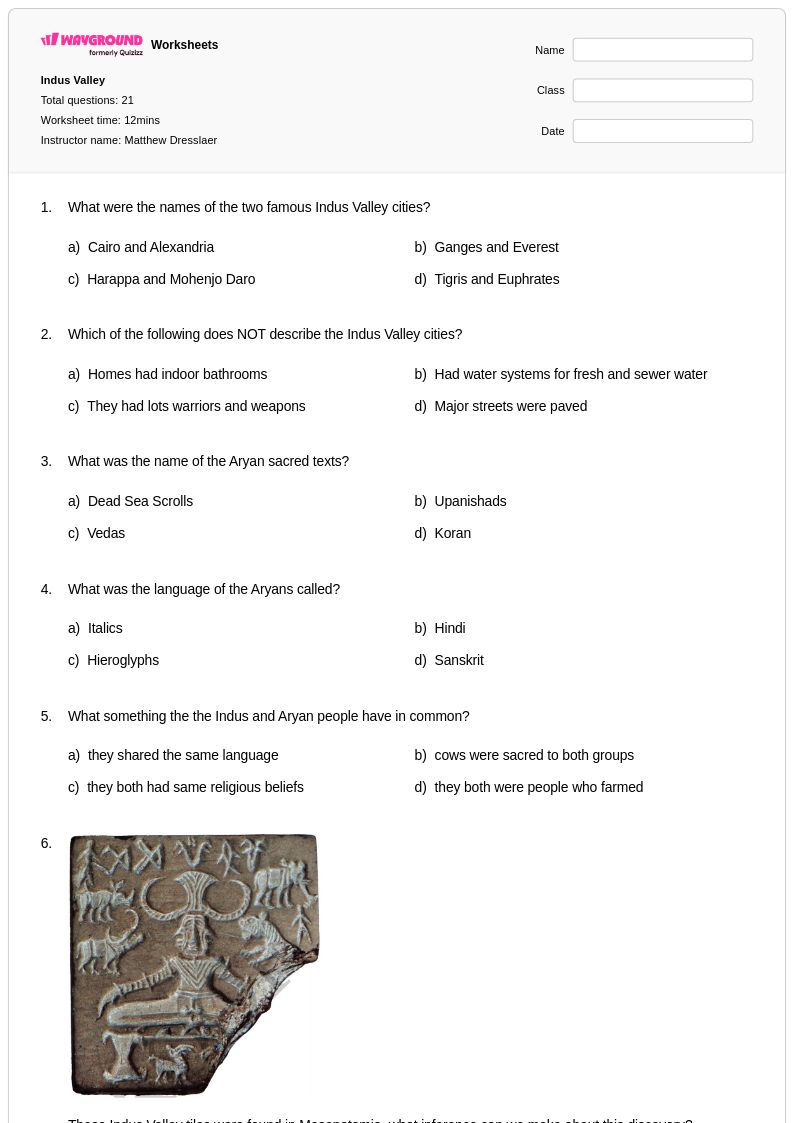
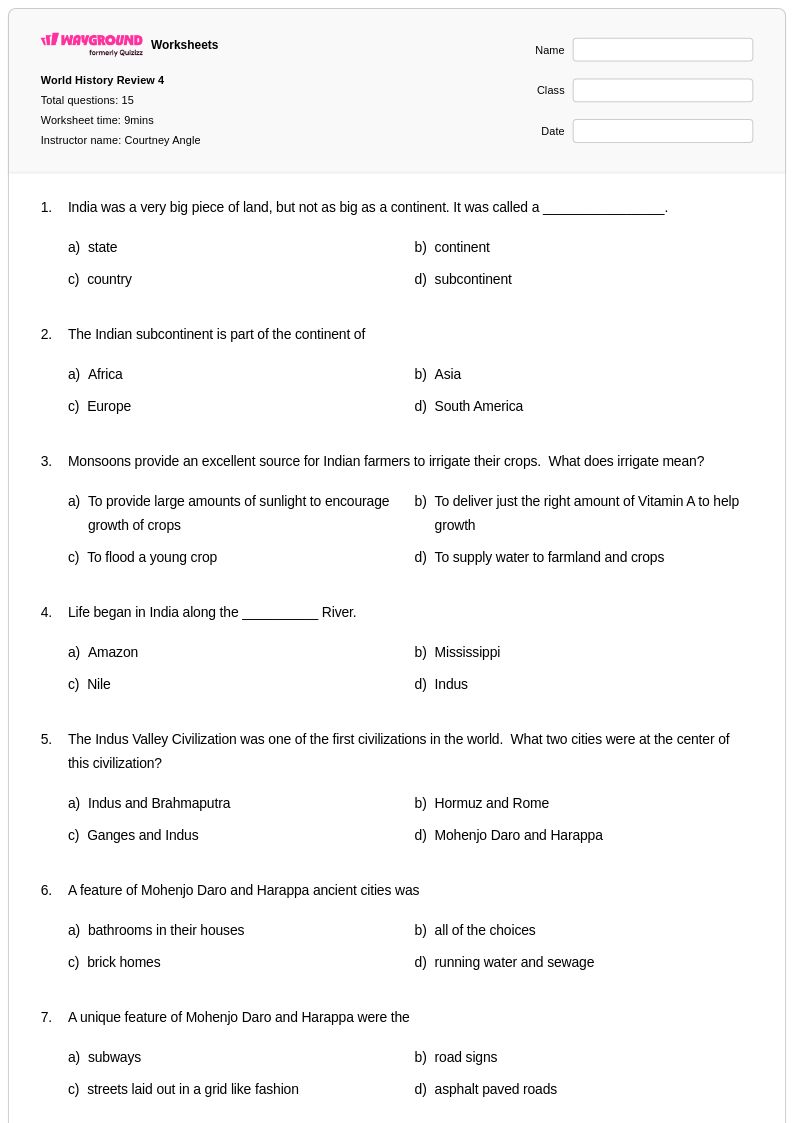
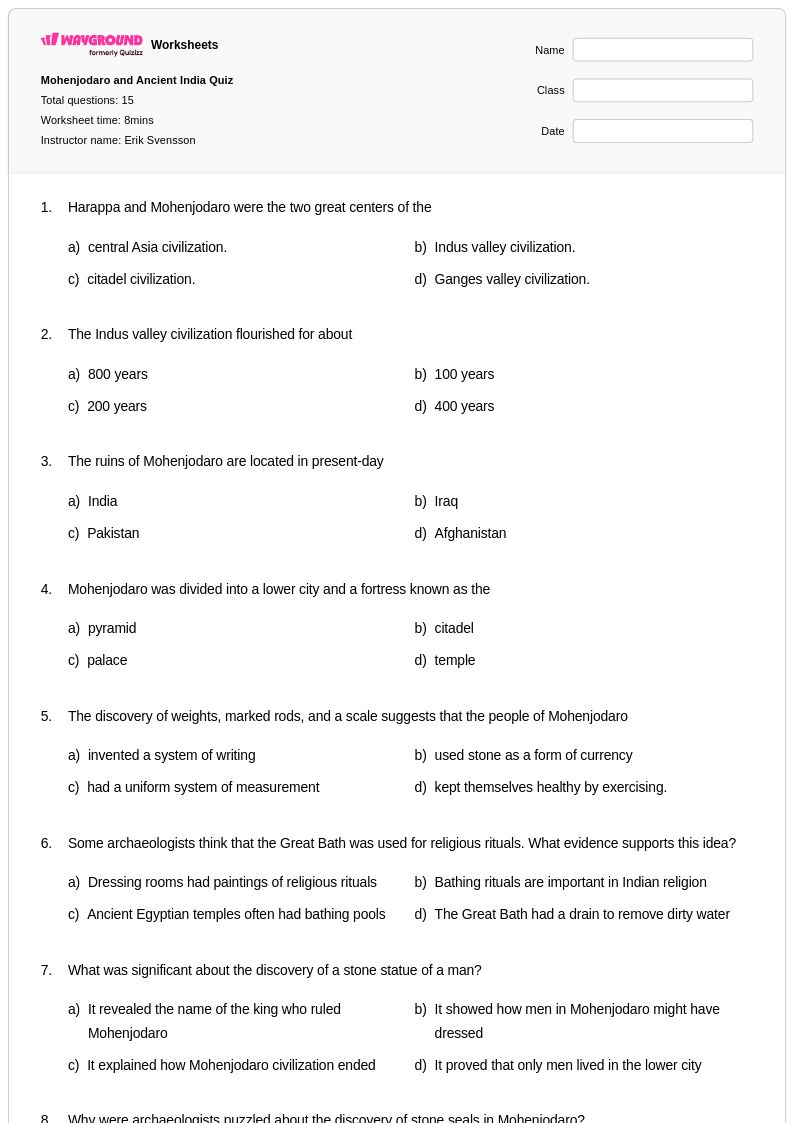
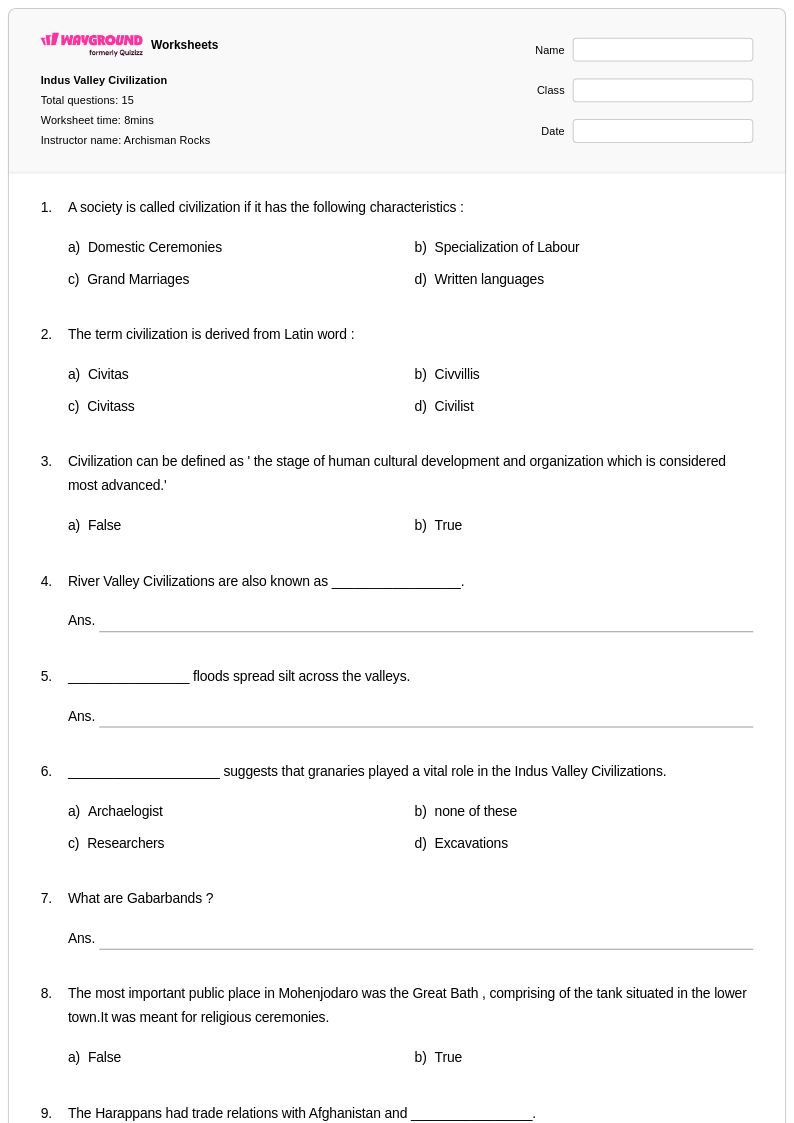
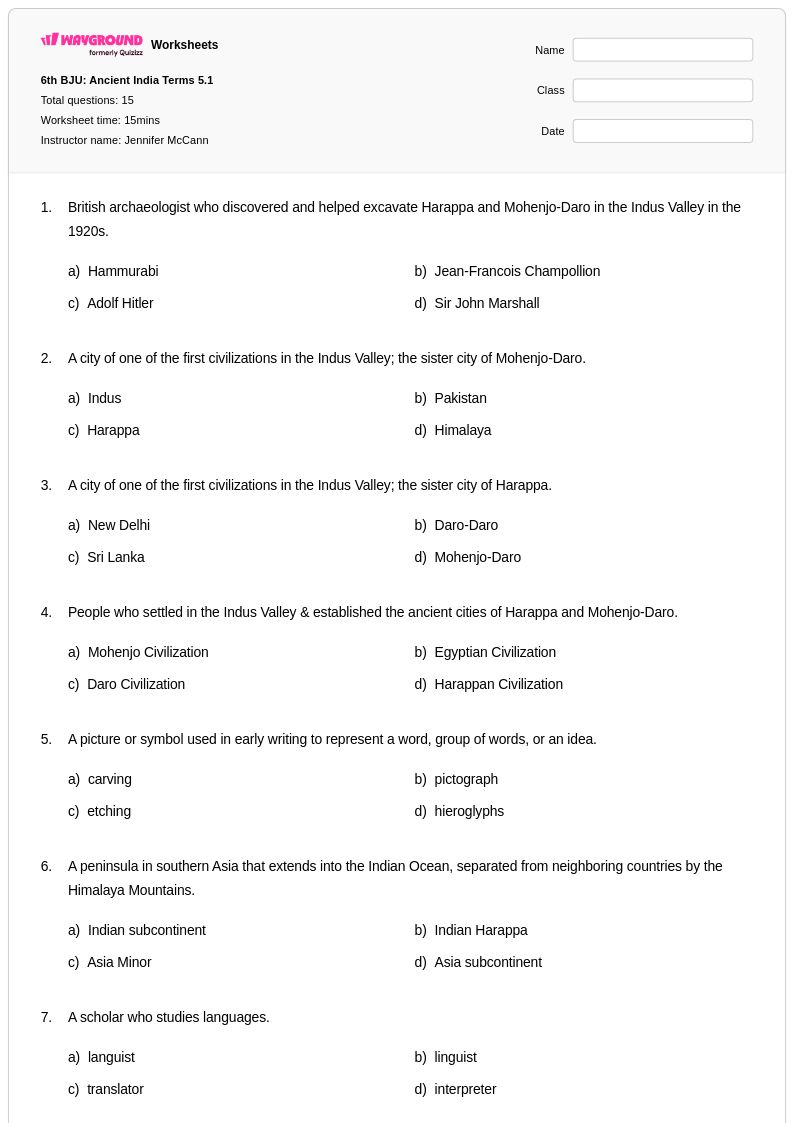
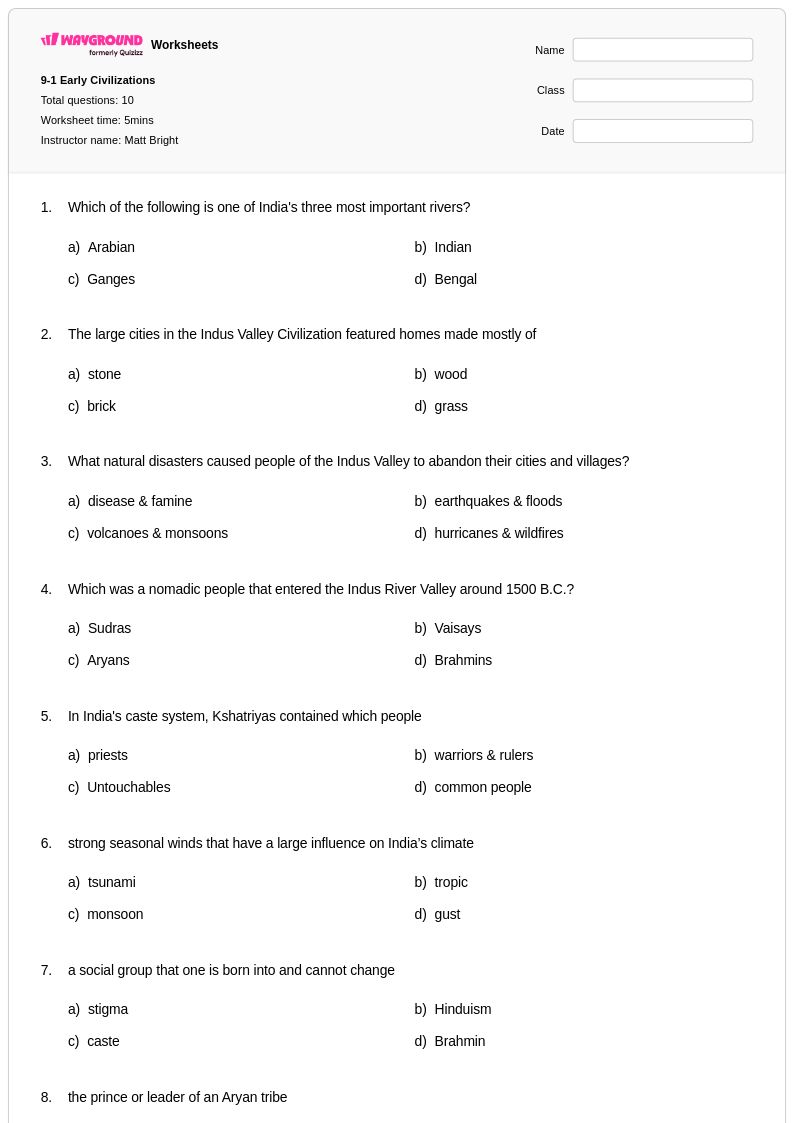
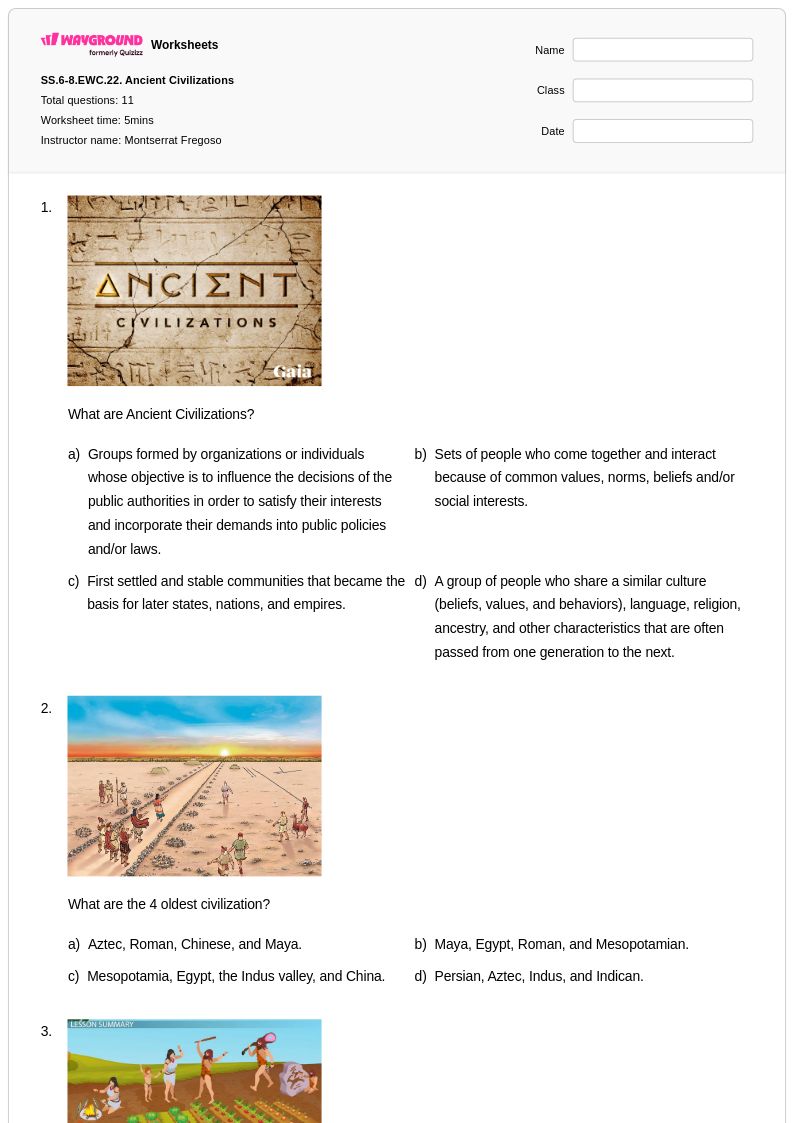
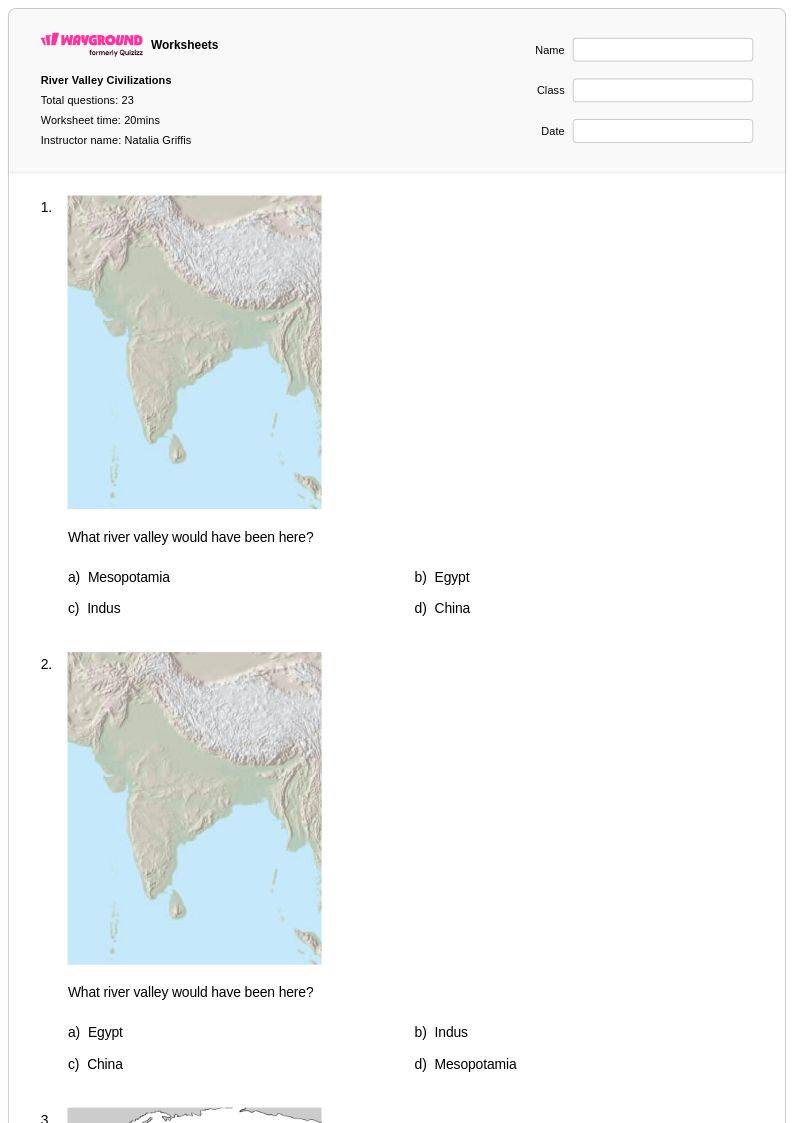
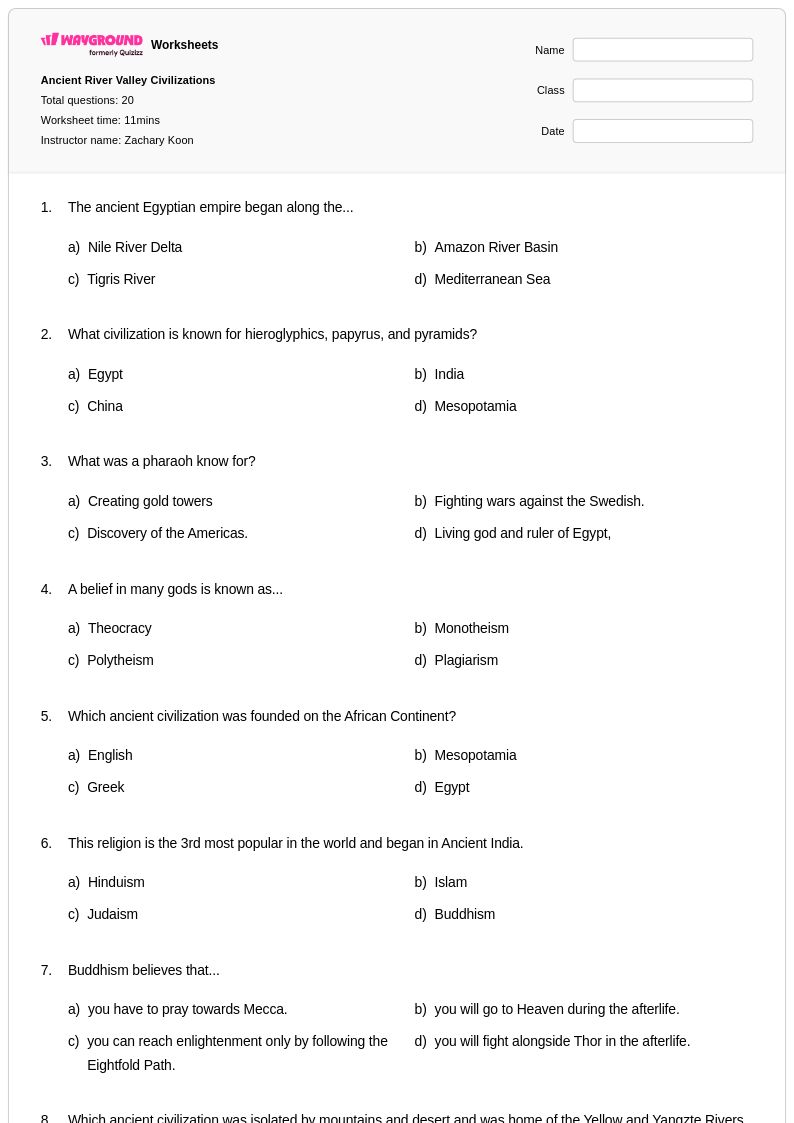
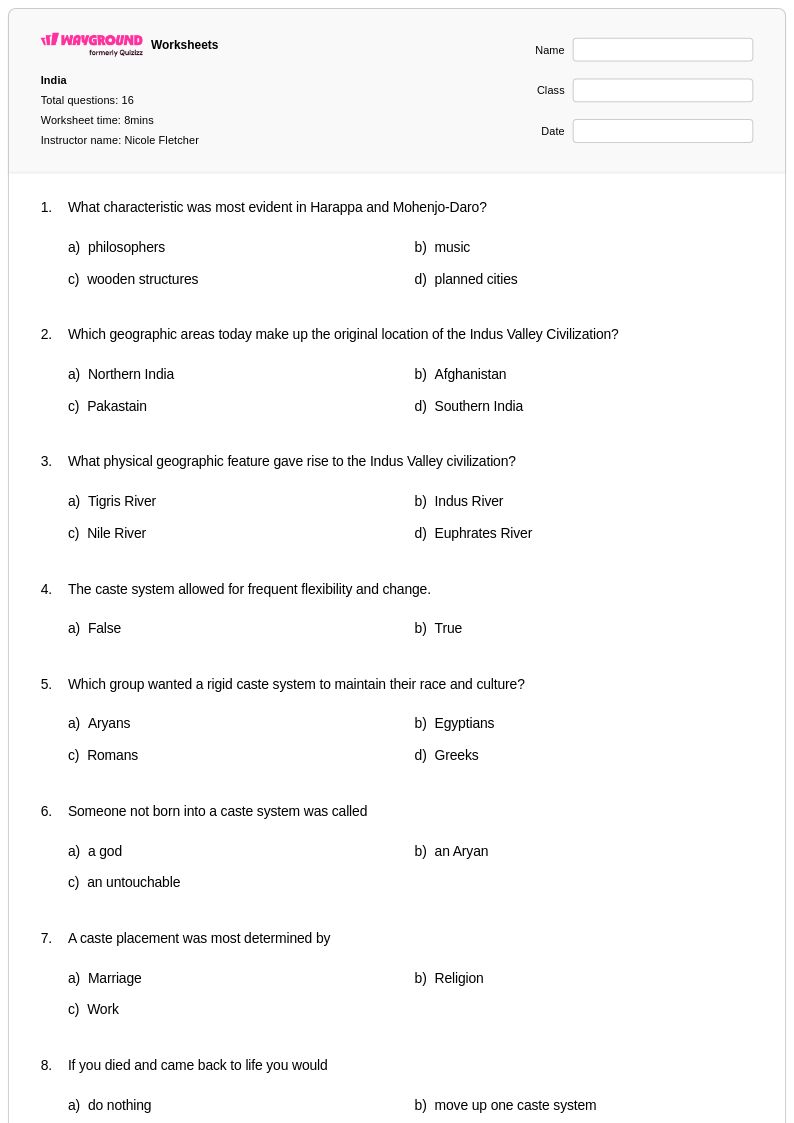
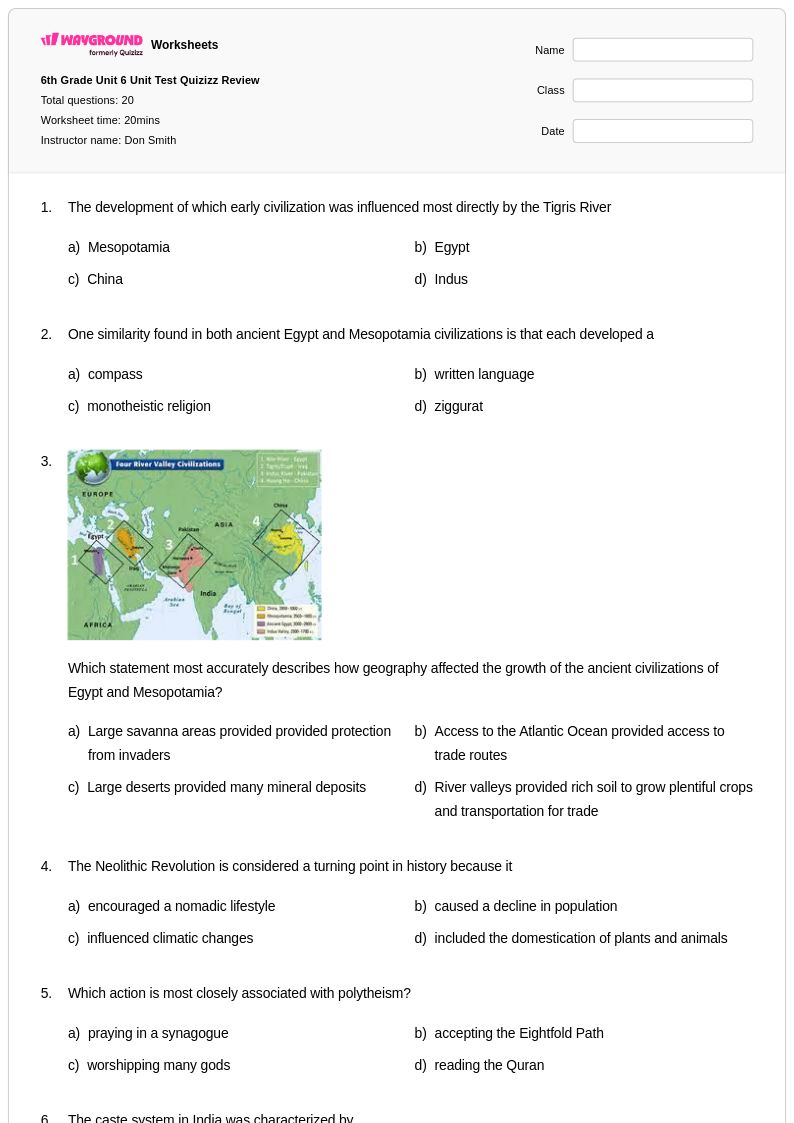
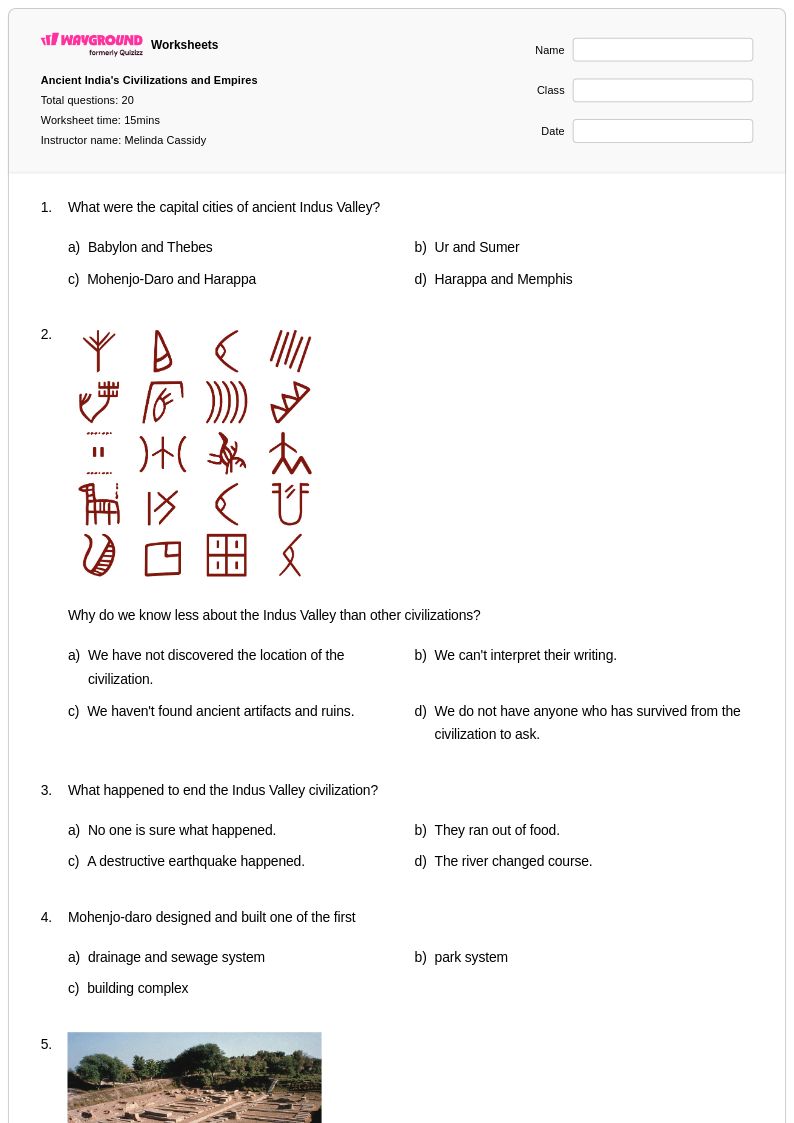
The Indus Civilization worksheets available through Wayground (formerly Quizizz) provide Class 6 students with comprehensive practice materials that explore one of history's most fascinating ancient civilizations. These educational resources strengthen critical thinking skills as students analyze archaeological evidence from Harappa and Mohenjo-daro, examine the sophisticated urban planning of Indus Valley cities, and investigate the mysteries surrounding this Bronze Age civilization's undeciphered script and sudden decline. Each worksheet includes detailed answer keys that support independent learning, while the free printable format ensures accessibility for all classrooms. Practice problems guide students through key concepts such as the civilization's advanced drainage systems, standardized weights and measures, and extensive trade networks that connected the Indus Valley to Mesopotamia and beyond.
Wayground (formerly Quizizz) empowers educators with millions of teacher-created resources specifically designed for Indus Civilization instruction, featuring robust search and filtering capabilities that help locate materials aligned to social studies standards. The platform's differentiation tools enable teachers to customize worksheets for diverse learning needs, while flexible formatting options provide both printable pdf versions for traditional classroom use and digital formats for technology-integrated lessons. These comprehensive worksheet collections support effective lesson planning by offering varied question types and assessment formats, facilitate targeted remediation for students struggling with ancient civilization concepts, and provide enrichment opportunities for advanced learners ready to explore deeper connections between the Indus Valley and other early civilizations, ultimately strengthening historical analysis and critical thinking skills essential for Class 6 social studies success.
FAQs
How do I teach the Indus Civilization to students?
Teaching the Indus Civilization effectively starts with grounding students in its geographic context — the Indus River Valley — before examining what makes it distinctive: advanced urban planning, standardized weights and measures, and a still-undeciphered script. Comparing Harappan cities like Mohenjo-daro and Harappa to other ancient urban centers (Mesopotamia, ancient Egypt) helps students evaluate what 'civilization' means as a historical concept. Incorporating archaeological evidence, rather than just textbook summaries, builds critical thinking and source analysis skills that transfer across history units.
What are common misconceptions students have about the Indus Civilization?
A frequent misconception is that the Indus Civilization was less advanced than Mesopotamia or ancient Egypt simply because it left fewer monumental structures. In fact, Harappan cities featured sophisticated grid-based layouts, standardized brick sizes, and drainage infrastructure that rivaled or exceeded contemporaries. Students also often assume the civilization's decline was sudden or caused by a single event; in reality, scholars debate multiple contributing factors including climate change, shifting river patterns, and disrupted trade networks. Addressing these misconceptions early prevents students from undervaluing one of the ancient world's most technically sophisticated societies.
What worksheet activities help students analyze archaeological evidence from the Indus Civilization?
Effective worksheet activities for the Indus Civilization include artifact analysis tasks where students examine seals, weights, and pottery fragments to draw inferences about trade and social organization. Structured comparison exercises between Harappan city layouts and those of other ancient civilizations help students practice historical reasoning rather than passive recall. Practice problems that ask students to evaluate competing theories about the Indus script or the civilization's decline are particularly strong for developing evidence-based argumentation skills.
Why is the Indus script significant, and how can I help students understand why it hasn't been deciphered?
The Indus script is significant because deciphering it would dramatically expand our understanding of Harappan society, religion, governance, and trade — yet it remains one of archaeology's greatest unsolved puzzles. Students often struggle with the concept of an undeciphered script because they expect historical knowledge to be complete; framing it as an open scholarly question helps develop intellectual humility and critical inquiry. A useful classroom approach is presenting students with what is known (symbol patterns, seal usage, probable administrative function) and asking them to reason about what decipherment would and would not tell us about this civilization.
How can I use Indus Civilization worksheets in my classroom?
Indus Civilization worksheets on Wayground are available as printable PDFs for traditional classroom use and in digital formats for technology-integrated environments, including the option to host them as a quiz directly on Wayground. Each worksheet includes a complete answer key, making them practical for independent work, homework assignments, or guided group analysis. The combination of printable and digital access means teachers can deploy the same resource across in-person, hybrid, or remote learning settings without reformatting.
How do I differentiate Indus Civilization instruction for students at different skill levels?
For students who need additional support, scaffolding archaeological evidence analysis with sentence starters or partially completed graphic organizers reduces cognitive load while keeping content rigorous. More advanced students benefit from open-ended synthesis tasks, such as constructing an argument about why the Indus Civilization deserves greater emphasis in world history curricula. On Wayground, teachers can apply built-in accommodations such as read aloud, reduced answer choices, and extended time to individual students, allowing the same worksheet to serve diverse learners without requiring separate materials.