Free Printable The Mongol Empire Worksheets for Class 6
Explore Class 6 Mongol Empire worksheets and printables from Wayground that help students learn about this vast historical civilization through engaging practice problems, free PDF resources, and comprehensive answer keys.
Explore printable The Mongol Empire worksheets for Class 6
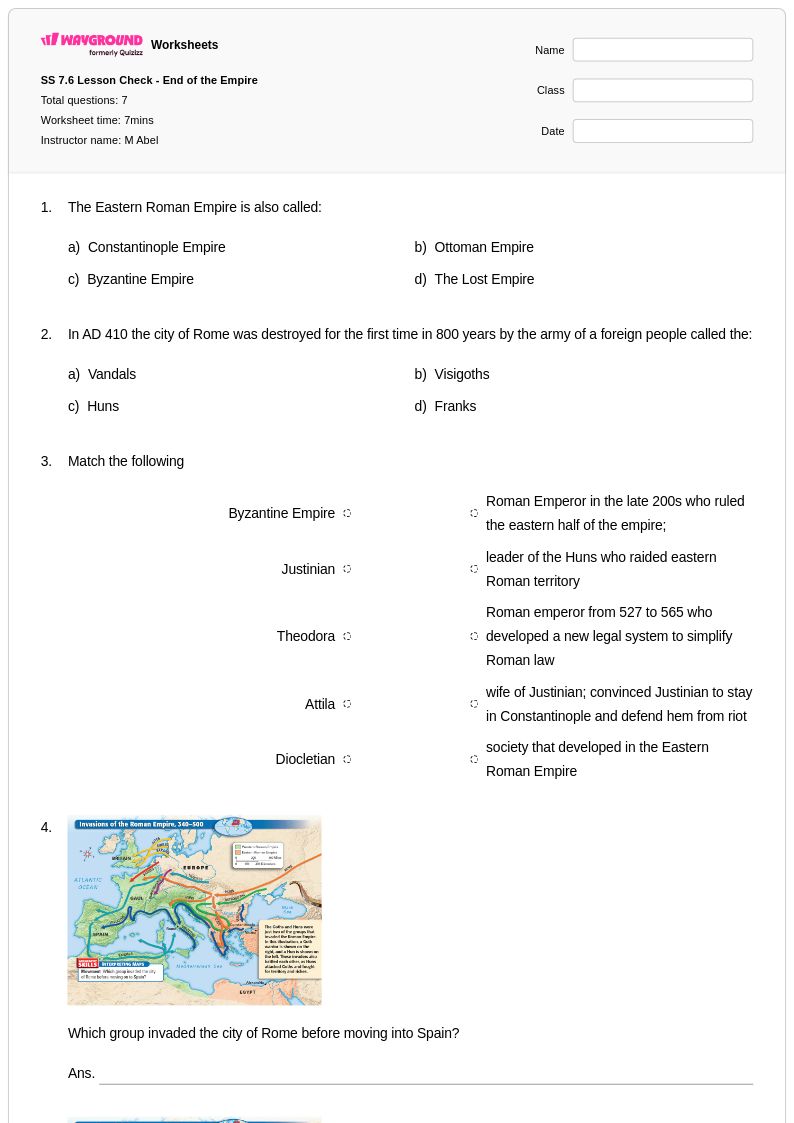
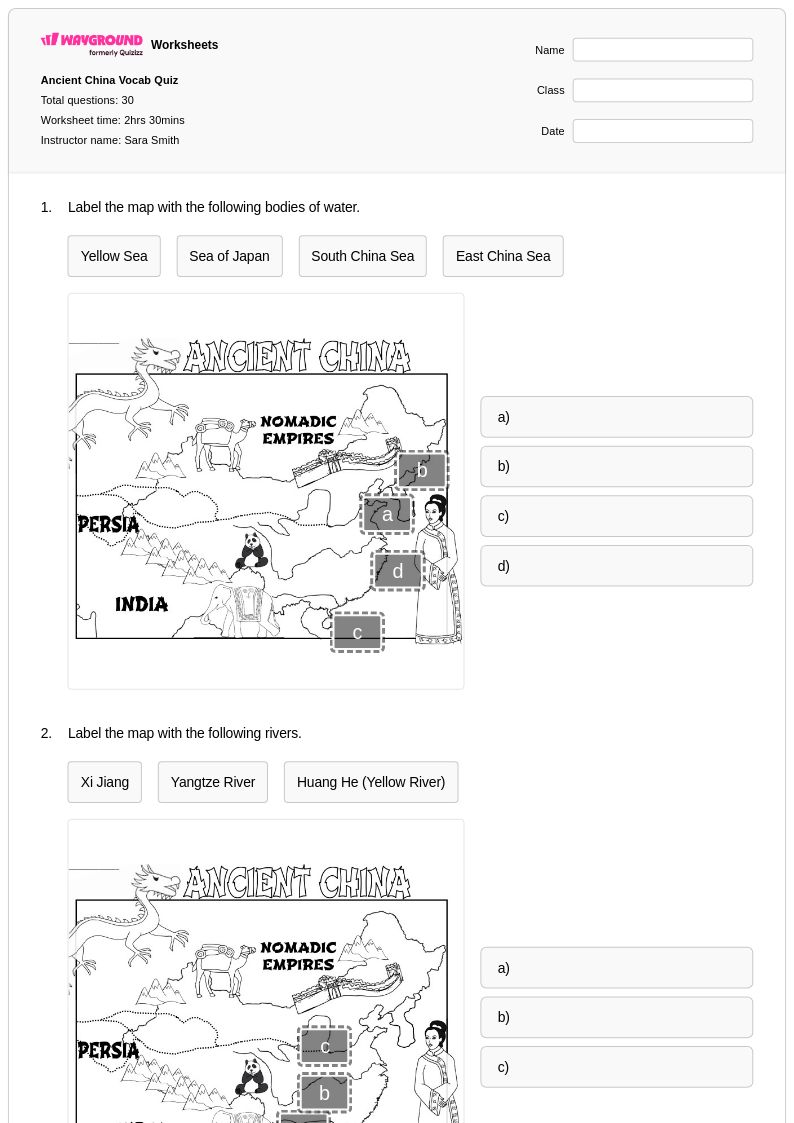
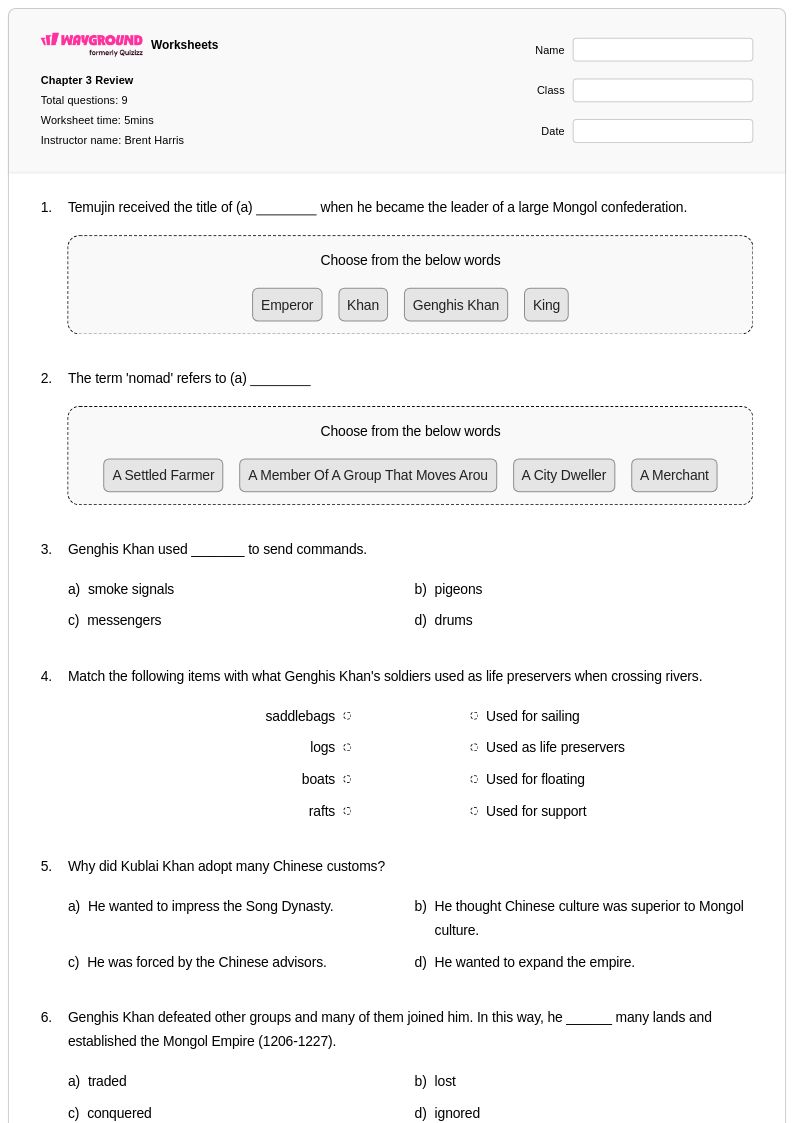
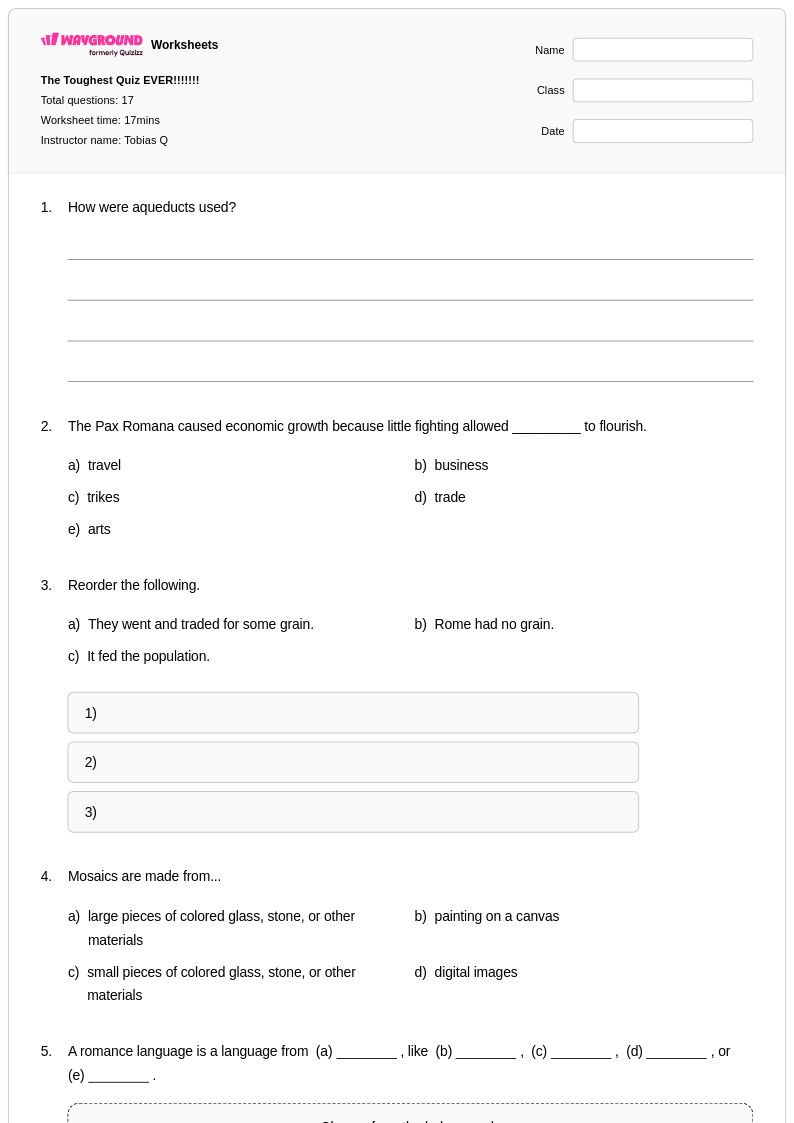
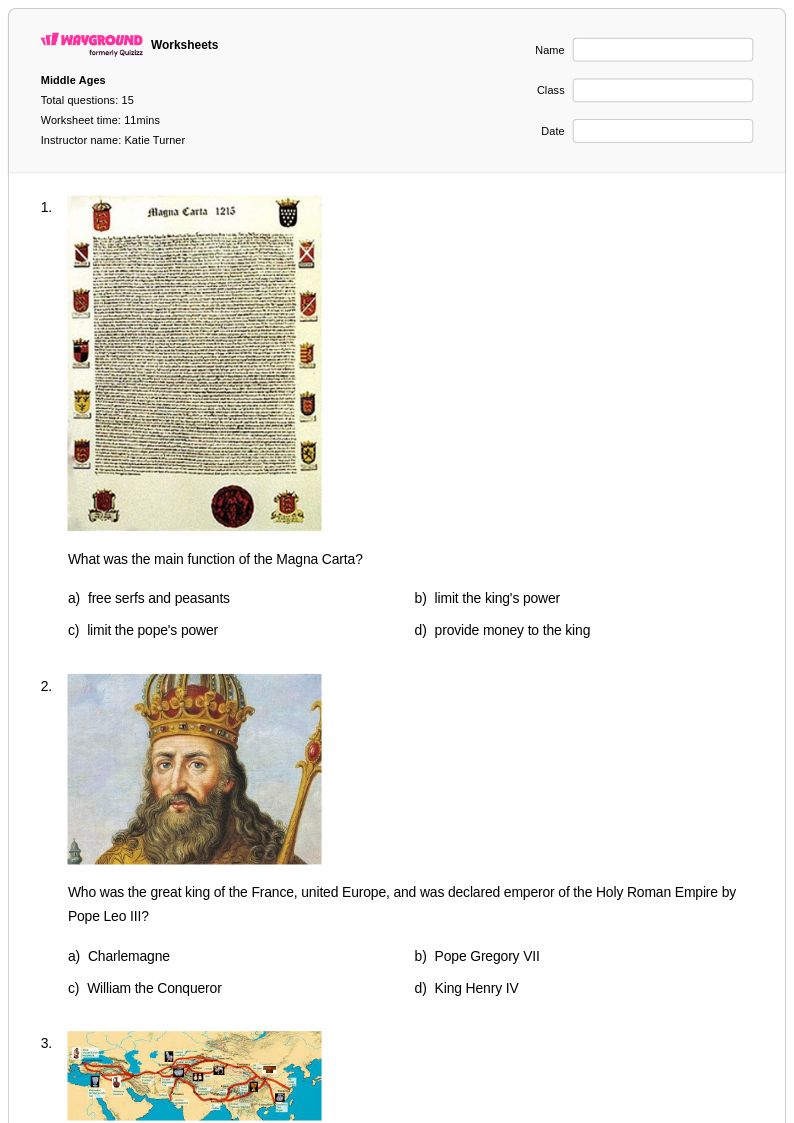
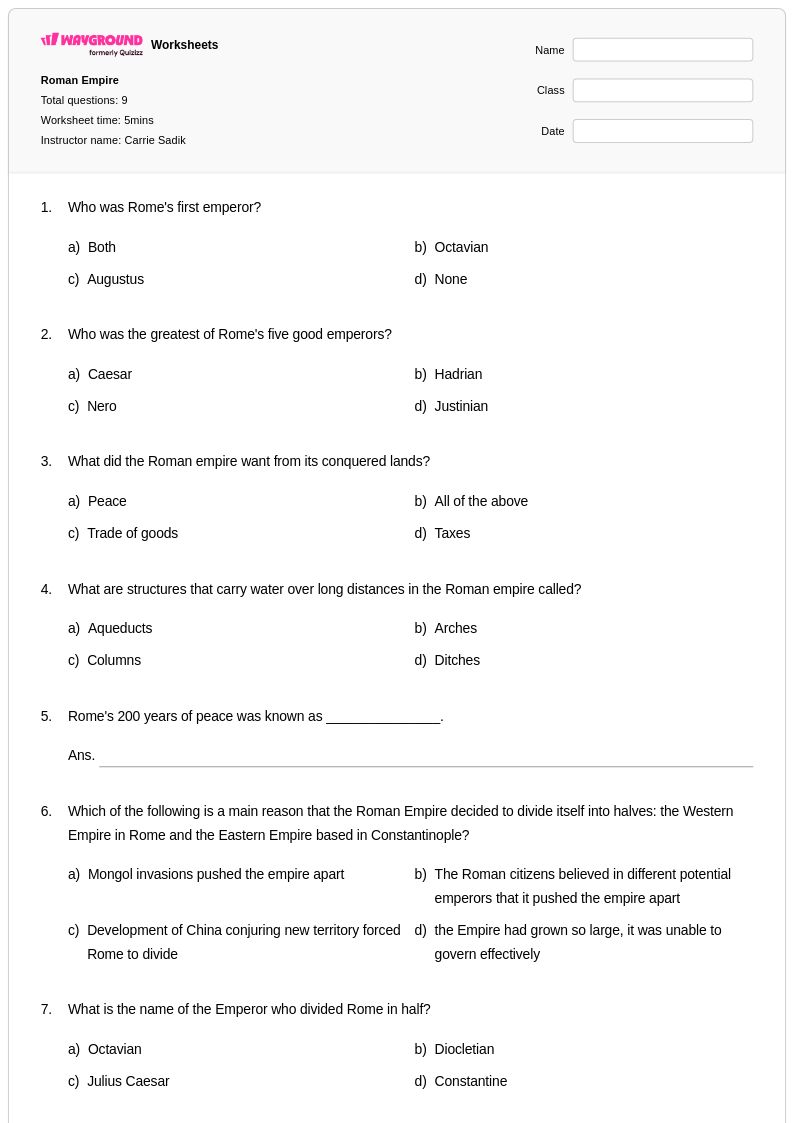
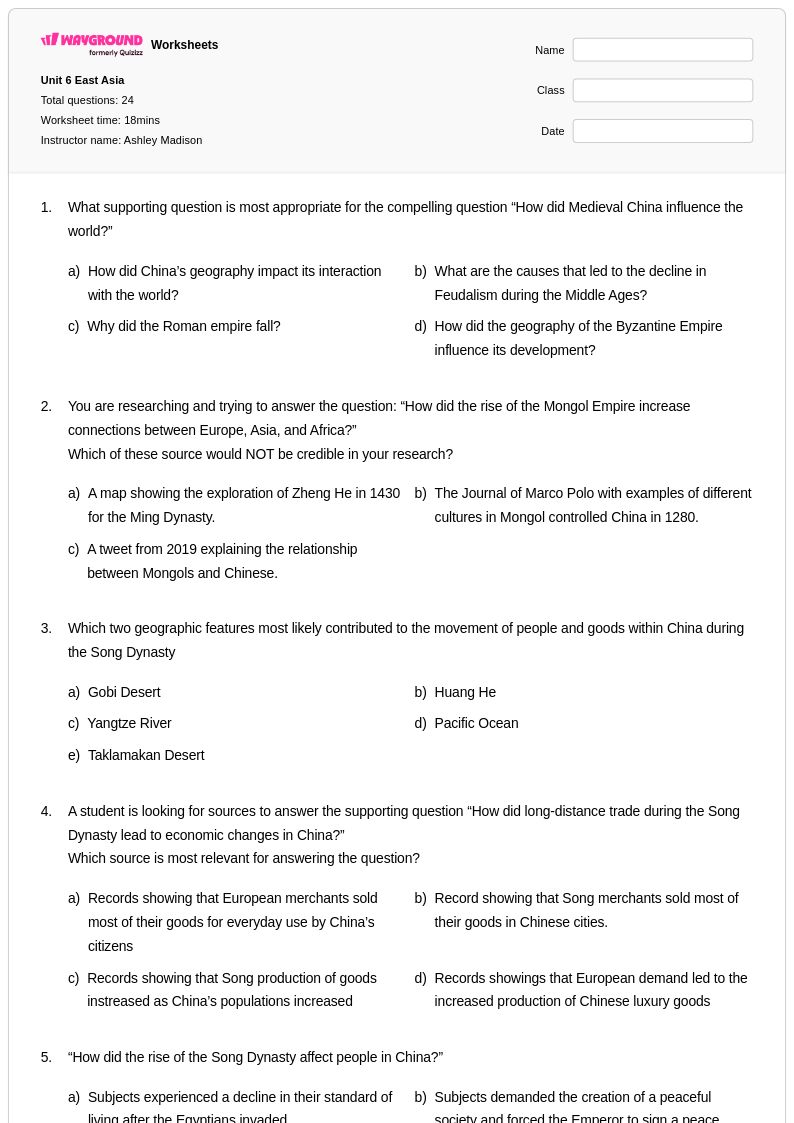
The Mongol Empire worksheets available through Wayground (formerly Quizizz) provide Class 6 students with comprehensive materials to explore one of history's most expansive and influential civilizations. These expertly designed resources strengthen critical thinking skills by guiding students through the empire's remarkable expansion under leaders like Genghis Khan and his successors, examining the military innovations that enabled Mongol conquests, and analyzing the cultural and economic exchanges that occurred across the Silk Road trade routes. Students engage with practice problems that develop their ability to interpret historical maps, analyze primary source documents, and understand cause-and-effect relationships in medieval Asian and European history. Each worksheet includes a detailed answer key to support independent learning and self-assessment, while the free printables offer teachers flexible options for classroom instruction, homework assignments, and skill reinforcement activities covering topics from Mongol military tactics to the empire's lasting impact on global trade and cultural diffusion.
Wayground (formerly Quizizz) empowers teachers with access to millions of teacher-created resources specifically focused on the Mongol Empire and medieval world history, featuring robust search and filtering capabilities that allow educators to quickly locate materials aligned with their curriculum standards and learning objectives. The platform's differentiation tools enable teachers to customize worksheets for diverse learning needs, providing both remediation support for struggling students and enrichment opportunities for advanced learners who can explore complex topics like the Pax Mongolica and cross-cultural exchanges in greater depth. Available in both printable pdf format and interactive digital versions, these resources seamlessly integrate into various instructional approaches, whether teachers need materials for traditional paper-based activities, technology-enhanced lessons, or hybrid learning environments. The comprehensive collection supports effective lesson planning by offering ready-to-use materials that can be easily modified, combined, or supplemented to create engaging learning experiences that help Class 6 students master essential concepts about this transformative period in world history.
FAQs
How do I teach the Mongol Empire to middle or high school students?
Teaching the Mongol Empire effectively means grounding students in the sequence of events: the unification of Mongol tribes under Genghis Khan, the mechanics of military conquest, and the administrative systems used to govern a vast, diverse empire. From there, teachers can zoom out to examine the empire's role in accelerating Silk Road trade and cross-cultural exchange. Using primary sources alongside conquest maps helps students move beyond memorizing dates and toward analyzing cause, consequence, and historical significance.
What exercises help students practice key concepts about the Mongol Empire?
Effective practice for the Mongol Empire includes map analysis activities that trace the empire's expansion across Eurasia, primary source readings that reveal Mongol governance and military strategy, and comparison tasks that connect Mongol administrative policies to their effects on conquered populations. Document-based questions focused on the Silk Road and cultural exchange are particularly useful for building analytical writing skills. These exercise types push students past surface-level recall into historical reasoning.
What misconceptions do students commonly have about the Mongol Empire?
A common misconception is that the Mongols were purely destructive — students often overlook the empire's role in facilitating trade, promoting religious tolerance, and enabling unprecedented cross-cultural communication across Eurasia. Another frequent error is conflating the unified empire under Genghis Khan with its later fragmented khanates, which had distinct cultures and governing styles. Students also tend to underestimate the sophistication of Mongol administrative and legal systems, particularly the Yasa code.
How do I use Mongol Empire worksheets in my classroom?
Mongol Empire worksheets on Wayground are available as printable PDFs for traditional classroom use and in digital formats for technology-integrated or hybrid learning environments, including the option to host them as a quiz directly on Wayground. Teachers can use them to introduce new content, structure independent study, guide collaborative analysis, or support targeted remediation for students who need additional practice with specific concepts like Silk Road trade or Mongol military tactics.
How do I differentiate Mongol Empire instruction for students at different levels?
For students who need additional support, scaffolded worksheets with guided reading prompts and visual maps can reduce cognitive load while keeping content accessible. Advanced students benefit from enrichment tasks that explore complex historical connections, such as comparing Mongol religious tolerance policies across different khanates or evaluating the empire's long-term impact on Eurasian state-building. On Wayground, teachers can also apply individual accommodations such as read-aloud support, extended time, or reduced answer choices to specific students without disrupting the rest of the class.
How does the Mongol Empire connect to broader world history standards?
The Mongol Empire is central to world history curricula covering medieval Eurasia, global trade networks, and cross-cultural exchange. It connects directly to standards on the Silk Road, the spread of religion and disease, the transformation of political systems in conquered regions, and the rise of early globalization. Teaching the Mongols also provides an entry point for comparative analysis with other large empires, making it a high-leverage topic for building transferable historical thinking skills.