Free Printable Thermal Energy Worksheets for Class 4
Explore Class 4 thermal energy worksheets and printables through Wayground that help students understand heat transfer, temperature changes, and energy movement with engaging practice problems, free PDF downloads, and complete answer keys.
Explore printable Thermal Energy worksheets for Class 4
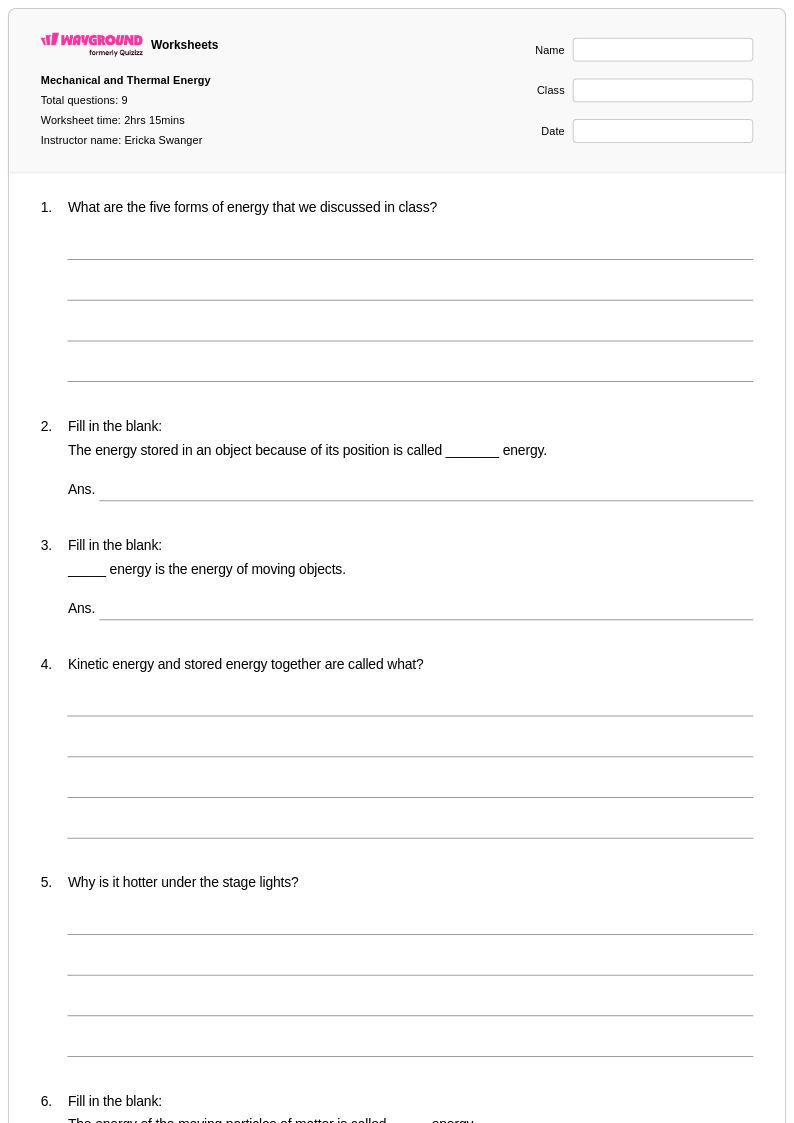
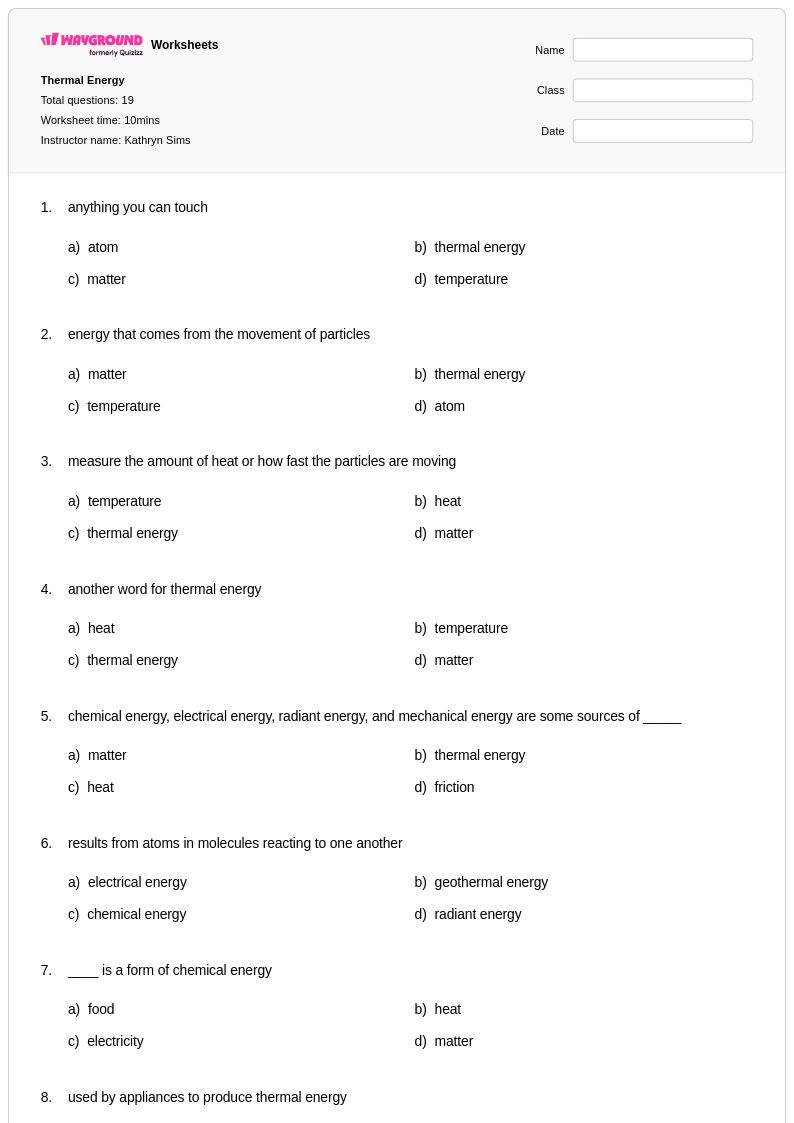
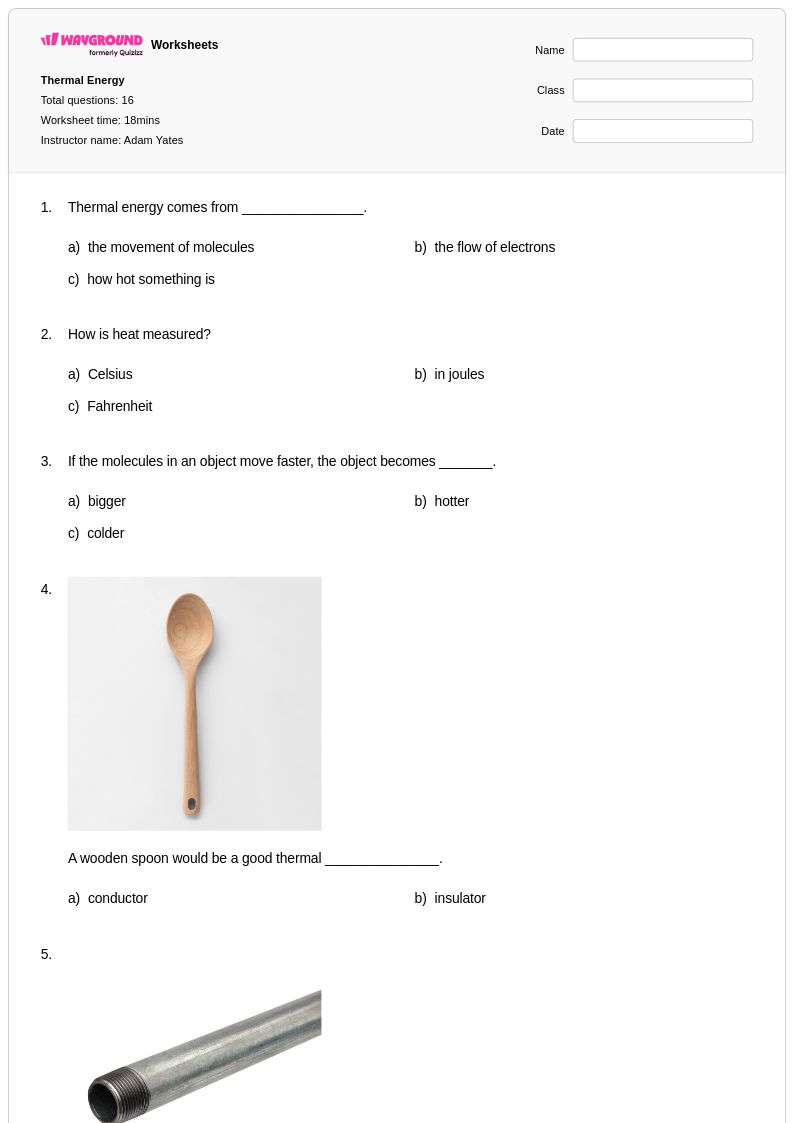
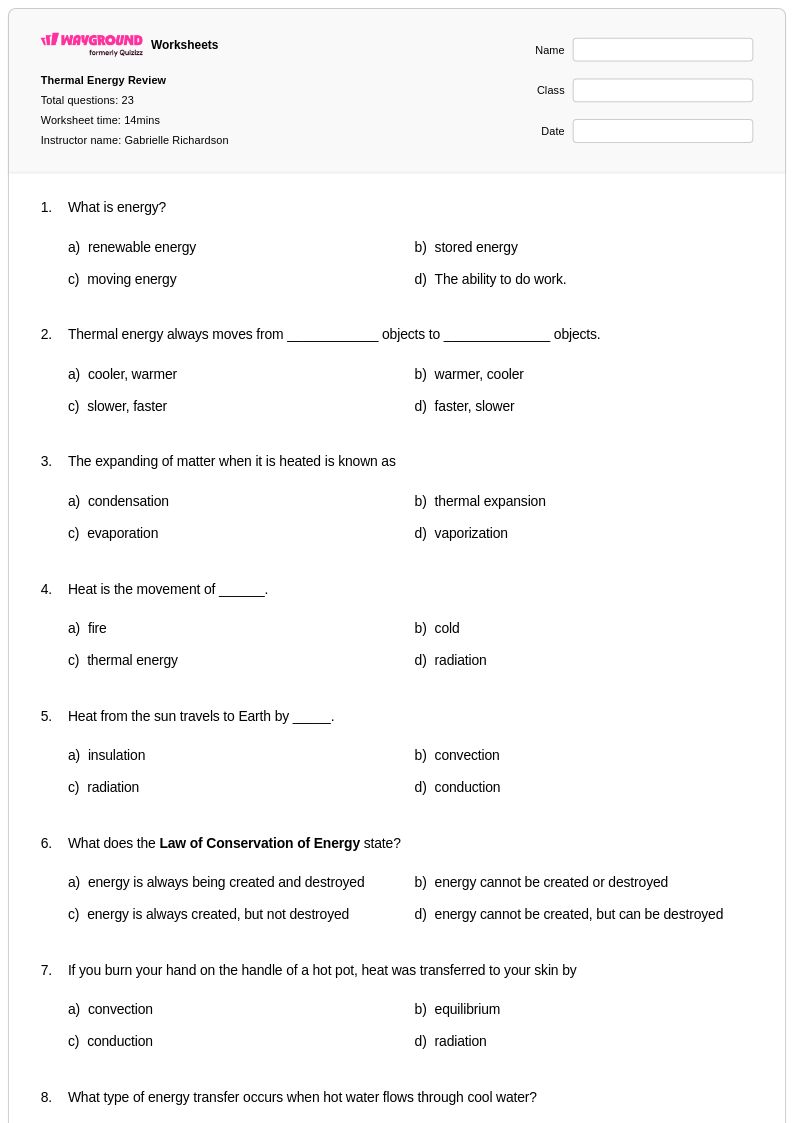
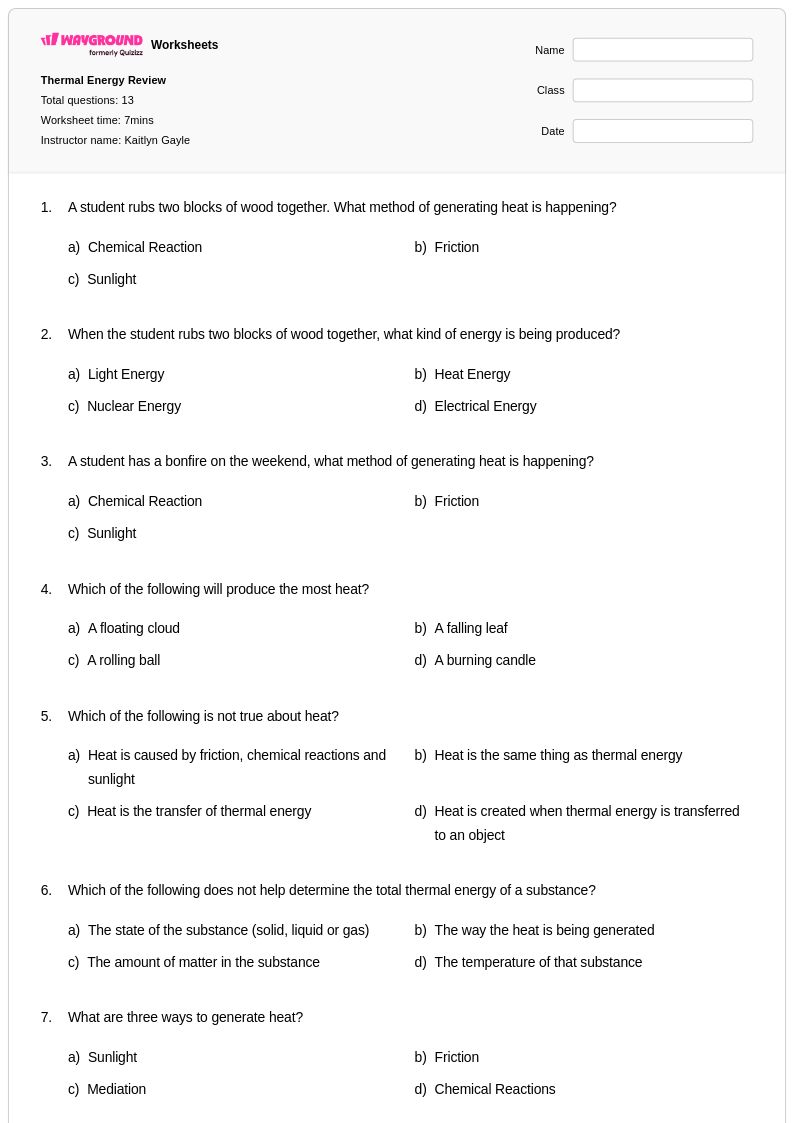
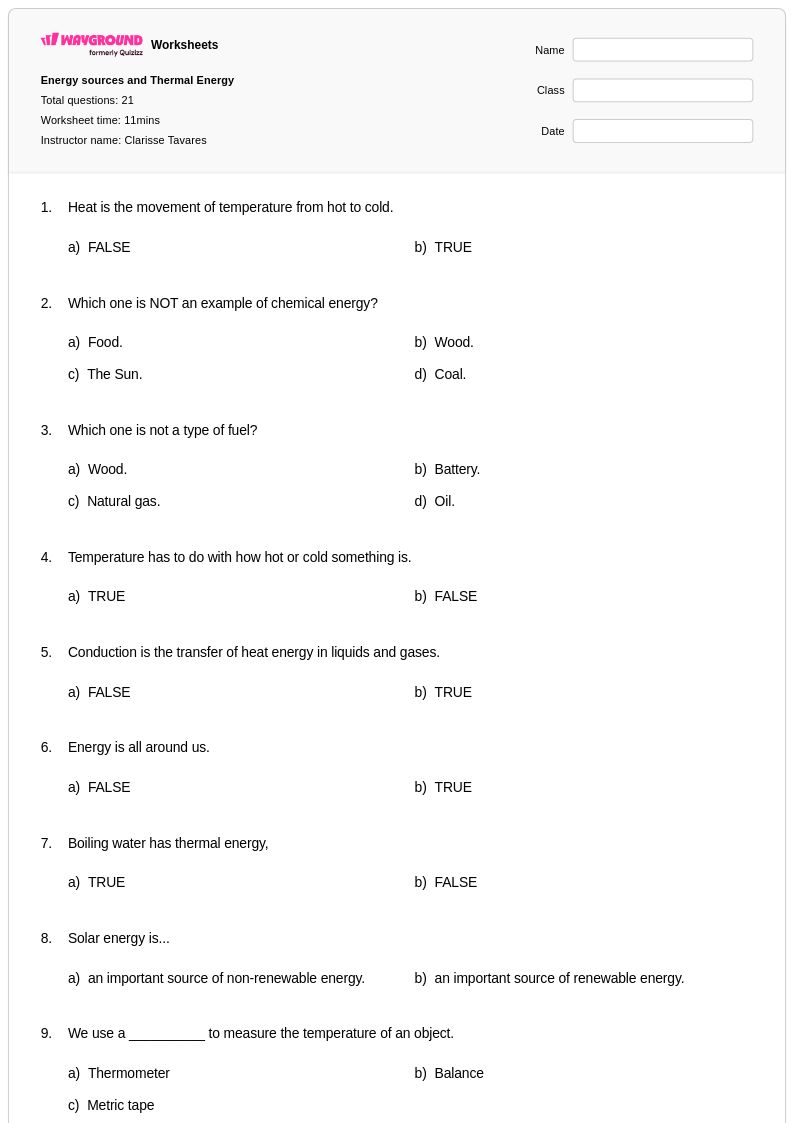
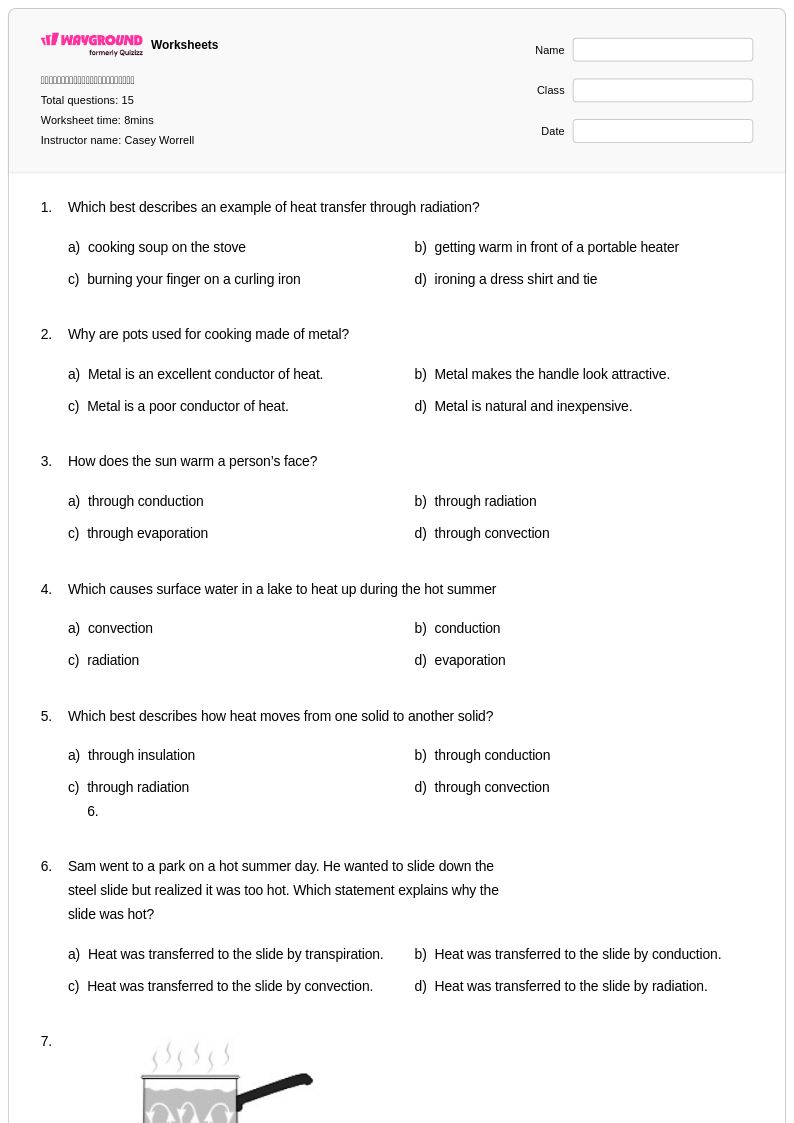
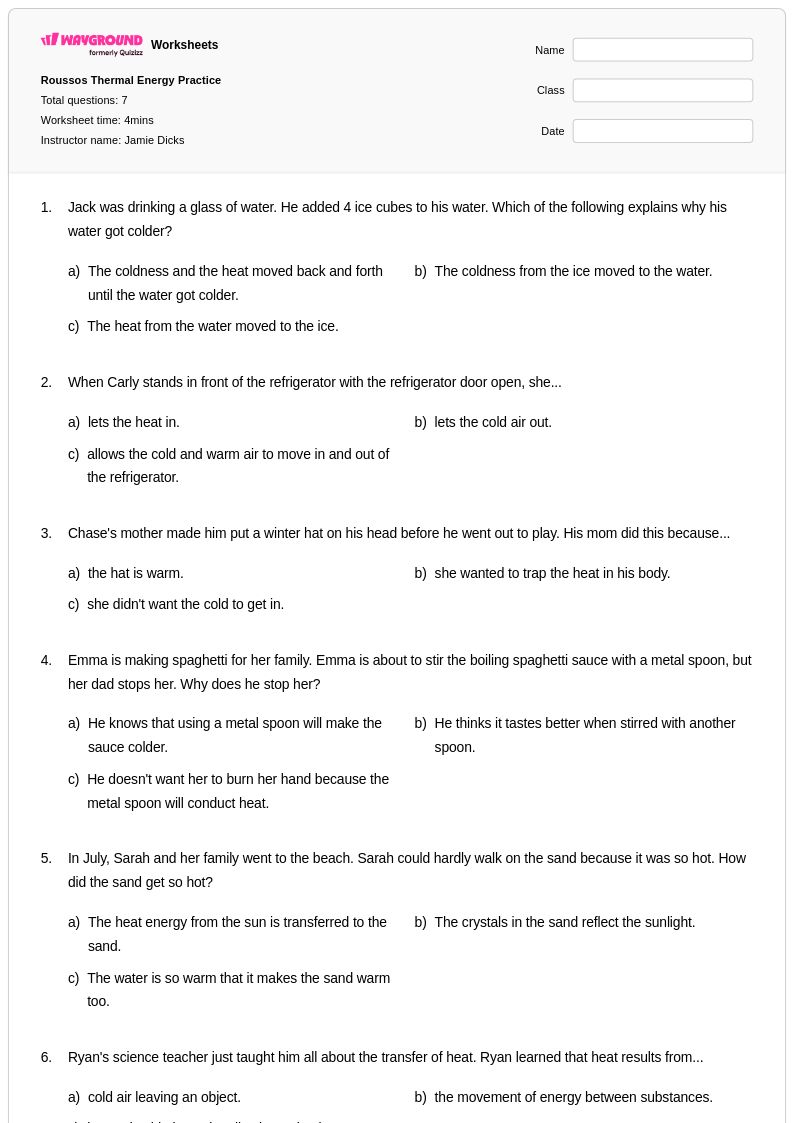
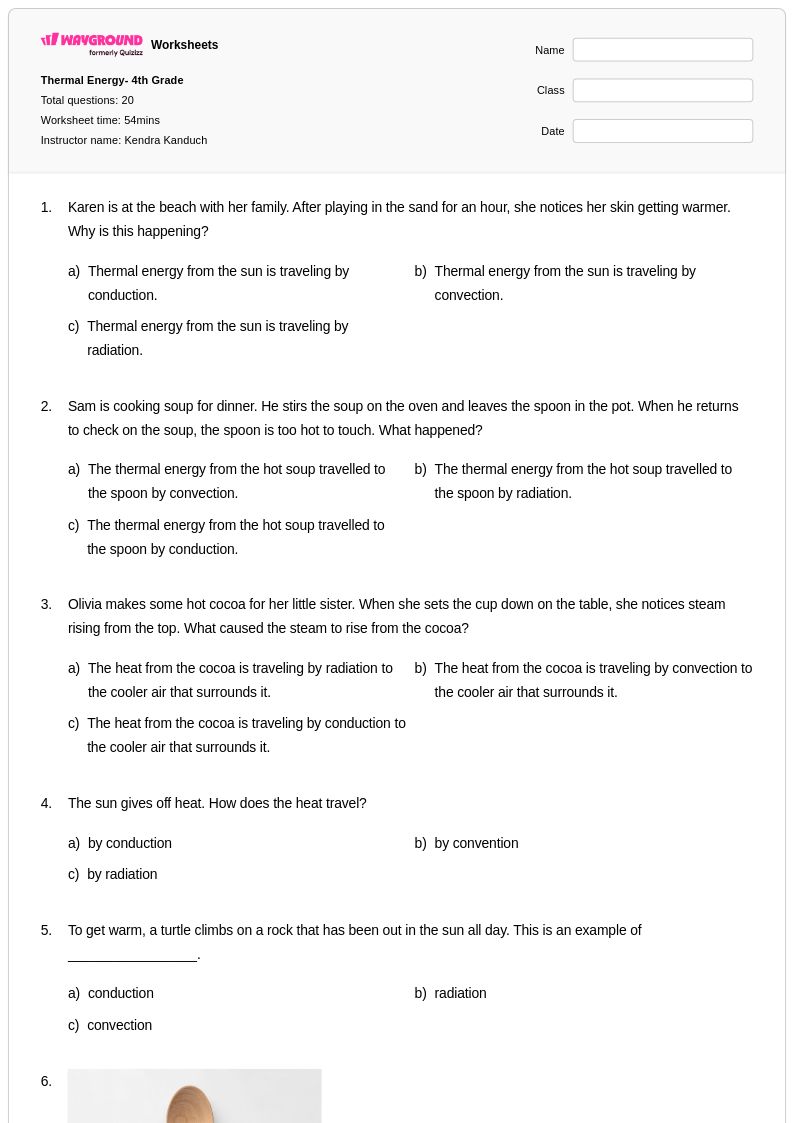
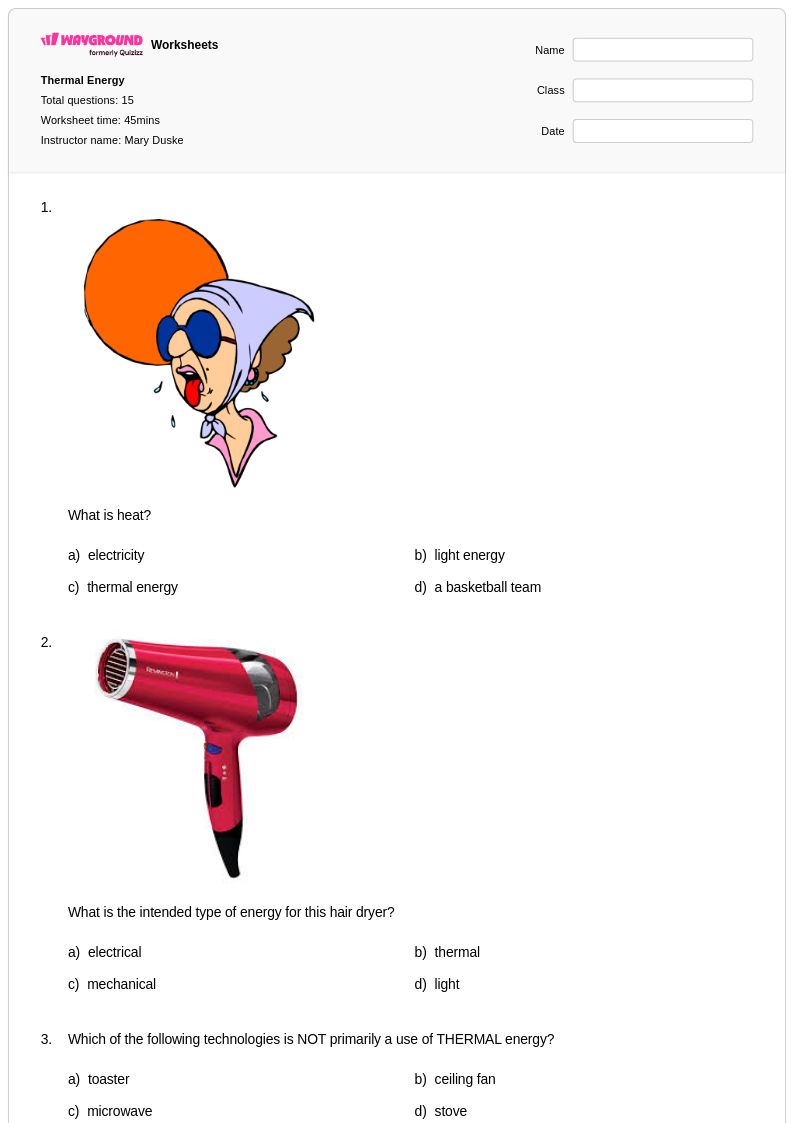
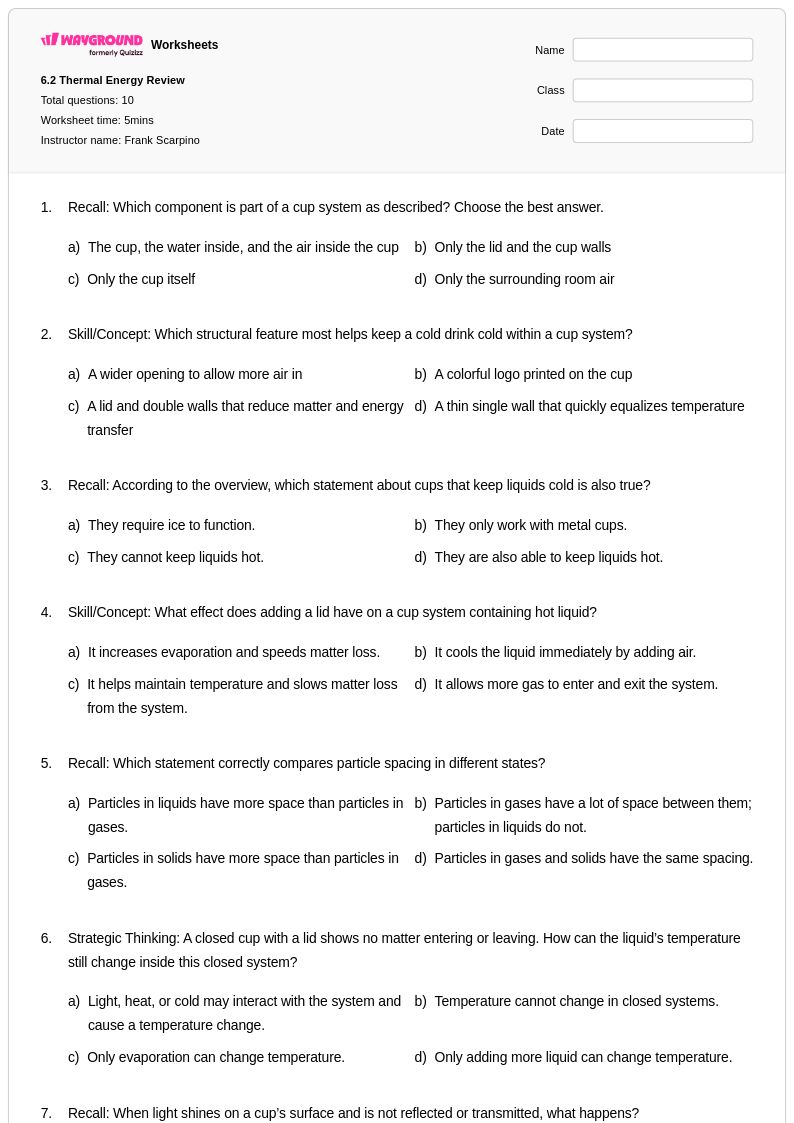
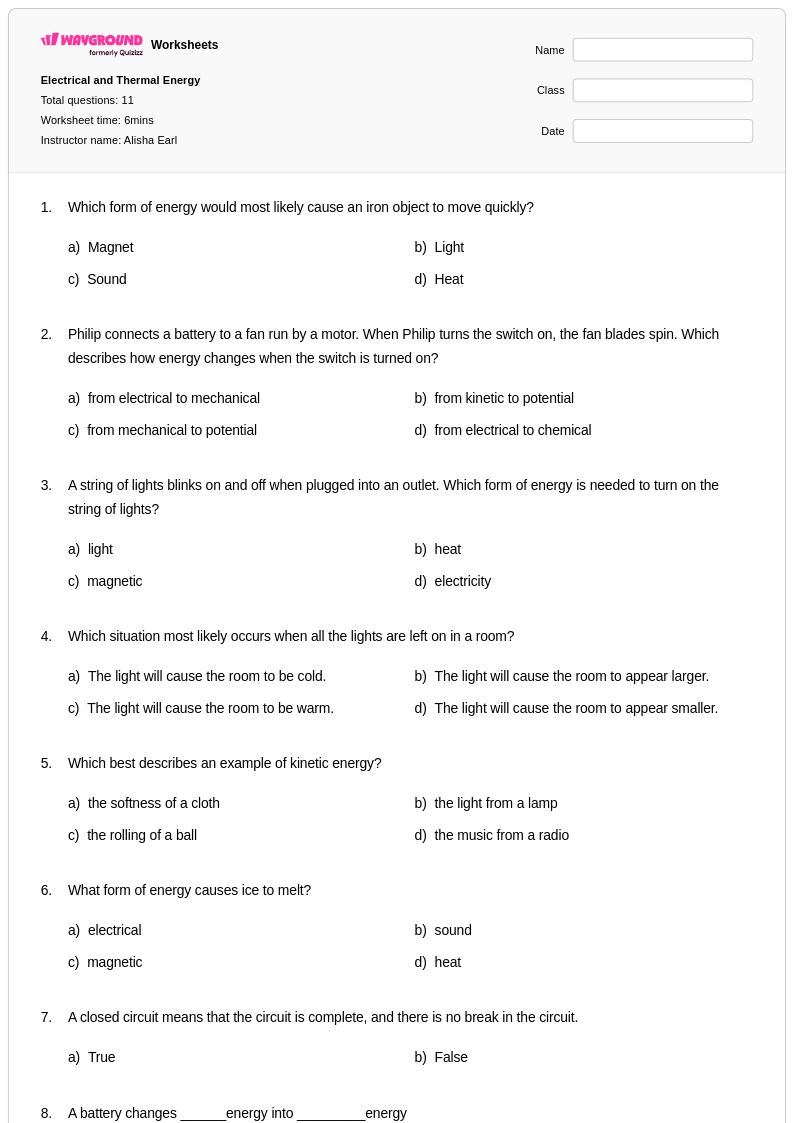
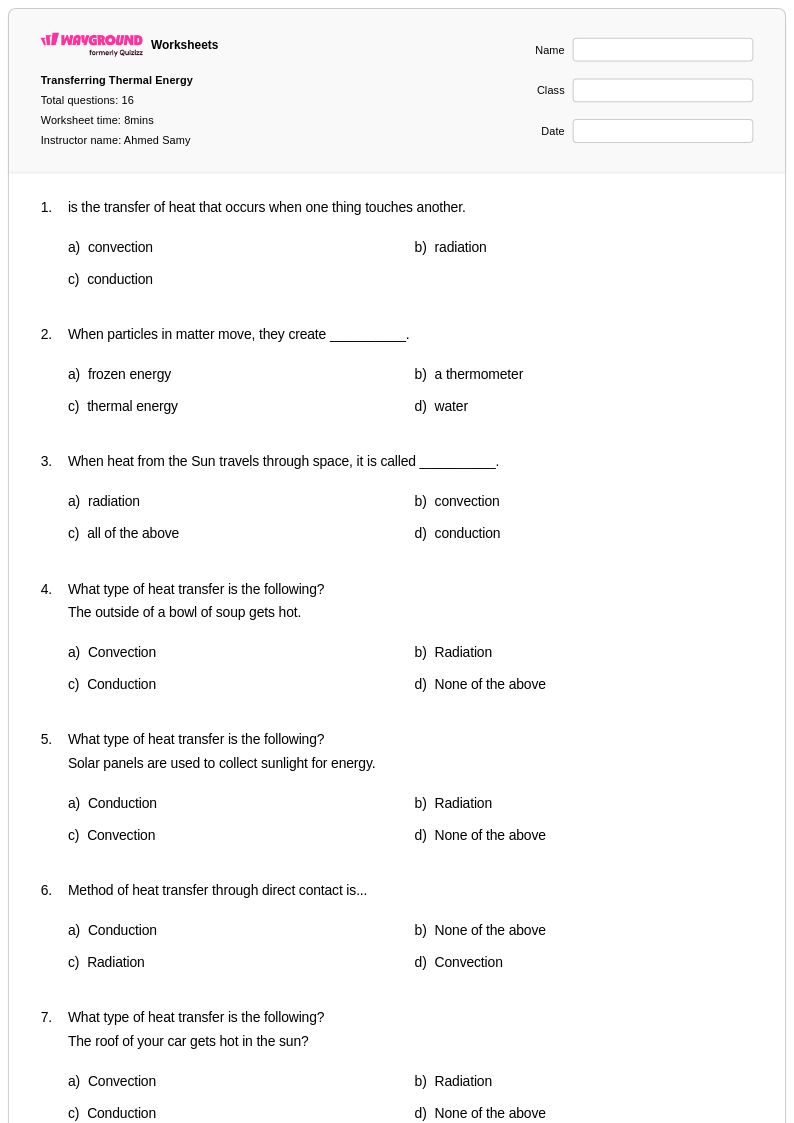
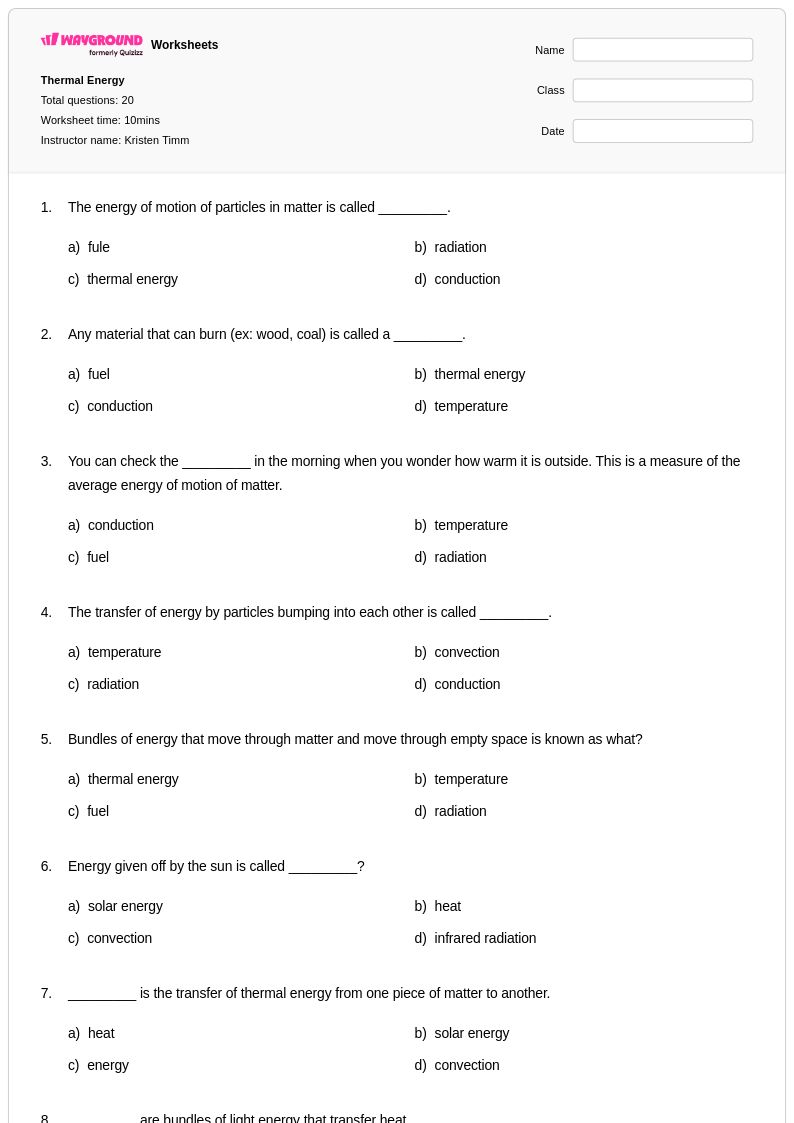
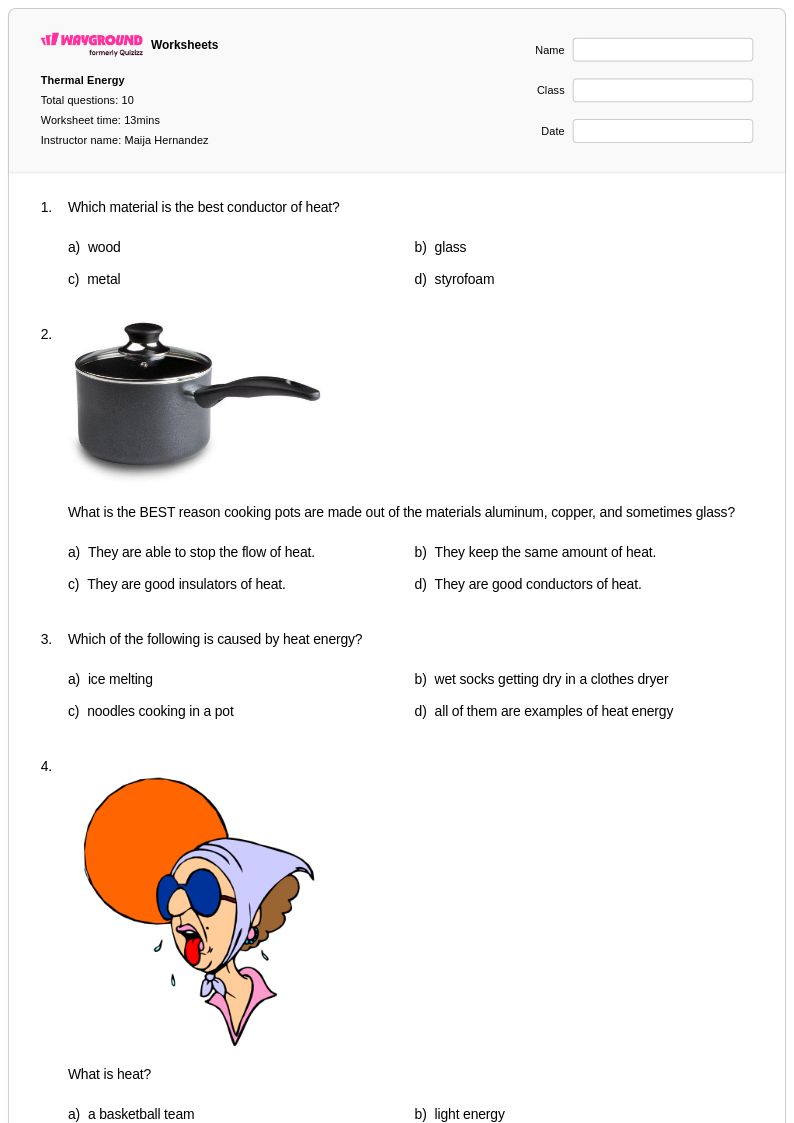
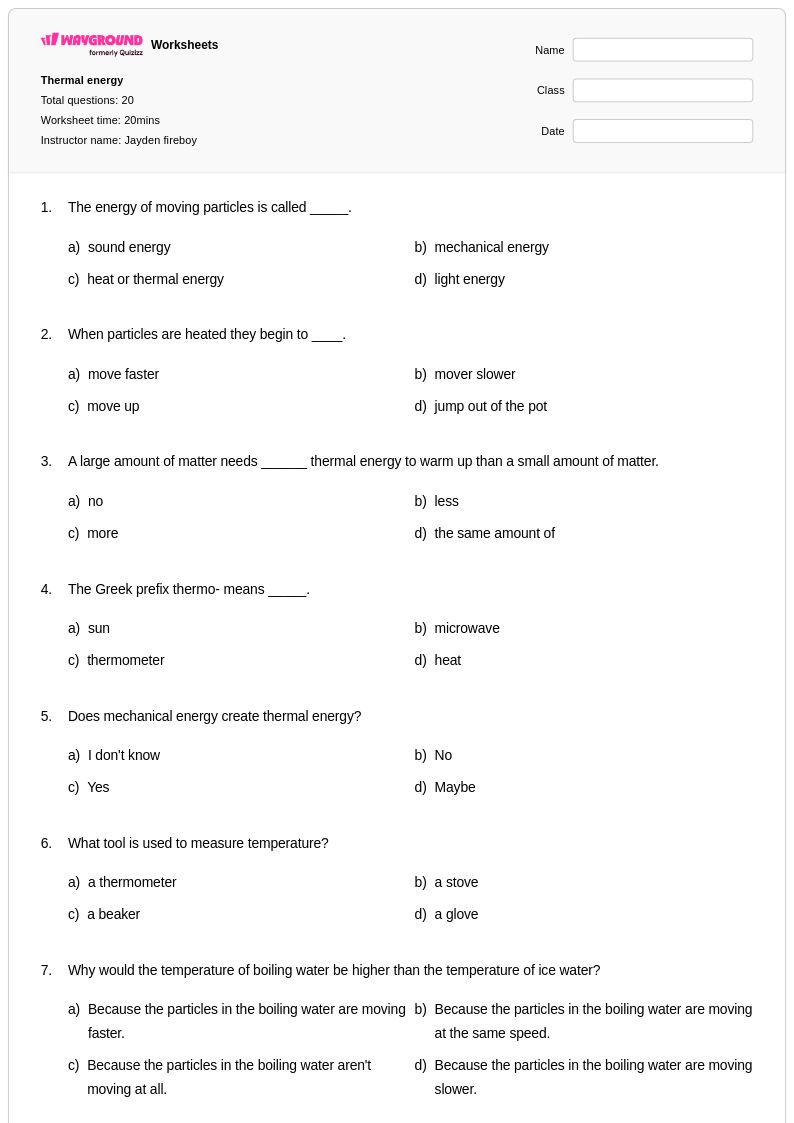
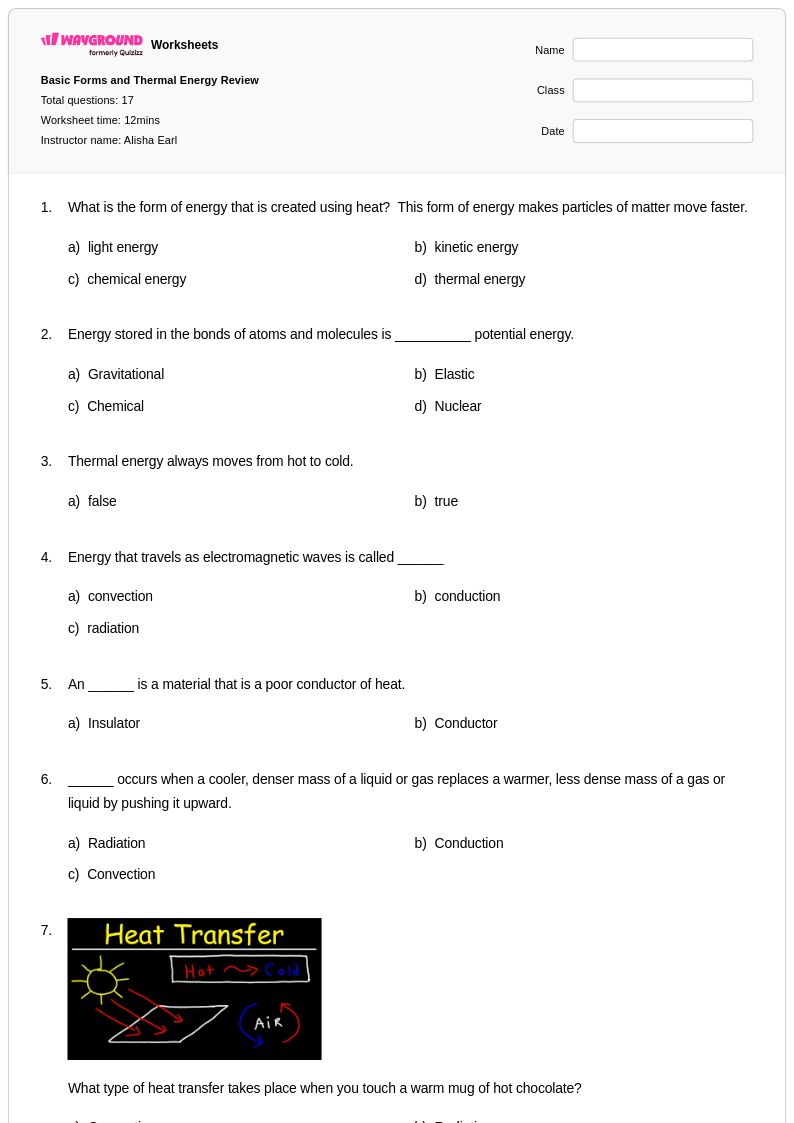
Thermal energy worksheets for Class 4 students available through Wayground (formerly Quizizz) provide comprehensive coverage of fundamental heat concepts that align with elementary physics standards. These carefully designed educational resources help young learners understand how thermal energy moves through different materials, explore the relationship between temperature and molecular motion, and investigate everyday examples of heat transfer through conduction, convection, and radiation. The worksheet collections include diverse practice problems that challenge students to identify heat sources, predict temperature changes, and analyze thermal energy in familiar scenarios like cooking, weather patterns, and seasonal changes. Each worksheet comes with a detailed answer key to support accurate assessment, and the free printable pdf format ensures easy classroom distribution and homework assignments.
Wayground's extensive library of teacher-created thermal energy resources empowers educators with millions of expertly developed materials that can be seamlessly integrated into Class 4 science instruction. The platform's robust search and filtering capabilities allow teachers to quickly locate worksheets that match specific learning objectives, student ability levels, and curriculum standards for elementary physics education. These differentiation tools enable instructors to customize thermal energy content for diverse learners, providing both remediation support for struggling students and enrichment opportunities for advanced learners. The flexible format options, including both digital and printable pdf versions, accommodate various teaching styles and classroom technologies while supporting effective lesson planning, skill practice sessions, and formative assessment strategies that strengthen student understanding of thermal energy principles.
FAQs
How do I teach thermal energy to middle and high school students?
Start by grounding students in the particle model of matter, helping them connect molecular motion to temperature and heat. From there, sequence instruction through the three modes of heat transfer: conduction, convection, and radiation, using everyday examples like metal spoons heating up or warm air rising. Once students understand transfer mechanisms, introduce quantitative concepts like specific heat capacity and calorimetry to build computational fluency alongside conceptual understanding.
What practice problems help students master heat transfer and thermal energy calculations?
Effective practice should span both conceptual and computational tasks. For heat transfer, students benefit from identifying real-world examples of conduction, convection, and radiation and explaining the mechanism involved. For calculations, problems involving specific heat capacity, thermal equilibrium, and calorimetry reinforce the mathematical relationships between heat, mass, and temperature change. Mixing problem types, from basic temperature conversions to multi-step calorimetry scenarios, builds the range of skills students need.
What misconceptions do students commonly have about thermal energy and heat?
One of the most persistent misconceptions is that heat and temperature are the same thing. Students frequently confuse the two, not recognizing that heat is energy in transfer while temperature reflects the average kinetic energy of particles. Another common error is assuming that materials with higher temperatures always contain more thermal energy, which ignores the role of mass and specific heat capacity. Students also often struggle with the direction of heat flow, incorrectly believing that cold transfers to warm rather than the reverse.
How do I use thermal energy worksheets to support students with different learning needs?
Thermal energy worksheets on Wayground are available as printable PDFs for traditional classroom use and in digital formats for technology-integrated environments, including the option to host them as a quiz on Wayground. For students who need additional support, Wayground's accommodation tools allow teachers to enable read-aloud functionality so questions are read to students, reduce the number of answer choices to lower cognitive load, or grant extended time per question. These settings can be applied to individual students without notifying the rest of the class, and they carry over to future sessions automatically.
How do I connect thermal energy to real-world contexts students can relate to?
Thermal energy concepts appear constantly in everyday life, which makes contextualized problems highly effective. Cooking and food science connect directly to specific heat capacity and phase changes, while home insulation and weather patterns illustrate conduction and convection in applied settings. Framing practice problems around these scenarios, such as why a metal pan handle heats faster than a wooden one, or how a thermos maintains temperature, helps students internalize abstract physics principles through familiar experience.
What topics should a complete thermal energy unit cover?
A comprehensive thermal energy unit should address temperature measurement and conversion, the relationship between molecular motion and thermal energy, conduction, convection, and radiation as mechanisms of heat transfer, specific heat capacity, phase changes and latent heat, thermal expansion, and an introduction to thermodynamic laws including conservation of energy. Calorimetry problems, which require students to apply multiple concepts simultaneously, are an effective capstone for the unit and a strong indicator of conceptual mastery.