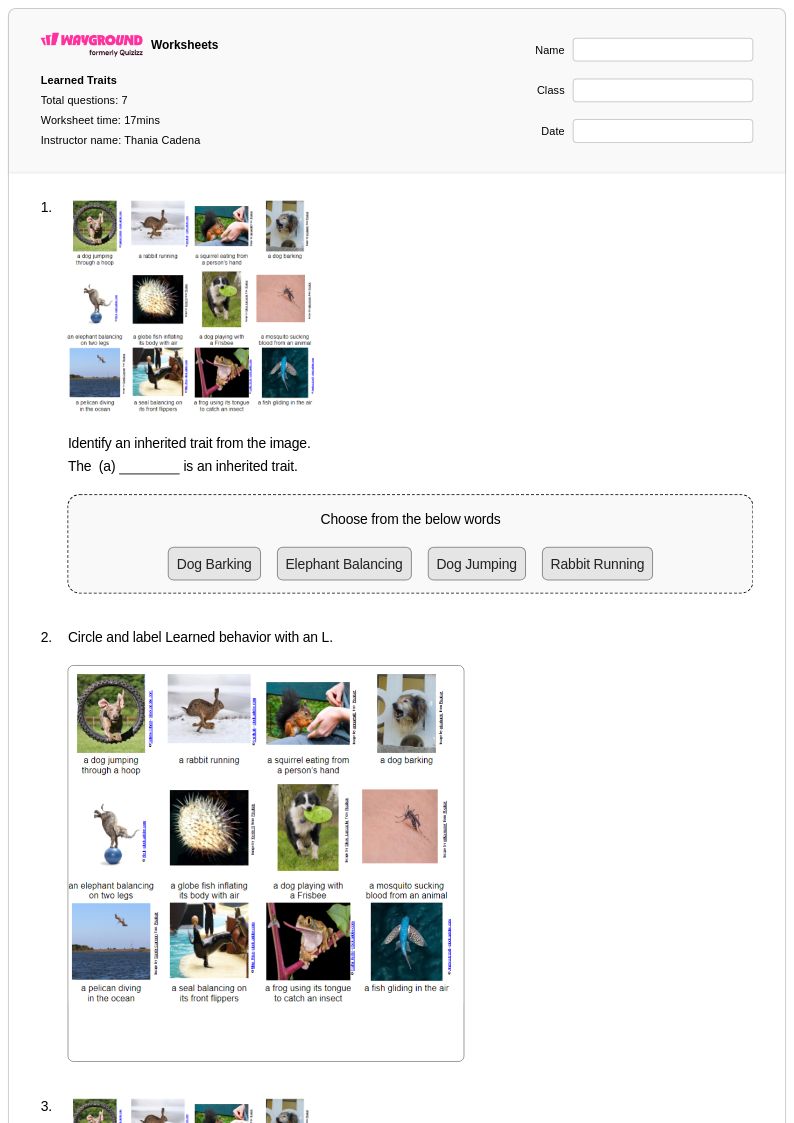
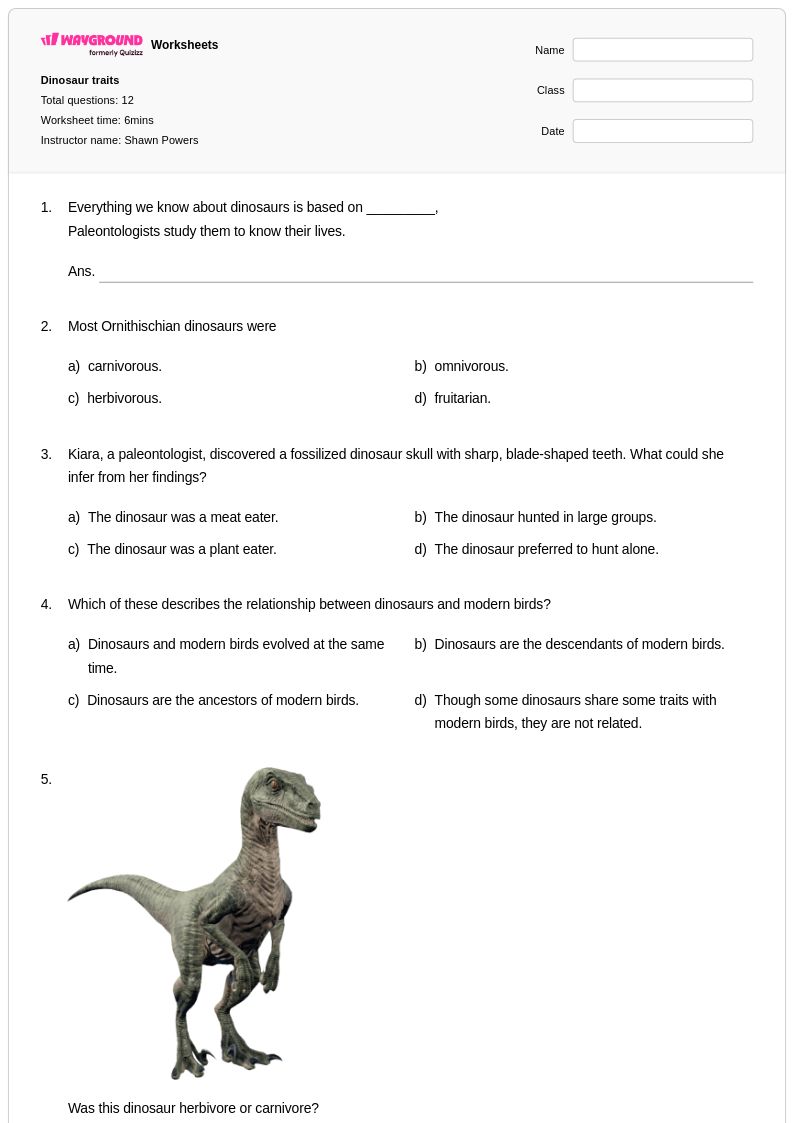
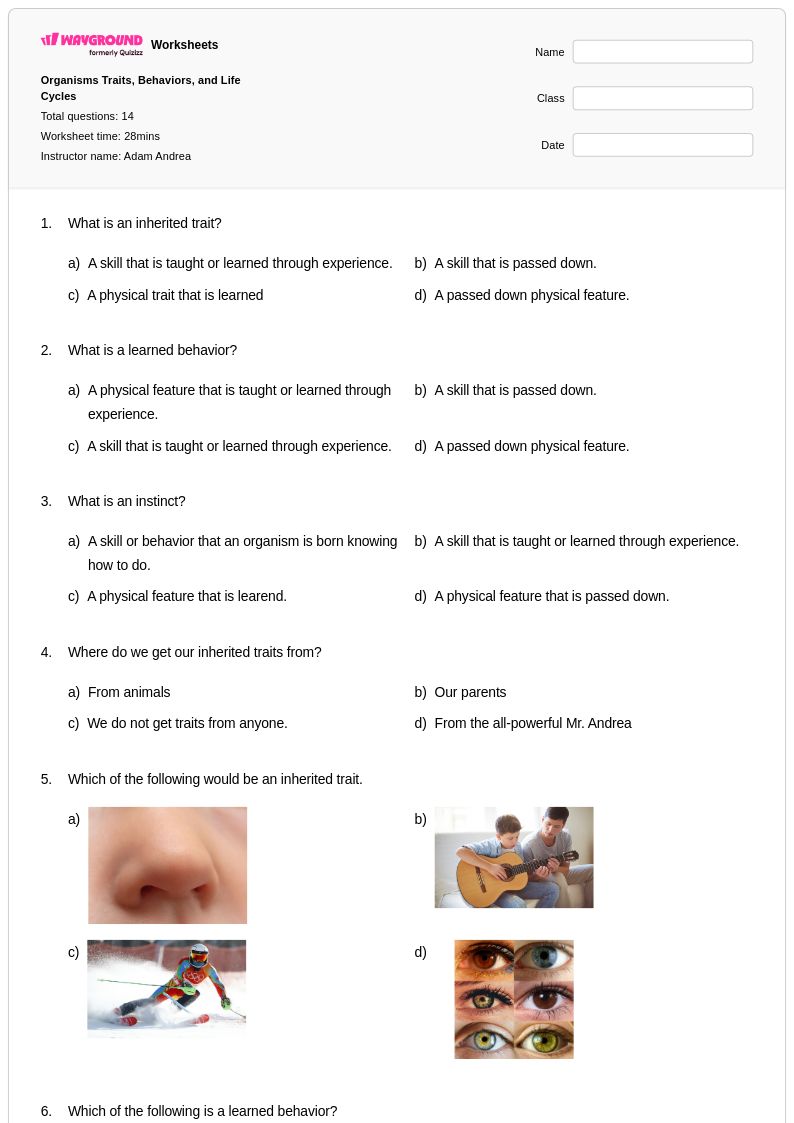
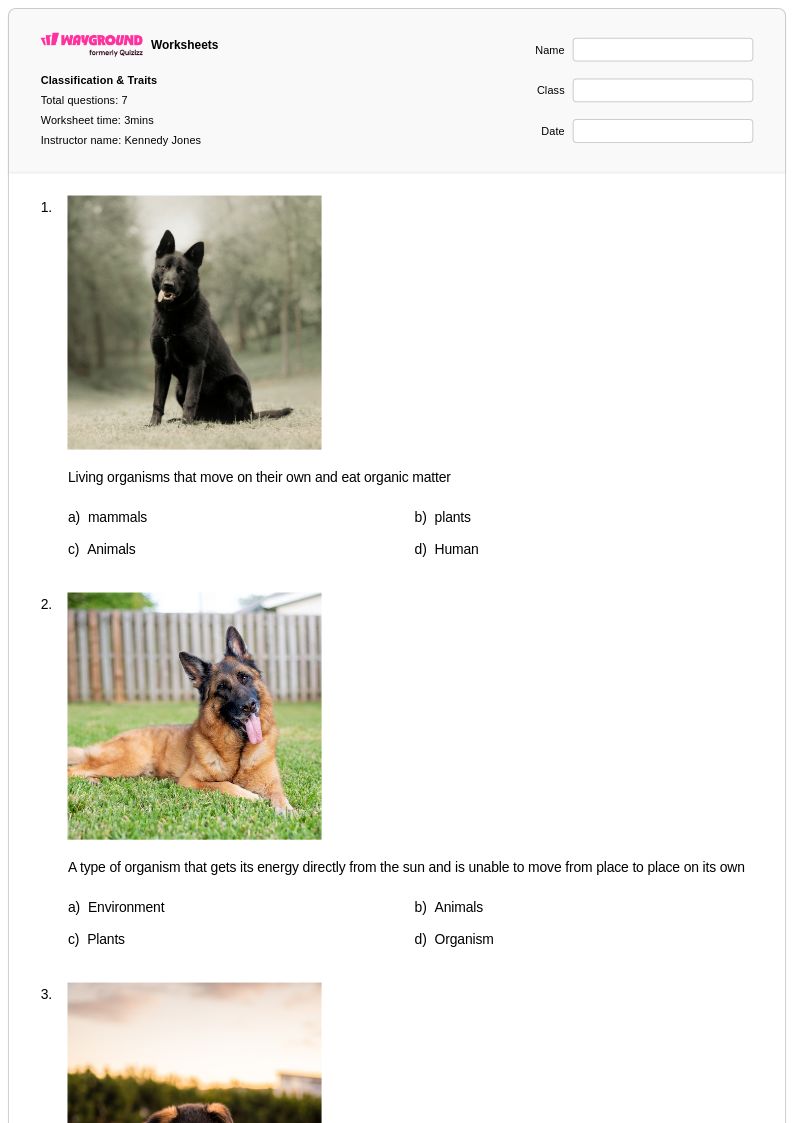
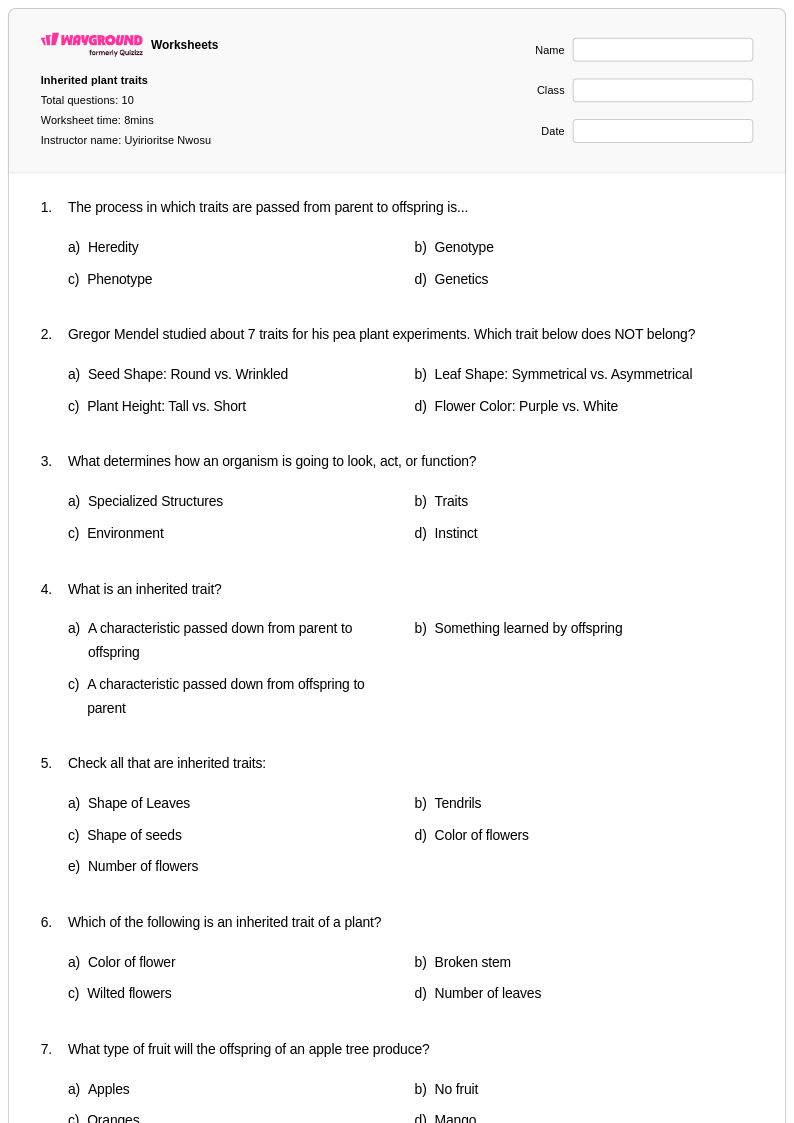
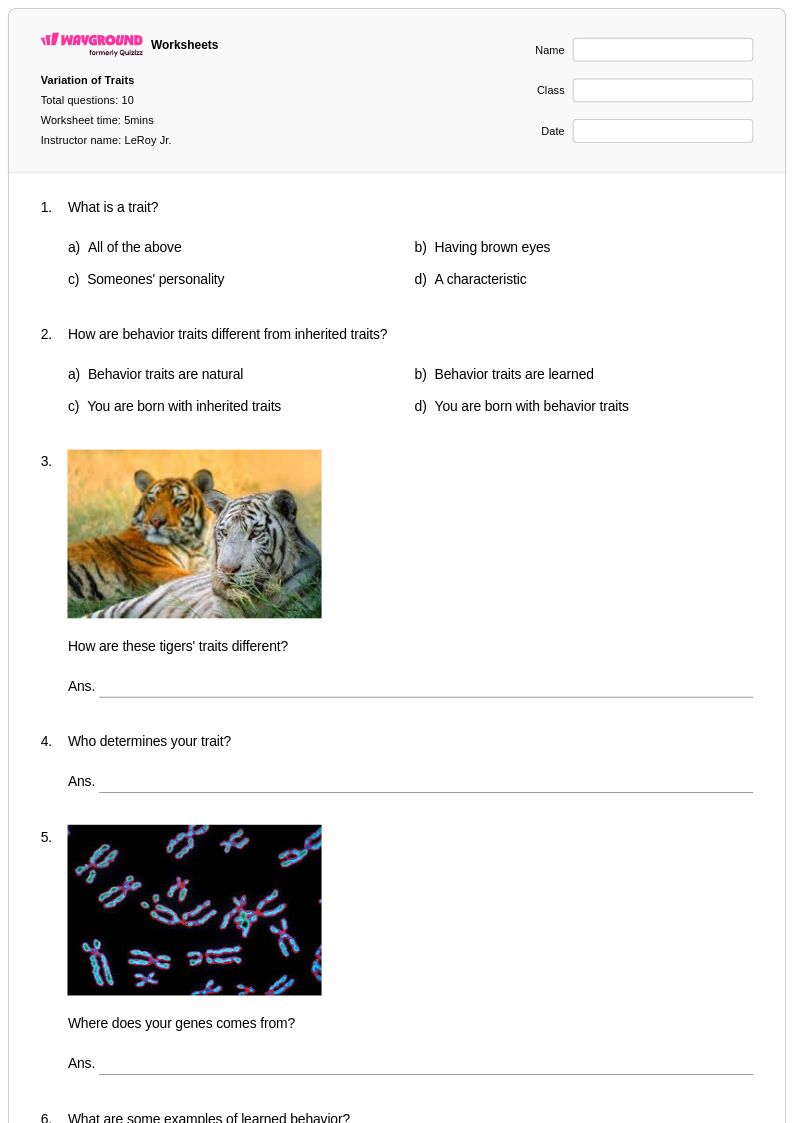
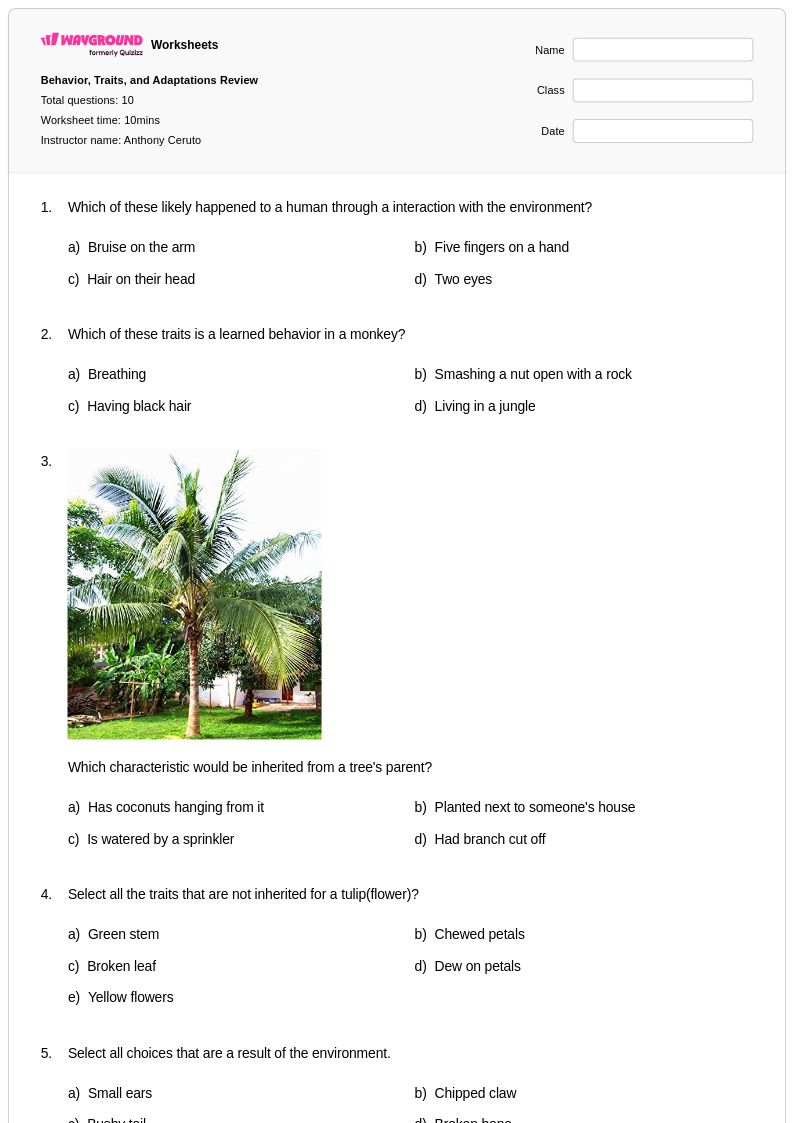
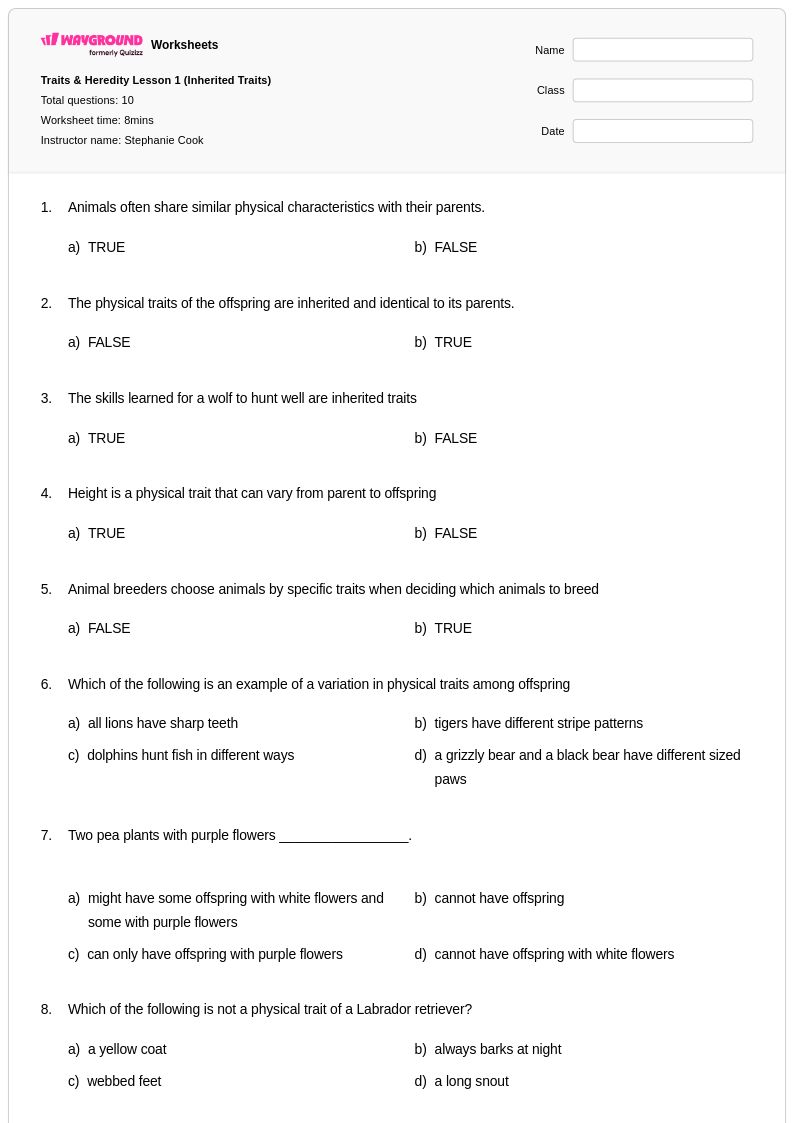
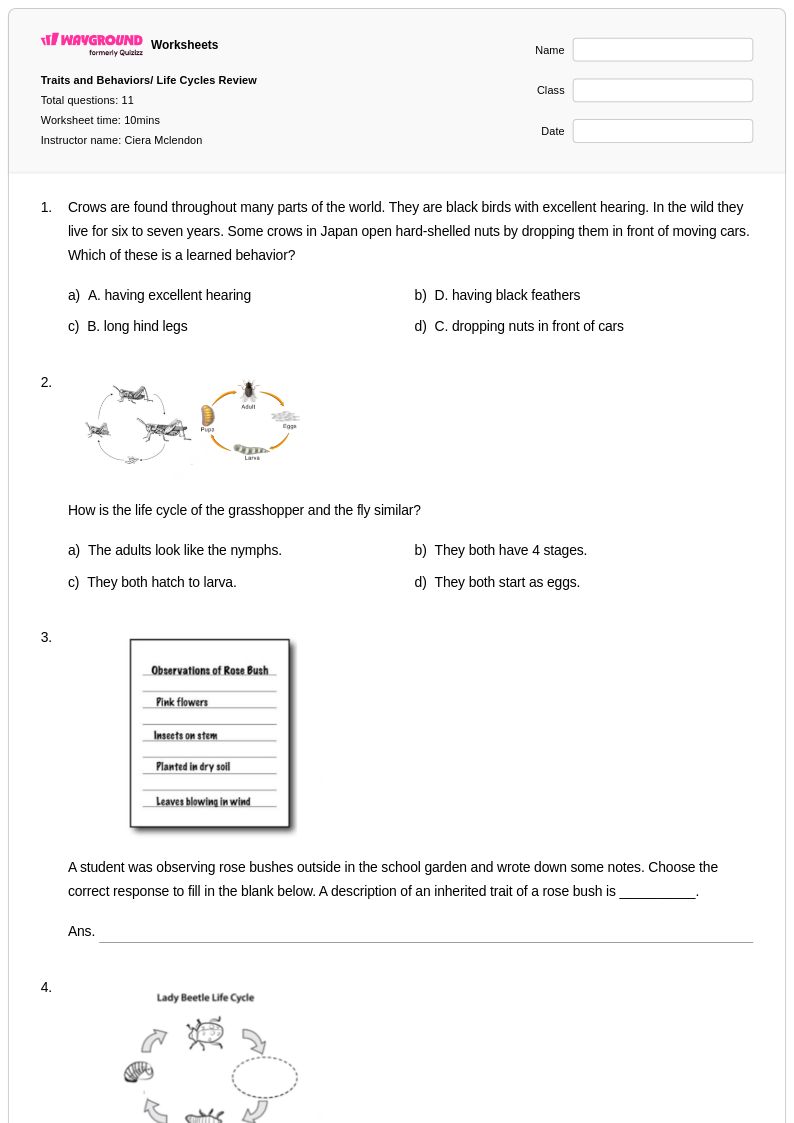
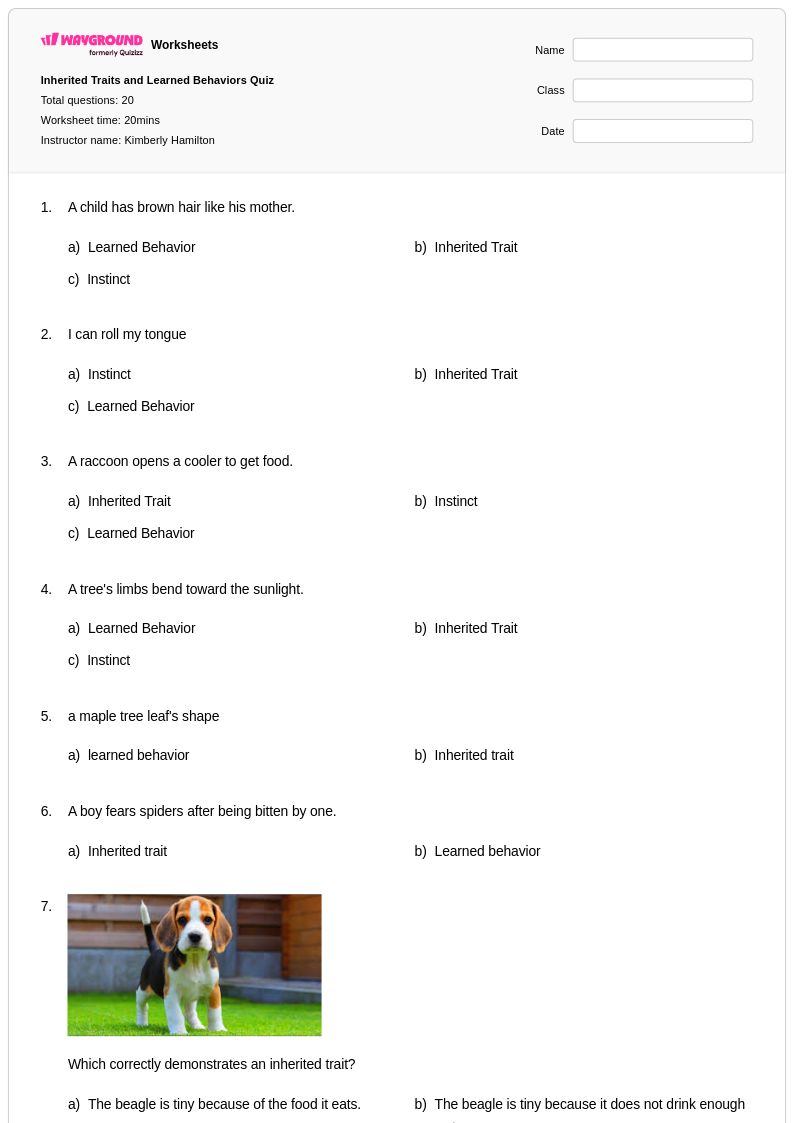
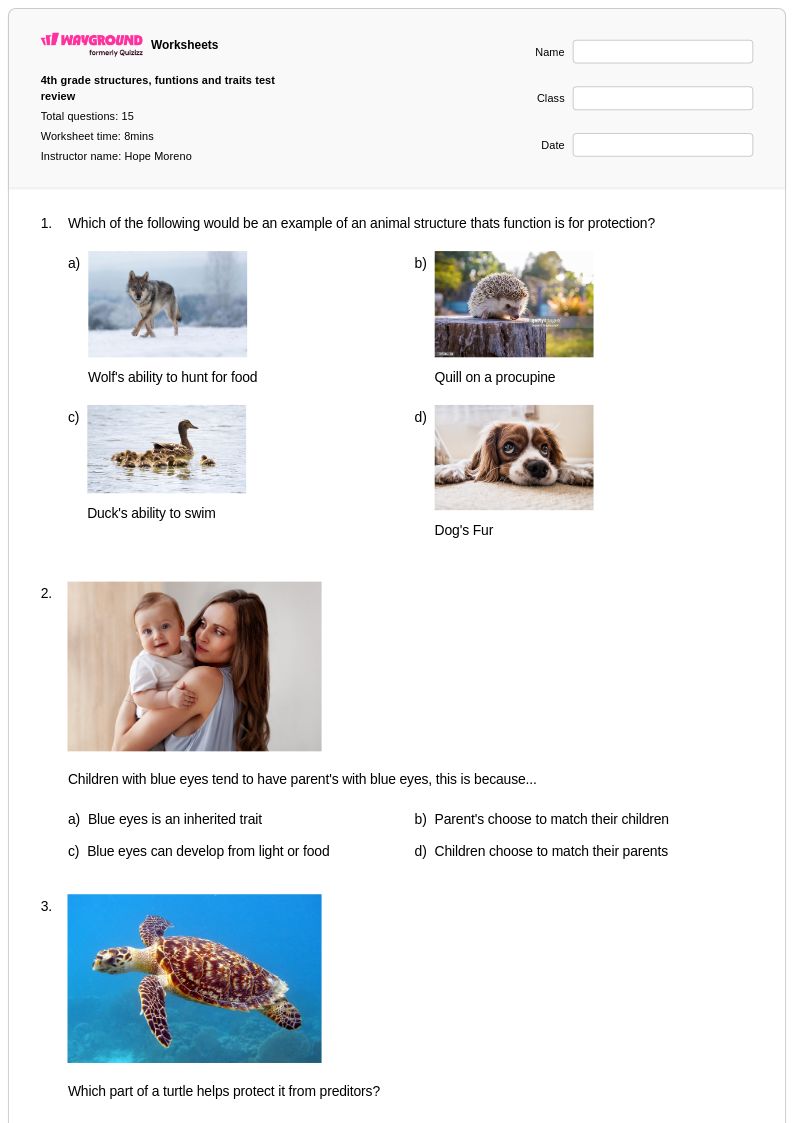
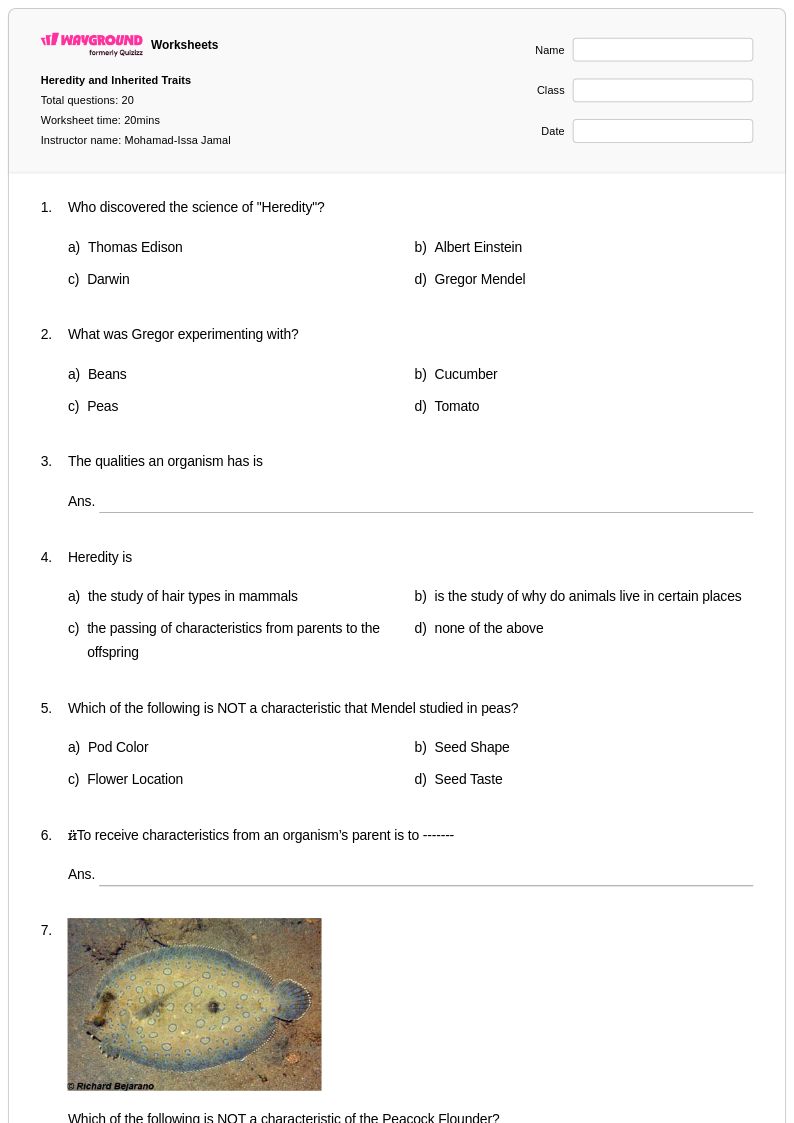
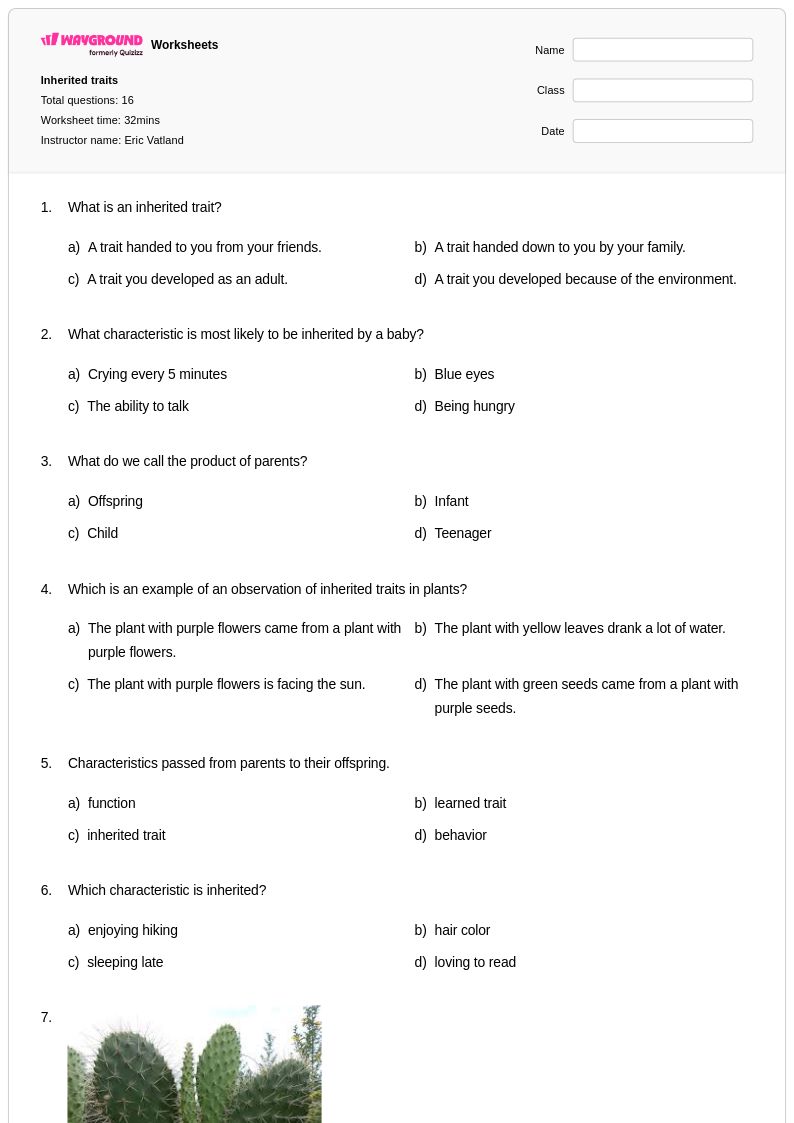
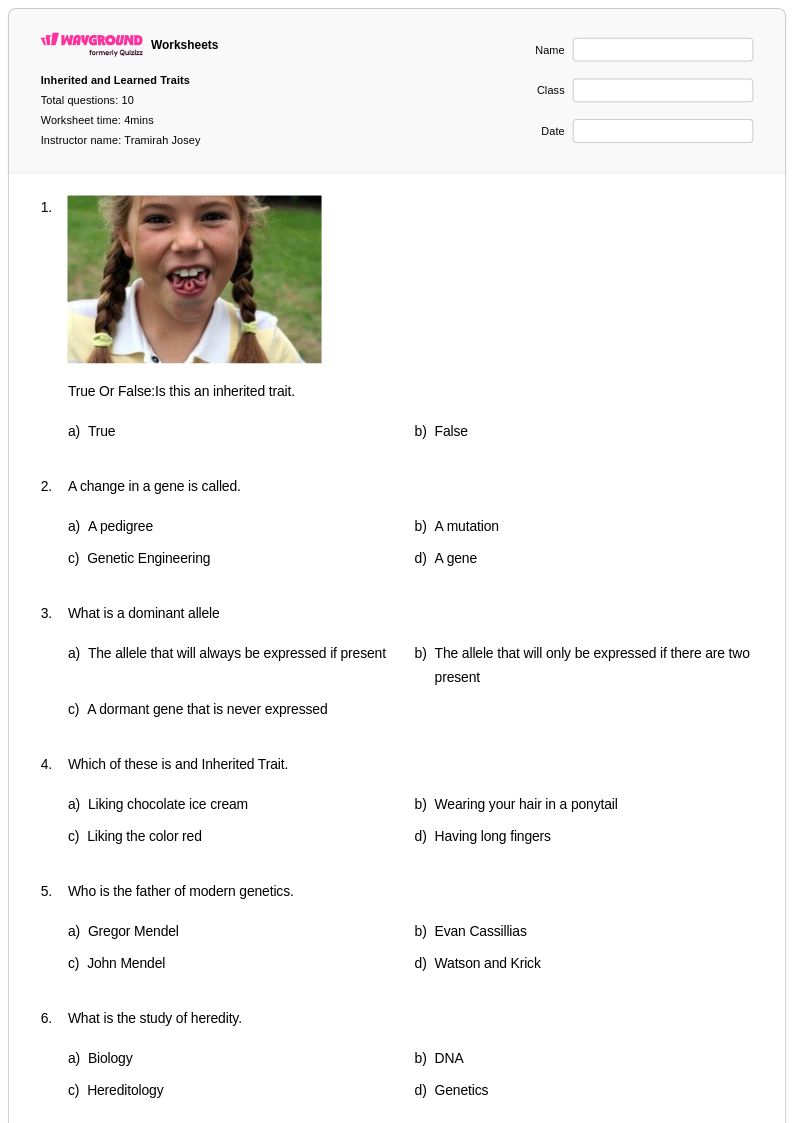
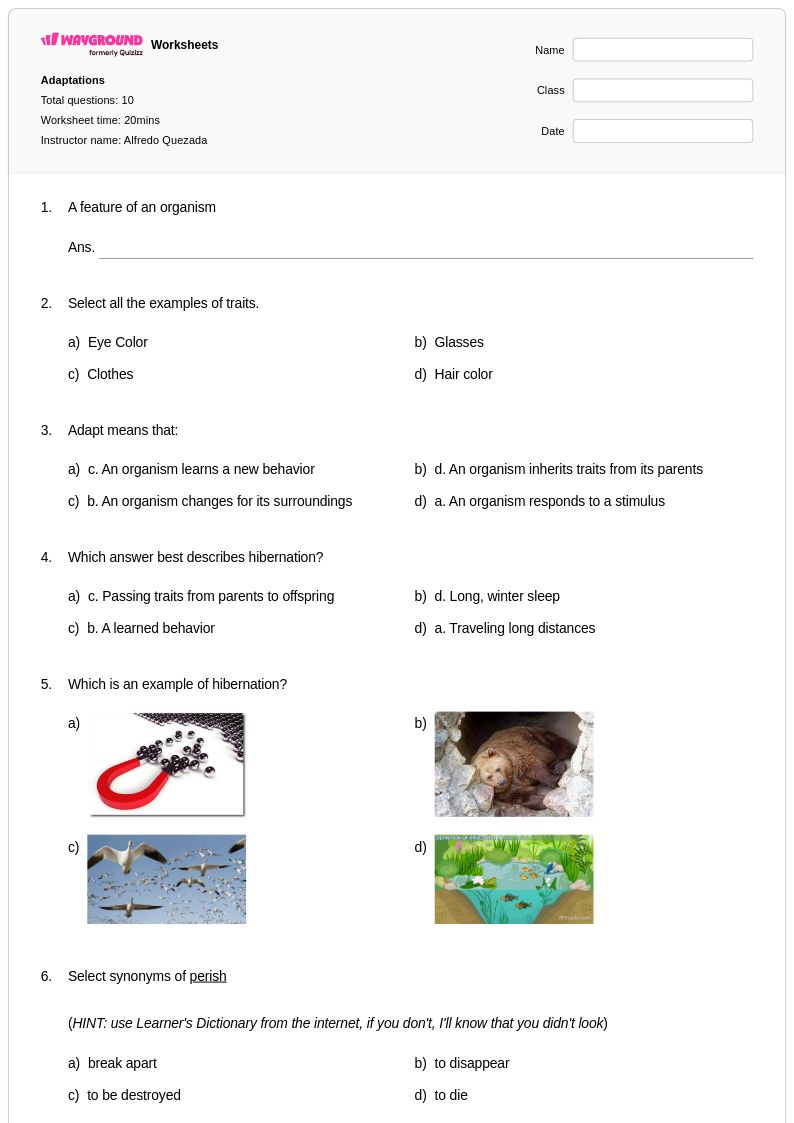
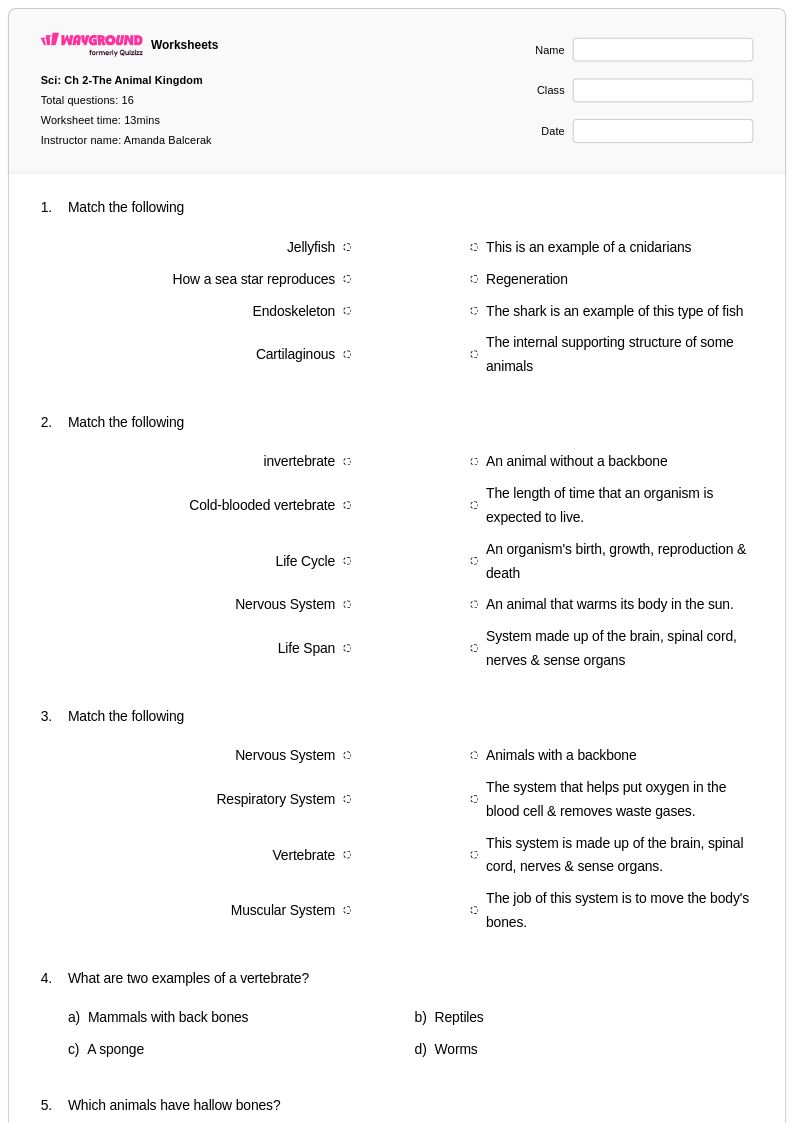
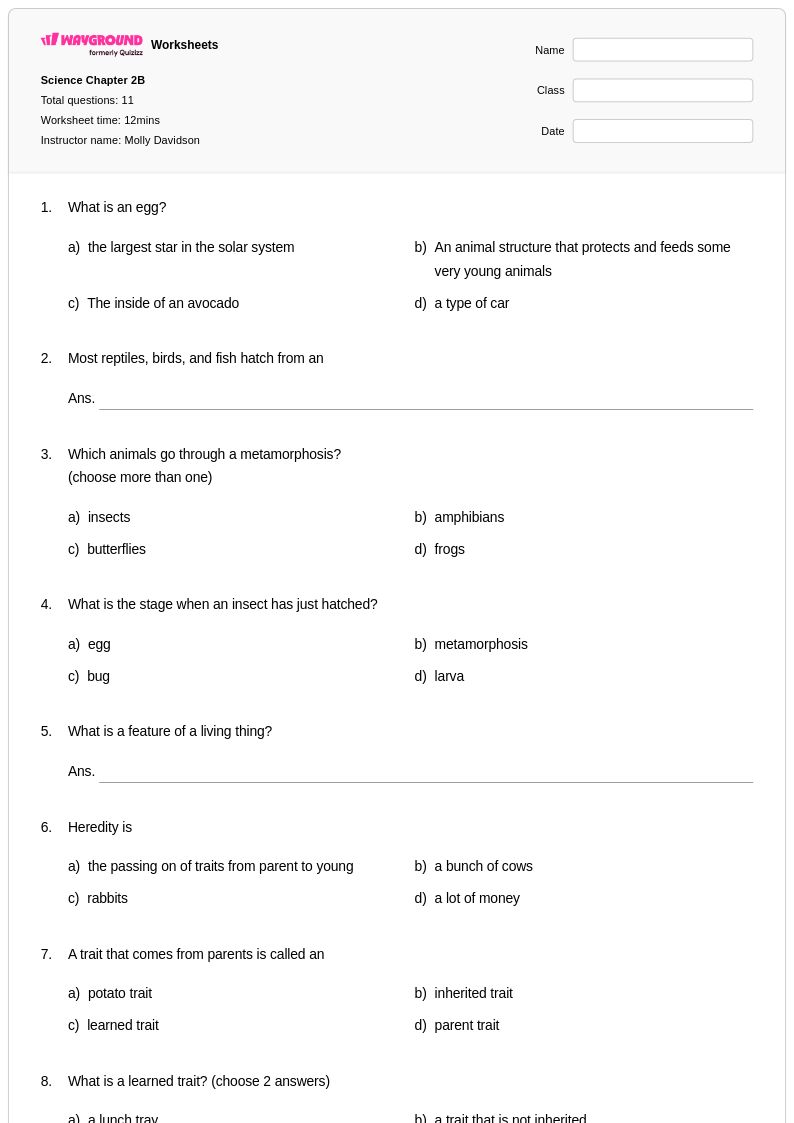
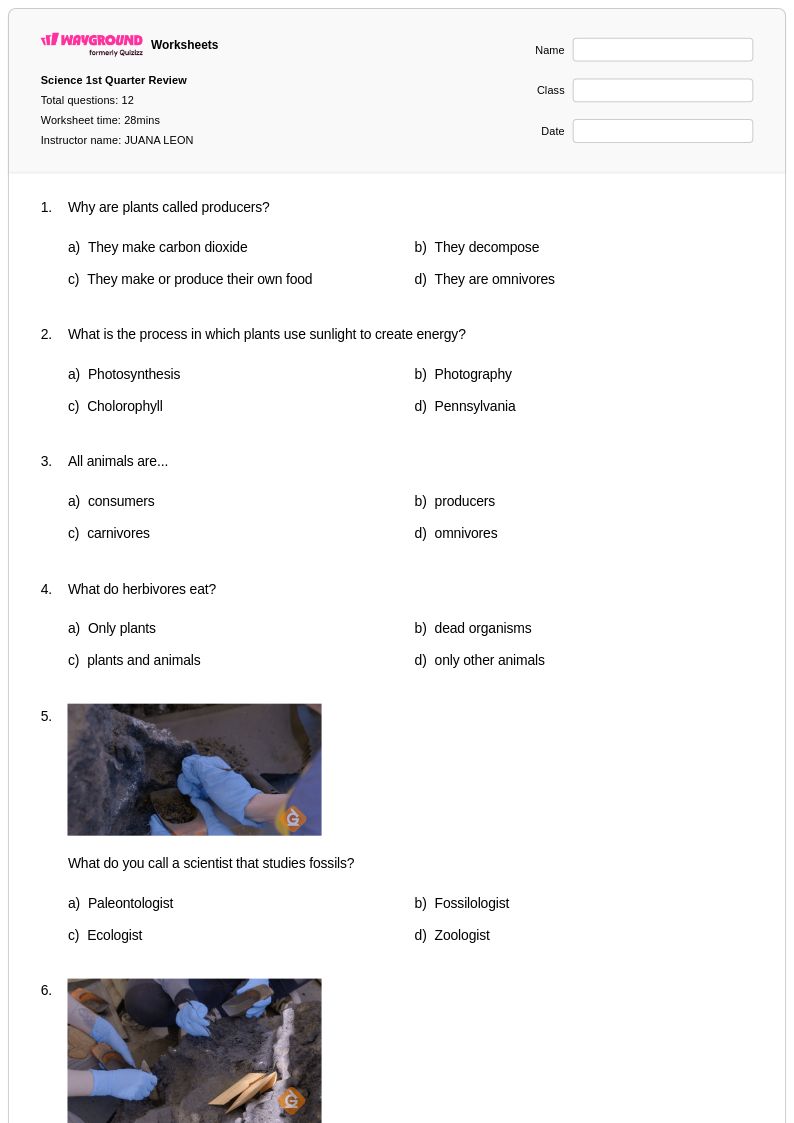
Explore Wayground's free Class 4 traits worksheets and printables that help students understand inherited and acquired characteristics through engaging practice problems with comprehensive answer keys in convenient PDF format.
Traits worksheets for Class 4 students available through Wayground (formerly Quizizz) provide comprehensive resources for exploring how living organisms inherit and express physical and behavioral characteristics. These educational materials help fourth-grade learners understand fundamental concepts such as inherited traits versus learned behaviors, how offspring resemble their parents, and the role of genes in determining observable features like eye color, plant height, and animal markings. The worksheets strengthen critical thinking skills through practice problems that require students to classify traits, analyze family trees, and make predictions about heredity patterns. Each resource includes detailed answer keys to support independent learning and comes in convenient pdf format as free printables that teachers can easily distribute for classroom activities or homework assignments.
Wayground (formerly Quizizz) supports educators with an extensive collection of teacher-created trait worksheets drawn from millions of high-quality resources specifically designed for elementary life science instruction. The platform's robust search and filtering capabilities allow teachers to quickly locate materials aligned with state and national science standards, ensuring that Class 4 trait concepts are presented at developmentally appropriate levels. Differentiation tools enable instructors to customize worksheets for diverse learning needs, while the availability of both printable pdf versions and interactive digital formats provides flexibility for various classroom environments. These comprehensive resources streamline lesson planning by offering ready-made materials for skill practice, targeted remediation for struggling learners, and enrichment activities for advanced students, making it easier for teachers to address the full spectrum of student abilities in their life science curriculum.
FAQs
How do I teach inherited vs. acquired traits to students?
Start by grounding students in concrete, relatable examples: eye color and blood type are inherited, while a scar or a learned skill is acquired. Use family trees and real photographs to make the distinction tangible before introducing vocabulary like genotype, phenotype, dominant, and recessive. Once students can sort traits into categories with confidence, layer in the role of environment in modifying trait expression, such as how sunlight affects skin tone or how diet influences height.
What exercises help students practice understanding traits and heredity?
Punnett square problems are the cornerstone practice exercise for traits, requiring students to predict offspring characteristics based on parental genotypes. Complement these with family tree analysis tasks where students trace a trait across multiple generations and identify patterns of dominant and recessive inheritance. Asking students to classify a mixed list of traits as inherited or acquired, and then justify each classification, builds both content knowledge and analytical reasoning.
What misconceptions do students commonly have about inherited traits?
A very common error is assuming that dominant traits are more common in a population than recessive ones — students conflate 'dominant' with 'more frequent,' when in fact a recessive trait can be widespread. Students also frequently confuse genotype with phenotype, not recognizing that two organisms with different genotypes (one homozygous dominant, one heterozygous) can display identical phenotypes. Explicitly contrasting these pairs with targeted examples and practice problems is essential for correcting these misconceptions before they become entrenched.
How do I differentiate traits instruction for students at different skill levels?
For students who are still building foundational understanding, begin with single-trait inheritance and simple dominant/recessive problems before introducing incomplete dominance or codominance. Advanced learners can be challenged with dihybrid crosses, real genetic disorder case studies, or open-ended investigations into how multiple genes interact to produce a single trait. On Wayground, teachers can apply accommodations such as reduced answer choices or read-aloud support to individual students, allowing the same worksheet to serve learners across a range of readiness levels without singling anyone out.
How can I use traits worksheets in my classroom?
Traits worksheets on Wayground are available as printable PDFs for traditional classroom use and in digital formats for technology-integrated or remote learning environments, and teachers can also host them as a quiz directly on Wayground. Printable versions work well for guided notes, homework, or station rotations, while digital versions allow for immediate feedback during independent practice. All worksheets include complete answer keys, which reduces prep time and makes them practical for both instruction and quick formative checks.
How do I assess whether students truly understand trait inheritance versus just memorizing Punnett squares?
True understanding shows when students can apply inheritance rules to novel scenarios rather than just fill in a grid — ask them to work backward from offspring phenotype ratios to infer parental genotypes, or explain why two brown-eyed parents can have a blue-eyed child. Common surface-level errors include completing a Punnett square correctly but then misreading the probability ratios, or failing to connect the abstract allele symbols back to observable traits. Assessment tasks that require written justification or real-world application reveal these gaps more reliably than fill-in grids alone.