Free Printable Transition Signals Worksheets for Class 11
Class 11 transition signals worksheets from Wayground help students master connecting words and phrases that improve writing flow, featuring free printable PDFs with practice problems and answer keys.
Explore printable Transition Signals worksheets for Class 11
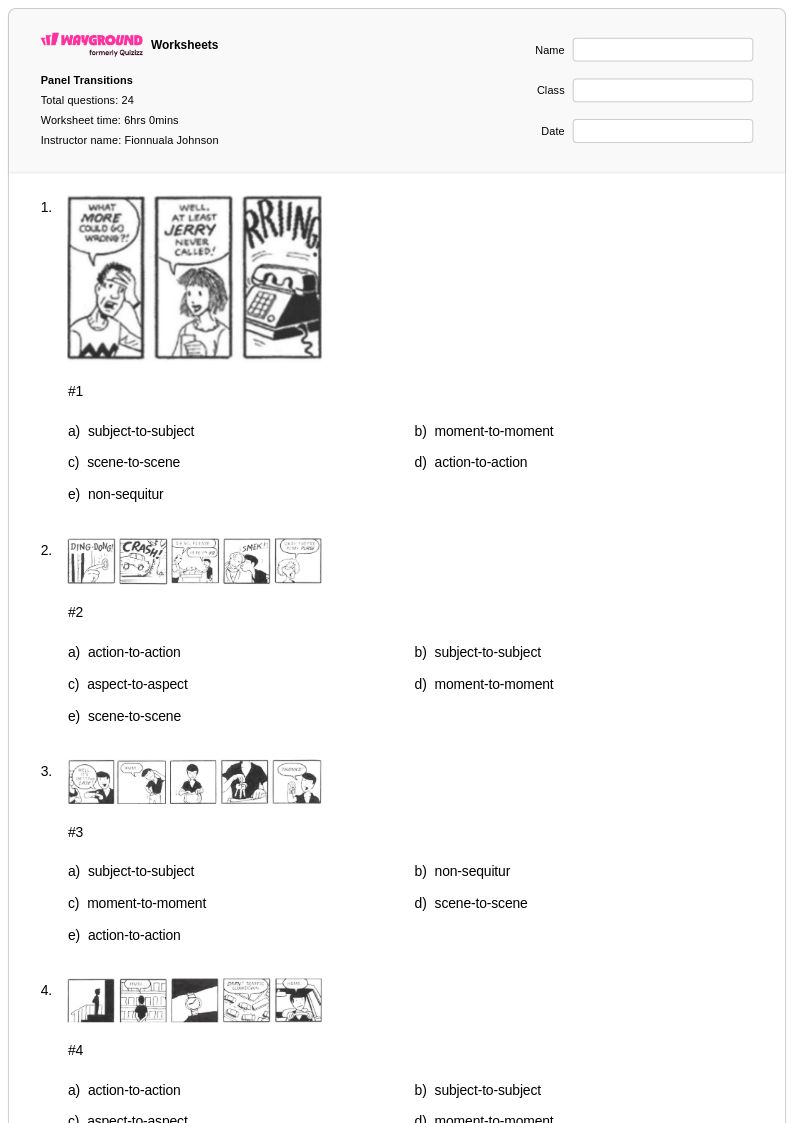
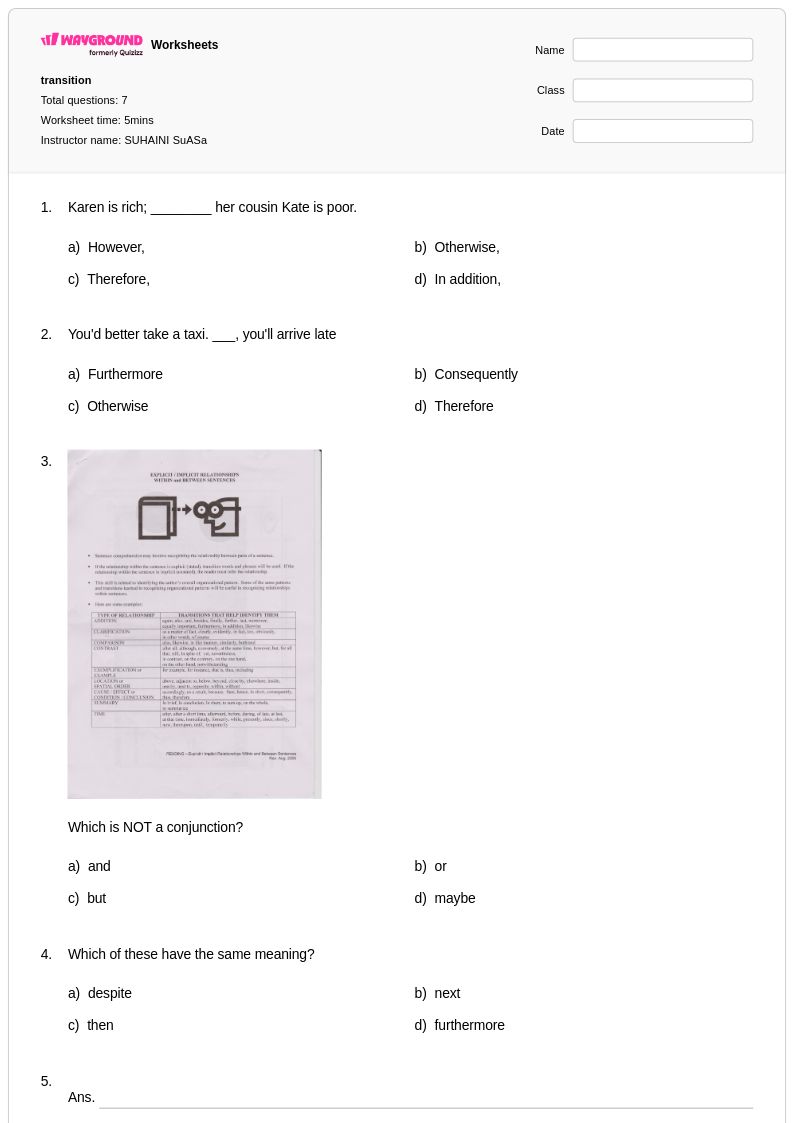
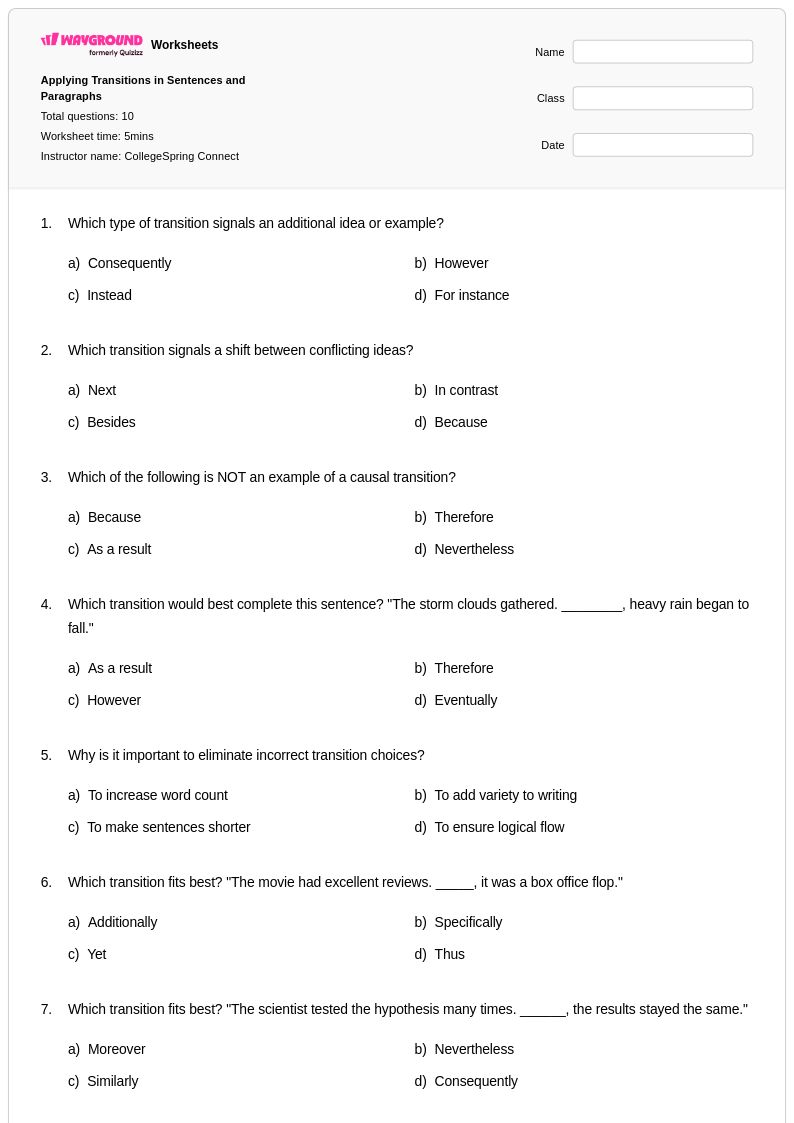
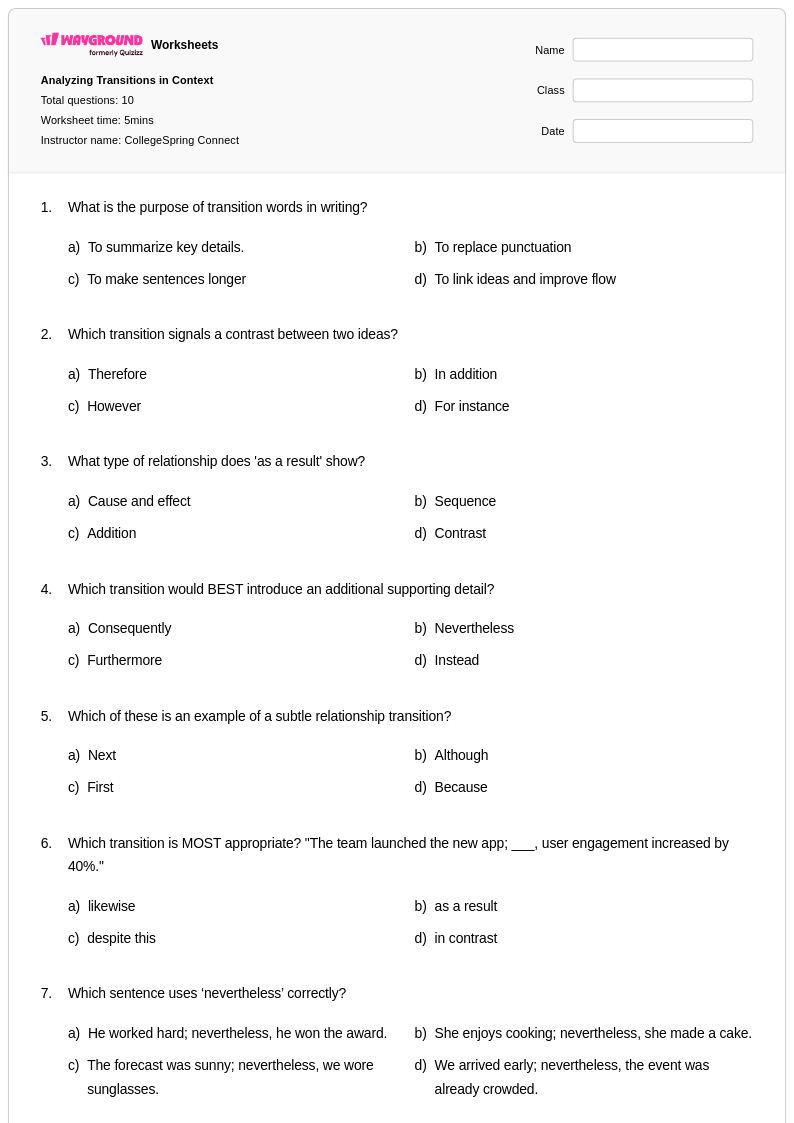
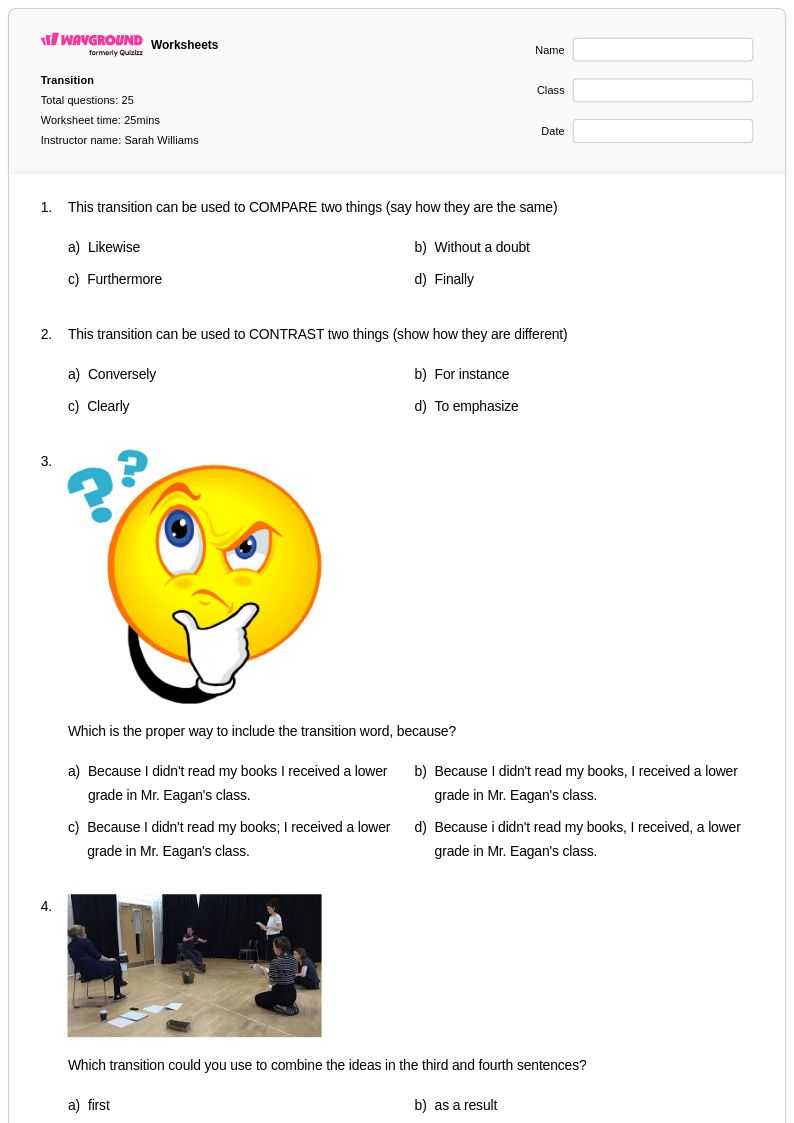
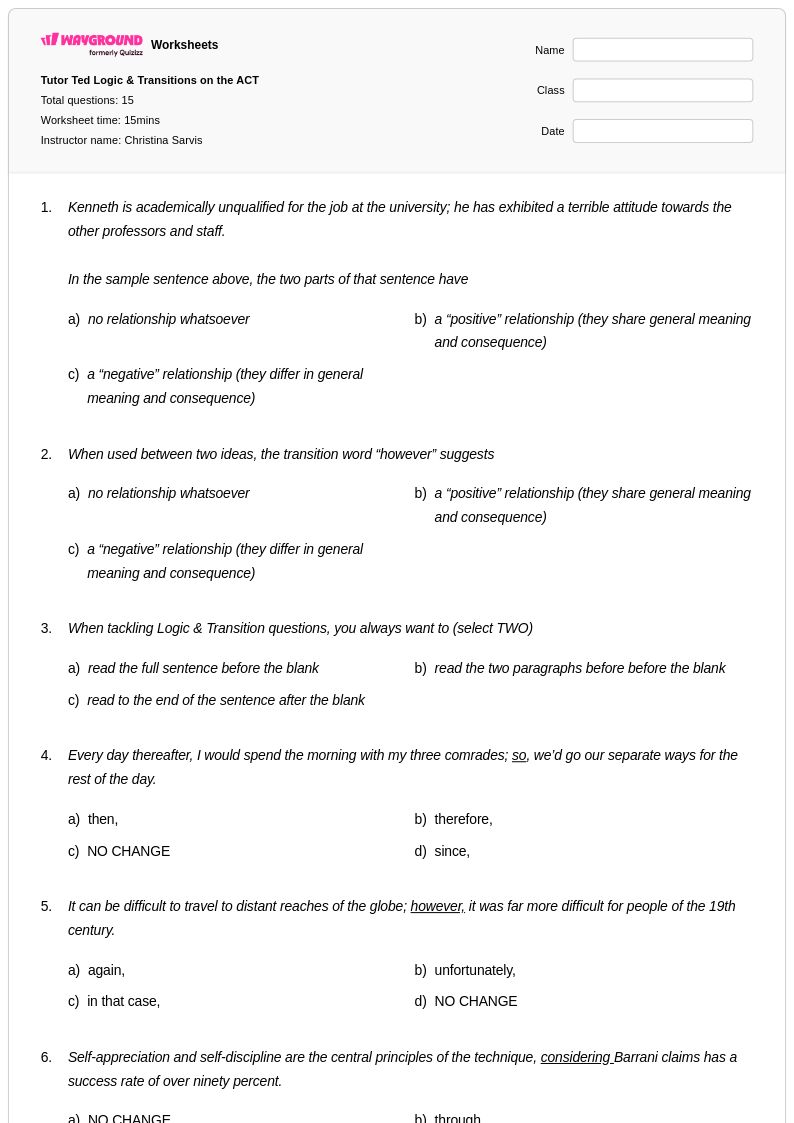
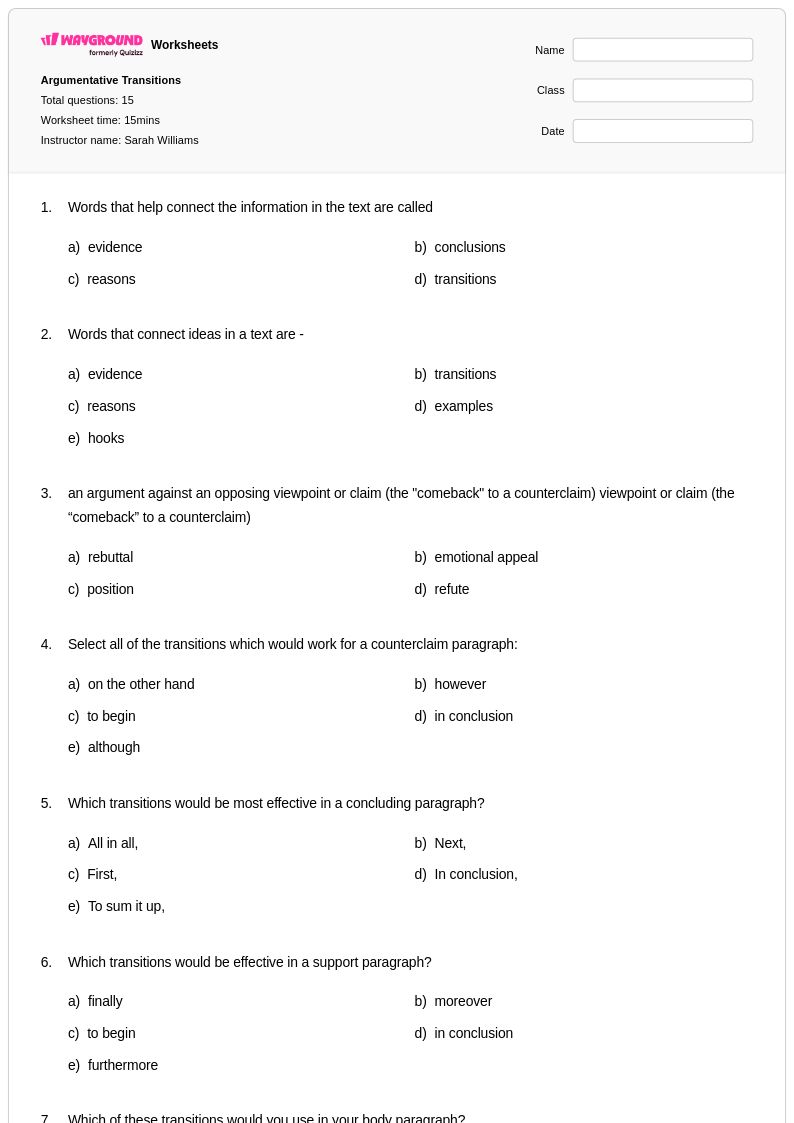
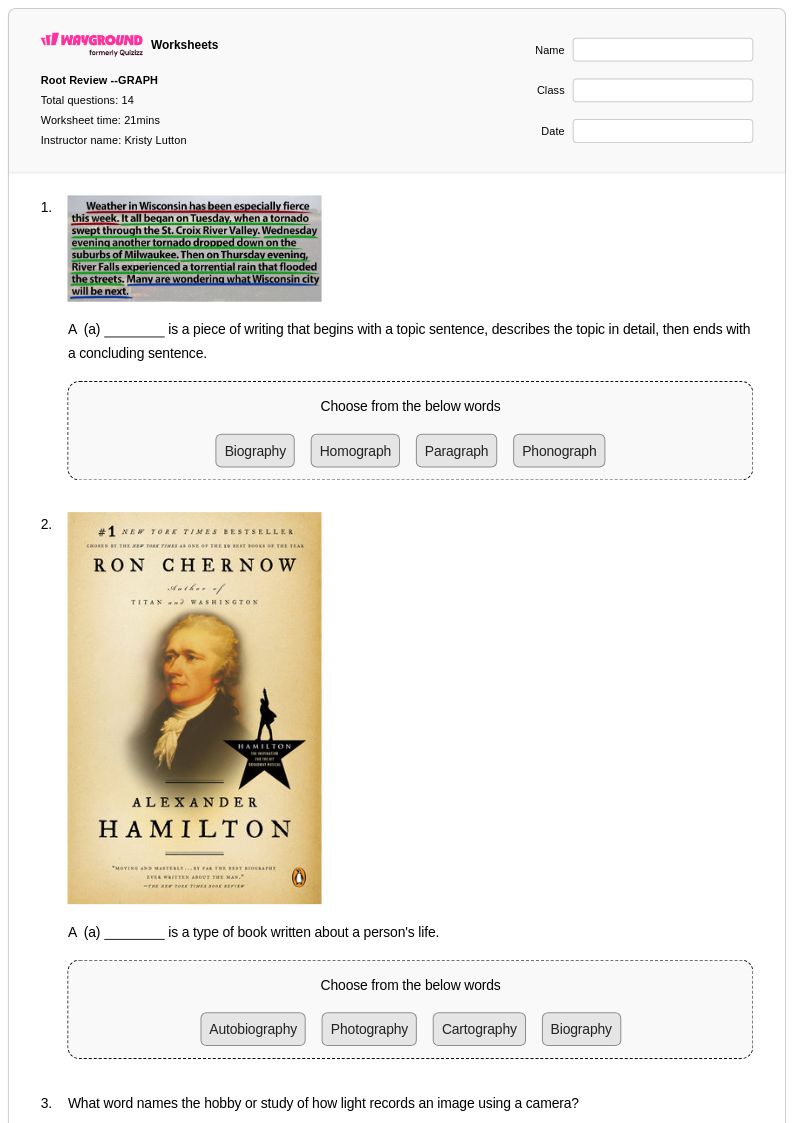
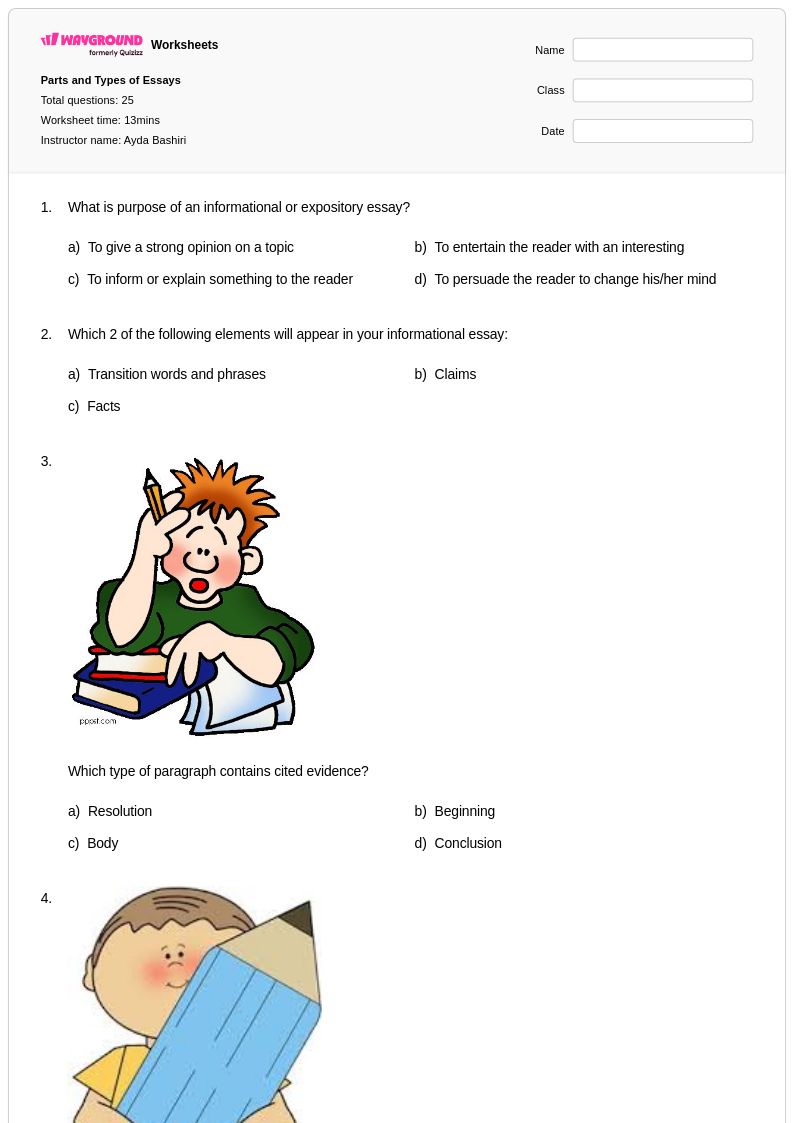
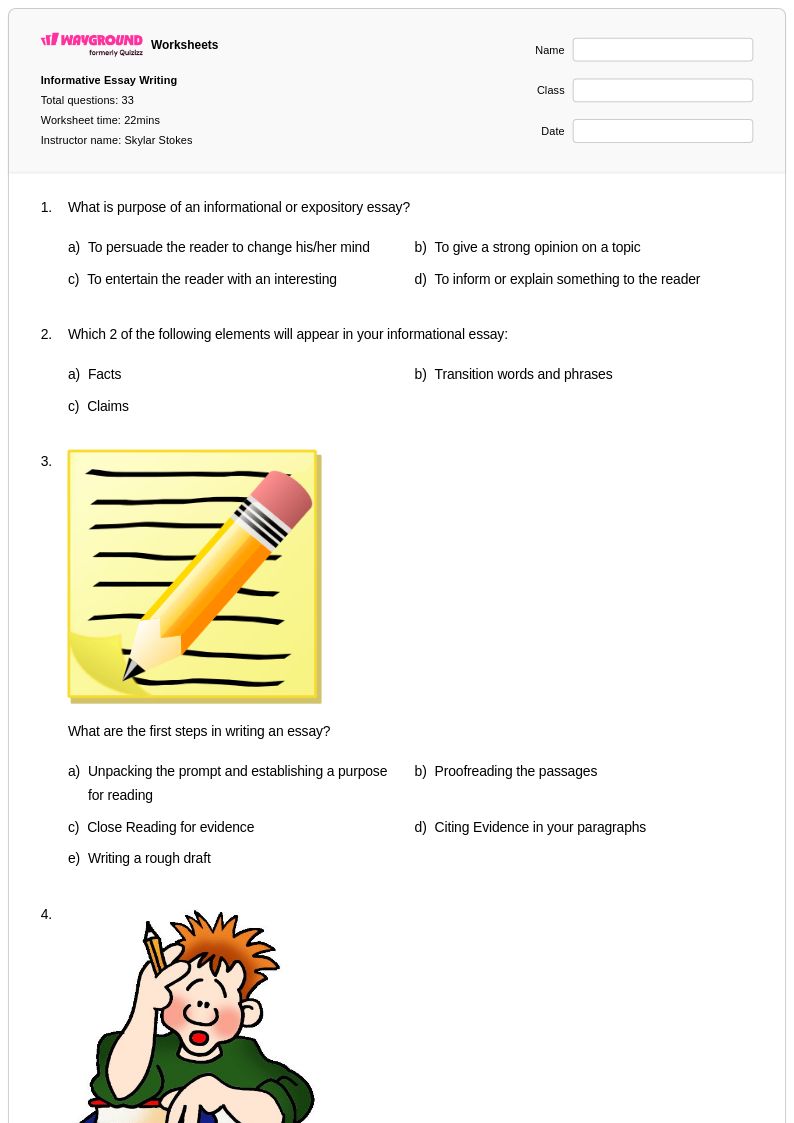
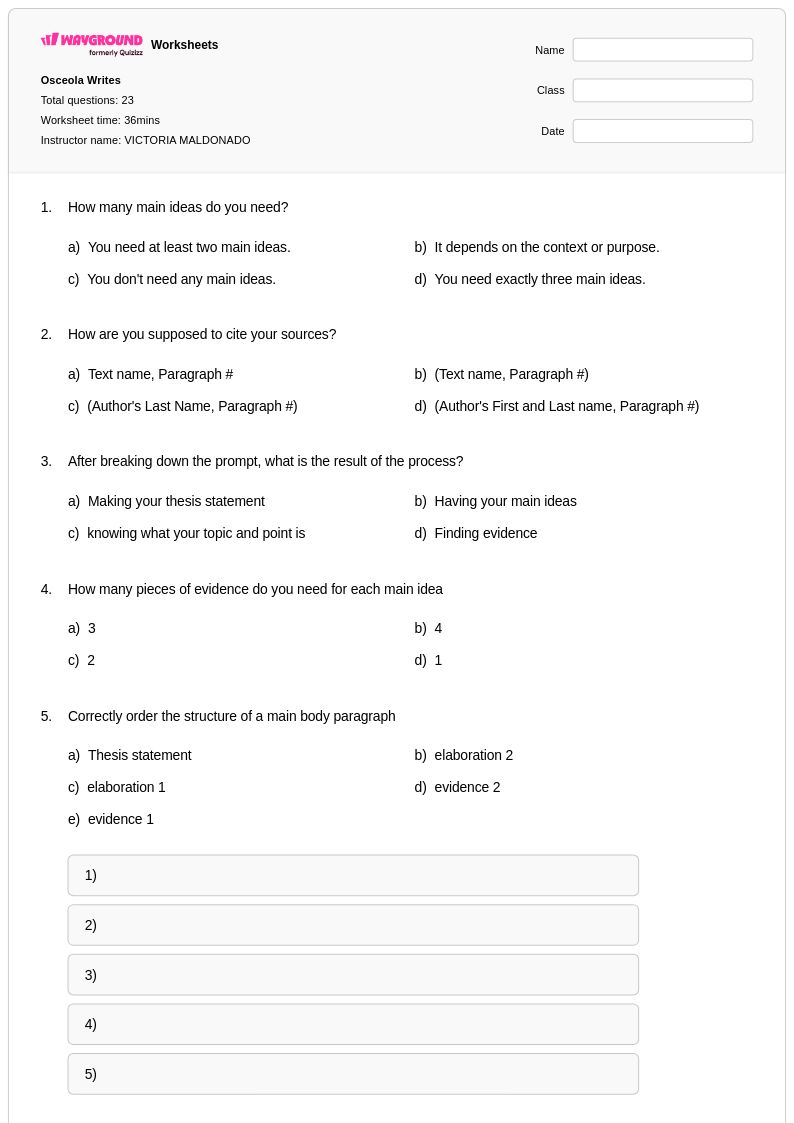
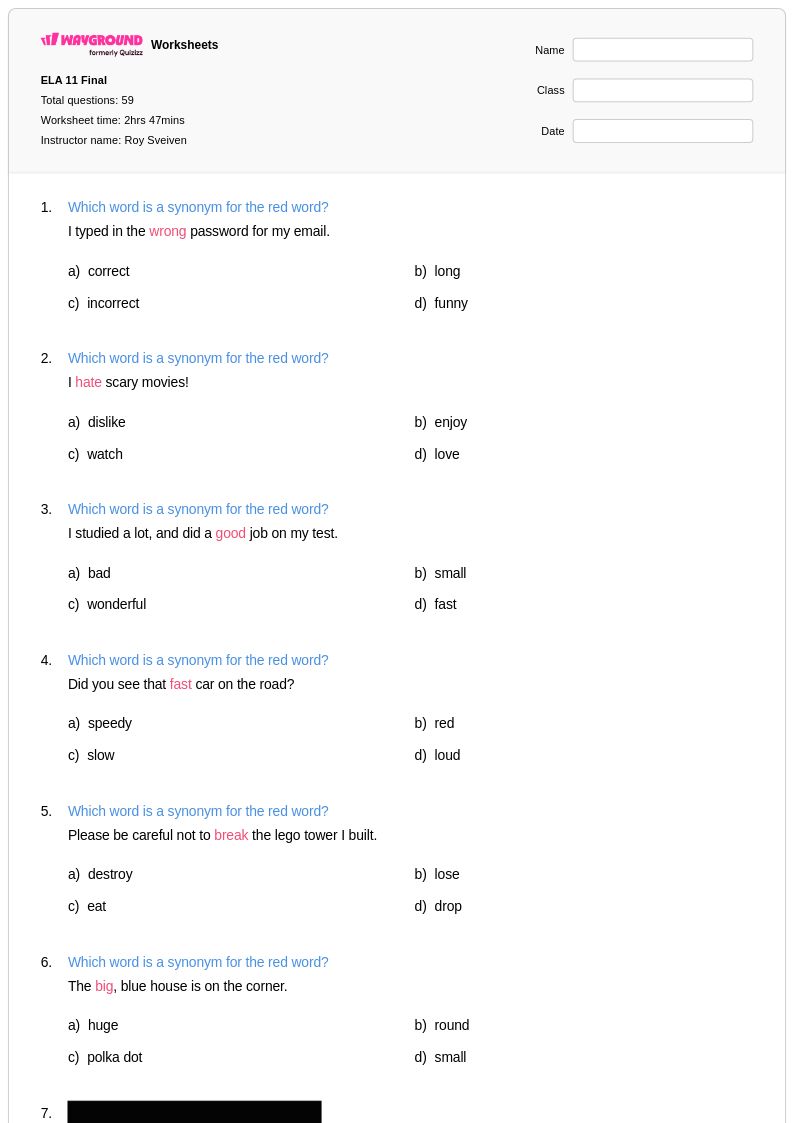
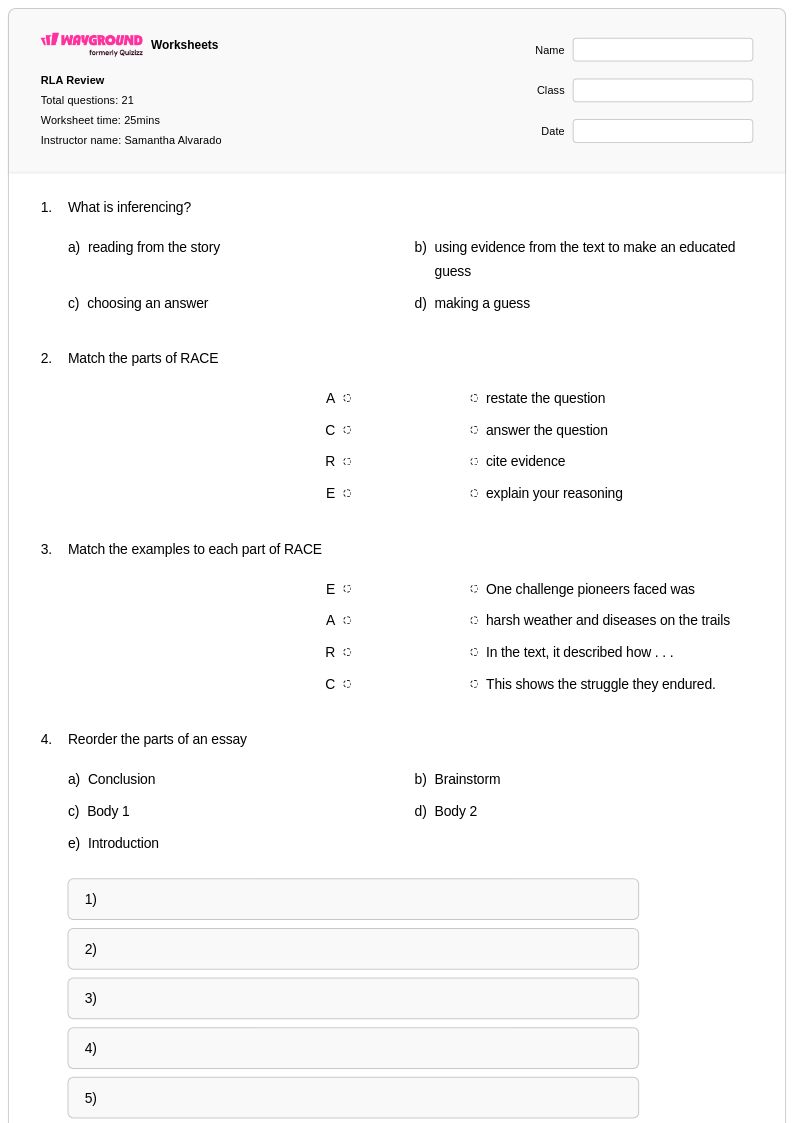
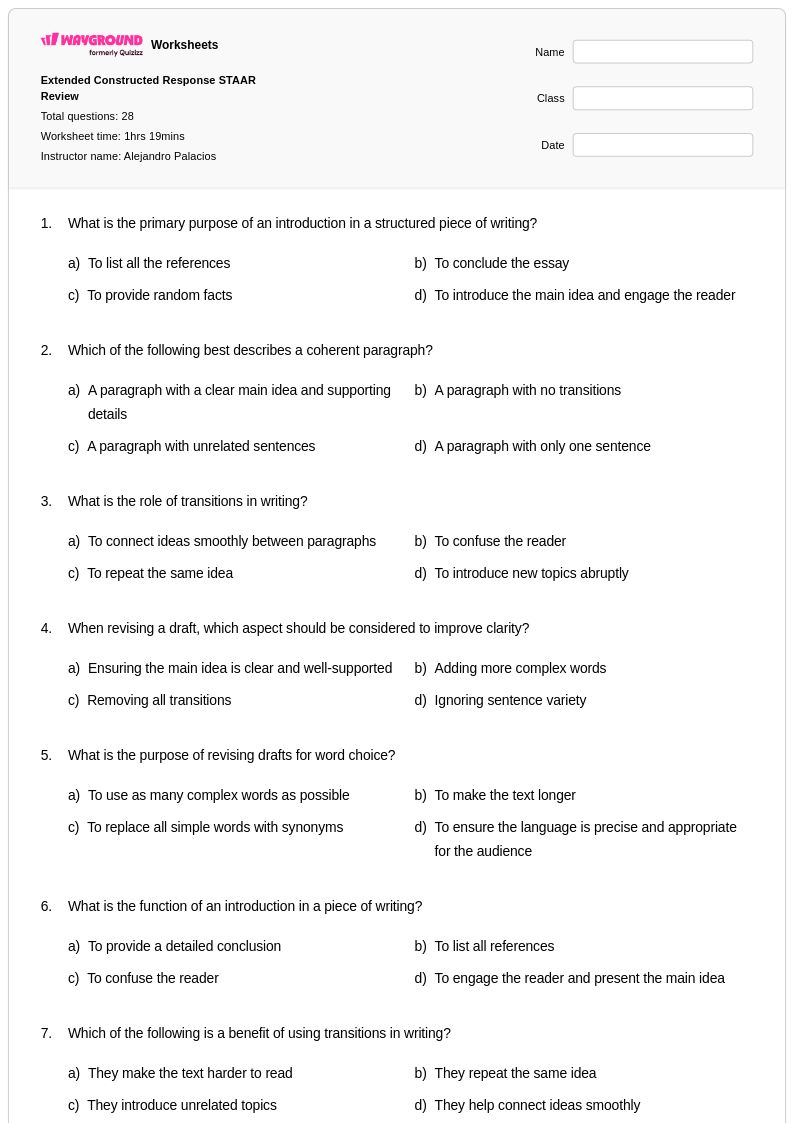
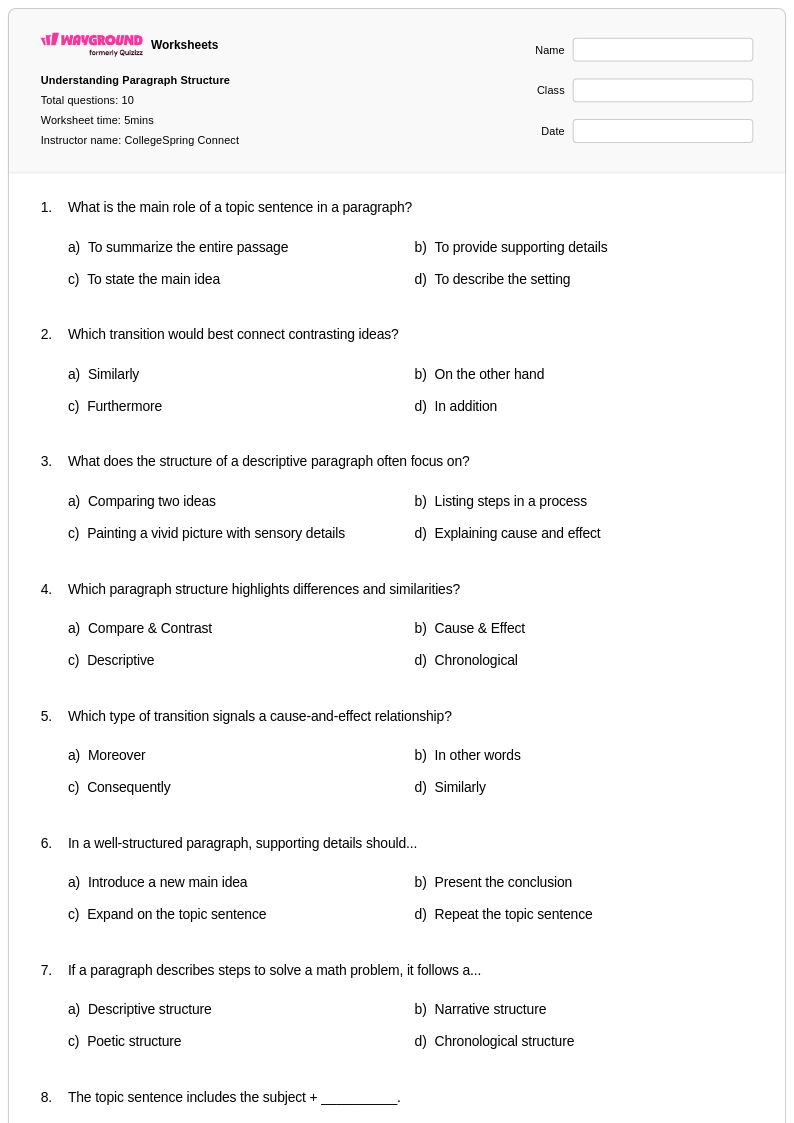
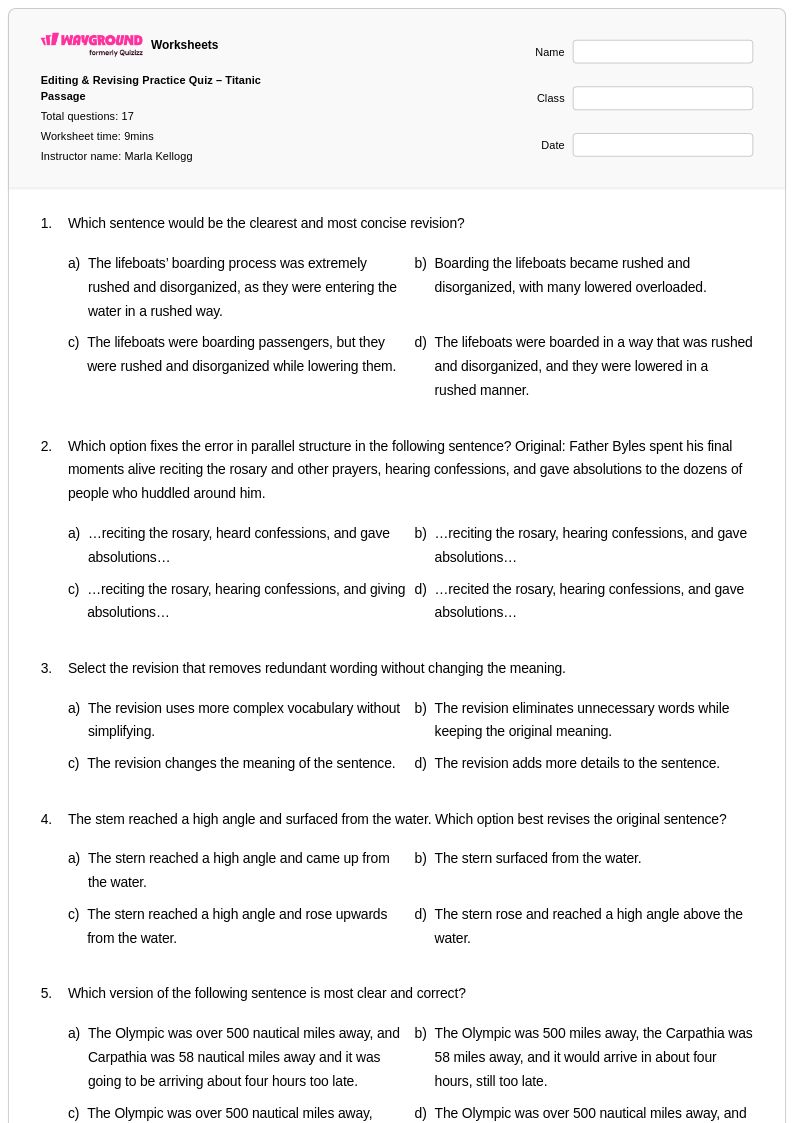
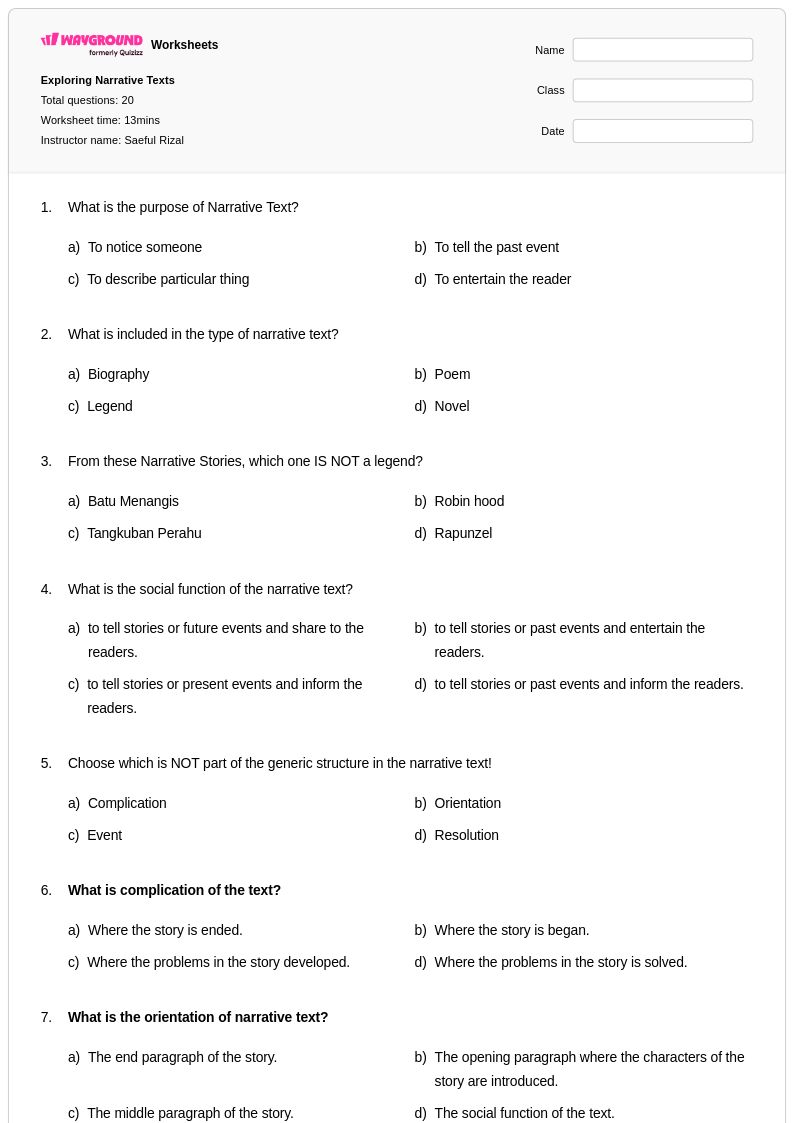
Transition signals worksheets for Class 11 students available through Wayground (formerly Quizizz) provide comprehensive practice in mastering the sophisticated connective language essential for advanced academic writing. These carefully designed worksheets strengthen students' ability to create seamless flow between ideas, paragraphs, and sections of complex texts by teaching proper usage of transitional words, phrases, and sentences. Students work through practice problems that challenge them to identify appropriate transitions for different rhetorical purposes, including contrast, cause and effect, sequence, and emphasis, while developing the nuanced understanding needed for college-level composition. Each worksheet includes detailed answer keys that help students understand not just which transitions work, but why specific choices enhance clarity and coherence, making these free printables invaluable resources for building advanced writing skills.
Wayground (formerly Quizizz) supports English teachers with an extensive collection of millions of teacher-created transition signals worksheets specifically designed for Class 11 writing instruction. The platform's robust search and filtering capabilities allow educators to quickly locate materials that align with state writing standards and match their students' specific skill levels, whether targeting basic transitional phrases or advanced rhetorical connectors. Teachers can customize these resources to create differentiated instruction that meets diverse learner needs, from remediation for struggling writers to enrichment activities for advanced students ready for college-level discourse. Available in both printable pdf format and interactive digital versions, these worksheets seamlessly integrate into lesson planning for writing organization and structure units, providing flexible options for in-class practice, homework assignments, and targeted skill intervention that prepares students for sophisticated academic and professional communication.
FAQs
How do I teach transition signals to students who struggle with paragraph flow?
Start by categorizing transition signals by function — comparison, contrast, cause and effect, chronological order, and emphasis — so students understand that word choice depends on the relationship between ideas, not personal preference. Model the revision process by showing a paragraph without transitions alongside a polished version, then have students identify what changed and why. Explicit instruction in how transitions signal meaning to the reader (not just smooth sound) helps students make deliberate, accurate choices in their own writing.
What exercises help students practice using transition signals in their writing?
Targeted practice exercises that ask students to identify the correct transition signal for a given writing context — such as choosing between 'however' and 'therefore' based on the logical relationship between two sentences — build functional understanding rather than memorization. Paragraph reconstruction tasks, where students reorder scrambled sentences using transition signals as clues, reinforce how these elements create organizational clarity and logical flow. Worksheets that cover multiple contexts, including comparison, contrast, cause and effect, and emphasis, ensure students can apply transitions across different writing genres and disciplines.
What mistakes do students commonly make when using transition signals?
The most common error is treating transition words as interchangeable fillers rather than precise connectors that signal a specific logical relationship. Students frequently misuse additive transitions (like 'furthermore') in contexts that require contrast (like 'nevertheless'), which confuses readers rather than guiding them. Another frequent mistake is overusing the same transition word — particularly 'also' or 'first' — without varying signal types to reflect shifts in reasoning, emphasis, or sequence.
How can I use transition signals worksheets to support writers at different skill levels?
For struggling writers, start with worksheets that focus on a single transition category, such as chronological order, before introducing contrast or cause-and-effect signals. More advanced students benefit from open-response tasks that require them to construct transitions rather than select from a list, pushing them to internalize the relationship between ideas and word choice. On Wayground, teachers can apply accommodations such as reduced answer choices for students who need lower cognitive load, or read-aloud support for students who benefit from hearing questions read to them, without disrupting the experience for the rest of the class.
How do I use Wayground's transition signals worksheets in my classroom?
Wayground's transition signals worksheets are available as printable PDFs for traditional classroom use and in digital formats for technology-integrated learning environments, giving teachers flexibility in how they assign and collect student work. Teachers can also host the worksheets as a live quiz on Wayground, making them suitable for whole-class instruction, independent practice, or formative assessment. Complete answer keys are included with every worksheet, enabling efficient grading and immediate feedback to students.
How do transition signals support writing organization across subject areas?
Transition signals are not exclusive to English or language arts — they are essential to any writing task that requires logical structure, including lab reports in science, argumentative essays in social studies, and analytical responses in history. Teaching students to use cause-and-effect transitions in science writing or sequential transitions in procedural texts helps them understand that organizational clarity is a discipline-wide expectation. When students internalize transition signals as tools for communicating relationships between ideas, their writing becomes more coherent across all academic contexts.