
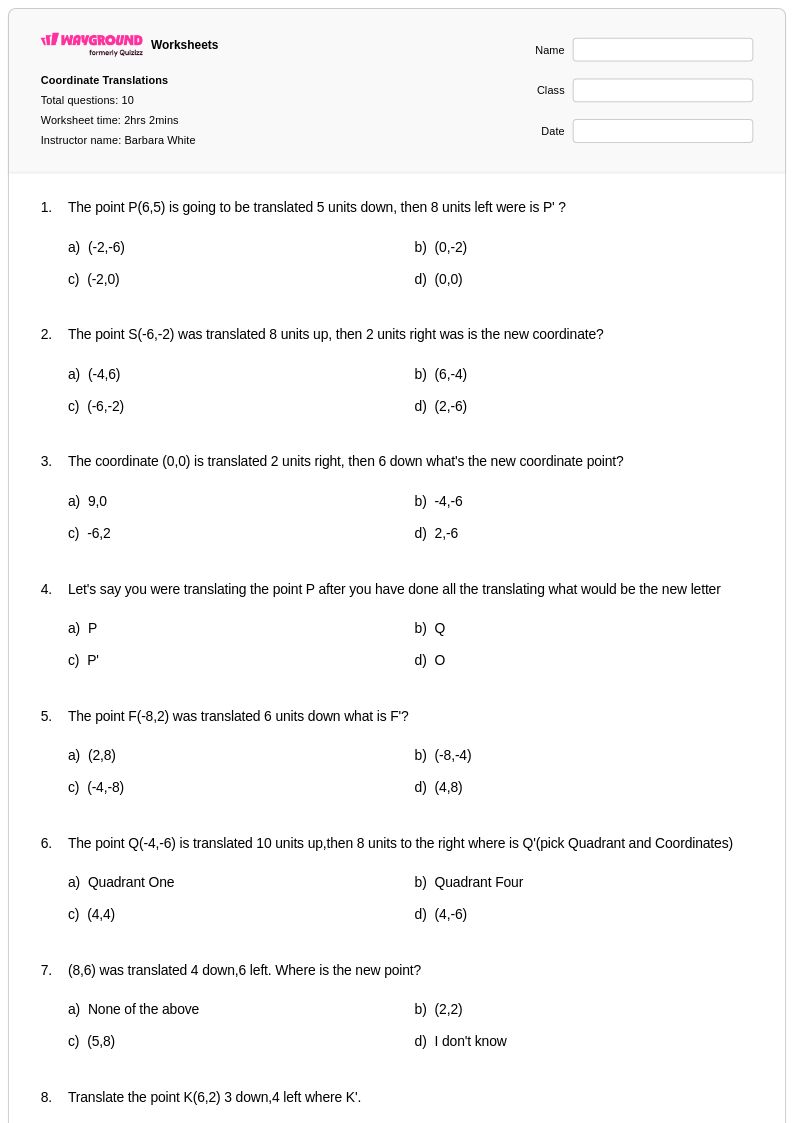
10 Q
4th - 8th
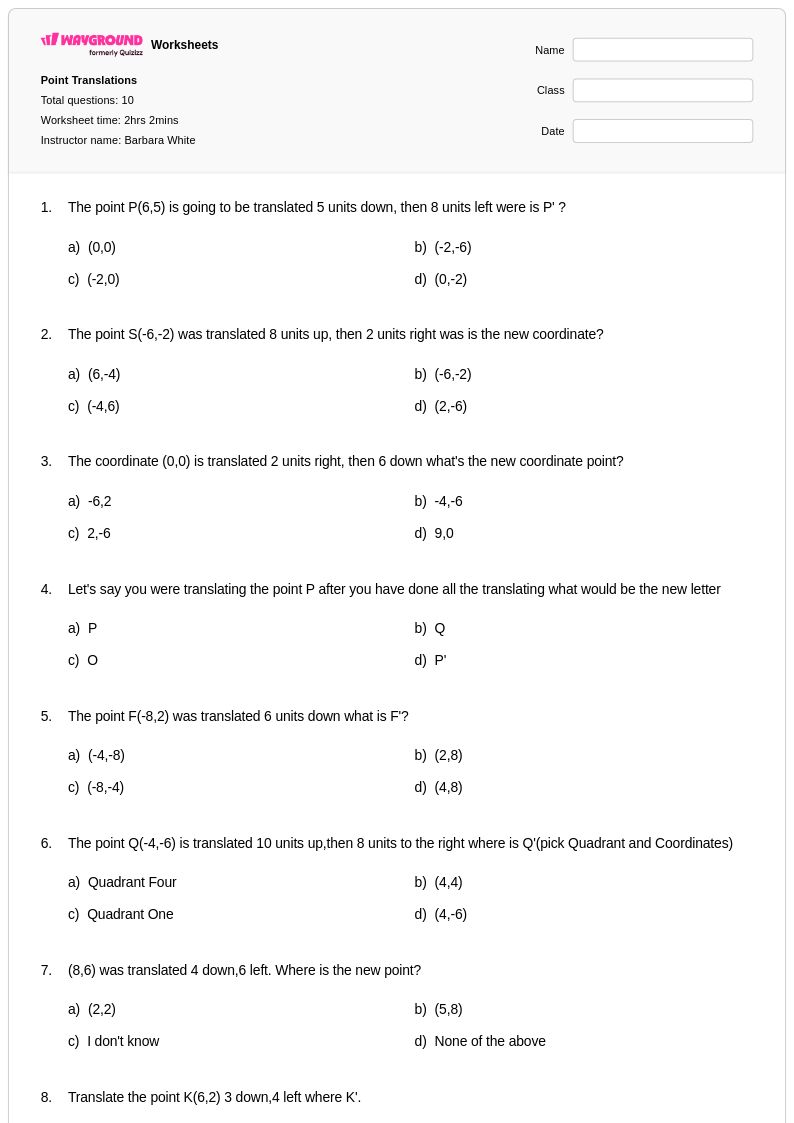
10 Q
4th - 8th
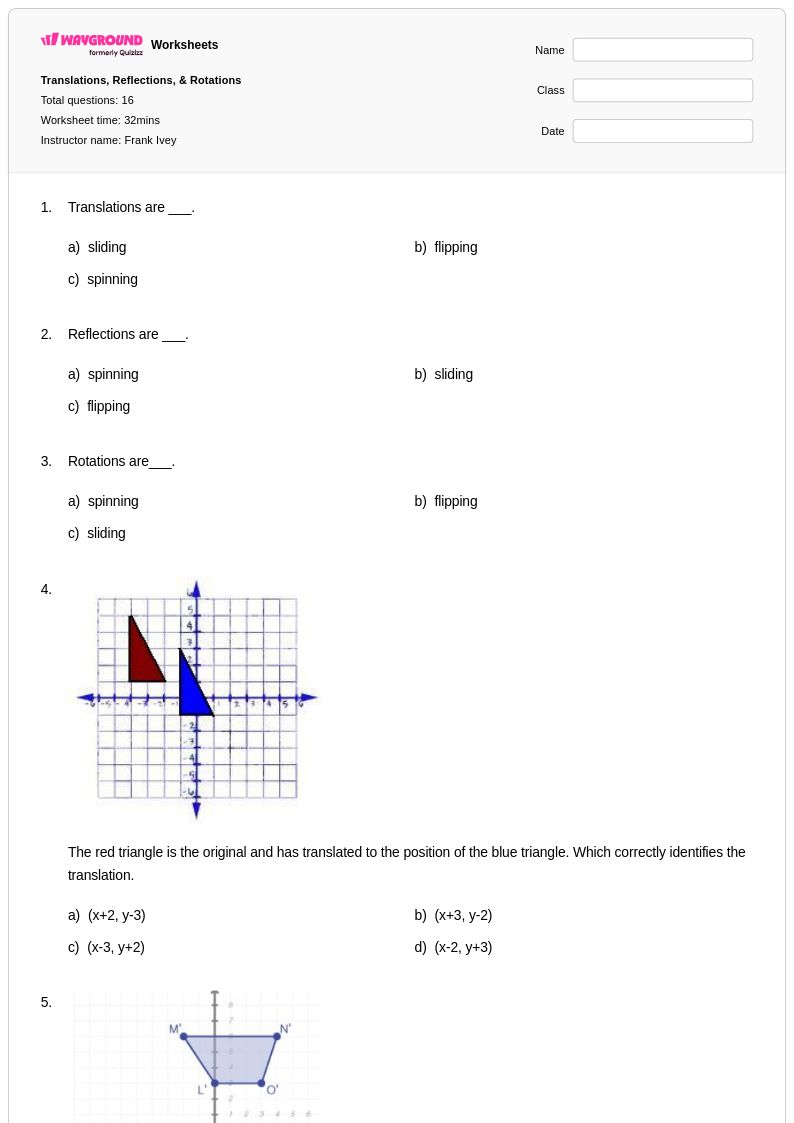
16 Q
7th - 9th
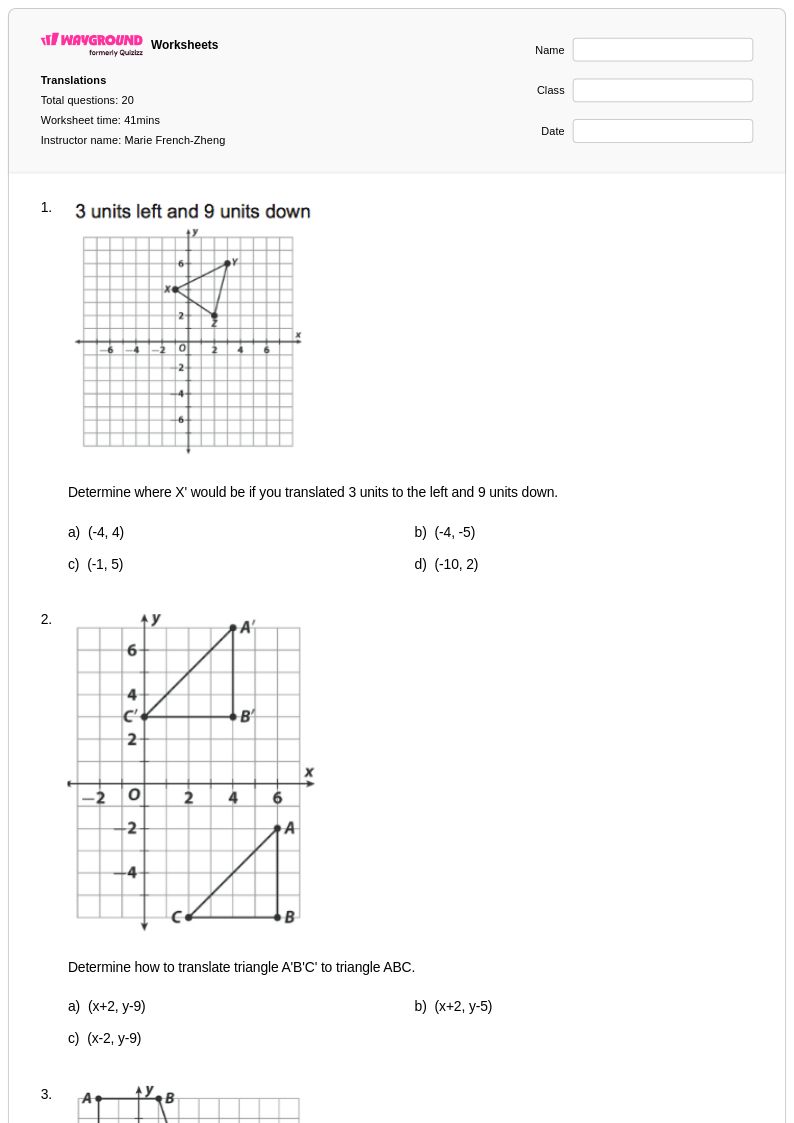
20 Q
7th
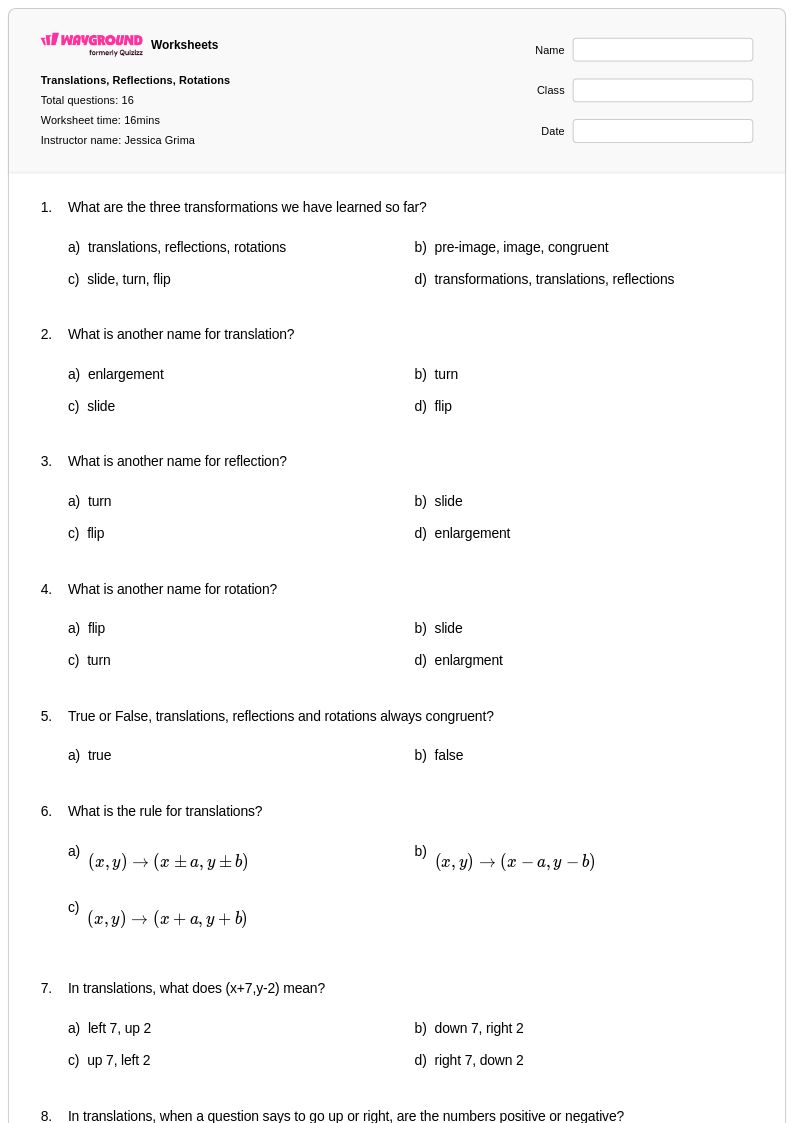
16 Q
7th - 9th
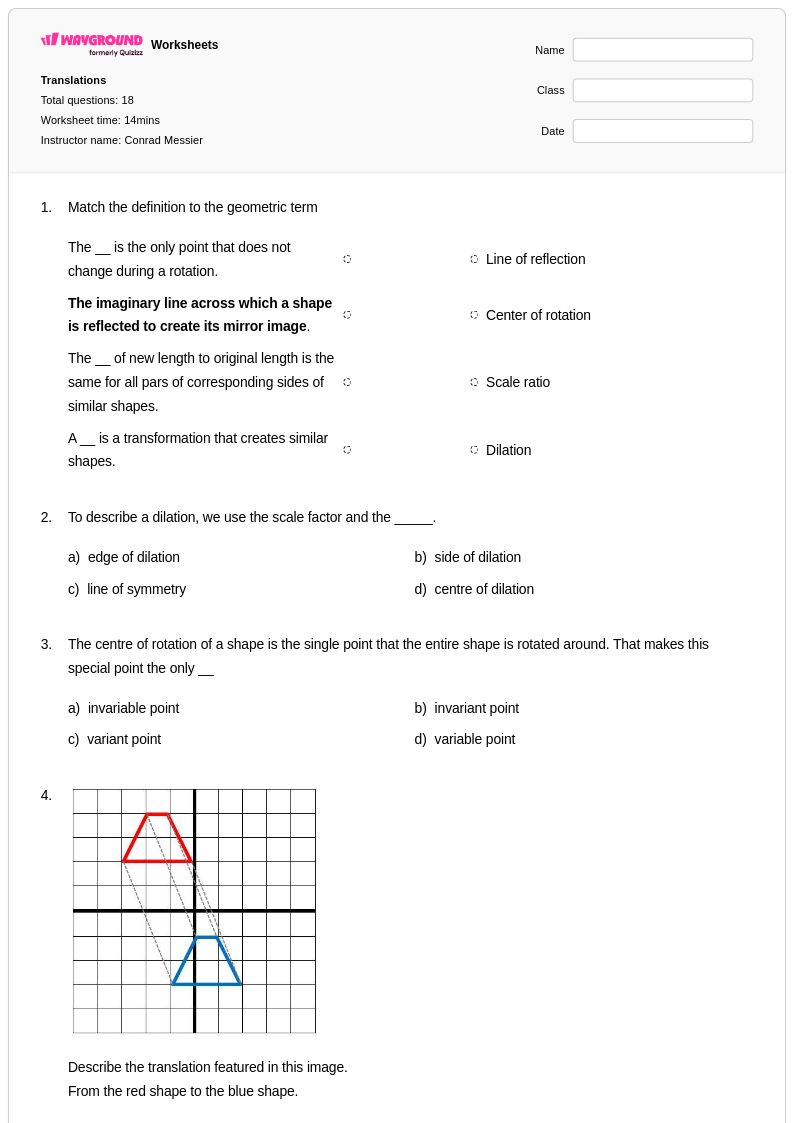
18 Q
7th
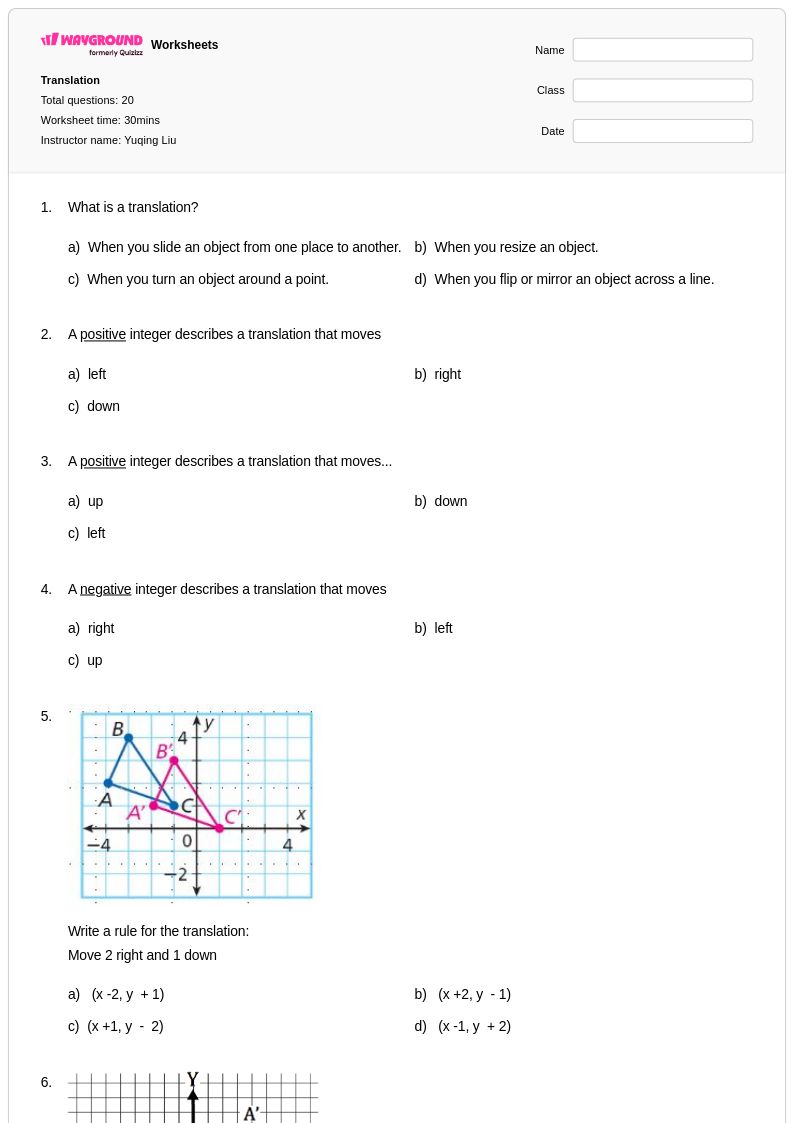
20 Q
7th
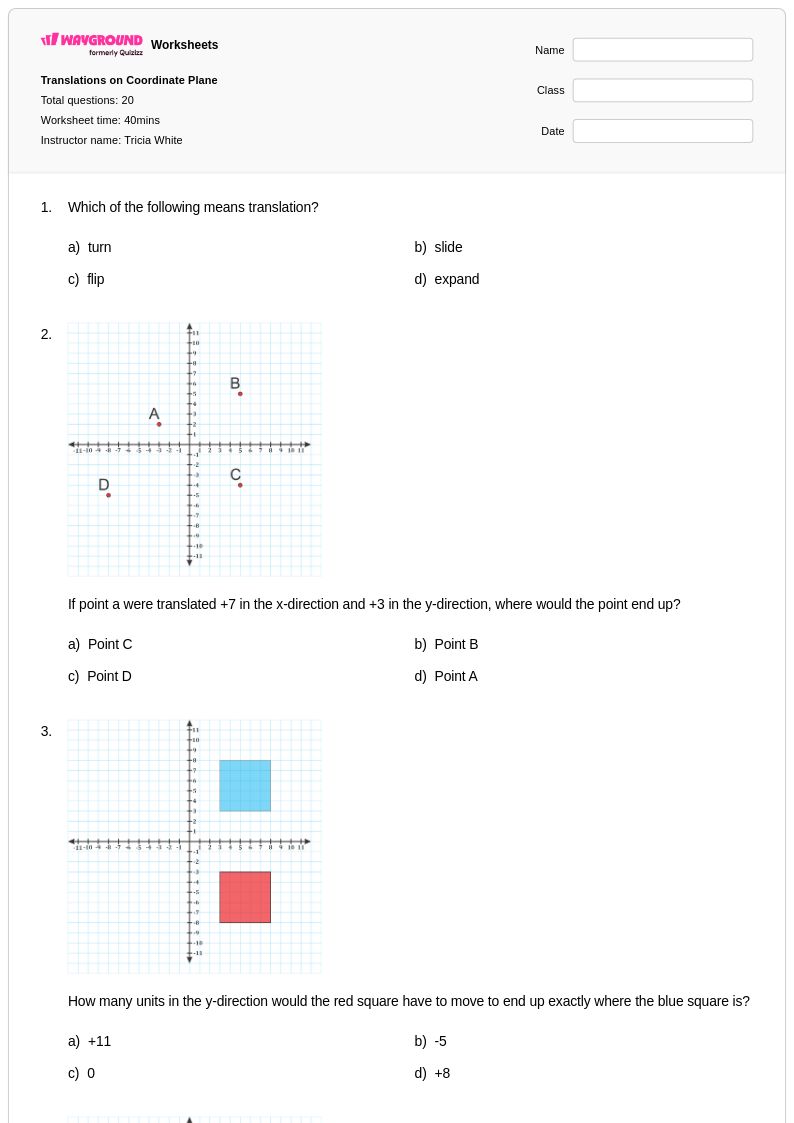
20 Q
7th
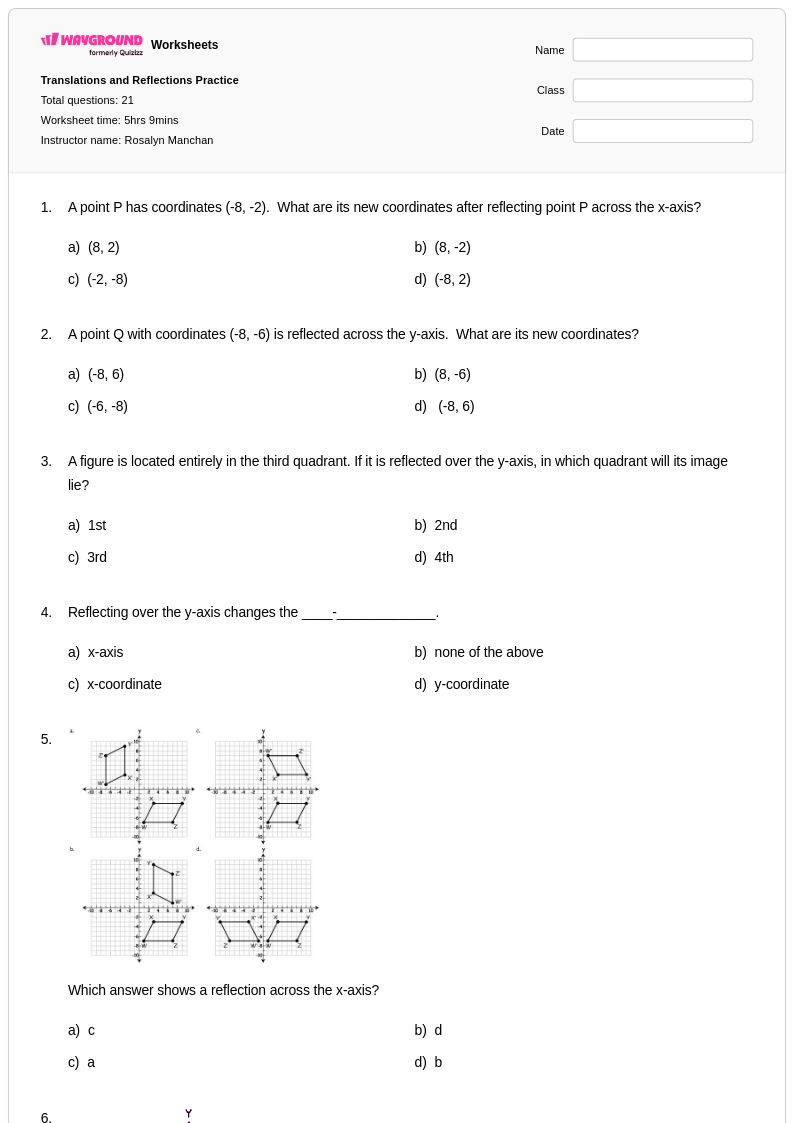
26 Q
7th
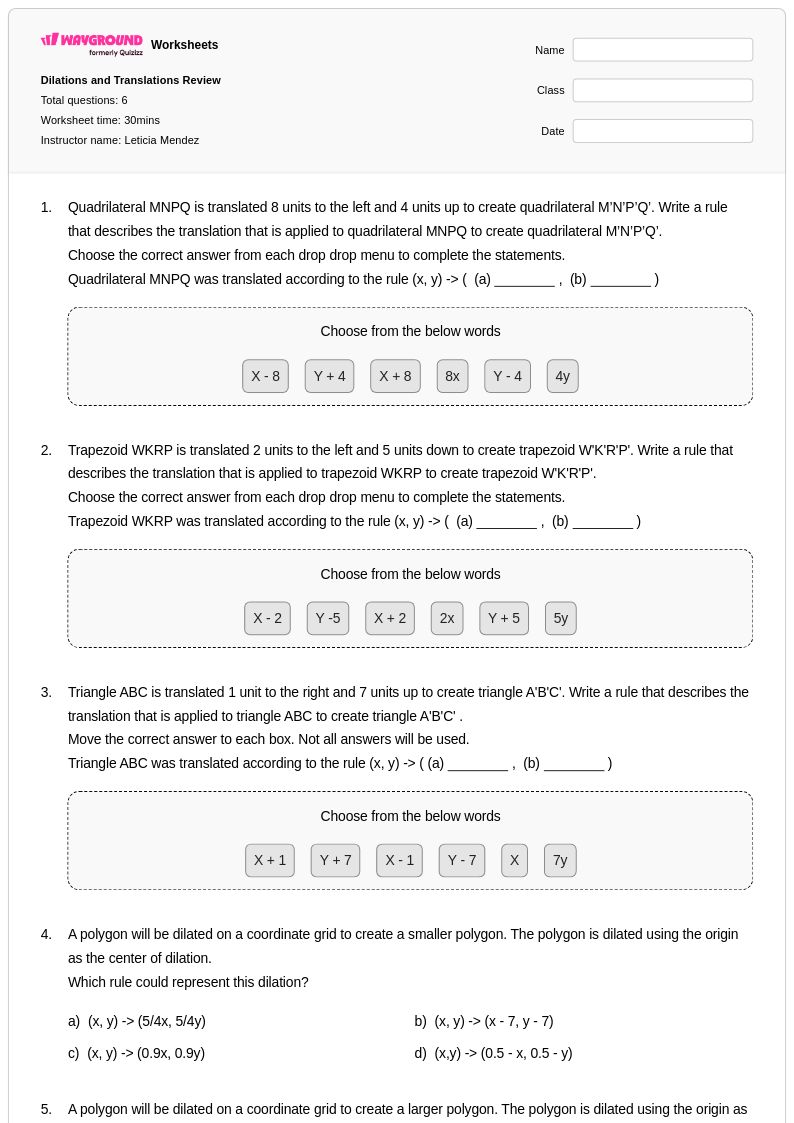
6 Q
7th
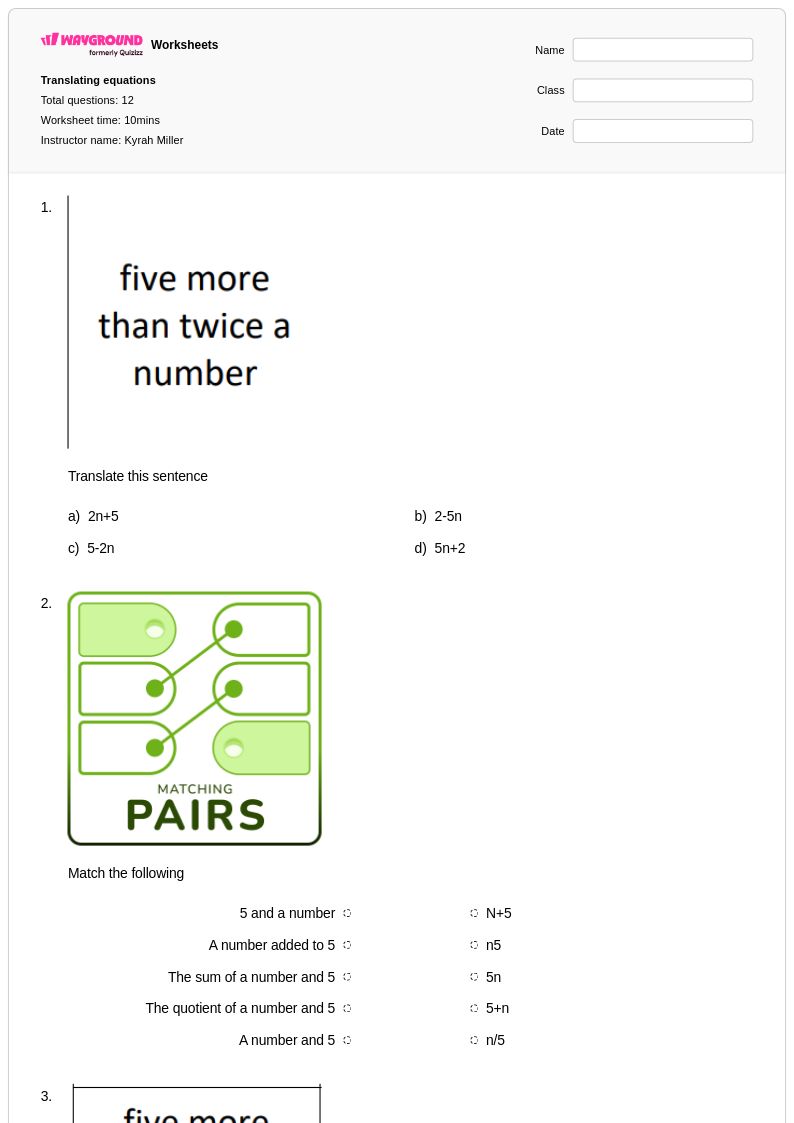
12 Q
7th
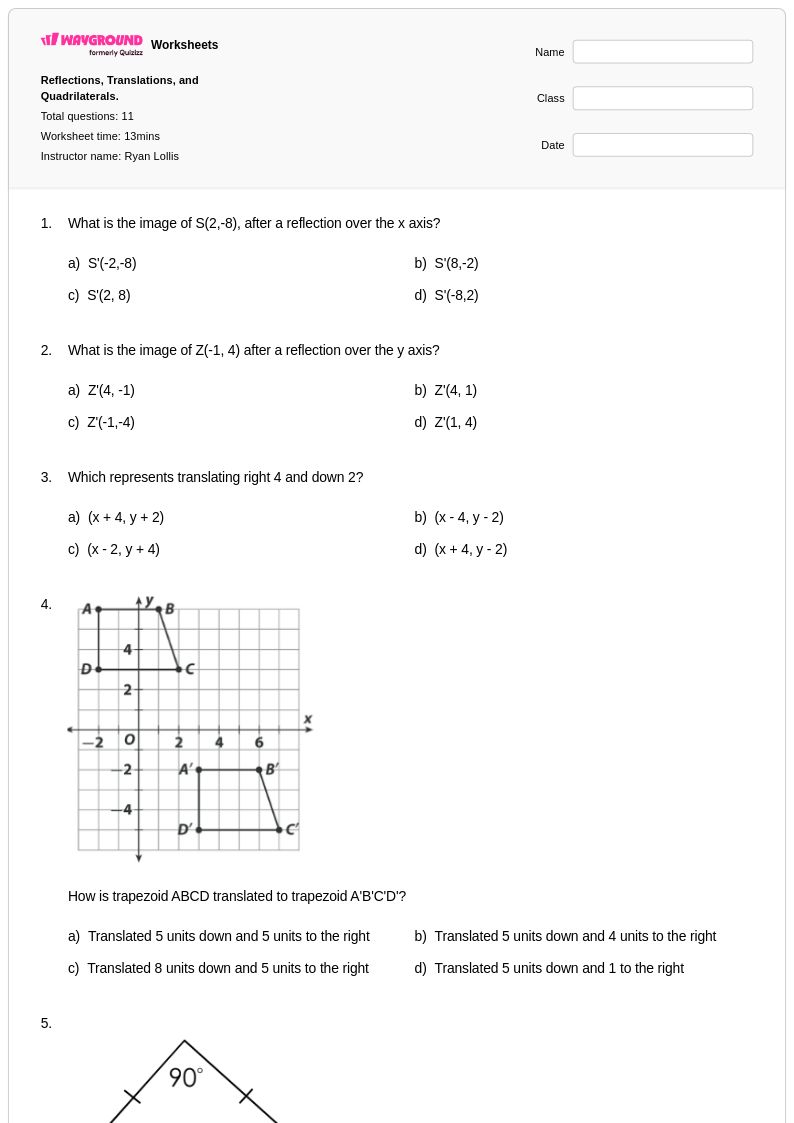
11 Q
7th
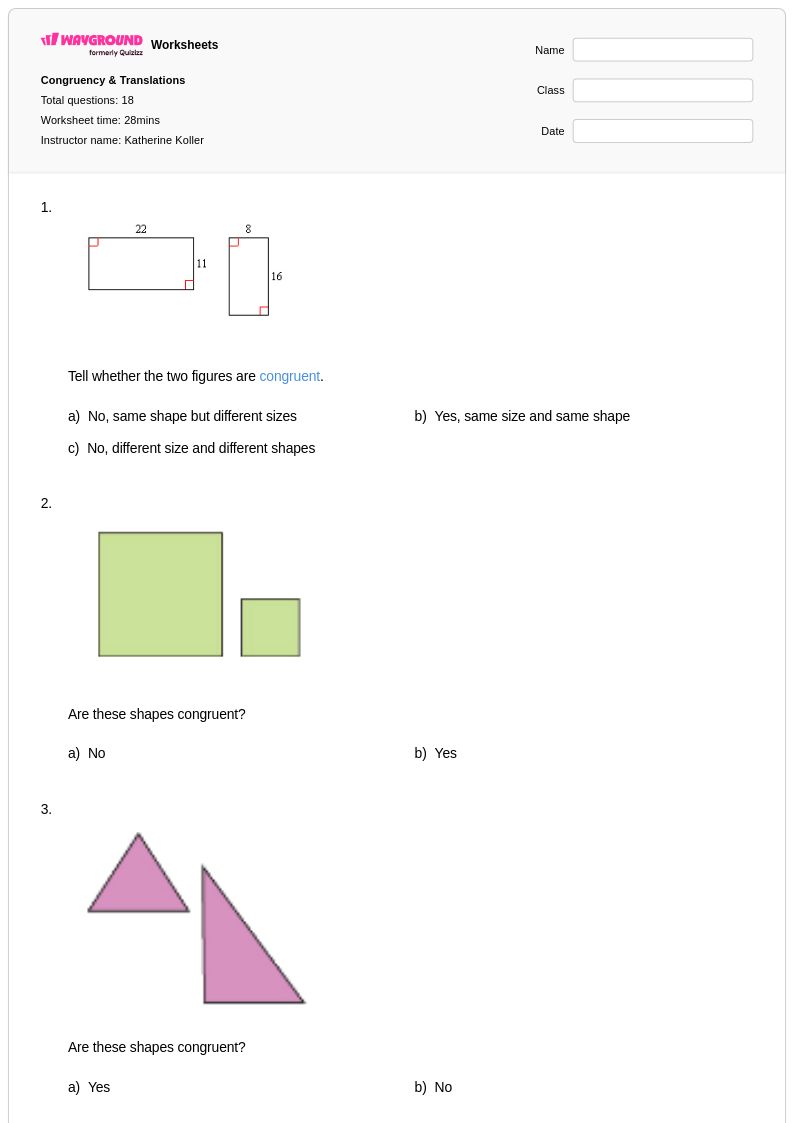
18 Q
7th - 8th
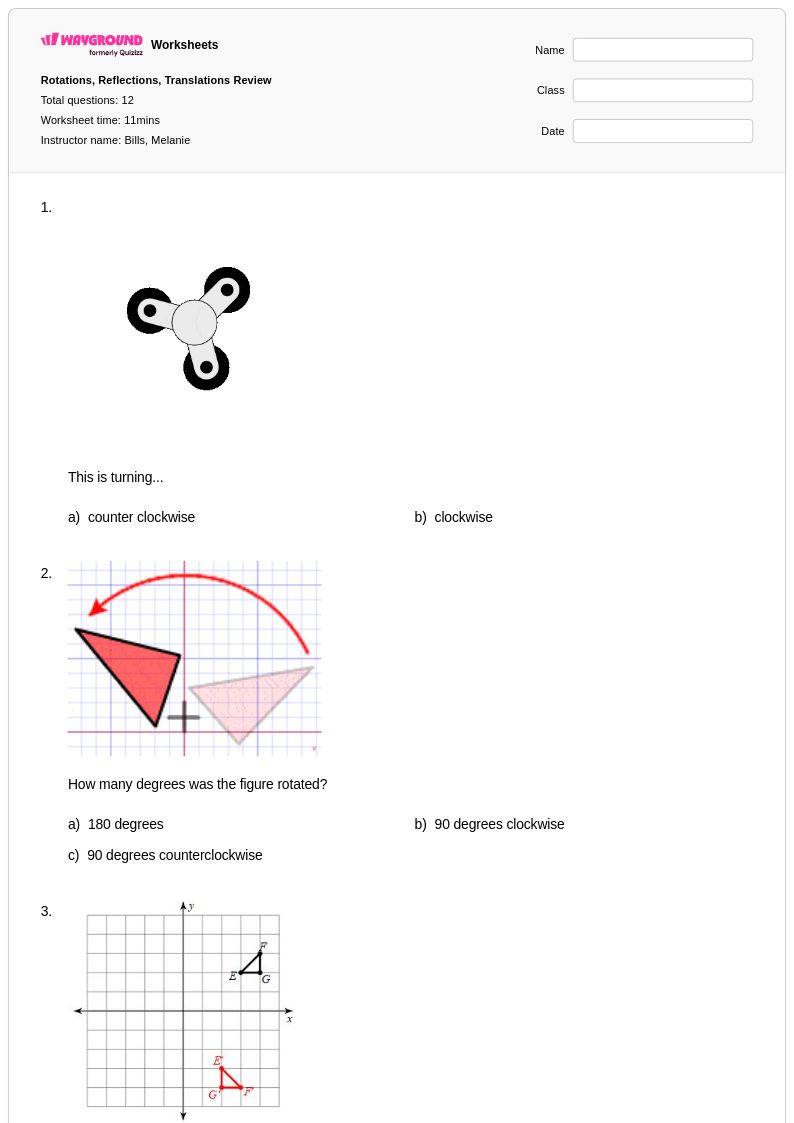
12 Q
6th - 8th
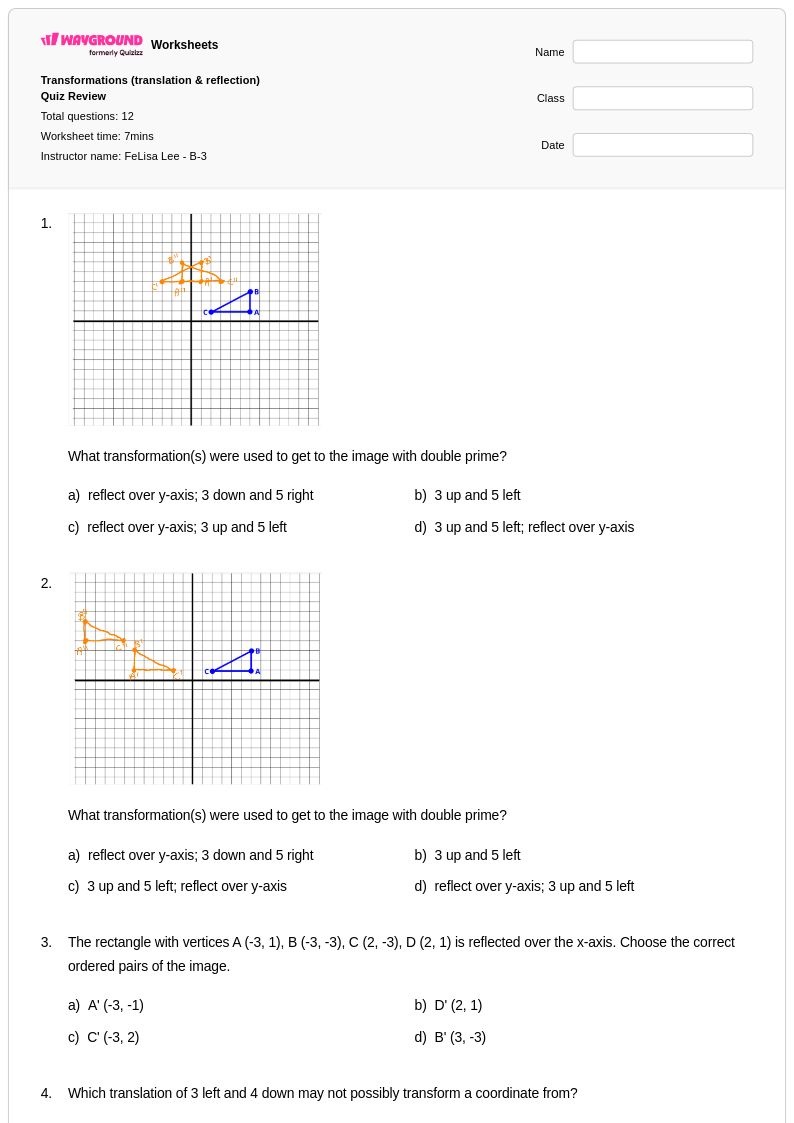
12 Q
6th - 8th
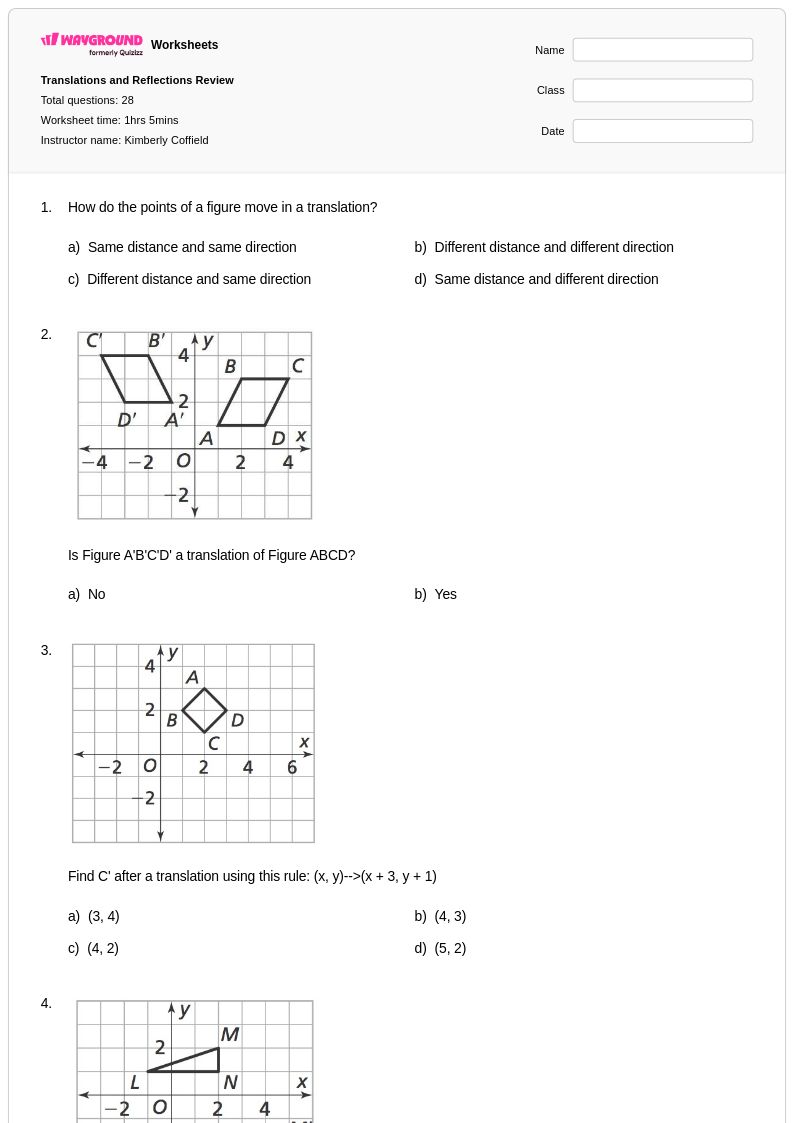
28 Q
7th - 9th
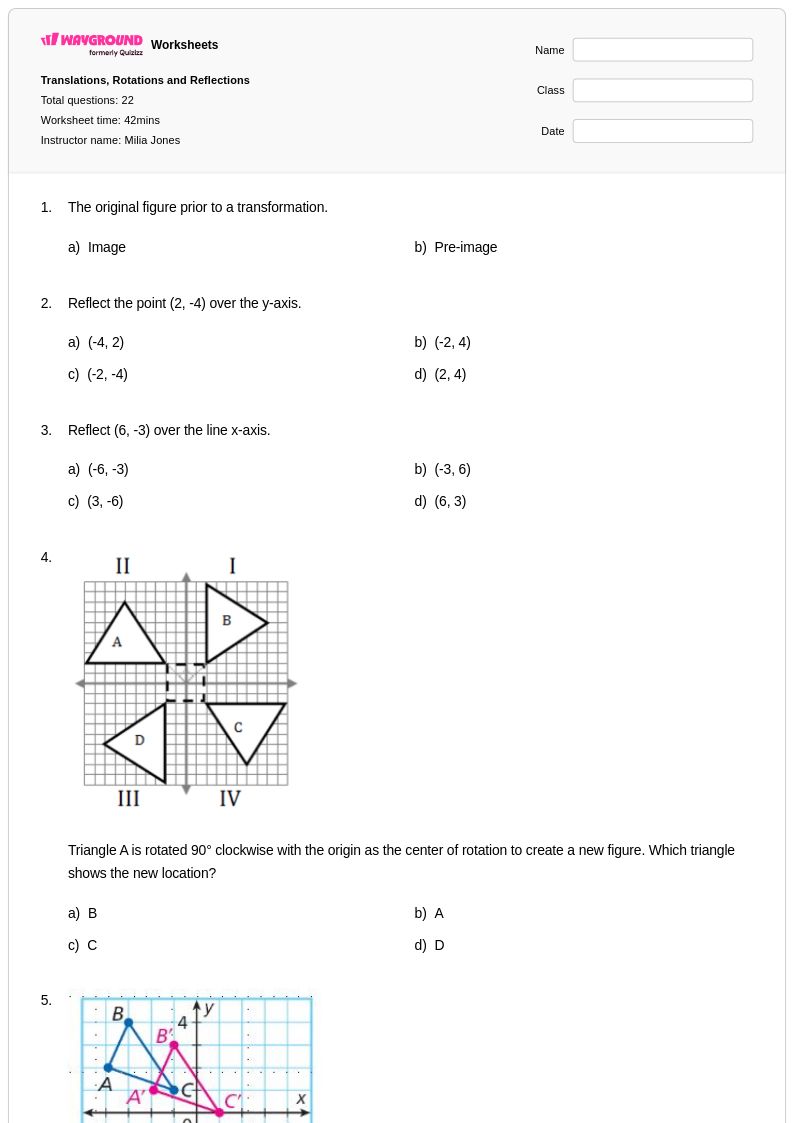
22 Q
7th - 12th
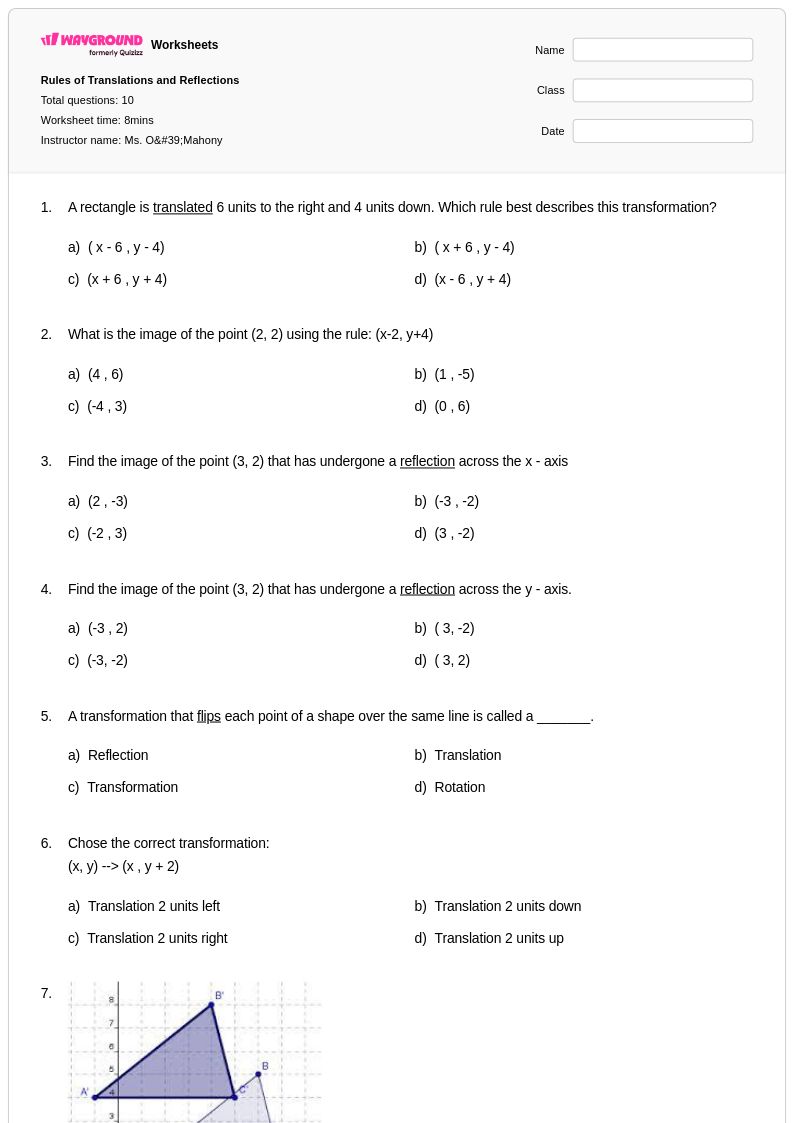
10 Q
7th - 8th
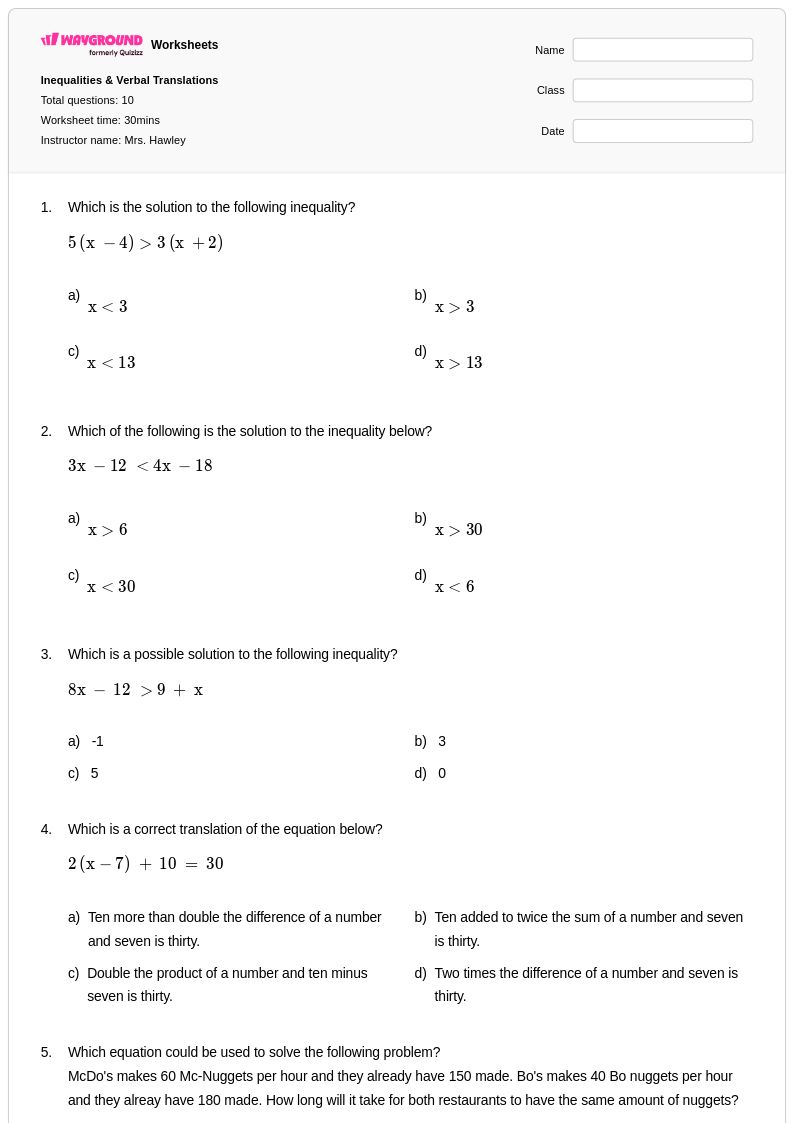
10 Q
7th - 9th
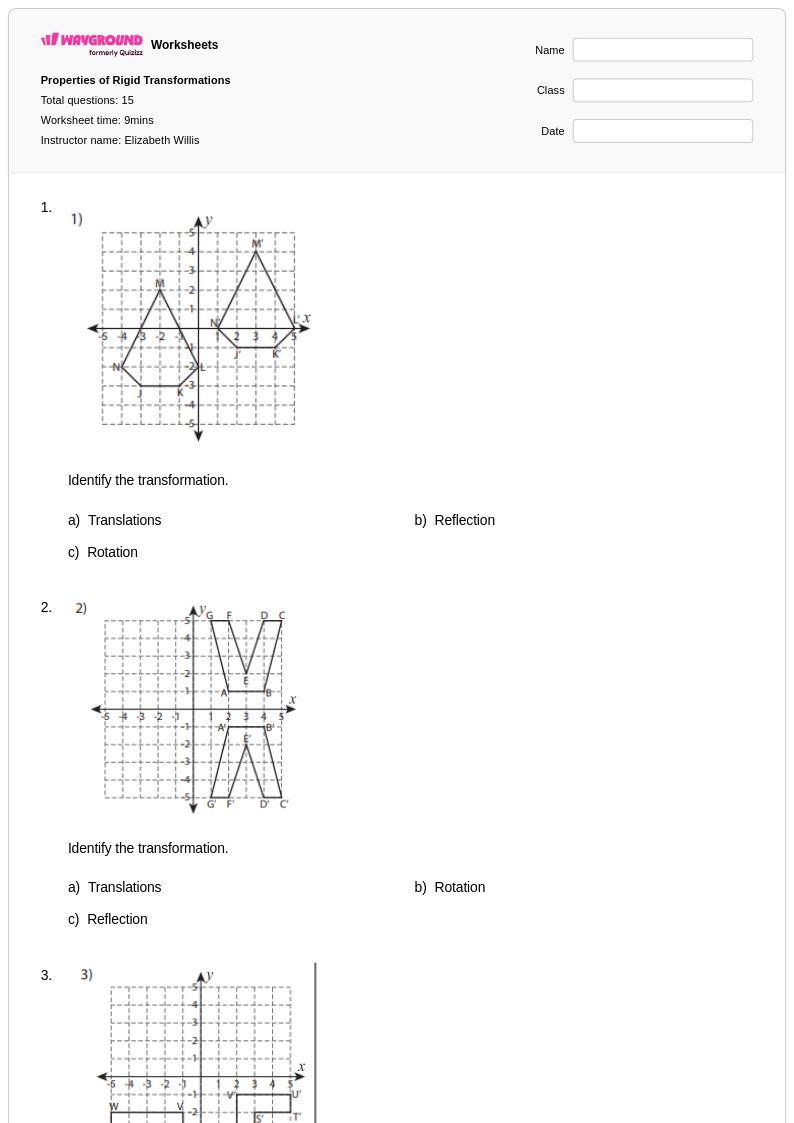
15 Q
6th - 8th
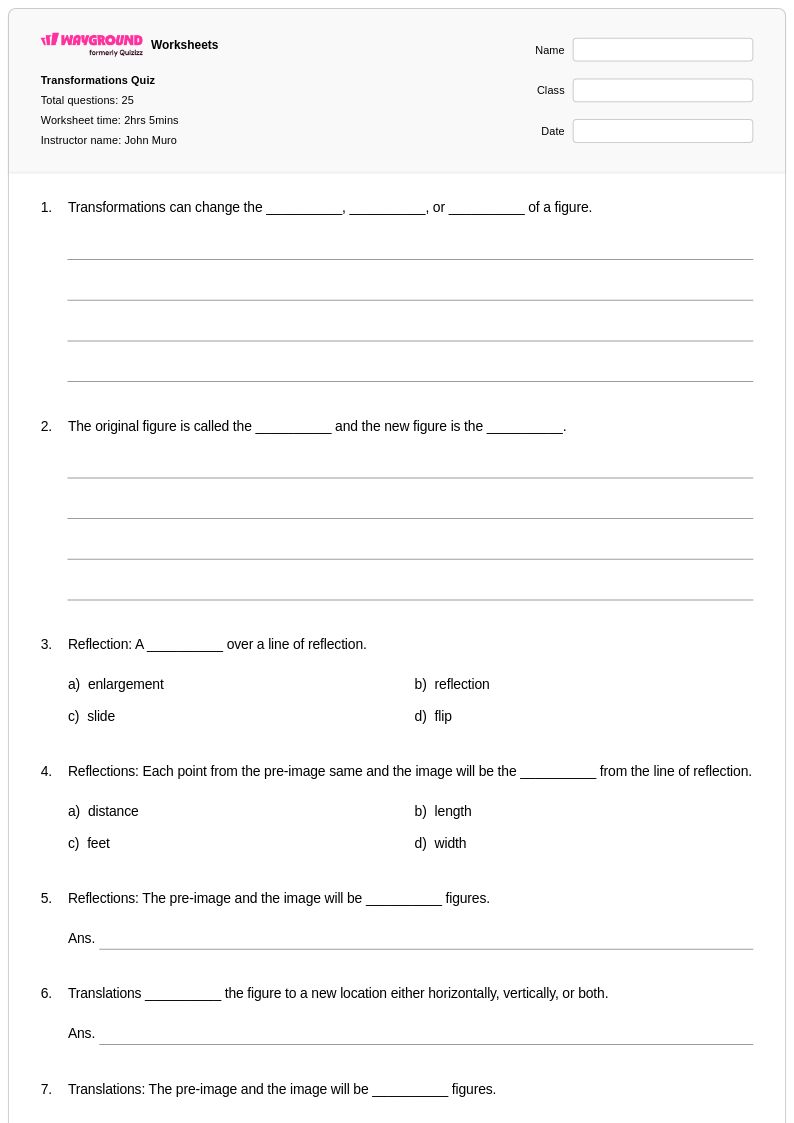
25 Q
7th
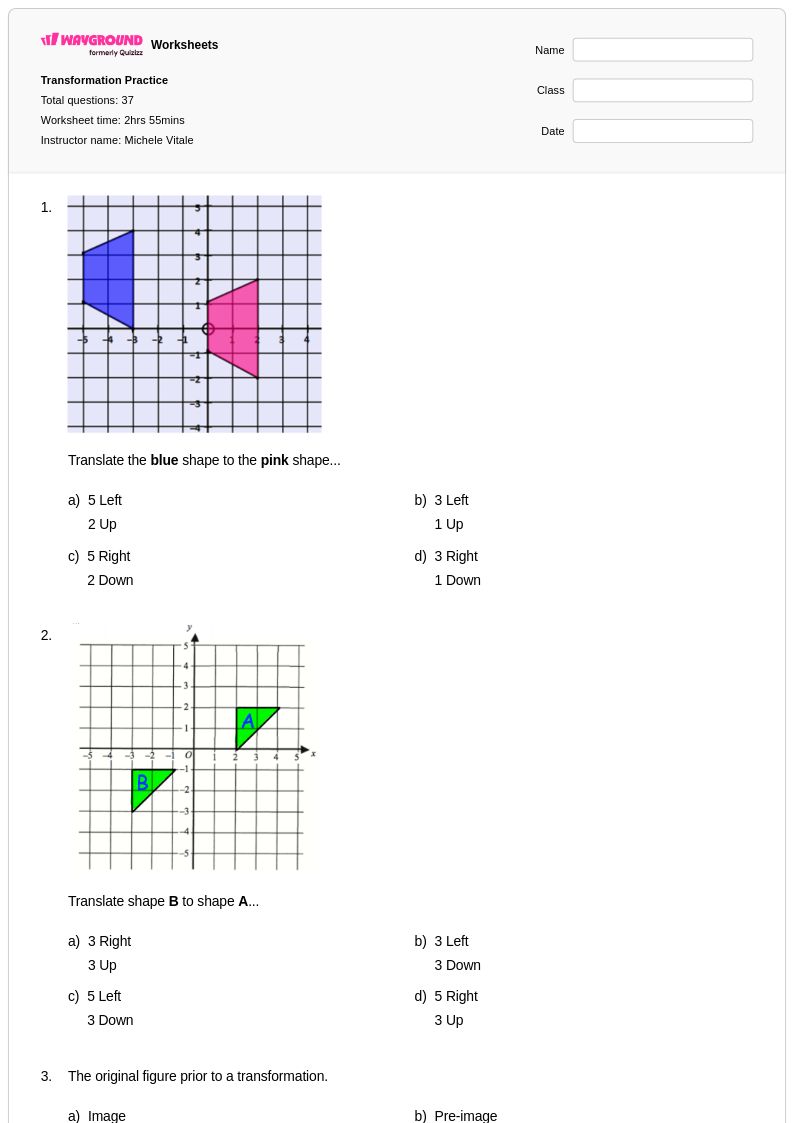
37 Q
7th
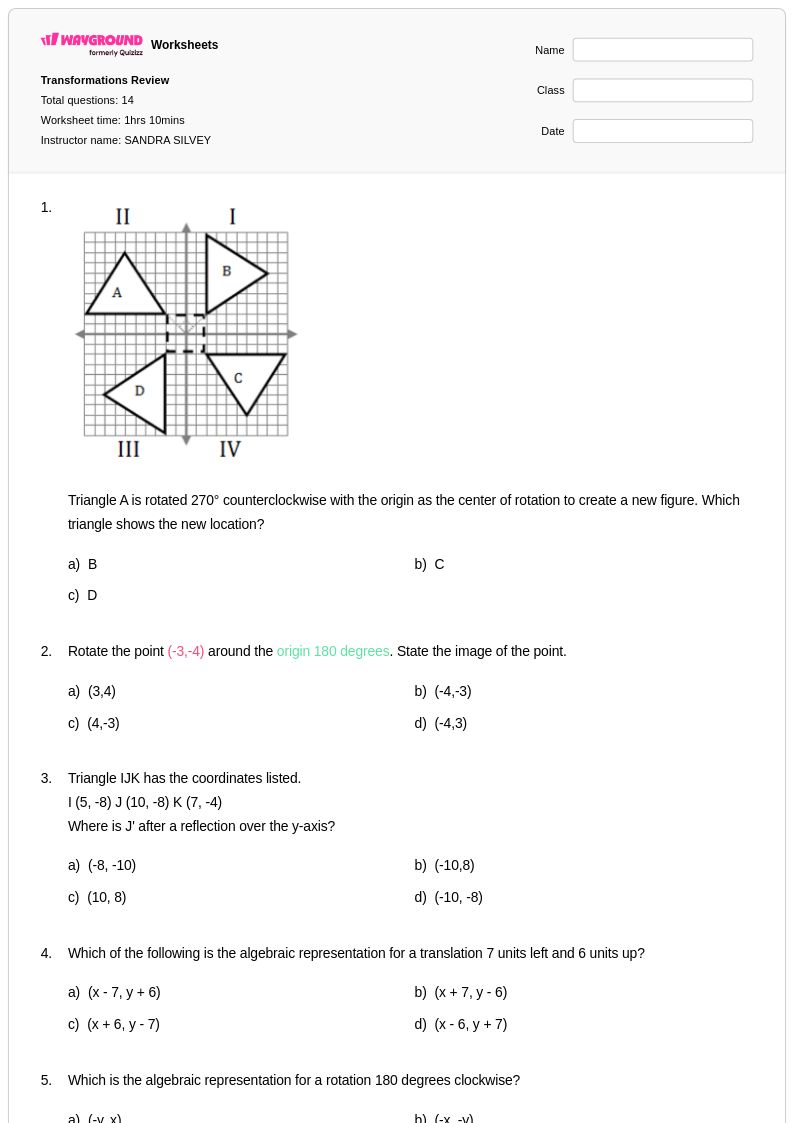
14 Q
7th
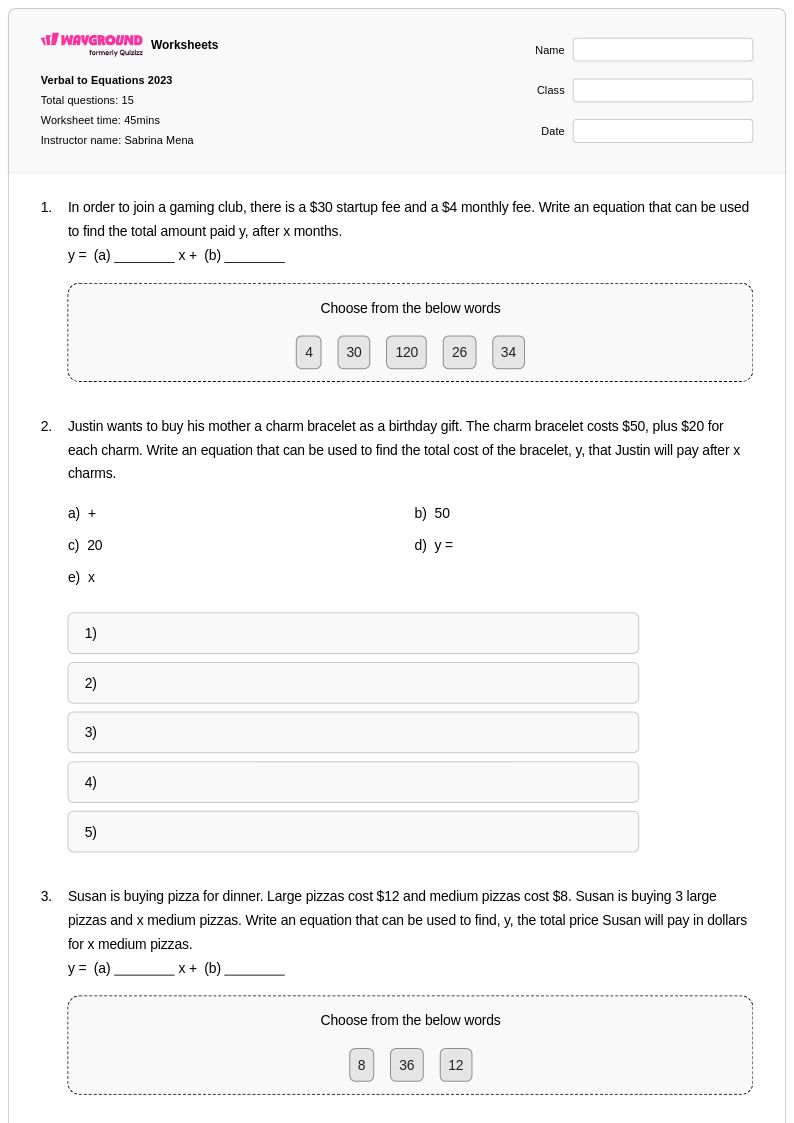
15 Q
7th
Explore Other Subject Worksheets for class 7
Explore printable Translations worksheets for Class 7
Translations worksheets for Class 7 mathematics provide essential practice for students learning to move geometric figures across coordinate planes and two-dimensional spaces. These comprehensive resources from Wayground (formerly Quizizz) focus on developing spatial reasoning skills as students learn to slide shapes horizontally, vertically, and diagonally without changing their size, shape, or orientation. The practice problems systematically guide seventh graders through identifying translation vectors, performing translations on coordinate grids, and describing the movement of figures using mathematical language and notation. Each printable worksheet includes detailed answer keys that help students verify their work and understand the step-by-step process of executing translations, while the free pdf format ensures teachers can easily distribute materials for both classroom instruction and independent practice sessions.
Wayground (formerly Quizizz) empowers educators with access to millions of teacher-created translation resources specifically designed for Class 7 mathematics instruction. The platform's robust search and filtering capabilities allow teachers to quickly locate worksheets that align with state standards and match their specific lesson objectives for geometric transformations. Advanced differentiation tools enable instructors to customize problem difficulty levels and modify worksheet content to support diverse learners, from students requiring additional scaffolding to those ready for enrichment challenges. Available in both printable and digital formats including downloadable pdfs, these translation worksheets seamlessly integrate into lesson planning workflows while supporting targeted remediation and skill-building activities that strengthen students' understanding of coordinate geometry and spatial relationships.