Free Printable Vietnam War Worksheets for Class 11
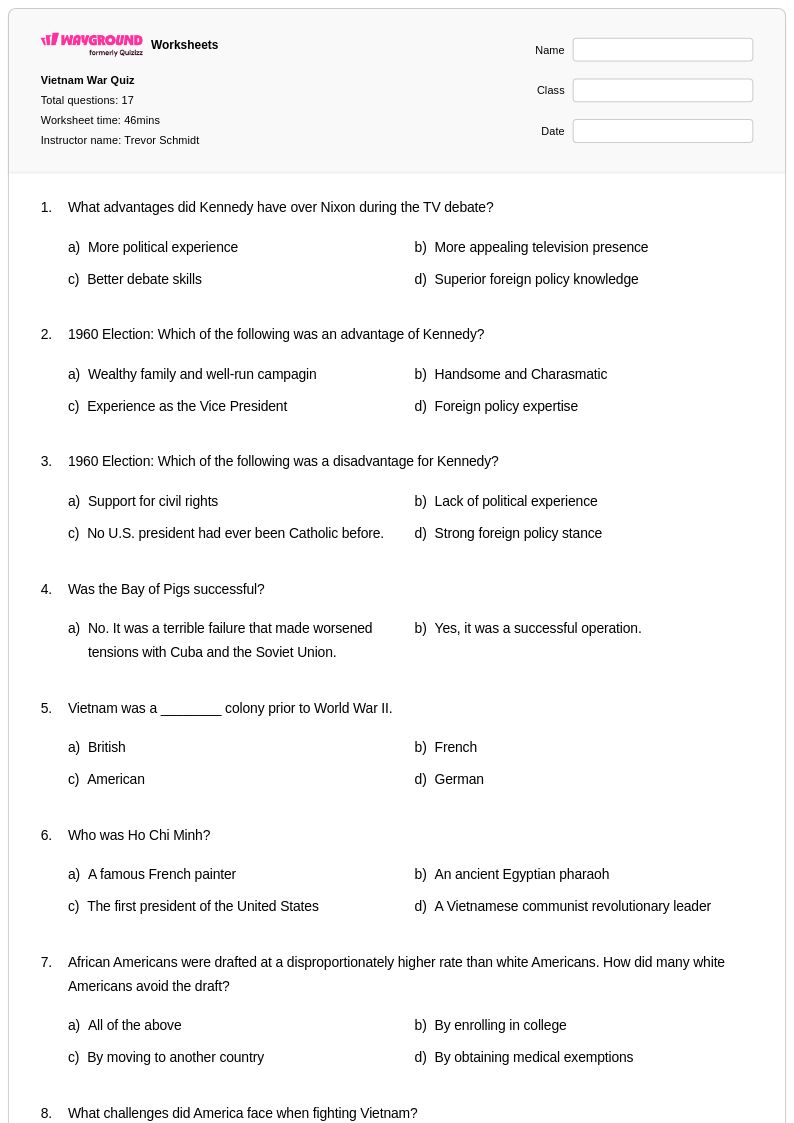
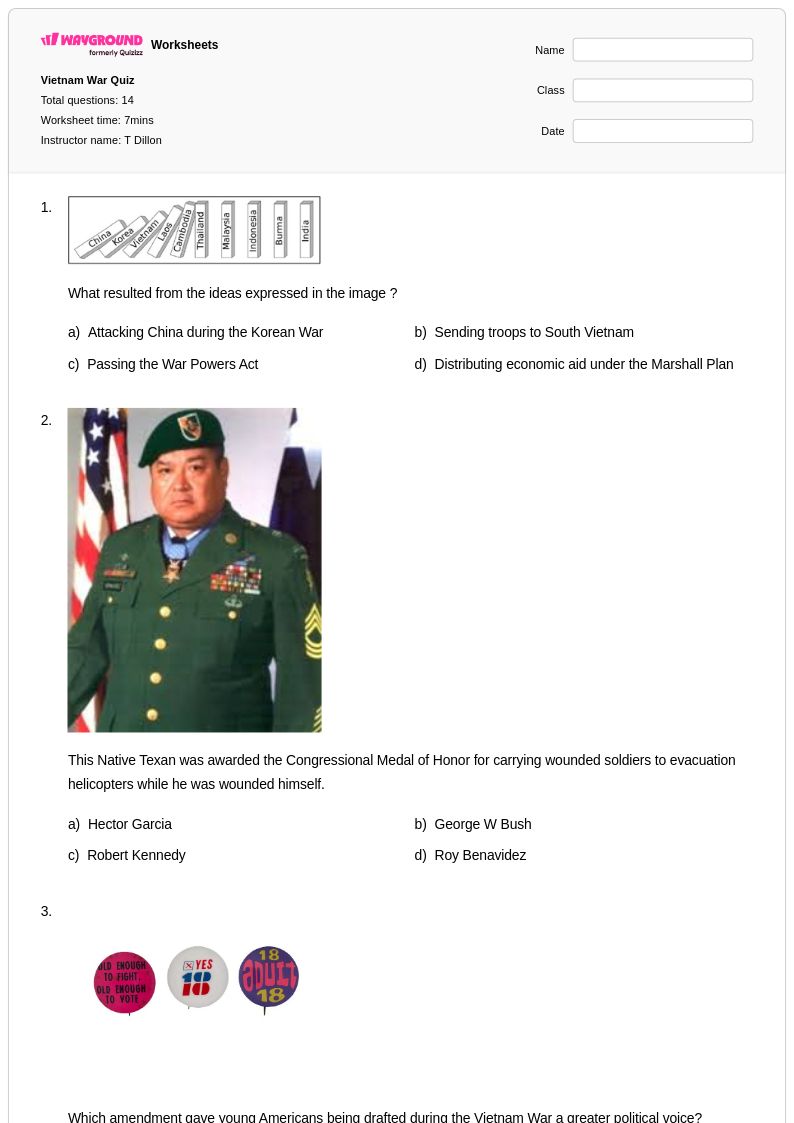
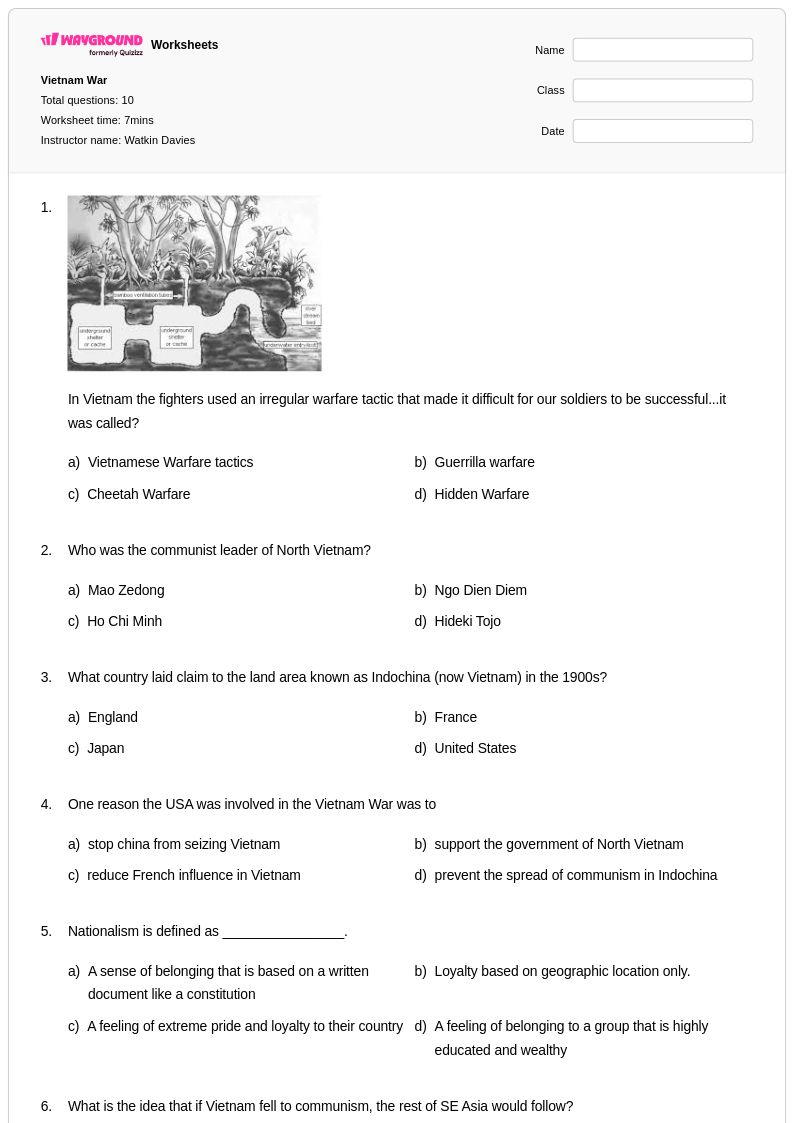
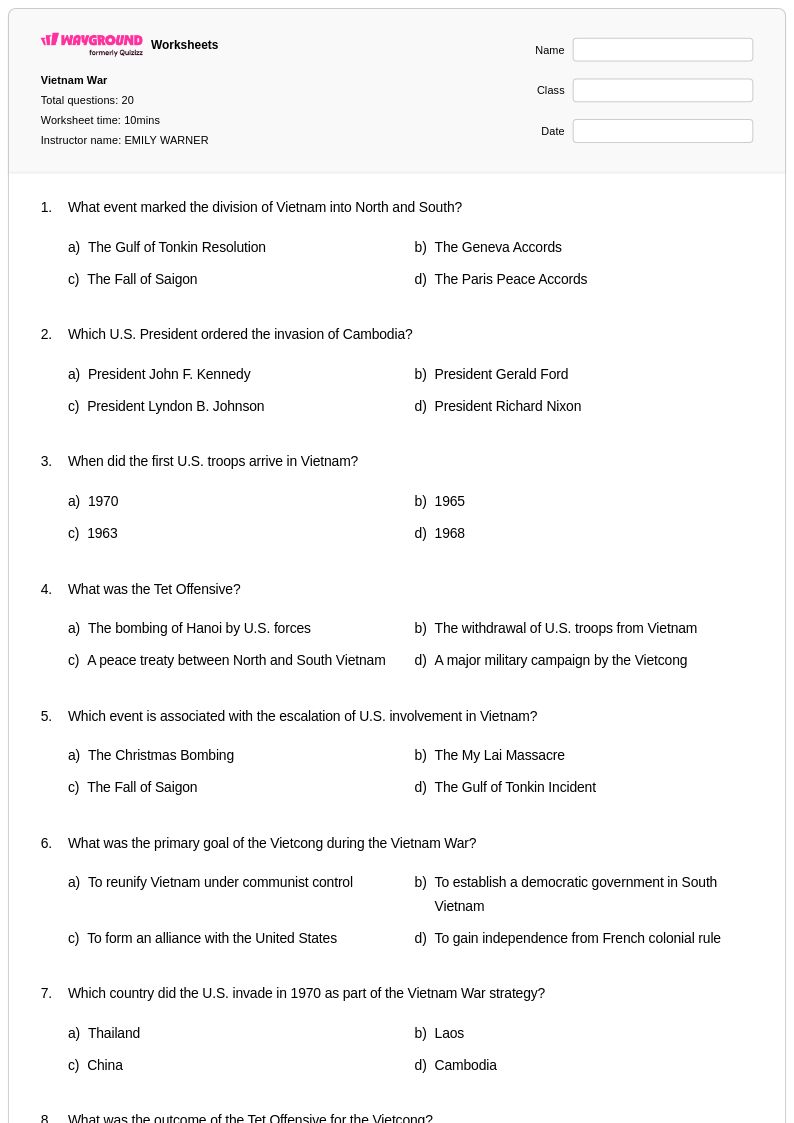
Explore Wayground's free Class 11 Vietnam War worksheets and printables that help students analyze key events, causes, and consequences of this pivotal conflict through engaging practice problems with comprehensive answer keys.
Explore printable Vietnam War worksheets for Class 11
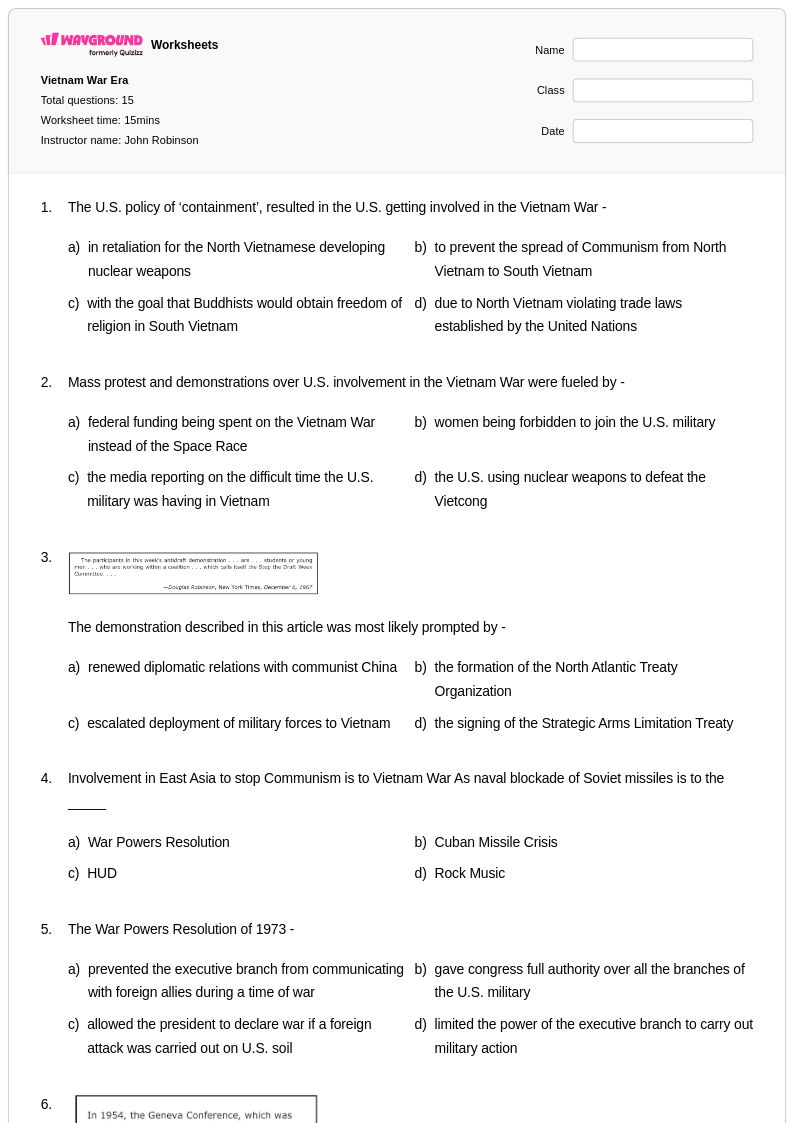
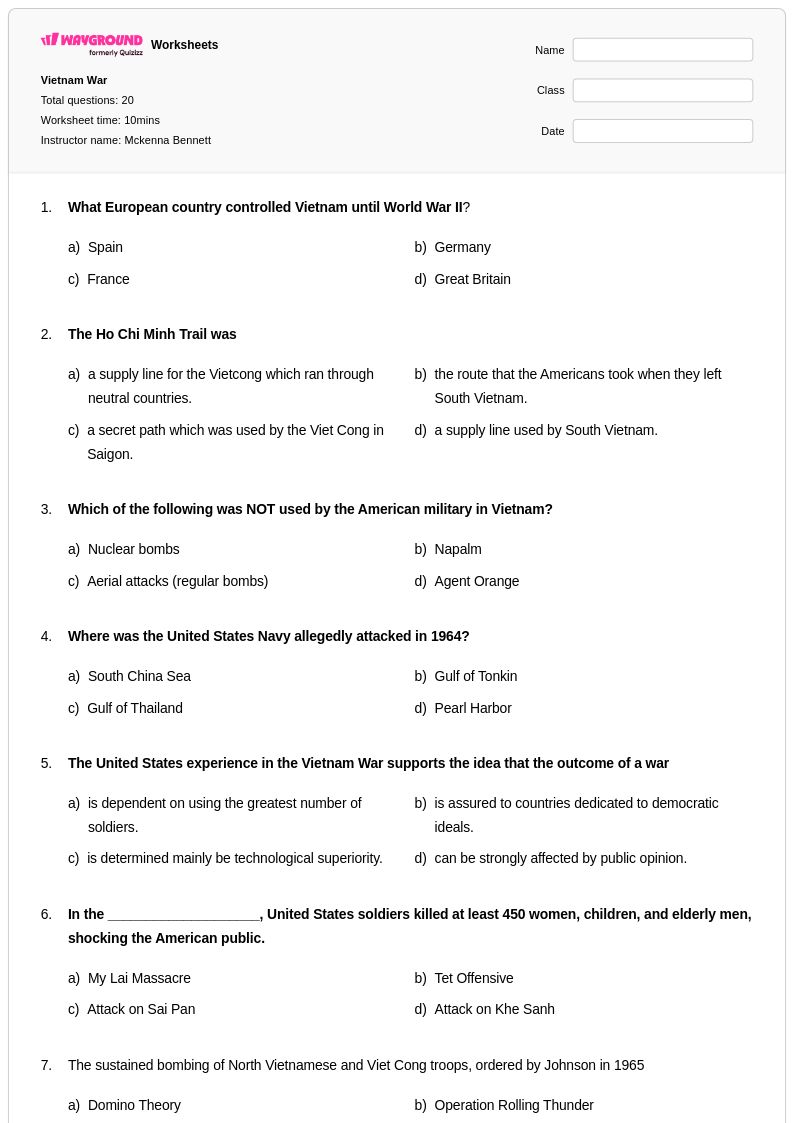
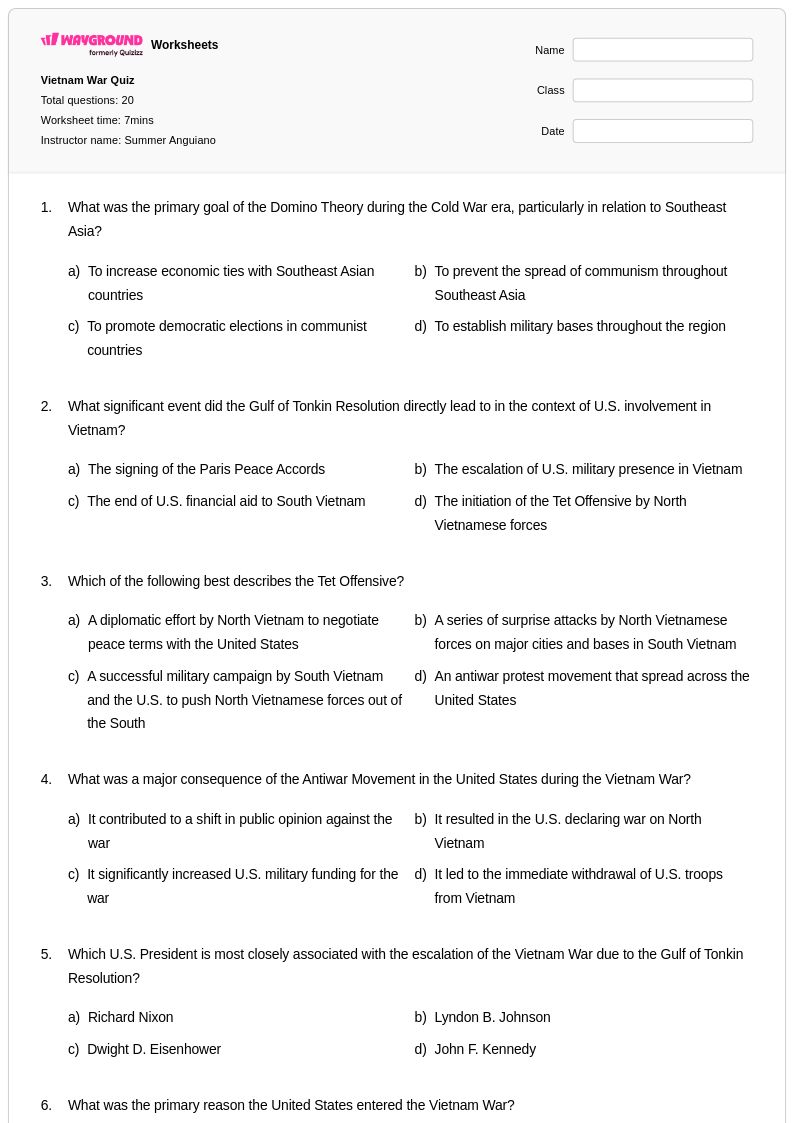
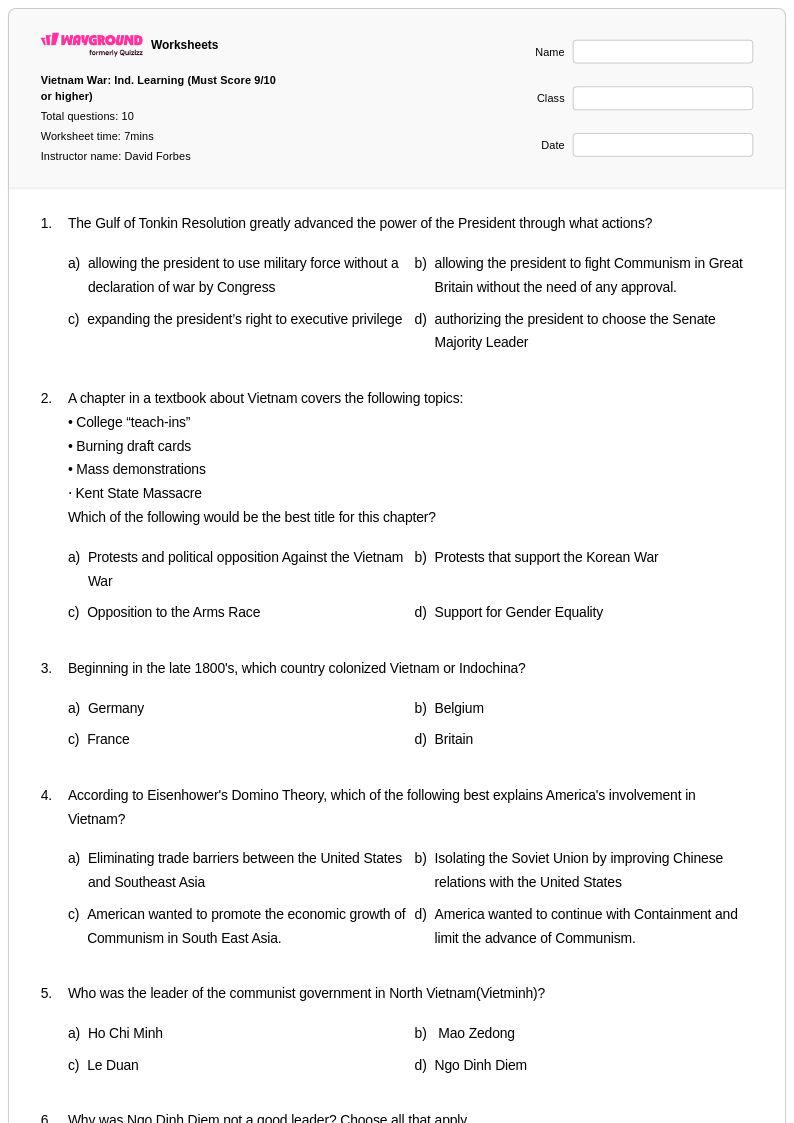
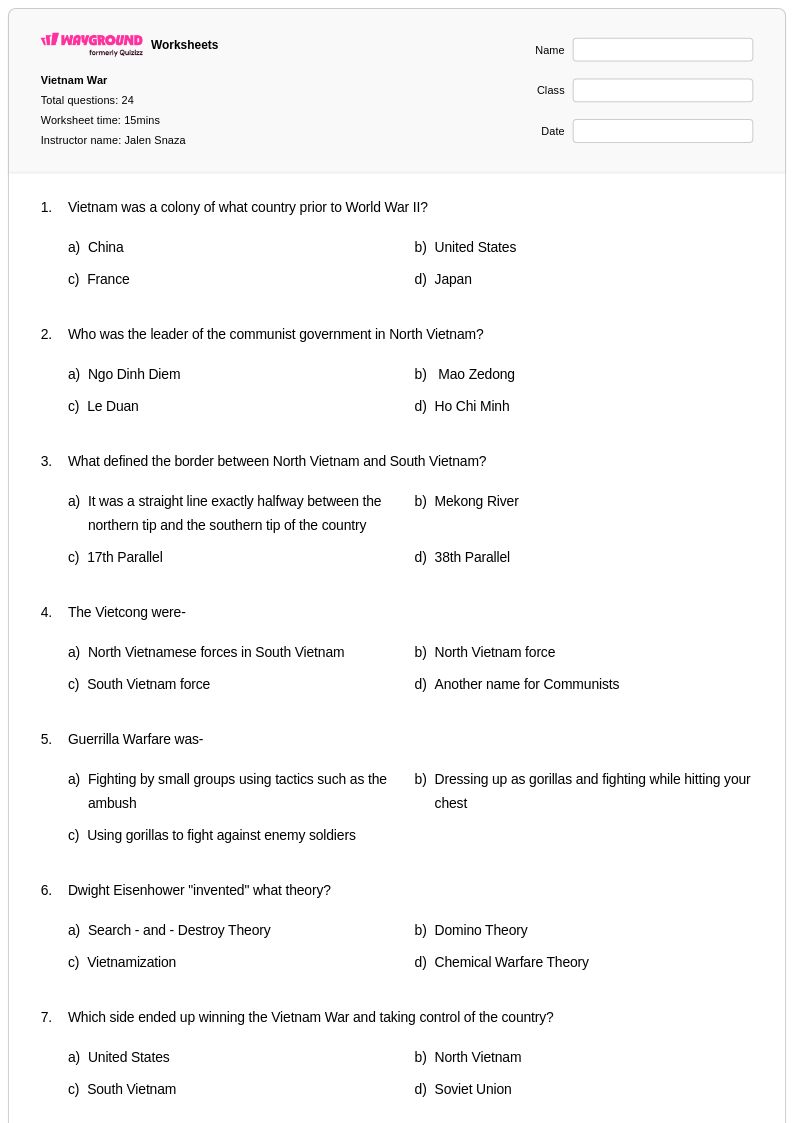
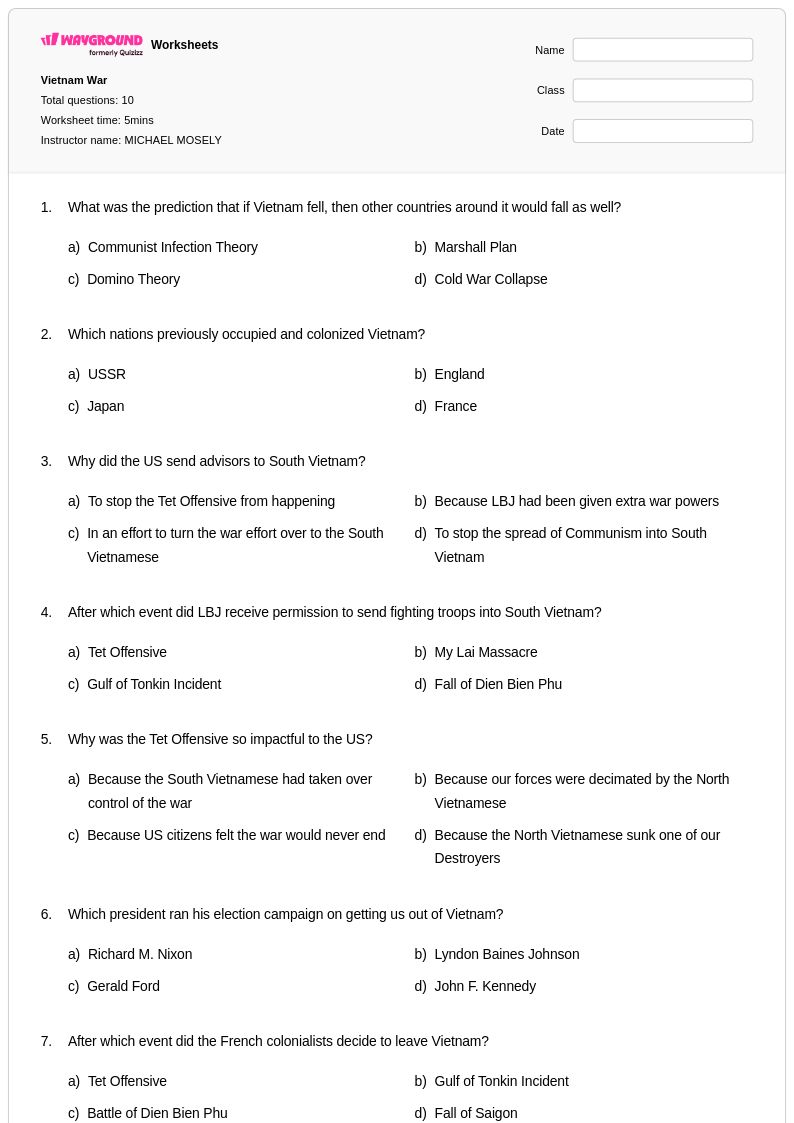
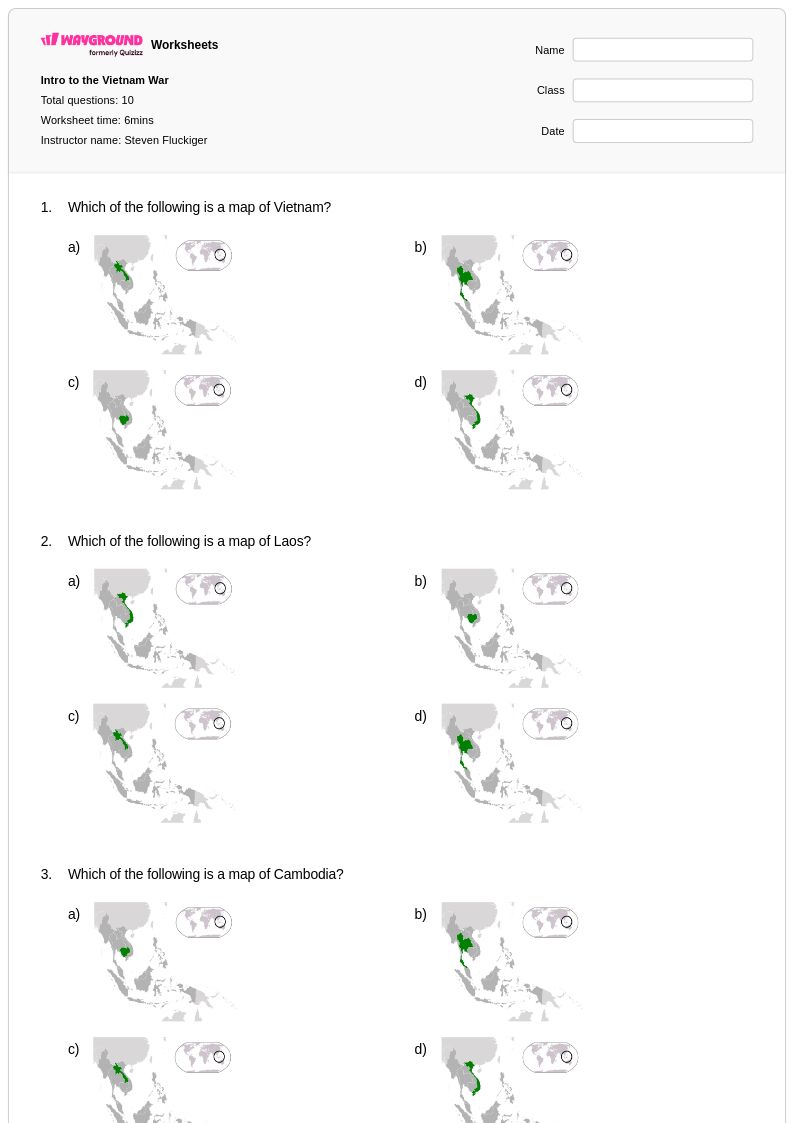
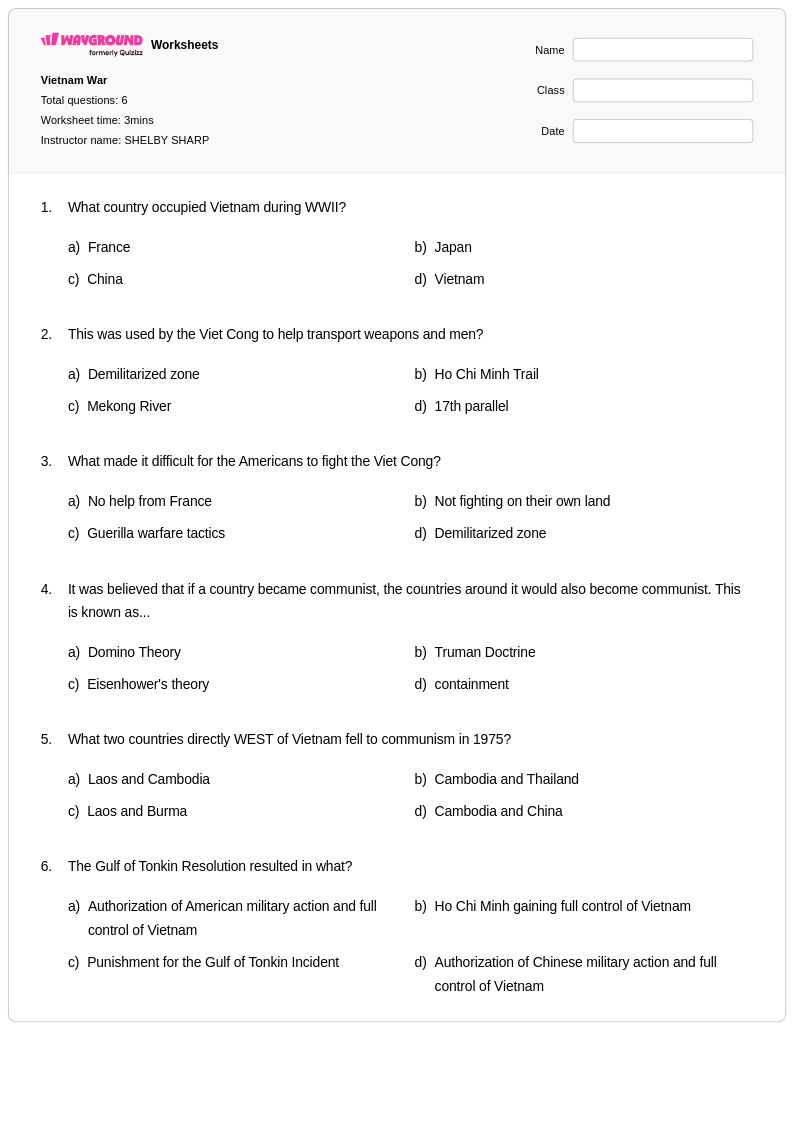
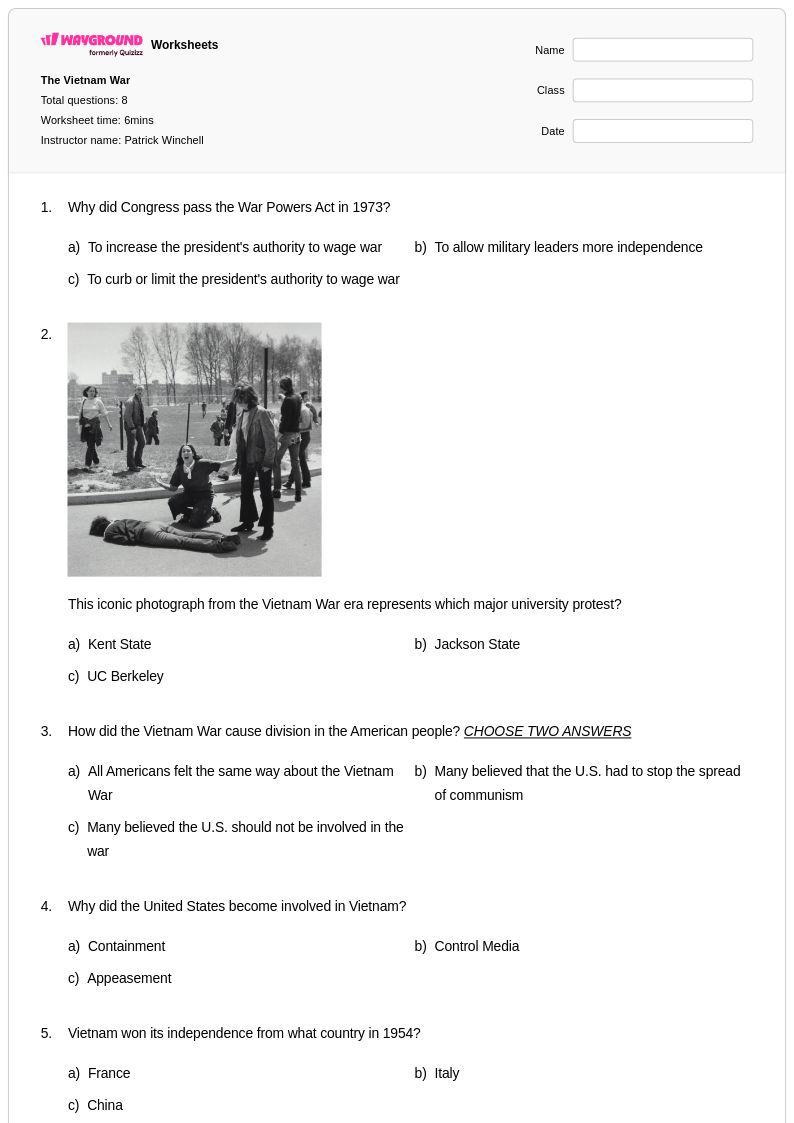
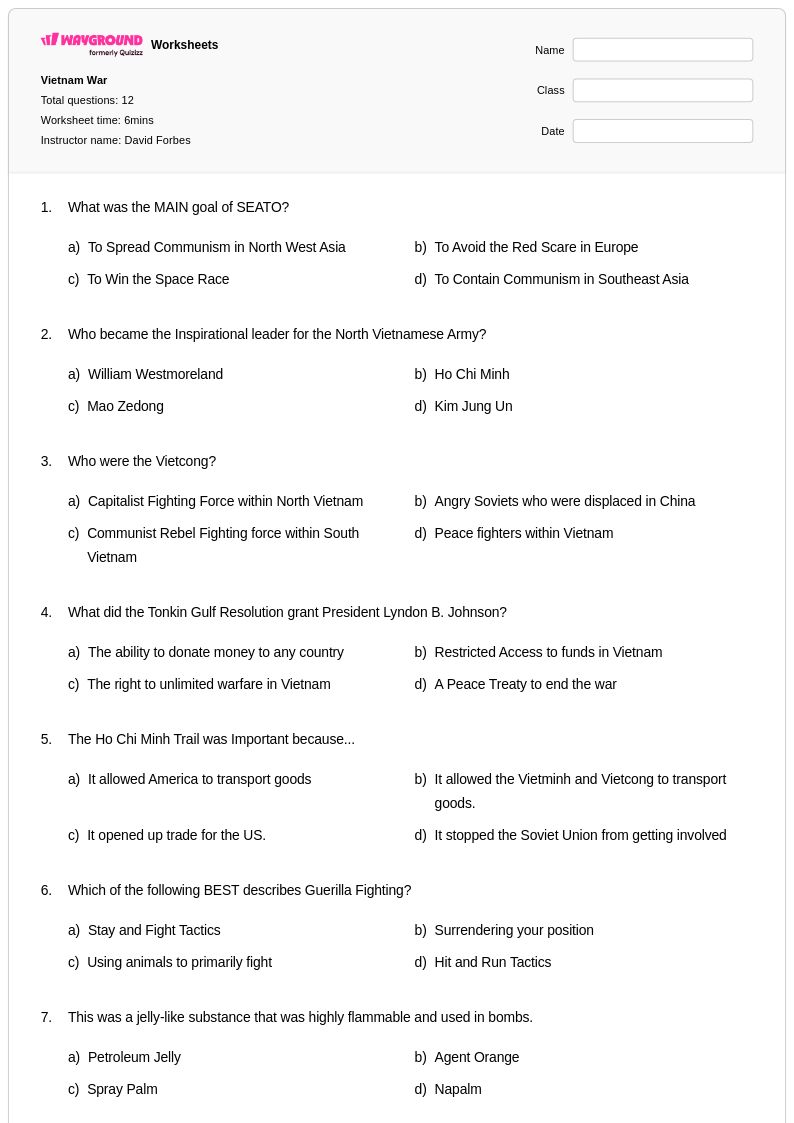
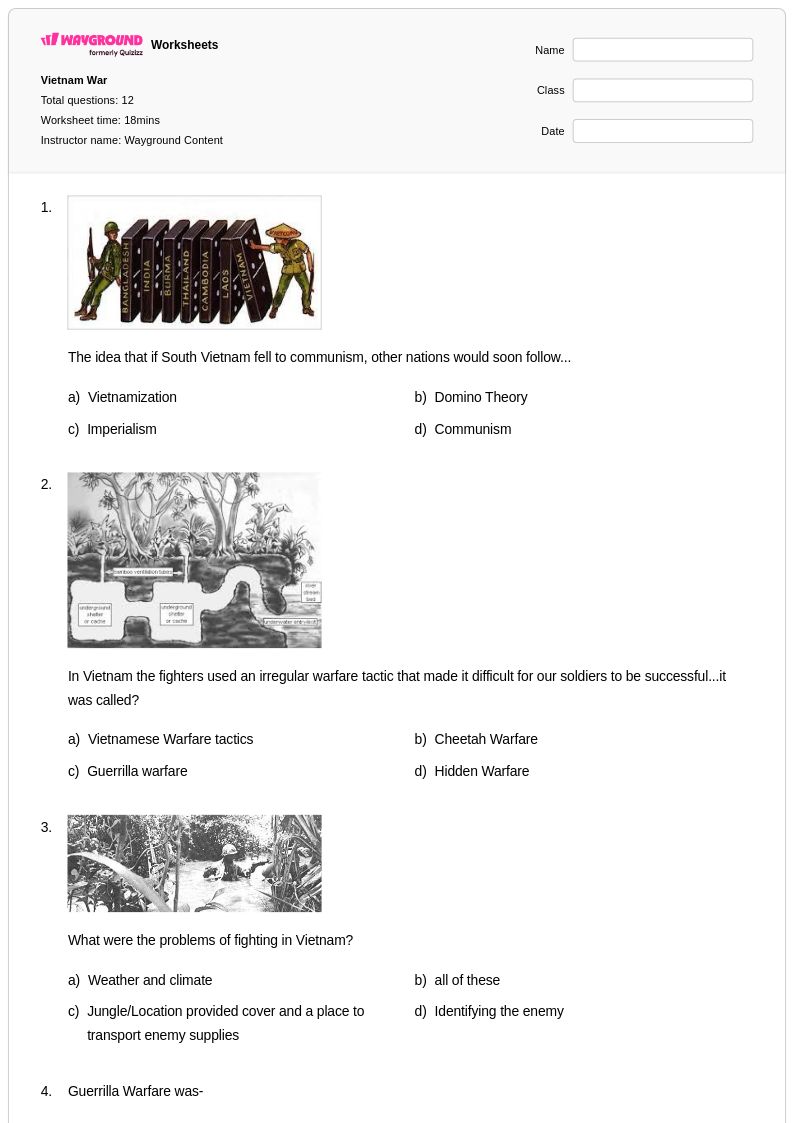
Vietnam War worksheets for Class 11 students available through Wayground (formerly Quizizz) provide comprehensive coverage of this pivotal Cold War conflict that shaped modern American foreign policy and Southeast Asian history. These educational resources strengthen critical thinking skills by examining the complex political, social, and military dimensions of the Vietnam conflict from 1955 to 1975, including the Gulf of Tonkin incident, escalation of U.S. involvement, anti-war protests, and the war's lasting impact on American society. Students engage with primary source documents, analyze cause-and-effect relationships, and evaluate multiple perspectives through carefully structured practice problems that include detailed answer keys. The collection offers both free printable worksheets and interactive digital formats, enabling educators to deliver content through pdf downloads or online assignments that accommodate diverse learning environments and teaching preferences.
Wayground (formerly Quizizz) supports social studies educators with an extensive library of millions of teacher-created Vietnam War resources specifically designed for Class 11 instruction. The platform's robust search and filtering capabilities allow teachers to quickly locate materials aligned with state and national history standards, while differentiation tools enable customization for varying student ability levels and learning objectives. These worksheets are available in both printable pdf format and interactive digital versions, providing flexibility for classroom instruction, remote learning, or hybrid educational models. Teachers can efficiently plan comprehensive units on Cold War history, create targeted remediation activities for struggling students, develop enrichment assignments for advanced learners, and implement regular skill practice sessions that reinforce historical analysis and critical thinking abilities essential for upper-level social studies coursework.
FAQs
How do I teach the Vietnam War to middle or high school students?
Teaching the Vietnam War effectively requires balancing political, military, and social history so students understand not just what happened, but why it remains controversial. Start with the Cold War context and the domino theory to explain U.S. involvement, then move through key escalation points like the Gulf of Tonkin Resolution before addressing the anti-war movement and the war's legacy. Using primary source documents, such as speeches, protest materials, and firsthand accounts, helps students grapple with the competing perspectives that defined this conflict.
What are the most important topics to cover in a Vietnam War unit?
A comprehensive Vietnam War unit should cover the political origins of U.S. involvement, the draft system and its social impact, major military operations, the anti-war protest movement, and the war's lasting effects on American foreign policy and veterans. Students should also examine the Vietnamese perspective and the broader Cold War framework that shaped decision-making on all sides. Cause-and-effect analysis is especially valuable here, as the war's consequences rippled through American society for decades.
What common misconceptions do students have about the Vietnam War?
Students frequently assume the Vietnam War began suddenly with large-scale U.S. military involvement, overlooking decades of earlier French colonialism and gradual American advisory escalation. Another common error is conflating opposition to the war with opposition to veterans, which misrepresents the nuanced public debate of the era. Students also often oversimplify the war's outcome, failing to recognize the complex political, humanitarian, and strategic consequences that extended well beyond 1975.
What exercises help students analyze cause and effect in the Vietnam War?
Cause-and-effect graphic organizers work well for mapping the chain of events from Cold War policy to U.S. withdrawal, helping students see how decisions compounded over time. Document analysis activities using primary sources such as the Pentagon Papers or presidential speeches push students to evaluate why decisions were made and what consequences followed. Multiple-perspective exercises, where students analyze the same event from American, North Vietnamese, South Vietnamese, and civilian viewpoints, build the historical thinking skills central to understanding this conflict.
How can I use Vietnam War worksheets in my classroom?
Wayground's Vietnam War worksheets are available as printable PDFs for traditional classroom use and in digital formats for technology-integrated or hybrid learning environments, including the option to host them as a quiz directly on Wayground. Teachers can use them as guided notes during instruction, independent practice after a lesson, or review activities before assessments. The included answer keys make it straightforward to provide students with immediate feedback on their understanding of key events, causes, and consequences.
How do I differentiate Vietnam War instruction for students at different levels?
For struggling learners, scaffolding with timelines, vocabulary support, and simplified primary source excerpts helps build foundational understanding before asking students to analyze complexity. Advanced students benefit from open-ended essay prompts, comparative tasks that connect the Vietnam War to other conflicts, or research into underrepresented perspectives such as Vietnamese civilians. On Wayground, teachers can apply individual accommodations including read-aloud support, reduced answer choices, and extended time, so every student engages with the material at an appropriate level.