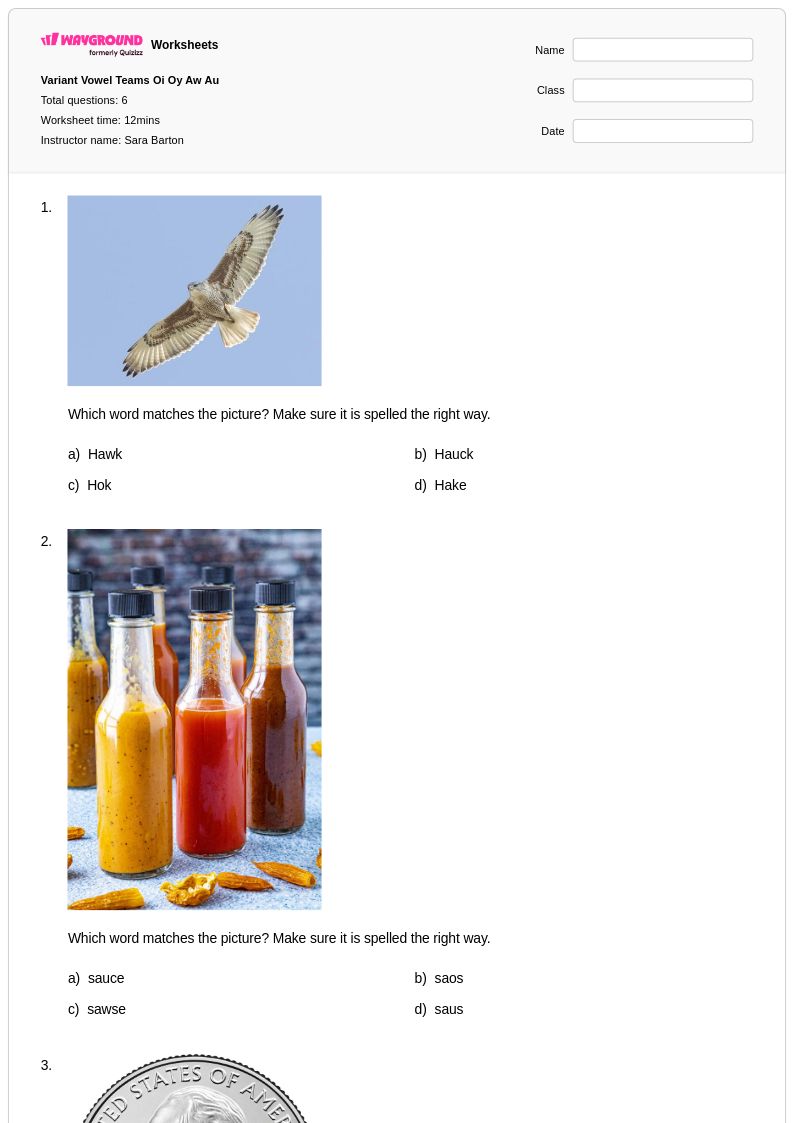
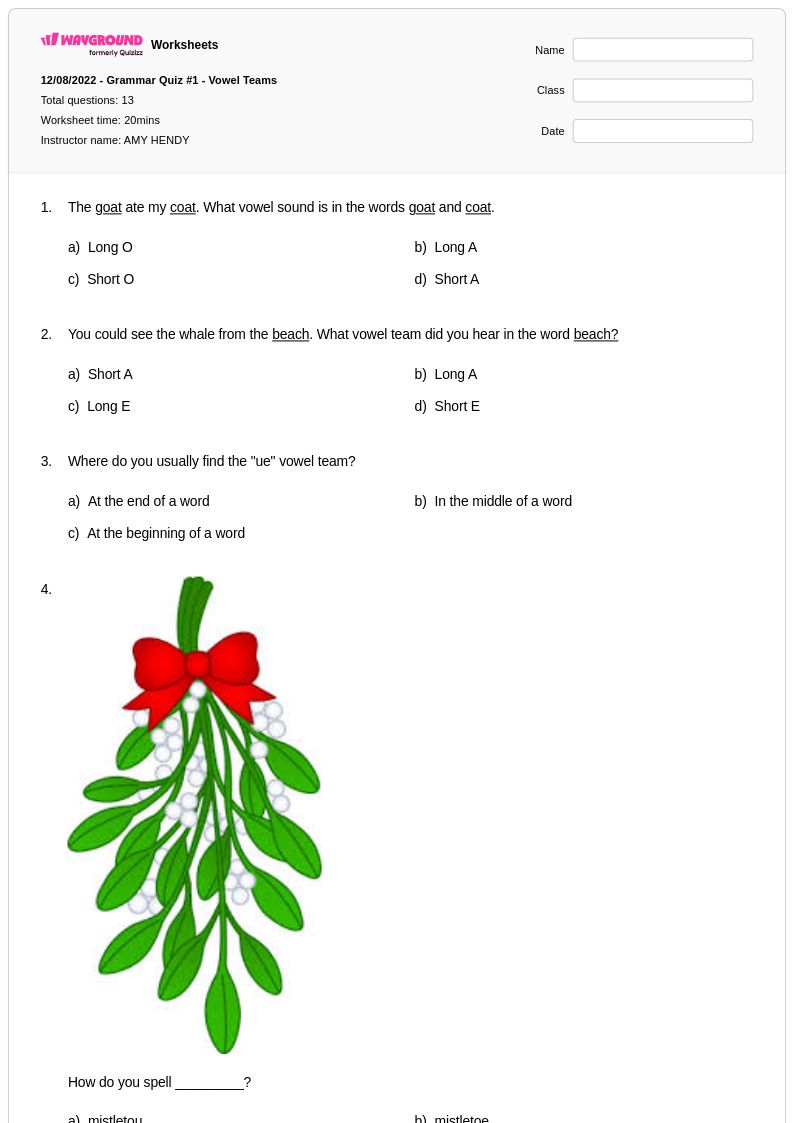
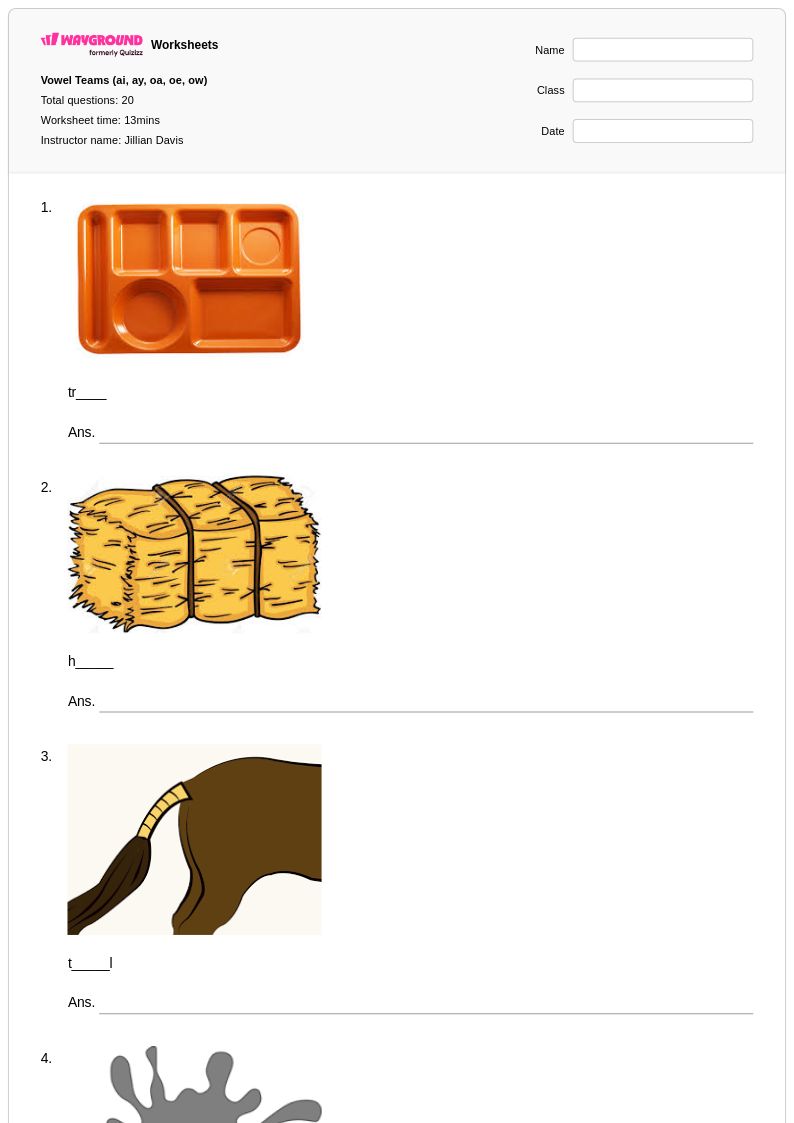
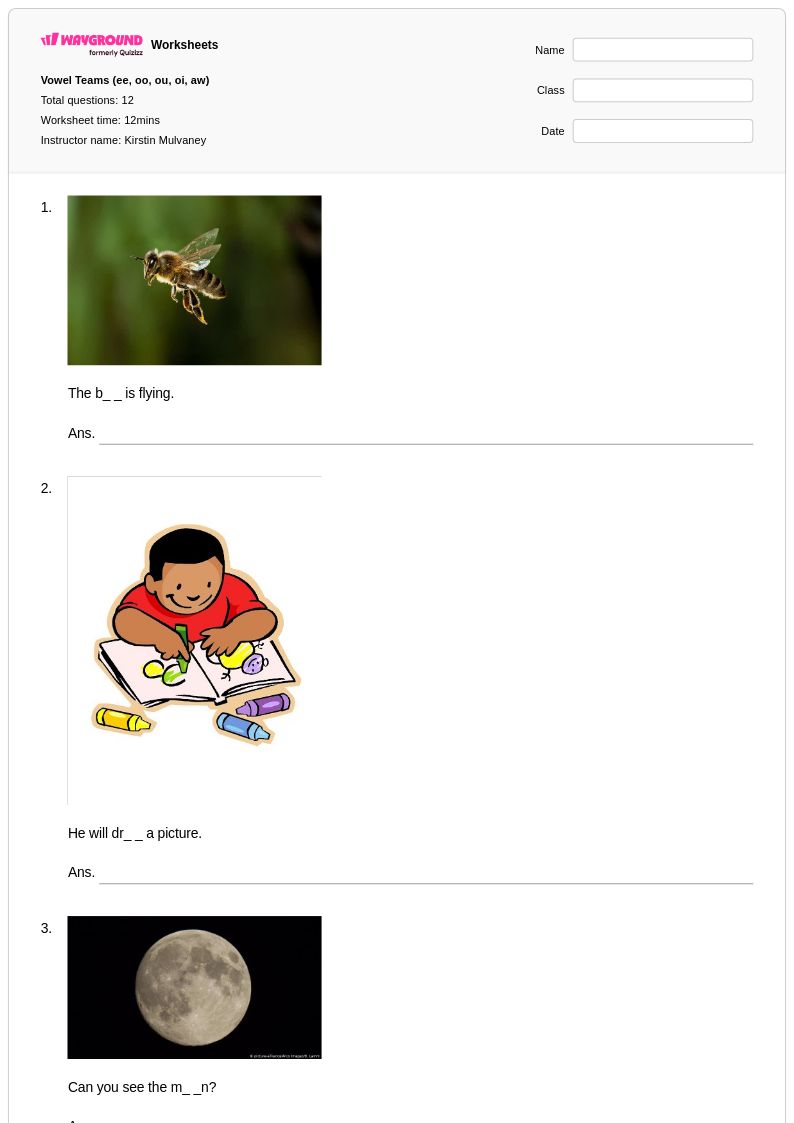
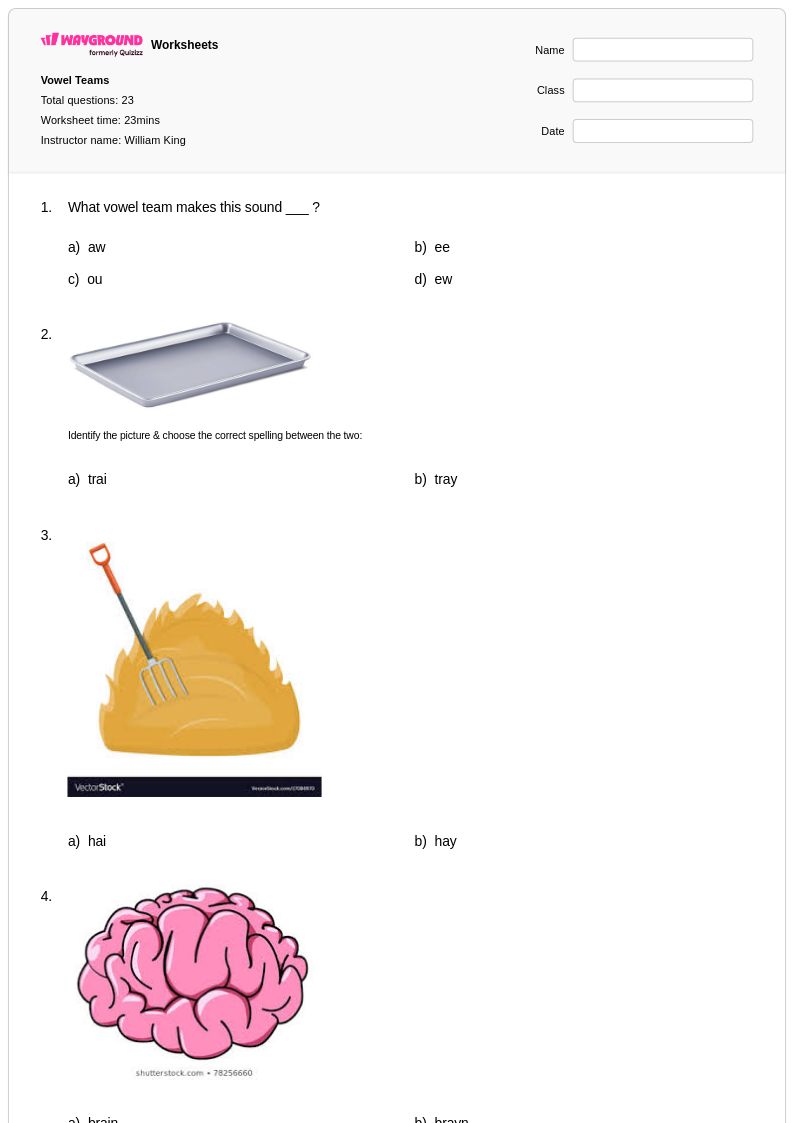
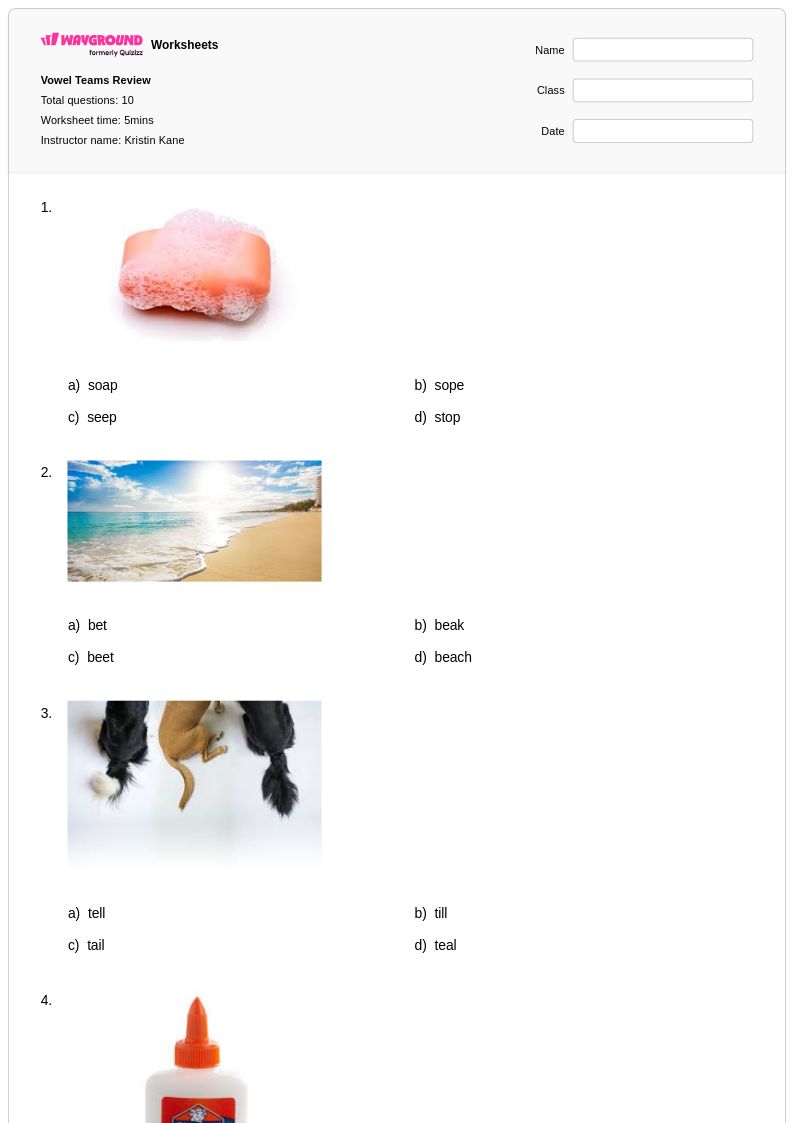
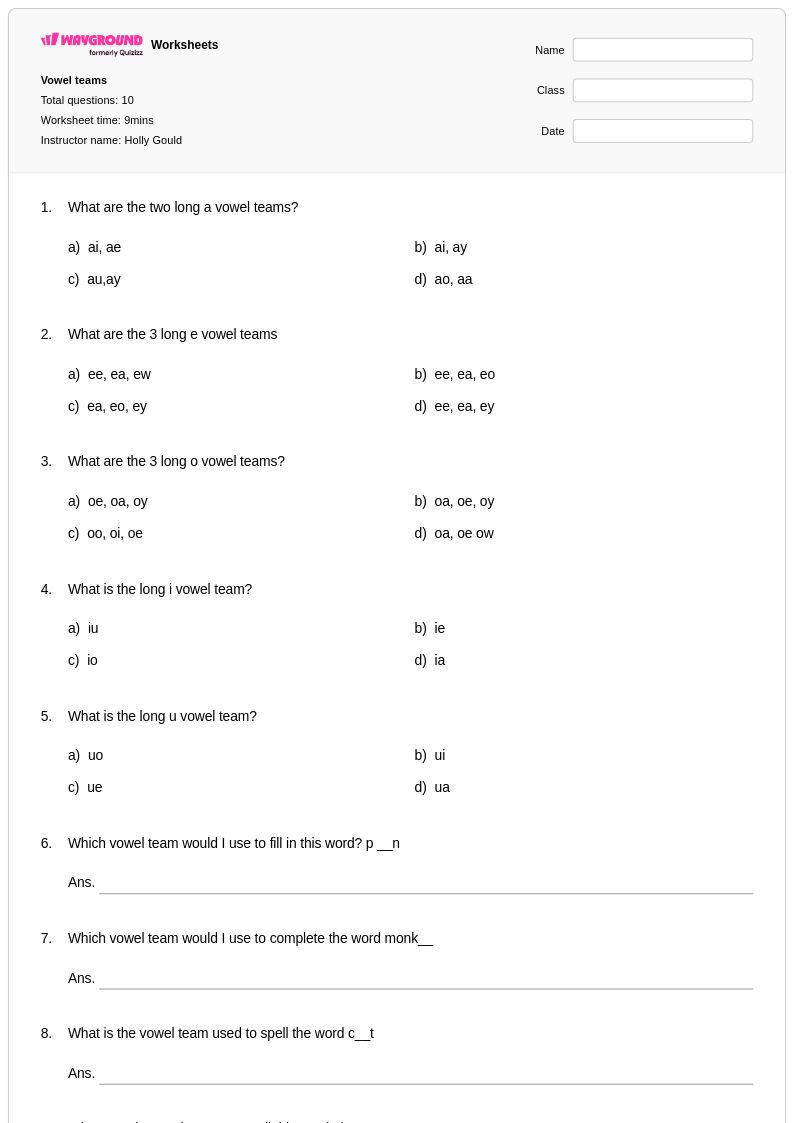
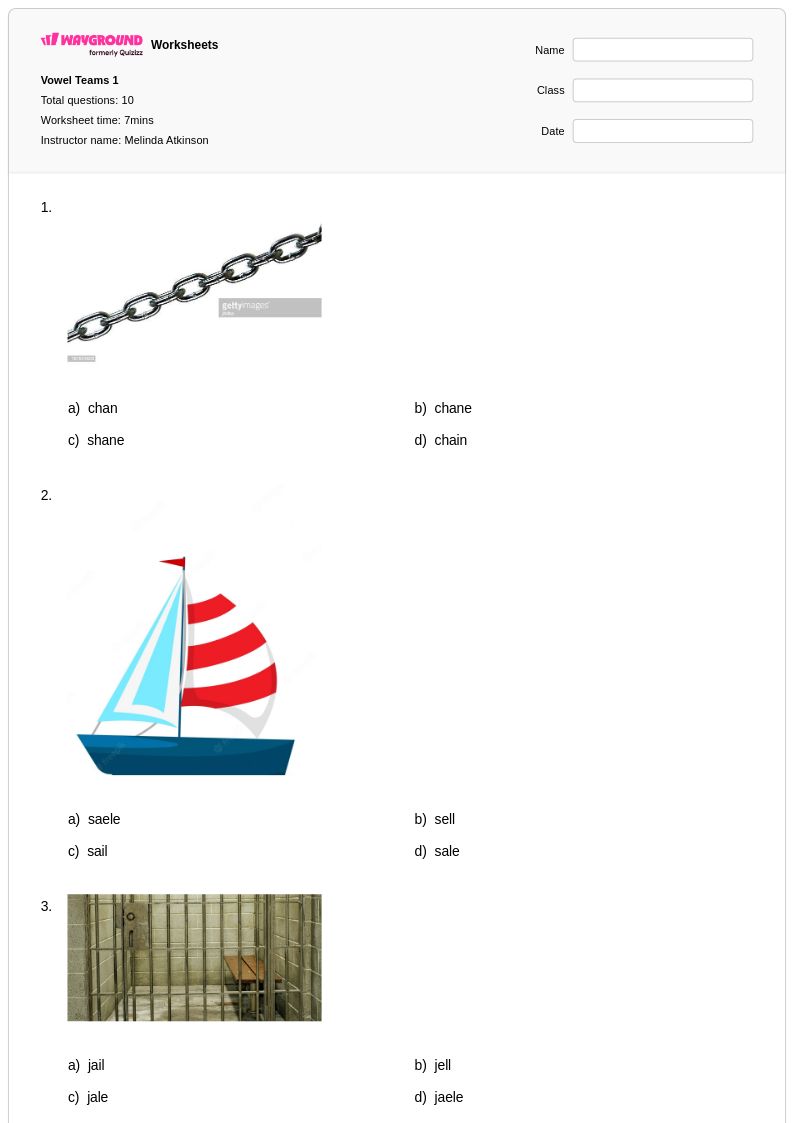
Discover free Class 1 vowel teams worksheets and printables from Wayground that help young learners master letter combinations like "ai," "ea," and "oa" through engaging practice problems with answer keys included.
Explore printable Vowel Teams worksheets for Class 1
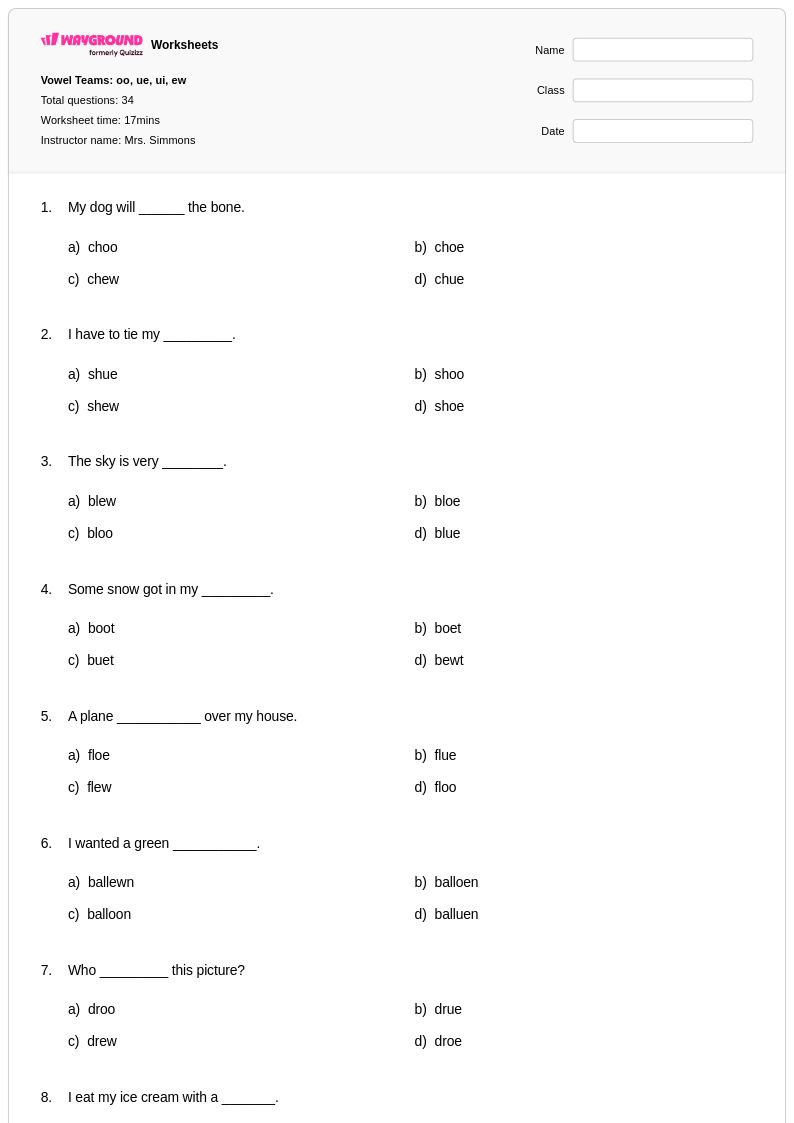
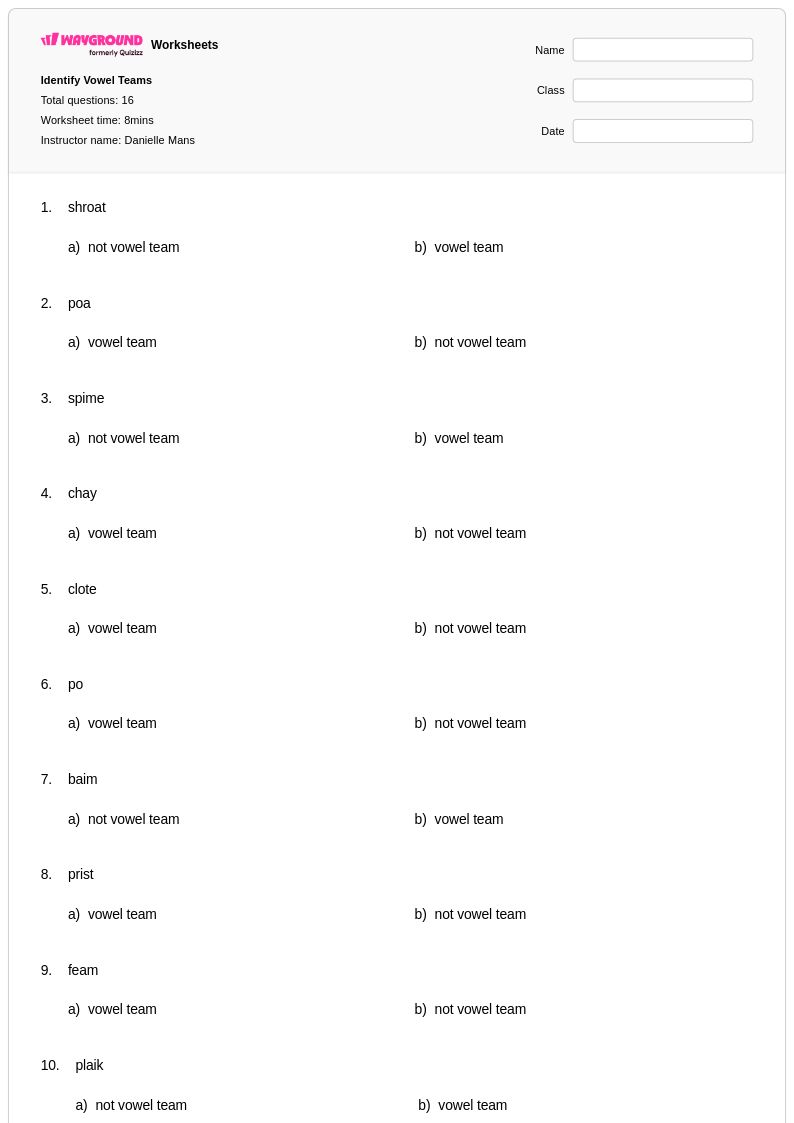
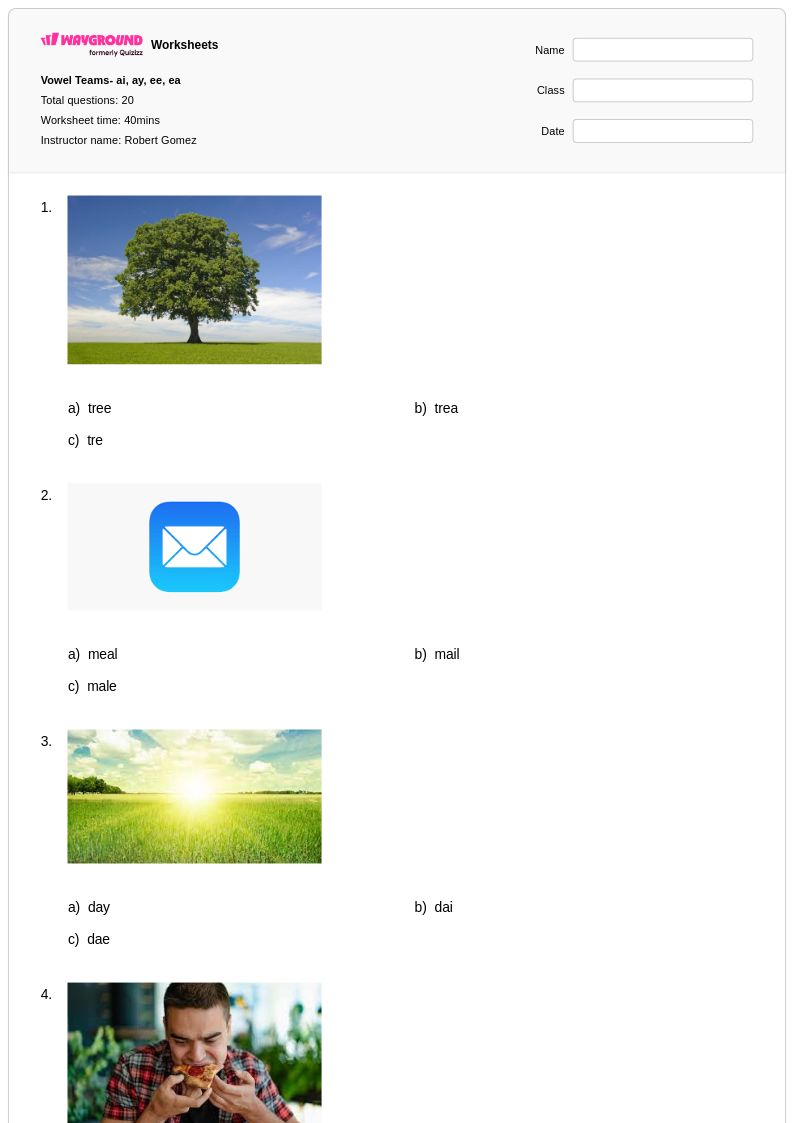
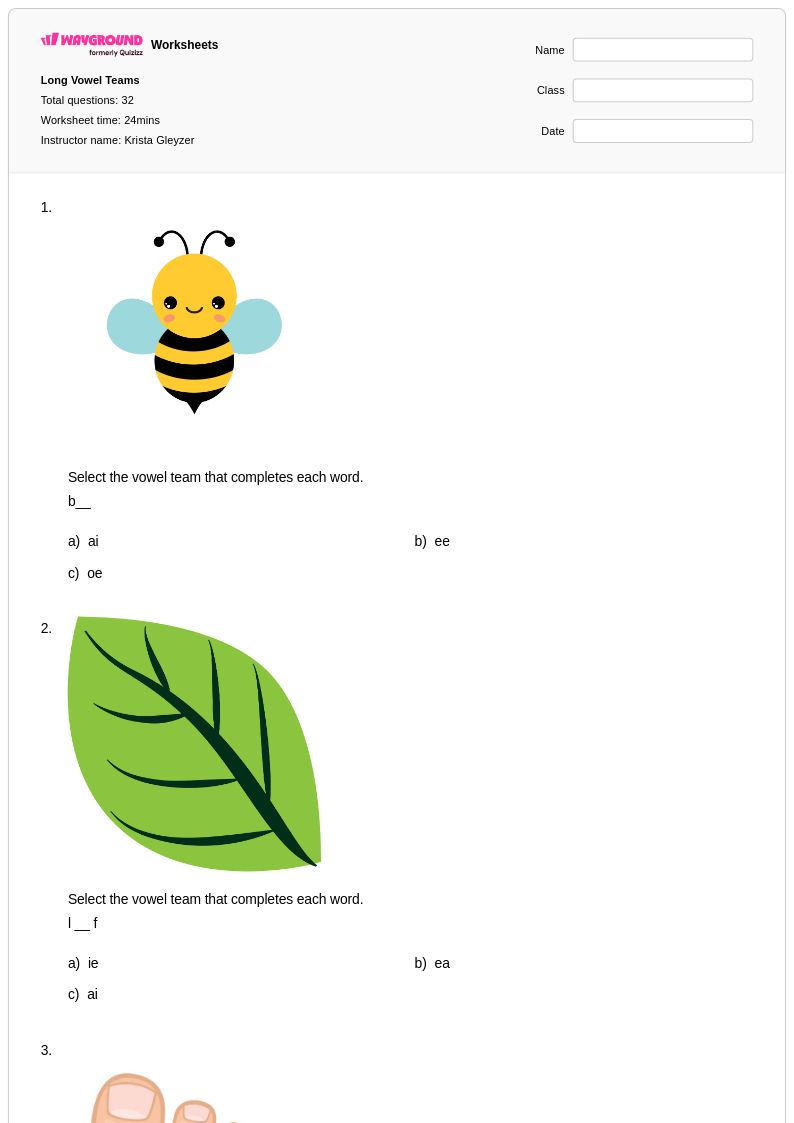
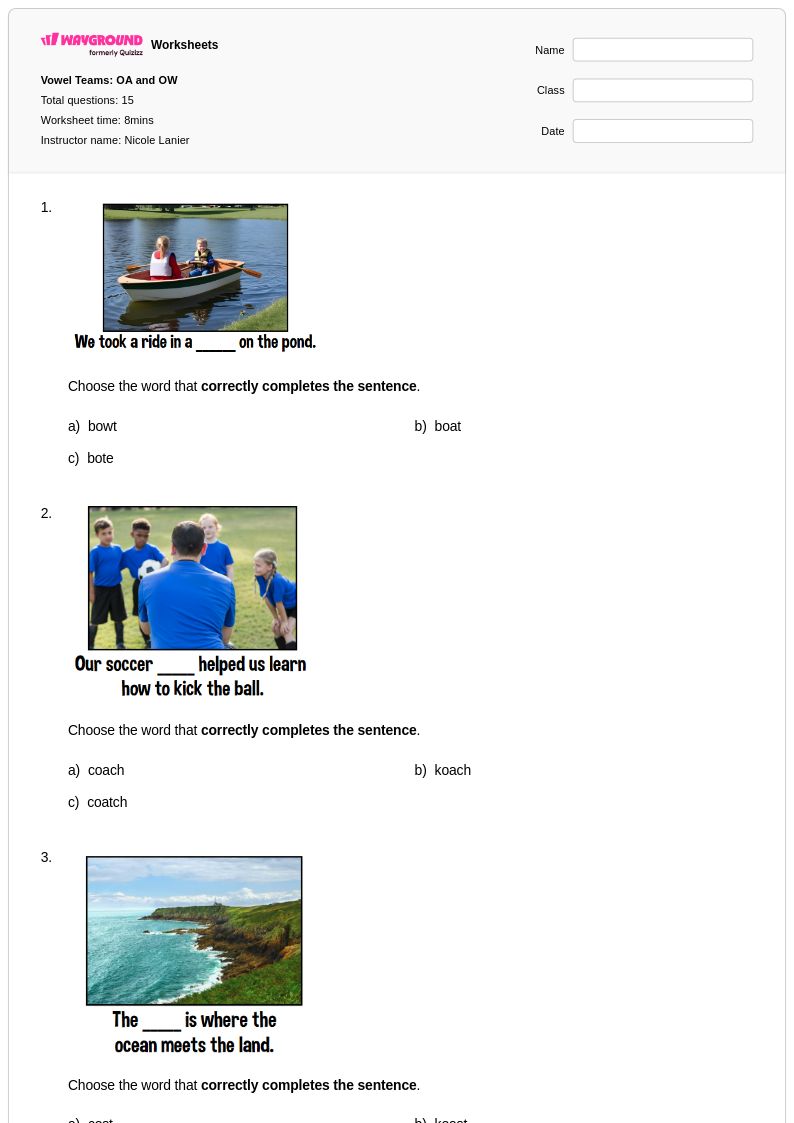
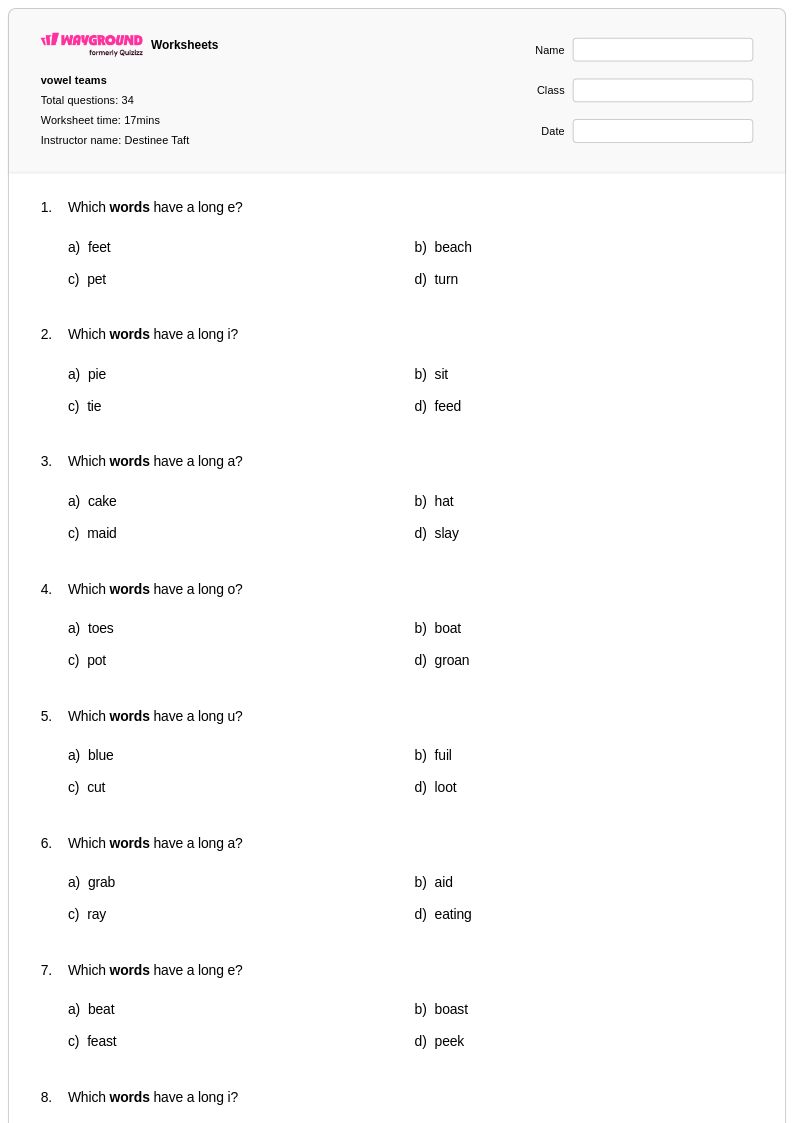
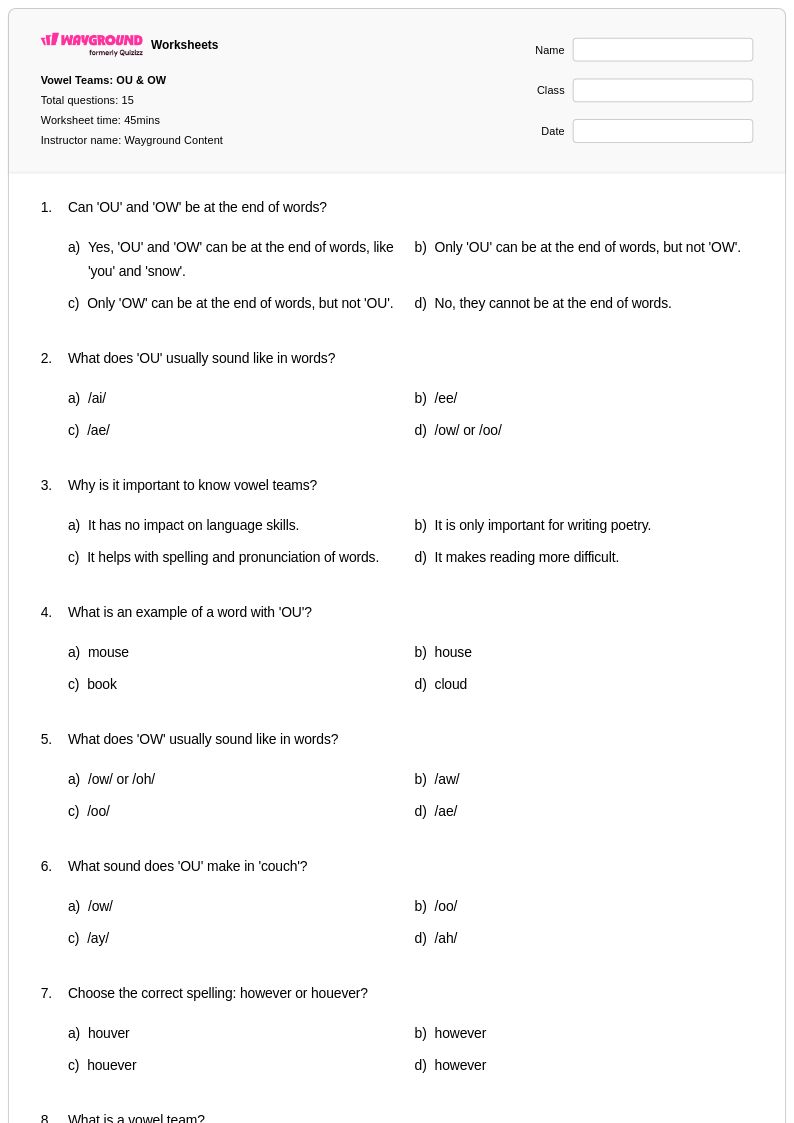
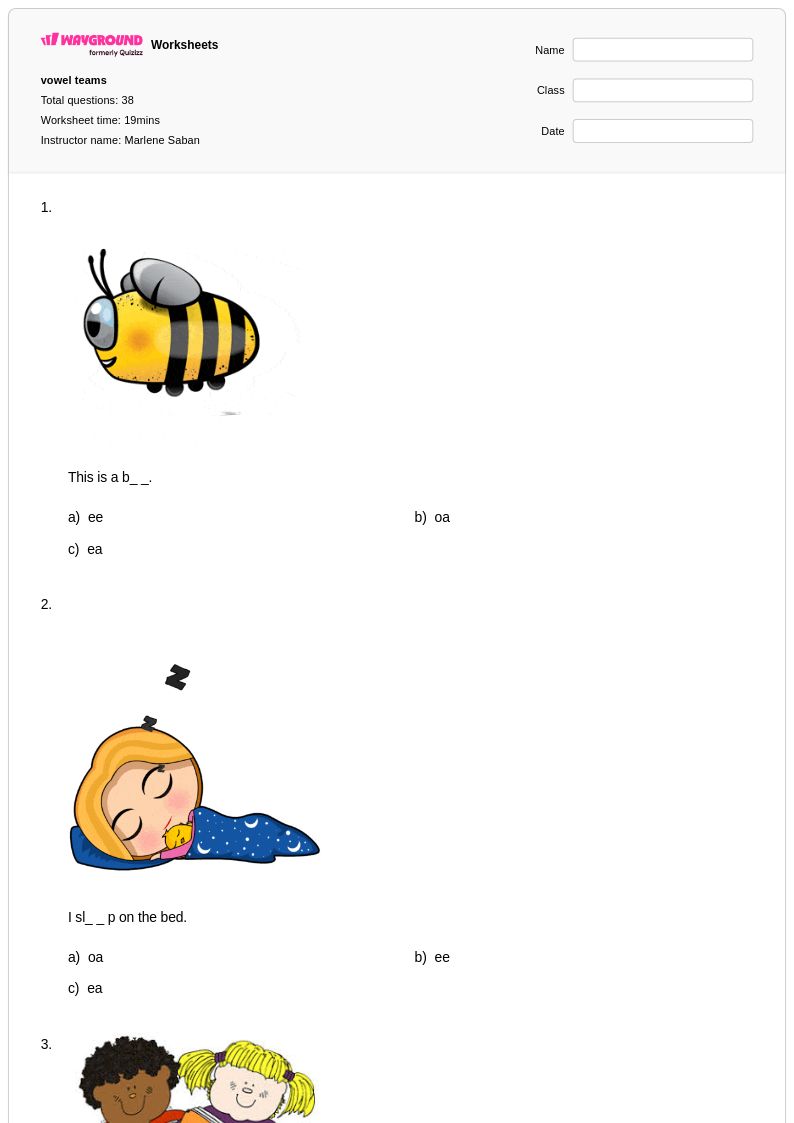
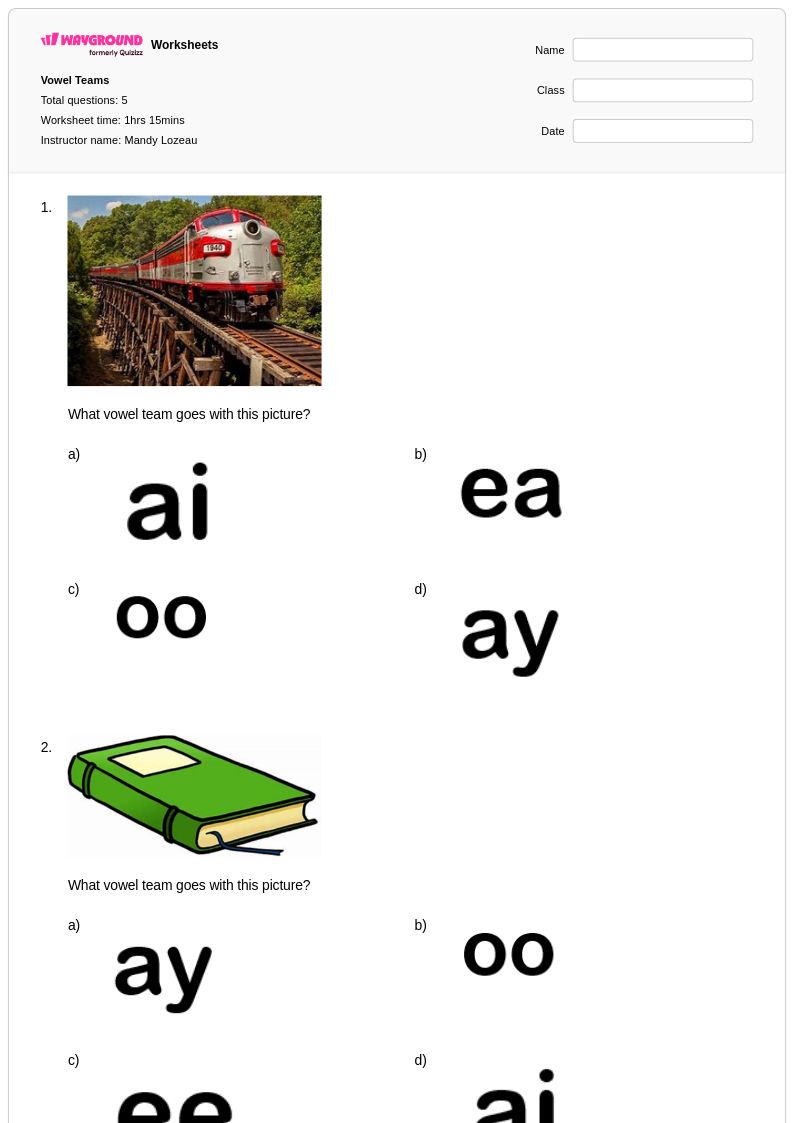
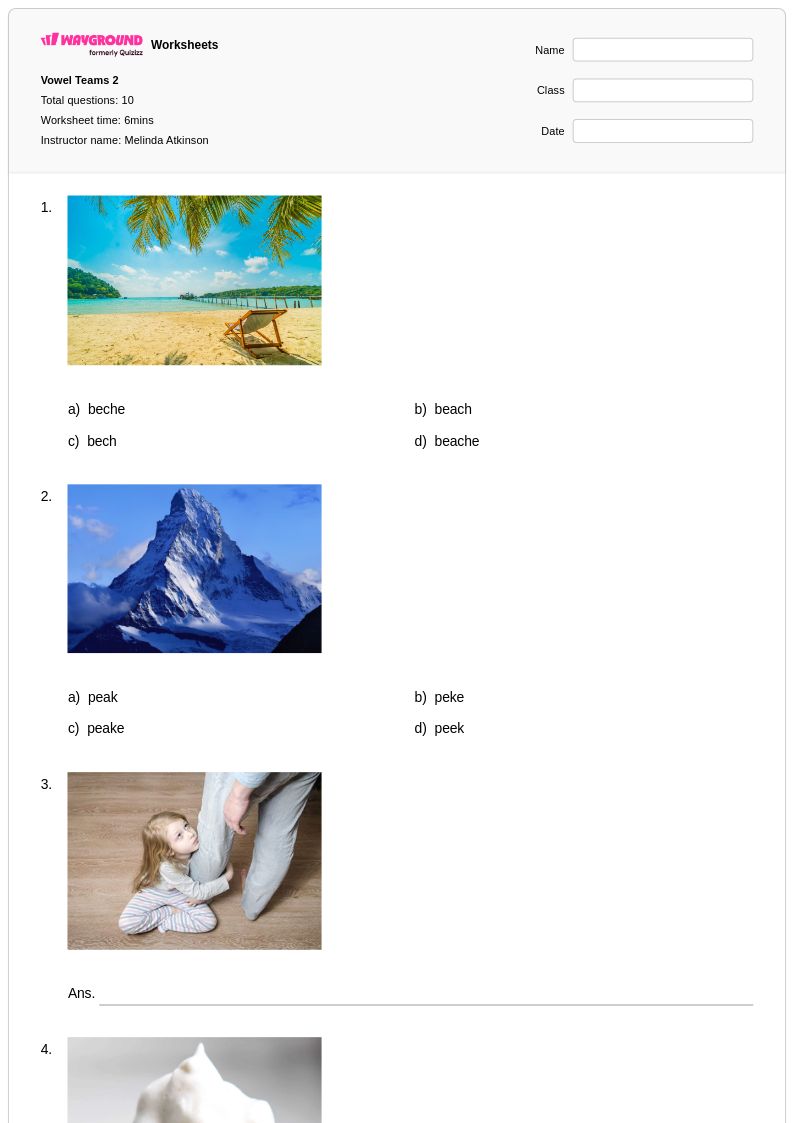
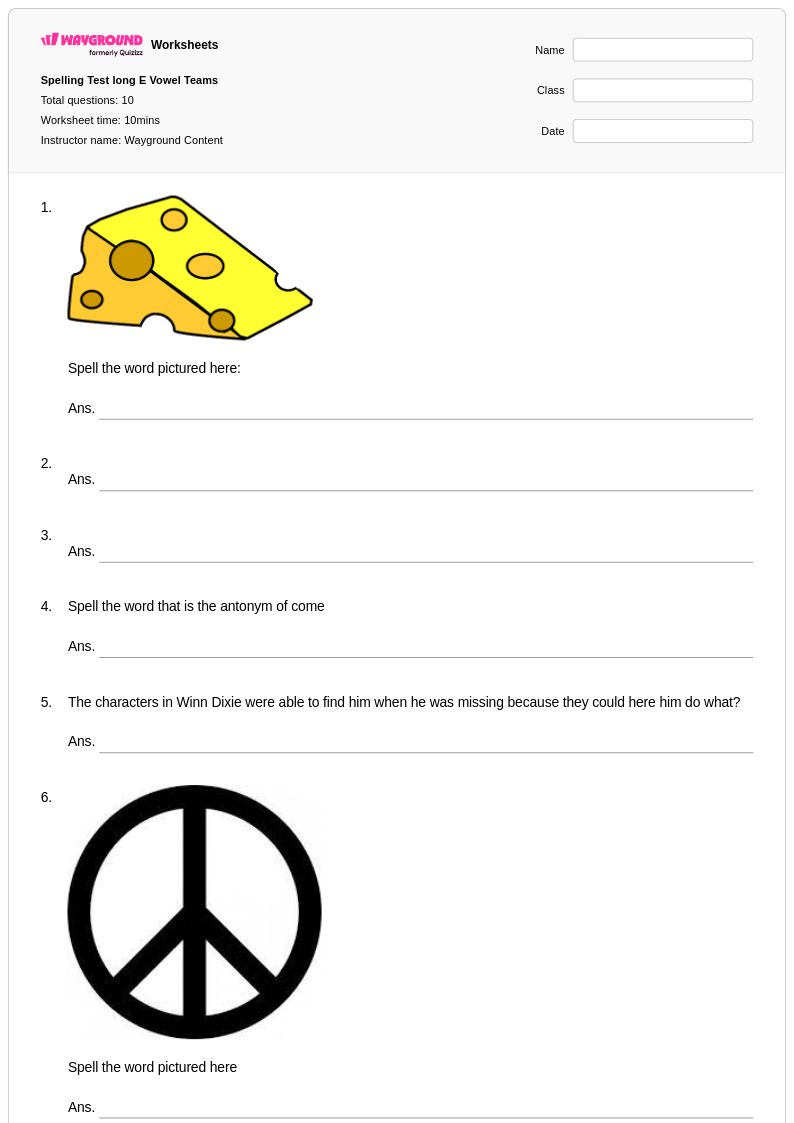
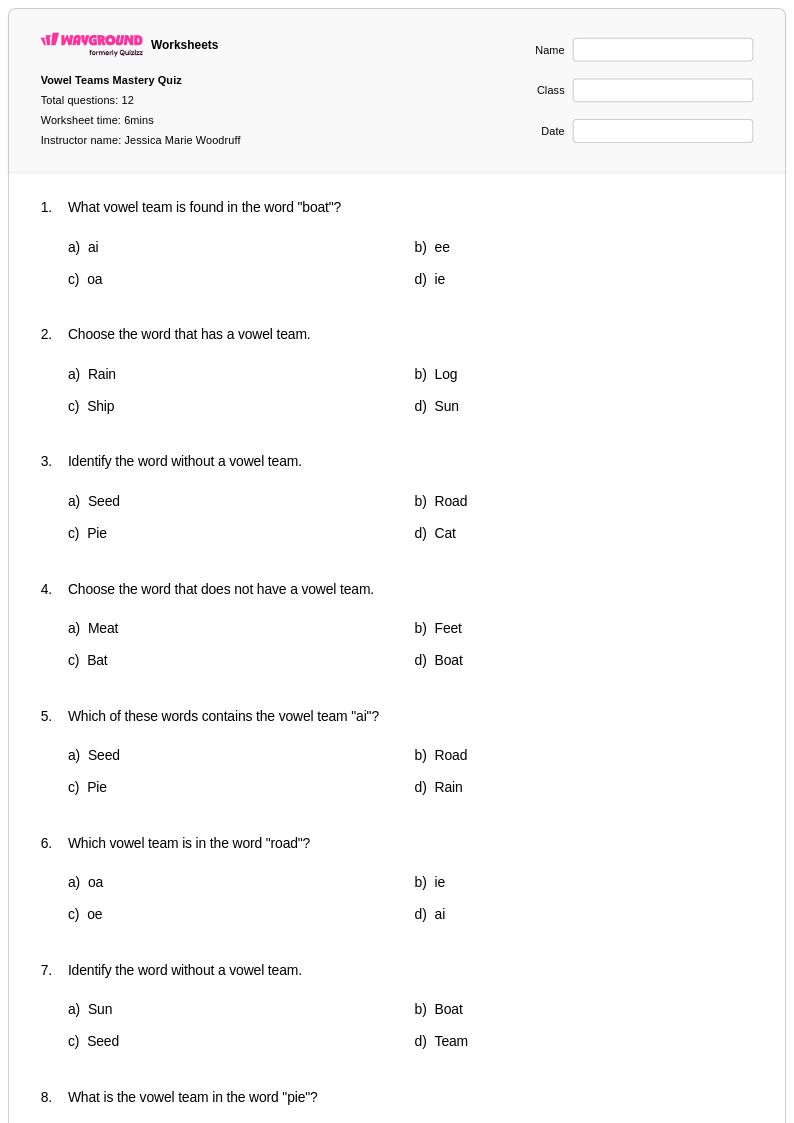
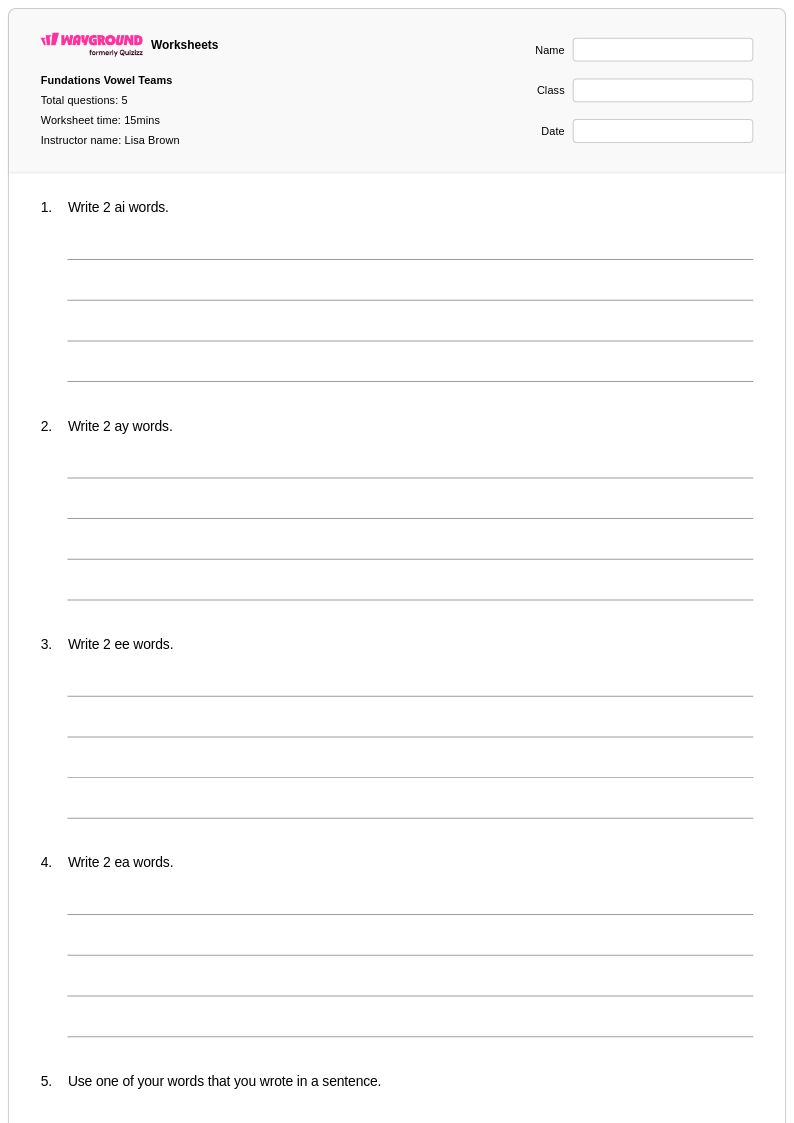
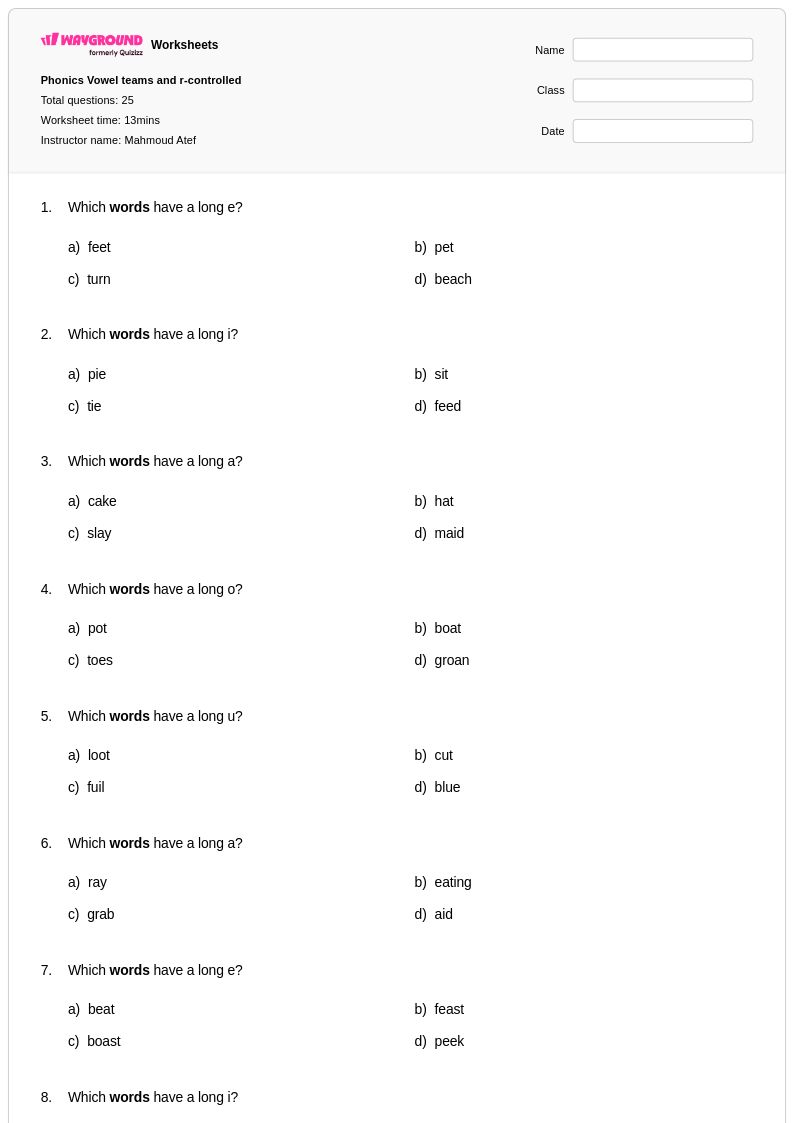
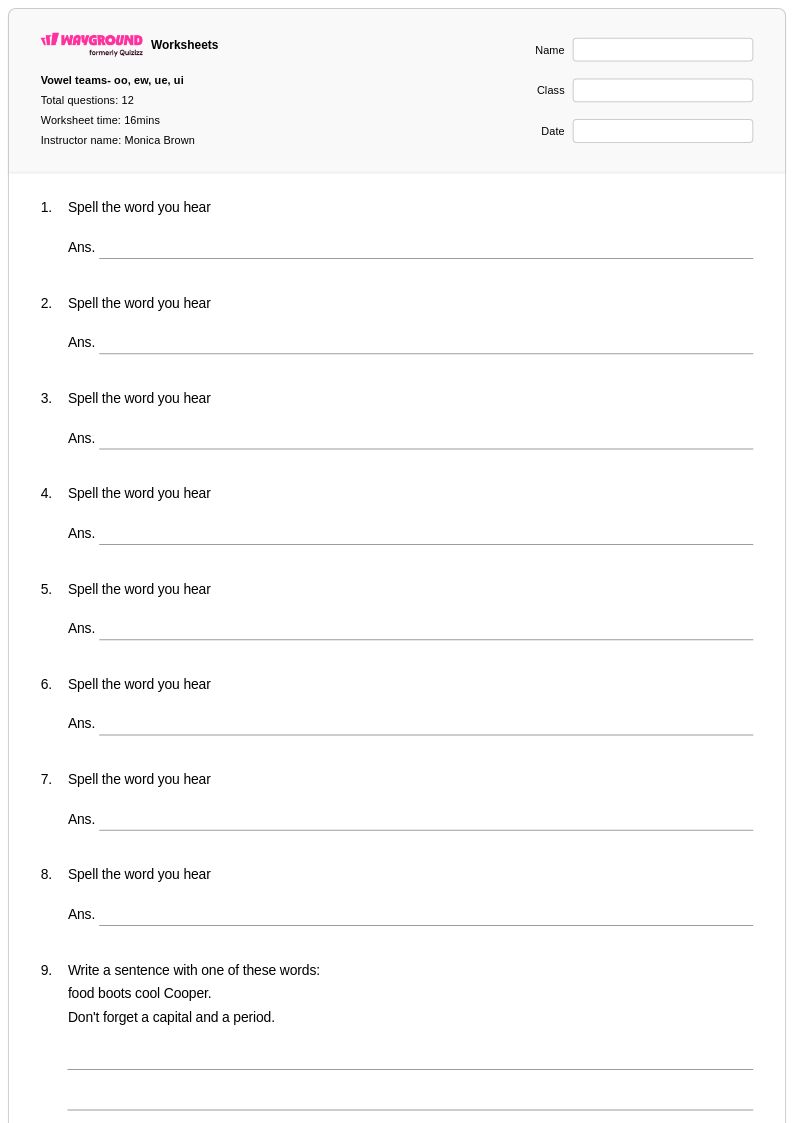
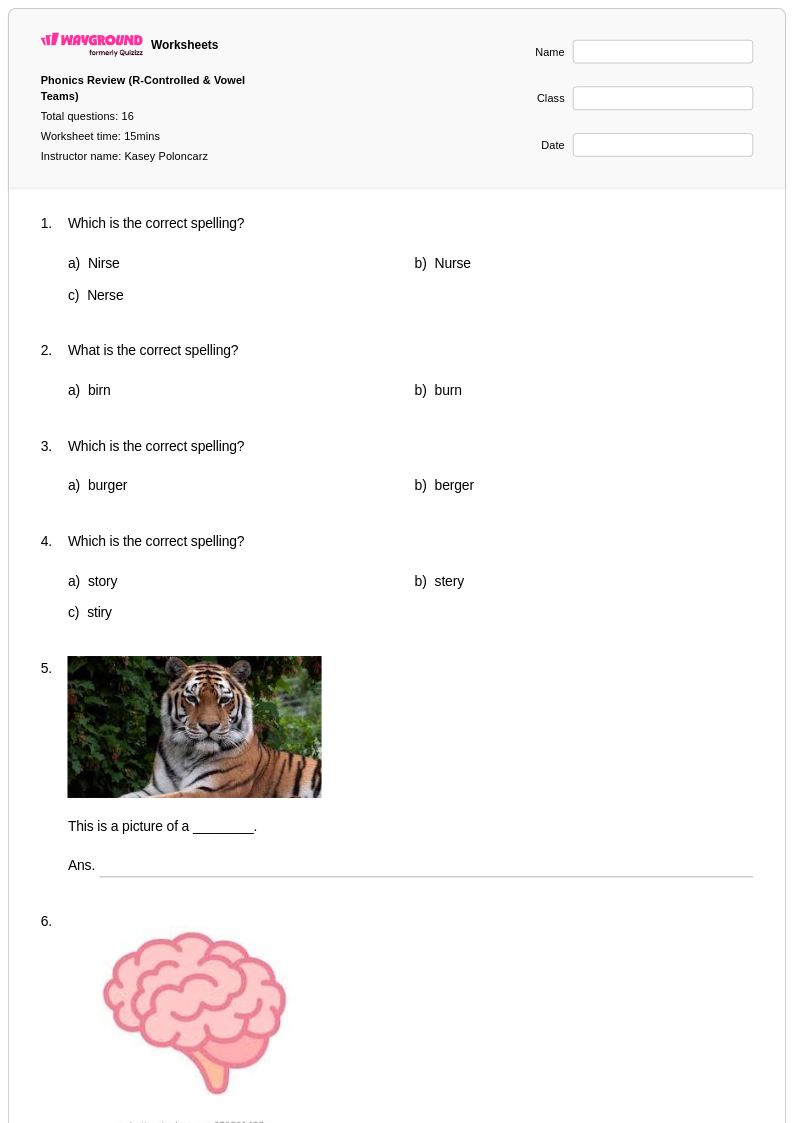
Vowel teams represent a crucial phonics concept for Class 1 students as they transition from single letter sounds to more complex reading patterns. Wayground's comprehensive collection of vowel team worksheets provides young learners with systematic practice in recognizing and applying common letter combinations like "ai," "ea," "oa," and "ee" that work together to create single vowel sounds. These carefully designed printables strengthen essential decoding skills through engaging practice problems that help students identify vowel teams within words, distinguish between different team patterns, and apply this knowledge in reading contexts. Each worksheet includes a detailed answer key to support both independent practice and guided instruction, with free pdf formats ensuring easy access for classroom and home use.
Wayground, formerly Quizizz, empowers educators with millions of teacher-created vowel team resources that streamline lesson planning and differentiated instruction for Class 1 classrooms. The platform's robust search and filtering capabilities allow teachers to quickly locate worksheets aligned with specific phonics standards and learning objectives, while customization tools enable adaptation of materials to meet diverse student needs. Whether implementing whole-group instruction, targeted remediation for struggling readers, or enrichment activities for advanced learners, teachers can access both printable and digital formats including downloadable pdf versions. This flexibility supports various teaching approaches while providing consistent skill practice opportunities that help students master vowel team recognition and application across multiple learning contexts.
FAQs
How do I teach vowel teams to early readers?
Introduce vowel teams explicitly by grouping common patterns together, such as ai/ay, ea/ee, and oa/ow, and anchoring each pattern to a high-frequency anchor word students already know. Use a gradual release model: model reading and writing the pattern, then move to guided practice before independent application. Consistent, repeated exposure to the same patterns across multiple sessions is key to building automaticity in decoding.
What order should I teach vowel teams in?
Most phonics scope-and-sequence frameworks recommend starting with the most common and predictable vowel teams, such as ai, ea, oa, and ee, before moving to less predictable patterns like ie or ou. Introduce one pattern at a time and provide sufficient practice before layering in a new one. This prevents confusion between visually similar patterns and allows students to build a reliable mental map of the spelling-sound system.
What exercises help students practice vowel teams?
Effective practice exercises include word sorting by vowel team pattern, fill-in-the-blank sentences using target words, and read-and-write tasks that ask students to identify the vowel team and its sound within a word. Progressing from simple recognition tasks to application in context, such as reading decodable sentences or short passages, ensures students can transfer the pattern beyond isolated drill.
What mistakes do students commonly make with vowel teams?
A common error is applying the 'when two vowels go walking' rule universally, when in fact many vowel teams do not follow that pattern. Students also frequently confuse visually similar pairs, such as ea making a long E sound versus a short E sound as in 'bread', or conflate ai and ay since both represent the same sound in different positions. Targeted practice that highlights these exceptions directly, rather than relying on blanket rules, helps students build accurate pattern knowledge.
How do I use Wayground's vowel teams worksheets in my classroom?
Wayground's vowel teams worksheets are available as printable PDFs for traditional classroom use and in digital formats for technology-integrated learning environments, making them flexible for whole-class instruction, small group work, or independent center rotations. Teachers can also host the content as a quiz directly on Wayground for interactive student practice with immediate feedback. Each worksheet includes an answer key, so scoring and review require minimal preparation time.
How can I differentiate vowel teams instruction for struggling readers?
For struggling readers, focus remediation on the highest-frequency vowel teams first and reduce the number of patterns introduced in a single session to limit cognitive load. On Wayground, teachers can apply individual accommodations such as Read Aloud support, which allows the platform to read questions and content aloud, and reduced answer choices to make pattern recognition tasks more accessible. These settings can be assigned to specific students without disrupting the default experience for the rest of the class.